St. Pancras And Leicester Via Corby
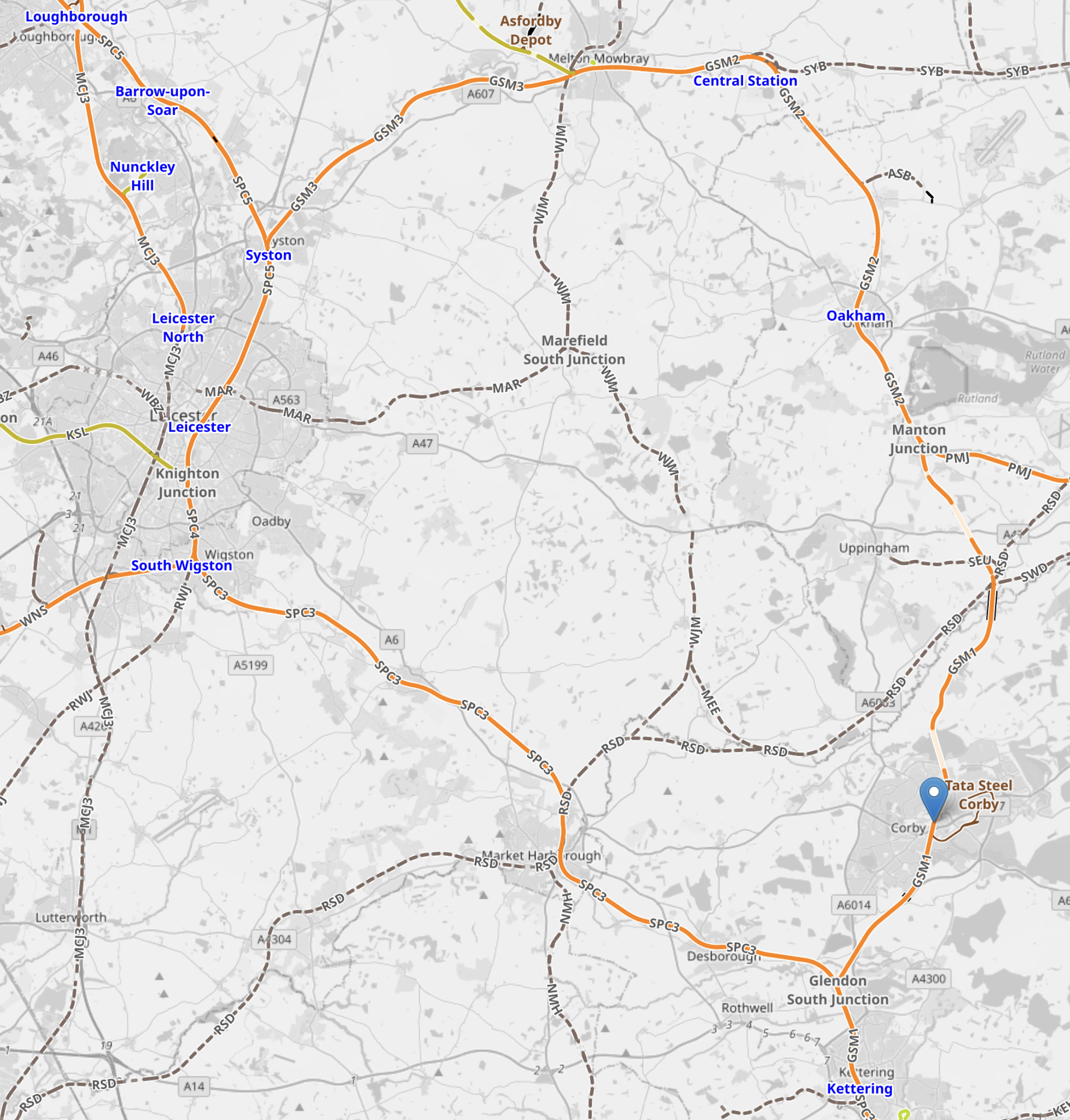
This OpenRailwayMap shows the route between Kettering and Leicester via Corby.
Note.
- Kettering station is in the bottom right corner of the map.
- Kettering is on the Midland Main Line from St. Pancras.
- North of Kettering the route splits into two.
- The Midland Main Line goes North-West through Market Harborough to Wigston junction and Leicester.
- The Midland Main Line is electrified to Wigston junction.
- The Corby branch goes North-East to Corby, which is indicated by a blue arrow.
- The Corby branch is electrified to Corby.
On Saturday, I went to Leicester and because there were engineering works at Market Harborough, the train went via Corby.
Over The Welland Viaduct
After Corby, the train went over the Welland Viaduct and I took these pictures.
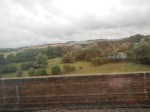
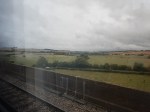
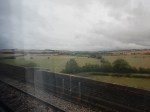
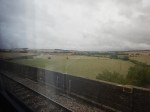
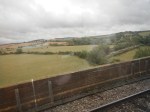
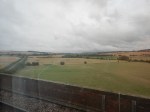
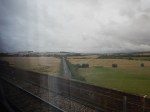


It is an impressive viaduct and is the longest viaduct across a valley in the United Kingdom.
I have some further thoughts.
Could The Corby Service Be Extended to Leicester?
Consider.
- Between Corby and Leicester is 40.8 miles of track without electrification.
- Trains could call at Oakham, Melton Mowbray and Syston stations.
- Oakham, Melton Mowbray and Syston stations, could be given an appropriate number of trains every day to Leicester, Corby, Kettering, Wellingborough, Bedford, Luton, Luton Airport Parkway and London St. Pancras International stations.
- No new infrastrructure would be needed.
- I suspect an hourly service would be sufficient.
I am fairly sure that a Class 810 train fitted with batteries could work the route.
Leicester, Oakham, Melton Mowbray And Syston Stations Would Get A Direct Connection To Luton Airport
Some travellers might find this very useful.
Leicester Station Would Have A Neat Passenger Drop-Off For Luton Airport
I wrote about this in Busiest UK Airports Raise Kiss-and-Fly Fees, Says RAC.
Every rail station needs a passenger drop-off as good and affordable as the one at Leicester station.
Could East Midlands Railway Run A St. Pancras And Leeds Service?
East Midlands Railway’s new Class 810 trains have been designed, so that a pair will fit into one platform at St. Pancras.
If we assume one platform at St. Pancras is used for the Corby and Luton Airport Express services, that leaves three platforms for pairs of Class 810 trains to run expresses to the East Midlands.
This could be as many as twelve pairs of five-car trains per hour.
Where wioll they all terminate in the North?
Leeds station must be the obvious new destination.
- Leeds has the largest population and is the largest commercial and finance centre in Yorkshire and the North-East.
- Leeds would have gained three trains per hour (tph) from London, two tph from Birmingham and four tph from the East Midlands Hub at Nottinham.
- Leeds is getting a brand new metro.
- Leeds is a fully-electrified station, so it could charge the trains before they return to Sheffield, Leicester, Wigston junction and St. Pancras.
- Leeds and Wigston junction is 107.8 miles, which should be within the range of a battery-electric Class 810 train. If it is too far, an extended stop could be taken at Sheffield to top up the batteries.
- Note that Stadler hold the Guinness World Record for the greatest distance covered on one charge at 139 miles. Hitachi Rail, who are partnered with JCB’s battery-maker in Sunderland, should be able to smash that.
The Rail Minister; Lord Peter Hendy went to Leeds University.
Which Route Would The Trains Take Between Sheffield And Leeds?
Consider.
- The fastest trains between Sheffield and Leeds, go via Meadowhall, Barnsley and Wakefield Kirkgate stations.
- Trains take about an hour.
- The current frequency is two tph.
- The distance is 41.1 miles with no electrification.
A frequency of two additional tph between St. Pancras and Leeds would give the following.
- A nice round four tph between Yorkshire’s two most important cities.
- Four fast tph between Meadowhall, Barnsley and Wakefield Kirkgate stations, and Leeds and Sheffield.
- Two direct trains between Meadowhall, Barnsley and Wakefield Kirkgate, and Chesterfield, Derby, Long Eaton, East Midlands Parkway, Loughborough, Leicester and St. Pancras.
It would be complimentary to any Leeds Metro.
Could East Midlands Railways Also Serve Huddersfield?
Consider.
- Huddersfield is 36.4 miles further than Sheffield on the Penistone Line, which is not electrified.
- Wigston junctionand Huddersfield station is 105.3 miles.
- Huddersfield is a Grade I Listed station with two pubs in the middle of the town.
- Huddersfield station is being fully-electrified in connection with the TransPennine Upgrade.
- All trains from Sheffield, that use the Penistone Line terminate in Platform 2 at Huddersfield station.
This OpenRailwayMap shows the position of Platform 2 in the station.
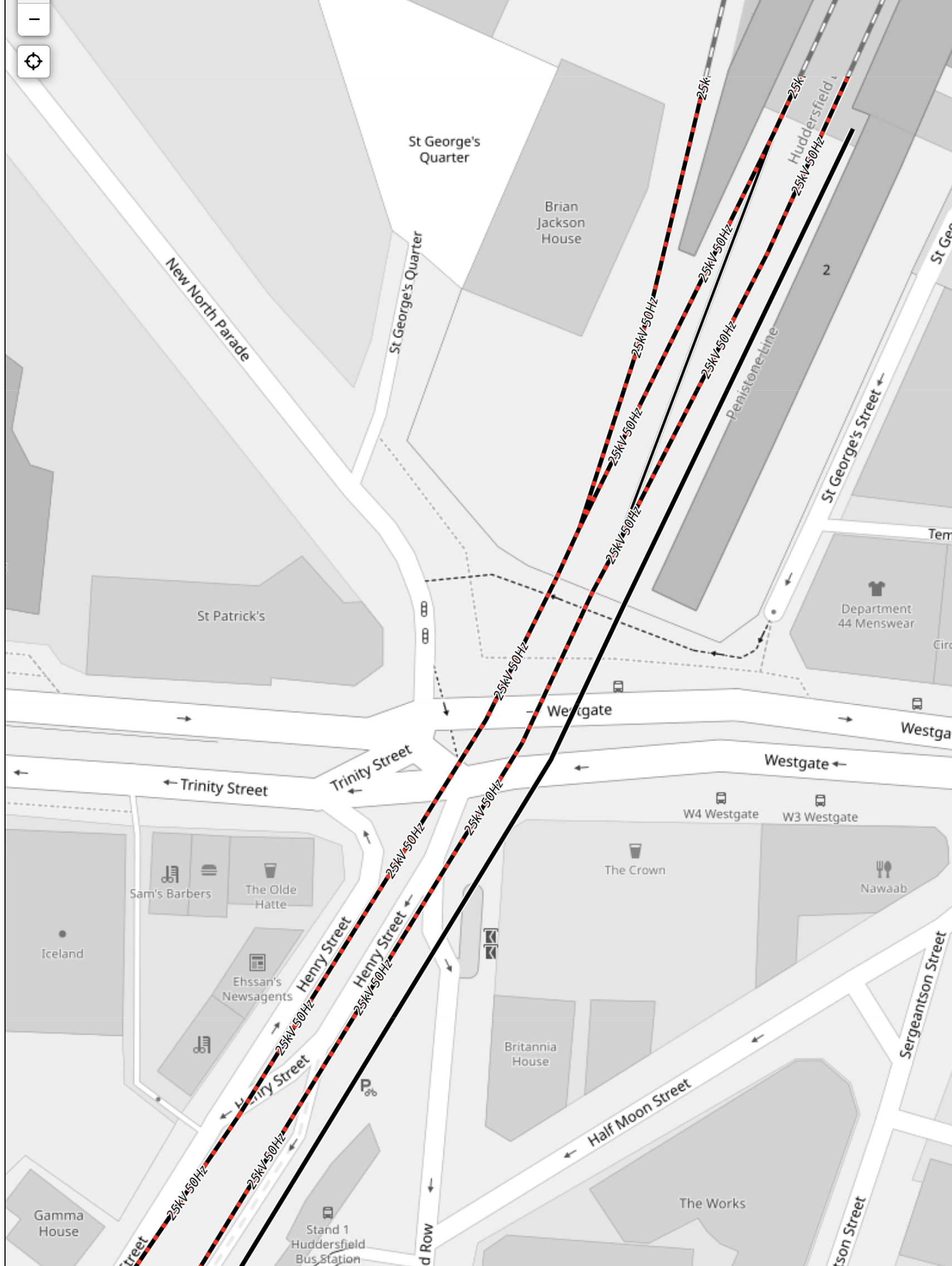
Note.
- The red-and-black dotted tracks are being electrified.
- The black tracks are not going to be electrified.
- Platform 2 is marked 2 in the top-right corner of the map.
- Platform 2 looks to be about 90 metres long.
- Five-car Class 810 trains are 120 metres long.
- From the map, it looks like the platform could be lengthened by the required thirty metres.
I suspect that some form of charger can be squeezed into the available space. After all, you don’t often get the chance to put charging into one of the most grand stations in Europe. Power supply would not be a problem, because of the electrification.
A frequency of twotph between St. Pancras and Huddersfield would give the following.
- Two fast tph between Meadowhall, and Barnsley, and Huddersfield and Sheffield.
- Two extra direct trains between Meadowhall and Barnsley, and Chesterfield, Derby, Long Eaton, East Midlands Parkway, Loughborough, Leicester and St. Pancras.
It would connect many stations to the TransPennine Route at Huddersfield station.
What Could The Sheffield and St. Pancras Look Like?
Consider that currently.
- There are two tph.
- Trains stop at Leicester, Loughborough (1tph), East Midlands Parkway (1tph), Long Eaton (1tph), Derby and Chesterfield.
- Trains are five- or seven-cars.
The simplest solution would probably be.
- A pair of five-car trains run all services.
- Trains split and join at Sheffield with one train going to Leeds and one going to Huddersfield.
I estimate that the Class 810 trains will offer about thirty more seats in every hour.
Thoughts On The East Midlands Railway Timetable After Class 810 Trains Enter Service
East Midlands Railway will soon be replacing their diesel Class 222 trains with new bi-mode Class 810 trains.
- 32 trains will be replaced by 33 trains.
- 167 cars will be replaced by 165 cars.
- The current trains come in four, five and seven cars.
- The new trains come in five-cars only.
- The platforms at St. Pancras station can accept a pair of the new trains.
- Both Class 222 and Class 810 trains are genuine 125 mph trains.
- St. Pancras and Corby takes one hour and fifteen minutes
- St. Pancras and Nottingham takes hour and forty-five minutes
- St. Pancras and Sheffield takes two hours
The current services are as follows.
- St. Pancras and Corby via Luton Airport Parkway, Luton, Bedford, Wellingborough and Kettering
- St. Pancras and Nottingham via Kettering, Market Harborough, Leicester, Loughborough (1 tph), East Midlands Parkway (1 tph) and Beeston (1 tph).
- St. Pancras and Sheffield via Leicester, Loughborough (1 tph), East Midlands Parkway (1 tph), Long Eaton (1 tph), Derby and Chesterfield.
Note.
All services are two trains per hour (tph)
If all services were run by single trains, the following number of trains would be needed for each service.
- St. Pancras and Corby – 6 trains
- St. Pancras and Nottingham – 8 trains
- St. Pancras and Sheffield – 9 trains
Note.
- This means a total of twenty-three trains.
- I am assuming, that trains can turn round in fifteen minutes at each end of the journey.
- If pairs of trains run, then the numbers can be doubled to forty-six trains.
These are my thoughts.
Do The Luton Airport Express Services Need Pairs Of Trains?
The Corby service is now branded as the Luton Airport Express.
This picture shows a packed Luton Airport Express at Luton Airport Parkway station.

After seeing this, I believe that a pair of trains must run to Corby to pick up passengers, who want a fast service to and from Luton Airport.
Will The Class 810 Trains Replace The Class 360 Trains To Corby?
If all services are run by single Class 810 trains, the following would apply.
- The current service pattern would need 23 trains.
- All stations would get the same number of trains to and from St. Pancras.
- All East Midlands Railway out of St. Pancras would use the same 125 mph electric trains and services could probably be speeded up.
- The Class 810 train has 2.94 MW on diesel and the Class 360 train has 1.55 MW on electric, so I suspect that the Class 810 train has the faster acceleration.
- Bedford, Kettering, Luton, Luton Airport Parkway, Market Harborough and Wellingborough would have 125 mph electric commuter services to and from London.
- Corby and Luton Airport Parkway services would have marginally more seats, if Corby services were pairs of trains.
There would be ten spare trains, if the Class 360 trains were replaced or four spare trains, if pairs of trains ran to Corby.
Would Class 810 Trains Running On Electric Execute Stops Faster?
This document on Rail Engineer gives these figures for total power on electric of Class 802 trains.
- Five-car – 2712 kW
- Nine-car – 4520 kW
Note.
- These figures are based on a Hitachi figure of 226 kW for the power of a traction motor.
- The five-car train has twelve motors and the nine-car has twenty.
- As a five-car train has three powered cars and a nine-car train has five, it looks like each powered car has four traction motors.
- The document also says that the power to weight ratio on electric is thirty percent more than on diesel.
This document on the Hitachi web site provides this schematic of the traction system.

Note that four traction motors are confirmed.
Consider the power of the various trains, that run or will run on the Midland Main Line.
- Four-car Class 180 train has one 559 kW diesel engine per car.
- Four, five and seven-car Class 222 train has one 559 kW diesel engine per car.
- Four-car Class 360 train has 1.55 MW on electric – 387 kW per car.
- Five-car Class 810 train has 2.94 MW on diesel – 588 kW per car.
- Five-car Class 810 train has 2.94 MW on electric – 588 kW per car.
Note.
- The Class 810 train will out-accelerate the Class 360 train as it has at least 40 percent more power on electric.
- The Class 810 train has pantographs on both driving cars.
- The Class 810 train has two powered cars; numbers 2 and 4.
- I have assumed that if the Class 810 train can handle 2.94 MW on both diesel and electric.
- With eight traction motors, they would need to be 367.5 kW.
- The Class 810 train should out-accelerate the Class 180 train and Class 222 train as it has at five percent more power on both diesel and electric.
I think it is also relevant that the order for the Class 810 trains was placed in August 2019 and Hitachi announced their collaboration with Eversholt Rail Group to develop the battery-electric versions of the Class 802 trains only sixteen months later. As the Class 810 appears to be an revolution of the Class 802 train, I suspect that Hitachi were working hard on battery design, as this train’s design evolved.
These are the five cars of the Class 810 train.
- 1 – DPTS – Driver-Pantograph-Trailer-Standard with Generator Unit
- 2 – MS – Motored-Standard with Generator Unit
- 3 – TS – Trailer-Standard with Transformer
- 4 – MC – Motored-Composite with Generator Unit
- 5 – DPTF – Driver-Pantograph-Trailer-First with Generator Unit
Note.
- Generator Unit is a diesel generator.
- Motored means the car has four traction motors.
- Composite means a car with both First and Standard accommodation.
- Cars 1-2, and 4-5, form two power units with two generator units, four traction motors and a pantograph, at each end of the train. Cables would connect them to the transformer in car 3.
It looks a neat solution, which probably has high reliability.
I can envisage the two generator units under cars 2 and 4 could be replaced by battery packs.
- The battery packs would mimic the function of the generator units.
- Noise in cars 2 and 4 would be reduced.
- Carbon emissions would be reduced.
- The battery packs would be charged, when running under the wires or possibly from chargers or short length of overhead wires at terminal stations.
- The battery packs would handle regenerative braking.
- Adding battery packs would allow the trains to jump gaps left in the electrification.
At some point in the future, the other two generator units could be removed or replaced with battery packs, depending on whether full electrification happens on the Midland Main Line.
These meanderings convince me that the Class 810 trains will be able to save time in the stops on the Midland Main Line.
Because of these savings, I can see East Midlands Railway, reorganising stops on the electrified section of the route, as although the stop will add a minute or two, this lost time will be picked up on savings at existing stops and by more 125 mph running.
Could The Nottingham And Sheffield Services Be Combined?
These are the current services to Nottingham and Sheffield.
- St. Pancras and Nottingham via Kettering, Market Harborough, Leicester, Loughborough (1 tph), East Midlands Parkway (1 tph) and Beeston (1 tph).
- St. Pancras and Sheffield via Leicester, Loughborough (1 tph), East Midlands Parkway (1 tph), Long Eaton (1 tph), Derby and Chesterfield.
Note.
- Both services call at Leicester , Loughborough and East Midlands Parkway.
- Some trains call at Luton Airport Parkway, Luton, Bedford, Wellingborough, Kettering and Market Harborough on the section of the Midland Main Line, which is currently being electrified between Kettering and Wigston.
- A lot of money has been spent on the Luton DART and it only has two fast trains from St. Pancras. Four tph would be ideal.
Suppose the Sheffield and Nottingham trains operated like this.
- A pair of Class 810 trains would leave St. Pancras.
- South of Leicester, they would call at one or two stations, as defined in the timetable.
- They would then call at Leicester , Loughborough and East Midlands Parkway.
- At East Midlands Parkway, the two trains would split.
- One train would go to Sheffield and the other would go to Nottingham, stopping as defined in the timetable.
Note.
- Because of the trains superior performance, they would be doing quicker calls at stations, which should allow the existing timetable to be maintained or even improved.
- Hitachi trains can split and join in around two minutes.
- These trains would call at Luton Airport Parkway, to give that station four tph from St. Pancras, Luton and Bedford.
I calculated earlier that a 2 tph Sheffield service would need nine trains. So if it served both Nottingham and Sheffield it would need another nine trains. This would give a total of eighteen trains.
- If the St.Pancras and Corby service were to be run by pairs of Class 810 trains, this would require twelve trains.
- Adding the two services together would require thirty trains. Would three trains be enough for backup and in maintenance?
I suspect splitting and joining at East Midlands Parkway could be beneficial.
Could Four tph Be Run To Nottingham And Sheffield?
Consider.
- Bristol, Cardiff, Edinburgh, Leeds, Liverpool, Manchester, Newcastle, Norwich, Southampton and York all get two tph from London.
- Some closer stations like Birmingham, Cambridge, Ipswich, Leicester, Oxford and Reading get more.
- Most of these routes are electrified and run modern trains.
I wouldn’t say never, but adding two tph to both Nottingham and Sheffield services would require.
- Two more hourly train paths on both between St. Pancras and Nottingham, and St. Pancras and Sheffield.
- Eighteen extra trains.
But as a sub-two hour service would be running on both routes, it would probably be possible to accurately predict, when more trains were needed.
Electrification Through Leicester
As more electrification is added, this should result in faster journeys, that reduce carbon emissions.
OpenRailwayMap is now showing the electrification as dotted lines on the Midland Main Line.
This map shows the electrification scheme through Leicester.
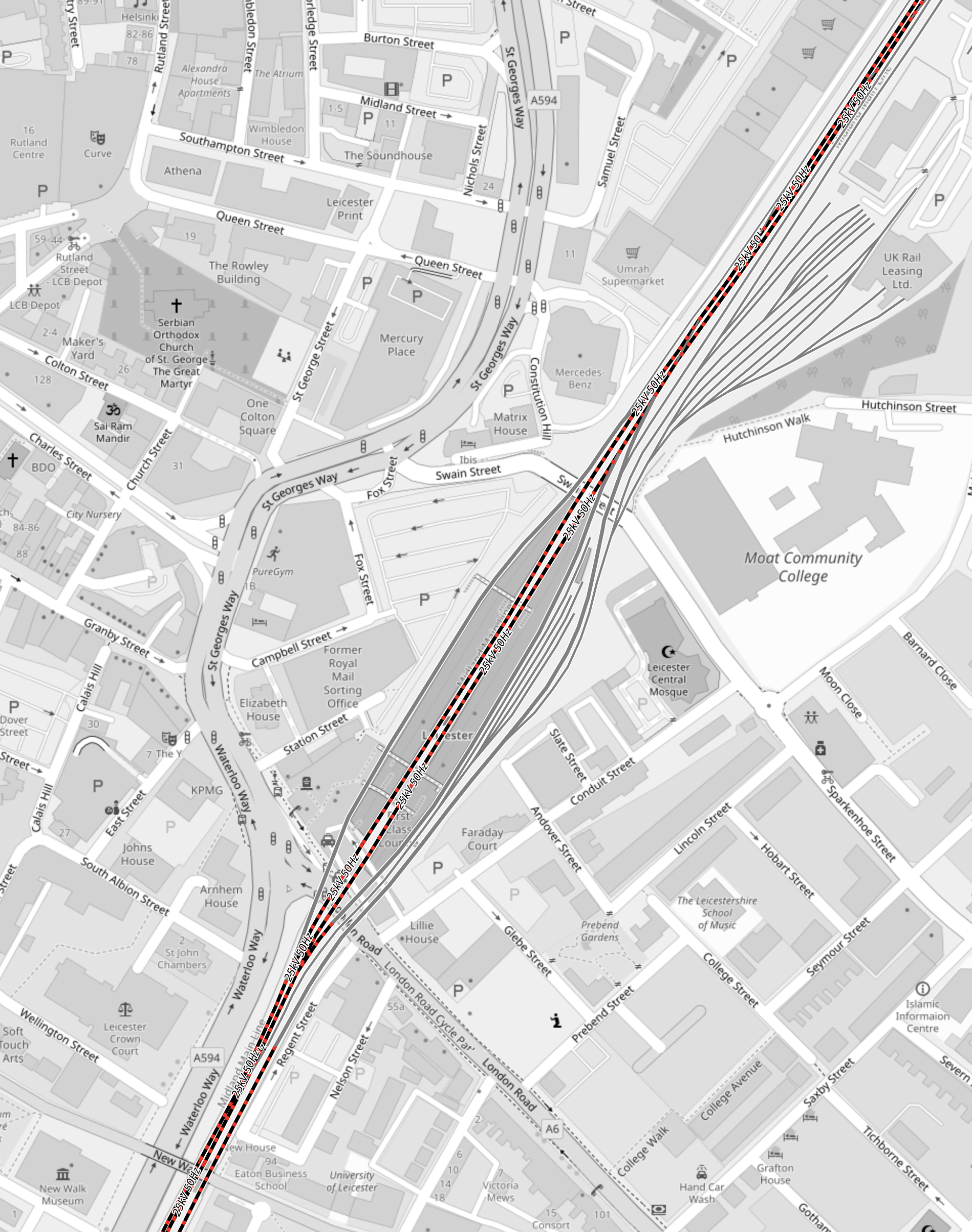
Note.
- Only the two main lines in the centre of the station seem to be going to be electrified.
- These lines are used by East Midlands Railway’s through trains and surprisingly some freight trains.
- Terminating services from places like Birmingham, Grimsby and Lincoln seem to stop in the outer platforms.
This picture shows the platforms from the Northern footbridge.

This picture shows the platforms from the Northern footbridge.
At the Southern end of the station, the tracks go under the London Road bridge. This map shows the tracks there.

Note.
- The two main tracks of the Midland Main Line appear that they will be electrified.
- But the lines at each side are not electrified.
Some years ago I came back to London from Leicester with a group of drivers. At one point, the conversation turned to electrification and they said that they had met a Network Rail engineer, who had told them, that the bridge was rather low for electrification and the track couldn’t be lowered because Leicester’s main sewer was underneath the railway.
It looks like Network Rail have found a way to squeeze two electrified tracks through the middle of the bridge and then use diesel, battery or other self-powered trains on lines without electrification on either side.
Is A High Capacity Freight Route Being Created On The Midland Main Line?
In the January 2022 Edition of Modern Railways, there is a section, which is entitled Mixed Fortunes For Freight In IRP, where IRP is short for Integrated Rail Plan For The North And Midlands.
In the section, this is said about freight on the Midland Main Line.
Whilst HS2 does relieve the MML, electrification of the route north from Kettering via Derby to Sheffield is of relatively limited use to freight, which is generally routed via Corby and Toton to Chesterfield and Rotherham. That said, assuming electrification of the passenger route includes the slow lines from Leicester to Trent and through Chesterfield, it does provide a base on which freight electrification can be built.
This would involve wiring Corby to Syston Junction (north of Leicester), Trent Junction to Clay Cross (south of Chesterfield) and Tapton Junction (north of Chesterfield) to Rotherham Masborough and Doncaster.
As with the ECML, this ‘freight’ electrification would provide a diversionary route and thus greater resilience for East Midlands Railway services.
In addition, gauge clearance throughout from Corby as part of this package would also be highly beneficial in creating a direct route from the ‘Golden Triangle of Logistics’ in the East Midlands to the North East and Scotland for consumer goods supply chains, boosting modal shift to rail and decarbonisation.
It does seem to be a cunning plan worthy of Baldrick at his best.
So is it feasible?
Which Routes Do Freight Trains Use Now?
Christmas in a pandemic, is not a particularly good time to look at the routes freight trains take.
But by looking at Real Time Trains, I can say this.
- Many trains take the route via Corby and Syston Junction, rather than the direct route via Market Harborough and Leicester.
- Leicester is quite busy with freight as trains between Felixstowe and places on the West Coast Main Line, go through the station.
- Very few freight trains seem to take the route via Derby and the Derwent Valley Mills.
- Most freight trains between East Midlands Parkway and Chesterfield seem to take the Erewash Valley Line via Toton and Ilkeston.
I don’t think the pattern will change much, if I look at the trains around the end of January.
What Do I Mean By European-Size Freight Trains?
The Wikipedia entry for loading gauge says this about about the route through the Channel Tunnel and up the Midland Main Line.
UIC GC: Channel Tunnel and Channel Tunnel Rail Link to London; with proposals to enable GB+ northwards from London via an upgraded Midland Main Line.
Note.
- . GC is 3.15 metres wide by 4.65 metres high.
- GB+ is 3.15 metres wide by 4.32 metres high.
- GB+ is intended to be a pan-European standard, that allows piggy-back services.
- British gauging is so complicated, it isn’t specified in standard units. It must be a nightmare for rolling stock designers.
I’ll take an easy way out and assume that by European-Size Freight Trains, I mean that the route must be cleared for GB+ gauge.
Could Kettering and Syston Junction Via Corby Be Cleared For European-Size Freight Trains?
According to a Network Rail Map from February 2010, the current clearance is as follows.
- Kettering and Oakham – W7
- Oakham and Syston Junction – W8
Note.
- Oakham and Peterborough is also W8
- The main problem seems to be that between Corby and Oakham, there are five tunnels; Corby, Glaston, Manton, Seaton and Wing.
- There are also a few overbridges and several level crossings, but they don’t look too challenging.
- Between Corby and Oakham, there is the magnificent Welland viaduct, which has eighty-two arches and is Grade II Listed.
- Ideally, freight operators would like to run European gauge piggy-back services, with road trailers travelling on flat wagons, as they do in CargoBeamer services.
It would be a tough call to satisfy my last point, but if it can be done it would allow all Midland Main Line freight trains to take the Corby diversion and this would remove the problems of running European gauge trains through Leicester station.
This Google Map shows a section of the Welland viaduct.
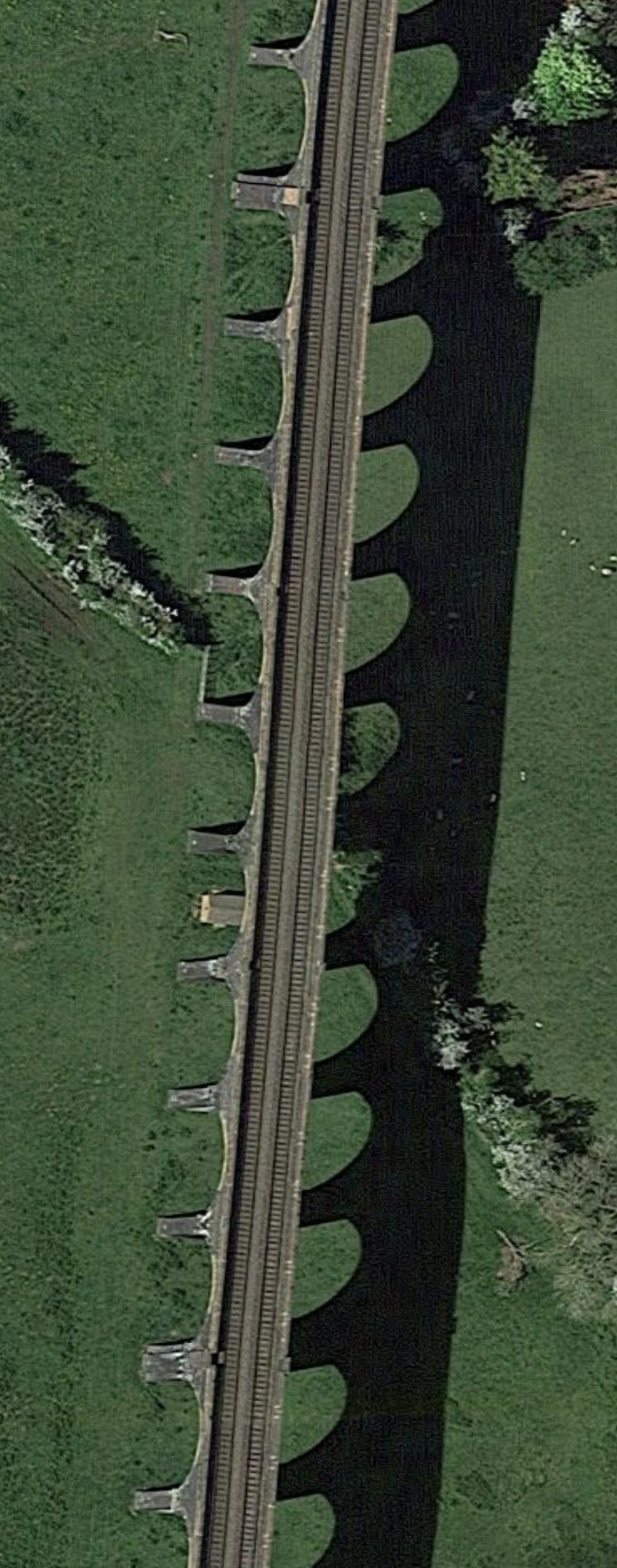
It could be key, as it is fully double-track.
But could it support two heavy freight trains at the same time?
But it would be some sight to see, long European-sized freight trains running over the viaduct.
Could The Midland Main Line Between Syston And Trent Junctions Be Cleared For European-Size Freight Trains?
The route is cleared to W7 or W8 between the two junctions and on inspection with my virtual helicopter, I suspect it wouldn’t be that challenging to upgrade.
It would also be sensible to clear the Castle Donnington Line for European-size freight trains, so that they could reach the East Midlands Gateway freight terminal.
This Google Map shows the location of the East Midlands Gateway.
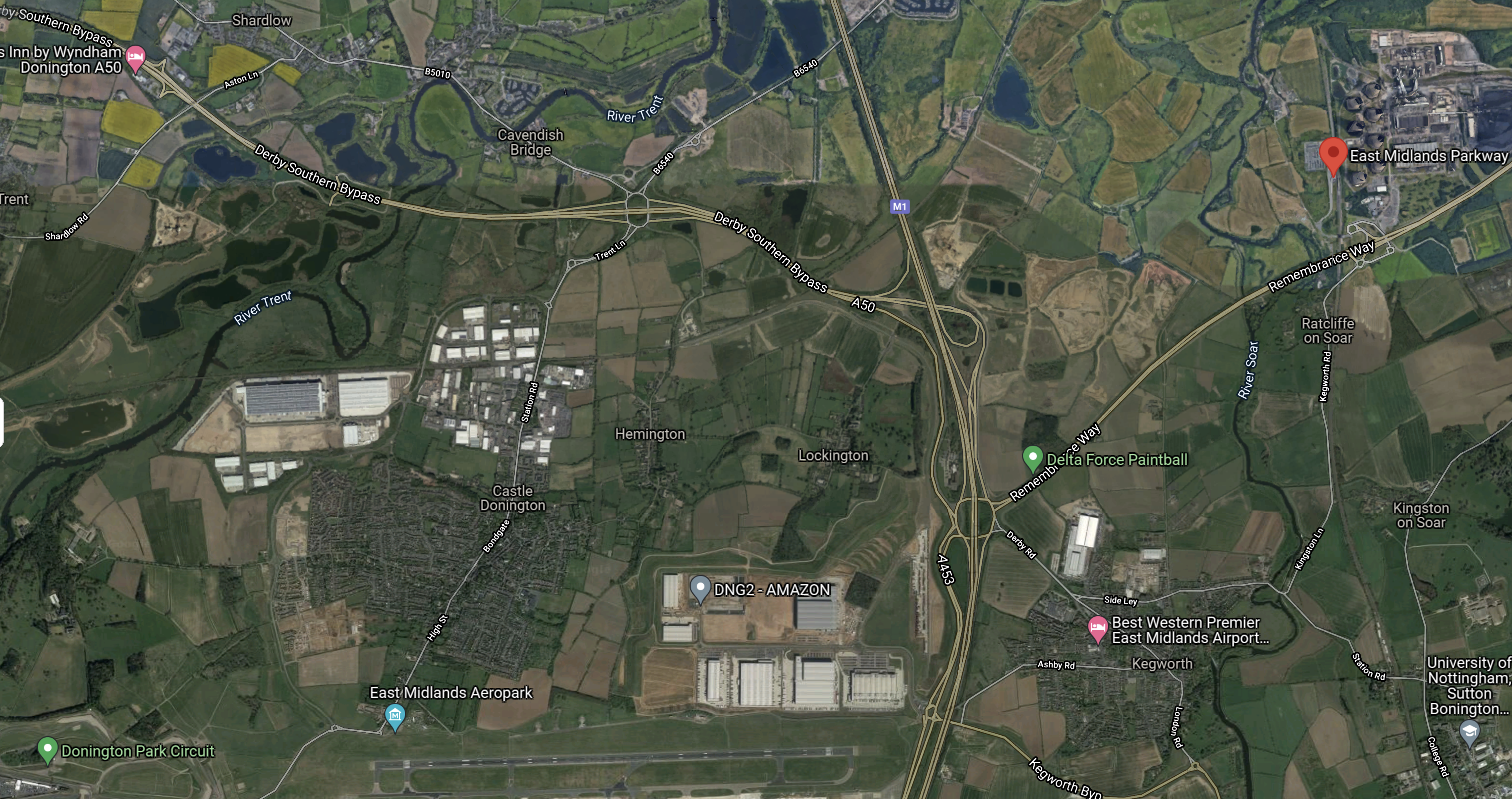
Note.
- East Midlands Parkway station is marked by the red arrow in the North-East corner of the map.
- Castle Donnington circuit is in the South West corner of the map.
- The long East-West runway of East Midlands Airport is clearly visible.
- East Midlands Gateway is to the North of the airport.
This second Google Map shows East Midlands Gateway in more detail.
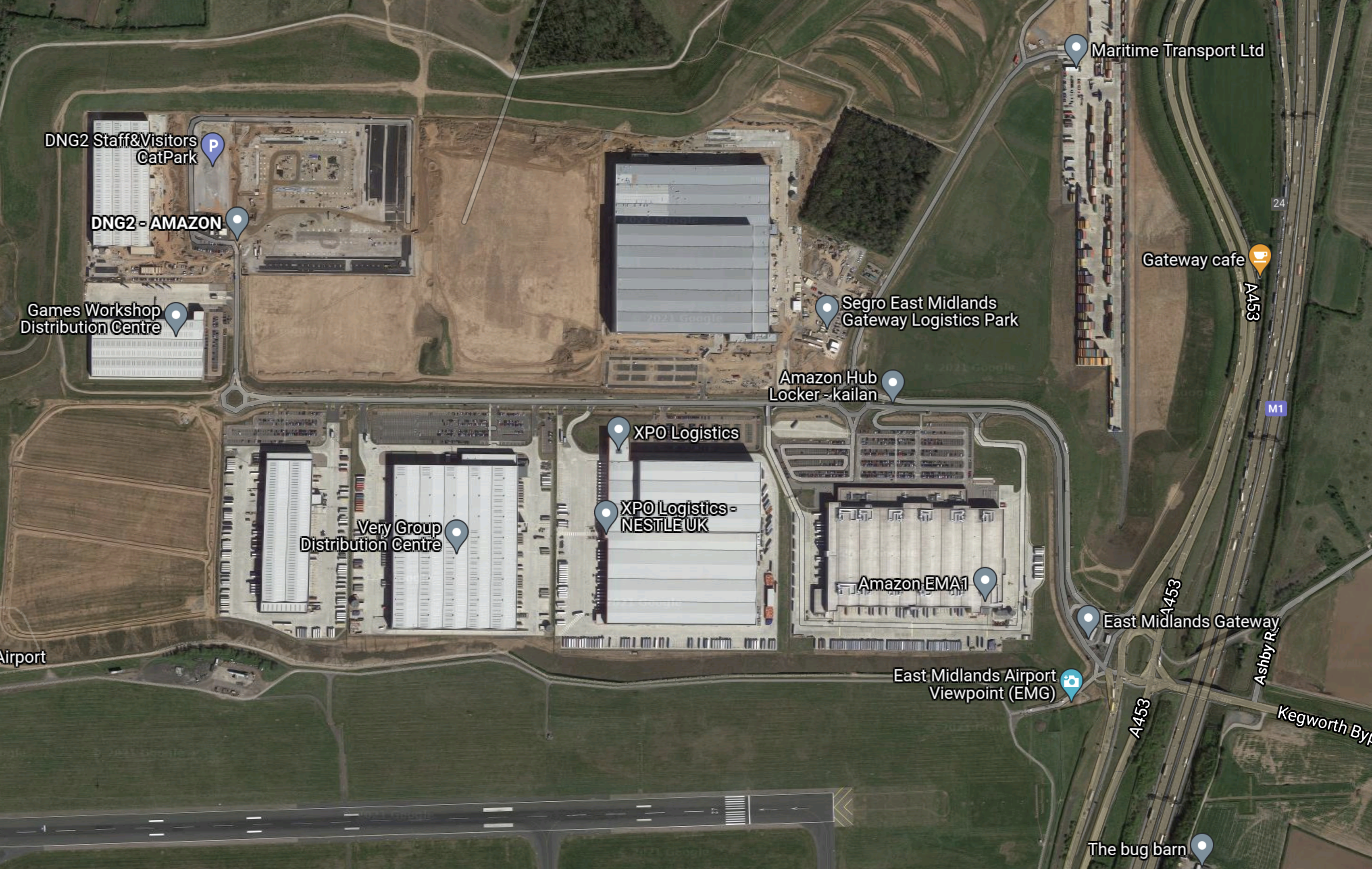
Note.
- In the North-East corner is Maritime Transport’s rail freight terminal.
- The M1 runs North-South at the Eastern edge of the map.
- East Midlands Gateway Logistics Park with two Amazon sheds is in the middle.
- The runway at East Midlands Airport is clearly visible.
The Integrated Rail Plan for the North And Midlands has already announced that High Speed Two will join the Midland Main Line to the South of East Midlands Parkway station to serve Derby, Nottingham and Sheffield.
- This new line will have to go past the airport, either to the North of the Logistics Park or South of the Airport.
- Could there be a station here, both for passengers and the workers at a very busy freight airport and Logistics Park?
- Currently, trains between the rail terminal and London, London Gateway and the Port of Felixstowe have to reverse North of the rail terminal to access the terminal.
- All the rail links between the Midland Main Line and East Midlands Gateway would need to be built to accept European-size freight trains, to ensure maximum flexibility.
It strikes me, that there are a lot of extra features that could be added to the rail network between the Midland Main Line and East Midlands Gateway.
Could The Erewash Valley Line Via Ilkeston Be Cleared For European-Size Freight Trains?
Consider.
- According to a Network Rail Map from February 2010, the Erewash Valley Line is cleared to W8.
- According to Wikipedia, it is the second busiest freight route in the East Midlands.
- Network Rail have spent £250 million on the line in recent years to improve junctions and improve signalling.
- The route doesn’t have a large number of passenger services.
These pictures show Ilkeston station on the Erewash Valley Line.
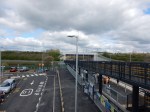
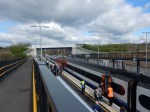
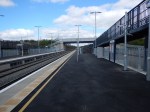

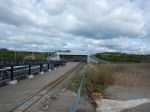
Note.
- The recently rebuilt bridge and the separate avoiding line.
- The Class 158 train under the bridge is 3.81 metres high.
As the European gauge; GB+ is 4.32 metres high, I would feel that Ilkeston station can handle European-size freight trains.
I have flown my virtual helicopter all the way over the Erewash Valley Line from Toton to Clay Cross North junction.
- It looks as if most of the not many bridges are either recent or could be updated to handle the large European-sized freight trains.
- It should also be noted that in many places there is a third track or space for them.
- There are three stations and the Alfreton tunnel.
After this quick look, I feel that the Erewash Valley Line will be able to handle European-size freight trains.
Could Tapton Junction to Rotherham Masborough and Doncaster Be Cleared For European-Size Freight Trains?
This route has very few bridges and I doubt updating wouldn’t cause too many problems.
CargoBeamer
Would it be possible for one of CargoBeamer’s piggy-back trains carrying trailers to run between the Channel Tunnel and the rail terminal at East Midlands Gateway Logistics Park or perhaps another terminal further up the Midland Main Line?
If they could use the Gospel Oak and Barking Line to access the Midland Main Line, I don’t see why not!
Conclusion
It appears that it should be possible to allow European-size freight trains to run between the North of England and the Channel Tunnel.
A Trip To Corby
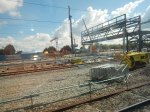
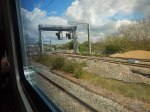
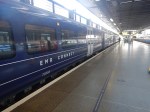
I took these pictures on a trip to Corby this morning.
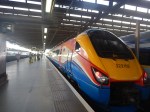
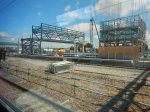


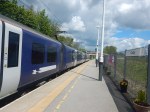
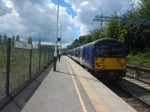
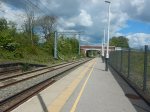
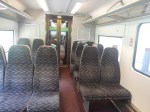
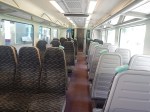
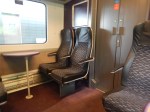

These are my thoughts.
Trains To And From Corby
I got a Class 222 train to Corby and an eight-car Class 360 train back.
Brent Cross West Station
There was a lot of constructruction activity at the new Brent Cross West station.
Luton Airport Parkway Station
The extensions to Luton Airport Parkway station look to be comprehensive, with several escalators.
The Luton DART connection to Luton Airport appears to be under test, so should open in 2022.
But will there be any air passengers to use it?
I last used it in 2008, when I went to see England play in Belarus.
Electrification North Of Bedford
The electrification North of Bedford station is obviously complete on the slow lines, but on the fast lines, as the pictures show, the gantries are all erected, but there are still wires to be installed.
But as the Class 810 trains won’t be in service until 2023, there’s still a bit of time.
The gantries certainly look sturdy, as this picture shows.
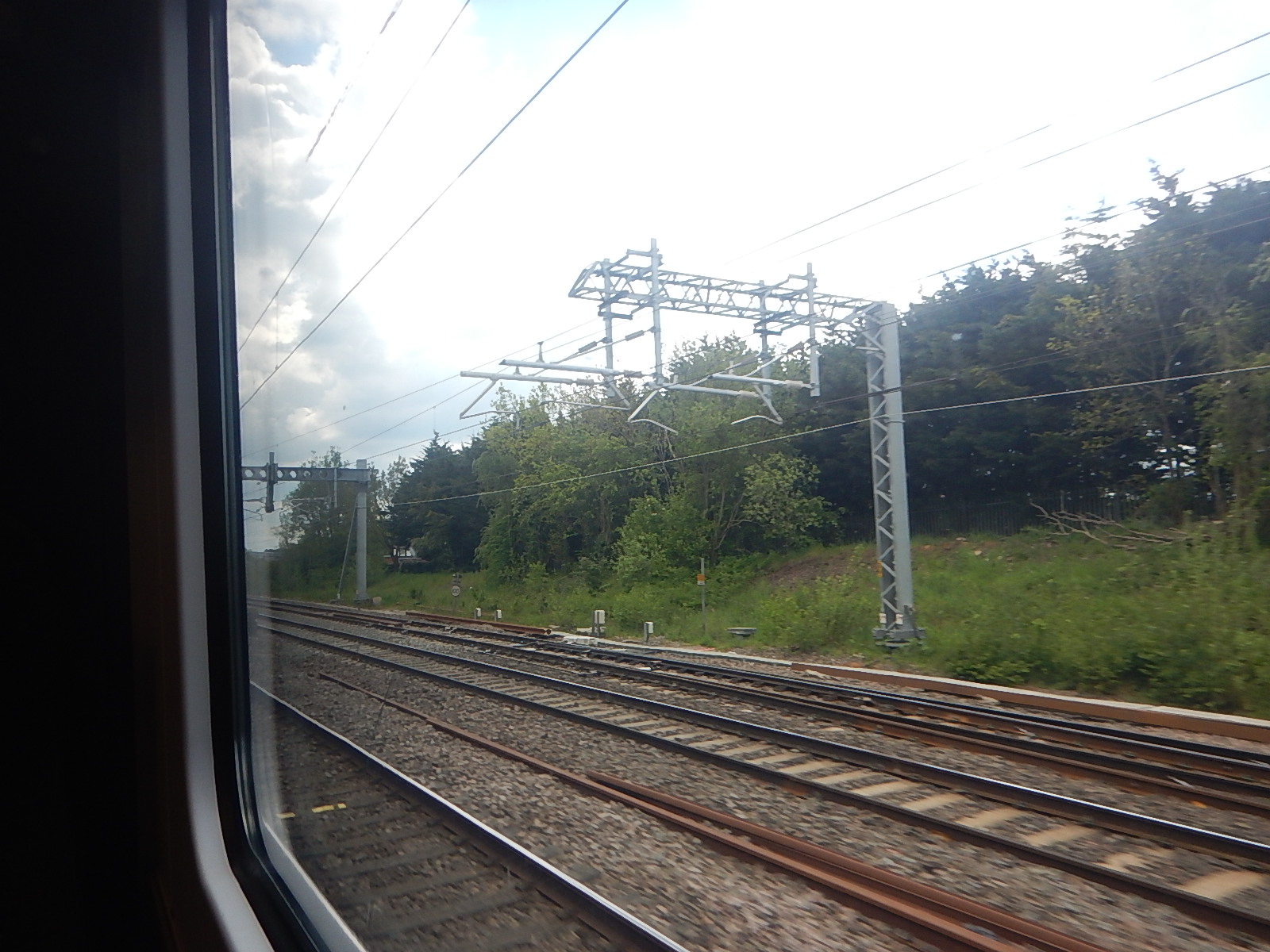
They’re certainly built for 125 mph, but as the Class 810 trains will be capable of 140 mph with full digital in-cab signalling, I would hope that the electrification has been installed to that standard. Or at least to a standard, that can be easily upgraded!
Corby Station
Corby station has been finished to a single-platform station, which is able to accept a twelve-car Class 360 train.
This should be adequate for the current half-hourly service, as a single platform can handle a least four trains per hour (tph) and several around the country regularly do.
Both tracks through the station are electrified and I suspect with a second platform bridge, both could be used by electric trains to create a two-platform station.
But there would appear to be no need at the moment.
Even, if it were to be decided to extend one tph to Oakham and Melton Mowbray stations, this could probably be accommodated on the single-platform.
Network Rail seem to have already installed a crossover South of Corby station, so that trains can use the single platform.
Serving Oakham And Melton Mowbray
I discussed this extension in detail in Abellio’s Plans For London And Melton Mowbray Via Corby And Oakham.
In the related post, I said this.
This page on the Department for Transport web site is an interactive map of the Abellio’s promises for East Midlands Railway.
These are mentioned for services to Oakham and Melton Mowbray.
-
- After electrification of the Corby route there will continue to be direct service each way between London and Oakham and Melton Mowbray once each weekday, via Corby.
- This will be operated with brand new 125mph trains when these are introduced from April 2022.
This seems to be a very acceptable minimum position.
When my Class 222 train arrived in Corby at 1154, it waited a couple of minutes then took off to the North.
I then took the next train to London, which was an eight-car Class 360 train which formed the 1211 service back to St. Pancras.
Meanwhile the Class 222 train, that I’d arrived on did a reverse in the Corby North Run Around Loop finally arriving back in Corby at 1345. The train had taken one hour and forty-nine minutes to return to Corby.
It might be just coincidence, but are East Midlands Railway doing timing tests to see if services can be extended to Oakham And Melton Mowbray?
It should be noted that service times North of Corby are as follows.
- Corby and Oakham – 19 mins – 14.3 miles
- Corby and Melton Mowbray – 31 mins – 25.7 miles
- Melton Mowbray and Leicester – 17 mins – 12.8 miles (estimate) – CrossCountry service
My logic goes like this.
- It looks to me that it would not be unreasonable that a Class 222 train could run between Corby and Leicester in forty-eight minutes.
- Double that and you get one hour and thirty eight minutes, for a journey from Corby to Leicester and back.
- Subtract that time from the one hour and forty-nine minutes that my train took to reverse and there is eleven minutes for a turnback at Leicester station.
- Eleven minutes would certainly be long enough to tidy a train and for the crew to change ends.
I also believe that the 35.8 miles would be possible for a Class 810 train fitted with one or more battery power-packs instead of a similar number of the four diesel engines.
So are East Midlands Railway doing tests to find the most efficient way to serve Oakham And Melton Mowbray?
On The Corby Branch
I travelled North on a Class 222 diesel train and South on an electric Class 360 train.
On the Corby branch, I was monitoring the train speed on an app on my phone and both trains travelled at around 90 mph for most of the way.
There were sections at up to 100 mph and the track was generally smooth.
I was left with the impression, that trains might be able to go faster on the branch.
Average speeds for the 2.5 miles of the branch were as follows according to these timings from realtimetrains.
- Class 222 train – Arriving – 5.25 mins – 28.6 mph
- Class 222 train – Leaving – 5 mins – 30 mph
- Class 360 train – Arriving – 7.5 mins – 20 mph
- Class 360 train – Leaving – 5 mins – 30 mph
It doesn’t appear that there are much difference in the timings, although it might be said, that the electric approach is more cautious.
The Class 360 Trains
The Class 360 trains have not been refurbished yet although as my pictures show, some have been given a new livery.
In Are Class 360 Trains Suitable For St. Pancras And Corby?, I said this about the train refurbishment.
This page on the Department for Transport web site is an interactive map of the Abellio’s promises for East Midlands Railway.
These features are mentioned for Midland Main Line services to Corby.
-
- Increased capacity
- Twelve-car trains in the Peak.
- More reliable service
- Improved comfort
- Passenger information system
- Free on-board Wi-Fi
- At-seat power sockets
- USB points
- Air conditioning
- Tables at all seats
- Increased luggage space
- On-board cycle storage
What more could passengers want?
It certainly hasn’t happened in full.
I did ask a steward, when the new interiors will be installed and he said they were running late because of the pandemic.
Performance Of The Class 360 Trains
I used my app to follow the speed of the Class 360 train, that brought me back to London.
- The train hit a maximum speed of about 105 mph.
- The train arrived in London a minute late.
I feel that as the drivers get used to their new charges, they will match the timetable.
Conclusion
I have a feeling that in a couple of years, these trains will fulfil Abellio’s promises.
Thoughts On The Class 360 Trains On The London St. Pancras And Corby Route
In May the Class 360 electric trains will be introduced by East Midlands Railway on the service between St. Pancras and Corby stations.
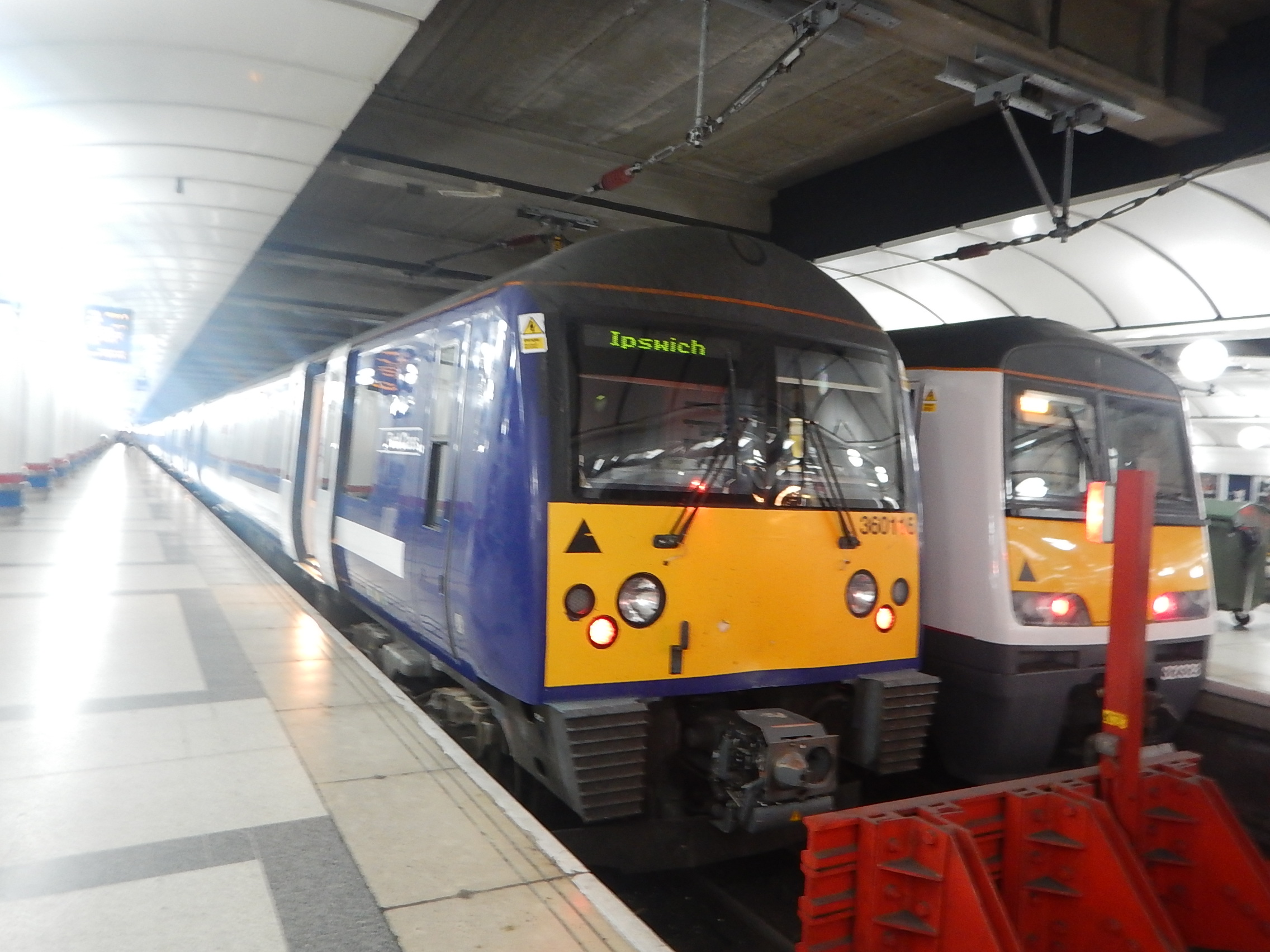
The Class 360 train is on the left.
The following data has come from Real Time Trains.
- St. Pancras and Corby are 79.3 miles apart.
- The current service stops at Kettering, Wellingborough, Bedford and Luton.
- The new electric service stops at Kettering, Wellingborough, Bedford and Luton and Luton Airport Parkway.
- Current services take between 67 and 73 minutes
- The new electric services take between 71 minutes
- Services leave St. Pancras at XX:15 and XX:45
- Services leave Corby at XX:11 and XX:40
- Turnround at St. Pancras appears to be about 23-25 minutes
- Turnround at Corby appears to be about 12-16 minutes.
- St. Albans and St. Pancras takes 14 minutes.
Note.
- The Class 222 train has a top speed of 125 mph and a maximum acceleration: of 0.80 ms-2
- The Class 360 train has a top speed of 110 mph and a maximum acceleration: of 0.98 ms-2
Looks like a case of swings and roundabouts to me!
I can deduce the following.
Average Speed
Consider.
- Assuming a trip time of seventy minutes for the Class 222 train, gives an average speed of 68 mph including stops.
- Assuming a trip time of seventy-one minutes for the Class 360 train, gives an average speed of 62 mph including stops.
These speeds don’t seem to be too difficult to achieve. Especially, as the Midland Main Line is a series of straight line between a number of stations., which are ideal for a quick dash in between.
It’s A Three Hour Round Trip
Add up the two 71 minute trips and the turnaround times and it looks to be a comfortable three hour round trip.
So for a two trains per hour (tph) service, you will need six formations of Class 360 trains.
As it looks like each formation will be twelve cars long, that will mean that eighteen of the current twenty-one trains will be needed.
The three spare trains will be very useful, whilst the trains are refurbished with new liveries and interiors.
Route Capacity
This picture shows a five-car Class 222 train at Corby station.
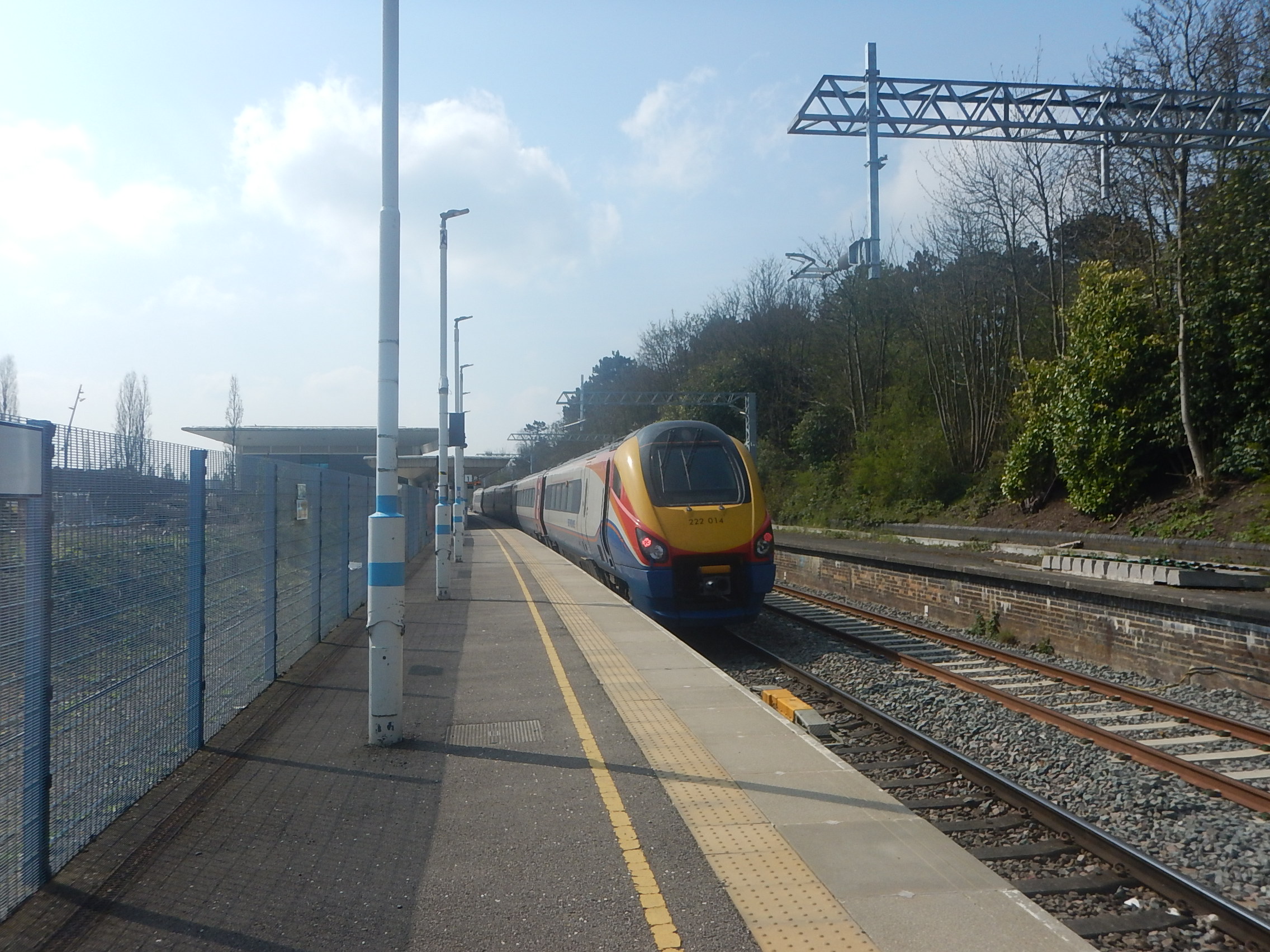
Consider.
- The current five-car Class 222 trains have a capacity of 50 First Class and 192 Standard Class seats
- Four-car Class 222 trains have a capacity of 33 First Class and 132 Standard Class seats.
- A four-car Class 360 train has a capacity of 16 First Class and 264 Standard Class seats.
I can do a simple calculation.
- The current one tph service, if run by a five-car Class 222 trains would have an hourly capacity of 50 First Class and 192 Standard Class seats.
- The planned two tph service if run by twelve-car 360 trains has an hourly capacity of 96 First Class and 1584 Standard Class seats.
First Class capacity on the route has doubled and Standard Class accommodation has gone up by a massive 8.25 times.
The latter figure will probably be reduced as some of the seats are to be removed for a more spacious interior with tables.
Serving Luton Airport
It looks like these trains will enable a quick journey to Luton Airport.
- The St. Pancras and Corby train will take 22 minutes between St. Pancras and Luton Airport Parkway stations.
- There will be the Luton DART connecting Luton Airport Parkway to the Airport from 2022.
- I suspect Luton Airport will be aiming for a thirty minute journey between St. Pancras and the Airport.
- The fast service will have a frequency of two tph.
It will not compare badly with rail times from London to Gatwick of 35 minutes and to Stansted of 50 minutes.
Services To Oakham And Melton Mowbray
Consider.
- Oakham and Melton Mowbray stations are on the route between Corby station and the Midland Main Line North of Leicester.
- Oakham and Melton Mowbray stations have a one train per day (tpd) in both directions to London via Corby.
- In Beeching Reversal – Increased Services To Nottingham And Leicester, via Syston And Loughborough From Melton Mowbray. I wrote about how the local MP wants better services at Melton Mowbray.
- Oakham is 11.5 miles from Corby.
- Melton Mowbray is 25.8 miles from Corby.
- Leicester is just over forty miles from Corby and could be covered in under an hour.
- A pair of Class 810 trains are the same length as a trio of Class 360 trains, so both trains would fit all platforms.
I think that there are a lot of possibilities for services through Corby.
- Class 810 trains could use Corby as a diversion, when the Midland Main Line is closed for engineering works.
- Class 810 trains could run a service between St. Pancras and Leicester via Corby, Oakham and Melton Mowbray.
- If the Class 360 trains could be fitted with batteries, they should be able to provide a service from St. Pancras to Melton Mowbray and perhaps Leicester.
It could even provide an alternative route to London, if Leicester station has to be substantially rebuilt for electrification..
Conclusion
This not the longest of electric services, but I can see it carrying a lot of passengers.
It will also give a boost to Luton Airport.
Testing Begins On Midland Main Line Electrification
The title of this post, is the same as that of this article on Rail Magazine.
- From the article, it looks like the first part of mechanical testing has been completed as planned and unpowered pantograph runs have been performed at up to 110 mph.
- It does seem to me, that this thirty miles of electrification has avoided the troubles that have plagued similar projects in recent years.
Perhaps the good progress on this electrification, is making the government think again about early electrification of all of the Midland Main Line
In Hopes Rekindled Of Full Midland Main Line Electrification. I showed how battery electric Class 810 trains would be able to work the route.
This was my conclusion of that earlier post.
It appears that both the Nottingham and Sheffield services can be run using battery electric Class 810 trains.
- All four diesel engines in the Class 810 trains would need to be replaced with batteries.
- The route between Clay Cross North Junction and Sheffield station, which will be shared with High Speed Two, will need to be electrified.
- Charging facilities for the battery electric trains will need to be provided at Nottingham.
On the other hand using battery electric trains mean the two tricky sections of the Derwent Valley Mills and Leicester station and possibly others, won’t need to be electrified to enable electric trains to run on the East Midlands Railway network.
Will it be the first main line service in the world, run by battery electric trains?
There was one thing, that wasn’t available, a month ago, when I wrote that post – A charging system for battery electric trains, that could be installed at Nottingham.
In Vivarail’s Plans For Zero-Emission Trains, I report on Adrian Shooter’s plans for Vivarail, which are outlined in a video by Modern Railways.
Ar one point he says this see about Vivarail’s Fast Charge system.
The system has now been given preliminary approval to be installed as the UK’s standard charging system for any make of train.
I may have got the word’s slightly wrong, but I believe the overall message is correct.
So could we see a Hitachi Class 810 train using Vivarail’s patented Fast Charge system at Nottingham?
In Interview: Hitachi’s Nick Hughes On Driving Innovation In Rail Propulsion, Nick Hughes of Hitachi is quoted as saying.
Rail is going to become increasingly digitised and integrated into other sectors involved in smart cities, mobility-as-a-service and flexible green grid. Therefore, Hitachi Rail won’t be able to stay at the forefront of innovation by its self. This is why we are focused on building partnerships with other like-minded, innovative, clean tech companies like Hyperdrive Innovation, Perpetuum and Hitachi group companies such as Hitachi ABB.
Does Vivarail fit that philosophy? In my view, it does!
This Hitachi infographic gives the specification of their Regional Battery Train.

Note.
- The range on battery power is 90 km or 56 miles at up to 100 mph.
- Class 810 trains could be converted to battery electric trains by replacing the diesel engines with batteries.
- As the electrification has reached Kettering. there is only 55 miles between London St Pancras and Nottingham without electrification.
I could see Class 810 trains running between St. Pancras and Nottingham on delivery, provided the following projects have been completed.
- Hitachi have been able to give the Class 810 trains a range of say 60 miles on batteries.
- Hitachi have modified their trains, so they can be recharged by a Vivarail Fast Charge system in fifteen minutes.
- Vivarail have installed a Fast Charge facility at Nottingham station.
Network Rail are planning to extend the electrification from Kettering to Market Harborough, which would reduce the distance without electrification to under 50 miles. This would make running battery electric trains between London St. Pancras and Nottingham even easier.
Expanding The Network
If I am putting two and two together correctly and Hitachi have turned to Vivarail to provide a charging system or a licence for the use of the technology, I am sure, it would be possible to create a comprehensive network of battery electric trains.
Consider.
- Hitachi should be able to squeeze a sixty mile range at 90-100 mph from a battery-equipped Class 810 trains.
- Market Harborough and Derby are about 47 miles apart.
- Derby and Sheffield are about 36 miles apart
- Sheffield and Leeds are about 48 miles apart
- Corby and Leicester are about 41 miles apart.
Vivarail Fast Charge systems at Derby, Leicester and Sheffield would enable the following routes to be run using battery electric trains.
- London St. Pancras and Sheffield via Derby – Fast Charging at Derby and Sheffield
- London St. Pancras and Leeds via Derby and Sheffield – Fast Charging at Derby and Sheffield
- London St. Pancras and Sheffield via the Erewash Valley Line – Fast Charging at Ilkeston (?) and Sheffield
- London St. Pancras and Leicester via Corby – Fast Charging at Leicester
Note.
- The only extra electrification needed for the initial network would be between Kettering and Market Harborough.
- The Class 810 trains would all be identical.
- The Class 810 trains might even be built and delivered as battery electric trains
- Trains would also charge the batteries between London St. Pancras and Market Harborough, between London St. Pancras and Corby. and between Leeds and Wakefield Westgate.
The network can be extended by adding more electrification and Fast Charge systems.
Conclusion
The technologies of Hitachi and Vivarail seem complimentary and could result in a fully electric main line train network for East Midlands Railway.
MP Campaigns To Extend Train Services For Melton Borough
The title of this post, is the same as that of this article on the Melton Times.
This is the introductory sub-title.
A campaign has been launched by the Melton’s MP to improve services passing and operating from the town station and the one at Bottesford.
Alicia Kearns has submitted two bids to the Restoring Your Railway Fund.
- More regular services on the Poacher Line to Bottesford station.
- Increased services to Nottingham and Leicester via Syston and Loughborough from Melton Mowbray station.
I’ll now look at the two proposals in more detail.
More Regular Services To Bottesford
Wikipedia says this about services at Bottesford station.
- The service is generally every two hours to Nottingham in the West and Skegness in the East.
- Some trains call at Grantham and give connection to the East Coast Main Line.
- LNER services at Grantham connect to Doncaster, King’s Cross, Leeds, Lincoln, Peterborough, Stevenage, Wakefield and York.
- Bottesford is in the Borough of Melton and their is no direct rail service between Bottesford and Melton. A typical journey takes over two-and-a-half hours with two changes, that can include a wait of an hour at Leicester station.
- Bottesford is in the County of Leicester. There is no direct rail service between Bottesford and Leicester.
I think the MP has a point and an improved and more frequent service at Bottesford could be very beneficial.
- Many routes like this in the UK have an hourly service and I suspect many communities along the Poacher Line would benefit from this frequency.
- All services calling at Grantham for East Coast Main Line services would be useful.
- Do services have a good interchange at Nottingham for Midland Main Line services?
It looks like improvements at Bottesford wouldn’t require any new expensive infrastructure, but they would need more trains.
More Services Through Melton
Wikipedia says this about services at Melton station.
- There is an hourly off-peak service in both directions between Stansted Airport and Birmingham, that calls at Cambridge, Peterborough, Oakham and Leicester.
- East Midlands Railway and their predescessor have added services to London via Corby and to Derby and East Midlands Parkway.
When you consider, that both Bottesford and Melton Mowbray are the same Council and Parliamentary constituency, it does seem that a more direct train service is needed between Bottesford and Melton stations.
It does seem to me that some innovative thinking is needed.
If the current plans to fulfil British Rail’s ambition of an Ivanhoe Line running from Lincoln to Burton-on-Trent via Nottingham, East Midlands Parkway, Loughborough and Leicester, are carried out, that will give important towns to the West of Leicester much better rail connections.
Given that High Speed Two is coming to East Midlands Hub station at Toton and there will be a Bedford and Leeds service run by Midlands Connect using High Speed Two classic-compatible trains, that I wrote about in Classic-Compatible High Speed Two Trains At East Midlands Hub Station, I wonder if in the interim, there should be more trains between Derby and Melton.
- Intermediate stations would be Syston, Sileby, Barrow-upon-Soar, Loughborough, East Midlands Parkway Long Eaton and Spondon.
- An hourly frequency would double the service frquency at smaller stations like Sileby and Barrow-upon-Soar.
- The Southern terminal could be Melton station, but I feel Corby or Peterborough stations would be better, as this would improve services at Oakham station. We should not forget Rutland.
- As Corby will be an electrified two-platform station with a two trains per hour (tph) service to London, this could work quite well as a Southern terminus.
- Peterborough would have advantages and give a good connection to Cambridge, London and Scotland, but improvements to the current Birmingham and Stansted Airport service would have similar effects.
This route would be just as valuable after High Speed Two opens through the East Midlands Hub station, as it will give fast ongoing connections to Birmingham, Leeds, Newcastle and York.
Electrification Of The Midland Main Line
I feel strongly, that full electrification of the Midland Main Line could be a step to far.
- Electrification, through Leicester station will mean a complete closure of the station for a couple of years.
- Electrification of the route North of Derby, through the Derwent Valley Mills, which is a World Heritage Site, will be opposed by the Heritage Taliban with all their might.
But.
- Electrification of the route between Clay Cross North Junction and Sheffield via Chesterfield will take place in conjunction with High Speed Two
- Electrification to Market Harborough, which is sixteen miles South of Leicester will happen.
- East Midlands Railway’s new Class 810 trains could be fitted with a battery option giving a range of between 55 and 65 miles.
- Pantographs on this trains can go up and down with all the alacrity of a whore’s drawers.
If the easier section of electrification between Leicester and Derby stations, were to be erected, this would enable the following routes to be run using battery=equipped Class 810 trains.
- London and Derby, where battery power would be used through Leicester.
- London and Nottingham, where battery power would be used through Leicester and between East Midlands Parkway and Nottingham.
- London and Sheffield, where battery power would be used through Leicester and between Derby and Clay Cross North Junction.
- Lincoln and Burton-on-Trent, where battery power would be used South of Leicester and North of East Midlands Parkway.
- Derby and Corby, where battery power would be used between Syston and Corby.
There would also be the service between Derby and Norwich, which might be able to be run by a similar train.
Conclusion
The MP’s plan is worth pursuing.
Corby Class 360/1s Earmarked For 110 mph Running
The title of this post, is the same as that of an article on Page 10 of Issue 886 of Rail Magazine.
In Are Class 360 Trains Suitable For St. Pancras And Corby?, I came to this conclusion.
In my view there is a lot of upgrade work to be done to the Class 360 trains to make them suitable for working on the services between St. Pancras and Corby.
- They need a new upgraded interior.
- The trains need upgrading to at least 110 mph.
- A possible upgrading with digital signalling.
I can’t help feeling that the Class 360 trains would make a good stop-gap, but in the long-term it might be better to have a small fleet of electric trains.
The Rail Magazine article says the following will be done.
- Trains will be upgraded for 110 mph running.
- 3+2 seating will be replaced by 2+2 seating.
- Wi-fi, tables and updated information screens will be added.
This all sounds a lot better.
Are Class 360 Trains Suitable For St. Pancras And Corby?
It appears that East Midlands Railway will be using Class 360 trains on the route between St. Pancras and Corby stations running them under the branch name of EMR Electrics.
The London And St. Pancras Route
The route has the following characteristics.
- It is just short of 80 miles long.
- The current Class 222 trains take one hour and fifteen minutes for the journey.
- This means these trains have a start to stop average at 64 mph.
- Much of the route is cleared for 125 mph running.
- The route is being made a complete double track.
- The whole route is being electrified with 25 KVAC overhead wires.
In December 2020, the route will host a new electric service.
East Midlands Railway’s Train Specification For The Route
This page on the Department for Transport web site is an interactive map of the Abellio’s promises for East Midlands Railway.
These features are mentioned for Midland Main Line services to Corby.
- Increased capacity
- Twelve-car trains in the Peak.
- More reliable service
- Improved comfort
- Passenger information system
- Free on-board Wi-Fi
- At-seat power sockets
- USB points
- Air conditioning
- Tables at all seats
- Increased luggage space
- On-board cycle storage
What more could passengers want?
How Well Do Class 360 Trains Fit The Specification?
These are a few pictures of a Class 360 train, which I took today.
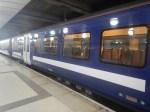
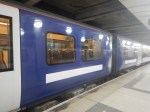
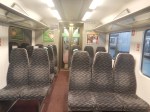

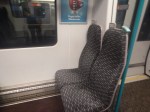

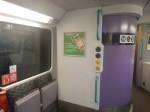
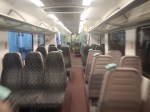
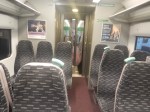
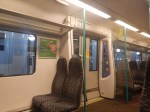
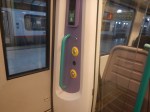
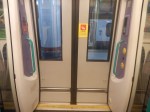
Some problems and strengths are immediately obvious.
- There are no tables.
- Will two+three seating e acceptable, considering that the current trains on the route have two+two seating.
- There is no space for bicycles.
- There are no luggage racks, which will be needed as the Corby service will also double as a service to Luton Airport.
- The trains are in reasonably good condition.
- There ia a fully-accessible toilet.
A lot of work will need to be done to update the interior of the trains to a standard, that fits East Midland Railway’s specification and their customers expectations.
But there is a full twelve months before the trains will be needed to run on the newly electrified route between St. Pancras and Corby stations.
This may seem enough time, but many current train refurbishment projects are running late.
Is The Performance Of Class 360 Trains Good Enough?
The current Class 222 trains have the following performance.
- 125 mph maximum speed.
- An acceleration rate of 0.80 m/sec/sec
By comparison the Class 360 trains have the following performance.
- 100 mph maximum speed.
- An acceleration rate of 0.98 m/sec/sec.
Given that much of the route between St. Pancras and Corby stastions will be constructed for 125 mph running, will the top speed of the Class 360 trains be high enough?
Will The Class 360 Trains And The Hitachi AT-300 Bi-Modes Be Compatible?
East Midlands Railway has ordered thirty-three AT-300 bi-modes, which will be able to run at 125 mph on the fully-electrified Midland Main Line to the South of Market Hsrborough station.
As thetwo trains will share the fast lines, with the Class 360 trains, will there be conflicts, as the Class 360 trains are only capable of 100 mph?
Ideally, the Class 360 trains should be upgraded to their highest speed possible.
Some of similar Class 350 trains are capable of 110 mph.
This could be enough, but surely for ease of operation, all of East Midlands Railway’s services into St. Pancras should be run by trains capable of running at 125 mph.
Will The Class 360 Trains Need Digital Signalling?
The Hitachi AT-300 trains will probably be able to run using digital signalling, which could be a valuable way of creating more paths on the Midland Main Line.
So will the Class 3560 trains be fitted with digital signalling?
Conclusion
In my view there is a lot of upgrade work to be done to the Class 360 trains to make them suitable for working on the services between St. Pancras and Corby.
- They need a new upgraded interior.
- The trains need upgrading to at least 110 mph.
- A possible upgrading with digital signalling.
I can’t help feeling that the Class 360 trains would make a good stop-gap, but in the long-term it might be better to have a small fleet of electric trains.
Electric AT-300 trains must be one of the favourites, although Class 745 trains, similar to those that Abellio will run between Liverpool Street and Stansted Airport, would do nicely.
 The Anonymous Widower