Wrightbus StreetDeck Ultroliner Next-Gen To Get Cummins Power
The title of this post, is the same as that of this article on Route One.
These three paragraphs give more details.
Wrightbus will utilise Cummins power in its StreetDeck Ultroliner diesel double-decker for the first time in a next-generation variant of that model.
Those vehicles will be powered by the six-cylinder B6.7 engine rated at 250bhp or 300bhp, driving through the Voith DIWA.8 seven-speed automatic gearbox. Such an approach will further reduce emissions, and the new model will be Ultra-Low Emission Bus accredited by Zemo Partnership, the manufacturer says.
The existing StreetDeck Ultroliner, which is powered by the Daimler OM 934 four-cylinder engine, will continue to be available. The first Cummins-powered examples are to be supplied to Isle of Man operator Bus Vannin.
As a hydrogen version of the the Cummins six-cylinder B6.7 engine is available, at some point in the future, these buses will be convertible to zero-emission hydrogen power.
Wrightbus have already set up a division called New Power to do the conversion of existing buses, as I reported in Wrightbus Launches NewPower In Bicester.
Iarnród Éireann Looks At Diesel Loco Replacement Options
The title of this post, is the same as that of this article on Railway Gazette.
These three paragraphs introduce the article.
The Stadler Class 99 electro-diesel locomotive for UK operator GB Railfreight was receiving close scrutiny from Iarnród Éireann at InnoTrans in Berlin, with the Irish national operator confirming to Railway Gazette International that it had discussed with the manufacturer how the type might be adapted for operation in Ireland.
Iarnród Éireann Chief Executive Jim Meade told Railway Gazette International ‘we will eventually need to replace our aging diesel fleet with dual-mode locomotives because our freight strategy will take us down that direction after we complete our electrification programme.
‘The replacement for the class 071s and 201s eventually will have to be a bi-mode electric with some form of HVO [renewable diesel fuel] traction in the long term; even the Class 201s are beyond mid-life already.
The Class 99 locomotive is a version of the Stadler Eurodual locomotive, which is described in this Stadler data sheet.
The Wikipedia entry for the Stadler Euro Dual is also informative and lists a dozen different versions of the locomotive, that have been sold to various countries and operators.
This paragraph summarises how the design can handle different gauges and electrical voltages.
The Euro Dual was designed from the onset as a highly modular platform, allowing it to be offered to customers in various different configurations, covering various gauges and voltage systems.
I doubt Stadler would have great difficulty producing an Irish gauge locomotive capable of running on whatever electrification, the Irish erect.
Will The Irish Class 99 Have Enough Power?
The power of the various diesel locomotives are as follows.
- Current Irish Class 071 – 1.68 MW
- Current Irish Class 201 – 2.4 MW
- UK Class 66 – 2.4 MW
- UK Class 99 – 1.79 MW
It would appear that the Class 99 is less powerful than the Irish Class 201 and the UK Class 66, but the Wikipedia entry for the Class 99 says this.
The chief executive of GBRf, John Smith, reports that the Class 99, despite having a less powerful diesel engine than the Class 66, will outperform the Class 66 at low speeds. The greater tractive effort means that the Class 99 on diesel power can deliver more power at the rail than the 66.
But as the Class 99 has 6.17 MW in electric mode, the solution must be to electrify the difficult sections.
I have just looked at the Felixstowe Branch Line, which will be very much Class 99 territory. I am fairly sure, that with some short lengths of electrification on the single-track sections, any performance problems with the Class 99 on the branch could be solved.
Could The Irish Class 99 Use Hydrogen As Secondary Power?
This OpenRailwayMap shows all the railways on the island of Ireland.
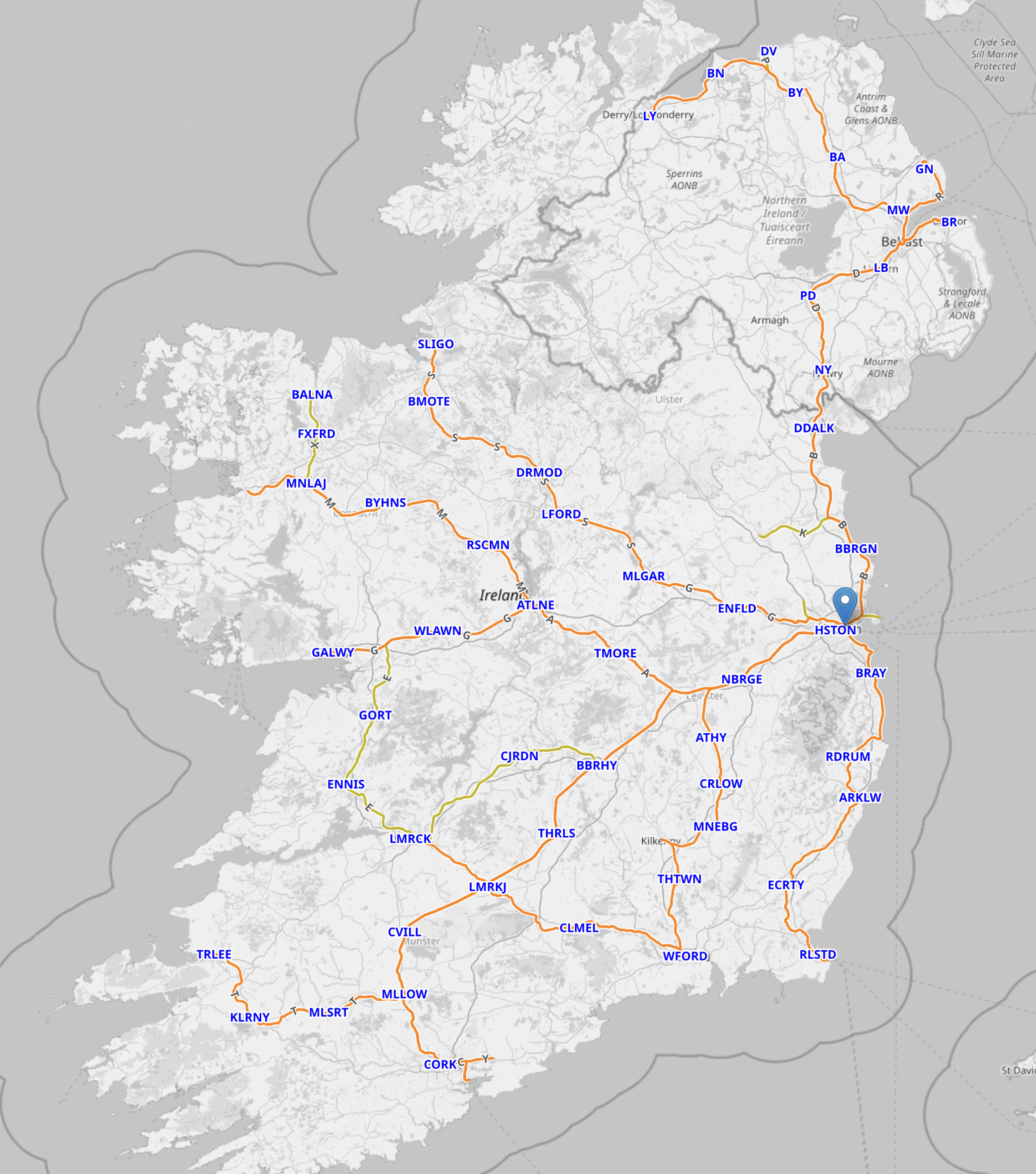
Note.
- All railways on the island of Ireland have an Irish gauge of 1.6 m.
- Only the DART in Dublin is electrified with 1,500 VDC overhead.
- There are 2,733 km. of track.
- New lines are still being added and old ones have been reopened in recent years.
- There will surely be pressure for the Irish to decarbonise their railways, both North and South of the Northern Irish border.
- There are no rail connections to another country, except for the link between Northern Ireland and the Republic of Ireland, which is between two similar systems.
- It is unlikely, that there will ever be a rail link between the Irish gauge railways on the island of Ireland and the standard gauge railways of Europe.
Effectively, the island of Ireland has an isolated network of tracks on which they could build a zero-carbon railway system.
- Signalling could be an off-the-shelf digital system.
- Zero-carbon traction power could be trains powered by either electricity and/or hydrogen.
- Both electricity and hydrogen would need substantial amounts of new rolling stock.
- Electricity would require electrification at €1,000,000 per single track kilometer, which could be around €5.5 billion for the electrification alone.
- Electrification would also need many bridges, stations and tunnels to be modified or rebuilt.
- Hydrogen would need a refuelling infrastructure and could go anywhere that diesel can.
- Hydrogen locomotives and trains, would be one-to-one replacements for diesel locomotives and trains.
It would appear that because of their geographic isolation, hydrogen could be an ideal zero-carbon fuel for the railways of Ireland.
In Do Cummins And Stadler Have a Cunning Plan?, I speculated that the electro-diesel Class 99 locomotive could be converted into an electro-hydrogen Class 99 locomotive, as Cummins are building diesel engines that can be converted into hydrogen ones.
Ireland with its unusual network could change to a zero-carbon railway in the following way.
- Purchase a fleet of diesel locomotives and trains that can run on Hydrotreated Vegetable Oil (HVO) and be convertible to hydrogen.
- A version of the Class 99 with or without the electrical gubbins would satisfy the locomotive replacement.
- A version of the tri-mode Stadler FLIRT like a Class 745 train, would satisfy the train replacement.
- All new trains and locomotives would replace the current stock and run on HVO.
- The hydrogen infrastructure would be built.
- The new trains and locomotives would be gradually converted to run on green hydrogen.
Within a few years, the island of Ireland would have a zero-carbon railway.
Advantages Of A Fully-Hydrogen Railway
These are a few advantages.
- One fuel for all trains.
- All trains and locomotives would be one manufacturer.
- No expensive electrification.
- Hydrogen trains and locomotives have a long range.
- No infrastructure modification for gauge clearance.
- Ireland has plenty of onshore and offshore wind for hydrogen.
- Standard fuelling systems are being developed.
- There would be no disruption as the trains changed to HVO and little disruption as they changed to hydrogen.
I believe that there would be a large increase in train usage both from locals and visitors, which can only be good for the Irish economy.
Managing The Project
This could be one of those rare projects that flows well.
- The changeover to hydrogen could involve very little rail infrastructure work.
- The hydrogen filling stations could be more-or-less independent of the rail infrastructure.
- Trains and locomotives could go into service, when they are accepted and the staff have been trained.
- Trains and locomotives would only be converted to hydrogen, as routes are made hydrogen-capable.
- There should be no gauging problems with the new trains and locomotives.
- There is only one train manufacturer.
Hopefully, it will all be delivered on time and on budget.
Innotrans 2024: Rolls-Royce Shows mtu Solutions For On-Track Energy Transition And Celebrates 100 years Of Rail Engine Business
The title of this post, is the same as that of this press release from Rolls-Royce.
These four bullet points, act as sub-headings.
- All mtu engine series for locomotives and railcars approved for sustainable fuels
- DB, RDC Autozug Sylt, Trenitalia and České dráhy use or test HVO
- Rolls-Royce celebrates 100 years of success with mtu rail drives
- More than 250 rail customers worldwide value the performance, compact design and low exhaust emissions of mtu systems
These are the first two paragraphs.
Rolls-Royce will be presenting its mtu-brand propulsion and service solutions at the international rail exhibition Innotrans in Berlin from September 24 to 27, 2024 in Hall 18, Booth 500. The company will be celebrating an anniversary at the same time: for 100 years, mtu products have been powering trains, including mainline and multi-purpose locomotives, high-speed trains and local transport railcars. On display will be sustainable propulsion solutions such as the mtu Series 4000 and 1600 engines for locomotives and the underfloor drive systems mtu PowerPacks for railcars, all of which are now released for sustainable fuels such as HVO. Rolls-Royce will also be presenting its repower and reman solutions.
100 years ago, Karl Maybach laid the foundation for the rail drive systems of today’s mtu brand with the world’s first high-speed diesel engine for railcars, the Maybach G 4a. Maybach also developed the GO 5 engine for the “Fliegender Hamburger” express train.
These are my thoughts.
Chiltern Railways Could Go Carbon-Neutral By Using HVO
In Vegetable Oil Fuelling Chiltern Railways Trains In UK First, I described how Chiltern Railways are running their Class 68 locomotives on HVO.
This move by Rolls-Royce mtu will allow all Chiltern’s Class 168 trains to be run on sustainable HVO, as they have Rolls-Royce mtu diesel engines.
Chiltern Railways Class 168 train fleet is as follows.
- 10 x 4-car
- 9 x 3-car
- 9 x 2-car
This will still leave Chiltern Railways Class 165 train fleet to be converted to sustainable fuel.
- 28 x 2-car
- 11 x 3-car
Note.
- There are 75 of these trains in service with Chiltern Railways and Great Western Railway.
- They are fitted with Perkins engines.
- Perkins engines are now owned by Caterpillar, who built the engines for the Class 68 locomotives.
As Caterpillar have the sustainable diesel technology, could they convert the Class 165 trains to HVO?
Cummins And HVO
Although this post is mainly about Rolls-Royce mtu, it would be convenient to put in this section about Cummins and how their diesel engines run on HVO.
The UK train fleet contains the following trains with Cummins engines.
- 10 x Class 175 train x 2-car
- 16 x Class 175 trains x 3-car
- 14 x Class 180 trains x 5-car
- 34 x Class 220 trains x 4-car
- 23 x Class 221 trains x 5-car
- 4 x Class 221 trains x 4-car
- 4 x Class 222 trains x 7-car
- 23 x Class 222 trains x 5-car
Cummins says this about their engines and HVO.
Cummins approves use of HVO fuel in all high-horsepower engines
(19L-95L), including the QSK19, K19, QSK23, QST30, QSK38, K38, QSK45,
QSK50, K50, QSK60, QSK78, QSK95, V903 and ACE for all industrial
markets. No engine modifications are required; engines currently in the
field can be used with HVO at any percentage.
It would appear that all trains with Cummins engines can be converted to run on HVO.
CAF And HVO
Class 195, 196 and 197 trains all have Rolls-Royce mtu diesel engines, so they will be able to run on HVO.
Hitachi And HVO
Class 800, 1801, 802, 805 and 810 trains all have Rolls-Royce mtu diesel engines, so they will be able to run on HVO.
Conclusion
If all diesel engines are to be converted to HVO, there is going to be a lot of HVO needed in the UK.
But many train fleets will be carbon-neutral.
Cummins Debuts Integrated HELM Drivetrain At IAA
The title of this post, is the same as that of this article on truckinginfo.com.
This is the sub-heading under a rather informative image.
Cummins’ integrated drivetrain offers fleets three powertrain options: advanced diesel, diesel-hybrid and zero-carbon hydrogen.
These are the first two paragraphs.
Cummins pulled the curtain back on a new integrated drivetrain concept at the IAA Transport Show in Hannover, Germany, on September 17. According to Jennifer Rumsey, Cummins chair and CEO, the newly designed drivetrain is based on the OE’s HELM engine platform. It is also intended to highlight Cummins’ broader product portfolio and continued commitment to providing flexible, sustainable power solutions.
The Cummins HELM engine platform is a fuel-agnostic series of engine versions that are derived from a common base.
The article could be called the Jennifer and Jane Show, after the two people, who provided most of the words.
When I was dealing with large American corporations in the last century, one lady would have been a rarity, but two at the top indicates how Cummins has turned itself into a sustainable company for the twenty-first century.
The Cummins Integrated Drivetrain Concept
The Cummins Integrated Drivetrain Concept is shown in a Cummins image in the trucking.info.com article.
- Up-front is a 15-litre internal combustion engine, which can be diesel, natural-gas or hydrogen-fueled.
- As Cummins manufacture fuel cells, I suspect that the motive power can be one or more hydrogen fuel cells.
- It looks like along each side of the truck are tanks for the hydrogen fuel cells.
- Between the tanks is a powerful electric motor, that drives the rear axle.
- The electric rear axle could incorporate batteries for regenerative braking and traction efficiency.
A vehicle of any size between a Fiat 500 and a 44-tonne articulated truck could use this integrated drivetrain concept, with components sized accordingly.
This is a paragraph from the trucking.info.com article.
Rumsey emphasized that Cummins’ acquisition of Meritor, Siemens Commercial Vehicles and Jacobs Vehicle Systems in recent years means Cummins can now offer full powertrain capability.
Don’t develop your own, if you can buy the best!
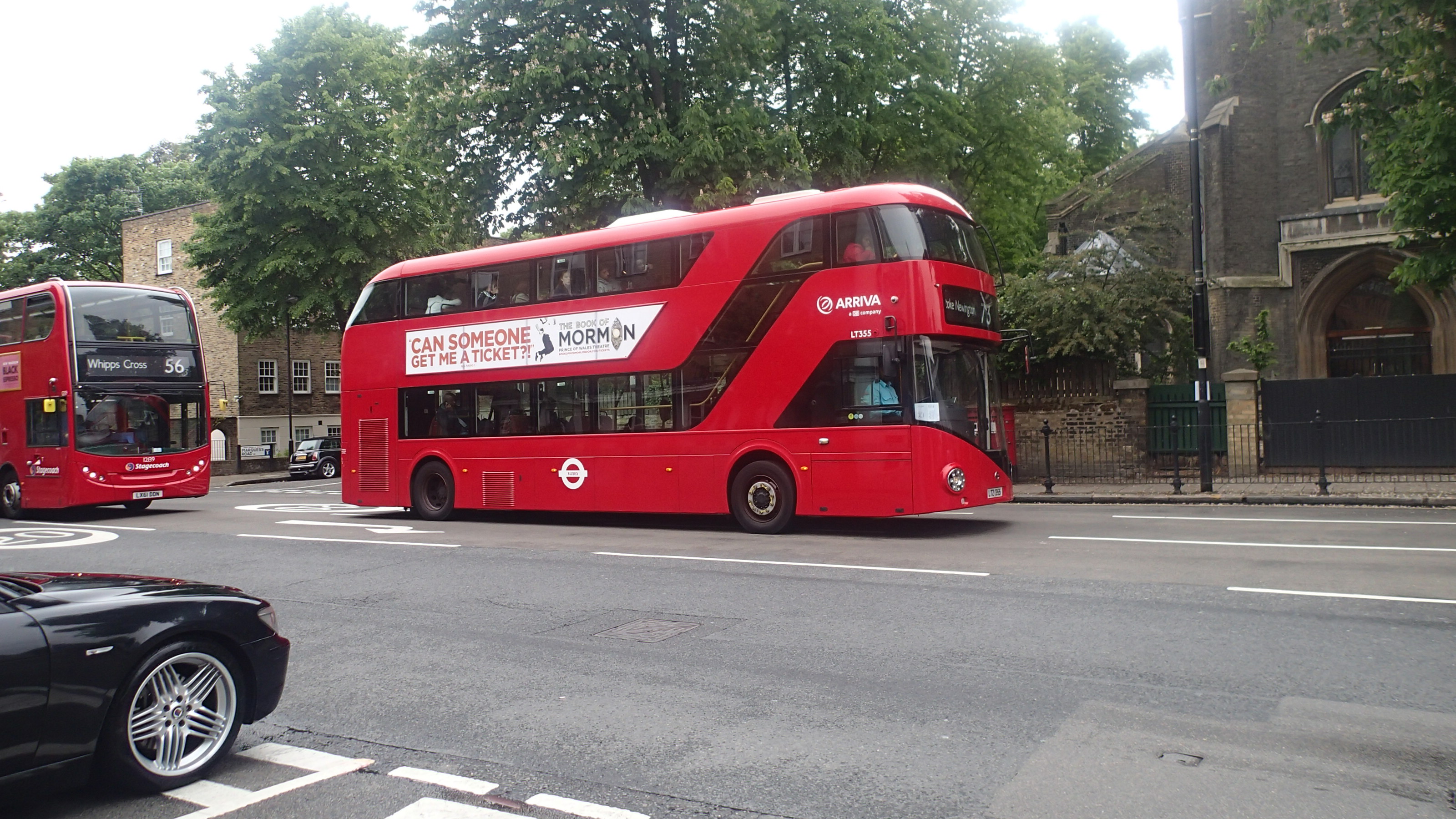
Siemens electric motors and Cummins diesel engines are used in London’s New Routemaster buses.
Could The Cummins Integrated Drivetrain Concept Be Used For A Small Car?
I don’t see why not?
Just watch the Koreans, who are going large on hydrogen.
First US Hydrogen-Fueled Ferry Okayed For Commercial Operation
The title of this post, is the same as this of this article on OffshoreEnergy.biz.
This is the sub-heading.
US-based shipping company SWITCH Maritime has received approval from the U.S. Coast Guard for its hydrogen-powered ferry Sea Change to enter commercial operations.
This is the first paragraph.
As informed, the company was presented with the signed Certificate of Inspection (COI) by Captain Taylor Q. Lam, the U.S. Coast Guard Sector San Francisco commander and Captain of the Port, for its flagship hydrogen ferry.
This paragraph gives more details of the ferry.
Built and launched at All American Marine shipyard in Bellingham, Washington, Sea Change is a 75-passenger catamaran ferry featuring an integrated hydrogen power system from Zero Emission Industries (ZEI), with 360kW of fuel cells from Cummins and 600kW of electric motor propulsion from BAE Systems.
As the electric motor propulsion is 600 kW and there are only 360 kW of hydrogen fuel cells, I suspect there is a battery in there somewhere.
The Orkney Islands have their own hydrogen ferry project called HySeasIII.
The Orkney ferry uses 600 kW of Ballard fuel cells.
There is no news this year about what is happening to the Orkney project.
It’s All Happening In Jamshedpur!
When I read this article on Hydrogen Fuel News, which is entitled Cummins And Tata Motors Ignite Change With H2 Internal Combustion Engines, I couldn’t resist using the jokey headline, which was inspired by the sub-heading.
The manufacturing has started in Jamshedpur, India at a new state-of-the-art facility
These two paragraphs give some more details.
The hydrogen internal combustion engines continuing to be produced at the facility are being integrated into Tata Motors trucks. This technology is being viewed as a promising zero- or low-carbon alternative to diesel power because of its powerful performance and substantial operating range.
Cummins’ B6.7H engines have notable similarities to current natural gas and diesel engines, particularly in terms of the components they contain. Moreover, they can fit in standard engine vehicles and require similar refueling times.
I first wrote about the Cummins B 6.7H engines in Cummins Shows Hydrogen Internal Combustion-Engined Concept Truck At IAA Transportation Exhibition, which I posted in September 2022.
I have these further thoughts.
Cummins B Series Engine
The Wikipedia entry for the Cummins B Series Engine, starts with these two paragraphs.
The Cummins B Series is a family of diesel engines produced by American manufacturer Cummins. In production since 1984, the B series engine family is intended for multiple applications on and off-highway, light-duty, and medium-duty. In the automotive industry, it is best known for its use in school buses, public service buses (most commonly the Dennis Dart and the Alexander Dennis Enviro400) in the United Kingdom, and Dodge/Ram pickup trucks.
Since its introduction, three generations of the B series engine have been produced, offered in both inline-four and inline-six configurations in multiple displacements.
Note.
- Cummins B Series is used in a wide variety of vehicles.
- It is available in both four and six cylinder versions.
But what Wikipedia doesn’t say, is that any Cummins’ customer will get the engine he wants for his application, even if it means creating a special version of the engine. Thirty years ago, I did a small data analysis job for Cummins in Darlington and on a tour of the works, I was given full details on how they treated customers. Cummins are not your average US company.
London’s Routemaster Buses
These buses are powered by a small four-cylinder version of the B-series engine, called a 4.5L ISB, which is described like this in Wikipedia.
The 4.5L ISB is essentially a four-cylinder, two-thirds version of the 6.7L ISB rated at 185 hp (138 kW), used in the New Routemaster, a series hybrid diesel-electric double-decker bus in London.
Note.
- Some diesel Range-Rovers, have more power, than these buses, but then they’re not hybrids.
- The engine also needs to be smaller, as it’s mounted under the back stairs.
Did Cummins’ special engine. allow the unique design of London’s Routemaster Buses?
Could London’s Routemaster Buses Be Converted To Hydrogen?
As an engineer and with my knowledge of Cummins’ design and manufacturing methods, I am fairly certain, if Cummins can manufacture six-cylinder versions of the B-Series engines, then four-cylinder hydrogen-powered engines are not far behind.
If London were to convert the thousand New Routemaster buses to hydrogen, there would be winners all round.
- Cummins would love the publicity and would probably benefit from increased sales of their hydrogen engines in vehicles like refuse trucks and small buses.
- It would surely give a route to convert older vehicles to hydrogen.
- The air in cities will improve.
But London has a problem, It is one of the few large cities in the world without readily-available hydrogen.
As this post illustrates and my Google searches show, India has a more advanced and scientifically-correct view on the usefulness of hydrogen.
Will Jaguar Land Rover Switch To Cummins’ Hydrogen Engines?
If Tata Motors make a success of hydrogen in India, it must make them think about adding hydrogen engines to Jaguar Land Rover products, specially as other manufacturers are getting serious about hydrogen.
Conclusion
Cummins will change the world for the better.
Is Alstom’s Proposal For A Service Between London Euston And Wrexham Part Of A Cunning Plan?
Alstom have built and introduced into service between Buxtehude and Cuxhaven in Germany, the Coradia iLint hydrogen-powered train. The prototype has performed demonstrations in Austria, Canada, The Netherlands and Saudi Arabia.
This picture shows a Coradia iLint in Germany.

In the UK, Alstom had a plan to convert redundant Class 321 trains into a fleet of hydrogen-powered trains called Breeze, which I wrote about in Hydrogen Trains Ready To Steam Ahead, in January 2019.
This visualisation is from Alstom.
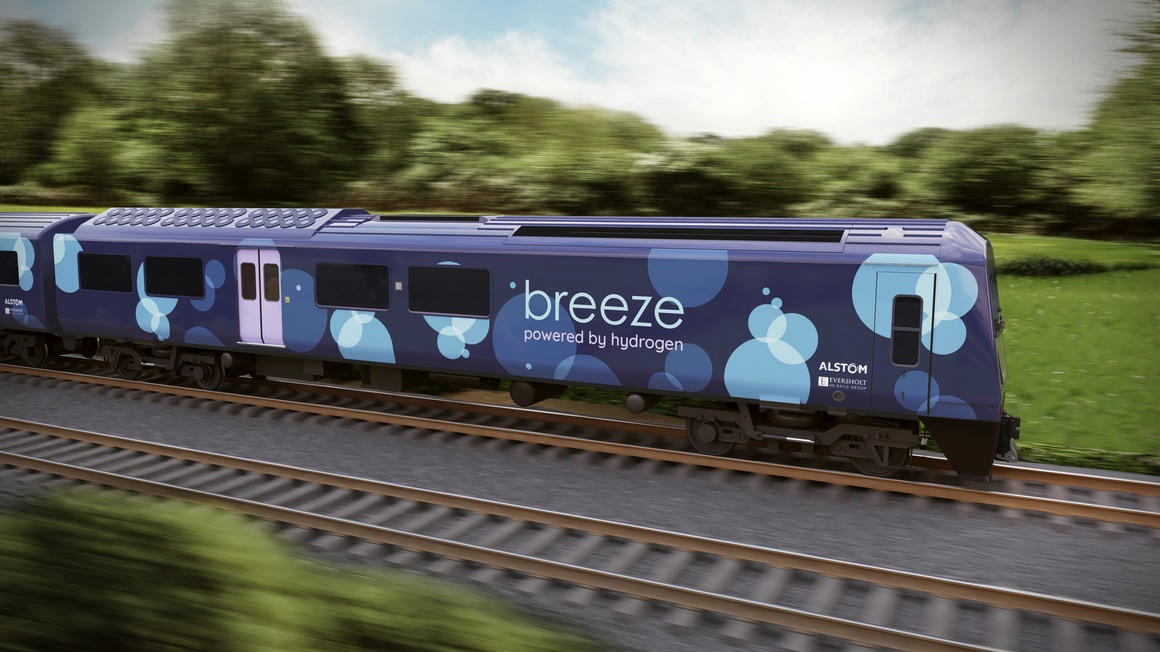
I suspect it didn’t appeal to train companies, as no orders appear to have been received.
But you can’t criticise Alstom for not trying, as in November 2021, they signed an agreement with Eversholt Rail Group to develop a hydrogen-powered Aventra, which I wrote about in Alstom And Eversholt Rail Sign An Agreement For The UK’s First Ever Brand-New Hydrogen Train Fleet.
This visualisation is from Alstom.
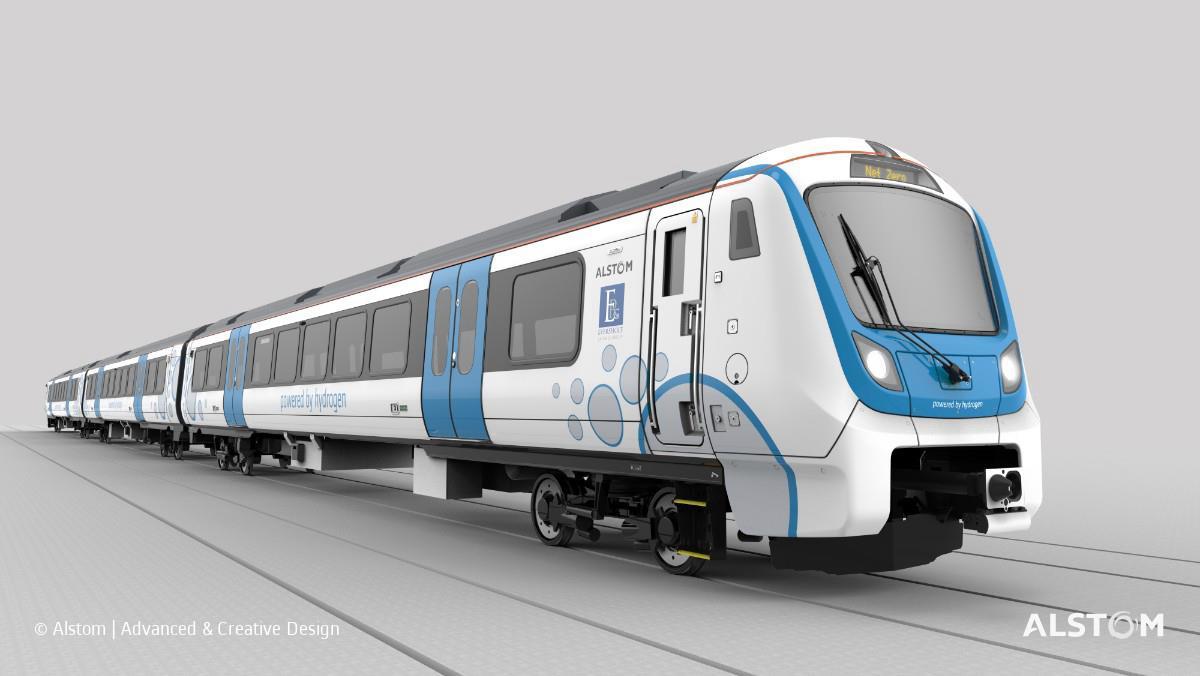
Visually, it looks just like any other Aventra and much better than the previous Breeze design.
In March 2018, I wrote Bombardier Bi-Mode Aventra To Feature Battery Power, which was based on this article in Rail Magazine.
These are a few points from the article.
- Development has already started.
- Battery power could be used for Last-Mile applications.
- The bi-mode would have a maximum speed of 125 mph under both electric and diesel power.
- The trains will be built at Derby.
- Bombardier’s spokesman said that the ambience will be better, than other bi-modes.
- Export of trains is a possibility.
- Bombardier’s spokesman also said, that they have offered the train to three new franchises. East Midlands, West Coast Partnership and CrossCountry.
Have Alstom looked at what they bought from Bombardier and decided the following train is possible, if they add some of their technology?
- A train the size needed by the customer, up to a length of at least ten cars.
- 125 mph under 25 KVAC overhead electrification.
- 100 mph with 750 VDC third rail electrification.
- Running on hydrogen away from electrification.
- 100 mph maximum speed running on hydrogen.
- A range of perhaps 500 miles, if it can emulate the hydrogen-powered Coradia iLint.
A train with this specification would have several applications in the UK.
- Fully-electric routes.
- Electric routes with perhaps a hundred miles of unelectrified track.
- Scenic routes, where the Nimbies wouldn’t like electrification.
These points should also be born in mind.
- There are now 110 mph Aventras in service with West Midland Trains on the West Coast Main Line.
- I recently came back from Cardiff to London in a twelve-car Class 387 train and there wasn’t too many unhappy passengers. It was certainly better than a rail replacement bus. I wrote about the trip in Cardiff To Reading In A Class 387 Train.
- Alstom believe you can certainly fit their hydrogen gubbins in an Aventra.
- The hydrogen gubbins appear to be from Cummins, who have a worldwide support network.
- Cummins can also supply complete hydrogen support systems. A truck can refuel the train, at one end of the route?
- Alstom have been doing the market research with the hydrogen-powered Coradia iLint, so I suppose they know what the market needs.
Could Alstom, with help from Cummins, have a zero-carbon 200 kph train and support systems, which has a hydrogen range of up to a thousand kms for export markets like the United States, Africa, Australia, India and South America?
Two big world-leading companies are surely better than one!
But Alstom has one big problem!
How do you fully test a 125 mph hydrogen-powered train?
- I know with aircraft, if you change the engine type on an existing aircraft, you only have to certify the engine and this is done on a Supplementary Type Certificate.
- Is it the same with trains, so a 110 mph Class 730 train, which is in service with West Midlands Trains, could be the basis of certifying a hydrogen-powered Aventra?
- The Coradia iLint was only a change from diesel to a hybrid hydrogen-electric engine, so was it certified this way?
- With the Coradia iLint, it seemed to go into service quite quickly, so did it do much of the testing in service?
I looks to me, that London Euston and Wrexham is an ideal route for a hydrogen bi-mode 125 mph train.
- The route has electrified sections, some of which have high operating speeds.
- The route has a convenient hydrogen supply from INEOS at Runcorn at the Northern end.
- Change between hydrogen and electric power would always take place in a station.
- A round trip needs less than 200 miles of running on hydrogen.
- South of Nuneaton, no hydrogen is used, so the train will be like a Class 730 train, that already uses the route.
- There are depots that can service Aventras on the route.
It is certainly a possibility, that the London Euston and Wrexham service will be used to test and showcase Alstom’s new Hydrogen Aventra.
Cummins Inc. Selected By The UK Department Of Transport For Its High-Horsepower Methanol Vessel Retrofit Project
The title of this post, is the same as that of this press release from Cummins.
This is sub-heading.
One of Only 10 Flagship Projects Chosen in the Multi-Million-Pound ZEVI Competition Enabling Decarbonization of the UK’s Maritime Sector
These three paragraphs outline the project.
Today, Cummins Inc. (NYSE: CMI) announced the selection of its proposal to jointly develop a Methanol Kit for its QSK60 engine as part of the Zero Emission Vessels and Infrastructure (ZEVI) competition, funded by the UK Government and delivered in partnership with Innovate UK. To be chosen as one of the top 10 projects, Cummins delivered a proposal to collaborate with a major UK port and operators to develop, deploy and operate clean maritime technology solutions on the path to decarbonization and reduction to the overall greenhouse gas footprint.
The £4.4M in total funding will be leveraged by Cummins and its fellow project stakeholders — Ocean Infinity, the Aberdeen Harbour Board, and Proman AG — in the deployment of a UK-designed and built methanol conversion kit for a high-horsepower marine internal combustion engine, offering the UK an important foothold in enabling the transition to cleaner maritime fuels.
Upon completion in the second quarter of 2025, the project targets a reduction in CO2 emissions of 50 percent for offshore operations of the vessel with NOx, SOx and PM at levels considerably below those emitted by conventional fuel. Furthermore, all retrofitted dual-fuel engines will achieve compliance with IMO Tier III emission standards.
They certainly aim to get a move on to complete by mid-2025.
I have some thoughts.
Methanol Fuel
The Wikipedia entry for methanol fuel, starts with this sentence.
Methanol fuel is an alternative biofuel for internal combustion and other engines, either in combination with gasoline or independently. Methanol (CH3OH) is less expensive to produce sustainably than ethanol fuel, although it produces more toxic effects than ethanol and has lower energy density than gasoline. Methanol is safer for the environment than gasoline, is an anti-freeze agent, prevents dirt and grime buildup within the engine, has a higher flashpoint in case of fire, and produces horsepower equivalent to that of super high-octane gasoline.
Methanol certainly seems to be an environmentally-friendly fuel, when compared to alternatives.
Production Of Green Methanol
This paragraph from the Wikipedia entry for methanol fuel, explains some of the routes to make green methanol.
Bio-methanol, also known as green-methanol, may be produced by gasification of organic materials to synthesis gas followed by conventional methanol synthesis. This route can offer renewable methanol production from biomass at efficiencies up to 75%. Widespread production by this route has a proposed potential to offer methanol fuel at a low cost and with benefits to the environment. Increasingly, methanol fuel has been produced using renewable energy and carbon dioxide as a feedstock. Carbon Recycling International, an Icelandic-American company, completed the first commercial scale renewable methanol plant in 2011. As of 2018, Enerkem has been producing biomethanol through the conversion and gasification of municipal solid waste at its Edmonton facility. As of July 2023, construction for the $1 billion Varennes Carbon Recycling Plant, which will produce biofuel such as methanol through non-recyclable and timber waste, is 30 percent complete.
Surely, if the C in CH3OH, which is the chemical formula for methanol, comes from captured carbon dioxide from the atmosphere or say a gas-fired power station, methanol can be a truly green fuel.
The UK-Wide Need For Self-Powered Trains
How Many Diesel Trains Are In Service In The UK?
- Northern Trains – 73 x two-car and 6 x three-car.
- Great Western Railway – 20 x two-car.
- Transport for Wales – 36 x two-car.
- In Service – 129 x two-car and 6 x three-car.
These are 75 mph BR Second Generation trains.
- ScotRail – 5 x one-car.
- Transport for Wales – 31 x one-car.
- In Service – 36 x one-car.
- Stored – 27 x one-car.
These are 75 mph BR Second Generation trains.
- Northern Trains – 7 x two-car.
- In Service – 7 x two-car.
These are 75 mph BR Second Generation trains.
- Northern Trains – 58 x two-car.
- East Midlands Railway – 9 x two-car.
- ScotRail – 42 x two-car.
- In Service – 109 x two-car.
- Stored – 6 x two-car.
These are 75 mph BR Second Generation trains.
- ScotRail – 40 x two-car.
- Great Western Railway – 10 x two-car and 7 x three-car.
- East Midlands Railway – 26 x two-car.
- Northern Trains – 45 x two-car and 8 x three-car.
- Transport for Wales – 24 x two-car.
- South Western Railway – 10 x two-car.
- In Service – 155 x two-car and 15 x three-car.
These are 90 mph BR Second Generation trains.
- South Western Railway – 29 x three-car.
- In Service – 29 x three-car.
These are 90 mph BR Second Generation trains.
- Chiltern Railways – 39 x two-car.
- Great Western Railway – 20 x two-car and 16 x three-car.
- In Service – 59 x two-car and 16 x three-car.
These are 75 or 90 mph BR Second Generation trains.
- Great Western Railway – 21 x three-car.
- In Service – 21 x three-car.
These are 90 mph BR Second Generation trains.
- Chiltern Railways – 9 x two-car, 9 x three-car and 13 x four-car.
- In Service – 9 x two-car, 9 x three-car and 13 x four-car.
These are 100 mph Turbostar trains.
- CrossCountry – 7 x two-car and 22 x three-car.
- East Midlands Railway – 22 x two-car and 8 x three-car.
- Northern Trains – 16 x three-car.
- ScotRail – 17 x three-car.
- Transport for Wales – 8 x three-car.
- West Midlands Trains – 16 x three-car.
- In Service – 34 x two-car and 71 x three-car.
These are 100 mph Turbostar trains.
- Southern – 17 x three-car.
- In Service – 17 x three-car.
These are 100 mph Turbostar trains.
- West Midlands Trains – 24 x two-car and 15 x three-car.
- In Service – 24 x two-car and 15 x three-car.
These are 100 mph Turbostar trains.
- Transport for Wales – 9 x two-car and 15 x three-car.
- In Service – 9 x two-car and 15 x three-car.
- Stored – 2 x two-car and 1 x three-car.
These are 100 mph Coradia trains.
- Grand Central – 10 x five-car.
- East Midlands Railway – 1 x four-car and 2 x five-car.
- In Service – 1 x four-car and 12 x five-car.
These are 125 mph Coradia trains.
- TransPennine Express 51 three-car.
- In service – 51 three-car.
These are 100 mph Desiro trains.
- Northern Trains – 25 x two-car and 33 x three-car.
- In Service – 25 x two-car and 33 x three-car.
These are 100 mph CAF Civity trains.
- West Midlands Trains – 12 x two-car and 14 x four-car.
- In Service – 12 x two-car and 14 x four-car.
These are 100 mph CAF Civity trains.
- Northern Trains – 51 x two-car and 26 x three-car.
- In Service – 51 x two-car and 26 x three-car.
These are 100 mph CAF Civity trains.
- CrossCountry – 34 x four-car
- In Service – 34 x four-car
These are 125 mph Bombardier Voyager trains.
- Avanti West Coast -18 x five-cars
- CrossCountry – 24 x four-car.
- In Service – 24 x four-car and 18 x five-cars
- Stored – 2 x five-car
These are 125 mph Bombardier Voyager trains.
- CrossCountry – 23 x five-car and 4 x seven-car.
- In Service – 23 x five-car and 4 x seven-car.
These are 125 mph Bombardier Voyager trains.
- Transport for Wales – 11 x four-car.
- In Service – 11 x four-car.
These are 90 mph Stadler FLIRT bi-mode trains.
- Greater Anglia – 14 x three-car and 24 x four-car.
- In Service – 14 x three-car and 24 x four-car.
These are 100 mph Stadler FLIRT bi-mode trains.
- Transport for Wales – 7 x three-car and 17 x four-car.
- In Service – 7 x three-car and 17 x four-car.
These are 75 mph Stadler FLIRT bi-mode trains.
- Great Western Railway – 21 x five-car and 36 x nine-cars.
- LNER – 10 x five-car and 13 x nine-cars.
- In Service – 31 x five-car and 49 x nine-cars.
These are 125 mph Hitachi AT-300 trains.
- Great Western Railway – 22 x five-car and 14 x nine-cars.
- Hull Trains – 5 x five-car.
- TransPennine Express – 19 x five-car.
- In Service – 46 x five-car and 14 x nine-cars.
These are 125 mph Hitachi AT-300 trains.
- Avanti West Coast – 13 x five-car.
- In Service – 13 x five-car.
These are 125 mph Hitachi AT-300 trains.
- East Midlands Railways – 33 x five-car.
- In Service – 33 x five-car.
These are 125 mph Hitachi AT-300 trains.
These trains give totals as follows.
- One-car – 36
- Two-car – 601
- Three-car – 249
- Four-car – 135
- Five-car – 176
- Seven-car – 4
- Nine-car – 63
That is a total of 1254 trains that need to be decarbonised by either replacement or modification.
- Some trains are effectively double-counted, as both the current trains and their replacements are included.
- Some trains are planned to be replaced by electric trains.
- Some trains will be passed on.
But there are still a lot of trains to be decarbonised.
I will now look at each group in detail.
BR Second Generation Trains
- Class 150 – 129 x two-car and 6 x three-car.
- Class 153 – 36 x one-car.
- Class 155 – 7 x two-car.
- Class 156 – 109 x two-car.
- Class 158 – 155 x two-car and 15 x three-car.
- Class 159 – 29 x three-car.
- Class 165 – 59 x two-car and 16 x three-car.
- Class 166 – 21 x three-car.
Note.
- The trains have mostly Cummins engines, with some Perkins and a spattering of Rolls-Royce.
- Class 150,153, 155 and 156 trains are 75 mph trains and most of the others are capable of 90 mph.
- Condition of the interiors is variable, with some being excellent and others being terrible.
- There are 36 x one-car, 459 x two-car and 59 x three-car.
- There appears to be no plan to decarbonise these trains.
- Some will be replaced by new CAF diesel trains or new electric trains.
The best use of some of the better trains in this group would be to fill-in until zero-carbon trains are available.
Turbostar Trains
These trains are all Turbostars or their predecessor.
- Class 168 – 9 x two-car, 9 x three-car and 13 x four-car.
- Class 170 – 34 x two-car and 71 x three-car.
- Class 171 – 17 x three-car.
- Class 172 – 24 x two-car and 15 x three-car.
Note.
- The trains all have Rolls-Royce mtu engines.
- They are capable of 100 mph.
- Condition of the interiors is generally good.
- There are 67 x two-car, 112 x three-car and 13 x four-car.
- Rolls-Royce mtu engines may be able to run on sustainable fuel like Hydrotreated Vegetable Oil (HVO).
- 168329 has been converted into a diesel-hybrid, by Rolls-Royce mtu.
I feel that one way or another, the trains in this group should be capable of converting to net-zero operation.
Alstom Coradia, Bombardier Voyager and Siemens Desiro Trains
I am putting these trains together, as they are all 100-125 mph long-distance trains, that are not that old.
- Class 175 – 9 x two-car and 15 x three-car.
- Class 180 – 1 x four-car and 12 x five-car.
- Class 185 – 51 x three-car.
- Class 220 – 34 x four-car
- Class 221 – 24 x four-car and 18 x five-cars
- Class 222 – 23 x five-car and 4 x seven-car.
Note.
- The trains all have Cummins engines.
- They are capable of 100 mph or 125 mph.
- Condition of the interiors is generally good.
- There are 9 x two-car, 66 x three-car, 59 x four-car, 53 five-car and 4 x seven-car.
- Cummins engines may be able to run on sustainable fuel like Hydrotreated Vegetable Oil (HVO).
- In Grand Central DMU To Be Used For Dual-Fuel Trial, I described innovative fuel trails in a Class 180 train.
- I suspect Cummins will be taking an interest.
In Cummins And Leclanché S.A. To Collaborate On Lower-Emissions Solutions For Use In Marine And Rail Applications, I asked this question.
How many of these trains could be converted to hybrid operation, if Cummins and Leclanché were to create their version of the mtu Hybrid PowerPack?
I feel that one way or another, the trains in this group should be capable of converting to net-zero operation.
CAF Civity Trains
These three trains have all been recently introduced
- Class 195 – 25 x two-car and 33 x three-car.
- Class 196 – 12 x two-car and 14 x four-car.
- Class 197 – 51 x two-car and 26 x three-car.
Note.
- The trains all have Rolls-Royce mtu engines.
- They are capable of 100 mph.
- Condition of the interiors is probably as-new!
- There are 88 x two-car, 59 x three-car and 14 x four-car.
- All these trains were ordered between 2016 and 2018.
- Rolls-Royce mtu engines may be able to run on sustainable fuel like Hydrotreated Vegetable Oil (HVO).
I don’t believe that as these trains were only ordered a few years ago, that the trains were bought with the knowledge of a route which would convert these trains to net-zero operation.
I suspect the most likely route to net-zero operation, would involve the following.
- Replacing the Rolls-Royce mtu engines with mtu Hybrid PowerPacks.
- Running the trains on sustainable fuel.
The work needed would probably be the same for all trains.
Stadler FLIRT Bi-Mode Trains
- Class 231 – 11 x four-car.
- Class 755 – 14 x three-car and 24 x four-car.
- Class 756 – 7 x three-car and 17 x four-car.
Note.
- The trains all have Rolls-Royce mtu engines.
- They are capable of between 75 and 100 mph.
- Condition of the interiors is probably as-new!
- There are 21 x three-car and 52 x four-car.
- All these trains were ordered between 2016 and 2018.
- As with other recently ordered trains, I am fairly sure that the Deutz engines will be able to run on sustainable fuel like Hydrotreated Vegetable Oil (HVO).
Stadler have designed these trains, so that diesel engines can be replaced by battery packs.
I suspect the most likely route to net-zero operation, would involve the following.
- Replacing all or some the Deutz engines with battery packs.
- Running the trains on sustainable fuel.
The work needed would probably be the same for all trains.
Hitachi AT-300 Trains
Only the bi-mode trains are lists.
- Class 800 – 31 x five-car and 49 x nine-car.
- Class 802 – 46 x five-car and 14 x nine-car.
- Class 805 – 13 x five-car.
- Class 810 – 33 x five-car.
Note.
- The trains all have Rolls-Royce mtu engines.
- They are capable of 125 mph.
- Condition of the interiors is probably as-new!
- There are 123 x three-car and 63 x nine-car.
- Most were built after 2016.
- Rolls-Royce mtu engines may be able to run on sustainable fuel like Hydrotreated Vegetable Oil (HVO).
- Hitachi are developing battery packs for these trains.
I suspect the most likely route to net-zero operation, would involve the following.
- Replacing all or some the Rolls-Royce mtu engines with battery packs.
- Running the trains on sustainable fuel.
The work needed would probably be the same or similar for all trains.
Cummins Enters Collaboration To Demonstrate Hydrogen Ecosystem
The title of this post, is the same as that of this article from Rental Management.
This is the first three paragraphs.
Cummins®, Columbus, Ind., has signed a Memorandum of Understanding (MoU) with Terex® Advance Mixer, Fort Wayne, Ind., a subsidiary of Terex Corp.; Edge Materials, Cloverdale, Ind.; and PCC Hydrogen, Louisville, Ky., to produce, trial and prove concrete mixer trucks powered by Cummins’ zero-carbon, hydrogen-fueled internal combustion engines.
The project aims to develop a full hydrogen ecosystem together with a hydrogen producer, vehicle manufacturer and end user. It is the first MoU of its kind signed by Cummins.
he four companies will unite their efforts, which will see Cummins’ X15H hydrogen internal combustion engines integrated into the Terex Advance Commander Series of front-discharge concrete mixer trucks. Edge Materials, a ready-mix concrete provider and Terex Advance customers will operate the hydrogen-powered trucks in challenging real-world environments including on construction sites and critical infrastructure projects. PCC Hydrogen, an ultra-low carbon intensity hydrogen producer, will supply the hydrogen fuel as well as stationary storage and dispensing services.
Note.
- The X15H engine also comes in diesel and natural gas versions.
- Cummins also make electrolysers, that can produce hydrogen.
- It looks like the collaboration has all bases covered.
- I suspect similar deals could be done all over the world and with other types of trucks.
It all sounds like a sensible way to go to me.

