A Land Rover Defender Ambulance
This ambulance was parked outside the Red Cross in Moorfields, whilst I ate my breakfast in the LEON opposite.





Note.
- It was from the Lincolnshire Red Cross.
- It was a very professional conversion.
- Judging by the sign it appeared to be promoting the link between Jaguar Land Rover and the Red Cross.
As an occasional user of an ambulance, I have some views on the design of these vehicles.
Should Ambulances Be Hydrogen Powered?
I asked Google AI this question and received this answer.
Hydrogen power offers significant advantages for ambulances by combining long driving ranges with rapid refuelling times, making it a strong contender for emergency fleets.
The Case For Hydrogen Ambulances
Fast Refuelling: Hydrogen tanks can be refuelled in about five minutes, keeping vehicles ready for back-to-back emergency shifts without long charging downtimes.
Longer Range: Fuel cell and battery hybrid setups (like the ZERRO project) can travel up to 300 miles, which is vital for rural areas or long-distance hospital transfers.
Onboard Power: Hydrogen fuel cells can power heavy medical equipment without draining the main drive battery or requiring extra diesel generators.
The Challenges
Infrastructure Costs: Public hydrogen refuelling stations remain scarce, limiting where vehicles can operate and refuel.
Vehicle Costs: Building and buying hydrogen fuel cell systems is currently more expensive than standard battery-electric or diesel setups.
Electric Competitiveness: Standard battery-electric ambulances are already performing well in urban areas where depots allow for overnight recharging and shorter daily shifts.
Note.
- I have been a passenger in about four or five hydrogen fuel cell-powered buses. All were mouse-quiet with no vibration. This is surely important in an ambulance!
- I used to live next to a London paramedic sixty years ago and he said it was a stressful job. Would a calm environment help to relieve that stress?
- The onboard power capability is surely important and will get more important in the future.
- As more hydrogen-powered vehicles appear on the roads, hydrogen fuelling stations will be less scarce.
The long-range of a hydrogen-powered ambulance might mean that patients were taken to an appropriate hospital immediately.
How Does The Performance Of Electric-Powered And Hydrogen-Powered Ambulances Compare?
I asked Google AI this question and received this answer.
Electric-powered and hydrogen-powered ambulances compare across range, refueling time, energy efficiency, and onboard power capabilities:
Range and Operational Capacity
Electric Ambulances (BEV): Typically offer a range of around 70 to 120 miles on a single charge, which suits local response cars, patient transport, or shorter urban shifts.
Hydrogen-Electric Fuel Cell Ambulances (FCEV): Use hydrogen fuel cells as a range extender to charge onboard batteries, providing a significantly higher extended range of up to 300 miles, which is closer to traditional diesel vehicles for demanding shifts.
Refueling and Downtime
Electric Ambulances: Require time plugged into charging infrastructure to replenish batteries, which can take anywhere from tens of minutes on rapid chargers to hours depending on power limits, creating potential downtime during fleet rotations.
Hydrogen Ambulances: Can be refueled with compressed hydrogen in roughly 5 minutes, allowing for immediate back-to-back operational shifts without prolonged downtime.
Energy Efficiency and Onboard Power
Electric Ambulances: Feature high overall powertrain efficiency (converting over 85% of battery energy into motion) and lower moving-part maintenance costs, but heavy medical equipment loads draw heavily on the primary battery and can restrict operational range.
Hydrogen Ambulances: Offer onboard power off-take capabilities directly from the fuel cell system, enabling high-draw medical equipment to run continuously without draining the main drive energy or requiring a separate noisy generator. However, hydrogen systems have lower overall well-to-wheel thermodynamic efficiency and higher complexity.
Infrastructure and Deployment
Electric Ambulances: Benefit from a rapidly expanding public and depot charging grid, with several NHS trusts already successfully deploying electric response and transport vehicles.
Hydrogen Ambulances: Remain in early trial and prototype phases (such as projects via ULEMCo and HVS) because specialized hydrogen refueling stations are scarce and expensive to build.
I suspect that the nature of the terrain in an area, will also affect the type of power selected.
My Sister’s Burst Aorta
This is a personal observation.
- My sister lives near Colchester General Hospital.
- After her aorta burst, she dialled 999 and an ambulance was dispatched.
- The paramedics corrected assessed her problem and didn’t muck around.
- They decided to take her immediately to Papworth Hospital on the other side of East Anglia.
- The road between the two hospitals is dual-carriageway all the way and possibly with a Police escort, they made the trip in time.
- After several months in hospital, she returned home.
- My sister has now fully recovered.
I believe journeys like this, would be faster and more comfortable in a custom-designed high-performance hydrogen fuel-cell ambulance.
It should be noted that the East Anglian Ambulance Service has been known to station ambulances on the bridges over the dual-carriageways to shorten response times to road accidents.
Are Toyota HiLux Pickups Used As Ambulances?
I asked Google AI this question and received this answer.
Yes, Toyota Hilux pickups are used as ambulances, especially in remote, rural, or off-road environments where standard van-based ambulances cannot travel.
Common Configurations
Canopy / Rapid Response Style: The pickup bed is fitted with a secure, weatherproof canopy or Truckman top to carry a single stretcher and essential emergency gear.
Box-Type Modular Body: A fully enclosed, purpose-built medical compartment is mounted directly onto the Hilux chassis, offering a climate-controlled environment and space for advanced life support (ALS) equipment.
Where They Are Used
Off-Road & Disaster Zones: Mountain rescue teams, humanitarian groups, and military field operations rely on the Hilux’s 4×4 capability and high ground clearance.
Specialized Services: Organizations like wildlife hospitals use adapted Hilux trucks as animal ambulances to reach stranded or injured wildlife in rough terrain. International agencies like the UN and WHO also deploy them in regions lacking paved infrastructure.
I would expect that in designing the next generation Toyota HiLux, Toyota have improved on the design for ambulances.
Will A Hydrogen-Powered toyota HiLux Pickup Make A Useful Ambulance?
I asked Google AI this question and received this answer.
A hydrogen-powered Toyota HiLux pickup can make a useful off-road or specialized utility ambulance, but its practical application as a standard emergency vehicle faces major limits.
Advantages for Ambulance Use
Off-road access: The rugged ladder-frame chassis of the HiLux allows access to remote, rugged, or off-road terrain where standard vans or traditional ambulances cannot go.
Quick refueling: Hydrogen fuel cells refuel in about 3 to 5 minutes, offering much faster turnaround times than battery-electric vehicles.
Clean operation: The fuel cell produces zero tailpipe emissions, creating a quiet, exhaust-free environment suitable for patient transport.
Good payload and towing: It targets a towing capacity of around 5,500 pounds (2,500 kg), handling heavy medical gear better than lighter electric alternatives.
Limitations for Ambulance Use
Cabin space: A pickup truck bed and cab offer less enclosed, climate-controlled volume for patients and attending medical staff compared to standard box ambulances or large vans (like the Toyota Hiace).
Infrastructure gaps: Hydrogen fueling stations remain very rare outside select urban or regional pockets, restricting emergency range and operational zones.
Availability: Toyota is targeting production for the hydrogen HiLux by 2028, meaning the vehicle is not yet available for immediate fleet purchase.
I do think though, that it would be very suitable for some specialist operations.
It’s All Happening In Jamshedpur!
When I read this article on Hydrogen Fuel News, which is entitled Cummins And Tata Motors Ignite Change With H2 Internal Combustion Engines, I couldn’t resist using the jokey headline, which was inspired by the sub-heading.
The manufacturing has started in Jamshedpur, India at a new state-of-the-art facility
These two paragraphs give some more details.
The hydrogen internal combustion engines continuing to be produced at the facility are being integrated into Tata Motors trucks. This technology is being viewed as a promising zero- or low-carbon alternative to diesel power because of its powerful performance and substantial operating range.
Cummins’ B6.7H engines have notable similarities to current natural gas and diesel engines, particularly in terms of the components they contain. Moreover, they can fit in standard engine vehicles and require similar refueling times.
I first wrote about the Cummins B 6.7H engines in Cummins Shows Hydrogen Internal Combustion-Engined Concept Truck At IAA Transportation Exhibition, which I posted in September 2022.
I have these further thoughts.
Cummins B Series Engine
The Wikipedia entry for the Cummins B Series Engine, starts with these two paragraphs.
The Cummins B Series is a family of diesel engines produced by American manufacturer Cummins. In production since 1984, the B series engine family is intended for multiple applications on and off-highway, light-duty, and medium-duty. In the automotive industry, it is best known for its use in school buses, public service buses (most commonly the Dennis Dart and the Alexander Dennis Enviro400) in the United Kingdom, and Dodge/Ram pickup trucks.
Since its introduction, three generations of the B series engine have been produced, offered in both inline-four and inline-six configurations in multiple displacements.
Note.
- Cummins B Series is used in a wide variety of vehicles.
- It is available in both four and six cylinder versions.
But what Wikipedia doesn’t say, is that any Cummins’ customer will get the engine he wants for his application, even if it means creating a special version of the engine. Thirty years ago, I did a small data analysis job for Cummins in Darlington and on a tour of the works, I was given full details on how they treated customers. Cummins are not your average US company.
London’s Routemaster Buses
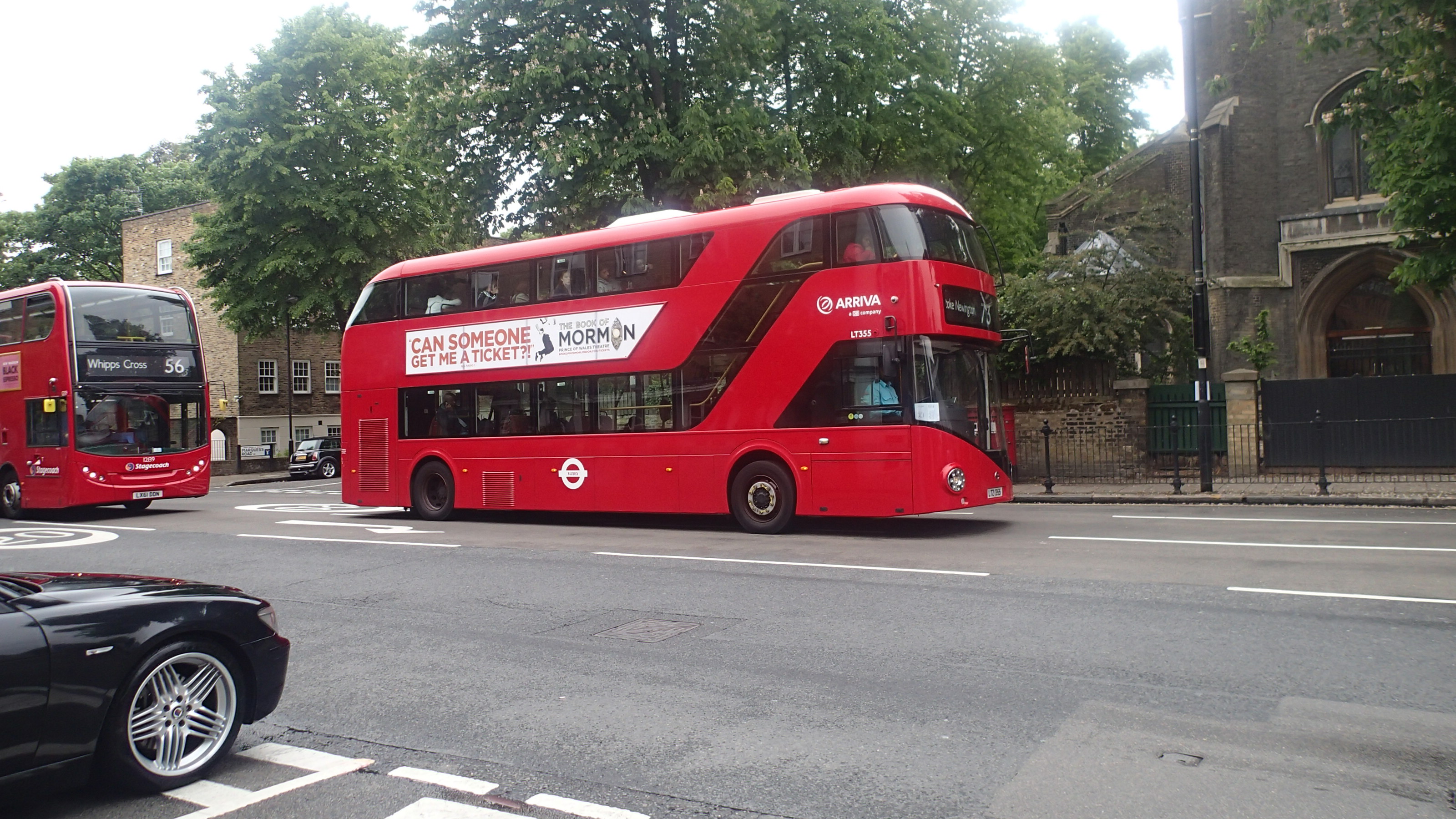
These buses are powered by a small four-cylinder version of the B-series engine, called a 4.5L ISB, which is described like this in Wikipedia.
The 4.5L ISB is essentially a four-cylinder, two-thirds version of the 6.7L ISB rated at 185 hp (138 kW), used in the New Routemaster, a series hybrid diesel-electric double-decker bus in London.
Note.
- Some diesel Range-Rovers, have more power, than these buses, but then they’re not hybrids.
- The engine also needs to be smaller, as it’s mounted under the back stairs.
Did Cummins’ special engine. allow the unique design of London’s Routemaster Buses?
Could London’s Routemaster Buses Be Converted To Hydrogen?
As an engineer and with my knowledge of Cummins’ design and manufacturing methods, I am fairly certain, if Cummins can manufacture six-cylinder versions of the B-Series engines, then four-cylinder hydrogen-powered engines are not far behind.
If London were to convert the thousand New Routemaster buses to hydrogen, there would be winners all round.
- Cummins would love the publicity and would probably benefit from increased sales of their hydrogen engines in vehicles like refuse trucks and small buses.
- It would surely give a route to convert older vehicles to hydrogen.
- The air in cities will improve.
But London has a problem, It is one of the few large cities in the world without readily-available hydrogen.
As this post illustrates and my Google searches show, India has a more advanced and scientifically-correct view on the usefulness of hydrogen.
Will Jaguar Land Rover Switch To Cummins’ Hydrogen Engines?
If Tata Motors make a success of hydrogen in India, it must make them think about adding hydrogen engines to Jaguar Land Rover products, specially as other manufacturers are getting serious about hydrogen.
Conclusion
Cummins will change the world for the better.

