Should Hydrogen-Powered Trucks Pay A Lower Charge In The Silvertown And Blackwall Tunnels?
London has a lot of heavy diesel trucks, which include.
Cement mixer trucks.
Large eight-wheeler trucks transporting aggregate, building materials and construction spoil to and from construction sites.
Council refuse trucks.
Skip trucks.
Supermarket delivery trucks.
They are large polluters and the only way they will be made zero-carbon, will be to use hydrogen.
In Cummins Agrees To Integrate Its Hydrogen ICE Technology Into Terex® Advance Trucks, I write about how Cummins and Terex are going to be building hydrogen-powered cement mixers.
This picture shows the baby of the range, which could be ideal for a smaller country like the UK.
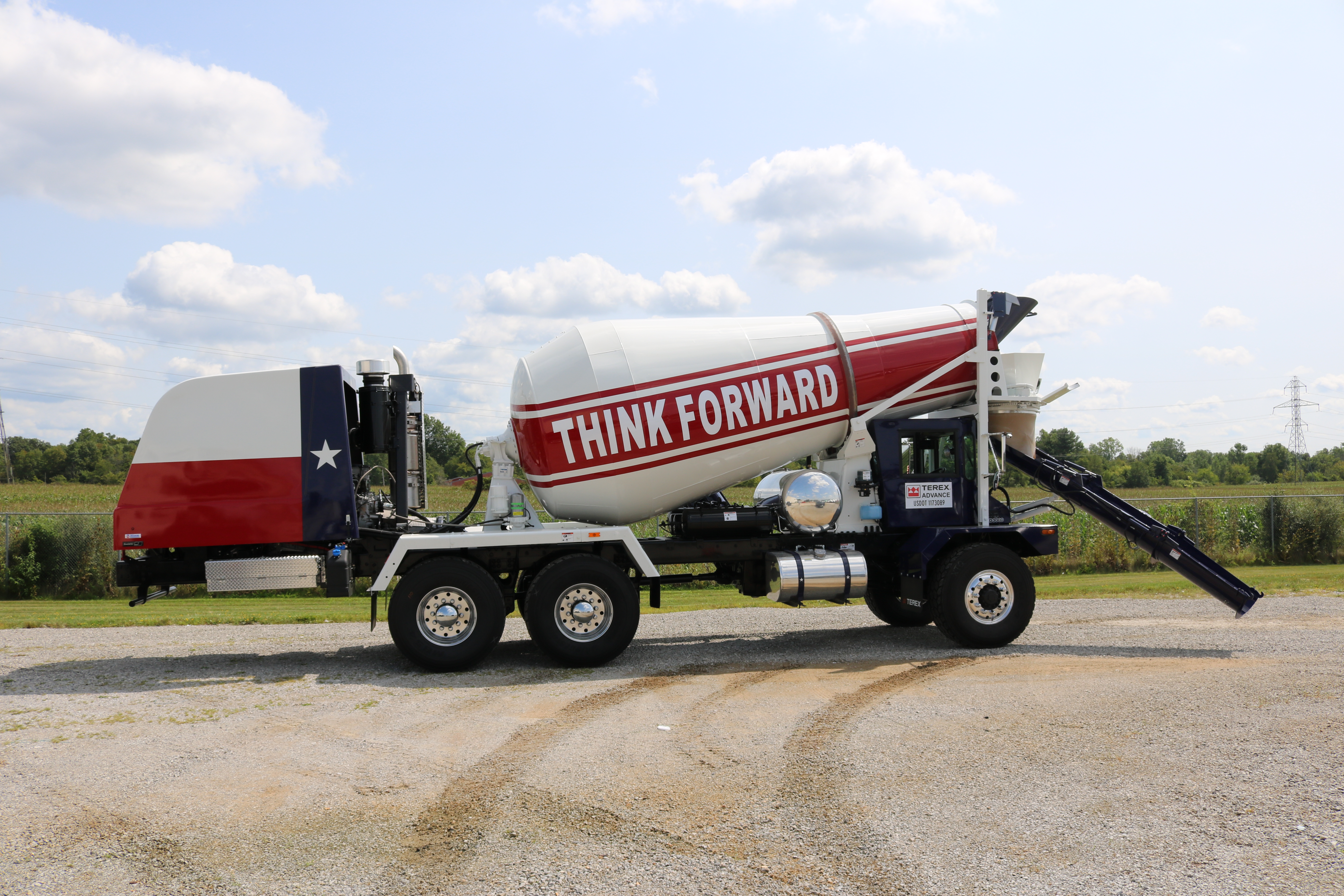
Note how it is the other way round to traditional cement mixer trucks.
As companies are now selling low-carbon concrete in the UK, I suspect, it won’t be long before they will be delivering it in a hydrogen-powered zero-carbon truck.
If hydrogen-powered trucks could be given an economic boost, by lowering their charges for the Silvertown And Blackwall Tunnels, this might increase their uptake by owners of large trucks, which would in turn reduce pollution.
But this would need the election of a London Mayor, who had a hydrogen policy other than ignore it and hope it goes away.
Rolls-Royce And Zero Petroleum Join Forces To Develop Sustainable Future
The title of this post, is the same as that of this press release from Rolls Royce.
This is the sub-heading.
Rolls-Royce has entered a landmark agreement with breakthrough Energy company Zero Petroleum to promote further development of the company’s power and propulsion solutions with fossil-free synthetic fuels.
These two paragraphs outline the agreement.
The new agreement will see the two parties collaborate to demonstrate Rolls-Royce engines for aviation, marine and defence with Zero® synthetic fuels.
This has the potential to include Zero’s entire range of synthetic fuels – petrol, diesel and jet fuel – with data gathered from engine testing used to prove the credentials required to achieve international fuel certification standards. Synthetic fuels deployed by Rolls-Royce in engine tests will directly reduce associated carbon emissions.
Are Rolls-Royce going to do their engine testing using synthetic fuels to reduce their carbon emissions?
It certainly looks like they might and I suppose it does two tests at the same time.
Rolls-Royce Seem To Be Using Technology To Save The Company
Big companies like Rolls-Royce, who are very much toed up with fossil fuels have two options; give up or fight using the only weapons they have; superb technology and a lot of experience.
There are only a small group, that seem to be fighting to succeed. To Rolls-Royce, I would add Cummins, Fortescue Future Industries, Ricardo and SSE, and possibly BP and Centrica.
Fresh Air Fuels Global
Because of its history, South Africa has developed technology to create biofuels, as alternatives to diesel.
If you read the Wikipedia entry for South African chemical company; SASOL, you’ll see the things that South African chemists did, to get round the sanctions imposed because of apartheid.
SASOL has advanced the Fischer–Tropsch process and uses it to produce diesel and other fossil fuels.
Note that Velocys have also developed this process to make sustainable aviation fuel in the UK.
Fresh Air Fuels Global have a page on the G-volution web site.
The page is dominated by an infographic, which shows organic waste (animals and plants) going into an anaerobic digester, which produces.
- Biogas, which is used to create heat, electricity, CO2, biomethane, fuel and gas for the grid.
- Digestate, which is used for fertiliser and livestock bedding.
It almost sounds too good to be true.
This is the mission statement below the graphic.
Our mission: To be the most reliable producer of energy secure low carbon fuels.
There is then these paragraphs, which explain the relationship between G-volution and Fresh Air Fuels Global.
Global energy security concerns and climate targets necessitate countries and businesses to transition away from high-cost fossil fuels towards low-carbon alternatives.
Over more than a decade, Cape Advance Engineering South Africa (CAE) have been developing an incredibly cost-effective Anaerobic Digestion (AD) technology, which has proven to generate renewable energy from organic waste in the form of gas, heat and electricity that is cost competitive with fossil fuels.
G-Volution has partnered with CAE to form Fresh Air Fuels Global (FAFG), with aim of introducing the CAE technology to international markets that the G-Volution already have a foothold, constructing AD plants and creating carbon neutral biofuel from waste that can be used in dual fuel engines.
In Grand Central DMU To Be Used For Dual-Fuel Trial, I describe how G-volution’s dual fuel technology has been applied to one of Grand Central’s Class 180 train.
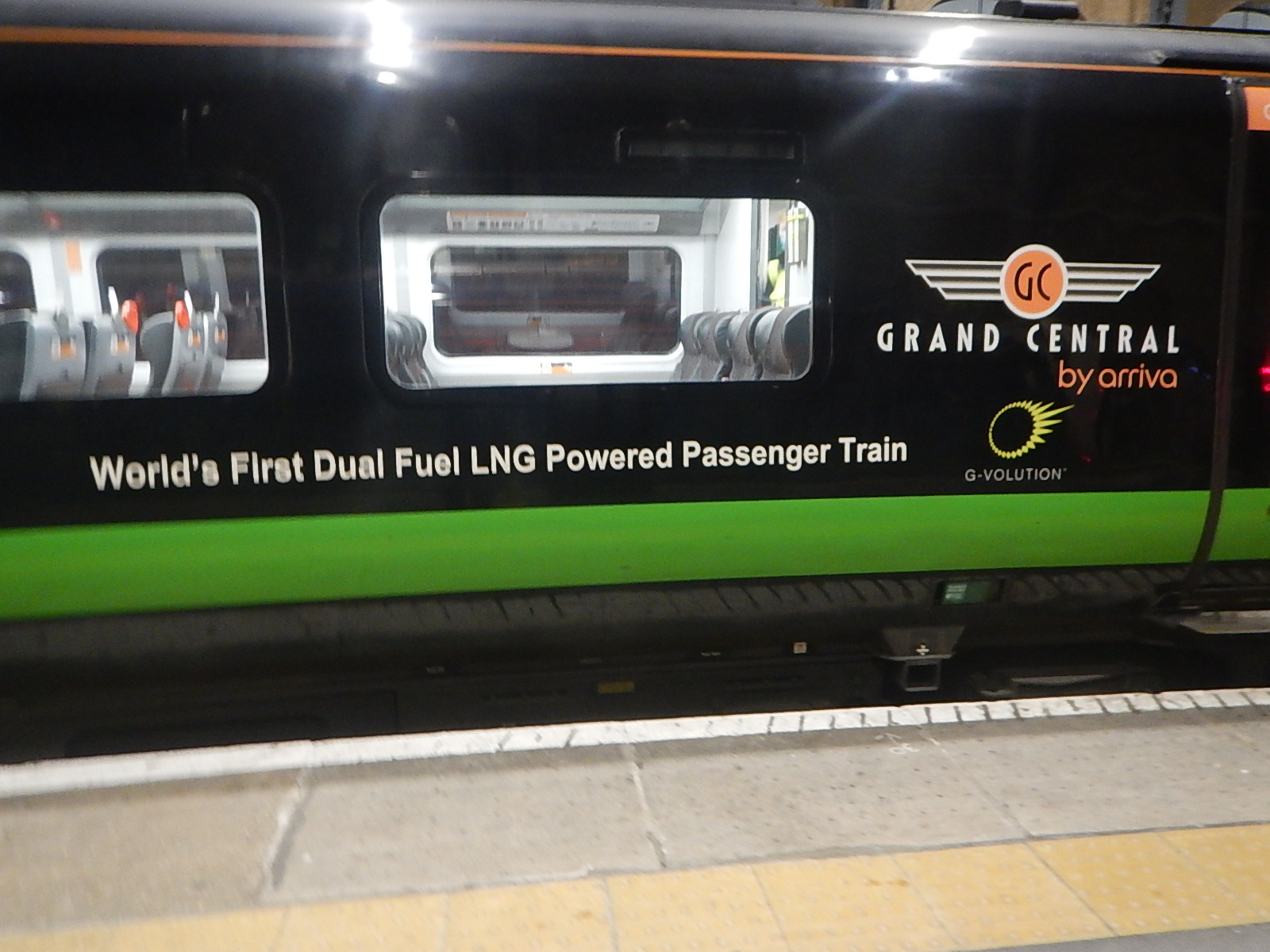
This picture I took after travelling in a Grand Central Class 180 train, shows that G-volution don’t hide their light under a bushel.
Note.
- This train appears to run on diesel and liquified natural gas.
- This G-volution video gives more details.
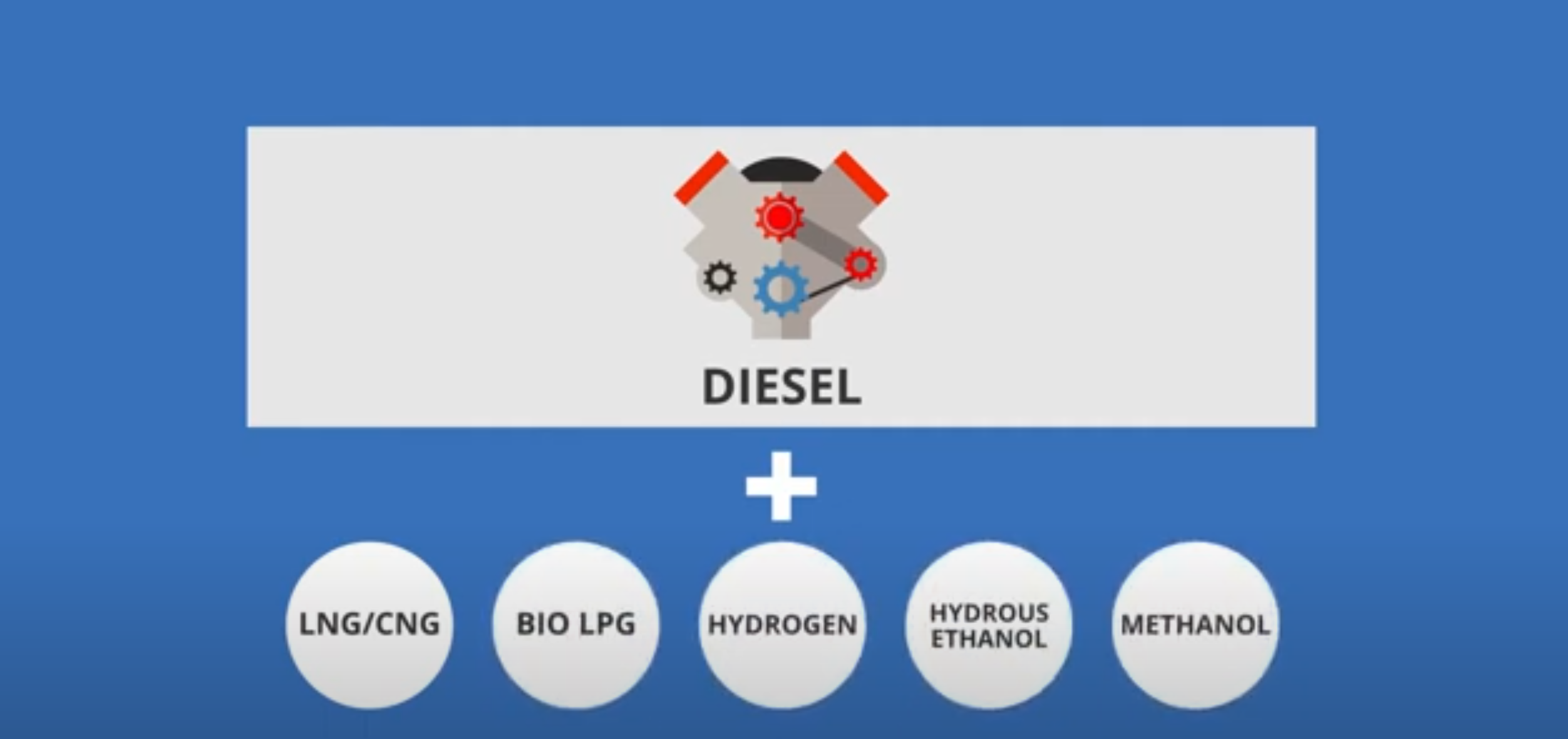
This clip from the video, shows the possible fuels.
Note.
- Can the dual fuel engine use biodiesel or HVO instead of diesel?
- It looks like the Fresh Air Fuels Global process can produce biomethane, which could be liquified as LNG.
- Hydrogen is the only true zero-carbon secondary fuel.
- There is a Wikipedia entry for ethanol fuel.
- Hydrous ethanol is about 95% ethanol and 5% water and is used as a fuel in Brazil in petrol cars.
- There is a Wikipedia entry for the use of methanol as fuel.
Have G-volution got access to the technology to both reduce the fuel consumption of diesel engines and run them on zero-carbon fuel?
UK Trains That Have Cummins QSK-19 R Diesel Engines
Grand Central’s Class 180 trains have a Cummins QSK-19 R diesel engine.
All these trains have the same engine.
- 14 – Class 180 trains
- 51 – Class 185 trains
- 34 – Class 220 trains
- 44 – Class 221 trains
- 27 – Class 222 trains
In addition, Class 175 trains have a different engine made by Cummins.
Conclusion
If G-volution’s technology can be made to work successfully, it could play a large part in the decarbonisation of UK passenger trains.
A Cute Refuse Truck
I took these pictures on Moorgate.




Note.
- This truck was built on a DAF LF chassis.
- It normally has a Cummins B-series diesel engine.
- It looks like it was registered in late 2022.
Some DAF LF chassis have a hybrid transmission.
I have a few thoughts.
Cummins B Series Engine
The Wikipedia entry for the Cummins B Series engine starts like this.
The Cummins B Series is a family of diesel engines produced by American manufacturer Cummins. In production since 1984, the B series engine family is intended for multiple applications on and off-highway, light-duty, and medium-duty. In the automotive industry, it is best known for its use in school buses, public service buses (most commonly the Dennis Dart and the Alexander Dennis Enviro400) in the United Kingdom, and Dodge/Ram pickup trucks.
Since its introduction, three generations of the B series engine have been produced, offered in both inline-four and inline-six configurations in multiple displacements.
Note.
- It is a very versatile engine.
- When I did some data analysis work for Cummins about twenty years ago, they told me, that they are happy to create a new configuration of their engines for a new application.
- Engines for the UK are made in Darlington.
- A version of the B series engine is used in London’s New Routemaster buses.
Cummins have made a lot of these engines.
Cummins And Hydrogen
Cummins realise they have a lot to lose, as the world decarbonises and doesn’t need diesel engines anymore.
Cummins have adopted the hydrogen route to zero-carbon with a large degree of enthusiasm.
- In 2019, they took a majority stake in hydrogen company; Hydrogenics.
- In Cummins Fuel Cell Technology Powers Coradia iLint Fleet In Germany, I described how Cummins supply the fuel cells for Alstom’s hydrogen trains in Germany.
- In Electrolyser System To Linde For Green Hydrogen Production In Niagara Falls, New York, I describe how Cummins are providing a 35 MW hydrogen electrolyser .
- In Cummins Shows Hydrogen Internal Combustion-Engined Concept Truck At IAA Transportation Exhibition, I describe how Cummins have developed and released a powerful hydrogen internal combustion engine based on the B series.
I believe that in Ricardo Supports Industry Leaders To Develop Innovative Dedicated Hydrogen Engine, I talk about the most significant development involving Cummins and hydrogen.
This is how I started the post.
The title of this post, is the same as that of this press release from Ricardo.
This is the sub-heading.
Ricardo, a global strategic, environmental, and engineering consulting company, has delivered a hydrogen-fuelled research engine to global engine specialist Cummins and automotive supplier BorgWarner, as part of Project BRUNEL part funded by the Advanced Propulsion Centre (APC)
These four paragraphs outline the project.
Cummins is a global specialist in diesel and alternative fuel engines and generators, and related components and technology. BorgWarner is an automotive tier 1 supplier and specialist in the design and manufacture of systems for electrified and conventional propulsion types, that includes injection equipment for conventional and renewable fuels. BorgWarner recently announced the intention to spin off its Fuel Systems segment. The intended company name is PHINIA Inc. PHINIA is expected to be a product leader in fuel systems, starters, alternators and aftermarket distribution.
The project aims to support internal combustion engine (ICE) sub-system suppliers to increase their use of hydrogen as an alternative zero-emissions fuel solution across the light commercial vehicle market.
The engine is specifically designed to burn only hydrogen – with no supporting fuels that could give rise to any carbonaceous, or excessive air quality emissions.
Experts in hydrogen technology and integration, Ricardo has provided an engine based upon its world-renowned series of single cylinder research units, which can help the research teams evaluate a wide variety of fuels. The engine is designed to help engineers evaluate a variety of injector types and will support increased fuel efficiency, reduced air quality emissions and the move towards carbon-free heavy-duty propulsion.
Reports of the death of the internal combustion engine are greatly exaggerated.
Cummins already have larger sizes of the B series engine that will run on hydrogen, so are BorgWarner, Cummins and Ricardo going to fill the gap in the range?
Are the companies going to develop B series hydrogen engines for the DAF LF trucks, Dodge RAM pickups and the New Routemaster buses?
Did I See The UK’s Hydrogen-Powered Future In Hull Today?
I went from London to Hull today on Hull Trains for £50.80 return (with my Senior Railcard) to see SSE’s presentation for their Aldbrough Pathfinder Hydrogen project, which will feature a 35 MW green hydrogen electrolyser and 320 GWh of hydrogen storage in the thick layers of salt under East Yorkshire.
- Green electricity would come mainly from the part-SSE owned 8 GW Dogger Bank wind farm complex.
- According to their web site, Meld Energy are planning a 100 MW electrolyser, which would produce 13,400 tonnes of hydrogen per year.
Every large helps!
- It should be noted that the thick layers of salt stretch all the way to Germany, and as drilling and storage technology improves, the amount of hydrogen storage available will increase.
- I was also impressed by the ambition, competence and enthusiasm, of the SSE engineers that I met.
- As has been pointed out, HiiROC, who have backing from Centrica, Hyundai, Kia and others, are also in Hull!
I believe, that I saw our hydrogen-powered future in Hull today!
We need more hydrogen mega-projects like these! Perhaps in Aberdeen, Clydeside, Freeport East, Isle of Grain, Merseyside, Milford Haven and Teesside?
Cummins And Accelera Showcase Broadest Portfolio Of Decarbonizing Technologies With An Emphasis On Hydrogen
The title of this post, is the same as that of this press release from Cummins.
This is the first paragraph.
Cummins Inc. and Accelera™ by Cummins, Cummins’ zero-emissions technology brand, will showcase a variety of technologies in their booth at Advanced Clean Transportation Expo (May 2 to 4, Anaheim, California). The line-up emphasizes the role that hydrogen will play as part of Destination Zero, Cummins’ strategy to go further, faster to reduce greenhouse gas (GHG) and air quality impacts of its products and reach zero emissions by 2050. The company will showcase technologies across the hydrogen value chain, including electrolyzers to produce hydrogen that can power both a hydrogen-fueled internal combustion engine (H2-ICE) concept truck and a fuel cell electric powertrain.
The press release says this about their electrolysers for hydrogen production.
The hydrogen ecosystem is underpinned by green hydrogen production. Accelera’s electrolyzer technology is enabling the infrastructure scale-up needed to support hydrogen-powered vehicles.
They also say that they now have a 2.5 MW electrolyser module.
The press release has a section about the X15H Peterbilt Model 579 Concept Truck, which is a conversion of a standard Peterbilt Model 579 truck.
Cummins will reveal a heavy-duty concept truck featuring the X15H hydrogen internal combustion engine (H2-ICE). The proof-of-concept installation with ratings up to 500 horsepower (372 kW) features a 700-bar pressure 80 kg high-capacity hydrogen storage system. The H2-ICE conversion highlights the opportunity for heavy-duty truck applications to operate on zero-carbon hydrogen fuel with an operating range of more than 500 miles. The hydrogen conversion work is not expected to compromise truck performance, cargo capacity or payload. The substitution of the diesel engine with the 15-liter hydrogen engine and integration with the existing driveline highlights the ability of H2-ICE to offer a zero-carbon solution for fleets to deploy quickly with limited investment.
This footnote says a bit more about the X15H hydrogen internal combustion engine.
The X15H hydrogen engine with up to 1900 foot-pounds torque is an all-new engine platform featuring cutting-edge technology to enhance power density, reduce friction losses and improve thermal efficiency. As a result, performance is equivalent to that of a similar displacement diesel engine and compatible with the same transmissions, drivelines and cooling packages. A further benefit of the X15H is significantly quieter running than a diesel.
It looks to me, that Cummins will be going for both the new build and replacement market.
Werner Enterprises Signs Letter Of Intent Planning To Secure 500 X15H Engines From Cummins and Transport Enterprise Leasing To Integrate Cummins X15H Hydrogen Engine Into Heavy Duty Trucks show this sales philosophy at work.
The press release also says this about their hydrogen fuel cell engine.
Hydrogen fuel cell engines turn hydrogen stored onboard a fuel cell electric vehicle (FCEV) into electricity to power the electric powertrain. This creates efficient, zero-emissions power for demanding applications with longer ranges and harder duty cycles. On display at ACT Expo is Accelera’s FCE150 Gen 4 fuel cell engine, powered to go the distance with superior performance and reliability and zero tailpipe emissions. It features increased power density, efficiency and durability with ease of system integration. It is available in 150 kW and 300 kW configurations with the flexibility to decarbonize a range of heavy-duty applications.
This looks to be a formidable beast.
After America, The World
It will be interesting to see what plans Cummins have for the rest of the world.
These posts contain some of my thoughts.
- Air Products, Cummins To Accelerate Hydrogen Integration In Fuel Cells Trucks
- Could London’s New Routemaster Buses Be Converted To Hydrogen Power?
- Cummins Fuel Cell Technology Powers Coradia iLint Fleet In Germany
- Daimler Truck North America And Cummins Collaborate To Drive Hydrogen Fuel Cell Trucks Forward In North America
- Do Cummins And Stadler Have a Cunning Plan?
- Electrolyser System To Linde For Green Hydrogen Production In Niagara Falls, New York
- Ricardo Supports Industry Leaders To Develop Innovative Dedicated Hydrogen Engine
This must be one of the biggest conversions of a major corporation to zero-carbon thinking.
Cummins And Leclanché S.A. To Collaborate On Lower-Emissions Solutions For Use In Marine And Rail Applications
The title of this post, is the same as that of this press release from Cummins.
This is the introductory paragraph.
Today, global power and technology leader, Cummins Inc., and leading provider of energy storage solutions, Leclanché S.A, announced the signing of a Memorandum of Understanding (MOU). The collaboration represents a significant step forward in providing customers with a broader portfolio of integrated power solutions.
Effectively, this means that all customer requirements for integrated power solutions can be met by the two companies.
It appears to me, that if someone wanted Cummins to provide a system like the HybridFLEX train, I wrote about in Rolls-Royce And Porterbrook Launch First Hybrid Rail Project In The UK With MTU Hybrid PowerPacks, then Cummins and Leclanché have the technology between them to create a system.
In the UK, Cummins power these relatively-modern trains.
- Class 175 – 9 x two-car and 15 x three-car.
- Class 180 – 1 x four-car and 12 x five-car.
- Class 185 – 51 x three-car.
- Class 220 – 34 x four-car.
- Class 221 – 24 x four-car and 18 x five-car.
- Class 222 – 23 x five-car and 4 x seven-car.
Note.
- They are capable of 100 mph or 125 mph.
- Condition of the interiors is generally good.
- There are 9 x two-car, 66 x three-car, 59 x four-car, 53 five-car and 4 x seven-car.
- In Grand Central DMU To Be Used For Dual-Fuel Trial, I described innovative fuel trails in a Class 180 train.
- There could be other similar trains in Europe and around the world.
How many of these trains could be converted to hybrid operation, if Cummins and Leclanché were to create their version of the mtu Hybrid PowerPack?
Conclusion
Have Cummins and Leclanché decided that if a hybrid approach is good enough for Rolls-Royce mtu, then it’s good enough for them?
Could The Bombardier Voyagers Be Converted To Hydrogen Power?
Avanti West Coast, CrossCountry and East Midlands Trains all run versions of Bombardier Voyager trains.
- There are 103 sets in service.
- Lengths are four, five and seven cars.
- They are 125 mph trains.
- They are powered by one Cummins QSK19 diesel engine in each car.
Given Cummins’s enthusiasm for hydrogen could these diesel engines be converted to hydrogen power, so the trains could run long distance routes on zero-carbon power?
If there is no need for them in the UK, there are probably lots of places in the world that would like them!
Centrica Business Solutions Begins Work On 20MW Hydrogen-Ready Peaker In Redditch
The title of this post, is the same as that as this news item from Centrica Business Systems.
This is the sub-heading.
Centrica Business Solutions has started work on a 20MW hydrogen-ready gas-fired peaking plant in Worcestershire, as it continues to expand its portfolio of energy assets.
These three paragraphs outline the project.
Centrica has purchased a previously decommissioned power plant in Redditch, and is set to install eight UK assembled containerised engines to burn natural gas.
Expected to be fully operational later this year, the peaking power plant will run only when there is high or peak demand for electricity, or when generation from renewables is low. The Redditch project will have the capacity to power the equivalent of 2,000 homes for a full day when required, helping to maintain stability and reliability on the grid.
The engines will also be capable of burning a blend of natural gas and hydrogen, futureproofing the site and helping the UK transition towards a decarbonised energy system.
- The original power station had Rolls-Royce generators.
- Cummins and Rolls-Royce mtu and possibly other companies can probably supply the dual fuel generators.
- Cummins have received UK Government funding to develop hydrogen-powered internal combustion engines.
- This press release from Cummins, which is entitled Dawn Of A New Chapter From Darlington, gives more details on Cummins’ plans for the Darlington factory and hydrogen.
Given that Cummins manufactured sixty-six thousand engines in Darlington in 2021 and it is stated that these containerised engines will be assembled in the UK, I feel, that these engines may be from Cummins.
Centrica’s Plans
This paragraph in the Centrica Business Systems news item, outlines their plans.
The Redditch peaking plant is part of Centrica’s plans to deliver around 1GW of flexible energy assets, that includes the redevelopment of several legacy-owned power stations, including the transformation of the former Brigg Power Station in Lincolnshire into a battery storage asset and the first plant in the UK to be part fuelled by hydrogen.
As Redditch power station is only 20 MW, Centrica could be thinking of around fifty assets of a similar size.
Brigg Power Station
The Wikipedia entry for Brigg Power station gives these details of the station.
- The station was built in 1993.
- It is a combined cycle gas turbine power station.
- The primary fuel is natural gas, but it can also run on diesel.
- It has a nameplate capacity of 240 MW.
Brigg power station is also to be used as a test site for hydrogen firing.
This news item from Centrica is entitled Centrica And HiiROC To Inject Hydrogen At Brigg Gas-Fired Power Station In UK First Project.
These paragraphs from the news item explains the process.
The 49MW gas fired plant at Brigg is designed to meet demand during peak times or when generation from renewables is low, typically operating for less than three hours a day. Mixing hydrogen in with natural gas reduces the overall carbon intensity.
It’s anticipated that during the trial, getting underway in Q3 2023, no more than three per cent of the gas mix could be hydrogen, increasing to 20% incrementally after the project. Longer term, the vision is to move towards 100% hydrogen and to deploy similar technology across all gas-fired peaking plant.
HiiROC’s proprietary technology converts biomethane, flare gas or natural gas into clean hydrogen and carbon black, through an innovative Thermal Plasma Electrolysis process. This results in a low carbon, or potentially negative carbon, ‘emerald hydrogen’.
Because the byproduct comes in the form of a valuable, solid, pure carbon it can be easily captured and used in applications ranging from tyres, rubbers and toners, and in new use cases like building materials and even as a soil enhancer.
It looks to me, that HiiROC are using an updated version of a process called pyrolysis, which is fully and well-described in this Wikipedia entry. This is the first paragraph.
The pyrolysis (or devolatilization) process is the thermal decomposition of materials at elevated temperatures, often in an inert atmosphere. It involves a change of chemical composition. The word is coined from the Greek-derived elements pyro “fire”, “heat”, “fever” and lysis “separating”.
Pyrolysis is more common than you think and is even used in cooking to do things like caramelise onions. This is a video of a chef giving a demonstration of caramelising onions.
On an industrial scale, pyrolysis is used to make coke and charcoal.
I came across pyrolysis in my first job after graduating, when I worked at ICI Runcorn.
ICI were trying to make acetylene in a process plant they had bought from BASF. Ethylene was burned in an atmosphere, that didn’t have much oxygen and then quenched in naphtha. This should have produced acetylene , but all it produced was tonnes of black soot, that it spread all over Runcorn.
I shared an office with a guy, who was using a purpose-built instrument to measure acetylene in the off-gas from the burners.
When he discovered that the gas could be in explosive limits, ICI shut the plant down. The Germans didn’t believe this and said, that anyway it was impossible to do the measurement.
ICI gave up on the process and demolished their plant, but sadly the German plant blew up.
It does look like HiiROC have tamed the process to be able to put hydrocarbons in one end and get hydrogen and carbon black out the other.
I wonder how many old and possibly dangerous chemical processes can be reimagined using modern technology.
It certainly appears that Centrica are not holding back on innovation.
Conclusion
I’ve never run a large electricity network. Not even a simulated one.
But I’m fairly sure that having a large number of assets of different sizes, that can be optimised to the load and the fuel available, creates a more reliable and efficient network.
Heavy energy users may even have their own small efficient power station, that is powered by gases piped from the local landfill.
Ricardo Supports Industry Leaders To Develop Innovative Dedicated Hydrogen Engine
The title of this post, is the same as that of this press release from Ricardo.
This is the sub-heading.
Ricardo, a global strategic, environmental, and engineering consulting company, has delivered a hydrogen-fuelled research engine to global engine specialist Cummins and automotive supplier BorgWarner, as part of Project BRUNEL part funded by the Advanced Propulsion Centre (APC)
These four paragraphs outline the project.
Cummins is a global specialist in diesel and alternative fuel engines and generators, and related components and technology. BorgWarner is an automotive tier 1 supplier and specialist in the design and manufacture of systems for electrified and conventional propulsion types, that includes injection equipment for conventional and renewable fuels. BorgWarner recently announced the intention to spin off its Fuel Systems segment. The intended company name is PHINIA Inc. PHINIA is expected to be a product leader in fuel systems, starters, alternators and aftermarket distribution.
The project aims to support internal combustion engine (ICE) sub-system suppliers to increase their use of hydrogen as an alternative zero-emissions fuel solution across the light commercial vehicle market.
The engine is specifically designed to burn only hydrogen – with no supporting fuels that could give rise to any carbonaceous, or excessive air quality emissions.
Experts in hydrogen technology and integration, Ricardo has provided an engine based upon its world-renowned series of single cylinder research units, which can help the research teams evaluate a wide variety of fuels. The engine is designed to help engineers evaluate a variety of injector types and will support increased fuel efficiency, reduced air quality emissions and the move towards carbon-free heavy-duty propulsion.
Reports of the death of the internal combustion engine are greatly exaggerated.
The Aims Of The Project
This talks about the light commercial market, which for Cummins means, that this engine could be a replacement for their B Series engine, which is described in Wikipedia like this.
In production since 1984, the B series engine family is intended for multiple applications on and off-highway, light-duty, and medium-duty. In the automotive industry, it is best known for its use in school buses, public service buses (most commonly the Dennis Dart and the Alexander Dennis Enviro400) in the United Kingdom, and Dodge/Ram pickup trucks.
A version is also used in London’s New Routemaster buses.
Speculation About A Hydrogen-Powered Dodge Ram Pickup
This article on Mopar Insiders is entitled Next-Gen Ram Heavy Duty Could Feature Cummins Hydrogen Powerplant!
It has this sub-heading.
Fast Refuel Times, Extended Range, & Zero-Emissions…
Sounds great for wide open spaces.
I’ve also read in an interview with a retiring Cummins Executive, who said that Dodge RAM trucks are being converted to hydrogen by enthusiasts.
Could New Routemasters Be Converted To Hydrogen?
In the Wikipedia entry for the Cummins B Series engine, this is said about the engine in a New Routemaster.
The 4.5L ISB is essentially a four-cylinder, two-thirds version of the 6.7L ISB rated at 185 hp (138 kW), used in the New Routemaster, a series hybrid diesel-electric doubledecker bus in London.
Having worked in the Cummins factory at Darlington, I know they are happy to produce specials for a particular application, so I wouldn’t be surprised to see a hydrogen-powered New Routemaster created by an engine and fuel system transplant.
Conclusion
The tie-up between Cummins, BorgWarner and Ricardo could be significant.
American power with a touch of Sussex finesse.
 The Anonymous Widower