Nuclear Deal Gives Rolls-Royce £2.5bn Boost
The title of this post, is the same as that of this article on The Times.
This is the sub-heading.
UK engineers selected to build a fleet of mini-nuclear power plants in the Czech Republic
These are the first two introductory paragraphs.
Almost £2.5 billion was added to the market value of Rolls-Royce after it was selected to build a fleet of mini-nuclear power plants in the Czech Republic, the first deal of its kind in Europe.
Rolls was selected as the preferred supplier for the development and construction of a number of small modular reactors by the Czech government from a shortlist of seven companies. The exact number of SMRs due to be delivered will be announced in the next few weeks.
Strangely, despite the announcement having a positive movement on the company’s share price, there was no corporate press release. but the Rolls-Royce subsidiary; Rolls Royce SMR did publish this press release, which is entitled Rolls-Royce SMR Named As Preferred Supplier To Build In Czechia.
These four paragraphs are the complete release.
Rolls-Royce SMR CEO, Chris Cholerton, said: “We welcome today’s landmark announcement by the Government of the Czech Republic and the Czech State utility, ČEZ Group, naming Rolls-Royce SMR as their preferred supplier for the development and construction of Small Modular Reactors (SMRs).
“This decision, to select Rolls-Royce SMR from a list of seven potential SMR technology providers, follows a rigorous evaluation process by ČEZ Group. Discussions are ongoing to finalise contract terms and the final agreements are subject to customary regulatory clearances. Details of the agreement will be published at signing.
“This important strategic partnership further strengthens Rolls-Royce SMR’s position as Europe’s leading SMR technology, and will put CEZ, Rolls-Royce SMR and its existing shareholders at the forefront of SMR deployment.
“Rolls-Royce SMRs will be a source of clean, affordable, reliable electricity for Czechia – creating jobs, enabling decarbonisation, reducing the reliance on imported energy and supporting the global effort to reach net zero.”
These are my thoughts.
Rolls-Royce And Small Nuclear Reactors
The Wikipedia entry for Rolls-Royce Submarines, who build the nuclear engines for submarines, indicates that the subsidiary was formed in 1954.
The first nuclear submarine with a Rolls-Royce engine was HMS Valiant, which was commissioned in 1966, according to its Wikipedia entry.
Valiant was powered, until it was decommissioned in 1994, by a Rolls-Royce PWR or Pressurised Water Reactor, that is described in this Wikipedia entry.
Since Valiant, the UK has built nearly forty nuclear submarines for the Royal Navy, and all have been or will be powered by that original Rolls-Royce PWR or derivatives of the design.
The next nuclear submarine project for Rolls-Royce Submarines, will be the nuclear power unit for the SSN-AUKUS, which is described in this Wikipedia entry, which describes the submarine like this in the first paragraph.
The SSN-AUKUS, also known as the SSN-A, is a planned class of nuclear-powered fleet submarine (SSN) intended to enter service with the United Kingdom’s Royal Navy in the late 2030s and Royal Australian Navy in the early 2040s. The class will replace the UK’s Astute-class and Australia’s Collins-class submarines.
The Wikipedia entry for the Rolls-Royce PWR, says this about the power unit for the SSN-AUKUS.
Rolls Royce is building the reactor for SSN-AUKUS, which may be the PWR3, or a derivative.
The PWR3 is the latest version of the original 1966 design.
If you fly on the latest Airbus A350, the aircraft is powered by Rolls-Royce Trent XWB engines, which are the most powerful engines in the Trent family of turbofan engines.
The Trent engine was developed from the RB-211 engine of the 1960s. The RB-211 may have bankrupted the company, but it later provided the cash-flow for the world-class company we see today.
I don’t think Rolls-Royce need have any fears about using sixty years of nuclear reactor technology to build the Rolls-Royce SMR.
Rolls-Royce And The US Department Of Defense Nuclear Microreactor Program
I discuss this in Rolls-Royce To Play Key Role In US Department Of Defense Nuclear Microreactor Program.
Surely to be involved in a key US program, Rolls-Royce’s offering must be tip-top.
Will The Czechs Play Any Part In The Manufacture?
This article in the Financial Times, is entitled Rolls-Royce Wins Pioneering Deal To Build Mini Nuclear pPlants In Czech Republic.
A paragraph sounds very much like active participation to me.
Between the Two World Wars, Skoda Works in Czechoslovakia, was according to its Wikipedia entry, was one of the largest European industrial conglomerates of the 20th century.
This paragraph from the Wikipedia entry describes their history after the First World War.
By World War I, Škoda Works had become the largest arms manufacturer in Austria-Hungary, supplying the Austro-Hungarian army with mountain guns, mortars and machine guns, including the Škoda M1909, and the ships of the Austro-Hungarian navy with heavy guns. After the end of the war and the creation of the First Czechoslovak Republic, the company, previously focused on manufacturing of armaments, diversified and became a major manufacturer of locomotives, aircraft, ships, machine tools, steam turbines, equipment for power utilities, among other industrial products.
The company sounded just like a Czechoslovakian version of Vickers.
I believe that as a teenager, I heard a story, that the armour plate for the British battleship; Duke of York, was smuggled out of Czechoslovakia, under the noses of the Nazis. I can’t find the story on the Internet, but Czech armour seemed to be of high quality, between the two wars.
This paragraph from the Wikipedia entry describes the history of Skoda Works after World War II.
After World War II, Škoda Works was nationalized and split into several companies by the newly communist government in Czechoslovakia. Important products during the Communist era include nuclear reactors and trolley buses.
I don’t think they made nuclear trolley buses, but they might have had the capability.
What happened to the knowledge about all the steelworking needed to make nuclear reactors?
This further paragraph gives an indication. that lack of modern designs killed the business.
The factory concentrated on markets in the Soviet Union and the Eastern Bloc. The company produced a wide range of heavy machinery such as nuclear reactors and locomotives. A lack of updates to its product designs and infrastructure considerably weakened the company’s competitive position and its brand.
Note.
- Can Rolls-Royce and their partner; The Welding Institute (TWI), provide modern designs and techniques to build the parts of reactors for modern SMRs in Czechia?
- The Welding Institute, which is based just outside of Cambridge, describes themselves as the leading engineering institution supporting welding and joining professionals with welding, joining and allied technologies.
- Czechia is also in the heart of Europe and components would be easily shipped by rail or road to European construction sites.
- Wikipedia also says that a lot of post-Soviet trams and trolley busses, were made by Skoda, so the same must count for something.
There will be much worse places to build components for SMRs than Czechia.
Will The Czechs Help With The Soviet Reactors?
If the Czechs built the reactors, they will have a lot of answers about things like.
- Where the Soviet reactors are?
- When will the Soviet reactors need replacing?
- How were they transported?
- How were they assembled?
- What will be the difficult parts to take apart?
Choosing the Czechs for their knowledge as partners seems a good idea.
Conclusion
The Czechs would appear to be good partners for Rolls-Royce.
Stadler Presents A World First In Berlin
The title of this post, is the same as that of this press release from Stadler.
These are the first two paragraphs.
With the RS ZERO, the rail vehicle manufacturer is presenting the successor to the successful Regio-Shuttle RS1 model. There is a choice of two modern and environmentally friendly drive technologies: Hydrogen and battery. Both will enable CO2 emission-free operation of secondary lines in the future.
Stadler today unveiled the prototype of the new RS ZERO, the innovative successor to the successful RS1 Regio-Shuttle. The Regio-Shuttle has been one of the most popular vehicles in German regional rail transport for 28 years, with around 500 RS1 vehicles currently in operation in Germany and the Czech Republic. Stadler is building on this proven technology and integrating state-of-the-art, environmentally friendly drive systems. The RS ZERO is optionally available with a hydrogen and/or battery drive and thus not only sets new standards for environmentally friendly rail transport, but also presents a world first.
These pictures from Chemnitz Trams And The Chemnitz Model, show the Regio-Shuttle RS1.

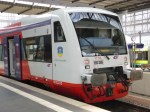
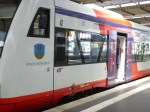
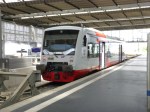
Note.
- The Regio-Shuttles can run as up to seven car trains.
- These Regio-Shuttles are electro-diesel.
- The distinctive diagonal windows.
- They can carry 170 passengers at 75 mph.
- They can run as train-trams using the Chemnitz model on compatible tram networks.
The Regio-Shuttle Wikipedia entry gives more details.
This image from the press release shows the prototype RS ZERO.
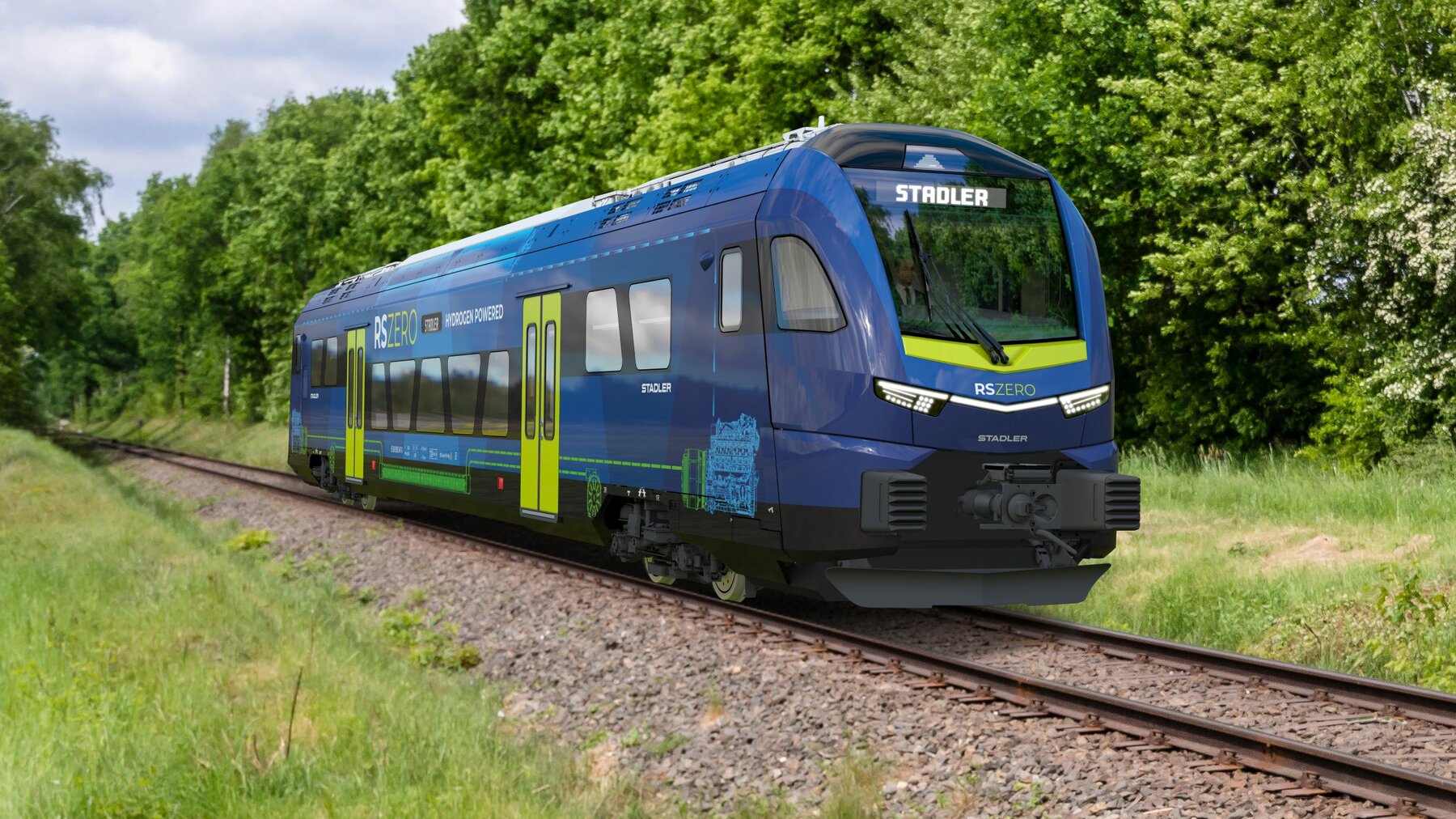
It looks very similar to my pictures from Chemnitz.
I have a few thoughts.
Comparison To A Class 150 Train
A Class 150 train can carry up to 149 seated passengers at 75 mph, which is similar to the RS ZERO.
As Stadler have built trains for Greater Anglia, Merseyrail and the Glasgow Subway, I believe that Stadler could build an RS ZERO, that would fit the UK loading gauge.
In What Train Is This?, I show the standard of interior, that can be achieved by refurbishing a Class 150 train, but unlike the RS ZERO, the train won’t be zero-carbon.
Does The RS ZERO Have A Toilet?
This is a paragraph from the press release.
The prototype of the RS ZERO presented today in Berlin is a one-car vehicle with hydrogen drive. Stadler is demonstrating the numerous design options with a multi-purpose area equipped for carrying bicycles, pushchairs and bulky luggage, lounge and comfort zones, standard and privacy seats, a wheelchair space, WC and a train office.
The train appears to be able to have what an operator might need.
What Will Be The Range Of An RS ZERO On Hydrogen?
I suspect, Stadler will provide a train, that will handle the route.
Conclusion
This could be a very handy train to decarbonise branch and secondary lines in the UK.
Europe’s Mines Look To Gravity Energy Storage For Green Future
The title of this post, is the same as that of this article on Global Mining Review.
This is the sub-heading.
Mine owners across Europe are looking at a new form of underground energy storage to offer a low carbon future as operations wind down.
These are the first four paragraphs.
Active deep mine operators in Slovenia, Germany, The Czech Republic and Finland are all examining how underground gravity energy storage – provided by Edinburgh firm Gravitricity – could offer green opportunities to mining communities facing a downturn in employment.
Gravitricity has developed a unique energy storage system, known as GraviStore, which uses heavy weights – totalling up to 12 000 t – suspended in a deep shaft by cables attached to winches.
This offers a viable alternative future to end of life mine shafts, which otherwise face costly infilling and mine decommissioning costs.
They have teamed up with energy multinational and winch specialist ABB alongside worldwide lifting specialists Huisman to commercialise the technology for mine operators.
Note.
- Four projects are mentioned.
- It appears to be less costly, than infilling.
- Gravitricity have teamed with ABB and Huisman, who are two of Europe’s specialist in this field.
- You can’t have too much energy storage.
The article is worth a full read.
Conclusion
Gravitricity’s simple idea could be a big winner.
Don’t Call Them illegal Immigrants, Sadiq Khan Tells Civil Servants
The title of this post, is the same as that of this article in The Times.
These three paragraphs outline Khan’s new instructions to civil servants.
Sadiq Khan has told civil servants not to use the term “illegal migrants” but instead use “undocumented” migrants or those “with insecure immigration status”, according to internal guidance.
Produced for City Hall workers, the leaked inclusivity guide tells employees that instead of using “men and women’” they should say “people” or “Londoners”. It also advises the estimated 1,300 people who work for the Greater London Authority that the terms “male” and “female” are “dated and medicalised”.
“Similarly, instead of ‘ladies and gentlemen’ say something that doesn’t exclude non-binary people,” it reads.
In the 1970s, I can remember C and myself listening to a magnificent play on BBC Radio 4, by Václav Havel called The Memorandum.
The Wikipedia entry says this about the play.
The play is a black comedy that parodies bureaucracy and conformity. Havel wrote it prior to the Prague Spring of 1968 as an ironic satire dissenting against communist rule. Despite its veiled themes, the play was approved by government censors and published. The Memorandum centers on the introduction of a new language, “Ptydepe”, that is meant to make work more efficient despite having the opposite effect. Sam Walters considers The Memorandum to be Havel’s masterpiece.
Khan has obviously seen the play and feels he should sharpen up his act.
Gravity Energy Storage For Cleaner Power Grids!
The title of this post, is the same as that of this article on Energy Live News.
This is the sub-heading.
Scotland’s Gravitricity has teamed up with a Czech electricity flexibility company to bring their gravity storage technology to market
These two paragraphs introduce the article.
Scottish firm Gravitricity has partnered with Czech energy flexibility aggregator Nano Energies to commercialize their gravity storage technology.
The partnership plans to convert an old mine shaft in the Czech Republic into a gravity energy store, which can rapidly respond to grid fluctuations and could be a pioneer for European projects.
Gravitricity seems to be on its way.
Plans To Turn Czech Coal Mine Into Storage, Hydrogen And Solar Hub
The title of this post, is the same as that of this article on Power Engineering International.
This is the sub-heading.
Mine is also going to be the site of an experimental greenhouse project called Eden Silesia
This paragraph outlines Eden Silesia.
The site will also be home to an experimental greenhouse project called EDEN Silesia, managed by the Silesian University of Technology and based on the concept of the Eden Project in Cornwall, England.
It does seem that the Czechs are creating a comprehensive facility around a Gravitricity energy store.
This Gravitricity system is only a 4MW/2 MWh system, but there is also this quote from the company.
Future multi-weight systems could have a capacity of 25MWh or more.
If the concept works, this could be imitated in several countries around the world?
Gravitricity And Czech Firm DIAMO Announce Plans To Cooperate On Full Scale Gravity Energy Store
The title of this post, is the same as that of this article on The Engineer.
This is the sub-heading.
A former coal mine in the Czech Republic could become the first full scale gravity energy store in Europe, according to UK energy storage specialist Gravitricity
This paragraph describes the project.
The agreement will see the two companies seek funding to transform the former decommissioned Darkov deep mine – which is located in the Moravian-Silesian region of the Czech Republic – into a 4MW / 2MWh energy store, capable of powering more than 16,000 homes. According to Gravitricity the system will store energy by lowering and raising a single massive weight suspended in the Darkov mine shaft. The company has also signed a memorandum with VSB Technical University of Ostrava, whose specialist mining expertise will support the implementation of the technology.
Hopefully, the finance won’t be too difficult to find, with perhaps some help from the EU.
The article also describes the potential of Gravitricity, where it says.
- There could be up 14,000 suitable mines around the world.
- The Coal Authority believes there could be a hundred suitable shafts in the UK.
It appears Gravitricity may be on its way.
‘A Gift For Putin’: Czech E-shop Sells Tanks And Grenades To Support Ukrainian Army
The title of this post, is the same as that of this story on expats_cz.
This is the introductory paragraph.
The Czech Republic has been among the most active countries in supporting the Ukrainian military with donations and sales of weapons and ammunition, including shipments of Soviet-era tanks, multiple rocket launchers, howitzers, infantry fighting vehicles, and anti-aircraft weapons.
I hope the gift, will calm Vlad the Mad.
Disused Coal Mine Could Host Gravity Energy Storage Project
The title of this post, is the same as that of this article on Power Engineering International.
It does seem that Gravitricity has made a breakthrough, with the announcement of a full-size demonstration project in the Czech Republic.
- The project is based at the mothballed Staříč coal-mine in the Moravian Silesian region.
- They have backing from the European Investment Bank.
- This project will be delivered through the European Commission’s Project Development Assistance scheme.
- The Czech Republic seem to have carried out checks, with their own consultants.
It looks to me, that Gravitricity have passed the due diligence procedures of some high-powered agencies.
But this paragraph from the article must be important.
Gravitricity estimates there are around 14,000 mines worldwide which could be suitable for gravity energy storage.
If they can successfully store energy in one mine in the Czech Republic, how many of the 14,000 will be suitable for use?
I doubt it will be a small number, as mining engineers tend to be a conservative bunch and most of those mines will have been built to similar rules by similar machines and techniques.
A search of the Internet indicates that Staříč coal-mine has a depth of over a kilometre.
Using Omni’s Potential energy calculator, 12,000 tonnes and a kilometre give a figure of 32.69 MWh.
32 MWh may seem a small amount, but it would power one of these 4 MW Class 90 locomotives for eight hours.
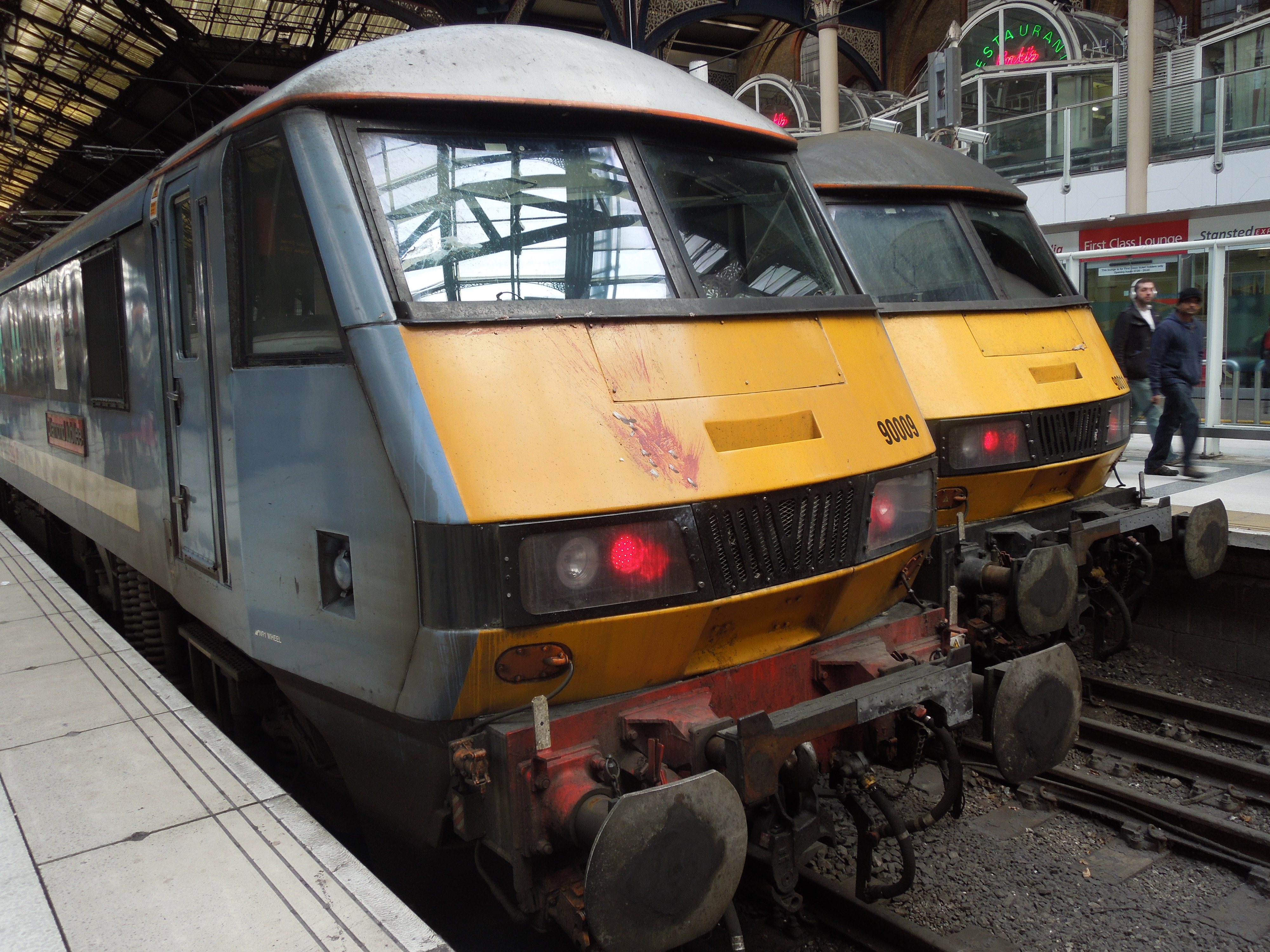
At their typical operating speed of 100 mph, whilst hauling eight coaches, they’d travel a distance of eight hundred miles or from London to Edinburgh and back!
Edinburgh Energy Storage Firm Gravitricity Hooks Up To European Backing
The title of this post, is the same as that of this article on The Scotsman.
This is the first paragraph.
Gravitricity, the Edinburgh-based company looking to build an energy storage project in a disused mineshaft, has secured support from the European Investment Bank (EIB).
It’s all to support a project at the recently mothballed Staric coal mine in the Moravian Silesian region of Czechia.
 The Anonymous Widower