KCC Leader Writes To The Minister For Future Of Roads About The Increase In Dartford Crossing Charges
The title of this post, is the same as that of this news item from Kent County Council.
Although it is a long letter, it would be wrong to publish only part of it in this post.
As the newly elected Leader of Kent County Council, I would welcome dialogue about the increase in the charge for the Dartford Crossing due to come into effect from September.
The increase is capped at £1, but this represents a 40% uplift on the current £2.50 charge in each direction for those without a pre-pay account. This is the only crossing option east of London until the Lower Thames Crossing is open (in 2032 at the earliest) and so Kent residents and businesses have no viable alternative when using this important route. The alternative is to drive into Greater London, potentially incurring a further charge for the Ultra Low Emission Zone (ULEZ), and the paying even more (£4 each way) to use the Blackwall or Silvertown tunnels.
Whilst most local residents in Dartford benefit from unlimited crossings for a fixed £25 annual fee, this ignores the fact that there is no reasonable alternative route for anyone in Kent making the journey to the Midlands, North and beyond. This is a constraint on the local and national economy.
The Crossing’s accounts for 2023-24 show that cash receipts were £221.6m with operating costs of £134.9m, leaving a net profit of £86.7m. Clearly the crossing is not on the cusp of losing money.
For the increase to be intended to manage demand, without an alternative route there is no way of managing routing, so it will only suppress the journeys for the very poorest in our society. This is hardly equitable. It will also increase costs to the supply chain which will be passed onto customers – furthering the cost-of-living pressures for so many hard-working people.
Our residents still remember that the toll was meant to end when the infrastructure was paid for, but changes in policy mean the charge has continued indefinitely. Effectively another tax for making journeys to work, visiting friends and family, and spending hardearned money at local resorts and attractions.
Given the impact on Kent is so great, there is a strong argument that KCC, as the Highways authority for Kent, should be passported a proportion of this money each year to aid the upkeep of the road network. When one considers the amount of foreign traffic that transverses Kent’s roads, alongside the amount of traffic from other counties within the UK, it is fair to say Kent is the Gateway County. And with that in mind we feel that lack of any financial benefit KCC receives from the Dart Charge needs to be considered as we struggle to maintain our road networks. This new funding stream would enable us to make a tangible difference to the condition of our Local Road Network or help fund major improvement schemes on the Strategic Road Network, including funding towards the new Lower Thames Crossing – unlocking growth and opportunities, and helping to offset the detrimental impact of the increased crossing charge. Kent occupies a strategic position between the UK and Europe, and its transport network is vital for UK supply chains and British businesses, therefore investment in Kent is an investment in the national economy.
I hope you carefully consider this possibility if you move forward with the toll increase.
Yours sincerely
Linden Kemkaran
Linden Kemkaran was elected to Kent County Council as a Reform UK Councillor.
This article on the HuffPost is entitled New Reform UK Council Leader Calls Ukraine War ‘A Distraction’.
This is the sub-heading.
Linden Kemkaran promised to take the Ukraine flag down in Kent’s county council chamber.
These are the first three paragraphs of the article.
A new Reform UK council leader has called the Ukraine war a “distraction”.
Linden Kemkaran, named leader of Kent County Council a week after Reform UK’s sweeping victories in the local elections, appeared to downplay the impact of the largest conflict in Europe since World War 2.
Speaking after she was named as council leader on Thursday evening, she promised to remove the Ukrainian flag from the chamber.
She may have a point about the Dartford Crossing, but her dismissal of Ukraine as a distraction, marks her out in my book as one of Putin’s friends.
Also published today, is this article on the BBC, which is entitled Three men found guilty of Wagner-linked arson attack in London.
As the arson attack took place in Bexley, just over the Kent border with London, I wonder what her view will be on the undoubtedly long sentences these terrorists working for Russia will receive. Are they just a distraction?
Severe Delays At Blackwall Tunnel, Woolwich Ferry And Dartford
The title of this post is the same as that of this article on Murky Depths.
These three paragraphs give more details.
There are severe delays at all crossings of the Thames between east and south east London and beyond this afternoon after a collision on the Dartford crossing.
Miles of queues are in place at the approach to the Blackwall crossing with traffic backed up for the entire length of the A2 and A102 between the M25 and Greenwich then back into east London.
Extremely long waits for the Woolwich ferry are also seen, with numerous bus routes delayed.
It appears to have been caused by a crash on the Dartford Crossing, that required extensive repairs to the road and barriers.
In 2015, I published No To Silvertown Tunnel.
Since the tunnel opened, I have written Is The Silvertown Tunnel A Silver Elephant?
I am certainly keeping an open mind, after yesterday’s article in Murky Depths.
When Silvertown Opens, Blackwall Tolls Start Too
The title of this post, is the same as that of this article on the BBC.
This is the sub-heading.
In under a month, tolls will be introduced for drivers at the new Silvertown Tunnel and the existing Blackwall Tunnel in east London.
These four paragraphs add detail to the story.
For car drivers it will cost £8 a day in peak. These are huge changes to London’s transport network and awareness seems to be low.
The new highly controversial Silvertown Tunnel opens on 7 April.
Critics have dubbed the crossing a huge polluting white elephant that will do nothing to cut congestion and pollution with little or no business case.
Supporters say it will reduce congestion on the old, existing Blackwall Tunnel and improve resilience on the crossing that closes between 600-700 times a year. It will also provide more cross river bus routes as well as a bus that can carry bikes.
As a very experienced mathematical modeller, my gut feeling is that four new tolled lanes under the River Thames is not the solution.
These are my thoughts.
Transport for London Are Not Good Mathematical Modellers
As a non-driver, I rely heavily on the 141 bus for transport.
- It stops close to my house.
- It takes me to and from Moorgate, where I also pick up the Elizabeth Line.
- It takes me to and from Bank, where I also pick up the Central Line.
- It takes me to and from River Thames, from where I pick up the Thames Clippers.
- It takes me to and from London Bridge station, where I also pick up theThameslink.
- It takes me to and from Manor House station, where I pick up the Piccadilly Line.
- It takes me to and from Harringay Green Lanes station, where I pick up the Gospel Oak to Barking Line.
I must admit some of the reasons I like the bus route, are that it connects me to my childhood memories of WoodGreen, Southgate, Oakwood and Cockfosters.
When, I moved here, there were two North-South buses that ran within fifty metres of my house.
- The 21 bus ran between Newington Green and Lewisham.
- The 141 bus ran between Palmers Green and London Bridge station.
Then, two years ago the Elizabeth Line and the rebuilt Bank station both opened, followed a year later by an upgraded Old Street station.
These three improvements, added a lot more passengers to the North-South corridor, between London Bridge station and Newington Green roundabout.
I suspect a quality modelling of bus passengers North-South, through the city of London, would have shown, that more buses were needed on the combined 21/141 route.
So what did Sir SadIQ and Transport for London do? They rerouted the 21 bus away from the busiest section through De Beauvoir Town.
In their modelling, I suspect.
- They overestimated how many travellers used the Northern Line.
- They ignored the fact, that the Piccadilly Line doesn’t serve the City of London.
- They ignored the fact, that the Piccadilly Line doesn’t connect to the Elizabeth Line.
- They ignored the fact, that the 141 bus, is the only direct way between Palmers Green, Wood Green, Turnpike Lane and Manor House to the City of London.
- They felt De Beauvoir Town was a posh area and doesn’t need more buses, as residents can use their cars.
Halving the number of buses was a seriously bad decision.
I now have a damaged left knee due to constant standing on overcrowded buses.
It’s also got a lot worse lately due to constant bus diversions and cancellations, due to Islington’s LTNs and constant road works.
I’ve heard similar tales of bad bus planning from all over London.
So why should I trust Transport for London’s traffic modelling on the Silvertown and Blackwall Tunnels?
The Silvertown And Blackwall Tunnel Share Approach Routes
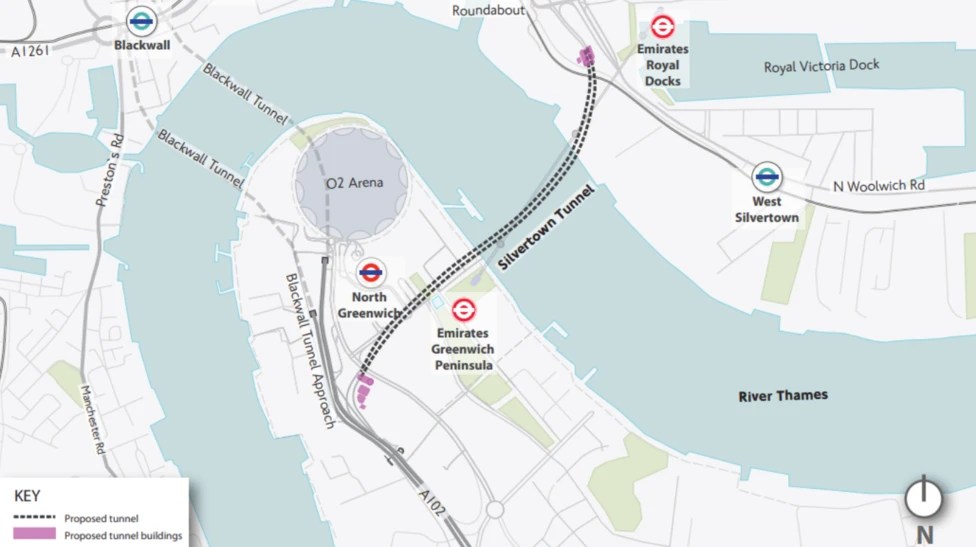
This map from the BBC article shows the layout of the two tunnels and their approach roads.
Note.
- The Blackwall Tunnel is two, two lane tunnels, one in each direction.
- The Silvertown Tunnel is one four lane tunnel, with two lanes in each direction.
- The O2 lies between the two tunnels.
The map shows the shared approach road for both tunnels.
What happens if there is an accident on the approach to the tunnels?
Tolling Problems
I feel that the tolling regime is overly complicated.
Hopefully, any problems this causes will lessen, as drivers know what to do.
The Sat-Nav Route Between The Tunnels And The M1
I’ve just looked one recommended route up, not that I have a Sat-Nav and I’ve never used one and the route is straightforward.
- Blackwall Tunnel Northern Approach to Hackney Wick.
- Wick Lane to Hackney Central.
- Graham Road and Dalston Lane to Dalston Junction
- Balls Pond Road to Southgate Road/Mildmay Park
- St. Paul’s Road to Highbury & Islington station.
- Holloway Road to Archway.
- Archway Road, Aylmer Road and Falloden Way to Henly’s Corner.
- North Circular Road and Great North Way to the M1.
I live just South of the Southgate Road/Mildmay Park junction and often these days it is jammed solid.
But there is another route from Hackney Wick.
- A12 to Redbridge Roundabout on the North Circular Road.
- North Circular Road to the M1.
I dread to see what happens, when the Dartford Crossing is closed and heavy trucks from the Channel Tunnel to the M1, decide to take the Silvertown Tunnel as an alternative route.
Petition Calls Made To Scrap Blackwall And Silvertown Tolls
The title of this post, is the same as that of this article on the BBC.
This is the sub-heading.
A petition containing more than 37,000 signatures calling for proposed tolls on the Blackwall and Silvertown tunnels to be scrapped has been presented at City Hall.
These four paragraphs give more details.
Toll charges of up to £4 per journey through the soon-to-open Silvertown Tunnel and the neighbouring Blackwall Tunnel were announced by Transport for London (TfL) on 26 November.
The Silvertown Tunnel will open next spring and will provide a new road crossing under the Thames between Silvertown and the Greenwich Peninsula.
The charges are “designed to manage levels of traffic using the tunnels”, TfL has said.
A TfL spokesperson added that without the tolls, “traffic would increase in both tunnels causing delays and congestion, which contribute to poorer air quality”.
Note.
- 37,000 is a large petition.
- If Transport for London wanted to reduce pollution, they could encourage greater use of hydrogen.
I have done some simple modeling using Excel.
- There are six vehicle crossings; Dartford Bridge, Dartford Crossing, Woolwich Ferry, Silvertown Tunnel, Blackwall Tunnel and Rotherhithe Tunnel.
- Matters are complicated by each crossing being a different size.
- There are several reliable rail crossings and a number of foot crossings, which offer alternatives, for those travellers on foot.
- Currently the worst disruption occurs, when more than one route is out of action at the same time.
It is a very complex river crossing,
I feel strongly that we aren’t going to get a true picture of traffic flow through the two new tunnels, until we see serious disruption on the Dartford Crossing.
But what worries me most, is that in the last few years, TfL have made decisions, where they must have done extensive mathematical modelling and they seem to have come up with answers, that are wide of the mark.
Congestion Prediction
I believe that we now have enough data, that by the use of modern computing, advanced vehicle detection techniques and a liberal dollop of artificial intelligence we should be able to accurately predict the traffic flow over the Thames between Dartford and Silvertown, better than we have done in the past.
But will this just mean, that everybody just takes the least-congested route?
Council’s Concerns Over Suggested Tunnel Charges
The title of this post, is the same as that of this article on the BBC.
This is the sub-heading.
Concerns have been raised by a county council over suggested charges at the Silvertown and Blackwall tunnels in London.
These are the first two paragraphs.
Kent County Council (KCC) said the proposed charges could impact on the county’s traffic, including at the Dartford Crossing.
The council said although it supported TfL’s ambition to improve journey reliability and reduce air pollution, it believed the proposed changes could “significantly affect” drivers from Kent.
I can’t see that the charges on the two tunnels won’t affect drivers habits.
Thirty years ago, before satellite-navigation had been invented, when my family and myself lived in East Suffolk, if I was returning from Brighton or Gatwick, I would make a choice about, whether to use the Dartford Crossing or the Blackwall Tunnel. Sometimes traffic was so bad, that I had to take the longer Western route using the M11 and the A14.
I didn’t really bother about the toll on the Dartford Tunnel, as it was then, but often the free Blackwall route was quicker.
In those days, I was relying on radio reports, but now with satellite-navigation, drivers will be taking more intelligent decisions, that take account of tolls.
The BBC article also says this.
The council says Kent drivers make up 10% of the Blackwall Tunnel’s users.
So it looks like the drivers of Kent will be paying tolls to London.
These are my thoughts.
How Can The Tolls Be Avoided?
There will still be two free crossings, to the East of Tower Bridge; the Rotherhithe Tunnel and the Woolwich Ferry, but how long will they remain free, if they drain money from the tolled tunnels?
What About The Trains?
Trains from somewhere like Ebbsfleet international station can be used.
Ebbsfleet international station has a lot of parking, but at some stations parking is distinctly limited.
I doubt though, that Transport for London have done a professional survey of the amount of parking that is needed.
They tend to believe if people live out of London, that parking for trips to London is not a Transport for London problem.
Are there any plans to increase the train frequencies, if more people use them?
Note that Off Peak Day Return tickets can be purchased with a Railcard, from Dartford to London for under a tenner, and from Ebbsfleet international to London for under fifteen pounds.
If Built, Will The Lower Thames Crossing Help?
The first paragraph of the Wikipedia entry for the Lower Thames Crossing, describes it like this.
The Lower Thames Crossing is a proposed road crossing of the Thames estuary downstream of the Dartford Crossing that links the counties of Kent and Essex, and its proposed approaches. If built it would pass through the districts of Thurrock and Gravesham, supplementing the Dartford route. The approximately 14.3-mile (23.0 km) route is being assessed by the Planning Inspectorate.
As it is likely to cost nine billion pounds and take six years to build, I can’t see the current Government building it.
But it would certainly make it easier for traffic to go between the Channel Tunnel and North of London.
Conclusion
I can see the UK muddling through, when we should be bold and create the transport infrastructure for the Twenty-First Century.
For instance, I would extend the Elizabeth Line in the North-East to Southend and in the South-East to Ebbsfleet and Gravesend. With the existing cross-platform interchange at Whitechapel, I believe, it could pick up much of the cross-river passenger traffic close to London.
I also feel that there will need to be improved connections between the fast-expanding London Gateway freight port and the Channel Tunnel.
Are Londoners The Tunnel Kings?
I was born in 1947 and it was in the early 1960s, that I started to develop an interest in engineering, which eventually led me to study Electrical Engineering and Electronics at Liverpool University.
Like most Londoners, I was a frequent user of the Underground and for six or seven years, I took the Piccadilly Line many days between Oakwood and Southgate to go to Minchenden Grammar School. Often, after school, I would go on to my father’s print works near Word Green tube station.
But not memories of London’s tunnels were so memorable at that time. One day, we were driving to see my Uncle Bert in Broadstairs and we were held in the Blackwall Tunnel for an hour or so because of an accident.
Perhaps, this is why I can remember a black-and-white video of digging the Western Tunnel of the Dartford Crossing so vividly. But as Raymond Baxter probably explained to BBC viewers at the time, it dug using a Greathead shield under pressure to keep the water out. It was probably the last tunnel dug under the Thames using methods, that would have been familiar to Victorian engineers.
This British Pathe video shows some of the construction of the Western tunnel.
This paragraph from the Wikipedia entry for the Eastern Tunnel describes its construction.
Construction was approved in April 1971, with an initial expected opening date in 1976. Work was delayed due to a lack of funds, which was resolved by EEC funding granted in 1974. The second tunnel opened in May 1980, allowing each tunnel to handle one direction of traffic, by which time the joint capacity of the two tunnels had increased to 65,000 vehicles per day. Connection of the crossing to the M25 was completed on the northerly Essex side in September 1982 (Junction 31), and to the southerly Kent side in September 1986 (Junction 1a)
The tunnels may be inadequate in terms of capacity, but they have certainly done a reliable job for sixty and forty-three years respectively.
There are other tunnels under the Thames, that have been built in my lifetime.
- Thames Cable Tunnel – 1970 – National Grid’s 400 kV cable.
- High Speed One – 2007
- Dartford Tunnel (East) – 1980
- Dartford Tunnel (West) – 1963
- Dartford Cable Tunnel – 2004
- Docklands Light Railway Tunnel – 2009
- Elizabeth Line Tunnel – 2014
- Millennium Dome Cable Tunnel – 1999
- Jubilee Line Tunnels – 1999 – Planned by Artemis
- Blackwall Runnel (East) – 1967
- Isle of Dogs Jubilee Line Tunnels – 1999 – Planned by Artemis
- Docklands Light Railway Tunnel – 1999 – Planned by Artemis
- Deptford Cable Tunnel –
- Jubilee Line Tunnels – 1999 – Planned by Artemis
- Victoria Line Tunnel – 1971
- New Cross to Finsbury Market Cable Tunnel – 2017
- Wimbledon to Pimlico Cable Tunnel – 1996
- London Power Tunnels – 2018, 2011
There are also these tunnels, which don’t go under the Thames
Bank Station Expansion And New Southbound Northern Line Tunnel – 2022
- Elstree to St. John’s Wood Cable Tunnel – 2005
- Heathrow Rail Tunnels – 1998
- Lee Tunnel – 2016
- Limehouse Link Tunnel – 1993
- Lower Lea Valley Cable Tunnels – 2008
- Northern Line Extension To Battersea – 2021
- Piccadilly Line Extension To Heathrow – 1975-2008
- Thames Tideway Tunnel – Estimated completion in 2025 – Tunnelling ended in 2022.
- Thames Water Ring Main – 2010
Note.
- The date is the opening date.
- I am pleased to see that at least some projects were planned, with the software, I wrote in a Suffolk attic.
In my lifetime, at least 27 substantial tunnels have been completed, a very large proportion of which have been on time and on budget, with the possible exception of the Heathrow Rail Tunnels, which collapsed.
So Why Has London Got A Good Record On Tunnelling?
In Millicent And Ursula Prepare To Go Tunnelling, I describe my visit to the Tideway Open Day today to see the tunnel boring machines; Millicent and Ursula before they went tunnelling.
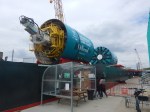
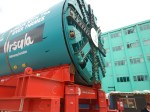
On that Sunday morning, I also chatted with the engineers and tunnelers.
- All had worked on at least one of London’s previous tunnels.
- One had worked on the Second Dartford Tunnel, the Channel Tunnel and Crossrail.
- A couple said, that after the Tideway finished, they would be off to High Speed Two.
Is London’s good record on delivering tunnels safely and on time and on budget, a case of lots of experience and practice makes perfect?
If it is, we should definitely think hard about how we handle large projects.
Wind Farms
Many have been constructed this way.
- The grid substation and connection to the grid is built.
- The foundations of the turbines are installed.
- The turbines are erected.
- All the turbines are commissioned.
This sequence or something like it can be applied to onshore and offshore wind farms.
- Most jobs are repeated many times by specialist teams using purpose-built cranes, ships and other equipment.
- Bigger wind farms, just need more repeated operations.
- All operations are generally in a small geographical area.
- I suspect specialist software has been built to project manage, the building of wind farms. If it hasn’t, I have my ideas.
Project management should be relatively easy.
Silvertown Tunnel Works – 24th September 2023
I took these pictures of the Silvertown Tunnel works on the North Bank of the Thames today.



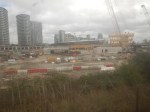
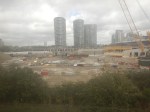
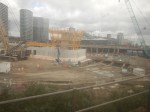


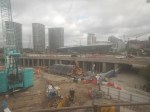
I was on a train going to Woolwich Arsenal.
What Is The Silvertown Tunnel?
The title of this section, is the same as that of this article on the Londonist, which is an excellent description of the Silvertown Tunnel.
The article says this about tolls.
The new tunnel will require you to part with some pounds if you want to use it. Despite the consultation on this taking place a decade ago, the final details have yet to be publicised. We can expect something similar to the Dartford Crossing (currently £2.50 for cars etc, free for motorbikes/mopeds).
As there is a mayoral election next year, I doubt that Sadiq Khan will announce the charge on the Silvertown and Blackwall Tunnels before the election.
Let’s Play Accountants
This is a paragraph in the Londonist Article.
Construction of the tunnel is eating up something like £1.2 billion (2020 estimate). It’ll then cost another estimated £1 billion over 25 years to pay for maintenance, financing and operation. Riverlinx paid up-front costs and will be paid back by TfL through money collected from tolls.
The running costs would appear to be a billion over 25 years, which is £ 40,000,000 in a year.
This is said on this page on the Greater London Assembly web site.
Blackwall tunnels (northbound and southbound) each carry approximately 50,000 vehicles per day in only two lanes of traffic.
That means that each tunnel handles approximately 18,250,000 vehicles per year.
Dartford Crossing charges are according to the Wikipedia entry are as follows.
- Cars, motorhomes, small minibuses – £ 2.50
- 2-axle buses, coaches, vans, goods – £ 3.00
- Multi-axle goods, coaches – £ 6.00
The Wikipedia entry also says this about the capacity and traffic through and over the Dartford Crossing.
The design capacity is 135,000 vehicles per day, but in practice the crossing carries around 160,000.
My good friend; Bob from the 1970s had an impeccable cv.
- Chief Accountant of Vickers.
- Chief Management Accountant of Lloyds Bank.
He was also one of two outstanding practical accountants I have known.
Several of his practical tips on how to handle money in computers, ended up in Artemis; the project management computer system, I wrote in the 1970.
Bob and I would solve problems in Mother Bunches Wine Bar and I suspect, we’d come to the conclusion, that an average charge of £3 per vehicle will be charged in the Blackwall and Silvertown Tunnels.
I also believe from my fluid flow experience, that a proportion of the excess traffic through and over the Dartford Crossing will divert to the new Silvertown Tunnel.
- Together the Blackwall and Silvertown Tunnels will have four lanes in both directions.
- The Silvertown Tunnel will hopefully designed to modern standards and be more free-flowing, than the Blackwall.
- Sat-navs will direct drivers to the quickest routes.
Just as water finds its own level, an equilibrium will develop between the flows.
- I suspect that during the day, the flow over the Dartford Crossing will drop to the design capacity of 135,000
- At night, will vehicles divert through the free-flowing Blackwall and Silvertown Tunnels?
- Will those living in North Central London inside the North Circular Road drive through the Blackwall and Silvertown Tunnels?
- Will the free-flowing Blackwall and Silvertown Tunnels encourage people crossing the Thames to use their car, rather than the train, as the car is more convenient and the toll will be less than the train fare?
- We should also beware that new roads, railways and tunnels generate new traffic, that no-one predicts.
My feeling is that combined traffic through the four lanes of the Blackwall and Silvertown Tunnels will be upwards of seventy thousand per day.
I can now calculate revenue for different levels of combined traffic through the Blackwall and Silvertown Tunnels.
- 40,000 vehicles in each direction per day is a total of 29,200,000 vehicles per year, which would raise £ 87.6 million per year in toll charges.
- 50,000 vehicles in each direction per day is a total of 36,500,000 vehicles per year, which would raise £ 109.5 million per year in toll charges.
- 60,000 vehicles in each direction per day is a total of 43,800,000 vehicles per year, which would raise £ 131.4 million per year in toll charges.
- 70,000 vehicles in each direction per day is a total of 51,100,000 vehicles per year, which would raise £ 153.3 million per year in toll charges.
- 80,000 vehicles in each direction per day is a total of 58.400,000 vehicles per year, which would raise £ 175.2 million per year in toll charges.
I am assuming the following.
- All days of a 365-day year have similar traffic.
- Everybody pays without fuss, by technology like number-plate recognition.
- The average toll chare paid is £ 3.
I am drawn to the conclusion, that the contract signed between Transport for London and Riverlinx, is a licence to print money.
Even, if the tunnels only attract 40-50,000 vehicles per day, the revenue is way in excess of the £40 million needed for maintenance, financing and operation of the Silvertown Tunnel.
I have a few further thoughts and questions.
Who Are Riverlinx?
This is said on the About Roverlinx page of the Riverlinx web site.
TfL awarded Riverlinx SPV (Special Purpose Vehicle) the contract for financing and overseeing the design, build and maintenance of the Silvertown Tunnel in 2019.
The Riverlinx CJV (Construction Joint Venture) is contracted by TfL and Riverlinx SPV to complete the design and construction works, delivering the Silvertown Tunnel on time and on budget.
Riverlinx CJV is a joint venture, a partnership bringing together international, market leading expertise from three civil engineering and construction companies: BAM Nuttall, Ferrovial Construction and SK ecoplant.
In collaboration with TfL, our supply chain and other key stakeholders in the project, Riverlinx CJV will complete construction of the Silvertown Tunnel in Spring 2025.
Note.
- BAM Nuttall is a construction and civil engineering company, that is a subsidiary of the Dutch Royal BAM Group.
- Ferrovial Construction is the construction subsidiary of Spanish company; Ferrovial.
- SK ecoplant is a subsidiary of the South Korean conglomorate; SK Group.
These companies should be capable of building the Silvertown Tunnel.
Where Will The Money To Build The Tunnel Come From?
In World’s Largest Wind Farm Attracts Huge Backing From Insurance Giant, using an article in The Times, I explain how Aviva invest our pensions and insurance money in wind farms.
Strangely, a tolled tunnel is a bit like a wind farm financially, in that if it’s working and the wind is blowing or the traffic is coming, it will continue to generate an income.
Built by quality construction companies, as most tunnels are, they will be the sort of investment, that would satisfy the Avivas of this world.
Will Riverlinx Get All The Tolls From The Tunnel?
Nothing is said about how the excess of income over expenditure will go.
I suspect, as the project is being designed, financed and built by Riverlinx, that they will not go unrewarded.
Will The Mayor Set The Toll Charges?
I suspect that the Mayor and TfL will set the charges.
These are some figures with different charges for 70,000 vehicles in each direction per day or a total of 51,100,000 vehicles per year.
- £3 in each direction would raise £ 153.3 million per year in toll charges.
- £4 in each direction would raise £ 204.4 million per year in toll charges.
- £5 in each direction would raise £ 255.5 million per year in toll charges.
- £6 in each direction would raise £ 306.6 million per year in toll charges.
Note.
- Some of the papers are talking of a four pound charge.
- A pound increase may not be much to the average driver, but they will certainly mount up.
Higher toll charges could be used by an unscrupulous Mayor to deter vehicles entering Central London or nudge people towards public transport.
What Happens If The Tunnel Springs A Leak?
I can remember the following tunnels being built under the Thames in my lifetime.
- Blackwall Tunnel – second bore
- Dartford Tunnel
- DLR to Greenwich and Lewisham
- DLR to Woolwich
- Elizabeth Line to Woolwich
- Jubilee Line – four crossings
- Victoria Line to Vauxhall
None of these seven seems to have sprung a leak recently. And neither have the older Victorian tunnels.
Tunnels with an income stream, appear to be a good risk, if they don’t spring a leak.
But London tunnels don’t seem to have a high likelihood of leaking.
Fines
Fines could be a problem, but this article on Kent Online, which is entitled Dartford Crossing Continues To Generate more Than One-Third Of Income From Fines As Profits Total More Than £100m, says otherwise.
Conclusion
This would appear to be a low risk venture and I suspect it will make Riverlinx and TfL a lot of money.
Taking A Train Between Abbey Wood And Ilford Stations On The Lizzie Line
The Elizabeth Line will open up a large number of new routes for Londoners, those who visit and those who live close to the tentacles of the new line.
One of these routes is between South East London and East London or South Essex.
You could take two trains in and out of central London, with the Underground in between, but the easiest way is to drive.
But then the Dartford Crossing hasn’t the needed capacity.
But the Elizabeth Line, which opened today, gives you an alternative with a simple cross-platform change at Whitechapel or Liverpool Street stations.
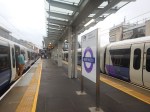
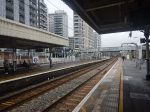
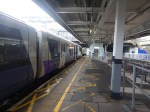
I took a trip today between Abbey Wood and Ilford stations, changing at Whitechapel to assess the feasibility of a route like this as a daily commute, taking these pictures along the route,
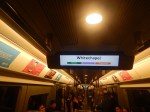
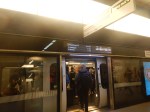

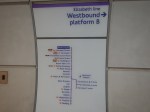
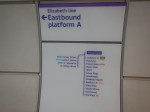
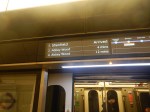

Note.
Between Abbey Wood And Ilford stations took 39 minutes.
Google says a car will take 45 minutes.
The Channel Crossing Problem
My company provided the project management computer system; Artemis, that planned how both the tunnel and the rail link to London was built. So I heard numerous stories of inadequate infrastructure on both sides of the Channel.
I also for a time was a business partner of the man, who had been project manager on a previous attempt to build a Channel Tunnel, that was cancelled by Harold Wilson’s government in 1975, who had a lot of interesting input.
I have heard over the years of these inadequacies,
- The Dartford Crossing wouldn’t be able to handle the traffic generated at busy times.
- The Eurotunnel terminal in Folkestone wasn’t built large enough.
- The port of Dover is too small.
- The roads to the Port of Dover were inadequate.
- The rail terminal at St. Pancras doesn’t have the capacity to run services to the places that are better served by train.
The government only has one major improvement in place, which is a new Thames Crossing, but that will only make matters worse, as more traffic will be tempted to cross the Channel to get to Europe.
It is my belief, that we need more innovative services to provide more capacity.
- A German company called CargoBeamer, is developing a system, whereby unaccompanied freight trailers can be moved thousands of miles across Europe by rail. Their plans include services to Birmingham, Cardiff, Manchester and Scotland.
- I would also run a CargoBeamer service from Calais to Holyhead to create a direct freight service between Ireland and Europe.
- Ebbsfleet needs to be developed as a destination for the Elizabeth Line and an extra terminal for both daytime and sleeper trains to Europe.
- High speed freight trains, based on existing 160 mph EMUs could be used.
- Given the position of the new Thames Crossing on the Isle of Grain, perhaps a new ferry port could be built on the island to partially replace Dover.
- Could some Eurotunnel services start from Watford Gap?
We have to be bold.
What Effect Will Crossrail Have On The Dartford Crossing?
I asked yesterday, if we needed another crossing of the Thames.
Looking at the Crossrail web site, I see that from Shenfield to Whitechapel will take 39 minutes and Abbey wood to Whitechapel will take 25 minutes. So to do that into London and out again will take 54 minutes plus a couple of minutes for the change of train and direction at Whitechapel. the current journey incidentally takes around 90 minutes, but you can do it in a car in just under 50 minutes, assuming you get a good run over the bridge.
So it would appear that the Crossrail route would be about the same time as a car, which might or might not be enough to persuade travellers to go by rail.
There will also be opportunities to change at Stratford to HS2 to get into Kent. This won’t help the journeys such as Abbey Wood, but it would be a great help to such journeys as Colchester to Canterbury.
All of these options, might cut the number of car journeys over the Dartford Crossing. It would of course be helped by adequate car parking at the Crossrail stations.
 The Anonymous Widower