Rail Agreement Signed ‘Subject To Value For Money’
The title of this post, is the same as that of this article on the BBC.
This is the sub heading.
An agreement to reopen a regional rail line has been signed by the transport secretary, subject to the assurance that it delivers good value for money.
These three paragraphs add detail to the story.
Further development work on the Leamside Line, which runs from Pelaw in Gateshead to Tursdale in County Durham, is set to progress as part of the Northern Powerhouse Rail (NPR) initiative.
Regional politicians said the line could provide train links for 100,000 people in the north-east of England, after it closed to passengers in the 1960s.
The document stated the government would ensure resources were available for the Leamside Line reopening “subject to agreement of that business case and assurance that this delivers good value for money”.
Note.
- There is an excellent map in the BBC article.
- It looks like there will be at least five new or refurbished stations at Ferryhill, Sincliffe, Belmont, West Rainton and Penshaw.
- Belmont appears to have an alternative name of Durham Parkway, so will it be a Park-and-Ride for the area?
- There will be an alternative path for freight trains between Newcastle and York.
- In New Direct Rail Link To Seaham: How This Picturesque Seaside Town Will Connect To London Starting December 2025, I described Seaham’s new link to London, courtesy of Grand Central Trains.
- In Arriva Group Invests In New Battery Hybrid Train Fleet In Boost To UK Rail Industry, I talked about Grand Central’s new trains, which should be in service by 2028 to Seaham and Sunderland.
- It was in June 2020, that I wrote about Boris Johnson making a speech about the Leamside Line in Boris Johnson Backs Station Opening Which Could See Metro Link To County Durham.
This important link has been a long time coming.
Will The Rail Improvements Between London and The North East Create More Tourism?
Consider.
- The digital signalling will create more paths for trains between London and the North East.
- Journey times will come down to generally below three hours.
- There is a lot of excellent walking in the area.
- The North-East doesn’t just host top-class football and athletics.
- A trip could be combined with a day-trip to Edinburgh, Glasgow or the Scottish Borders.
- I have met Americans, who’ve started their holiday in Europe, in Edinburgh and worked their way down via York and London to Paris by train, and then flown back non-stop to the United States.
As I’ve spent a couple of enjoyable weekends in Newcastle and Sunderland, I don’t see why the area can’t attract tourists.
Should The East Coast Main Line Be Renamed?
Consider.
- It is one of the oldest long-distance main lines in the world.
- It links two of the UK’s capitals.
- It is 331 miles long, which is covered in four and a half hours.
- There are some of the world’s best hotels at either end.
- There is good shopping at either end.
- There is no Trump hotel in London or Edinburgh.
Perhaps, it should be called High Speed East Coast?
Support For Edinburgh Tram-Train Scheme
The title of this post, is the title of a third-of-a-page article in the June 2025 Edition of Modern Railways.
This is the first paragraph.
Final-Year civil engineering undergraduates at Heriot-Watt University’s Edinburgh campus have received warm support for a study in which they recommend reopening the city’s 7.5 mile South Suburban Railway, used for freight and diversions since 1962, using tram-trains.
It looks like they would start in the West at say Edinburgh Gateway or the Airport and would then turn South at Murrayfield to join the South Suburban Railway at Gorgie.
This OpenRailwayMap shows the tracks to the South of Murrayfield stadium.
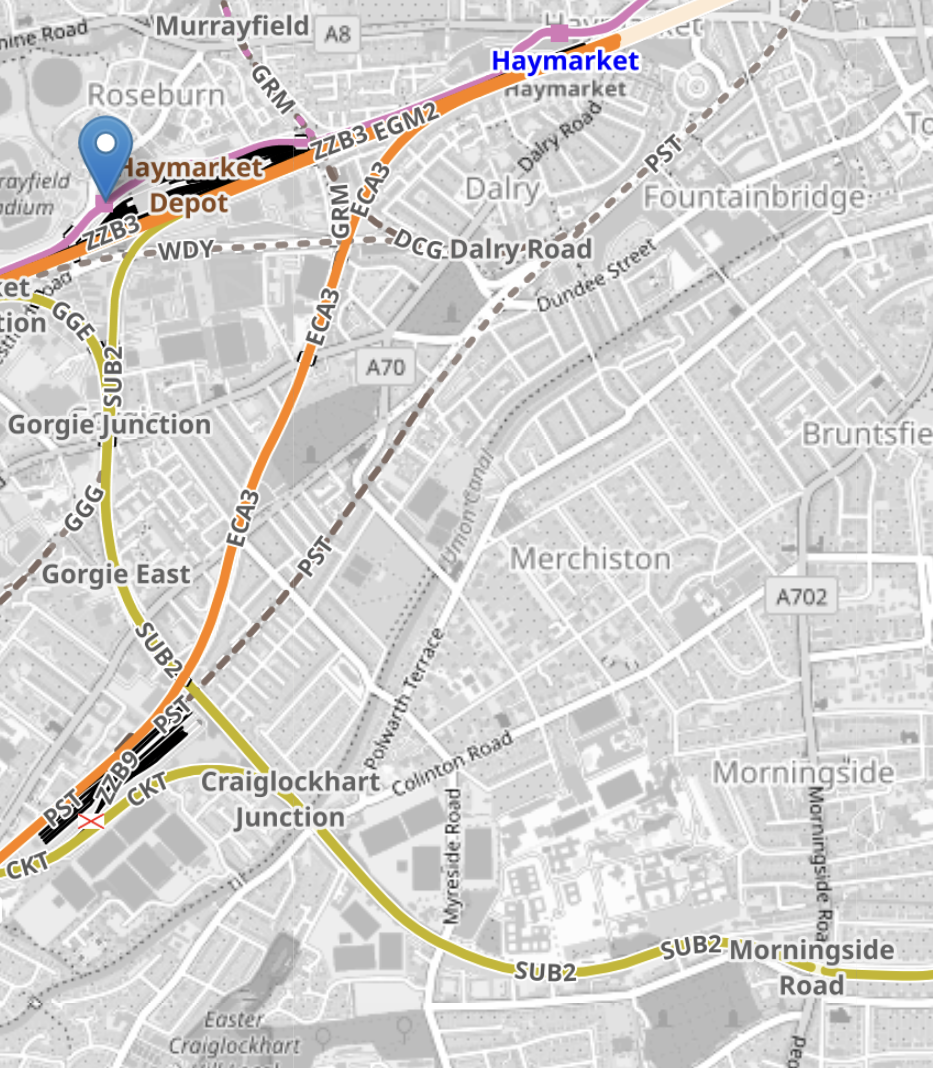
Note.
- The more Westerly-oriented orange tracks lead to Glasgow.
- The orange tracks running South-Westerly are the tracks to Carstairs.
- The yellow tracks are the South Suburban Railway.
- Tram-trains could then go all the way to Brunstane on the Borders Railway.
- The blue arrow indicates the tram-stop for Murrayfield.
- I would assume that the connection to the South Suburban Railway, is to the East of this stop.
- Gorgie East, Craiglockhart and Morningside Road were stations on the South Suburban Railway.
This map shows where the South Suburban and Borders Railways meet in a large triangular junction.
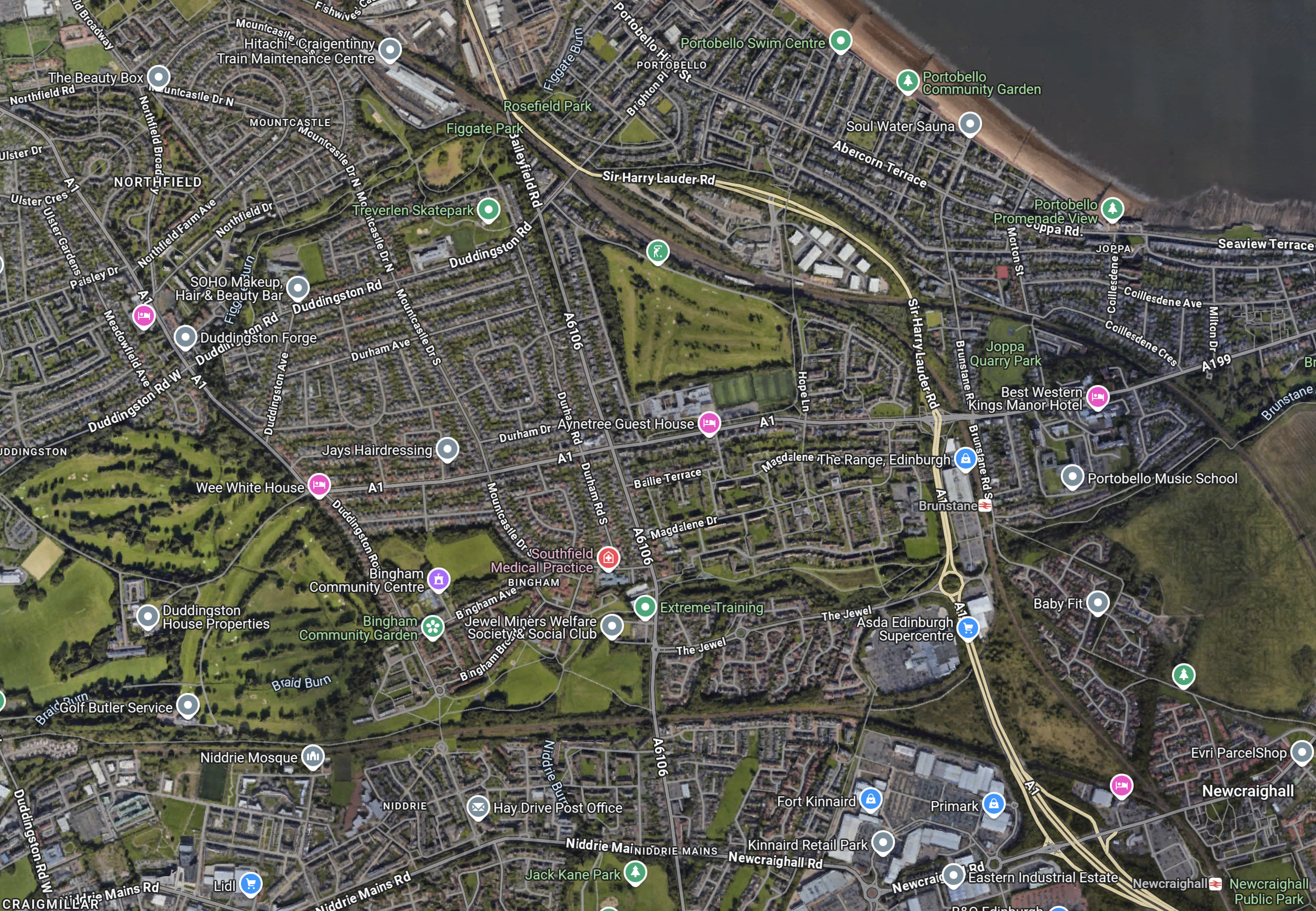
Note.
- Newcraighall station on the Borders Railway is in the South-East corner of the map.
- Brunstane station is to its North-West almost halfway up the map.
- The two stations are the North and South points of the triangular junction, where the South Suburban and Borders Railways meet.
- The South Suburban can be seen going West towards Gorgie and Murrayfield.
- Edinburgh’s beach at Portobello is in the North-East corner of the map.
- Between Murrayfield and Brunstane, there would be an appropriate number of tram stops and a tram-train every fifteen minutes.
Optionally, the route can be extended to Leith on a mothballed freight line.
This OpenRailwayMap shows the railways and tramways of Edinburgh between Brunstane, Edinburgh Waverley and Leith.
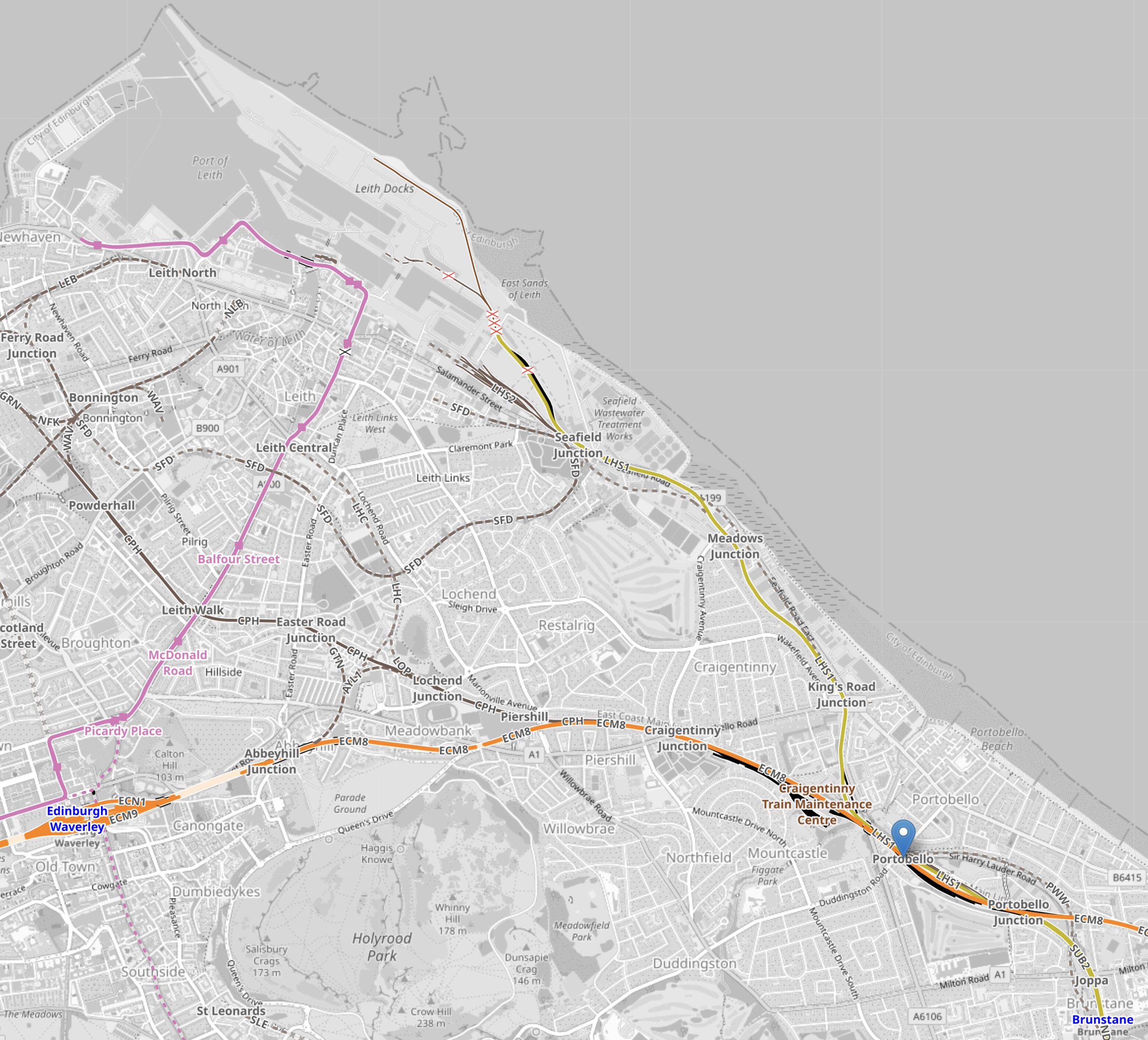
Note.
- The orange track running across the bottom of the map is the East Coast Main Line into Edinburgh Waverley station, which is clearly marked.
- The pink track is the Edinburgh tram to Newhaven.
- Brunstane station is in the South-East corner of the map.
- The site of the former Portobello station is marked by the blue arrow.
- The yellow track from Portolbello up the coast is a mothballed freight line to Leith Docks.
The proposal suggests that the tram-train route finishes at Leith Docks. One of the reasons, is that this part of Edinburgh, is not well served by public transport.
I have some extra thoughts.
Changing Between Borders Railway and the Tram-Train At Brunstane Station
Brunstane station, is a two-track station, with only one platform, so there may need to be track modifications.
Do Edinburgh’s Urbos Trams Have A Tram-Train Variant?
They do!
Do Edinburgh’s Urbos Trams Have A Battery Variant?
Battery tram-trains charged at either end of the route will be needed.
A battery-electric Urbos 3 tram, can be seen running through the City of Birmingham in England.
Conclusion
The proposal looks feasible to me. But the devil will be in the detail.
A Day Trip To Leven From London
On Thursday, the 15th of May, I shall be taking a day trip by train from London King’s Cross to Leven in Fife.
I shall be doing it for the following reasons.
- To see the new Levenmouth Rail Link and its two new stations : Cameron Bridge and Leven.
- To prove that it is possible to do trips like these.
- To prove that it is still possible for me to do trips like these.
- To see a couple of old friends, who live North of the Border.
- I shall probably also ride the new section of the Edinburgh Tram.
I shall be leaving London on the Lumo service at 05:48 and returning on the 16:13, which gives me around six hours in Scotland.
Plans To Turn Former Station Waiting Room Into Pub
The title of this post, is the same as that of this article on the BBC.
This is the sub-heading.
Plans to turn a Grade II listed railway station’s former waiting room back into a pub have been submitted.
These are the first three paragraphs of the article.
Network Rail wants to refurbish the room at Carlisle’s station, which is now a storage room and kitchen.
The first class waiting room, which was until recently used as a pub, was built by architect William Tite in 1880 as an extension to his original 1847 neo-Tudor station designs.
The plans are part of the £27m Carlisle Gateway project to turn the city’s station into a “national interchange” transport hub, funded by central government, Cumberland Council and Network Rail.
I very much like this idea.
Carlisle could be turned into a national interchange, that was almost unique in the world.
- Rail services across the Borderlands could be improved, to the cities of Glasgow, Lancaster, Leeds, Newcastle and York.
- Rail services could be developed, so visitors could explore the Lake District by rail.
- The Eden Project at Morecambe would be a rail-accessible attraction, that was just an hour away from Carlisle.
- The Borders Railway from Edinburgh could be extended to Carlisle.
- All services would be zero-carbon, with power coming from either batteries or hydrogen.
- Services would be tourism-friendly, with space for bicycles, large panoramic windows and high-class catering.
Current times between London and Carlisle could be reduced to under three-and-a-half hours, with reductions of up to an hour, as High Speed Two is eventually delivered.
More Than Half Of London-Edinburgh Travellers Now Going By Train Instead Of Plane
The title of this post is the same as that of this article on The Independent.
As Lumo seem to be a success on London and Edinburgh, surely a similar service should run between London and Glasgow.
Grand Union are trying to run a London and Stirling service, but it doesn’t seem to be getting close to starting.
London To Edinburgh On Lumo
Yesterday, I took the 10:45 Lumo service from King’s Cross to Edinburgh.
I took some pictures on the way.
I have split them into sepate topics.
Lumo’s Class 803 Train Arrives
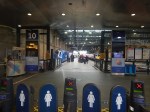

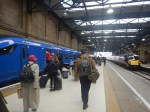
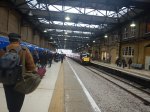
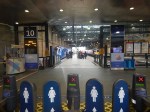
Note.
- The train is in Platform 10 in the old suburban station.
- This has now been reduced to just two platforms.
- In the other platform is a Grand Central service to Bradford Interchange station.
At least it appears, that there could be space to reinstate a third platform, if it should prove necessary.
Seating On Lumo





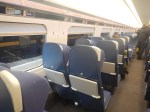

Note.
- I didn’t get a seat with a proper window.
- The seat-back table is generously-sized.
- There is a light over the table.
- The luggage racks were well used.
- There is more than normal leg-room. My neighbour, who was taller than my 1.70 metres, also liked the leg-room.
Both of us, thought the seats were more comfortable than LNER.
I have a spine that curves outwards at the bottom and it often objects to train and car seats. But after four-and-a-half hours on Lumo, it wasn’t protesting.
York to Church Fenton Improvement Scheme
When the York To Church Fenton Improvement Scheme and the closely related Huddersfield To Westtown (Dewsbury) Upgrade are completed, the TransPennine route between Huddersfield and York will be fully-electrified.
These pictures show the electrification is underway.
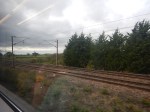
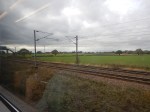






York to Huddersfield will be over forty miles of electrified line, with a remaining gap of just eighteen miles to the electrification being installed between Stalybridge and Manchester Victoria.
Work At Reston Station
Reston station is being built North of Berwick-on-Tweed. I took these pictures as we passed through.




I describe the station in a post called A New Reston Station.
Arrival In Edinburgh
I took these pictures when we arrived in Edinburgh.
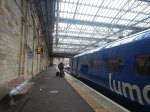

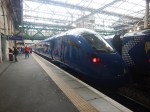

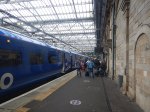

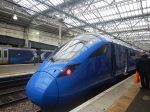

Note Edinburgh is not short of platforms that can take five- and ten-car trains.
These are a few other thoughts about the journey.
Non-Stop Between King’s Cross And Newcastle
It seemed to me, that a lot of passengers left the train at Newcastle.
- Times between King’s Cross And Newcastle are comparable betyween LNER and Lumo.
- Lumo is non-stop until Newcastle.
- Lumo is probably more affordable.
I can see Lumo picking up a lot of business on this leg.
Football At Newcastle
I have come across several Newcastle United season ticket holders in London.
Looking at Lumo’s full timetable, there are these two trains on a Saturday.
- A train leaves King’s Cross at 10:25 and arrives in Newcastle at 13:25.
- A train leaves Newcastle at 19:35 and arrives in King’s Cross at 22:29.
These could be ideal to see the match and get back to London.
Food
The full food service isn’t in operation yet, but we the trolley did come through twice.
Passenger Loading
Most seats were taken, as we left King’s Cross, but due to high number, who left at Newcastle, there were a few gaps as we ran between Newcastle and Edinburgh.
But then this is a shorter leg and perhaps travellers are more likely to drive.
I suspect that Lumo can’t wait to build up their service to the full five trains per day, as it does look like the demand is there.
Morpeth Station
There wasn’t many boarders and leavers at Morpeth station, but as services build up and travellers realise the system is there, will business increase?
Conclusion
I shall take another trip in the New Year, when the full service is implemented.
Calcutta Cup By Lumo
According to Scottish Rugby, the Culcutta Cup between Scotland and England next year is at Murrayfield on the 5th of February 2022.
I have just looked up services that day on Lumo’s web site.
- It would be possible to travel North on the 05:45 train, which arrives in Edinburgh at 10:06.
- After the match, there is a train South at 17:56, which arrives back in London at 22:29.
- Tickets are available at £45.50 both ways.
As Lumo could probably run both services with ten-car trains, that hold eight hundred passengers, this could earn ticket revenue for Lumo of £72,800.
An American Take On Lumo
One of my Google Alerts picked up this article on an American site called Travel + Leisure, which is entitled A Brand-New Train Launched In The UK Today — Linking Cities Like Edinburgh And London For As Little As $20.
As I have sat next to American and Canadian couples and families on Anglo-Scottish trains, I hope that Lumo’s website is friendly to those living outside the UK.
Will The Lumo Concept Take Off In The United States?
I’m no expert, but on the right route, I don’t see why not!
After all, easyJet, Go and Ryanair took on the concept of the low-cost airline, which was pioneered by Pacific Southwest Airlines in California.
Would A North-East And South West Sleeper Service Be A Good Idea?
I ask this question as in the October 2021, there is an article entitled A New Sleeper, which has this explanatory sub-title.
Des Bradley describes his concept for a North-East to South-West Overnight Service
Paraphrasing his resume from the article, Des Bradley is probably best described as a rail enthusiast, who has travelled all over Europe by train, especially on sleeper trains. He has also worked recently with ScotRail, where he led their integrated travel activities.
I regularly use the Caledonian Sleeper on my trips to Scotland, often taking a sleeper one way and a day time train the other. Towards the end of next month, I have tickets booked for a low-cost Lumo train to Edinburgh and a sleeper back to London in the evening.
In this blog, I have regularly written about the sleeper trains being introduced across Europe and this summer I had intended to go via Eurostar and NightJet to Vienna. But the pandemic has kept me in England for two years.
An Edinburgh And Plymouth Sleeper
Des Bradley is proposing a sleeper train between Edinburgh and Plymouth.
- A typical daytime trip on this route takes eight hours and forty-five minutes.
- Intermediate stops would be Berwick-upon-Tweed, Newcastle, Durham, Darlington, York, Leeds, Sheffield, Derby, Birmingham New Street, Cheltenham Spa, Bristol Parkway, Bristol Temple Meads, Taunton, Exeter St. David’s and Newton Abbot.
- Journey time would be just over twelve hours.
- By comparison a sleeper between London and Edinburgh takes about seven hours and thirty minutes.
He calls the service the NESW Sleeper.
I have some thoughts on the proposal.
A Spine Route Between Edinburgh And Penzance
The route is effectively a spine between Edinburgh and Plymouth on which other services can be built.
Unlike the Caledonian Sleeper, Des Bradley doesn’t feel the train should split and join as it travels up and down the country.
But I do think that the NESW Sleeper can be timed to fit in with high-quality connecting services to extend the coverage.
An Innovative Timetable
Des Bradley’s timetable is innovative.
- Trains leave Edinburgh and Plymouth around 21:00.
- Trains arrive at their destination around 09:00.
- Trains stop for about two hours at Derby.
- After resting at Derby, the trains are effectively early morning trains.
Note.
- The wait at Derby, adds extra time, that can be used to make up for engineering diversions, which often happen at night!
- The trains could be used by non-sleeper passengers to get to Plymouth or Edinburgh early.
The consequence of the second point, is that the trains will have to offer some Standard Class seats.
Should The Train Serve Penzance?
The Great Western Railway’s Night Riviera sleeper train calls at Liskeard, Bodmin Parkway, Lostwithiel, St.Austell, Truro, Redruth, Cambourne, Hoyle and St. Erth between Plymouth and Penzance.
According to a proposed NESW timetable, the Night Riviera has long gone, before the NESW Sleeper arrives in Plymouth at 08:58.
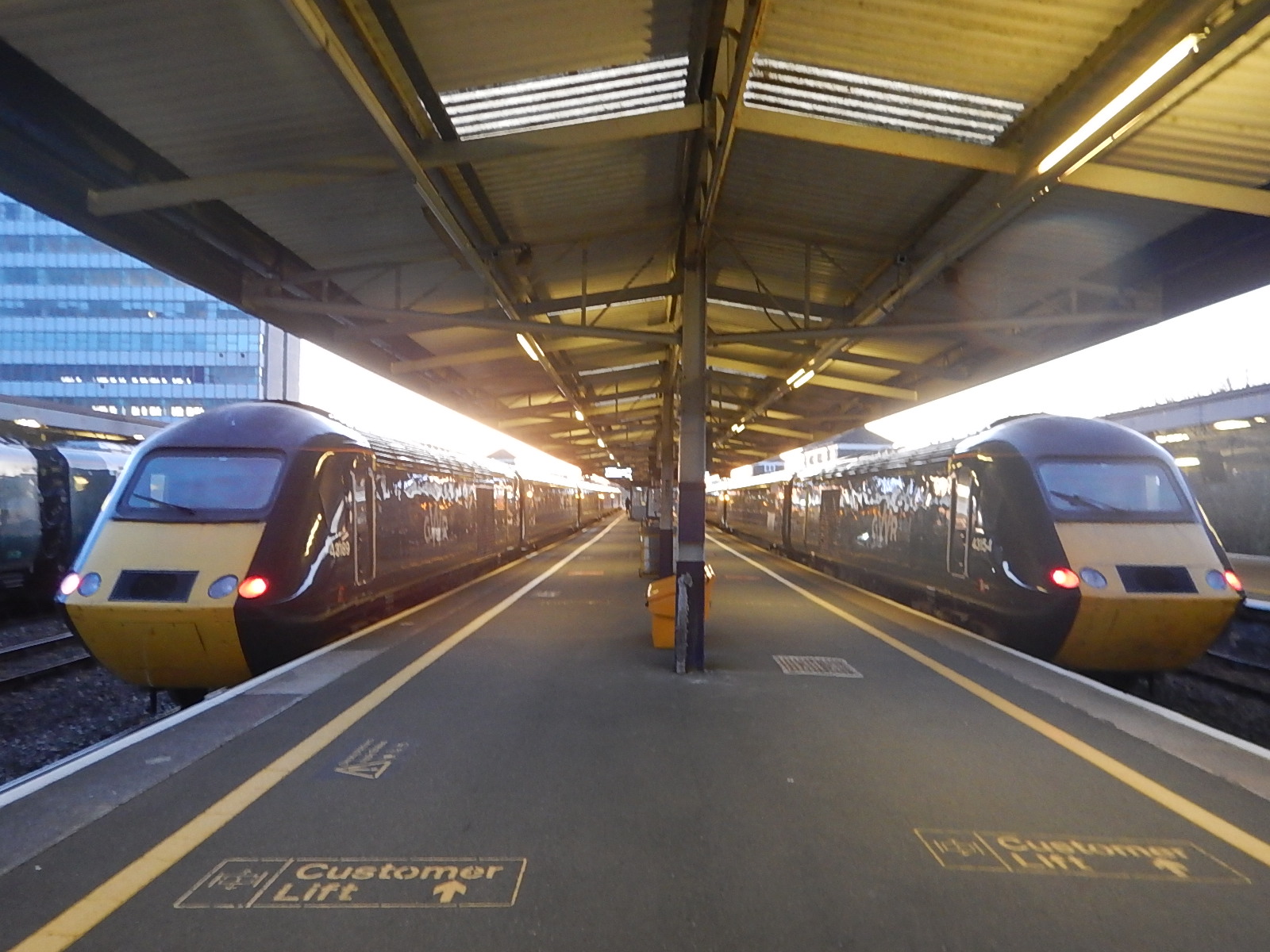
But I’m sure Great Western Railway could arrange for a convenient service between Plymouth and Penzance to pick up passengers in the morning and deliver them in the evening. This picture taken at Plymouth, indicates that cross-platform interchange may be possible.
This picture shows a pair of GWR Castles, which regularly work additional services between Plymouth and Penzance.
What About Wales?
I suspect that Cardiff, Swansea and other towns and cities in South Wales, can be served in a similar way, by connecting with GWR services at Bristol Parkway station.
Other Connecting Services
Birmingham New Street, Derby, Leeds and Newcastle are important interchange stations and I can see services being timed to bring passengers to and from the NESW Sleeper.
Rolling Stock
The author offers choices for the trains, based on what is used currently in the UK and adding multiple units. But he is definitely tending towards fixed formations.
I feel that the trains should meet the following criteria.
They should be of similar standard as the Caledonian Sleeper.
They would need an independently-powered capability for sections without electrification.
They should be zero-carbon.
They should offer a range of accommodation including Standard Class seats to cater the early birds and budget travellers.
The possibility to run at 100 mph or faster might be useful to catch up time on some sections of the route.
I think that two trains could be possible.
- A rake of coaches hauled by a hydrogen-electric locomotive.
- A battery-electric Sleeper Multiple-Unit with a range of perhaps eighty miles on batteries.
This is a sentence from the article.
The concept of ‘Sleeper Multiple-Units’ has also emerged in recent years, and this idea could be attractive; although it has some inherent inflexibility, it could in the future allow multi-portion or experimental new routes to be tagged onto the core service.
Sleeper Multiple Units might enable a South Wales and Edinburgh service, that used the same train path between Edinburgh and Bristol Parkway, where the two trains would split and join.
Conclusion
I like this proposal and definitely think it is a good idea.
The London And Edinburgh Travel Market
This paragraph comes from of this article on Railway Gazette.
Lumo is aiming to carry more than 1 million passengers per year. It is particularly targeting people who currently fly between Edinburgh and London; in June it says there were 74 764 air journeys on the route, compared to 82 002 by rail.
Lumo’s million passengers per year, will equate to around 83,300 passengers per month.
What these figures don’t show is the number of rail journeys made to intermediate stations like Newcastle, York, Doncaster and Peterborough.
These are a few thoughts.
Rail Capacity Between London And Edinburgh
Consider.
- LNER is currently the only rail carrier offering a daytime service between London and Edinburgh.
- LNER run approximately 26 trains per day (tpd) in both directions between London and Edinburgh.
- A nine-car Class 801 train can carry 510 Standard Class passengers and 101 First Class passengers.
That means that LNER had a capacity of just over 950,000 seats in June.
It might seem poor to have only sold 82,002 seats in June between London and Edinburgh, which is just 8.6 % of the available seats.
On the other hand, LNER’s two trains per hour (tph) are a lot more than London and Edinburgh trains, as they connect towns and cities all the way up the East Coast Main Line between London and Aberdeen.
Lumo’s capacity of a million seats per year, works out at 83,300 seats per month, which is another 8.7 % of capacity.
- Lumo will sell seats on price initially and I suspect they’ll end up running about 85-95 % full.
- It has been stated that they need to run 80% full to break even.
- I also think, that they would like to have a few seats for late bookers.
But even so, they will surely affect LNER’s bookings.
What Will LNER Do?
Several of the things, that Lumo are doing can be easily copied by LNER.
- Early booking.
- Improve onboard service.
- Better seating.
They could even reduce prices.
I think it is very likely we could end up with a price and service war between LNER and Lumo.
Would The Airlines Be The Losers?
This could be an outcome of competition between LNER and Lumo.
We are now talking about times of around four hours and twenty-five minutes between London and Edinburgh, but there are improvements underway on the East Coast Main Line.
- The remodelling of the approach to Kings Cross station has not been reflected in the timetables.
- The Werrington Dive Under has not been completed yet.
- Digital signalling is being installed South of Doncaster.
- The power supply is being upgraded North of Newcastle.
When these and other improvements are complete, I can see journey times reduced below four hours.
But would that only be for starters?great b
If a 1970s-technology Intercity 225 train, admittedly running as a shortened train formation, could achieve a time of just under three-and-a-half hours for the 393.2 miles between Kings Cross and Edinburgh stations in September 1991, what could a modern Hitachi train do, if all of the improvements had been completed and perhaps half of the route could be run at 140 mph under the watchful eyes of full digital signalling and an experienced driver.
Consider.
- London and York is nearly two hundred miles of fairly straight railway, that is ideal for high speed.
- Current trains run the 393.2 miles in four hours 25 minutes, which is an average speed of 89 mph.
- A train running at 89 mph would take two hours and fifteen minutes to cover 200 miles.
- A train running at 125 mph would take one hour and thirty-six minutes to cover 200 miles.
- A train running at 140 mph would take one hour and twenty-six minutes to cover 200 miles.
When Network Rail, Great British Railways or the Prime Minister renames the East Coast Main Line as High Speed East Coast, I think we can be sure that trains between London and Edinburgh will be able to achieve three-and-a-half hours between the two capitals.
High Speed Two is only promising three hours and forty-eight minutes.
What About LNER’s New Trains?
LNER Seeks 10 More Bi-Modes, was written to explore the possibilities suggested by a short article in the December 2020 Edition of Modern Railways.
There has been no sign of any order being placed, but Hitachi have moved on.
- They are building the prototype of the Hitachi Intercity Tri-Mode Battery for testing on the Great Western Railway.
- They have completed some of the Class 803 trains for East Coast Trains, which has now been renamed Lumo. These trains have a battery for hotel power in case of catenary failure, but no diesel engines.
- They are building the Class 807 trains for Avanti West Coast, which appear to be designed for high speed and have no batteries or diesel engines.
- The latest versions of the trains will have a reshaped nose. Is it more aerodynamic at high speeds?
It does seem that there is an emphasis on speed, better acceleration and efficiency.
- Could the lessons learned be used to improve the performance of the existing trains?
- Could a small high performance sub-fleet be created to run LNER’s Scottish services?
There are certainly possibilities, that would cut journey times between London and Edinburgh.
Conclusion
I can see the airlines flying between London and Edinburgh suffering a lot of collateral damage, as the two train companies slug it out.
 The Anonymous Widower