Could A Battery- Or Hydrogen-Powered Freight Locomotive Borrow A Feature Of A Steam Locomotive?
Look at these pictures of the steam locomotive; Oliver Cromwell at Kings Cross station.
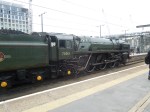
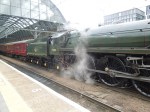
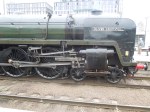

Unlike a diesel or electric locomotive, most powerful steam locomotives have a tender behind, to carry all the coal and water.
The Hydrogen Tank Problem
One of the problems with hydrogen trains for the UK’s small loading gauge is that it is difficult to find a place for the hydrogen tank.
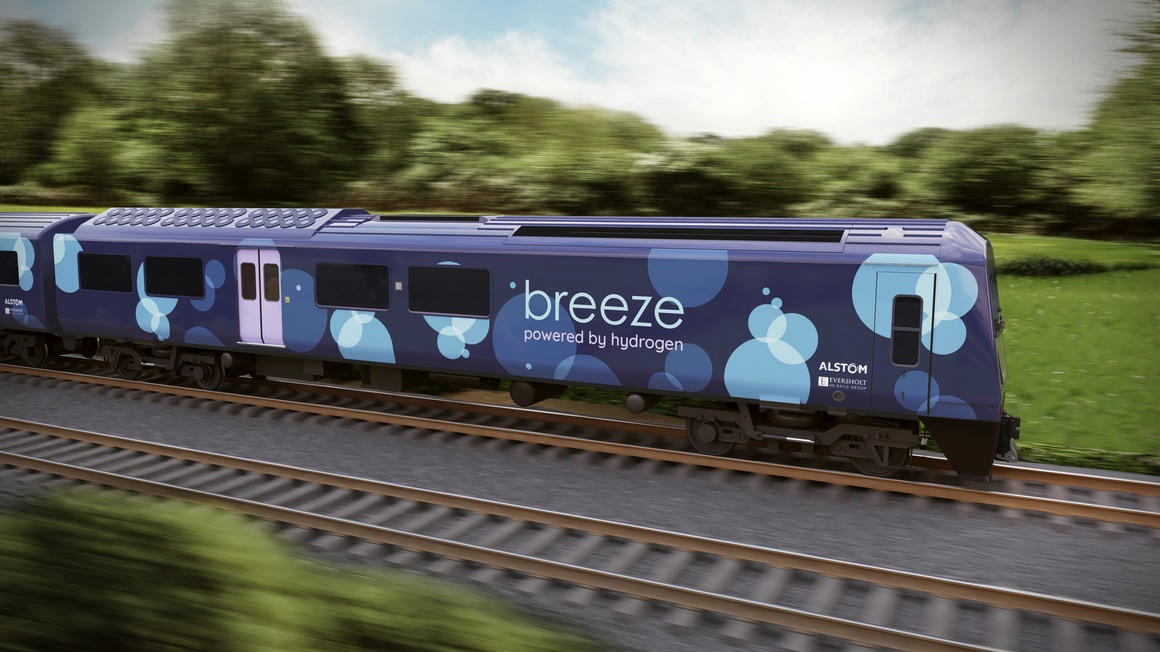
The picture is a visualisation of the proposed Alstom Breeze conversion of a Class 321 train.
- There is a large hydrogen tank between the driving compartment and the passengers.
- The passenger capacity has been substantially reduced.
- The train will have a range of several hundred miles on a full load of hydrogen.
The Alstom Breeze may or may not be a success, but it does illustrate the problem of where to put the large hydrogen tank needed.
In fact the problem is worse than the location and size of the hydrogen tank, as the hydrogen fuel cells and the batteries are also sizeable components.
An Ideal Freight Locomotive
The Class 88 locomotive, which has recently been introduced into the UK, is a successful modern locomotive with these power sources.
- 4 MW using overhead 25 KVAC overhead electrication.
- 0.7 MW using an onboard diesel engine.
Stadler are now developing the Class 93 locomotive, which adds batteries to the power mix.
The ubiquitous Class 66 locomotive has a power of nearly 2.5 MW.
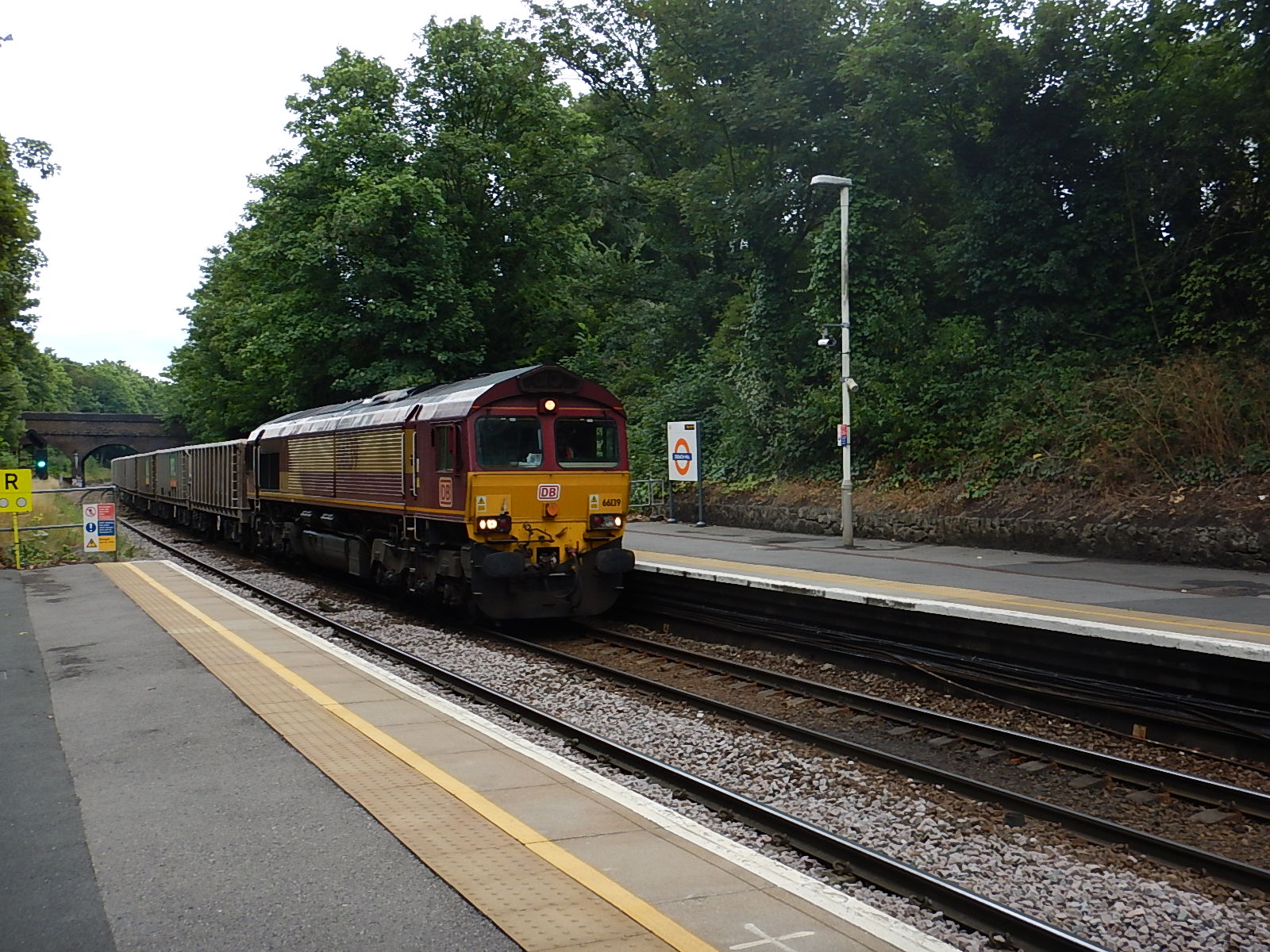
But as everybody knows, Class 66 locomotives come with a lot of noise, pollution, smell and a substantial carbon footprint.
To my mind, an ideal locomotive must be able to handle these freight tasks.
- An intermodal freight train between Felixstowe and Manchester.
- An intermodal freight train between Southampton and Leeds.
- A work train for Network Rail
- A stone train between the Mendips and London.
The latter is probably the most challenging, as West of Newbury, there is no electrification.
I also think, that locomotives must be able to run for two hours or perhaps three, on an independent power source.
- Independent power sources could be battery, diesel, hydrogen, or a hybrid design
- This would enable bridging the many significant electrification gaps on major freight routes.
I feel that an ideal locomotive would need to meet the following.
- 4 MW when running on a line electrified with either 25 KVAC overhead or 750 VDC third-rail.
- 4 MW for two hours, when running on an independent power source.
- Ability to change from electric to independent power source at speed.
- 110 mph operating speed.
This would preferably be without diesel.
Electric-Only Version
Even running without the independent power source, this locomotive should be able to haul a heavy intermodal freight train between London and Glasgow on the fully-electrified West Coast Main Line.
I regularly see freight trains pass along the North London Line, that could be electric-hauled, but there is a polluting Class 66 on the front.
Is this because there is a shortage of quality electric locomotives? Or electric locomotives with a Last Mile capability, that can handle the routes that need it?
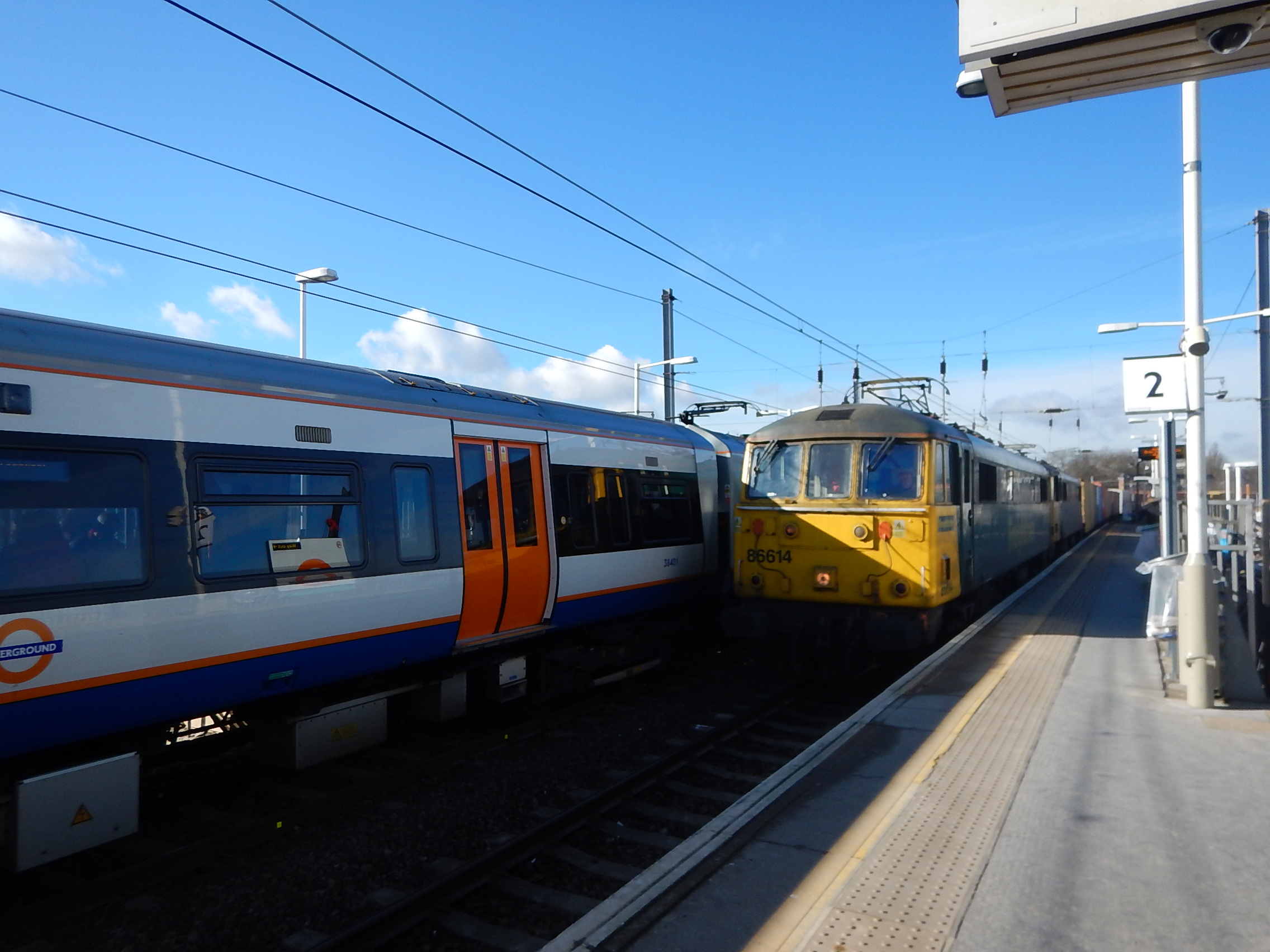
If we have to use pairs of fifty-year-old Class 86 locomotives, then I suspect there are not enough electric freight locomotives.
Batteries For Last Mile Operation
Stadler have shown, in the design of the Class 88 locomotive, that in a 4 MW electric locomotive, there is still space to fit a heavy diesel engine.
I wonder how much battery capacity could be installed in a UK-sized 4 MW electric locomotive, based on Stadler’s UK Light design.
Would it be enough to give the locomotive a useful Last Mile capability?
In Thoughts On A Battery Electric Class 88 Locomotive On TransPennine Routes, I estimated that a Class 88 locomotive could replace the diesel engine with a battery with a battery capacity of between 700 kWh and 1 MWh.
This would give about fifteen minutes at full power.
Would this be a useful range?
Probably not for heavy freight services, if you consider that a freight train leaving the Port of Felixstowe takes half-an-hour to reach the electrification at Ipswich.
But it would certainly be enough power to bring the heaviest freight train out of Felixstowe Port to Trimley.
If the Felixstowe Branch Line were to be at least partially electrified, then I’m sure a Class 88 locomotive with a battery instead of the diesel engine could bring the heaviest train to the Great Eastern Main Line.
- Electrifying between Trimley and the Great Eastern Main Line should be reasonably easy, as much of the route has recently been rebuilt.
- Electrifying Felixstowe Port would be very disruptive to the operation of the port.
- Cranes and overhead wires don’t mix!
I wonder how many services to and from Felixstowe could be handled by an electric locomotive with a Last Five Miles-capability, if the Great Eastern Main Line electrification was extended a few miles along the Felixstowe Branch Line.
As an aside here, how many of the ports and freight interchanges are accessible to within perhaps five miles by electric haulage?
I believe that if we are going to decarbonise UK railways by 2040, then we should create electrified routes to within a few miles of all ports and freight interchanges.
Batteries For Traction
If batteries are to provide 4 MW power for two hours, they will need to have a capacity of 8 MWh.
In Thoughts On A Battery Electric Class 88 Locomotive On TransPennine Routes, I said this.
Traction batteries seem to have an energy/weight ratio of about 0.1kWh/Kg, which is increasing with time, as battery technology improves.
This means that a one tonne battery holds about 100 kWh.
So to hold 8 MWh or 8,000 kWh, there would be a need to be an 80 tonne battery using today’s technology.
A Stadler Class 88 locomotive weighs 86 tonnes and has a 21.5 tonne axle load, so the battery would almost double the weight of the locomotive.
So to carry this amount of battery power, the batteries must be carried in a second vehicle, just like some steam locomotives have a tender.
But suppose Stadler developed another version of their UK Light locomotive, which was a four-axle locomotive that held the largest battery possible in the standard body.
- It would effectively be a large battery locomotive.
- It would share a lot of components with the Class 88 locomotive or preferably the faster Class 93 locomotive, which is capable of 110 mph.
- It would have cabs on both ends.
- It might have a traction power of perhaps 2-2.5 MW on the battery.
- It would have a pantograph for charging the battery if required and running under electrification.
- It might be fitted with third rail equipment.
It could work independently or electrically-connected to the proposed 4 MW electric locomotive.
I obviously don’t know all the practicalities and economics of designing such a pair of locomotives, but I do believe that the mathematics say that a 4 MW electric locomotive can be paired with a locomotive that has a large battery.
- It would have 4 MW, when running on electrified lines.
- It would have up to 4 MW, when running on battery power for at least an hour.
- ,It could use battery-power to bridge the gaps in the UK’s electrification network and for Last Mile operation.
A very formidable zero-carbon locomotive-pair could be possible.
The battery locomotive could also work independently as a 2 MW battery-electric locomotive.
Hydrogen Power
I don’t see why a 4 MW electric locomotive , probably with up to 1,000 kWh of batteries couldn’t be paired with a second vehicle, that contained a hydrogen tank, a hydrogen fuel-cell.and some more batteries.
It’s all a question of design and mathematics.
It should also be noted, that over time the following will happen.
- Hydrogen tanks will be able to store hydrogen at a greater pressure.
- Fuel cells will have a higher power to weight ratio.
- Batteries will have a higher power storage density.
These improvements will all help to make a viable hydrogen-powered generator or locomotive possible.
I also feel that the same hydrogen technology could be used to create a hydrogen-powered locomotive with this specfication.
- Ability to use 25 KVAC overhead or 750 VDC third-rail electrification.
- 2 MW on electrification.
- 1.5 MW on hydrogen/battery power.
- 100 mph capability.
- Regenerative braking to batteries.
- Ability to pull a rake of five or six coaches.
This could be a very useful lower-powered locomotive.
What About The Extra Length?
A Class 66 locomotive is 21.4 metres long and a Class 68 locomotive is 20.3 metres long. Network Rail is moving towards a maximum freight train length of 775 metres, so it would appear that another twenty metre long vehicle wouldn’t be large in the grand scheme of things.
Conclusion
My instinct says to be that it would be possible to design a family of locomotives or an electric locomotive with a second vehicle containing batteries or a hydrogen-powered electricity generator, that could haul freight trains on some of the partially-electrified routes in the UK.
£82m, 30m High Aerial Tramway Vision Would Link Eden Project North To Lancaster University And M6
The title of this post, is the same as that of this article on the Lancaster Guardian.
This is the first two paragraphs.
Proposals for an £82m aerial tramway project linking Lancaster, Morecambe and the university have been drawn up by the man behind the initial plans for Eden Project North.
Standing at more than 30m high, the Aerial Tramway System would link the proposed Eden Project North, the Bay Gateway, Lancaster Railway Station, the University of Cumbria’s Lancaster campus, Lancaster University and junction 33 of the M6 motorway.
Iy is an interesting suggestion.
But I do question the cost.
The Emirates Air Line in London has the following characteristics.
- I kilometre in length
- 2 stations
- 34 gondolas in use at one time.
- ten-seat gondolas
- 90 metres maximum height.
The proposed Lancaster and Morecambe aerial tramway has the following characteristics.
- I0 kilometres in length
- 5 stations
- 30 gondolas in use at one time.
- thirty-five-seat gondolas
- 30 metres maximum height.
As the cost of the Emirate Air Line is reported at £60million, I’m afraid that £82million for the Lancaster and Morecambe aerial tramway are slightly ambitious.
In Getting To The Proposed Morecambe Eden Project By Train, I laid out how a large zero-carbon rail system could develop around Morecambe.
I also concluded that journeys to and from Birmingham, Edinburgh, Glasgow, Liverpool, London and Manchester, could be made zero-carbon.
Conclusion
There could be better ways to acgieve the same local objectives.
Getting To The Proposed Morecambe Eden Project By Train
I originally wrote this post as part of Thoughts On The Morecambe Bay Eden Project, in August 2018, but I now feel it is better as a standalone post!
Current Train SAervices To Morecambe
Morecambe is served by the Morecambe Branch Line, This diagram from Wikipedia, shows how Morecambe is well-connected to Lancaster and the West Coast Main Line.

Note.
- The line has two stations in the town at Bare Lane and Morecambe and another at the nearby Heysham Port.
- Service between Morecambe and Lancaster seems to have a frequency of two trains per hour (tph) and a journey time of around ten minutes.
- There are also upwards of three services a day to and from Skipton and Leeds, which reverse at Lancaster.
I don’t think that a train every half-hour, is sufficient to serve a major attraction.
Possible Expansion Of The Train Service
As both Bare Lane and Morecambe stations have two platforms and there used to be extra tracks along the route, I think it would be possible to create a railway system to Morecambe that could include.
- Two tph to and from Lancaster.
- Trains to and from Leeds via Lancaster, Carnforth, Hellifield for the Settle & Carlisle Railway and Skipton
- Trains to and from Windermere via Lancaster, Carnforth and Oxenholme Lake District.
- Trains to and from Carlisle via Lancaster, Carnforth, Barrow and the Cumbrian Coast Line.
There is tremendous scope to expand rail services in an area of scenic beauty, that includes the Lake District and the Pennines.
Creating an iconic attraction at Morecambe could be a catalyst to develop the rail services in the wider area.
A decent rail service with good provision for bicycles and wheelchairs, might also encourage more tourism without the need for cars.
The West Coast Main Line And High Speed Two
The West Coast Main Line, which will also be used by High Speed Two trains in the future goes between Lancaster and Carlisle.
- Trains to and from Morecambe, Windermere and Barrow will have to share with the 125 mph trains on the West Coast Main Line.
For this reason, I feel that the specification for local trains must be written with care.
Battery Trains Between Morecambe And Lancaster
In my view, the short Morecambe and Windermere Branch Lines are ideal for services that use battery trains, which would charge the batteries on the electrified West Coast Main Line.
- All trains between Lancaster and Morecambe could use battery power.
- Morecambe to Windermere could even be a 125 mph electric train on the West Coast Main Line, that used batteries on the short branch lines at either end.
Consider
- Bombardier are talking about a 125 mph bi-mode Aventra with batteries. Diesel power would not be needed, so add more batteries.
- Battery trains are talking about ranges of thirty miles, in a few years.
- Batteries would be charged on the West Coast Main Line.
- The trains would not be slow enough to interfere with the expresses on the West Coast Main Line.
How cool is that?
The battery-powered trains would surely fit in well with the message of the Eden Project.
Hydrogen-Powered Trains Between Morecambe And Leeds
In my view these routes would be ideal for environmentally-friendly hydrogen-powered trains.
- Morecambe and Leeds
- Lancaster and Carlisle via Barrow and Workington
- Carlisle and Newcastle
- Carlisle and Leeds via the Settle and Carlisle Line.
All passenger trains in Cumbria would be zero-carbon.
Conclusion
Morecambe and the Eden Project could be at the centre of an extensive zero-carbon rail network.
These major cities would have direct electric trains to Lancaster, which would be a short local train ride away.
- Birmingham
- Edinburgh
- Glasgow
- Liverpool
- London
- Manchester
All journeys could be zero-carbon.
Nissan Refuses To Improve Qashqai’s Toxic Emissions
The title of this post is the same as that of this article on Tuesday’s copy of The Times.
This is the first paragraph.
Nissan has refused a government request to carry out adjustments to thousands of highly polluting diesel cars to make them less toxic.
The car is called the Nissan Qashqai, which I wouldn’t recognise, unless it reversed into me on the street and I could see the name badge on the boot.
Today, there is this article on the BBC, which is entitled Nissan Workers Braced For Job Cuts.
As they say in Private Eye, could the two stories be related?
Especially, as Nissan seem to have had problems with a CEO recently, who seemed to find enhancing his lifestyle more important, than good stewardship of the company.
Super-Efficient Flats Don’t Need Heating Or Air-Con
The title of this post is the same as that of this article on Page 34 of today;s copy of The Times.
These are the first two paragraphs.
In a city of skyscrapers the 26-storey building on a small island next to Manhattan looks unremarkable. Hiding in plain sight, however, is an architectural revolution.
The House, a dormitory for graduate students at Cornell University, is so energy efficient it can eliminate the need for heating and air conditioning. It is the first “passive house” in the US and is providing a stream of data for engineers.
If someone built a passive skyscraper in London, I’d ceretainly go and look.
Mountains, Moors And Heaths Offer £20bn In Green Benefits
The title of this post is the same as that of this article on page 2 of today’s copy of The Times.
This is the first paragraph.
Britain’s mountains, moorlands and heaths are worth £20.1 billion for their ability to absorb carbon, remove air pollution and provide recreational activities, according to the Office for National Statistics.
It certainly make you think.
If you think twenty billion pounds is a large number, then this is another two paragraphs.
Natural accounts are required by the European Union but Theresa May has also made them a feature of the 25 Year Environment Plan that she unveiled last year.
The plan is focused on “protecting and enhancing [natural landscapes and habitats] for the next generation”. It follows work by the World Bank, which has estimated the value of the world’s untouched ecosystems at $33.7 trillion (£27.2 trillion).
Surely, this means that if you burn the rain forest, you are literally burning money!
Carbon Capture From Cement Manufacturing Nears Market Readiness
The title of this post, is the same as that of this article on The Fifth Estate.
In Climate Change: The Massive CO2 Emitter You May Not Know About, I talked about the carbon dioxide that is released, by the manufacture of cement, mainly referring to this article on the BBC.
This is the first three paragraphs of the BBC article.
Concrete is the most widely used man-made material in existence. It is second only to water as the most-consumed resource on the planet.
But, while cement – the key ingredient in concrete – has shaped much of our built environment, it also has a massive carbon footprint.
Cement is the source of about 8% of the world’s carbon dioxide (CO2) emissions, according to think tank Chatham House.
However, the article on The Fifth Estate, raises hopes that new processes for making cement may reduce the carbon footprint of this important material.
This is the first paragraph of tThe Fifth Estate article.
A consortium led by Australian firm Calix is now well on the way to completing a pilot plant for its breakthrough technology that will capture carbon emissions from the manufacture of lime cement. Other projects with similar aims to reduce the global warming impact of construction with concrete are also racing to the marketplace.
It certainly looks like the Australians are doing something concrete about climate change!
Cadent Launches Report Mapping Out Routes To Hydrogen Fuelled Vehicles On UK Roads
The title of this post is the same as that of this article on Gasworld.
This is the first paragraph.
A roadmap using hydrogen to decarbonise transport, particularly commercial transport, in the North West of the UK, has been unveiled by the country’s leading gas distribution network Cadent.
The article makes some points about hydrogen-powered transport.
- Using Cadent’s network to deliver hydrogen, rather than tube trailers, massively reduces the cost and makes fuel cell electric cars (FCEVs) available to the general public for around the same price as a battery electric vehicle or a conventional diesel car.
- FCEVs can travel further than battery electric vehicles and take the same time to refuel as a conventional petrol car.
- Grid-supplied hydrogen is the most cost-effective way of supplying hydrogen transport fuel at the required volume – up to six times cheaper than if delivered by trailer and 70 per cent cheaper than electrolysis.
Cadent‘s interest in all this, is not about selling gas, as their interest and income is totalling in transporting gas from producers to end users. So they don’t care whether they transport natural gas or hydrogen.
Hydrogen Storage
The article also discloses plans of INOVYN, a wholly owned subsidiary of INEOS, to develop a grid-scale hydrogen storage facility.
It will be in salt caverns in mid-Cheshire.
It will be able to hold 2,000 tonnes of hydrogen.
It is cheaper to store hydrogen in salt caverns, than on the surface.
The salt caverns have been used to store gas for decades.
This is a quote from the INOYN spokesman.
Storage is a vital component of delivering a viable hydrogen energy system in the UK.
I only had an indirect quick glimpse underground, when I worked at ICI in the area around 1970, but ICI’s salt expert, said they had enough salt in Cheshire to last 9,000 years at the current rate of extraction.
Salt in Cheshire, is a unique geological formation, that is very valuable to the UK and it looks like in the future, thar could enable hydrogen power.
Hydrogen Generation
The hydrogen will still need to be produced. Wikipedia has an entry caslled Hydrogran Production, which is fairly dismissive of electrolysis.
But in my view, hydrogen could be produced by electrolysis using wind power, as other methods like steam reforming of methane produce carbon-dioxide.
I particularly like the idea of building wind farms in clusters around offshore gas platforms, that have extracted all the gas from the fields, they were built to serve.
- Instead of running electricity cables to the wind farms, hydrogen is produced by electrolysis on the platform and this is transported to the shore using the same gas infrastructure, that brought the natural gas onshore.
- This could enable wind-farms to be developed much further offshore.
- If carbon capture is ever successfully made to work, the existing gas pipe could also be used to transfer the carbon dioxide offshore for storage in worked-out gas fields.
- The pipe between platform and shore could easily be made reversible, carrying hydrogen one way and carbon dioxide the other.
All of the technology required would also appear to be fully developed.
Conclusion
I am convinced that in the next few years, a hydrogen gas network can be created in parts of the UK.
The North West has advantages in becoming one of the first parts of the UK to have an extensive hydrogen network.
- It has the means to produce hydrogen gas.
- It has large wind farms in Liverpool Bay.
- There are worked-out gas fields, that might in the future be used for carbon storage.
- If INOVYN can store large quantities of hydrogen, this is a big advantage.
The biggest problem would be converting large numbers of houses and commercial premises from natural gas to hydrogen.
But, we’ve been through that process before, when we changed from town gas to natural gas in the 1960s and 1970s.
Should We Remove Gas From Our Houses?
I only use gas for heating.
- I feel that naked flames are not a good idea to have anywhere near people, as they can produce oxides of nitrgen, that causes health problems.
- Gas cookers are also a major cause of household fires.
- Technology is moving against cooking with gas, as more more to electric induction hobs.
- If you are fitting a new gas boiler, make sure it can be connected to hydrogen.
When I buy my next property, it will be all electric.
Toshiba Unveils Tri-Mode Locomotive Demonstrator
The title of this post is the same as that of this article on Railway Gazette.
This is the first two paragraphs.
Toshiba Railway Europe unveiled a electric-diesel-battery hybrid traction technology demonstrator locomotive at the Transport Logistic trade show in München on June 4.
The company has a contract to supply 50 diesel-battery centre cab locomotives to DB Cargo from 2021, TRE Managing Director Hinrich Krey told Railway Gazette. The demonstrator is intended to showcase the company’s design work to date as well as highlighting future development options.
It is based on the frame and bogies of a heavy shunting locomotive.
- There are two MAN 471 kW gensets.
- The diesel engines are compatible with EU Stage V emissions regulations.
- There are two SCiB 62 kWh lithium titanate oxide traction batteries.
- Battery life is quoted as up to ten years.
- The design is modular, so that a diesel engine can be replaced with another battery pack.
- A pantograph working with common European voltages can provide electric power.
The locomotive is aimed at heavy shunting and light freight.
Conclusion
The power of the locomotive is probably about 1MW, which is less than half the power of a Class 66 locomotive. But locomotives like the Class 66 are often used for tasks, where a smaller locomotive could do an excellent job.
The low pollution of the Toshiba locomotive probably means it could work in sensitive areas or close to a workforce.
The locomotive appears to be a well-designed locomotive for an important niche market.
If this design and others like the Stadler Class 93 locomotive succeed it will lead nearer to the ultimate goal of a high performance heavy freight zero-carbon locomotive to replace the polluting diesel locomotives, that are so common on the railways of the world.
 The Anonymous Widower