Fifth Hydro Project Proposed At Loch Ness
The title of this post. is the same as that of this article on the BBC.
This is the sub-heading.
The local community is to be asked for its views next week on plans for a new hydro-electric scheme at Loch Ness.
These three paragraphs introduce the new scheme.
Glen Earrach Energy’s, external (GEE) pumped storage hydro project is the fifth hydro scheme proposed for the Loch Ness area.
The company said its project on Balmacaan Estate would create clean energy while protecting the environment, and create 600 on-site jobs.
But concerns have been raised about the number of planned schemes, with Ness District Salmon Fishery Board worried about the effect on wild fish.
The project has a web site, which has a section entitled About The Project, where this is said.
Glen Earrach Energy, which means “Valley of Spring” in Gaelic, stands at the forefront of energy innovation. The Pumped Storage Hydro (PSH) project, located at Balmacaan Estate, Scotland, is a critical component for achieving a net-zero grid by 2030.
The project prioritises environmental preservation and biodiversity enhancement while achieving outstanding efficiency in energy storage and generation.
This ensures a healthier and more sustainable balance between harnessing natural energy resources and the maintenance and reinforcement of the surrounding ecosystem.
Note.
- It doesn’t say, but it looks like Glen Earrach Energy aim to complete the project by 2030.
- Glen Earrach Energy also seem to be playing a strong environmental card.
But nothing is said about the size of the project.
This article on Business Insider, which is entitled £3 billion Loch Ness Hydro Project Plans Unveiled, does give some details.
- Potential Investment – More than £2 billion
- Output – 2 GW
- Storage Capacity – 30 GWh
- The project could create at least 600 on-site construction jobs in Scotland over a six-year period, plus many thousands more locally in the supply chain.
It is larger, than SSE’s flagship Coire Glas pumped storage hydroelectric power station, which is planned to be a 1.5 GW/30 GWh station, at the other end of the Great Glen.
I have some thoughts.
The Existing Hydro Schemes On Loch Ness
According to the BBC article, there are two existing hydro schemes on Loch Ness.
- Foyers is described on this web site and is a reasonably modern 305 MW/6.3 GWh pumped storage hydroelectric power station, that was built by SSE Renewables in the last fifty years.
- Glendoe is described on this web site and is a modern 106.5 MW conventional hydroelectric power station, that was built by SSE Renewables in the last twenty years.
Foyers and Glendoe may not be the biggest hydroelectric power stations, but they’re up there in size with most solar and onshore wind farms. Perhaps we should look for sites to develop 100 MW hydroelectric power stations?
The Proposed Hydro Schemes On Loch Ness
According to the BBC article, there are four proposed hydro schemes on Loch Ness.
- Coire Glas is described on this web site and will be a 1.5GW/30 GWh pumped storage hydroelectric power station, that is being developed by SSE Renewables.
- Fearna is described on this web site and will be a 1.8GW/37 GWh pumped storage hydroelectric power station, that is being developed by Gilkes Energy.
- Loch Kemp is described on this web site and will be a 600MW/9 GWh pumped storage hydroelectric power station, that is being developed by Statera.
- Loch Na Cathrach is described on this web site and will be a 450MW/2.8 GWh pumped storage hydroelectric power station, that is being developed by Statktaft.
In addition there is, there is the recently announced Glen Earrach.
- Glen Earrach is described on this web site and will be a 2GW/30 GWh pumped storage hydroelectric power station, that is being developed by Glen Earrach Energy.
Note.
- The total power of the seven pumped storage hydroelectric power stations is 4.76 GW.
- The total storage capacity is 85.1 GWh.
The storage capacity is enough to run all turbines flat out for nearly five hours.
Could Glendoe Be Updated To Pumped Storage?
The Wikipedia entry for the Glendoe Hydro Scheme mentions pumped storage several times.
In Glendoe Hydro Power Station, I estimate that a Glendoe pumped storage scheme could be perhaps 50 % bigger than the system at Foyers.
I feel that if more storage capacity is needed in the Highlands, then Glendoe could be converted to pumped storage.
Hinkley Point C Fish Protection Plans Attacked By Environmental Organisations
The title of this post, is the same as that of this article on New Civil Engineer.
This is the sub-heading.
Revised plans to protect fish from water intake tubes for the Hinkley Point C nuclear power plant on the Severn Estuary have come under fresh criticism from environmental organisations.
These three paragraphs outline the story.
EDF recenrly proposed plans to create a saltmarsh at the Somerset nuclear plant site as an alternative to an acoustic fish deterrent. This followed the Environment Secretary having ruled in 2021, in line with Environment Agency recommendations, that the plant should install an acoustic fish deterrent.
The plant is scheduled to circulate 120,000l of water per second from the Bristol Channel to the nuclear power station through 8km underground tunnels to provide cooling for the power station’s systems.
A group of environmental non-governmental organisations (eNGOs) issued a statement coordinated by Somerset Wildlife Trust saying Hinkley Point C “will have a significant impact on marine and migratory fish including already vulnerable Atlantic salmon, twaite shad and European eel over its lifetime”.
This Google Map shows Lake Michigan, which was where I came across another tale of fish and nuclear power.
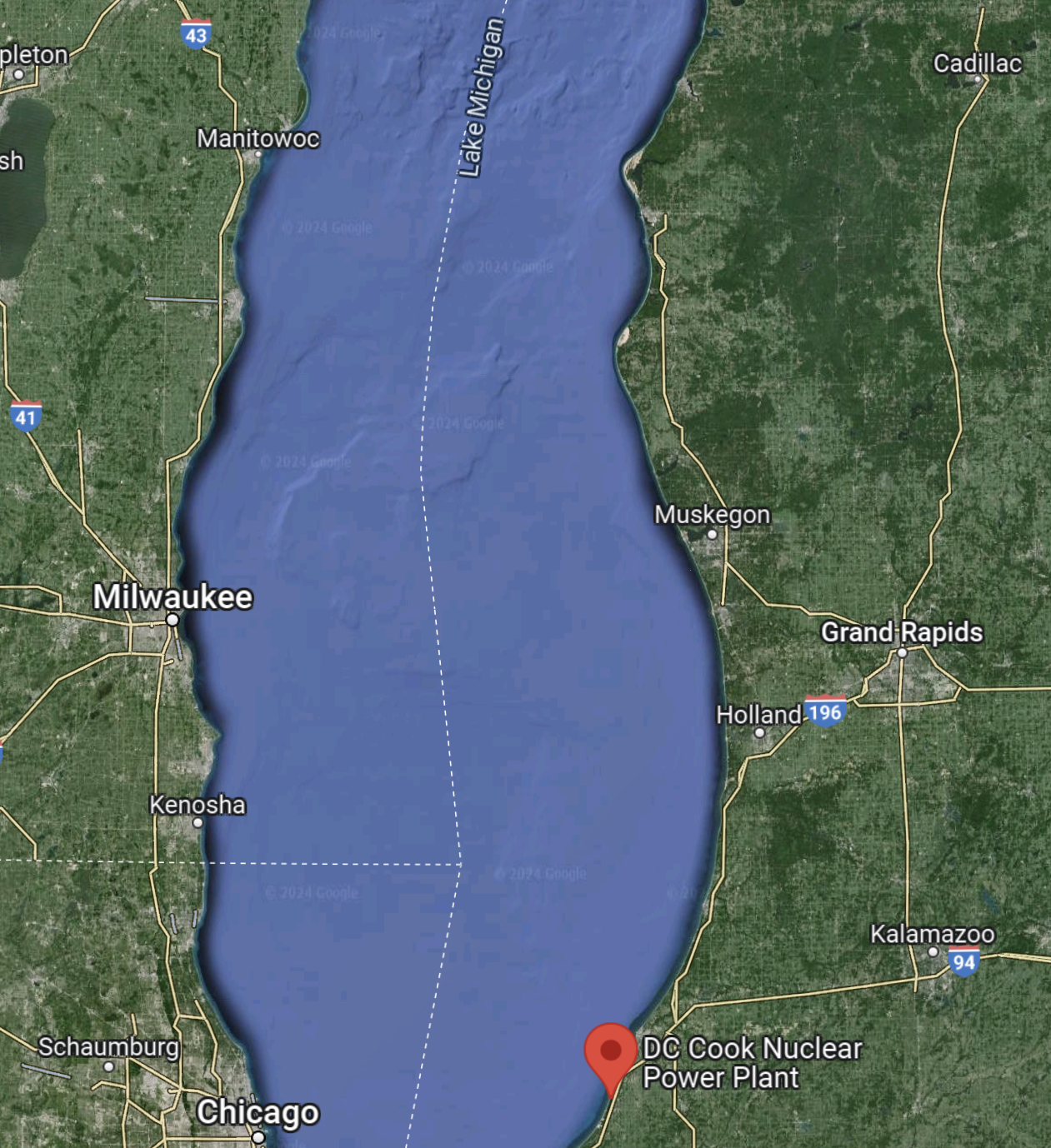
Note the red arrow, which marks the DC Cook Nuclear Power Plant.
This second Google Map shows a close-up of the plant.
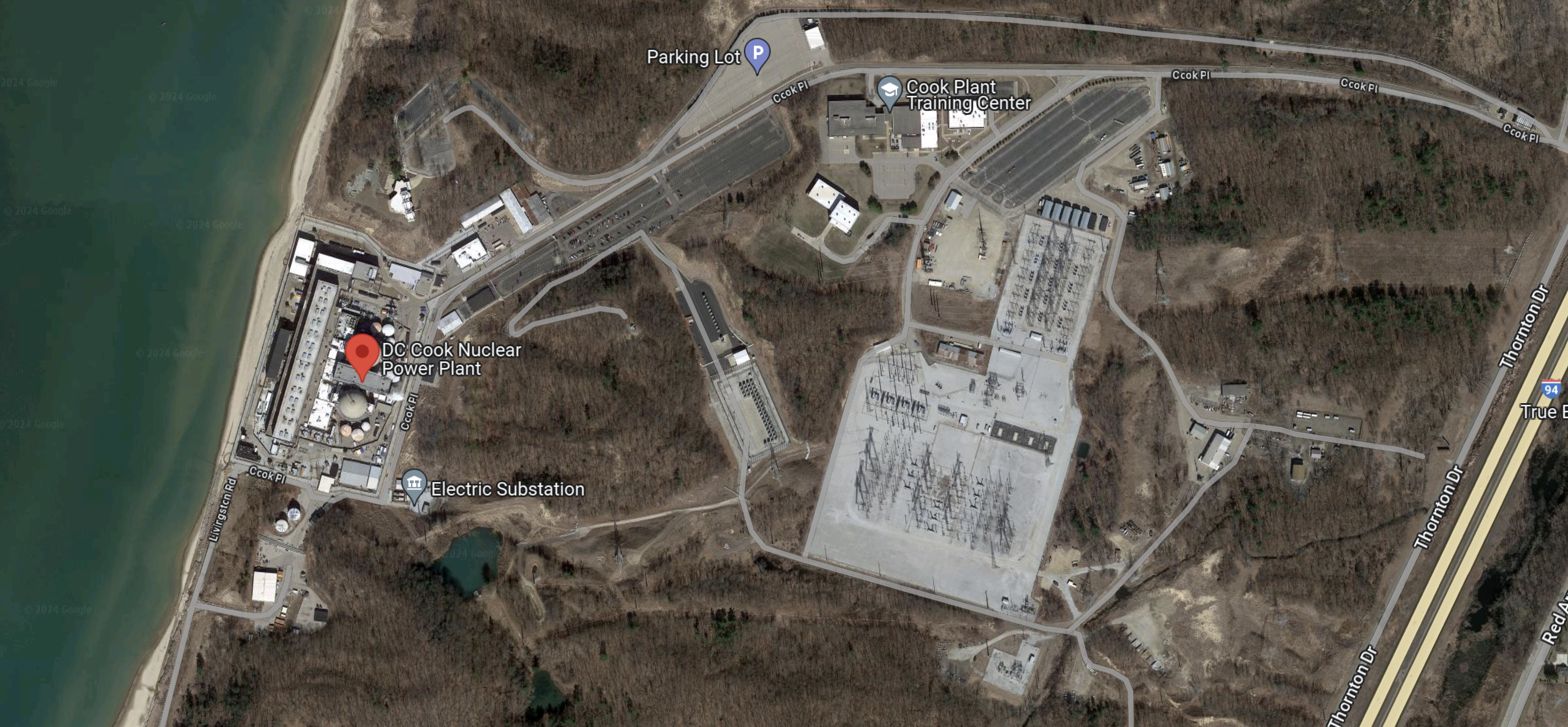
The power plant sits on the shores of Lake Michigan, from which it gets its cooling water.
In the early 1980s, after the Three Mile Island accident in 1979, I was given a tour of two nuclear power stations of which this plant was one and Shippingport or Beaver Valley was the other. Both were Artemis customers and one of the projects they were using the software on, was to plan and document all the Three Mile Island modifications or TMIs.
But it’s the Cook power plant that I remember.
- I’d turned up at Benton Harbor Airport on a very cold, snowy evening and I remember that the Hertz representation had got all the cars running so customers could drive away in the warm.
- DC Cook was impressive and very well run, and it was a very good customer visit.
- The fishy tale, I heard there was that the warm water from the power station attracted the fish and that some locals in the winter took to fishing through the ice of Lake Michigan. Occasionally, they fell through the ice.
- I was told, that some locals felt that the plant should be shut because of this, but it’s still running forty years after my visit.
- Lunch was interesting, as we went to a Michigan version of the famous Rook restaurant in the Two Ronnies. Except that every dish on the menu had something to do with beans, as that is the area of the US, where navy (baked) beans are grown. They even had a bean savoury for afters!
This article from the Huron Daily Tribune is entitled Fish Force Michigan Nuke Plant Shut Down, where these are the first two paragraphs.
Officials shut down a nuclear power plant on the eastern shore of Lake Michigan on Thursday after a large number of fish swam into the plant’s cooling-water system.
The two reactors at Donald C. Cook Nuclear Plant were idled as workers removed the fish and monitored the cooling system. It wasn’t clear when the reactor would be restarted, owner and operator American Electric Power Co. Inc. said in a statement.
It does appear that Cook was suffering from fish in the system.
I hope this doesn’t predict more delays for Hinckley Point C.
eDNA Pilot Study Completed At World’s First Floating Offshore Wind Farm
The title of this post, is the same as that of this article on offshoreWIND.biz.
This is the sub-heading.
Equinor and Norwegian Research Centre (NORCE) have completed a pilot study using environmental DNA (eDNA) to monitor the biodiversity and abundance of marine life in waters around the 30 MW Hywind Scotland floating offshore wind farm.
This is the first paragraph.
Equinor and Norwegian Research Centre (NORCE) have completed a pilot study using environmental DNA (eDNA) to monitor the biodiversity and abundance of marine life in waters around the 30 MW Hywind Scotland floating offshore wind farm.
And this paragraph outlines methodology and objectives of the study.
By analysing the eDNA content in water samples, Equinor and NORCE were able to measure the biodiversity of fish species in the water surrounding Hywind Scotland. This pilot study was conducted to learn more about the potential effects that floating offshore wind farms may have on marine habitats.
The research identified 26 fish species and a harbour porpoise in the area.
According to the article, an often used method to analyse fish species is to trawl and analyse.
Surely, just to collect the eDNA from the water, is a method, that has the least effect on the fish, any porpoises and the environment.
Mingyang Building Fish Farm-Equipped Offshore Wind Jacket Foundation
The title of this post, is the same as that of this article on offshoreWIND.biz.
This is the sub-heading.
Chinese wind turbine manufacturer Mingyang Smart Energy revealed on 17 April that it started the construction of a jacket foundation that also features a net cage system for fish farming, which will be installed at the Mingyang Qingzhou 4 offshore wind farm in the South China Sea later this year.
The picture in the article, looks like something out of Baldrick’s book of cunning plans.
This paragraph gives more details.
The jacket is typhoon-resistant and the aquaculture system, which will raise up to 150,000 fish in 5,000 cubic metres of water, will have remote functions such as automated feeding, monitoring, detection, and collection, according to Mingyang.
Mingyang also state that the Qingzhou 4 offshore wind farm will also produce hydrogen.
Does that mean that in the next phase of the development, they’ll be putting a fish and chip shop on top?
NET9 Open Ocean Aquaculture Demonstrator Design Unveiled
The title of this post, is the same as that of this news item on the Impact9 web site.
Serial Cooking – Twelve Minute Fish
I’ve used this recipe for years, since I discovered it in the sadly-missed Dinner Tonight daily recipe in The Times, that was contributed by Lyndsey Bareham.
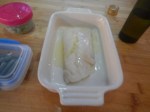


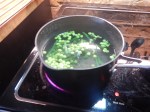
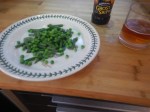
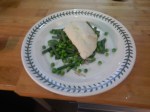
Note.
- I used haddock, but it generally works with any white fish trawled from the depths of the freezer.
- I always keep little pots of frozen peas and runner beans for one in my freezer.
- I have lots of pots and always split frozen peas up when I buy them.
- I usually cook it for one or two, but have cooked it for four.
- I’m a bit worried about getting the Carluccio’s olive oil with lemon. But I suspect someone else will supply something similar.
It can’t be too bad, as two friends have asked for the recipe. And they’re still friends.
The Small Sign That Means So Much To A Coeliac
I’ve bought Marks & Spencer’s mackerel pate for any years.
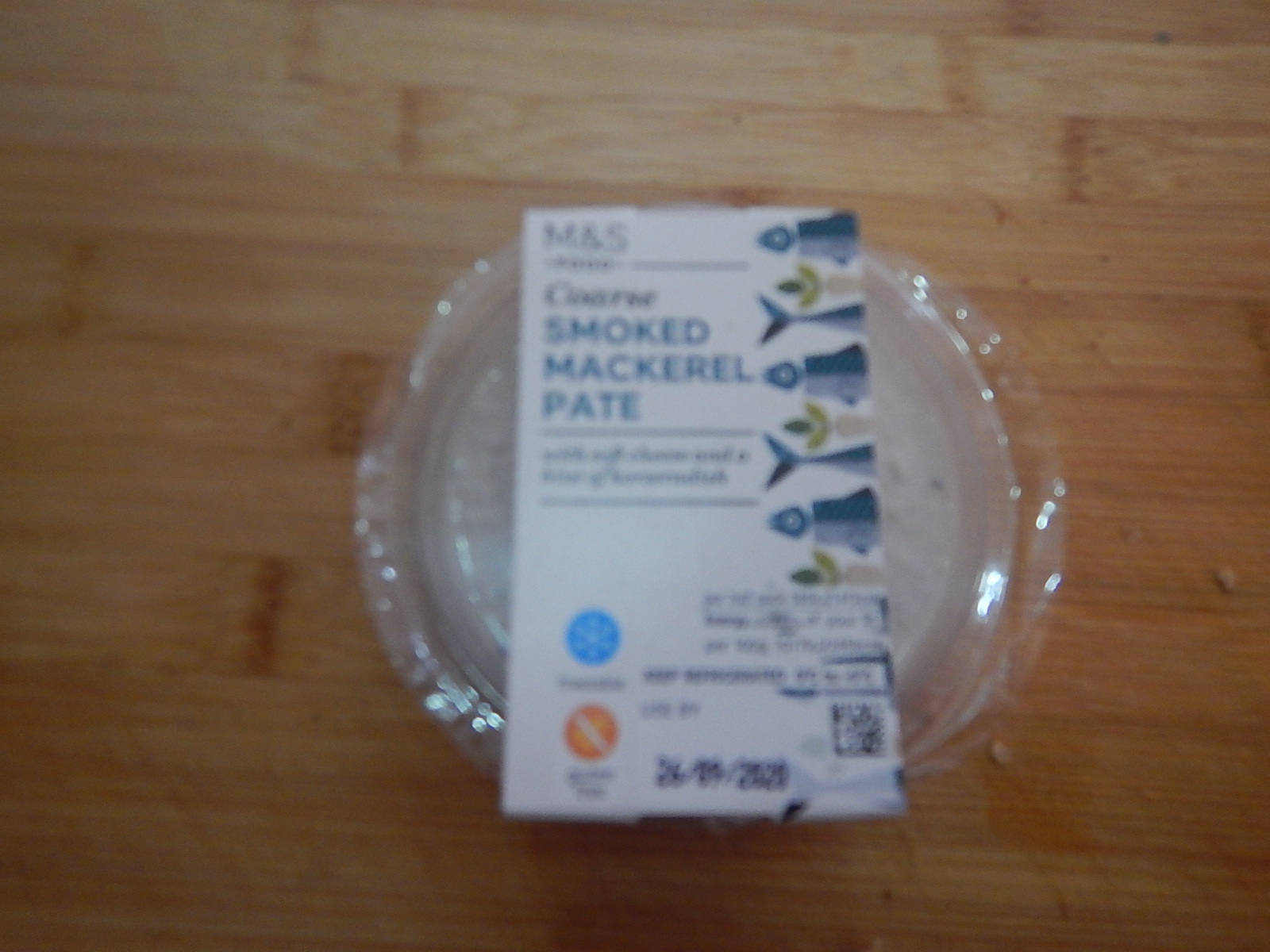
It’s the first time, I’ve noticed the packaging has the gluten-free symbol.
More please! My eyesight needs glasses to read the allergies!
CoolRail To Cut Carbon Footprint Of Fresh Food
The title of this post is the same as that of this article on Railway Gazette International.
These first two paragraphs outline the plan.
Food logistics company Euro Pool System has launched a thrice-weekly CoolRail dedicated temperature-controlled service to transport fresh produce between Valencia in Spain and Rotterdam in the Netherlands.
This is intended to be first route of planned network of CoolRail services which would link Spain with Germany, Scandinavia and the UK.
I can see this method of fresh food transportation growing, especially as CoolRail claim it is as fast as by road and cuts CO2 emissions by 70 to 90 %.
It also appears that the UK through the Channel Tunnel is in CoolRail’s plans.
Fish, Lamb And Beef To Europe
The obvious British export, that could use the service the other way to Europe is probably fish, as a large proportion of UK-landed fish goes to Europe at the present time.
This page on the Seafish web site, gives details about fish imports and exports.
Quality meat, like Welsh lamb and Scottish beef could also be sent to Europe, after being slaughtered in the UK.
What About Quality Food And Drink?
This page on the Scotch Whisky Association web site is entitled Scotch Whisky Exports On The Up in 2018.
This is two paragraphs from the page.
In 2018, the export value of Scotch Whisky grew +7.8% by value, to a record £4.70bn. The number of 70cl bottles exported also reached record levels growing to the equivalent of 1.28bn, up +3.6%.
The United States became the first billion pound export market for Scotch Whisky, growing to £1.04bn last year. The EU remains the largest region for exports, accounting for 30% of global value and 36% of global volume.
That means that Scotland exported to the EU, the equivalent of 461 million bottles of whisky, that is worth around £1.41billion.
A twenty-foot shipping container has a volume of 33.2 cubic metres., so with allowance for packaging, one could probably hold 33,200 bottles worth about £100,000.
To accommodate all Scotch Whisky exports to Europe on the 2018 figures, would need 14,000 containers per year or a very civilised thirty-eight containers a day.
Conclusion
There’s certainly a large market for food transport by rail across Europe and to the UK, some of which will be in containers with refrigeration and some without!
Bad Logic From Marks And Spencer
I am not the largest of individuals being around one metre seventy and sixty-one kilos.
But then many coeliacs are on the smallish side.
So when I saw this small meal which was entiled Beef Chilli & Cheese Filled Jacket Potato, I suspected that it could be gluten-free, as it seems most of Marks and Spencer’s beef chillis are made without gluten.
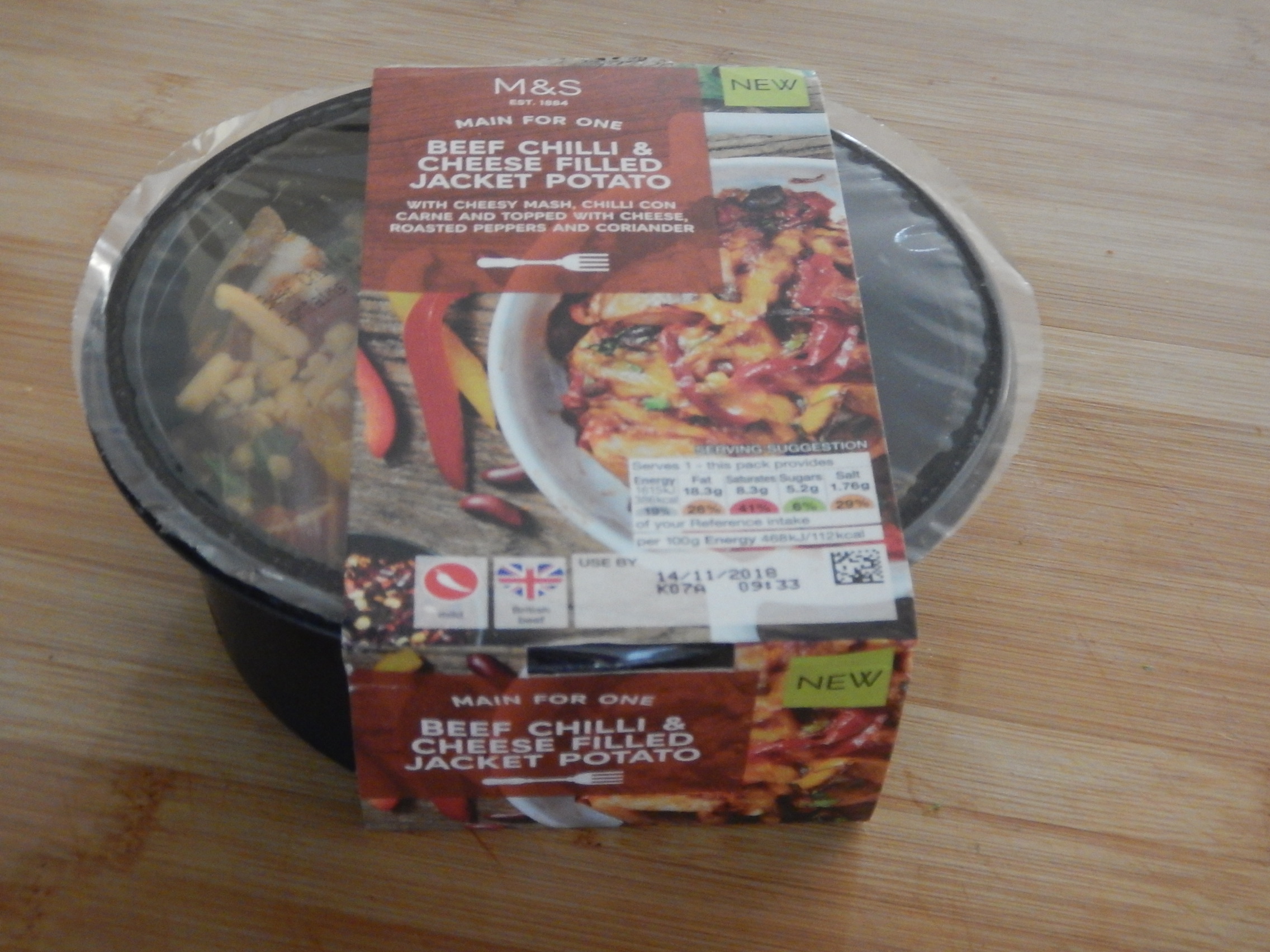
On turning the packet over, I found my reasoning was correct, as the dreaded g-word was missing.
Next to this baked potato on the shelf, was a Smoked Haddock Mornay Filled Jacket Potato.
Now this is where the logic is bad
- Some of their fish dishes with a Mornay sauce are gluten-free and others are not. This was one of the ones with gluten!
- Surely, if all chillis can be gluten-free, then all fish Mornays should be the same as to gluten.
- Perhaps, all baked potato dishes like this should also be the same as to gluten.
- I also think that with fish, shepherds and cottage pies with a potato topping, whether a pie is gluten-free or not depends on the range.
- And with sausages and burgers, they are all gluten-free.
If you are vegan or need to be dairy-free, I’m certain there are other examples of similar products varying as to acceptability.
How Was The Eating?
Not bad at all! I’ll try another, but I would love to try the smoked haddock variety!
Conclusion
I believe that a regular shopper in a particular supermarket chain, should be able to ascertain, if a product is suitable by just reading the title. They can always check by reading the detailed labelling
Fish Fingers Surprisingly Sustainable, Say Conservationists
The title of this post is the same as that of this article on the BBC.
When I first saw this headline, I was surprised and cynically felt that this was some put up job paid for by the producers of fish fingers or the Fish Fingers Appreciation Society.
But it appears that the research was done by the Marine Conservation Society.
This is the first paragraph of their Wikipedia entry.
The Marine Conservation Society (MCS) is the UK’s leading marine environment, not-for-profit organisation. It works for the increased protection of the seas around the United Kingdom, via the creation of well managed marine protected areas. It works with fishermen and industry to find more sustainable ways of fishing and with retailers and consumers to buy and choose more sustainable seafood. It involves volunteers to carry out hundreds of beach cleans and surveys annually whilst also working with water companies and local communities to ensure UK bathing waters are of an excellent standard
I think that and other facts in the entry, prove that we can take the BBC report at face value.
Incidentally of their list of the top fifteen fish fingers rated for sustainability, at least two were gluten-free.
Usually, coeliacs and others who are gluten-free are left out of the results.
My last thought, is that why if we can make fish fingers surprisingly sustainable, can’t we do that for other foods?
 The Anonymous Widower