Fortescue Officially Opens Gladstone Electrolyser Facility
The title of this post, is the same as that of this press release from Fortescue.
This is the sub-heading.
Fortescue has today officially opened its world-leading electrolyser manufacturing facility in Gladstone, Queensland, Australia – one of the first globally to house an automated assembly line.
The first two paragraphs add more detail.
Fortescue has today officially opened its world-leading electrolyser manufacturing facility in Gladstone, Queensland, Australia – one of the first globally to house an automated assembly line.
The 15,000sqm advanced manufacturing facility, constructed and fully commissioned in just over 2 years, will have capacity to produce over 2GW of Proton Exchange Membrane (PEM) electrolyser stacks annually.
This is a very large increase in electrolyser production.
Centrica Energy, Bord Gáis Energy And Mitsubishi Power Announce Development Of Europe’s First Ammonia Fired Power Generation Facility
The title of this post, is the same as that of this press release from Centrica.
This is the sub-heading.
Centrica plc and Mitsubishi Power Europe Limited “Mitsubishi Power Europe” have signed a Memorandum of Understanding (MOU) to explore the development, construction, and operation of Europe’s first-ever ammonia-fired power generation facility at Bord Gáis Energy’s Whitegate Combined Cycle Gas Turbine (CCGT) power station in Cork, Ireland.
These four paragraphs outline the project.
The project is being led by Centrica through its Bord Gáis Energy and Centrica Energy businesses and Mitsubishi Power Europe and would become Europe’s inaugural ammonia-fired power generation facility and one of only two such facilities in the world.
The utilisation of low carbon ammonia as a clean and sustainable fuel source for power generation has the potential to provide security of supply while reducing greenhouse gas emissions. Low carbon ammonia has a higher volumetric density than hydrogen, enabling the utilisation of low carbon hydrogen in a form which is easy to transport and store, resulting in a fuel that can be combusted with no carbon emissions at point of use. Its use as a fuel is a promising long-term energy solution for the transition to a low-carbon energy value chain.
Bord Gáis Energy’s facility at Whitegate CCGT power station would serve as a global demonstration site for ammonia-fired power generation technology, providing insight into the feasibility and scalability of low carbon ammonia as a green fuel and shaping the future of power generation worldwide, with low carbon ammonia being sourced through Centrica Energy’s global trading network.
Following the signing of the MOU, the project team is being established to commence project feasibility assessments. Upon the successful outcome of this assessment, extensive local stakeholder engagement will commence.
Note.
- No mention of the size of the new power station is given in the press release.
- Whitegate power station is a 445 MW combined cycle gas turbine (CCGT), that was built in 2010.
- It can meet ten percent of Ireland’s electricity demand.
I have a few thoughts.
Will The Existing Power Station Be Converted To Ammonia Or Will A New Ammonia-Fired Power Station Be Built Alongside?
Consider.
- If the second station doesn’t work, there’s no reduction in power.
- If a replacement station doesn’t work, ten percent of Ireland will be in the dark.
- Ireland will be needing more power in the next few years.
- A second power station can be appropriately-sized.
- Japanese don’t like to lose face!
Prudence probably says that building a second station alongside is the least risky route.
Wind Power In Ireland
This Wikipedia entry is entitled Wind Power In Ireland.
This is the first paragraph.
As of 2021 the island of Ireland has 5,585 megawatt and the Republic of Ireland has 4,309 MW of installed wind power nameplate capacity, the third highest per capita in the world. In 2020 wind turbines generated 36.3% of Ireland’s electrical demand, one of the highest wind power penetrations in the world.
There is also one 500 MW interconnector between the islands of Great Britain and Ireland, with another similar-sized one under construction.
As the wind doesn’t blow all the time, the island of Ireland will need some low-carbon backup.
Why Ammonia?
This paragraph from the press release gives several reasons.
The utilisation of low carbon ammonia as a clean and sustainable fuel source for power generation has the potential to provide security of supply while reducing greenhouse gas emissions. Low carbon ammonia has a higher volumetric density than hydrogen, enabling the utilisation of low carbon hydrogen in a form which is easy to transport and store, resulting in a fuel that can be combusted with no carbon emissions at point of use. Its use as a fuel is a promising long-term energy solution for the transition to a low-carbon energy value chain.
There may also be secondary issues here.
If you read the Applications section in the Wikipedia entry for ammonia, you will realise, what a useful chemical ammonia is.
As Ireland has a lot of agriculture, a fertiliser plant could be located close to the power station.
If the ammonia was green ammonia, then this will help to decarbonise the island of Ireland.
Where Will The Green Ammonia Come From?
These posts deal with the production and distribution of green ammonia.
- Could West Africa Become A Green Energy Powerhouse?
- H2U Eyre Peninsula Gateway Hydrogen Project Begins Largest Green Ammonia Plant
- KEPSA Signs Large-Scale Green Energy Projects MoU In Kenya
- Namibia Is Building A Reputation For The Cheapest Green Hydrogen
- Uniper To Make Wilhelmshaven German Hub For Green Hydrogen; Green Ammonia Import Terminal
Note.
- A continent with a lot of renewable energy like Africa or Australia can create lots of green ammonia.
- As the press release says, ammonia is easier to transport and store compared to hydrogen.
- The press release says that low carbon ammonia will be sourced through Centrica Energy’s global trading network.
- Fortescue Future Industries is mentioned in several posts, as producers of green hydrogen and green ammonia.
- Centrica is big enough to stand up to Andrew “Twiggy” Forrest and Fortescue Future Industries.
As in a few years, we will have many GWs of renewable energy, could we be making green ammonia for the Irish?
This news story on the UK Research and Innovation web site is entitled Designs For Green Ammonia Plant Become Reality.
This is the sub-heading.
Science and Technology Facilities Council (STFC) researchers are building a small-scale plant to generate ammonia using only renewable energy sources.
These two paragraphs outline the story.
Ammonia is a promising carbon-free fuel source of the future and so if successful, the plant has the potential to considerably advance the UK’s net zero ambitions.
It marks the second phase of the Ammonia Synthesis Plant from Intermittent Renewable Energy (ASPIRE) initiative which will be led by STFC in conjunction with the University of Bath, Johnson Matthey, and Frazer-Nash Consultancy.
The UK Research and Innovation news story has this description of the ASPIRE technology.
Current commercial ammonia synthesis is optimised for near steady production requiring constant power.
The first phase of ASPIRE however saw the design of a patented modular reactor and thermal management system that should enable operation from an intermittent renewable power supply.
The new plant will have three core elements:
- a pressure swing adsorption system which extracts nitrogen from air
- a modular electrolyser which splits hydrogen from water
- a synthesis loop that uses the modular reactor and a thermal management system to combine hydrogen and nitrogen to make ammonia
This will enable the entire production process to operate autonomously, powered by a small wind turbine and series of solar canopies with an ammonia generation rate proportional to the available renewable power.
There is even this quote from a Dr. Alan Partridge.
Thanks to the incredible work on this initiative by the team at Rutherford Appleton Laboratory as well as the University of Bath and private sector partners, we are closer than ever to producing industry-scale green ammonia for the UK and the world.
Perhaps, this technology will allow the island of Ireland to make all the green ammonia it needs.
Will Centrica Be Going Into The Green Ammonia Business?
The Centrica press release says they will be dealing in green ammonia for the benefit of Ireland. So Yes!
Conclusion
The news story on the UK Research and Innovation web site is a must-read.
As we have so much renewable energy in the UK, some company will build an ASPIRE-based green ammonia plant in the UK.
Rolls-Royce And Zero Petroleum Join Forces To Develop Sustainable Future
The title of this post, is the same as that of this press release from Rolls Royce.
This is the sub-heading.
Rolls-Royce has entered a landmark agreement with breakthrough Energy company Zero Petroleum to promote further development of the company’s power and propulsion solutions with fossil-free synthetic fuels.
These two paragraphs outline the agreement.
The new agreement will see the two parties collaborate to demonstrate Rolls-Royce engines for aviation, marine and defence with Zero® synthetic fuels.
This has the potential to include Zero’s entire range of synthetic fuels – petrol, diesel and jet fuel – with data gathered from engine testing used to prove the credentials required to achieve international fuel certification standards. Synthetic fuels deployed by Rolls-Royce in engine tests will directly reduce associated carbon emissions.
Are Rolls-Royce going to do their engine testing using synthetic fuels to reduce their carbon emissions?
It certainly looks like they might and I suppose it does two tests at the same time.
Rolls-Royce Seem To Be Using Technology To Save The Company
Big companies like Rolls-Royce, who are very much toed up with fossil fuels have two options; give up or fight using the only weapons they have; superb technology and a lot of experience.
There are only a small group, that seem to be fighting to succeed. To Rolls-Royce, I would add Cummins, Fortescue Future Industries, Ricardo and SSE, and possibly BP and Centrica.
Hyperbat In Multimillion-Pound Deal To Supply Battery Packs For Lotus Supercar
The title of this post, is the same as that of this article on The Times.
Lotus or supercars for that matter, will not be a big market for battery packs, but they will be a high-profile one. The article in The Times may well flush out a few good sales leads from companies who want to decarbonise their products.
Many years ago, I did a consultancy job for Cummins, where my software was used to look for faults in their engine testing system. One of their engineers explained to me that they had a sales and production philosophy that could handle all markets from the large down to small niche ones. He said that we can’t tell which niche markets are going to be successful.
In the last couple of years Cummins have embraced hydrogen very strongly and it looks like they are adopting a similar philosophy.
So in the Cummins engine business model, it looks like the niche market is important.
I suspect that what goes for the diesel engine market will also go for the electric transmission market, with niche markets being nicely profitable and an important part of sales.
It looks to me that Hyperbat are going for that market, backed up by the engineering and battery experience of Williams Advanced Engineering and the manufacturing knowledge and logistics of Unipart.
Note that Williams Advanced Engineering is now owned by Australian billionaire; Andrew Forrest, through his company; Fortescue Future Industries. I wrote about this purchase in Fortescue Buys Williams Engineering In Major Push Into High Performance Batteries.
On the Hyperbat web site, this is said about their manufacturing facility.
The facility is about to double in size to meet current needs, with plans to double again in the next 2 years.
The factory is based on the site of a former exhaust plant and reintroduces manufacturing to the area, with an environmentally sustainable future.
Capacity of the factory is approximately 10,000 packs per year.
I;m sure the company, has enough backing for a very successful future.
The Australian Tycoon With Designs On U.S. Coal Mines
The title of this post, is the same as that as this article on Politico.
The article is a must-read, as it is an interview with Andrew Forrest about his very strong views on the future of the coal industry in the United States.
This is a typical question from the interview and Forrest’s forthright answer.
Biden put jobs at the center of his climate messaging. Does the messenger actually need to be someone with a track record of creating jobs?
It’s a bloody good point. I think I can deliver that message much stronger, because I’m not a politician. I’m not looking for votes, this is the hardcore reality.
Rio Tinto’s Big Energy Project Attracts Multiple Bidders
The title of this post, is the same as that of this article on Mining Technology.
The article has this subtitle.
The company seeks to offset its power consumption with a massive renewable plant.
These two paragraphs introduce the project.
British and Australian mining giant Rio Tinto has attracted multiple bids for a massive renewable power infrastructure project.
The company currently seeks suppliers to build up to 4GW of renewable generation for its alumina and aluminium operations in Queensland, Australia. Speaking to the Melbourne Mining Club, the company’s CEO of Australia, Kellie Parker, said that it had received proposals for “a lot more than 4GW”. Parker also said that construction of the project “would not be easy” due to the cost of construction for Australian projects.
In the UK, we may talk of wind farms like Hornsea, which could produce 6 GW, but the Aussies can produce similar amounts of energy from the sun.
This will be the fourth major renewable power development in Australia to be announced in the last few months.
- The Asian Renewable Energy Hub could generate up to 26 GW in Western Australia.
- I wrote about Andrew Forrest’s ambitions in Andrew Forrest Snaps Up Pilbara And Gascoyne Cattle Stations For Green Energy Production.
- The Australia-Asia Power Link will export solar power from Australia to Singapore.
Australia is certainly looking to power the world.
Energy Storage
Rio Tinto are also talking about energy storage, as other systems of this type and size do. Could this be one of a number of Australian projects mentioned on the Highview Power web site?
Will We See More Multi-Country Renewable Energy Deals?
In this blog, I have talked about various deals, where two or more countries and/or companies are getting together to generate electricity in one country and transfer it to another, either as electricity or as hydrogen
Examples include.
- The Asian Renewable Energy Hub, which I first wrote about in Vast Australian Renewable Energy Site Powers BP’s Ambitions.
- The Australia-Asia PowerLink, which I first wrote about in Sun Cable’s Australia-Asia PowerLink.
- Fortescue Future Industries will convert cattle stations in Western Australia into renewable power stations.
- The EuroAfrica Interconnector is a HVDC interconnector and submarine power cable between the Greek, Cypriot, and Egypt power grids, which I first wrote about in The EuroAfrica Interconnector.
- The EuroAsia Interconnector is a proposed HVDC interconnector between the Greek, Cypriot, and Israeli power grids via the world’s longest submarine power cable, which I first wrote about in The EuroAsia Interconnector.
- Icelink is a proposed electricity interconnector between Iceland and Great Britain, which I first wrote about in Is Iceland Part Of The Solution To The Problem Of Russia?
- The Morocco-UK Power Project, which I first wrote about in Moroccan Solar-Plus-Wind To Be Linked To GB In ‘Ground-Breaking’ Xlinks Project.
- Namibian Green Hydrogen, which I first wrote about in Namibia Is Building A Reputation For The Cheapest Green Hydrogen.
There are also all the hydrogen deals done by Fortescue Future Industries.
Where Are There Possibilities Of More Multi-Country Renewable Energy Deals?
These are a few serious possibilities.
Argentina
This is an extract from this page on Wind Energy International, which is entitled Argentina.
Argentina has an estimated technical wind energy potential of 300 GW. In southern Patagonia (Chubut and Santa Cruz provinces), average wind speeds range between 9.0 and 11.2 m/s, whereas in the north (Neuquén and Río Negro provinces), wind speeds range from 7.2 to 8.4 m/s. The general average capacity factor for Argentina is 35% and in the Patagonia region it ranges between as much as 47% and 59%. Especially in Northwest Patagonia, locally known as the Comahue region, hydro and wind may seasonally complement each other and.benefit both technologies. One other promising region for wind power development is the Atlantic sea coast.
As I wrote in Australia’s FFI Plans $8.4 Billion Green Hydrogen Project In Argentina, it appears that Andrew Forrest and FFI are already on the ground.
Australia
There are already three major schemes based on Australia and I am certain they will be more. Especially, as Japan, Korea, Malaysia and Singapore will need the zero-carbon energy.
It would appear that except for the Australia-Asia PowerLink, the energy will be transferred as liquid hydrogen or liquid ammonia.
Bangladesh
Bangladesh wouldn’t be on the lists of many, where ideal countries for renewable energy are being discussed.
But, this report on Energy Tracker Asia is entitled The Renewable Energy Potential of Bangladesh, where this is said.
A report investigating the renewable energy technical capacity of Bangladesh found that the country could deploy up to 156 GW of utility-scale solar on 6,250 km2 of land and 150 GW of wind. Offshore wind power would account for 134 GW of this total capacity.
I wouldn’t be surprised to see Bangladesh, supplying renewable energy to the East, with international companies and organisations developing the renewable infrastructure.
I think it should be noted that international companies flock to countries, where the investment opportunities are good. That has happened in the UK, with offshore wind, where many wind farms have been developed by companies such as Equinor, Iberola, RWE and Wattenfall.
Chile
Chile has started to develop the 100,000 square kilometres of the Atacama Desert for solar power and I wrote about this in The Power Of Solar With A Large Battery.
This sentence in the Wikipedia entry for Energy In Chile, illustrates the potential of solar power in the Atacama Desert.
In 2013, Total S.A. announced the world’s largest unsubsidised solar farm would be installed with assistance from SunPower Corp into Chile’s Atacama desert.
I also wrote Chile Wants To Export Solar Energy To Asia Via 15,000km Submarine Cable, about Chile’s ambitions to supply Asia with energy.
Ethiopia
Andrew Forrest of Fortescue Future Industries is on the case, as I wrote in Fortescue Future Industries Enters Ethiopia to Produce Green Energy.
North Africa
Consider.
- The major North African countries of Morocco, Algeria, Tunisia, Libya and Egypt, all have and depend on to a certain extent on fossil fuels.
- There are gas pipelines to Spain and Italy.
- Morocco will be the Southern end of the Morocco-UK Power Project, if it gets developed.
- All five countries have some nuclear power stations.
- All five countries have lots of sun for solar power.
- Some Saharan countries to the South of Morocco, Algeria and Libya could also provide energy from the sun.
- Egypt has substantial hydro-electric power on the River Nile.
- Egypt will be connected to Greece through the EuroAfrica Interconnector.
I believe that a well-designed and co-ordinated project could generate a lot of electricity and hydrogen for Europe and bring much-needed income and employment to North Africa.
I feel that if the Morocco-UK Power Project can be successfully built, then this could create a flurry of activity all over North Africa.
Saudi Arabia
Saudi Arabia has a problem. As the rest of the world moves away from fossil fuels in the next few decades, they will see the revenues from oil and natural gas come under pressure.
But as a rich country, with 2.15 million km² of land and lots of sun, they must have some potential to generate solar electricity.
In the Wikipedia entry for Solar Power In Saudi Arabia, this is said.
The Saudi agency in charge of developing the nations renewable energy sector, Ka-care, announced in May 2012 that the nation would install 41 gigawatts (GW) of solar capacity by 2032.[2] It was projected to be composed of 25 GW of solar thermal, and 16 GW of photovoltaics. At the time of this announcement, Saudi Arabia had only 0.003 gigawatts of installed solar energy capacity. A total of 24 GW of renewable energy was expected by 2020, and 54 GW by 2032.
Wikipedia also says that Saudi Arabia also has nuclear ambitions.
I can see that Saudi Arabia will replace some of their oil and gas exports with green hydrogen.
Australian Mining Billionaire Touts A Green Revolution In U.S. Coal Country — With Skepticism Trailing Close Behind
The title of this post, is the same as this article on Forbes.
It is a definite must-read about Andrew ‘Twiggy’ Forrest, making one of the most difficult hydrogen pitches in the world, to coal miners in West Virginia.
Perhaps we need Mr Forrest to convince the RMT, that their views are wrong and so nineteenth century.
Vast Australian Renewable Energy Site Powers BP’s Ambitions
The title of this post, is the same as that of this article on The Times.
These are the first two paragraphs.
BP is to lead the development of a $36 billion wind, solar and hydrogen project in Western Australia in its latest foray into green energy.
The oil company has bought a 40.5 per cent stake in the Asian Renewable Energy Hub in the eastern Pilbara region and will become operator of the project, one of the biggest such developments globally.
The Wikipedia entry for the Asian Renewable Energy Hub, starts like this.
The Asian Renewable Energy Hub (AREH) is a proposal to create one of the world’s largest renewable energy plant in the Pilbara region of Western Australia. It was first proposed in 2014, with plans for the project concept changing several times since then. As of November 2020, the project developers Intercontinental Energy, CWP Global, Vestas and Pathway Investments were planning to build a mixture of wind power and solar energy power generators which would generate up to 26 gigawatts of power.
Up to 1,743 wind turbines of 290 metres (950 ft) in height would be accommodated in 668,100 hectares (1,651,000 acres) of land, and 18 arrays of solar panels each generating 600 megawatts would cover 1,418 hectares (3,500 acres). It is to be located in the Shire of East Pilbara, about 30 km (19 mi) inland from 80 Mile Beach, with the nearest settlement on the map being Mandora Station. The total size of the scheme would be about 666,030 ha (1,645,800 acres).
It is a gigantic project and this Google Map of Western Australia shows its location.
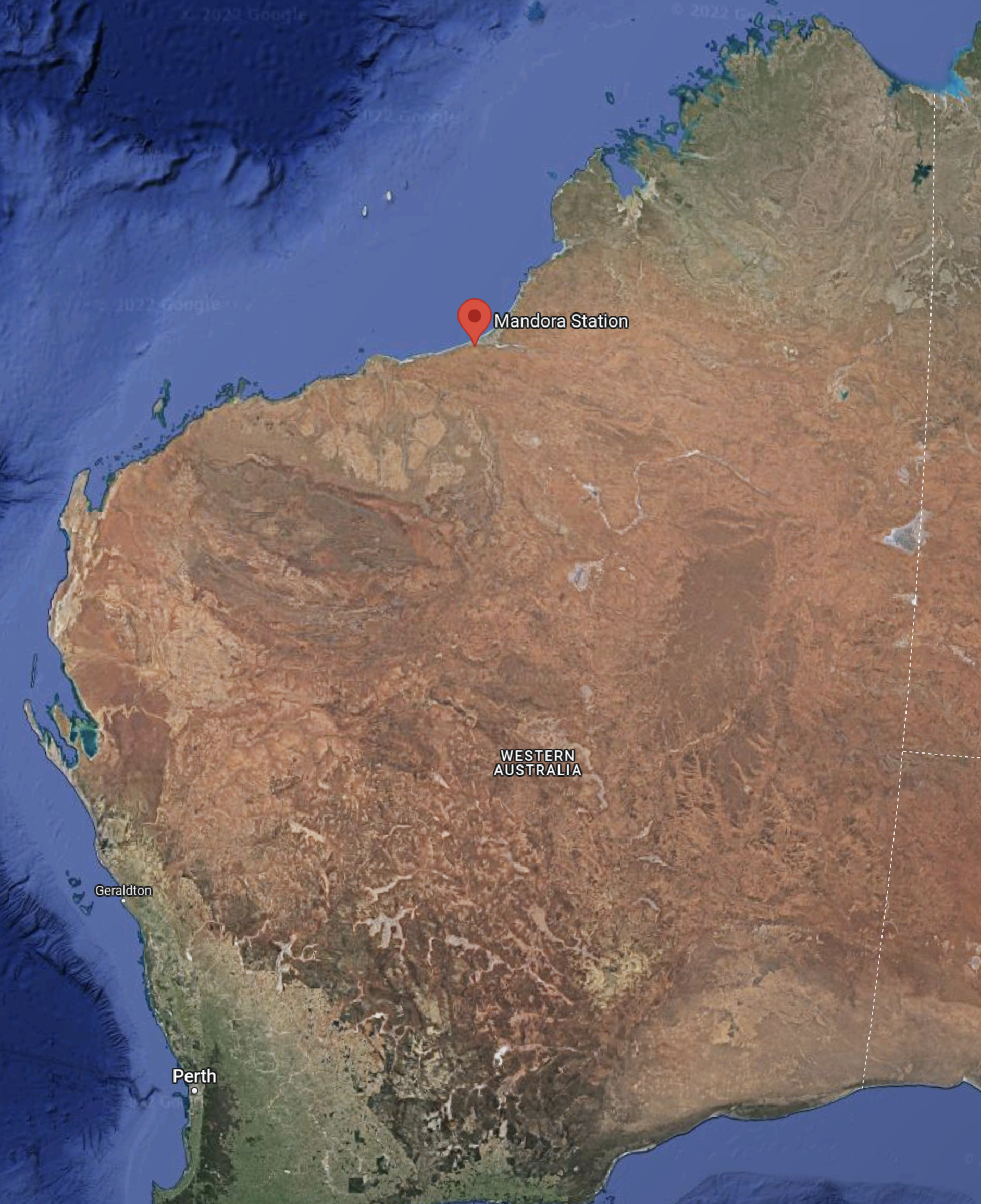
It is no more than a pimple on the huge area of Western Australia.
I have my thoughts about BP getting involved with this project.
The Power Of Research
Around 1970, I spent four years in ICI applying mathematical methods to some of their processes, that were in research or development. I also worked for a time on their hydrogen plants. Some of the projects I heard about, were pretty wacky and some of these appear to have never been commercialised.
When I left ICI, I built a few mathematical models for other research organisations.
So I do wonder, if BP have found something, that will enable the process of making hydrogen from water a lot more efficient. There is an American startup called Bloom Energy, who have teamed up with Westinghouse to use steam from the nuclear reactor to do electrolysis more efficiently at a high temperature.
I wrote about this partnership in Westinghouse And Bloom Energy To Team Up For Pink Hydrogen, where Bloom Energy Vice President of Hydrogen Business Rick Beuttel, is quoted as saying this.
We are proud Westinghouse has turned to Bloom and our solid oxide technology to supercharge the clean hydrogen economy. Solid oxide technology is well suited for nuclear applications, efficiently harnessing steam to further improve the economics of hydrogen production. High temperature electrolysis is already garnering attention and accolades as a cost-effective and viable solution to create low-cost, clean hydrogen, which is critical to meeting aggressive decarbonization goals.
It sounds that by integrating the nuclear power station and the electrolyser, there are cost savings to be made.
Why not use solar power to create steam, which is called solar thermal energy and is used in various hot places in the world and then use high temperature electrolysis?
I suspect that BP are up to something, that is very similar to Fortescue Future Industries in the Australian company’s back yard.
So will they be selling the hydrogen to FFI, so they can market it together all over the world?
This BP deal is one to watch.
 The Anonymous Widower