Gravity Energy Storage For Cleaner Power Grids!
The title of this post, is the same as that of this article on Energy Live News.
This is the sub-heading.
Scotland’s Gravitricity has teamed up with a Czech electricity flexibility company to bring their gravity storage technology to market
These two paragraphs introduce the article.
Scottish firm Gravitricity has partnered with Czech energy flexibility aggregator Nano Energies to commercialize their gravity storage technology.
The partnership plans to convert an old mine shaft in the Czech Republic into a gravity energy store, which can rapidly respond to grid fluctuations and could be a pioneer for European projects.
Gravitricity seems to be on its way.
Hydro-Storage Options To Be Studied For Grängesberg
The title of this post, is the same as that of this news item from Anglesey Mining.
These are the highlights of the news item.
- Anglesey Mining plc, together with its 49.75% owned subsidiary Grängesberg Iron AB (“GIAB”) have entered into an MoU with Mine Storage to investigate the potential for the Grängesberg Mine to be converted into a Pumped Hydro-Storage project at the end of the mine’s producing life.
- Pumped-Hydro Storage is a green-energy storage solution that utilises water and gravity to store electrical energy. An underground mine can provide a closed-loop solution using proven, pumped hydro-power technology. Essentially, the system involves water being gravity fed through pipes down a shaft into the turbines, which produce electricity for supply to the grid and also pump the water back to surface. The mine storage system has a high round-trip efficiency of 75-85% and proven durability.
- The MoU with Mine Storage could lead to numerous future benefits.
I like this project.
Too often, when mines, quarries or other large operations come to the end of their economic lives, they are just abandoned in the hope that something worthwhile will happen.
But here we have a company planning the end of an iron ore mine in a way that will turn it into a source of future revenue.
I have a few thoughts.
Mine Storage
Mine Storage are a Swedish company with an informative web site.
The web site answered most of my questions.
Mines Are Moving From a Liability To A Resource
Consider.
- Gravitricity are using mines to store energy using cables and weights.
- Charlotte Adams and her team at Durham University are developing the use of the heat in abandoned coal mines.
- The Global Centre of Rail Excellence is being developed in a disused opencast mine in Wales.
- RheEnergise are developing their first High Density Hydro system in the Hemerdon Tungsten Mine in Devon.
And now we have this co-operation between Anglesey Mining and Mine Storage working together on pumped storage hydroelectricity.
Where is Grängesberg
This Google Map shows the location of Grängesberg.
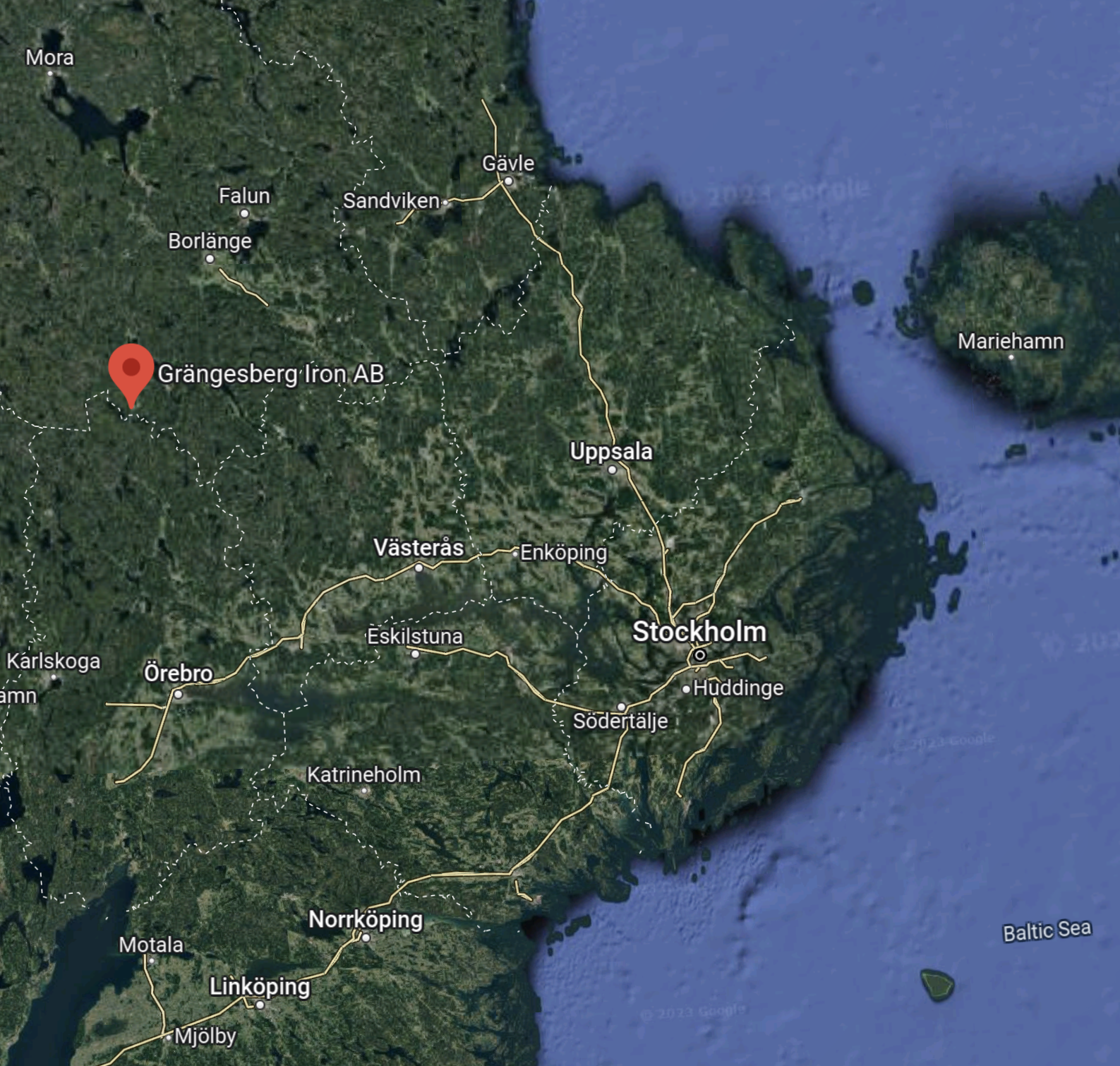
It is convenient for storing energy for Stockholm.
Plans To Turn Czech Coal Mine Into Storage, Hydrogen And Solar Hub
The title of this post, is the same as that of this article on Power Engineering International.
This is the sub-heading.
Mine is also going to be the site of an experimental greenhouse project called Eden Silesia
This paragraph outlines Eden Silesia.
The site will also be home to an experimental greenhouse project called EDEN Silesia, managed by the Silesian University of Technology and based on the concept of the Eden Project in Cornwall, England.
It does seem that the Czechs are creating a comprehensive facility around a Gravitricity energy store.
This Gravitricity system is only a 4MW/2 MWh system, but there is also this quote from the company.
Future multi-weight systems could have a capacity of 25MWh or more.
If the concept works, this could be imitated in several countries around the world?
Gravitricity And Czech Firm DIAMO Announce Plans To Cooperate On Full Scale Gravity Energy Store
The title of this post, is the same as that of this article on The Engineer.
This is the sub-heading.
A former coal mine in the Czech Republic could become the first full scale gravity energy store in Europe, according to UK energy storage specialist Gravitricity
This paragraph describes the project.
The agreement will see the two companies seek funding to transform the former decommissioned Darkov deep mine – which is located in the Moravian-Silesian region of the Czech Republic – into a 4MW / 2MWh energy store, capable of powering more than 16,000 homes. According to Gravitricity the system will store energy by lowering and raising a single massive weight suspended in the Darkov mine shaft. The company has also signed a memorandum with VSB Technical University of Ostrava, whose specialist mining expertise will support the implementation of the technology.
Hopefully, the finance won’t be too difficult to find, with perhaps some help from the EU.
The article also describes the potential of Gravitricity, where it says.
- There could be up 14,000 suitable mines around the world.
- The Coal Authority believes there could be a hundred suitable shafts in the UK.
It appears Gravitricity may be on its way.
Diversifying A US$200 billion Market: The Alternatives To Li-ion Batteries For Grid-Scale Energy Storage
The title of this post, is the same as that of this article on Energy Storage News.
This is the introductory paragraph.
The global need for grid-scale energy storage will rise rapidly in the coming years as the transition away from fossil fuels accelerates. Energy storage can help meet the need for reliability and resilience on the grid, but lithium-ion is not the only option, writes Oliver Warren of climate and ESG-focused investment bank and advisory group DAI Magister.
Oliver starts by saying we need to ramp up capacity.
According to the International Energy Agency (IEA), to decarbonise electricity globally the world’s energy storage capacity must increase by a factor of 40x+ by 2030, reaching a total of 700 GW, or around 25% of global electricity usage (23,000TWh per annum). For comparison, this would be like swelling the size of the UK’s land to that of the USA.
Similar to how “nobody ever gets fired for buying IBM”, lithium-ion holds a similar place in grid scale electrical storage today.
And just as IBM did in the last decades of the last century, the builders of lithium-ion will fight back.
He then lists the problems of grid-scale lithium-ion batteries.
- Shortage of cobalt.
- Toxic and polluting extraction of some much needed metals and rare earths from unstable countries.
- Lack of capacity to load follow.
- Limited lifespan.
He does suggest vehicle-to-grid can provide 7TWh of storage by 2030, but it has similar problems to lithium-ion grid scale batteries.
Finally, he covers these what he considers several viable methods of energy storage in detail.
He introduces them with this paragraph.
No single killer application or technology exists to get the job done. Diversification is key with success dependent on the wide-scale adoption of multiple grid-scale energy storage solutions.
- Energy Dome – Italy – Stylish Use of CO2
- Augwind Energy – Israel – Stores Energy As Compressed Air Underground
- Cheesecake Energy – UK – Stores Energy As Heat And Compressed Air
- Highview Power – UK – Stores Energy As Liquefied Air
- Ocean Grazer – Netherlands – Ocean Battery
- RheEnergise – UK – High Density Hydro
- Lumenion – Germany/Japan – Stores Energy As Heat
- Energy Vault – Switzerland – Raising And Lowering Of Weights
Note.
- All systems are environmentally-friendly and use readily-available materials like air, water, sea-water, steel and concrete for their systems.
- The most exotic materials used are probably in the control computers.
- Some systems use readily-available proven turbo-machinery.
- Most systems appear to be scalable.
- All systems would appear to have a working life measured in decades.
- I would expect that most well-educated teenagers could understand how these systems worked.
Only Augwind Energy and Lumenion are new to me.
He finally sums up the economics and the market potential.
Our ability to expand energy storage capacity is one of the most pressing issues that will determine whether this defining ‘transitional’ decade is a success. But we’ll need to invest wisely into the right technologies that get the greatest bang for the buck (in terms of GWh capacity and return on capital) given the limited lifespan of Li-Ion and the decarbonisation of the grid.
At a current capital cost of US$2,000 per kW quoted by the US National Renewable Energy Laboratory (NREL) for 6-hour Li-ion battery storage, the 700GW of capacity needed by 2030 equates to around a US$1.5 trillion market over the coming decade, making it worth nearly US$200 billion a year.
The Energy Storage News article is a comprehensive must read for anyone, who is considering purchasing or investing in energy storage.
I have some further thoughts.
From My Experience Would I Add Any Other Systems?
I would add the following.
- Form Energy, because its iron-air battery is well-backed financially.
- Gravitricity, because it can use disused mine shafts to store energy and the world has lots of those.
- STORE Consortium, because its 3D-printed concrete hemispheres, that store energy using pressurised sea-water can be placed within a wind farm.
I also suspect that someone will come up with an energy storage system based on tidal range.
Finance
When we started Metier Management Systems, finance to breakout from the first initial sales was a problem. We solved the problem with good financial planning and an innovative bank manager who believed us all the way.
David, was a rogue, but he was a rogue on the side of the angels. Long after Metier, he even came to my fiftieth birthday party.
David would have found a way to fund any of these systems, as they tick all the boxes of demonstrated, environmentally-friendly, safe and understandable. They are also likely to be bought by companies, governments and organisations with a high net value, a very respectable reputation and/or large amounts of money.
I also think, that just as we did with the original Artemis project management system, some of these systems can be leased to the operators.
Second-Use Of Systems
Several of these systems could be moved on to a new location, if say they were supporting an industry that failed.
That would surely help the financing of systems.
Gravitricity Makes Hydrogen Play With FlexiStore
The title of this post, is the same as that of this article on The Engineer.
This is the sub-heading.
Edinburgh-based energy storage firm Gravitricity is looking to green hydrogen, bringing a new underground storage solution to market.
The system is explained with a large graphic, showing an electrolyser, a FlexiStore and a hydrogen filling station, with this paragraph underneath.
Known as FlexiStore, the concept involves purpose-built, steel-lined shafts capable of holding up to 100 tonnes of compressed hydrogen at 220 bar – around 3.33GWh of energy, or enough to refuel over 1,000 HGVs, according to Gravitricity. Unlike naturally occurring underground storage like salt caverns, FlexiStores could be positioned anywhere, with the current plan to co-locate the storage as close as possible to renewable generation. Gravitricity says a single FlexiStore could serve a 460MW wind farm and that 1,000 units could meet the UK’s predicted hydrogen storage needs in 2050.
Note.
- The concept certainly solves the problem of storing hydrogen on a country-wide basis.
- I suspect, a machine could be designed and built to create the shafts.
- A 3.33 GWh store could supply 460 MW for nearly 33 hours. As a Control Engineer, that sounds a good balance for backing up a wind farm!
As ARUP has been involved in a feasibility study, I suspect there’s a fair chance that FlexiStores can be built.
Groundbreaking Green Energy Hub Planned For Former Thorpe Marsh Power Station Site
The title of this post, is the same as that of this press release from the Banks Group.
This is the introductory paragraph.
Outline plans are set to be revealed for the creation of a groundbreaking green energy hub at the former Thorpe Marsh power station site near Doncaster.
Other details include.
- The 1 GW Thorpe March coal-fired power station closed in 1994 and was demolished in 2012.
- The project would take advantage of the site’s existing 1,450MW connection to the National Grid.
- The storage capacity will be 2.8 GWh.
- The site is a a 65-hectare area of land to the west of the village of Barnby Dun.
It is thought to be the largest battery energy storage system currently being planned in the UK, and one of the largest anywhere in the world.
T have a few thoughts.
The Site At Barnby Dun
This Google Map shows the site to the West of Barnby Dun.

Note.
- The power station site is indicated by the six cooling towers.
- The Doncaster and Hull railway line runs across the map to the North of the cooling towers.
- The cooling towers were demolished in 2012, according to Wikipedia.
- More recent images on the web show a cleared site, with six concrete circles, where the towers once stood.
- There is a sub-station to the South of the former power station.
- The River Don runs North-South on the map.
- Barnby Dun is the village to the East of the River Don.
Because of the towers, I’m unsure of the date of the map. Are Google’s maps ten years old?
The site certainly has the three most important things; location, location and location.
I suspect too, that large pieces of equipment could be floated in by barge.
The Type Of Storage
The press release just talks of a 2.8 GWh battery, but what type is it?
Lithium-Ion
This section in Wikipedia gives details of the world’s largest lithium-ion grid batteries.
- At 2.8 GWh the Thorpe Marsh battery would be bigger than any lithium-ion batteries, that are currently in operation, anywhere in the world.
- It would also be the third largest lithium-ion battery in the world, under development.
- It’s up there with a smaller-scale pumped storage hydro-electric power station like Ffestiniog power station.
I suspect that this battery might not be lithium-ion but one of the newer technologies.
Gravitricity
I suspect that a Gravitricity battery would be too small.
Highview Power
On the Projects page of the Highview Power web site, there is a list of their UK projects.
One project is headlined Yorkshire, UK and it is described like this.
Highview Power’s second commercial renewable energy power station in the UK is a 200MW/2.5GWh facility in Yorkshire. This is the first of 18 sites for UK wide deployment strategically located to benefit from the existing transmission infrastructure.
Could this 2.5 GWh project be the 2.8 GWh battery planned for Thorpe Marsh?
300 MWh is not a big difference between friends.
A Meeting About The Power Station
This article on the Doncaster Free Press is entitled Plans For Former Thorpe Marsh Power Station To Be Turned Into Green Energy Hub.
The article gives a lot of useful information and says this about the meeting.
The launch of the plan will take place with a surgery in Barnby Dun Parish Hall, Wednesday 2 November, 2pm-7:30pm.
I shall be going to have a look on the 2nd. Would anybody care to join me?
The article does have an artists’s impression of the battery, but it is a stock image of a series of lithium-ion batteries, that came from the Banks Group press release.
What Is INTOG?
This page on the Crown Estate Scotland web site outlines INTOG.
This is the introduction at the top of the page.
Innovation and Targeted Oil & Gas (INTOG) is a leasing round for offshore wind projects that will directly reduce emissions from oil & gas production and boost further innovation.
Developers can apply for seabed rights to build two types of offshore wind project:
IN – Small scale, innovative projects, of less than 100MW
TOG – Projects connected directly to oil and gas infrastructure, to provide electricity and reduce the carbon emissions associated with production
INTOG is designed, in response to demand from government and industry, to help achieve the targets of the North Sea Transition Sector Deal, which is a sector deal between government and the offshore oil and gas industry.
I have a few thoughts and have also found some news stories.
Isolated Communities
This document from the Department of Business, Industry and Industrial Strategy lists all the Contracts for Difference Allocation Round 4 results for the supply of zero-carbon electricity that were announced yesterday.
The document introduces the concept of Remote Island Wind, which I wrote about in The Concept Of Remote Island Wind.
I don’t know of one, but there might be isolated communities, with perhaps a dodgy power supply, who might like to improve this, by means of a small offshore wind farm, meeting perhaps these criteria.
- Less than 100 MW.
- Agreement of the locals.
- A community fund.
- An important use for the electricity.
Locations and applications could be.
- A small fishing port, where winds regularly bring the grid cable down in winter.
- A village with a rail station to perhaps charge battery-electric trains.
- A deep loch, where floating wind turbines are erected.
- To provide hydrogen for transport.
We shall see what ideas are put forward.
Floating Power Stations
Floating wind farms are generally made up of individual turbines on floats.
- Turbines can be up to the largest used onshore or on fixed foundations.
- The Kincardine floating offshore wind farm in Scotland uses 9.5 MW turbines.
- The floats are anchored to the sea bed.
- There is a power cable connecting the turbines appropriately to each other, the shore or an offshore substation.
But we are talking innovation here, so we might see some first-of-a-kind ideas.
Single Floating Turbines
A large floating wind farm, is effectively a large number of floating wind turbines anchored in the same area of sea, and connected to the same floating or fixed substation.
I can’t see any reason, why a single floating wind turbine couldn’t be anchored by itself to provide local power.
It might even be connected to an onshore or subsea energy store, so that it provided a more constant output.
Surely, a single turbine perhaps ten miles offshore wouldn’t be a very large blot on the seascape?
I grew up in Felixstowe and got used to seeing HM Fort Roughs on the horizon from the beach. That is seven miles offshore and some people, I know have windsurfed around it from the beach.
TwinHub
I talked about TwinHub in Hexicon Wins UK’s First Ever CfD Auction For Floating Offshore Wind.
TwinHub mounts two turbines on one float and this is a visualisation of a TwinHub being towed into place.
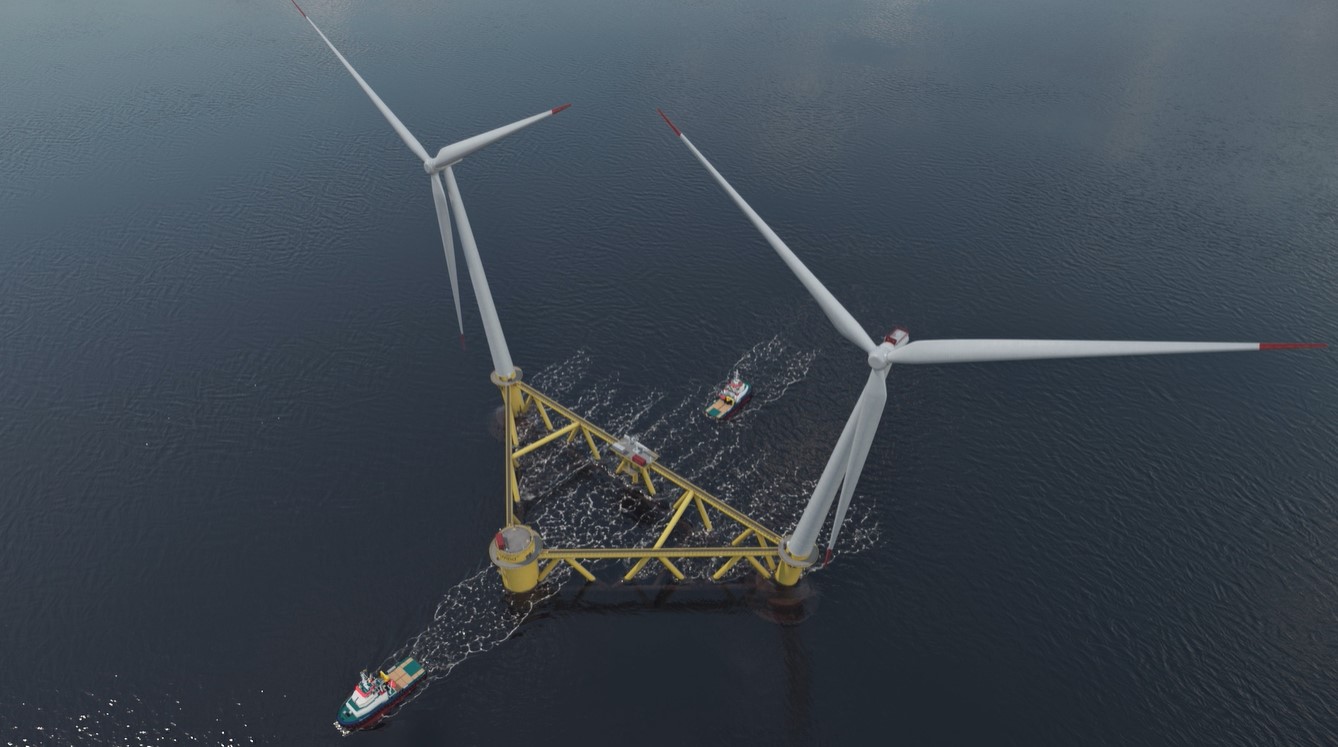
Note.
- The design turns into the wind automatically, so that the maximum amount of electricity is generated.
- A Contract for Difference for a 32 MW TwinHub has been awarded, at a strike price of £87.30/MWh, that will be installed near Hayle in Cornwall.
- With a capacity factor of 50 %, that will produce just over 140,160 MWh per year or over £12 million per year.
This article on the BBC, which is entitled Funding Secured For Floating Wind Farm Off Cornwall, gives more details of the Hayle TwinHub.
The possibility of a floating wind farm off the coast of Cornwall has moved a step closer after securing government funding, project bosses have said.
Swedish company Hexicon plans to install its TwinHub system, with the hope it could begin operating in 2025.
It would be deployed about 10 miles (16km) off Hayle.
Project supporters said it could be a boost to the local economy and help establish Cornwall in the growing renewable energy sector.
Figures have not been released, but it is understood the government funding has effectively secured a fixed price for the power TwinHub would produce for 15 years, making it economically viable.
The article says that this 32 MW system could develop enough electricity for 45,000 homes.
This could be a very suitable size for many applications.
- As at Hayle, one could be floated just off the coast to power a remote part of the country. As Cornwall has a few old mine shafts, it might even be backed up by a Gravitricity system on shore or another suitable non-lithium battery.
- Could one float alongside an oil or gas platform and be tethered to it, to provide the power?
Scotland’s hydroelectric power stations, prove that not all power stations have to be large to be successful.
Vårgrønn and Flotation Energy’s Joint Bid
This article on offshoreWIND.biz is entitled Vårgrønn And Flotation Energy To Jointly Bid in INTOG Leasing Round, gives a few details about their joint bid.
But there is nothing substantial about ideas and locations.
I can see several joint ventures with a suitable system, bidding for various projects around the Scottish coast.
Cerulean
Cerulean sounds like it could be a sea monster, but it is a shade of blue.
This article on offshoreWind.biz is entitled Cerulean Reveals 6 GW Floating Offshore Wind Bid Under INTOG Leasing Round.
These are the two introductory paragraphs.
Green energy infrastructure developer Cerulean Winds has revealed it will bid for four seabed lease sites with a combined capacity of 6 GW of floating wind to decarbonise the UK’s oil and gas sector under Crown Estate Scotland’s Innovation and Targeted Oil and Gas (INTOG) leasing round.
This scale will remove more emissions quickly, keep costs lower for platform operators and provide the anchor for large-scale North-South offshore transmission, Cerulean Winds said.
Note.
- It is privately-funded project, that needs no government subsidy and will cost £30 billion.
- It looks like each site will be a hundred turbines.
- If they’re the same, they could be 1.5 GW each.
- Each site will need £7.5 billion of investment. So it looks like Cerulean have access to a similar magic money tree as Kwasi Kwarteng.
Effectively, they’re building four 1.5 GW power stations in the seas around us to power a large proportion of the oil and gas rigs.
For more on Cerulean Winds’ massive project see Cerulean Winds Is A Different Type Of Wind Energy Company.
Will There Be An Offshore Wind Supermarket?
I can see the big turbine, float and electrical gubbins manufacturers establishing a one-stop shop for developers, who want to install small wind farms, that meet the INTOG criteria.
So suppose, the archetypal Scottish laird in his castle on his own island wanted a 6 MW turbine to go green, he would just go to the B & Q Offshore web site and order what he needed. It would then be towed into place and connected to his local grid.
I can see modular systems being developed, that fit both local infrastructure and oil and gas platforms.
Conclusion
I can see scores of projects being submitted.
I even know the son of a Scottish laird, whose father owns a castle on an island, who could be taking interest in INTOG. They might also apply under Remote Island Wind in another leasing round.
But we will have to wait until the end of March 2023, to find out who have been successful.
First Ever Gravity Green Energy Storage System Set For North Yorkshire Town
The title of this post, is the same as that of this article on the Yorkshire Post.
These paragraphs give an outline of the project.
Plans to create the UK’s first below ground gravity energy storage system have been unveiled in North Yorkshire.
Scottish energy storage firm Gravitricity is to apply to Ryedale District Council with its plan for a facility at East Knapton in Ryedale on the site of the former Knapton gas generator.
If completed, it could store up to four megawatt hours (4MWhs) of electricity – sufficient to power more than 9,000 homes for an hour.
It looks like the system will have an output of 4 MW.
This Google Map shows the two villages of West and East Knapton.
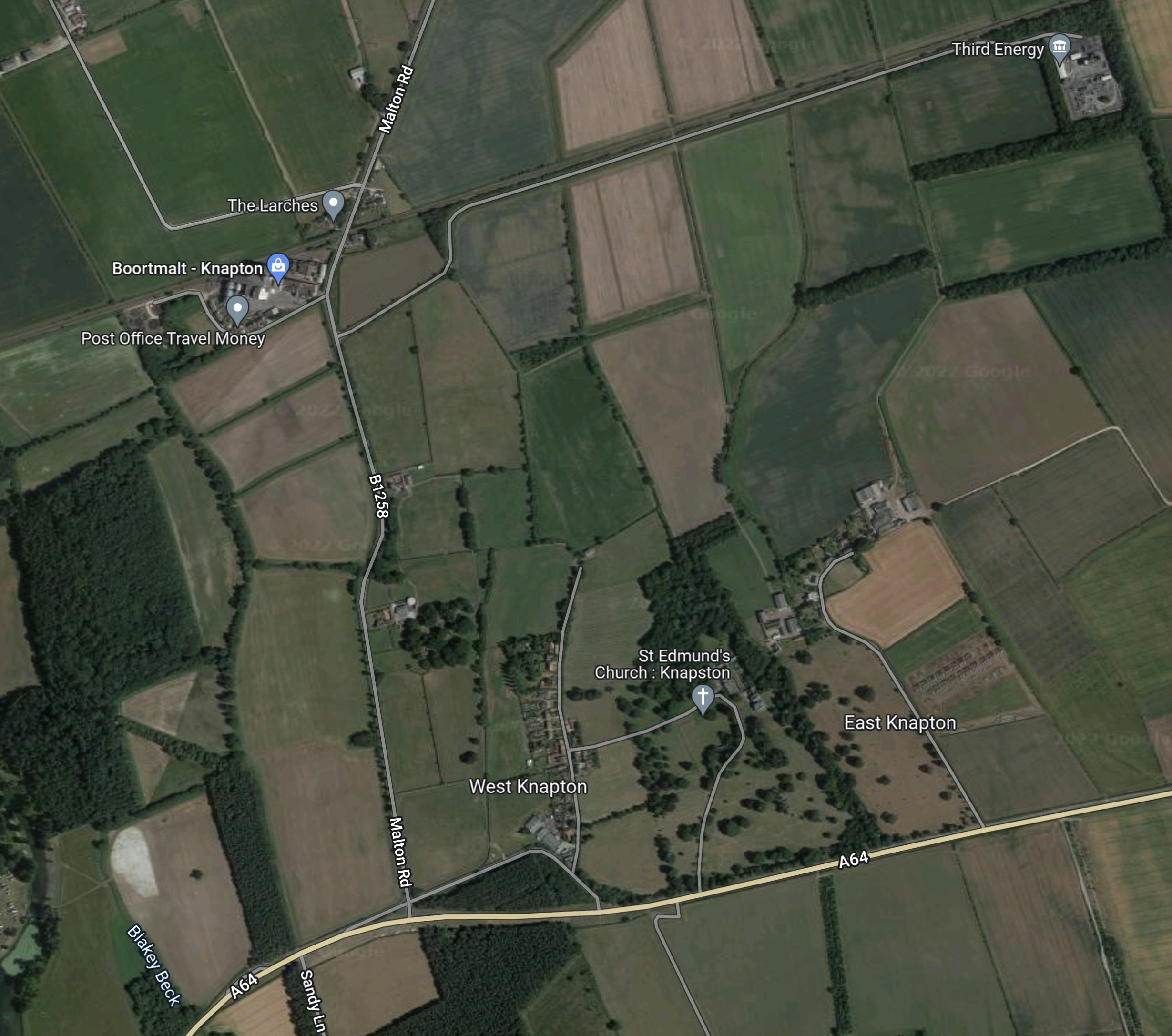
Note.
- The A64 road between Malton and Scarborough going across the map.
- Scarborough and the coast is about fifteen miles to the East.
- The Third Energy site in the North-East corner of the map.
This second Google Map shows the Third Energy site in more detail.
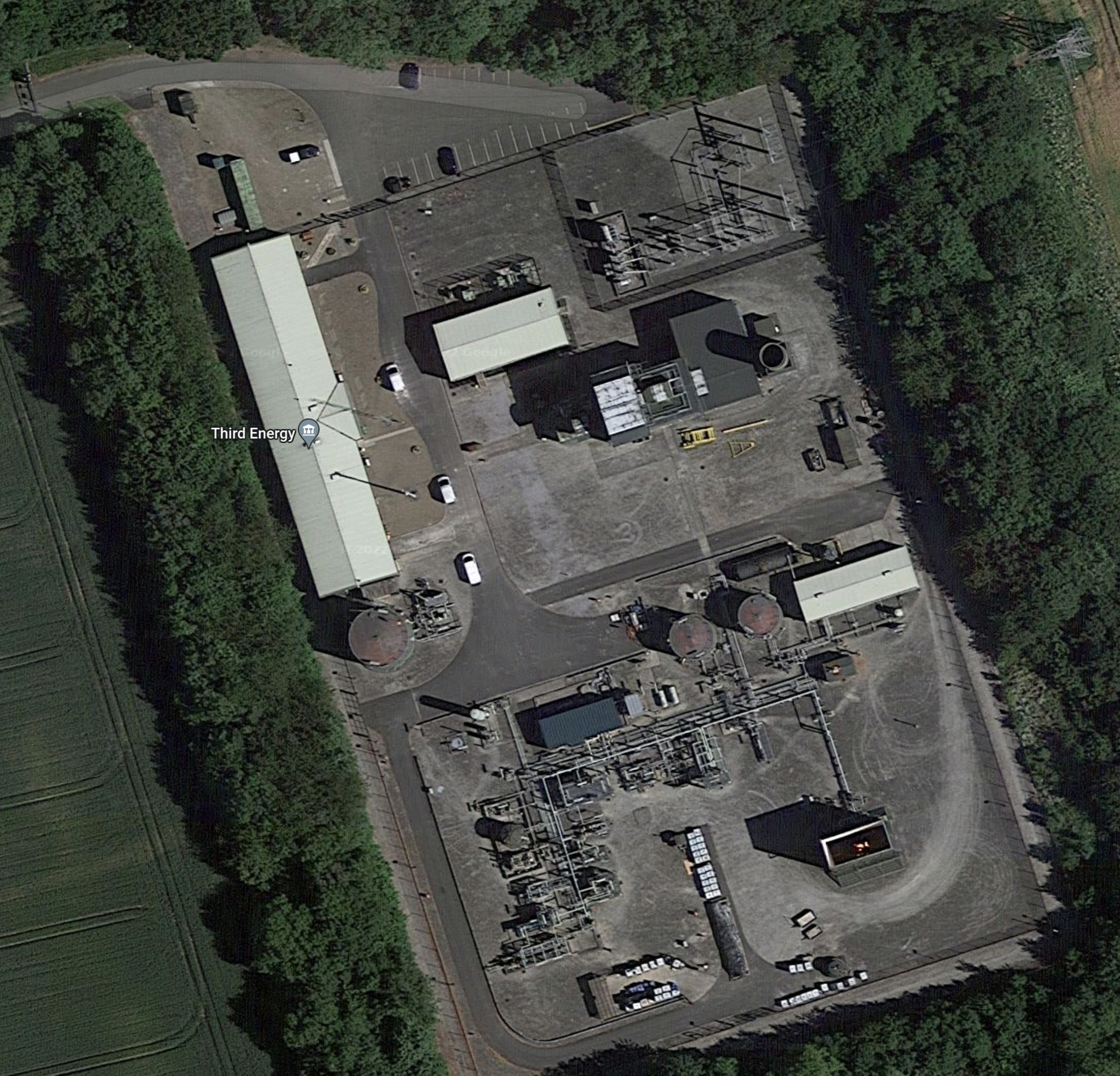
Note.
- The substation and a power line in the North-East corner of the map.
- The 42 MW Knapton Generating Station used to be on this site and it was powered by local gas wells.
Third Energy have now called the site Knapton Energy Park and it now has a web page, which has this mission statement.
Third Energy is developing the former Knapton Generating Station into the Knapton Energy Park. The energy park will house multiple sources of power generation and energy storage. The aim of the project is to pay a part in the development and generation of renewable energy systems in North Yorkshire, and contribute to making the UK Net Zero by 2050.
This paragraph talks about weights.
One of our technology partners has also received government funding to conduct feasibility studies for a pilot project at Knapton which would utilise suspended weights to store energy as an alternative to the traditional battery storage technologies. This project will be developed through 2022 onwards.
It looks like Gravitricity has planted an acorn in Yorkshire.
The Third Energy web site is worth an explore. This is the mission statement on the home page.
At Third Energy our aim is to be at the forefront of North Yorkshire’s transition from fossil fuels to sustainable energy. Our team are proactively playing a part in innovative energy solutions and energy development; transforming our facilities into a multi-purpose energy park and research centre.
I particularly like this page, which is entitled Plug & Abandon.
This is the outline of their P % A philosophy on the page.
As wells near the end of their life cycle they must be decommissioned and the land returned to its original state. Unfortunately, the current P&A practices of the oil and gas industry are cost prohibitive, resulting in delays to abandonment (as companies attempt to avoid the high cost), and poor abandonment practices that may be harmful to the environment.
Fortunately, there are solutions to this problem. Our ambition is to use new and innovative technologies to P&A the wells in a more effective and sustainable manner, and first to extend the period our wells may service the community by re-purposing them for geothermal energy.
Can they really convert abandoned gas wells into geothermal energy sources?
The World Economic Forum Talk About Gravitricity
This article on the World Economic Forum is entitled How Gravity Batteries Will Help Us Switch To Renewable Energy.
The article is a must-read and Gravitricity must be very pleased with the contents and placement of the article.
As an investor in Gravitricity, through crowd-funding, I am certainly pleased.
 The Anonymous Widower