Hydrogen In Aviation Offers Potential For Growth And Deeper Emissions Reductions, New Study Shows
The title of this post, is the same as that of this press release from Rolls-Royce.
These five paragraphs compose the press release.
Rolls-Royce, easyJet, Heathrow and University College London Air Transportation Systems Lab (UCL ATSLab) published a report highlighting how hydrogen-powered aircraft could enable European and UK aviation to cut carbon emissions while supporting future growth.
The study, Enabling Hydrogen in the European Aviation Market, found that hydrogen in aviation offers a unique opportunity to achieve both emissions reduction and market expansion. The analysis shows that introducing hydrogen alongside Sustainable Aviation Fuel (SAF) can accelerate progress towards net zero, particularly when policy incentives reward low-carbon fuels and if hydrogen were to be included within the EU’s SAF mandate.
The research also found that targeted hydrogen infrastructure at around 20 major European airports, including Heathrow, could deliver more than 80% of the emissions benefits of full hydrogen availability across the continent. Concentrating investment at key ‘hydrogen hubs’ would therefore provide a practical and cost-effective path to early adoption.
Further modelling indicates that the earlier novel technologies, such as hydrogen, can be introduced, the more opportunity they present for CO2 emission reductions, underscoring the value of early technological transition where it is financially and technically viable.
The study is underpinned by UCL ATSLab’s Airline Behaviour Model (ABM), which represents the complexity of airline decision-making through specific behavioural variables. Building on this, the research evaluates how fuel costs, incentives and new technologies shape airline responses. This provides a research-based, realistic picture of how hydrogen adoption could evolve, highlighting both opportunities and potential challenges for adoption.
Note, these two sentences recommending early adoption of hydrogen.
- Concentrating investment at key ‘hydrogen hubs’ would therefore provide a practical and cost-effective path to early adoption.
- Further modelling indicates that the earlier novel technologies, such as hydrogen, can be introduced, the more opportunity they present for CO2 emission reductions.
I also suspect, that introducing hydrogen early, feeds back to reduce Co2 emissions.
But what is Trump’s considered view on hydrogen aircraft?
Google AI gives this answer to my question.
Donald Trump’s view on hydrogen for transportation, including potential use in aircraft, is highly skeptical due to perceived safety risks and effectiveness concerns, which generally aligns with his broader opposition to green energy initiatives. He has specifically criticized hydrogen-powered vehicles as being dangerous and “prone to blowing up”.
Note.
- I used to work in a hydrogen factory and it’s still producing hydrogen.
- I doubt Trump gets on well with Jennifer Rumsey, who is CEO of Cummins, who are one of the world’s largest diesel-engine companies, who are following a zero-carbon route.
- Is Formula One Likely To Go To Hydrogen Fuel? This would set the Cat Among The Pigeons
I also feel that this University College London study will create a string of converts to hydrogen.
Mega Airport Costing £24billion In Europe To Rival Heathrow And Dubai
The title of this post is the same as that of this article in the Daily Express.
A new mega airport is being built in Europe, and it is set to rival the likes of Dubai and London Heathrow in terms of size and capacity for passengers and planes alike
These three paragraphs add more details.
A plush new airport could be touching down in Europe, set to rival London’s Heathrow and even the esteemed Dubai International, as it aims to link the entire continent in unprecedented ways.
The Centralny Port Komunikacyjny, a proposed $32.5 billion project, is a fresh aviation gateway in Warsaw that carries the burden of Poland’s ambitious mega airport aspirations. However, the concept is swiftly progressing, with the official approval and handover of the passenger terminal design marking a significant leap forward.
This suggests the colossal airport is officially moving into its next phase of development. The question remains, will this new progression challenge the supremacy of the Middle East, home to both the world’s largest airport, King Fahd International Airport in Saudi Arabia, and the busiest, Dubai International Airport?
Note.
- In English, Centralny Port Komunikacyjny means Central Communications Port.
- CPK’s forecasted passenger capacity makes it a formidable contender as the new hub for Europe.
- Dubai is on course to handle 100 million passengers by the end of next year, thanks to its strategic geographical position with other continents, while the Polish project will eventually accommodate up to 44 million.
- n 2024, Heathrow Airport welcomed a record 83.9 million passengers, a 6% increase from the previous year.
Even the busiest airports in Europe handle far fewer passengers than Dubai.
Central Communications Port has a Wikipedia entry, which has this first paragraph.
The Central Transport Hub is a planned major infrastructure project in Poland aimed at the construction of a new international airport and the development of a nationwide integrated transport network. The airport is planned to be located approximately 40 kilometres (25 mi) southwest of Warsaw, connected to a new high-speed rail network and controlled-access highway system linking it with much of the rest of the country.
Note.
- The airport will be designed by Foster + Partners in collaboration with Buro Happold.
- Initially the airport is planned to have two runways, but will eventually be expanded to four.
- The combined airport and railway station is planned to serve 40 million passengers per year, double the size of Berlin Brandenburg Airport.
- The long-term goal is about 100 million passengers per year.
These are my thoughts.
The Airport’s Location
The Wikipedia entry for the airport has a section called Location, which has this first paragraph.
The airport’s planned site is about 40 km west of Warsaw, next to the village Stanisławów which is part of Gmina Baranów in Grodzisk Mazowiecki County. The Baranow commune occupies a significant part of the Grodzisk County and, despite its rural character, has an extensive road infrastructure. The A2 autostrada and railway lines run in the immediate vicinity of the potential construction site, and Wrocław (Expressway S8) and Poznań (National road 92) is nearby.
It sounds to me, that a British equivalent airport, would be a four-runway airport at Birmingham Airport with connections to the M1, M6, HS2 and the West Coast Main Line.
Rail Connections
The Wikipedia entry says this about rail connections.
Planned train connections from the CPK will take 15 minutes to Warsaw Central railway station, 25 minutes to Łódź Fabryczna railway station, and 2 hours to most other major Polish cities, such as Kraków, Wrocław, Poznań and Gdańsk. The construction of a high-speed train to Frankfurt (Oder) is also planned, which is to shorten the travel time on the Berlin-CPK route to under 3.5 hours
I suspect that Rail Baltica’s trains between Berlin and Helsinki via Warsaw, Kaunus, Riga, Bialystok and Tallinn will also stop at the airport.
The Airport Will Become A Gateway To North-East Europe
I wouldn’t be surprised to see Central Communications Port become a low-cost gateway to the surrounding countries., like Belarus, Estonia, Finland, Latvia, Lithuania and hopefully Ukraine.
Polish Hospitality
Consider.
- Most Poles speak English better, than what I does!
- There are several large Polish cities that are worth a visit.
- The food is excellent, as the local basic ingredients are of high quality.
- I have spent about a month in Poland and I’ve stayed in all levels of accommodation from the lowest to the highest and have never felt need to complain.
- They handle my gluten-free diet with no problem.
My experience of Belarus was also similar.
Hotel Tycoon Reveals Heathrow Expansion Proposal
The title of this post is the same as that of this article on the BBC.
This is the sub-heading.
Hotel tycoon Surinder Arora has announced he is submitting a Heathrow expansion plan which rivals a proposal from the airport’s owners.
These three paragraphs add more details.
The billionaire’s Arora Group said the “primary benefit” of the plan it submitted to the government was a shorter new runway which would avoid the costly and disruptive need to divert the M25 motorway.
Building a 2,800-metre (9,200 ft) third runway instead of the full-length 3,500-metre (11,500 ft) runway planned by the airport would result in “reduced risk” and avoid “spiralling cost”, the company said.
The airport declined to comment on the Arora Group’s proposal.
Note.
- In Heathrow Willing To Build Shorter Runway After Airline Outcry Over Cost, I proved to my satisfaction, that a shorter third runway would work.
- Any scheme that involves diverting the M25, is not fit to get to be on the short list, as construction will be too disruptive.
- I also remember the problems of the M 25, during the construction of Terminal 5.
The last paragraph is the most important, as it illustrates Heathrow’s attitude to outside ideas.
- Was HS4Air, that I talked about in Ambitious £10bn Plans For Gatwick Heathrow HS4Air Rail Service Rejected properly considered?
- Was Heathrow Southern Railway, that I talked about in Why I Like The Heathrow Southern Railway Proposal, properly considered?
Perhaps, Heathrow’s management suffers from Not-Invented-Here Syndrome?
Conclusion
I suspect that Surinder Arora’s project will be a non-starter.
Heathrow Willing To Build Shorter Runway After Airline Outcry Over Cost
The title of this post, is the same as that of this article in The Telegraph.
This is the sub-heading.
BA and Virgin have objected to expansion plan that could see departure fees swell to as much as £100
These are the first two paragraphs.
Heathrow has said it is willing to build a shorter, cheaper third runway following an outcry from airlines over cost.
Europe’s busiest airport will indicate its readiness to negotiate with carriers over runway options when it submits a formal pitch to ministers next week, said Thomas Woldbye, the airport’s chief executive.
This is a map of the new proposal from the DfT.
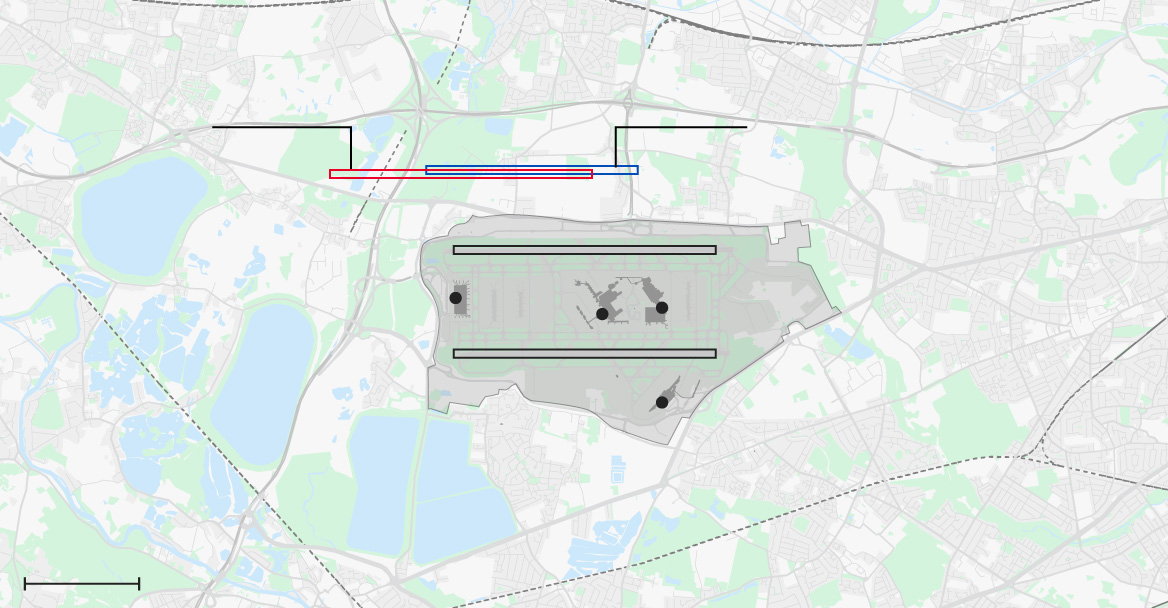
Note.
- The current Northern and Southern runways, with terminals 5, 3 and 2 between them from West to East.
- Terminal 4 is South of the Southern runway.
- The runway shown in red to the North of the Northern runway is the current proposal for a full-length new runway.
- The runway shown in blue to the North of the Northern runway is the new proposal for a shorter-length new runway.
- The M25 can be picked out going North-South to the West of the current runways and the new shorter runway.
- But the M25 is crossed by the full-length new runway.
It would appear that the proposal for the new shorter runway will avoid putting the M25 in a tunnel.
So hopefully, it would reduce the cost and disruption incurred, by building the new shorter runway.
Busiest UK Airports Raise Kiss-and-Fly Fees, Says RAC
The title of this post, is the same as that of this article on the BBC.
This is the sub-heading.
More than half of Britain’s busiest airports have raised “kiss-and-fly” fees for cars dropping off passengers close to terminals, according to research from the RAC.
These two paragraphs add details.
The motoring group found 11 out of 20 UK airports had put up prices since last July, with Gatwick, Bristol, Leeds Bradford and Southampton joining Stansted in charging the top rate of £7 to park for a matter of minutes.
In contrast, at nine of the 10 busiest airports in the European Union there are no drop-off fees.
I don’t drive and these days I can’t walk very far, but I travel around the UK and Europe without any difficulty.
Here are a few tips.
Use James Cameron’s Packing Method
James Cameron was one of BBC’s most famous and much-travelled journalists and his life is documented in this Wikipedia entry.
The Wikipedia entry says nothing about his packing method, which my late wife and myself used after hearing him describe it in one of his excellent documentaries.
Sort everything you think you’ll need into two piles. Each pile contains half the shirts, trousers, swimwear, underwear etc. that you think you’ll need.
Pack each pile in a separate case and leave one case behind.
As to money he said, work out the most you’ll need and double it. These days with credit cards, that is probably not so relevant.
Choose An Airport With Good Step-Free Public Transport
I’m lucky in London, in that I can get a bus within a hundred metres of my house, that takes me to Moorgate, Bank or London Bridge stations, which give me direct access to City, Gatwick, Heathrow, Luton, Southend or Stansted Airports.
Step-free access to some airports in the UK is abysmal.
Use A Train From A Station With a Properly Designed Drop-Off Area
These pictures show the taxi rank and drop off area at Leicester station.








The building would appear to have a Grade II Listed taxi rank and free twenty-minute car park.
How many other stations have well-designed facilities like these?
According to this article on the BBC, Preston station has an innovative solution.
If you spot any others, let me know!
Service Your Car Near The Airport
For three or so years, we had a car, where there was a main dealer a couple of stops on the Piccadilly Line from Heathrow.
So we dropped the car in, walked a short distance to the Underground and started our holiday with a tube ride.
It just needs a bit of research.
I don’t drive anymore after a stroke, but if I did, my car would be serviced by a garage, I could get to on public transport.
Rolls-Royce And Duisport Launch CO2-Neutral, Self-Sufficient Energy System For New Port Terminal
The title of this port is the same as that of this press release from Rolls-Royce.
These two bullet points act as sub-headings.
- First mtu hydrogen CHP units, battery storage systems and fuel cell systems from Rolls-Royce in operation.
- Benchmark for sustainable energy supply in logistics centers worldwide.
These three paragraphs give more details of the project.
Rolls-Royce and Duisburger Hafen AG have opened a CO2-neutral and self-sufficient energy system for the new Duisburg Gateway Terminal, located in the Rhine-Ruhr industrial region of Germany. The core components are two mtu combined heat and power units designed for operation with 100 percent hydrogen, which are being used here for the first time worldwide. The system is supplemented by an mtu battery storage system, mtu fuel cell systems and a photovoltaic system integrated via an intelligent energy management system.
The Enerport II flagship project, funded by the German Federal Ministry for Economic Affairs and Energy, is setting new standards for sustainable energy supply in large logistics centers and is considered a model for other ports, infrastructure projects and industrial facilities. Project partners include the Fraunhofer Institute UMSICHT, Westenergie Netzservice GmbH, Netze Duisburg GmbH, Stadtwerke Duisburg AG, and Stadtwerke Duisburg Energiehandel GmbH.
“The launch of this carbon-neutral energy system at the Duisburg Gateway Terminal is a big step toward a more climate-friendly, resilient energy supply. Together with our partner duisport, we’re showing how scalable technologies from Rolls-Royce can really help transform critical infrastructure – and help make the energy transition happen,” said Dr. Jörg Stratmann, CEO of Rolls-Royce Power Systems.
Note.
- It is carbon-neutral.
- The system uses both hydrogen and solar power.
- What has been created at the Port of Duisburg is considered by the German Federal Ministry for Economic Affairs and Energy to be a model for other ports, infrastructure projects and industrial facilities.
- It surely must help sales, that the flagship project is up and running.
In November 2021, I wrote about this project in Rolls-Royce Makes Duisburg Container Terminal Climate Neutral With MTU Hydrogen Technology, which included this graphic.

It seems that Heathrow Airport could have a use for this technology.
I have one important thought.
Where Will The Port Of Duisburg Get The Hydrogen It Needs?
In the graphic an Electrolyser and H2 Storage are clearly shown, as are the two H2 Combined Heat and Power Units.
So it looks like the Port of Duisburg will be generating their own green hydrogen.
Alternatively in April 2021, I wrote Uniper To Make Wilhelmshaven German Hub For Green Hydrogen; Green Ammonia Import Terminal.
Uniper’s plans for the Wilhelmshaven hydrogen hub include a 410 MW hydrogen electrolyser.
The Germans are also developing a project called AquaVentus to bring green hydrogen to Germany from the North Sea.
I asked Google AI, where AquaVentus would make landfall in Germany and got this answer.
The AquaVentus project’s planned offshore hydrogen pipeline, AquaDuctus, is intended to make landfall in the greater Wilhelmshaven or Büsum area in Germany, according to the AquaDuctus website. This pipeline is part of a larger plan to transport green hydrogen produced from offshore wind farms in the North Sea to the German mainland for distribution and use.
Wilhelmshaven and Duisburg is 194 miles.
Hydrogen could be delivered onward from Ludwigshaven to Southern Germany by a pipeline network called H2ercules.
I asked Google AI if the H2ercules hydrogen pipeline will connect to Duisburg and got this answer.
Yes, the H2ercules hydrogen network will connect to Duisburg. Specifically, a new 40-kilometer pipeline will be constructed from Dorsten to Duisburg-Walsum, connecting to the steelworks there, as part of the GET H2 pipeline extension according to thyssenkrupp Steel. This connection is part of the larger H2ercules project, which aims to create a hydrogen infrastructure backbone for Germany and beyond. The pipeline is scheduled to be operational in 2027, with thyssenkrupp Steel being connected in 2028.
It would appear that at some date in the not too distant future that the Port of Duisburg could be powered by green hydrogen from the North Sea, imported into Germany at Wilhelmshaven.
The German plans for hydrogen are extensive and it appears that the Port of Duisburg could have two sources for the hydrogen it needs.
Heathrow Shutdown Caused By Problem Found Seven Years Ago
The title of this post, is the same as that of this article on the BBC.
This is the sub-heading.
Issues at an electrical substation which caused a fire that resulted in Heathrow Airport closing were first detected seven years ago but not fixed, a report has found.
These two paragraphs, explain the problem.
The National Energy System Operator (NESO) said moisture entering electrical components at the North Hyde substation caused the blaze at the site that supplies the UK’s biggest airport with power.
It revealed an elevated moisture reading had been first detected in July 2018, but that “mitigating actions appropriate to its severity were not implemented”, with basic maintenance cancelled.
This was a failure of National Grid’s management and I suspect the company will received a severe punishment.
But what worries me, is that power networks are built from a series of standard components.
So how many other North Hydes are waiting to happen?
Heathrow: Where Was The Redundancy?
In the early 1970s, I was involved in a small way, in the design of chemical plants for ICI.
When designing a chemical plant, you obviously want a plant that will have a high availability, so output is maximised, even if some parts have to be shut down.
With chemical plants, you might duplicate some reaction vessels, pipework or pumps for example.
But surely, when you are designing large infrastructure, it should be designed to keep going.
This document from Network Rail is entitled £140m Transformation Of Liverpool Lime Street Completed On Time.
These bullet points serve as sub-headings.
- Track, platform and signalling improvements
- Paving the way for bigger, better trains with more seats for more customers in future
- Part of the wider Great North Rail Project
- Part of #StationsDay – celebrating the £5.2billion investment to regenerate Britain’s rail stations
But I also believe two other important sub-projects were carried out during the work.
The Station Has Been Substantially Prepared For High Speed Two
Consider.
- Platforms were lengthened so they can accept 265.3-metre long eleven-car Class 390 trains.
- Platforms were widened, so they could handle the 607 passengers, that can be carried in an eleven-car train.
- There appears to be five full-size platforms numbered 6-10.
- Is there the possibility of a sixth platform, which is currently numbered E (for Emergency (?))?
- The approaches to the station have been remodeled, so trains can enter the station very efficiently.
- The Class 390 trains are going between Crewe and Liverpool Lime Street stations, in times that are not far off those expected from High Speed Two trains.
As Liverpool Lime Street will only need to handle half-length 200-metre long classic compatible High Speed Two trains, Liverpool Lime Street station is now ready for High Speed Two.
Liverpool Lime Street Station Is Now Effectively Two Five Platform Stations
This OpenRailwayMap shows the platform layout at Liverpool Lime Street station.
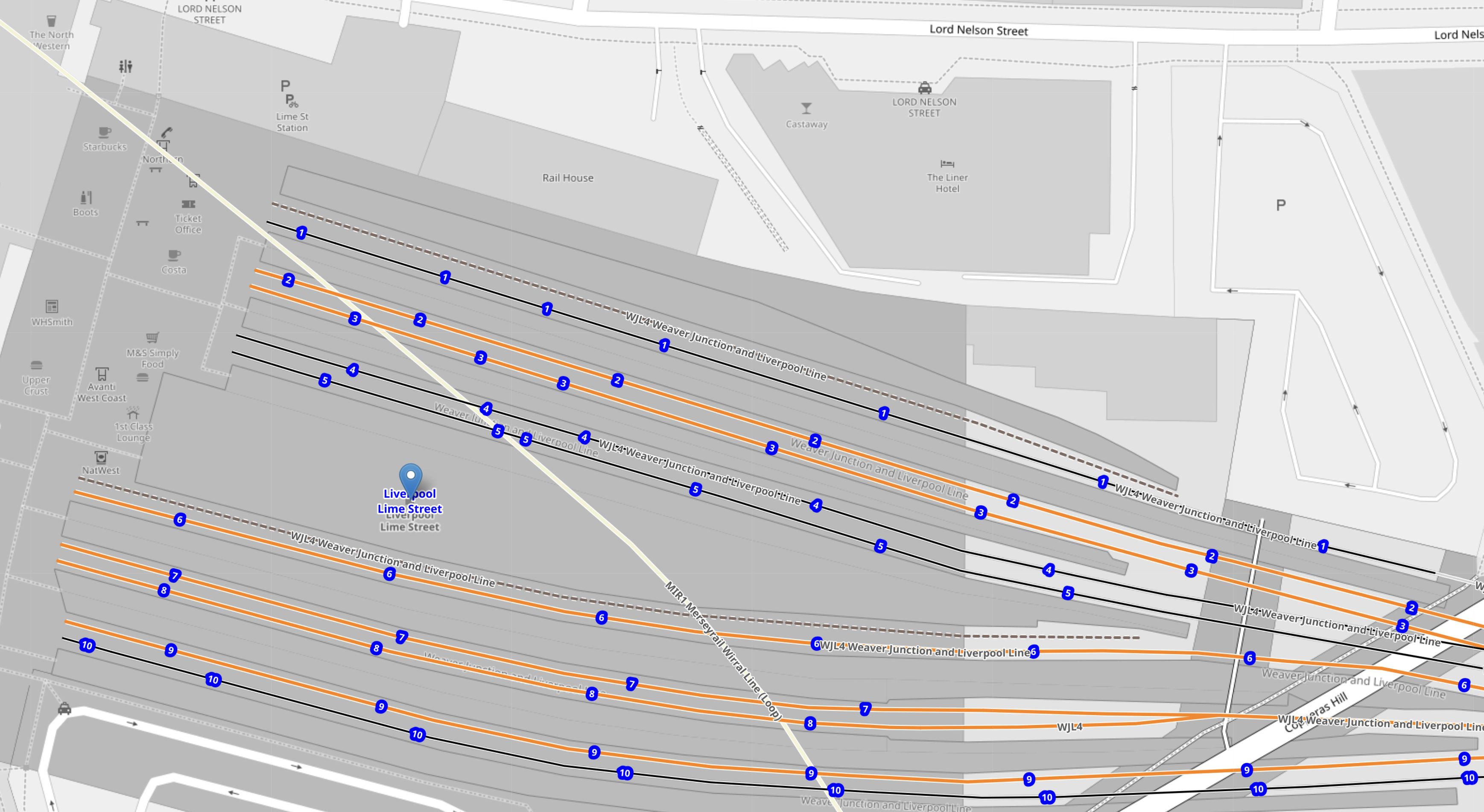
Note.
- The platforms indicated by blue dots with numbers are the ten platforms of the station.
- The platforms in the Northern-half of the station are numbered 1-5.
- The platforms in the Southern-half of the station are numbered 6-10.
- All platforms; 1-10 are electrified.
- The white line running diagonally across the map, shows the route of the loop of the Wirral Line.
Click the map to show it to a larger scale.
These are some of my pictures of the station.



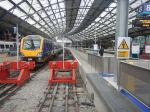












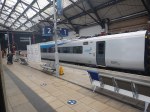

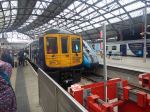






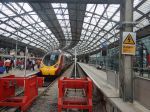


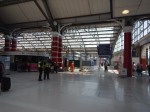



It is without doubt, one of the best stations aesthetically and operationally in the world.
Details At Hayes And Harlington Station
Yesterday, on my way to Reading, I changed trains at Hayes and Harlington station and took a few pictures.
An Ideally-Placed Waiting Room
These pictures show a waiting room on the Westbound platform of the Elizabeth Line.








The Elizabeth Line has these Western destinations.
- Heathrow Terminal 4
- Heathrow Terminal 5
- Maidenhead
- Paddington
- Reading.
Note.
- If you are travelling to any of the Heathrow destinations and you are riding on a Maidenhead or Reading train, then Hayes and Harlington station is the last station you can change for the Airport.
- If you are travelling to any of the destinations on the Reading branch and you are riding on a Heathrow train, then Hayes and Harlington station is the last station you can change for the Airport.
- If you are travelling from any of the Heathrow destinations to any of the destinations on the Reading branch, then Hayes and Harlington station is the first station you can change for the Reading branch.
- If you are travelling from any of the Reading branch destinations to any of the Heathrow destinations, then Hayes and Harlington station is the first station you can change for the Heathrow destinations.
- To aid the change of platform in the third and fourth changes, there is a step-free footbridge at Hayes and Harlington station.
The waiting room at Hayes and Harlington station, which is complete with heating could be a welcome refuge whilst changing trains at Hayes and Harlington station.
The golden rule seems to be, that if you’re on the wrong train on the Elizabeth Line, then change for your desired destination at Hayes and Harlington station.
Track Warnings
These pictures show the bilingual track warnings at Hayes and Harlington station.




I hope Network Rail are analysing, if the warnings work.
The Main Step-Free Route Across The Tracks
These pictures show the main step-free route at Hayes and Harlington station.








Note.
- The route with lifts, is rather tucked in at the Western end of the station.
- There are toilets under the bridge on the Eastbound platform.
- The steps are rather steep, so if you have any issues, I would use the lifts.
The golden rule is if you are going between the Reading and Heathrow branches with a change of direction from Eastbound to Westbound at Hayes and Harlington station, then make sure, you start your journey in the back of the train.
The Secondary Route Across The Tracks
These pictures show the secondary route at Hayes and Harlington station.




Note.
- I believe this bridge is better placed for some travellers, who need to reverse direction at Hayes and Harlington station.
- It is also convenient for the waiting room.
In Heathrow Rail Link Withdrawn, But MP Vows To Carry On, I asked this question.
Could Hayes And Harlington Station Become A Transport Hub For Heathrow?
I said this.
This Google Map shows Hayes and Harlington station.
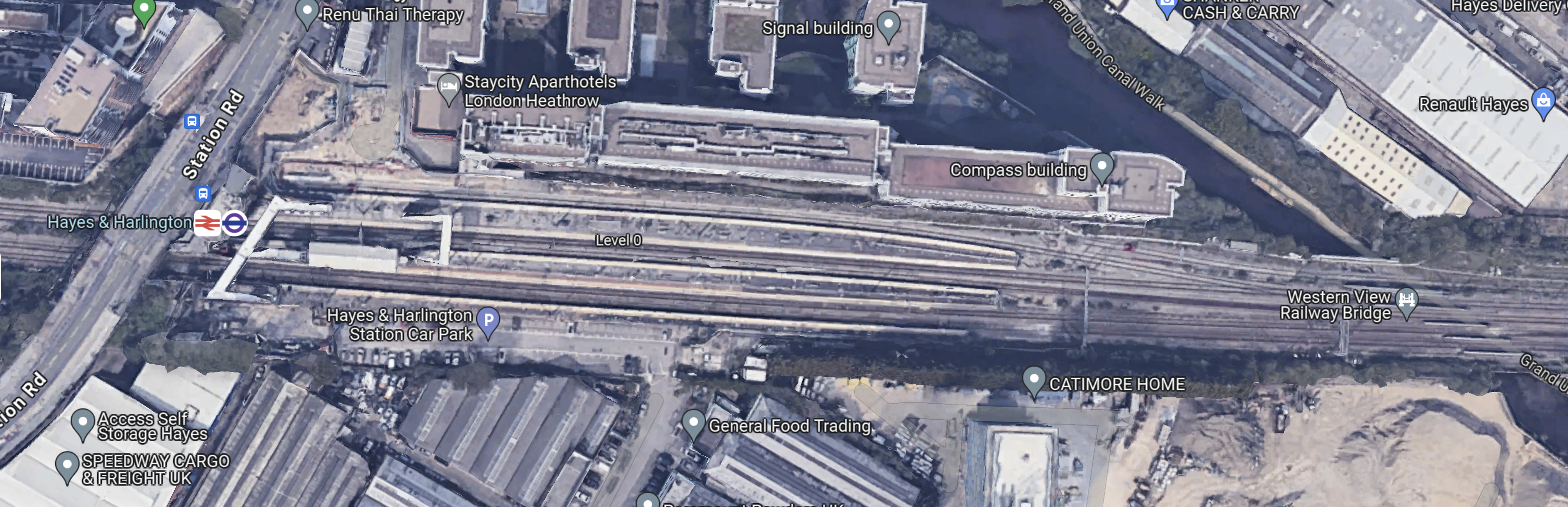
Note.
- It has platforms on all four tracks of the Great Western Main Line.
- There is a London-facing bay platform to terminate Elizabeth Line trains, if needed.
- The land to the North of the station has been developed.
- There is land to the South of the station that could be developed.
Could the space above the tracks, with some of the land to the South of the station be developed into a transport hub for Heathrow?
I took these pictures to answer my question.








I don’t think there would be enough space to put a combined bus and coach station at Hayes and Harlington station.
Riding Rail Air Between Reading Station And Heathrow Terminal 5
Today, I rode on a Rail Air coach between Reading station And Heathrow Terminal 5.
I took these pictures as I walked through Reading station and from the coach.
















































































These are my thoughts on various topics.
Catching The Coach At Reading
Consider.
- The route to Rail Air from the trains at Reading station is well signed.
- The entrance to the Rail Air terminal at Reading station is behind the M & S Simply Food store.
- I estimate that the time between arriving at Reading station and the coach leaving was only a few minutes.
- Rail Air coaches run every twenty minutes.
- My coach had about ten passengers.
- My single fare was £17.30 with my Senior Railcard.
It was all a rather painless process.
On The Coach
Consider.
- The coach was more-or-less what you would expect on a quality route.
- The view was good.
- I had a table, with four seats.
- The table had contactless charging and drink holders.
- There was no charging for my phone and camera, which use USB or 13 amp plugs.
- The seat was reasonably comfortable.
- There was a toilet.
- There was typical storage for heavy luggage underneath the seats.
I would have thought if Wrightbus fit USB ports on their buses, that they are needed.
The Route
This Google Map shows Reading and Heathrow
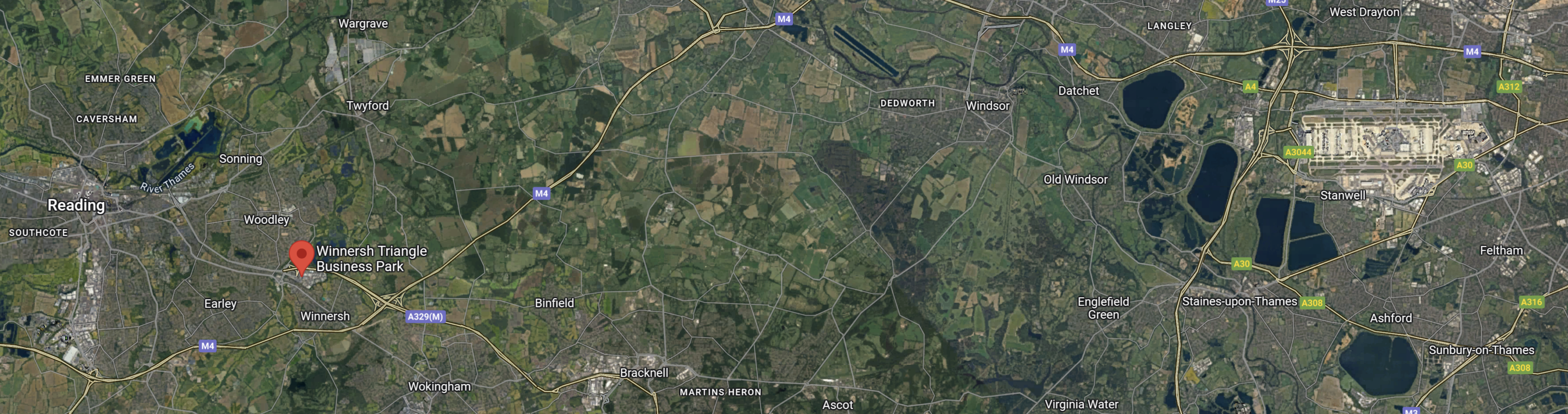
Note.
- Reading is at the Western end of the map.
- Heathrow is at the Eastern end of the map.
- The red arrow indicates Winniersh Triangle station on the Eastern side of Reading.
- The coaches stop at Reading Cemetery and Winnersh Triangle station.
- Most of the route between Winnersh Triangle and Heathrow Airport is on the M4 Motorway or dual-carriageway roads.
- The distance appears to be just under 27 miles and is scheduled to take forty minutes.
- Click the map to show to a larger scale.
It looks to me that it is an ideal route for a coach.
On The Journey
Consider.
- Once clear of Reading and past the stop at Winnersh Triangle, the coach held a good speed all the way to Heathrow, as the motoway was not busy.
- In the UK coaches under twelve metres long, can run at 70 mph and I estimated that this coach was probably at 60 mph.
- The stops were called out like stations on a train.
- Strangely, the roadholding was not as good as that of the Wrightbus hydrogen bus, that I took to Gatwick, a couple of weeks ago.
- The big problem though was the noise of the diesel engine, which was very loud compared to the noise of the fuel cell and electric transmission of the Wrightbus hydrogen bus.
I suspect that transforming the hydrogen bus into a coach, could result in a very high quality coach, with the performance and range of a diesel coach, without the noise, pollution, vibration and carbon emissions.
 The Anonymous Widower