Riding Birmingham’s New Hydrogen-Powered Buses
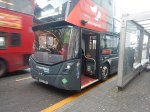
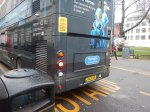
I went to Birmingham today and took one of their new hydrogen buses on route 51 to Perry Barr and another one back.
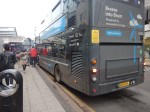




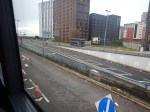










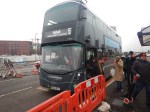



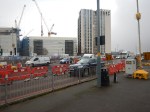

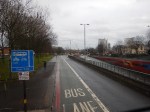

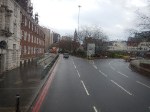
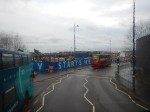
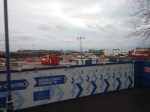
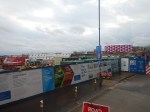

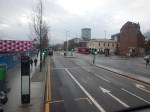
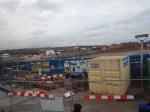
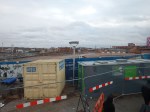

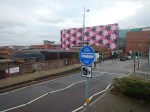

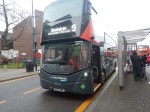
Note.
- As the pictures show Perry Barr is a bit of traffic bottleneck because of the reconstruction of Perry Barr station an other developments in the area, because of the Commonwealth Games, which are going to e held in Birmingham in 2022.
- The route goes past the High Speed Two site.
- Birmingham is a city of highways, flyovers, underpasses and roundabouts.
- The buses have wi-fi and charging points for phones.
I very much feel that the buses are the best hydrogen-powered vehicles, that I’ve travelled in, as they are smooth, comfortable, quiet and seem to have excellent performance.
Birmingham Buses Have Their Own Hydrogen Electrolyser
London bring their hydrogen in by truck from Runcorn, where it is created by electrolysis, for their hydrogen-powered buses.
On the other hand, Birmingham Buses have their own electrolyser at the Tyseley Energy Park.
This Google Map shows Tyseley Energy Park.

Note.
- The Birmingham Bus Refueler hadn’t opened, when this map was last updated.
- Tyseley Energy Park is only a few miles from the City Centre and route 51.
- I estimate that the Tyseley Energy Park occupies around four hectares.
This page on the Tyseley Energy Park web site described the refuelling options that are available.
- Fuels available include hydrogen, biomethane, compressed natural gas, diesel, gas oil and AdBlue.
- There are a range of charging options for electric vehicles.
The 3 MW electrolyser was built by ITM Power of Sheffield, which I estimate will produce nearly 1.5 tonnes of hydrogen per day.
According to this page on the Wrightbus website, a hydrogen-powered double-deck bus needs 27 Kg of hydrogen to give it a range of 250 miles. The refuelling of each bus takes eight minutes.
So the current fleet of twenty buses will need 540 Kg of hydrogen per day and this will give them a combined range of 5000 miles.
It would appear that the capacity of the electrolyser can more than handle Birmingham’s current fleet of twenty buses and leave plenty of hydrogen for other vehicles.
Could Other Towns And Cities Build Similar Energy Parks?
I don’t see why not and it looks like ITM Power are involved in a proposal to build an electrolyser at Barking.
Some would feel that London ought to follow Birmingham and create its own hydrogen.
.
National Express Deploys Hydrogen Double-Deckers In The West Midlands
The title of this post, is the same as that of this article on Renewable Energy Magazine.
This is the first paragraph.
National Express has deployed 20 hydrogen double-decker buses purchased by Birmingham City Council, serving West Midlands route 51 to Walsall via Perry Barr from 6th December 2021– the only hydrogen buses operating in England outside London.
The buses are from Wrightbus.
The article also says this about the source of the hydrogen.
The council are also collaborating with ITM, who are producing and dispensing the hydrogen fuel from the new re-fuelling hub at Tyseley Energy Park.
This is surely the way to do it. Hydrogen buses with a local source of freshly-picked hydrogen.
Cummins To Build H2 Fuel Cell Innovation Center In West Sacramento
The title of this post, is the same as that of this article on Hydrogen Fuel News.
Cummins are one of the companies with a lot to lose, if they don’t replace their diesel products with a zero-carbon alternative.
They took over Hydrogenics and now they seem to be putting money into improving and developing hydrogen fuel cells and probably all the other gubbins to make them work.
I have worked as a consultant for the company and they are very happy to tailor their products to a customer’s needs.
This philosophy would work well with hydrogen-powered vehicles and stationary applications.
I wouldn’t be surprised to see Cummins grow to one of the largest companies in the field of hydrogen.
When It Comes To Buses, Will Hydrogen Or Electric Win?
The title of this post, is the same as that of this evcellent article on WIRED.
The WIRED article is a serious comparison between the merits of battery and hydrogen-powered buses.
The writer of the article talked to two people, who should know.
- James Dixon, who is a Research Fellow in the Transport Studies Unit and Environmental Change Institute at Oxford University
- Neil Collins, who is Managing Director of Wrightbus.
I think the philosophy of Wrightbus with four basic zero-carbon buses could be right.
- Streetdeck Hydroliner FCEV – A hydrogen-powered double-deck bus.
- Streetdeck Electroliner BEV – A battery-powered double-deck bus.
- GB Kite Hydroliner FCEV – A hydrogen-powered single-deck bus.
- GB Kite Electroliner BEV – A battery-powered single-deck bus.
This surely is a basis for satisfying customers, who like to buy what they feel is best for their networks and passengers.
This paragraph from the Wired article, illustrates how terrain and climate might favour one bus or the other.
Still, hydrogen may be a better option in a city with lots of hills, like Hong Kong, where it’s also very warm and humid, says Collins. “That’s going to be a problem for electric buses, because the cooling and the hills are just going to drain the batteries,” he says. “But if the city is relatively flat, and the journey times are relatively short, and it’s not either significantly warm or significantly cold, battery electric can do a very good job.”
In addition, you wouldn’t choose hydrogen buses, if supply of hydrogen was difficult.
Could this be why Jo Bamford, who is the owner of Wightbus, has established a company to help bus operators with the transition to hydrogen. I wrote about it in New Company Established To Help Transition Bus Fleets To Hydrogen.
I have also heard stories of garages in city centres, where it is not possible to get enough power to charge a garage full of battery buses. Some of these garages are in residential areas, which perhaps may not welcome tankers of hydrogen going through to supply the buses with hydrogen.
Perhaps, the solution for garages like this is to relocate the garage to a site, which fulfils one of these conditions.
- Good connections to the motorway and trunk road network, so that hydrogen can be brought in by truck.
- A high-capacity electricity supply to either charge battery electric buses or generate hydrogen using an electrolyser.
Buses would operate according to this daily cycle.
- Buses would either be charged or refuelled with hydrogen overnight.
- They would position to a convenient place to start their daily diagrams.
- At the end of the day, they would return to the garage.
Note.
- Battery-electric buses may need to be topped-up during the day.
- Hydrogen buses with their longer range should be able to service routes further away.
- Routes would be arranged, so that hydrogen buses would not need to be topped up.
The big advantage of a remote bus garage is that the city centre site could be redeveloped to pay for the new buses and garage.
Whitelee Green Hydrogen Facility To Power Public Transport
The title of this post, is the same as that of this article on the BBC.
Some points from the article.
- It will be the country’s largest electrolyser. Is that Scotland or the UK?
- The facility is being built by Scottish Power, ITM Power and BOC.
- Friends of the Earth think it’s wrong and the electricity should be used immediately.
In ScottishPower’s Green Hydrogen Project Looks To Build UK’s Largest Electrolyser, the title says that the Whitelee project will be the UK’s largest electrolyser.
Order! Order! It’s A Bus-y Time For Wrightbus
The title of this post, is the same as that of this article on Ballymena Times.
This is the first paragraph.
The Wrightbus order book continues to be busy. The Go-Ahead Group has signed a contract to buy its first hydrogen powered buses, as part of a deal which could become the largest of its kind in Europe.
Let’s hope that this is the start of something big!
Northern Ireland Spends £100m On Clean Buses
The title of this post, is the same as that of this article on Electrive.
If Wrightbus can’t rely on the Northern Irish government to buy their buses, who can they?
Go-Ahead Group Signs Contract For Its First Hydrogen Fuel Cell Buses
The title of this post, is the same as that of this article on Intelligent Transport.
This is the first paragraph.
Brighton & Hove and Metrobus have ordered 20 hydrogen fuel cell vehicles, which are set to be delivered in June 2022, signalling the Go-Ahead Group’s first order of hydrogen powered buses.
The vehicles are single-decker GB Kite Hydroliner FCEV buses.
These buses can be configured to carry up to ninety passengers and they have a range of up to 640 miles.
The article says these buses are for Faraway-branded express buses, so the long range will enable buses to be garaged centrally and refuelled once a day.
It looks like this could be the first of several orders from Go-Ahead for hydrogen buses.
Wrightbus Presents Electric & Fuel Cell Single-Decker Buses
The title of this post, is the same as that as this article on Electrive.
This is the first paragraph.
The Northern Irish bus manufacturer Wrightbus is introducing a new single-deck bus with battery and fuel cell propulsion. The new models of the GB Kite series in the Hydroliner FCEV and Electroliner BEV variants can each accommodate up to 90 passengers and are scheduled to go into series production in 2022.
This means that Wrightbus now have single and double-deck zero emission buses with both battery and fuel cell propulsion.
These are my thoughts.
High Commonality
There may be four different buses, but they have a surprising amount in common.
In this press release on the Wrightbus web site, which is entitled Wrightbus To Showcase Two New Zero-Emission Buses, there is this paragraph.
Both buses share an 86% parts commonality with their Double Deck sisters which delivers significant benefits to operators in terms of reducing complexity and costs for fleet maintenance.
Vehicle manufacturers have been looking for high commonality for many decades and it is amazing that Wrightbus have achieved such a figure.
We mustn’t forget the advantages, Wrightbus will get from such commonality in terms of production, product support and the supply of parts and sub assemblies.
Passenger Capacity
The passenger capacity of the four buses are as follows.
- Double-decker – Hydrogen – 86
- Double-decker – Battery – 95
- Single-decker – Hydrogen – 90
- Single-decker – Battery – 90
Note.
- These figures come from the Wrightbus web site.
- The site says that the figures for the single-decker buses depend on bus length and specification.
Does the similar capacity of all the buses give operators more flexibility?
Range
The range of the four buses are as follows.
- Double-decker – Hydrogen – 350 miles
- Double-decker – Battery – 200 miles
- Single-decker – Hydrogen – 640 miles
- Single-decker – Battery – 300 miles
Note.
- These figures come from the Wrightbus web site or the press release for the new single-deck buses.
- These ranges are claimed by Wrightbus as best-in-class.
- But surely the range of 640 miles for a single-deck zero-carbon hydrogen bus opens up some interesting and unusual routes.
- Single-deck buses appear to have a longer range than their double-deck sisters.
There is also a degree of battery size flexibility in the battery-electric buses to suit an operator’s routes.
Single-deck battery-electric buses are available with these battery sizes and charging times.
- 340kWh – 2 ½ hours @ 150kW
- 454kWh – 3 hours @ 150kW
- 567kWh – 3 ½ hours @ 150kW
And these are the figures for the double-deck battery-electric buses.
- 340kWh – 2 ½ hours @ 150kW
- 454kWh – 3 hours @ 150kW
Note.
- Both single- and double-deck buses can use the two smaller batteries.
- I would assume that they are similar and it’s all part of the commonality.
- Both buses can also be fitted with a pantograph to charge the batteries, when the routes present an opportunity.
Could the largest battery be fitted to the double-deck bus? Perhaps at some point, but I suspect, that currently, a weight limitation applies.
The Fuel Cell
This sentence from the Electrive article, describes the fuel cell system of the hydrogen bus.
The fuel cell solo bus model is very similar in design. Instead of the pure BEV drive, the GB Kite Hydroliner FCEV has a Ballard FCmove fuel cell with 70 kW or 100 kW and a small supplementary battery with 30 or 45 kWh on board.
It appears, there is flexibility in the power.
Forsee Batteries From France
This paragraph from the Electrive article, talks about the batteries.
Incidentally, Forsee Power is acting as the supplier of the batteries for the BEV buses. The Bamford Group, new parent of Wrightbus, had extended the partnership with the French battery manufacturer in October 2020 with a new contract for several hundred battery systems per year. Forsee Power announced the introduction of extra-thin battery modules earlier this year and directly named Wrightbus as the launch customer for the modules of the new Slim series. Whether these batteries are now already being installed in the two Electroliners is not specified. However, the high storage capacity of the 567-kWh top battery leads us to assume this, at least for the solo bus model.
Forsee’s slimline batteries seem a major advance in the powering of vehicles like buses.
It certainly looks like extra-thin is beautiful, where batteries are concerned.
Conclusion
This is a formidable line-up of four zero-carbon buses, that can be tailored to an operator’s needs.
When linked tom Jo Bamford’s company; FUZE, which I wrote about in New Company Established To Help Transition Bus Fleets To Hydrogen, Bamford’s deck of cards look even stronger.
Will Jo Bamford do for the bus industry, what his grandfather did for diggers? I wouldn’t bet against it!
Could London’s New Routemaster Buses Be Converted To Hydrogen Power?
There are a thousand New Routemaster buses on the roads of London.
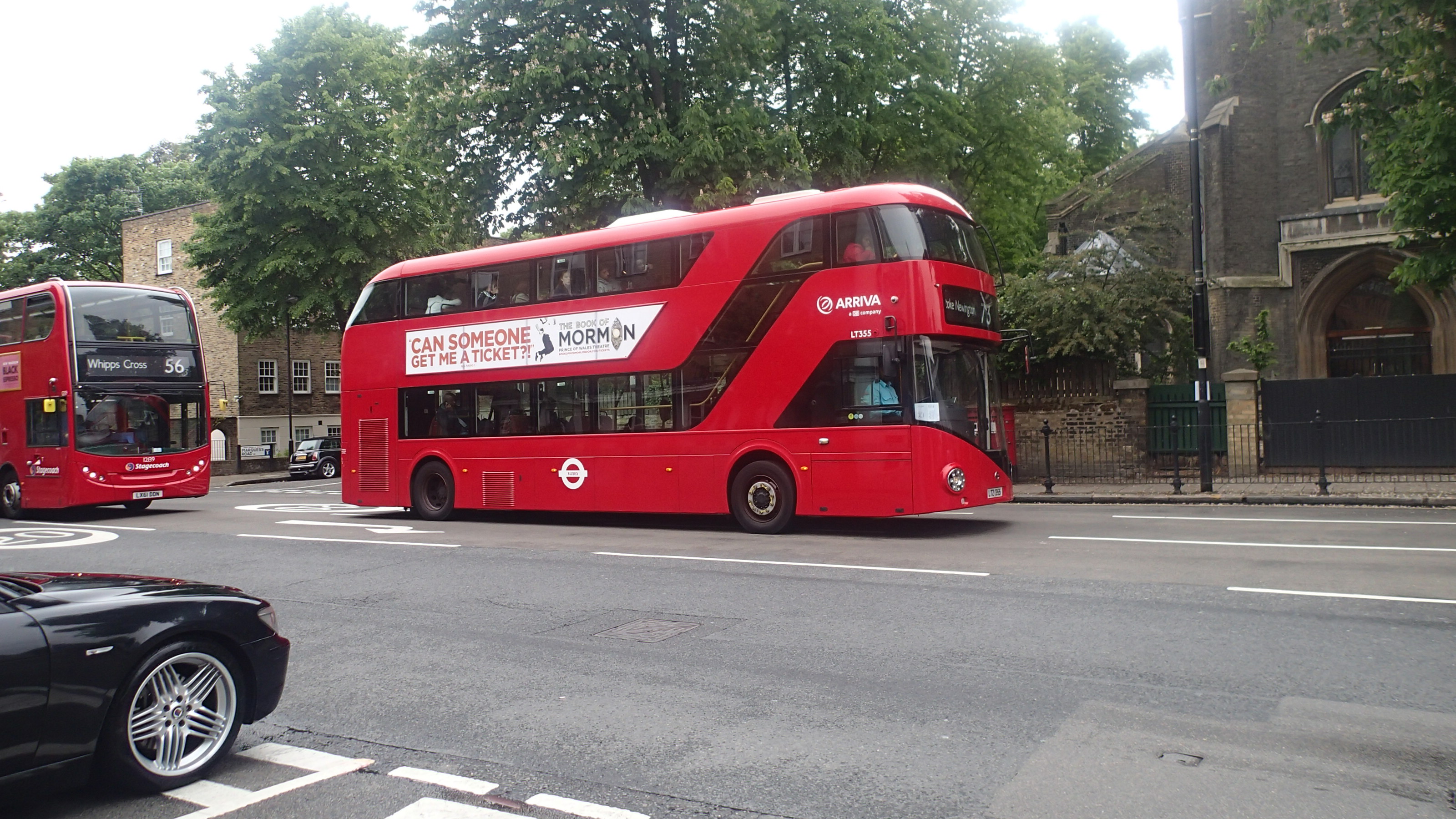
This paragraph from Wikipedia describes the transmission.
The bus is a hybrid diesel-electric driven by a battery-powered electric motor, charged by a diesel fuelled generator and recovering energy during braking by regenerative braking.
Note.
- The Cummins diesel engine is under the back stairs and is mounted high up. You can sometimes hear it start and stop if you sit or stand at the back of the bus.
- The diesel engine is part of the Cummins B Series Engine family, which is used very widely, included in vehicles like the Dodge Ram pick-up.
- The battery is mounted under the front stairs.
Cummins are embracing hydrogen in a big way and bought hydrogen company; Hydrogenics in 2019.
This press release from Cummins is entitled Cummins Begins Testing Of Hydrogen Fueled Internal Combustion Engine.
This is the first paragraph.
Cummins has taken another step forward in advancing zero carbon technology as the company began testing a hydrogen-fueled internal combustion engine. The proof-of-concept test is building on Cummins’ existing technology leadership in gaseous-fuel applications and powertrain leadership to create new power solutions that help customers meet the energy and environmental needs of the future.
Only today in Deutz Hydrogen Engine Ready For Market, I reported on how Deutz were going down a similar route.
I have done consultancy work for Cummins in Darlington, where I suspect the New Routemaster engines were built and the company prides itself in being able to provide a specially-laid out diesel engine for a niche-market application.
If they develop a hydrogen replacement for the B Series engine, I suspect that they will adopt the same sales philosophy.
For a start, it would enable all their many existing customers to convert their products from diesel to hydrogen power.
A hydrogen engine would be a direct way to enable conversion of a New Routemaster to hydrogen.
- The new hydrogen engine and generator would just replace the current diesel engine and generator.
- The chassis, body, battery and traction motor could be retained.
- I am also sure, that Wrightbus have the expertise to squeeze a hydrogen tank in somewhere.
.I believe that in a few years Cummins will be able to replace the diesel engine with a hydrogen engine of equivalent size and power.
After Ricardo announced their fuel cell approach to convert modern diesel buses to hydrogen, which I wrote about in Ricardo To Engineer Zero Emission Buses For UK’s First Hydrogen Transport Hub, I am sure we’re going to see thousands of modern buses converted to hydrogen power.
Conclusion
I believe from my knowledge of Cummins and the way they work, that they will come up with a hydrogen-based solution, that will replace the Cummins diesel in these buses with a zero-carbon engine.
If Cummins don’t then someone else will.
Whoever solves the problem of converting London’s new Routemasters to hydrogen will have one of the best adverts for their product, there has ever been.
After converting London’s thousand Routemasters, the engineers could move on to anything powered by a Cummins engine.
 The Anonymous Widower