Middlesbrough Station – 20th October 2020
I took These pictures at Middlesbrough station on my trip to Teesside.
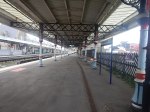
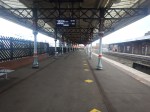
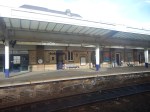
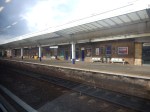
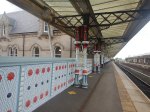
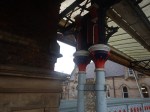
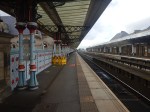
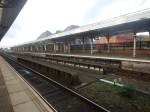
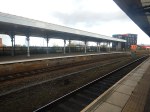
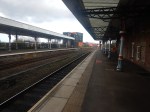
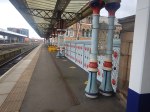

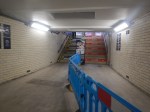


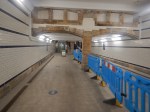
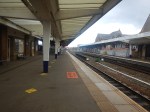
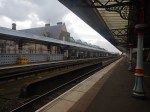
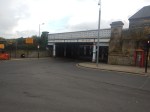
These are my thoughts on the station.
Station Track Layout
This Google Map shows the layout of the station.
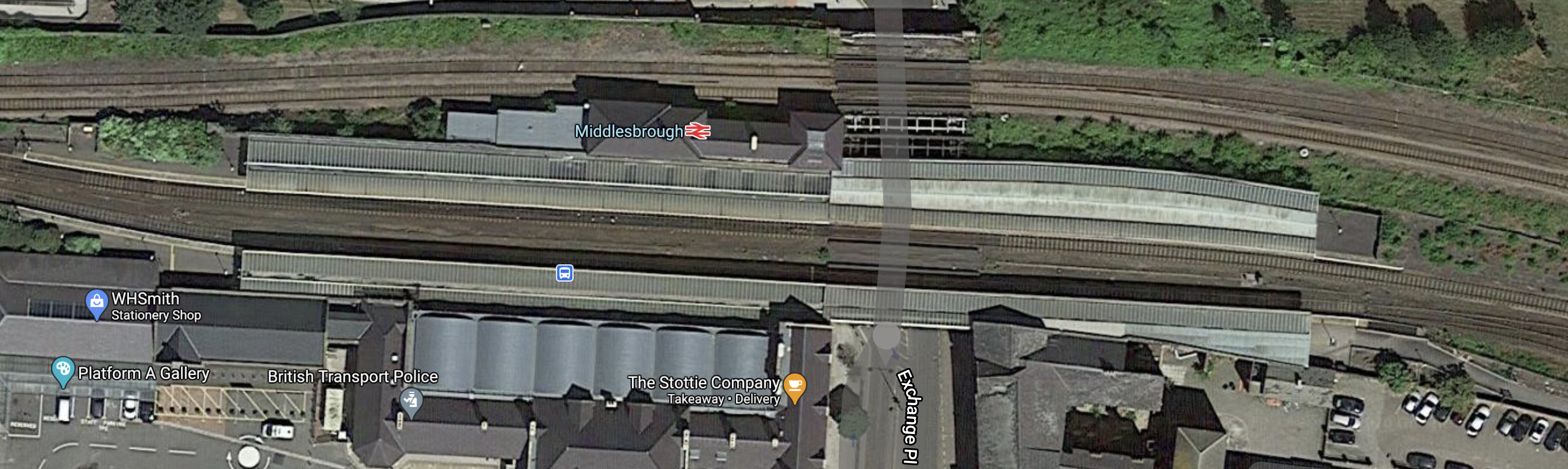
Note.
- The pair of freight lines passing around the North side of the station.
- Platform 1 is the Westbound platform on the South side of the tracks.
- Platform 2 is the Eastbound platform on the North side of the tracks.
Both platforms would appear to be about 150 metres long, which is long enough for a five-car Class 80x train, but not for a 234 metre long nine-car train.
Period Features
The station has a lot of period features, like cast-iron columns and brackets, and good Victorian stonework.
Much seems to have received good TLC.
Northern Entrance
I have seen comments about improving the Northern entrance on various web sites.
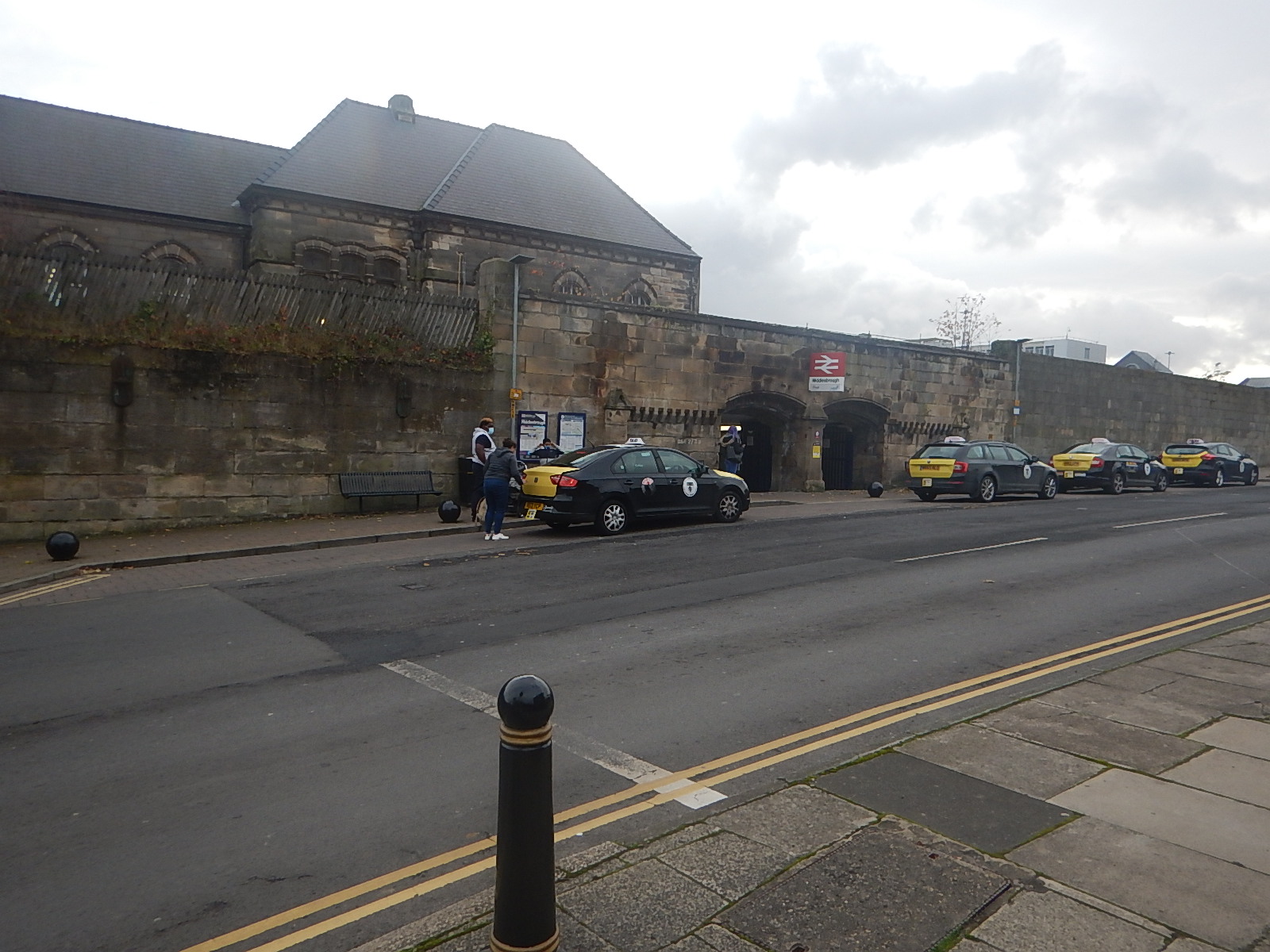
It certainly, isn’t in bad condition.
Improving The Station
In £35m Station Transformation Launched By Tees Valley Mayor, I wrote about the current plans to transform the station. I started with these paragraphs.
The title of this post, is the same as that of this article on Rail Technology Magazine.
This is the introductory paragraph.
Tees Valley Mayor Ben Houchen has announced (June 9th) a £35m transformation of Middlesbrough Station to transport more train services to the town, including the first direct rail link to London in decades.
The Rail Technology Magazine article indicates that Platform 2 at Middlesbrough station will be extended to handle Azuma trains. As the current platform looks to be around 150 metres long and this would be long enough for a five-car train, does this mean that in the future nine-car and ten-car Azumas will be able to run services to Middlesbrough?
Having seen since I wrote the related post, that Hull station has handled some nine-car Azumas, I feel that although five-car Azumas could probably use Middlesbrough station, it would seem prudent to make it possible for the longer trains to call.
Let’s suppose Middlesbrough, were playing a big London club in an important post-pandemic FA Cup match. LNER might want to run a nine-car Azuma to Middlesbrough to accommodate extra passengers.
Charging Battery Trains
LNER and TransPennine Express could be running battery electric Class 800 and Class 802 trains to Middlesbrough and/or Redcar Central stations.
This Hitachi infographic describes their Regional Battery Train, which can be created by adding batteries to the current trains.

With a range of 90 km. or 56 miles, these trains could be able to reach Middlesbrough from the electrification on the East Coast Main Line at Northallerton.
With most journeys, they should have sufficient energy in the battery to return without trouble.
But it would probably be prudent to have charging at Middlesbrough and/or Redcar Central to ensure a safe return.
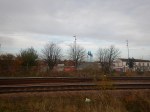
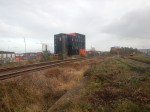
These pictures were taken from the Eastern end of Platform 2, which is down to be lengthened.


Note.
- The freight lines behind Platform 2.
- There is plenty of space beyond the end of Platform 2.
- There appears to be space for a reversing siding with a charger.
I am sure that a suitable form of charging can be provided on Platform 2 at Middlesbrough station.
Conclusion
Middlesbrough station could be turned into a big asset for the town.
£100m Station Revamp Could Double Local Train Services
The title of this post, is the same as that of this article on the Northern Echo.
This is the opening paragraph.
Officials behind plans for a £100m-plus transformation of Darlington’s Bank Top Station have confirmed it will remain the only one on the East Coast Mainline without a platform specifically for the London to Scotland service.
Darlington station has made various appearances in my life, all of which have been pleasurable ones.
I went several times to ICI’s Wilton site on Teesside in the 1970s, when the route to London was worked by the iconic Class 55 locomotives or Deltics.
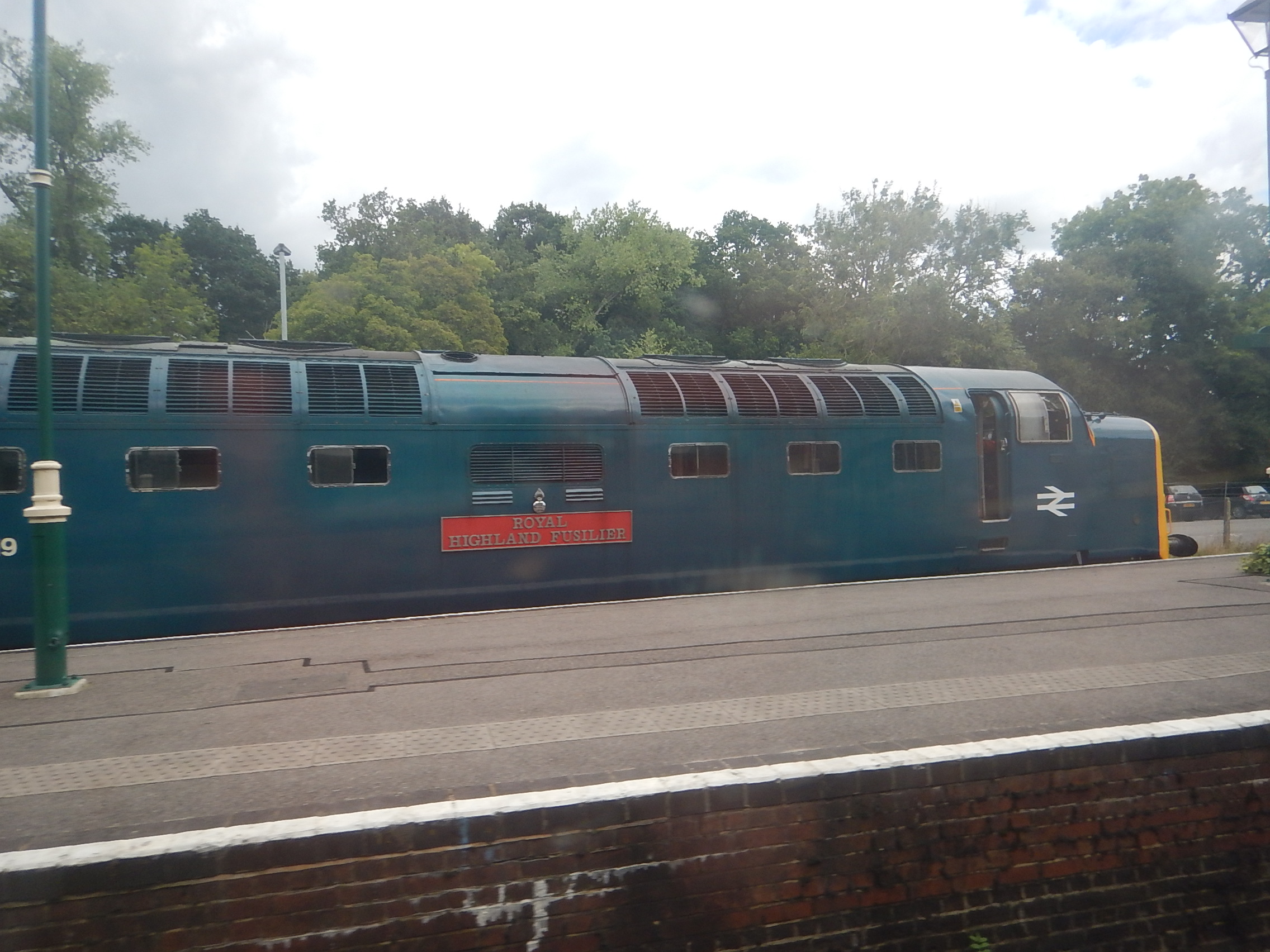
I wrote about one memorable trip home from Darlington in The Thunder of Three-Thousand Three-Hundred Horses.
Over the years, I also seem to have had several clients for my computing skills in the area, including the use of my data analysis software; Daisy at Cummins Engines in the town.
And lately, it’s been for football at Middlesbrough to see Ipswich play, where I’ve changed trains. Sometimes, Town even won.
The improvements planned for the station are two-fold.
Improvement Of Local Services
This paragraph from Wikipedia, sums up the local train services on the Tees Valley Line between Saltburn and Bishop Auckland via Darlington, Middlesbrough and Redcar.
Northern run their Tees Valley line trains twice hourly to Middlesbrough, Redcar and Saltburn (hourly on Sundays), whilst the Bishop Auckland branch has a service every hour (including Sundays). The company also operates two Sundays-only direct trains to/from Stockton and Hartlepool.
If ever a route needed improvement it is this one.
This paragraph from the Northern Echo article, outlines the plans for Darlington station.
The meeting was also told the overhaul, which will see new platforms, a new station building, parking and an interchange for passengers, alongside other improvements, would also double capacity on Tees Valley and Bishop Auckland lines, meaning four trains an hour on the former and two trains an hour on the latter.
I also believe that the route is a shoe-in for zero-carbon services; hydrogen or battery electric.
Hydrogen Trains On Teesside
In Fuelling The Change On Teesside Rails, I discuss using hydrogen powered trains for the lines in the area and they could certainly provide services on more than just the Tees Valley Line.
- Teesside certainly has big plans for hydrogen to fuel its chemical industry.
- Hydrogen powered transport in the area has been backed by the Government, as I wrote about in Tees Valley Wins £1.3million Project To Bring Hydrogen Vehicles To The Region.
- Plans are advancing for a depot for hydrogen-powered trains at Lackenby.
The hydrogen powered trains would probably be this Alstom Breeze.
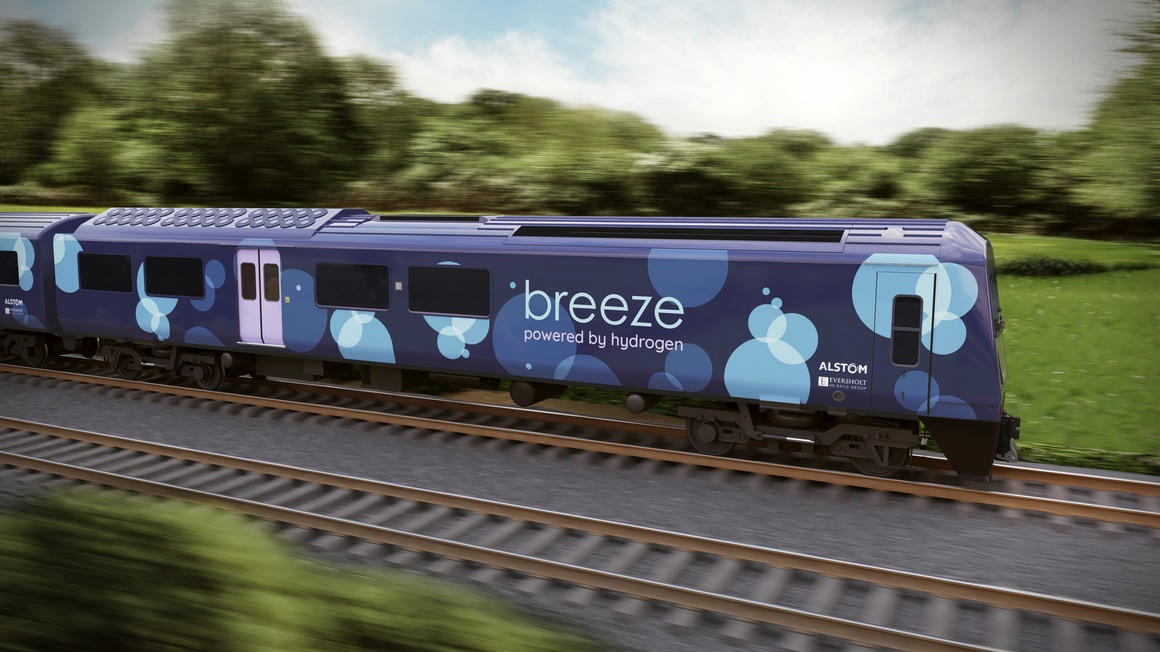
They would appear to be in pole position to change the image of Teesside’s trains.
Battery Electric Trains On Teesside
But I suspect. that an Anglo-Japanese partnership, based in the North-East could have other ideas.
- Hitachi have a train factory at Newton Aycliffe on the Tees Valley Line.
- Hyperdrive Innovation design and produce battery packs for transport and mobile applications in Sunderland.
The two companies have launched the Regional Battery Train, which is described in this Hitachi infographic.
Note than 90 kilometres is 56 miles, so the train has a very useful range.
Hitachi have talked about fitting batteries to their express trains to serve places like Middlesbrough, Redcar and Sunderland with zero-carbon electric services.
But their technology can also be fitted to their Class 385 trains and I’m sure that Scotland will order some battery-equipped Class 385 trains to expand their vigorous electric train network.
Both Scotland and Teesside will need to charge their battery trains.
Example distances on Teesside include.
- Darlington and Saltburn – 28 miles
- Darlington and Whitby – 47 miles
- Darlington and Bishop Auckland – 12 miles
The last route would be possible on a full battery, but the first two would need a quick battery top-up before return.
So there will need to be strategically-placed battery chargers around the North-East of England. These could include.
- Hexham
- Nunthorpe
- Redcar or Saltburn – This would also be used by TransPennine Express’s Class 802 trains, if they were to be fitted with batteries.
- Whitby
If Grand Central did the right thing and ran battery electric between London and Sunderland, there would probably be a need for a battery charger at Sunderland.
It appears that Adrian Shooter of Vivarail has just announced a One-Size-Fits-All Fast Charge system, that has been given interim approval by Network Rail.
I discuss this charger in Vivarail’s Plans For Zero-Emission Trains, which is based on a video on the Modern Railways web site.
There is more about Vivarail’s plans in the November 2020 Print Edition of the magazine, where this is said on page 69.
‘Network Rail has granted interim approval for the fast charge system and wants it to be the UK’s standard battery charging system’ says Mr. Shooter. ‘We believe it could have worldwide implications.’
I believe that Hitachi and Hyperdrive Innovation, with a little bit of help from friends in Seaham, can build a battery-electric train network in the North-East.
The Choice Between Hydrogen And Battery Electric
Consider.
- The hydrogen trains would need a refuelling system.
- The battery electric trains would need a charging structure, which could also be used by other battery electric services to and from the North-East.
- No new electrification or other infrastructure would be needed.
- If a depot is needed for the battery electric trains, they could probably use the site at Lackenby, that has been identified as a base for the hydrogen trains.
Which train would I choose?
I think the decision will come down to politics, money and to a certain extent design, capacity and fuel.
- The Japanese have just signed a post-Brexit trade deal and France or rather the EU hasn’t.
- The best leasing deal might count for a lot.
- Vivarail have stated that batteries for a battery electric train, could be leased on a per mile basis.
- The Hitachi train will be a new one and the Alstom train will be a conversion of a thirty year old British Rail train.
- The Hitachi train may well have a higher passenger capacity, as there is no need for the large hydrogen tank.
- Some people will worry about sharing the train with a large hydrogen tank.
- The green credentials of both trains is not a deal-breaker, but will provoke discussion.
I feel that as this is a passenger train, that I’m leaning towards a battery electric train built on the route.
An Avoiding Line Through Darlington
The Northern Echo also says this about track changes at the station.
A meeting of Darlington Borough Council’s communities and local services scrutiny committee was told a bus lane-style route off the mainline at the station would enable operators to run more high-speed services.
Councillors heard that the proposed track changes would enable very fast approaches to Darlington and allow other trains to pass as East Coast Mainline passengers boarded.
Some councillors seem to be unhappy about some trains passing through the station without stopping.
Are their fears justified?
This Google Map shows Darlington station.
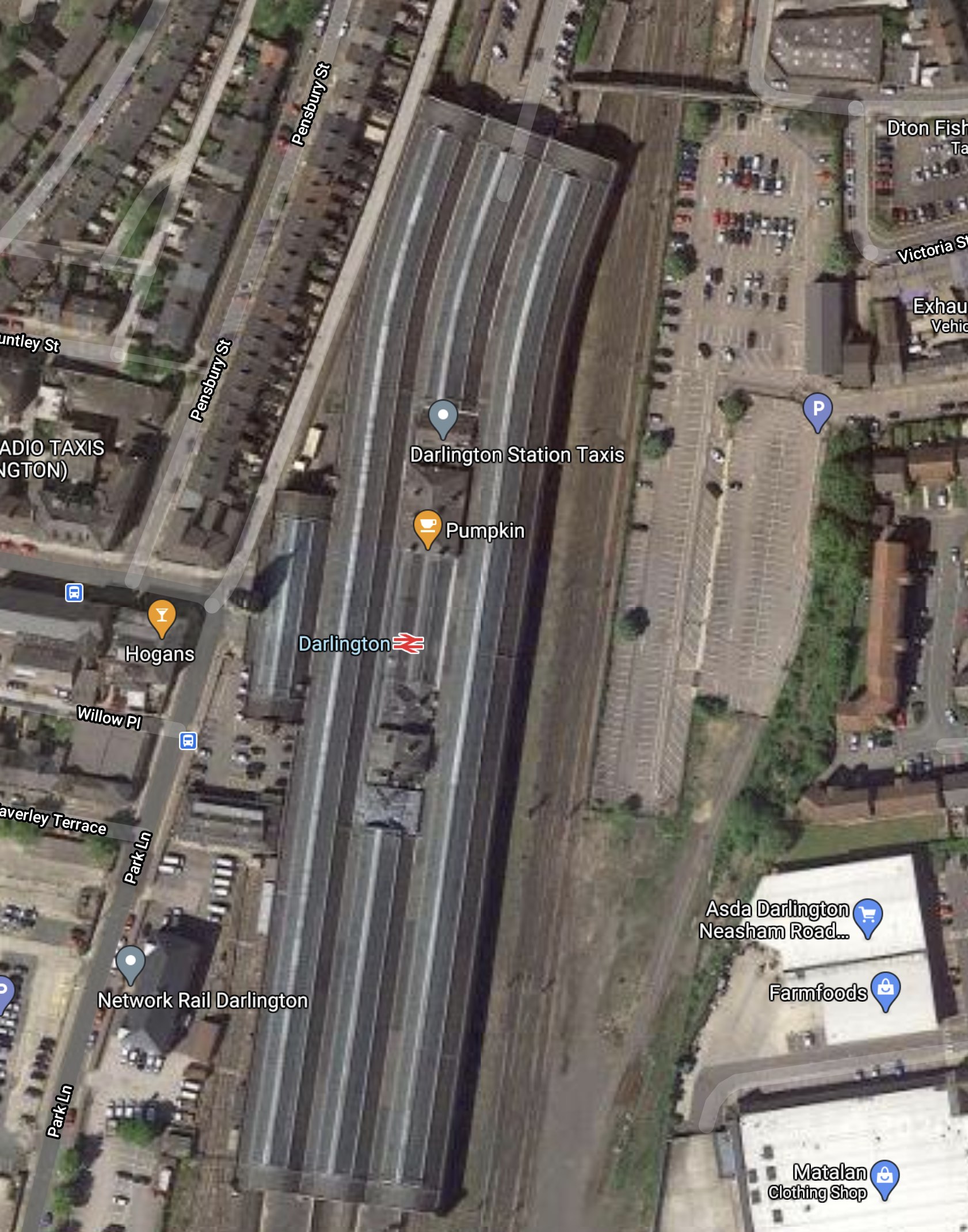
Note.
- The station has two long platforms and two South-facing bay platforms.
- There is plenty of space.
- There already appear to be a pair of electrified avoiding lines on the Eastern side of the station.
Wikipedia also says this about how Darlington station will be changed by High Speed Two.
The new high speed rail project in the UK, High Speed 2, is planned to run through Darlington once Phase 2b is complete and will run on the existing East Coast Main Line from York and Newcastle. Darlington Station will have two new platforms built for the HS2 trains on the Main Line, as the station is built just off the ECML to allow for freight services to pass through.
This would appear to suggest that the two current avoiding lines will be turned into high speed platforms.
Current High Speed Services At Darlington
The current high speed services at Darlington are as follows.
- LNER – two trains per hour (tph) – London Kings Cross and Edinburgh
- Cross Country – one tph – Plymouth and Edinburgh or Glasgow
- Cross Country – one tph – Southampton and Newcastle
- TransPennine Express – one tph – Liverpool and Edinburgh
- TransPennine Express – one tph – Manchester Airport and Newcastle
Northbound, this gives eight tph to Newcastle and four tph to Edinburgh
East Coast Trains
East Coast Trains‘s services are not planned to stop at Darlington.
High Speed Two Trains
Darlington is planned to be served by these High Speed Two trains.
- 1 tph – Birmingham Curzon Street and Newcastle via East Midlands Hub, York and Durham
- 1 tph – London Euston and Newcastle via Old Oak Common and York.
Both will be 200 metre High Speed Two Classic-Compatible trains
Northbound, this gives ten tph to Newcastle and four tph to Edinburgh.
As the Eastern Leg of High Speed Two has some spare capacity, I suspect there could be other services through Darlington.
Improvements To The East Coast Main Line
If you look at the East Coast Main Line between Doncaster and Newcastle, the route is a mixture of two and four-track railway.
- Between Doncaster and York, there are two tracks
- Between York and Northallerton, there are four tracks
- Between Northallerton and Darlington, there are two tracks
- North of Darlington, the route is mainly two tracks.
I have flown my virtual helicopter along much of the route and I can say this about it.
- Much of the route is through agricultural land, and where absolutely necessary extra tracks could possibly be added.
- The track is more-or-less straight for large sections of the route.
- Routes through some towns and cities, are tightly hemmed in by houses.
I also believe that the following developments will happen to the whole of the East Coast Main Line before High Speed Two opens.
- Full ERTMS in-cab digital signalling will be used on all trains on the route.
- The trains will be driven automatically, with the driver watching everything. Just like a pilot in an airliner!
- All the Hitachi Class 80x trains used by operators on the route, will be able to operate at up to 140 mph, once this signalling and some other improvements have been completed.
- All level crossings will have been removed.
- High Speed Two is being built using slab track, as I stated in HS2 Slab Track Contract Awarded. I suspect some sections of the East Coast Main Line, that are used by High Speed Two services, will be upgraded with slab track to increase performance and reduce lifetime costs.
Much of the East Coast Main Line could become a 140 mph high speed line, as against High Speed Two, which will be a 225 mph high speed line.
This will mean that all high speed trains will approach Darlington and most other stations on the route, at 140 mph.
Trains will take around a minute to decelerate from or accelerate to 140 mph and if the station stop took a minute, the trains will be up to speed again in just three minutes. In this time, the train would have travelled two-and-a-half miles.
Conclusion
I think that this will happen.
- The Tees Valley Line trains will be greatly improved by this project.
- Trains will generally run at up to 140 mph on the East Coast Main Line, under full digital control, like a slower High Speed Two.
- There will be two high speed platforms to the East of the current station, where most if not all of the High Speed Two, LNER and other fast services will stop.
- There could be up to 15 tph on the high speed lines.
With full step-free access between the high speed and the local platforms in the current station, this will be a great improvement.
Hydrogen On The Line
This article on The Engineer is entitled On Track: Advances In UK Hydrogen Rail.
This sub-heading introduces the article.
An expert panel from Vivarail, Birmingham University and Alstom discuss UK developments in hydrogen powered rail transport.
The article is a very readable article, that explains, the whys, wherefores and hows of hydrogen powered rail transport in the UK.
Toyota, Hitachi, JR East To Jointly Develop Hydrogen-Powered Trains
The title of this post, is the same as that of yjis article on The Mainichi.
This is the first two paragraphs.
TOKYO (Kyodo) — Toyota Motor Corp., Hitachi Ltd. and East Japan Railway Co. said Tuesday they will jointly develop hydrogen-powered trains as part of their efforts to reduce carbon emissions.
The three companies have agreed to collaborate on development of test railway vehicles equipped with hybrid systems that use hydrogen-fuel cells and storage batteries as their source of power.
It appears that Toyota will provide the fuel cell technology.
Dutch Province To Introduce Regular Hydrogen Services
The title of this post, is the same as that of this article on the International Railway Journal.
This is the introductory paragraph.
The regional transport authority in the Dutch province of Groningen has announced plans to introduce hydrogen trains for its regional concession following a successful test earlier this year.
In March 2019, I went to Groningen and explored the railways in the area, where Stadler GTW trains are used for the train services.
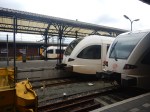

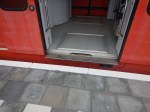
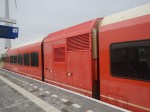
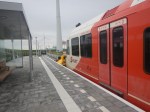
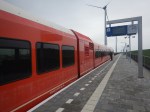
These trains are a smaller version of Greater Anglia’s Class 755 trains.
In The Train Station At The Northern End Of The Netherlands, I describe a visit to Eemshaven station to the North of Groningen.
I said this.
At the turnround at Eemshaven with the driver, he indicated that there had been speculation about battery and hydrogen trains in the North of The Netherlands.
It appears the driver was right.
The Bridge Over The Ems
The article also indicates that the bridge over the River Ems, that I wrote about in From Groningen To Leer By Train, could be opening soon.
This video shows what the new bridge will look like.
And this Google Map shows the current state of the bridge.
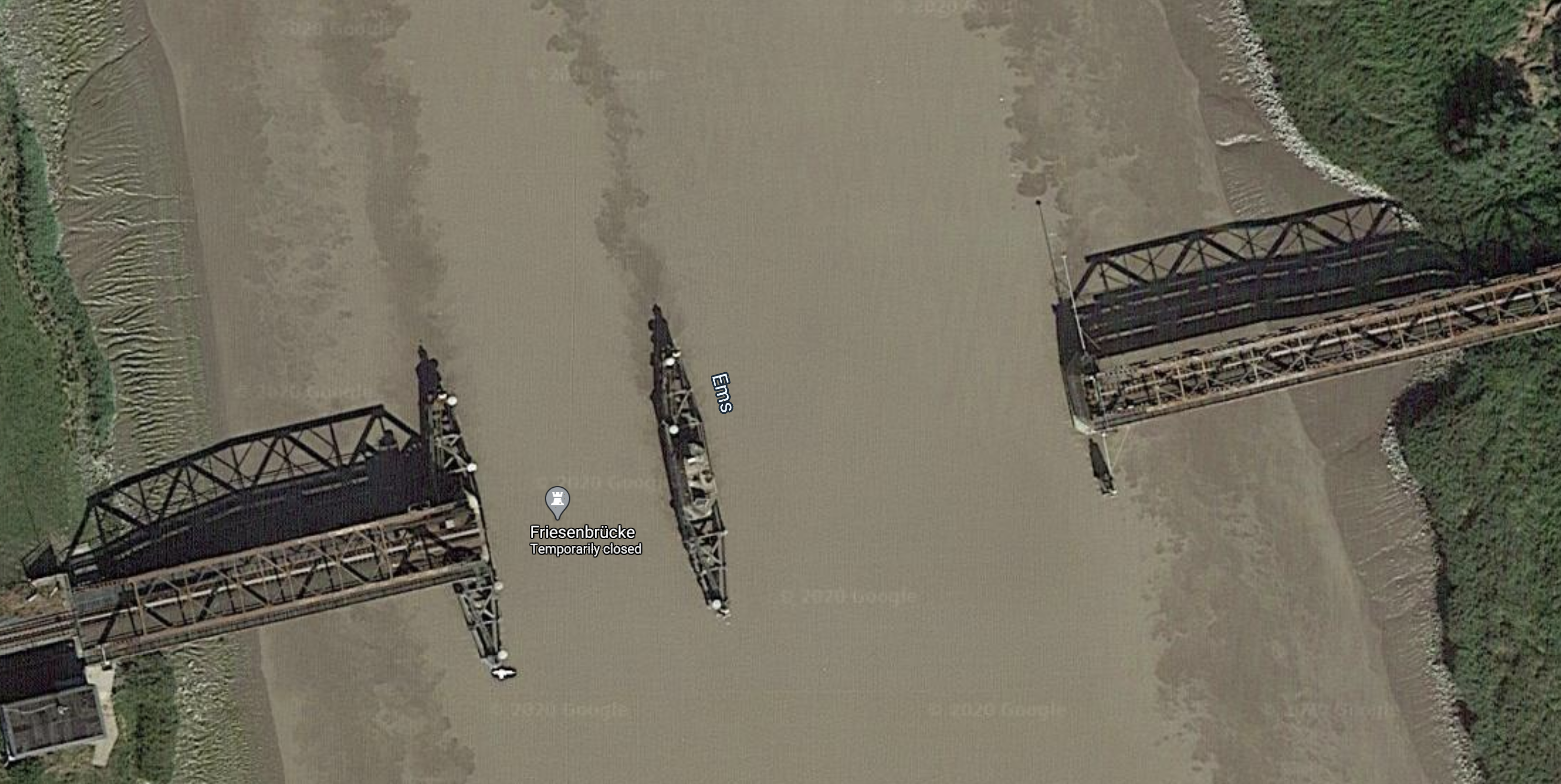
I’m not sure of the date of the picture, but there still appears a lot of work to do.
Hydrogen-Powered Train Makes UK Maiden Journey
The title of this post, is the same as that of this article on the BBC.
This is said in the article.
A hydrogen-powered train has travelled on Britain’s rail network for the first time.
The prototype, called the Hydroflex, made a 25-mile round trip through Warwickshire and Worcestershire, reaching speeds of up to 50 mph.
Its next phase is to move the hydrogen tanks, fuel cell and battery out of a carriage and stash them underneath the train.
The aim is for the train to start carrying paying passengers by the end of 2021.
Note that the article contains a broadcast-quality video.
There are now two hydrogen-powered trains in development in the UK.
- This Class 799 train by Birmingham University and Porterbrook, which has been converted from a Class 319 train.
- The Class 600 train by Alstom, which is being converted from a Class 321 trains.
Both the trains being converted are British Rail trains based on the Mark 3 coach design.
- They were built originally in the 1980s and 1990s.
- They were built for commuting over medium distances.
- They are 100 mph trains.
- They will keep their pantographs, so running using 25 KVAC overhead electrification.
Both trains could be fitted with quality interiors.
But from what has been disclosed the designs will be quite different.
- The Class 799 train will be four cars, as opposed to three cars of the Class 600 train.
- The Class 600 trains will have large hydrogen tanks inside the train, whereas the Class 799 train will have smaller ones underneath the train.
- I would expect the Class 600 train to have a longer range between refuelling.
- The Class 799 train will also be a tri-mode train, with the ability to use 750 VDC third-rail electrification.
As there are nearly over a hundred Class 321 trains and nearly ninety Class 319 trains, if the hydrogen conversion is successful, we could be seeing a lot of hydrogen trains on the UK rail network.
Next Stop Hydrogen For New Rail Project
The title of this post, is the same as that of this article on Business Green.
This is the introductory paragraph.
Three British companies unite to develop new hydrogen fuelling infrastructure that could soon allow for the roll out of zero emission trains on the UK rail network.
Some points from the article.
- The three companies involved are Fuel Cell Systems Ltd, tpgroup, and Vanguard Sustainable Transport Solutions.
- Their initial focus will be on the rail industry.
It looks to be a good start to provide much-needed infrastructure.
Scotland’s First Hydrogen-Powered Train Showcased At COP26 Summit
The title of this post, is the same as that of this article in the Scotsman.
This is the introductory paragraph.
The zero emission train project will demonstrate how the country’s railways could be decarbonised by phasing out diesel within 15 years.
The train will be based on a withdrawn Class 314 train.
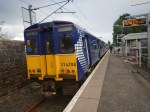
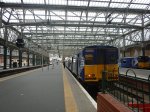
These trains entered service in 1979 and are certainly not the worst of that generation of British Rail electric trains.
It will be a tight timetable to get the train ready for the COP26 summit, which is scheduled for November 1-12 in 2021.
World’s First Hydrogen-Powered Passenger Train Hits The Rails In Austria
The title of this post is the same as that of this article on Silicon Republic.
This is the first paragraph.
This week in future tech, an Alstom hydrogen-powered train will start taking passengers in Austria for the first time.
But for the covids, I’d be on my way tomorrow to do a bit of advanced-level trainspotting.
Hydrogen Can Be Transported By Rail, German Railway Company Says
The title of this post, is the same as that of this article on PV Magazine.
This is the introductory paragraph.
A study by DB Energie shows that technically and legally there is nothing to be said against the transport of hydrogen by rail. However, there is still a lack of suitable transport containers.
I suppose though the lack of suitable transport containers makes it a bit difficult.

