H2goesRail
The title of this post, is the same as that of this page on the Deutsche Bahn web site.
These three paragraphs introduce the H2goesRail philosopher.
Deutsche Bahn is currently developing and implementing solutions that utilize hydrogen. One such endeavor is the H2goesRail project. In partnership with Siemens Mobility, we are breaking new ground and driving forward decarbonization of the transport sector for the good of the environment. Together we are developing an innovative hydrogen system for rail transport, which will comprise a refueling station, hydrogen train, and maintenance infrastructure.
We aim to replace diesel multiple units in regional service and thus further reduce carbon emissions in rail transport. To achieve this, with H2goesRail we are developing an innovative mobile refueling station whose smart control unit will allow fast refueling of hydrogen trains.
DB Energie GmbH will ensure the supply of hydrogen for the project, from production by means of renewable-powered electrolysis all the way through to storage and provision.
There is a lot of video.
Lhyfe’s Green Hydrogen To Power Deutsche Bahn Trains
The title of this post, is the same as that of this article on Renewables Now.
This is the first paragraph.
Deutsche Bahn AG has agreed to source about 30 tonnes of green hydrogen from French producer Lhyfe from 2024 onward to power its trains as the German railway operator seeks to reach climate neutrality by 2040.
The electrolyser will be built at Tuebingen.
In Can The UK Have A Capacity To Create Five GW Of Green Hydrogen?, I said the following.
Ryze Hydrogen are building the Herne Bay electrolyser.
- It will consume 23 MW of solar and wind power.
- It will produce ten tonnes of hydrogen per day.
The electrolyser will consume 552 MWh to produce ten tonnes of hydrogen, so creating one tonne of hydrogen needs 55.2 MWh of electricity.
I suspect that in my quote above from the article on Renewables Now, that the Tuebingen electrolyser will be producing thirty tonnes of hydrogen per day or just under 11,000 tonnes per year.
In that case it would be three times the size of the Herne Bay Electrolyser.
Alstom And Liebherr Sign A Collaboration Agreement, In Order To Optimise Hydrogen Fuel Cells
The title of this post, is the same as that of this press release from Alstom.
The press release starts with these points.
-
Liebherr is developing air management technology that is particularly well suited to hydrogen fuel cells.
-
Alstom’s hydrogen strategy is part of its ambition to innovate by pioneering smarter and greener mobility solutions for all.
This paragraph then gives the basic outline of the agreement.
Alstom has signed a collaboration agreement with Liebherr – Aerospace & Transportation SAS, a France-based company specialising in the manufacture of compressors for fuel cells. This agreement is aimed at optimising hydrogen systems, including improving the reliability and durability of fuel cells, increasing their power density and reducing the cost of such solutions.
The press release gives a lot more details about Alstom’s hydrogen collaborations with other companies
Alstom seem very serious about hydrogen-powered trains.
Arcola Showcases Scottish Hydrogen Conversion
The title of this post is the same as an article in the December 2021 Edition of Modern Railways.
The article has this sib-title.
Class 614 Demonstration Runs at Bo’ness Next Year
This is a key paragraph early in the article.
The aim is to build capability within the Scottish supply chain with a view to future conversion of hydrogen fleets within Scotland. The choice of a ‘314’ to provide the donor vehicles was based solely on availability, following the withdrawal of the EMU fleet by ScotRail at the end of 2019.
I don’t think they would have been my choice of donor train, as the Class 314 trains were built over forty years ago.
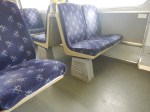
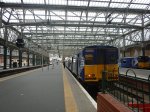
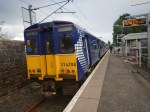
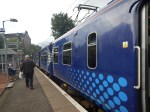
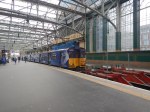
But, as Merseyrail have shown, British Rail trains of that era scrub up well.
The article is worth a full read and worth the cover price of the magazine, as it has details on the conversion and tips on how you might design a hydrogen train.
- All the hydrogen tanks , fuel cells and batteries are designed to be fitted in the vehicle underframes and don’t take up space in the passenger compartment.
- There is a fuel cell raft under both driving motor vehicles.
- Each raft contains a 70 kW fuel cell from Ballard and hydrogen cylinders.
- 40 kg. of hydrogen at a pressure of 350 bar can be carried in each raft.
- Waste heat from the fuel cell is used to heat the train.
- The DC traction motors have been replaced by modern three-phase AC motors.
- The hydrogen fillers come from the automotive industry, which is surely an obvious move.
- The interior looks good in the picture and has uses seats reclaimed from Pendolino refurbishment.
The article also reveals that Arcola are working with Arup on a study to convert a Class 158 DMU to hydrogen power.
Conclusion
I wish all the engineers and suppliers well, but I feel that these two projects are both driven by Scottish politics, rather than sound engineering principles.
More On Alston’s Hydrogen Aventra and Porterbrook’s HydroFLEX
The December 2021 Edition of Modern Railways has a small article, which is entitled Alstom To Build Hydrogen Aventras.
This is an extract.
Fuel cells will be roof-mounted, and the trains will be powered by hydrogen in conjunction with batteries, without any additional power sources such as overhead electric or diesel. They could be in service in 2025.
I am surprised that the trains can’t use electrification, as surely this would be a great advantage.
Especially, as according to another article, which is entitled New HydroFlex Debuts At Cop, which describes Porterbrook’s converted ‘319’ says this.
The original HydroFlex unit, which like the latest version has been converted from a Class 319 EMU, made its main line debut in September 2020. Porterbrook has invested £8 million in HydroFlex with the new version built over the last 10 months.
Porterbrook says its ability to operate under hydrogen, electric and battery power makes it the world’s first ‘tri-mode’ train. One carriage within the train is given over to the ‘HydroChamber’.
The contents of the ‘HydroChamber’ are given as.
- Storage for 277 Kg. of hydrogen in thirty-six high pressure tanks.
- A 400 kW fuel cell system.
- A 400 kW lithium-ion battery, which can be charged by the fuel cells in 15 minutes.
Does this mean that the battery is a 100 kWh battery that can supply energy at a rate of 400 kW?
This sentence from the article describes the train’s performance.
Porterbrook says the train carries sufficient hydrogen to offer a range of 300 miles and a top speed of up to 100 mph.
A few years ago, I had a chat with a Northern driver about the Class 319 train, which he described as a fast train with good acceleration and superb brakes.
Have Porterbrook and the University of Birmingham just added the ‘HydroChamber’ as an on-board electricity source or have they gone for a full integrated system with new traction motors and regenerative braking to the battery?
The original Class 319 trains worked well without regenerative braking, so I suspect that the simple approach has been used.
But this would make the train ideal for branch lines and extensions without electrification from electrified lines. The following routes come to mind.
- Blackpool South and Colne via Preston
- Manchester Airport and Windermere
- Ipswich and Felixstowe.
- The Borders Railway in Scotland.
The Alstom Hydrogen Aventra might be better on lines without any electrification at all.
Conclusion
My feeling is that both these trains have their good points and limitations and I suspect both will find their niche markets.
Hydrogen Train Refuelling Standard To Be Developed
The title of this post, is the same as that of this article on Railway Gazette.
This is the first paragraph.
A agreement to optimise hydrogen refuelling equipment for passenger trains and define an international standard has been signed by Alstom and the Hynamics hydrogen subsidiary of French energy group EDF.
This can only be a good thing.
Alstom Hydrogen Aventras And Teesside
In Alstom And Eversholt Rail Sign An Agreement For The UK’s First Ever Brand-New Hydrogen Train Fleet, I give my thoughts on Alstom’s new hydrogen train, which I have called the Alstom Hydrogen Aventra.
Would this train be suitable for the local railways around Teesside?
Fuelling The Change On Teesside Rails is a post based on an interview with Tees Valley Mayor; Ben Houchen in Rail Magazine.
Teesside is getting ready for hydrogen.
- They have identified a site for a specialist depot for hydrogen-powered trains.
- There is plenty of hydrogen available from chemical works in the area.
All they need is some trains and I think the Alston Hydrogen Aventras would fill the need admirably.
I also believe that with its history of heavy industry, steel and chemicals, the residents of Teesside and the Tees Valley would take to hydrogen trains.
I wrote Fuelling The Change On Teesside Rails in January 2020 and since then the Department of Transport has funded a study to examine the extension of the Tees Valley Line past Bishop Auckland, which I wrote about in Reopening The Darlington – Weardale Line To Passenger Services.
On the subject of rolling stock for the Weardale Line, I said this in the Weardale Line post.
There is no point in extending the line in these days of global warming without providing zero-carbon trains.
The Tees Valley Combined Authority is keen on hydrogen and there are good reasons.
-
- There is hydrogen available from chemical plants on Teesside.
- Hydrogen will give the trains a long range.
- The trains would probably only need refuelling once a day.
- In addition, Alstom are looking for an order for their Class 600 train, which is a conversion of a Class 321 train.
But I have my doubts about Alstom’s trains and Hitachi have doubts about hydrogen.
Consider.
-
- Do you really want to run hydrogen trains on a line where steam trains run?
- Darlington station is fully-electrified and it is also to be remodelled for more capacity and High Speed Two.
- Bishop Auckland and Darlington is just twelve miles.
- Darlington and Saltburn is just thirty miles.
With charging systems at Bishop Auckland, Saltburn and Stanhope, I am fairly sure Hitachi could develop an electric train for Teesside’s railways.
When I wrote the Weardale Line post, I was veering towards the Hitachi battery-electric trains, but the launch of the Alstom Hydrogen Aventra may have changed that.
Conclusion
The new trains for Teesside could become a fight between Hitachi with their battery-electric trains and Alstom with their Hydrogen Aventras.
If there is a fight of the technologies, who wins on Teesside could be important in deciding the future of world-wide rail transport.
Is it slightly ironic, that this battle could be happening close to the birthplace of railways?
Alstom Hydrogen Aventras And The Reopened Northumberland Line
In Alstom And Eversholt Rail Sign An Agreement For The UK’s First Ever Brand-New Hydrogen Train Fleet, I give my thoughts on Alstom’s new hydrogen train, which I have called the Alstom Hydrogen Aventra.
Would this train be suitable for the Northumberland Line?
This is a caption to a picture in this article on the BBC, which is entitled Northumberland Line: Railway ‘Could Create Economic Powerhouse’.
The Northumberland Line could connect Blyth and Newcastle with half hourly services and journey times of under 25 minutes.
This timetable would mean that between two and four trains would be needed to provide the service.
In my posts on the Northumberland Line, I show a strong preference for battery-electric trains and in particular those proposed by Hitachi, which would be built in their factory at Newton Aycliffe, which is a dozen miles to the South. These trains would have batteries produced by Hyperdrive Innovation in Sunderland.
I dismissed hydrogen trains, as until this week no viable new hydrogen train for the UK rail network had been proposed.
But this week, Alstom announced their hydrogen-powered Aventra.
I suspect a small fleet of these trains could work the Northumberland Line.
My only reservation would be that their operating speed was in line with the speed needed on the short sections of the East Coast Main Line used by the Northumberland Line service.
Alstom Hydrogen Aventras And Extension Of The Birmingham Cross-City Line
In Alstom And Eversholt Rail Sign An Agreement For The UK’s First Ever Brand-New Hydrogen Train Fleet, I give my thoughts on Alstom’s new hydrogen train, which I have called the Alstom Hydrogen Aventra.
In that post, decide that the proposed Alstom Hydrogen Aventras are based on the three-car Class 730/0 trains that have been ordered by West Midlands Trains for Birmingham’s electrified Cross-City Line.
I then go on to say.
There are plans to expand the line in the future and I do wonder if the proposed Alstom Hydrogen Aventras could be the ideal trains for extending the network.
Expansion plans are detailed a section called Future, in the Wikipedia entry for the Cross-City Line, where these plans are indicated.
- Reintroduction of local trains on the Camp Hill Line.
- Extension of electrification and services to Burton-on-Trent via a reopened Alrewas station, which would serve the National Memorial Arboretum.
In addition, the Walsall and Wolverhampton Line is being reopened to passenger trains.
These new and possibly other services will need no new tracks, but more electrification and extra new trains.
In 2015, I wrote Electrification May Be In Trouble Elsewhere, But The Brummies Keep Marching On, which looked at electrification progress in the UK and the Birmingham in particular, where the electrification of the Chase Line seemed to be going well. So unlike in some places, where electrification seems to be accident-prone, Birmingham seems to avoid the sort of problems, that happened in the Preston and Blackpool and GOBlin electrifications.
But the Alstom Hydrogen Aventra gives Birmingham and the West Midlands a unique advantage compared to say Leeds or Manchester.
Birmingham can obtain a unified fleet, which to the passengers and the drivers looks the same, but in fact are two separate classes of three-car trains; the Class 730/0 electric train and the Alstom Hydrogen Aventra.
- Where electrification exists, the Class 730/0 trains will be used and where there is no electrification, the Alstom Hydrogen Aventra will work the route on hydrogen.
- All that is needed is to provide good tracks and signalling and the Alstom Hydrogen Aventras will take you where you want to go.
- Through the centre of Birmingham, these trains will use the existing electrification.
- It would be a network, that would be simple to expand.
The only other English city to use a similar technique will be Liverpool, where Merseyrail’s new Class 777 trains will use battery power outside of the electrified core.
Conclusion
If Birmingham uses their disused but still existing railway lines and adds new trains as required, they can create a world-class suburban network, with the Cross-City Line at its centre

