Artificial Photosynthesis Offers Clean Source Of Hydrogen
The title of this post, is the same as that of this article on The Engineer.
This is the first paragraph.
Devices made using conventional semiconductor technologies could make hydrogen using just fresh or saltwater and sunlight.
It would appear to be an interesting concept, but after reading the article, there is still a lot of research and development to be done before it is an affordable proposition.
But I do feel, it could be one of those technologies that are commonplace in a few decades.
Minister Claims Hydrogen Train On Trial In UK
The title of this post is the same as that of this article on Rail Magazine.
This is the first paragraph.
Rail Minister Jo Johnson told the Transport Select Committee on April 30 that a hydrogen train was on trial in the Lake District.
After the end of Amber Rudd’s political career yesterday, for not telling the truth to another Select Committee, I would be very surprised if Jo Johnson’s statement is not substantially correct.
Something strange is happening on the Windermere Branch Line.
- Most of the day, there is an hourly shuttle train between Windermere and Oxenholme Lake District stations.
- But the 10:56, 18:03 and 22:45 services from Windermerre, continue to Preston.
- The 06:23 from Oxenholm Lake District to Windermere starts from Lancaster.
- The 11:20 from Oxen Lake District to Windermere starts from Preston.
- The 18:30 from Oxen Lake District to Windermere starts from Barrow-in-Furness.
It doesn’t seem to be the sort of diagram for a regular scheduled service.
Could it be that Class 769 trains are being tested?
- Running on the West Coast Main Line between Preston and Oxenholme stations would be at up to 100 mph using the 25 KVAC overhead wires.
- Running to Windermere and Barrow-in-Furness stations would be under diesel power.
- Note that the service goes to Preston in the middle of the day. Could this mean , that they are thoroughly testing more than one train?
- From Preston the trains can go to turnback platforms at Barrow-in-Furness, Blackburn, Blackpool North, Blackpool South, Colne, Ormskirk and Windermere stations. So, Preston would be an ideal base from where to test the trains.
Could one of the trains under test be hydrogen powered?
If what Jo Johnson said is to believed, at least one of the test trains must be!
Who’d have thought, that an old British Rail-designed Class 319 train, that entered service thirty-years ago, could be the UK’s first hydrogen-powered train.
A Hydrogen-Powered Class 769 Train
Of course, the engineering must be possible .
- The train would need a hydrogen tank, a hydrogen fuel cell and a battery.
- They would probably be fitted under the train, where there wuld appear to be plenty of space.
But companies like Ballard have a lot of experience with building hydrogen-powered buses.
Don’t Rule Out Bombardier!
I believe that most train manufacturers are looking seriously at hydrogen power, as a greener alternative to diesel.
Two years ago, Bombardier showed their expertise with batteries, by developing the Class 379 BEMU demonstrator in just a few months.
Could Bombardier have taken an Electrostar or Aventra and fitted it with batteries and a hydrogen tank and a hydrogen fuel cell?
Conclusion
I think that Jo Johnson was telling the truth or at least enough of the truth, not to be caught misleading a Select Committee of the House of Commons.
Steam Methane Reforming
In The Liverpool Manchester Hydrogen Clusters Project, I used an extract that describes the project.
This was a paragraph from the extract.
It proposes converting natural gas into clean-burning hydrogen gas, using a process called steam methane reforming. The process also removes CO2 from the gas, which can then be captured using existing carbon and capture storage technology and stored in depleted offshore gas reservoirs.
So what is steam methane reforming?
Methane is a chemical compound consisting of one carbon and four hydrogen atoms, that is the major component of natural gas.
This first paragraph is from the Wikipedia entry for steam reforming.
Steam reforming is a method for producing hydrogen, carbon monoxide, or other useful products from hydrocarbon fuels such as natural gas. This is achieved in a processing device called a reformer which reacts steam at high temperature with the fossil fuel. The steam methane reformer is widely used in industry to make hydrogen. There is also interest in the development of much smaller units based on similar technology to produce hydrogen as a feedstock for fuel cells. Small-scale steam reforming units to supply fuel cells are currently the subject of research and development, typically involving the reforming of methanol, but other fuels are also being considered such as propane, gasoline, autogas, diesel fuel, and ethanol.
If the process has a problem, it is that is produces carbon dioxide, which in the case of the Liverpool Manchester Hydrogen Clusters Project is captured and will be stored depleted gas reservoirs.
The Liverpool Manchester Hydrogen Clusters Project
The project is described briefly on this page on the Cadent web site.
This is the introduction.
The use of hydrogen in place of natural gas could offer a route to widespread decarbonisation of gas distribution networks.
The Liverpool-Manchester Hydrogen Cluster project is a conceptual study to develop a practical and economic framework to introduce hydrogen into the gas network in the Liverpool-Manchester area.
It proposes converting natural gas into clean-burning hydrogen gas, using a process called steam methane reforming. The process also removes CO2 from the gas, which can then be captured using existing carbon and capture storage technology and stored in depleted offshore gas reservoirs.
The hydrogen gas would then be supplied to a core set of major industrial gas users in Liverpool-Manchester and fed into the local gas distribution network as a blend with natural gas.
Note.
- At Runcorn, Ineos make hydrogen and chlorine by the electrolysis of brine.
- When I worked in Castner-Kellner works at Runcorn, it was generally taken away be truck.
- The Burbo Bank wind farm in Liverpool Bay, can produce 348 MW of electricity using some of the biggest wind turbines in the World, according to this article in The Guardian.
- Using excess electricity generated by win turbines at night, is used by the Germans to create hydrogen.
It doesn’t look like the project will suffer from a shortage of hydrogen.
Alsthom And Hydrogen Powered Trains
Alsthom have a site at Widnes, where they modify and paint trains. They have also indicated, that they might build new trains in the UK.
They have also developed a hydrogen-powered train called the Alsthom Coradia iLint, which starts test running with passengers in a couple of months.
This promotionalvideo shows how Alsthom’s hydrogen-powered Coradia iLint works.
The North Wales Coast Line would be an ideal test track.
- It’s around eighty miles long.
- It is nearly all double-track.
- It has a 90 mph operating speed.
- It’s probably pretty flat, as it runs along the coast.
I don’t think too many people would bother about a few extra quieter trains, just emitting steam and water vapour.
North Wales could be getting a new environmentally-friendly tourist attraction.
Alstom Wins The Europe 1 Mobility Trophy For Its Hydrogen Train
The title of this post is the same as that of this article on WebWire.
This is the first paragraph.
Alstom has been awarded the Mobility Trophy for Coradia iLint, its hydrogen train, in the context of the French leading radio Europe 1 Trophies of the Future.
Winning an award can be a mixed blessing.
For some it is a precursor to outstanding success.
But for others, the reverse is true!
I’ve never ridden on or even seen a Coradia iLint, but the theory behind the train is sound.
As soon as these trains are taking passengers in Germany, I’ll go and have a ride.
Thoughts On A Hydrogen-Powered Bi-Mode High Speed Train
My stockbroker and pension fund manager keeps contacting me about hydrogen power. There seems to be a lot of money chasing few good investments.
What I find surprising is that two of the leading fuel cell companies are Canadian; Ballard and Hydrogenics, with one supplying Alstom with fuel cells for their hydrogen powered train.
Bombardier at Derby, who are another Canadian company, have been very quiet on hydrogen.
These are my thoughts.
The Aventra Is A Plug-And-Play Train
I believe that the control system on an Aventra looks at the train and determines what cars make up the train. Hitachi certainly do this with their A-trains like Class 800 trains and I suspect that the control systems of most modern trains can do it, as it allows trains to be lengthened and shortened as required.
Electric Multiple Units Have An Electrical Power Bus
I believe that most electric multiple units have an electrical power bus that connects all cars to the electrical supply from the pantograph or third rail shoes.
On a Btoitish Rail-era Class 319 train, which has DC traction motors, this is 750 VDC, but on modern trains, which generally have AC traction motors, it is probably something more appropriate.
The Design Trend In Electrical Multiple Units Is To Have More Powered Axles
Bombardier are certainly going this route with the new Class 345 trains for Crossrail.
I found this snippet on the Internet which gives the formation of the new Class 345 trains.
When operating as nine-car trains, the Class 345 trains will have two Driving Motor Standard Opens (DMSO), two Pantograph Motor Standard Opens (PMSO), four Motor Standard Opens (MSO) and one Trailer Standard Open (TSO). They will be formed as DMSO+PMSO+MSO+MSO+TSO+MSO+MSO+PMSO+DMSO.
So as both PMSO cars are there, I would assume that the current seven-car trains are two MSO cars or an MSO and a TSO car short of a full-train.
The power cars/total cars ratio will be as follow.
- Seven-car train – 0.86
- Nine-car train – 0.89
In The Formation Of A Class 707 Train, I showed that the ratio for Class 707 trains is just 0.40, whereas Greater Anglia’s siomilar five-car Class 720 train appears to have five cars with motors.
Could this increase in the number of powered axles mean the following?
- Better acceleration for the same electrical power.
- More, but smaller and lighter traction motors.
- Less wheel-slip in some rail conditions.
- Each axle could be controlled individually, to minimise wheel-slip, which leads to extra maintenance costs.
- Smoother regenerative braking, as effectively every axle is braked without the use of inefficient friction brakes.
- If batteries are used for regenerative braking, then one smaller battery can be fitted to each car with motors.
But the extra traction motors could cost more.
Only Bombardier seem to have gone all the way. Perhaps, they have found that modern manufacturing methods can produce more affordable traction motors.
One consequence of distributed power, is that each car will have a high electrical load, so there will be a need for a sophisticated electrical power bus going to every can on the train.
A Car With A Diesel-Powered Electricity Generator
I have ridden in the cab of a Class 43 locomotive. Admittedly, it was one that had been modified with a new diesel engine, I was surprised how quiet 2,250 hp can be, just a few feet away.
Obviously, the sound-proofing was of the highest quality.
This picture shows a Stadler train, which has a diesel-powered car in the middle of the train.
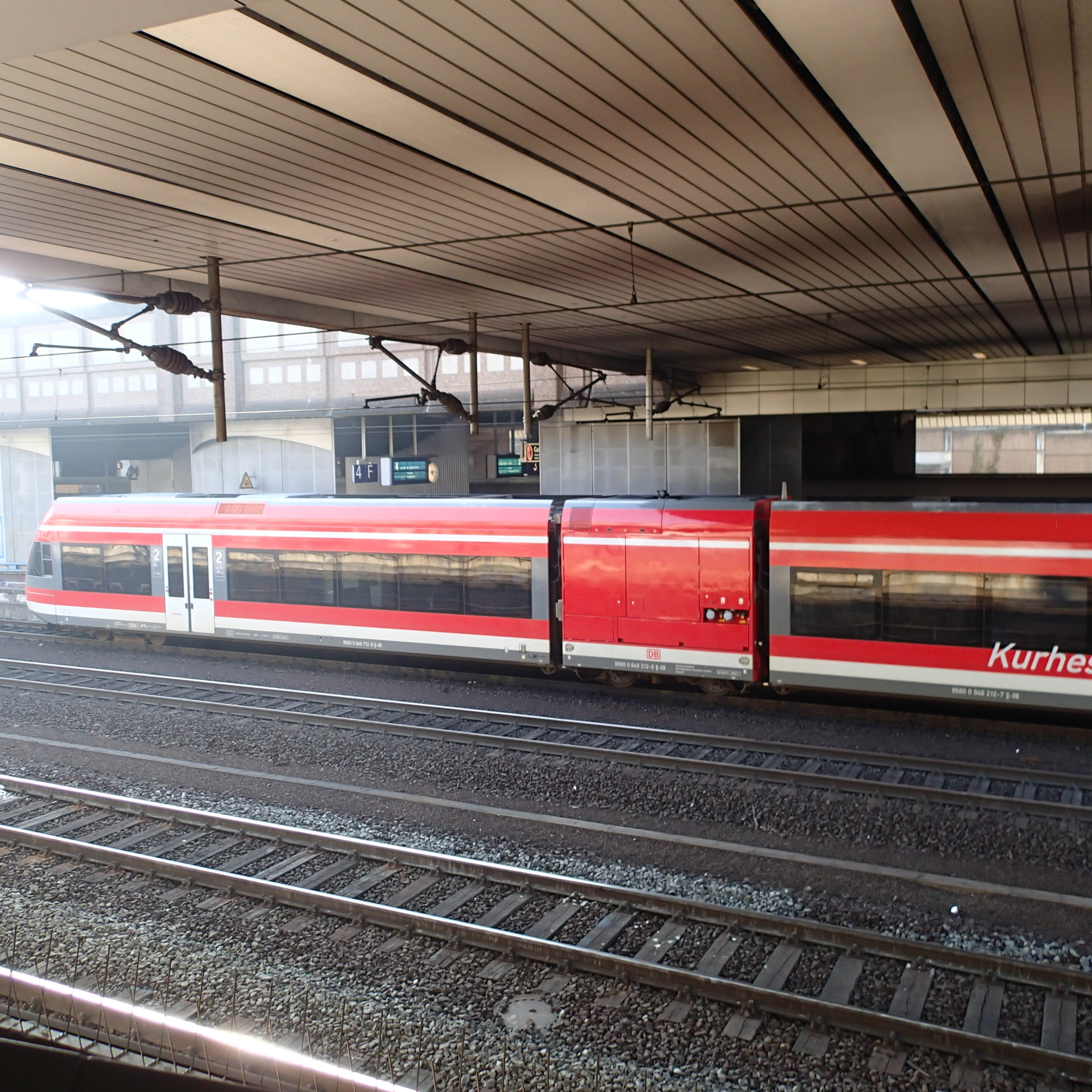
Greater Anglia’s new Class 755 trains will use this technique.
Intriguingly, British Rail designed the record-braking Class 442 train, with all the electrical equipment and traction motors in the middle car of a five-car set.
I suspect because of the design of an Aventra, Bombardier could put a diesel engine in one the middle cars to create a bi-mode Aventra.
Bombardier have said in this article on Christian Wolmar’s web site, that they are working on a 125 mph bi-mode Aventra.
In the Class 172 train, each car has a 360 kW diesel engine, so a five car 125 mph bi-mode train could need a substantial amount of power.
A Car With A Hydrogen-Powered Electricity Generator
In Alstom’s Coradia iLint, the hydrogen tanks and generators are mounted on the roof, thus taking advantage of the larger Continental loading gauge. Wikipedia says this about the train.
The Coradia iLint is a version of the Coradia Lint 54 powered by a hydrogen fuel cell. Announced at InnoTrans 2016, the new model will be the world’s first production hydrogen-powered trainset. The Coradia iLint will be able to reach 140 kilometres per hour (87 mph) and travel 600–800 kilometres (370–500 mi) on a full tank of hydrogen. The first Coradia iLint is expected to enter service in December 2017 on the Buxtehude-Bremervörde-Bremerhaven-Cuxhaven line in Lower Saxony, Germany.
In the UK, there isn’t the space, but I believe that a car could be built with a hydrogen tank and the appropriate size of hydrogen-powered electricity generator.
Bear in mind, that a hydrogen power system will be is a lot quieter and vibrate less, that a diesel one.
The Plug-and-Play nature of an Aventra or other modern trains, would mean that after the train software has been modified, it could detect that the train has a car with a hydrogen-powered electricity generator.
The car would deliver its electricity, when it is require, through the electrical bus.
The train’s computer system would control the generator, so that the level of power needed to move the train was available.
Batteries
Batteries are an integral part of Alstom’s Coradia iLint as this promotional video shows.
I believe that Bombardier make extensive use of batteries in the Aventra for regenerative braking, running for short distances without electrification and electrification failure.
Why Do I Think A Hydrogen-Powered High Speed Train Is Possible?
By High Speed Train, I mean one that can travel at 200 kph or 125 mph.
Most energy is needed to accelerate the train, not to maintain the high cruising speed.
So if you take a train running along a line with only a few stops, that is fairly level with no long climbs, there will be a minimal power requirement, except where accelerating from a stop.
Energy requirement can be reduced by the following.
- Design the line as straight as possible.
- Remove as many gradients as possible.
- Have separate tracks for stopping and high-speed traffic.
- Install a modern signalling system, so that trains run efficiently.
- Remove flat junctions and level crossings
- Have a very efficient train with low rolling resistance and good aerodynamics.
- Have as few stops as possible.
Network Rail seem to be improving the tracks all over the UK to this standard and Point 6 is satisfied by modern trains like Aventras.
Point 7 depends on getting the timetable right.
Adding all these factors together and you can see why I believe a hydrogen-powered High Speed Train is a possibility.
Development
The great advantage of developing a hydrogen-powered train, is that a lot of the initial testing can be done in a lab, as all you need to develop is a power module, that can fit in the train, that can generate the required number of kilowatts.
Independently, the train company would need to develop an electric train capable of 125 mph running.
Deployment
Hydrogen-powered High Speed Trains could run on several lines in the UK.
Midland Main Line
The Midland Main Line is the obvious line for a hydrogen-powered High Speed Train.
- A lot of the route is already capable of 125 mph running.
- Large sections are three or four tracks.,
- The Southern section from Bedford to St. Pancras is electrified, so hydrogen power would only be needed North of Bedford.
- The new East Midlands Franchise will streamline the intermediate stops.
- Parts of the line go through the World Heritage Site of the Derwent Valley and would be difficult to electrify. Quiet hydrogen-powered trains would be acceptable to all.
- Selective electrification could be applied at Derby, Leicester, Nottingham and Sheffield, to charge batteries and accelerate trains.
There is a lot of work going on =North of Bedford as far as Kettering and Corby.
- The Corby branch is being made double track.
- Bedford to Glendon Junction, where trains to Corby leave the Midland Main Line, will become four tracks.
- Tracks will be electrified to Kettering and Corby.
- 125 mph running will be possible as far as Glendon Junction and Corby.
Will the two fast lines be electrified between Kettering and Glendon Junction?
This would enable trains going North from Kettering to accelerate to 125 mph using the electrification, rather than hydrogen or battery power.
The electrification would catapult them the nearly thirty miles to Leicester at 125 mph, with speed maintained by using small amounts of hydrogen or battery power.
Coming South, the train would get to 125 mph leaving Leicester, either using a short length of electrification through the station or by use of the onboard power.
Small amounts of hydrogen or battery power would keep the train at 125 mph, until it could connect to the electrification at Glendon Junction.
I’m assuming that the signalling can keep the fast lines free of slow traffic. But even if they are slowed by a crossing train, regenerative braking using the battery will enable speed to be recovered quickly.
This article on Rail Technology Magazine is entitled DfT Deal Means East Midlands HS2 Station Could Open Early.
East Midlands Hub station would obviously be electrified for HS2 services from Birmingham and London.
So perhaps a few miles of electrification could be added to the Midland Main Line to get trains to operating speed, after a stop at the station.
In addition, could selective electrification be applied at other stations like Derby, East Midlands Parkway, Leicester, Nottingham and Sheffield.
It could be a bit like a game of 125 mph Pass-the-Parcel.
Trains could be at 125 mph for most of the way from St. Pancras to Sheffield, giving a journey time somewhere in the region of ninety minutes.
North Wales Coast Line
I’ve never travelled on the North Wales Coast Line.
- It is around ninety miles long.
- It has an operating speed of 90 mph
- As it’s a coastal line, I suspect that the route is fairly level.
- No-one would complain about the noise reduction of a hydrogen-powered train.
- Virgin’s Class 221 trains take about a hundred minutes from Holyhead to Chester with six stops.
It is a route, where a bi-mode train could probably save some minutes, as they could use the electrification South of Crewe.
Alstom have already set up a base in Widnes and are interested in demonstrating hydrogen trains between Chester and Liverpool via the Halton Curve when it reopens.
But a train with a slightly better performance to the Coradia iLint could be ideal for Liverpool to Chester and along the North Wales Coast.
Basingstoke To Exeter
The West Of England Line goes from Waterloo to Exeter and has the following characteristics.
- The Waterloo to Basingstoke section is forty-eight miles long and electrified.
- The Basingstoke to Exeter section is 124 miles long and not-electrified.
- The route is fairly level.
- The operating speed is 90 mph.
- The route is served by 90 mph Class 159 trains.
This is one of those lines, where a bi-mode train would be ideal.
The route might be suitable for a hydrogen-powered train.
Ashford To Southampton
Between Ashford and Southampton, there is only one section that is not electrified and that is the Marshlink Line, which is just 26 miles long.
Other Routes
I suspect there are other routes, but I do think gentle lines without too many gradients are probably the best lines for hydrogen-powered trains.
Other Trains
As Hitachi’s IEP and Stadler Flirts have similar electrical layouts and design, a similar technique involving hydrogen poower could probably be used.
Hydrogen Power – A Useful List
General
A Series Of Articles From The Guardian
Fuel Cell Mabufacturers
Trains
Rail Engineer On Hydrogen Trains
This article on Rail Engineer is entitled Hydrail Comes Of Age.
It is a serious look at hydrogen-powered trains.
This is typical information-packed paragraph.
Instead of diesel engines, the iLint has underframe-mounted traction motors driven by a traction inverter. Also mounted on the underframe is a lithium-ion battery pack supplied by Akasol and an auxiliary converter to power the train’s systems. On the roof is a Hydrogenics HD200-AT power pack which packages six HyPMTM HD30 fuel cells, with common manifolds and controls, and X-STORE hydrogen tanks supplied by Hexagon xperion which store 89kg of hydrogen on each car at 350 bar. These lightweight tanks have a polymer inner liner, covered with carbon fibres soaked in resin and wrapped in fibreglass.
They have interesting things to say about the trains and the production and delivery of the hydrogen, which can be what they call green hydrogen produced by electricity generated by wind power.
This is said about supplying the hydrogen.
It takes 15 minutes to refuel the iLint, which holds 178kg of hydrogen supplied at a pressure 350 bar. It consumes this at the rate of 0.3kg per kilometre. Thus, Lower Saxony’s fleet of 14 trains, covering, say, 600 kilometres a day, will require 2.5 tonnes of hydrogen per day. If this was produced by electrolysis, a wind farm of 10MW generating capacity would be required to power the required electrolysis plant with suitable back up. This, and sufficient hydrogen storage, will be required to ensure resilience of supply.
These are the concluding paragraphs.
With all these benefits, a long-term future in which all DMUs have been replaced by HMUs is a realistic goal. However, the replacement, or retrofitting, of 3,000 DMUs and the provision of the required hydrogen infrastructure would be a costly investment taking many years.
Germany has already taken its first steps towards this goal.
For myself, I am not sceptical about the technology that creates electricity from pure hydrogen, but I think there are design issues with hydrogen-powered trains in the UK.
The German trains, which are built by Alsthom and should start test runs in 2018, take advantage of the space above the train in the loading gauge to place the tanks for the hydrogen.
Our smaller loading gauge would probably preclude this and the tanks might need to take up some of the passenger space.
But in my view, we have another much more serious problem.
Over the last twenty years, a large number of high quality trains like electric Desiros, Electrostars and Junipers, and diesel Turbostars have been delivered and are still running on the UK network.
It could be that these trains couldn’t be converted to hydrogen, without perhaps devoting a carriage to the hydrogen tank, the electricity generator and the battery needed to support the hydrogen power.
It is for this reason, that I believe that if we use hydrogen power, it should be used with traditional electrification and virtually unmodified trains.
A Typical Modern Electric Train
Well! Perhaps not yet, but my view of what a typical electric multiple unit, will look like in ten years is as follows.
- Ability to work with 25 KVAC overhead or 750 VDC third-rail electrification or onboard battery power.
- Ability to switch power source automatically.
- Batteries would handle regenerative braking.
- Energy-efficient train design.
- Good aerodynamics.
- Most axles would be powered for fast acceleration and smooth braking.
- Efficient interior design to maximise passenger numbers that can be carried in comfort.
- A sophisticated computer with route and weather profiles, passenger numbers would optimise the train.
The battery would be sized, such that it gave a range, that was appropriate to the route.
In an article in the October 2017 Edition of Modern Railways, which is entitled Celling England By The Pound, Ian Walmsley says this in relation to trains running on the Uckfield Branch.
A modern EMU needs between 3 and 5 kWh per vehicle mile for this sort of service.
As I’m talking about a train that has taken energy efficiency to the ultimate, I think it would be reasonable to assume that 3 kWh per vehicle mile is attainable.
As I believe that most axles would be powered, I feel that it would be electrically efficient for a battery to be fitted into each car.
Suppose we had a five-car train with a 30 kWh battery in each car.
This would give a total installed battery capacity of 150 kWh. Divide by five and three and this gives a useful emergency range of ten miles.
These facts put the battery size into perspective.
- , 30 kWh is the size of the larger battery available for a Nissan Leaf.
- A New Routemaster bus has a battery of 75 kWh.
Where will improved battery technology take us in the next decade?
Use Of Hydrogen Power With 750 VDC Third-Rail Electrification
This extract from the Wikipedia entry for third-rail, explains the working of third-rail electrification.
The trains have metal contact blocks called shoes (or contact shoes or pickup shoes) which make contact with the conductor rail. The traction current is returned to the generating station through the running rails. The conductor rail is usually made of high conductivity steel, and the running rails are electrically connected using wire bonds or other devices, to minimize resistance in the electric circuit. Contact shoes can be positioned below, above, or beside the third rail, depending on the type of third rail used; these third rails are referred to as bottom-contact, top-contact, or side-contact, respectively.
If a line is powered by third-rail electrification, it needs to be fed with power every two miles or so, due to the losses incurred in electricity passing along the steel conductor rail.
I suspect that Network Rail and our world-leading rail manufacturers have done as much as they can to reduce electrical losses.
Or have they? Wikipedia says this.
One method for reducing current losses (and thus increase the spacing of feeder/sub stations, a major cost in third rail electrification) is to use a composite conductor rail of a hybrid aluminium/steel design. The aluminium is a better conductor of electricity, and a running face of stainless steel gives better wear.
Suppose instead of having continuous third-rail electrification, lengths of electrification with the following characteristic were to be installed.
- Hybrid aluminium/steel rails.
- Power is supplied at the middle.
- Power is only supplied when a train is in contact with the rail.
All trains would need to have batteries to run between electrified sections.
The length and frequency of the electrified sections would vary.
- If a section was centred on a station, then the length must be such, that a train accelerating away can use third-rail power to get to operating speed.
- Sections could be installed on uphill parts of the line.
- On long level sections of line without junctions, the electrified sections could be more widely spaced.
- Battery power could be used to take trains through complicated junctions and crossovers, to cut costs and the difficulties of electrification.
- Electrified section woulds generally be placed , where power was easy to provide.
So where does hydrogen-power come in?
Obtaining the power for the track will not always be easy, so some form of distributed power will be needed.
- A small solar farm could be used.
- A couple of wind turbines might be appropriate.
- In some places, small-scale hydro-electric power could even be used.
Hydrogen power and especially green hydrogen power could be a viable alternative.
- It would comprise a hydrogen tank, an electricity generator and a battery to store energy.
- The tank could be buried for safety reasons.
- The installation would be placed at trackside to allow easy replenishment by tanker-train.
- It could also be used in conjunction with intermittent solar and wind power.
The tanker-train would have these characteristics.
- It could be a converted electrical multiple unit like a four-car Class 319 train.
- Both 750 VDC and 25 KVAC operating capability would be retained.
- One car would have a large hydrogen tank.
- A hydrogen-powered electricity generator would be fitted to allow running on non-electrified lines and give a go-anywhere capability.
- A battery would probably be needed, to handle discontinuous electrification efficiently.
- It might even have facilities for a workshop, so checks could be performed on the trackside power system
Modern digital signalling, which is being installed across the UK, may will certainly have a part to play in the operation of the trackside power systems.
The position of all trains will be accurately known, so the trackside power system would switch itself on, as the train approached, if it was a train that could use the power.
Use Of Hydrogen Power With 25 KVAC Overhead |Electrification
The big difference between installation of 25 KVAC overhead electrification and 750 VDC third-rail electrification, is that the the overhead installation is more complicated.
- Installing the piling for the gantries seems to have a tremendous propensity to go wrong.
- Documentation of what lies around tracks installed in the Victorian Age can be scant.
- The Victorians used to like digging tunnels.
- Bridges and other structures need to be raised to give clearance for the overhead wires.
- There are also those, who don’t like the visual impact of overhead electrification.
On the plus side though, getting power to 25 KVAC overhead electrification often needs just a connection at one or both ends.
The electrification in the Crossrail tunnel for instance, is only fed with electricity from the ends.
So how could hydrogen help with overhead electrification?
Electrifying some routes like those through the Pennines are challenging to say the least.
- Long tunnels are common.
- There are stations like Hebden Bridge in remote locations, that are Listed Victorian gems.
- There are also those, who object to the wires and gantries.
- Some areas have severe weather in the winter that is capable of bringing down the wires.
In some ways, the Government’s decision not to electrify, but use bi-mode trains is not only a cost-saving one, but a prudent one too.
Bi-mode trains across the Pennines would have the advantage, that they could use short lengths of electrification to avoid the use of environmentally-unfriendly diesel.
I have read and lost an article, where Greater Anglia have said, that they would take advantage of short lengths of electrification with their new Class 755 trains.
Electrifying Tunnels
If there is one place, where Network Rail have not had any electrification problems, it is in tunnels, where Crossrail and the Severn Tunnel have been electrified without any major problems being reported.
Tunnels could be developed as islands of electrification, that allow the next generation of trains to run on electricity and charge their batteries.
But they would need to have a reliable power source.
As with third-rail electrification, wind and solar power, backed by hydrogen could be a reliable source of power.
Electrifying Stations With Third Rail
It should be noted, that the current generation of new trains like Aventra, Desiro Cities and Hitachi’s A-trains can all work on both 25 KVAC overhead or 750 VDC third-rail systems, when the appropriate methods of current collection are fitted.
Network Rail have shown recently over Christmas, where they installed several short lengths of new third-rail electrification South of London, that installing third-rail electrification, is not a challenging process, provided you can find the power.
If the power supply to the third-rail is intelligent and is only switched on, when a train is on top, the railway will be no more a safety risk, than a route run by diesel.
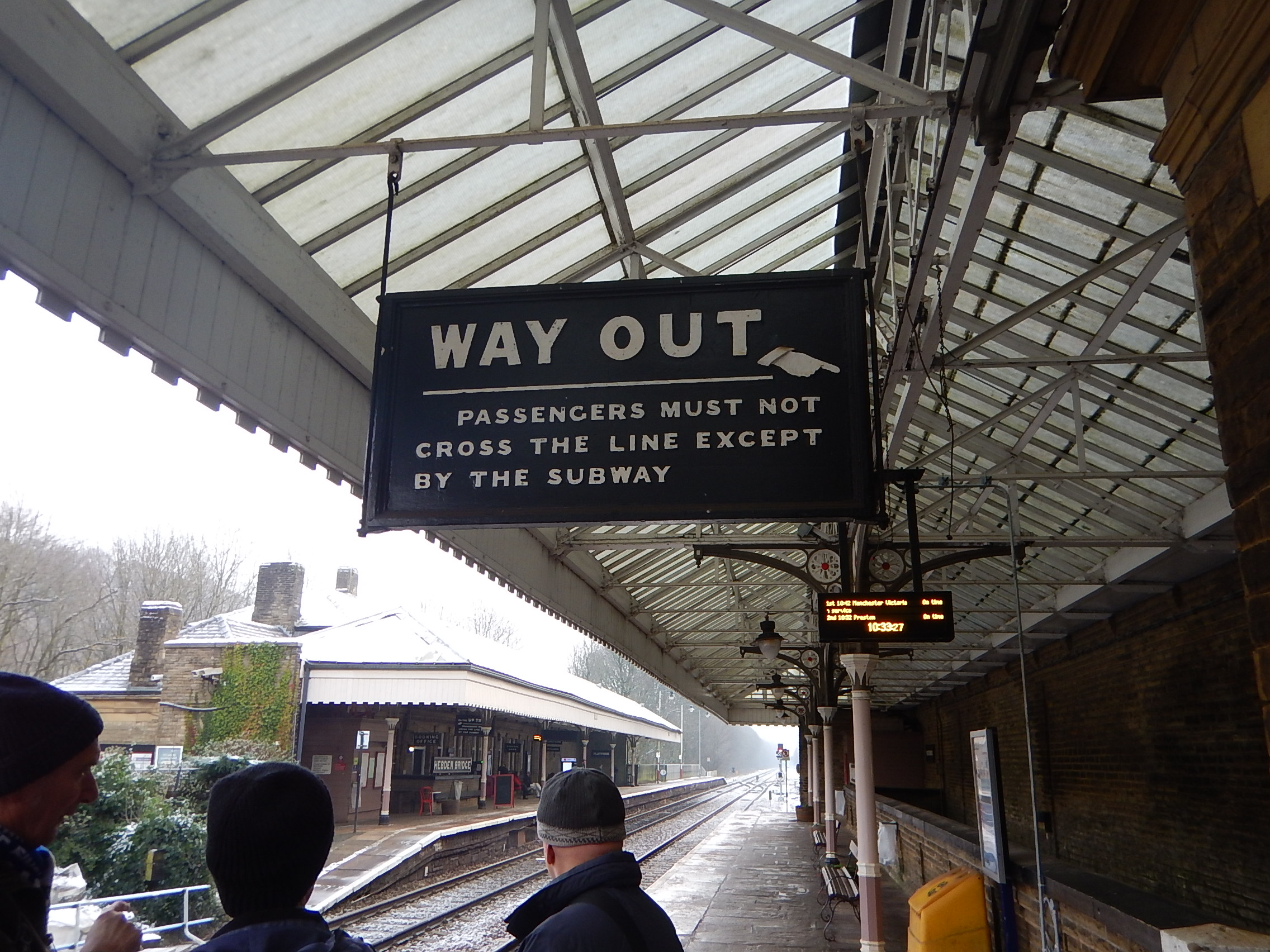
The picture shows the Grade II Listed Hebden Bridge station.
Third-rail electrification with an independent reliable power supply could be a way of speeding hybrid trains on their way.
Power Supply In Remote Places
Communications are essential to the modern railway.
Trains and train operators need to be able to have good radio connections to signalling and control systems.
Passengers want to access wi-fi and 4G mobile phone networks.
More base stations for communication networks will be needed in remote locations.
Wind, solar and hydrogen will all play their part.
I believe in the future, that remote routes in places like Wales, Scotland and parts of England, will see increasing numbers of trains and consequently passengers., many of whom will be walking in the countryside.
Could this lead to upgrading of remote stations and the need for reliable independent power supplies?
Conclusion
I am very much coming to the conclusion, that because of the small UK loading gauge, hydrogen-powered trains would only have limited applications in the UK. Unless the train manufacturers come up with a really special design.
But using hydrogen as an environmentally-friendly power source for UK railways to power electrification, perhaps in combination with wind and solar is a definite possibility!
.
Hydrogen-Powered Railway Electrification
This may seem rather bizarre, but I’m not talking about electrifying whole lines.
There appears to me to be a need for small power sources to power railway electrification and other rail-related equipment and facilities, that are not connected to the electricity grid.
Opportunities could be.
- Electrifying tunnels.
- Boosting supply on third-rail systems, which need a connection every two or three miles.
- Electrifying short branch lines.
- Powering level crossings.
- Powering drainage pumps.
- Powering isolated stations.
But anywhere close to a railway that needed a reliable electricity source would be a possibility.
Hydrogen As A Source Of Electricity
If hydrogen is used in a fuel cell to generate electricity, the only by-product is water.
Hydrogen is already used to power buses in London
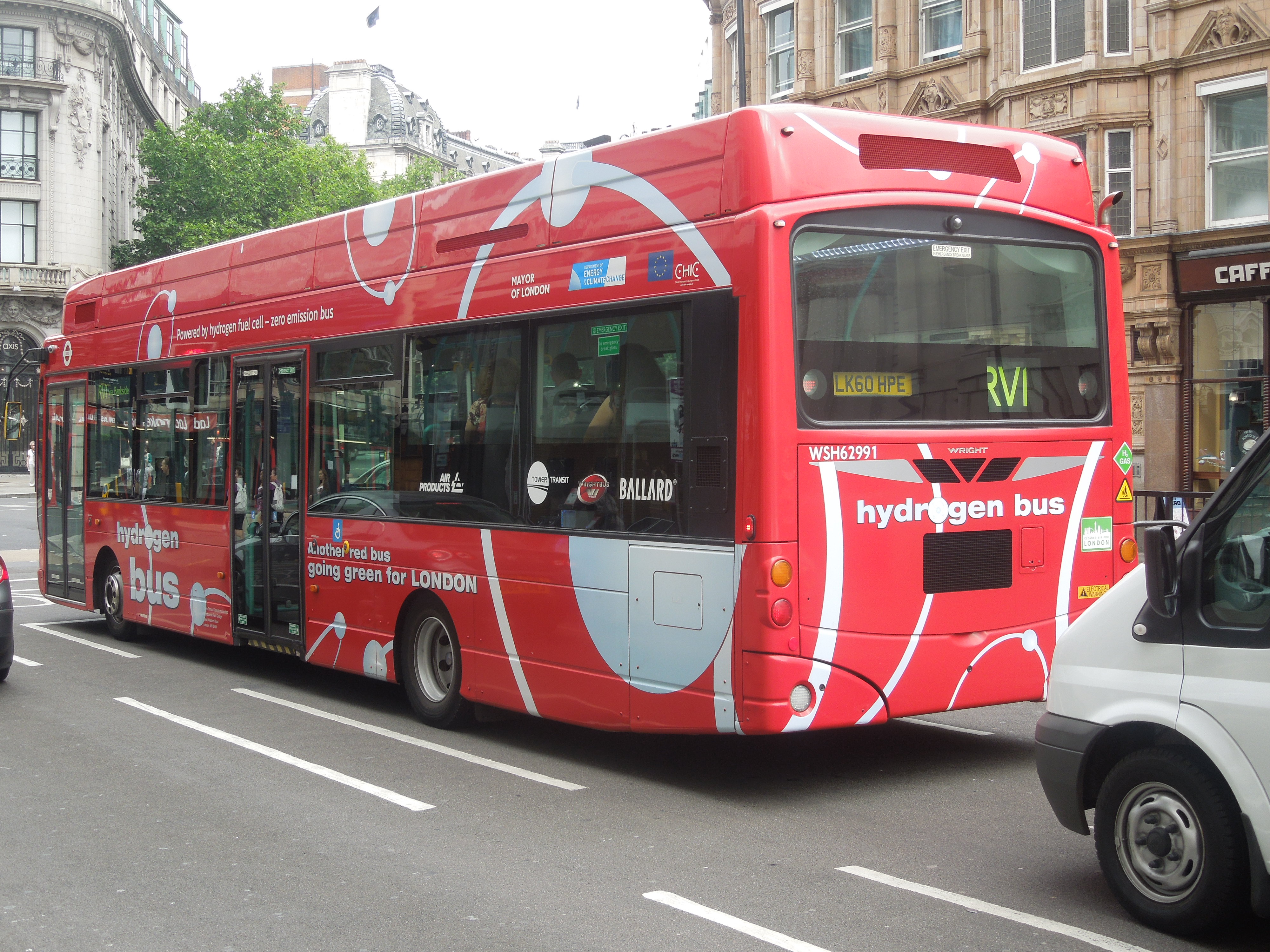
It obviously works, but I’ve always been puzzled about why it isn’t used in more road vehicles. It could be that the logistics problems of refuelling are too complicated and expensive.
Could it be less complicated with trains?
Alsthom have recently launched a hydrogen-powered train, which I talked about in Is Hydrogen A Viable Fuel For Rail Applications?. So they must think it is a viable fuel for trains.
According to the Alsthom video in my related post, the Alsthom Coradia iLint train uses a combination of a hydrogen-powered electricity generator and batteries to provide continuous power and handle regenerative braking.
So why not use hydrogen-power to generate electricity at locations alongside the railway?
Suppose the small power station was providing power to a 750 VDC third-rail electrified railway. In a remote area, the small power station could be using solar panels or wind turbines coupled with batteries to provide a continuous electricity supply.
Intelligent Control System
The power station would be controlled so that it was efficient.
Ensuring Safety
People worry about the safety of hydrogen, as we’ve all seen film of the Hindenburg.
I would design a hydrogen-powered electricity generator for rail use to be buried at the side of the track, with only necessary connections above the surface.
The hydrogen-powered generators would also be contained within the railway security fencing.
What Trains Could Be Powered?
Using hydrogen at track-side means that any unmodified electric or bi-mode train can benefit from zero-carbon hydrogen-power.
Distributing The Hydrogen
The obvious way to distribute the hydrogen would be by train. It would surely be possible to design a hydrogen-powered locomotive and tanker, which could deliver the hydrogen between the production source and the various generators.
Hydrogen Availability
Hydrogen is variable around the UK, but in certain areas there are large amounts of the gas created in chemical plants with rail access.
Conclusion
I won’t be consigning this idea to the bin.
Siemens Joins The Hydrogen-Powered Train Club
This article on Global Rail News is entitled Siemens Working On Fuel Cell-Powered Mireo Train.
Siemens Mobility’s Mireo is their next-generation electric multiple unit.
This description is from Wikipedia.
The railcars have an articulated design and aluminium carbodies, with 26 metres (85 ft) cab cars on each end of a trainset and 19 metres (62 ft) passenger cars between them, with trainsets between two and seven cars long. The use of aluminium, combined with new control systems, is intended to reduce energy use by up to 25%. compared to previous Siemens EMUs. The railcars can reach a top speed of up to 160 kilometres per hour (99 mph)
The first units were ordered in February 2017 by DB Regio, which ordered 24 three-car trainsets with a passenger capacity of 220 for service on its routes in the Rhine valley in southwestern Germany.
This train has a lot in common with other offerings from the major train manufacturers.
- Light weight
- Articulated design.
- Sophisticated control systems.
- Low energy use.
Is it a case of engineering minds thinking alike?
The Global Rail New article says this about the hydrogen-powered trains.
Siemens is partnering up with Canadian manufacturer Ballard Power Systems to develop a fuel cell engine for its new Mireo train platform.
The two companies have signed a Development Agreement to produce a 200 kilowatt fuel cell engine to power a Mireo multiple unit.
The first fuel cell-powered Mireo could be running by 2021, Siemens and Ballard have announced.
There is a page on the Ballard web site, which lists their fuel cell engines called FCVeloCity.
- FCVeloCity-MD – 30 kW
- FCVeloCity-HD – 60kW, 85kW, 100kW
- FCVeloCity-XD – 200 kW
I would assume that as there is no product sheet for the XD, that the 200 kW unit is still in development.
The first application would appear to be the Siemens Mireo.
Is Two Hundred Kilowatt Enough Power?
Bombardier’s four-car Class 387 train, is a typical electric muiltiple unit, that has been built in the last few years.
It has an installed power of 1.68 megawatts or 420 kW per car.
Porterbrook’s brochure says this about the two diesel engines in their Class 769 train, which is a bi-mode conversion of a Class 319 train.
The engine is a MAN D2876 LUE631 engine which generates 390 kW at 1800 rpm, giving an acceptable power output.
So that works out at 195 kW per car.
Both these trains have similar performance to the Siemens Mireo.
- The trains will be substantially heavier than the Mireo.
- The trains will do a lot of acceleration under electrification.
The 200 kW of the Mireo, isn’t much compared with the current generation of train.
As with the Alstom Coradio iLint, that I wrote about in Is Hydrogen A Viable Fuel For Rail Applications?, I suspect the Mireo has the following features.
- Use of batteries to store energy.
- Regenerative braking will use the batteries.
- Selective use of electrification to drive the train directly.
- Intelligent control systems to select appropriate power.
Given that the light weight will also help in the energy-expensive process of electrification, the intelligent control system is probably the key to making this train possible.
Will The Train Have One Or Two Hydrogen Power Units?
Wikipedia says this about the layout of the train.
The railcars have an articulated design and aluminium carbodies, with 26 metres (85 ft) cab cars on each end of a trainset and 19 metres (62 ft) passenger cars between them, with trainsets between two and seven cars long.
The trend these days in modern trains, is to fit large numbers of axles with traction motors for fast acceleration and smooth regenerative braking. As an Electrical Engineer, I believe that the most efficient electrical layout, would be for any car with motors to have some form of energy storage.
Have Siemens designed the train to use two identical cab cars?
- These are longer to meet higher crash-protection standards.
- Any diesel or hydrogen generator would be in these cars.
- Energy storage would be provided.
Two cab cars with generators would have 400 kW, which would be more likely to be an acceptable power level.
Would the intermediate passenger cars be powered or just trailer cars?
I very much believe that the ideal intermediate cars should be powered and have a battery for regenerative braking.
Will Other Companies Join The Hydrogen Club?
Alstom, who are merging their train business with Siemens have announced orders for the Coradia iLint, so they are obviously a full-paid up member.
Bombardier have said nothing, but like Ballard, they are a Canadian company.
The key though, is that modern intelligent train control systems, which are used by all train manufacturers, have been designed to do the following.
- Select appropriate power from electrification, battery or an on-board diesel generator.
- Deploy pantograph and third-rail shoe as required.
- Drive the train in an efficient manner.
Just swap the diesel generator for a hydrogen one.
Having a light weight, energy efficient train design will also help.
Conclusion
Expect hydrogen-powered trains from most manufacturers.
 The Anonymous Widower