Another Product From Hyperdrive Innovation
My Google Alert for Hyperdrive Innovation has picked up this article on Yahoo, which is entitled RBW EV Roadster Is An Electric Take On The Classic MGB.
This is a paragraph from the article.
Managing Director Peter Swain said: “Our patented system places the electric motor at the rear of the car and Hyperdrive Innovation’s lithium-ion battery technology under the bonnet, which gives perfectly balanced weight distribution. Not only does this give the driver much better handling of the car, retaining that sports car feel, but it also affords maximum battery volume to be housed.
As Hyperdrive Innovation are a partner in Hitachi’s Regional Battery Train, does the MGB go like an electric train?
If I still drove a car, I would buy one.
Having driven a few classic roadsters in my time, what is said about the handling of the car is probably true and I could envisage a small manufacturer building a roaster to that design from scratch.
I used to work with a former Engineering Director of Lotus Cars. After his stories about the great Colin Chapman, I’m sure that fertile brain would now be designing an electric roaster to fit the niche of the classic Lotus Seven and Lotus Elan.
- Simple, but strong, steel or aluminium chassis.
- Fibreglass body
- Battery in the front.
- If the battery was well-forward, it would improve crashworthiness in a head on crash.
- Rear wheel drive.
We are uniquely positioned in the UK, with our motor racing heritage to design and build such a car in the UK.
GWR Buys Vehicles Outright In HST Fleet Expansion
The title of this post is the same as that of this article on Railway Gazette.
This is the introductory paragraph.
Despite concerns over future passenger numbers, the Department for Transport has given permission for Great Western Railway to procure three more shortened HST diesel trainsets, branded as the Castle Class by the franchisee.
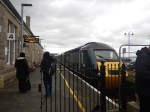
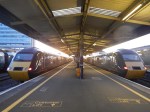
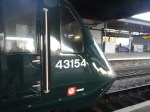
These pictures show some of the Castle Class trains.

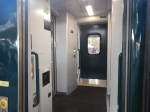
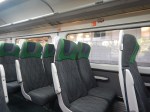


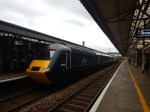
They must be profitable and/or popular with passengers.
If I have a problem with these trains, it is with the Class 43 diesel power cars.
- Each train has two power cars.
- It would appear that there are about 150 of the Class 43 power cars in regular service.
- Each is powered by a modern MTU 16V4000 R41R diesel engine, that is rated at 1678 kW.
- The engines are generally less than a dozen years old.
- They will be emitting a lot of carbon dioxide.
As the trains are now only half as long as they used to be, I would suspect, that the engines won’t be working as hard, as they can.
Hopefully, this will mean less emissions.
The article says this about use of the fleet.
With its fleet now increasing to 14, GWR expects to use 12 each day on services across the west of England. Currently the fleet is deployed on the Cardiff – Bristol – Penzance corridor, but the company is still evaluating how the additional sets will be used.
It also says, that they are acquiring rolling stock from other sources. Some of which will be cannibalised for spares.
Are First Rail Holdings Cutting Carbon Emissions?
First Rail Holdings, who are GWR’s parent, have announced in recent months three innovative and lower-carbon fleets from Hitachi, for their subsidiary companies.
- The Class 807 trains for Avanti West Coast will not have any diesel engines.
- The Class 805 trains for Avanti West Coast will initially have diesel engines, but these may be changedin a few years for battery power packs.
- The Class 803 trains for East Coast Trains will not have any diesel engines.
Hitachi have also announced a collaboration with Hyperdrive Innovation to provide battery packs to replace diesel engines, that could be used on Class 800 and Class 802 trains.
First Rail Holdings have these Class 800/802 fleets.
- GWR – 36 x five-car Class 800 trains
- GWR – 21 x nine-car Class 800 trains
- GWR – 22 x five-car Class 802 trains
- GWR – 14 x nine-car Class 802 trains
- TransPennine Express – 19 x five-car Class 802 trains
- Hull Trains – 5 x five-car Class 802 trains
Note.
- That is a total of 117 trains.
- As five-car trains have three diesel engines and nine-car trains have five diesel engines, that is a total of 357 engines.
- In Could Battery-Electric Hitachi Trains Work Hull Trains’s Services?, I showed that Hull Trains could run their services with a Fast Charging system in Hull station.
- In Could Battery-Electric Hitachi Trains Work TransPennine Express’s Services?, I concluded that Class 802 trains equipped with batteries could handle all their routes without diesel and some strategically-placed charging stations.
In the Wikipedia entry for the Class 800 train, there is a section called Powertrain, where this is said.
According to Modern Railways magazine, the limited space available for the GUs has made them prone to overheating. It claims that, on one day in summer 2018, “half the diagrammed units were out of action as engines shut down through overheating.
So would replacing some diesel engines with battery packs, also reduce this problem, in addition to cutting carbon emissions?
It does appear to me, that First Rail Holdings could be cutting carbon emissions in their large fleet of Hitachi Class 800 and Class 802 trains.
The Class 43 power cars could become a marketing nightmare for the company?
Could Class 43 Power Cars Be Decarbonised?
Consider.
- Class 43 power cars are forty-five years old.
- They have been rebuilt with new MTU engines in the last dozen years or so.
- I suspect MTU and GWR know everything there is to know about the traction system of a Class 43 power car.
- There is bags of space in the rear section of the power car.
- MTU are part of Rolls-Royce, who because of the downturn in aviation aren’t performing very well!
But perhaps more importantly, the power cars are iconic, so anybody, who decarbonises these fabulous beasts, gets the right sort of high-class publicity.
I would also feel, if you could decarbonise these power cars, the hundreds of diesel locomotives around the world powered by similar diesel engines could be a useful market.
What methods could be used?
Biodiesel
Running the trains on biodiesel would be a simple solution.
- It could be used short-term or long-term.
- MTU has probably run the engines on biodiesel to see how they perform.
- Biodiesel could also be used in GWR’s smaller diesel multiple units, like Class 150, 158, 165 and 166 trains.
Some environmentalists think biodiesel is cheating as it isn’t zero-carbon.
But it’s my view, that for a lot of applications it is a good interim solution, especially, as companies like Altalto, will be making biodiesel and aviation biofuel from household and industrial waste, which would otherwise be incinerated or go to landfill.
The Addition Of Batteries
This page on the Hitachi Rail Ltd web site shows this image of the V-Train 2.
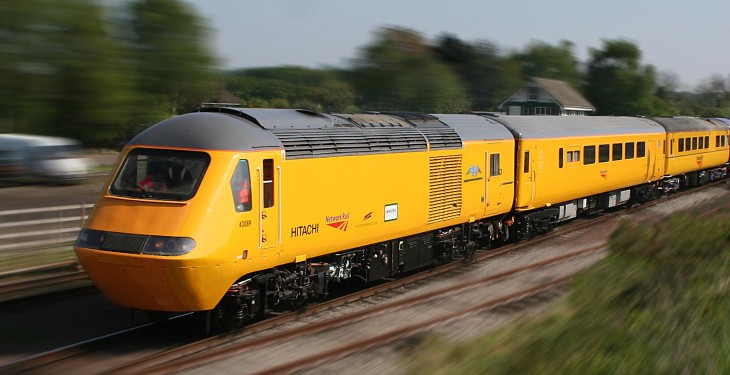
This is the introduction to the research program, which was based on a High Speed Train, fotmed of two Class 43 power cars and four Mark 3 carriages.
The V-Train 2 was a demonstration train designed in order to demonstrate our skills and expertise while bidding for the Intercity Express Programme project.
The page is claiming, that a 20 % fuel saving could be possible.
This paragraph talks about performance.
The V-Train 2 looked to power the train away from the platform using batteries – which would in turn be topped up by regenerative braking when a train slowed down to stop at a station. Acceleration would be quicker and diesel saved for the cruising part of the journey.
A similar arrangement to that Hitachi produced in 2005 could be ideal.
- Technology has moved on significantly in the intervening years.
- The performance would be adequate for a train that just trundles around the West Country at 90 mph.
- The space in the rear of the power car could hold a lot of batteries.
- The power car would be quiet and emission-free in stations.
- There would be nothing to stop the diesel engine running on biodiesel.
This might be the sort of project, that Hitachi’s partner in the Regional Battery Train; Hyperdrive Innovation. would probably be capable of undertaking.
MTU Hybrid PowerPack
I wouldn’t be surprised to find, that MTU have a drop-in solution for the current 6V4000 R41R diesel engine, that includes a significant amount of batteries.
This must be a serious possibility.
Rolls-Royce’s 2.5 MW Generator
In Our Sustainability Journey, I talk about rail applications of Rolls-Royce’s 2.5 MW generator, that has been developed to provide power for electric flight.
In the post, I discuss fitting the generator into a Class 43 power car and running it on aviation biofuel.
I conclude the section with this.
It should also be noted, that more-efficient and less-polluting MTU engines were fitted in Class 43s from 2005, so as MTU is now part of Rolls-Royce, I suspect that Rolls-Royce have access to all the drawings and engineers notes, if not the engineers themselves
But it would be more about publicity for future sales around the world, with headlines like.
Iconic UK Diesel Passenger Trains To Receive Green Roll-Royce Jet Power!
COVID-19 has given Rolls-Royce’s aviation business a real hammering, so perhaps they can open up a new revenue stream by replacing the engines of diesel locomotives,
I find this an intriguing possibility. Especially, if it were to be fitted with a battery pack.
Answering My Original Question
In answering my original question, I feel that there could be several ways to reduce the carbon footprint of a Class 43 power car.
It should also be noted that other operators are users of Class 43 power cars.
- ScotRail – 56
- CrossCountry – 12
- East Midlands Railway – 39
- Network Rail – 3
Note.
- ScotRail’s use of the power cars, is very similar to that of GWR.
- CrossCountry’s routes would need a lot of reorganisation to be run by say Hitachi’s Regional Battery Train.
- East Midlands Railway are replacing their Inter-City 125s with new Class 810 trains.
The picture shows the power car of Network Rail’s New Measurement Train.

These may well be the most difficult to decarbonise, as I suspect they need to run at 125 mph on some routes, which do not have electrification and there are no 125 mph self-powered locomotives. After the Stonehaven crash, there may be more tests to do and a second train may be needed by Network Rail.
Why Are GWR Increasing Their Castle Class Fleet?
These are possible reasons.
GWR Want To Increase Services
This is the obvious explanation, as more services will need more trains.
GWR Want To Update The Fleet
There may be something that they need to do to all the fleet, so having a few extra trains would enable them to update the trains without cutting services.
GWR Want To Partially Or Fully Decarbonise The Power Cars
As with updating the fleet, extra power cars would help, as they could be modified first and then given a thorough testing before entering passenger service.
GWR Have Been Made An Offer They Can’t Refuse
Suppose Rolls-Royce, MTU or another locomotive power plant manufacturer has a novel idea, they want to test.
Over the years, train operating companies have often tested modified trains and locomotives for manufacturers.
So has a manufacturer, asked GWR to test something in main line service?
Are Other Train Operators Thinking Of Using Introducing More Short-Formed InterCity 125 Trains?
This question has to be asked, as I feel there could be routes, that would be suitable for a net-zero carbon version of a train, like a GWR Castle or a ScotRail Inter7City.
Northern Trains
Northern Trains is now run by the Department for Transport and has surely the most suitable route in the UK for a shorted-formed InterCity 125 train – Leeds and Carlisle via the Settle and Carlisle Line.
Northern Trains may have other routes.
Transport for Wales Rail Services
Transport for Wales Rail Services already run services between Cardiff Central and Holyhead using diesel locomotive hauled services and long distance services between South Wales and Manchester using diesel multiple units.
Would an iconic lower-carbon train be a better way of providing some services and attract more visitors to the Principality?
Conclusion
GWR must have a plan, but there are few clues to what it is.
The fact that the trains have been purchased rather than leased could be significant and suggests to me that because there is no leasing company involved to consult, GWR are going to do major experimental modifications to the trains.
They may be being paid, by someone like an established or new locomotive engine manufacturer.
It could also be part of a large government innovation and decarbonisation project.
My hunch says that as First Rail Holdings appear to be going for a lower-carbon fleet, that it is about decarbonising the Class 43 power cars.
The plan would be something like this.
- Update the three new trains to the new specification.
- Give them a good testing, before certifying them for service.
- Check them out in passenger service.
- Update all the trains.
The three extra trains would give flexibility and mean that there would always be enough trains for a full service.
Which Methods Could Be Used To Reduce The Carbon Footprint Of The Class 43 Power Cars?
These must be the front runners.
- A Hitachi/Hyperdrive Innovation specialist battery pack.
- An MTU Hybrid PowerPack.
- A Rolls-Royce MTU solution based on the Rolls-Royce 2.5 MW generator with batteries.
All would appear to be viable solutions.
Beeching Reversal – Charfield Station
This is one of the Beeching Reversal projects that the Government and Network Rail are proposing to reverse some of the Beeching cuts.
Wikipedia says this about the Proposed Reopening of Charfield station.
Services between Bristol and Birmingham pass through Charfield. There have been discussions about the viability of reopening the station. The costs would be shared between Gloucestershire and South Gloucestershire councils since, although the station would be in South Gloucestershire, the nearby town of Wotton-under-Edge would be a principal beneficiary.
This Google Map shows the village with the Bristol and Birmingham Line passing through.
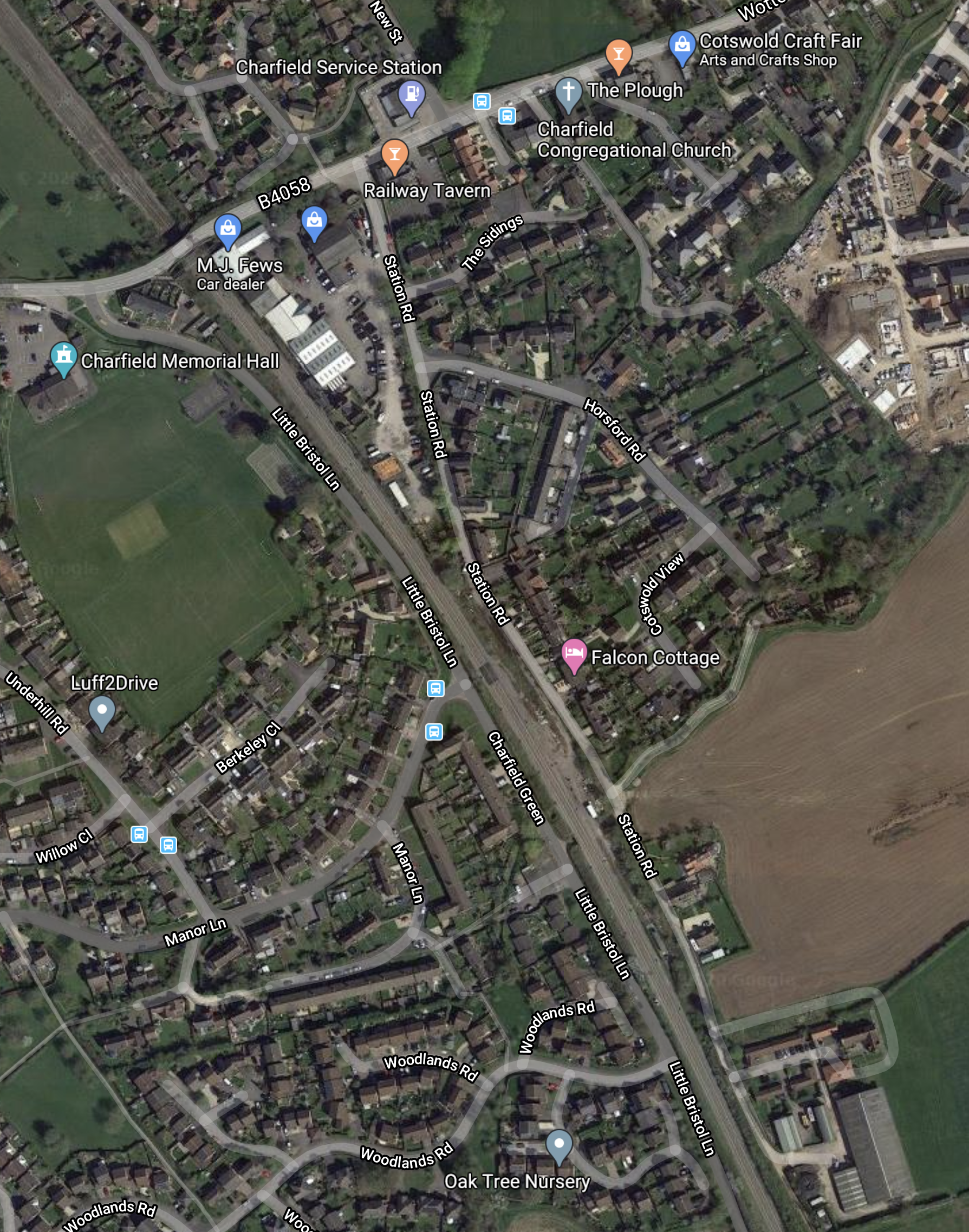
Note, that the road running down the East side of the railway is called Station Road.
There appear to be these services running through the location.
- CrossCountry – Plymouth and Edinburgh/Glasgow via Bristol Temple Meads, Bristol Parkway, Cheltenham Spa and Birmingham New Street
- CrossCountry – Exeter St. Davids and Manchester Piccadilly via Bristol Temple Meads, Bristol Parkway, Cheltenham Spa and Birmingham New Street
- GWR – Great Malvern and Westbury via Bristol Temple Meads, Bristol Parkway, Gloucester and Cheltenham Spa
Note.
All services appear to be hourly.
Bristol Parkway station is thirteen miles away by rail, so is an easy drive, but a very stiff walk or cycle.
Timings by rail from Charfield based on passing GWR trains include.
- Bristol Parkway – 15 minutes
- Bristol Temple Meads – 27 minutes
- Cheltenham Spa – 38 minutes
- Gloucester – 24 minutes
There may be a possibility of improving these times, as the current timetable might have been written for slow trains and a Class 158, Class 165 or Class 166 train can do better.
CrossCountry times include.
- Birmingham New Street – 68 minutes
- Bristol Parkway – 11 minutes
- Bristol Temple Meads – 23 minutes
- Cheltenham Spa – 17 minutes
- Worcestershire Parkway – 32 minutes
I would think, that Charfield station could receive one GWR stopping train and one fast CrossCountry train per hour.
Discontinuous Electrification Between Birmingham And Bristol
Hitachi have changed the rules on electrification, by the announcement of the development of battery electric trains in collaboration with Hyperdrive Innovation, which I wrote about in Hyperdrive Innovation And Hitachi Rail To Develop Battery Tech For Trains.
The proposed train is described in this Hitachi infographic.

It will have a range on battery power of 90 km or 56 miles.
Consider.
- Midlands Connect have ambitions see an extra hourly service between Birmingham and Bristol Temple Meads, with all services running five minutes faster. See Midlands Rail Hub.
- CrossCountry will likely be getting new trains, to replace their exclusively all-diesel fleet. They could be tri-mode trains to make the most of long stretches of electrification on their routes, batteries for short gaps of up to fifty miles and diesel power everywhere else.
- There are electrified stations at Bristol Parkway and possibly Bristol Temple Meads in a few years.
- There is full electrification between Birmingham New Street and Bromsgrove stations.
- Bromsgrove and Bristol Parkway are seventy miles apart.
- There is a possibility, that Cheltenham Spa station will get a charging facility so that London Paddington and Cheltenham Spa services could be run by Class 800 trains converted to battery electric operation.
I don’t think it is an unreasonable prediction to make that Hitachi and other train manufacturers like Stadler with their Class 755 trains, have the technology to run low-carbon services between Bristol Temple Meads and Birmingham New Street stations.
- Trains would leave Bromsgrove and Bristol Parkway with full batteries.
- Quick battery top-ups can be taken at Cheltenham Spa and Worcestershire Parkway stations.
- The fast acceleration of the electric trains will allow extra stops.
I think it would also be possible for GWR to use battery electric Class 387 trains between Great Malvern and Westbury.
Charfield could be an electric train-only station.
Conclusion
The reopening of Charfield station is really a simple station rebuilding and reopening and local passenger forecasts will probably make the decision.
But these forecasts must take into account, the likely partial decarbonisation of the route through the station, which would surely increase ridership.
The new station could also be built with provision for a possible charging facility, in case it might be needed in the future.
Hyperdrive Innovation And Hitachi Rail To Develop Battery Tech For Trains
The title of this post, is the same as that of this article on The Engineer.
This is the introductory sub-title.
Hyperdrive Innovation and Hitachi Rail are to develop battery packs to power trains and create a battery hub in the North East of England.
The article gives this information.
- Trains can have a range of ninety kilometres, which fits well with Hitachi’s quoted battery range of 55-65 miles.
- Hitachi has identified its fleets of 275 trains as potential early recipients.
Hitachi have also provided an informative video.
At one point, the video shows a visualisation of swapping a diesel-engine for a battery pack.
As a world-class computer programmer in a previous life, I believe that it is possible to create a battery pack, that to the train’s extremely comprehensive computer, looks like a diesel-engine.
So by modifying the train’s software accordingly, the various power sources of electrification, diesel power-packs and battery packs can be used in an optimum manner.
This would enable one of East Midlands Railway’s Class 810 trains, to be fitted with a mix of diesel and battery packs in their four positions under the train.
Imagine going between London and Sheffield, after the High Speed Two electrification between Clay Cross North Junction and Sheffield has been erected.
- Between St. Pancras and Market Harborough power would come from the electrification.
- The train would leave the electrified section with full batteries
- At all stations on the route, hotel power would come from the batteries.
- Diesel power and some battery power would be used between stations. Using them together may give better performance.
- At Clay Cross North Junction, the electrification would be used to Sheffield.
For efficient operation, there would need to be electrification or some form of charging at the Sheffield end of the route. This is why, I am keen that when High Speed Two is built in the North, that the shsared section with the Midland Main Line between Clay Cross North Junction and Sheffield station, should be built early.
Hitachi have said that these trains will have four diesel engines. I think it will more likely be two diesel engines and two batteries.
The World’s First Battery-Electric Main Line
I suspect with electrification between Sheffield and Clay Cross North Junction, that a train fitted with four batteries, might even be able to run on electric power only on the whole route.
In addition, if electrification were to be erected between Leicester and East Midlands Parkway stations, all three Northern destinations would become electric power only.
The Midland Main Line would be the first battery electric high speed line in the world!
Hitachi On Hydrogen Trains
The press release about the partnership between Hitachi and Hyperdrive Innovation is on this page on the Hitachi web site.
This is a paragraph.
Regional battery trains produce zero tailpipe emission and compatible with existing rail infrastructure so they can complement future electrification. At the moment, battery trains have approximately 50% lower lifecycle costs than hydrogen trains, making battery the cheapest and cleanest alternative zero-emission traction solution for trains.
I have ridden in two battery-electric trains and one hydrogen-powered train.
I would rate them out of ten as follows.
- Class 230 train – 6 – Battery
- Class 379 train – 8 – Battery
- Coradia iLint – 4 – Hydrogen
It’s not that the iLint is a bad train, as the power system seems to work well, but the passenger experience is nowhere near the quality of the two battery trains.
In my view, battery vehicles are exceedingly quiet, so is this the reason?
On the other hand, it could just be poor engineering on the iLint.
Conclusion
This is as very big day in the development of zero- and low-carbon trains in the UK.
 The Anonymous Widower