UK And Germany Boost Offshore Renewables Ties
The title of this post, is the same as that of this article on offshoreWIND.biz.
This is the sub-heading.
A new partnership between the UK and German governments has been agreed on 3 November to help secure safe, affordable, and clean energy for consumers in both nations for the long-term and bolster energy security. Both countries commit to strengthening cooperation in renewables, notably offshore wind and electricity interconnection.
These two paragraphs introduce the deal.
Under the new partnership signed in London by Energy Security Secretary Claire Coutinho and Germany’s Vice Chancellor, Robert Habeck, the UK and Germany have reaffirmed their shared ambition and commitment to net zero and progressing the energy transition.
Europe’s two largest economies have also doubled down on commitments made under the Paris Agreement to limit global warming to 1.5 degrees.
i think this could be a worthwhile follow-up to the relationship, that Boris Johnson and Olaf Scholz seemed to encourage after their high profile meeting in April 2022.
This press release from Downing Street is entitled PM meeting with German Chancellor Olaf Scholz: 8 April 2022 and this is the first two paragraphs.
The Prime Minister welcomed German Chancellor Olaf Scholz to Downing Street this afternoon to discuss the West’s response to Putin’s barbaric invasion of Ukraine.
The two leaders shared their disgust at the Russian regime’s onslaught and condemned Putin’s recent attacks.
I wrote Armoured Vehicles For Ukraine based on some of the things said in the press conference after what seemed to be a very wide discussion.
But it was these paragraphs in the press release that caught my eye.
They also agreed on the need to maximise the potential of renewable energy in the North Sea and collaborate on climate ambitions and green energy.
The Prime Minister said he wanted to further deepen the UK’s relationship with Germany, and intensify its cooperation across defence and security, innovation and science.
After Boris and Olaf’s meeting at Downing Street, I have been able to write these posts about the Anglo-German energy relationship and also make some other observations.
- Mona, Morgan And Morven
- UK-German Energy Link Reaches Financial Close
- RWE, Siemens and other German companies seem to be building a strong presence in the UK.
- Rolls-Royce are doing the same in Germany.
Claire Coutinho and Robert Habeck seem to be wanting to continue the co-operation, judging by this paragraph from the article on offshoreWIND,biz.
The energy and climate partnership sees both countries commit to enhancing cooperation in renewables, particularly in offshore wind and electricity interconnection, including offshore hybrid interconnection.
The most significant part of this paragraph is the mention of offshore hybrid interconnection.
If you want more details on their meeting, this document is the official UK Government declaration.
I have my thoughts.
What Is Meant By Offshore Hybrid Interconnection?
Type “Offshore Hybrid Interconnection” into Google and the first page is this page from National Grid, that is entitled Offshore Hybrid Assets, that has this sub-heading.
How the North Sea has the potential to become Europe’s green energy ‘powerhouse’
This is the introductory paragraph.
Now more than ever we need more renewable energy to make energy cleaner, more affordable, and more secure. The North Sea offers an incredible opportunity for the UK and our European neighbours to deliver huge increases in offshore wind. But delivering new offshore wind will require more infrastructure, which will have an impact on communities.
Hybrid is all-purpose comfort word like cashmere, platinum or puppies.
The page on the National Grid web site describes The Next Generation Interconnector with these paragraphs.
Interconnectors already provide a way to share electricity between countries safely and reliably. But what if they could do much more than that? What if interconnectors could become an offshore connection hub for green energy?
Instead of individual wind farms connecting one by one to the shore, offshore hybrid assets (OHAs) will allow clusters of offshore wind farms to connect all in one go, plugging into the energy systems of neighbouring countries.
And then there is this section entitled Tomorrow’s Solution: Offshore Wind And Interconnectors In Harmony, where this is said.
Today, offshore wind and interconnectors operate alongside each other, connecting to the shore individually. In the future, offshore hybrid assets could enable offshore wind and interconnection to work together as a combined asset.
We now call this type of infrastructure an offshore hybrid asset (OHA), but we used to refer to it as a multi-purpose interconnector (MPI). We changed it because we work so closely together with Europe, it made sense to use the same terminology.
The page on the National Grid web site also has an interactive graphic, which shows the benefit of the approach.
LionLink
National Grid are already developing LionLink, with Dutch grid operator; TenneT, which will be a multi-purpose interconnector linking the UK and the Netherlands.
LionLink is described on this page from National Grid, where this is the sub-heading.
We’re developing a first-of-its-kind electricity link to connect offshore wind between the UK and the Netherlands.
This is the introductory paragraph.
Designed together with our Dutch partners TenneT, LionLink (formerly known as EuroLink) is an electricity link that can supply around 1.8 gigawatts of clean electricity, enough to power approximately 1.8 million British homes. By connecting Dutch offshore wind to Dutch and British markets via subsea electricity cables called interconnectors, LionLink will strengthen our national energy security and support the UK’s climate and energy goals.
Will we be planning a similar electric handshake with the Germans?
How Much Offshore Wind Power Are We Talking About?
This is answered by the last two paragraphs of the article on offshoreWIND.biz.
Around 75 per cent of installed offshore wind capacity in the North Sea is in German and British waters. This is helping to drive the UK’s ambition for up to 50 GW of offshore wind, including up to 5 GW of floating wind, by 2030, the governments said.
Germany is aiming at installing 30 GW by 2030.
That is an Anglo-German starter for eighty GW.
Electrolysers In The Middle If The North Sea
Why Not?
This is a clip from National Grid’s graphic on the page that introduces Offshore Hybrid Assets,
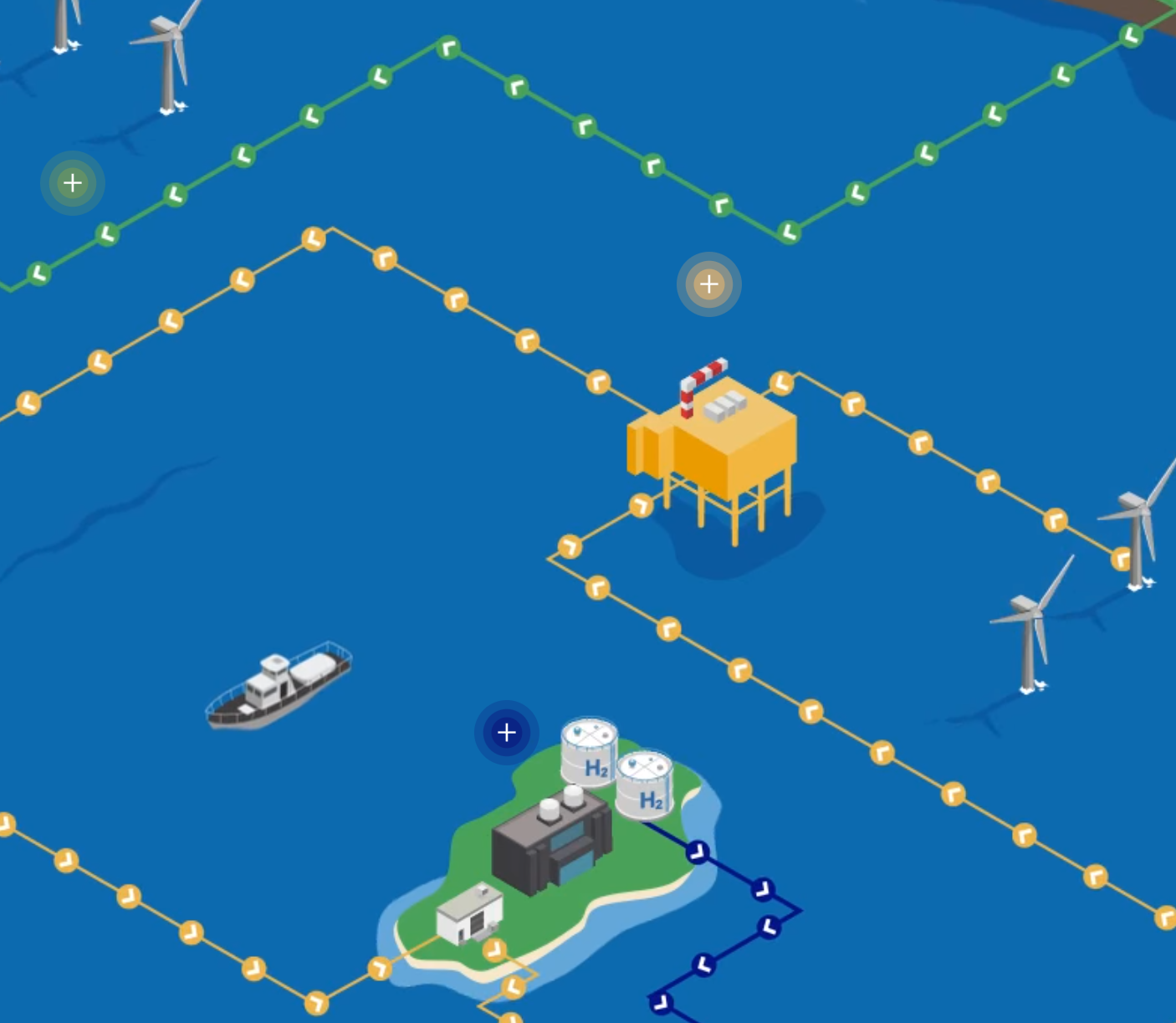
It shows an offshore hydrogen electrolyser.
- You could have an offshore hybrid asset that went between say Bacton in Norfolk and Hamburg via these assets.
- One or more wind farms in UK territorial waters.
- A mammoth offshore electrolyser, with hydrogen storage, possibly in a depleted gas field.
- One or more wind farms in German territorial waters.
Electricity will be able to go three ways; to the UK, to Germany or to the electrolyser.
The Involvement Of German Energy Companies In UK Territorial Waters
Wikipedia lists offshore fifteen wind farms, that have German owners in UK territorial waters, that total 12,960 MW.
This compares with.
- Equinor – 6 wind farms totalling 6466 MW.
- Ørsted – 15 wind farms totalling 9683 MW.
- Scottish Power – 2 wind farms totalling 5,000 MW.
- SSE Renewables – 15 wind farms totalling 15,591 MW.
- Vattenfall – 6 wind farms totalling 4384 MW.
As there is a number of partnerships, these figures only show the relative sizes of the investment by individual companies.
But at nearly 13 GW, the amount of total German investment in UK territorial waters is substantial.
Is This Solely An Anglo-German Club Or Can Others Join?
Consider.
- It seems to me, that because of the LionLink, the Dutch are already involved.
- TenneT is also a large electricity distributor in Germany.
- Countries with substantial shares of the water and winds of the North Sea in addition to Germany, the Netherlands and the UK, include Belgium, Denmark and Norway.
- The UK has interconnectors with Belgium, Denmark, France, Germany, Norway and the Netherlands.
It appears that the world’s largest multi-national power generator is evolving by stealth.
North Sea Wind Power Hub
This concept seems to have developed around 2017, by Danish, Dutch and German interests.
The Wikipedia entry introduces it like this.
North Sea Wind Power Hub is a proposed energy island complex to be built in the middle of the North Sea as part of a European system for sustainable electricity. One or more “Power Link” artificial islands will be created at the northeast end of the Dogger Bank, a relatively shallow area in the North Sea, just outside the continental shelf of the United Kingdom and near the point where the borders between the territorial waters of Netherlands, Germany, and Denmark come together. Dutch, German, and Danish electrical grid operators are cooperating in this project to help develop a cluster of offshore wind parks with a capacity of several gigawatts, with interconnections to the North Sea countries. Undersea cables will make international trade in electricity possible.
Currently, the UK is developing these wind farms on their portion of the Dogger Bank.
- Doggerbank A – 1235 MW – Started producing electricity in 2023.
- Doggerbank B – 1235 MW – Planned commissioning in 2024.
- Doggerbank C – 1218 MW – Planned commissioning in 2025.
- Doggerbank D – 1320 MW – Being planned.
- Doggerbank South – 3000 MW – Being planned.
Note.
- That’s a total of 8 GW.
- A, B, C and D are being developed by a consortium of SSE Renewables and Equinor.
- South is being developed by RWE.
- This web site is for Dogger Bank D.
- This web site is for Dogger Bank South.
This map from the European Atlas of the Seas, shows the various exclusive economic zones (EEZ) in the North Sea.

Note.
- The pinkish zone to the East of the UK, is the UK’s EEZ.
- The light blue zone at the top is Norway’s EEZ.
- The greenish zone in the North-East corner of the map is Denmark’s EEZ.
- The light blue zone below Denmark’s EEZ is Germany’s EEZ.
- Then we have the EEZs for The Netherlands, Belgium and France.
The Dogger Bank is situated where the British, Dutch, German and Norwegian EEZs meet.
All five Dogger Bank wind farms are in British waters.
The Wikipedia entry for the Dogger Bank says this about its size.
The bank extends over about 17,600 square kilometres (6,800 sq mi), and is about 260 by 100 kilometres (160 by 60 mi) in extent. The water depth ranges from 15 to 36 metres (50 to 120 ft), about 20 metres (65 ft) shallower than the surrounding sea.
This probably makes it easy to accommodate a large fixed-foundation wind farm.
Overlaying the map in the Wikipedia entry, with the EEZ map, I’m fairly sure that the northeast end of the Dogger Bank is close to where the EEZs meet.
Progress On The North Sea Wind Power Hub
The North Sea Wind Power Hub has a web site, but it seems to be more about thinking than doing.
It seems to have been hijacked by that august body; The Institute of Meetings Engineers.
This page on the web site, which is entitled Explore The Future Energy Highways, has a simple interactive map.
This shows its vision for 2030.
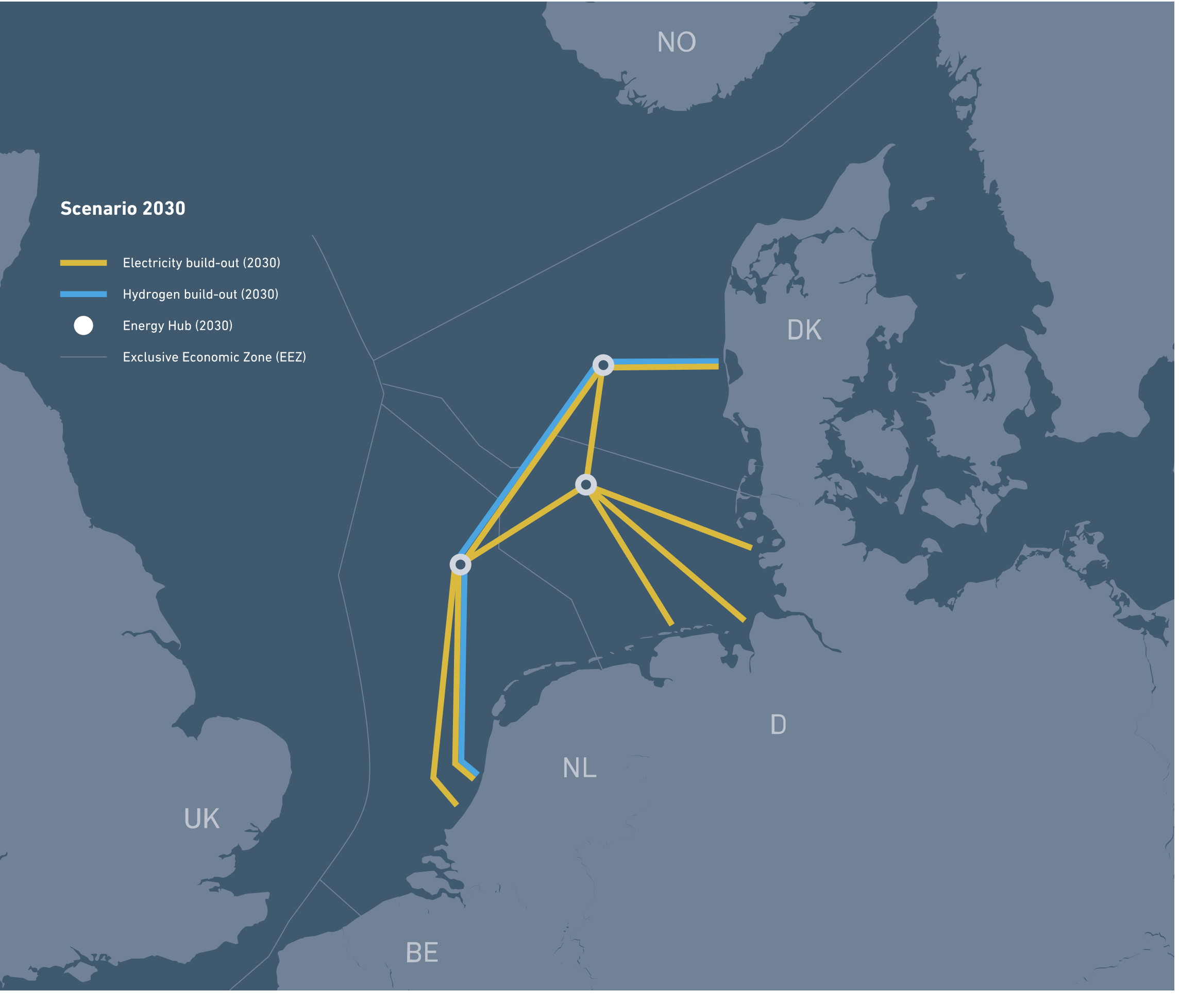
Note.
- Yellow is electricity links to be built before 2030.
- Blue is hydrogen links to be built before 2030.
- Feint lines indicate the EEZ boundaries.
There are two problems with this layout.
- It doesn’t connect to the Dogger Bank area, where the original plan as detailed in Wikipedia talked about “Power Link” artificial islands.
- No hydrogen is delivered direct to Germany.
This shows its vision for 2050.
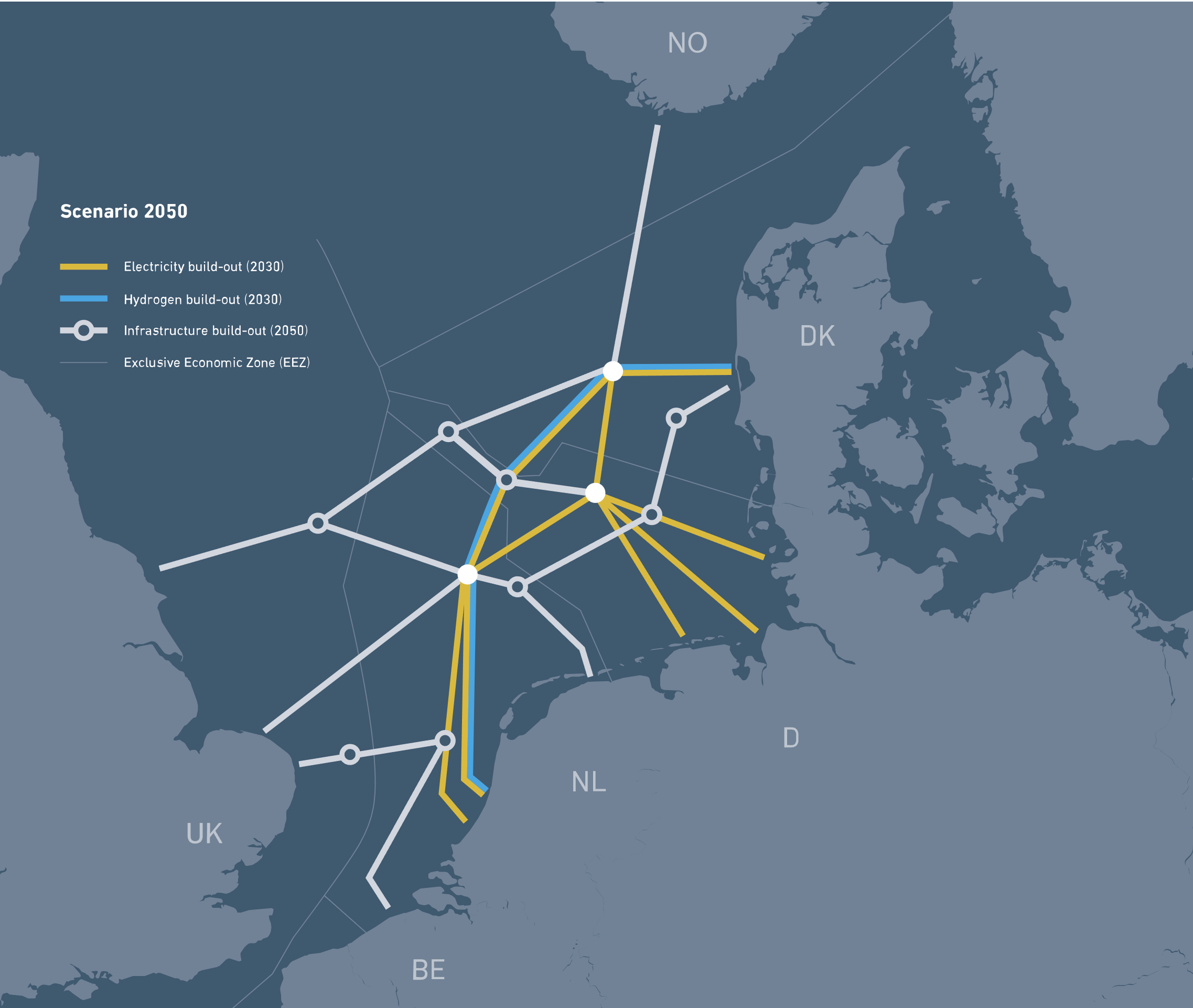
Note.
- Yellow, blue and feint lines are as before.
- White is electricity links to be built before 2050.
- There appears to be a node on the Dogger Bank in the German EEZ. This node could be connected to the “Power Link” artificial islands.
- The Southernmost connection to East Anglia could be Bacton.
- The other Norfolk connection could be where wind farms are already connected.
- The Northern connection could be Teesside, where some of the Dogger Bank wind farms connect.
- If the Northern connection to England is Teesside, then first node, which is in the British EEZ, could be one of the offshore sub-stations in the Dogger Bank wind farm complex.
This all seems a lot more feasible.
A New Offshore Hybrid Asset Between Teesside And Germany
Consider.
- A new offshore sub-station will be needed in the German EEZ to connect the “Power Link” artificial islands to the power network.
- The new offshore sub-station will eventually have three interconnectors to the German coast.
- Only the 1218 MW Dogger Bank C wind farm will be connected to the Teesside onshore substation.
- Germany has a power supply problem, after shutting down nuclear power stations and building more coal-fired power stations.
A new Offshore Hybrid Asset between Teesside and Germany could be created by building the following.
- A the new offshore sub-station in the German EEZ to connect the “Power Link” artificial islands to the power network.
- An interconnector between a sub-station of the Dogger Bank wind farm complex and the new sub-station
- A second interconnector to connect the new sub-station for the “Power Link” artificial islands to the German electricity grid.
All of the work would be done mainly in the German EEZ, with a small amount in the British EEZ.
Where Does Dogger Bank South Fit In?
Consider.
- Dogger Bank South is planned to be a 3 GW wind farm.
- It will need a 3 GW connection to the onshore electricity grid.
- Creyke Beck substation is the proposed location for the onshore connection.
- It is owned by German electricity company; RWE.
Could it be that some of the electricity produced by Dogger Bank South is going to be sent to Germany or to another node to produce hydrogen?
It certainly illustrates the value of an Offshore Hybrid Asset.
Singapore Nods To 1.2 GW Of Low-Carbon Electricity Imports From Vietnam
The title of this post, is the same as that of this article on offshoreWIND.biz.
This is the sub-heading.
Singapore’s Energy Market Authority (EMA) has granted conditional approval to Sembcorp Utilities (SCU), a wholly-owned subsidiary of Sembcorp Industries, to import 1.2 GW of low-carbon electricity, including offshore wind power, from Vietnam
This is the first paragraph.
The conditional approval means the project by SCU has been preliminarily assessed to be technically and commercially viable. The approval facilitates the process of obtaining necessary regulatory nods and licences for the project.
So now the real planning can begin.
This map shows Singapore and Vietnam.
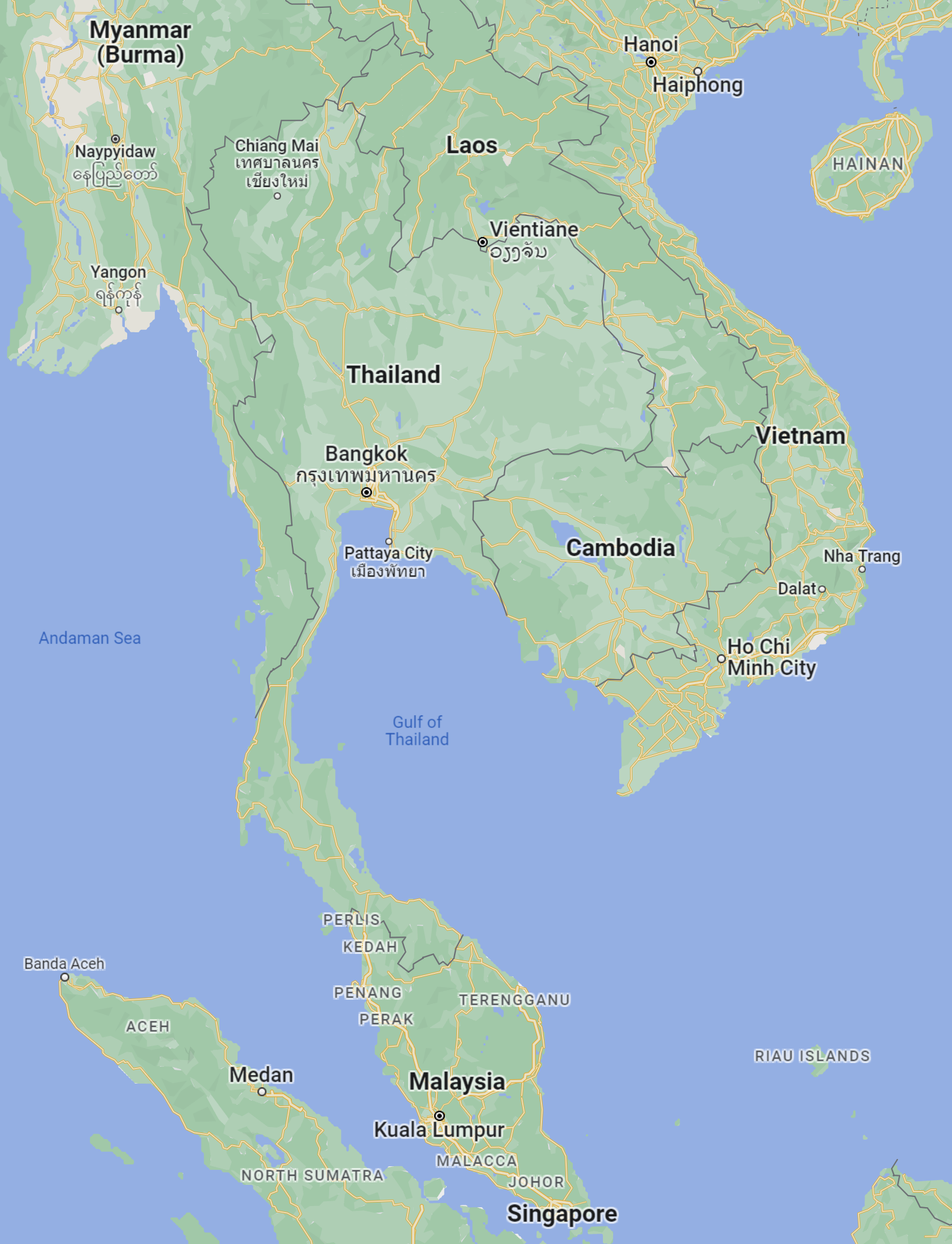
The article says this about the electricity connection.
The low-carbon electricity is planned to be transmitted from Vietnam to Singapore via new subsea cables that will span a distance of around 1,000 kilometres.
My only worry about this project, is will China object to wind farms in the South China Sea, which they seem to increasingly regard as solely belonging to them.
I have a few thoughts.
Singapore’s Energy Import Policy
These last two paragraphs of the article describe Singapore’s energy import policy.
In 2021, Singapore unveiled its plans to import up to 4 GW of low-carbon electricity by 2035.
To date, EMA has granted conditional approvals to projects from various sources, comprising 2 GW from Indonesia, 1 GW from Cambodia, and 1.2 GW from Vietnam.
Note.
- 4.2 GW of interconnectors will be available from Indonesia, Cambodia and Vietnam.
- In 2022, Singapore’s total electricity consumption was 54.9 TWh, according to the Singapore government.
- 54.9 TWh averaged out over the year is 6.3 GW.
- According to Wikipedia, 95 % of their electricity is generated by gas.
It looks like Singapore will will be needing to import more energy.
Will Developing Countries Benefit From Energy Exports?
Singapore is purchasing electricity from its neighbours in this example.
I believe that there are many countries around the world, who will be able to develop energy exports based on renewable energy.
Conclusion
We will see lots more projects like this.
National Grid And SSEN Transmission Agree Joint Venture For UK’s Largest Ever Electricity Transmission Project
The title of this post is the same as that of this press release from National Grid.
This is the sub-heading.
Joint Venture Agreement Important Milestone In Subsea Electricity Superhighway – Eastern Green Link 2
These four paragraphs outline the project.
National Grid Electricity Transmission (NGET) and SSEN Transmission have taken a big step forward in the development of a new subsea electricity superhighway project along the east coast of Scotland after reaching agreement on the terms of their joint venture (JV).
The ‘Eastern Green Link 2’ (EGL2) project will see the creation of a 525kW, 2GW high-voltage direct current (HVDC) subsea transmission cable from Peterhead in Scotland to Drax in England. The UK’s single largest electricity transmission project ever.
The subsea HVDC cable system is approximately 436km in length with new converter stations at either end to connect it into the existing transmission network infrastructure. HVDC technology provides the most efficient and reliable means of transmitting large amounts of power over long distances subsea.
The EGL2 link will support the growth of new renewable electricity generation, creating jobs and delivering a pathway to net zero emissions targets, as well as helping to alleviate existing constraints on the electricity network.
The Wikipedia entry for Eastern HVDC has a detailed description of the two 2GW Scotland-England interconnectors, that are planned.
This is the first section.
Eastern HVDC and Eastern HVDC projects are the names used by Ofgem for two planned HVDC submarine power cables from the East coast of Scotland to Northeast England to strengthen the National Grid. The two links combined will deliver 4 GW of renewable energy from Scottish wind farms to England.
Ofgem state that “At an estimated cost of £3.4 billion for the two links, the Eastern HVDC projects would be the largest electricity transmission investment project in the recent history of Great Britain.
The Project Background Document for SEGL1 can be viewed here.
EGL2 also has its own web site.
Grain LNG Launches Market Consultation For Existing Capacity
The title of this post is the same as that of this press release from National Grid.
This is the sub-heading.
Grain LNG, the largest liquefied natural gas (LNG) terminal in Europe, is pleased to announce the launch of a market consultation for the auction of 375 Gwh/d (approx. 9 mtpa) of existing capacity. The initial consultation phase for the Auction of Existing Capacity will commence on 14 June and run until 26 July.
These paragraphs detail what Grain LNG, which is a subsidiary of National Grid are offering.
GLNG has used the positive feedback received from the recent ‘Expression of Interest’ exercise and subsequent market engagement to offer three lots of capacity:
- Each lot will be entitled to 42 berthing slots, 200,000 m3 of storage and 125GWh/d (approx. 3 mtpa) of regasification capacity from as early as January 2029.
- This product is specifically designed for parties who wish to acquire a substantial stake in a major terminal in Northwest Europe, at a reduced cost and with shorter contract lengths when compared to new-build projects.
- As the terminal’s capacity already exists, parties involved will not be subjected to the FID approvals or potential delays that can arise from construction issues commonly associated with new build terminals.
Simon Culkin, Importation Terminal Manager at Grain LNG, said: “We are really pleased with the high level of interest shown by the market at a time of significant geo-political influence on our energy markets. It has allowed us to engage with potential customers and shape our offering to best meet their needs, whilst optimising access to this strategic asset. “
Reading the Wikipedia entry for the Grain LNG Terminal, it looks like it gets used as a handy store for natural gas.
About Phase 1 (2002–05), Wikipedia says this.
The new facilities enabled the Grain terminal to become a base supply to the NTS, with the ability to deliver gas continuously when required. The cost of the Phase 1 project was £130m. A 20-year contract with BP / Sonatrach enabled Grain LNG to import LNG on a long-term basis from July 2005.
About Phase 2 (2005–08), Wikipedia says this.
The development provided an additional five million tonnes of capacity per annum. All this capacity was contracted out from December 2010. Customers included BP, Iberdrola, Sonatrach, Centrica, E.ON and GDF Suez.
Under Current Facilities, Wikipedia says this.
Grain LNG Ltd does not own the LNG or the gas that it handles but charges for gasifying it. Current (2016) users include BP, Centrica (British Gas Trading), Iberdrola (Spain), Sonatrach (Algeria), Engie (France), and Uniper (Germany).
National Grid must be pleased that some customers seem loyal.
I feel that National Grid’s basic plan is to carry on with more of the same.
But will they develop more storage and other facilities on the site.
There are certainly other projects and interconnectors, that make the Isle of Grain and energy hub connecting the UK, Netherlands and Germany.
- In Did I See The UK’s Hydrogen-Powered Future In Hull Today?, I mentioned, that I thought that the Isle of Grain could be a location for an electrolyser and a hydrogen store.
- In EuroLink, Nautilus And Sea Link, I talk about new interconnectors, if which Nautilus might come to the Isle of Grain.
- In UK-German Energy Link Reaches Financial Close, I talk about NeuConnect, which will be an interconnector between the Isle of Grain ans Wilhelmshaven in Germany.
- The Isle of Grain is the landing point for the BritNed undersea power cable between The Netherlands and the UK.
I could also see National Grid building an East Coast interconnector to bring power from the wind farms off the East Coast of England to the Isle of Grain for distribution.
These are major wind farms South of the Humber.
- Dudgeon – 402 MW
- East Anglia 1 – 714 MW
- East Anglia 1 North – 800 MW
- East Anglia 2 – 900 MW
- Galloper – 504 MW – RWE
- Greater Gabbard – 504 MW
- Gunfleet Sands – 174 MW
- Hornsea 1 – 1218 MW
- Hornsea 2 – 1386 MW
- Hornsea 3 – 2852 MW
- Humber Gateway – 219 MW
- Lincs – 270 MW
- London Array – 630 MW
- Lynn and Inner Dowsing – 194 MW
- Race Bank – 580 MW
- Scroby Sands – 60 MW
- Sheringham Shoal – 317 MW
- Triton Knoll – 857 MW – RWE
- Dogger Bank A – 1235 MW
- Dogger Bank B – 1235 MW
- Dogger Bank C – 1218 MW
- Dogger Bank D – 1320 MW
- Dogger Bank South – 3000 MW RWE
- East Anglia 3 – 1372 MW
- Norfolk Boreas – 1396 MW
- Norfolk Vanguard – 1800 MW
- Outer Dowsing – 1500 MW
- North Falls – 504 MW – RWE
- Sheringham Shoal and Dudgeon Extensions – 719 MW
- Five Estuaries – 353 MW – RWE
Note.
- These figures give a total capacity of 28,333 MW.
- Five wind farms marked RWE are owned by that company.
- These five wind farms have a total capacity of 5618 MW.
- Will RWE export, their electricity to Germany through NeuConnect?
I can certainly see National Grid building one of the world’s largest electrolysers and some energy storage on the Isle of Grain, if an East Coast Interconnector is built.
World’s Largest-Of-Its-Kind Power Line To Deliver Clean Power To 1.8m UK Homes And Boost Energy Security
The title of this post, is the same as that as this press release from the UK Government.
These are the three bullet points of the press release.
- LionLink power line between UK and Netherlands will deliver enough electricity to power more homes than Manchester and Birmingham combined.
- Agreement made as Grant Shapps leads delegation of leading businesses to key North Sea Summit.
- Part of renewed Government drive to work with business to help grow the economy.
These three paragraphs outline the project.
The world’s largest multi-use electricity power line will be built under the North Sea, boosting UK energy supplies with enough to power 1.8 million homes – more than Birmingham and Manchester combined.
The new LionLink will connect the UK and the Netherlands with offshore wind farms, providing clean affordable and secure energy to Britain which will help cut household bills and drive Putin’s Russia further out of the energy market.
The cross-border electricity line will be only the second of its kind in the world, with the first having been built by Germany and Denmark. However, it will be able to carry more than four times the amount of electricity as its predecessor – making it the largest of its kind in terms of capacity anywhere in the world.
Note.
- I suspect the LionLink will go via the Dogger Bank, where Danish, Dutch, German and UK territorial waters meet an we are already building 8 GW of fixed foundation offshore wind. The other countries are also active in the area.
- The press release doesn’t mention, where the LionLink will make landfall in the UK.
- Much of the connection will probably use the cables being laid for the Dogger Bank wind farms.
- There is also no mention of the North Sea Wind Power Hub, which could be an artificial island on the Dogger Bank.
There is also a press release on the National Grid web site, which is entitled National Grid And TenneT Collaborate On Proposed First-Of-A-Kind Anglo-Dutch Electricity Link, which gives more details.
- The capacity is stated to be 2 GW.
- Like the current BritNed interconnector, the project will be a cooperation between National Grid And TenneT.
- TenneT is a limited liability company owned by the Dutch government, that is a transmission system operator in the Netherlands and in a large part of Germany.
There is also a diagram, showing how the LionLink will work, which includes these components.
- On the Dutch side, there is an offshore AC>DC Converter Station, which is connected to the Dutch electricity grid and one or more offshore wind farms.
- Across the border between the Dutch and UK Exclusive Economic Zones, there will be a HVDC cable.
- The HVDC cable will terminate in an onshore DC>AC Converter Station in the UK, which will be connected to the UK electricity grid.
No details of the two landfalls have been given.
More information is given in this article on offshoreWIND.biz, which is entitled UK And Netherlands Unveil Multi-Purpose Interconnector Plans.
- This shows a map of the North Sea with an interconnector running in a straight line between possibly Rotterdam and Bacton in Norfolk.
- A wind farm is shown connected to this interconnector.
This paragraph describes the windfarm and the interconnector.
LionLink, a multi-purpose interconnector that was announced today at the North Sea summit, could connect a Dutch offshore wind farm with a capacity of 2 GW to both countries via subsea interconnectors.
If the wind farm has a capacity of 2 GW, I would assume it can supply up to 2 GW to the UK and The Netherlands.
This is a classic system, that can be optimised by the application of sound principles.
All electricity generated by the wind farm must be used, stored or converted into green hydrogen.
Electricity will be distributed as to need.
Energy storage or electrolysers could be sited at either end or even in the wind farm.
I would suspect that more wind farms could be connected to the interconnector.
The team, that write the control system for the grid will have a lot of fun!
BritNed
I have a feeling that National Grid and TenneT have taken a long hard commercial look at the electrical and financial performance of BritNed over the last year and decided, that a second connection would be to the mutual benefit of both companies, their customers and the UK and The Netherlands in general.
It would also be twice as difficult for terrorists sponsored by Putin to cut two cables.
Conclusion
This is a great leap forward for wind power in the North Sea and Europe.
Green Light For Orkney Transmission Link
The title of this post, is the same as that of this news item from SSE.
These three paragraphs outline the project.
SSE’s Transmission business, SSEN Transmission, has welcomed today’s publication by Ofgem in which the energy regulator has provisionally approved long awaited and much needed plans to provide a subsea electricity transmission link to Orkney.
The Orkney Islands are home to some of the world’s greatest resources of renewable electricity, from established onshore wind, to emerging marine technologies, where Orkney is at the forefront of global developments in marine energy generation.
Following significant growth in small-scale renewable electricity generation in Orkney, the local electricity network has long been at full capacity and no new electricity generation can connect without significant reinforcements.
This paragraph describes the scope of the project.
SSEN Transmission’s proposed solution would enable the connection of up to 220MW of new renewable electricity and consists of a new substation at Finstown in Orkney, and around 57km of subsea cable, connecting to a new substation at Dounreay in Caithness.
200 MW seems a good return for a substation and forty miles of cable.
Germany Pinpoints 36.5 GW Of Offshore Wind Areas, Publishes Development Plan
The title of this post is the same as that of this article on offshoreWIND.biz.
This is the sub-heading.
Germany’s Federal Maritime and Hydrographic Agency (BSH) has published a new area development plan for the expansion of offshore wind energy. The plan maps out the build-out of offshore wind by 2030, by when the country is to reach 30 GW of capacity connected to its grid, and sets the stage for further deployment of wind turbines at sea, with the 2035 target of 40 GW estimated to be exceeded.
30 GW of offshore wind by 2030 and 40 GW by 2035 are ambitious targets, but how do we compare?
This news story on the UK Government web site is entitled UK Signs Agreement On Offshore Renewable Energy Cooperation, contains this statement.
The initiative is expected to support the UK’s ambitious targets to increase offshore wind fivefold to 50GW, and deliver 18GW of electricity interconnector capacity – up from 8.4 GW today – by 2030.
I don’t think we compare badly.
Giant Solar Farm Project In Doubt After Disagreement Between Mike Cannon-Brookes And Andrew Forrest
The title of this post, is the same as that of this article on the Guardian.
This is the sub-heading.
Australian billionaires had backed $30bn Sun Cable venture designed to help power Darwin, Indonesia and Singapore but the company has gone into voluntary administration.
It does look like the administrators will be able to continue the project and look for more funding.
Qatar must be in the frame, as this link will probably cut some of their gas sales.
I wrote about this monster project in Sun Cable’s Australia-Asia PowerLink.
I wonder if this administration will have any effects on the prospects of the other giant intercontinental interconnectors?
- EuroAfrica Interconnector – See The EuroAfrica Interconnector
- EuroAsia Interconnector – See The EuroAsia Interconnector
- Morroco-UK Power Project – See Moroccan Solar-Plus-Wind To Be Linked To GB In ‘Ground-Breaking’ Xlinks Project
- TransPacific Interconnector – See Chile Wants To Export Solar Energy To Asia Via 15,000km Submarine Cable
The economics will decide. But I do think, the last one could be a bit ambitious.
Ofgem OKs Transmission Investments Needed For UK’s 2030 Offshore Wind Target
The title of this post, is the same as that, of this article on offshoreWIND.biz.
This is the sub-heading.
Ofgem has approved the strategic electricity transmission reinforcements required to deliver the UK Government’s 50 GW offshore wind by 2030 target, set out as part of the regulator’s Accelerated Strategic Transmission Investment (ASTI) framework.
A map then shows the principle new transmission reinforcements.
These include two 2 GW subsea HVDC links from Peterhead to England, both of which will be taken forward as joint ventures with National Grid Electricity Transmission (NGET), a 2 GW subsea HVDC link from Spittal in Caithness, connecting to Peterhead, as well as a 1.8 GW subsea HVDC link from Arnish on the Western Isles to the Beauly area near Inverness.
The approval also implies 400 kV onshore reinforcements, between Beauly, Blackhillock, New Deer and Peterhead; between Beauly, Loch Buidhe and Spittal; and between Kintore, Tealing and Westfield; and uprating the existing Beauly to Denny line to enable 400 kV operation on both circuits.
All cables seem to lead to Peterhead.
UK and NSEC Strengthen Offshore Renewables Ties
The title of this post, is the same as that of this article on offshoreWIND.biz.
This is the sub-heading.
Members of the North Seas Energy Cooperation (NSEC), the UK, and the European Commission have signed a memorandum of understanding (MoU) to strengthen their cooperation for the development of offshore renewable energy.
The article is based on this article on the European Commission web site, which is entitled North Seas Energy Cooperation And UK Establish Cooperation Framework To Facilitate The Development Of Offshore Renewable Energy.
The full signed text is also in this document on the web site, which is entitled Memorandum of Understanding on offshore renewable energy cooperation.
I have read the MoU and it seems a sensible document for one with eleven signatures.
It lists the following areas of cooperation.
- Hybrid and joint projects
- Maritime and spacial planning
- Support framework and finance
- Best practice in respect of onshore and offshore grid practice
- Sharing of information on new technologies
- Exchange of best practices in relation to the relevant rules, regulations and technical standards
The MoU expects any problems to be resolved by consultations in good faith.

