New £3.6bn London Transport Funding Deal Agreed
The title of this post, is the same as that of this article on the BBC.
These five paragraphs outline the deal.
A new £3.6bn government bailout to keep Tube trains, railways, buses and trams running in London has been agreed.
The package includes almost £1.2bn of upfront funding for Transport for London (TfL) to secure the long-term future of the capital’s transport network.
It is the sixth bailout for TfL after its revenues plummeted in the pandemic.
The funds will allow Piccadilly line trains to be built as well as upgrades to three Tube lines.
TfL Commissioner Andy Byford described the deal as “hard won” but Mayor of London Sadiq Khan, who is also chair of TfL, branded it “far from ideal”.
I have a few thoughts.
Will The North And Scotland Like It?
In my travels around the UK, when I ask someone on a bus,train or tram about their new transport funding, I often get a reply something like.
It’s good, but London gets more.
I don’t think other areas of the UK will like £3.6 billion, especially after Crossrail’s over budget and late construction.
Driverless Trains
The BBC article says this about driverless trains.
The 16-page settlement letter includes a commitment to “press forward a joint programme on the implementation of driverless trains on the London Underground”.
These seven paragraphs in the settlement letter say this about driverless trains.
29. TfL’s record of modernisation and innovation should not leave it behind other European
networks, which are achieving significant operational efficiencies through driverless trains.
Accordingly, DfT and TfL will press forward with the joint programme on the implementation of
driverless trains on the London Underground, recognising TfL’s safety, regulatory and statutory
responsibilities.
30. Taking the findings of the network review to the next stage, TfL will continue to work with DfT
to develop the evidence required to make a strong case for investment in driverless trains on the
London Underground. This will include but not be limited to the work set out below.
31. TfL will work with DfT to assess the case for introducing GoA4 on the London Underground
network, taking into account opportunities and risks.
32. TfL will undertake further studies and wider research to support progressing driverless trains
on the lines where the case(s) are strongest.
33. In addition, TfL should continue working with DfT to make progress developing and testing
innovative technology, where it can save money in the delivery of driverless trains.
34. Based on the findings of the above, TfL will work with DfT to develop a business case for
driverless trains as necessary.
35. TfL will ensure senior representation on the joint programme and will actively support this work
through the provision of staff resources, expertise and access to both the London Underground
network and any information sources. TfL’s participation should seek to explore all options in a
collaborative and open manner and work with the programme on an implementation plan. HMG
will provide resource funding to TfL to enable it to support the programme’s work
Around 1970, I worked at ICI in sections who were at the forefront in creating computer-controlled chemical plants.
I also remember that Simulation magazine gave a detailed description about how London Underground’s Victoria Line worked using automation, which colleagues thought was an excellent system.
The trouble with driverless trains, is that they have got too political.
- You have the Government wanting to introduce driverless trains for reasons of efficiency and to follow the best technological practice in Europe.
- You have the Unions totally against it for their obvious reasons.
- You have the Mayor of London grudgingly accepting it.
I take a practical attitude to automation based on the views of world-class automation engineers, I worked with in the 1960s and 1970s.
- In an airliner, most of the flying, landing and control of the aircraft is automatic, with the pilot monitoring everything on instruments.
- Much of the automation I was involved with all those years ago, was about ensuring optimal operation of plant and machinery and ensuring that the safety margins were not exceeded.
These two paragraphs from Wikipedia, explain the operation of the Victoria Line.
On opening, the line was equipped with a fixed-block Automatic Train Operation system (ATO). The train operator closed the train doors and pressed a pair of “start” buttons and, if the way ahead was clear, the ATO drives the train at a safe speed to the next station. At any point, the driver could switch to manual control if the ATO failed. The system, which operated until 2012, made the Victoria line the world’s first full-scale automatic railway.
The Victoria line runs faster trains than other Underground lines because it has fewer stops, ATO running and modern design. Train speeds can reach up to 50 miles per hour (80 km/h). A common method used by north London residents to visit the West End is to take the Northern line Bank branch, change platforms at Euston, and continue on faster Victoria line trains. The original signalling has been replaced with a more modern ATO system from Westinghouse Rail Systems incorporating ‘Distance to Go Radio’ and more than 400 track circuits. The track operator, London Underground Limited, claimed it is the world’s first ATO-on-ATO upgrade. The new system allowed a revised timetable to be introduced in February 2013, allowing up to 33 trains per hour instead of 27. In combination with new, faster trains, the line’s capacity increased by 21%, equivalent to an extra 10,000 passengers per hour.
Note.
- I very much approve of this type of automation, which fits well with the operation of metro services.
- The driver is very much in control, as he initiates and can stop all train movements.
- The original automation in the 1960s, used thermionic valves and relays.
- I believe that automation like this can be exceptionally safe.
As the extract says, Automatic Train Operation system (ATO) increases the frequency of trains, runs them faster and increases capacity.
The only problem is how do you sell it to the unions.
The Grade II Listed Next-Train Indicators At Earl’s Court Station Are Back
This page on Rail News has a section, which is entitled Heritage Train Indicators Return To Service, where this is said.
Vintage train describers have returned to the platforms of Earl’s Court District Line station, which is Grade II listed. First installed in 1905 when London’s District Railway was electrified, they have been renovated and given replica destination name plates, which are highlighted as required by an illuminated arrow. The indicators had been switched off while they were connected to a new signalling system. Modern information panels showing the destination and the number of minutes before the next train is due from each of the four platforms have also been installed.
I went Earl’s Court station to have a look this morning and took these pictures.
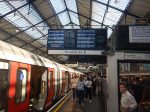
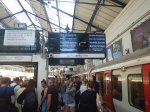
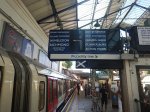

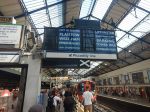
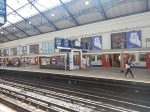
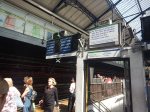
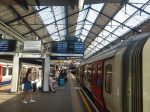
They all seemed to working as they should.
Earl’s Court station is a Grade II listed London Underground station and Wikipedia says this about these indicators.
On each platform is an old-fashioned “next train” indicator board which had various routes shown, of which one is usually highlighted by an arrow to indicate that this is the route of the next train. As of March 2022, these have been temporarily disabled while signalling is upgraded to CBTC signalling, as part of the 4LM improvement works to the subsurface lines, although are expected to return in June the same year. These have not been replaced by modern electronic equivalents as they are Grade II listed.
There can’t be many next train indicators in the world, that are listed or given the local equivalent.
This does take me all back to the 1960s, when for two summers, I worked in the Electronics Laboratory at a company called Enfield Rolling Mills. The Electronics Laboratory developed control systems for the many machines in the factory. At that time, a lot of the work involved replacing relays and electronic valves with then-modern transistors. I learned a lot about industry in those two summers and it wasn’t all about automation and electronics.
Would a fifteen-year-old be allowed to do a job like that, these days?
I suspect that on that Earl’s Court indicator board, there is some interesting electronics connecting it to the CBTC signalling.
Extending The Elizabeth Line – Linking To The Oxted Line
I believe that everybody in the South East of England needs the best access possible to the Elizabeth Line, by train from where they live.
- The Elizabeth Line serves the important places like Brick Lane, Canary Wharf, the City of London, Heathrow Airport, Liverpool Street station, the Olympic Park, Oxford Street and Paddington station directly.
- Because of its connection to Thameslink, the Elizabeth Line also serves important places like Bedford, Brighton, Cambridge, Gatwick Airport, Luton Airport and Tate Modern with a single change at Farringdon station.
- Using the Elizabeth Line, Thameslink and perhaps a bus, it is possible to get to most important places in Central London.
- The more passengers that use the Elizabeth Line and Thameslink, the more London’s businesses will thrive creating employment and tax revenues.
- It should also be remembered, that using a train to visit central London, probably cuts your carbon footprint.
- The Elizabeth Line also cost a fortune, so perhaps by using it, you will be getting some of your portion of what it cost you back.
This post is the first of several, where I discuss how to bring more passengers into the Elizabeth Line network.
The Oxted Line
The Oxted Line is a line with two branches; East Grinstead and Uckfield, which runs South from East Croydon station.
- The branch to East Grinstead is electrified, but the branch to Uckfield is not and is still run by diesel trains.
- Plans exist to run battery-electric trains on the Uckfield branch, but they always seem to be awaited,
- Network Rail are now saying that they will electrify the Uckfield branch with third-rail.
- All platforms on both branches can take ten-car trains, if not twelve.
- A reasonable amount of money has been spent on the Uckfield branch to improve it.
- Services on both branches are one train per hour (tph).
- London terminals of trains are London Bridge and Victoria, both of which have no easy connection to the Elizabeth Line.
The major faults of the current services are as follows.
- One tph is not enough.
- Victoria is an overcrowded terminal with no connection to the Elizabeth Line or Thameslink
- At London Bridge and East Croydon, there are tortuous step-free change to Thameslink.
- From London Bridge you can use the Northern Line to transfer to the Elizabeth Line, but it wouldn’t be the best route when taking a heavy case to Heathrow.
- From Victoria, you can use the Circle and District lines to the Elizabeth Line at Paddington.
The Oxted Line service needs to be improved.
I would do the following.
Move Uckfield Branch Services To Thameslink
This would mean that Uckfield services would call at East Croydon, London Bridge, Blackfriars, City Thameslink, Farringdon, St. Pancras and then terminate somewhere to the North.
- There would be a step-free change to the Elizabeth Line at Farringdon.
- East Croydon and London Bridge are still served.
- There are connections to the Circle, District, Hammersmith & City, Jubilee, Metropolitan, Northern, Piccadilly and Victoria Lines of the Underground.
- There will be no need for a terminal platform at London Bridge.
I believe that this gives much better connectivity.
Electrify To Uckfield
This is a long-debated question.
But as Thameslink trains are Class 700 trains, which are dual voltage, I’d electrify the Uckfield branch with 25 KVAC overhead electrification between Hurst Green and Uckfield.
Lightweight catenary could be used to reduce visual intrusion.
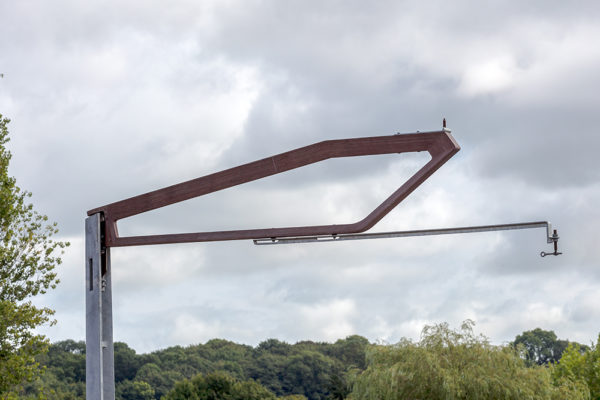
Note.
- The curved beam at the top of this overhead electrification gantry is laminated wood.
- Power changeover would take place at Hurst Green station.
Hopefully, the electric trains would offset any anger at overhead wires.
Run Two tph To Uckfield
I am fairly certain that when Network Rail lengthened the platforms on the Uckfield branch, that they arranged the track and signalling, so that two tph could use the branch.
Run An Hourly Shuttle Between Oxted And East Grinstead
This service would be as follows.
- It would terminate in the bay platform at Oxted station.
- This would give 2 tph on this route.
The existing hourly service between East Grinstead and Victoria would continue.
Conclusion
I believe that this simple scheme could give very good benefits to all stakeholders.
Bank Station Upgrade – 1st July 2022
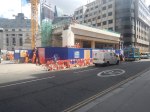
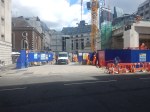
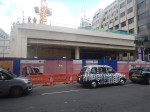
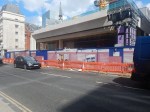
I walked past the new Southern entrance to Bank station today and took these pictures.

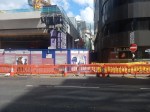
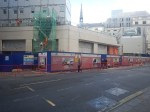
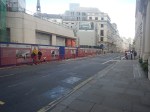


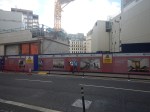
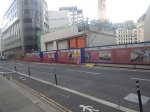
Note.
- You can see the station name inscribed in the lintel over the station entrance.
- Electricians seemed to be busy in the station entrance.
- There doesn’t appear to be a start on oversite development yet.
But at least progress seems to be consistent with a delivery in the next few months.
The Lizzie Line And Circle/District Line Interchange At Paddington – 1st July 2022
This morning I wanted to go between Moorgate and Victoria stations.
It is a journey that can be done in any number of ways.
- Circle, Hammersmith & City or Metropolitan Line to King’s Cross St. Pancras and then change to the Victoria Line.
- Northern Line to King’s Cross St. Pancras and then change to the Victoria Line.
- Northern Line to Euston and then change to the Victoria Line. This can be a cross-platform interchange.
- Northern City Line to Highbury & Islington and then change to the Victoria Line. This is not an easy interchange.
- Northern Line to Bank and the change to the Circle or District Line.
- Circle or Hammersmith & City to Paddington and then change to the Circle or District Line. This interchange involves a walk all the way across Paddington station.
- 21, 43 or 141 bus to Monument and the change to the Circle or District Line.
If you’re lucky and time it right, you can get a direct Circle Line train, which run at a frequency of six trains per hour (tph).
The Elizabeth Line has opened up another way.
The Elizabeth Line is taken to Paddington and then you walk up the side of the station to the Circle/District Line entrance on the other side of Praed Street from the National Rail station.
These pictures show my walk at Paddington station.
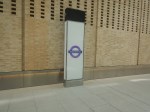

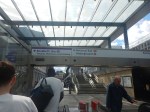
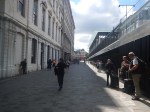



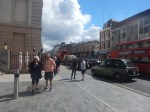
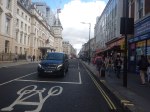
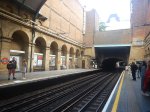
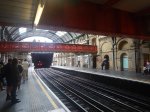
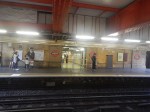
Note.
- It is an immaculate step-free climb out of the Elizabeth Line station.
- Once at station level, it is a walk up a gentle incline the the Circle/District Line station.
- There are shops; including Boots, M & S and Sainsburys, and toilets just inside Paddington station, as you walk beside the station.
- There are stairs to walk down to the Circle/District Line platforms.
I walked the transfer in under ten minutes. From Moorgate to Victoria took 38 minutes.
I feel that this route has advantages for many travellers.
- The Elizabeth Line currently has 12 tph through Paddington.
- When the Elizabeth Line is fully connected up in Autumn 2022, there will be 22 tph, through Paddington.
- The convenient shops and toilets will be welcomed by many.
- It is an easier route, than accessing the Circle/District Line station from inside the main station.
The Lawn, which has shops and cafes, would also be a good place to meet friends, family or a business colleague or client.
Moorgate And Victoria Via The Circle Line
I did this route on the 5th of July, after waiting ten minutes for a Circle Line train. It took me 23 minutes.
From Moorgate To Imperial Wharf – 30th June 2022
I wanted to see the new entrance at Imperial Wharf station today, so after a full English breakfast on Moorgate, I took the Lizzie Line, Central and West London Lines across London.
I took this route.
- Lizzie Line – Moorgate to Tottenham Court Road
- Central Line – Tottenham Court Road To Shepherds Bush
- West London Line – Shepherds Bush To Imperial Wharf
I took these pictures along the route.
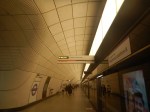
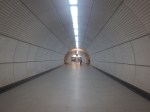
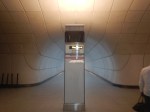

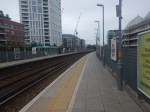
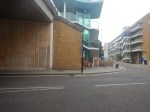
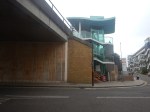
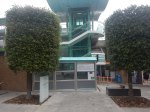
Note.
- The change at Tottenham Court Road station involves going up to the ticket hall and down again.
- The change at Shepherds Bush involves crossing the road between the Central Line and Overground station.
- The last few pictures show the new entrance at Imperial Wharf, which is for Northbound trains only.
When Bond Street station opens on the Lizzie Line, it should be easier to change there for the Central Line.
The Plans For A Connection Between The Lizzie And West London Lines?
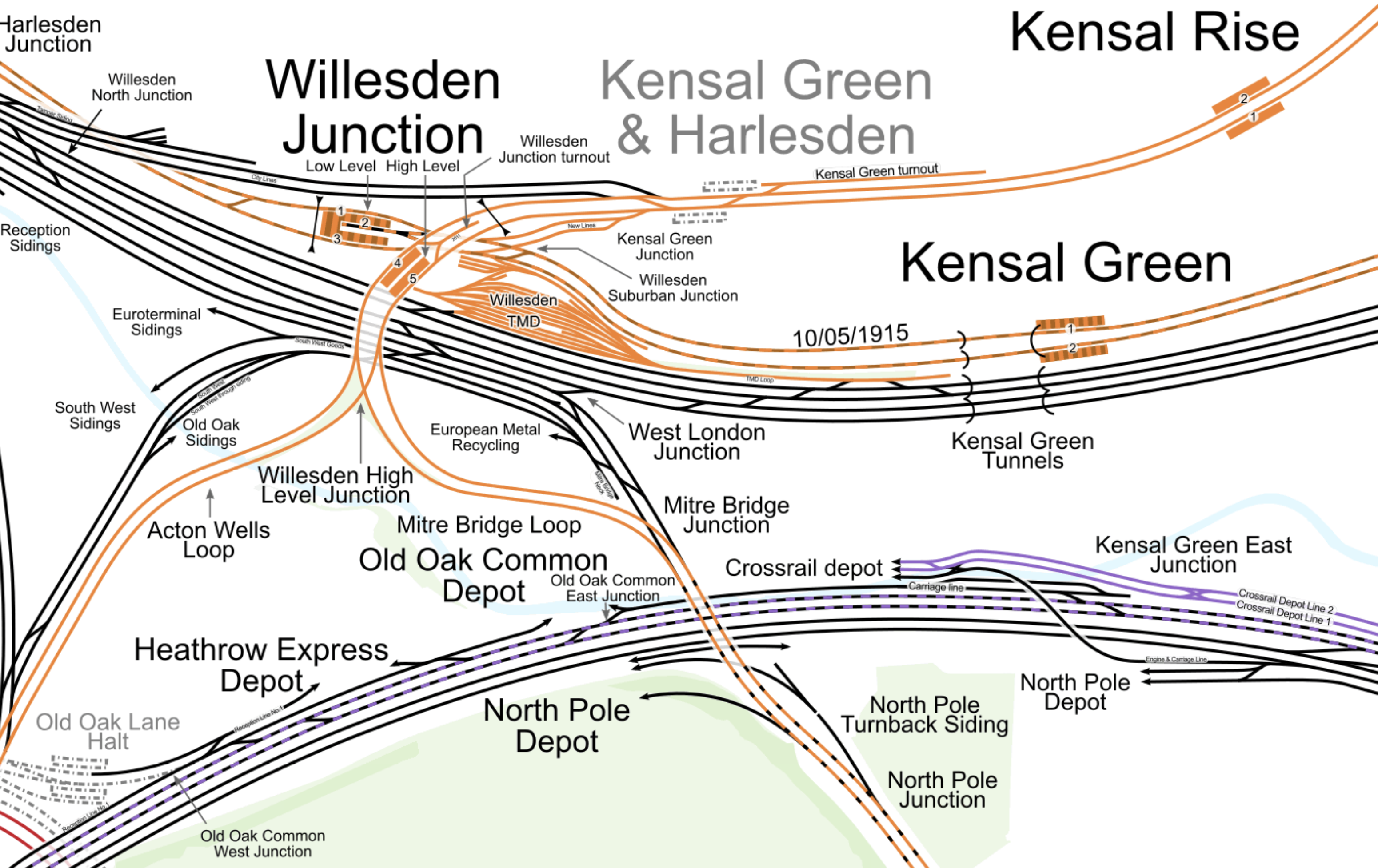
This map from cartometro.com shows, where the Lizzie and West London Lines cross in the area of Old Oak Common.
Note.
- The Overground is shown in orange and splits into the North and West London Lines South of Willesden Junction station.
- The Lizzie Line is shown in purple and black, as it goes across the map, as at this point it shares tracks with the Great Western Main Line.
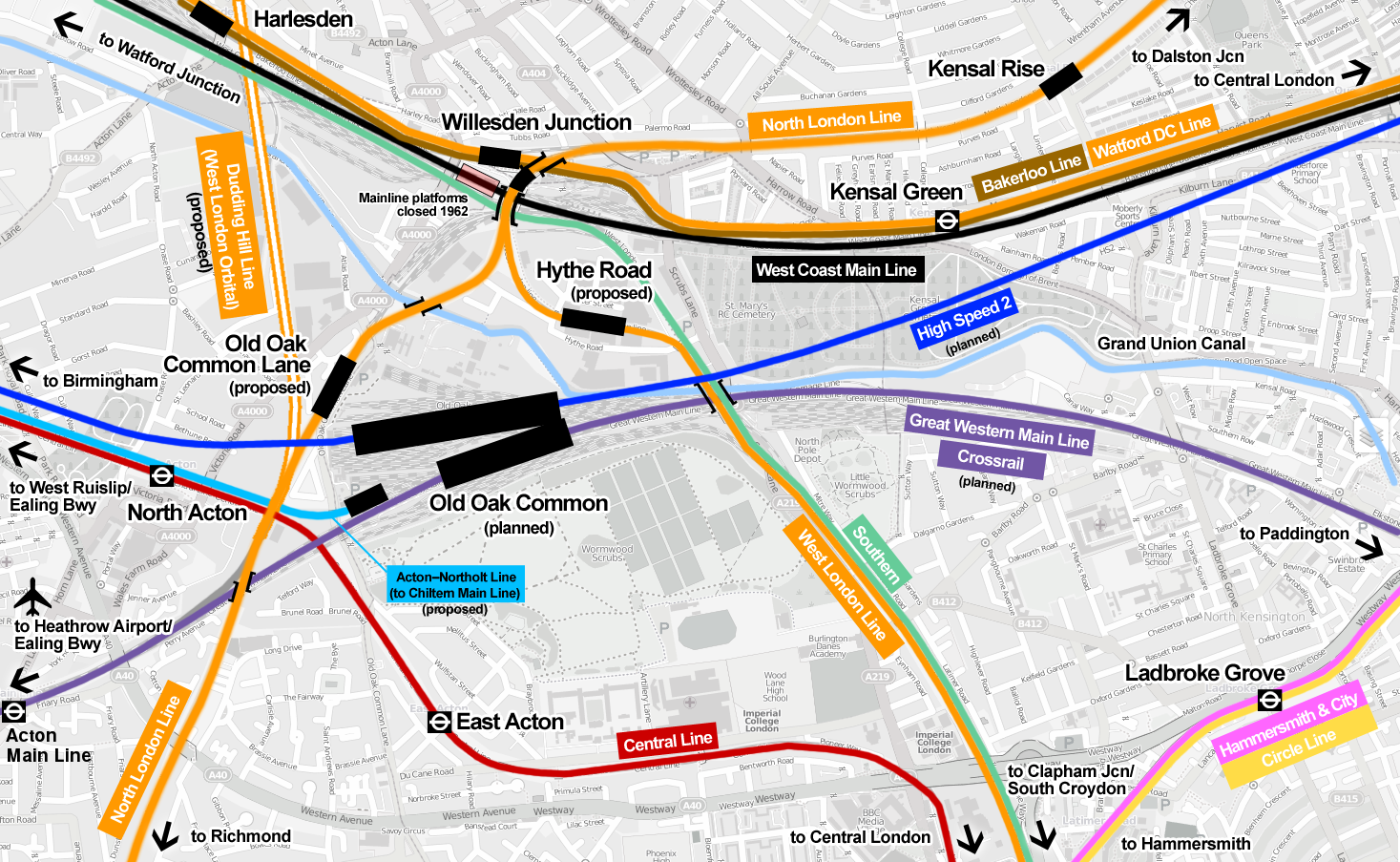
This map shows how High Speed Two will change the lines.
Note.
- Hythe Road station on the West London Line, which will have a walking route to High Speed Two and the Lizzie Line.
- Old Oak Common Lane station on the North London Line, which will have a walking route to High Speed Two and the Lizzie Line.
- The Dudding Hill Line, which is shown as an orange double-line and could be part of the West London Orbital passing North-South to the West of Old Oak Common Lane station.
- The Acton-Northolt Line, which is shown in blue and could give Chiltern Railways extra platforms at Old Oak Common with a walking route to High Speed Two and the Lizzie Line.
Wikipedia says that the status of the two Overground stations according to Transport for London is as follows.
Subject to funding being secured and further public consultation, we would seek permission to build and operate the proposals via a Transport and Works Act Order (TWAO). Funding remains a significant constraint in delivering these proposals. We are currently seeking to establish a package of funding that could enable the stations to be delivered by 2026 alongside the new HS2 and Elizabeth line station.
I suspect that with our current South London Mayor, we will see little progress on these connectivity schemes at Old Oak Common station, as with the possible exception of Hythe Road station, there’s little in it for South London.
Conclusion
Hythe Road station would certainly have made my journey easier yesterday.
Hopefully, though, if I do the journey again in the next year or so, Bond Street station will be open on the Lizzie Line and I’ll change to the Central Line there.
London Underground Gets Approval For Walthamstow Central Tube Station Upgrade
The title of this post, is the same as that of this article on Ian Visits.
It is from over a year ago and I’m only including it, as it includes a cutaway of the upgrade.
I go regularly to Walthamstow Central station and hopefully, this will make my journeys easier in busy times.
This paragraph from Wikipedia describes some of cost-cutting design features of the current station.
The underground station, like many stations on the Victoria line, was built to a low budget. White ceiling panels were never fixed to the ceilings above the platforms; instead the steel tunnel segments were painted black and used to support the fixtures and fittings, cutting lighting levels. A concrete stairway sits between two escalators instead of a third; this economy caused a disruptive station closure for several weeks in 2004 when both escalators went out of service.
Hopefully, these short comings will be addressed in the upgrade.
But it doesn’t appear there will be step-free interchange between Underground and Overground.
London’s Other New Underground Line
In the middle of next month, Phase One of London’s other new Underground line will open.
The Bank station upgrade may only be a short section of new Southbound tunnel and track for the Northern Line and a much expanded station, but it promises to do proportionally for the City of London, what Crossrail will do for the whole of London.
The lucky Ian of IanVisits has been allowed to descend into the depths of the new section of the station with his camera and has posted this report on his web site, which is entitled Behind The Scenes At Bank Tube Station’s Huge Upgrade Project. The report contains twenty-four revealing photographs.
If ever there was a must-read, then Ian’s article must be it.
Bachelor Searching For Wife On Tube Billboard Ad Reading ‘Best Indian Takeaway’ Flooded With Offers
The title of this post, is the same as that of this article on ITV.
This is my picture of the poster at Oxford Circus station.

I hope he gets value from his investment.
The Joy Of Freedom
I set out my views on masks in the title of Should We Be Given More Discretion Over Mask Wearing?.
Today was the first Friday under the relaxed rules on masks, when I have done my pre-weekend Friday morning routine.
- Take a bus and a Northern Line train or a direct bus to Moorgate.
- Have a Full English breakfast in Leon.
- Visit Marks & Spencer on Moorgate and get my weekend food.
These are my comments on today’s trip.
- I rode the bus to Angel without a mask and had a pleasant chat with a lady of my age about Putin.
- We felt that the Brutus solution for Vlad the Poisoner would be best!
- On the train between Angel and Moorgate stations, I was the only passenger not wearing a mask.
- It was easy to walk up the steps at Moorgate station.
- Leon was busy, with about half of customers and all staff wearing masks.
- Marks was about half full and it was nice to be able to shop wearing my glasses, which don’t fit my mask.
- I should say, that I need my glasses to read sell-by dates.
- There were no naked faces on the bus home.
It was such a joy for me, to be able to travel and do my shopping without a mask.
But then at no time, was I in a crowd, which might have made me reach for my mask.
Conclusion
I doubt at no time, I’ll go back to full-time mask wearing.
Incidentally, I used to have a racehorse called Joy of Freedom.
 The Anonymous Widower