Are First Group Moving Towards Zero-Carbon?
My post, which was entitled Suppliers Sought For New Bi-Mode Locomotives For TransPennine Express And Great Western Railway, prompted me to ask the question in the title of this post.
This factsheet for First Bus says that all their buses will be zero-carbon by 2035.
This factsheet for First Rail says this about Decarbonising Rail Travel.
FirstGroup’s ambition is to be the partner of choice for low or zero emission transport. We recently became the first UK rail and bus operator to formally commit to setting an ambitious science-based target for reaching net zero emissions by 2050 or earlier.
First Rail leads the sector in decarbonisation, including the introduction of bi-mode diesel and electric powered trains which allow us to make best use of electrified networks. We have signed up to the Government’s challenge to take all diesel-only trains out of service by 2040.
GWR has recently taken delivery of the UK’s first tri-mode train which can use overhead wires, third rail or diesel power. Sustainability is at the heart of the NRCs and both SWR and TPE will develop a decarbonisation policy and roadmap towards net zero emissions in accordance with this goal. New all-electric and bi-mode trains will be introduced by Avanti to replace diesel only trains in the current fleet.
Both these factsheets appear to have been written in 2021.
The zero-carbon status of each of First Group’s rail companies is as follows.
Avanti West Coast
The mainstay of Avanti West Coast are fifty-six Class 390 electric trains.
Twenty Class 221 diesel trains are being replaced by ten new Class 807 electric trains and thirteen new Class 805 bi-mode trains.
Great Western Railway
The mainstay of Great Western Railway are a mixture of ninety-three Class 800 and Class 802 bi-mode trains.
They also have thirty-three Class 387 electric trains working London commuter routes.
There are a large assortment of ninety-four diesel trains of various classes working rural routes and local services in Bristol, Exeter, Oxford and Plymouth. There are a lot of these trains in the UK and I suspect that a nationwide solution will be developed.
There are thirty-five Class 43 diesel locomotives, that power the shortened InterCity 125 trains in the South-West. I wrote about converting these to hydrogen in Will We See Class 43 Power Cars Converted To Hydrogen?
Four Class 57 diesel locomotives that haul the Night Riviera are covered by the request for suppliers, that prompted me to write this post.
South Western Railway
The mainstay of South Western Railway are a mixture of around three hundred electric trains.
There are also ten Class 158 diesel trains and thirty Class 159 diesel trains. There are a lot of these trains in the UK and I suspect that a nationwide solution will be developed.
TransPennine Express
The mainstay of TransPennine Express are nineteen Class 802 bi-mode trains and twelve Class 397 electric trains.
There are also fifty-one Class 185 diesel trains.
Fourteen Class 68 diesel locomotives that haul coaches are covered by the request for suppliers, that prompted me to write this post.
Hull Trains
Hull Trains have a fleet of five Class 802 bi-mode trains.
Lumo
Lumo have a fleet of five Class 803 electric trains.
The service is also sold on the basis of its low-carbon footprint.
Conclusion
First Group would appear top have a fair way to go towards full decarbonisation.
- They have around a hundred-and-thirty Hitachi bi-mode trains. Research is ongoing to replace some diesel engines with batteries.
- They have a lot of diesel trains and locomotives, that are still in front-line service.
- They have the tricky problem of the Class 43 locomotives, which I suspect will result in a nationwide solution.
But at least they have started by requesting proposals to replace the other diesel locomotives.
Lumo Allows Passengers From London To Edinburgh To Pre-Order Meals
The title of this post, is the same as that of this article on Rail Advent.
I just tried it out and what I saw was a good start.
They even had gluten-free sandwiches and other items from Marks & Spencer.
You can access it here.
Lumo: Why The Latest Edinburgh-London Train Service Could Wean Us Off Planes And Roads
The title of this post, is the same as that of this article on The Conversation.
It is an interesting read and it appears that Lumo’s message is getting through.
Would A Lumo-Style Service Work Between King’s Cross And Norfolk?
This is a bit of a fantasy and you’ll never know the real reason why I have written it!
With the upgrade of the East Coast Main Line to full digital signalling, there will be a problem South of Hitchin with 140 mph Azumas and Hitachi Class 802 trains and similar from Grand Central , Hull Trains and Lumo hogging the fast lines to and from King’s Cross. I first wrote about it in Call For ETCS On King’s Lynn Route.
One solution would be to replace the current Class 387 trains with a 140 mph train , such as a Hitachi Class 802 variant. This would enable these fast King’s Lynn and Cambridge trains to join the 140 mph trains on a fast run to and from King’s Cross.
The Future Of Cambridge
Cambridge is one of the UK’s four world cities, with its heritage and lately its high position in any technology league table.
The Current Rail Service Between London And Cambridge
Currently, it has a good service into King’s Cross, Liverpool Street and St. Pancras.
- Great Northern – two tph to King’s Cross – A stopping train using Class 700 or Class 387 trains.
- Great Northern – one tph between Ely and King’s Cross – A fast train using Class 387 trains.
- Great Northern – one tph between King’s Lynn and King’s Cross – A fast train using Class 387 trains.
- Thameslink – two tph to Brighton – A semi-fast train using Class 700 trains.
- Greater Anglia – two tph to Liverpool Street – A semi-fast train using Class 720 or Class 379 trains.
Note.
- tph means trains per hour.
- The similar Class 387 and Class 379 trains are both late-model Bombardier Electrostars with sensible seats and a large number of tables. Both train types can or could be modified to run at 110 mph.
- The Class 700 trains are unsuitable for the route, as they have ironing-board seats and no tables. These are only 100 mph trains.
- The Queen’s bottom doesn’t like the Class 700 trains.
A large proportion of the passengers and commuters between to and from Cambridge work in high-tech or information-rich businesses and I believe if the trains were more geared to this market they would attract passengers away from the roads.
The Cambridge Employment Problem
Fast-growing Cambridge is taking over the region and it is always looking for towns and villages to develop as places for dormitories and to build premises for the hundreds of high-tech businesses.
This is one of the reasons why Greater Anglia acquired new Stadler Class 755 trains to run services from Cambridge to Bury St. Edmunds, Ipswich, Norwich, Peterborough and Stansted Airport.
If you’re going to lure Cambridge’s well-paid high-tech commuters out of their cars, you must give them an equivalent seat to their car. The Class 379, 387 and 755 trains do this.
Living In Norfolk And Suffolk And Working In Cambridge
This has always been the choice of many who work in Cambridge, but using rail into Cambridge didn’t really take-off seriously until modern three-car Class 170 trains replaced the single-car Class 153 trains.
Greater Anglia have followed the upward trend in passenger numbers, by running hourly four-car Class 755 trains from Cambridge to both Ipswich and Norwich.
Before the pandemic, it was starting to look like Norwich and Cambridge would soon need a second service, especially with the planned opening of the new Cambridge South station in 2025.
Addenbrooke’s Hospital And The Cambridge Biomedical Campus
Cambridge South station is being built to serve Addenbrooke’s Hospital and Cambridge Biomedical Campus, which intend to be create the foremost medical research cluster in the world.
Staycations And Holiday Homes In East Anglia
Life is changing because of the covids and more people are taking staycations or buying holiday homes.
And many are following the example of the Queen and going to Norfolk for their relaxation.
The Undoubted Need To Improve Rail Services Between London King’s Cross And Norfolk Via Cambridge
These factors convince me that there is a need for a new or repurposed rail service between London King’s Cross and Norfolk via Cambridge.
- The need to provide a high-class commuter service between London and Cambridge.
- The need to bring workers into Cambridge from Norfolk.
- The need to provide a fast high-class rail link to Cambridge South station with all its medical research.
- The need to provide a comprehensive working environment on the trains.
- The need to cater for all those people relaxing in Norfolk after a hard week in London.
It is my view, that a radical design of train is needed for this route.
- It would need to have a high-class interior.
- It would need at least a 125 mph capability, so that it can use the fast lines between Hitchin and King’s Cross.
- The train may need the ability to split and join.
- It would need an independent power capability for running on the Breckland Line between Ely and Norwich.
- Because of Cambridge and because East Anglia is easy country for cycling, it would need a sensible capacity for cycles.
I also believe that because of the need to decarbonise, the train should be zero-carbon.
These are my thoughts.
Operating Speed
Because of running on the fast lines between Hitchin and King’s Cross with the 140 mph trains from the North, I suspect that an operating speed of at least 125 mph is needed. But if the Hitachi trains of LNER, Hull Trains, Lumo and in the future possibly other operators like Grand Central, will be capable of 140 mph, this speed could be desirable.
Speed limits once the trains have left the East Coast Main Line at Hitchin North junction are as follows.
- Hitchin and Cambridge – 90 mph
- Cambridge and King’s Lynn – 90 mph
- Ely and Norwich – 75-90 mph
I can see Network Rail using their expertise to raise the speed limit on sections of these lines.
Flighting Of Trains On The East Coast Main Line
To increase capacity on the East Coast Main Line, I believe that at some point in the not too distant future that trains will be flighted. This will involve two or more trains leaving King’s Cross in a sequence and proceeding with all trains at a safe distance from each other.
I can envisage a flight like this from King’s Cross.
- An Edinburgh train with York as the first stop – Leaves at XX.00
- A Leeds train with Doncaster as the first stop – Leaves at XX.03
- A Lincoln train with Peterborough as the first stop – Leaves at XX.06
- A Cambridge train with Stevenage as the first stop – Leaves at XX.09
Note.
- The Edinburgh train would set the speed.
- Trains would maintain their time behind the lead train.
- Everything could be controlled by the digital signalling.
- Gaps between the trains would be sufficient for a safe stop.
- No train in the flight would make a station stop unless it was the last train in the flight.
- The last train in the flight would drop off and go to their destination.
As there are at least two tph to Edinburgh, Leeds and Cambridge, there would be two main flights per hour leaving King’s Cross, with the second flight perhaps incorporating a service to Hull.
Digital signalling and precise driving would enable the flights to be built in the opposite direction into King’s Cross.
The big advantage would be that instead of needing eight paths per hour on the East Coast Main Line, only two would be needed.
All trains would need to have similar performance, so this is another reason why the Cambridge trains need to be at least 125 mph trains.
Train Interiors
Lumo has broken new ground in train interiors.
- It is one class.
- Everybody gets a decent seat.
- Everybody gets good legroom.
- Everybody gets some form of table.
- There are decent-sized overhead racks for hand-baggage and coats.
- There is space for bicycles and heavy luggage appropriate to the route.
This can be built on to provide a good working and playing environment suited to the passengers who would use a fast King’s Cross and Norfolk service via Cambridge.
- Lots of tables for four, as in the high-class Electrostars.
- Better bicycle storage.
- Better alignment of seats with windows.
Hitachi could obviously produce a train to this specification.
But what about other manufacturers.
Stadler’s Class 755 trains are surely a possibility.
- A senior driver from Greater Anglia told me that the design speed for a Class 755 train is 200 kph or 125 mph.
- They have good seats.
- They have flat floors.
- They have large windows.
- They have step-free access between train and platform.
- Like the Hitachi trains, they are in service.
I believe the closely-related Class 745 trains are probably the best commuter trains in the UK and are the only alternative to the Hitachi trains on a125 mph fully-electrified route.
Bridging The Electrification Gap Between Ely And Norwich
Between Norwich and Ely stations is 53.8 miles and this section is not electrified, although both stations have full electrification.
The line is not heavily used with typically only two passenger trains and the occasional freight trains in each direction in an hour.
This Hitachi infographic describes the Hitachi Regional Battery Train.

A 90 km. range could be sufficient to cover the gap between Norwich and Ely.
Could Hitachi build a Class 802 train or similar with a battery range of 90 km or 56 miles?
Certainly, a speed of 100 mph would probably be sufficient to bridge the gap in a decent time.
Improving The Breckland Line
The Breckland Line is the route between Cambridge and Norwich.
- Cambridge and Norwich is 68.5 miles
- Only the sixteen miles between Cambridge and Ely North junction is electrified.
- There are thirteen stops between the two cities.
- A typical time is 79 minutes
- This is an average speed of just 52 mph.
- The operating speed is 75-90 mph.
I am sure that Network Rail can squeeze a few minutes here and there to get the operating speed up to the 100 mph of the Great Eastern Main Line.
But the big problem at Norwich is the Trowse swing bridge.
It is only single track and it is likely that this bridge will be replaced soon.
This Google Map shows Trowse junction, a short distance South of the swing bridge.
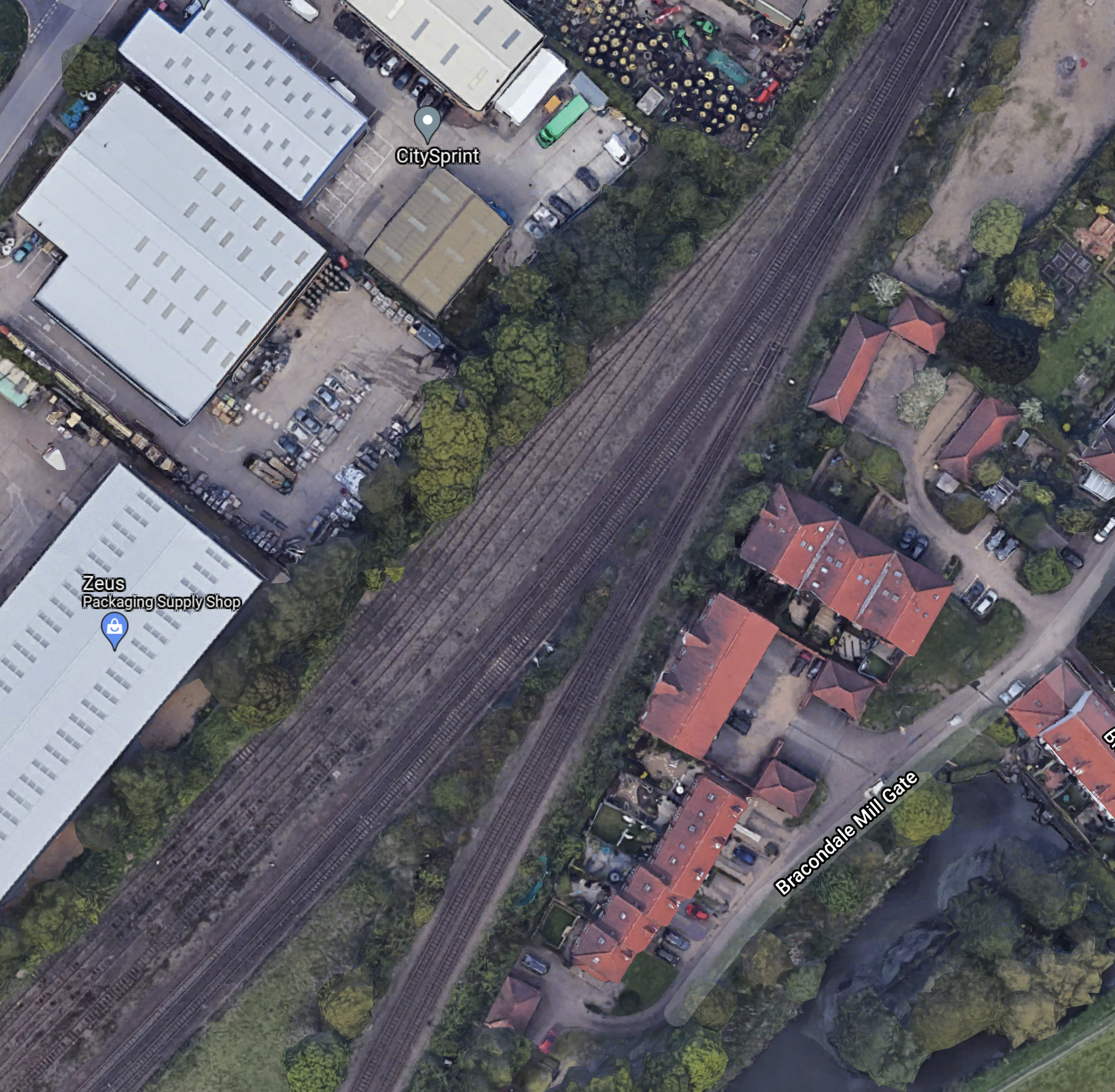
Note.
- The electrified double-track of the Great Eastern Main Line goes across the map from North East to South West.
- The double-track railway to the East of the main line is the unelectrified Breckland Line to Cambridge, which turns West and goes under the main line.
- On the West of the main lines are the Victoria sidings that I wrote about in Greater Anglia Completes Directly-Managed Norwich Victoria Sidings Project.
As the replacement of the swing bridge will require some work to be done to the electrification, I wonder if at the same time Network Rail would electrify the Norwich end of the Breckland Line.
There must be a balance point adding electrification or batteries to the trains.
As the Breckland Line has few freight trains, electrification is not needed for freight.
Ticketing
A high-speed high-capacity service as I’m proposing must be easy to use.
It is a classic route, where nothing short of London-style contactless ticketing will do, as I’m certain this encourages people to use the trains.
As East Anglia is self-contained and has few services that don’t terminate in the area or in London, I am certain that this could be achieved.
If you remove First Class as Greater Anglia has done on many services, you actually simplify the ticketing, so a Lumo-style mid-class is ideal.
High Speed Train Services
Currently Great Northern run two tph from King’s Cross to Ely via Cambridge.
- One service is extended to King’s Lynn.
- I could see the second service extended to Norwich.
Both services would need to be run by 125 mph trains because of the speed of other trains on the East Coast Main Line.
Conclusion
I think duch a system would be possible.
A Special Weekend Timetable Has Been Put In Place For Lincoln Christmas Market
The title of this post, is the same as that of this article on Rail Advent.
This is the first paragraph.
The timetable has been put in place for Lincoln Christmas Market with direct services from Leeds, Newcastle, Edinburgh, Aberdeen and Inverness.
It looks to be a clever piece of planning, whilst work is carried out on the East Coast Main Line between Doncaster and Peterborough.
- Services will be diverted onto the Great Northern and Great Eastern Joint Line though Spalding, Sleaford and Lincoln.
- Will the trains be using the new tracks at the Werrington dive-under.
- Nine-car Class 800 bi-mode trains will be used.
- On the Saturday, there will be two trains per hour (tph) in both directions.
- Of these trains, five trains per day (tpd) in both directions will stop at Lincoln Central station.
It does appear that LNER are making the best of a difficult situation.
Passengers going to Lincoln for the Christmas Market will not be disappointed.
Grand Central Trains
Grand Central Trains are also using the diversion route.
Hull Trains
Hull Trains are also using the diversion route.
On the Saturday, there will be five tpd in both directions.
These can be doubled up to ten-car trains if the demand is there.
Lumo Trains
Lumo trains don’t appear to be running.
Conclusion
Network Rail seem to have done a cunning piece of timetabling.
There’ll be trainspotters galore in the centre of Lincoln.
London To Edinburgh On Lumo
Yesterday, I took the 10:45 Lumo service from King’s Cross to Edinburgh.
I took some pictures on the way.
I have split them into sepate topics.
Lumo’s Class 803 Train Arrives

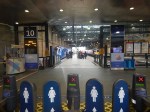
Note.
- The train is in Platform 10 in the old suburban station.
- This has now been reduced to just two platforms.
- In the other platform is a Grand Central service to Bradford Interchange station.
At least it appears, that there could be space to reinstate a third platform, if it should prove necessary.
Seating On Lumo
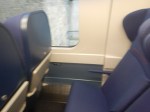

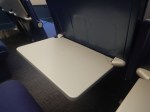
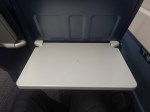

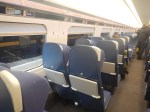
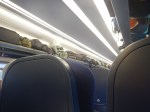
Note.
- I didn’t get a seat with a proper window.
- The seat-back table is generously-sized.
- There is a light over the table.
- The luggage racks were well used.
- There is more than normal leg-room. My neighbour, who was taller than my 1.70 metres, also liked the leg-room.
Both of us, thought the seats were more comfortable than LNER.
I have a spine that curves outwards at the bottom and it often objects to train and car seats. But after four-and-a-half hours on Lumo, it wasn’t protesting.
York to Church Fenton Improvement Scheme
When the York To Church Fenton Improvement Scheme and the closely related Huddersfield To Westtown (Dewsbury) Upgrade are completed, the TransPennine route between Huddersfield and York will be fully-electrified.
These pictures show the electrification is underway.
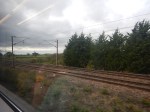
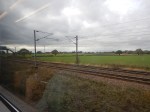





York to Huddersfield will be over forty miles of electrified line, with a remaining gap of just eighteen miles to the electrification being installed between Stalybridge and Manchester Victoria.
Work At Reston Station
Reston station is being built North of Berwick-on-Tweed. I took these pictures as we passed through.



I describe the station in a post called A New Reston Station.
Arrival In Edinburgh
I took these pictures when we arrived in Edinburgh.
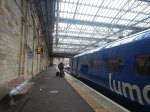

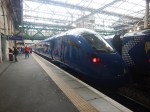
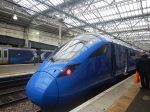
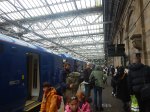
Note Edinburgh is not short of platforms that can take five- and ten-car trains.
These are a few other thoughts about the journey.
Non-Stop Between King’s Cross And Newcastle
It seemed to me, that a lot of passengers left the train at Newcastle.
- Times between King’s Cross And Newcastle are comparable betyween LNER and Lumo.
- Lumo is non-stop until Newcastle.
- Lumo is probably more affordable.
I can see Lumo picking up a lot of business on this leg.
Football At Newcastle
I have come across several Newcastle United season ticket holders in London.
Looking at Lumo’s full timetable, there are these two trains on a Saturday.
- A train leaves King’s Cross at 10:25 and arrives in Newcastle at 13:25.
- A train leaves Newcastle at 19:35 and arrives in King’s Cross at 22:29.
These could be ideal to see the match and get back to London.
Food
The full food service isn’t in operation yet, but we the trolley did come through twice.
Passenger Loading
Most seats were taken, as we left King’s Cross, but due to high number, who left at Newcastle, there were a few gaps as we ran between Newcastle and Edinburgh.
But then this is a shorter leg and perhaps travellers are more likely to drive.
I suspect that Lumo can’t wait to build up their service to the full five trains per day, as it does look like the demand is there.
Morpeth Station
There wasn’t many boarders and leavers at Morpeth station, but as services build up and travellers realise the system is there, will business increase?
Conclusion
I shall take another trip in the New Year, when the full service is implemented.
Calcutta Cup By Lumo
According to Scottish Rugby, the Culcutta Cup between Scotland and England next year is at Murrayfield on the 5th of February 2022.
I have just looked up services that day on Lumo’s web site.
- It would be possible to travel North on the 05:45 train, which arrives in Edinburgh at 10:06.
- After the match, there is a train South at 17:56, which arrives back in London at 22:29.
- Tickets are available at £45.50 both ways.
As Lumo could probably run both services with ten-car trains, that hold eight hundred passengers, this could earn ticket revenue for Lumo of £72,800.
Hull Trains Is Back And Stronger Than Ever
The title of this post, is the same as that of this press release from Hull Trains.
This is the first paragraph.
Timetables at Hull Trains will be back to pre-pandemic levels from December as public confidence in rail travel continues to grow.
These are other points from the press release.
- The number of returning passengers is steadily increasing.
- From December 12th, Hull Trains will be running 94 trains per week in total, which is two higher than the pre-pandemic record.
- An additional service will be run on Sunday to match the six trains per day (tpd) on Saturday.
- There will be seven tpd on weekdays. That’s not far off one train per teo hours (tp2h) all day.
Passenger numbers must be coming out from the pandemic well.
This sentence from the press release gives a clue to how Hull Trains will cope with increasing passenger numbers.
Ten-car operations will commence on Fridays and Saturdays to provide additional capacity just in time for Christmas travel and the general growing demand as we prepare to enter 2022.
I suspect by rescheduling maintenance and running all five trains in services, they can run some trains on Fridays and Saturdays as pairs.
- As Hull trains only stop at Stevenage, Grantham, Retford, Doncaster, Selby, Howden, Brough, Hull and Beverley, there aren’t many stations, that need to be able to take ten-car trains.
- I suspect a couple of platforms might need lengthening, as a ten-car train is 260 metres long. Or they could instruct passengers to only use the front train for the stations with short platforms. Or only use five-car trains to the stations with short platforms.
- But the longer trains won’t need any extra paths.
- I was also told last year, that Hull station can take nine-car trains, so perhaps it can take a ten.
So to increase capacity on the route, Hull Trains just need to add another train to their fleet.
As all costs are probably well-known, with a bit of simple modelling, Hull Trains can probably predict, when they need to add a new train.
Whilst I was looking at the Lumo train yesterday, I got talking to a driver from Hull Trains, who had come over to take a professional look at Lumo’s Class 803 train.
I asked him what he liked about Hull Trains’s Class 802 trains as a driver. He said the brakes, which is probably most important to a driver, as they’re at the sharp end, if anything happens. So that’s comforting.
He also said that some of the Hitachi trains had shown they were stable at 140 mph. So that’s good too.
On talking about the batteries on the Lumo train, I got the impression that batteries will appear on other Hitachi Trains.
Conclusion
It appears to be all trains go between London and Hull.
In Could We See Between London And Much Of The North By Train In Under Two Hours?, I looked at the effect of improvements on the East Coast Main Line and concluded that timings between London Kings Cross and Hull could be around two hours and twenty minutes. This would surely be a spur to increasing traffic on the route.
Surely, when Hull Trains use battery-electric Hitachi trains between London and Hull, this will be the icing on the marketing cake, as we seem to be coming to a point, where zero-carbon sells.
As an aside, will Lumo, who are another First Group company, use a similar mix of five- and ten-car trains on the London and Edinburgh route to increase capacity?
I suspect that what is good for Hull Trains will be good for Lumo.
Lumo – A View From Across The Pond
I have just read this guide to Lumo on a United States web site called NewsNation USA, which is entitled Lumo Trains: Cheaper London To Edinburgh Fares – What You Need To Know. The article is positive about the new train service.
It only misses out one important detail. Lumo have said, they will have a long booking window, which will surely appeal to travellers on the route from overseas, who are coming to the UK for a holiday and want to visit both cities.
COP26 And Lumo Branding At King’s Cross Station
I took these pictures as I passed through King’s Cross station today.
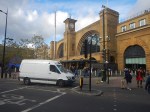







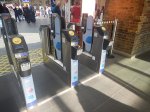
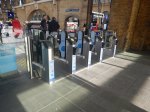

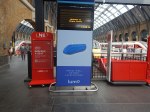
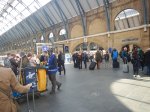

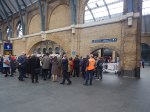
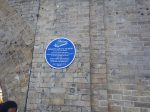
Note.
- Wilston Samuel Jackson was the first black train driver in the UK.
- Lumo seem to have taken over all of the branding at the station.
There was a generally upbeat atmosphere at the station.
 The Anonymous Widower