Funding Nemo: £600m Power Cable Connects UK And Belgium
The title of this post is the same as this article in The Guardian.
This is the first paragraph.
A £600m cable connecting the UK and Belgium’s energy systems is about to be switched on, becoming the first of a new generation of interconnectors that will deepen the UK’s ties to mainland Europe just as it prepares to leave the EU.
It runs between Richborough in Kent and Zeebrugge in Belgium and is the fifth interconnector to be connected to Great Britain.
Other interconnectors connect to Ireland, Northern Ireland, France and the Netherlands.
In Large Scale Electricity Interconnection, I discuss the rest of the interconnectors, that are being constructed or planned.
We could see up to fifteen in operation in a few years.
As to Nemo, it was originally thought that the UK would be importing energy from Belgium, but as Belgium needs to service its nuclear power stations and will be shutting them in the next few years, the power will sometimes be flowing the other way. Especially, as more large wind farms come on stream in the UK!
It is my view that Icelink could change everything and Belgium’s possible future power shortage, makes Icelink far more likely.
Wikipedia describes the interconnector between Iceland and Scotland like this.
At 1000–1200 km, the 1000 MW HVDC link would be the longest sub-sea power interconnector in the world.
As more interconnectors are built between the UK and the Continent, including a possible link between Peterhead in North-East Scotland to Stavanger in Norway, which is called NorthConnect, the UK will begin to look like a giant electricity sub-station, that connects all the zero-carbon power sources together.
- Denmark will supply wind power.
- France will supply nuclear power.
- Iceland will supply hydro-electric and geothermal power.
- Norway will supply hydro-electric power.
- The UK will supply nuclear and wind power.
Other sources like wind power from France and Ireland and tidal and wave power from the UK could be added to the mix in the next decade.
The Consequences For Gas
Our use of gas to generate electricity in Western Europe will surely decline.
If projects, like those I discussed in Can Abandoned Mines Heat Our Future?, come on stream to provide heat, the role of gas in providing heating in housing and other buildings will decline in the UK.
We also shouldn’t forget the role of hydrogen, which could also replace natural gas in many applications. It would be created by electrolysis of water or as a by-product of some industrial processes.
Hydrogen could also become a valuable way of storing excess electricity produced by tidal, wave and wind power.
It is unlikely, we will develop a totally gas-free economy, as methane is a valuable chemical feedstock to produce other chemical products we need.
Conclusion
Not many people will be sorry, except for President Putin and a few equally nasty despots in the Middle East.
Spark Energy Supply Ceases Trading
The title of this post, is the same as that of this article on the BBC.
The important thing in the BBC’s post is this section.
Ovo Energy has confirmed it has entered into a conditional agreement to buy the company and take on its customers.
Ofgem said the energy supply for Spark’s 290,000 customers would continue as normal.
It advised customers to take meter readings, and said outstanding credit balances would be protected.
It appears that the safety-net is working.
Incidentally, I am a customer of OVO and I have had no problems, except with getting my smart meter installed.
I also have several friends, who chose OVO independently of me, who don’t seem to be having problems.
So hopefully, Spark Energy Supply’s customers will be looked after professionally.
Conclusion
My advice to anybody affected by the failure of Spark Energy or any other energy company, is make sure you have all your information with the meter numbers together.
Then sit tight for a few weeks and see how it all goes, before choosing a new supplier if you feel you need one.
It might also be a good idea to listen to Paul Lewis on Radio 4’s Moneybox today.
Could Hydrogen Replace Natural Gas In Domestic Properties?
This post was suggested by this article on the Chronicle Live, which is entitled Thousands of Tyneside Homes Could Be Fuelled By Hydrogen Under £22bn Plan.
This is the first three paragraphs.
Thousands of homes across Tyneside and the wider North East could be converted to run on hydrogen in an effort to hit climate change targets.
The H21 North of England report, published today, has called for more than 700,000 homes across Tyneside and Teesside to be converted to run on hydrogen by 2034.
The moves have been proposed by Northern Gas Networks, which supplies gas to the North East, and its North West and Midlands counterpart Cadent, in association with Norwegian energy company Equinor.
It would be feasible to convert houses from natural gas to hydrogen.
In fact, there is a small proportion of hydrogen in natural gas anyway.
But just because it is feasible, it doesn’t mean it is a good idea.
Who Pays?
Consumers would feel, that they shouldn’t pay any more.
Conversion
I remember being converted from town to natural gas in the 1970s.
We only had an ancient gas cooker and conversion was not a problem, but what will happen, if your boiler or cooker is not convertible?
New Technologies
I don’t like gas cookers, so in my current house, I only have a four-year-old modern boiler, so houses like mine wouldn’t be a problem.
Also according to various people, I’ve met, the trend in cookers is to go to induction appliances, which would take a variable out of the conversion equation.
I see lots of new housing and other construction, advertised as low energy, with high insulation levels and solar panels everywhere.
Add in innovative district heating systems and I can see new housing being built without the need of a gas supply.
This must surely be safer, as gas does seem to cause a lot of deaths in homes.
Just Say No!
So what happens, if you say no and your area is being converted to hydrogen?
Do you lose your gas supply?
Creation Of The Hydrogen
This article on the Internet is entitled Northern Gas Networks: One Company’s Ambitious Plan To Cut Carbon Emissions For An Entire Nation.
This is said about the creation of the hydrogen.
The first step is getting access to enough hydrogen. The most widely used method to produce hydrogen is steam-methane reforming, which involves reacting methane (CH4) with high-temperature steam (H2O), which creates carbon dioxide (CO2) and hydrogen (H2). But hydrogen isn’t a clean fuel if that carbon dioxide is put into the atmosphere. So the reactor which produces hydrogen will have to be paired with carbon capture and storage, a process where carbon dioxide is captured before it enters the air, and then pumped underground for safe, permanent storage.
Companies, politicians and academics have been waffling on about carbon capture and storage for decades and I believe at the present time, it is one of those technologies, which is akin to burning large numbers of fifty pound notes.
I do think that at some point in the future, a clever chemist will design a chemical plant, where carbon dioxide goes in one end and sheets, rods or components of carbon fibre, graphene or other carbon form come out the other end.
In my view it is much better to not create the carbon dioxide in the first place.
The obvious way is to use surplus wind power to electrolyse water and produce hydrogen. It is a clean process and the only by-product is oxygen, which no-one has yet flagged up as dangerous.
Conclusion
The objective of this project may be laudable, but there is a lot of development and thinking that needs to be done.
Steam Methane Reforming
In The Liverpool Manchester Hydrogen Clusters Project, I used an extract that describes the project.
This was a paragraph from the extract.
It proposes converting natural gas into clean-burning hydrogen gas, using a process called steam methane reforming. The process also removes CO2 from the gas, which can then be captured using existing carbon and capture storage technology and stored in depleted offshore gas reservoirs.
So what is steam methane reforming?
Methane is a chemical compound consisting of one carbon and four hydrogen atoms, that is the major component of natural gas.
This first paragraph is from the Wikipedia entry for steam reforming.
Steam reforming is a method for producing hydrogen, carbon monoxide, or other useful products from hydrocarbon fuels such as natural gas. This is achieved in a processing device called a reformer which reacts steam at high temperature with the fossil fuel. The steam methane reformer is widely used in industry to make hydrogen. There is also interest in the development of much smaller units based on similar technology to produce hydrogen as a feedstock for fuel cells. Small-scale steam reforming units to supply fuel cells are currently the subject of research and development, typically involving the reforming of methanol, but other fuels are also being considered such as propane, gasoline, autogas, diesel fuel, and ethanol.
If the process has a problem, it is that is produces carbon dioxide, which in the case of the Liverpool Manchester Hydrogen Clusters Project is captured and will be stored depleted gas reservoirs.
Electricity Shake-Up Could Save Consumers ‘up to £40bn’
The title of this post is the same as that of this article in the BBC.
The electricity shake-up was forecast in yesterday’s Sunday Times and I wrote about it in Giant Batteries To Store Green Energy.
In We Need More Electricity, I talked about what RWE are doing to create an all-purpose Energy Centre at Tilbury.
The Tilbury Energy Centre will feature.
- Efficient energy generation from natural gas.
- Substantial energy storage.
- Peak energy production from natural gas.
- Load balancing of wind power with storage and generation from natural gas.
But I suspect, it will get involved in other advanced techniques, like using carbon dioxide to get greenhouse fruit and vegetables to grow quicker.
The electricity market is changing.
We Need More Electricity
Everything we do, seems to need more and more electricity.
- We are greening our transport and every electric train, car, bus and truck will need to be charged.
- Unless it is hydrogen-powered, in which case we’ll need electricity to split water into hydrogen and oxygen.
- Computing and the Internet needs more electricity and is leading to companies putting server farms in countries like Iceland, where there are Gigawatts of low-cost electricity.
- We’re also using more energy hungry equipment like air-conditioning and some household appliances.
- And then there’s industry, where some processes like metal smelting need lots of electricity.
At least developments like LED lighting and energy harvesting are helping to cut our use.
Filling The Gap
How are we going to fill our increasing energy gap?
Coal is going and rightly so!
A lot of nuclear power stations, which once built don’t create more carbon dioxide, are coming to the end of their lives. But the financial and technical problems of building new ones seem insoluble. Will the 3,200 MW Hinckley Point C ever be built?
That 3,200 MW size says a lot about the gap.
It is the sort of number that renewables, like wind and solar will scarcely make a dent in.
Unfortunately, geography hasn’t donated us the terrain for the massive hydroelectric schemes , that are the best way to generate loe-carbon electricity.
Almost fifty years ago, I worked briefly for Frederick Snow and Partners, who were promoting a barrage of the River |Severn. I wrote about my experiences in The Severn Barrage and I still believe , that this should be done, especially as if done properly, it would also do a lot to tame the periodic flooding of the River.
The Tilbury Energy Centre
An article in The Times caught my eye last week with the headline of Tilbury Planned As Site Of UK’s Biggest Gas-Fired Power Station.
It said that RWE were going to build a massive 2,500 MW gas-fired power station.
This page on the RWE web site is entitled Tilbury Energy Centre.
This is from that page.
RWE Generation is proposing to submit plans to develop Tilbury Energy Centre at the former Tilbury B Power Station site. The development would include the potential for a Combined Cycle Gas Turbine (CCGT) power station with capacity of up to 2,500 Megawatts, 100 MW of energy storage facility and 300MW of open Cycle Gas Turbines (OCGT). The exact size and range of these technologies will be defined as the project progresses, based on an assessment of environmental impacts, as well as market and commercial factors.
The development consent application will also include a 3km gas pipeline that will connect the proposed plant to the transmission network which runs to the east of the Tilbury power station. The proposed CCGT power station would be located on the coal stock yard at the site of the former power station, but would be physically much smaller than its predecessor (a coal/biomass plant).
I will now look at the various issues.
Carbon Dioxide
But what about all that carbon dioxide that will be produced?
This is the great dilemma of a gas-powered power-station of this size.
But the advantage of natural gas over coal is that it contains several hydrogen atoms, which produce pure water under combustion. The only carbon in natural gas is the one carbon atom in methane, where it is joined to four hydrogen atoms.
Compared to burning coal, burning natural gas creates only forty percent of the carbon dioxide in creating the same amount of energy.
If you look at Drax power station, which is a 3,960 MW station, it produces a lot of carbon dioxide, even though it is now fuelled with a lot of imported biomass.
On the other hand, we could always eat the carbon dioxide.
This document on the Horticultural Development Council web site, is entitled Tomatoes: Guidelines for CO2 enrichment – A Grower Guide.
This and other technologies will be developed for the use of waste carbon-dioxide in the next couple of decades.
The great advantage of a gas-fired power station, is that, unlike coal, there are little or no impurities in the feedstock.
The Site
This Google Map shows the site, to the East of Tilbury Docks.
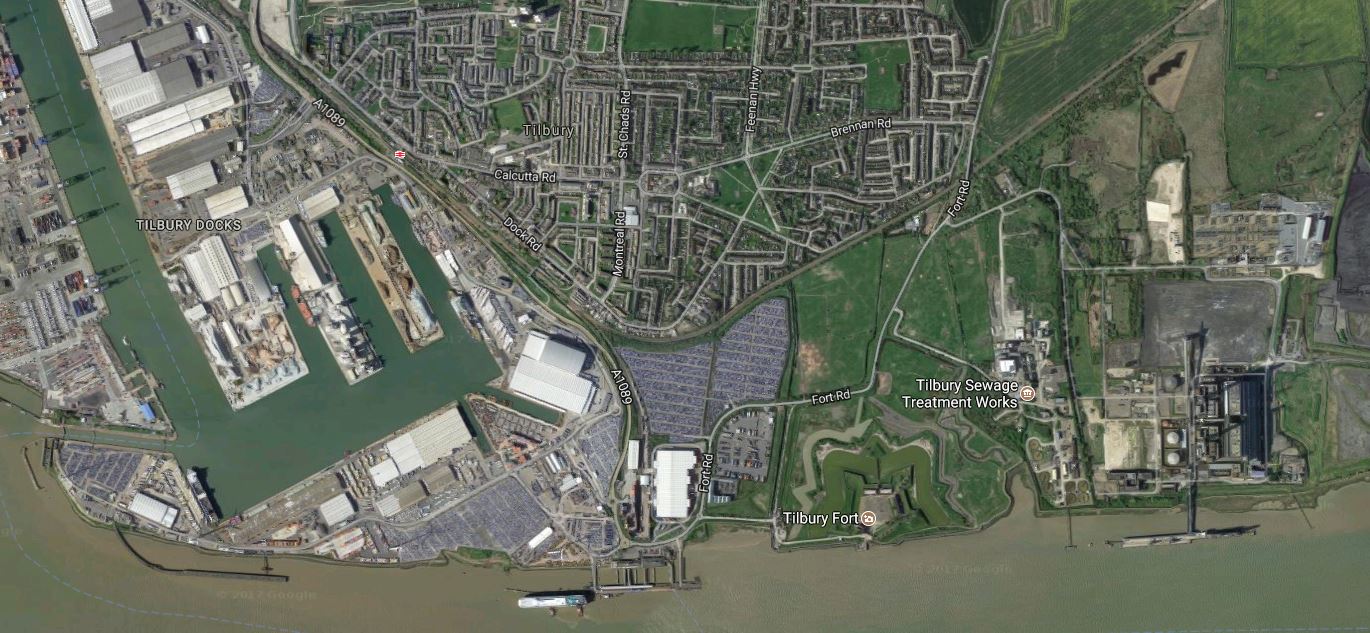
Note that the site is in the South East corner of the map, with its jetty for coal in the River.
These pictures show the area.
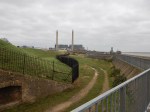




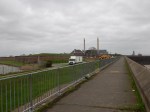


The CCGT power station would be built to the North of the derelict Tilbury B power station. I’ll repeat what RWE have said.
The proposed CCGT power station would be located on the coal stock yard at the site of the former power station, but would be physically much smaller than its predecessor (a coal/biomass plant).
Hopefully, when complete, it will improve the area behind partially Grade II* Listed Tilbury Fort.
Another development in the area is the Lower Thames Crossing, which will pass to the East of the site of the proposed power station. As this would be a tunnel could this offer advantages in the design of electricity and gas connections to the power station.
What Is A CCGT (Combined Cycle Gas Turbine) Power Station?
Combined cycle is described well but in a rather scientific manner in Wikipedia. This is the first paragraph.
In electric power generation a combined cycle is an assembly of heat engines that work in tandem from the same source of heat, converting it into mechanical energy, which in turn usually drives electrical generators. The principle is that after completing its cycle (in the first engine), the temperature of the working fluid engine is still high enough that a second subsequent heat engine may extract energy from the waste heat that the first engine produced. By combining these multiple streams of work upon a single mechanical shaft turning an electric generator, the overall net efficiency of the system may be increased by 50–60%. That is, from an overall efficiency of say 34% (in a single cycle) to possibly an overall efficiency of 51% (in a mechanical combination of two cycles) in net Carnot thermodynamic efficiency. This can be done because heat engines are only able to use a portion of the energy their fuel generates (usually less than 50%). In an ordinary (non combined cycle) heat engine the remaining heat (e.g., hot exhaust fumes) from combustion is generally wasted.
Thought of simply, it’s like putting a steam generator on the hot exhaust of your car and using the steam generated to create electricity.
The significant figures are that a single cycle has an efficiency of say 34%, whereas a combined cycle could be possibly as high as 51%.
In a section in the Wikipedia entry called Efficiency of CCGT Plants, this is said.
The most recent[when?] General Electric 9HA can attain 41.5% simple cycle efficiency and 61.4% in combined cycle mode, with a gas turbine output of 397 to 470MW and a combined output of 592MW to 701MW. Its firing temperature is between 2,600 and 2,900 °F (1,430 and 1,590 °C), its overall pressure ratio is 21.8 to 1 and is scheduled to be used by Électricité de France in Bouchain. On April 28, 2016 this plant was certified by Guinness World Records as the worlds most efficient combined cycle power plant at 62.22%. The Chubu Electric’s Nishi-ku, Nagoya power plant 405MW 7HA is expected to have 62% gross combined cycle efficiency.
There is also a section in the Wikipedia entry called Boosting Efficiency, where this is said.
The efficiency of CCGT and GT can be boosted by pre-cooling combustion air. This is practised in hot climates and also has the effect of increasing power output. This is achieved by evaporative cooling of water using a moist matrix placed in front of the turbine, or by using Ice storage air conditioning. The latter has the advantage of greater improvements due to the lower temperatures available. Furthermore, ice storage can be used as a means of load control or load shifting since ice can be made during periods of low power demand and, potentially in the future the anticipated high availability of other resources such as renewables during certain periods.
So is the location of the site by the Thames, important because of all that cold water.
But surely using surplus electricity to create ice, which is then used to improve the efficiency of the power produced from gas is one of those outwardly-bonkers, but elegant ideas, that has a sound scientific and economic case.
It’s not pure storage of electricity as in a battery or at Electric Mountain, but it allows spare renewable energy to be used profitably for electricity generators, consumers and the environment.
The location certainly isn’t short of space and it is close to some of the largest wind-farms in the UK in the Thames Estuary, of which the London Array alone has a capacity of 630 MW.
Wikipedia also has a section on an Integrated solar combined cycle (ISCC), where a CCGT power station is combined with a solar array.
I can’t see RWE building a new CCGT plant without using the latest technology and the highest efficiency.
Surely the higher the efficiency, the less carbon dioxide is released for a given amount of electricity.
Building A CCGT Power Station
The power station itself is just a big building, where large pieces of machinery can be arranged and connected together to produce electricity.
To get an idea of scale of power stations, think of the original part of Tate Modern in London, which was the turbine hall of the Bankside power station, which generated 300 MW.
Turbines are getting smaller and more powerful, so I won’t speculate on the size of RWE’s proposed 2,500 MW station.
It will also only need a gas pipe in and a cable to connect the station to the grid. There is no need to use trains or trucks to deliver fuel.
Wikipedia has a section entitled Typical Size Of CCGT Plants, which says this.
For large-scale power generation, a typical set would be a 270 MW primary gas turbine coupled to a 130 MW secondary steam turbine, giving a total output of 400 MW. A typical power station might consist of between 1 and 6 such sets.
I feel that this raises interesting questions about the placement of single unit CCGT power stations.
It also means that at somewhere like Tilbury, you can build the units as required in sequence, provided the services are built with the first unit.
So on a large site like Tilbury, the building process can be organised in the best way posible and we might find that the station is expanded later.
RWE say this on their web site.
The exact size and range of these technologies will be defined as the project progresses, based on an assessment of environmental impacts, as well as market and commercial factors.
That sounds like a good plan to me!
100 MW Of Energy Storage At Tilbury
RWE’s plan also includes 100 MW of energy storage, although they say market and commercial factors could change this.
Energy storage is the classic way to bridge shortages in energy, when demand rises suddenly, as cin the classic half-time drinks in the Cup inal.
In Wikipedia’s list of energy storage projects, there are some interesting developments.
The Hornsdale Wind Farm in Australia has the following.
- 99 wind turbines.
- A total generating capacity of 315 MW.
Elon Musk is building the world’s largest lithium-ion battery next door with a capacity of 129 MwH
But those energy storage projects aren’t all about lithium-ion batteries.
Several like Electric Mountain in Wales use pumped storage and others use molten salt.
Essex doesn’t have the mountains for the former and probably the geology for the latter.
But the technology gets better all the time, so who knows what technology will be used?
The intriguing idea is the one I mentioned earlier to make ice to cool the air to improve the efficiency of the CCGT power station.
What Is The Difference Between A CCGT (Combined Cycle Gas Turbine) And An OCGT (Open Cycle Gas Turbine) Power Station?
RWE have said that they will provide 300 MW of 300MW of Open Cycle Gas Turbines, so what is the difference.
This page from the MottMacdonald web site gives a useful summary.
OCGT plants are often used for the following applications:
- Providing a peak lopping capability
- As a back- up to wind and solar power
- As phase 1 to generate revenue where phase 2 may be conversion to a CCGT
CCGT plants offer greater efficiency.
I’ve also read elsewhere, that OCGT plants can use a much wider range of fuel. Used cooking oil?
Conclusion
There is a lot more to this than building a 2,500 MW gas-fired power station.
RWE will be flexible and I think we could see a very different mix to the one they have proposed.
Let’s Get Fracking
In Fracked Or Fiction, I talked about my attitude to fracking. These two paragraphs, were my conclusion.
My overwhelming conclusion after the lecture was that before we can embrace fracking in earnest, we must collect a lot more information. For example, we don’t know the background levels ofearthquakes and natural gas seepage in this country. So if say it is thought, that fracking had caused a small earthquake, can we be sure that that isn’t one that we habitually get in this country.
A secondary conclusion, is that my engineering knowledge indicated that there are several very fruitful areas for the development of new technological solutions to mitigate some of the possible problems of fracking.
But things have changed a bit in the over three years, since I attended the lecture at the London Geological Society.
We still get gas from the North Sea and a few smaller fields, but we have to buy in gas from places like Algeria, Russia and Qatar.
I suspect too, that we can always ship liquefied natural gas from the United States.
The Green Party would say that we shouldn’t burn natural gas, but what do we do about?
- People do with gas boilers who keep themselves warm in winter?
- Businesses that use gas as part of their industrial processes.
- In 2015, thirty percent of our electricity was produced from gas.
Renewables such as solar and wind are increasing, but for the forseeable future, we wil still need gas.
But how would you feel, if the Government said, that you must change your boiler for an electric one, as you can’t have any more gas?
We can continue to get our gas from those shining democracies of Algeria, Russia and Qatar or buy it from Trumpland, which would probably not be acceptable to everybody.
There is also the problem, that countries like Belgium, France, Germany, Ireland and The Netherlands are also short of gas and are relying increasingly on the Russians.
Surely, the best solution to avoid the cold and loss of employment in industries reliant on gas, is to extract the gas from our own fields, using fracking in a professional and engineeringly-sound manner.
We have form in the extraction of hydrocarbons in this way from land in the UK. The is the first paragraph, from the Wikipedia entry for Wytch Farm.
Wytch Farm is an oil field and processing facility in the Purbeck district of Dorset, England. It is the largest onshore oil field in western Europe. The facility, recently taken over by Perenco was previously operated by BP. It is hidden in a coniferous forest on Wytch Heath on the southern shore of Poole Harbour, two miles (3.2 km) north of Corfe Castle. Oil and natural gas (methane) are both exported by pipeline; liquefied petroleum gas is exported by road tanker.
Is there is an onshore oil-field in a more sensitive environment? Wikipedia says this under Environment.
Most of the field is protected by various conservation laws, including the Jurassic Coast world heritage site, Purbeck Heritage Coast and a number of sites of special scientific interest, areas of outstanding natural beauty and nature reserves (including Studland and Brownsea Island), so the gathering centre and most of the well sites are small and well screened by trees. Directional drilling has also contributed to reducing the impact on the local environment, with extended reach drilling from the Goathorn Peninsula attaining distances in excess of 10 km.
Note the reference to directional drilling, which according to a friend, who was associated with the development of the project, was very much pioneered at Wytch Farm.
Directional drilling is often very much part of the fracking process, prior to the actual hydraulic fracturing. I’m very much of the opinion, that to be a successful fracker, you need to have very good directional drilling capabilities.
I’ve heard it on good authority, that fracking is used in the Highlands of Scotland to extract drinking water. But the F-word is so sensitive, there is nothing about it on the Internet. I did find this web page from a company called Clearwater Drilling Company in Tennessee, which is entitled Hydrofracturing -A procedure designed to increase the amount of water in existing dry and low yield water wells.
Would you prefer to give money to dodgy regimes or build on the Wytch Farm experience and develop the World’s best fracking industry to keep us warm in winter and preserve jobs?
It may seem a stark choice to some, but I believe in the competence of engineers, as demonstrated at Wytch Farm!
Let’s get fracking!
My Meter Installation
This may seem an odd post, but I want to have the pictures easily available, as fitting a smart meter to my house seems to be an obstacle course.



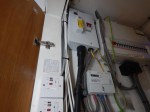

Let’s hope it means, that I don’t take any more pictures!
Russia ‘secretly working with environmentalists to oppose fracking’
The title of this post is not taken from some right-wing scandal sheet, but from this article in The Guardian.
I have an open mind on fracking, but keep these facts in mind.
- A lot of the bad stories about fracking originate in the United States, where quite frankly a lot of get-rich-quick cowboys got involved in the process, in a manner that would be illegal in the EU and the UK.
- The largest on-shore oil-field in Western Europe is Wytch Farm, which is close to Corfe Castle. I can’t find a report of any environmental damage around this oil-field, since production started in 1979. This proves to me, that we can extract oil and gas safely on-shore over a long period, which in Wytch Farm’s case is without fracking.
- We have some of the best engineering Universities in the world and we should use them to develop better ways of extracting, transporting and processing oil and gas. A big project involving several European universities called SHEER, is looking at fracking on a Polish site.
- Remember that if we need to import gas from outside Europe, we deal with countries with impeccable human rights like Qatar, Russia or the United States.
- Fracking techniques are used in the Highlands of Scotland to extract water out of rock.
- We need a lot of gas to keep us warm in winter.
I may have an open mind, but no-one could deny, that if Western Europe obtained the gas it needs from fracking or perhaps by finding a massive conventional gas field onshore in the UK, that the biggest loser would be Russia and President Putin.
I
Good Riddance To Coal-Fired Power Stations
This article on the BBC is entitled UK’s coal plants to be phased out within 10 years. This is said.
The UK’s remaining coal-fired power stations will be shut by 2025 with their use restricted by 2023, Energy Secretary Amber Rudd has proposed.
Ms Rudd wants more gas-fired stations to be built since relying on “polluting” coal is “perverse”.
Because coal is pure carbon, when it burns, if produces carbon dioxide.
On the other hand, natural gas, is a mixture of hydrogen and methane, which is a compound of one carbon atom and four hydrogen atons. So when it burns, it produces a lot of the combustion product of hydrogen, which is water.
I think to get the same amount of heat or produce a given amount of electricity, natural gas creates about half the amount of carbon dioxide, than coal does.
There is another advantage of using gas to generate electricity. You can have small power stations generating electricity, where it is needed.
An interesting small gas-powered power station is the Bunhill Energy Centre in Islington, which is used to generate electricity and heat for some of the Council’s buildings. Phase 2 of this project will capture waste heat from the London Underground and a large electricity sub-station, that will be used to heat more buildings.
These cogeneration systems will become more numerous. For instance, if you had say a large detached house in the country, you might use solar panels or a wind turbine, backed by a microCHP system for dark or still days.
We shouldn’t underestimate, the skill of engineers to design electricity combined heat and power systems matched to all the different markets.
There will come a time, where many of us will generate the electricity we need, either by ourselves or perhaps in a local co-operative. We could even sell the surplus back to the grid.
I will not predict what a system will look like, but it will heat your house and provide you with the electricity you need.
The one thing, I will predict that coal will not have any use for the generation of electricity.
 The Anonymous Widower