West Ealing Station – 1st February 2026
Because of the confusion of WordPress yesterday, I had to go back to West Ealing station to take more pictures today.
These are the pictures that I took.




















These are some of my thoughts.
The High-Density Transport-Hub Cluster
This seems to be coming on with several blocks now visible and the Waitrose site to be developed.
There also seems to be some useful shops, which include a pleasant Italian cafe on the North side of the rail lines.
The Fast-Charge System Contacts
Note.
- These are shown in Pictures 16-17!
- There are two contacts, which are in yellow for safety reasons.
- I wonder how many can be installed?
- Is it one per battery and one battery per car?
I suspect by duplicating cables and putting them underneath and between the tracks, the Fast-Charge system could handle a train like a Class 800 train.
Will Other High-Density Transport-Hub Clusters Be Developed Along The Elizabeth Line?
This is one for the nimbys, planners, politicians and residents, but I don’t see why some councils will try.
Man Finds Prehistoric Handaxe On His Tea Break
The title of this post, is the same as that of this article on the BBC.
This is the sub-heading.
A man discovered a prehistoric handaxe while he was “kicking his feet” on the ground during a tea break.
These are the first three paragraphs, which add some detail to the story.
Colin Cooley, 57, from Otley, Suffolk, works as a dumper driver on the Sizewell C excavation site.
Toward the end of a tea break, he noticed a piece of rock that he believed looked like a handaxe.
“All hell broke loose” when it was confirmed to be between 36,000 and 59,000 years old, and Hadley Sharman, an archaeologist working on the site, added it was a “blinder” of a find.
I suppose that the Nimbies will use the find to stop the power station getting built!
On the other hand Crossrail has used archaeology to make friends with the public, as I pointed out in Bison To Bedlam Or How To Make Friends.
Yarmouth Harbour To Be ‘Completed’ In £60m Project
The title of this post, is the same as that of this article on the BBC.
This is the sub-heading.
A major port is set to expand to prepare for construction work linked to several national infrastructure projects.
These first two paragraphs, which give more details.
Peel Ports said it would invest between £50m and £60m in Great Yarmouth’s Outer Harbour by developing the southern terminal, creating a roll-on roll-off (RORO) lift ramp and a large storage area.
Port director Richard Goffin said the construction work, which is set to begin in 2026, would “complete” the port as laid out in a business case in the early 2000s.
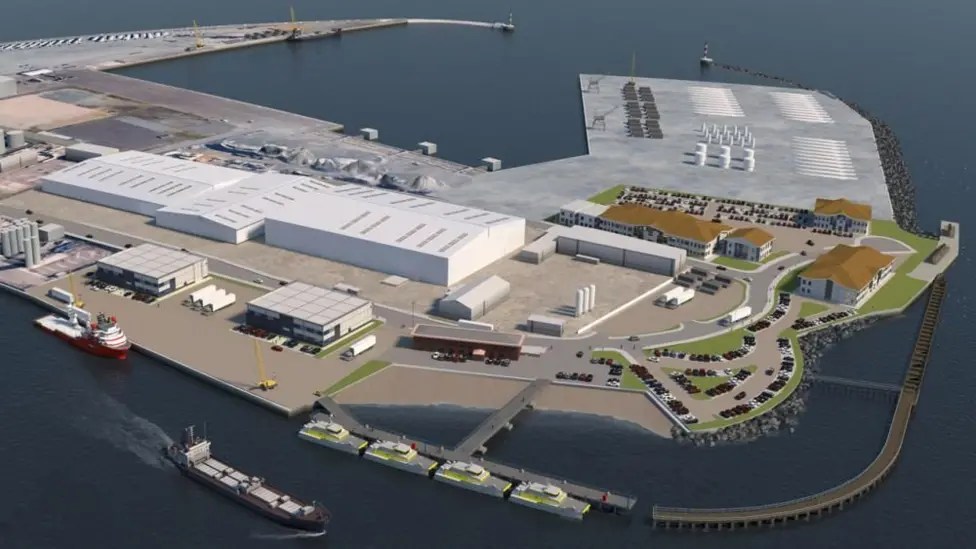
This image from Peel Ports Group shows how the Port of Great Yarmouth will look after the the proposed development.
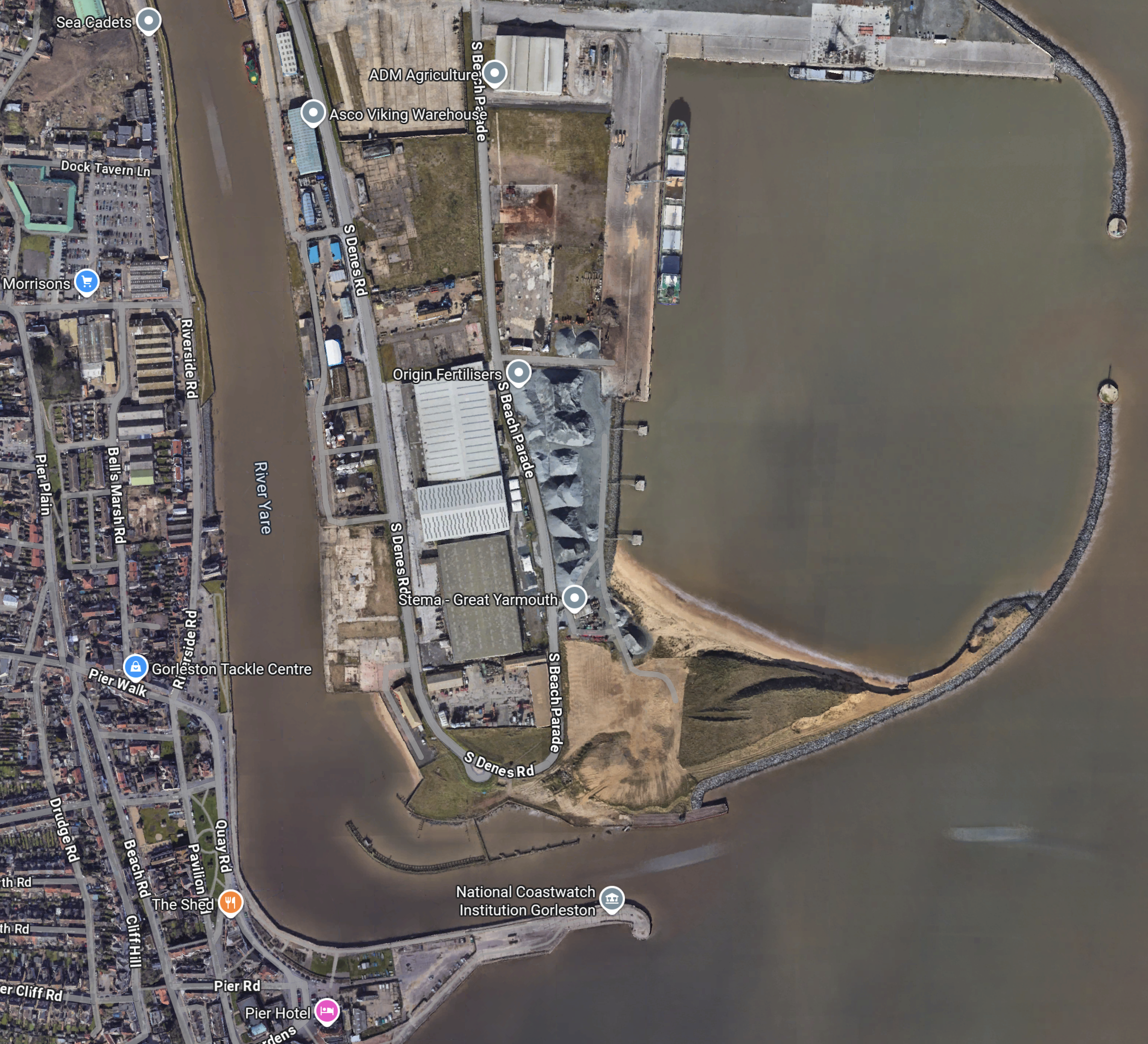
And this Google Map shows the port as it is today.
Note.
- The large triple shed, with the cross-wise middle section can be picked out in both the image and the map.
- The label by the shed says Origin Fertilisers, so I suspect the three objects on the quayside, which are visible in both the image and the map could be conveyors for loading and unloading ships with fertiliser.
- The two breakwaters are visible in both the image and the map.
It looks like the development would mainly involve filling in the Southern part of the current harbour.
With only a quick look and scant details, it looks to me, that it is a development that could be easily realised.
I have some thoughts.
Rail Access To The Port
There is no rail access to the port and I couldn’t see how it could be provided, without demolishing half of the town.
But there are carriage sidings at Great Yarmouth station, which are described in this Wikipedia entry like this.
New sidings were provided at the western end of the station to cope with the additional services operating into the station, following the closure of the M&GN system. It is a crescent-shaped site between the A47 road and Wherryman’s Way at the northernmost point of the River Yare, about 1⁄4 mi (400 m) north-west of the station. It had fallen out of use in the 1980s when Norwich Crown Point depot was built.
In 2010, the unused sidings were purchased by Great Yarmouth Borough Council; they were intended for use as a freight terminal, despite the lack of rail connection to the town’s port. It was hoped that 10,000 tonnes of sugar cane per week would be carried from Yarmouth to Cantley. The need to use a lorry shuttle between the docks and the rail yard, along with a £3.2 million quote for replacing the sidings at Cantley, saw the plan dropped.[19]
In May 2020, Eastern Rail Services commenced a lease with Norfolk County Council and Network Rail for Yarmouth Vauxhall sidings. Managing director James Steward said the siding “matched ERS’s requirement for an East Anglian site to base its rolling stock.” Following extensive de-vegetation works, Direct Rail Services 37402 became the first locomotive in 19 years to run into the sidings on 26 May 2020, followed the next day by it delivering five former Greater Anglia Mark 3 coaches for storage. On 6 July 2020, ERS was authorised a licence exemption permitting them to operate trains within the site
The Port of Great Yarmouth appears to be keen to do its part in the construction of Sizewell C. Could components for the power station, be brought into the port through the new roll-on/roll-off berth and then transferred to rail in the former carriage sidings?
This 3D Google Map shows the carriage sidings.
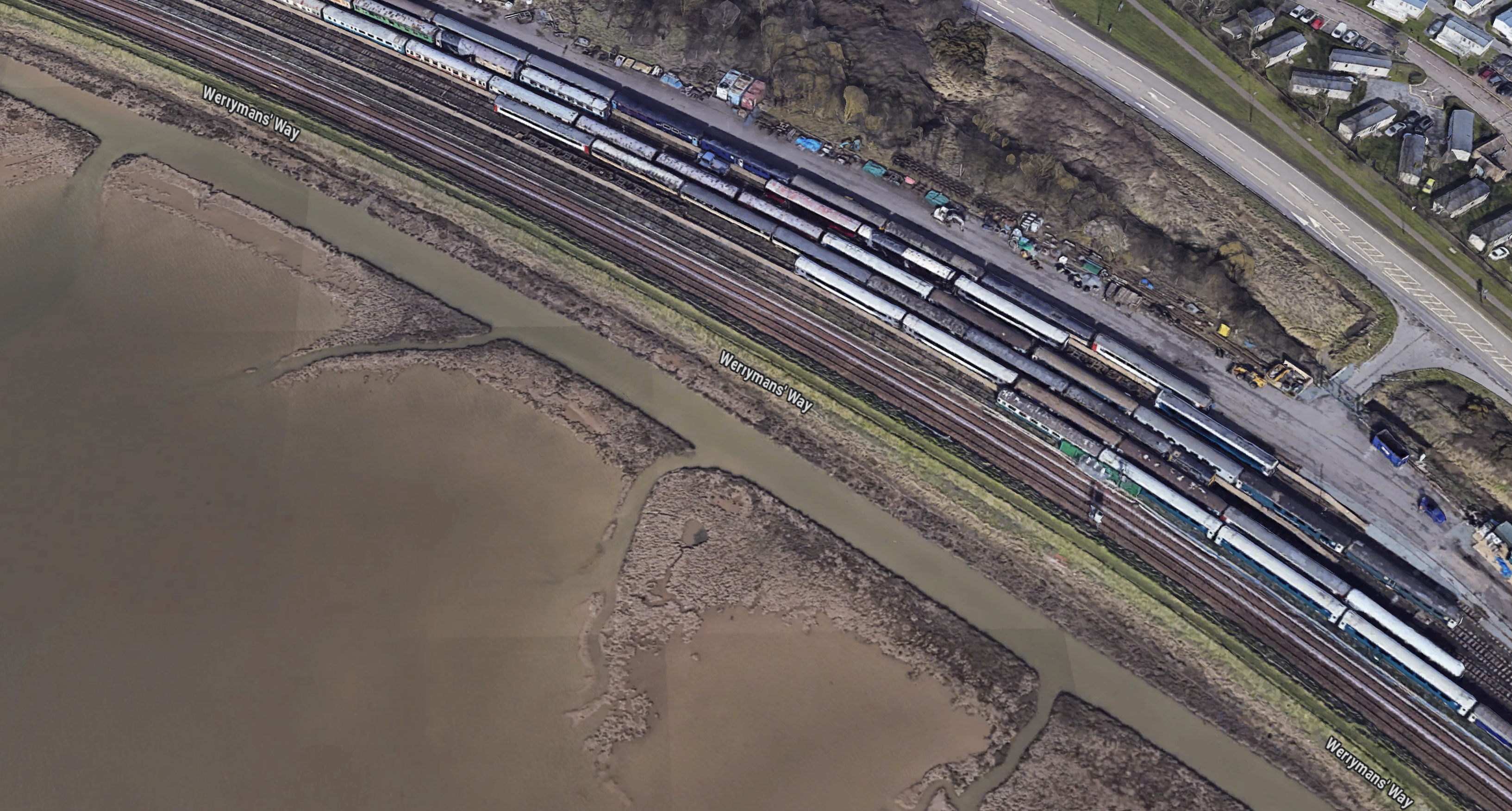
Most of the rolling stock appears to be retired Mark 2 and M3 coaches.
Road Access To The Port
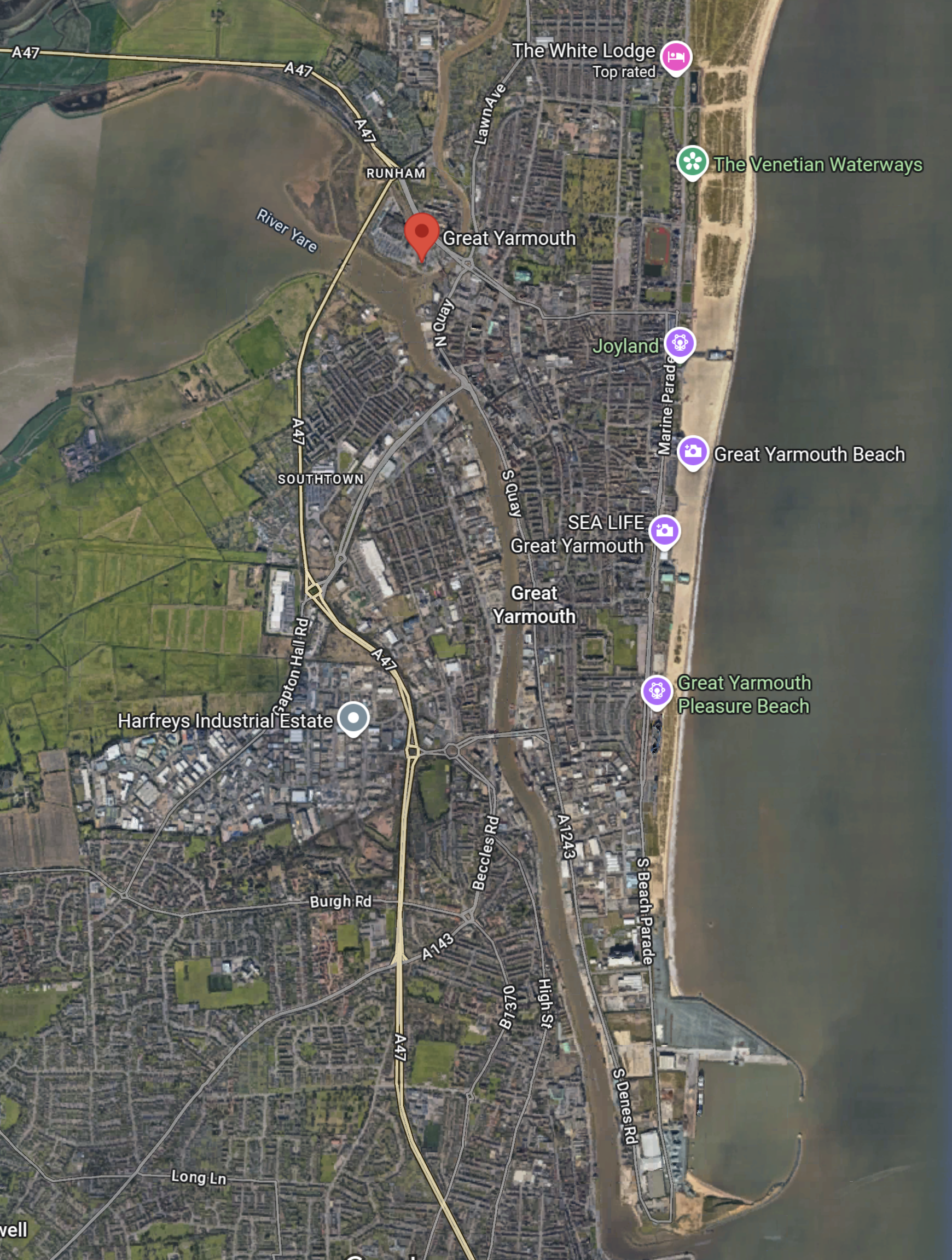
This Google Map shows Great Yarmouth and the Port and roads in the area.
Note.
- The red arrow indicates Great Yarmouth station.
- The Port of Great Yarmouth is in the South-East corner of the map.
- The A 47 runs down the West side of the town.
- The River Yare runs from the railway station to the sea, just below the port.
There is a road on the East bank of the River Yare, that connects to the A 47 and could easily connect to a rail cargo terminal to the North-West of the station in the derelict carriage sidings.
I can certainly see Nimbies not liking the new roll-on/roll-off ferry creating traffic in the town.
The Construction Of Sizewell C
Sizewell C is very similar to Hinckley Point C and this extract from the Wikipedia entry for Hinckley Point C describes some of that power station’s construction.
In March 2017, EDF, after the Office for Nuclear Regulation (ONR) gave approval to start building, the building of the first parts of the plant proper began with a network of tunnels to carry cabling and piping. Work was also under way on a jetty to land building materials, a seawall, and accommodation blocks.
In January 2018, EDF said that they were on track to start generating electricity by 2025 and that they planned to start constructing above-ground structures for the power station by June 2019.
The approximate 2,000 cubic metres (71,000 cu ft) concrete pour for the first reactor started on 11 December 2018. It was completed over a 30-hour period, creating the first part of the unit one 4,500 tonne base, a platform 3.2 metres (10 ft 6 in) thick. The reactor building will be built on the (to be completed) platform. This construction start marks the first new reactor build in the UK after a 30-year break, and the second PWR in the UK, after Sizewell B.
Completion of the base for the first reactor, the final 8,954 cubic metres (316,200 cu ft) of concrete, was achieved in June 2019. Completion of the base for the second reactor, 8,991 cubic metres (317,500 cu ft) of concrete, was achieved in June 2020.
Construction utilises the world’s largest crane, the Sarens SGC-250 double ring crane, which is responsible for lifting Hinkley Point C’s heaviest components. More than 600 heavy fabrications, including the five major parts of each unit’s steel containment liner and dome, are positioned by the SGC-250. The crane, named Big Carl, was delivered in modular form, consisting of over 400 deliveries.
In February 2023, the first nuclear reactor pressure vessel was delivered to site via the Bristol Channel Hinkley-dedicated wharf at Combwich. The pressure vessel was built in France in 2022 by Framatome.
In May 2024, the first of the 520 tonne steam generators was delivered to site in the same manner as the reactor pressure vessel.
Note.
- A good proportion of the power station and the materials to build it were brought in by sea.
- The size of everything is huge.
- Big Carl seems to make appearances in all big projects.
- According to the BBC, Peel Ports are spending £60million on a new roll-on/roll-off terminal, 350 metres of quay and ten hectares of high quality storage space.
I wouldn’t be surprised, if they have the contract for Sizewell C’s logistics, that Peel Ports will be laughing all the way to the bank.
If nothing else, after Sizewell C is completed, they will have a high-class port facility at the end of the A 47 from Birmingham, Leicester, Peterborough and Norwich, which could open up possible ferry routes to Europe.
Between Great Yarmouth And Sizewell
If the components come in to Great Yarmouth on trailers on the RORO ferries from France, they could be taken to Sizewell on the A 12 road.
Smaller components may be taken by road, but I wouldn’t rule out a transfer to rail in the carriage sidings at Great Yarmough, as I indicated earlier.
Ørsted Pulls Plug On 2.4 GW Hornsea 4 Offshore Wind Project In UK
The title of this post, is the same as that of this article on offshoreWIND.biz.
This is the sub-heading.
Ørsted has discontinued the development of the UK’s Hornsea 4 offshore wind farm in its current form. The developer said the 2.4 GW project has faced rising supply chain costs, higher interest rates, and increased construction and delivery risks since the Contract for Difference (CfD) award in Allocation Round 6 (AR6) in September 2024.
This introductory paragraph adds more detail.
In combination, these developments have increased the execution risk and deteriorated the value creation of the project, which led to Ørsted stopping further spending on the project at this time and terminating the project’s supply chain contracts, according to the Danish company. This means that the firm will not deliver Hornsea 4 under the CfD awarded in AR6.
Consider.
- Hornsea 4 will be connected to the grid at a new Wanless Beck substation, which will also include a battery and solar farm, which will be South West of the current Creyke Beck substation. Are Ørsted frightened of opposition from the Nimbies to their plans?
- I also wonder if political uncertainty in the UK, and the possibility of a Reform UK government, led by Nigel Farage is worrying companies like Ørsted.
So will factors like these prompt companies like Ørsted to move investment to countries, where they welcome wind turbines like Denmark, Germany and The Netherlands.
Could Ørsted Be Looking At An Alternative?
This is a map of wind farms in the North Sea in the Dogger Bank and Hornsea wind farms, that I clipped from Wikipedia..
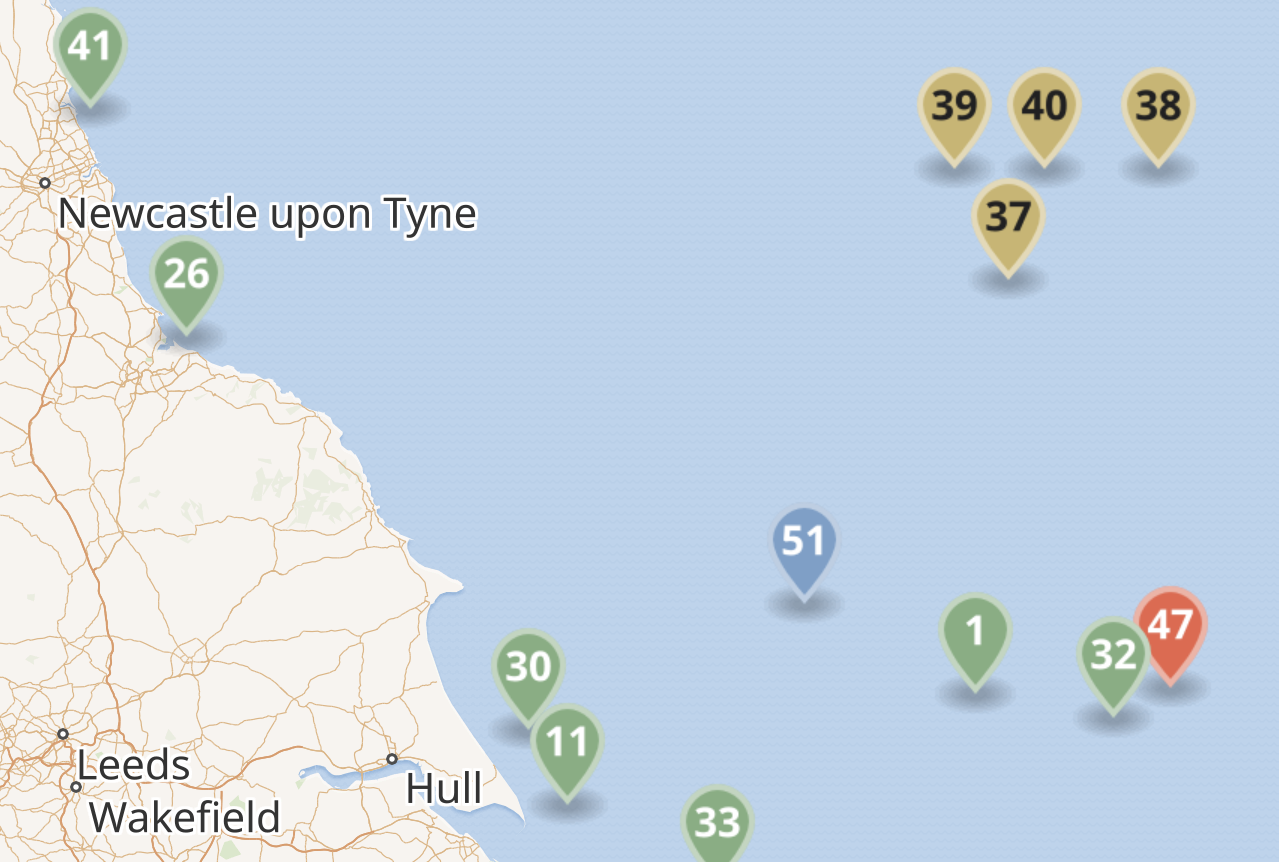
These are the Dogger Bank and Hornsea wind farms and their developers and size
- 37 – Dogger Bank A – SSE Renewables/Equinor – 1,235 MW
- 39 – Dogger Bank B – SSE Renewables/Equinor – 1,235 MW
- 38 – Dogger Bank C – SSE Renewables/Equinor – 1,218 MW
- 40 – Sofia – RWE – 1,400 MW
- 1 – Hornsea 1 – Ørsted/Global Infrstructure Partners – 1,218 MW
- 32 – Hornsea 2 – Ørsted/Global Infrstructure Partners – 1,386 MW
- 47 – Hornsea 3 – Ørsted – 2,852 MW
- 51 – Hornsea 4 – Ørsted – 2,400 MW
Note.
- That is a total of 12, 944 MW, which is probably enough electricity to power all of England and a large part of Wales.
- Wikipedia’s List of offshore wind farms in the United Kingdom, also lists a 3,000 MW wind farm, that is being developed by German company ; RWE called Dogger Bank South,
- The Dogger Bank South wind farm is not shown on the map, but would surely be South of wind farms 37 to 40 and East of 51.
- The Dogger Bank South wind farm will raise the total of electricity in the Dogger Bank and Hornsea wind farms to just short of 16 GW.
Connecting 16 GW of new electricity into the grid, carrying it away to where it is needed and backing it up, so that power is provided, when the wind doesn’t blow, will not be a nightmare, it will be impossible.
An alternative plan is needed!
AquaVentus To The Rescue!
AquaVentus is a German plan to bring 10 GW of green hydrogen to the German mainland from the North Sea, so they can decarbonise German industry and retire their coal-fired power stations.
- I introduce AquaVentus in AquaVentus, which I suggest you read.
- AquaVentus is being developed by RWE.
- AquaVentus connects to a German hydrogen network called H2ercules to actually distribute the hydrogen.
This video shows the structure of AquaVentus.
I clipped this map from the video.

Note.
- The thick white line running North-West/South-East is the spine of AquaVentus, that will deliver hydrogen to Germany.
- There is a link to Esbjerg in Denmark, that is marked DK.
- There appears to be an undeveloped link to Norway, which goes North,
- There appears to be an undeveloped link to Peterhead in Scotland, that is marked UK.
- There appears to be a link to just North of the Humber in England, that is marked UK.
- Just North of the Humber are the two massive gas storage sites of Aldbrough owned by SSE and Brough owned by Centrica.
- Aldbrough and Rough gas storage sites are being converted into two of the largest hydrogen storage sites in the world!
- There appear to be small ships sailing up and down the East Coast of the UK. Are these small coastal tankers, that are distributing the hydrogen to where it is needed?
When it is completed, AquaVentus will be a very comprehensive hydrogen network.
I believe that offshore electrolysers could be built in the area of the Hornsea 4 and Dogger Bank South wind farms and the hydrogen generated would be taken by AquaVentus to either Germany or the UK.
- Both countries get the hydrogen they need.
- Excess hydrogen would be stored in Aldbrough and Rough.
- British Steel gets decarbonised.
- A 1.8 GW hydrogen-fired powerstation at Keadby gets the hydrogen it needs to backup the wind farms.
Germany and the UK get security in the supply of hydrogen.
These may be my best guesses, but they are based on published plans.
AI Forecast To Fuel Doubling In Data Centre Electricity Demand By 2030
The title of this post, is the same as that as this article in The Times.
This is the sub-heading.
International Energy Agency predicts that artificial intelligence could help reduce total greenhouse gas emissions
These are the first two paragraphs.
Data centres will use more than twice as much electricity by 2030 than they do today as artificial intelligence drives demand, the International Energy Agency predicts.
The agency forecast that all data centres globally will use about 945 terawatt-hours of electricity each year by 2030, roughly three times as much as the UK’s total annual demand of 317 terawatt-hours in 2023.
I am very much an optimist, that here in the UK, we will be able to satisfy demand for the generation and distribution of electricity.
- Our seas can accommodate enough wind turbines to provide the baseload of electricity we will need.
- Roofs and fields will be covered in solar panels.
- SSE seem to be getting their act together with pumped storage hydro in Scotland.
- I am confident, that new energy storage technologies like Highview Power with the packing of companies like Centrica, Goldman Sachs, Rio Tinto and others will come good, in providing power, when the wind doesn’t blow and the sun doesn’t shine.
- Hopefully, Hinckley Point C and Sizewell C will be online and soon to be joined by the first of the new small modular nuclear reactors.
- Hopefully, Mersey Tidal Power will be operating.
- There will be innovative ideas like heata from Centrica’s research. The economical water heater even made BBC’s One Show last week.
The only problem will be the Nimbies.
UK Unveils Measures To Fast-Track 16 GW Of Offshore Wind
The title of this post, is the same as that of this article on offshoreWIND.biz.
This is the sub-heading.
The UK government has unveiled measures to unlock up to 13 offshore wind projects, which could generate up to 16 GW of electricity and potentially bring GBP 20 billion (approximately EUR 23.9 billion) to GBP 30 billion (about EUR 35.8 billion) of investment in homegrown clean power.
These paragraphs illustrate how thw the government propose to do it.
According to the UK government, ministers are streamlining the consenting process to accelerate the construction of offshore wind projects. As set out in Chancellor Rachel Reeves’ growth speech, this will hasten the delivery of vital infrastructure projects and unlock growth as part of the government’s Plan for Change while protecting nature and the environment.
The government plans to eliminate obstacles that have delayed or blocked the development of offshore wind projects by designating new Marine Protected Areas (MPAs) or extending existing MPAs to compensate for impacts to the seabed.
This should prevent delays that have previously resulted from insufficient environmental compensation being agreed upon while protecting the marine environment and contributing to the government’s commitment to protect 30 per cent of its seas for nature by 2030.
- The Government will be streamlining the consanting process.
- But will this streamlining just give more ammunition to the Nimbies?
- Will more compensation be paid and has Rachel from Accounts go it to spend?
- Designating new or redefining existing Marine Protected Areas (MPA).
- The wind farm developers developers will pay for the MPAs.
- Any new designations of MPAs will follow the existing process required under legislation and will include consulting other affected industries and communities.
Surely, if the developers pay for the MPAs, then the price of the energy produced will rise. But then I’m only following Sir Isaac!
We’ve seen streamlining and acceleration before and I can’t remember all of these actions producing positive results.
My feelings are the following should be done.
Fully back the development of the Port of Ardersier, as a floating wind farm production facility.
I discussed this in Redevelopment Of Scottish Port Begins As Owner Secures GBP 400 Million For Offshore Wid Upgrade.
The MailOnline’s View Of Pumped Storage Hydroelectricity
The MailOnline gives their view on Pumped Storage Hydroelectricity on the front page of their web site today.
This is the bold title.
Scotland is littered with windfarms. Now the impact of billion-pound hydro projects to store energy they produce threatens our scenic landscapes… and led critics to brand the plans – The Loch Ness Monstrosity
To my mind, the site’s language leaves no doubt that they are not keen on either windfarms or the hydro projects to store energy.
Calling the plans the Loch Ness Monstrosity, is an insult to the engineers, who have devised the plans.
The journalist, who wrote the article has made the same mistake, that many do when they write about any form of energy storage – They only give the output of the battery and not the output and the storage capacity.
Thus Red John Pumped Hydro is described in the article like this.
The £550million Loch na Cathrach venture (formerly known as Red John, after a popular local lochan), is one of the biggest renewable energy projects in the North and was granted consent by the Scottish Government in June 2021 despite strong objections from campaigners and Highland Council but has yet to be built in the hills near Dores.
The 450MW project owned by Norwegian state firm Statkraft hopes to start construction next year and be operational by 2030.
Note.
- Red John is a 450 MW project with a storage capacity of 2,800 MWh, which is conventionally shown as a 450 MW/2,800 MWh battery.
- A battery of this size can supply 450 MW for 6.2 hours, which is more than a lithium-ion battery of the same cost could manage.
- 450 MW is about the average size of a gas-fired power station.
Where the geography is suitable, pumped storage hydroelectric stations may be able to replace gas-fired power stations.
- There would be no cooling towers.
- There would be no chimneys or associated pollution.
- The electrical gubbins to connect to the grid would be the same and could probably be refurbished.
The new lake could be used for water-based activities like fishing, sailing skiing and swimming.
Conclusion
Obviously, playing the Nimby-card sells newspapers.
Site Investigations Underway At RWE’s Three Norfolk Offshore Wind Project Sites
The title of this post, is the same as that of this article on offshoreWIND.biz.
This is the sub-heading.
RWE has kicked off geophysical and geotechnical site investigations at the Norfolk Boreas, Norfolk Vanguard East, and Norfolk Vanguard West offshore wind project sites in the UK, rights to which the German company acquired from Vattenfall earlier this year.
All three projects in RWE’s 4.14 GW wind farm off the Norfolk coast, at last seem to be making progress.
According to the Wikipedia entry for the List Of Offshore Wind Farms In The United Kingdom, this is the last status.
Norfolk Boreas
Owner: RWE
Turbines: Vestas
Status: Contract for Difference – Round 4
Commissioning Date: 2027
Norfolk Vanguard East
Owner: RWE
Turbines: Vestas
Status: Early Planning
Commissioning Date: Before 2030
Norfolk Vanguard West
Owner: RWE
Turbines: Vestas V236-15.0 MW
Status: Early Planning
Commissioning Date: Before 2030
Note.
- All three Norfolk wind arms, will be using Vestas turbines.
- The data for Norfolk Vanguard West shows that Vestas V236-15.0 MW turbines will be used.
- In SeAH To Deliver Monopiles For Vattenfall’s 2.8 GW Norfolk Vanguard Offshore Wind Project, I discussed the monopiles for the Norfolk wind farms. Will these be standardised across the Norfolk wind farms?
- In RWE Orders 15 MW Nordseecluster Offshore Wind Turbines At Vestas, I speculated that RWE had standardised on these large turbines for their North Sea wind farms, which would surely be a sensible action to take.
Using the same large turbines and monopiles for a number of wind farms, will surely give advantages in manufacture, installation, operation and and servicing for RWE, SeAH Wind and Vestas.
The finances should also be more beneficial.
These are my thoughts.
Will The Norfolk Wind Farms Produce Hydrogen For Germany?
Consider.
- As Hornsea 4 wind farm makes landfall in Norfolk, Norfolk should have enough renewable electricity.
- The Norfolk Nimbies will object to more electricity transmission lines across Norfolk.
- H2ercules, which is the large German hydrogen network will need lots of green hydrogen.
- Wilhelmshaven, which will be the main hydrogen feed point for H2ercules, is just across the North Sea at Wilhelmshaven.
- There are no Houthis roaming the North Sea.
- Hydrogen could be transported from the Norfolk wind farms to Wilhelmshaven by pipeline or coastal tanker.
- German companies are building the Norfolk wind farms.
I believe that there is a good chance, that the Norfolk wind farms will produce hydrogen for Germany.
This will have the following benefits.
- Germany will get the hydrogen it needs.
- The hydrogen link will improve energy security in Europe.
- The UK government will receive a nice cash flow.
The only losers will be the dictators, who supply Europe with energy.
Do RWE Have A Comprehensive Hydrogen Plan For Germany?
What is interesting me, is what Germany company; RWE is up to. They are one of the largest UK electricity producers.
In December 2023, they probably paid a low price, for the rights for 3 x 1.4 GW wind farms about 50 km off North-East Norfolk from in-trouble Swedish company; Vattenfall and have signed contracts to build them fairly fast.
In March 2024, wrote about the purchase in RWE And Vattenfall Complete Multi-Gigawatt Offshore Wind Transaction In UK.
Over the last couple of years, I have written several posts about these three wind farms.
March 2023 – Vattenfall Selects Norfolk Offshore Wind Zone O&M Base
November 2023 – Aker Solutions Gets Vattenfall Nod To Start Norfolk Vanguard West Offshore Platform
December 2023 – SeAH To Deliver Monopiles For Vattenfall’s 2.8 GW Norfolk Vanguard Offshore Wind Project
Then in July 2023, I wrote Vattenfall Stops Developing Major Wind Farm Offshore UK, Will Review Entire 4.2 GW Zone
Note.
- There does appear to be a bit of a mix-up at Vattenfall, judging by the dates of the reports.Only, one wind farm has a Contract for Difference.
- It is expected that the other two will be awarded contracts in Round 6, which should be by Summer 2024.
In December 2023, I then wrote RWE Acquires 4.2-Gigawatt UK Offshore Wind Development Portfolio From Vattenfall.
It appears that RWE paid £963 million for the three wind farms.
I suspect too, they paid for all the work Vattenfall had done.
This transaction will give RWE 4.2 GW of electricity in an area with very bad connections to the National Grid and the Norfolk Nimbies will fight the building of more pylons.
So have the Germans bought a pup?
I don’t think so!
Where Is Wilhemshaven?
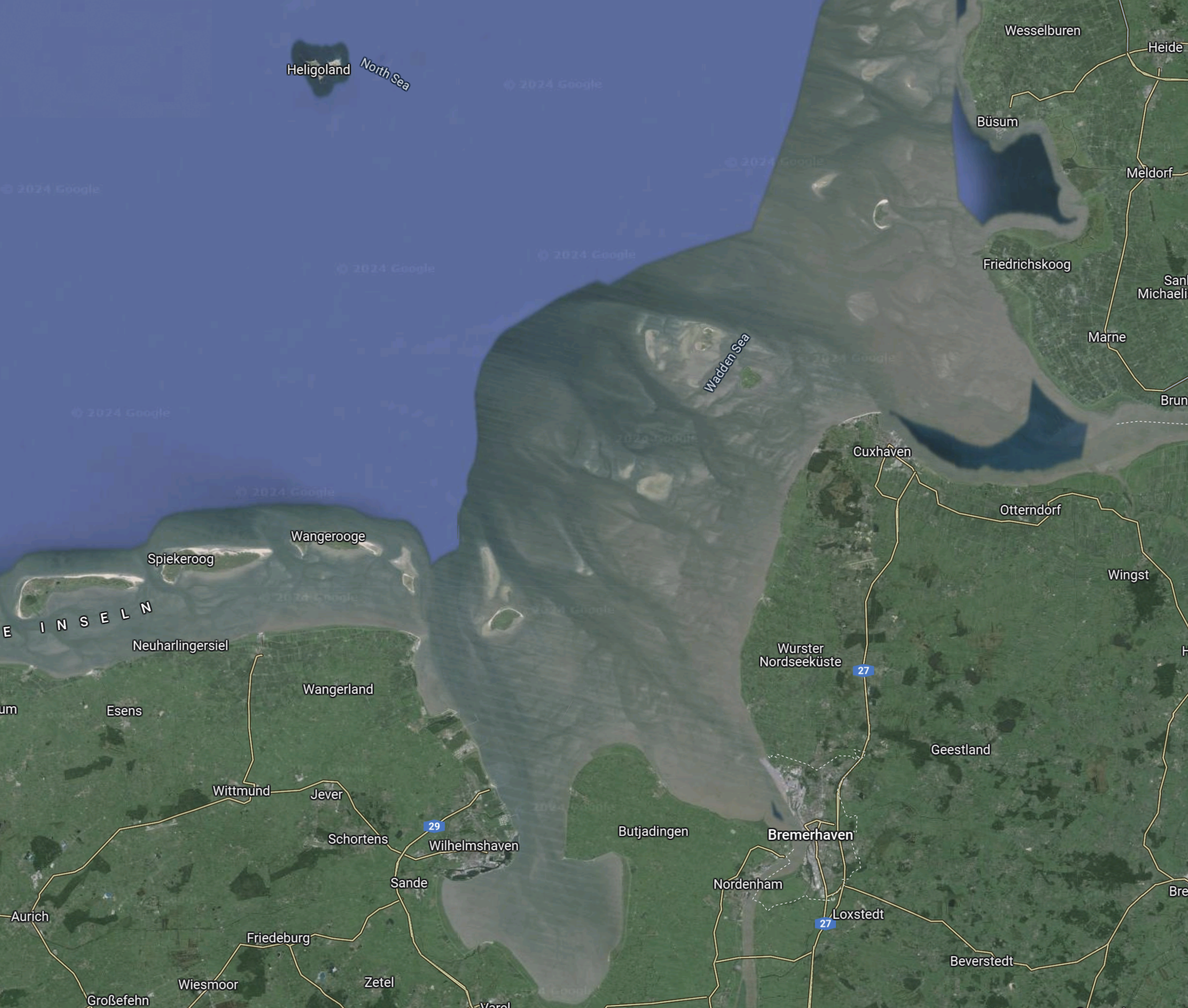
This Google Map shows the location of Wilhemshaven.
Note.
- Heligoland is the island at the top of the map.
- The Germans call this area the Wdden Sea.
- The estuaries lead to Wilhelmshaven and Bremerhaven.
- Cuxhaven is the port for Heligoland, which is connected to Hamburg by hydrogen trains.
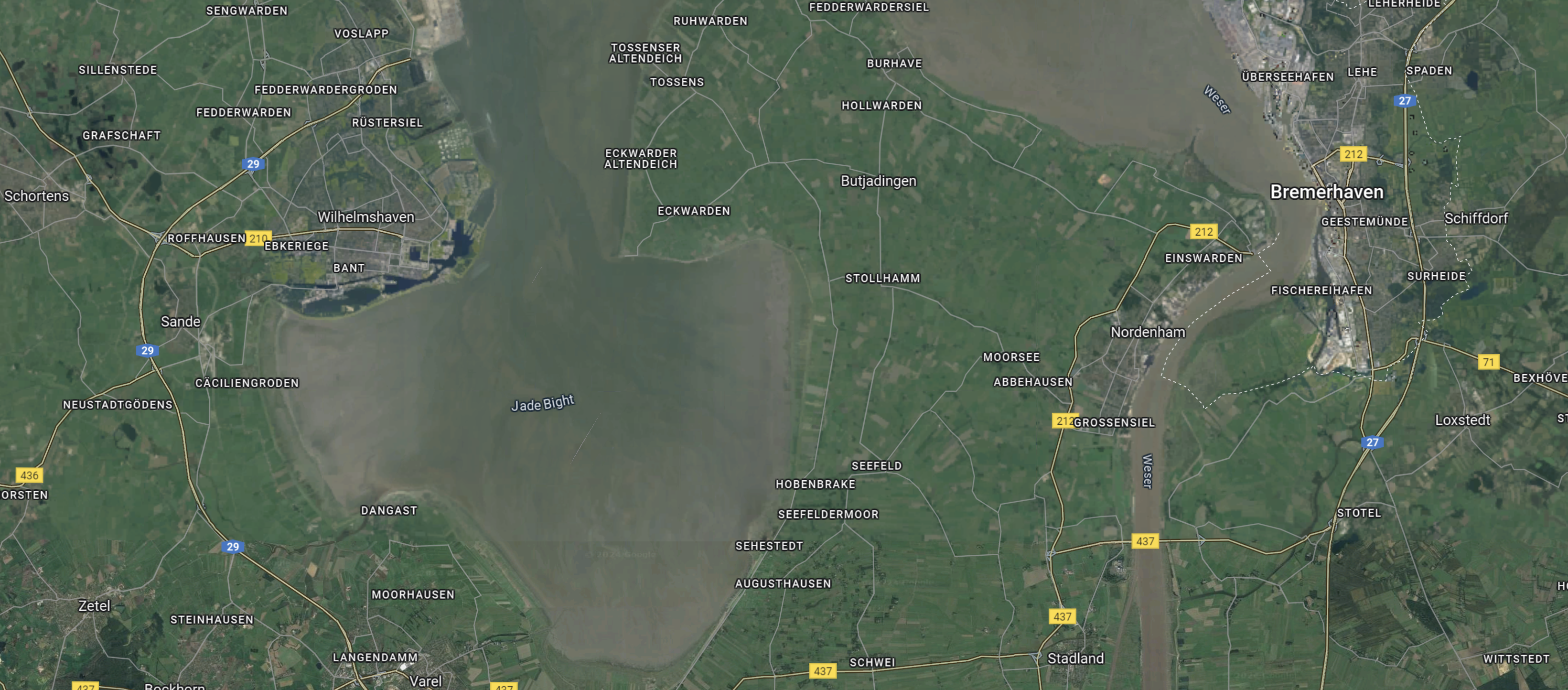
This second map shows between Bremerhaven and Wilhelmshaven.
Note.
- Wilhelmshaven is to the West.
- Bremerhaven is in the East.
- The River Weser runs North-South past Bremerhaven.
I’ve explored the area by both car and train and it is certainly worth a visit.
The Wilhemshaven Hydrogen Import Terminal
German energy company; Uniper is building a hydrogen import terminal at Wilhemshaven to feed German industry with hydrogen from places like Australia, Namibia and the Middle East. I wrote about this hydrogen import terminal in Uniper To Make Wilhelmshaven German Hub For Green Hydrogen; Green Ammonia Import Terminal.
I suspect RWE could build a giant offshore electrolyser close to the Norfolk wind farms and the hydrogen will be exported by tanker or pipeline to Germany or to anybody else who pays the right price.
All this infrastructure will be installed and serviced from Great Yarmouth, so we’re not out of the deal.
Dogger Bank South Wind Farm
To make matters better, RWE have also signed to develop the 3 GW Dogger Bank South wind farm.
This could have another giant electrolyser to feed German companies. The wind farm will not need an electricity connection to the shore.
The Germans appear to be taking the hydrogen route to bringing electricity ashore.
Energy Security
Surely, a short trip across the North Sea, rather than a long trip from Australia will be much more secure and on my many trips between the Haven Ports and The Netherlands, I haven’t yet seen any armed Houthi pirates.
RWE And Hydrogen
On this page on their web site, RWE has a lot on hydrogen.
Very Interesting!
H2ercules
This web site describes H2ercules.
The goal of the H2ercules initiative is to create the heart of a super-sized hydrogen infrastructure for Germany by 2030. To make this happen, RWE, OGE and, prospectively, other partners are working across various steps of the value chain to enable a swift supply of hydrogen from the north of Germany to consumers in the southern and western areas of the country. In addition to producing hydrogen at a gigawatt scale, the plan is also to open up import routes for green hydrogen. The transport process will involve a pipeline network of about 1,500 km, most of which will consist of converted gas pipelines.
Where’s the UK’s H2ercules?
Conclusion
The Germans have got there first and will be buying up all of our hydrogen to feed H2ercules.
Mercia Power Response & RheEnergise Working Together To Build Long Duration Energy Storage Projects In The UK
The title of this post, is the same as that as this news item from Mercia PR.
As it is from the 16th of August last year, I wonder why my Google Alert didn’t pick it up.
This is the sub-heading.
Mercia Power Response, a key provider of flexible power response services to the UK grid, has signed an agreement with RheEnergise to explore the potential deployment of RheEnergise’s new and innovative form of long-duration hydro-energy storage, known as High-Density Hydro® (HD Hydro).
These are the first three paragraphs.
Mercia Power Response, a key provider of flexible power response services to the UK grid, has signed an agreement with RheEnergise to explore the potential deployment of RheEnergise’s new and innovative form of long-duration hydro-energy storage, known as High-Density Hydro® (HD Hydro). Mercia Power Response (“Mercia PR”) and RheEnergise will work together to identify suitable sites for additional HD Hydro storage projects. The two companies’ initial focus will be the feasibility of getting 100MW of HD Hydro in commercial operation by 2030 by utilising Mercia PR’s existing grid connections.
With 40 sites having a combined capacity of 263MW and a number of sites under development and construction over the next 5-10 years, Mercia PR believes that RheEnergise’s HD Hydro storage technology would be a complementary, low carbon solution to its operating portfolio.
Additionally, Mercia PR’s industry partners bring market expertise in energy trading and forecasting, helping RheEnergise to optimise grid-connected energy storage projects.
Note.
- The average size of Mercia PR’s batteries would appear to be 6.5 MW.
- Working on the often-used two-hour duration, that would be a storage capacity of 13 MWh.
- I suspect some of Mercia PR’s sites will be more suitable for lithium-ion batteries and some will be more suitable for RheEnergise’s HD Hydro systems.
- I have witnessed local Nimbys objecting to lithium-ion systems on grounds of the fire risk.
- I am fairly sure, that the National Grid will be able to cope with both lithium-ion batteries and RheEnergise’s HD Hydro systems.
- I suspect Mercia PR’s industry partners, with their market expertise in energy trading and forecasting, could turn a small wind or solar farm into a nice little earner.
This looks to be a good fit between two innovative companies.
 The Anonymous Widower