What Is The Potential If We Rejoin The EU?
There has been a lot of comments recently, about the United Kingdom rejoining the EU.
Every comment, that I’ve read seems to be forgetting that we will be joining the common energy market and if you look at the maps of Exclusive Economic Zones (EEZ) around the North Sea, you’ll see that the UK EEZ is 23 times as large as the German EEZ.
This map shows the Exclusive Economic Zones (EEZ) around the UK.

Note.
- The UK EEZ is shown in light blue.
- The Irish EEZ is shown in mauve and marked IE.
- The small German EEZ is marked DE.
- Undoubtedly, the rules by which EEZs were drawn, favoured the UK, and countries like Belgium and Germany didn’t do as well.
- The area of the UK’s European EEZ is twenty-three times that of Germany’s whole EEZ, which also includes an area of the Baltic Sea.
- Belgium doesn’t do well compared to The Netherlands.
- There is a substantial area between the UK and Ireland, which can deliver energy to where it is worth more.
- Great Britain and Ireland are surrounded by a large area, that must be worth developing.
- There is a convenient corridor, that runs North-West from the German EEZ to the UK EEZ, which could be used to deliver energy to Germany.
Didn’t the UK (and the Irish) do well!
Germany has a massive shortage of energy and particularly green electricity and hydrogen, that is needed for the country to decarbonise.
Only last week a £12 billion deal was signed with German energy company; RWE, that was funded by US fund managers; KKR to develop 2.8 GW of wind farms off the Norfolk Coast, which will effectively with another wind farm already being developed, to create a 4.2 GW offshore hybrid asset, which can send power to both Norfolk or Wilhelmshaven in Germany.
Note.
- There would be a 45 mile cable between Norfolk Boreas and South Happisburgh to bring electricity to Norfolk.
- There would be a 230 mile cable between Norfolk Boreas and Wilhelmshaven to bring electricity to Germany.
- Google AI gives the capacity of the Norfolk cable as 1.8 GW.
- If the cable to Germany was a similar size, the two cables could handle 86 % of the total capacity of the three Norfolk wind farms.
But I’m fairly sure, there would be an engineering solution to handling the extra 600 MW of electricity, when all three Norfolk wind farms are in operation.
- The simplest way would be to run another cable from say Norfolk Vanguard East to Germany or Norfolk Vanguard West to Happisburg.
- RWE are developing offshore electrolysis, so any excess electricity could be turned into hydrogen and piped to the shore.
- There are also possibilities for storing the hydrogen offshore and then sending it to either Germany, the UK or even Belgium or The Netherlands.
RWE can borrow heavily on ideas that worked with North Sea gas.
RWE are also developing other wind farms between Humberside and the Isle of Grain.
- Galloper – 353 MW – Operational
- Triton Knoll – 853 MW – Operational
- Dogger Bank South East – 1500 MW – 2031
- Dogger Bank South West – 1500 MW – 2031
- Five Estuaries – 1080 MW – 2030
- North Falls – 1000 MW – 2030
Note.
- The last field gives the operational date.
- Galloper and Triton Knoll are already operational.
- These six wind farms will generate around 6.3 GW.
- The three Norfolk wind farms will generate around 4.2 GW.
- Norfolk Boreas will be operational in 2027, with Norfolk West and Norfolk East in 2030.
In 2030, RWE will be generating around 7.5 GW along the East Coast of England, with another 3 GW to come in 2031.
All these wind farms could be developed as offshore hybrid assets, that could send power to whoever needs it.
But it’s all our energy generated in our sea, so Europe and especially the Germans will have to pay something for every kilowatt-hour, that is generated in the UK EEZ.
This will surely be easier, if we’re in the European common energy market!
This will only be the start, as there are still vast areas of the UK EEZ, that are empty of any infrastructure, but have plenty of wind and waves.
Deal Worth £12bn Announced To Build Offshore Wind Farms
The title of this post is the same as that of this article on the BBC.
This is the sub-heading.
A £12bn deal to construct wind farms has been described by Prime Minister Andy Burnham as “a vote of confidence for building in Britain”.
These two paragraphs add more details.
Energy company RWE and investment firm KKR have announced the funding, which will deliver the Vanguard West and Vanguard East offshore wind farms off the Norfolk coast.
The wind farms are expected to be fully commissioned in 2030, with offshore construction scheduled to begin in early 2027.
These two paragraphs give Andy Burnham’s view.
“It is great news for billpayers because every turbine we put up is power under British control, not at the mercy of events on the other side of the world,” added Burnham, as he prepared to head to the Cop31 climate summit.
“With coastal communities from Scotland to East Anglia powering Britain’s future, the places that host this energy benefit from the jobs and opportunities that it brings,” he added.
But I’m not sure that all the small print has been disclosed yet.
These are my thoughts.
Germany’s Energy Problems
Germany’s energy problems are that they don’t have enough energy and in particular the don’t have enough green energy.
- Twenty percent of their electricity comes from coal.
- Some of that is even the ultra-filthy brown coal.
- They have closed down all their nuclear stations.
- In 2025, they imported 22 TWh of electricity.
But they do make good electrical generators, wind turbines and other electrical equipment.
This map shows the Exclusive Economic Zones (EEZ) around the UK.
Note.
- The UK EEZ is shown in light blue.
- The Irish EEZ is shown in mauve and marked IE.
- The small German EEZ is marked DE.
- Undoubtedly, the rules by which EEZs were drawn, favoured the UK, and countries like Belgium and Germany didn’t do as well.
- The area of the UK’s European EEZ is twenty-three times that of Germany’s whole EEZ, which also includes an area of the Baltic Sea.
- Belgium doesn’t do well compared to The Netherlands.
- There is a substantial area between the UK and Ireland, which can deliver energy to where it is worth more.
- Great Britain and Ireland are surrounded by a large area, that must be worth developing.
- There is a convenient corridor, that runs North-West from the German EEZ to the UK EEZ, which could be used to deliver energy to Germany.
Didn’t the UK (and the Irish) do well!
But the Germans are running out of space to put new offshore wind farms, in their small EEZ.
The Two-Pronged German Solution
The first part of their solution, is to create a gas network called H2ercules that will bring hydrogen to any power station and industry, that needs it from the deep-water port of Wilhelmshaven in North-West Germany, where they would import or generate the gas.
Their first plan to bring green hydrogen to Germany, by creating it in the Namibian deserts using solar panels and wind turbines. It would then be transported to Germany as green ammonia in tanker ships and then converted back to hydrogen.
Unsurprisingly, it never got very far.
Finally, they settled on AquaVentus, which is a system of pipes and wires, that uses wind power in the North Sea to create green electricity, which can also be turned into green hydrogen, which is then brought to Wilhelmshaven in Germany to feed H2ercules.
AquaVentus has planned legs to Denmark, Norway and The Netherlands, and North-East Scotland and Humberside in the UK.
In countries like Denmark, Norway and the UK, we will use AquaVentus to send our surplus electricity to Germany.
The Location Of The Norfolk Wind Farms
This map from RWE shows the Norfolk wind farms.

Note.
- The Norfolk Zone consists of three wind farms; Norfolk Vanguard West, Norfolk Boreas and Norfolk Vanguard East.
- The three wind farms are 1.4 GW fixed-foundation wind farms.
- In Vattenfall Selects Norfolk Offshore Wind Zone O&M Base, I describe how the Port of Great Yarmouth had been selected as the O & M base.
- Great Yarmouth and nearby Lowestoft are both ports, with a long history of supporting shipbuilding and offshore engineering.
- Great Yarmouth and Lowestoft both have a good rail connection to London.
- The Sizewell nuclear power complex is a few miles down the cost just North of Aldeburgh.
- Sizewell C is using hydrogen to minimise the carbon dioxide emissions from construction.
From my knowledge of the area and tales from bringing home North Sea Oil and Gas, I would feel, that the three Norfolk projects wouldn’t be the most difficult of large wind projects to undertake.
The Location Of Wilhelmshaven
This Google Map shows the location of Wilhelmshaven in North-West Germany.

Note.
- Bremen is in the South-East corner of the map.
- Bremerhaven is to the North of Bremen.
- Hamburg is off the map to the East.
- Note the islands along the coast, which feature in the Riddle of the Sands.
- Groningen in The Netherlands is in the South-West corner of the map.
Wilhelmshaven is picked out in red.
This larger map shows the sea and coasts between Hull and Bremen.

Note.
- Bremen and Bremerhaven are in the North-East corner of the map.
- Wilhelmshaven is a dozen miles West of Bremerhaven.
- The red arrow to the North of Norwich on the Norfolk Coast is where the Norfolk Vanguard cables will make landfall at Happisburg.
- Norfolk Boreas cables will make landfall at South Happisburg.
- Hull is in the North-West corner of the map.
From the map, it does appear to me, that the a cable between Humberside and Wilhelmshaven could possibly be routed via the Norfolk wind farms.
Connecting The Norfolk Boreas and Vanguard Wind Farms To The Grid
Google AI gave me this answer.
The Norfolk Boreas and Norfolk Vanguard offshore wind farms (owned and developed by RWE after acquiring the Norfolk Offshore Wind Zone from Vattenfall) connect to the UK National Grid via a major High Voltage Direct Current (HVDC) transmission system:
Landfall Point: Power comes ashore via subsea export cables at Happisburgh on the coast of North Norfolk.
Onshore Cable Route: Electricity is transmitted inland through a 60 km underground cable corridor running across three local authority areas (North Norfolk, Broadland, and Breckland District Councils).
Grid Connection Substation: The underground cables lead to an onshore converter and substation infrastructure adjacent to the Necton substation in Breckland, where it ties into the UK’s National Grid.
Technology & Ownership: The projects use HVDC technology for long-distance transport to minimize environmental and visual impact on the Norfolk countryside compared to overhead lines, backed by multi-billion-pound funding agreements involving RWE and the National Wealth Fund.
My only worry, is will the Norfolk Nimbys allow the 60 km. underground cable to be built?
What Is An Offshore Hybrid Asset?
Google AI defines an Offshore Hybrid Asset like this.
An Offshore Hybrid Asset (OHA)—formerly known as a Multi-Purpose Interconnector (MPI)—is a dual-function subsea power infrastructure that combines offshore wind farm transmission with cross-border electricity interconnection.
How They Work
Instead of individual wind farms building separate dedicated cables to the shore, and countries running point-to-point interconnectors separately, an OHA merges both functions.
Key Examples of Offshore Hybrid Assets
LionLink: A first-of-its-kind OHA project connecting Dutch offshore wind farms (via the TenneT Nederwiek 3 platform) to the Great British grid (landing in Suffolk), providing up to 1.8–2 GW of clean electricity and cross-border trade between the UK and the Netherlands.
Nautilus: A project connecting Belgian offshore wind generators—including links routed via Princess Elisabeth Island (PEI) and the Modular Offshore Grid 2 (MOG2)—to the Great British grid (landing at the Isle of Grain in Kent), delivering up to 1.4 GW of shared wind and interconnector capacity between the UK and Belgium.
Other Integrated Marine Concepts: In a broader renewable context, hybrid marine prototypes combine diverse sources like floating offshore wind with marine solar, or pair ocean wave energy converters with offshore storage and green hydrogen production.
I can see Offshore Hybrid Assets, developed extensively in the future.
GriffinLink
In February 2026, in National Grid, TenneT Germany Launch GriffinLink, A First Of A Find Project To Maximise Offshore Wind, I introduced GriffinLink which was being proposed as a Multi-Purpose Interconnector between the UK and Germany.
Consider.
- The Germans are building electrolyser capacity at Wilhelmshaven in North-West Germany of up to 1 GW.
- I estimate that from Norfolk Boreas wind farm to Wilhelmshaven is 230 miles.
- The Langeled pipeline is a 725 miles between Norway and UK.
- The Viking Link is a 475 mile electrical interconnector between Denmark and the UK.
- Neuconnect is a 460 mile interconnector between the Isle of Grain and Wilhelmshaven.
I believe that despite the distances involved, that the GriffinLink could be an Offshore Hybrid Asset between Happisburg in Norfolk and Wilhelmshaven in Germany.
- It would connect to the three Norfolk wind farms.
- There would be 230 mile electrical connection to Wilhelmshaven.
- There would be 45 mile electrical connection to Happisburg.
- If both electrical connections were 2 GW, then if the three wind farms were at the full total output of 4.1 GW, there would almost be enough capacity to keep all wind farms generating at full capacity.
- It is known that RWE are developing offshore electrolysis and any spare electricity generated in the Norfolk wind farms could be used to create hydrogen.
- Any hydrogen would be stored or sent to Wilhelmshaven in a pipeline.
But Vanguard West and East would be fully operational until 2030, so Germany would have a couple of years of slack in which to build the hydrogen generation, storage and transfer infrastructure.
In What Are Offshore Hybrid Assets?, I describe the concept.
- It would allow hydrogen and electricity to be sent as required to Norfolk or Germany.
- Infrastructure in the two countries could be sized appropriately.
- Hydrogen could be generated offshore
- I believe that batteries could be placed offshore with the wind farm.
- More wind farms could be added.
I can see Offshore Hybrid Assets, developed extensively in the future.
Clarksons To Support RWE’s Vanguard West, Vanguard East From ABP’s New Lowestoft Facility
The title of this post, is the same as that of this article on offshoreWIND.biz.
This is the sub-heading.
Clarksons Port Services has signed an agreement with RWE and Associated British Ports (ABP) for RWE’s Vanguard West and Vanguard East offshore wind projects in the UK.
These three paragraphs add more detail to the story.
Under the agreement, the company will support the construction of the two offshore wind farms from the Lowestoft Eastern Energy Facility (LEEF), where Clarksons will lease and operate a facility on behalf of RWE.
ABP officially opened the new port facility in January 2025, after investing GBP 35 million (around EUR 40 million) in the port infrastructure. The facility features deep-water berths, modern utilities and future-proofed infrastructure to support shore power and alternative fuels, according to the port operator.
RWE secured Contracts for Difference (CfDs) for the two offshore wind farms in January this year, when the UK government awarded 8.4 GW of offshore wind capacity in the seventh CfD round (AR7).
Vanguard West and Vanguard East offshore wind projects are almost identical 1545 MW projects, that should be commissioned in 2028/29.
The two projects are 47 km. off the coast of Norfolk.
They will bring their power ashore at Happisburgh and connect underground to the grid at a new substation at Necton.
If I was a Norfolk Nimby, I would feel, that RWE are building these wind farms so as not to annoy the neighbours.
- They are a fair way out to sea.
- There appear to be no overhead cables.
- The support will be handled in a purpose-built facility.
Judding by their actions, I do wonder if RWE are getting a shift on, as they would like to get these wind farms built before the 2029 General Election
RWE Orders 2.76 GW Of Offshore Wind Turbines At Vestas
The title of this post, is the same as that of this article on offshoreWIND.biz.
This is the sub-heading.
RWE has placed a firm wind turbine order with Vestas for its 1,380 MW Vanguard East offshore wind project in the UK, shortly after confirming a firm order for Vanguard West, which will have the same installed capacity.
These three paragraphs add more details.
For Vanguard East, Vestas will supply, deliver, and commission 92 of its V236-15.0 MW wind turbines, and will also be in charge of servicing them under a five-year service agreement, followed by a long-term operational support agreement.
RWE expects to make a final investment decision (FID) for both Vanguard East and Vanguard West in the summer of 2026, with wind turbine deliveries for Vanguard East to begin in the fourth quarter of 2028.
The commissioning of Vanguard West is expected in 2029, with Vanguard East following suit in 2030.
Note.
- On the 23rd of February, 2026, RWE placed a similar order for Vanguard West with Vestas.
- In Global Investor Joining RWE On Two Norfolk Vanguard Offshore Wind Projects, FID Expected in Summer, I describe how KKR are taking a stake in the two of the Norfolk Vanguard Offshore Wind Projects.
Things are looking good for RWE, Norfolk and wind power.
Global Investor Joining RWE On Two Norfolk Vanguard Offshore Wind Projects, FID Expected in Summer
The title of this post, is the same as that of this article on offshoreWIND.biz.
This is the sub-heading.
Global investment firm KKR and RWE have signed an agreement under which KKR acquire a 50 per cent stake in each of RWE’s Norfolk Vanguard East and Norfolk Vanguard West offshore wind projects, totalling 3.1 GW in installed capacity. The wind farms were just awarded Contracts for Difference (CfDs) in the UK’s seventh CfD allocation round (AR7).
These three paragraphs add a few more details.
The two Norfolk Vanguard projects, which RWE bought from Vattenfall in March 2024, have already secured seabed rights, grid connections, development consent orders (DCOs) and all other key permits.
On 14 January, RWE said it launched the process to raise non-recourse project finance debt for the projects and that it expects the closing of the partnership transaction and the project financing, as well as the final investment decision (FID), in the summer of 2026.
Located 50 to 80 kilometres off the coast of Norfolk, the two offshore wind farms are planned to be commissioned in 2029 (Norfolk Vanguard West) and 2030 (Norfolk Vanguard East).
RWE do seem to be lining up everything ready for that final investment decision in the summer of 2026.
- I suspect that with KKR on board, that they have got the money ready and I wouldn’t be surprised to see these two projects quickly progress to a completion.
- I also think it was significant that we have Goldman Sachs involved in Highview Power, who may have a solution to affordable energy storage and now we have KKR getting involved with one of the most professional offshore wind power developers in the world.
- Are Goldman Sachs and KKR placing bets against Trump’s anti wind power stance?
The Germans will certainly need a lot of energy and British offshore wind power, would appear the only place, where it is available easily in quantity to the Germans.
I await the next few months with a lot of interest.
Centrica And Equinor Agree Major New Deal To Bolster UK Energy Security
The title of this post, is the same as that as this news item from Centrica.
This is the sub-heading.
Centrica and Equinor have today announced a £20 billion plus agreement to deliver gas to the UK. The new deal will see Centrica take delivery of five billion cubic meters (bcm) of gas per year to 2035.
These three paragraphs add more detail to the deal.
The expansive ten-year deal continues a long-term relationship with Equinor that dates back to 2005 bringing gas from Norway to the UK.
In 2024, the UK imported almost two-thirds (66.2%) of its gas demand, with 50.2% of the total imports coming from Norway. This is an increase from the UK importing around a third of its gas requirements from Norway in 2022 and underlines the strategic importance of the Norwegian relationship to UK energy and price security.
The contract also allows for natural gas sales to be replaced with hydrogen in the future, providing further support to the UK’s hydrogen economy.
I believe there is more to this deal than, is stated in the news item.
These are my thoughts.
Where Does AquaVentus Fit In?
The AquaVentus web site has a sub heading of Hydrogen Production In The North Sea.
This video on the web site shows the structure of the project.
I clipped this map from the video.
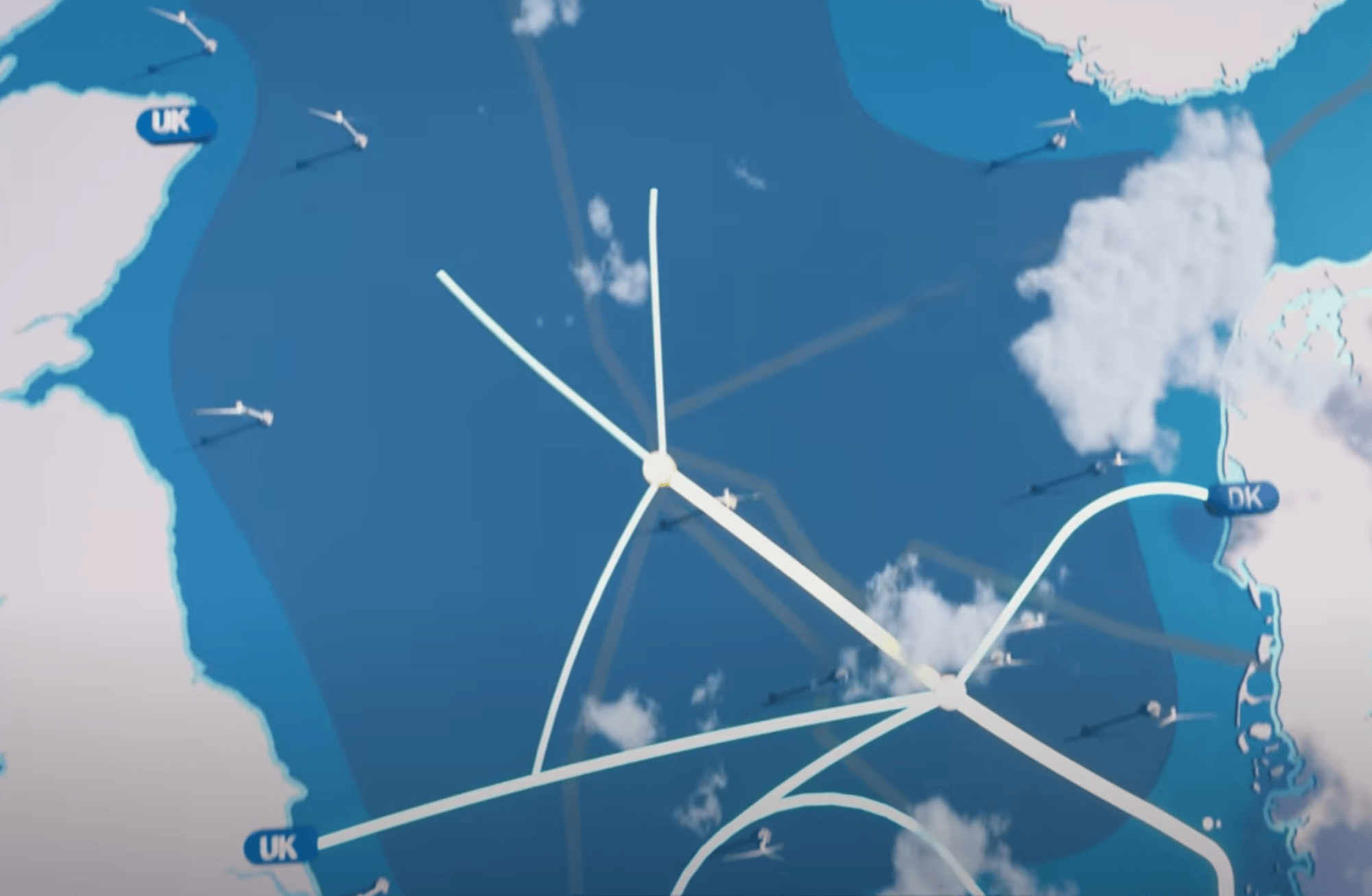
Note.
- The thick white line running North-West/South-East is the spine of AquaVentus, that will deliver hydrogen to Germany.
- There is a link to Esbjerg in Denmark, that is marked DK.
- There appears to be an undeveloped link to Norway, which goes North,
- There appears to be an undeveloped link to Peterhead in Scotland, that is marked UK.
- There appears to be a link to just North of the Humber in England, that is marked UK.
- There appears to be an extra link, that would create a hydrogen link between Norway and Humberside.
- Just North of the Humber are the two massive gas storage sites of Aldbrough owned by SSE and Brough owned by Centrica.
- Aldbrough and Rough gas storage sites are being converted into two of the largest hydrogen storage sites in the world!
- There appear to be small ships sailing up and down the East Coast of the UK. Are these small coastal tankers, that are distributing the hydrogen to where it is needed?
When it is completed, AquaVentus will be a very comprehensive hydrogen network.
RWE
I should add that AquaVentus is a project of German energy company; RWE.
It should be noted that RWE are the largest generator of electricity in the UK.
They will soon be even larger as they are developing these offshore wind farms in British waters.
- Dogger Bank South – 3 GW
- Norfolk Boreas – 1.4 GW
- Norfolk Vanguard East – 1.4 GW
- Norfolk Vanguard West – 1.4 GW
Note.
- This is 7.2 GW of electricity.
- The three Norfolk wind farms were possibly acquired at a bargain price from Vattenfall.
- When I originally, wrote this in June 2025, none of these wind farms have Contracts for Difference.
- Now all four wind farms and the nearby Norfolk Boreas have signed Contracts for Difference.
- RWE are developing large offshore electrolysers.
- East Anglia is in revolt over pylons marching across the landscape.
I wonder, if RWE will convert the electricity to hydrogen and bring it ashore using AquaVentus, coastal tankers or pipelines to existing gas terminals like Bacton.
The revenue from all this hydrogen going to Germany could explain the rise in Government spending, as it could be a Magic Money Tree like no other.
HiiROC
HiiROC is a Hull-based start-up company backed by Centrica, that can turn any hydrocarbon gas, like chemical plant waste gas, biomethane or natural gas into turquoise hydrogen and carbon black.
I asked Google about the size of Norway’s chemical industry and got this reply.
Norway’s chemical industry, including oil refining and pharmaceuticals, is a significant part of the country’s economy. In 2023, this sector generated sales of NOK 175 billion (approximately €15.2 billion), with 83% of those sales being exports. The industry employed 13,800 full-time equivalents and added NOK 454 billion (approximately €3.9 billion) in value.
Isn’t AI wonderful!
So will Norway use HiiROC or something similar to convert their natural gas and chemical off-gas into valuable hydrogen?
If AquaVentus were to be extended to Norway, then the hydrogen could be sold to both the UK and Germany.
A scenario like this would explain the option to switch to hydrogen in the contract between Centrica and Equinor.
Aldbrough And Brough
Earlier, I said that just North of the Humber are the two massive gas storage sites of Aldbrough owned by SSE and Brough owned by Centrica.
I have read somewhere, that Germany is short of hydrogen storage, but I’m sure Centrica and SSE will help them out for a suitable fee. Centrica are also thought to be experts at buying energy at one price and selling it later at a profit.
Conclusion
I have felt for some time, that selling hydrogen to the Germans was going to be the Conservative government’s Magic Money Tree.
Has this Labour government decided to bring it back to life?
Site Investigations Underway At RWE’s Three Norfolk Offshore Wind Project Sites
The title of this post, is the same as that of this article on offshoreWIND.biz.
This is the sub-heading.
RWE has kicked off geophysical and geotechnical site investigations at the Norfolk Boreas, Norfolk Vanguard East, and Norfolk Vanguard West offshore wind project sites in the UK, rights to which the German company acquired from Vattenfall earlier this year.
All three projects in RWE’s 4.14 GW wind farm off the Norfolk coast, at last seem to be making progress.
According to the Wikipedia entry for the List Of Offshore Wind Farms In The United Kingdom, this is the last status.
Norfolk Boreas
Owner: RWE
Turbines: Vestas
Status: Contract for Difference – Round 4
Commissioning Date: 2027
Norfolk Vanguard East
Owner: RWE
Turbines: Vestas
Status: Early Planning
Commissioning Date: Before 2030
Norfolk Vanguard West
Owner: RWE
Turbines: Vestas V236-15.0 MW
Status: Early Planning
Commissioning Date: Before 2030
Note.
- All three Norfolk wind arms, will be using Vestas turbines.
- The data for Norfolk Vanguard West shows that Vestas V236-15.0 MW turbines will be used.
- In SeAH To Deliver Monopiles For Vattenfall’s 2.8 GW Norfolk Vanguard Offshore Wind Project, I discussed the monopiles for the Norfolk wind farms. Will these be standardised across the Norfolk wind farms?
- In RWE Orders 15 MW Nordseecluster Offshore Wind Turbines At Vestas, I speculated that RWE had standardised on these large turbines for their North Sea wind farms, which would surely be a sensible action to take.
Using the same large turbines and monopiles for a number of wind farms, will surely give advantages in manufacture, installation, operation and and servicing for RWE, SeAH Wind and Vestas.
The finances should also be more beneficial.
These are my thoughts.
Will The Norfolk Wind Farms Produce Hydrogen For Germany?
Consider.
- As Hornsea 4 wind farm makes landfall in Norfolk, Norfolk should have enough renewable electricity.
- The Norfolk Nimbies will object to more electricity transmission lines across Norfolk.
- H2ercules, which is the large German hydrogen network will need lots of green hydrogen.
- Wilhelmshaven, which will be the main hydrogen feed point for H2ercules, is just across the North Sea at Wilhelmshaven.
- There are no Houthis roaming the North Sea.
- Hydrogen could be transported from the Norfolk wind farms to Wilhelmshaven by pipeline or coastal tanker.
- German companies are building the Norfolk wind farms.
I believe that there is a good chance, that the Norfolk wind farms will produce hydrogen for Germany.
This will have the following benefits.
- Germany will get the hydrogen it needs.
- The hydrogen link will improve energy security in Europe.
- The UK government will receive a nice cash flow.
The only losers will be the dictators, who supply Europe with energy.
Do RWE Have A Comprehensive Hydrogen Plan For Germany?
What is interesting me, is what Germany company; RWE is up to. They are one of the largest UK electricity producers.
In December 2023, they probably paid a low price, for the rights for 3 x 1.4 GW wind farms about 50 km off North-East Norfolk from in-trouble Swedish company; Vattenfall and have signed contracts to build them fairly fast.
In March 2024, wrote about the purchase in RWE And Vattenfall Complete Multi-Gigawatt Offshore Wind Transaction In UK.
Over the last couple of years, I have written several posts about these three wind farms.
March 2023 – Vattenfall Selects Norfolk Offshore Wind Zone O&M Base
November 2023 – Aker Solutions Gets Vattenfall Nod To Start Norfolk Vanguard West Offshore Platform
December 2023 – SeAH To Deliver Monopiles For Vattenfall’s 2.8 GW Norfolk Vanguard Offshore Wind Project
Then in July 2023, I wrote Vattenfall Stops Developing Major Wind Farm Offshore UK, Will Review Entire 4.2 GW Zone
Note.
- There does appear to be a bit of a mix-up at Vattenfall, judging by the dates of the reports.Only, one wind farm has a Contract for Difference.
- It is expected that the other two will be awarded contracts in Round 6, which should be by Summer 2024.
In December 2023, I then wrote RWE Acquires 4.2-Gigawatt UK Offshore Wind Development Portfolio From Vattenfall.
It appears that RWE paid £963 million for the three wind farms.
I suspect too, they paid for all the work Vattenfall had done.
This transaction will give RWE 4.2 GW of electricity in an area with very bad connections to the National Grid and the Norfolk Nimbies will fight the building of more pylons.
So have the Germans bought a pup?
I don’t think so!
Where Is Wilhemshaven?
This Google Map shows the location of Wilhemshaven.

Note.
- Heligoland is the island at the top of the map.
- The Germans call this area the Wdden Sea.
- The estuaries lead to Wilhelmshaven and Bremerhaven.
- Cuxhaven is the port for Heligoland, which is connected to Hamburg by hydrogen trains.
This second map shows between Bremerhaven and Wilhelmshaven.
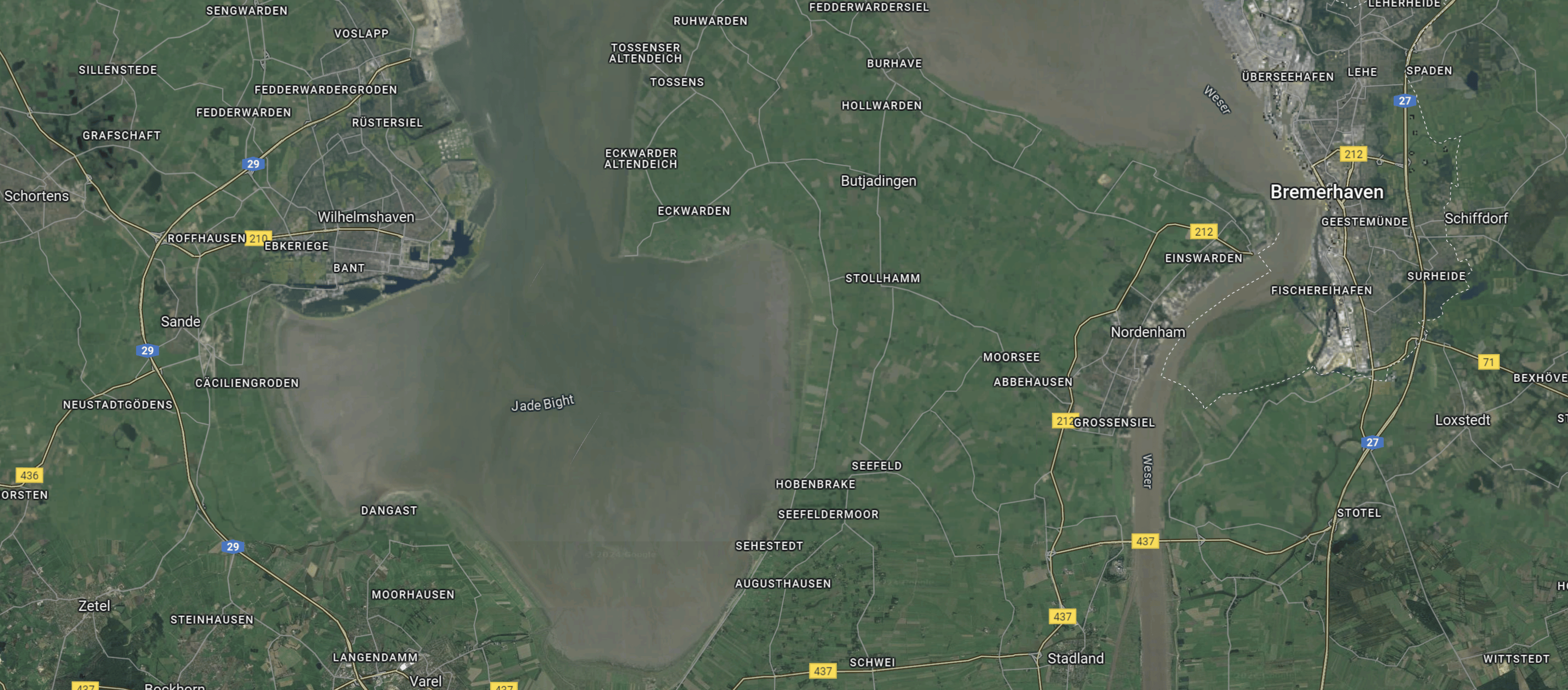
Note.
- Wilhelmshaven is to the West.
- Bremerhaven is in the East.
- The River Weser runs North-South past Bremerhaven.
I’ve explored the area by both car and train and it is certainly worth a visit.
The Wilhemshaven Hydrogen Import Terminal
German energy company; Uniper is building a hydrogen import terminal at Wilhemshaven to feed German industry with hydrogen from places like Australia, Namibia and the Middle East. I wrote about this hydrogen import terminal in Uniper To Make Wilhelmshaven German Hub For Green Hydrogen; Green Ammonia Import Terminal.
I suspect RWE could build a giant offshore electrolyser close to the Norfolk wind farms and the hydrogen will be exported by tanker or pipeline to Germany or to anybody else who pays the right price.
All this infrastructure will be installed and serviced from Great Yarmouth, so we’re not out of the deal.
Dogger Bank South Wind Farm
To make matters better, RWE have also signed to develop the 3 GW Dogger Bank South wind farm.
This could have another giant electrolyser to feed German companies. The wind farm will not need an electricity connection to the shore.
The Germans appear to be taking the hydrogen route to bringing electricity ashore.
Energy Security
Surely, a short trip across the North Sea, rather than a long trip from Australia will be much more secure and on my many trips between the Haven Ports and The Netherlands, I haven’t yet seen any armed Houthi pirates.
RWE And Hydrogen
On this page on their web site, RWE has a lot on hydrogen.
Very Interesting!
H2ercules
This web site describes H2ercules.
The goal of the H2ercules initiative is to create the heart of a super-sized hydrogen infrastructure for Germany by 2030. To make this happen, RWE, OGE and, prospectively, other partners are working across various steps of the value chain to enable a swift supply of hydrogen from the north of Germany to consumers in the southern and western areas of the country. In addition to producing hydrogen at a gigawatt scale, the plan is also to open up import routes for green hydrogen. The transport process will involve a pipeline network of about 1,500 km, most of which will consist of converted gas pipelines.
Where’s the UK’s H2ercules?
Conclusion
The Germans have got there first and will be buying up all of our hydrogen to feed H2ercules.