Would A Solar Roof With Added Vertical Turbines Work?
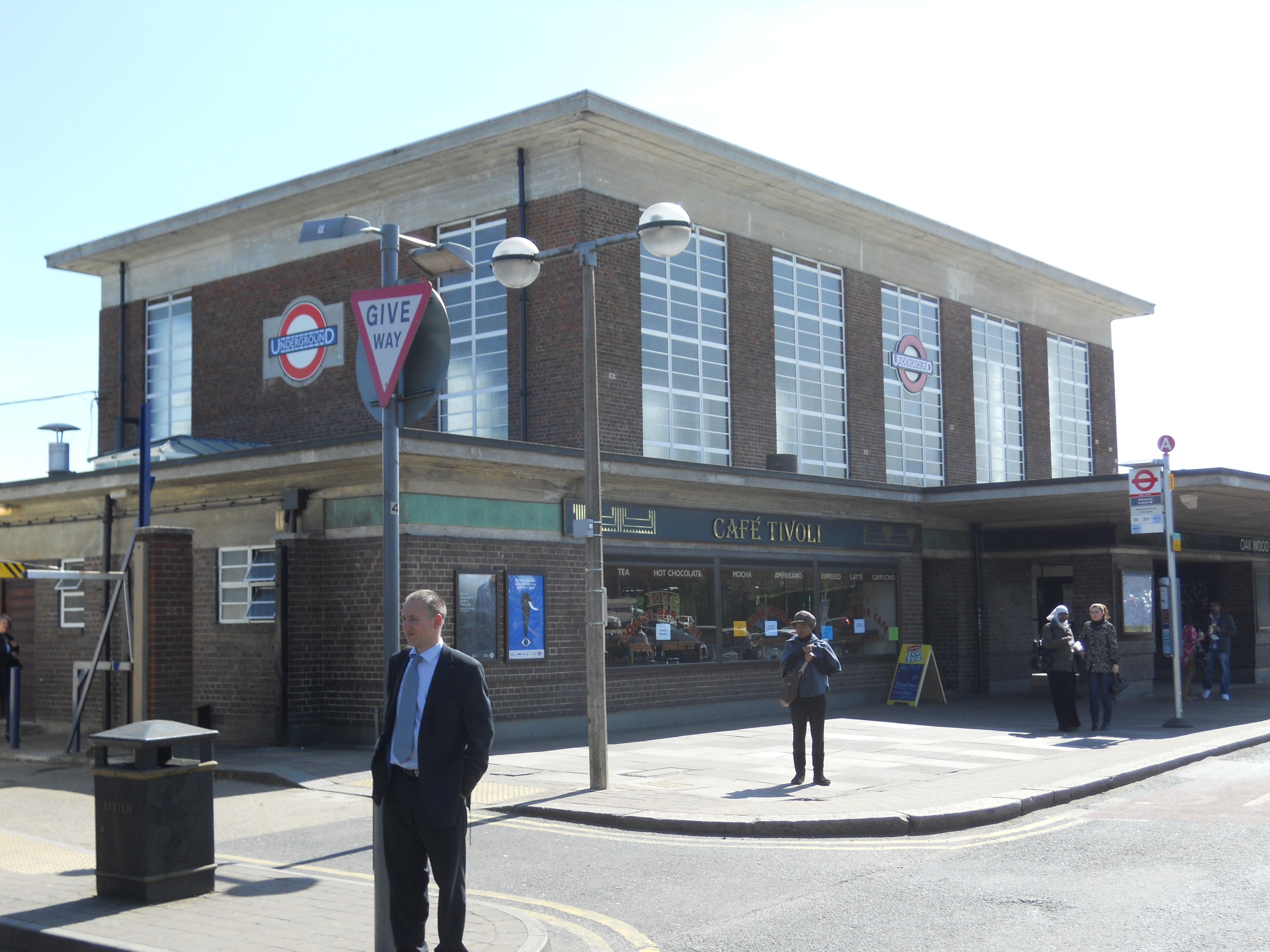
This picture shows Oakwood station on the Piccadilly Line.
Note.
- The station is the second most Northerly on the line.
- It opened in 1933.
- It is a classic Charles Holden design.
- It is a Grade II* Listed building.
- The station is on top of a hill and has an elevation of 71 metres above sea level.
This Google Map shows a close-up of the roof.
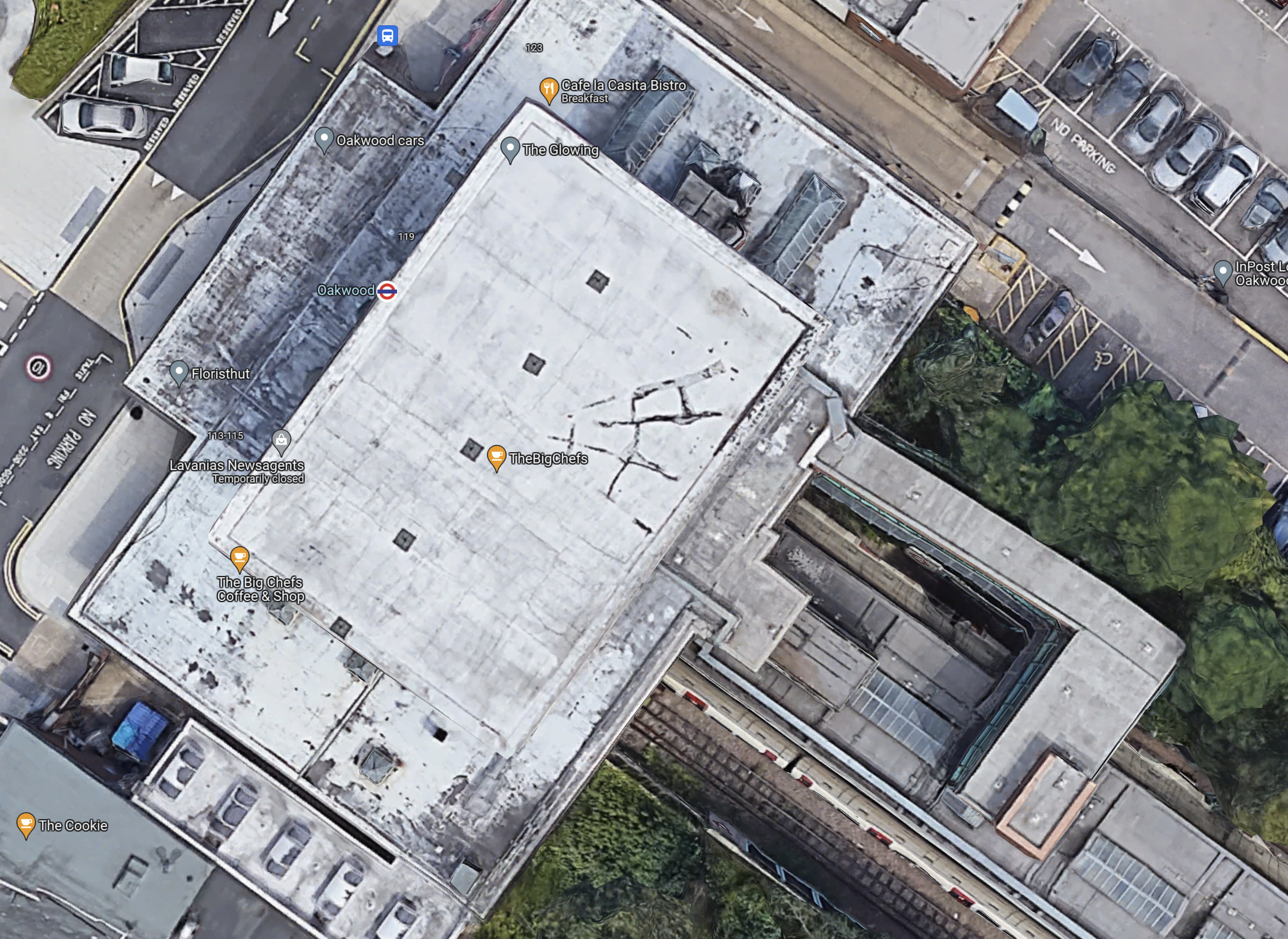
There might be a few aerials on the roof, but no solar panels.
Oakwood’s Location And Weather
I used to live near Oakwood station and it had its disadvantages.
- Cycling home was always up a steep hill.
- It could get very cold at times.
There even used to be a plaque at the station, which said that if you flew East, the first land you would hit would be the Urals.
Oakwood station could be an ideal renewable power station.
- The concrete and brick box of the station is probably exceedingly strong.
- Solar panels could cover the flat roof.
- SeaTwirls or other vertical turbines could be mounted around the solar panels.
- There could still be spaces for the aerials.
- I wonder what the reaction of English Heritage would be.
Should we call this mixed solar and wind power generation, hybrid renewable energy? Or do we overdo, the use of hybrid?
London Underground have other stations of a similar design including Sudbury Town and Acton Town.
The Wider Area To The West Of Oakwood Station
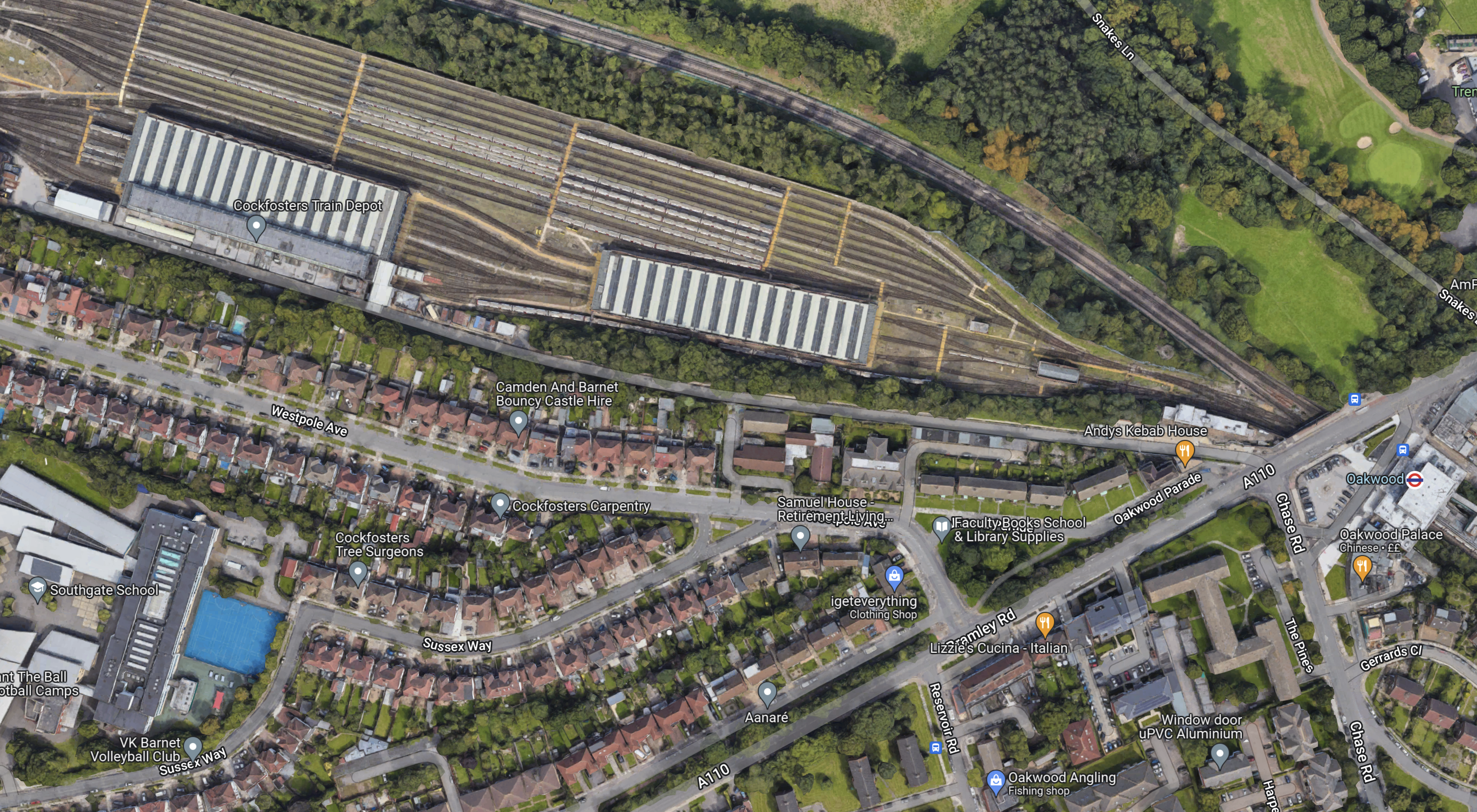
This Google Map shows the area to the West of Oakwood station.
Note.
- The striped roofs at the top of the map, with sidings for trains to the North, is Cockfosters Train Depot for the Piccadilly Line..
- The large building in the South-West corner is Southgate School, which I watched being built in the early 1960s, from my bedroom window in our house opposite. It is a concrete frame building typical of the period.
- Oakwood station is at the East side of the map and indicated by a London Underground roundel.
I think the possibilities for hybrid power generation in this area are good.
Cockfosters Depot
Cockfosters Depot could be an interesting site to develop as a renewable power station.
- There’s no way the site could be developed for housing, as it’s in the Green Belt.
- Road access is bad, but access for trains is good.
- I estimate that the depot is an area of at least five square kilometres.
- It’s still windy in the depot.
But it could have a solar roof and a few vertical wind turbines over the whole depot as designs and panels improve.
Southgate School
Southgate School could have a similar setup to Oakwood station.
Opportunities At Cockfosters Station
This Google Map shows a 3D image of Cockfosters station and the buildings around it.

Note.
- Cockfosters station is indicated by the roundel.
- The station is a Grade II Listed building.
- The station has an elevation of 97 metres.
- Half of the station car park is going to be turned into housing.
- Trent Park lies to the North of the station.
- The road in front of the station is Cockfosters Road, which to the North joins the M25 at Junction 24.
- The building between Cockfosters Road and the railway used to be offices, but it is now being converted into housing.
That high roof of the housing development, must be an ideal candidate for solar panels and vertical wind turbines.
Conclusion
I have tried to show the potential of just one of the small hills that ring London.
Elizabeth Line Bond Street Station And South Molton Street
South Molton Street is one of my favourite streets in London.
- It runs between Bond Street station on Oxford Street in the North and Fenwick’s department store on New Bond Street in the South.
- Many times, I bought my late wife; C’s Christmas or birthday present on that street, on New Bond Street or in Fenwick.
- One of her last purchases had been an Armani suit for work on New Bond Street.
- She also usually bought her shoes in Salvatore Ferragamo at the Southern end of New Bond Street.
- I would usually travel there by taking the Central Line to Bond Street station or the Victoria or Piccadilly Line to Green Park station.
C and I spent many hours happily shopping in that small area of the West End of London.
- We used to shop together for clothes, shoes and many other things.
- One day at a party in her barristers chambers in Cambridge, one of her colleagues expressed surprise that the following day, I was going clothes shopping with her in London.
- C replied to everyone’s amusement, that I was a transvestite-by-proxy. In other words, I am a man, who likes dressing ladies in appropriate clothes.
- I am also lucky, that my mother taught me to sew and in the early years of our marriage, I used to borrow my mother-in-law’s sewing machine and make some of C’s clothes.
- When long coats became fashionable in the 1960s, C had the first of any of her friends. Because I had made it!
So today, I just had to go and see how the new Elizabeth Line Bond Street station fitted in with my favourite shopping street.
I travelled to the new Davies Street entrance of the station.
- I walked through the tunnels to the original Underground station.
- I emerged onto Oxford Street.
- I walked down South Molton Street to Fenwick, with a couple of diversions.
- I then walked through Medici Courtyard to the Hanover Square entrance to Bond Street station.
Finally, I took the Elizabeth Line back to Moorgate for a bus to my house.
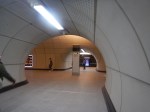
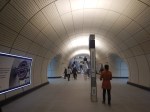
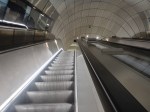
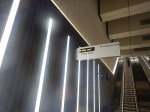
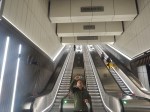
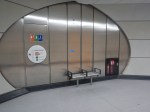
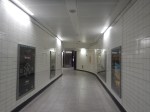
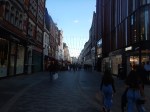
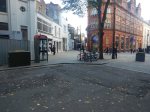
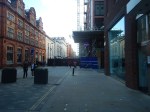
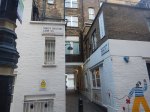


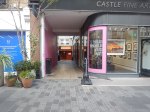
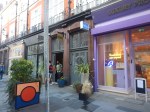
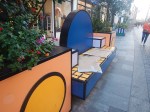
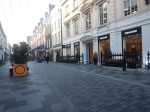
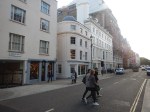
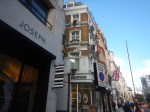
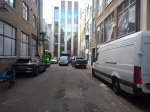
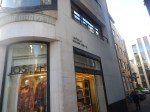
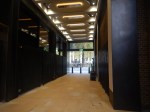
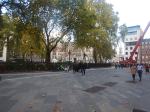
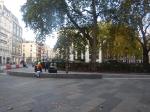
Note.
- There are two banks of escalators to the surface at the Davies Street entrance at Bond Street station.
- The tunnel between the Davies Street entrance at Bond Street station and the original Underground station has a seat at halfway.
- South Molton Street connects to Oxford Street.
- South Molton Passage connects the Davies Street entrance at Bond Street station and South Molton Street.
- C had her unusual wedding dress made in Haunch of Venison Yard.
- The Medici Courtyard sign also says it leads to the Elizabeth Line.
- I couldn’t find a coffee shop selling a cappuccino and a gluten-free cake in Medici Courtyard. That is poor!
One of the station staff at Hanover Square indicated, that there may be additional passages to the West of New Bond Street, that will connect to the Davies Street entrance at Bond Street station.
I feel this could make the area even better.
Knightsbridge Station – 21st October 2022
I last visited Knightsbridge station in April, this year, when I wrote Knightsbridge Station – 25th April 2022.
Construction has moved on in the six months since I visited, as these pictures show.
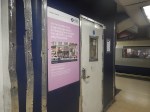
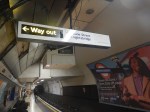
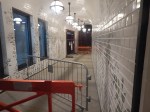

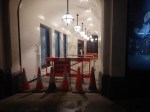
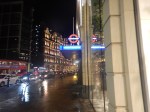
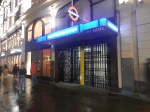
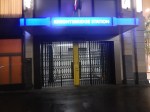
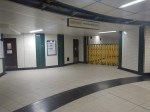

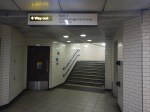
Note.
- After arrival at the station, I left using the exit at Harrods and then walked back along Brompton Road to Harvey Nicholls.
- The entrance for the lift is in an alley. According to this article on Ian Visits, two lifts are needed to get to the platforms.
- The ticket hall is under the Burberry store and has three entrances with steps.
- One unusual feature of the ticket hall, is that it has a micro-Starbucks. Is this idea going to be repeated?
In Ian’s article, he describes the step-free entrance like this.
By reusing some old tunnels, and a side alley around the corner, they will be making the station step-free for the first time. The station used to have lifts from the street down to a corridor that then linked to the platforms via a short set of stairs, but was taken out of use in the 1930s when escalators were added.
What’s being done is that a new entrance, with ticket barriers, has been created in Hooper’s Court, and there will be two lifts that will take people down to just above platform level where the old corridors are still available. There will then be a second small lift to link the corridor down to the platform level.
It looks like it was rather a tight squeeze to get everything in. But then in Knightsbridge, the space for a single toilet will cost at least a couple of millions.
Improving The Wood Green And Moorgate Public Transport Corridor
This morning I went for coffee with an old school friend from Minchenden Grammar School at Southgate station.
Southgate is not a bad place to meet someone.
- There are a couple of good coffee shops.
- There are plenty of buses.
- It has a couple of the better chain restaurants including a Pizza Express.
- The area also has a lot of memories for me.
It also has one of London’s most iconic Underground stations.
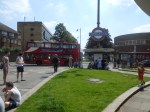
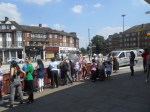
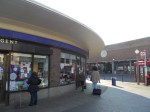
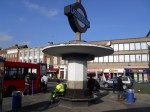
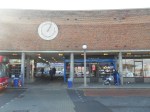
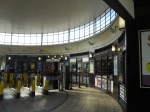
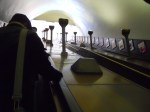
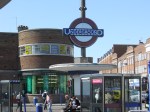
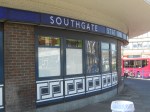
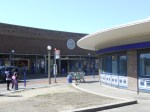
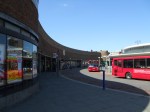
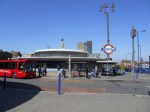
It may look familiar, as it regularly crops up in film and television dramas.
- One station guy told me, that the ticket barriers have been designed to be easy to remove, so filming of an historic drama is possible.
- It was used in The End Of The Affair to portray a Central London station.
- As the escalators have the same bronze fittings as Moscow, they could be used in a story set in Russia.
As the Piccadilly Line doesn’t go anywhere near my house, to get to Southgate, I take a 141 bus to and from a convenient Piccadilly Line station.
- Going North, I changed at Manor House station.
- Coming South, I changed at Turnpike Lane station.
- I could have also have changed at Wood Green station.
The journey home had four major problems.
- The bus stop at Turnpike Lane station, is a few hundred yards from the station.
- I waited fifteen minutes for a 141 bus.
- When it did arrive, it was so packed, it didn’t have space for a miniature dachshund to squeeze in between the feet of the standing passengers.
- The traffic was very heavy, so the journey was slow.
How can this bus route cope in the Peak, if it can’t cope on a Sunday morning?
Various issues and actions and will make these capacity issues worse.
The Victoria Line Has No Direct Connection With The Elizabeth Line
In my view, this was a mistake, although not that serious, as the young or energetic can probably walk between Oxford Circus and the Hanover Square entrance to Bond Street station on the Elizabeth Line.
Will this connection develop with coffee and snack shops to ease passenger interchanges?
When and if Oxford Circus station is ever made step-free, I can imagine a tunnel, perhaps with a moving walkway being built between Oxford Circus station and he Hanover Square entrance to Bond Street station.
There is also the cross-platform interchange at Highbury & Islington station with the Northern City Line that links with Moorgate and the City of London.
The Piccadilly Line Has No Direct Connection With The Elizabeth Line
To get between the Northern stations on the Piccadilly Line and the Elizabeth Line is either a double-change at Finsbury Park and Highbury & Islington stations or a ride on the 141 bus.
I wrote about these issues in Extending The Elizabeth Line – Improving The Northern City Line.
The Elizabeth Line Will Attract Travellers To Moorgate
I notice that my own travelling patterns have changed from using the Central, Circle, District, Hammersmith & City and Metropolitan Lines to using the Elizabeth Line since it opened and I suspect, when the Elizabeth Line is fully joined up, that more passengers will travel to Moorgate to access the Elizabeth Line.
Transport for London and the Mayor Are Rerouting The 21 Bus
The 21 bus duplicates the 141 bus between Newington Green and Moorgate station.
But it is being rerouted next year, which will increase the loading on the 141 bus.
The 141 Bus Used To Be The 641 Trolleybus
When I was a child, London’s trolleybus network was extensive and to get between Wood Green and Moorgate, you would have used the 641 trolleybus.
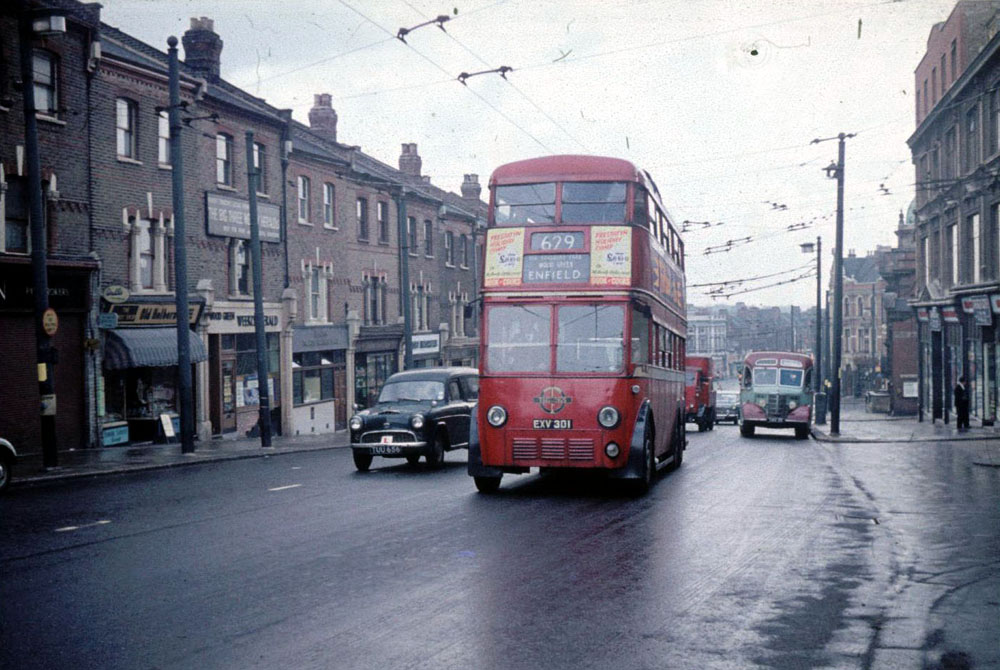
Trolleybus Ascending Jolly Butchers Hill in Wood Green
Many like me, look back on trolleybuses with affection.
Does this historical connection encourage passengers to use the 141 bus, which is the 641 trolleybus’s successor on the route?
My parents certainly had lots of trolleybus stories.
So What Could Be Done?
There are a variety of actions that could be taken to strengthen public transport between Moorgate and Wood Green stations.
Improve The 141 Bus Route
In Does London Need High Capacity Bus Routes To Extend Crossrail?, I put forward ideas for using buses to link to the Elizabeth Line.
This was my suggestion.
I suspect any route seen as an extension of Crossrail needs to have the following characteristics.
- High frequency of perhaps a bus every ten minutes.
- Interior finish on a par with the Class 345 trains.
- Wi-fi and phone charging.
I would also hope the buses were carbon-free. Given that some of these routes could be quite long, I would suspect hydrogen with its longer range could be better.
I feel that a high-quality 141 bus running every ten minutes between London Bridge station and Palmers Green, would be just what the passengers would order.
- Palmers Green bus garage is at the Northern end of the route, so could be used for refuelling or recharging.
- London Bridge station is at the Southern end of the route and was designed with an efficient bus station.
- The 141 route connects London Bridge, Bank, Moorgate and Old Street stations in the City of London.
With the right buses, this could be a route with real quality and usefulness.
Increase The Frequency On The Northern City Line
The Northern City Line may have new Class 717 trains, but it still has a pathetic frequency of eight trains per hour (tph)
- I am sure it could be increased to at least 12 tph between Moorgate and Alexandra Palace stations.
- Something like six tph would go to Welwyn Garden City, four tph to Hertford East station and two to Stevenage.
- Large areas of the Northern suburbs would get a much better connection to the Elizabeth Line.
Once the digital signalling is installed and commissioned, no new infrastructure will be needed.
I am sure, that this would be the easiest way to improve public transport in North London.
Add Step-Free Access To As Many Stations As Possible
Moorgate, Finsbury Park, Oakwood and Cockfosters are step-free with lifts.
As many stations as budgetary constraints allow, should be made step-free.
Extending The Elizabeth Line – Piccadilly Line To Ealing Broadway
Transport for London have proposed a reorganisation of the Piccadilly and District Lines in the Ealing area.
I first wrote about this in Is There Going To Be More Change At Ealing Broadway Station?, but now the Elizabeth Line is on the verge of being connected across London, I feel that this post needs to be replaced.
A Possible Proposal
Ealing Broadway station is being upgraded for Crossrail.
In the November 2017 Edition of Modern Railways, there is a Capital Connection supplement, which discusses London’s railways.
On Page 7 in a section about the sub-surface lines, this is said.
One possibility being discussed is that the Piccadilly should take over the District’s Ealing Broadway service. This would free up space on the South side of the inner-London circle for more City trains off the Wimbledon branch, one of the sub-surface network’s most-crowded routes.
On Page 15 in a section about the Mayor’s plans, this is said.
It is suggested Piccadilly Line services run to Ealing Broadway instead of the District Line, enabling increased frequencies on the latter’s Richmond and Wimbledon branches.
As the plan is mentioned twice, certainly the proposal is being thought about.
The Lines At Ealing Broadway Station
This map from carto.metro.free.fr shows the lines at Ealing Broadway station.
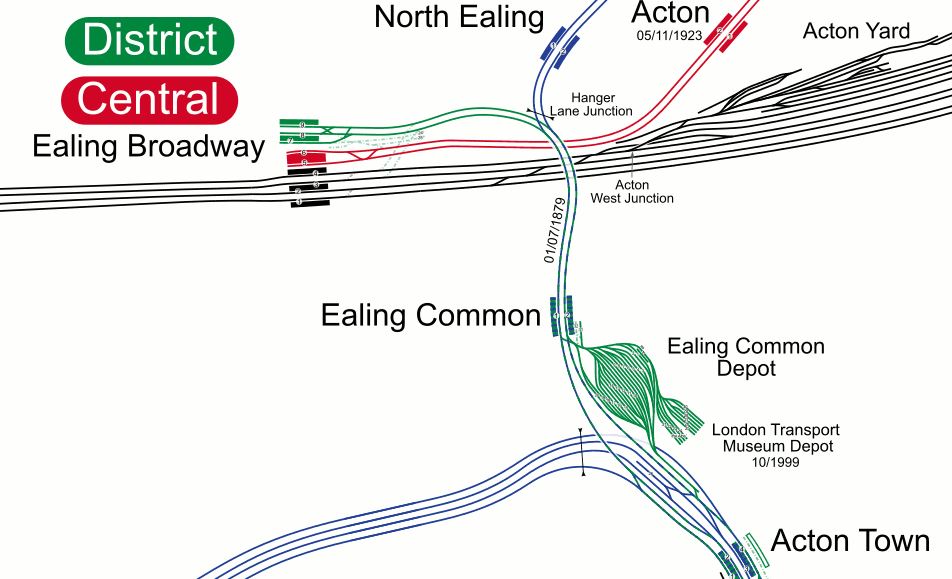
Note how the Piccadilly and District Lines share tracks from Ealing Common station, which then split with District Line trains going to Ealing Broadway station and Piccadilly Line trains going to Rayners Lane and Uxbridge stations.
If the change happened and Ealing Broadway station was only served by the Piccadilly and Central Lines of the Underground, then there might be opportunities to improve the efficiency of the Underground side of the station.
Capacities And Lengths Of London Underground Trains Serving Ealing Broadway Station
I’ll express these as a table.
- Central Line – 1992 Stock – 930 passengers – 130 metres – 7.15 pass/m.
- District Line – S7 Stock – 1209 passengers – 117.45 metres – 10.29 pass/m.
- Piccadilly Line – 1973 Stock – 684 passengers – 106.8 metres – 6.40 pass/m.
- New Tube for London – 1076 passengers – 113.7 metres – 9.46 pass/m.
Note.
- The New Tube for London is the shortest train, with the second highest capacity and the highest passenger density.
- The New Tube for London will be replacing the Piccadilly Line trains first.
- The New Tube for London will be replacing the Central Line trains second.
It looks like there will be no platform-length problems running the New Tube for London to Ealing Broadway station.
The District Line Platforms At Ealing Broadway Station
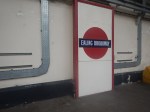
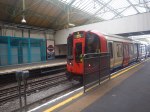
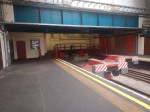
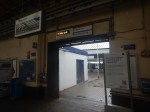
These pictures show the District Line at Ealing Broadway station.
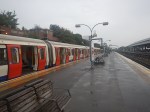
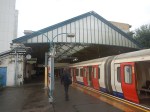
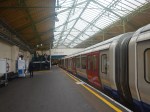

Note.
- There are three platforms for terminating District Line trains, which are numbered 7 to 9.
- The service frequency is six trains per hour (tph).
- The bridge to the far platform 9, is not step-free.
- It appears to be possible to walk between platforms 8 and 9 behind the buffer stops, but it wasn’t signed.
- As a comparison the Central Line runs 9 tph to East London from two platforms, that are numbered 5 and 6.
- There was also a 3 tph Night Tube service before the pandemic, which appears to be running again.
- Platforms 8 and 9 seem to be covered by a building of very little architectural merit.
This map from OpenRailwayMap shows the detailed platform layout.
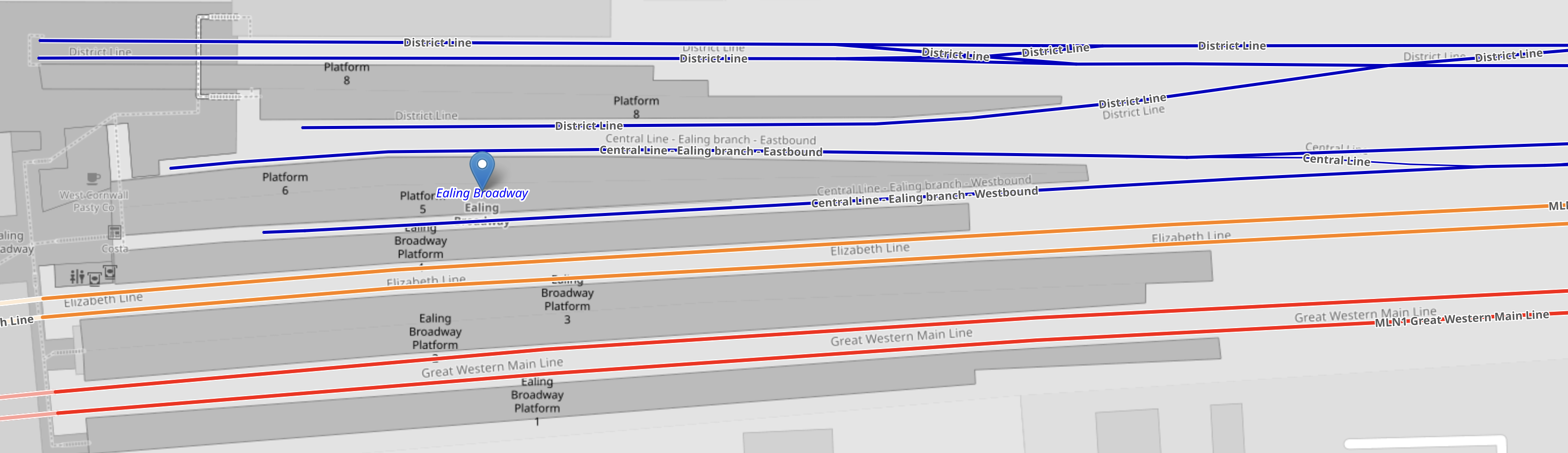
Note.
- Platforms are numbered from 1 to 9 from the South.
- Underground tracks are shown in blue.
- Elizabeth Line tracks are shown in orange.
- Great Western ~Main Line tracks are shown in red.
I believe that the three District Line platforms could be upgraded into an excellent terminus for another branch of the Piccadilly Line.
Consider.
- Two platforms would probably be enough, but a third would be useful for service recovery.
- As the Piccadilly and Central Line trains are the same size, could Platform 7 be a platform be available to both Underground services when needed?
- The New Tubes for London are a few metres shorter than the current District Line trains, so would this help in creating a step-free level walkway between Platforms 8 and 9, behind the buffer stops?
- Platforms 8 and 9 may need to be lengthened.
- Is there any scope for any appropriate oversite development?
I certainly believe that a much better replacement could be created.
Changing Between The Underground Lines And The Elizabeth Line At Ealing Broadway Station
Ealing Broadway station is now step-free and changes between the Eastbound Elizabeth Line and the Underground are a walk on the level.
Only when changing to or from the Westbound Elizabeth Line do you need to use stairs and/or a lift.
Elizabeth Line Effects On Access To Heathrow
The Elizabeth Line will change the way a lot of passengers go to and from Heathrow Airport.
Elizabeth Line To Heathrow
At present, the service will be.
- 4 trains per hour (tph) between Paddington and Heathrow Central and Heathrow Terminal 4 or Heathrow Terminal 5 via Ealing Broadway.
After November 6th, 2022, the service will be.
- 4 tph between Abbey Wood and Heathrow Central and Heathrow Terminal 4
- 2 tph between Abbey Wood and Heathrow Central and Heathrow Terminal 5
In addition these services will serve all station including Canary Wharf, Liverpool Street, Bond Street, Paddington and Ealing Broadway.
Effect On Heathrow Express
It will be difficult to predict what will happen to Heathrow Express, but I suspect several groups of passengers will desert it.
- Passengers wanting to go anywhere East of Paddington without changing trains.
- Passengers wanting any Elizabeth Line station.
- Passengers, who don’t like the prices of Heathrow Express.
- Passengers using Oyster or contactless cards.
- Passengers who want to ride on London’s spectacular new Elizabeth Line.
- After Old Oak Common station is opened for High Speed Two, the numbers could further decrease.
Will Heathrow Express survive?
Effect On Piccadilly Line
The current Piccadilly Line route to the Airport will not be closed, as for many it will still be a convenient route to the Airport
- Passengers who live on the Piccadilly Line and don’t want to change trains. Think Southgate, Knightsbridge, Hammersmith and Osterley!
- Passengers to the West of Acton Town station.
- Passengers, workers and others needing to go to Hatton Cross station.
If the Elizabeth Line connected with the Piccadilly Line at say Holborn, it would be all so different.
Effect On District Line
When Crossrail opens, the District Line will become a loop from Crossrail, between Ealing Broadway and Whitechapel running along the North Bank of the Thames via Earls Court, Victoria, Charing Cross and Monument.
The step-free interchange at Ealing Broadway could become busy with passengers travelling to and from the Airport.
Effect On Piccadilly Line Overcrowding
Heathrow trains on the Piccadilly Line can get very overcrowded with so many passengers with heavy cases.
It must sometimes be very difficult to get on a Piccadilly Line train between Heathrow and South Kensington stations.
The Elizabeth Line should take the pressure from these trains, by allowing passengers to use the District Line with a change at Ealing Broadway.
The New Tube for London will also help to reduce the overcrowding.
Effect On My Personal Route
My personal route to the airport is to take a 141 bus to Manor House station and then get the Piccadilly Line. It takes 94 minutes.
After the Elizabeth Line fully opens, if I take the East London Line from Dalston Junction to Whitechapel and then used Crossrail, I’d take 57 minutes.
Conclusion
The Elizabeth Line will affect the way many get to and from Heathrow Airport.
But there are large areas of London, who still will need to change trains twice to get to the airport. But for many, one of those changes will be a step-free one at Ealing Broadway, Paddington or Whitechapel stations.
Piccadilly Line To Ealing Broadway Effects
Adding Ealing Broadway station as a fourth Western terminus to the Piccadilly Line will have effects, but not as important as the opening of the Elizabeth Line.
Some Improved Journey Times To Heathrow
Some Piccadilly Line stations will see improved journey times to Heathrow.
Hammersmith to Heathrow currently takes 37 minutes by the Piccadilly Line.
Taking a Piccadilly Line train to Ealing Broadway and then using the Elizabeth Line could save a dozen minutes.
The District Line Connection To The Elizabeth Line At Ealing Broadway Is Lost
Passengers along the District Line from Monument to Hammersmith will lose their direct access to the Elizabeth Line at Ealing Broadway.
Cross-platform access to the Piccadilly Line at Hammersmith and other stations will probably be provided or improved, but it will be a second change.
Note that until the Piccadilly Line gets upgraded and new trains arrive around 2023, the District Line with new trains and the soon to be installed new signalling may well be a better passenger experience.
More Trains To Richmond
This will certainly be possible, if some Ealing Broadway trains are diverted to Richmond.
But the Elizabeth Line has another delight in its cupboard for Richmond.
Old Oak Common station is scheduled to open in 2026 and will offer an interchange between the Elizabeth Line and the North London Line.
Richmond will certainly be getting a better train service to Central and East London.
More Trains To Wimbledon
This will certainly be possible, if some Ealing Broadway trains are diverted to Wimbledon.
The Ealing Common Problem
At Ealing Common station, the Piccadilly and District Line share the same tracks and platforms.
Some commentators have suggested that the new trains on the Piccadilly Line will be designed to work with platform-edge doors for improved safety and dwell times.
So if platform-edge doors were to be fitted to all stations on the Piccadilly Line as has been suggested, there would be no way the doors would fit the new S7 Stock of the District Line.
Swapping Ealing Broadway from the District to Piccadilly Lines would solve this problem and give more flexibility, but it might give London Underground other problems with regard to access for District Line trains to Ealing Common depot.
These pictures show Ealing Common station.
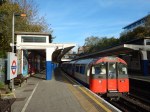
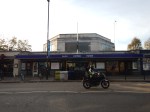
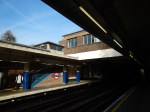

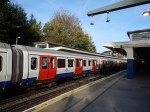
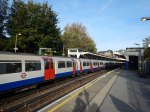
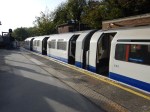
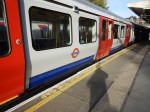
Note the difference in levels between the Piccadilly and District Line trains.
There would be no way to provide level access for both types of train using a Harrington Hump.
So is making a station that serves both deep-level and sub-surface lines, step-free, a problem that is still to be cracked?
This Google Map shows Ealing Common station.
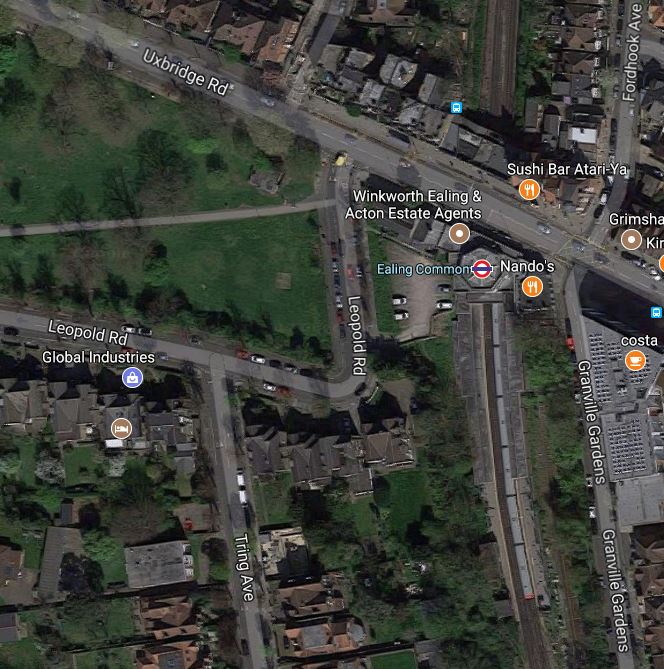
It doesn’t look that it is a station, where two extra platforms could be squeezed in, so both lines could have their own platforms.
Could Ealing Common station be one of the main reasons to serve Ealing Broadway station with the Piccadilly Line?
Acton Town Station
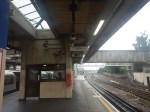
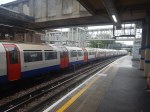
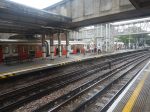
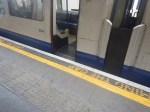
These pictures show Acton Town station.
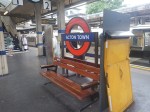

Note.
- The two central tracks appear to be Piccadilly Line trains only.
- The two outer tracks appear to be able to be used by both District and Piccadilly Line trains.
- There is quite a step-down to Piccadilly Line trains on some platforms.
Making Acton Town station, a Piccadilly Line-only station, would ease making the station step-free, as it would only be served by one type of train.
Chiswick Park And Ravenscourt Park
This section is shown in this map from cartmetro.com.
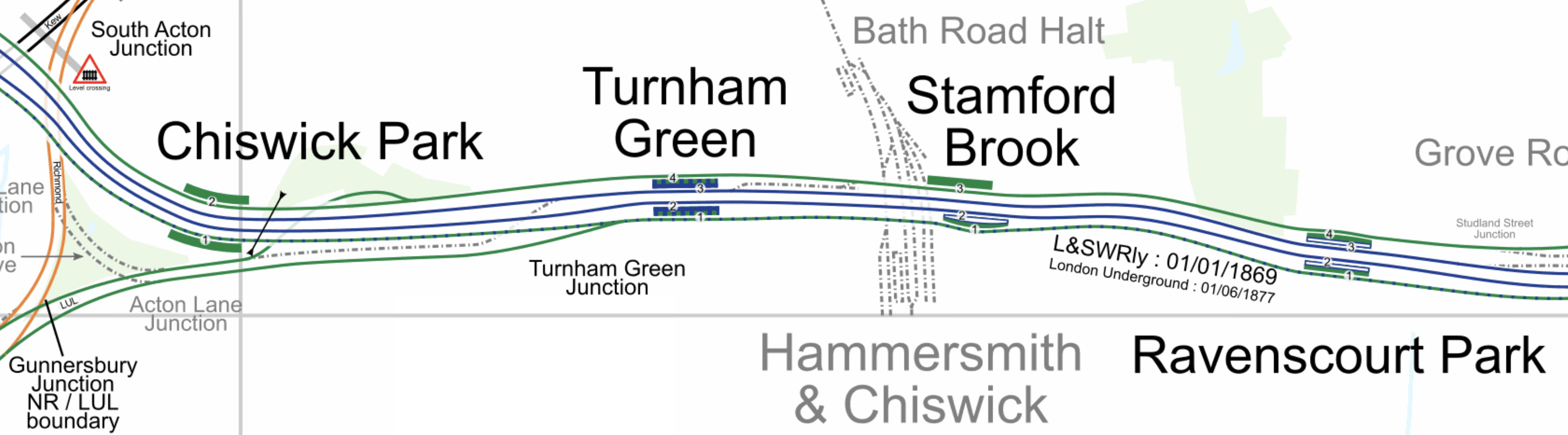
Note.
- The District Line is shown in green.
- The Piccadilly Line is shown in blue.
- The two Piccadilly Line tracks are in the middle and generally trains go straight through the four stations.
- The two District Line tracks are on the outside and trains stop at most stations.
It appears that the tracks have been laid out so that Piccadilly Line trains can get a real shift on between Acton Town and Hammersmith.
This could save a few minutes on some Piccadilly Line journeys.
But there is a problem!
- District Line trains serve all stations.
- Piccadilly Line trains serve none.
- How is Chiswick Park station going to be served, as there are no District Line trains passing?
- Passengers for intermediate stations, would need to get on the District Line trains before entering the Acton Town and Hammersmith section.
- Passengers may want to change between Ealing Broadway and Chiswick Park.
There will also be no trains running on the current District Line tracks between Acton Town and Turnham Green Junction. The only ones that do now, go to Ealing Broadway and they’re being changed to Piccadilly Line trains.
Serving Chiswick Park Station
Chiswick Park station only has platforms on the District Line, which will not see any passing trains if the District Line doesn’t go to Ealing Broadway.
One suggestion I found was to add two new District Line platforms to the Richmond branch.
This Google Map shows the station.
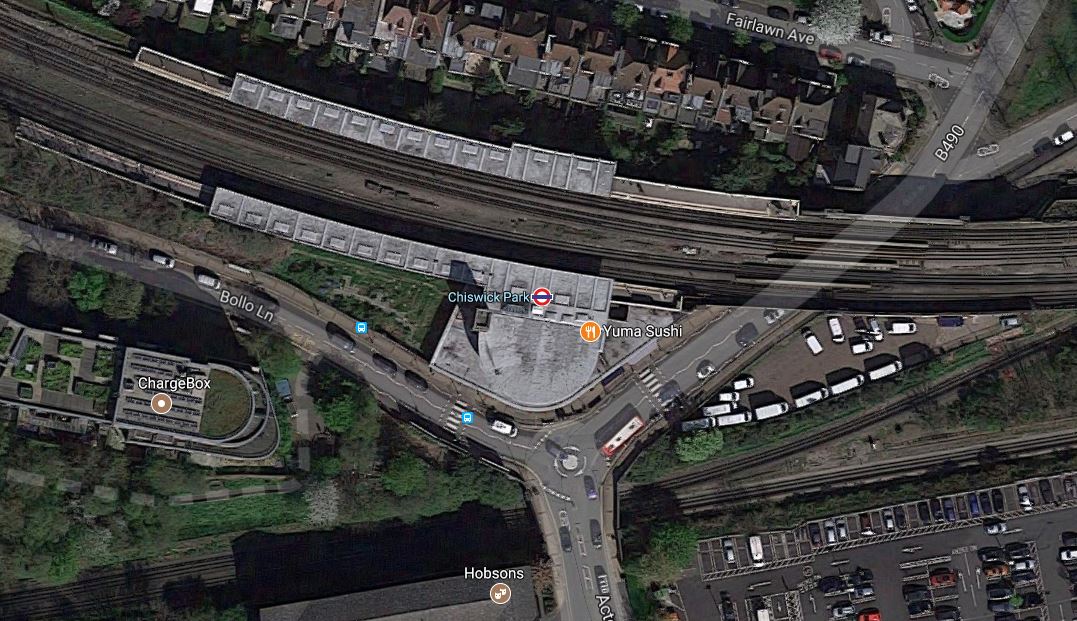
Note the Richmond branch passing South of the station.
This second Google Map shows the tracks between Chiswick Park station and Turnham Green junction.
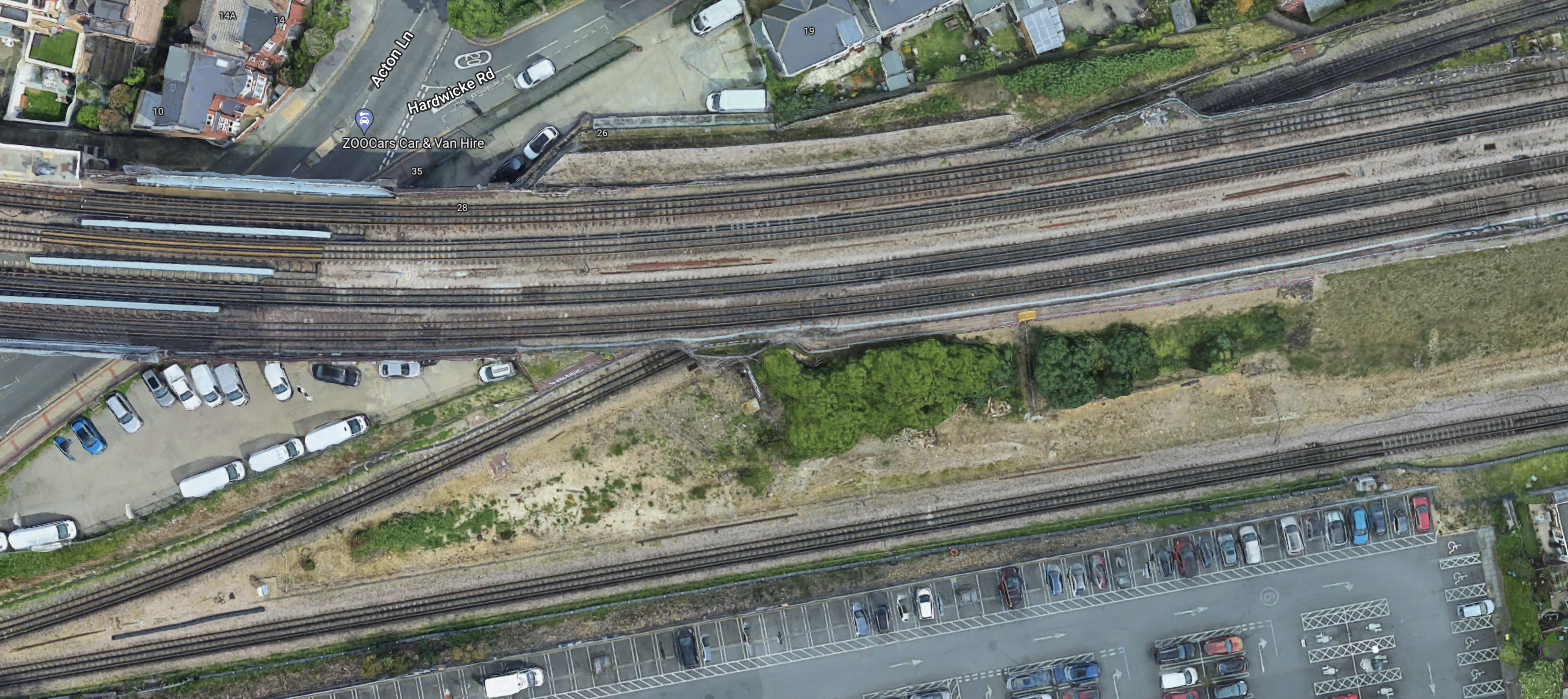
Note.
- The four tracks between Acton Town and Hammersmith stations.
- The current District Line tracks are the outside two of the four tracks.
- The Piccadilly Line tracks are the middle two.
- The two tracks at the South-West corner go to Richmond station.
- The Eastbound track from Richmond goes under the four-track railway, before joining the current Eastbound District Line track.
- The Westbound track to Richmond runs along the South side of the four-track railway, before joining the current Westbound District Line track.
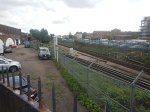
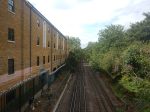
These pictures were taken from a train approaching Chiswick Park station from the East.

Note, that there is enough space for a platform along the single track.
These pictures are of Chiswick Park station.


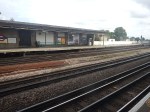


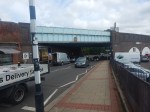
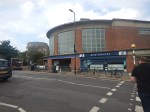
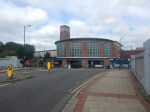
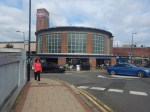
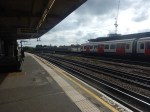
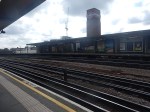

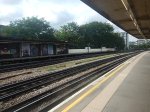
Note.
- The distinctive architecture of London Transport stations of the period.
- The two fast lines in the middle, with Piccadilly Line trains speeding through.
- The two District Line trains on the outside with platforms.
- The Richmond Branch passing to the South of the station and between the station and Sainsburys.
I would suspect that a pair of platforms could be built on the two tracks of the Richmond branch.
- District Line trains to and from Richmond would stop at the new platforms at Chiswick Park stations and Turnham Green, Stamford Brook, Ravenscroft Park, Hammersmith, Baron’s Court and Earl’s Court stations.
- Passengers between Ealing Broadway and Victoria stations would change at Hammersmith, Baron’s Court or Earl’s Court stations.
- The car park at the bottom of the map is for a large Sainsbury’s. Perhaps, they would like a station entrance?
- Chiswick Park station is Grade II Listed.
I’m sure that a good architect can find a more than acceptable solution.
Turnham Green Station
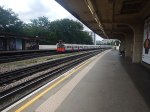
As I passed through Turnham Green station, I got off and took a few pictures, before catching the next train to Ealing Broadway.

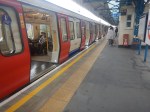
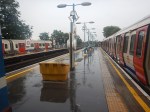
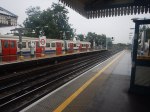
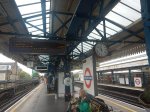
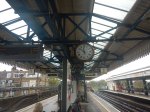

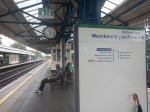
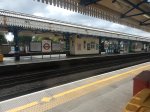
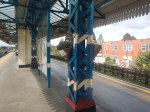
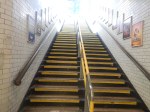
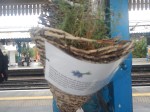
Note.
- Piccadilly Line trains don’t generally stop, although they do at times to provide a service when the District Line is not running.
- The station is not step-free, with stairs to the entrance.
- It has some nice features.
- Herbs are provided for passengers
If required a step-free interchange between District and Piccadilly Lines could be arranged.
Hammersmith Station
I arrived at Hammersmith station on a Piccadilly Line train and left on a District Line train, after taking these pictures.
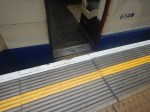
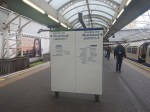

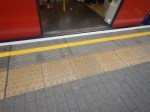
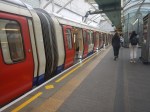
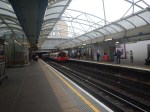
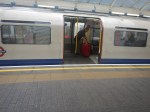
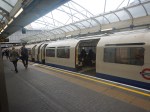
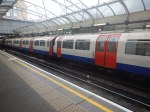
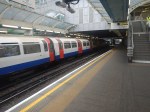

Note.
- The change is on the same island platform.
- There is plenty of space on the platform.
- The District Line trains are level with the platform.
- The Piccadilly Line trains require a step-down from the platform.
- The District Line trains run at a frequency of 12 tph.
- The Piccadilly Line trains run at a frequency of 21 tph.
- Hammersmith is also a big bus interchange and shopping centre.
There should be no problem changing between Piccadilly and District Lines at Hammersmith, with a wait of no more than five minutes.
Baron’s Court Station
In a brief stop at Baron’s Court station, I took these pictures.
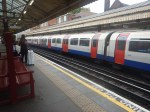
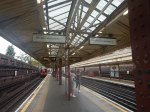
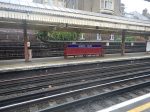
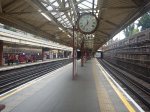
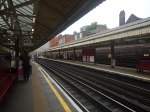
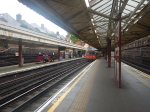
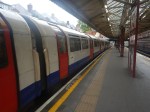
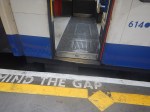
Note.
- The change is on the same island platform.
- There is less space on the platform, than at Hammersmith station.
- The District Line trains are a step-up from the platform.
- The Piccadilly Line trains require a step-up from the platform.
- The District Line trains run at a frequency of 12 tph.
- The Piccadilly Line trains run at a frequency of 21 tph.
There should be no problem changing between Piccadilly and District Lines at Baron’s Court, with a wait of no more than five minutes.
Earl’s Court Station
I arrived at Earl’s Court station on a Piccadilly Line train and left on a District Line train, after taking these pictures.

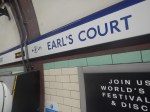
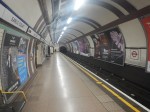

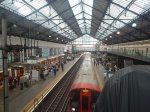
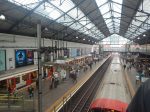
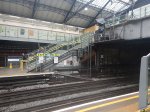
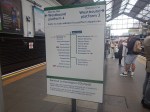
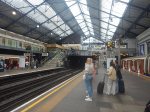
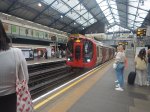
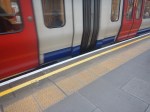
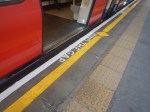
Note.
- The change means that platforms have to be changed
- The District Line trains are a step-up from the platform.
- The Piccadilly Line trains require a step-up from the platform.
- The District Line trains run at a frequency of 12 tph.
- The Piccadilly Line trains run at a frequency of 21 tph.
There should be no problem changing between Piccadilly and District Lines at Earl’s Court, but Hammersmith and Baron’Court don’t need a change of platform.
What Is The Best Station To Change Between Piccadilly And District Lines?
It appears that the best place to change would be Hammersmith, or failing that Baron’s Court.
- Earl’s Court requires a change of platform.
- Turnham Green requires a change of platform and two sets of steps.
- Hammersmith has a shopping centre and a lot of buses.
- I’ve used Hammersmith before to get home from Heathrow, with a change to a 141 bus at Monument station.
I would always for preference use Hammersmith.
Conclusion
It appears to me, there are three opposite forces on either side of a possible proposal to serve Ealing Broadway station with the Piccadilly Line, rather than the District Line.
- The District Line will form a loop South of Crossrail between Ealing Broadway and Whitechapel stations.
- The loop of the District Line serves Victoria, Embankment, Blackfriars, Cannon Street and Tower Hill stations for access to National Rail services.
- Making a station step-free that handles both deep-level and sub-surface lines, is not an easy undertaking.
Running the Piccadilly Line to Ealing Broadway means that a change is required at Hammersmith or Barons Court stations to use the loop described in point 1.
But this change would enable the step-free access to be created in all stations in the area.
I think that the change of terminus will go ahead, with the following additions.
- Improved access to Ealing Common depot.
- Improved cross-platform access at Hammersmith or Barons Court stations.
- Possibly two extra platforms on the District Line at Chiswick Park station.
What started out as a simple change could end up as a substantial project.
But overall, because it sorts out step-free access in the area, I think it is a good proposal.
Extending The Elizabeth Line – Improving The Northern City Line
Some parts of North and North-East London, have less-than-good connections with the Elizabeth Line.
- The Piccadilly Line has no direct connection with the Elizabeth Line.
- The Victoria Line has no direct connection with the Elizabeth Line.
- The Bank branch of the Northern Line has only a poor connection with the Elizabeth Line at Moorgate station.
- The Northern City Line has only a poor connection with the Elizabeth Line at Moorgate station.
- The Charing Cross branch of the Northern Line has a good connection with the Elizabeth Line at Tottenham Court Road station.
- The Lea Valley Lines of the London Overground have good connections with the Elizabeth Line at Liverpool Street station.
- Thameslink has a good connection with the Elizabeth Line at Farringdon station.
It would appear that if you live near one of the Lea Valley Lines or Thameslink stations, you can access the Elizabeth Line fairly easily at Liverpool Street or Farringdon stations, but if you rely on a Northern, Northern City, Piccadilly or Victoria Line local station, you are not so lucky!
Could The Northern City Line Be Improved To Give Better Connections Between North London And The Elizabeth Line?
This map from cartometro.com shows the lines between Finsbury Park and Highbury & Islington stations.
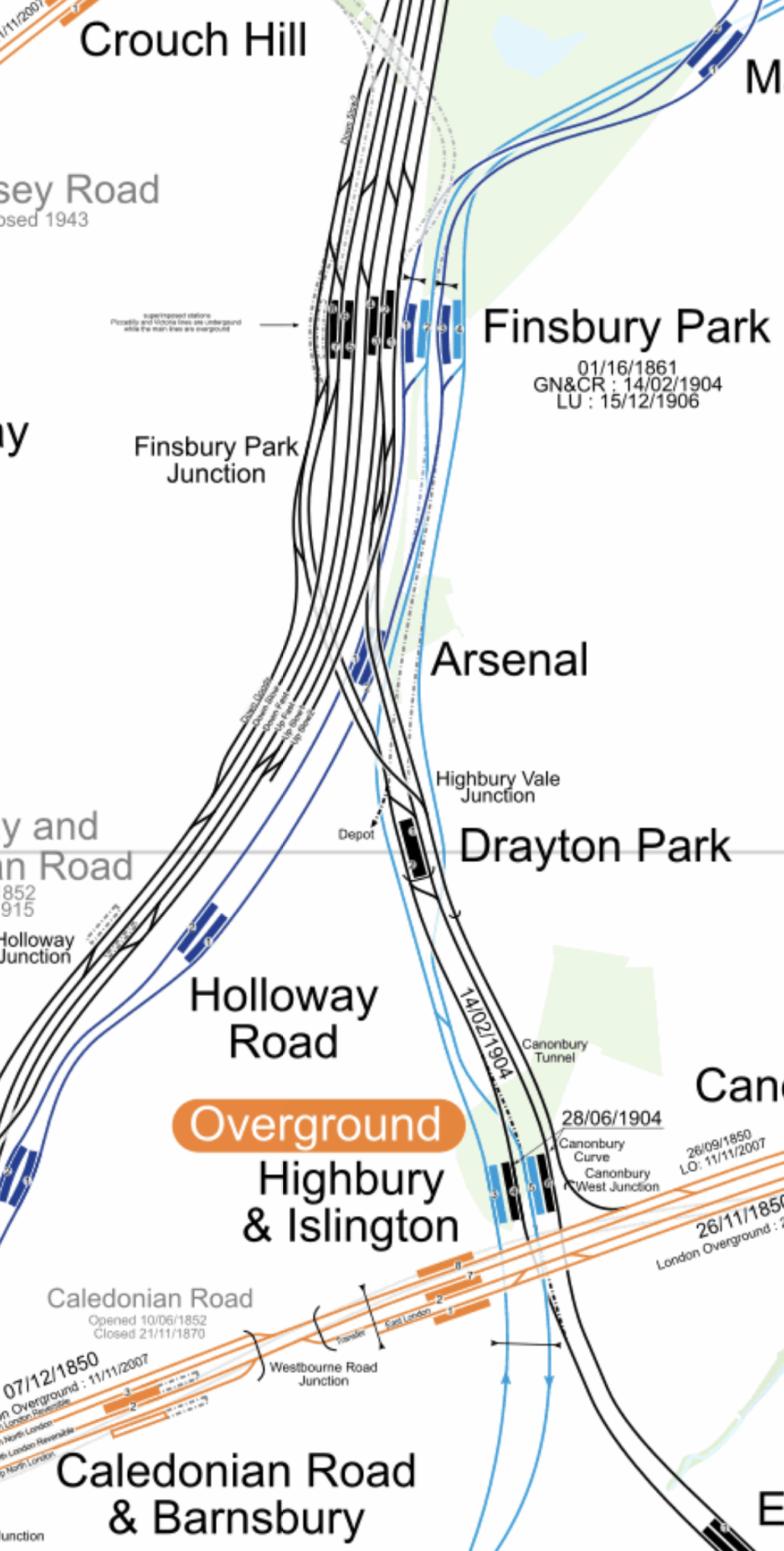
Note.
- The dark blue tracks are the Piccadilly Line, which calls at M (Manor House), Finsbury Park, Arsenal, Holloway Road and Caledonian Road, before going South-West to King’s Cross St. Pancras.
- The lighter blue tracks are the Victoria Line, which calls at Finsbury Park and Highbury & Islington, before going South-West to King’s Cross St. Pancras.
- The black tracks on the Western side of the map are those of the East Coast Main Line into King’s Cross.
- The black tracks going South-East from Finsbury Park are the Northern City Line, which calls at Finsbury Park, Drayton Park, Highbury & Islington, E (Essex Road) and Old Street before terminating at Moorgate.
This second map shows the lines through Finsbury Park station.
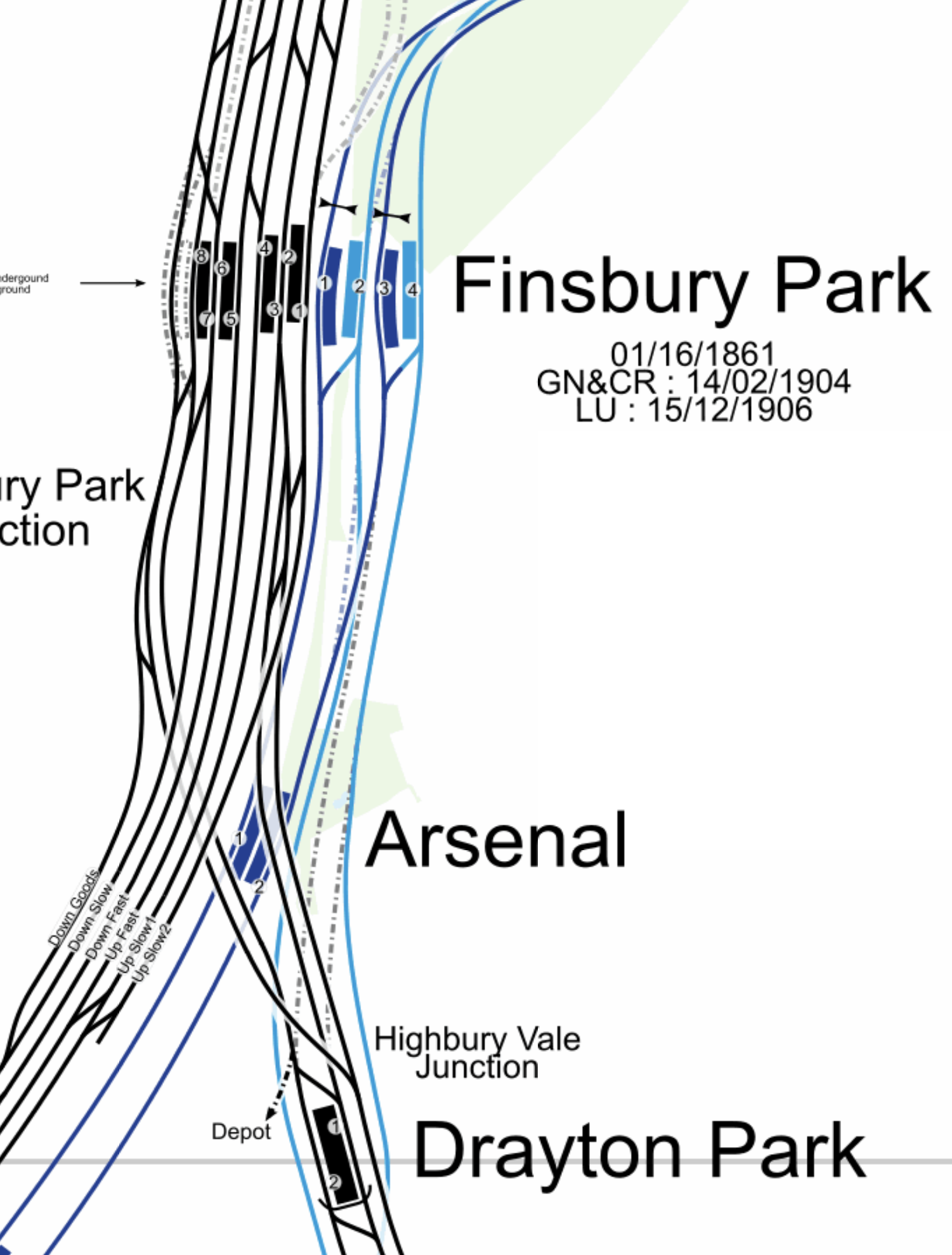
Note.
- The dark blue tracks are the Piccadilly Line.
- The lighter blue tracks are the Victoria Line.
- The black tracks going through Drayton Park station are the Northern City Line.
- The platforms of the Piccadilly and Victoria Lines are paired at Finsbury Park station, so that passengers can change lines with a simple walk-across.
This third map shows the lines through Highbury & Islington station.
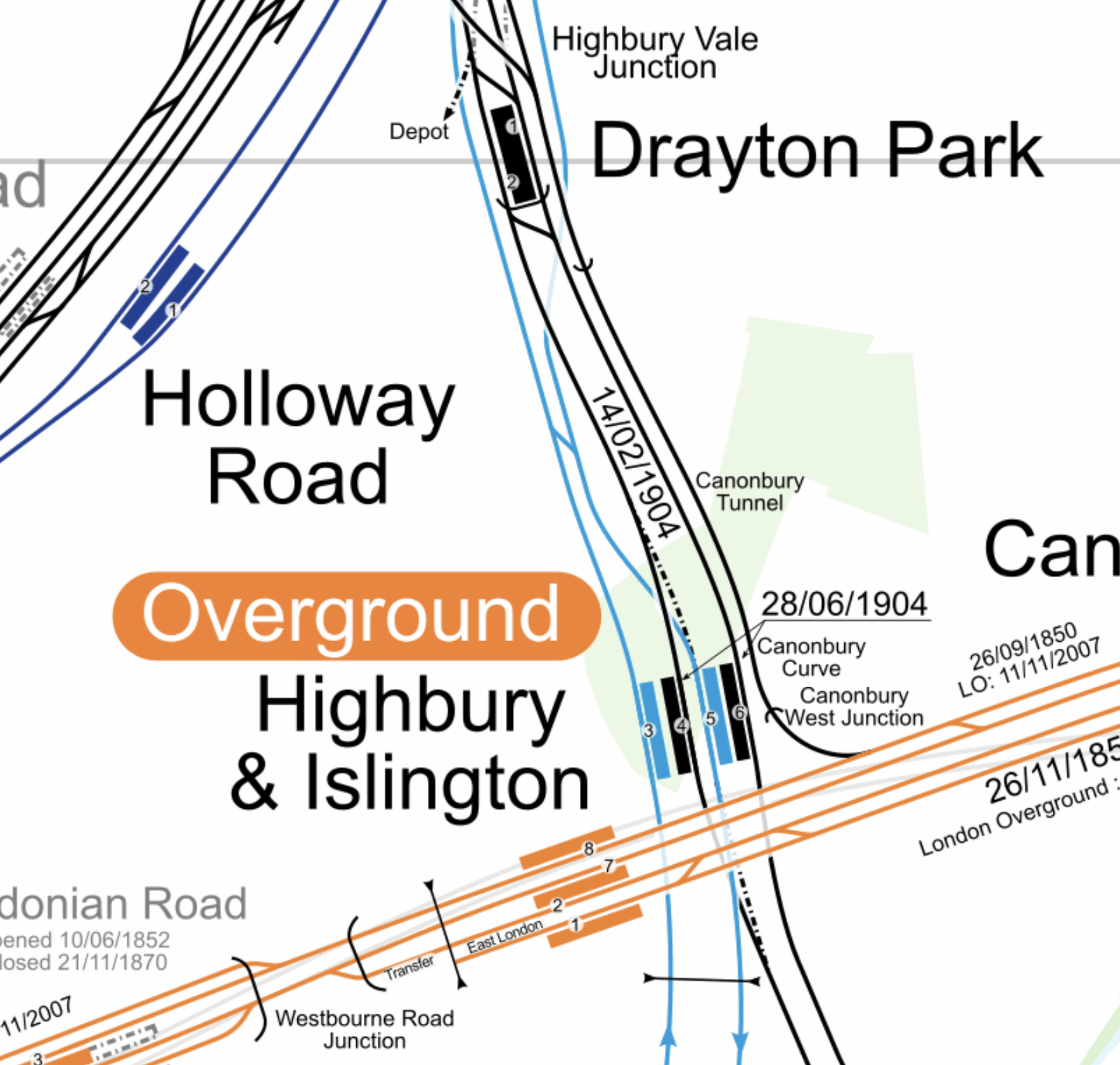
Note.
- The dark blue tracks are the Piccadilly Line.
- The lighter blue tracks are the Victoria Line.
- The orange tracks are the London Overground.
- The black tracks going through Drayton Park and Highbury & Islington stations are the Northern City Line, which terminates at Moorgate station.
- The platforms of the Northern City and Victoria Lines are paired at Highbury & Islington station, so that passengers can change lines with a simple walk-across.
The big problem with Highbury & Islington station is that is not step-free.
A Step-Free Route Between Wood Green And Moorgate Stations
Currently, it is possible to go between Wood Green and Moorgate stations by using three trains.
- Piccadilly Line – Wood Green to Finsbury Park – 6 mins
- Victoria Line – Finsbury Park to Highbury & Islington – 6 mins
- Northern City Line – Highbury & Islington to Moorgate – 10 mins
Note.
- These are actual times measured on my phone.
- The total time is twenty-two minutes.
- I had to wait a couple of minutes at both changes.
- Both changes are walk-across.
- The changes are not as perfect as they could be, although they would be easily managed with a buggy or a heavy case.
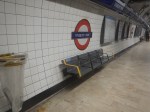
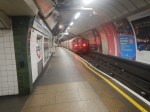
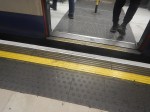
These pictures show the change at Highbury & Islington station.
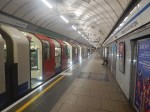
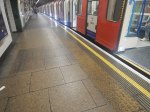
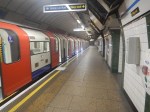
These pictures show the change at Finsbury Park station.

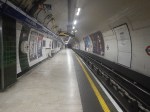
This route works for all stations Between Manor House and Cockfosters.
- Cockfosters – Add 15 minutes
- Oakwood – Add 12 minutes
- Southgate – Add 9 minutes
- Arnos Grove – Add 6 minutes
- Bounds Green – Add 3 minutes
- Turnpike Lane – Subtract 2 minutes
- Manor House – Subtract 5 minutes
But look at the frequencies of the three sections in trains per hour (tph)
- Piccadilly Line – 21 tph
- Victoria Line – 33 tph
- Northern City Line – 4 tph
The Northern City Line frequency is not high enough, as you could have a fifteen minute wait for a train.
Improvements Needed To The Northern City Line
The Northern City Line now has new Class 717 trains, a terminal platform at Stevenage and full digital signalling is being installed.
- The major improvement needed would be to improve frequency to at least 12 tph.
- Six tph on both branches should be possible.
I would also install step-free access at more stations.
Moorgate Station’s Northern City Line Platforms
These pictures show the platforms of the Northern City Line at Moorgate station.
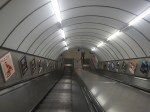
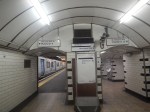
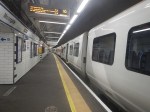
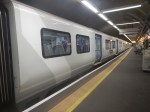

Note.
Improved Connections At Moorgate Station
I talked about the connections between the Northern and Elizabeth Lines at Moorgate station in Elizabeth Line To Northern Line At Moorgate Station.
This was my conclusion.
Routes between the Northern and Elizabeth Lines at Moorgate need to be improved.
I feel that some of the improvements could be fairly minor, but adding step-free access to the Northern City Line could be more difficult.
An Improved Connection Between Bank And Moorgate Stations
Currently, there are three ways between Bank and Moorgate stations.
- Use the Northern Line
- Use a 21, 43 or 141 bus routes
- Walk
I believe that it would also be possible to dig a pedestrian tunnel between the two stations and fit it out with a moving walkway.
This visualisation shows the updated Bank station.
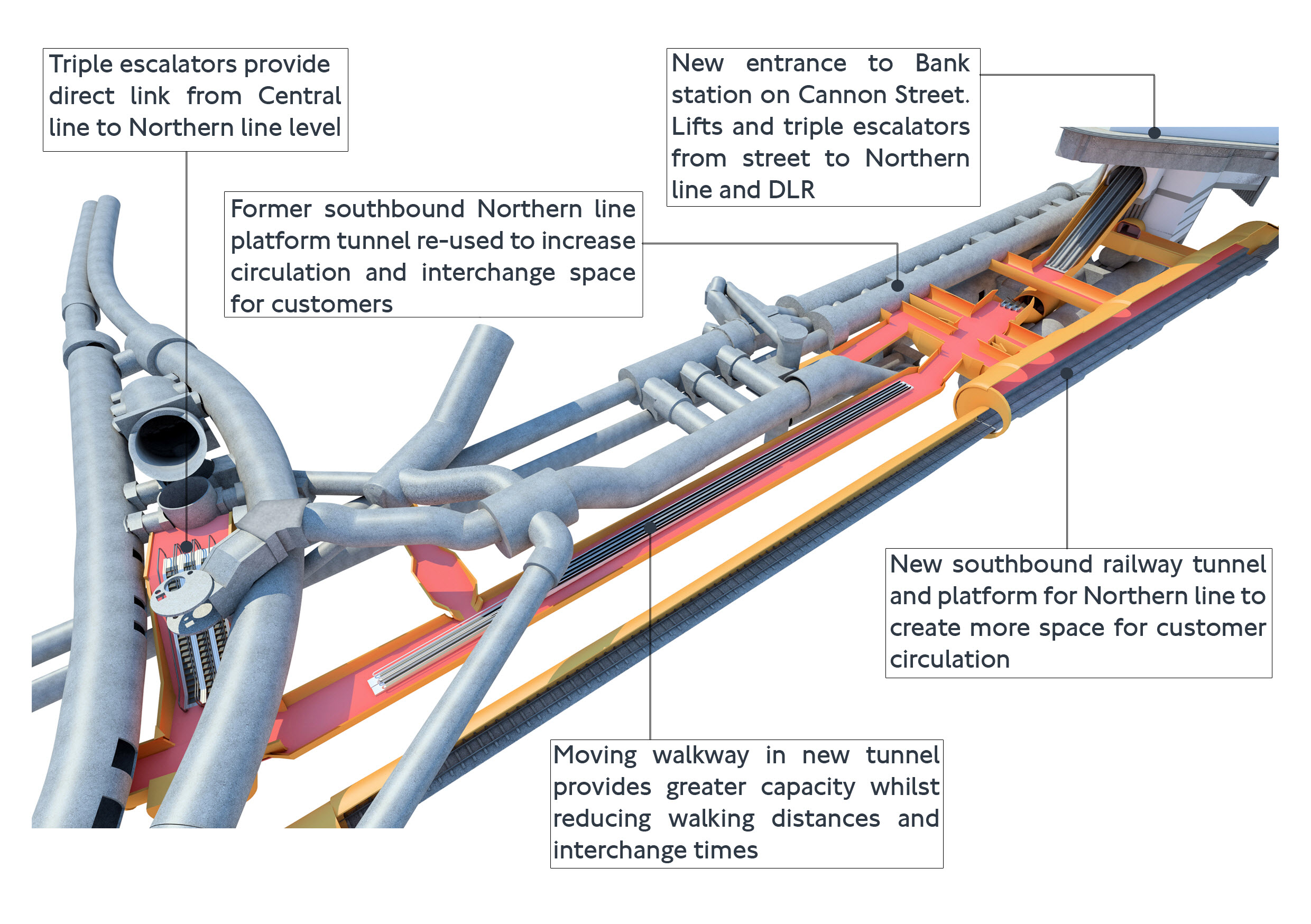
Note.
- Moorgate station is to the left.
- The only more-or-less completed bits are the two Northern Line tunnels and platforms and parallel pedestrian tunnel.
- The four cross tunnels can be picked out towards the far end of the station.
- Three of the cross tunnels can now be used by passengers.
- The moving walkway can be accessed from the two cross tunnels nearest to the Central Line.
- The escalators from the yet-to-open Cannon Street entrance appear to lead directly into a cross tunnel and a parallel tunnel to the moving walkway.
I believe that the moving walkway to Moorgate station could connect with the Bank station complex, at the Moorgate end of the new moving walkway in Bank station.
New £3.6bn London Transport Funding Deal Agreed
The title of this post, is the same as that of this article on the BBC.
These five paragraphs outline the deal.
A new £3.6bn government bailout to keep Tube trains, railways, buses and trams running in London has been agreed.
The package includes almost £1.2bn of upfront funding for Transport for London (TfL) to secure the long-term future of the capital’s transport network.
It is the sixth bailout for TfL after its revenues plummeted in the pandemic.
The funds will allow Piccadilly line trains to be built as well as upgrades to three Tube lines.
TfL Commissioner Andy Byford described the deal as “hard won” but Mayor of London Sadiq Khan, who is also chair of TfL, branded it “far from ideal”.
I have a few thoughts.
Will The North And Scotland Like It?
In my travels around the UK, when I ask someone on a bus,train or tram about their new transport funding, I often get a reply something like.
It’s good, but London gets more.
I don’t think other areas of the UK will like £3.6 billion, especially after Crossrail’s over budget and late construction.
Driverless Trains
The BBC article says this about driverless trains.
The 16-page settlement letter includes a commitment to “press forward a joint programme on the implementation of driverless trains on the London Underground”.
These seven paragraphs in the settlement letter say this about driverless trains.
29. TfL’s record of modernisation and innovation should not leave it behind other European
networks, which are achieving significant operational efficiencies through driverless trains.
Accordingly, DfT and TfL will press forward with the joint programme on the implementation of
driverless trains on the London Underground, recognising TfL’s safety, regulatory and statutory
responsibilities.
30. Taking the findings of the network review to the next stage, TfL will continue to work with DfT
to develop the evidence required to make a strong case for investment in driverless trains on the
London Underground. This will include but not be limited to the work set out below.
31. TfL will work with DfT to assess the case for introducing GoA4 on the London Underground
network, taking into account opportunities and risks.
32. TfL will undertake further studies and wider research to support progressing driverless trains
on the lines where the case(s) are strongest.
33. In addition, TfL should continue working with DfT to make progress developing and testing
innovative technology, where it can save money in the delivery of driverless trains.
34. Based on the findings of the above, TfL will work with DfT to develop a business case for
driverless trains as necessary.
35. TfL will ensure senior representation on the joint programme and will actively support this work
through the provision of staff resources, expertise and access to both the London Underground
network and any information sources. TfL’s participation should seek to explore all options in a
collaborative and open manner and work with the programme on an implementation plan. HMG
will provide resource funding to TfL to enable it to support the programme’s work
Around 1970, I worked at ICI in sections who were at the forefront in creating computer-controlled chemical plants.
I also remember that Simulation magazine gave a detailed description about how London Underground’s Victoria Line worked using automation, which colleagues thought was an excellent system.
The trouble with driverless trains, is that they have got too political.
- You have the Government wanting to introduce driverless trains for reasons of efficiency and to follow the best technological practice in Europe.
- You have the Unions totally against it for their obvious reasons.
- You have the Mayor of London grudgingly accepting it.
I take a practical attitude to automation based on the views of world-class automation engineers, I worked with in the 1960s and 1970s.
- In an airliner, most of the flying, landing and control of the aircraft is automatic, with the pilot monitoring everything on instruments.
- Much of the automation I was involved with all those years ago, was about ensuring optimal operation of plant and machinery and ensuring that the safety margins were not exceeded.
These two paragraphs from Wikipedia, explain the operation of the Victoria Line.
On opening, the line was equipped with a fixed-block Automatic Train Operation system (ATO). The train operator closed the train doors and pressed a pair of “start” buttons and, if the way ahead was clear, the ATO drives the train at a safe speed to the next station. At any point, the driver could switch to manual control if the ATO failed. The system, which operated until 2012, made the Victoria line the world’s first full-scale automatic railway.
The Victoria line runs faster trains than other Underground lines because it has fewer stops, ATO running and modern design. Train speeds can reach up to 50 miles per hour (80 km/h). A common method used by north London residents to visit the West End is to take the Northern line Bank branch, change platforms at Euston, and continue on faster Victoria line trains. The original signalling has been replaced with a more modern ATO system from Westinghouse Rail Systems incorporating ‘Distance to Go Radio’ and more than 400 track circuits. The track operator, London Underground Limited, claimed it is the world’s first ATO-on-ATO upgrade. The new system allowed a revised timetable to be introduced in February 2013, allowing up to 33 trains per hour instead of 27. In combination with new, faster trains, the line’s capacity increased by 21%, equivalent to an extra 10,000 passengers per hour.
Note.
- I very much approve of this type of automation, which fits well with the operation of metro services.
- The driver is very much in control, as he initiates and can stop all train movements.
- The original automation in the 1960s, used thermionic valves and relays.
- I believe that automation like this can be exceptionally safe.
As the extract says, Automatic Train Operation system (ATO) increases the frequency of trains, runs them faster and increases capacity.
The only problem is how do you sell it to the unions.
Wide Platforms On The Piccadilly Line Extension
As a child, I used to live on the Northern reaches of the Piccadilly Line.
- My family lived near Oakwood station.
- I used to have my hair cut in the barbers at Cockfosters station.
- My school was at Southgate station.
- My father’s print works was close to Wood Green station.
- I regularly brought shopping home from Marks & Spencer in Wood Green, by using Turnpike Lane station.
- I saw Eric Clapton, John Mayall and others at the Manor House pub by Manor House station.
Incidentally, I’ve never had much to do with Arnos Grove or Bounds Green stations.
Perhaps because in those days of the 1950s, I rarely used other lines, I didn’t notice the wider platforms of the extension, which opened in 1933.
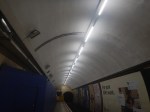

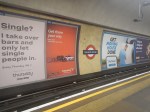
The Wikipedia entry for the Piccadilly Line, says this.
Platforms 400 ft (120 m) long were originally planned for each station to fit 8-car trains, but were cut short to 385 ft (117 m) when built. Some stations were also built with wider platform tunnels to cater to expected high patronage.
Perhaps, that explains the wider platforms at Turnpike Lane and Manor House stations.
I suspect that Transport for London wish that the Victoria Line had been built to the same standards of the Piccadilly Line Extension of the 1930s.
LED Lights Illuminate London’s Elizabeth Line
The title of this post is the same as that of this article on E & T Magazine.
This is the introductory paragraph.
Using LEDs to light up the stations, escalator shafts and concourses of the Elizabeth line was a bold move from Transport for London; especially as when they decided on its use back in the late 2000s, LED technology was yet to break into the lighting world.
These points are also made in the article.
- The Elizabeth line is one of the first sub-surface infrastructure projects to be lit entirely by LEDs.
- The decision to use the technology was based on industry evidence that its use will help reduce energy consumption and maintenance requirements.
- The Crossrail team used the light-grey, matt-textured, glass-reinforced concrete lining of the station and escalator tunnels to reflect light onto the passenger areas.
- The main lighting and the emergency lighting are incorporated in the wayfinding totems.
The article certainly explains how the excellent lighting was designed.
These pictures show some of the LED lighting on the Elizabeth Line.



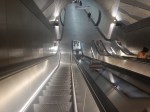

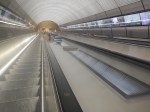
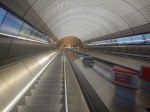
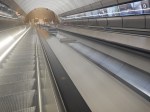
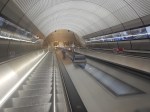

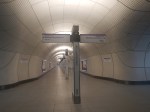
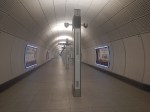
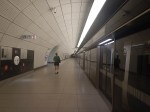
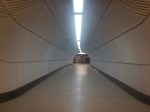
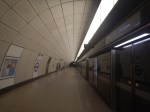
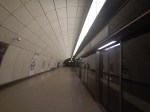


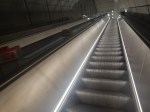
Note that uplighters on the Underground are not new, as these pictures from Turnpike Lane station show.


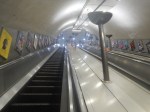

They were installed in the 1930s and were also used on the Moscow Metro, where London Transport installed the escalators.
Lighting Can Calm Passengers
This is a paragraph from the article.
Both Kerrigan and Clements agree that the lighting infrastructure makes the Elizabeth line unique to all its predecessors seen across the London Underground and that they have met their goal to create a soothing environment to enhance the passenger experience. “We wanted to create a relaxed commuting environment that is the opposite to the poorly lit and cramped environment of the Central line, for example,” Clements admits. “And we believe that the lighting has a massive amount to do with this.”
Does this explain why passengers seem generally calm?
Elizabeth Line To Open On 24 May 2022
The title of this post, is the same as that of this press release on Crossrail.
This is the sub-title.
Trains to run every five minutes 06:30 – 23:00 Monday to Saturday between Paddington and Abbey Wood.
And these are the first two paragraphs describe what will open.
Transport for London (TfL) has today confirmed that, subject to final safety approvals, the Elizabeth line will open on Tuesday 24 May 2022. The Elizabeth line will transform travel across London and the South East by dramatically improving transport links, cutting journey times, providing additional capacity, and transforming accessibility with spacious new stations and walk-through trains. The Elizabeth line will initially operate as three separate railways, with services from Reading, Heathrow and Shenfield connecting with the central tunnels from autumn this year.
In the coming weeks, Elizabeth line signage will continue to be uncovered across the network in preparation for the start of customer service. The updated Tube and Rail map will also be released later showing the new central section stations connected with the rest of the TfL network for the first time.
These are some points from the rest of the press release.
- Work will continue in engineering hours and on Sundays to allow a series of testing and software updates in preparation for more intensive services from the autumn.
- All services between Reading and Heathrow to Paddington and Shenfield to Liverpool Street, currently operating as TfL Rail, will be rebranded to the Elizabeth line.
- Passengers wanting to do longer journeys may need to change at Paddington or Liverpool Street stations.
- Services from Reading, Heathrow and Shenfield will connect with the central tunnels in autumn when frequencies will also be increased to 22 trains per hour in the peak between Paddington and Whitechapel.
- Paddington and Canary Wharf will have a journey time of only 17 minutes. It takes thirty minutes by the Underground.
- All Elizabeth line stations will be staffed from first to the last train, with a ‘turn up and go’ service offered to anyone needing assistance.
- Step-free access is in place from street to train across all Elizabeth line stations between Paddington and Woolwich.
- Work is ongoing at Bond Street Elizabeth line station, which means that it will not open with the other stations on 24 May. It will open later in the year.
- Changes will be made to 14 bus routes to improve links to Elizabeth line stations in east and south-east London, where many customers will use buses to get to and from stations.
- Full services across the entire route introduced by May 2023.
I have some thoughts.
My Routes To Crossrail
Like many in London, I will have multiple routes to and from Crossrail.
- I could take a 21 or a 141 bus from the bus stop round the corner to the Moorgate end of Liverpool Street station on Crossrail.
- I could take a 38 bus from another bus stop round the corner to Tottenham Court Road station on Crossrail.
- I could also take a 38 or 56 bus from this stop to Angel station and get a Northern Line train to Liverpool Street station on Crossrail.
- I could also take a 38 or 56 bus from this stop to Essex Road station and get a Northern City Line train to Liverpool Street station on Crossrail.
- I could also take a 30 bus from this stop to Highbury & Islington station and get a Northern City Line train to Liverpool Street station on Crossrail.
- I could take a 30, 38 or 56 from yet another stop round the corner to Dalston Junction station and get an Overground train to Whitechapel on Crossrail.
- I could even walk a few hundred metres to take a 76 bus from the stop in the centre of de Beauvoir Town to the Moorgate end of Liverpool Street station on Crossrail.
One of the reasons, I bought my house, was that it would have good connections to Crossrail.
But there is a cloud on the horizon.
My easiest route will probably be to use a 21 or 141 bus direct to Moorgate.
But our South London Mayor in his wisdom is hoping to retire the 21 bus leaving us with just the 141 direct to Moorgate.
I am by training a mathematical modeller and I have lived much of my life at various points on the transport corridor from Cockfosters to Moorgate formed by the Piccadilly Line and the 141 bus. I can even remember using the predecessor of the 141 bus, which was the 641 trolley-bus to come up to London with my grandmother in the 1950s.
I’m certain that when Crossrail opens, that if you live in say Wood Green, Southgate and Oakwood, if you want to use Crossrail to get to Heathrow or Canary Wharf, you will be highly likely to take the Piccadilly Line to Manor House and then take a 141 bus to Moorgate to pick up Crossrail.
The only alternative will be to change at Finsbury Park for the Moorgate Line, which even after the improvements at Finsbury Park, would not be an easy change with a heavy bag or a baby in a buggy.
I talked about this problem before in Does London Need High Capacity Bus Routes To Extend Crossrail?, where I said this.
I suspect that when Crossrail opens, the 141 bus will be heavily used by travellers going between the Northern reaches of the Piccadilly Line and Crossrail at Moorgate.
The 141 bus goes between London Bridge station and Palmers Green and it has a route length of about nine miles.
Currently, buses run every fifteen minutes or so, but I doubt it will be enough in future as Transport for London are rerouting the closely-related 21 bus.
I suspect any route seen as an extension of Crossrail needs to have the following characteristics.
- High frequency of perhaps a bus every ten minutes.
- Interior finish on a par with the Class 345 trains.
- Wi-fi and phone charging.
I would also hope the buses were carbon-free. Given that some of these routes could be quite long, I would suspect hydrogen with its longer range could be better.
It should be noted that the 43 bus, that passes Moorgate, is already carbon-free.
I will be interested to see what action is taken by Transport for London.
I believe their current plan is lacking and will make it difficult for those where I live to get to Crossrail at Moorgate.
Feeder Bus Routes To Crossrail
I believe that there could be considerable scope for more high-capacity high-quality feeder routes to and from Crossrail.
Currently, there are four bus routes that pass Moorgate station, that come into this category.
- 21 – Lewisham Shopping Centre and Newington Green
- 43 – London Bridge Station and Friern Barnet
- 76 – Waterloo Station and Stoke Newington
- 141 – London Bridge Station and Palmers Green
How many other routes are there, that stop outside a Crossrail station?
I suspect that for many Londoners and visitors, a bus to Crossrail will be their fastest way to their ultimate destination.
For instance, my fastest way to Bond Street, Canary Wharf, Ealing, Heathrow, Paddington and Reading will start with a bus to the Crossrail entrance at Moorgate station.
And it looks like Transport for London will be reducing my bus frequency to Moorgate, when it probably needs a slight increase.
Crossrail’s North-West Essex Extension
One of the elegant parts of Crossrail’s design is its interchange with the Central Line at Stratford station.
- The Eastbound Crossrail and Central Line platforms share an island platform.
- The Westbound Crossrail and Central Line platforms share an island platform.
This arrangement allows step-free cross-platform interchange between the two lines.
This map, which was clipped from Wikipedia, shows the North-Eastern end of the Central Line.
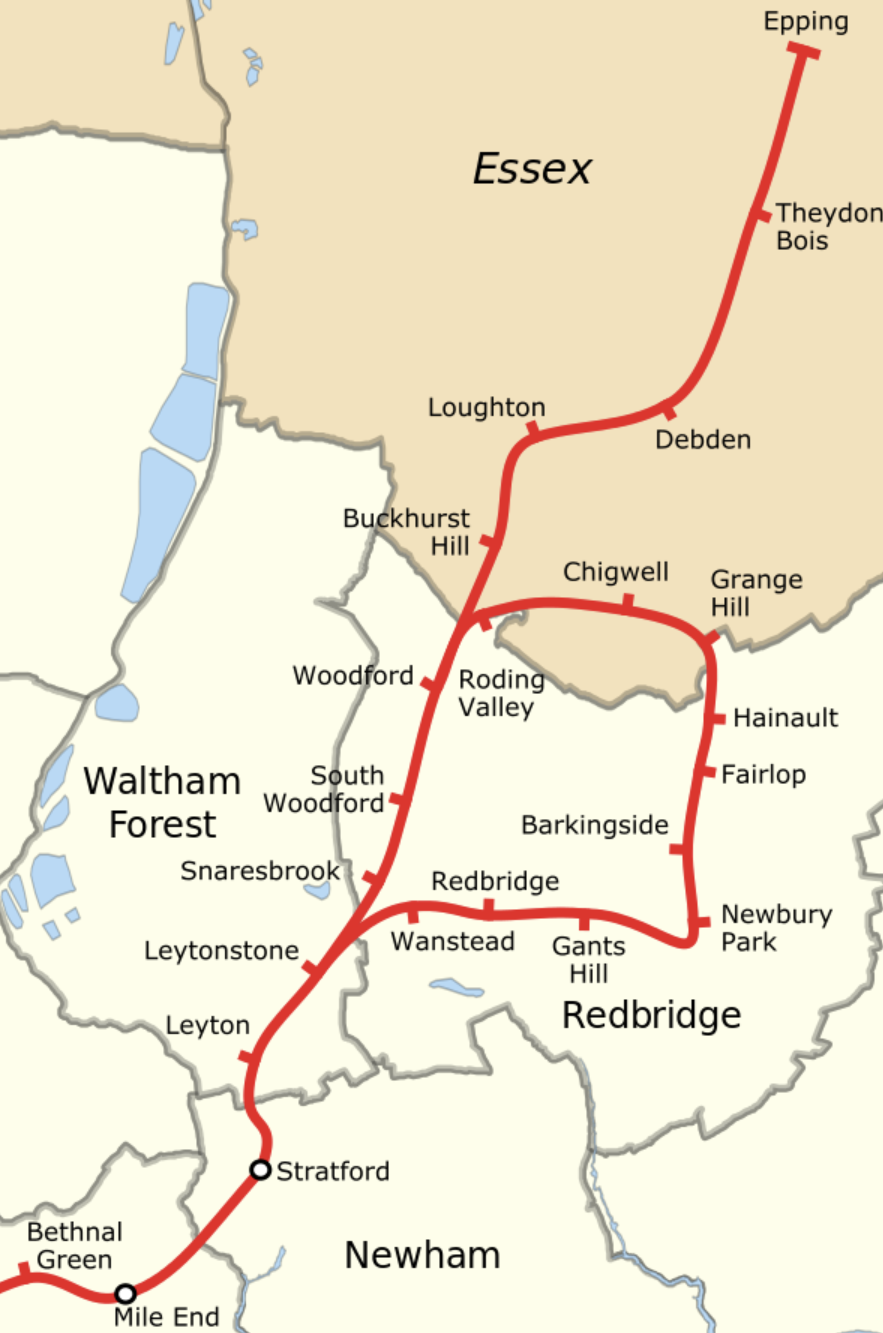
I am sure, that those who live to the North-East of Stratford station will be some of the residents of London, who benefit the most from Crossrail.
The following stations are step-free.
- Buckhurst Hill
- Debden
- Epping
- Hainault
- Newbury Park
- Roding Valley
- South Woodford
- Stratford
- Woodford
I suspect more stations will be made step-free.
Cross-Platform Interchanges
It was originally planned, that a similar cross-platform interchange would have been built at Walthamstow Central station, that would have allowed the Victoria Line to continue to Woodford.
As the Stratford interchange works so well, I’m surprised the track layout hasn’t been used at more places on London’s rail network.
The Whitechapel Reverse
In Is Whitechapel Station Going To Be A Jewel In The East?, I discussed the importance of Whitechapel station.
Whitechapel station solves the round-the-corner problem for passengers, who want to go between say Romford and Woolwich stations.
Passengers just walk the few metres between the two platforms at Whitechapel station and take the first train to their destination.
I will be interested to see if Crossrail has an effect on traffic over the Dartfood Crossing and through the tunnels. How many will use Crossrail instead, when they are visiting their team, clients or family on the other side of the river?
I call stations like Whitechapel reversal stations, as they allow passengers to easily reverse direction. There is more about reversal stations in Reversal Stations.
The New Tube Map
These pictures show the new tube map.
Note.
- Crossrail is shown as a double purple line.
- Thameslink is also shown as a double pink line.
- There are certainly some drawing gymnastics to fit it all in.
But Harry Beck’s design survives.
Abbey Wood Station
The more I look at the design of Abbey Wood station and compare it to the Crossrail/Central interchange at Stratford, the more I think it is a substandard station.
Would it have been better, if one island platform had been designed for Westbound services and the other had been designed for Eastbound services? Crossrail services might be on the outside with North Kent services between the two island platforms.
This would have enabled a journey between say Rochester and Bond Street to have been done with a simple cross-platform change at Abbey Wood station.
No Victoria Line Interchange
I was surprised by these omissions.
This article on London Reconnections is entitled Horrible Holborn: When Postponement Is Not An Option.
It is well worth a read.
One section is entitled The interchange that isn’t, where this is said.
Whilst modelling showed that Bond St and Tottenham Court Road would be capable of managing the expected passengers once the Elizabeth line opens, it was clear that a combined Oxford Circus/Bond St (Crossrail) east entrance could not. If you have ever wondered why the Elizabeth line has no sub-surface interchange with the Victoria line at Oxford Circus despite the eastern ends of the Bond Street platforms being tantalisingly close, this is your answer. As the Victoria line at Oxford Circus is never likely to be able to handle the expected numbers of people that would board if there were direct access from the Bond St Crossrail platforms, it appears the two stations will never be linked with publicly accessible passages below ground.
In other words, you would solve the problem of the interchange between the Elizabeth and Victoria Lines and create severe overcrowding on the Victoria Line.
When I have supper with my son at the Angel, he comes from his home in Walthamstow, via a cross-platform change at Euston.
Routes like this allow those that live on the Victoria Line to access the Elizabeth Line.
No Piccadilly Line Interchange
The article says this about an Elizabeth Line station at Holborn.
It is pertinent to note that an early plan to have a Crossrail station at Holborn was abandoned. In reality, it would have been too close to Tottenham Court Road station to be really worthwhile. It would have restricted the alignment (bearing in mind that sub-surface Crossrail stations have to be straight and level). It would also have added considerable expense and may have put the entire project at risk. At the end of the day, it just wasn’t a good business case. Whilst a station on the scale of the Elizabeth line could not be justified, however, an improvement of the existing Holborn station could.
The article also says that upgrading Holborn station would not be easy, even without the connection to the Elizabeth Line.
 The Anonymous Widower