ILI Group Secures Planning Consent For 50MW Energy Storage Project
The title of this post, is the same as that of this article on Solar Power Portal.
ILI Group or Intelligent Land Investments Group to give them their full name, are a Scottish-based company, that I follow as I like their energy storage developments.
The home page of their web site, lists three main areas of activity.
The home page also has a scrolling mission statement of
- UK Energy Security
- 4GW of Energy Storage Projects
- Aligned with government policy
- Saving over 200million tonnes of CO2e
- Over £4 billion of Investment
It is very much worth reading the section of the ILI Group web site, which talks about pumped-storage hydroelectricity.
It starts with a overview of the Pump Storage Sector.
Between 2007 and 2015, the total installed capacity of renewables electricity in Scotland has more than doubled. Due to its intermittent nature, the rise in renewable generation has resulted in increased demand for flexible capacity to help meet energy balancing requirements for the national grid system.
Pumped storage hydro is considered by the Directors to be the most developed and largest capacity form of grid energy storage that currently exists. This can help reduce renewable energy curtailment and therefore promote grid stability.
It then gives an overview of how pumped-storage hydroelectricity works and the benefits of the technology.
The section finishes by noting that the company has secured planning permission for the Red John pumped-storage hydroelectric power station.
The article on the Solar Power Portal, also has this paragraph on ILI Group’s ambitions for pumped-storage hydroelectricity.
ILI Group is also responsible for the development of a 1.5GW pumped storage hydro project at Loch Awe. The Balliemeanoch project based at Dalmally in Argyll and Bute will be able to supply 1.5GW of power for up to 30 hours. It is the third and largest of ILI’s pumped storage hydro projects, with the other two being Red John at Loch Ness and Corrievarkie at Loch Ericht.
Note these points about the Balliemeanoch project.
- It has a storage capacity of 45 GWh, which is around the total amount of electricity, the whole of the UK would use in two hours.
- It couldn’t power the UK, as it has an output of only 1.5 GW and the UK needs at least 23 GW.
- The largest pumped storage hydroelectric power station in the UK is Dinorwig power station, which has an output of 1.8 GW and a storage capacity of 9.1 GWh.
In terms of storage capacity, the Balliemeanoch project will probably be the largest in the UK.
The section of the ILI Group web site, that talks about battery storage, opens with an overview of battery storage opportunities, where this is said.
Battery storage projects provide an enticing new opportunity for landowners and investors alike. As a market that will see significant growth over the coming years (National Grid predict up to 40GW of storage could be required by 2050) we see exciting new opportunities in a sector that will be critical to meeting our climate change needs.
Whereas our pumped storage hydro projects will provide long-term storage capacity, our batteries will provide short-term services (less than 4 hours) to the electricity system. As the system decarbonises, becoming steadily more reliant on intermittent green renewable generation, storage will play a role of increasing importance in balancing the grid and ensuring security of supply.
Note.
- This is a sales pitch to landowners and investors.
- National Grid’s prediction of 40GW of storage by 2050, could be able to store as much as 1200 GWh of electricity.
- I agree with their statement that there will be a need for both pumped storage hydro and batteries.
The section finishes with a status summary of 21 battery projects that they are developing.
Conclusion
I feel that ILI Group is a company that means business and knows where it’s going.
The UK probably needs several more companies like the ILI Group.
Can Highview Power’s CRYOBattery Compete With Pumped Storage Hydroelectricity?
In this article on the Telegraph, Rupert Pearce, who is Highview’s chief executive and ex-head of the satellite company Inmarsat, discloses this.
Highview is well beyond the pilot phase and is developing its first large UK plant in Humberside, today Britain’s top hub for North Sea wind. It will offer 2.5GW for over 12 hours, or 0.5GW for over 60 hours, and so forth, and should be up and running by late 2024.
The Humberside plant is new to me, as it has not been previously announced by Highview Power.
- If it is built it will be megahuge with a storage capacity of 30 GWh and a maximum output of 2.5 GW.
- Humberside with its connections to North Sea Wind, will be an ideal location for a huge CRYOBattery.
- The world’s largest pumped storage hydroelectric power station is Fengning Pumped Storage Power Station in China and it is 40 GWh.
Pumped storage hydroelectric power stations are the gold standard of energy storage.
In the UK we have four pumped storage hydroelectric power stations.
- Cruachan Power Station – 7.1 GWh
- Dinorwig Power Station (Electric Mountain) – 9.1 GWh
- Falls of Foyers – 10 GWh
- Ffestiniog Power Station 1 GWh
With two more under construction.
- Coire Glas Power Station – 30 GWh
- Red John Power Station – 2.8 GWh
As energy is agnostic, 30 GWh of pumped storage hydroelectric power at Coire Glas is the equivalent of 30 GWh in Highview Power’s proposed Humberside CRYOBattery.
Advantages Of CRYOBatteries Over Pumped Storage Hydroelectric Power
I can think of these advantages.
- Cost
- Could be build on the flat lands of East Anglia or Lincolnshire
- Factory-built
- NIMBYs won’t have much to argue about
- No dams
- No flooding of valleys
- No massive construction sites.
- No mountains required
- No tunnels
- Small footprint
I suspect that a large CRYOBattery could be built well within a year of starting construction.
Rupert Pearce’s Dream
The Telegraph article says this and I suspect it’s a quote from Rupert Pearce.
Further projects will be built at a breakneck speed of two to three a year during the 2020s, with a target of 20 sites able to provide almost 6GW of back-up electricity for four days at a time, or whatever time/power mix is optimal.
6 GW for four days is 576 GWh, which if it were spread around twenty sites is 28.8 GWh per site, which is just under the 30 GWh of the proposed Humberside CRYOBattery.
Conclusion
You can just imagine the headlines in The Sun!
Man In Bishop’s Stortford Shed Saves The World!
This story on the BBC, which is entitled Meet The British Inventor Who Came Up With A Green Way Of Generating Electricity From Air – In His Shed, explains my suggested headline.
Now that’s what I call success!
How Will Highview Power Affect The Lithium-Ion Grid Battery Market?
In this article on the Telegraph, Rupert Pearce, who is Highview’s chief executive and ex-head of the satellite company Inmarsat, discloses this.
Highview is well beyond the pilot phase and is developing its first large UK plant in Humberside, today Britain’s top hub for North Sea wind. It will offer 2.5GW for over 12 hours, or 0.5GW for over 60 hours, and so forth, and should be up and running by late 2024.
The Humberside plant is new to me, as it has not been previously announced by Highview Power.
- If it is built it will be megahuge with a storage capacity of 30 GWh and a maximum output of 2.5 GW.
- Humberside with its connections to North Sea Wind, will be an ideal location for a huge CRYOBattery.
- The world’s largest battery is at Ouarzazate Solar Power Station in Morocco and it is 3 GWh.
- The world’s largest pumped storage power station is Fengning Pumped Storage Power Station in China and it is 40 GWh.
The proposed Humberside battery also has a smaller sibling under construction at Carrington in Manchester.
This will have a storage capacity of 250 MWh and a maximum output of 50 MW.
Factors Affecting The Choice
Several factors will affect the choice between lithium-ion batteries and Highview Power’s CRYOBattery.
Reliability
Reliability is paramount and whilst lithium-ion batteries batteries have a high level of reliability, there probably needs to be more development and quality assurance before CRYOBatteries have a similar level of reliability.
Size
The largest lithium-ion battery, that has been proposed in the UK, is the 320 MW/640 MWh battery that will be installed at the Gateway Energy Centre in Essex.
This size of CRYOBattery should be possible, but this size is probably in range of both lithium-ion and CRYOBatteries.
Safety
The Wikipedia entry for Battery Storage Power Station has this to say about Safety.
Some batteries operating at high temperatures (sodium–sulfur battery) or using corrosive components are subject to calendar ageing, or failure even if not used. Other technologies suffer from cycle ageing, or deterioration caused by charge-discharge cycles. This deterioration is generally higher at high charging rates. These two types of ageing cause a loss of performance (capacity or voltage decrease), overheating, and may eventually lead to critical failure (electrolyte leaks, fire, explosion).
An example of the latter was a Tesla Megapack in Geelong which caught fire, fire and subsequent explosion of battery farm in Arizona, fire of Moss Landing battery farm. Concerns about possible fire and explosion of a battery module were also raised during residential protests against Cleve Hill solar farm in United Kingdom. Battery fire in Illinois resulted in “thousands of residents” being evacuated, and there were 23 battery farm fires in South Korea over the period of two years. Battery fires may release a number of dangerous gases, including highly corrosive and toxic hydrogen fluoride.
The long term safety of a CRYOBattery is probably not yet known in detail, but I suspect in some applications, CRYOBatteries could be safer than chemical batteries.
Environmental Factors
I suspect that CRYOBatteries can be built without any hard-to-mine or environmentally-unfriendly materials like lithium.
Cost
The article in The Telegraph, says this about costs.
Mr Pearce said Highview’s levelised cost of energy (LCOE) would start at $140-$150, below lithium, and then slide on a “glide path” to $100 with over time.
It does look that the all important factor of cost could be the clincher in the choice between the two systems.
For larger batteries, the CRYOBattery will probably have a larger advantage.
Conclusion
I can see Highview Power and their CRYOBatteries putting up a good fight against lithium-ion batteries, especially with larger batteries, where they have a larger cost advantage.
In the UK, we will know they have won an advantage, if the two big battery-storage funds; Gore Street and Gresham House, start to install CRYOBatteries.
Cost Of Turning Off UK Wind Farms Reached Record High In 2021
The title of this post, is the same as that of this press release from Drax.
This is the first paragraph.
The cost of turning off wind farms in the UK has reached record levels, according to a new report.
The press release makes these points.
- Investing in more long duration electricity storage, such as expanding Drax’s Cruachan pumped storage hydro plant in Scotland, would mean more excess renewable power could be stored and made available when required, cutting costs and carbon emissions.
- The cost of turning off UK wind farms to manage the electricity system rose from almost £300m during 2020 to over £500m in 2021, contributing to higher energy bills and carbon emissions, according to a new report.
- Costs increased substantially because the system relied on expensive gas power to manage periods when wind power was curtailed, as not enough electricity storage was available to prevent the excess renewable power from wind farms going to waste.
Drax give these reasons for the problems.
This happened as a result of constraints in the transmission system and a lack of long-duration storage capacity, which is needed to manage periods when renewable power generation outstrips demand.
The problem is going to get worse as we increase the amount of wind power in the UK.
Penny Small, Drax’s Group Generation Director sums everything up.
This report underlines the need for a new regulatory framework to encourage private investment in long-duration storage technologies.
The UK is a world-leader in offshore wind, but for the country’s green energy ambitions to be realised we need the right energy storage infrastructure to support this vital technology, make the system secure and reduce costs.
Drax’s plan to expand Cruachan will strengthen UK energy security, by enabling more homegrown renewable electricity to power British homes and businesses, reducing system costs and cutting carbon emissions.
A good framework has been created for wind farms and many more are being proposed and developed.
Frameworks are needed for both transmission systems and long-duration energy storage capacity.
Will Coire Glas Start A Pumped Storage Boom In Scotland?
This article on Renewables Now is entitled SSE Gets Tenders For Construction Of 1.5-GW Pumped Hydro Scheme.
This is the first paragraph.
SSE Renewables said on Wednesday it has received tenders for the main construction works for the Coire Glas hydro pumped storage project with a capacity of up to 1.5 GW in the Scottish Highlands.
It then lists, the companies who have tendered for the project.
SE Renewables said the ITT has drawn global interest. The tenderers shortlisted for mechanical and electrical plant scope are a partnership between ANDRITZ HYDRO GmbH and Voith Hydro GmbH & Co KG, and GE Hydro France. The parties shortlisted for the civil engineering scope include three consortia and STRABAG UK Ltd. The consortia are made up of Bechtel Ltd, Acciona Construccion SA and Webuild SpA; BAM Nuttall Ltd, Eiffage Genie Civil SA and Marti Tunnel AG; and Dragados SA and BeMo Tunnelling UK Ltd.
It is an impressive list.
The article says that construction is to start in 2024. Other sources say the pumped storage project will have a storage capacity of 30 GWh, which will make it the largest pumped storage plant in the UK.
This press release from SSE Renewables is entitled Tenders Submitted For The Coire Glas Pumped Storage Scheme.
The press release contains this quote from the Project Director for Coire Glas; Ian Innes.
Receiving the tenders on schedule from the six short-listed tenderers is another significant milestone for the Coire Glas project and we are grateful for their continued interest in the project.
We are encouraged by the content of the tenders which now provides the Coire Glas project team with several options on how construction of the project could be undertaken. It is going to take some time to carefully consider and scrutinise the tenders thoroughly and we look forward to working with the tenderers as we endeavour to make our selection decision.
It appears that not only were the tenders received from quality companies, but that they contained options and ideas that could improve the project.
Coire Glas would appear to me to be a project, that is attracting the best companies and they could be putting their best workers on the project.
These are my thoughts.
The Potential For Pumped Storage Schemes In Scotland
There are at least six schemes under development or proposed in Scotland.
- Balliemeanoch – 45 GWh
- Coire Glas – 30 GWh
- Corrievarkie – 14.5 GWh
- Loch Earba – 33 GWh
- Loch Sloy – 14 GWh
- Red John – 2.8 GWh
This page on the Strathclyde University web site, gives these figures for the possible amounts of pumped-storage that can be added to existing hydro schemes.
- Errochty – 16
- Glasgarnock – 23
- Luichart – 38
- Clunie – 40
- Fannich – 70
- Rannoch – 41
- Fasnakyle – 78
- Tummel – 38
- Ben Lawers – 12
- Nant – 48
- Invermoriston – 22
- Invergarry – 41
- Quoich – 27
- Sloy – 20
That is a total of 547 GWh or 653.3 GWh if you include the new storage, I listed above.
Scotland would appear to be land overflowing with large pumped storage possibilities and could provide the modern equivalent of milk and honey.
The Potential For Offshore Wind Power Schemes In Scotland
This is the first two paragraphs of this press release on the Crown Estate Scotland web site.
Crown Estate Scotland has today announced the outcome of its application process for ScotWind Leasing, the first Scottish offshore wind leasing round in over a decade and the first ever since the management of offshore wind rights were devolved to Scotland.
The results coming just months after Glasgow hosted the global COP26 climate conference show the huge opportunity that Scotland has to transform its energy market and move towards a net zero economy.
Some highlights are then listed.
- 17 projects have been selected out of a total of 74 applications.
- A total of just under £700m will be paid by the successful applicants in option fees and passed to the Scottish Government for public spending.
- The area of seabed covered by the 17 projects is just over 7,000km2.
- Initial indications suggest a multi-billion pound supply chain investment in Scotland
- The potential power generated will move Scotland towards net-zero.
This map shows the location of each wind farm.

Note, that the numbers are Scotwind’s lease number in their documents.
Fixed Foundation Wind Farms
These are the six fixed foundation wind farms.
- 1 – BP Alternative Energy Investments – 859 km² – 2.9 GW
- 6 – DEME – 187 km² – 1.0 GW
- 9 – Ocean Winds – 429 km² – 1.0 GW
- 13 – Offshore Wind Power – 657 km² – 2.0 GW
- 16 – Northland Power – 161 km² – 0.8 GW
- 17 – Scottish Power Renewables – 754 km² – 2.0 GW
Adding up these fixed foundation wind farms gives a capacity of 9.7 GW in 3042 km² or about 3.2 MW per km².
Floating Wind Farms
These are the ten floating wind farms.
- 2- SSE Renewables – 859 km² – 2.6 GW
- 3 – Falck Renewables Wind – 280 km² – 1.2 GW
- 4 – Shell – 860 km² – 2.0 GW
- 5 – Vattenfall – 200 km² – 0.8 GW
- 7 – DEME Concessions Wind – 200 km² – 1.0 GW
- 8 – Falck Renewables Wind – 256 km² – 1.0 GW
- 10 – Falck Renewables Wind – 134 km² – 0.5 GW
- 11 – Scottish Power Renewables – 684 km² – 3.0 GW
- 12 – BayWa r.e. UK – 330 km² – 1.0 GW
- 14 – Northland Power – 390 km² – 1.5 GW
Adding up the floating wind farms gives a capacity of 14.6 GW in 4193 km² or about 3.5 MW per km².
Mixed Wind Farms
This is the single wind farm, that has mixed foundations.
15 – Magnora – 103 km² – 0.5 GW
This wind farm appears to be using floating wind turbines.
These wind farms total up to 24.8 GW
I would expect that this is only a phase in the development of Scottish wind power, which will grow substantially over the next decade.
As I write this the UK is generating a total of 26.2 GW of electricity.
Backing Up The Wind Power
This wind power, which could grow up to well over 50 GW in Scotland alone.
But what do you do, when there is no wind?
Energy will need to come from batteries, which in Scotland’s case could be over 500 GWh of pumped storage.
Europe’s Powerhouse
It is not an unreasonable prediction, that we will continue to expand our wind farms to supply Europe with thousands of GWh of electricity and/or millions of tonnes of green hydrogen.
Conclusion
It is likely that we’ll see an upward increase of wind power in Scotland closely matched by a similar increase in pumped storage.
It is no wonder that the world’s largest and most experienced contractors were so keen to get the first big contract in Scotland’s new pumped storage boom.
They know a good thing, when they see it and after their experience with the Scotland’s oil boom in the last century, I doubt they are delaying their return.
Drax Submits Application To Expand Iconic ‘Hollow Mountain’ Power Station
The title of this post, is the same as that of this press release from Drax.
The project is called Cruachan 2 and is described on this web site.
This is the introduction to the project.
We have kickstarted the planning process to build a new underground pumped hydro storage power station – more than doubling the electricity generating capacity at Cruachan.
The 600 megawatt (MW) power station will be located inside Ben Cruachan – Argyll’s highest mountain – and increase the site’s total capacity to 1 gigawatt (GW).
The new power station would be built within a new, hollowed-out cavern which would be large enough to fit Big Ben on its side, to the east of Drax’s existing 440MW pumped storage hydro station. More than a million tonnes of rock would be excavated to create the cavern and other parts of the power station. The existing upper reservoir, which can hold 2.4 billion gallons of water, has the capacity to serve both power stations.
Note.
- The generation capacity will be increased from 440 MW to 1040 MW, which is an increase of 36 %.
- Cruachan has a storage capacity of 7.1 GWh, which will not be increased.
- Cruachan opened in October 1965, so the generating equipment is nearly sixty years old.
I will assume that Drax and its various previous owners have kept the turbines, generators, dam and associated pipework in good condition, but as an Electrical Engineer, I do believe that the modern equipment, that will be used in Cruachan 2 will offer advantages.
- One of these advantages could be the ability to ramp up power faster, than the original equipment.
- I also suspect, it will have a sophisticated computer control system, that will allow the output of the power station to be precisely controlled.
These two features should mean that when a spike in power demand happens, that the combined Cruachan will step up to the plate.
So all those watching the Celtic and Rangers match on television, will still get their half-time cuppa.
I suspect that the combined Cruachan will be a power regulator of the highest quality.
Will The Storage Capacity Of Drax Be Increased?
Drax don’t appear to have any plans for increasing the size of the upper reservoir and I suspect that geography can’t deliver an affordable solution.
But.
- Loch Awe is an excellent lower reservoir for a pumped storage system.
- The building of Cruachan 2 may create substantial employment and economic benefits in the area.
- Cruachan 2 is not the only pumped storage scheme under development in the area.
- The UK needs as much pumped energy storage as can be created.
I wouldn’t be surprised to see, further development of Cruachan, if Cruachan 2 is an overwhelming success.
It’ll all be down to the geography and the economics.
Wind And Solar Boom Will Bring Energy Surplus
The title of this post, is the same as that of this article on The Times.
Under the picture, is this sub-title.
The government has set a target of 50 gigawatts of offshore wind farms by 2030, up from about 10 gigawatts at present.
According to this Wikipedia list of offshore wind farms, the UK currently has 2180 offshore turbines with a capacity of 8113 MW.
These wind farms appear to be planned.
Hornsea
The Hornsea wind farm is currently supplying 1.2 GW to the grid, but it is planned to be expanded to 6 GW, which is another 4.8 GW.
East Anglia Array
The East Anglia Array is currently supplying 0.7 GW to the grid, but it is planned to be expanded to 7.2 GW, which is another 6.5 GW.
Sofia
The Sofia wind farm will supply 1.4 GW from 2026.
Moray East
The Moray East wind farm will supply 0.95 GW from 2022.
Neart Na Gaoithe
The Neart Na Gaoithe wind farm will supply 0.45 GW from 2023.
Triton Knoll
The Triton Knoll wind farm will supply 0.86 GW from 2022.
Seagreen
The Seagreen wind farm will supply 1.1 GW from 2023.
Dogger Bank
The Dogger Bank wind farm will supply 3.6 GW from 2025.
Moray West
The Moray West wind farm will supply 1.2 GW from 2025.
Rampion 2
The Rampion 2 wind farm will supply 1.2 GW before 2030.
Norfolk Boreas
The Norfolk Boreas wind farm will supply 1.8 GW before 2030
Norfolk Vanguard
The Norfolk Vanguard wind farm will supply 1.8 GW before 2030
These wind farms total up to 31.1 GW
Morgan And Mona
The Morgan and Mona wind farms will supply 3 GW from 2028.
ScotWind
This map shows the wind farms in the latest round of leasing in Scotland.
These wind farms should be providing 24.8 GW by 2030.
Celtic Sea
In Two More Floating Wind Projects In The Celtic Sea, I give details of six wind farms to be developed in the Celtic Sea, that will produce a total of 1.2 GW.
All should be delivered by 2030.
Northern Horizons
In Is This The World’s Most Ambitious Green Energy Solution?, I talk about Northern Horizons, which will produce 10 GW of wind energy from 2030.
An Armada Of Wind Farms
As many of these wind farms will be floating and wind-powered, the collective noun must surely be an armada.
These are some figures.
- The size is certainly spectacular at 70.1 GW.
- As the UK electricity consumption in 2020-2021 was 265.4 TWh, the average hourly production throughout the year is 30.3 GW.
- As I write this post, the UK is generating 30.1 GW.
As the best offshore wind farms have a capacity factor of around fifty percent, we should be able to power the UK with wind power alone.
So when The Times says this in the first two paragraphs of the article.
Britain will have excess electricity supplies for more than half of the year by 2030 as a huge expansion of wind and solar power transforms the energy system, a new analysis suggests.
Energy storage technologies, including batteries and electrolysers to make hydrogen, will need to be deployed at massive scale to prevent this surplus electricity going to waste, according to LCP, a consultancy.
The article would appear to correct.
The Need For Energy Storage
If we look at energy production at the current time, energy production is as follows.
- Biomass – 0.5 GW
- Gas – 17 GW
- Nuclear – 5 GW
- Onshore Wind – 12 GW with 20 % capacity factor – 2.4 GW
- Offshore Wind – 8.1 GW with 30 % capacity factor – 2.4 GW
- Interconnects – 0.4 GW
- Others – 0.5 GW
This totals up to 28.2 GW.
In 2030, energy production could be as follows.
- Biomass – 0.5 GW
- Nuclear – 5 GW
- Onshore Wind – 12 GW with 20 % capacity factor – 2.4 GW
- Offshore Wind – 30 GW with 30 % capacity factor – 9 GW
- Floating Offshore Wind – 40 GW with 50 % capacity factor – 20 GW
- Others – 0.5 GW
This totals up to 37.4 GW.
So if you take a typical day, where on average throughout the day we are producing around 7 GW more of electricity than we need, we will actually produce around 7 * 24 GWh = 168 GWh of excess electricity
Whichever was you look at it, we have got to do something concrete with a large amount of electricity.
- Store it in batteries of various types from lithium ion, through new types of batteries like those being developed by Highview Power and Gravitricity to pumped hydro storage.
- Store the energy in the batteries of electric cars, vans, buses, trucks, trains and ships.
- Store the energy in Norwegian pumped hydro storage.
- Convert it to hydrogen using an electrolyser and blend the hydrogen with the natural gas supply.
- Convert it to hydrogen using an electrolyser and use the hydrogen to make zero-carbon steel, concrete and chemicals.
- Convert it to hydrogen using an electrolyser and develop new zero-carbon industries.
- Convert it to hydrogen using an electrolyser and store the hydrogen in a depleted gas field.
- Sell it to Europe, either as electricity or hydrogen.
Note.
- We are going to have to build a lot of batteries and I suspect they will be distributed all round the country.
- We are going to have to build a lot of hydrogen electrolysers.
- We have world class battery and electrolyser companies.
We should also fund the following.
- Developments of technology, that makes better batteries, electrolysers, boilers and heat pumps.
- I would also do a lot of work to increase the capacity factor of wind farms.
I also believe that if we have masses of electricity and hydrogen, we might find as a country, it’s very beneficial in terms of jobs, exports and a healthier economy to invest in certain industries.
Conclusion
The future is rosy.
Shell And ScottishPower Win Bids To Develop 5 GW Of Floating Wind Power In The UK
The title of this post, is the same as that of this press release from Shell.
This is three paragraphs from the press release.
Shell and ScottishPower have secured joint offers for seabed rights to develop large-scale floating wind farms as part of Crown Estate Scotland’s ScotWind leasing. The partners have won two sites representing a total of 5 gigawatts (GW) off the east and north-east coast of Scotland.
The new wind farms will be delivered through two joint ventures called MarramWind and CampionWind. They bring together ScottishPower’s and Shell’s decades of experience working offshore and significant presence in Scotland, as well as their strong innovation capabilities for delivering world-class offshore energy projects.
The development, construction and operation of ScotWind projects is set to bring new skilled jobs and manufacturing opportunities and boost local supply chains.
ScottishPower are actually involved in three large ScotWind projects; one by themselves and two in partnership with Shell.
MacHairWind
MachairWind is a project that Scottish Power is developing alone.
- It has its own page on the ScottishPower Renewables web site.
- It will be a 2 GW wind farm to the North-West of Islay.
- The turbines will be on fixed foundations.
I wrote about this project in MacHairWind Wind Farm.
MarramWind And CampionWind
These two wind farms are being developed in partnership with Shell.
They both have their own web sites.
MarramWind’s web site has this introduction.
ScottishPower and Shell have joined forces to develop the MarramWind offshore windfarm following success in the recent ScotWind auction process by Crown Estate Scotland.
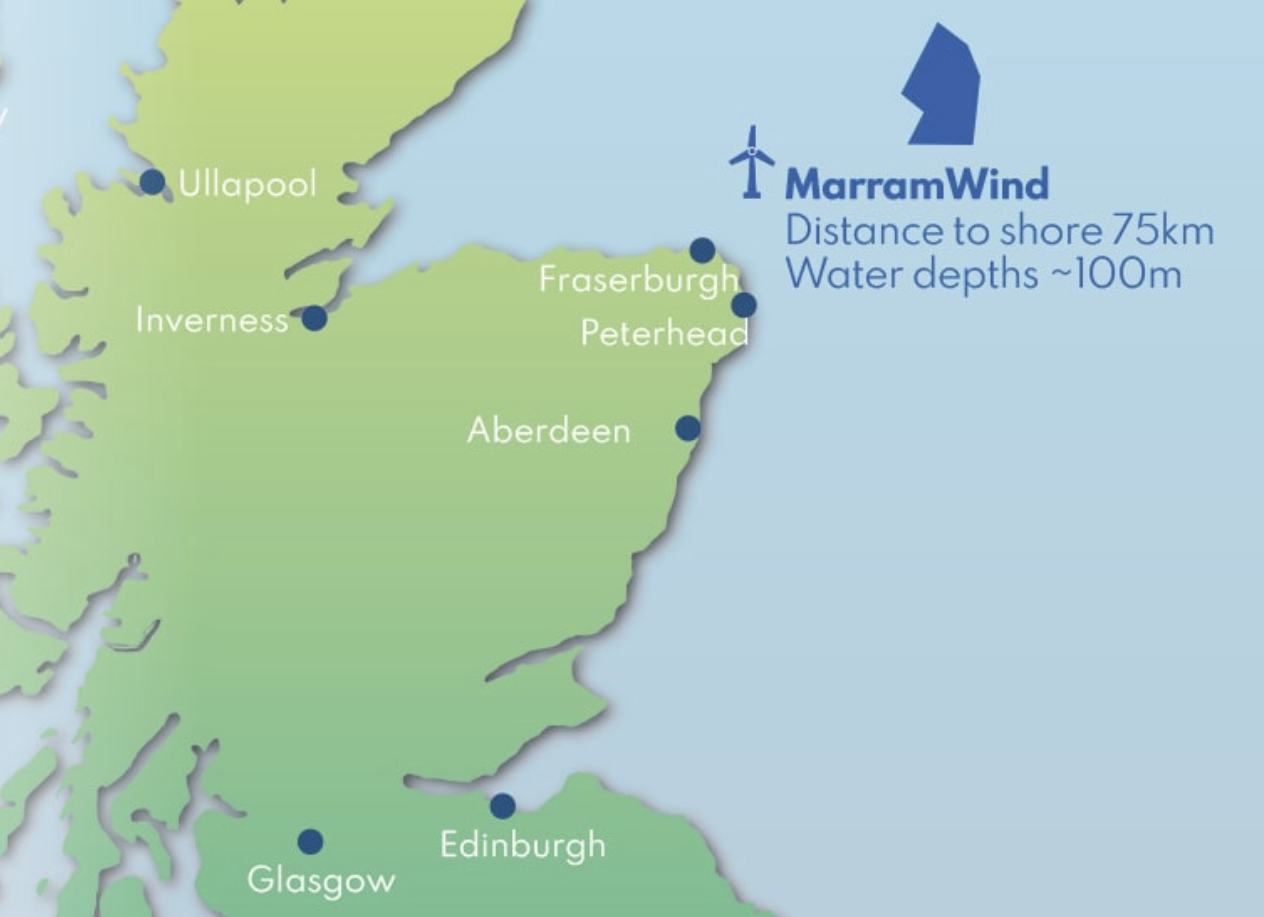
Located 75 kilometres off the North East coast of Scotland in water depths averaging 100 metres, the proposed MarramWind floating offshore windfarm could deliver up to 3 gigawatts (GW) of cleaner renewable energy.
This map clipped from the MarramWind web site, shows the location of the wind farm.
CampionWind’s web site has this introduction.
ScottishPower and Shell have joined forces to develop the CampionWind offshore windfarm following success in the recent ScotWind auction process by Crown Estate Scotland.
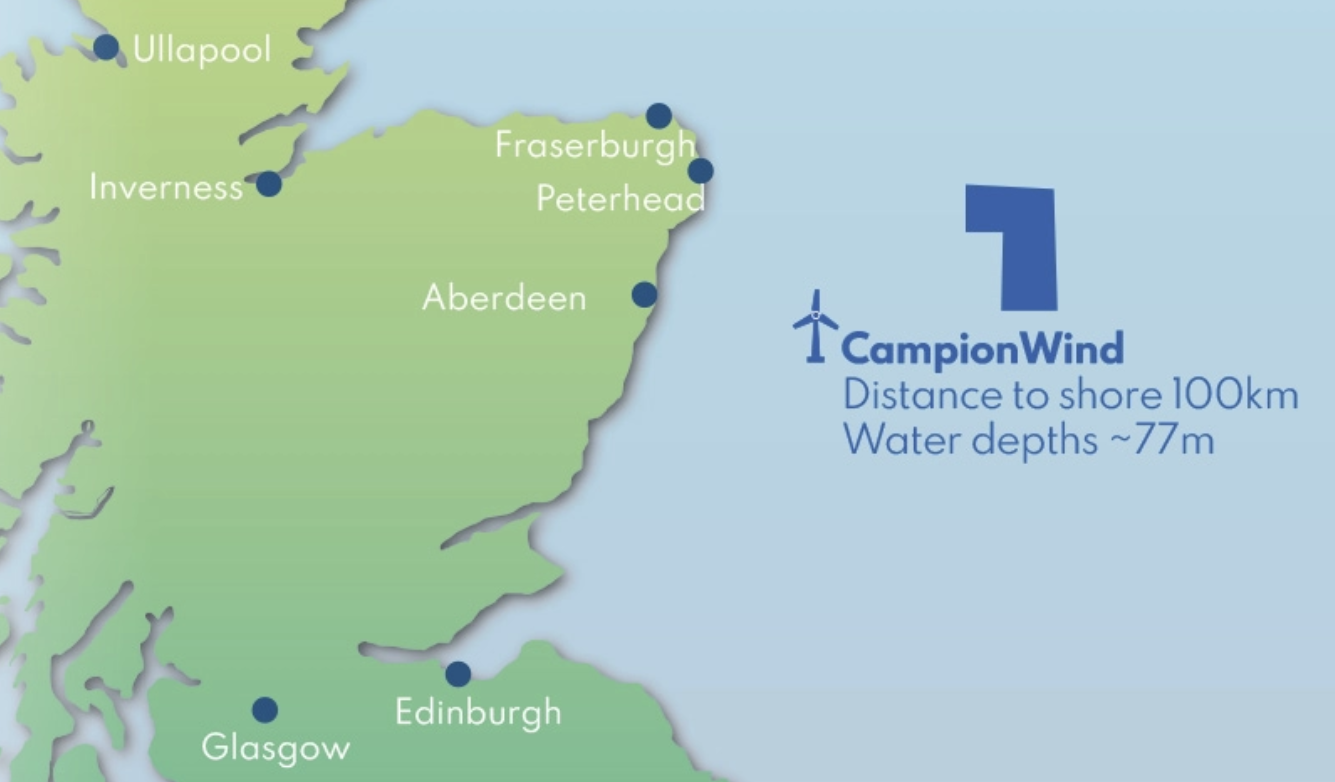
Located 100 kilometres from the east coast of Scotland, in water depths averaging 77 metres, the proposed CampionWind floating offshore windfarm could deliver up to 2 gigawatts (GW) of cleaner renewable energy.
This map clipped from the CampionWind web site, shows the location of the wind farm.
Note.
- The two wind farms will be within a few miles of each other.
- Both wind farms will use floating wind turbines.
- The water is a bit deeper at MarramWind, but this surely doesn’t bother a floating turbine.
- MarramWind and CampionWind will have a total capacity of 5 GW.
- Hywind Scotland is the world’s first commercial wind farm using floating wind turbines, situated 29 kilometres off Peterhead. This wind farm is only 30 MW, but in its first years of operation has achieved a capacity factor of over 50 %.
- The proposed turbines at Northern Horizons‘ 10 GW wind farm, which is 130 kilometres to the North-East of Shetland will be 20 MW giants and nearly as tall as The Shard in London.
So will Scottish Power and Shell design and build a combined field, similar in concept to Northern Horizons’ wind farm, using an armada of 250 floating wind turbines?
- The wind turbines might be moored around a fixed or floating mother platform or structure, that will collect the electricity and deliver it to the shore.
- Turbines could be serviced in situ or moved into port, as needed.
- Extending the wind farm could just be a matter of mooring the extra turbines in position and then connecting them to the mother platform.
- Is there a convenient disused oil or gas platform, that could be repurposed as the mother platform?
It certainly would appear to be a way of building large offshore fields in deep waters.
Where Would The Combined MarramWind And CampionWind Rank In Terms of UK Wind Farms?
Consider.
- MarramWind and CampionWind will have a total capacity of 5 GW.
- Phase one of the Hornsea Wind Farm is the largest offshore wind farm in the world, with a capacity of just over 1.2 GW and when complete it will have a capacity of 6 GW.
- Northern Horizons is planned to be 10 GW.
- The East Anglian Array could be as large as 7.2 GW.
- The Dogger Bank Wind Farm is planned to be as large as 4.8 MW.
- Norfolk Vanguard and Norfolk Boreas are a pair of 1.8 GW wind farms.
- MacHairWind will be a 2 GW wind farm.
Note.
- This is not a complete list of large wind farms in the development pipeline.
- BP have obtained leases, but have not published their plans.
- Most farms under development are at least one GW.
- These farms are a total of 38.6 GW.
The Combined MarramWind and CampionWind would be one of several large wind farms around 5 GW.
There Is A Desperate Need For Energy Storage
If we are generating upwards of 40 GW of wind and solar energy in the UK, there will be a desperate need for energy storage to cover for the times, when the wind doesn’t blow and the sun doesn’t shine.
Scotland should be OK, as there are various energy storage projects in development.
- The 1.5 GW/ 30 GWh Coire Glas project is according to SSE shovel-ready and has planning permission.
- The 450 MW/2.8 GWh Red John project is being constructed.
- Drax, ILI Group and SSE have several other projects under development.
So what would happen in the South?
The government appears to be on the case as I wrote in Ministerial Roundtable Seeks To Unlock Investment In UK Energy Storage.
But there is also the possibility of using hydrogen.
- Hydrogen could be created by a series of giant electrolysers.
- It could be blended with natural gas to eke out our natural gas and save carbon. According to HyDeploy, it appears that up to 20 % can be added, without needing to change boilers and appliances.
- It can be stored in depleted offshore gas fields.
- It can be used to power heavy transport like buses, trucks, trains and ships.
- It can be burned in gas-fired power stations to generate electricity.
Hydrogen can also be used as a feedstock or green energy source for the making of chemicals, concrete and steel.
Conclusion
We are approaching the end of the first phase of the development of renewable energy in the UK.
Massive floating wind farms using armadas of floating wind farms, a large expansion of pumped storage hydro and a huge expansion of the use of hydrogen will see us through to a carbon-free future.
MacHairWind Wind Farm
MachairWind wind farm has its own page on the ScottishPower Renewables web site.
These are the two introductory paragraphs.
The MacHairWind project off the coast of Islay, which could deliver 2GW of cleaner renewable energy, will make a significant contribution to tackling climate change and achieving Net Zero, with the potential to generate enough clean electricity to power over 2 million homes in Scotland.
It will also build on ScottishPower’s long-standing presence and positive track record of investing in and working with local communities and businesses across Argyll & Bute to realise the benefits of renewable energy developments.
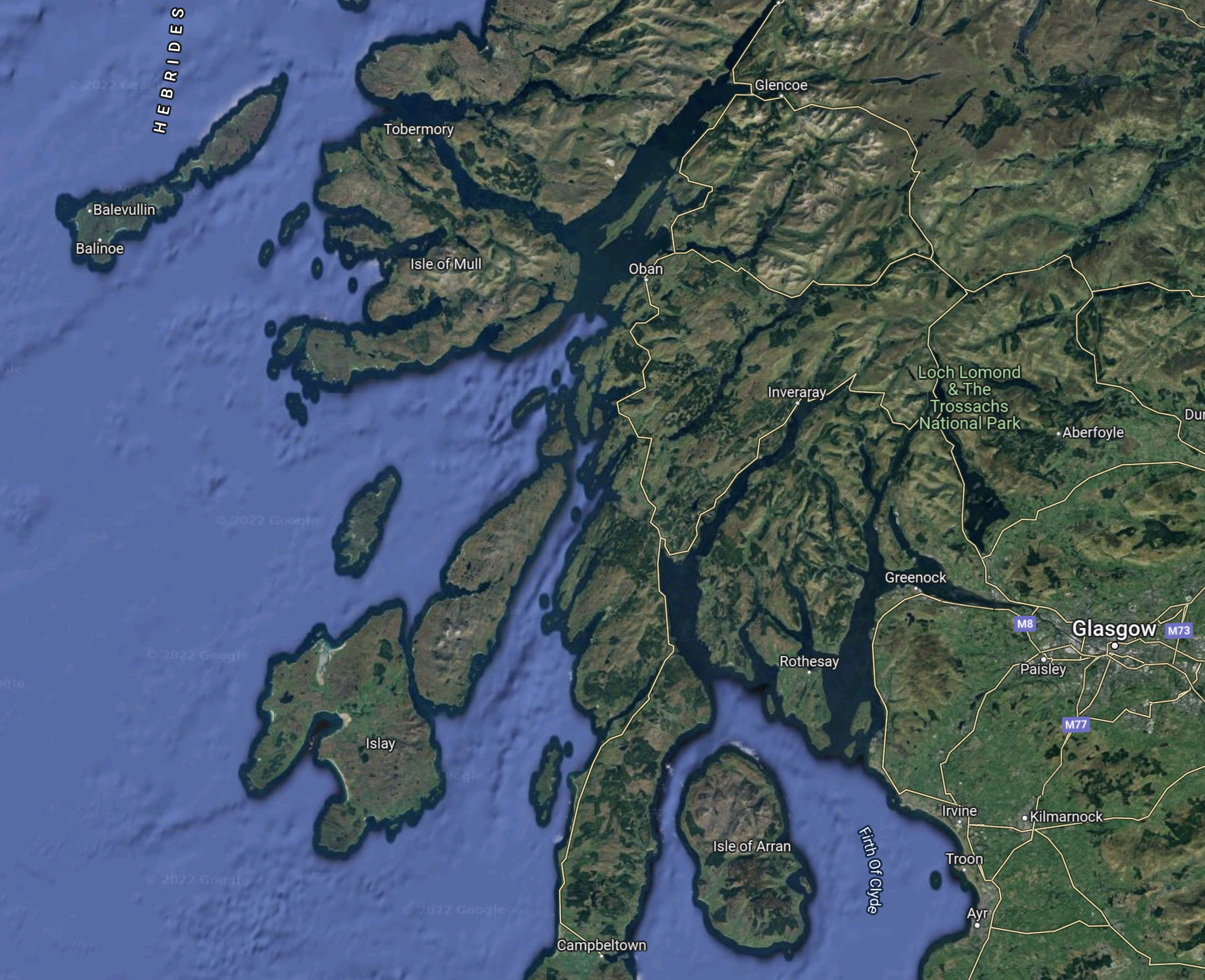
This Google Map shows the area of the wind farm, which is to the North West of the island of Islay.
Note.
- There certainly is a large space of empty sea to the North-West of Islay.
- Glasgow is not far away.
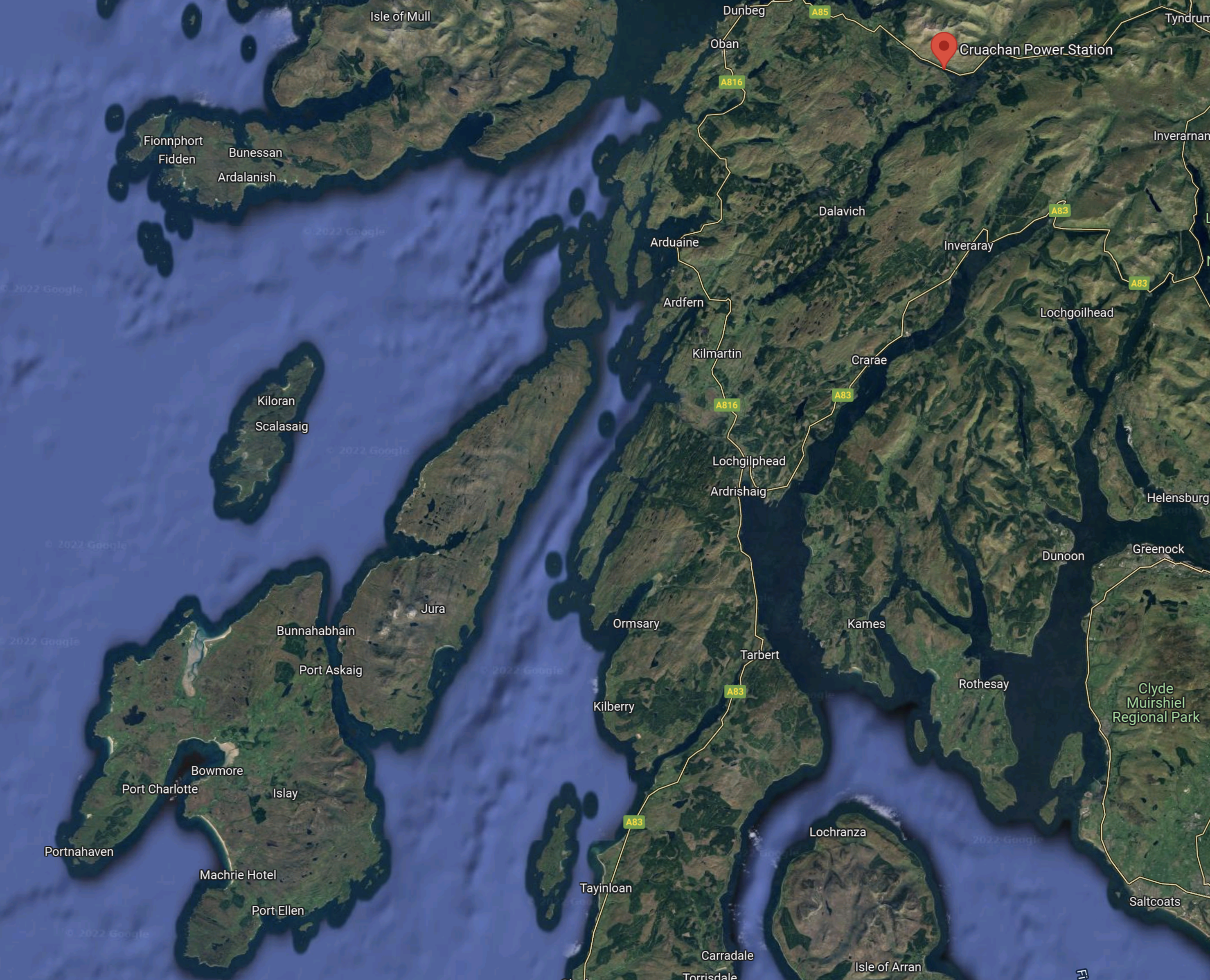
This second Google Map shows the area to the North-East of Islay.
Note.
- Islay is in the South-West corner of the map.
- Colonsay is the smaller island to the North.
- In the North-East corner of the map the red arrow indicate Cruachan pumped hydro power station.
- In the South-East corner of the map is the Clyde Estuary, where the two nuclear power stations at Hunterston were located.
- Hunterston is also the Northern end of Western HVDC Link to North Wales.
Wikipedia says this about the relationship of the Cruachan power station and Hunterston’s nuclear stations.
Construction began in 1959 to coincide with the Hunterston A nuclear power station in Ayrshire. Cruachan uses cheap off-peak electricity generated at night to pump water to the higher reservoir, which can then be released during the day to provide power as necessary.
Now that the two nuclear stations are being decommissioned, will the MacHairWind wind farm be used to pump water to Cruachan’s higher reservoir?
Conclusion
The MacHairWind wind farm seems a well-positioned wind farm.
- It is close to Glasgow.
- It can be used in tandem with the Cruachan pumped hydro power station.
- It will have access to the Western HVDC Link to send power to the North-West of England.
Is Scotland replacing the 1.2 GW Hunterston B nuclear power station with a 2 GW wind farm, with help from Cruachan and other proposed pumped storage hydro schemes to the North of Glasgow?
It also looks like increasing the power at Cruachan from the current 440 MW to a GW, by the building of Cruachan 2 would give the area even more energy security.
Loch Kemp Pumped Hydro
Loch Kemp Is a smaller loch just to the East of Loch Ness.
This Google Map shows Loch Kemp in relation to Loch Ness.
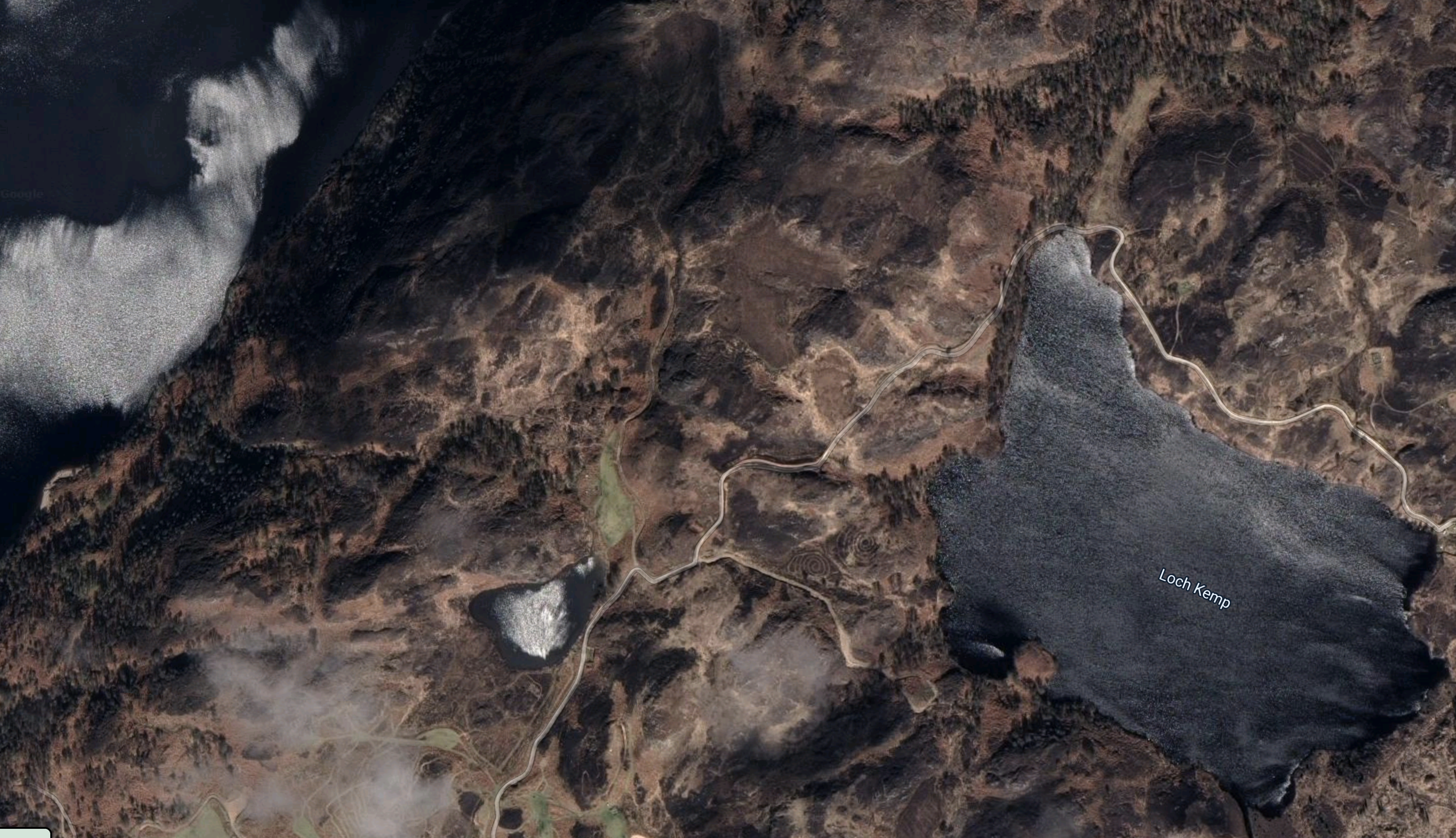
Note.
- Loch Ness is in the North West corner of the map, with partial cloud cover.
- Loch Kemp is in the South East corner of the map.
The proposed Loch Kemp pumped hydro scheme will have these characteristics.
- Loch Kemp will be the upper reservoir.
- Loch Ness will be the lower reservoir.
- The power station will be on the banks of Loch Ness.
- The power station will be designed to fit into the environment.
- Eight dams will be built to enlarge Loch Kemp.
- Trees will be planted.
- Output of the power station will be 300 MW
- Available storage could be 9 GWh.
The station will have almost as much storage capacity as Electric Mountain, but that power station has an output of 1.8 GW.
In Glendoe Hydro Power Station, I wrote about the Glendoe Hydro Scheme.
- It is a 100 MW hydroelectric power station
- It has the highest head at 600 metres of any power station in the UK.
- It opened in 2009, making it one of the newest hydroelectric power stations in the UK.
- The actual power station is in an underground cavern.
- The dam and power station have been designed to be hidden from view.
This Google Map shows the location of Glendoe power station to the South of Loch Kemp.
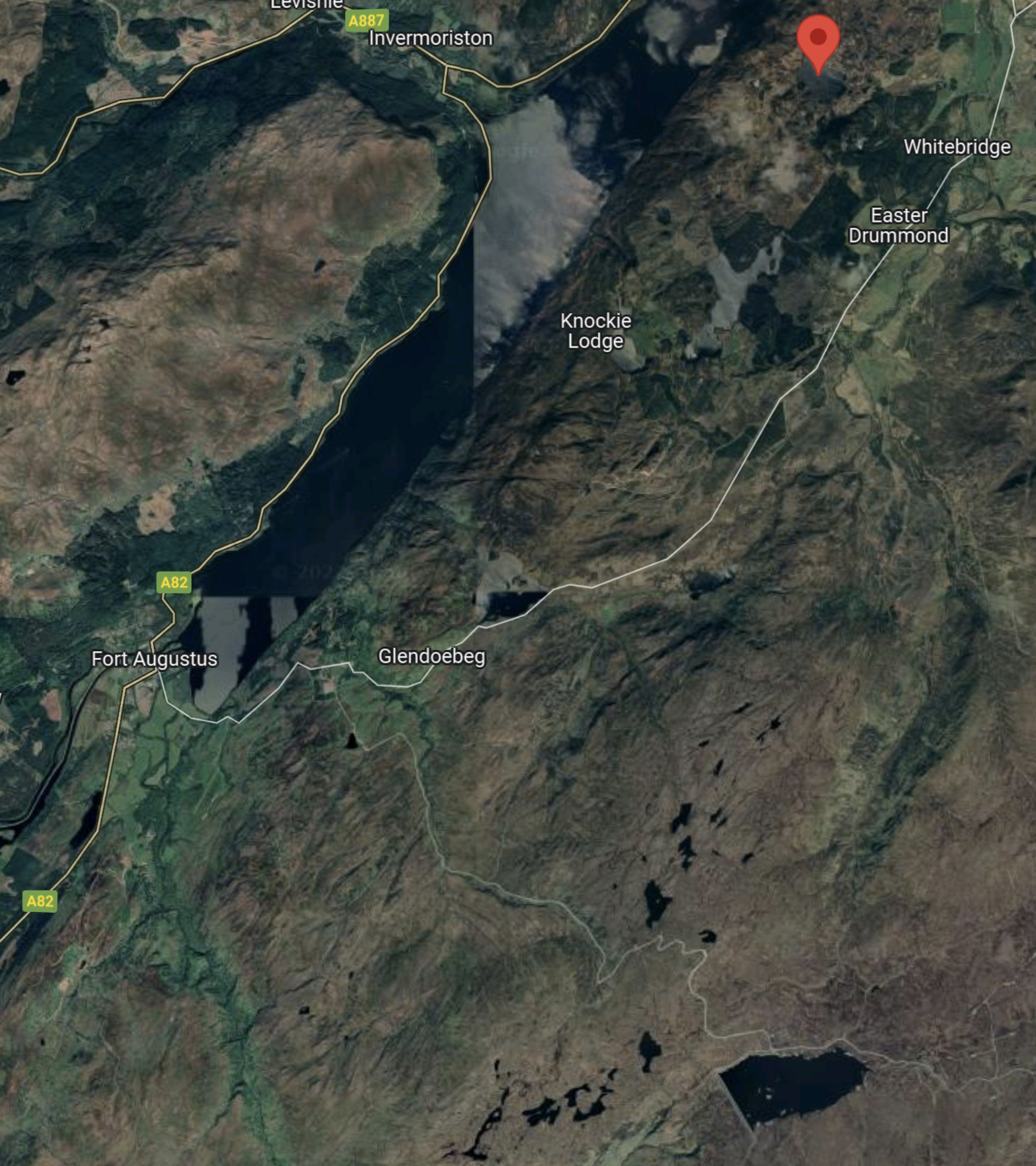
Note.
- The red arrow indicates Loch Kemp.
- The loch in the South East corner is the reservoir that feeds Glendoe power station.
- Fort Augustus is at the Southern end of Loch Ness.
This Google Map shows the Northern end of Loch Ness.
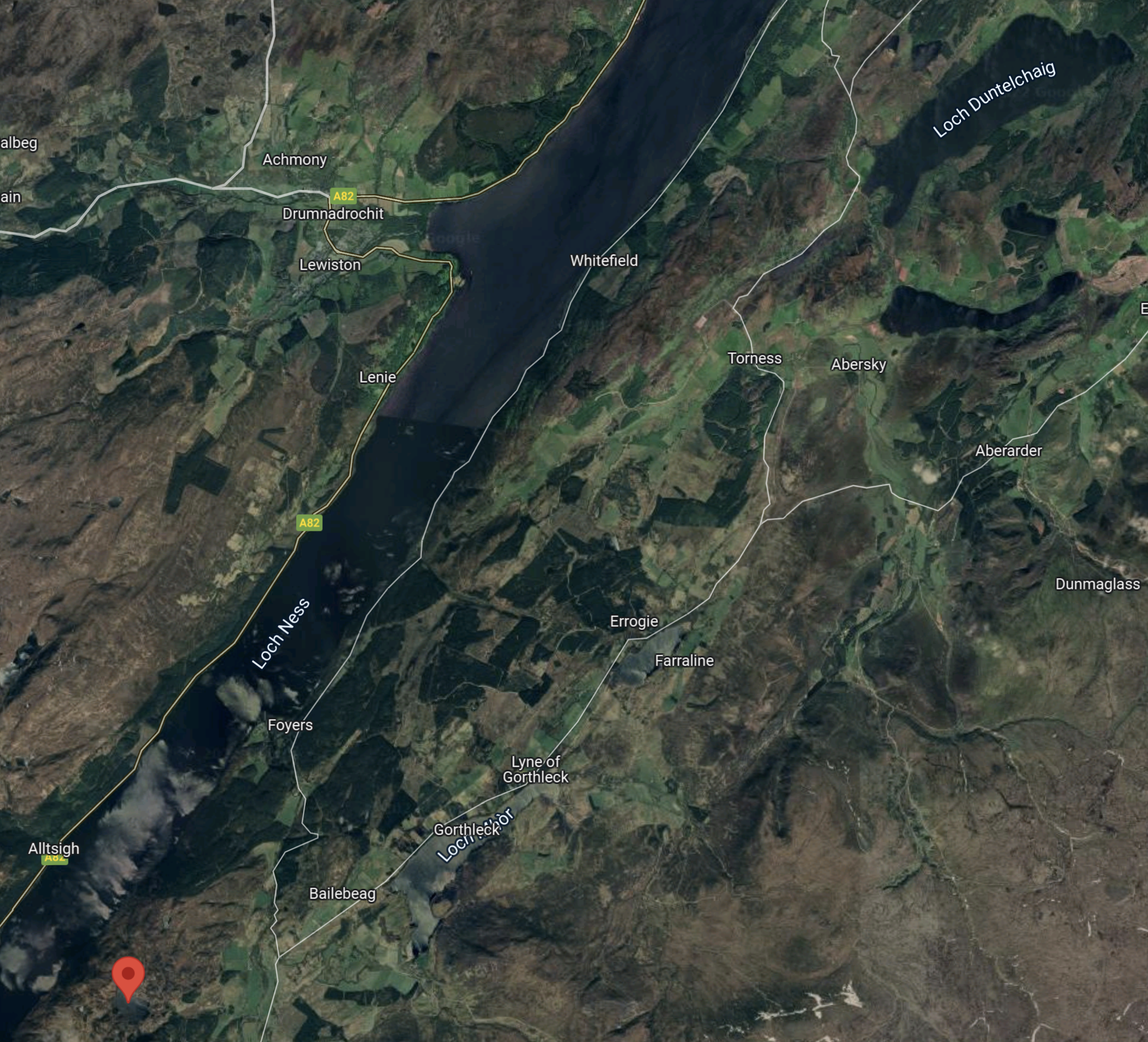
Note.
- The red arrow indicates Loch Kemp.
- Foyers, which is a short distance to the North West, is the site of the Foyers pumped hydro scheme. I wrote about this scheme in The Development Of The Foyers Pumped Storage Scheme.
- Loch Duntelchaig, in the North-East corner of the map, is being used as the upper reservoir of the Red John pumped hydro scheme. I wrote about this project in Red John Pumped Storage Hydro Project.
On the East side of Loch Ness there seems to be four substantial hydro-electric schemes.
In order from South to North these schemes are.
Glendoe
Glendoe is a modern 100 MW hydroelectric power station, that opened in 2009.
In Glendoe Hydro Power Station, I felt it might be possible to expand Glendoe into a pumped hydro scheme, with upwards of 10 GWh of storage.
Loch Kemp
Loch Kemp is a proposed 300 MW/9 GWh pumped hydro storage station.
Foyers
Foyers is an existing 300 MW/10 GWh pumped hydro storage station.
Red John
Red John is a proposed 450 MW/2.8 GWh pumped hydro storage station, which has received planning permission.
These four power stations could be summarised as follows.
- Glendoe – 100 MW/10 GWh
- Loch Kemp – 300 MW/9 GWh
- Foyers – 300 MW/10 GWh
- Red John – 450 MW/2.8 GWh
Note.
- Totals are 1150 MW and 31.8 GWh
- Foyers was converted from a conventional hydroelectric power station, that was opened in 1895 to a pumped hydro storage station.
- If Foyers can be converted, why can’t Glendoe.
A very large pumped storage station of four separate units, can be built on the East side of Loch Ness.
Conclusion
This is only on the East side of Loch Ness, so if the West side can be similarly developed, Loch Ness could be developed into a real Loch Ness monster with over 60 GWh of pumped hydro storage.
 The Anonymous Widower