Rolls-Royce Lists Sites For New Reactor
The title of this post, is the same as that of this article on The Times.
The headline is a bit misleading, as the site is for a factory to build the reactors.
These paragraphs list the sites.
Rolls-Royce, the engineering company, has shortlisted six sites for a factory that will build its proposed small nuclear reactors.
The constituency of Rishi Sunak, the chancellor, in Richmond, North Yorkshire, is among the locations, which have been whittled down from more than 100 proposals.
The other sites are Sunderland, Deeside in Wales, Ferrybridge in West Yorkshire, Stallingborough in Lincolnshire, and Carlisle.
As Rishi Sunak resigned last night, does that rule out Richmond?
I feel that Rolls-Royce will choose this location with care, as any good company would.
I have a few thoughts.
Will Rolls-Royce Go For Zero-Carbon Manufacture?
If you intend to build large numbers of small modular nuclear reactors, it is not a good idea from a marketing or public relations point of view to release tonnes of carbon in their manufacture.
This page on the Rolls-Royce web site has a title of Destination Net Zero, where this is said.
We have already pledged to reduce emissions from our own operations to net zero by 2030, and to play a leading role in enabling the sectors in which we operate to reach net zero by 2050. Now, we are now laying out our technology pathway and setting clear short-term targets to show how we will achieve those goals.
I am sure Rolls-Royce will go for zero-carbon manufacture.
This will probably mean the site will need to have access to the following.
- Renewable electricity from wind, solar or hydro.
- Hydrogen
- Zero-carbon steel, copper and other raw materials
An external supply of hydrogen may well be the least important, as they recently purchased a German electrolyser developer and manufacturer, that I wrote about in Rolls-Royce To Develop mtu Hydrogen Electrolyser And Invest In Hoeller Electrolyser.
Will The Factory Have A Rail Connection?
A rail connection could have four main purposes.
- Bringing in raw materials like steel.
- Delivering manufactured components to site.
- If the factory is a major source of employment, rail is the greenest way to bring in staff from further away.
- If large shipments are brought in and delivered by zero-carbon rail, it generally doesn’t annoy the locals.
Note.
- The huge Britishvolt gigafactory at Blyth will have a rail connection for the transport of lithium and finished batteries.
- Transport of nuclear fuel and waste around the UK is generally done by train, with perhaps the last few miles by truck.
I think it will be very unlikely, that the new factory will not have a rail connection.
Will Power Station Modules Be Transportable By Rail?
Given that in the UK, there will need to be a railhead at or near the power station for fuel and waste, I believe that if modules were transportable by rail, this could give big advantages to the roll-out of the reactors.
If a former Magnox nuclear site like Bradwell is to be home to a fleet of small modular reactors, the electrified railhead is already in place at Southminster station.




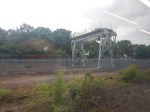
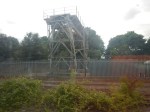
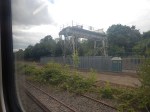
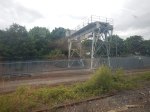
The crane and the track probably need a bit of a refurbishment, but overall, it looks in reasonable condition.
If you sell nuclear as zero-carbon, rail is the easiest way to ensure zero-carbon delivery of modules.
The standard loading gauge in the UK is W10, which is 2.9 metres high and 2.5 metres wide.
- A standard twenty-foot container is six metres long, which must help.
- W10 gauge allows the transport of standard Hi-Cube shipping containers, which are 9 ft 6 in. high, on flat rail wagons.
- If the modules can fit into Hi-Cube shipping containers, this would make transport easier everywhere, as all ports and railways can handle these containers.
Would it be possible to fit all components into this relatively small space?
It could be difficult, but I suspect it is possible to achieve, as it would make the reactors easier to sell.
- Sites would only need to be able to receive Hi-Cube shipping containers.
- These could be trucked in from a nearby railhead.
- Containers on a railway are a very secure way of transporting goods.
- Rolls-Royce has masses of experience in shipping large turbofan engines in standard shipping containers. Some are shipped in very carefully controlled air conditions to minimise damage.
- Hi-Cube shipping containers can go through the Channel Tunnel.
I am fairly sure, that Rolls-Royce are designing the power station, so that it fits into a number of Hi-Cube shipping containers. It would give other advantages.
- Smaller components would probably speed up assembly.
- Smaller components may also mean that smaller cranes could be used for assembly.
There may need to be some gauge enhancement to be able to access some sites in the UK.
- This article on Rail Engineer, is entitled Showing Your Gauge, and it details how gauge is being enhanced to W10 and W12 in the UK.
- Network Rail have also published a map, which shows where W10 gauge is possible. Click here to view.
I am fairly certain, that most railways in the world can handle Hi-Cube shipping containers.
Availability Of Staff
Rolls-Royce will obviously opt for a place, where there is good availability of staff.
Conclusion
I feel that any of the sites mentioned could be the ideal place for the factory.
If I had to have a bet, I’d put it the factory at Stallingborough in Lincolnshire.
- It is close to the Zero Carbon Humber energy and hydrogen hub.
- There is plenty of space.
- There is a rail connection.
- It is close to the Port of Immingham.
- It is close to British Steel at Scunthorpe.
It is also not that far from Derby by road or rail.
Rolls-Royce To Develop mtu Hydrogen Electrolyser And Invest In Hoeller Electrolyser
The title of this post, is the same as that of this press release from Rolls-Royce.
These are the three main points in the press release.
- Holdings in start-up companies in northern Germany secure Rolls-Royce Power Systems access to key green hydrogen production technology.
- Electrolysis systems for several megawatts of power.
- First demonstrator in 2023 using a Hoeller stack.
This is the introductory paragraph to the deal.
Rolls-Royce is entering the hydrogen production market and acquiring a 54% majority stake in electrolysis stack specialist Hoeller Electrolyzer, whose innovative technology will form the basis of a new range of mtu electrolyzer products from its Power Systems division. Hoeller Electrolyzer, based in Wismar, Germany, is an early-stage technology company that is developing highly efficient polymer electrolyte membrane (PEM) stacks, under the brand name Prometheus, for the cost-effective production of hydrogen.
This page on the Hoeller Electrolysis web site gives details of Prometheus.
- Hoeller are planning small, medium and large electrolyser modules, the largest of which is rated at 1.4 MW.
- Load changes of between 0 and 100 % within seconds.
- Cold start capability.
- It will produce 635 Kg/day.
- They are talking of a cost of 4€/Kg.
It all sounds good to me.
This paragraph is from the press release.
Founded in 2016, Hoeller Electrolyzer has positioned itself, with Prometheus, as one of the few highly specialized expert players in the field of high-efficiency PEM electrolysis stacks. Its founder, Stefan Höller, has more than a quarter of a century’s experience of developing electrolysis technology and has already registered 14 patents connected with Prometheus. Particularly high efficiency is promised by special surface technologies for the bipolar plates which significantly reduce the use of expensive precious metals platinum and iridium as catalysts, as well as increased output pressure.
I know a small amount about electrolysis and feel that Rolls-Royce may have got themselves a high-class deal.
Rolls-Royce’s large German presence in companies like mtu, will also help to smooth any doubts about the deal.
This paragraph indicates a shared belief.
Rolls-Royce and Hoeller Electrolyzer are united by a shared belief in the opportunity of zero-carbon energy – both for power supply and the propulsion of heavy vehicles. With decades of experience and systems expertise, Rolls-Royce is going to develop a complete electrolyzer system and has a global sales and service network, which opens up the potential for significant worldwide sales.
But perhaps, this is the most significant paragraph of the press release.
Armin Fürderer, who heads up the Net Zero Solutions business unit of Power Systems, said: “We’re going to launch electrolyzers with several megawatts of power right from the start. A total output of over 100 megawatts is conceivable by combining several electrolyzers.”
A quick search of the Internet, indicates that 100 MW is the size of the world’s largest electrolysers.
Applications
I can see applications for these large electrolysers.
Rolls-Royce Power Systems
This is a sentence from the press release.
Hoeller Electrolyzer, whose innovative technology will form the basis of a new range of mtu electrolyzer products from its Power Systems division.
The Rolls-Royce Power Systems web site, has this mission statement.
The Power Systems Business Unit of Rolls-Royce is focused on creating sustainable, climate neutral solutions for drive, propulsion and power generation.
In Rolls-Royce Makes Duisburg Container Terminal Climate Neutral With MTU Hydrogen Technology, I describe one of Rolls-Royce Power Systems projects.
The title of this post, is the same as this press release from Rolls-Royce.
This is the first sentence.
Rolls-Royce will ensure a climate-neutral energy supply at the container terminal currently under construction at the Port of Duisburg, Germany.
There is also this Rolls-Royce graphic, which shows the energy sources.

It would appear batteries, combined heap and power (CHP), grid electricity, hydrogen electrolyser, hydrogen storage and renewable electricity are being brought together to create a climate-neutral energy system.
Note.
- The system uses a large hydrogen electrolyser.
- I suspect the hydrogen will be generated by off-peak electricity and local renewables.
- Hydrogen will probably power the container handling machines, ships, trucks, vehicles and other equipment in the port.
Hydrogen appears to be used as a means of storing energy and also for providing motive power.
I would suspect, the ultimate aim is that the port will not emit any carbon dioxide.
Other ports like Felixstowe and Holyhead seem to be going the hydrogen route.
Refuelling Hydrogen Buses and Charging Electric Buses
If you look at the Duisburg system, I can imagine a similar smaller system being used to refuel hydrogen buses and charge electric ones.
- The hydrogen electrolyser would be sized to create enough hydrogen for a day or so’s work.
- Hydrogen would be generated by off-peak electricity and local renewables.
- If an operator bought more buses, I’m certain that the architecture of the electrolyser would allow expansion.
- Hydrogen fuel cells would boost the electricity supply, when lots of buses needed to be charged.
- Any spare hydrogen could be sold to those who have hydrogen-powered vehicles.
- Any spare electricity could be sold back to the grid.
It should be noted that manufacturers like Wrightbus have developed a range of hydrogen and electric buses that use the same components. So will we see more mixed fleets of buses, where the best bus is assigned to each route?
I have used buses as an example, but the concept would apply to fleets of cars, trucks and vans.
Green Hydrogen
Large efficient electrolysers will surely be the key to producing large quantities of green hydrogen in the future.
It appears that about 55 MWh is needed to produce a tonne of green hydrogen using existing electrolysers.
The Hoeller electrolyser appears to be about 53 MWh, so it is more efficient.
Green Hydrogen From An Onshore Wind Farm
If you look at the average size of an onshore wind farm in the UK, a quick estimate gives a figure of 62 MW. I shouldn’t expect the figure for much of the world is very different, where you ignore the gigafarms, as these will distort the numbers.
An appropriately-sized electrolyser could be added to onshore wind farms to provide a local source of hydrogen for transport, an industrial process or a domestic gas supply for a new housing estate.
A single 5 MW wind turbine with a capacity factor of around 30 % would produce around 680 Kg of green hydrogen per day.
Green Hydrogen From An Offshore Wind Farm
There are basic methods to do this.
Put the electrolyser onshore or put the electrolyser offshore and pipe the hydrogen to the shore.
I think we will see some innovative configurations.
In ScotWind N3 Offshore Wind Farm, I described how Magnora ASA are developing the ScotWind N3 wind farm.
The floating turbines surround a concrete floater, which in the future could contain an electrolyser and tankage for hydrogen.
The ScotWind N3 wind farm is designed to be a wind farm rated at 500 MW.
I can see an electrolyser on the floater, of an optimal size to make sure all electricity is used.
Pink Hydrogen
Pink hydrogen, is zero-carbon hydrogen produced using nuclear-generated electricity.
There are industrial processes, like the making of zero-carbon chemicals, concrete and steel, that will require large quantities of zero-carbon green or pink hydrogen.
Rolls-Royce are developing the Rolls-Royce SMR, which will be a 470 MW small modular nuclear reactor.
One of these placed near to a steel works and coupled to one or more 100 MW electrolysers could provide enough zero-carbon electricity and hydrogen to produce large quantities of zero-carbon green steel.
Manufacturing
Rolls-Royce and their subsidiaries like mtu, seem to be extensive users of advanced manufacturing techniques and I would expect that they can improve Hoeller’s manufacturing.
Research And Development
The press release says this about the founder of Hoeller.
Its founder, Stefan Höller, has more than a quarter of a century’s experience of developing electrolysis technology and has already registered 14 patents connected with Prometheus.
If Rolls-Royce can develop and support Stefan Höller and his team, development could easily go to a higher level.
Conclusion
I think that Rolls-Royce have taken over a company, that will in the end, will design excellent efficient electrolysers.
Could Rolls-Royce SMRs Be The Solution To Europe’s Gas Shortage?
Of all the offshore wind farms, that I’ve looked at recently, I find Magnora’s ScotWind N3 wind farm the most interesting.
I wrote about it in ScotWind N3 Offshore Wind Farm.
I said this.
In any design competition, there is usually at least one design, that is not look like any of the others.
In the successful bids for the ScotWind leases, the bid from Magnora ASA stands out.
- The company has an unusual home page on its offshore wind web site.
- This page on their web site outlines their project.
- It will be technology agnostic, with 15MW turbines and a total capacity of 500MW
- It will use floating offshore wind with a concrete floater
- It is estimated, that it will have a capacity factor of 56 %.
- The water depth will be an astonishing 106-125m
- The construction and operation will use local facilities at Stornoway and Kishorn Ports.
- The floater will have local and Scottish content.
- The project will use UK operated vessels.
- Hydrogen is mentioned.
- Consent is planned for 2026, with construction starting in 2028 and completion in 2030.
This project could serve as a model for wind farms all round the world with a 500 MW power station, hydrogen production and local involvement and construction.
I very much like the idea of a concrete floater, which contains a huge electrolyser and gas storage, that is surrounded by an armada of giant floating wind turbines.
These are my thoughts.
Floating Concrete Structures
To many, they may have appear to have all the buoyancy of a lead balloon, but semi-submersible platforms made from concrete have been used in the oil and gas industry for several decades.
Kishorn Yard in Scotland was used to build the 600,000-tonne concrete Ninian Central Platform,in 1978. The Ninian Central Platform still holds the record as the largest movable object ever created by man.
The Ninian Central Platform sits on the sea floor, but there is no reason why a semi-submersible structure can’t be used.
Electrolysers
There is no reason, why a large electrolyser, such as those made by Cummins, ITM Power or others can’t be used, but others are on the way.
- Bloom Energy are working on high temperature electrolysis, which promises to be more efficient.
- Torvex Energy are developing electrolysis technology that used sea water, rather than more expensive purified water.
High Temperature Electrolysis
High temperature electrolysis needs a heat source to work efficiently and in Westinghouse And Bloom Energy To Team Up For Pink Hydrogen, I described how Bloom Energy propose to use steam from a large nuclear power station.
Offshore Nuclear Power
I’ve never heard of offshore nuclear power, but it is not a new idea.
In 1970, a company called Offshore Power Systems was created and it is introduced in its Wikipedia entry like this.
Offshore Power Systems (OPS) was a 1970 joint venture between Westinghouse Electric Company, which constructed nuclear generating plants, and Newport News Shipbuilding and Drydock, which had recently merged with Tenneco, to create floating nuclear power plants at Jacksonville, Florida.
Westinghouse’s reactor was a 1.150 MW unit, which was typical of the time, and is very similar in size to Sizewell B.
The project was cancelled before the reactors were towed into position.
Nuclear Knowledge Has Improved
Consider.
- In the fifty years since Offshore Power Systems dabbed their toes in the water of offshore nuclear power, our knowledge of nuclear systems and engineering has improved greatly.
- The offshore oil and gas industry has also shown what works impeccably.
- The floating offshore wind industry looks like it might push the envelop further.
- There has been only one nuclear accident at Fukushima, where the sea was part of the problem and that disaster taught us a lot.
- There have been a large number of nuclear submarines built and most reached the planned end of their lives.
- Would a small modular nuclear reactor, be safer than a large nuclear power plant of several GW?
I would suggest we now have the knowledge to safely build and operate a nuclear reactor on a proven semi-submersible platform, built from non-rusting concrete.
An Offshore Wind Farm/Small Modular Reactor Combination Producing Hydrogen
Consider.
- A typical floating offshore wind farm is between one and two gigawatts.
- A Rolls-Royce small modular reactor is sized to produce nearly 0.5 GW.
- The high temperature electrolyser will need some heat to achieve an optimum working temperature.
- Spare electricity can be used to produce hydrogen.
- Hydrogen can be stored platform.
- Hydrogen can be sent ashore using existing gas pipes.
- Hydrogen could even be blended with natural gas produced offshore to create a lower-carbon fuel.
- It would also be possible to decarbonise nearby offshore infrastructure.
A balance between wind and nuclear power can be obtained, which would provide a steady output of energy.
Conclusion
There are a large numbers of possibilities, to locate a Rolls-Royce small modular reactor close to a wind farm to use high temperature electrolysis to create green hydrogen, which can be used in the UK or exported through the gas network.
Rolls-Royce Submits SMR Design For UK Assessment
The title of this post, is the same as that of this article on World Nuclear News.
This is the first paragraph.
Rolls-Royce SMR Limited has submitted its 470 MWe small modular reactor (SMR) design for entry to the UK’s Generic Design Assessment (GDA) regulatory process. The review of the SMR design – based on a small pressurised water reactor – will formally begin once the government has assessed the company’s capability and capacity to successfully enter the GDA process.
It’s good to see this project progressing.
Is This One Of The Most Significant Pages On The Internet?
The page is Rolls-Royce’s List Of Press Releases.
On July 8th, 2021, the company issued this press release, which is entitled Rolls-Royce Welcomes All-Electric Ground Support From Jaguar Land Rover For All-Electric Flight Speed World Record Attempt.
This is the opening paragraph.
Rolls-Royce’s all-electric aircraft the ‘Spirit of Innovation’ will take to the skies for the first time in the coming weeks as we work towards a world-record attempt with a target speed of 300+ MPH (480+ KMH). This exciting project will be carbon neutral and to support this ground-breaking innovation Jaguar Land Rover is loaning all-electric zero emission Jaguar I-PACE cars as towing and support vehicles.
This picture shows Spirit of Innovation and one the Jaguar I-PACE cars together in this Rolls-Royce picture

They make an interesting pair.
There is a full analysis of the plane in this article on CleanTechnica, which is entitled Rolls-Royce Attempting 100% Electric Aircraft Speed Record, Jaguar I-PACE Offering Ground Support.
The Jaguar can even tow the plane.

Unusual.
Also on On July 8th, 2021, the company issued this press release, which is entitled Rolls-Royce And Cavendish Nuclear Sign Delivery And Manufacturing Partnership Agreement For SMR Programme.
Another world-class company has joined the small modular nuclear reactor programme.
I have feelings, that this could be the start of something small and incredibly powerful!
Conclusion
I suspect Rolls-Royce have lots of useful research sitting in their archives. We should all follow, what they doing.
Rolls-Royce Seeks Private Funds To Power Nuclear Project
The title of this post, is the same as that of this article on The Times.
The article is based on this press release on the Rolls-Royce web site, which is entitled More Power And Updated Design Revealed As Nuclear Power Team Targets First Place In The Assessment Queue In Autumn 2021.
This is the first two paragraphs.
The consortium, led by Rolls-Royce, which is creating a compact nuclear power station known as a small modular reactor (SMR), has revealed its latest design and an increase in power as it completes its first phase on time and under budget.
It has also announced it is aiming to be the first design to be assessed by regulators in the second half of 2021 in the newly-opened assessment window, which will keep it on track to complete its first unit in the early 2030s and build up to 10 by 2035.
It would appear that they are following AstraZeneca’s example and building the relationships with the regulators early, so the process of regulation doesn’t delay entry into service.
An Updated Design
These two paragraphs describe the design changes.
As the power station’s design has adjusted and improved during this latest phase – with more than 200 major engineering decisions made during this latest phase – the team has optimised the configuration, efficiency and performance criteria of the entire power station , which has increased its expected power capacity, without additional cost, from 440 megawatts (MW) to 470MW.
The refreshed design features a faceted aesthetic roof; an earth embankment surrounding the power station to integrate with the surrounding landscape; and a more compact building footprint, thanks to successes optimising the use of floor space.
These changes appear to be positive ones.
Transformation To A Focussed Business
Rolls-Royce are transforming the current consortium to an as yet unnamed stand-alone business, as detailed in this paragraph from the press release.
With a focus on continuing its progress at pace, the UK SMR team is transitioning from being a collaborative consortium to a stand-alone business, which will deliver a UK fleet of power stations to become a low carbon energy bastion alongside renewables, while securing exports to make the power station a key part of the world’s decarbonisation toolkit.
Are Rolls-Royce aiming to repeat the success they’ve had with Merlins in World War II and large turbofan engines for airliners with small modular nuclear reactors that decarbonise the world? The strategy is certainly not going against the heritage of the company.
Use Of A Small Modular Nuclear Reactor
This paragraph from the press release outlines a few uses.
The power station’s compact size makes it suitable for a variety of applications, helping decarbonise entire energy systems. Each power station can supply enough reliable low carbon power for around one million* homes, or be used to power net zero hydrogen and synthetic aviation fuel manufacturing facilities, desalination plants or energy intensive industrial sites.
Their size would appear to increase the number of applications.
Hydrogen Production
I particularly like the idea of using an SMR to produce hydrogen for chemical feedstock or to make steel.
I indicated this in Will INEOS And Rolls-Royce Get Together Over Hydrogen Production?
I estimate that a 470 MW SMR would produce around 4,900 tonnes of hydrogen per day.
The numbers certainly seem convenient.
Cost Of Energy And Capital Costs
Tom Samson, Chief Executive Officer of the UK SMR consortium is quoted as saying.
Nuclear power is central to tackling climate change, securing economic recovery and strengthening energy security. To do this it must be affordable, reliable and investable and the way we manufacture and assemble our power station brings down its cost to be comparable with offshore wind at around £50 per megawatt-hour.
Hinckley Point C has a strike price of over £80 per megawatt-hour.
The release also gives a price of around £2.2 billion per unit dropping to £1.8 billion by the time five have been completed.
Benefits To The UK
The press release lists these benefits to the UK.
- create 40,000 regional UK jobs by 2050
- generate £52 billion of economic benefit
- have 80% of the plant’s components sourced from the UK
- target an additional £250 billion of exports – memoranda of understanding are already in place with Estonia, Turkey and the Czech Republic
The value of exports would indicate export sales of over a hundred reactors.
Lifetime
The press release indicates the following about the lifetime of the reactors.
- The reactor will operate for at least 60 years.
- The design, which will be finalised at the end of the regulatory assessment process, proposes that all used fuel will be stored on each site for the lifetime of the plant.
I would assume that Rolls-Royce are developing a philosophy for taking the SMRs apart at the end of their life.
Construction
This paragraph from the press release talks about the construction process.
The power station’s design cuts costs by using standard nuclear energy technology used in 400 reactors around the world, so no prototyping is required. The components for the power station are manufactured in modules in factories, before being transported to existing nuclear sites for rapid assembly inside a weatherproof canopy. This replicates factory conditions for precision activities and further cuts costs by avoiding weather disruptions. The whole sequence secures efficiency savings by using streamlined and standardised processes for manufacturing and assembly, with 90% of activities carried out in factory conditions, helping maintain extremely high quality. In addition, all spoil excavated will be reused on site to build the earth embankment, removing the need for it to taken off site, reducing road journeys that are both financially and environmentally costly.
I have talked to project managers, who have assembled factory-built railway stations and their experiences would back the Rolls-Royce method of construction.
My project management knowledge would also indicate, that the construction of an SMR could be much more predictable than most construction projects, if the factory-built modules are built to the specification.
Funding
According to the article in The Times, the consortium now seems to be in line for £215 million of Government funding, which will unlock £300 million of private funding.
Conclusion
It looks like this project will soon be starting to roll.
Is Sizewell The Ideal Site For A Fleet Of Small Modular Nuclear Reactors?
As someone who spent forty years in project management, the Small Modular Nuclear Reactor or SMR could be a project manager’s dream.
Suppose you were putting a fleet of SMRs alongside Sizewell B.
This Google Map shows the current Sizewell site.
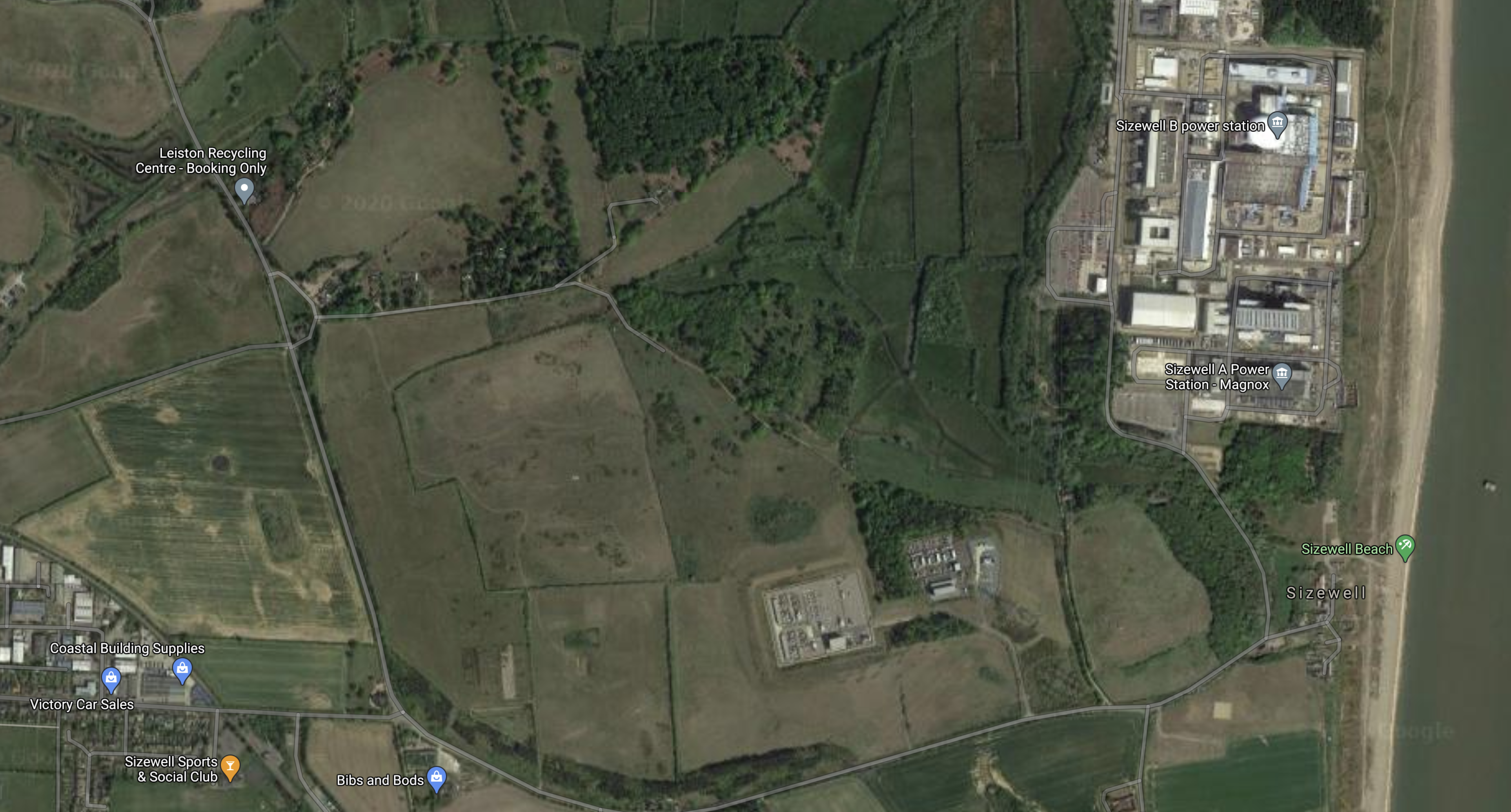
Sizewell A power station, with Sizewell B to its North, is on the coast.
This second Google Map shows the power stations to an enlarged scale.
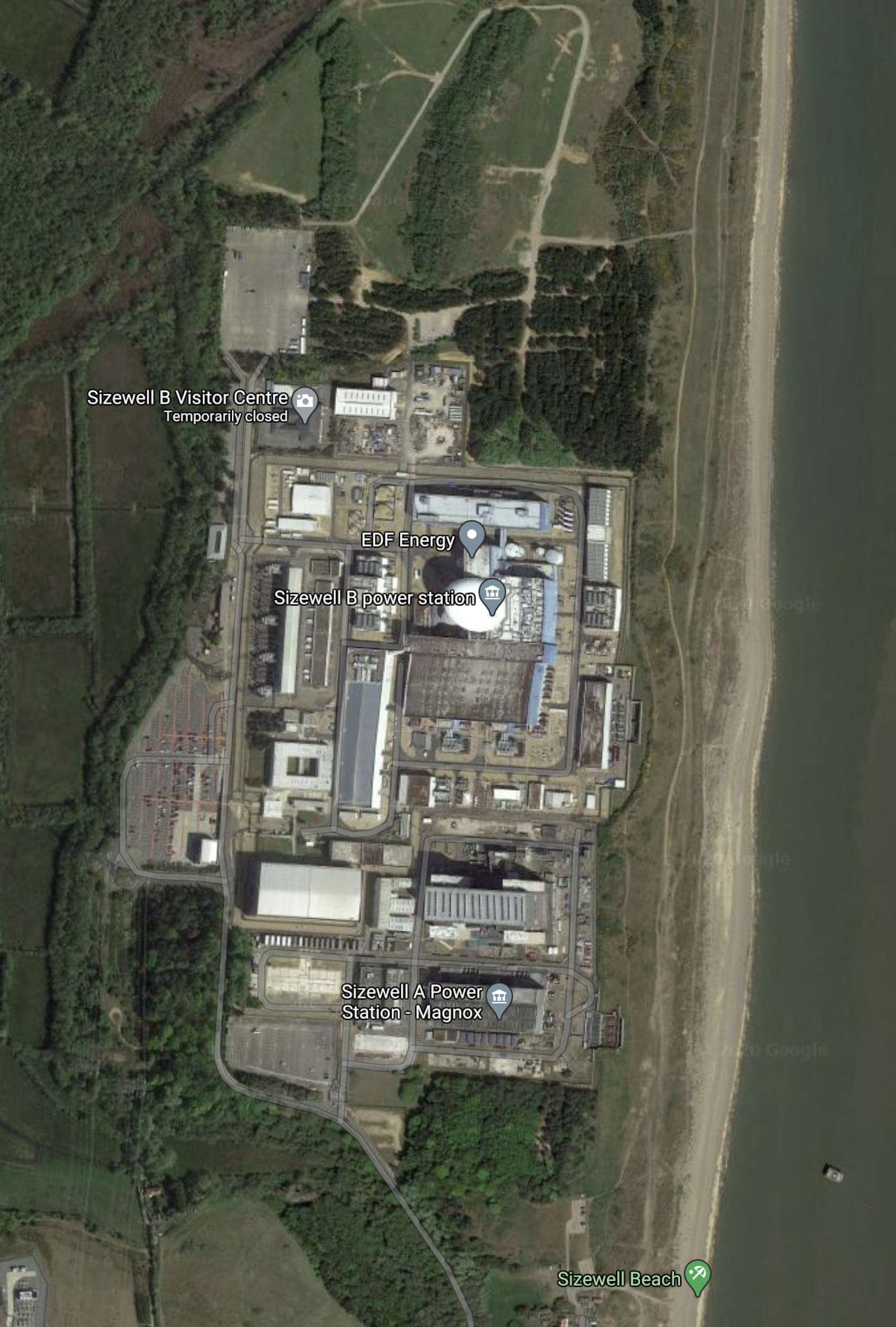
Note the white dome in the middle of Sizewell B.
Sizewell A
Sizewell A power station was shut down at the end of 2006 and is still being decommissioned, according to this extract from Wikipedia.
The power station was shut down on 31 December 2006. The Nuclear Decommissioning Authority (NDA) is responsible for placing contracts for the decommissioning of Sizewell A, at a budgeted cost of £1.2 billion. Defuelling and removal of most buildings is expected to take until 2034, followed by a care and maintenance phase from 2034 to 2092. Demolition of reactor buildings and final site clearance is planned for 2088 to 2098.
Only a few of those, reading this post, will be around to see the final end of Sizewell A.
Note that the size of the Sizewell A site is 245 acres.
It appears to me, that if any power station will be able to be built on the cleared site of Sizewell A, until the late 2080s or 2090s.
Sizewell B
Sizewell B power station opened in 1995 and was originally planned to close in 2035. The owner; EDF Energy, has applied for a twenty-year extension to 2055.
Sizewell C
Sizewell C power station is currently under discussion.
- It will be built by the French, with the help of Chinese money.
- It will have an output of 3260 MW or 3.26 GW.
- It will cost £18 billion.
- It will take twelve years to build.
This Google Map shows Sizewell B and the are to the North.
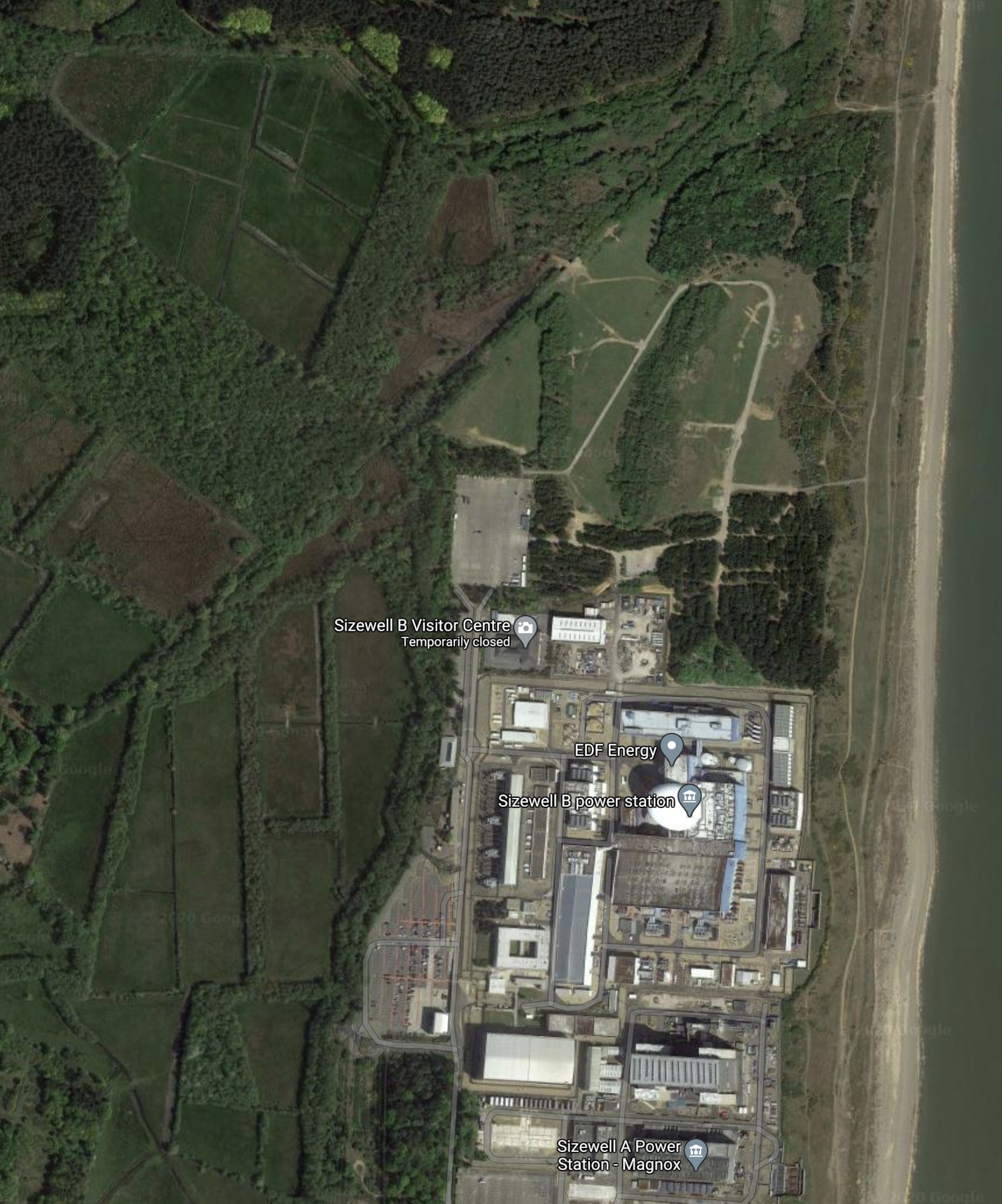
I would assume it will be built in this area.
A Fleet Of Small Modular Nuclear Reactors
These are my thoughts on building a fleet of SMRs at Sizewell instead of the proposed Sizewell C.
Land Use
In Rolls-Royce signs MoU With Exelon For Compact Nuclear Power Stations, I gave these details of the Rolls-Royce design of SMR.
- A Rolls-Royce SMR has an output of 440 MW.
- The target cost is £1.8 billion for the fifth unit built
- Each SMR will occupy 10 acres.
- Eight SMRs would need to be built to match the output of Hinckley Point C, which will occupy 430 acres.
It looks on a simple calculation, that even if the SMRs needed fifteen acres, the amount of land needed would be a lot less.
Connection To The National Grid
The transmission line to the National Grid is already in place.
This Google Map shows the sub-station, which is to the South-West of Sizewell A.
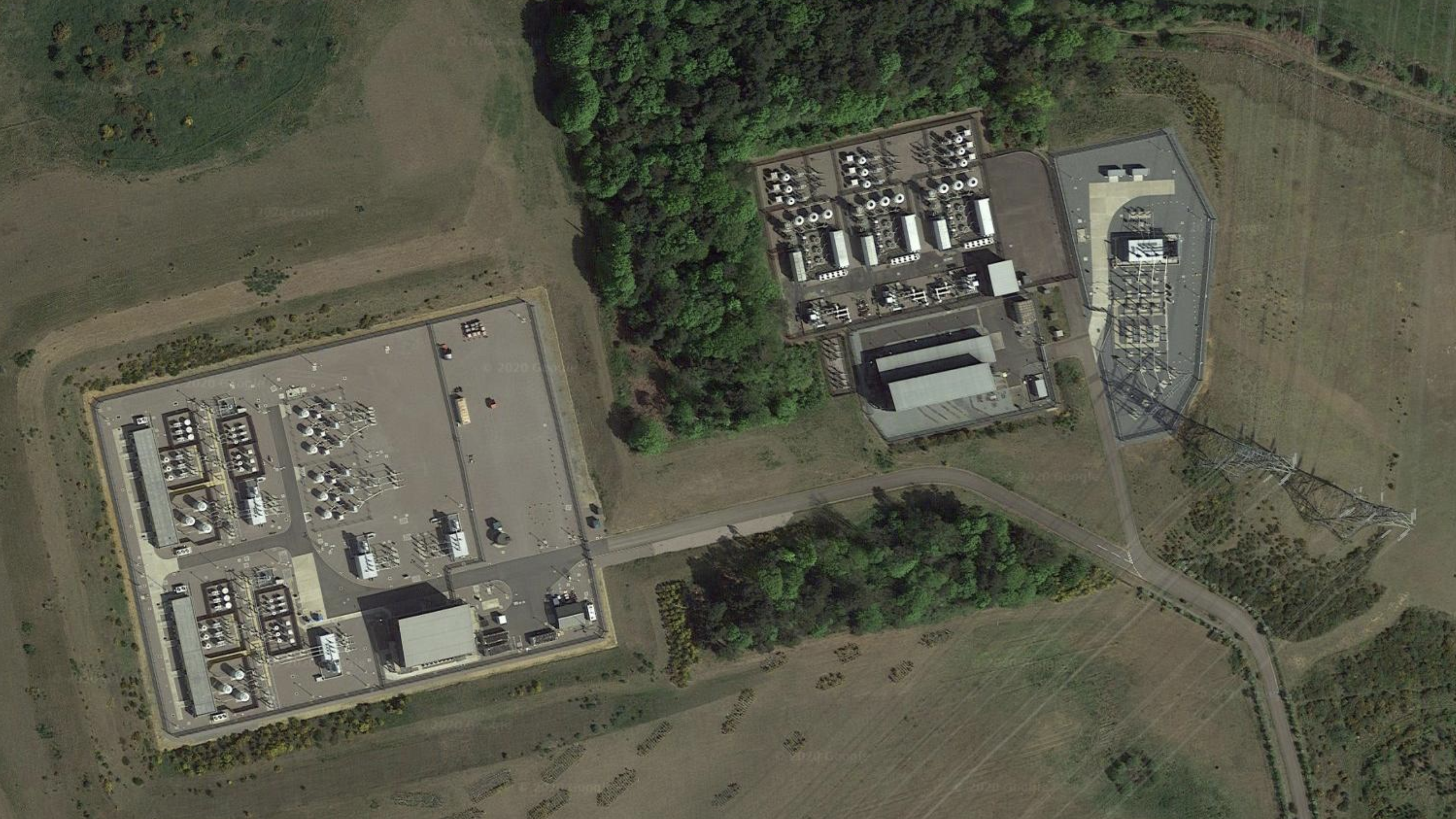
From Sizewell, there is a massive twin overhead line to Ipswich.
This Google Map shows the overhead line as it crosses Junction 53 of the A14 to the West of Ipswich.
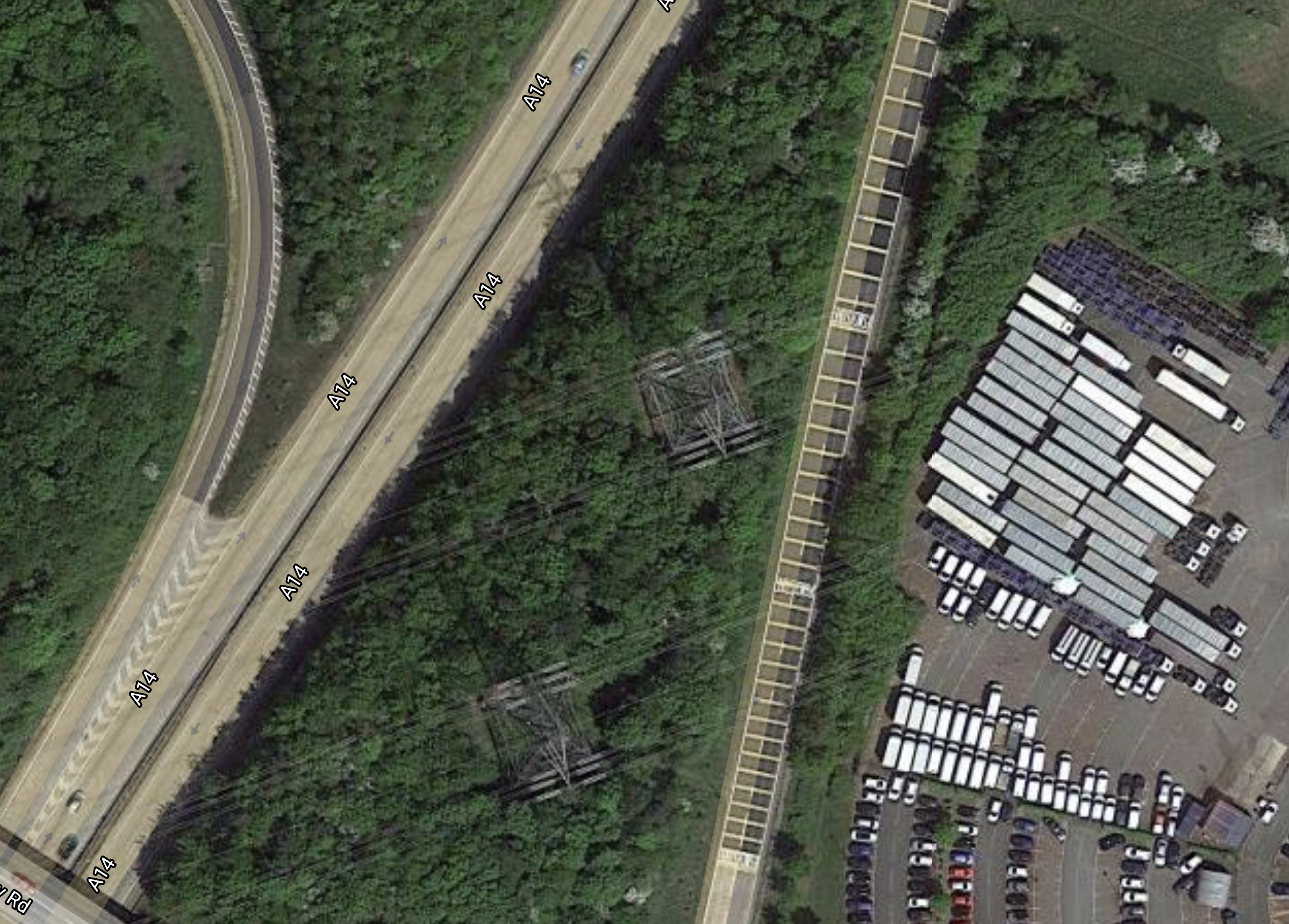
The pylons are in the centre of the map, with the wires going across.
The line has been built for a massive amount of nuclear power at Sizewell.
The Sizewell Railhead
This Google Map shows the railhead at Sizewell.
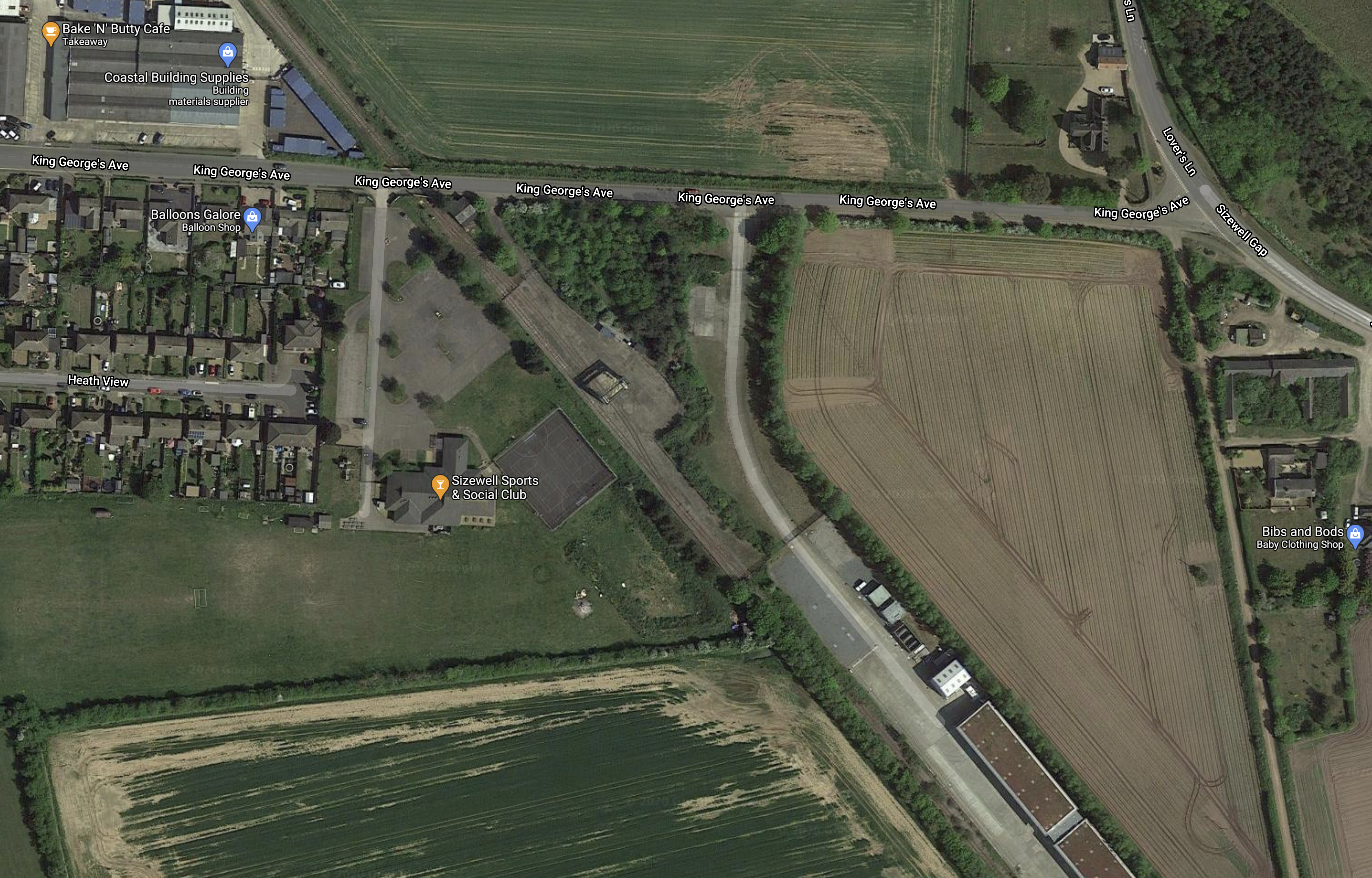
It can also be picked out in the South West corner of the first map.
- The railhead is used to take out spent fuel for processing.
- In the past, it brought in construction materials.
- Wikipedia suggests if the Sizewell C is built, the might be a new railhead closer to the site.
- If a fleet of SMRs were to be built, as the modules are transportable by truck, surely they could be move in by rail to avoid the roads in the area.
- I am an advocate of reinstating the railway from Saxmundham to Aldeburgh, as this would be a way of doubling the frequency on the Southern section of the East Suffolk Line between Saxmundham and Ipswich stations.
I hope that whatever is built at Sizewell, that the rail lines in the area is developed to ease construction, get workers to the site and improve rail services on the East Suffolk Line.
Building A Fleet Of SMRs
One of the disadvantages of a large nuclear power station, is that you can’t get any power from the system until it is complete.
This of course applies to each of the individual units, but because they are smaller and created from a series of modules built in a factory, construction of each member of the fleet should be much quicker.
- Rolls-Royce are aiming for a construction time of 500 days, from the fifth unit off the production line.
- That would mean, that from Day 501, it could be producing power and earning money to pay for its siblings.
- If the eight units were built in series, that would take eleven years to build a fleet of eight.
But as anybody, who has built anything even as humble as a garden shed knows, you build anything in a series of tasks, starting with the foundations.
I suspect that if a fleet were being built, that construction and assembly would overlap, so the total construction time could be reduced.
That’s one of the reasons, I said that building a fleet could be a project manager’s dream.
I suspect that if the project management was top-class, then a build time for a fleet of eight reactors could be nine years or less.
Resources are often a big problem in large projects.
But in a phased program, with the eight units assembled in turn over a number of years, I think things could be a lot easier.
Financing A Fleet Of SMRs
I think that this could be a big advantage of a fleet of SMRs over a large conventional large nuclear power station.
Consider
- I said earlier, that as each unit was completed, it could be producing power and earning money to pay for its siblings.
- Hinckley Point C is budgeted to cost £18 billion.
- Eight Rolls-Royce SMRs could cost only £14.4 billion.
I very much feel that, as you would get a cash-flow from Day 500 and the fleet costs less, that the fleet of smaller stations is easier to finance.
Safety
SMRs will be built to the same safety standards as all the other UK reactors.
In this section on Wikipedia this is said about the Rolls-Royce SMR.
Rolls-Royce is preparing a close-coupled three-loop PWR design, sometimes called the UK SMR.
PWRs or pressurised water reactors are the most common nuclear reactors in the world and their regulation and safety is well-understood.
This is from the History section of their Wikipedia entry.
Several hundred PWRs are used for marine propulsion in aircraft carriers, nuclear submarines and ice breakers. In the US, they were originally designed at the Oak Ridge National Laboratory for use as a nuclear submarine power plant with a fully operational submarine power plant located at the Idaho National Laboratory. Follow-on work was conducted by Westinghouse Bettis Atomic Power Laboratory.
Rolls-Royce have a long history of building PWRs, and Rolls-Royce PWRs have been installed in all the Royal Navy’s nuclear submarines except the first. The Royal Navy’s second nuclear submarine; HMS Valiant, which entered service in 1966, was the first to be powered by a Rolls-Royce PWR.
How much of the design and experience of the nuclear submarine powerplant is carried over into the design of the Rolls-Royce SMR?
I don’t know much about the safety of nuclear power plants, but I would expect that if there was a very serious accident in a small reactor, it would be less serious than a similar accident in a large one.
Also, as the reactors in a fleet would probably be independent of each other, it is unlikely that a fault in one reactor should affect its siblings.
Local Reaction
I lived in the area, when Sizewell B was built and I also went over Sizewell A, whilst it was working.
From personal experience, I believe that many in Suffolk would welcome a fleet of SMRs.
- Sizewell B brought a lot of employment to the area.
- House prices rose!
- Both Sizewell A and B have been well-run incident-free plants
Like me, some would doubt the wisdom of having a Chinese-funded Sizewell C.
Conclusion
Big nuclear has been out-performed by Rolls-Royce
Will INEOS And Rolls-Royce Get Together Over Hydrogen Production?
It has been a busy week for press releases.
8th November 2020 – Rolls-Royce signs MoU With Exelon For Compact Nuclear Power Stations
9th November 2020 – Rolls-Royce signs MoU with CEZ For Compact Nuclear Power Stations
9th November 2020 – INEOS Launches A New Clean Hydrogen Business To Accelerate The Drive To Net Zero Carbon Emissions
Does the timing of these three press releases indicate that there is possible co-operation between the INEOS and Rolls-Royce?
These are my thoughts.
Electricity Needs Of Integrated Chemical Plants
Integrated chemical plants, like those run by INEOS need a lot of electricity.
When I worked for ICI Plastics in the early 1970s, one of the big projects at Wilton works was the updating of the Wilton power station.
- Fifty years later it is still producing electricity.
- It is fired by a variety of fuels including coal, oil, gas and biomass.
- It even burned 110,000 tonnes of cow fat (tallow) from the carcasses of animals slaughtered during the BSE Crisis of 1996.
- It produces 227 MW of electricity.
- It also produces around 4,000,000 tonnes of steam per year for the plants on the complex.
- Wilton 10 is a 2007 addition to the station, that burns 300,000 tonnes of a combination of sustainable wood, sawmill waste and otherwise unusable wood offcuts a year.
- Wilton 11 is a 2016 addition to the station, that burns domestic waste, which arrives by train from Merseyside.
ICI was proud of its power station at Wilton and there were regular rumours about the strange, but legal fuels, that ended up in the boilers.
Integrated chemical plants like those on Teesside can be voracious consumers of electricity and steam.
I can envisage companies like INEOS boosting their electricity and steam capacity, by purchasing one of Rolls-Royce’s small modular reactors.
A Look At Teesside
If you look at the maps of the mouth of the Tees, you have the Hartlepool nuclear power station on the North side of the river.
- It was commissioned in 1983.
- It can generate 320 MW of electricity.
- It is expected to close in 2024.
This Google Map shows the mouth of the Tees.
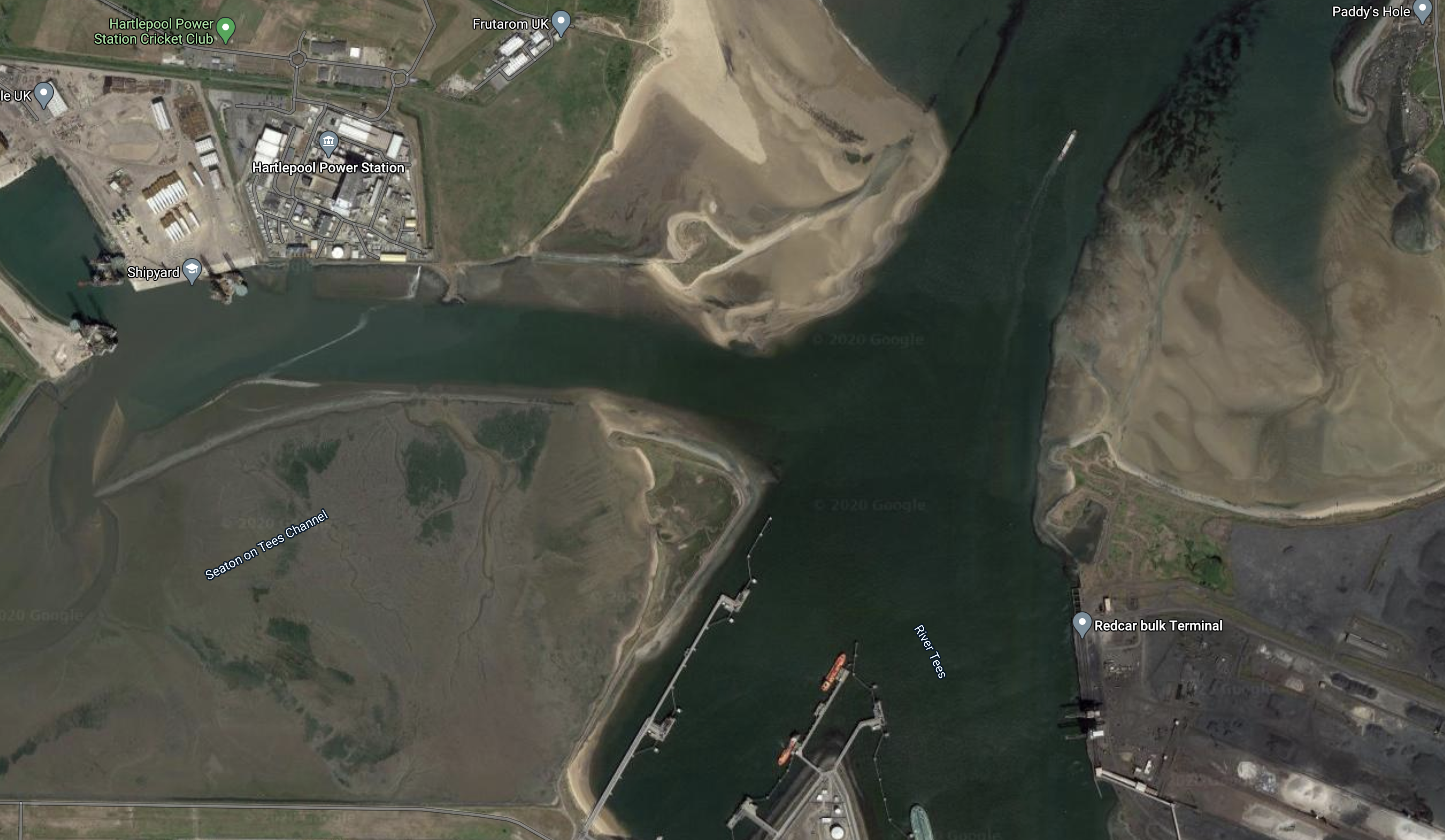
Note.
- Hartlepool power station is in the North-West corner of the map.
- The Hartlepool site is probably about forty acres.
- Wilton power station is on the South side of the Tees in the Wilton International site.
I can see, when Hartlepool power station closes, that more power will be needed on Teesside to feed the various industries in the area.
Some will come from offshore wind, but could a fleet of perhaps four of Rolls-Royce’s small modular reactors be built on a decommissioned Hartlepool power station site to replace the output of the current station?
If built in a planned sequence to correspond to the expected need, there are savings to be made because each unit can be commissioned, when they are completed and used to generate cash flow.
I can even see INEOS building a large electrolyser in the area, that is powered either by wind or nuclear power, according to what power is available and the various costs.
An Integrated Small Modular Nuclear Reactor And Electrolyser
Some countries don’t have good resources to exploit for renewable power.
Will a small modular nuclear reactor, be pared with a large electrolyser to produce hydrogen for feedstock for chemical plants and fuel for transport?
How Much Hydrogen Would A Small Modular Nuclear Reactor Produce?
Consider.
- One of Rolls-Royce’s small modular nuclear reactors has a power output of 440 MW.
- It takes 23 MWh of electricity to create ten tonnes of hydrogen.
This would create 4,600 tonnes of hydrogen in a day.
That is a lot of zero-carbon chemical feedstock to make fertiliser, plastics, pharmaceuticals and other chemicals and fuel for heavy transport.
Conclusion
I will be very surprised if INEOS were not talking to Rolls-Royce about using small modular nuclear reactors to generate the enormous quantities of electrical power and steam, needed to produce chemicals and fulfil their ambition to be a world leader in the supply of hydrogen.
Rolls-Royce signs MoU With Exelon For Compact Nuclear Power Stations
The title of this post, is the same as that of this press release on the Rolls-Royce web site.
These are the first two paragraphs.
Rolls-Royce and Exelon Generation have signed a Memorandum of Understanding to pursue the potential for Exelon Generation to operate compact nuclear power stations both in the UK and internationally. Exelon Generation will be using their operational experience to assist Rolls Royce in the development and deployment of the UKSMR.
Rolls-Royce is leading a consortium that is designing a low-cost factory built nuclear power station, known as a small modular reactor (SMR). Its standardised, factory-made components and advanced manufacturing processes push costs down, while the rapid assembly of the modules and components inside a weatherproof canopy on the power station site itself avoid costly schedule disruptions.
This is the first paragraph of the Wikipedia entry of Exelon.
Exelon Corporation is an American Fortune 100 energy company headquartered in Chicago, Illinois and incorporated in Pennsylvania. It generates revenues of approximately $33.5 billion and employs approximately 33,400 people. Exelon is the largest electric parent company in the United States by revenue, the largest regulated electric utility in the United States with approximately 10 million customers, and also the largest operator of nuclear power plants in the United States and the largest non-governmental operator of nuclear power plants in the world.
These two paragraphs from the press release flesh out more details.
The consortium is working with its partners and UK Government to secure a commitment for a fleet of factory built nuclear power stations, each providing 440MW of electricity, to be operational within a decade, helping the UK meet its net zero obligations. A fleet deployment in the UK will lead to the creation of new factories that will make the components and modules which will help the economy recover from the Covid-19 pandemic and pave the way for significant export opportunities as well.
The consortium members feature the best of nuclear engineering, construction and infrastructure expertise in Assystem, Atkins, BAM Nuttall, Jacobs, Laing O’Rourke, National Nuclear Laboratory, Nuclear Advanced Manufacturing Research Centre, Rolls-Royce and TWI. Exelon will add valuable operational experience to the team.
This is not what you call a small deal.
This is the last section of the press release.
By 2050 a full UK programme of a fleet of factory built nuclear power stations in the UK could create:
- Up to 40,000 jobs
- £52BN of value to the UK economy
- £250BN of exports
The current phase of the programme has been jointly funded by all consortium members and UK Research and Innovation.
But that is not all, as there is also a second press release, which is entitled Rolls-Royce Signs MoU With CEZ For Compact Nuclear Power Stations.
These are the first two paragraphs.
Rolls-Royce and CEZ have signed a Memorandum of Understanding to explore the potential for compact nuclear power stations, known as small modular reactors (SMR), to be built in the Czech Republic.
Rolls-Royce is leading the UK SMR Consortium that is designing this type of low-cost nuclear power station. Its standardised, factory-made components and advanced manufacturing processes push down costs; and the rapid assembly of the modules inside a weatherproof canopy at the power station site itself speeds up schedules.
These are my thoughts.
What Is A Small Modular Reactor or SMR?
This is the first paragraph of the Wikipedia entry for Small Nuclear Reactor.
Small modular reactors (SMRs) are a type of nuclear fission reactor which are smaller than conventional reactors. This allows them to be manufactured at a plant and brought to a site to be assembled. Modular reactors allow for less on-site construction, increased containment efficiency, and enhanced safety due to passive nuclear safety features. SMRs have been proposed as a way to bypass financial and safety barriers that have plagued conventional nuclear reactors.
This section on Wikipedia gives more details of the Rolls-Royce SMR.
Rolls-Royce is preparing a close-coupled three-loop PWR design, sometimes called the UK SMR.] The power output is planned to be 440 MWe, which is above the usual range considered to be a SMR. The design targets a 500 day construction time, on a 10 acres (4 ha) site. The target cost is £1.8 billion for the fifth unit built.
The consortium developing the design is seeking UK government finance to support further development. In 2017 the UK government provided funding of up to £56 million over three years to support SMR research and development. In 2019 the government committed a further £18 million to the development from its Industrial Strategy Challenge Fund.
The construction time, site size and cost make for one of the big advantages of SMRs.
Say you need to create a 3260 MW nuclear power station like Hinckley Point C.
- This would need a fleet of eight 440 MW SMRs.
- These would cost £14.4 billion
- Wikipedia lists Hinkley Point C as costing between £21.5 billion and £ 22.5 billion.
- I suspect there will be an adjustment for the connection to the National Grid, which is probably included in the Hinckley Point C figures.
- Eight SMRs will occupy 80 acres.
- Hinckley Point C will occupy 430 acres.
- Hinckley Point C was planned to be built in seven years.
- Eight SMRs built one after the other would take 11 years. But, they would probably be planned to be built in an optimal way, where reactors came on-line, when their power was needed.
The biggest advantage though, is that as each of the eight SMRs is commissioned, they can start supplying power to the grid and earning money. This means that financing is much easier and the first reactor helps to pay for its siblings.
Could An SMR Replace A Fossil Fuel Power Station?
Suppose you have a coal-fired power station of perhaps 800 MW.
The power station will have a connection to the grid, which will be able to handle 800 MW.
If the power station is closed, there is no reason, why it can’t be replaced by an appropriately-sized fleet of SMRs, provided the site is suitable.
Who Are TWI?
I would assume that TWI is The Welding Institute, who are described like this in their Wikipedia entry.
The Welding Institute (TWI) is a research and technology organisation, with a specialty in welding. With headquarters six miles south of Cambridge, Cambridgeshire, England, since 1946, and with facilities across the UK and around the world. TWI works across all industry sectors and in all aspects of manufacturing, fabrication and whole-life integrity management technologies.
It strikes me, this organisation could be a very important part of the consortium.
 The Anonymous Widower