Observations On A Trip To Doncaster And Sheffield
My objectives were.
- Buy a walk-up ticket from a machine at King’s Cross for Doncaster station and then use it.
- Use local trains, tram-trains and trams to get to as quick as possible to Sheffield station.
- Buy a walk-up ticket from a machine at Sheffield station for St. Pancras and then use it.
This is the story of my day.
A Ticket From King’s Cross for Doncaster
This happened at King’s Cross
- I got charged £38.65, but I didn’t get any tickets.
- So I complained in the Booking Office.
- But they didn’t believe me.
- Then I showed them the debit on my credit card account.
- Then a lady came and checked the machine, but couldn’t find any tickets.
- They then issued me with a new ticket for Doncaster.
- But they were these design crimes of flimsy tickets.
- I now have two debits on my credit card account.
They said one will be refunded.
King’s Cross To Doncaster
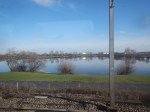
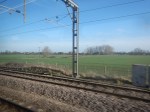
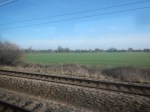
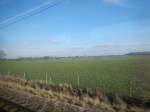
I took these pictures of the trucks along the nearby A1 to the North of Newark.




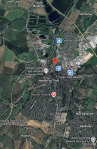
This map shows how the A1 curves round the town.
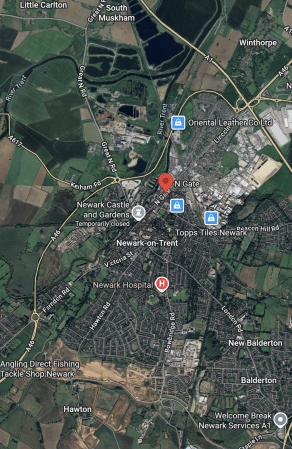
Note.
- The A1 Road curving around the right of the town.
- The red arrow marking Newark Northgate station.
- There is a notorious flat crossing, that needs to be replaced to the North of the station.
I believe as a Control Engineer, that digital signalling might solve the problem of the crossing and I wrote about it in Could ERTMS And ETCS Solve The Newark Crossing Problem?.
But there was no problems on the journey
- The train was ten coaches.
- It was going to Edinburgh.
- It left on time.
- It didn’t appear to be very full.
- It was four minutes late at Doncaster and arrived at 14:47.
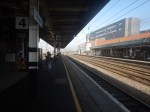
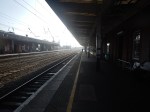
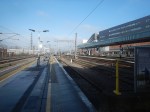
These pictures show Doncaster station.
Note.
There are nine platforms and eleven tracks.
The nine platforms are arranged in three island platforms.
South Yorkshire Now Has Better North-South Connections
The December 14th 2025 timetable change was a big day for South Yorkshire.
Three big changes will transform, public transport in South Yorkshire.
The Opening Of A New Tram-Stop At Magna Science Adventure Centre On The Tram-Train Route Between Sheffield And Rotherham
The Magna Science Adventure Centre is described like this in the first paragraph of its Wikipedia entry.
Magna Science Adventure Centre is an educational visitor attraction in Rotherham, South Yorkshire, England.
This map shows the site and the tram-train track between Sheffield and Rotherham.
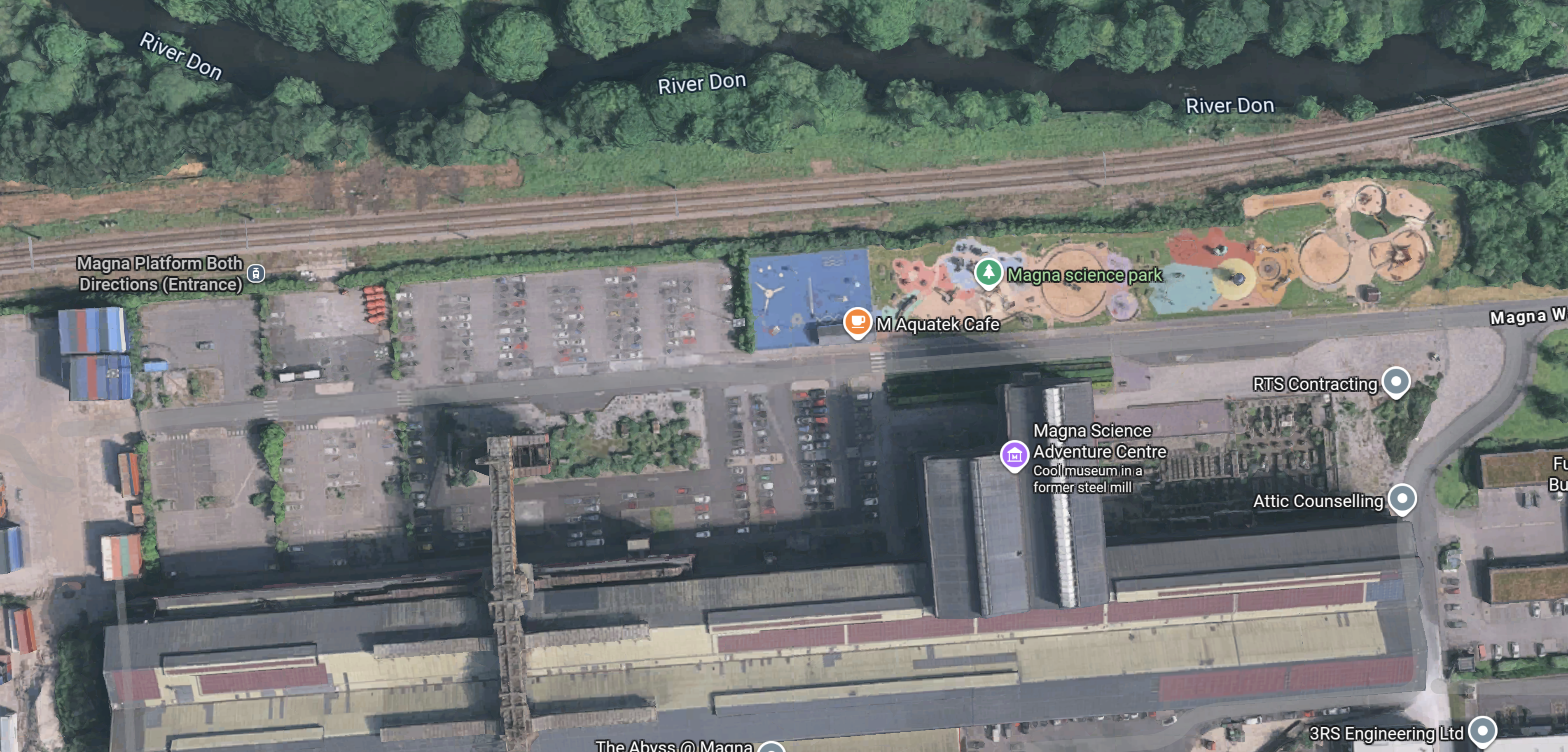
Note.
- The tram-train track runs East-West across the top of the map.
- Sheffield is to the West and Rotherham is to the East.
- At the Western end of the site, a label indicates the position of the Magna Platform.
- The position of the tram-train stop is already marked.
- There will be 29 extra Park-and-Ride spaces.
- The Magna Science Adventure Centre is indicated by the purple arrow in the middle of the map.
- Magna Way runs East-West through the site.
- There are four pavilions: Earth, Air, Fire, and Water.
This article on the BBC is entitled Lifts And Bridge Added As Tram Stop Takes Shape.
This picture from the article shows the bridge with lifts.

Note.
It will be an impressive tram stop.
It doesn’t look like it will be long before it opens.
But as yet no information is available.
Google AI gave this answer.
The new Magna Tram Train stop is scheduled to open in early 2026.
Construction of the new £10 million station and Park & Ride facility in Rotherham, part of a wider investment in the South Yorkshire Supertram network, is currently on track.
The new stop will improve access to the Magna Science Adventure Centre, local businesses, and link up with existing walking and cycling routes, aiming to ease congestion in the Lower Don Valley.
I shall be going next week to take photographs of the tram stop.
The Increase In Frequency Of Express Trains Serving Doncaster On The East Coast Main Line
Since the December 14th 2025 timetable change, the Monday to Friday express trains, that stop at Doncaster on the East Coast Main Line have included.
- CrossCountry – 8 trains per day (tpd) in both directions.
- Grand Central – 4 tpd in both directions.
- Hull Trains – 7 tpd in both directions.
- LNER- 3.5 trains per hour (tph) in both directions.
- TransPennineExpress – 1 tph in both directions.
Note.
- This totals to 173 express trains per day stopping at Doncaster
- Or about 7 tph in both directions or a train every 8.5 minutes.
- This is about a thirty percent increase in frequency.
- Doncaster has become the Crewe of South Yorkshire.
I can see this large number of express trains to Doncaster bringing large numbers of visitors to go to the Magna Science Adventure Centre or its tram stop for onward connection to other destinations on the Sheffield Supertram network.
The trouble is, that at present the Magna tram stop is not connected to Doncaster station.
This OpenRailwayMap shows the rail lines between Doncaster and Sheffield stations.
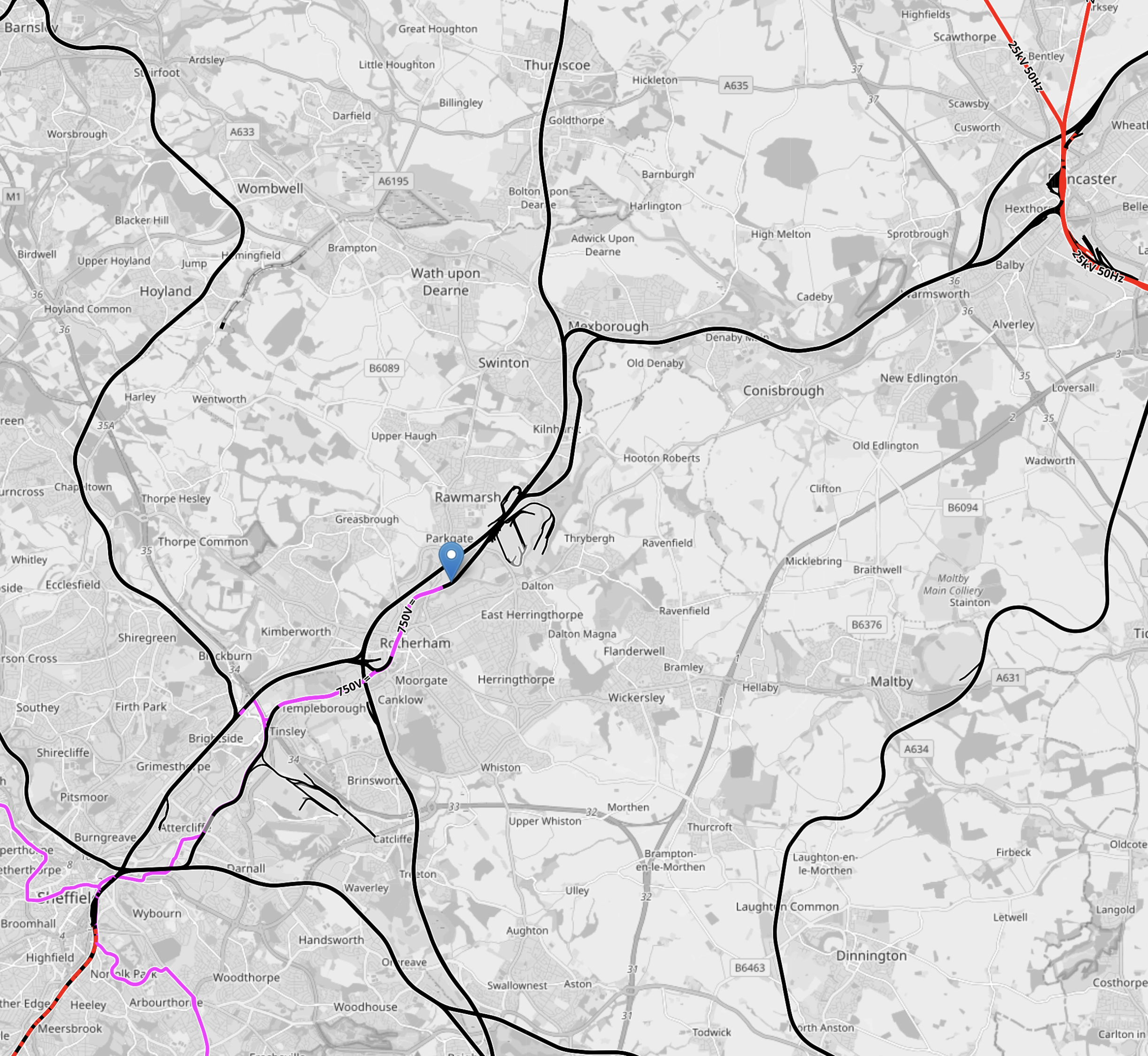
Note.
- The short length of red track in the North-East corner of the map is the East Coast Main Line.
- Doncaster station can be picked out.
- The short length of red track in the South-West corner of the map is the Midland Main Line, which connects Sheffield to London.
- Sheffield station is at the Northern end of the electrification, which will be installed soon.
- The pink tracks are the 750 VDC electrified tracks of the Sheffield Supertram.
- The blue arrow marks Rotherham Parkgate station, which is the limit of the current tram-train route.
The tram-train route needs to be extended so that the tram-trains can go between Rotherham Parkgate tram stop and Doncaster station.
The route seems to have these characteristics.
- It is about 11.8 miles long.
- Stops are Rotherham Central, Swinton (South Yorkshire), Mexborough and Conisborough.
- Diesel trains take about thirty minutes between Rotherham Central and Doncaster.
- All platforms at Doncaster are electrified with 25 KVAC.
- Platform 5 is a convenient bay platform at Doncaster, that could be used by the tram-trains.
- Sheffield’s Class 399 tram-trains can use 25 KVAC for traction.
- South Wales have similar Stadler tram-trains, that are to be fitted with batteries.
I am fairly sure, that a solution can be found so that Sheffield’s tram-trains can be extended to Doncaster station.
This OpenRailwayMap shows the route between Rotherham Parkgate tram stop and Doncaster station.
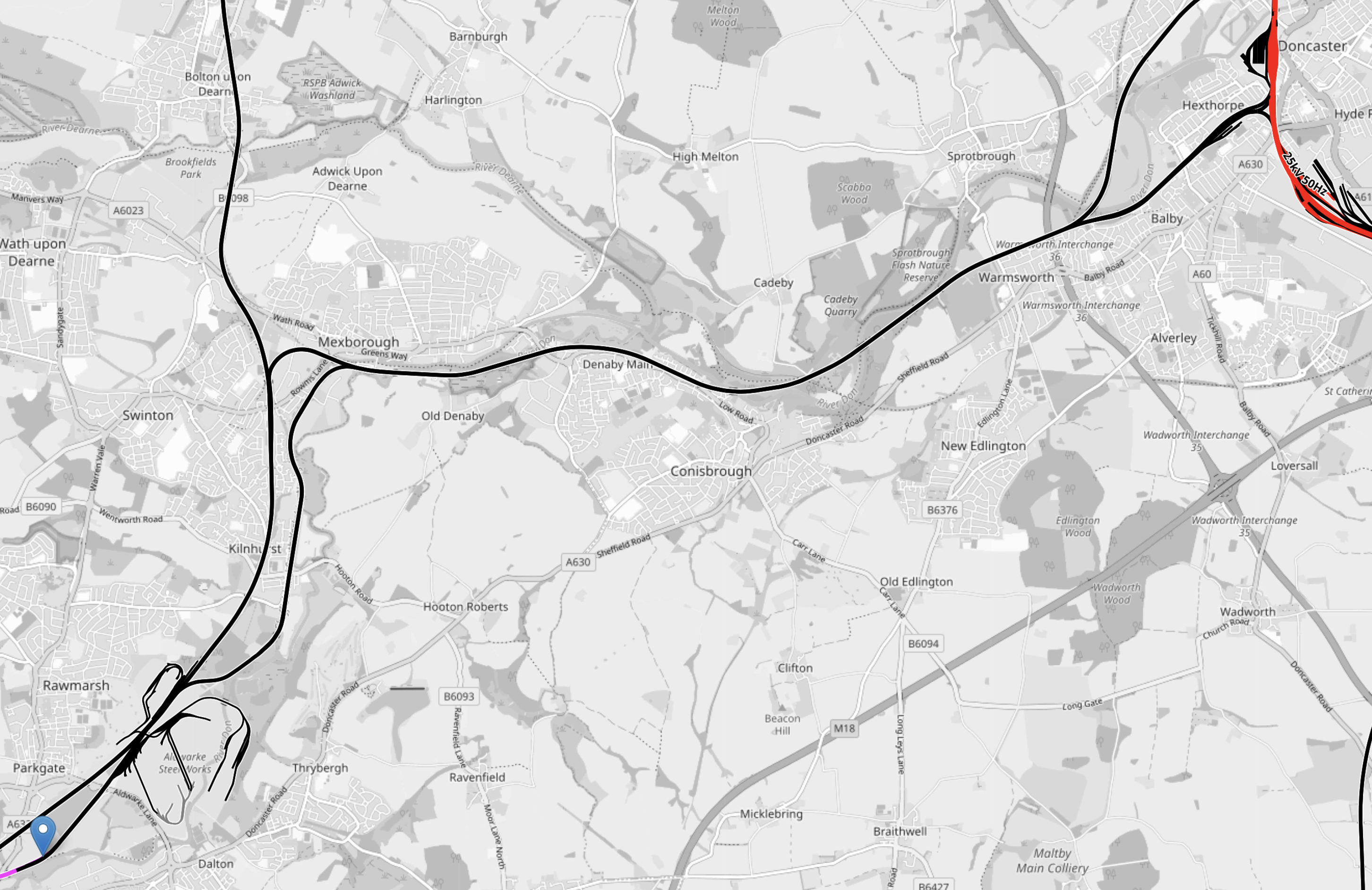
Note.
- The short length of red track in the North-East corner of the map is the East Coast Main Line.
- Doncaster station can be picked out.
- The short length of pink tracks are the 750 VDC electrified tracks of the Sheffield Supertram.
- The blue arrow marks Rotherham Parkgate station, which is the limit of the current tram-train route.
- Most of the route is not electrified.
As there is electrification at both ends, I suspect the easiest way of powering the trams would be to use batteries, as has been done in South Wales.
The New Class 810 trains between London St. Pancras And Sheffield On The Midland Main Line
These new Class 810 trains have started running this month and I suspect soe travellers will use these trains to go to Magna or its tram stop.
his OpenRailwayMap shows the tram routes in Sheffield city centre.
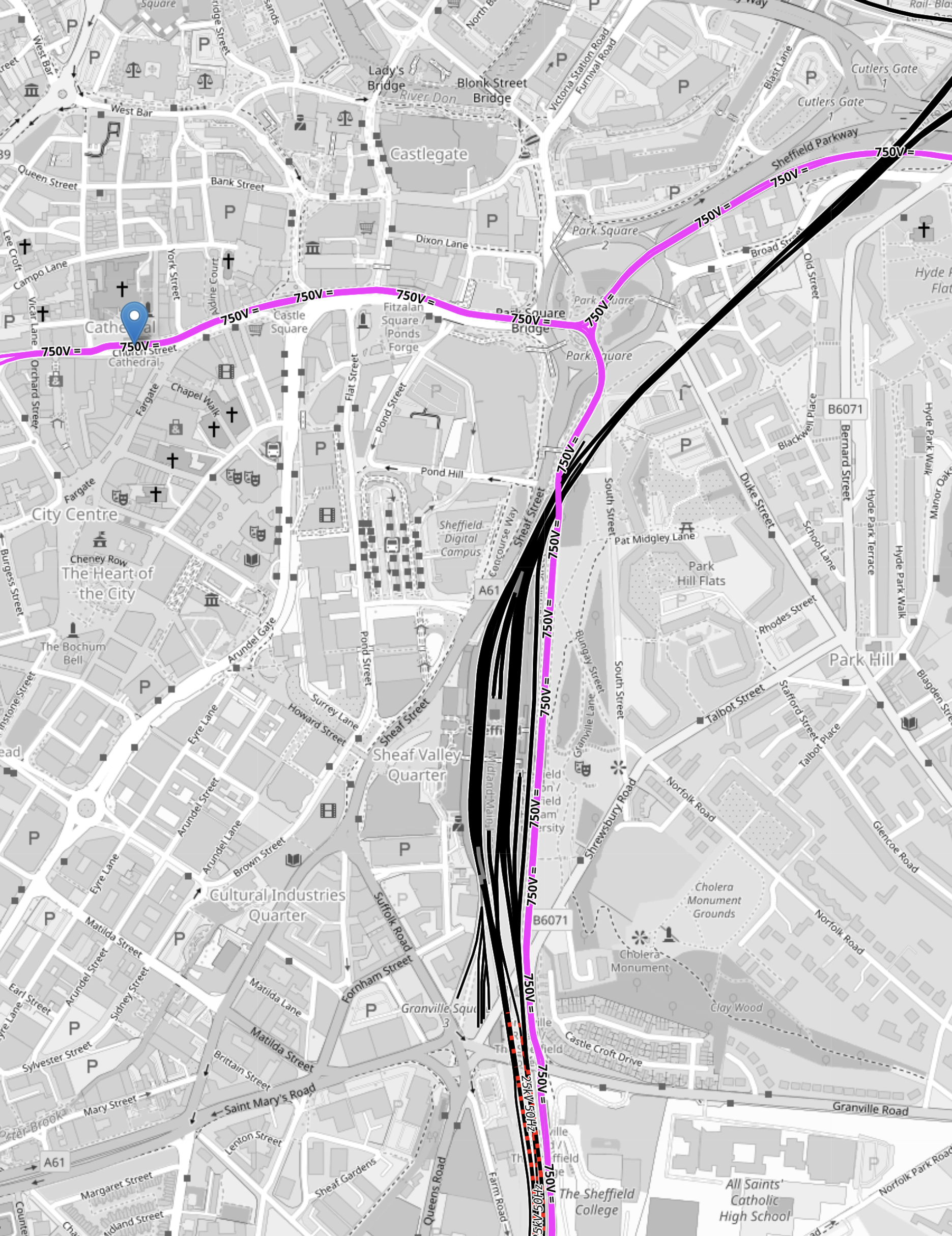
Note.
- The pink tracks are tram-tracks.
- The black tracks are unelectrified train tracks.
- The short lengths of red-and-black tracks are tracks to be electrified with 25 KVAC overhead, for the Class 810 trains.
- The blue error indicated the Cathedral tram-stop, where tram-trains will be caught to Magna.
- The mass of black tracks in the middle of the map is Sheffield station.
- There is a tram stop on the East side of the train station for the trams.
- Trams going South go to Halfway and Herdings Park.
- Trams going North-East go to Rotherham Parkgate and Meadowhall Interchange, and will go to Magna, when it opens.
- Trams going North-West go to Malin Bridge and Middlewood.
It is a difficult interchange between Cathedral and Sheffield station, if you are catching the tram-train, as it is a hard walk up hill, so it might be better if you are goinging between Sheffield station and the tram-train to change trams at Meadowhall South.
How Will The East Coast Main Line Timetable Change Affect Sheffield?
This article in the October 2025 Edition of Modern Railways is entitled Industry Gears Up For December ECML Timetable Change.
This is the first paragraph.
Major changes are planned to trains along the East Coast main line from 14 December as the long-heralded timetable takes effect.
In this post, I will see how the changes detailed in the article in Modern Railways will affect Sheffield and Doncaster.
Aberdeen-Edinburgh
This is said about Aberdeen and Edinburgh services.
Monday-Saturday services will not change between Aberdeen and Edinburgh, with all intermediate stations served at similar times.
The LNER service to and from King’s Cross will call additionally at Doncaster, Newark Northgate and Peterborough; the last LNER Monday-Friday departure from Aberdeen will terminate at Doncaster instead of Leeds, and the first LNER Monday-Saturday train to Aberdeen will start from King’s Cross at 05:48 instead of Leeds.
Note.
- An hourly fast train between Edinburgh and King’s Cross will have a journey time of 4 hours and 10 minutes, which is a saving of at least 12 minutes.
- There is an Aberdeen-Manchester air service, but no Edinburgh-Manchester or Leeds-Scotland air services.
- In Could London And Central Scotland Air Passengers Be Persuaded To Use The Trains?, I speculated about how air passengers could be tempted to use the trains between London and Central Scotland.
- It looks to me, that LNER are strengthening their services between Doncaster and Scotland.
- Will that 05:48 King’s Cross departure for Aberdeen, enable a working day in Aberdeen and return?
Is LNER’s aim to get travellers to use the trains between Doncaster and Scotland, as an alternative to driving or trains from Leeds?
Alnmouth and Berwick
This is said about Alnmouth services.
Quicker LNER journey times are promised to stations South of York, with King’s Cross-Alnmouth journey times up to 15 minutes quicker.
More TPE trains will run between Newcastle, Morpeth, Alnmouth, Berwick, Reston, Dunbar, East Linton and Edinburgh Waverley.
The number of trains calling at Durham on weekdays will fall from 18 to 13 Southbound and from 15 to 10 Northbound.
This is said about Berwick services.
LNER trains will call every two hours during the middle of the day, and the number of weekday trains to King’s Cross falls from 15 to 11 Southbound with a 13 to nine fall Northbound. More TPE trains will call.
Note.
- Lumo serves Newcastle, Morpeth and Edinburgh.
- Reston and East Linton are new stations.
- The stations between Newcastle and Edinburgh need adequate parking to attract commuters.
It looks to me, that LNER are timing the trains to attract day trips along the East Coast Main Line.
Bradford Forster Square/Interchange
This is said about Bradford Forster Square services.
The number of weekday trains will remain as per May 2025, but on Sundays, the number of trains serving Forster Square increases from two to six each way on a two-hourly interval. LNER stopping patterns change, with fewer trains calling at Peterborough and none at Grantham or Retford.
Trains currently stop at Peterborough, Doncaster, Wakefield Westgate, Leeds and Shipley, but surely a more regular six trains per day (tpd) is preferable.
This is said about Bradford Interchange services.
At Interchange, Grand Central Trains will run at different times to the May 2025 timetable, with King’s Cross journeys up to 20 minutes quicker. One GC each way will call at Peterborough, while some will stop at Pontefract Monkhill on Sundays for the first time.
Note.
- Trains currently stop at Peterborough, Doncaster, Pontefract Monkhill, Wakefield Kirkgate, Mirfield, Brighouse, Halifax and Low Moor
- Is the twenty minutes time saving due to the new digital signalling to the South of Doncaster?
- Is this another open access operator being allowed to do what they do best?
This looks to be a very useful service, which serves several stations, with no other service to London.
Doncaster
This is said about Doncaster services.
Additional trains calling at destinations including Birmingham New Street, Sheffield, York, Newark and Berwick-upon-Tweed. LNER Aberdeen/Inverness trains will call at Doncaster. EMR trains will be retimed at Doncaster to provide better connections with LNER’s revised timetables, but journeys from Doncaster to Sleaford and Spalding will require a change at Lincoln. This change has been made to “enable improved connections” at Peterborough, Sleaford, Lincoln and Doncaster. The number of trains calling at Stevenage falls from 24 to 19 Southbound and 24 to 21 Northbound, with Grantham stops dropping by seven trains to 28 Southbound and 4 to 29 Northbound.
If CrossCountry Trains were to switch their trains to Hitachi InterCity Battery trains, I believe that a version of these trains could handle routes like Plymouth and Aberdeen.
- This would speed up services.
- Trains would run close together and thus increase capacity.
- Services could even be faster.
So expect a replacement order for CrossCountry Trains diesel multiple units soon.
Glasgow
LNER gave up serving Glasgow Central from King’s Cross in the December 2024 timetable change.
In Lumo Will Extend Its King’s Cross And Edinburgh Service To Glasgow, I talked about Lumo extending their King’s Cross and Edinburgh service to Glasgow Central station.
Hull
This is said about Hull services.
On Mondays-Fridays, Hull Trains will provide an extra train from London.
The LNER Monday-Friday Hull-Doncaster train will be withdrawn;
Northern will operate a 20:25 departure to Doncaster; calling at Brough and Selby.
Note.
- It looks like Great British Railways have surrendered Hull and Beverley to Hull Trains.
- Hull Trains are converting their Class 802 trains to battery-electric power.
- It is likely that Hull Trains upgraded trains will be able to use the Great Northern and Great Eastern Joint Line via Lincoln on battery power.
The new timetable appears to be ready for the future of Hull Trains.
Leeds
This is said about Leeds services.
LNER services will depart to King’s Cross at xx.10 and xx.40.
Northern will introduce an extra mostly hourly service between Leeds and Sheffield calling at Wakefield Westgate. They will depart about 30 minutes earlier or later than the CrossCountry service.
Note.
- I would expect the two King’s Cross and Leeds services which would both stop at Doncaster and Wakefield Westgate would set the timings between Doncaster and Leeds.
- Currently, of the four trains that run to and from Leeds every two hours, two are planned to terminate at Leeds, one at Harrogate and one at Bradford Forster Square.
- There is also a daily service between King’s Cross and Skipton via Leeds.
- I can envisage another service between King’s Cross and Ilkley via Leeds, Kirkstall Forge, Guiseley, Burley-in-Wharfedale and Ben Rhydding.
- I can envisage another service between King’s Cross and Huddersfield, via Leeds, White Rose, Morley, Batley, Dewsbury, Ravensthorpe, Mirfield and Deighton.
- I can envisage another service between King’s Cross and Hebden Bridge, via Leeds, White Rose, Morley, Batley, Dewsbury, Ravensthorpe, Mirfield, Sowerby Bridge, Mytholmroyd and Brighouse.
- An alternative to Hebden Bridge would be Rochdale, which already has four platforms and is on the Manchester Metrolink
- It appears that Bradford Forster Square, Harrogate, Huddersfield, Leeds and Skipton stations can turn nine or ten-car trains and Ilkley can turn five-car trains.
- I also believe that one of Hitachi’s InterCity Battery trains could use battery power to take the spectacular Settle and Carlisle Line to Carlisle or even Glasgow Central.
- If needed pairs of five-car trains could split and join at Leeds, with one train waiting at Leeds and the other train going on to another destination.
- The CrossCountry and Northern Trains services on the Sheffield and Leeds route via Doncaster and Wakefield Westgate would probably need to be modern battery-electric trains to maximise the capacity on the route.
There certainly seem to be opportunities to give a number of stations in Yorkshire an all-electric service to King’s Cross with a two-hourly frequency, in a time of a few minutes over two hours.
Lincoln
This is said about Lincoln services.
One more LNER train from King’s Cross will run, with the first train arriving earlier and the last train later. There will no longer be an LNER train serving Stevenage with passengers having to change at Newark Northgate or Peterborough. An improved service will run to and from Nottingham, with an increase from one to two trains per hour on Mondays-Saturdays. An hourly service will run to Crewe, and a new Matlock-Nottingham-Lincoln-Cleethorpes service will run. EMR will cease all bar morning peak direct trains to/from Leicester. Newark Northgate-Lincoln trains will be reduced from five to four on Mondays-Fridays, eight to four on Saturdays and ten to eight on Sundays.
Note.
- Travellers between Lincoln/Nottingham and the North/Scotland will have two trains per hour to Newark Northgate, where there will be two tph to the North/Scotland.
- The hourly Crewe service will give access to Liverpool Manchester and the West Coast Main Line.
- Will there still be a Liverpool and Norwich service or will this be replaced by East-West Rail?
There seems to be a big sort out to EMR services.
Newcastle
This is said about Newcastle services.
The number of trains serving King’s Cross increases from 35 to 53 Southbound on weekdays and from 36 to 52 Northbound. One train every hour will run non-stop to York. More TPE trains will run Northbound (see Alnmouth and Berwick), while Northern is retiming services on the Northumberland Line in anticipation of Northumberland Park and Bedlington stations opening in early 2026. A semi-fast hourly service between Newcastle and Middlesbrough will run on Mondays-Saturdays and there will be an hourly stopping service between them.
Note.
- There will be a big increase in services between King’s Cross and Newcastle.
- Is the aim to persuade travellers to use trains rather than airlines?
- LNER also runs one train per day (tpd) between King’s Cross and Middlesbrough.
- Grand Central Trains will be running at a frequency of six tpd between King’s Cross and Sunderland via Thirsk, Northallerton, Eaglescliffe, Hartlepool and Seaham.
Hull appears to have been left to Hull Trains and Glasgow to Lumo, and Sunderland appears to be left for Grand Central Trains.
Conclusions
I am coming to some conclusions about services on the East Coast Main Line, with respect to Sheffield.
Doncaster Is A Well-Equipped Station
Doncaster is the nearest station to Sheffield on the East Coast Main Line.
- Over the last few years, Doncaster station has been improved.
- It has a subway with a more than adequate number of lifts.
- The station has nearly 600 parking spaces.
- There is a taxi rank.
- There is no Marks & Spencer’s food store, which is important for a coeliac like me.
- There are thirty bus stands close to Doncaster station.
- Doncaster station is well-equipped with cafes, a pub and coffee stalls.
- All trains to Aberdeen, Bradford Forster Square, Bradford Interchange, Edinburgh, Hull, King’s Cross, Leeds, Sheffield and Wakefield seem to stop at the station.
- There are several local trains per hour.
- Changing trains is not a strenuous exercise.
Doncaster is one of the UK’s better regional stations.
Doncaster Needs A Connection To The Sheffield Supertram
One of the first things, I do when I arrive in a strange town or city is look for the local public transport network.
In 2019, Sheffield published an ambitious plan for their tram network, which I wrote about in Sheffield Region Transport Plan 2019 – Doncaster Sheffield Airport.
The post contained this map, of Sheffield’s plans for the trams.
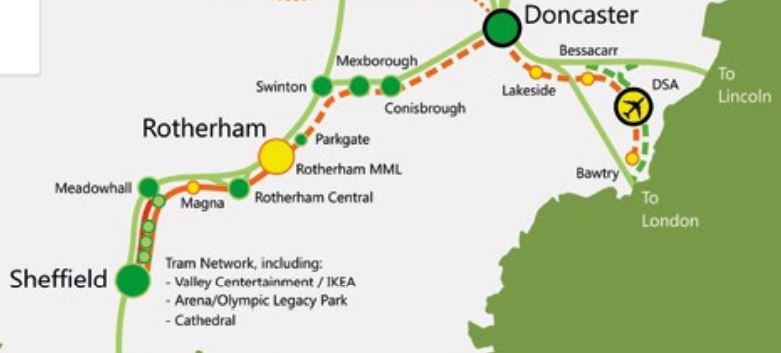
Doncaster and Doncaster Sheffield Airport are connected to the current end of the tram-train route at Rotherham Parkgate.
This OpenRailwayMap shows the rail lines between Rotherham Parkgate and Doncaster.
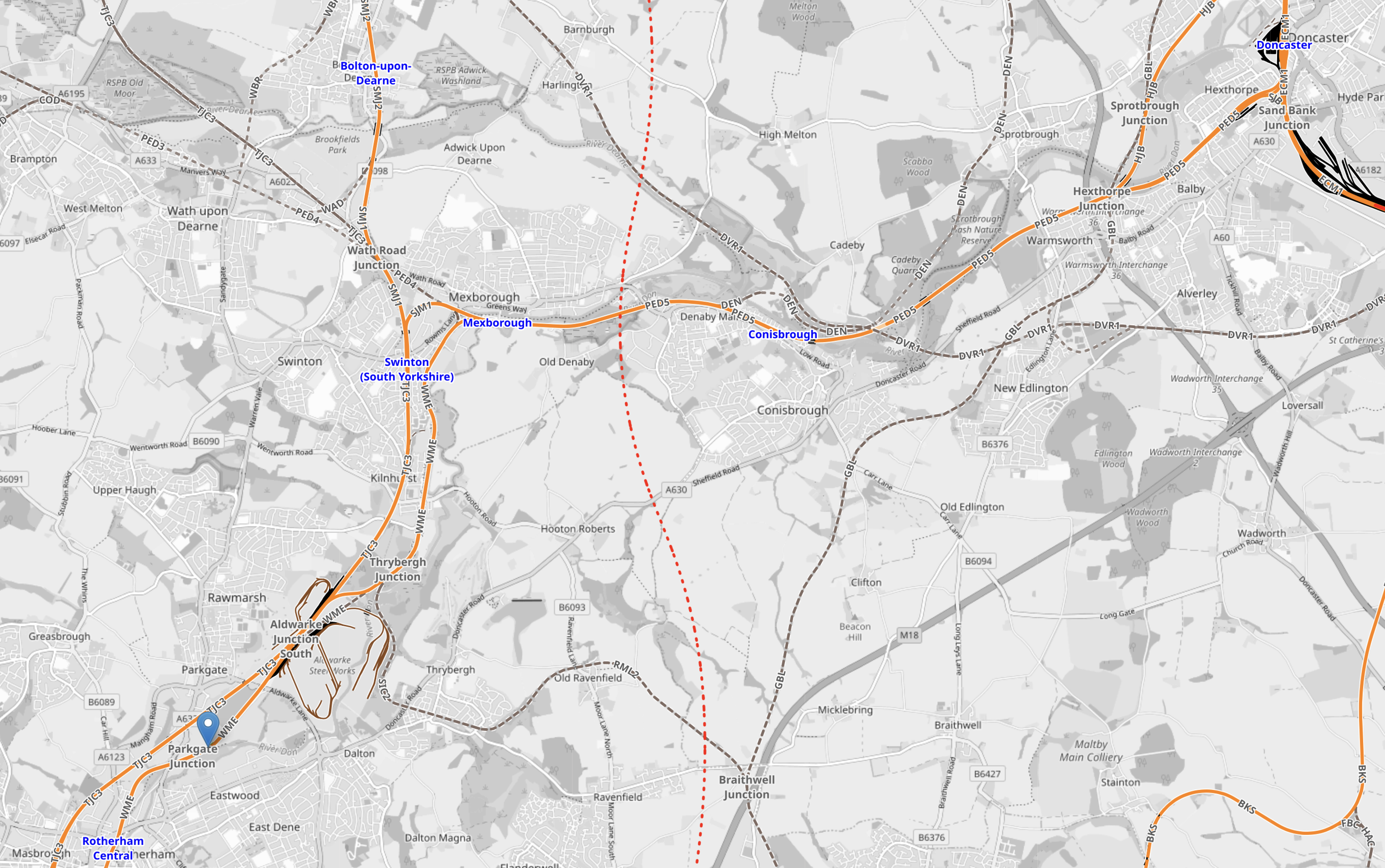
Note.
- Doncaster station is in the North-East corner of the map.
- Rotherham Central station is in the South-West corner of the map.
- The blue arrow in the South-West corner indicates Rotherham Parkgate tram stop.
- Swinton, Mexborough and Conisbrough stations can be picked out.
- The dotted red line running North-South across the map is the route of the ill-fated Eastern Leg of High Speed Two.
It is a simple application of tram-train technology to connect Doncaster station and Doncaster Sheffield Airport to the Sheffield Supertram.
With all the comings and goings on the East Coast Main Line at Doncaster station, I believe that the tram-train connection to Sheffield and Rotherham is essential.
The Cities Of Bradford, Doncaster, Leeds, Sheffield and Wakefield Can Have a High-Frequency Rail Connection
Consider.
- Four stations are all step-free with a bridge or subway served by lifts.
- Bradford Forster Square station has level access to the platforms from the street.
- The rail lines between the five stations are electrified, with the exception of Sheffield and Doncaster.
- Services between the cities are run by CrossCountry Trains, Grand Central Trains, Hull Trains, LNER and Northern Trains.
- Most maximum speeds are not unduly slow.
Consequently the five cities can have a high-frequency rail connection in excess of four tph.
Could this be the basis of a Five-Cities Metro?
Open Access Services
There are six open access services running on the East Coast Main Line.
- Grand Central Trains – King’s Cross-Bradford Interchange via Peterborough, Doncaster, Pontefract Monkhill, Wakefield Kirkgate, Mirfield, Brighouse, Halifax and Low Moor – 4 tpd
- Grand Central Trains – King’s Cross-Sunderland via Peterborough, York, Thirsk, Northallerton, Eaglescliffe and Hartlepool – 6 tpd
- Hull Trains – King’s Cross-Hull via Stevenage, Grantham, Retford, Doncaster, Selby, Howden, Brough – 4 tpd
- Hull Trains – King’s Cross-Beverley via Stevenage, Grantham, Retford, Doncaster, Selby, Howden, Brough, Hull and Cottingham – 2 tpd
- Lumo – King’s Cross-Edinbugh via Stevenage, Newcastle and Morpeth – 5 tpd
- Lumo – King’s Cross-Glasgow Queen Street via Stevenage, Newcastle, Morpeth, Edinburgh and Falkirk High – 2 tpd
Note.
- tpd is trains per day.
- All seem to serve an exclusive area, except Lumo.
- In a couple of years, all could be using Hitachi trains.
- I suspect some services will swap their diesel generators for batteries.
Battery-power would allow some services to be zero-carbon, even when using the GNGE diversion.
Wakefield Westgate Station – 18th September 2025
To get to Knottingley and the consultation about Ferrybridge hydrogen-fired power station, I had to change trains at Wakefield Westgate station.
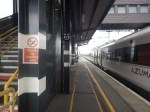
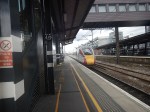
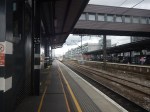
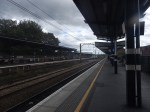
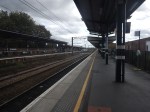
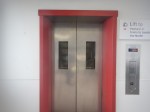
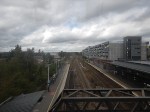
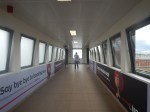
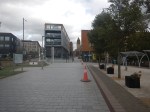
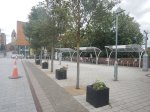
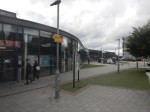
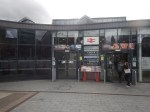
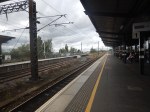
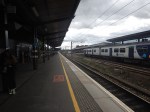
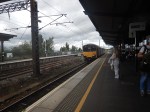
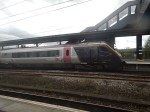
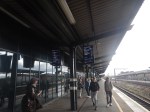
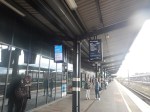
Note.
- It is an impressive station.
- It has been rebuilt since the turn of the century.
- It is fully step-free.
- Entrance is level from the square outside the station to the Southbound platform.
- There are toilets on the Southbound platform.
- There are six trains per hour (tph) between Wakefield Westgate and Leeds.
Certainty, in the time I was changing trains and waiting for my train to Knottingley, there were a lot of trains going to and from Leeds.
The timetables are changing on December 14, 2025 and the October 2025 Edition of Modern Railways gives this summary for Wakefield.
On Mondays-Saturdays, the CrossCountry train calling at Westgate at 18:17 will no longer stop at Wakefield. Northern will introduce an additional hourly fast train seven days a week between Leeds and Sheffield, and on Saturdays there will be extra later last trains between Sheffield and Westgate via Rotherham and Sheffield and Kirkgate via Barnsley.
With the development of the Leeds Metro, I can see more services being added on the route between Doncaster and Bradford via Wakefield Westgate and Leeds.
- Bradford is getting a new through station.
- From December 14, 2025, Sunday services to Bradford Forster Square will be increased for two to six each way per day.
- It also looks like from December 14, 2025, the new Northern service between Leeds and Sheffield via Wakefield Westgate, will form a two trains per hour with the CrossCountry service.
It certainly looks like the train companies have been co-operating to create a high-class Trans-West Yorkshire service.
East Midlands Railway To Leeds
This news story from the Department of Transport is entitled Yorkshire And The Humber To Benefit From £19.8 billion Transport Investment.
This is said about Leeds and Sheffield services.
The line between Sheffield and Leeds will be electrified and upgraded, giving passengers a choice of 3 to 4 fast trains an hour, instead of 1, with journey times of 40 minutes. A new mainline station for Rotherham will also be added to the route, which could give the town its first direct service to London since the 1980s, boosting capacity by 300%.
These are my thoughts.
A New Mainline Station For Rotherham
This page on Rotherham Business News, says this about the location of the Rotherham mainline station.
South Yorkshire Mayoral Combined Authority (SYMCA) and Rotherham Council have been developing a scheme to return mainline train services to the borough for the first time since the 1980s. A site at Parkgate is the frontrunner for a regeneration project described by experts as “a relatively straightforward scheme for delivery within three to four years.”
Various posts and comments on the Internet back the councils preference for a new station at Rotherham Parkgate.
- It would be at Rotherham Parkgate shopping centre.
- It connects to the tram-trains, which run half-hourly to Cathedral in Sheffield city centre via Rotherham Central.
- There appears to be plenty of space.
This OpenRailwayMap shows the tracks at the current Rotherham Parkgate tram stop.
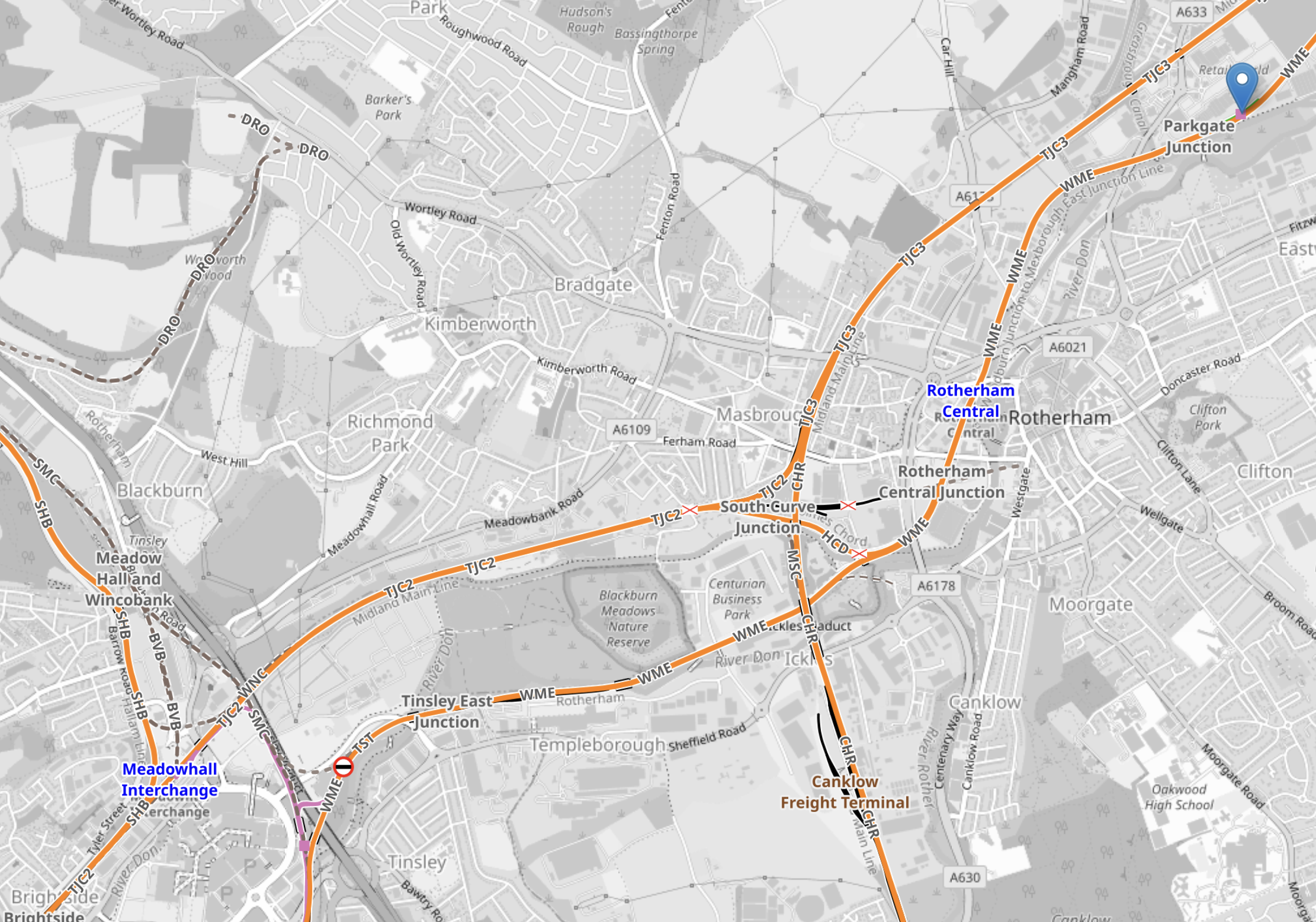
Note.
- The orange lines are the main railway tracks.
- Rotherham Parkgate is indicated by the blue arrow in the North-East corner of the map.
- Trains would run between Sheffield and Rotherham Parkgate via Meadowhall Interchange and Rotherham Central.
- Trains and tram-trains would share tracks through Rotherham Central.
After passing Rotherham Parkgate trains would go to Swinton, and then on to Doncaster or Leeds.
Sheffield And Leeds Via Rotherham Parkgate
Currently, there is an hourly service between Leeds and Sheffield, that goes through the Rotherham Parkgate site.
- It calls at Outwood, Wakefield Westgate, Sandal & Agbrigg, Fitzwilliam, Moorthorpe, Thurnscoe, Goldthorpe, Bolton-upon-Dearne, Swinton, Rotherham Central, Meadowhall.
- The service takes one hour and thirteen minutes, but there are eleven stops.
- As the distance is 38.9 miles, that works out at an average speed of 32 mph.
I suspect this schedule was written for Pacers.
The Department of Transport is aiming for a forty minute journey, which is an average speed of 58.4 mph.
Consider.
- If you look at the maximum speeds of the route from Rotherham Parkgate to Wakefield Westgate, it is 21.8 miles of 100 mph track.
- About twenty miles to the South of Wakefield Westgate is electrified.
- Leeds and Wakefield Westgate is 10.1 miles of 75-85 mph track.
- LNER’s expresses leave Wakefield Westgate, eleven minutes after leaving Leeds.
- I can find a TransPennine Express that takes thirteen minutes to go between Sheffield and Rotherham Parkgate late at night on the way to the depot.
The eleven and thirteen minutes mean that leaves 16 minutes for Rotherham Parkgate to Wakefield Westgate, if Sheffield and Leeds are to be timed at forty minutes, which would be an average speed of 82 mph between Rotherham Parkgate and Wakefield Westgate.
I feel that for a forty minute journey between Leeds and Sheffield, the following conditions would need to be met.
- Very few stops. Perhaps only Meadowhall, Rotherham Parkgate and Wakefield Westgate.
- 100 mph running where possible.
- 100 mph trains
- Electric trains would help, as acceleration is faster. Battery-electric trains would probably be sufficient.
- Some track improvements might help.
But forty minutes would certainly be possible.
At present there are five trains per hour (tph) between Leeds and Sheffield.
- Northern – 2 tph – via Wakefield Kirkgate, Barnsley and Meadowhall – 58 minutes
- Northern – 1 tph – via Outwood, Wakefield Westgate, Sandal & Agbrigg, Fitzwilliam, Moorthorpe, Thurnscoe, Goldthorpe, Bolton-upon-Dearne, Swinton, Rotherham Central and Meadowhall – One hour and 13 minutes
- Northern – 1 tph – via Woodlesford, Castleford, Normanton, Wakefield Kirkgate, Darton, Barnsley, Wombwell, Elsecar, Chapeltown and Meadowhall – One hour and 19 minutes.
- CrossCountry – 1 tph – via Wakefield Westgate – 44 minutes
Note.
- Only the second service will go through Rotherham Parkgate.
- The CrossCountry service takes the more direct route avoiding Rotherham Parkgate.
- All trains go via Meadowhall, although the CrossCountry service doesn’t stop.
- If the CrossCountry service was run by electric trains, it might be able to shave a few minutes as part of the route is electrified.
The CrossCountry service indicates to me, that 40 minutes between Leeds and Sheffield will be possible, but a stop at Meadowhall could be dropped to save time.
Extending East Midlands Railway’s Sheffield Service To Leeds
Consider
- Sheffield station has two tph to London all day.
- The CrossCountry service looks like it could be timed to run between Leeds and Sheffield in forty minutes.
- An East Midlands Railway Class 810 train could probably be timed at 40 minutes between Leeds and Sheffield via Meadowhall, Rotherham Parkgate and Wakefield Westgate.
- The current Northern services could continue to provide connectivity for stations between Leeds and Sheffield.
Extending one tph of East Midlands Railway’s trains to Leeds would probably be sufficient to give two fast trains per hour between Leeds and Sheffield.
- The East Midlands Railway and CrossCountry services could provide a fast service between Leeds and Sheffield in forty minutes.
- If they were electric or battery-electric trains, I suspect that they could call at Meadowhall, Rotherham Parkgate and Wakefield Westgate.
- They could be backed up by the two tph through Barnsley, which could probably be speeded up to around fifty minutes by electrification or using battery-electric trains.
The East Midlands Railway service between London and Leeds would be under three hours.
- Rotherham would get an hourly train to London.
- ,London and Leeds in under three hours, would be slower than Leeds and King’s Cross.
- But the electrification of the Midland Main Line would speed it up a bit.
A fast Leeds and Derby service might compensate for the loss of the Eastern leg of High Speed Two.
Sheffield And Doncaster Via Rotherham Parkgate
At present there are three tph between Sheffield and Doncaster.
- Northern – 1 tph – via Meadowhall, Rotherham Central, Swinton, Mexborough and Conisbrough – 42 minutes
- Northern – 1 tph – via Meadowhall – 28 minutes
- TransPennine Express – 1 tph – via Meadowhall – 27 minutes
Note.
- The first Northern train continues calling at all stations to Adwick.
- The second Northern train continues calling at all stations to Scarborough.
- Both Northern services go through Rotherham Parkgate.
- The TransPennine Express service takes the more direct route avoiding Rotherham Parkgate.
- All trains go via Meadowhall.
These services would give good connectivity for a London train, with a change at Rotherham Parkgate.
Improving Tracks Between Doncaster, Leeds and Sheffield
Consider.
- About 65 % of the main routes between Doncaster, Leeds and Sheffield have a maximum operating speed of 100 mph.
- Doncaster and Leeds is electrified.
- Only 35 miles is without electrification.
- The Midland Main Line is in the process of being electrified to Sheffield.
- There are plans to extend the Sheffield tram-trains to Doncaster Sheffield Airport, that I wrote about in Sheffield Region Transport Plan 2019 – Doncaster Sheffield Airport.
There is also heavyweight electrification infrastructure through Rotherham Central for the Sheffield tram-trains.
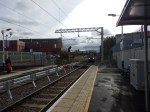

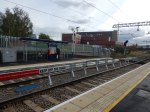

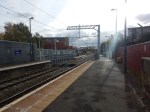
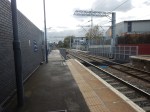
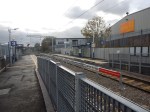
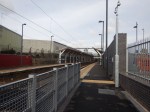

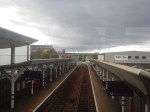


As it is only used by the tram-trains it may be only 750 VDC. But it can probably handle 25 KVAC.
- Could these routes be improved to allow faster running?
- Would it be cost-effective to electrify between Sheffield and the East Coast Main Line and the Doncaster and Leeds Line?
- Alternatively battery-electric trains could be run on the routes between Doncaster, Leeds and Sheffield, charging at all three main stations.
Any form of electric train should be faster, as acceleration and deceleration is faster in any electric train, be it powered by electrification, batteries, hydrogen or a hybrid diesel-battery-electric powertrain.
Conclusion
Sheffield Region Transport Plan 2019 – Tram-Trains Between Sheffield And Doncaster-Sheffield Airport
The Sheffield plans, state this as a medium to long-term priority.
Regional tram-train services to be maximised through Rotherham Central, with direct fast services to Doncaster, DSA and Sheffield.
The tram-train route between Sheffield and Doncaster, would probably be as follows.
- Tinsley Meadowhall South
- Magna
- Rortherham Central
- Rotherham Parkgate
- Swinton
- Mexborough
- Conisbrough
- Doncaster
The distance between Rotherham Parkgate and Doncaster is under twelve miles and has full electrification at both ends.
The Class 399 tram-trains being built with a battery capability for the South Wales Metro to be delivered in 2023, should be able to reach Doncaster.
But there are probably other good reasons to fully electrify between Doncaster and Sheffield, via Meadowhall, Rotherham Central and Rotherham Parkgate.
The major work would probably be to update Rotherham Parkgate to a through station with two platforms and a step-free footbridge.
Currently, trains take twenty-three minutes between Rotherham Central and Doncaster. This is a time, that the tram-trains would probably match.
Onward To Doncaster Sheffield Airport
I have clipped this map of services from the report on Sheffield’s plans.
The tram-train route to the Airport is clearly marked in a broken orange line.
- The tram-train uses a loop from the East Coast Main Line.
- It shares the loop with expresses between London and Doncaster, that call at the Airport.
- The tram-train extension from Doncaster to Doncaster Sheffield Airport has new stations at Lakeside, Bessacarr and terminates at a new station at Bawtry.
It looks a well-thought out plan.
The Tram-Train Platforms At Rotherham Central Station
When I passed through Rotherham Central station, I took these pictures of the tram-train platform extensions.
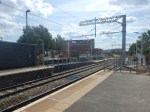
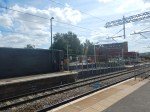
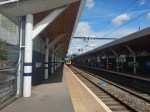
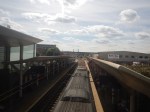

I do wonder, if the design is right.
- I was going to the New York stadium and if I’d arrived on a tram-train from Sheffield city centre, I would have walked a long way down the full platform to cross the line using the stairs or lift.
- Going back to Sheffield, will I be able to avoid walking to the station entrance.
- Passengers expect to be able to walk directly to a tram platform without any barriers.
- Tram passengers also expect to be able to walk across the lines to get to the other platform.
I shall be interested to see how bad the design is when it’s finished.
The Penistone Line And Rotherham Tram-Train Trials
The Penistone Line Tram-Train Trial
The Penistone Line from Sheffield to Barnsley, Penistone and Huddersfield was the line originally selected for the tram-train trial.
In the Wikipedia entry for the line, this is said about the tram-train trial.
On 18 March 2008, the Department for Transport released details of a proposal to trial tram-trains on the Penistone Line, the first use of such vehicles in the UK. The trial was to start in 2010 and last for two years. Northern Rail, the operator of passenger services on the line, asked potential manufacturers to tender for the design and construction of five new vehicles, which Northern Rail would subsequently lease. In addition, Network Rail planned to spend £15m modifying track and stations to make them compatible with the new vehicles.
However, it was announced on 15 September 2009 that a city tram-train trial between Rotherham and Sheffield would replace the Penistone Line scheme.
More about the trial is said in this article on Rail News, which is entitled Penistone Line Is Chosen For £24m Tram Trains Trial. In particular, this is said.
One of the biggest initial tasks is to set a specification for the building of the five diesel-electro hybrid tram trains at a cost of £9 million. The trains will have to be equipped with braking systems suitable for on-street running and a Train Protection Warning System which is required for running on lines with ‘heavy’ rail passenger and freight trains.
The article was written in 2008 and Chemnitz hybrid Citylink tram-trains didn’t enter service until 2016.
So was the trial on the Penistone Line a disaster before it even started?
It had the following problems.
- It was expecting a diesel-electric hybrid tram to be designed and built before 2010.
- A long distance was involved.
- The track-work needed to connect to the Sheffield Supertram could have been incredibly complicated.
- The first all-electric Citylink tram-trains weren’t delivered to Karlsruhe until May 2014, which was seven months late.
For these and other reasons, I think that the decision of the trial to be delayed and to use Rotherham, was a prudent decision.
The Rotherham Tram-Train Trial
Consider these characteristics of the current trial, between Cathedral and Rotherham Psrkgate.
- The tram-trains are virtually standard Karlsruhe Citylink tram-trains, adapted for UK 25 KVAC and painted blue!
- A simple chord connecting the two systems.
- A few miles of electrification, that could be powered by either 750 VDC or 25 KVAC.
- Modification of the recently-built Rotherham Central station.
- Building of a new terminal tram stop at Rotherham Parkgate.
It’s a simple plan, but one that covers a lot of design possibilities and has few, if any, risky elements, that haven’t been done in the UK or Karlsruhe.
The following can be tested.
- The Class 399 tram-trains on the Sheffield Supertram network and an electrified main line.
- Passenger entry and exit at Rotherham Central station and all over the Supertram network.
- Operation under both 750 VDC or 25 KVAC.
- Signalling systems on both tram and main line networks.
The one thing that can’t be tested is a diesel hybrid tram-train as they have in Chemnitz, as they haven’t ordered any!
But if they did want to order some, they could easily be tested between Cathedral and Rotherham Parkgate.
Conclusion
The original plan to use the Penistone Line and diesel-electric tram-trains was impossible.
Network Rail might have got this one right at the second attempt.
They could even run a UK version of the Chemnitz hybrid tram-train on the test route between Sheffield and Rotherham.
From Leeds To Rotherham
This was not what you would call a quality journey.
By train it took 56 minutes, which is about nine minutes longer than it would take in the average car according to various web sites.
There are also nine stops in another Cook’s Tour of Yorkshire.
It was also in a Class 142 train or Pacer.
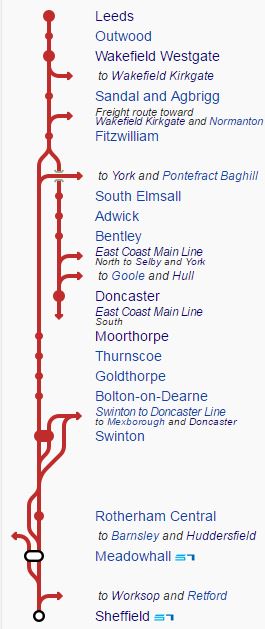
The map clipped from Wikipedia shows the Wakefield Line, which is the route the train took.
These pictures were taken on the journey.
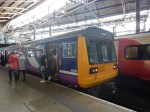
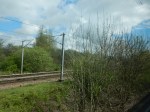


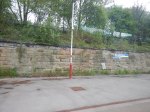
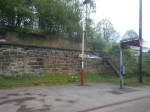
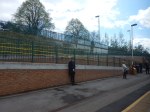
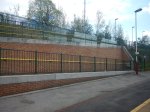
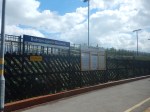
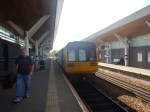
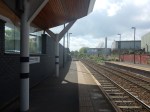
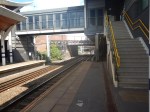
In this day and age for a journey of an hour a better train is needed, especially as the two end points are Leeds and Sheffield,where the two cities have a joint population of about 1.3 million.
The fastest trains between Leeds and Sheffield are run by CrossCountry and take forty minutes using the Wakefield Line.
As the fastest Rotherham Central to Sheffield trains take 14 minutes, I think it is reasonable to assume, that the right train could do Leeds to Rotherham Central in 26 minutes.
This route could become a Northern Connect route, run by new Class 195 trains.
As the route is electrified between Leeds and Fitzwilliam station, I wonder if this could be a route for a Class 319 Flex train.
Both trains are 100 mph units, as against the 75 mph of the Class 142 train, which probably defines the timetable.
From my observations, the route is not particularly arduous and I suspect that either train could do the journey in just over forty minutes, even with all the stops.
Certainly, the current service is truly dreadful and inadequate.
It appears that the overhead wires are going up for the tram-train to Sheffield. Or at least the gantries!
The Rebuilding Of Rotherham Central Station
Rotherham Central station was rebuilt in 2012, but it seemed no-one thought about electrification, so the low bridge over the railway for College Road wasn’t touched.
Now that bridge is being rebuilt.
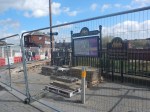
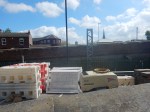

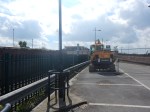

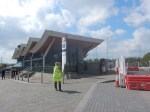
This article in the Rotherham Advertiser is entitled Tram works mean four-month closure for town centre road.
This is said.
A major town centre street will be closed for more than four months to allow key work in the pioneering tram-train link to go ahead.
College Road will be shut from tomorrow until August 18 as the bridge over the railway is being demolished.
Engineers from Network Rail will replace it with a higher one so that overhead lines which will power the tram-trains can be safely installed underneath.
Why wasn’t the bridge raised earlier, when the station was rebuilt?
I suppose someone in the Treasury looked at Rotherham on a map and said that was a place that will never need electric trains.
 The Anonymous Widower