BECCS Beats Hydrogen For Decarbonizing Steel In Europe: ArcelorMittal
The title of this post, is the same as that of this article on S & P Global Platts.
This is the first paragraph.
Bioenergy with carbon capture and storage (BECCS) offers a more cost-effective, readily available solution for decarbonizing the steel industry in Europe than clean hydrogen, steel producer ArcelorMittal’s head of strategy David Clarke said May 17.
So what do they mean by bioenergy?
To make iron from iron ore, you need a reducing agent like carbon or hydrogen.
Iron ore is rich in oxides of iron.
The carbon is usually some form of coal, which produces large amounts of carbon dioxide with the oxygen from the iron oxides.
Hydrogen produces lots of water with the oxygen.
David Clarke of ArcelorMittal explains the process in the article.
“We know biomass worked as a replacement for coal,” he said. “We’ve been using it in our operations in Brazil and other places for many, many years. We have a project in Belgium that we’ll be starting up next year using waste wood, using that to make bio-coal,” with a project to take the emissions from the bio-coal to produce bioethanol.
Is this a case of Back-To-The-Future? If I remember my history, didn’t Iron Age men use charcoal to smelt iron and other metal ores?
If those scientists from Velocys can make Sustainable Aviation Fuel and biodiesel from household waste and used disposable nappies, can they apply their magic to make bio-coal?
I see great cost advantages with this process, as surely it would enable existing blast furnaces to be used, provided they were fitted with carbon capture and storage.
Orsted In Gigawatt-Scale Offshore Wind To Green Hydrogen Plan With Steel Giant ArcelorMittal
The title of this post, is the same as that of this article on Recharge.
The title says a lot and at the heart of the plan is a 1 GW electrolyser.
Now that is enormous.
Will it be made in Rotherham by ITM Power?
The article is a must read.
Ex-Steelworks To Make Wind Farm Parts In Plan For 6,000 Green Jobs
The title of this post, is the same as that of this article on The Times.
This is the introductory paragraph.
The government will invest almost £100 million creating new wind turbine ports in northeast England, with a big renewables company announcing plans to make crucial parts in Teesside.
The two ports will be on Teesside and North Lincolnshire.
The next generation of wind turbines in the North Sea will be very different.
Larger Turbines
They will be larger and the blades will be bigger, so building them close to, where they will be installed is a sensible idea.
We are also very good at aerodynamics in the UK. This is the reason Airbus designs and builds wings in the UK.
Floating Turbines
The next generation of wind farms will be floating, as for some reason, they have a higher capacity factor.
I am personally pleased about this, as it appears they are based on a patented but failed design of floating oil production platform from the 1970s, where I performed the calculations on how to install them.
Some of these floating wind turbines can also be floated into port for major services and upgrades, which probably means we need local manufacturing of as many parts as possible.
Hydrogen Rather Than Electrical Connection
They will also create hydrogen, rather than electricity, by using a combination of wind turbine and hydrogen electrolyser.
As distances between shore and wind farm get longer, it is cheaper to use a gas pipe, rather than a DC electricity link.
Hydrogen can also be stored in worked out gas fields and also brought ashore in redundant pipelines.
The hydrogen electrolysers will probably be built in the world’s largest electrolyser factory in Rotherham, owned by ITM Power; a UK company.
Conclusion
As we are going to build almost 70 GW of offshore wind in the next few years, we’re going to need a turbines and I believe increasingly, they will be built in the UK.
So these two wind ports at Teesside and in Lincolnshire are a good idea.
Fossil-Free Steel A Giant Step In Scania’s Decarbonisation
This title of this post, is the same as that of this article on Automotive World.
This is the introductory sub-title.
“Now we are gearing up in our journey towards completely emission-free products!” This is how Scania’s Head of Purchasing Anders Williamsson sees the company’s decision to invest in and enter into a partnership with the company H2 Green Steel (H2GS).
Other points from the article include.
- Each Scania truck contains five tonnes of steel.
- Scania will have a close partnership with H2GS.
- Scania will be able to get 90 % of their steel from H2GS.
H2GS will change steelmaking, when they start production in 2024.
Green Hydrogen To Power First Zero Carbon Steel Plant
The title of this post, is the same as that of this article on renews.biz.
This is the two introductory paragraphs.
A new industrial initiative, backed by EIT InnoEnergy, will build the world’s first large-scale steel production plant powered by green hydrogen, in north Sweden.
The H2 Green Steel industrial initiative, which will mobilise €2.5bn of investment, aims to deliver a project that will create a new green steel producer from inception.
These further points are made.
- There will be downstream steel products manufacture.
- The initiative will create 10,000 direct and indirect jobs.
- Production could start in 2024.
- Up to five million tonnes of steel could be produced by 2030.
The plant will be built in the Boden-Lulea area of Northern Sweden.
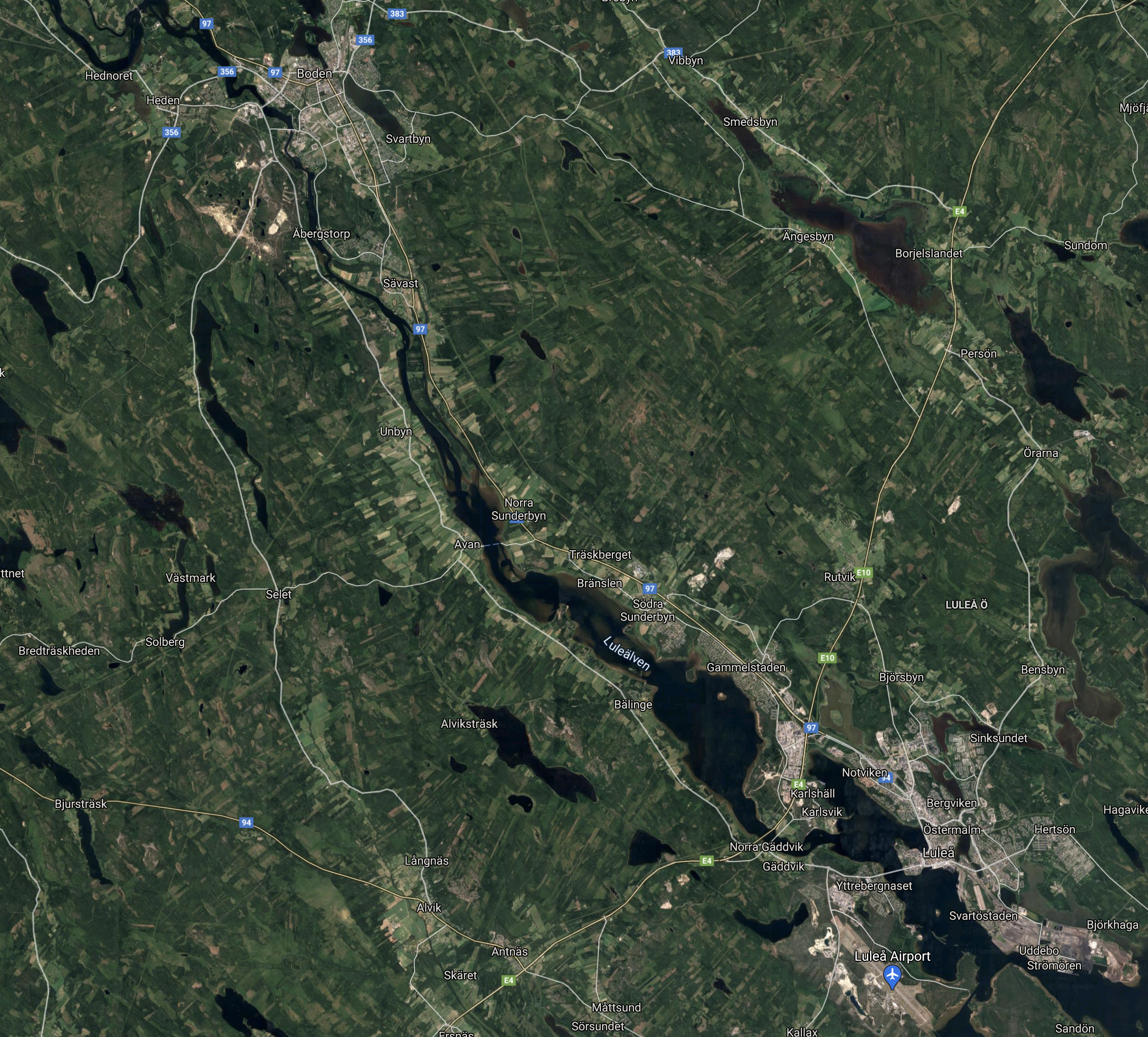
Note.
H2 Green Steel has a web site, which explains more.
What About Scunthorpe?
Surely, the obvious location for green steel production plant in the UK would be Scunthorpe.
- The HumberZero network can bring in hydrogen and take away any carbon dioxide.
- The steelworks makes world-class products like railway rails.
- It is a massive site.
- The site has good rail access.
But there don’t seem to be any plans for hydrogen steelmaking at Scunthorpe.
Conclusion
I hope we’ve not missed the boat for hydrogen steelmaking.
- We’ve certainly got the sites, the renewable energy and the hydrogen technology.
- On the other hand, I can remember sensible arguments for lots of much smaller steel plants from fifty years ago, as an alternative to nationalisation of the steel industry by the Wilson Government in 1967.
- I can also remember proposals for nuclear steelmaking.
I just wonder, if a design of hydrogen steelmaking plant could be developed, perhaps even using a small modular nuclear reactor to generate the hydrogen.
If we are going to have a steel industry in the future, we must do something radical.
Sweden’s Grand Plan To Make Zero-Carbon Steel
The title of this post is the same as that of this article on theTelegraph.
It adds a lot of colour and background to Sweden’s plan to make zero-carbon stell using a process called HYBRIT, that I wrote about in Funding Award to Supply An 8MW Electrolyser and is illustrated in this infographic.
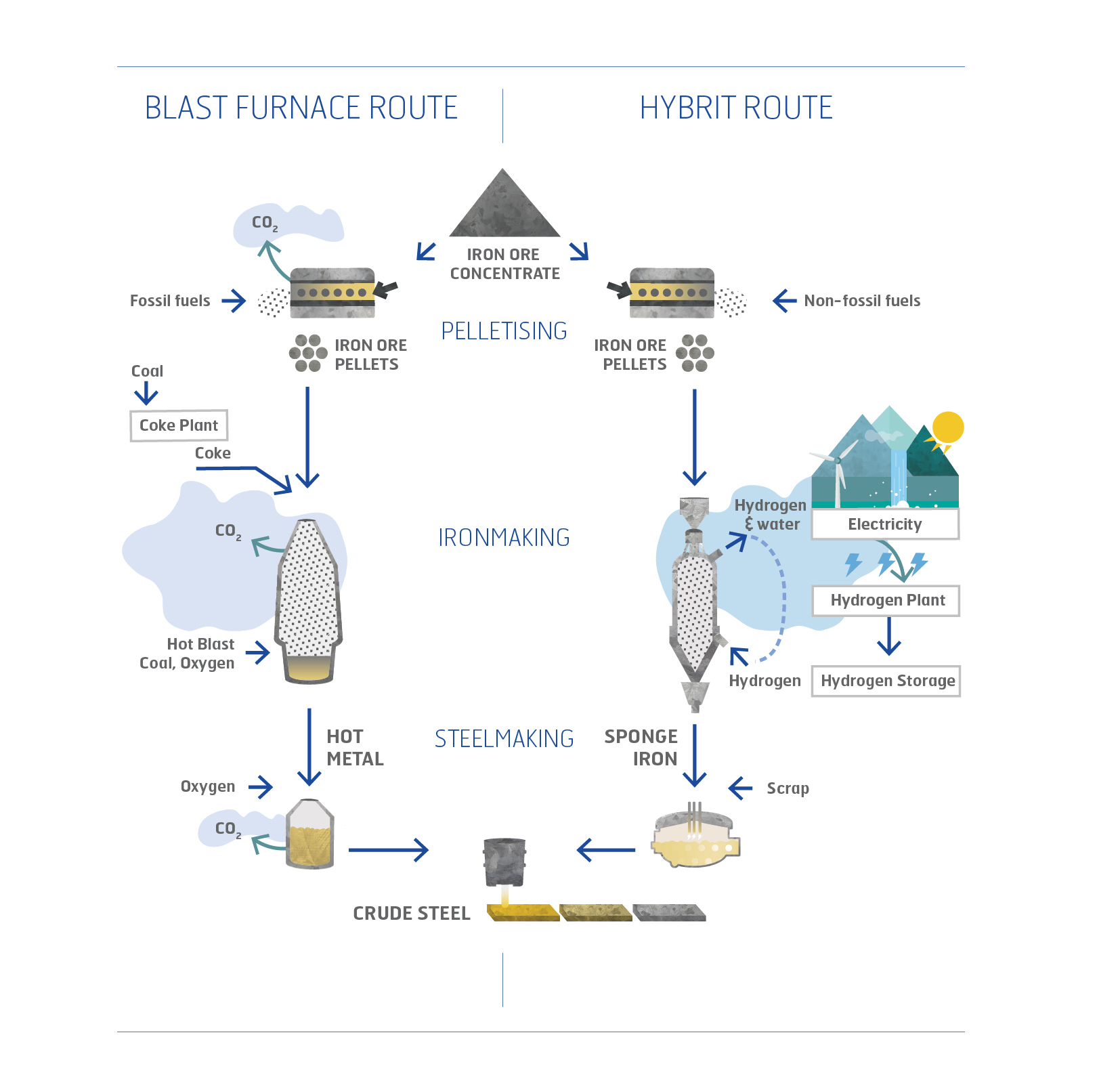
The amount of hydrogen needed is large as this paragraph from the Telegraph article says.
HYBRIT’s demonstration plant, for which an investment decision is due in 2022, will require 400MW of power just for the electrolysers to make the hydrogen. Sweden’s largest existing wind farm, Björkhöjden, produces just 288MW. Then to store the hydrogen, Vattenfall plans to build 120,000 m3 of lined underground storage, enough to store 100GWh worth of the gas.
Will they procure the electrolysers from the UK’s experts in the field; iTM Power? This innovative company is building the world’s largest electrolyser factory in Rotherham, which will be able to produce a GW of electrolysers in a year.
Conclusion
This well-written article in the Telegraph explains a lot about steel produced using hydrogen instead of coal.
Sweden has a lot of advantages at Lulea to create steel.
- The iron ore is mined locally.
- Sweden has ninety percent of Europe’s iron ore.
- Ships can sail to Lulea, which is at the top of the Baltic.
- There is gigawatts of zero-carbon electricity from the River Lule.
- They can build wind farms in the area, which has a low population.
It does look that they might export the iron ore as sponge iron, which can then be processed directly into steel products using electric arc furnaces.
Green Light For Fossil-Free Steel In Oxelösund
The title of this post, is the same as that of this article on Market Screener.
These are the first two paragraphs.
Green light for fossil-free steel in Oxelösund The Land and Environment Court has decided to grant SSAB Oxelösund an environmental permit to convert its steelmaking operations and reduce carbon dioxide activities by 2025. This also means that we will take a step nearer towards fossil-free steel production across SSAB in 2045.
This is an historic decision in many ways. It is the first time that Oxelösund has applied for changes in production to reduce carbon dioxide emissions. Use of sponge iron made through HYBRIT technology, together with scrap iron as feedstock instead of iron ore and coal, will enable SSAB to reduce emissions in Oxelösund by around 80%.
Hydrogen steelmaking processes are surely the future of steelmaking, as they can be made zero-carbon.
It will need a lot of hydrogen and I can see processes like Shell’s Blue Hydrogen Process being ideal to produce the hydrogen.
But will China and the other countries that produce cheap steel, turn to hydrogen steel-making?
Nippon Steel Pledges To Be Carbon Neutral By 2050
The title of this post, is the same as that of this article on NikkeiAsia.
These are the first two paragraphs.
Nippon Steel has set a goal to reach net-zero emission by 2050, Nikkei learned on Thursday, a move that could nudge other manufacturers to try to meet Prime Minister Yoshihide Suga’s pledge to achieve carbon neutrality across the country by the same year.
Nippon Steel, Japan’s biggest steelmaker, will introduce a new way of steelmaking using hydrogen which can reduce carbon emissions by up to 80% compared with conventional methods of production. The steelmaker’s new green target will be unveiled in a business plan it is currently drafting which will be published by March 2021.
To my mind, hydrogen is the way to go!
Dereliction On Teesside – 28th October 2020
The Tees Valley Line between Middlesbrough and Redcar is lined with derelict steel works.


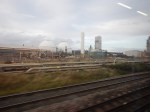
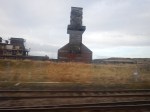
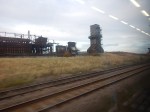
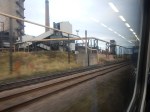
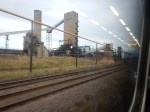
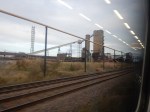

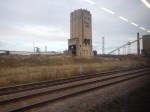
I don’t think there’s an area of such industrial dereliction, in the UK.
Scunthorpe Steelworks
On my way back from Cleethorpes, I passed Scunthorpe Steelworks.


It did seem rather quiet, although I did pass a train-load of new rails on their way to somewhere.
The Future Of Steel-Making
Steel-Making is on its uppers in the UK and it has a bad carbon footprint.
However, various processes are in development that could make the industry fit for the Twenty-First Century.
HIsarna Steelmaking
In Whitehaven Deep Coal Mine Plan Moves Step Closer, I said this.
In Wikipedia, there is an entry for the HIsarna ironmaking process.
This process is being developed by the Ultra-Low Carbon Dioxide Steelmaking (ULCOS) consortium, which includes Tata Steel and the Rio Tinto Group. Reduction in carbon-dioxide produced by the process compared to traditional steel-making are claimed to be as high as fifty percent.
This figure does not include carbon-capture to reduce the carbon-dioxide still further.
However, looking at descriptions of the process, I feel that applying carbon-capture to the HIsarna steelmaking process might be a lot easier, than with traditional steelmaking.
As Scunthorpe is close to Theddlethorpe Gas Terminal, the captured carbon-dioxide could probably be stored in wells connected to the terminal.
Hydrogen Steelmaking
North-East Lincolnshire is becoming the new Aberdeen, but instead of being based solely on oil and gas, there is a large proportion of wind energy being reaped.
In the future, I believe that a lot of this wind energy will be turned into hydrogen gas both onshore and increasing off-shore scores of miles out in the North Sea. There is talk of upwards of 70 GW of wind turbines being installed and much of it will be turned into hydrogen in North-East Lincolnshire.
In Funding Award to Supply An 8MW Electrolyser, I wrote about hydrogen steelmaking and the HYBRIT process in particular.
Will some of this massive amount of hydrogen be piped to Scunthorpe to make steel?
Conclusion
The future of steelmaking in Scunthorpe, doesn’t have to be all doom and gloom.

