Sweden’s HYBRIT Starts Operations At Pilot Plant For Fossil-Free Steel
The title of this post, is the same as that of this article on Reuters UK.
These are the first paragraph.
Swedish green steel venture HYBRIT, owned by SSAB, state-owned utility Vattenfall [VATN.UL] and miner LKAB, on Monday started test operations at its pilot plant for fossil-free steel in Lulea, Sweden.
The HYBRIT web site outlines the process on its home page.
In 2016, SSAB, LKAB and Vattenfall joined forces to create HYBRIT – an initiative that endeavors to revolutionize steel-making. HYBRIT aims to replace coking coal, traditionally needed for ore-based steel making, with hydrogen. The result will be the world’s first fossil-free steel-making technology, with virtually no carbon footprint.
During 2018, work started on the construction of a pilot plant for fossil-free steel production in Luleå, Sweden. The goal is to have a solution for fossil-free steel by 2035. If successful, HYBRIT means that together we can reduce Sweden’s CO2 emissions by 10% and Finland’s by 7%.
This could be a very significant development.
Success For Ovako In Green Steel Hydrogen Trial
The title of this post, is the same as that of this article in The Engineer.
Steel usually has to be heated to a high temperature before it can be rolled.
Normally, LPG is used, but Swedish steel company; Ovako, have conducted a full-scale trial using hydrogen, which seems to have proved it doesn’t result in lower quality.
The Wrong Kind Of Bleach?
This article on Railnews is entitled 9 September: News In Brief.
It has the following sub-title.
Wrong Bleach Took Caledonian Sleepers Out Of Service
This is the first sentence.
Cleabers who used the wrong specification of bleach in the toilets and shower rooms on Caledonian Sleepers caused significant damage after the chemicals reacted with stainless steel pipes,
To my knowledge stainless steel, especially when it contains increased levels of chromium and some molybdenum, can be very proof to attack from most substances.
Look at this Butler Shba cutlery made in Sheffield from stainless steel with black Delrin plastic handles, which have seen continuous use in my household for fifty years.
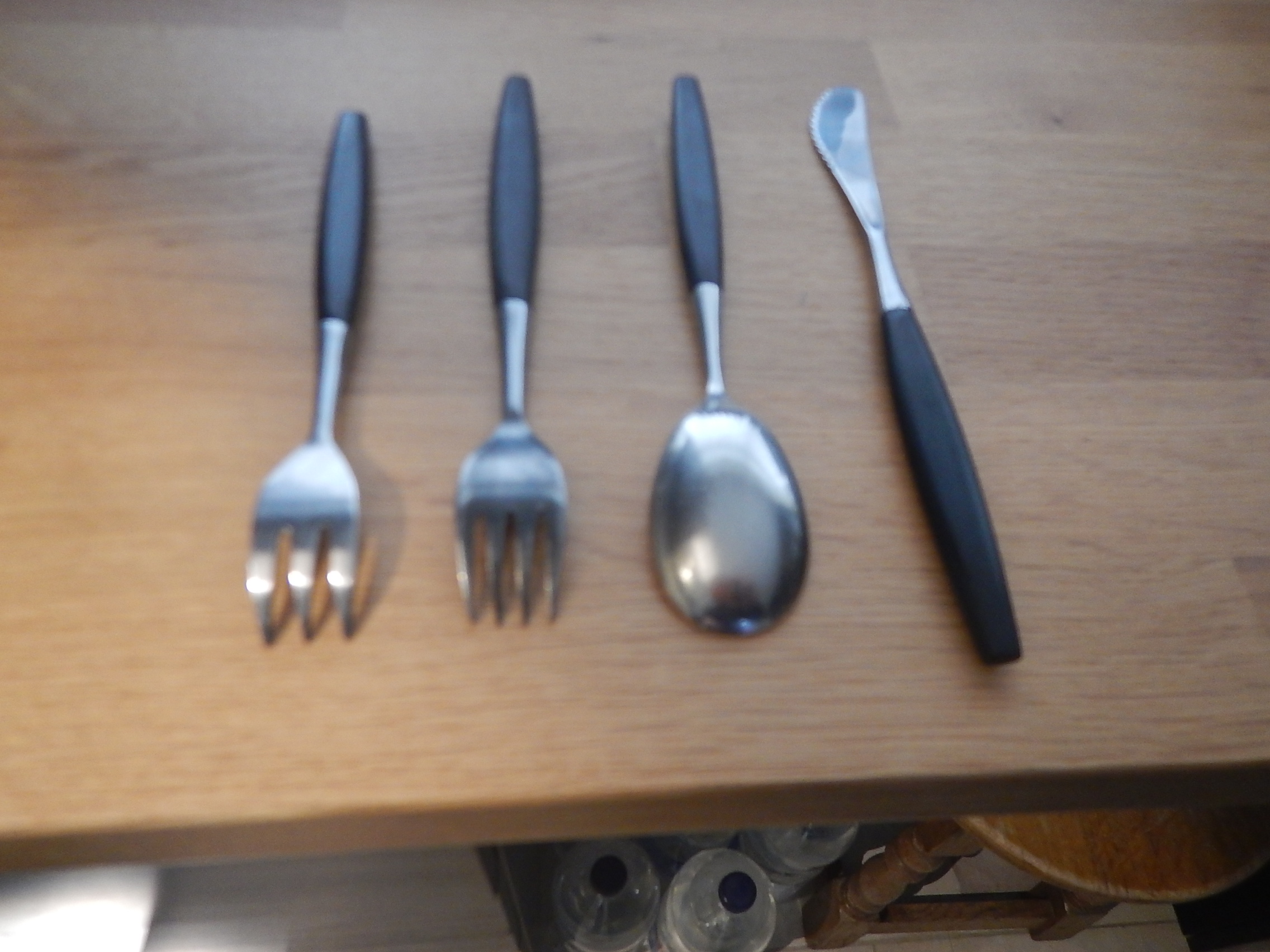
Now that’s what I call stainless steel!
Perhaps, the Spanish used the wrong type of stainless steel?
Delrin is a form of polyoxymethylene, which is an engineering plastic.
This plastic has a wide spectrum of usage, including in zips, bagpipes and metered dose inhalers, to name just three of hundreds.
From Green Gin To Sustainable Steel, Government Fires Up £140m Hydrogen Push
The title of this post, is the same as that of this article on Business Green.
The projects are wide ranging.
Green Gin
This is said about gin production by Orkney Distilling Ltd.
The successful projects feature a number of eye-catching initiatives, including the HySpirits project which has been awarded just under £200,000 to explore how the European Marine Energy Centre could work with local gin producer Orkney Distilling Ltd to convert its distillery from using liquid petroleum gas to hydrogen produced using renewable power.
I have been told that making whisky produces carbon dioxide. Does gin?
My source, also said carbon dioxide frpm Scotch whisky production has been used in the growing of soft fruit.
I found this article on The Courier, which is entitled Time To Cut Back On Whisky’s CO2 Emissions and this article on Scottish Capture and Storage, which is entitled Carbon Capture In The Heart Of The City.
Both are worth reading.
This is a paragraph from the second article.
The carbon capture process at this site is relatively simple, because the off gas from fermentation is already very pure in CO2. The process is not about enhancing CO2 concentration, but more about removing impurities. That involves a number of washing stages to remove water and impurities from the gas given off during fermentation, before it is compressed, stored, and eventually transported by road.
The article also says that the distillery produces four tonnes of carbon dioxide per day, which compared to the emissions of Chinese, Indian and United States coal-fired power stations is small beer, but it does show how in some industrial processes capturing the carbon dioxide can be relatively easy in some industrial processes and of a high quality for perhaps using in food and medical products.
But I can’t find a article connecting carbon dioxide from whisky to food production.
The Dolphyn Project
This is said about the Dolphyn Project.
A further £427,000 has been awarded to the Dolphyn project, which plans to mount electrolysers onto floating wind turbine platforms to produce hydrogen. One wind turbine alone has the potential to produce enough low carbon hydrogen to heat around 2,500 homes, fuel over 120-240 buses, or run eight to 12 trains,” the government said
I can’t find much on the Internet about this project, except this extract from this document on the Institution of Engineering and Technology web site, which is called Transitioning To Hydrogen.
The Deepwater Offshore Local Production of Hydrogen
(Dolphyn) project will consider large-scale retrofit
hydrogen production from offshore floating wind
turbines in deep water locations (Figure 19).This is a partnership project led by ERM with Engie,
Tractebel Engie and ODE. The project looks to
utilise the vast UK offshore wind potential to power
electrolysers to produce hydrogen from the water the
turbines float on. Large 10MW turbines consisting of
desalinisation technology and PEM electrolysers will
feed hydrogen at pressure via a single flexible riser to
a sub-sea manifold with other turbines’ lines. The gas
is then exported back to shore via a single trunkline.
A 20-by-20 array array would have a 4GW capacity,
producing sufficient hydrogen to heat more then 1.5
million homes.This project may include the offshore wind supply
of hydrogen supported with hydrogen from steam
methane reformation with carbon capture technology.
This project is well aligned to work the ACORN75
project at St Fergus.
Note that the project is talking about gigawatts of energy and providing enough hydrogen to heat millions of homes.
I think that the Dolphyn Project is badly named, as Google thinks you’re looking for projects about aquatic animals.
Gigastack
This is said about Gigastack.
Meanwhile, a consortium featuring Ørsted, ITM Power, and Element Energy is celebrating after securing just shy of £500,000 to help move forward with its Gigastack feasibility study, a six-month project to investigate the potential for delivering bulk, low-cost, and zero-carbon hydrogen.
There’s more here on this page on the ITM Power web site, where this is the first paragraph.
Project to demonstrate delivery of bulk, low-cost and zero-carbon hydrogen through gigawatt scale PEM electrolysis, manufactured in the UK.
As you’d expect from the name, they are looking at creating gigawatts of hydrogen.
Steel
This is said about steel.
The funding awards came as the government also launched a new call for evidence seeking views on how the government should structure and manage a planned £250m Clean Steel Fund. The government said the proposed fund would help the industry embrace clean technologies and move on to “a pathway that is consistent with the UK Climate Change Act” and its new net zero emission goal.
So what has hydrogen got to do with steel?
Search for hydrogen steelmaking on Google and you get lots of articles including this article from the Stockholm Environmental Institute, which is entitled Hydrogen Steelmaking For A Low-Carbon Economy.
This is a paragraph.
In the spring of 2016, three Swedish companies – LKAB (iron ore mining), SSAB (steel manufacturer) and Vattenfall (power utility) – announced their ambition to develop and implement a novel process for fossil-free steel production in Sweden. This process would use hydrogen (instead of coal) for the direct reduction of iron oxide/ore (H-DR), combined with an electric arc furnace (EAF). It would be almost completely fossil-free when the hydrogen is produced from electrolysis of water by use of renewable electricity. The concept is called Hydrogen Breakthrough Ironmaking Technology, or HYBRIT for short.
My knowledge of process engineering, tells me, that even if the Swedes don’t succeed, someone will and here in the UK, we’re ideally placed to take advantage, as we have the wind power to produce the hydrogen.
Conclusion
The future’s bright, the future’s green hydrogen!
, The North Sea can provide us with more than enough hydrogen, so long as the wind blows and there’s water to electrolyse..
Network Rail Bids For Part Of British Steel
The title of this post, is the same as that of this article on the BBC.
This is the first paragraph.
Network Rail is looking to buy part of British Steel, as bidders have until the end of Sunday to put in offers for all or part of the troubled firm.
Many would say, why does the nationalised industry Network Rail, which let’s face it, has had its troubles in recent years, want to get involved with a bankrupt company?
You have to remember, how big companies work.
- They need to manage their cash flow.
- They need quality supplies, that will do what it says on the specification.
- They want supplies to be delivered as and where they need it.
But above all they need to be properly financed.
Making And Delivering Rails
This paragraph in the BBC article says a lot.
Network Rail owns and operates the UK’s railway network, including 20,000 miles of track, and buys 100,000 tonnes of rails from British Steel each year.
Suppose, you want to lay new rails urgently between Inverness and the Far North of Scotland. Getting it there will be a logistics problem, which will be made worse, if the source is halfway around the world.
And suppose, when it arrives in the UK, it fails the quality test! You can’t just give it back to the postman.
So for a reliable railway, Network Rail also needs a reliable supplier making rails, close enough for product to be delivered by special train.
From what I have read in the railway press, British Steel are good at the following.
- Manufacturing quality rail.
- Developing special products for rail companies.
- Delivering it on special trains.
To illustrate this, read British Steel Secures Major Contract From Deutsche Bahn.
I also think, that in addition to the Germans, British Steel sell rail to the Belgians, French and the Dutch, to name but three.
So certainly, British Steel seem to be on the ball with making and delivering rails.
But they appear to be seriously underfunded.
Acquiring British Steel
If I was a financier, thinking about taking over British Steel, one of the most important things would be to secure the sales and the resulting cash flow for the company.
I would be on the train to all of the major rail infrastructure companies, that could be reached by British Steel’s special trains from Scunthorpe.
Network Rail have already put a marker down, that they would buy British Steel’s Rail Products Division, but are other rail infrastructure companies also looking at securing quality product, by either buying the division themselves or pledging support alongside Network Rail.
Network Rail are also aware that their predecessor Railtrack, was brought down by the Hatfield Rail Crash, so they are probably and rightly so, paranoid about safety.
The very fact that Network Rail have put in a bid, suggests to me that they know their power in the negotiations to follow, as any purchaser, who doesn’t have the major customers onside, is probably doomed to fail.
On the other hand, if British Steel was bought by someone, that would increase the risk of dodgy product, Network Rail would go elsewhere.
But would they be able to get the same quality and service?
Conclusion
I am sure, that Network Rail, Deutsche Bahn and all the other rail infrastructure companies will play a large park in the fate of British Steel.
Northumberland Park Station – 22nd October 2018
Northumberland Park station is coming on.


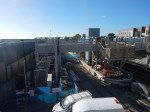


It’s going to be a complicated steel construction.
Some people will like it! Other’s won’t!
I do suspect though, that there will be some superb photographs of this station, when the light is similar to how it was today.
Steelworm At Whitechapel Station
I took this picture at Whitechapel station.
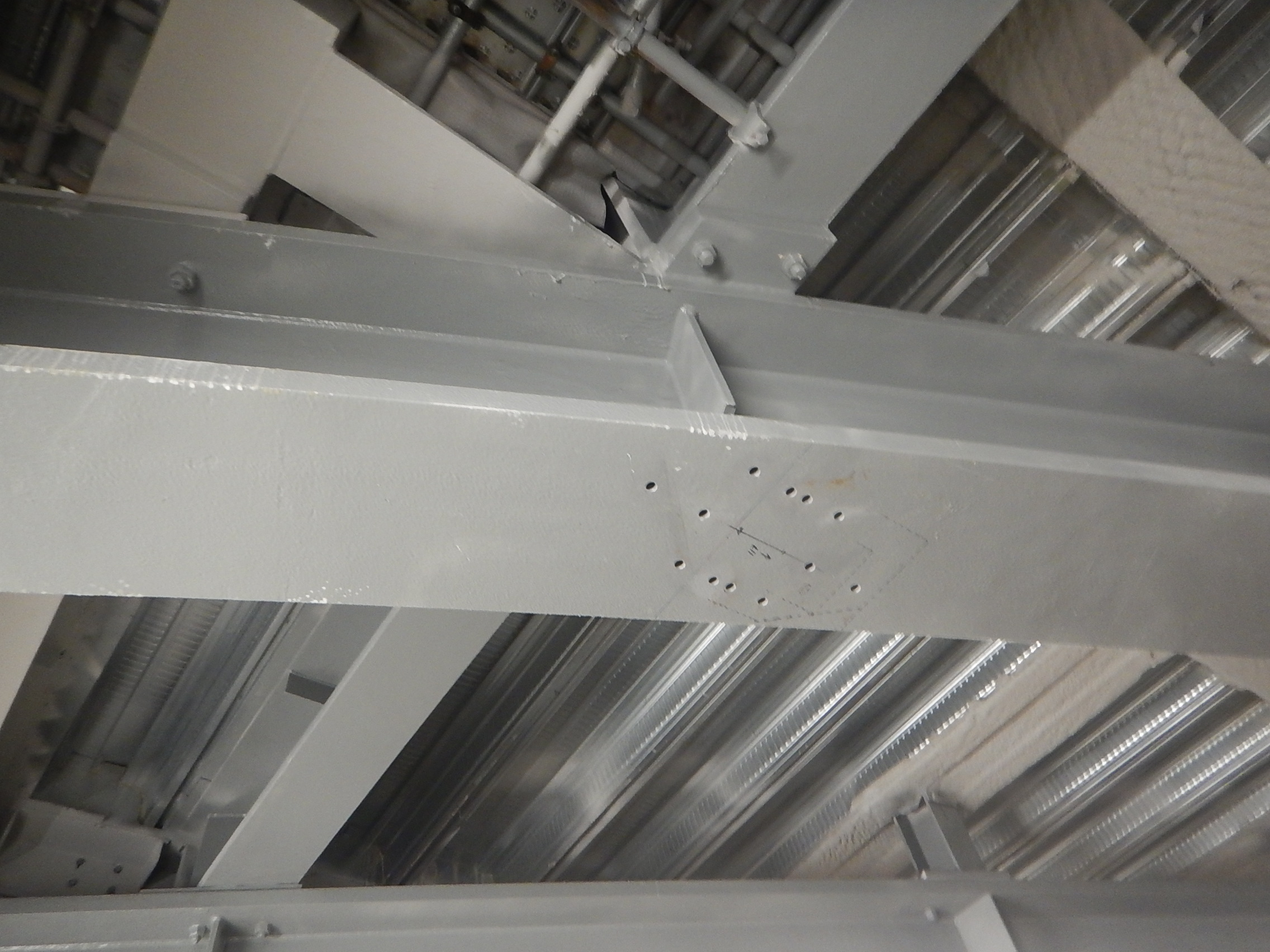
It looks like steel’s equivalent of woodworm has been at work!
British Steel Secures Major Contract From Deutsche Bahn
The title of this post is the same as this article on Global Rail News.
I thought the article had a touch of Coals-to-Newcastle about it.
But read the article and there are a lot of things coming together to enable the order.
- British Steel have spent a seven-figure-sum at Scunthorpe, to make the longer rails, that the Germans use.
- Deutsche Bahn are Europe’s largest purchaser of rail.
- The initial order is for 20,000 tonnes of rail.
- Rails can be delivered in 120 metre lengths through the Channel Tunnel.
I should say, that I’ve read in the past, that Scunthorpe makes a quality product.
I found this video on the British Steel web site.
It all brings back memories of the time, I spent as a sixteen-year-old putting automation on heavy machines use to roll non-ferrous metals.
I doubt you get work experience like that these days!
Could New Technology Help Save Steel Jobs?
One of my first jobs was in the instruments laboratory of Enfield Rolling Mills in the early 1960s. As someone with a mind like a sponge, I never missed storing away every piece of useful engineering and scientific information, I might encounter.
The company was involved in the rolling and the production of materials from non-ferrous metals, like copper, bronze, brass and aluminium. For instance, they did a lot of work with the continuous casting of metals like bronze and aluminium.
The company also used scrap metal as a source of raw material for their processing. One of their problems was identifying the scrap before processing and they had experimented with using a radioactive isotope to see, if it could give them an accurate opinion.
It probably wasn’t the best thing to do!
But since then technology has moved on.
I just wonder now, whether mass spectrometry could correctly identify the exact grade of a large piece of brass, bronze or steel!
If it could, I suspect that we could use our scrap metals to avoid refining new.
So I searched using “automatic steel scrap sorting” and found this page entitled Laser Methods For Automatic Scrap Metal Sorting.
And this page on the Oxford Instruments web site entitled Scrap Metal Analysis, Sorting and Recycling.
Who needs blast furnaces?
We just mine the scrap, rather than send it to China!
Sense About Steel
This article in the South Wales Evening Post is entitled Swansea Bay Tidal Lagoon one solution to Tata Steel crisis, insists council chief Steve Phillips.
He is right and I said so in The Death Of Traditional Steel-Making.
I also said that in addition to the tidal lagoon, a comprehensive metro should be developed all over South Wales.

