Could London And Central Scotland Air Passengers Be Persuaded To Use The Trains?
How Many Passengers Fly Between London And Edinburgh?
Wikipedia gives these figures for 2024 for passengers from Edinburgh to London
- London City – 334,873
- London Gatwick – 476,152
- London Heathrow – 1,148,634
- London Luton – 338, 729
- London Stansted – 693,953
This gives a total of 2,992,341.
As Wikipedia doesn’t give complete figures for from London to Edinburgh, for the purpose of this analysis, I’ll assume they are the same.
How Many Passengers Fly Between London And Glasgow?
Wikipedia gives these figures for 2024 for passengers from Glasgow to London
- London City – 208,405
- London Gatwick – 456,002
- London Heathrow – 954,027
- London Luton – 255,095
- London Stansted – 225,110
This gives a total of 2,098,639.
As Wikipedia doesn’t give complete figures for from London to Glasgow, for the purpose of this analysis, I’ll assume they are the same.
How Many Passengers Fly Between London And Scotland’s Central Belt?
Adding the two figures gives 5,090,980. in both directions.
Which is an average of 97,903 per week or 13,948 per day.
How Many Train Seats Run Between London And Scotland’s Central Belt?
These figures are for Friday the 1st of August.
- Aventi West Coast – London Euston and Glasgow Central – 5 x 9-car Class 390 train – 2,345 seats
- Aventi West Coast – London Euston and Glasgow Central – 16 x 11-car Class 390 train – 6,677 seats
- LNER – London King’s Cross and Edinburgh – 26 x 9-car Class 801 train – 15,886 seats
- Lumo – London King’s Cross and Edinburgh – 5 x 5-car Class 803 train – 2,010 seats
Note.
- All services are all-electric.
- All services are fairly new or have recently been refurbished,
This gives a total of 26,918 train seats.
Adding Lumo’s Service To Glasgow
In Lumo Will Extend Its King’s Cross And Edinburgh Service To Glasgow, I suggested that the Glasgow service would be run as follows from December 2025.
- Two existing Lumo services will leave London as pairs of five-car trains.
- The pairs will split at Edinburgh.
- The leading train will go on to Glasgow Queen Street calling at Edinburgh Haymarket and Falkirk High stations.
- The trailing train will return to London King’s Cross.
- At the end of the day, the two trains in Glasgow will do a fast run back to London King’s Cross as a pair of 5-car trains.
This will add 804 seats per day between London and Glasgow Queen Street in both directions.
The daily total would now total 27,722 train seats, which compares with a daily average of 13,948 passengers per day, who travel by air.
Adding Lumo’s Service To Stirling
In Lumo To Expand Scotland’s Rail Network With New London-Stirling Rail Route From Spring 2026, I talk about Lumo’s new service to Stirling.
- There will be five trains per day (tpd) in each direction.
- Lumo’s new route will link London Euston directly to Stirling, also calling at Milton Keynes, Nuneaton, Crewe, Preston, Carlisle, Lockerbie, Motherwell, Whifflet (serving Coatbridge), Greenfaulds (serving Cumbernauld) and Larbert.
- The service will use 6-car Class 222 trains, which in the linked post, I estimate will have a similar one-class capacity to the Class 803 trains between London King’s Cross and Edinburgh.
- If the capacity of the two train types is similar, this should give operational advantages and allow some more Class 803 trains to run the Euston and Stirling route.
This second Scottish route will add 2010 train seats per day between London Euston and Stirling in both directions.
The daily total would now total 29,732 train seats, which compares with a daily average of 13,948 passengers per day, who travel by air.
Could More Capacity Be Added Between London And Scotland’s Central Belt?
I believe some of the Lumo services between London King’s Cross and Edinburgh could be doubled up to a pair of trains.
There would have to be no platform length issues at London King’s Cross, Stevenage, Newcastle and Morpeth stations.
If three trains could be doubled up, that would add 1,206 train seats per day between London and Edinburgh in both directions.
The daily total would now total 30,938 train seats, which compares with a daily average of 13,948 passengers per day, who travel by air.
I also suspect, that some of the Stirling services could be doubled up.
Connectivity Of England’s Northern Airports To London And Central Scotland
Birmingham Airport
Consider.
- There are easyJet flights to Edinburgh and Glasgow
- There are 1.5 trains per hour (tph) between Birmingham New Street and Edinburgh.
- There are 6 tpd between Birmingham New Street and Glasgow.
You would make your choice and pay the money.
East Midlands Airport
There are no flights or trains to Edinburgh and Glasgow.
Leeds Airport
Consider.
- There are no flights to Edinburgh or Glasgow.
- There is one tph between Leeds and Edinburgh
- There is one tpd between Leeds and Glasgow
Could Leeds and Glasgow get better connectivity?
Liverpool Airport
Consider.
- There are no flights to Edinburgh or Glasgow.
- There is one tph between Liverpool Lime Street and Edinburgh
- There is three tpd between Liverpool Lime Street and Glasgow
The Liverpool area is well connected to Crewe, Warrington Bank Quay, Wigan North Western and Preston stations on the West Coast Main Line for alternative services to Glasgow.
Manchester Airport
Consider.
- There are no flights to Edinburgh or Glasgow.
- There is one tph between Manchester Airport and Scotland via Manchester Piccadilly and Manchester Oxford Road, which alternates between Edinburgh and Glasgow.
The Manchester area is well connected to Crewe, Warrington Bank Quay, Wigan North Western and Preston stations on the West Coast Main Line for alternative services to Glasgow.
Omio gives this summary of flights between Heathrow and Manchester airports.
Flights from Manchester Airport to London Heathrow Airport depart on average 8 times per day, taking around 1h 6m. Cheap flight tickets for this journey start at £63 but you can travel from only £16 by coach.
Wrightbus and others will be producing mouse-quiet hydrogen-powered coaches in a couple of years. I suspect these will give short flights a good kicking.
Newcastle Airport
Consider.
- There are no flights to Edinburgh or Glasgow.
- There is three tph between Newcastle and Edinburgh with an additional 5 tpd from Lumo.
- There is two tpd between Newcastle and Glasgow.
- There is one tpd between Newcastle and Stirling.
- From December 2025, Lumo will add two tpd from Newcastle to Glasgow and one tpd from Glasgow to Newcastle.
- In Lumo Will Extend Its King’s Cross And Edinburgh Service To Glasgow, I stated that I believe that Lumo’s Glasgow to Newcastle service will be a late evening ten-car train, so travellers can have a long day in Glasgow, Edinburgh and Newcastle and still return to London.
Lumo would appear to fill in the gap between Newcastle and Glasgow.
Google AI gives this summary of flights between Heathrow and Newcastle airports.
There are usually 5-6 direct flights per day between Newcastle and Heathrow airports. These flights are operated by British Airways. The average flight time is around 1 hour and 10 minutes.
Note.
- In 2024, 497, 469 passengers flew between between Heathrow and Newcastle airports, which is an average of 681 passengers in each direction every day.
- This was an increase of 13.6 % on 2023.
- From December Lumo will be running extra London King’s Cross and Newcastle services, with each train having 402 seats.
- The improvements in rail services in and around Newcastle in recent months, will surely bring more passengers to use trains from Newcastle station.
- Will Lumo also target adverts at airline passengers?
London and Newcastle could be another route for mouse-quiet hydrogen-powered coaches.
Conclusion
These numbers summarise my calculations.
- Currently an average of 13,948 passengers per day fly between London and Central Scotland.
- Currently, there are 26,918 train seats available per day between London and Central Scotland.
- In December 2025, Lumo will add another 804 low-cost train seats between London King’s Cross and Glasgow Queen Street.
- In Spring 2026, Lumo will add 2010 low-cost train seats between London Euston and Stirling.
- From Spring 2026, there will be 29,732 train seats available per day between London and Central Scotland.
- This represents a 10 % increase of seats on the trains between London and Central Scotland.
How many passengers, who normally fly, will switch to using the train?
- Lumo may only offer one class, but you get a trolley and can order food from M & S and others to be delivered to your seat.
- Both LNER and Lumo accept dogs. I don’t know about Avanti.
- All services will be all-electric, when Lumo gets its new electric trains for Stirling, in a few years.
- It looks to me like Lumo could be offering a late train back to London from Edinburgh and Glasgow.
- Digital signalling on the East Coast Main Line should speed up services.
If Lumo to Glasgow and Stirling works out, it could also cut the total carbon footprint of travel between London and Central Scotland.
Hertford North Station – 6th December 2023
I went to Hertford North station this morning and took these pictures.
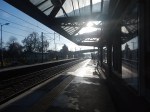
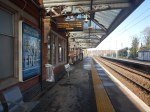
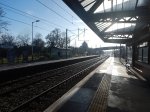
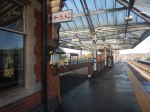
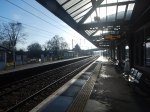
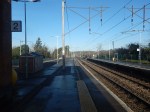
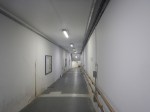
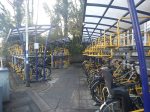
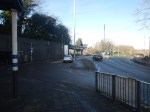
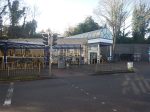

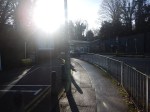

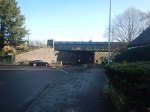

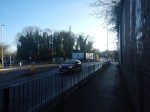
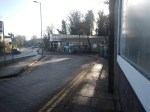
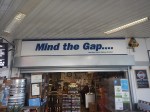
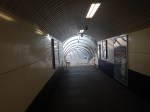
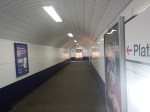
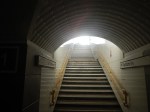
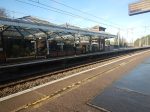
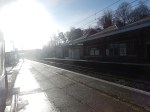
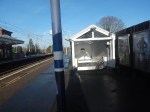
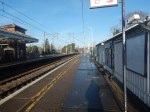
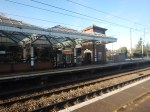
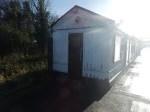
Note.
- Getting to Platform 1 is not easy.
- There would appear to be no obvious place for a lift.
- The traditional signals are still working.
- There is a cafe/shop in the station.
With some sympathetic refurbishment, it could be an excellent station.
I have some thoughts.
Digital Signalling
The digital signalling is currently being rolled out on the Northern City Line.
- The Class 717 train seemed to be running faster than I can remember.
- Had Network Rail been weeding the signals, as there only seemed to be one between each pair of stations?
- Currently, Moorgate and Welwyn Garden City takes around 50-53 minutes.
- Currently, Moorgate and Stevenage takes around 66-67 minutes.
- The average speed between Moorgate and Stevenage is only about 32 mph, which is slow for an 85 mph train.
Could the digital signalling find more time between Hertford North and Stevenage reduce the journey time to something less than an hour?
Trains For Current Schedule
I estimate that the current off-peak schedule of two trains per hour (tph) needs nine trains.
So as there are extra trains in the peak, the fleet of twenty-five Class 717 trains should be enough to be able to run the extra peak trains.
Could Four Trains Per Hour Be Run On Both Routes?
Four tph on both routes, would need something like eighteen trains, which leaves seven spare trains.
The Bowes Park And Bounds Green Out-Of-Station Interchange
After I’d taken the latest pictures in Bowes Park Station – 12th January 2023, I walked to Bounds Green station to go back South to the Angel.
I took these pictures on the way.
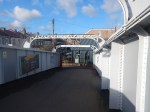
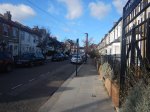
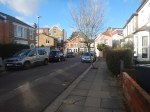
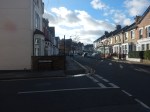
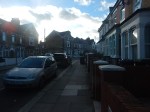
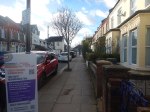
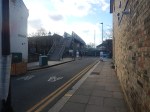
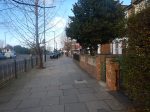

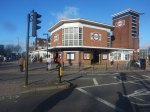
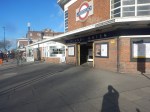
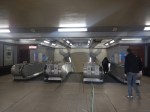
Note.
- The walk is level and could be done easily, if you were pushing a buggy, dragging a case or in a wheel-chair.
- There is a footbridge over the busy Bowes Road, which doesn’t have lifts. But you don’t need it to go between the stations.
- There is a light-controlled crossing outside Bounds Green station to cross Brownlow Road.
- The walk took me about six minutes.
These pictures show the escalators at Bounds Green station.
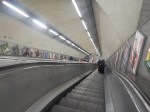
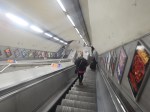
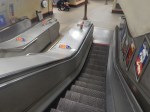
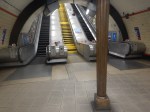
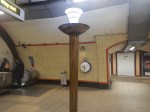

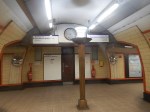
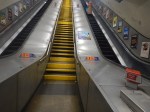
Could the central stairs be replaced by an inclined lift?
Would This Out-Of-Station Interchange Create An Easy Route Between Northern Piccadilly Line Stations And The Elizabeth Line?
Consider.
- Cockfosters, Oakwood and Arnos Grove stations have car parking.
- All stations on the Piccadilly Line from Bounds Green Northwards are well-connected by buses.
- Bounds Green station has escalators.
- Bowes Park station has stairs.
- Bowes Park station has a well-stocked cafe.
- Moorgate station has escalators and lifts to the Elizabeth Line.
For a perfect route, some things must be done.
The Frequency Of Trains On The Northern City Line
At the moment the trains through the station are two trains per hour (tph) between Moorgate and Stevenage.
But the frequency has been as high as four tph.
The frequency needs to be higher to cut waiting for a train.
Step-Free Access
This needs to be installed or improved at Bounds Green, Bowes Park and Moorgate stations.
Signage
The route between Bowes Park And Bounds Green stations needs better signage.
Conclusion
This Out-Of-Station Interchange could be made more use of.
A Visit To Stevenage Station’s New Fifth Platform
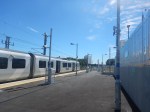
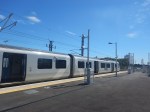
These pictures show the new fifth platform at Stevenage station.
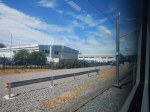


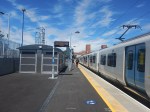


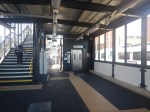
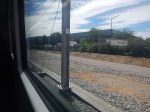
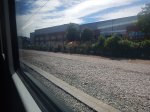

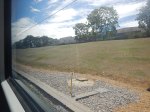


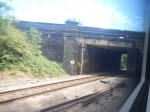


These are a few thoughts.
The New Spacious Platform
As the pictures show, the platform is spacious with plenty of shelter, which probably indicates that it has been designed to handle more than the current two trains per hour (tph).
Why Is Train-and-Platform Not Step-Free?
Look at this picture.

Surely, with a new platform and trains specifically-designed for the route, passengers in wheelchairs, pushing buggies or trailing heavy cases should be able to just stroll in?
If as is likely this route goes to Transport for London because of their policy of allowing those needing assistance to just turn up, this could become a problem in the future. Especially, if a more intensive service was run on this route between Moorgate and Stevenage, where turnround times have been reduced!
Track Layout
It looks like the new Platform 5 at Stevenage station is directly connected to the Down Line of the Hertford Loop, so that trains from London come straight in from the Down Platform 2 at Watton-at-Stone station. My return train appeared to run the other way until crossing over to the Up Line before it arrived back at Watton-at-Stone station.
Google Maps have not been updated in the area, so I’m not sure of the full track layout.
Following freight trains through Watton-at-Stone, it would appear that they use these platforms at Stevenage station.
- Platform 1 – Going South
- Platform 4 – Going North
As would be expected, it looks like it is possible for a freight train to pass through Stevenage to and from the Hertford Loop, with a train in Platform 5.
How Many Trains Per Hour Can Run Between Moorgate And Stevenage?
The timetable has appeared to have been setup, so that a very relaxed two tph can run very reliably between Moorgate and Stevenage stations.
Currently, there are four tph from Moorgate on the Hertford Loop, which alternate between terminating at Hertford North station or the new platform in Stevenage station.
So, if a commuter going home to Stevenage missed his train, they’d be thirty minutes late for supper.
Perhaps not a disaster, but as I indicated in Stevenage Station’s New Fifth Platform Opened A Year Early, Stevenage has an important hospital and increasingly trains for the North are calling at the station.
I suspect, that Network Rail and Great Northern will be investigating, if the two tph to Hertford North station can be extended to Stevenage.
Certain things must be in their favour.
- It is generally accepted, that a well-designed single platform can turn back up to four, and in some cases, six tph.
- The new Class 717 trains have better performance than the former Class 313 trains.
- The route is now run exclusively by the new fleet of trains.
- There are turn-back platforms at Hertford North and Gordon Hill stations.
But the biggest factor, must be that the Hertford Loop along with the rest of the Southern part of the East Coast Main Line, is going to be equipped with ERTMS digital signalling.
I can certainly see a day in the not-to-distant future, when at certain times in the day four tph run between Moorgate and the new fifth platform at Stevenage.
Freight Trains Through The Hertford Loop
According to Real Time Trains, during yesterday about ten freight trains ran through the Hertford Loop.
In addition, there appear to be up to two-three paths in some hours, which were not used.
In the future, after ERTMS digital signalling has been added to the route and more freight services are equipped, I can see increasing numbers of freight services on the Hertford Loop.
More Passenger Services On The Hertford Loop
In the past, whilst returning from the North to London, during periods of disruption caused by track and catenary problems, engineering works or other incidents, the train has taken some unusual routes. In one instance, the InterCity 125 used the Hertford Loop.
These are timings of trains between Finsbury Park and Stevenage stations.
- Moorgate services – 51 minutes
- Thameslink – Cambridge and Brighton – 19 minutes
- Great Northern – Cambridge Express – 16 minutes
To help with the bottleneck of the Digswell Viaduct, it is likely that the Cambridge Expresses will be 140 mph trains, so they can mix it with all the LNER, East Coast Trains, Hull Trains and the other high speed trains between Kings Cross and Hitchin, as I wrote in Call For ETCS On King’s Lynn Route.
Perhaps, other tricks can be employed using Stevenage station and the Hertford Loop Line.
- Could some services go non-stop on the Hertford Loop Line instead of over Digswell?
- Could some services split and join in the long platforms at Stevenage?
- Could some services from the North turnback at Stevenage?
I obviously don’t know all the technicalities, but it does seem that the recent works at Stevenage and the upcoming ERTMS signalling may open up possibilities.
Conclusion
This looks to be a major improvement at Stevenage!
Except for the lack of step-free access!
I
Stevenage Station’s New Fifth Platform Opened A Year Early
The title of this post, is the same as that of this article on Rail Engineer.
This is the introductory paragraph.
A new £40 million platform and track at Stevenage station has been completed more than a year ahead of schedule.
Yesterday, it appears that the first scheduled train left Stevenage for Moorgate at 0502.
Will This Be Good For Travellers?
A few thoughts!
Stevenage Hospital
One of my old school friends lives in Cuffley. From that part of Hertfordshire, the hospital, patients use is in Stevenage. He can drive, but not everybody can!
LNER
Currently, LNER run an hourly service between Stevenage and Leeds, with an hourly service between Stevenage and Lincoln or York via Newark.
North From Enfield, Palmers Green, Southgate, Winchmore Hill and Wood Green
If you live in Enfield or the old London boroughs of Southgate or Wood Green, it could be easier to pick up trains for the North from Stevenage, rather than Kings Cross.
Not Bad For Me Too!
Even, where I live now, which is a mile or so East of Highbury & Islington station, if the timing is right, I can walk or get a bus for four stops to Essex Road station and get a train to Stevenage and then change for Leeds and the North.
East Coast Trains
East Coast Trains will be starting a fast, low-cost London Kings Cross and Edinburgh service, which will call at Stevenage.
Grand Central Trains
Grand Central Trains are currently shut down because of COVID-19, but will they call at Stevenage station, when they restart?
Hull Trains
Some Hull Trains services between London Kings Cross and Hull, call at Stevenage.
Hitachi’s Class 80x Trains
LNER, East Coast Trains and Hull Trains, all run versions of Hitachi’s Class 800 trains or similar.
These trains are built for performance and an extra stop at Stevenage station can probably be incorporated in the timetable without any penalty.
So will we see more trains stopping at Stevenage, if the train operators think it will be worthwhile?
Could Some Services From The North Terminate At Stevenage?
The Digswell Viaduct and the double-track section through Welwyn North station are the major bottleneck on the East Coast Main Line.
But a train returning North at Stevenage wouldn’t go over the viaduct.
Stevenage already has or could have excellent connections to the following.
- Cambridge, Stansted Airport and East Anglia
- Moorgate and the City of London and Crossrail.
- North East London
If keen pricing can encourage travellers to use Stevenage instead of Kings Cross, I can see operators wanting to run extra services, that could start at Stevenage.
I can also see Greater Anglia getting in on the act.
Could Greater Anglia’s Ipswich and Cambridge service be extended to Stevenage via the planned Cambridge South and Royston stations?
Could the service be timed to offer cross-platform interchange with their Norwich and Stansted Airport, at Cambridge South station?
Four important extra services would be created with a step-free interchange.
- Ipswich and Stansted Airport – 106 minutes – Step-free walk across at Cambridge South station
- Ipswich and Stevenage – 115 minutes – New direct service
- Norwich and Stansted Airport – 107 minutes – Existing service
- Norwich and Stevenage – 116 minutes – Step-free walk across at Cambridge South station.
A large number East Anglian rail journeys would be simpler.
Car Parking
Will there be enough car parking at Stevenage station?
I suppose, it would be possible to build a Stevenage Parkway station between Stevenage and Watton-at-Stone stations.
This Google Map shows the area.
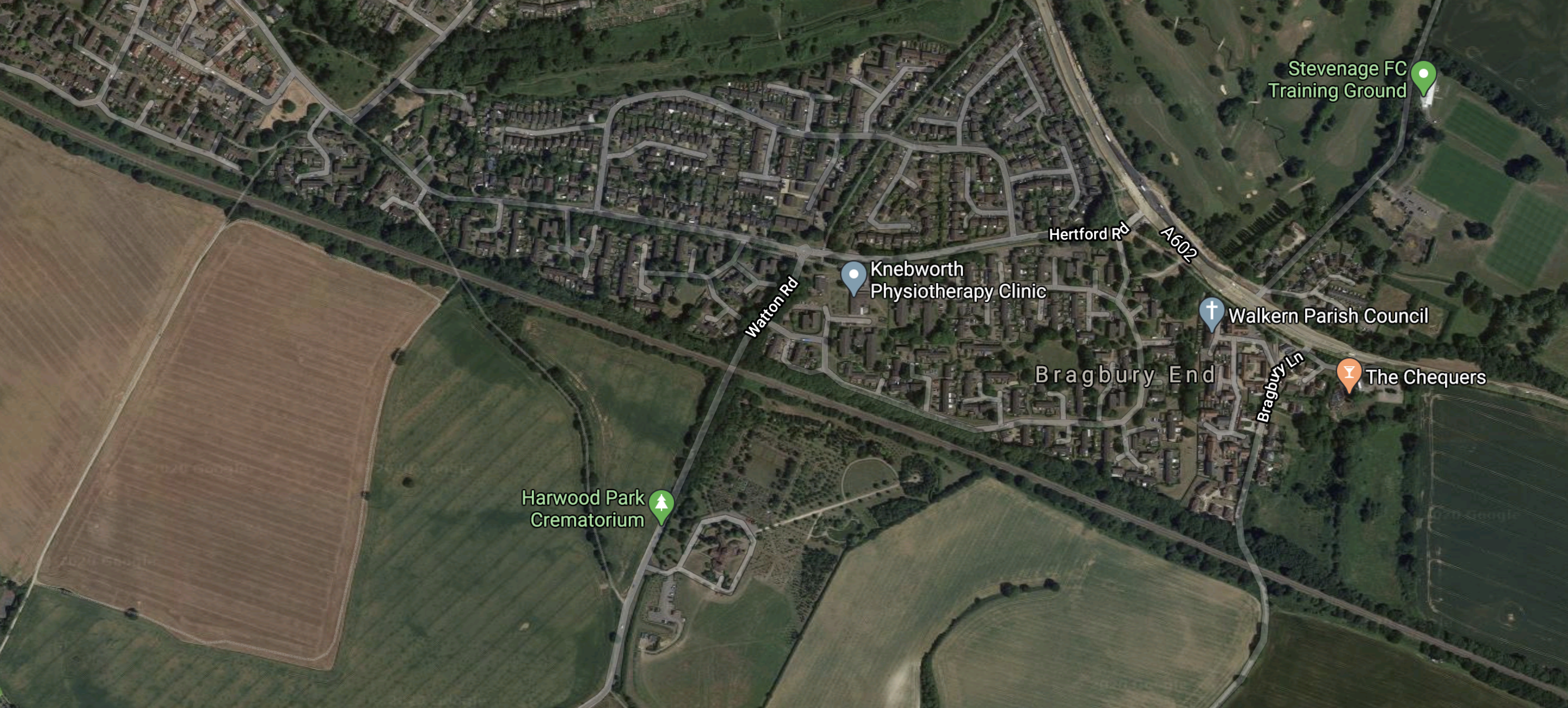
Note, that the railway seems to mark the development limit for the town.
The high performance of the Class 717 trains, would probably mean, that there would be no lengthened journey times.
Conclusion
This project appears to have been well-thought through!
Thoughts On East Coast Trains
According to an article and a picture, the second new Class 803 train for Open Access Operator; East Coast Trains, has arrived in the UK to be fitted out at Newton Aycliffe.
These are my thoughts on the service.
The Trains
The Class 803 trains are similar to the other Hitachi A-trains running in the UK, but with two big differences.
- They will have a one class interior and they will be fitted with a battery, instead of a diesel engine.
- The battery is not for traction and is to provide hotel power in stations and in the event of a dewiring. The latter has been surprisingly common on the East Coast Main Line in recent years.
Normally, these five-car trains are fitted with a single MTU 12V 1600 R80L diesel engine, which is described in this datasheet on the MTU web site.
The mass of the engine is given as 6750 Kg, when it is ready to run.
It would seem logical to replace the diesel engine with a battery of the same weight. I’ll use seven tonnes, as the fuel tank won’t be needed either.
This page on the Clean Energy institute at the University of Washington is entitled Lithium-Ion Battery.
This is a sentence from the page.
Compared to the other high-quality rechargeable battery technologies (nickel-cadmium or nickel-metal-hydride), Li-ion batteries have a number of advantages. They have one of the highest energy densities of any battery technology today (100-265 Wh/kg or 250-670 Wh/L).
Using these figures, a seven-tonne battery would be between 700 and 1855 kWh in capacity.
Incidentally, the power output of an MTU 12V 1600 R80L is 700 kW.
In Sparking A Revolution I gave Hitachi’s possible specification of a battery-electric train.
- Range – 55-65 miles
- Performance – 90-100 mph
- Recharge – 10 minutes when static
- Routes – Suburban near electrified lines
- Battery Life – 8-10 years
These figures are credited to Hitachi.
Doing a quick calculation, it would appear that.
- A 700 kWh battery could supply the same power as the diesel engine for an hour.
- A 1855 kWh battery could supply the same power as the diesel engine for two hours and thirty-nine minutes.
I am drawn to the conclusion, that although Hitachi say the battery is not for traction purposes in a Class 803 train, that a battery the same weight as the current diesel engine, would be a very adequate replacement.
If say, you put a 300-500 kWh battery in a Class 803 train, it would probable give enough hotel power until the train was able to move again. but it would also reduce the weight of the train and thus improve the acceleration in normal running.
A Battery Module
I wouldn’t be surprised if Hitachi are developing a battery module, that can replace the MTU 12V 1600 R80L diesel engine.
- The module would be used for both traction and hotel services on the train.
- It would be charged from the electrification or by regenerative braking.
- It would act as emergency power.
- To the driver and the train’s computer, it would have similar performance to the diesel engine.
The diesel engine and the battery module would be plug-compatible and could be exchanged as required.
I can do a quick calculation for a 1000 kWh battery, which would weigh under four tonnes.
- A 1000 kWh battery would provide 700 kW for 86 minutes.
- At 90 mph, the train would travel for 129 miles.
- At 100 mph, the train would travel for 143 miles.
That would be a very handy extended range.
As East Coast Trains will only run on a fully-electrified route, they have no need for the traction capability.
- But it would fit well with the routes of Avanti West Coast, East Midlands Railway, Great Western Railway, Hull Trains, LNER and TransPennine Express.
- All except East Midlands Railway and LNER, share part or full ownership with East Coast Trains.
It does look to me, that Hitachi is using East Coast Trains and their fully electrified route to give the battery module for the trains, a thorough work-out, on a route, where it will not normally be needed.
The Proposed Service
From various sources we know the following.
- There will be five trains per day in both directions between London Kings Cross and Edinburgh. – See Wikipedia
- East Coast Trains have ordered five trains. – See Wikipedia.
- There will be stops at Stevenage, Durham, Newcastle and Morpeth. – See Wikipedia
- The first Northbound service will arrive in Edinburgh before 10:00. – See Rail Advent.
- Fares will be low-cost at around £25 – See Wikipedia.
It is also likely that East Coast Trains will want a journey time of under four hours, which is being planned for the route anyway under the L2E4 project.
As the record time between London and Edinburgh was set in 1991 by an InterCity 225 train at a minute under three-and-a-half hours, could a time of around three hours and forty-five minutes be possible, including the turnaround of the train?
10:00 Arrival In Edinburgh
This is obviously a good idea, but with a four hour journey time, it would mean leaving London before six.
- Perhaps to make the most of clear tracks in the morning the train would leave early.
- Currently, the first two trains from Kings Cross are the 06:15 to Edinburgh, which arrives at 11:08 and the 06:33 to Leeds.
- How early could the train leave?
I suspect that the first train to Edinburgh would leave Kings Cross around 05:30 and arrive in Edinburgh and be ready to return before 10:00.
10:00 Arrival In London
If arriving in Edinburgh before ten is a good idea, then surely arriving in London by the same time is worthwhile.
- Currently, the first train from Edinburgh to London is the 05:48, which arrives at 10:40.
As with the Northbound service, I suspect the first train to Kings Cross would leave Edinburgh around 05:30 and arrive in Kings Cross and be ready to return before 10:00.
Five Services Per Day
If the first Edinburgh and Kings Cross services left at 05:30 and after unloading and loading, were ready to return before 10:00, that would be the first service.
The simplest way to handle the rest of the day would be to split the time into four and run the trains continuously.
Suppose, the last train got to its destination at one in the morning, that would mean that fifteen hours were available for four trains or three hours and forty-five minutes for each trip between London and Edinburgh and the turnaround.
The train starting from Kings Cross would run the following services.
- Kings Cross to Edinburgh – Leaves 05:30 – Arrives before 10:00
- Edinburgh to Kings Cross – Leaves 10:00
- Kings Cross to Edinburgh – Leaves 13:45
- Edinburgh to Kings Cross- Leaves 17:30
- Kings Cross to Edinburgh – Leaves 21:15 – Arrives 01:00 on the next day.
The train starting from Edinburgh would run the following services.
- Edinburgh to Kings Cross – Leaves 05:30 – Arrives before 10:00
- Kings Cross to Edinburgh – Leaves 10:00
- Edinburgh to Kings Cross – Leaves 13:45
- Kings Cross to Edinburgh – Leaves 17:30
- Edinburgh to Kings Cross – Leaves 21:15 – Arrives 01:00 on the next day.
There would be two very tired trains at the end of every day, that would be looking forward to some well-deserved tender loving care.
This has been my best guess at what the timetable will be! But!
- Travellers can catch an early train, do a full days work in the other capital and return at the end of the day.
- There are three services during the day; one each in the morning, the afternoon and the early evening, for those who want affordable, slightly less frenetic travelling.
- I suspect the intermediate stops have been chosen with care.
- Improvements at Stevenage station could make the station, the preferred interchange for many between East Coast, LNER and local services for Cambridgeshire, Hertfordshire and North London. Car parking is probably easier than Kings Cross!
- Is Durham station an alternative station on the other side of the Tyne from Newcastle, with better parking?
- Could Durham City Centre be the terminal of a Leamside Line extension of the Tyne and Wear Metro?
- Newcastle station is very well-connected to all over the North East.
- Morpeth station could attract a large number of travellers from over the Border. It also looks to have space to expand the parking!
It looks a well-designed route and timetable.
How Many Trains Would Be Needed?
Consider.
- Each train could be two five-car trains working together as a ten-car train.
- This would maximise the use of paths on the East Coast Main Line.
- Four trains would be needed for the full five trains per day ten-car service.
As there is going to be a fleet of five trains, the fifth train would either be in maintenance or waiting to enter the action as a substitute.
Improving Efficiency
It looks to me, that the efficiency of this service could be improved by good old-fashioned time and motion study.
- Will drivers use stepping-up to speed the reverse of trains?
- Would cleaning teams board at Morpeth and Stevenage stations and clean the train on the last leg?
- Will the buffet be designed for fast replenishment?
- Will drivers be given all possible aids to go faster?
Every little will help!
Conclusion
I like this system and the competition will keep LNER on its toes!
Would a similar system work on the West Coast Main Line?
- Grand Union have proposed a service between Euston and Stirling stations.
- There will be stops at Milton Keynes Central, Nuneaton, Crewe, Preston, Carlisle, Lockerbie, Motherwell, Whifflet, Greenfaulds and Larbert.
- Trains will be InterCity 225s.
The service could start in 2021.
Will The East Coast Main Line Give High Speed Two A Run For Its Money To The North East Of England?
I have looked up High Speed Two timings on their Journey Time Calculator and compared them with current LNER timetables.
- London-Leeds – Current – 136 minutes – HS2 – 81 minutes
- London-York – Current – 111 minutes – HS2 – 84 minutes
- London – Darlington – Current – 141 minutes – HS2 – 112 minutes
- York- Darlington – Current – 27 minutes – HS2 – 26 minutes
- London – Durham – Current – 170 minutes – HS2 – 138 minutes
- York – Durham – Current – 45 minutes – HS2 – 44 minutes
- London – Newcastle – Current – 170 minutes – HS2 – 137 minutes
- York – Newcastle – Current – 55 minutes – HS2 – 51 minutes
- London – Edinburgh – Current – 259 minutes – HS2 – 220 minutes
- Newcastle – Edinburgh – Current – 83 minutes – HS2 – 83 minutes
- York – Edinburgh – Current – 138 minutes – HS2 – 134 minutes
Note.
- I have assumed that Newcastle and Edinburgh takes 83 minutes, which is the current timing.
- The time savings possible to the North of Leeds are only a few minutes.
- As an example, the straight route between York and Darlington is 34 miles, which means an average speed of only 75 mph.
Serious work needs to be done North of York to improve timings.
Improvements To The East Coast Main Line
Various improvements to the East Coast Main Line are in process of building designed or built.
Extra Tracks
These example of more tracks are from the Wikipedia entry for the East Coast Main Line.
- Four tracks are being restored between Huntington and Woodwalton.
- Freight loops between York and Darlington.
There are probably other places, which will see extra tracks in the next few years.
Power Supply And Electrification
Wikipedia identified places where the power supply and the electrification could be better.
This sentence indicates the comprehensive nature of the planned work.
Power supply upgrades (PSU) between Wood Green and Bawtry (Phase 1 – completed in September 2017) and Bawtry to Edinburgh (Phase 2), including some overhead lines (OLE) support improvements, rewiring of the contact and catenary wires, and headspan to portal conversions (HS2P) which were installed at Conington in January 2018.
The Hertford Loop Line is also due to have some power supply upgrades.
Station Improvements
Darlington, Kings Cross, Stevenage and York will have track improvements, which will improve the capacity of the tracks through the stations.
Werrington Dive Under
The Werrington Dive Under will be a big improvement. This is an extract from the Wikipedia entry.
The project will see the construction of 1.9 miles (3 km) of new line that will run underneath the fast lines, culverting works on Marholm Brook and the movement of the Stamford lines 82 feet (25 m) westwards over the culverted brook. This will mean that trains for the GN/GE line no longer need to cross the fast lines on the level, nor use the Up Fast line between Peterborough station and the junction. The project, coupled with other ECML improvement schemes (such as the four tracking from Huntingdon to Woodwalton) will improve capacity on the line through Peterborough by 33% according to Network Rail. This equates to two extra train paths an hour by 2021, when the work is scheduled to be completed. In turn, this will remove 21 minutes from the fastest King’s Cross to Edinburgh Waverley service, and 13 minutes from the fastest King’s Cross to Leeds service. It will also see an increase of 1,050 ‘intercity’ seats per hour on express trains through Peterborough.
The upgrade will add two more train paths to the route and knock 21 and 13 minutes off the faster Edinburgh and Leeds services respectively.
The Newark Flat Crossing
This is the railway equivalent of a light-controlled pedestrian crossing in the middle of a motorway.
This Google Map shows the crossing.
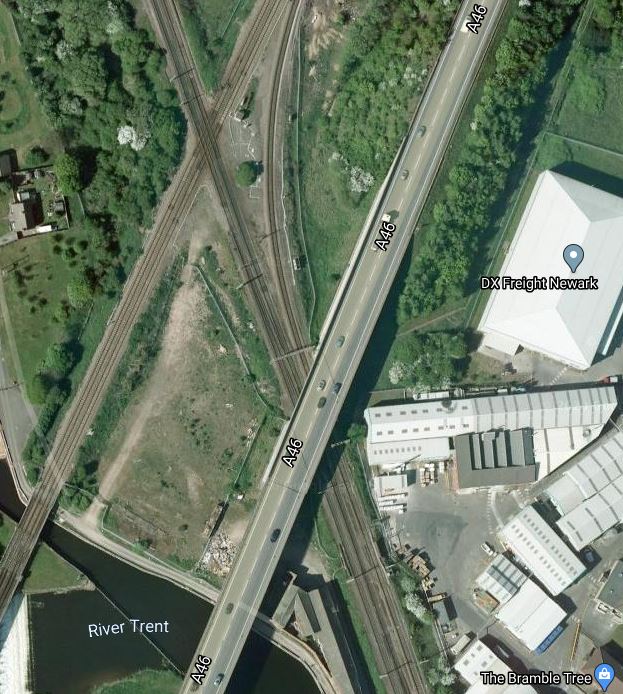
Note.
- The East Coast Main Line running roughly North-South
- The A 46 road crossing the line.
- The Nottingham-Lincoln Line running parallel to the railway.
- A chord allowing trains to go between the Nottingham-Lincoln Line and Newark North Gate station, which is to the South.
- The River Trent.
Complicated it certainly is!
I wrote about the problems in The Newark Crossing and felt something radical needed to be done.
Looking at the numbers of trains at the Newark Crossing.
- The number of trains crossing the East Coast Main Line, is typically about three to five trains per hour (tph) and they block the East Coast Main Line for about two minutes.
- But then there could be a fast train around every four minutes on the East Coast Main Line, with eight tph in both directions.
The numbers of trains and their speeds would probably cut out a Control Engineer’s solution, where all trains are computer controlled through the junction.
Although, it might be possible to reduce the number of conflicting trains on the East Coast Main Line dramatically, by arranging a Northbound and a Southbound express passed each other at the flat junction.
There’s also the problem of what happens if a crossing train fails, as it goes over the East Coast Main Line. But that must be a problem now!
Whatever happens here will be a well-thought through solution and it will add to the capacity of the East Coast Main Line and increase the line-speed from the current 100 mph.
Level Crossings
Wikipedia says this about level crossings.
Level crossing closures between King’s Cross and Doncaster: As of July 2015 this will no longer be conducted as a single closure of 73 level crossings but will be conducted on a case-by case basis (for example, Abbots Ripton Level Crossing will close as part of the HW4T scheme).
It is my personal view that all should be removed.
ERTMS Signalling
Wikipedia says this about the installation of ERTMS digital in-cab signalling.
The line between London King’s Cross and Bawtry, on the approach to Doncaster, will be signalled with Level 2 ERTMS. The target date for operational ERTMS services is December 2018 with completion in 2020.
Note that, ERTMS is needed for 140 mph running.
140 mpg Running
Wkipedia says this about 140 mph running.
Increasing maximum speeds on the fast lines between Woolmer Green and Dalton-on-Tees up to 140 mph (225 km/h) in conjunction with the introduction of the Intercity Express Programme, level crossing closures, ERTMS fitments, OLE rewiring and the OLE PSU – est. to cost £1.3 billion (2014). This project is referred to as “L2E4” or London to Edinburgh (in) 4 Hours. L2E4 examined the operation of the IEP at 140 mph on the ECML and the sections of track which can be upgraded to permit this, together with the engineering and operational costs.
A rough calculation indicates that up to eleven minutes could be saved by this upgrade, between London and Darlington.
Prospective Timings On The East Coast Main Line
Consider.
- The package of new trains level crossing closures, ERTMS, OLE rewiring and the OLE PSU, which is collectively known as L2E4 should deliver Edinburgh in four hours.
- Nineteen minutes need to be saved on current times.
- I believe that if the train takes four hours or less, travellers will switch from the airlines.
- High Speed Two are aiming for a time of 220 minutes, but is this by the West or East Coast routes?
- As their proposed Glasgow service has a similar time, I assume it is by the West Coast route.
- Wikipedia states that an Open Access Operator was thinking of running Class 390 trains or Pendelinos between London Kings Cross and Edinburgh in 223 minutes.
If the managers of LNER are the least bit ambitious, I can see them wanting to run a service between London and Edinburgh, in a time that is several minutes under four hours.
It should always be remembered that the East Coast Main Line was built for speed, as these true stories illustrate.
- Mallard set the world speed record for steam locomotives in 1938 of 126 mph, on the line.
- The record time between London and Edinburgh was set in 1991 by an InterCity 225 train at a minute under three-and-a-half hours.
I even have my own special memory of the line, which I wrote about in The Thunder of Three-Thousand Three-Hundred Horses. Behind a Deltic or Class 55 locomotive, I went from Darlington to London in two hours and fifteen minutes, which is faster than today’s fastest trains. Not bad for a 1960s design, but the train was a coach short and had a clear run. And was probably extremely-well driven.
Is the East Coast Main Line and especially the section South of Darlington, a route, where a knowledgeable driver can coax the maximum out of a high speed train?
Possible savings over the next few years include.
Werrington Junction
When this is completed, it could knock twenty-one minutes off the timings to Edinburgh.
Newark Crossing
How much time could be saved here?
There must be some time savings if the line speed can be increased from 100 mph.
140 mph Running
The various improvements in L2E4 are intended to enable services to run between London and Edinburgh in under four hours.
- Does L2E4 include any possible time savings from the Werrington Dive Under?
- Does L2E4 include any possible time savings from improvements at Newark?
- What is the completion date for L2E4?
- Most of the time savings for L2E4 will be South of Darlington as the track is straighter.
As I said earlier a rough calculation indicates that L2E4 will save about eleven minutes to the South of Darlington.
Conclusion
There must be over thirty minutes of savings to be accumulated on the East Coast Main Line. Much of it because of the Werrington and Newark improvements will be South of Darlington.
I wouldn’t be surprised to see timings like these.
- London-Leeds – Current – 136 minutes – HS2 – 81 minutes – Possible ECML – 120 minutes
- London-York – Current – 111 minutes – HS2 – 84 minutes – Possible ECML – 90 minutes
- London – Darlington – Current – 141 minutes – HS2 – 112 minutes – Possible ECML – 115 minutes
- London – Durham – Current – 170 minutes – HS2 – 138 minutes – Possible ECML – 130 minutes
- London – Newcastle – Current – 170 minutes – HS2 – 137 minutes – Possible ECML – 130 minutes
- London – Edinburgh – Current – 259 minutes – HS2 – 220 minutes – Possible ECML – 210 minutes
It looks to me, that the East Coast Main Line could be fulfilling the aspirations of British Rail’s engineers of the 1980s.
The First Train To The New Platform 5 At Stevenage Station
I was sent this video, by the creator.
Visiting Stevenage from my local Essex Road station, is high on my list of priorities once COVID-19 has been given the good kicking it deserves.
The Ultimate Capacity Of The Moorgate Line
The Moorgate Line is an important commuter line to and from its terminus at Moorgate station within easy walking distance of the City of London.
I use the line regularly to travel between my house and Moorgate station for breakfast at Leon, followed by shopping in Marks & Spencer on Finsbury Pavement.
- I catch a 38 or 56 bus from close to my house to Essex Road station.
- I then take the Northern City Line two stops to Moorgate station.
After my breakfast and shopping, I generally get a 141 bus home, as it means less road crossings to get to my house.
A Useful Line That Needs Improvement
It is a useful and well-used line, that needs improvement in various areas, some of which is already being done or is either in planning or fully planned.
The New Class 717 Trains
The new Class 717 trains are now all running up and down without too many problems.
The trains have been designed for the route, so hopefully they have the following features.
- Fast and automatic voltage changeover between 25 KVAC overhead and 750 VDC third-rail at Drayton Park station.
- Ready for ERTMS signalling.
- 100 mph running, so they don’t get in the way of Thameslink trains on the East Coast Main Line (ECML).
- Fast acceleration and regenerative braking to batteries for fast station stops and train recovery, when power fails.
- Optimisation for fast entry and exit to the trains.
I am afraid that they don’t fully meet the last three points, but they should!
It will be interesting to compare these trains, with Stadler’s new Class 777 trains for Merseyrail, which are also replacing similar BR units.
I believe that regenerative braking to batteries is important for trains in tunnels, and as far as I can determine, only Bombardier’s Class 345 trains for Crossrail have it fitted.
- It reduces the power running in the overhead cables or third-rail in the tunnels, which generates less heat.
- Conventional braking can be avoided in tunnels.
- In case of power failure, the train can be moved to the next station for passenger evacuation.
If trains, tunnels and power supply are designed as a complete system, then surely there must be cost savings.
It is also probably true to say about these trains, that if the operator needed some more trains, then Siemens would probably oblige.
Upgrading The Route
The complete route consists of three separate parts.
- The Northern City Line between Moorgate and Finsbury Park stations.
- The slow lines of the East Coast Main Line to the South of Welwyn Garden City station.
- The Hertford Loop Line between Stevenage and Alexandra Palace stations
The big upgrade planned for the East Coast Main Line is to install ERTMS digital signalling between Doncaster and Kings Cross.
Network Rail are doing their first digital signalling design in a darkened room with no communication to the real world, but I believe if the project was designed by experienced engineers, the following will happen.
- Any train that might use the East Coast Main Line will be fitted with ERTMS signalling.
- This ERTMS roll-out must include all Class 717 trains, as these can use the East Coast Main Loop to Welwyn Garden City and at Stevenage station.
- As the Hertford Loop Line is used as a diversion for the East Coast Main Line, it would be logical to install ERTMS signalling on this route.
- Installing ERTMS signalling into Moorgate station would surely be beneficial and would surely be needed to get the best of ERTMS on the East Coast Main Line.
The outcome should be that the whole Moorgate Line will become a fully digitally signalled route.
This should increase train frequency and capacity on all the digitally signalled routes.
- The fast lines of the East Coast Main Line will become a 140 mph race track.
- The slow lines of the East Coast Main Line will allow extra services.
- If coupled with track improvements, extra capacity on the Hertford Loop Line could be used to allow services to by-pass the bottleneck of the Digswell Viaduct with its limited pair of tracks.
- The Northern and City Line could take extra trains to and from Moorgate.
There could be reorganisation of some services.
- Kings Cross and Cambridge/Ely/Kings Lynn services would be run by 140 mph trains, so they could use the fast lines on the East Coast Main Line. I feel these services could be extended to Norwich, but that’s another matter. What would Alan Partridge think of High Speed Norwich?
- Thameslink services serving Peterborough would still use the East Coast Main Line, so they could call at Welwyn North and Knebworth stations, but why not divert the four trains per hour (tph) that serve Cambridge onto the Hertford Loop Line at Stevenage, to ease pressure over the Digswell Viaduct.
Consider.
- An upgraded Hertford Loop Line with full digital signalling could be able to handle as many as the twenty-four tph of Thameslink and Crossrail,
- The grade-separated junction with the East Coast Main Line is being improved.
- There are only infrequent freight trains on the Hertford Loop Line.
- Various platform upgrades at Hertford East and Gordon Hill could allow passing and more turnbacks.
My scheduling experience says that with a well-programmed computer calling the shots, that at least twenty tph along the Hertford Loop Line would be a serious possibility.
Improvements At Stevenage
The Stevenage improvements are very comprehensive and are designed so that however many trains run through the Hertford Loop, they can all stop in the station, if required.
Improvements At Alexandra Palace
If you are travelling North from Moorgate and find yourself on an East Coast Main Line service, when you need a Hertford Loop one, there is a cross-platform interchange at Alexandra Palace station, where the two routes are on either side of the platform.
It is convenient, but the platform needs better facilities, like a decent waiting room, better information screens and possibly a coffee stall and toilets.
Going South, there are two separate platforms, but this doesn’t matter, as there is no need to change.
Although surely, if all trains left from the same island, it would be easier for passengers.
The station would be improved with a properly-designed step-free bridge and information screens.
Passengers needing other than Moorgate as a final destination must change at Finsbury Park for Thameslink or the Piccadilly Line
The Knitting At Finsbury Park
This map from carto.metro.free.fr shows the tangle of lines at Finsbury Park station.
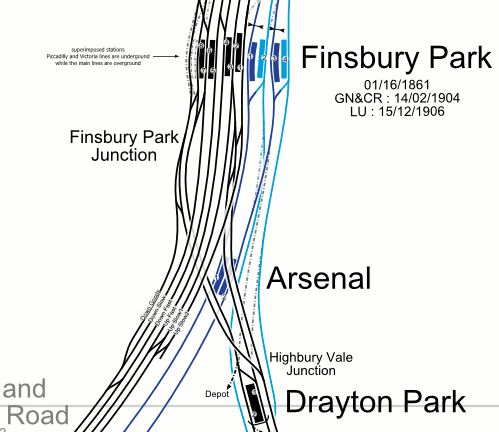
Note that the blue lines are the Victoria and Piccadilly Lines.
Improvements in the last few years have unlocked some of the station’s potential, but there is still plenty of space on the railway land to add extra tracks and possibly reinstate two more platforms.
If there are any train capacity problems, I believe that they can be solved.
The main passenger interchanges at Finsbury Park station are.
- An up-and-down interchange with the Piccadilly Line
- A cross platform interchange with Thameslink
Lifts have been added recently.
Improvements At Drayton Park Station
Drayton Park station is one of those stations, that should be given to developers with a blessing and a very detailed set of objectives and timescales enshrined in a watertight contract.
- The station sits very close to the Emirates Stadium.
- The new trains have increased passenger capacity through the station.
- It could handle much-more match day traffic.
- Large amounts of housing could be built on top.
If done well, it could provide a lot of housing and take the pressures off the other stations in the area on match days.
Improvements At Highbury & Islington Station
This map from carto.metro.free.fr shows the lines at Highbury & Islington station.
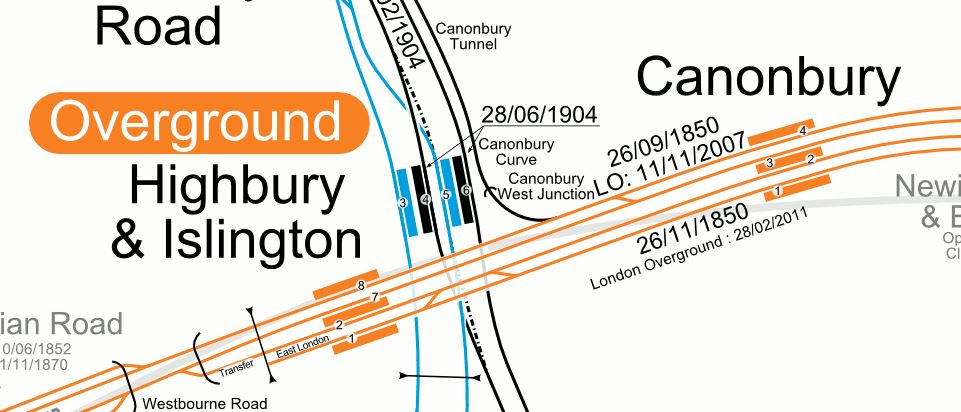
The track layout is basically sound.
The cross-platform interface between the Victoria and Moorgate Line is superb and only needs a good team of builders and lighting specialists to give it a modern finish to make it even better.
The Overground will get better too, as service frequencies increase by up to fifty percent.
The big problem at Highbury & Islington station is that access to the deep level platforms is not fit for purpose.
It is an absolute disgrace that The Mayor and Transport for London have put forward no plan to solve the problem of access to the deep level platforms.
The solution would probably involve opening up the disused station entrance on the on the side of Holloway Road and sinking an escalator and lift shaft to the four platforms. As at Drayton Park station, I believe with the right contract, it could be handed to a developer.
At least Crossrail, when it opens might give a bit of relief in the Peak. Many passengers might avoid Highbury & Islington station altogether by changing between the Overground and Crossrail at Whitechapel.
Like water, passengers tend to flow through the widest channels and find their own level.
Improvements At Essex Road Station
Essex Road station is a disgusting station, with all the charm of a Victorian slum.
As with Drayton Park station, it should be given to developers with a blessing and a very detailed set of objectives and timescales enshrined in a watertight contract.
Improvements At Old Street Station
The access to the existing Old Street station is being improved, but it seems to be taking forever.
I do hope, there is a realistic plan to create a flagship station for Silicon Roundabout.
Improvements At Moorgate Station
This station is being fully upgraded for Crossrail.
Eventually, there will be step-free access between the following lines.
- Central Line
- Circle Line
- Crossrail
- Hammersmith & City Line
- Northern Line
In addition all the National Rail lines out of Liverpool Street will be step and weather-free from all the other lines.
This can only increase the number of passengers using the Moorgate Line.
The Ultimate Frequency
I said earlier that the complete route consists of three separate parts.
- The Northern City Line between Moorgate and Finsbury Park stations.
- The slow lines of the East Coast Main Line to the South of Welwyn Garden City station.
- The Hertford Loop Line between Stevenage and Alexandra Palace stations
These are my thoughts on the capacity of each section.
Frequency Of The Northern City Line
I know Walthamstow Central station on the Victoria Line well and have observed the following.
- Thirty-six tph come and go for most of the day.
- From the time the brakes are applied after a train arrives until the time they are release when the train leaves is about two and a half minutes.
- Drivers use a procedure called stepping-up to speed the turnround. The driver leaves the arrived train and a new driver gets in at the other end, to drive it out.
- There is a lot of passenger congestion in the Peak, due to bad passenger access.
Surely, if Dear Old Vicky can handle thirty-six tph with the following.
- Two platforms,
- Modern trains
- Modern signalling
- Well-trained staff
- Not the best passenger access with just two escalators.
Then the new Class 717 trains at Moorgate with the best passenger access can handle a higher frequency than they do now!
I suspect that around twenty tph can be achieved fairly easily, but that in future , a higher frequency will be achieved.
Frequency Of The Slow Lines Of The East Coast Main Line
London has several commuter lines with frequencies of over 10 tph.
- Foremost, are Crossrail and Thameslink, which are both planned to run at 24 tph
- The East London Line is also planned to increase from 16 tph to 20 tph.
- The North London Line is planned to be increased from its current eight tph
- Waterloo and Wimbledon is upwards of 8 tph.
In addition most London Underground lines have frequencies in excess of 16 tph.
The slow lines of the East Coast Main Line to be a railway, in a few years time with the following characteristics between Finbsbury Park and Welwyn Garden City.
- At least one track in each direction.
- An operating speed of over 60 mph
- ERTMS signalling, which will be fitted to all trains on the lines.
I can’t see any reason, why the lines couldn’t be able to handle up to twenty tph in both directions, based on the experience of other lines in London, that have been operating for over a decade.
But strand on the bridge for an hour at a station like Oakleigh Park, at a busy time of day and you’ll be lucky to see ten trains.
There is a lot more capacity on the slow lines of the East Coast Main Line, to use to add extra services between London and Welwyn Garden City.
Adding services that go further North than Welwyn Garden City will need a solution to the double-track section over the Digswell Viaduct.
Frequency Of The Hertford Loop Line
I said this earlier.
My scheduling experience says that with a well-programmed computer calling the shots, that at least twenty tph along the Hertford Loop Line would be a serious possibility.
I also think that the slow lines of the East Coast Main Line can handle the same frequency, so I very much stand by my original figure.
Is There An ERTMS-based Solution To The Digswell Viaduct?
I answer that question in Is There An ERTMS-based Solution To The Digswell Viaduct?.
Some Questions
Various people over recent months have asked me questions about possible improvements to the Moorgate Line.
Could There Be A Direct Escalator Connection Between Bowes Park Station On The Hertford Loop Line and Bounds Green Station On The Piccadilly Line?
This map from carto.metro.free.fr, shows the two stations.
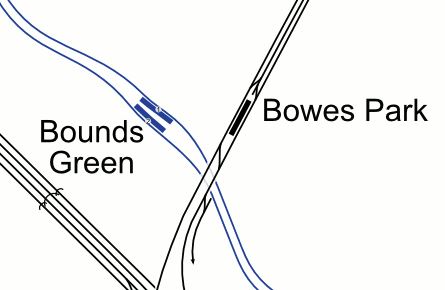
Bounds Green station is one of the Piccadilly Line’s classic stations.
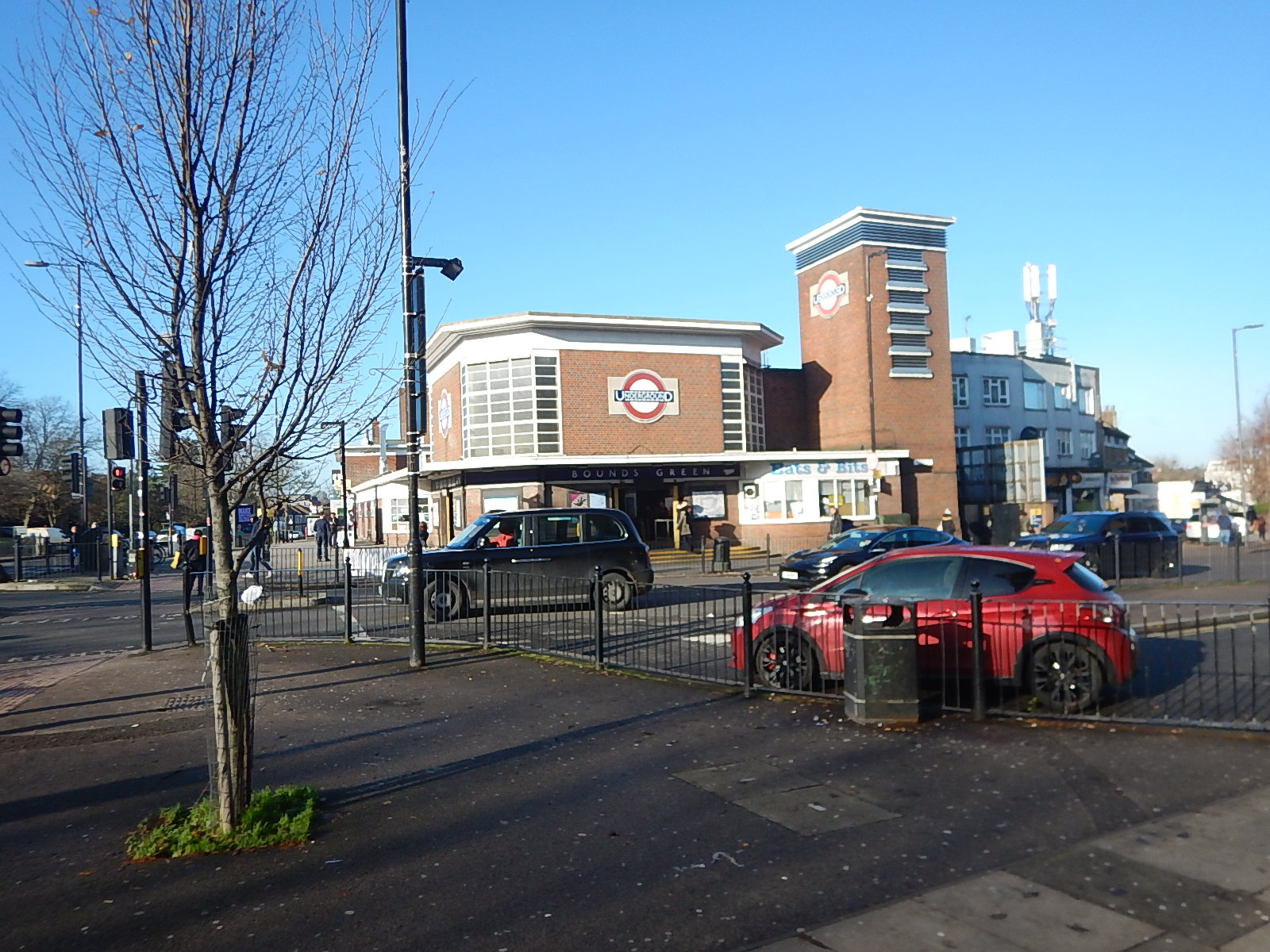
I took the picture, when I walked between the Bowes Park and Bounds Green stations
It is a level walk, that could be better signed and if the two stations were to be made step-free it would be an easier interchange than that at Finsbury Park.
In my view, improving the two stations and the local environment, would be much better value than an expensive escalator connection.
Should There Be A Second London Terminal?
Kings Cross is used as a London terminal at times, but would there be much of a necessity.
Passengers can use the following connections to get to Kings Cross and other stations along Euston Road.
- A cross-platform interchange at Finsbury Park with Thameslink
- A cross-platform interchange at Highbury & Islington with the Victoria Line
- When Crossrail opens, there will be a step-free connection with the Circle, Hammersmith & City and Metropolitan Lines at Moorgate.
Passenger numbers will decide.
Could The Moorgate Line Be Extended South To Bank Station?
The original Victorian plans for the Moorgate Line show the line extended to a station at Lothbury, which is just behind the Bank of England. This Google Map shows the area.
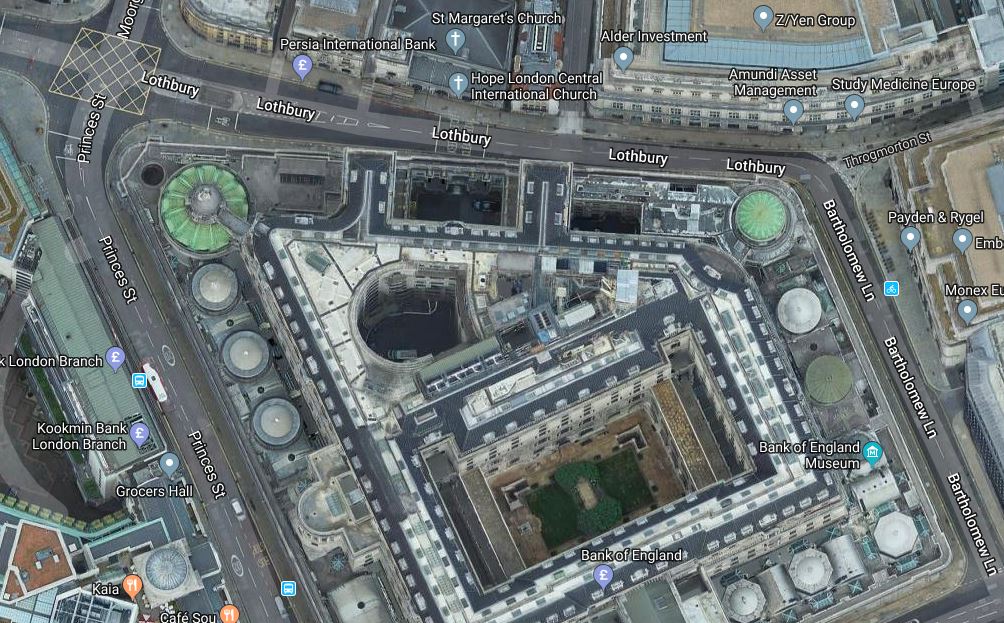
These pictures show the area, where Lothbury and Moorgate meet.



Given the difficulty of handling the logistics of all the tunnelling for the Bank station upgrade, I don’t think the City of London would look too kindly on a rail extension between Moorgate and Bank, especially, as there is already the Northern Line and even I can walk it easily.
It could be argued as Moorgate is served by Crossrail and Bank station isn’t, that there will be a high level of passenger traffic between the two stations.
Consider.
- It is only five hundred metres to walk.
- The Northern Line is jammed solid between London Bridge and Kings Cross in the Peak.
- After the completion of the massive Liverpool Street-Moorgate double-ended Crossrail station and the Bank Station Capacity Upgrade, a one stop on either the Central Line or the Northern Line will be step-free.
- The Liverpool Street-Moorgate Crossrail station will hopefully have a selection of entrances with good connections to walking routes leading South towards Bank.
- The City of London is planning to make the streets of the city more friendly to walking and cycling.
- More and taller towers are increasing employment in the City.
Will the walking routes and the Central and Northern Lines be overwhelmed?
I think they could be, but there could be other solutions.
- Opening up of more walking routes and improving the already pretty good street maps and signage.
- A redesign of the bus network with high capacity electric buses taking over the routes between Old Street and London Bridge stations.
I also wonder, if it would be possible to dig a pedestrian tunnel between the two stations under the existing roads and fit it with travelators.
The ingenuity that has been shown in the Bank Station Capacity Upgrade has probably suggested a few ideas.
But I’m absolutely sure there will be no extension of the railway pass Moorgate.
Is The Interchange With Thameslink At Finsbury Park Frequent Enough?
It seems that Thameslink will run four tph through Finsbury Park station.
- All will have cross-platform interchange with Moorgate Line services.
- All services will serve London Bridge, East Croydon and Gatwick Airport stations.
Are these enough services?
Passenger numbers will decide.
Should Some Thameslink Services Use The Hertford Loop?
I said this earlier.
Thameslink services serving Peterborough would still use the East Coast Main Line, so they could call at Welwyn North and Knebworth stations, but why not divert the four trains per hour (tph) that serve Cambridge onto the Hertford Loop Line at Stevenage, to ease pressure over the Digswell Viaduct.
It possibly is an idea, but I also believe, that ERTMS signalling could offer an elegant solution to the Digswell Viaduct problem.
Could The Moorgate Line Have Some New Park-An-Ride Stations?
There are two possibilities on the Hertford Loop Line.
This Google Map shows where the Hertford Loop Line crosses the M25, to the North of Crews Hill station.
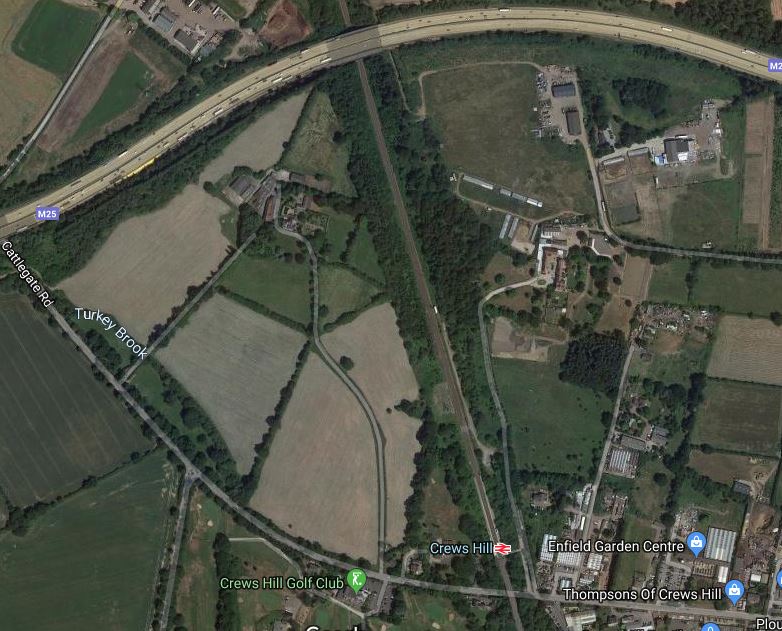
It would probably be impossible to build a Park-and-Ride station in this area now, but if the M25 had been designed in an holistic and environmentally-sympathetic manner, it could have been a place for such a facility.
There must also be the possibility of building a Park-and-Ride or more likely a Cycle-and-Ride station to the South of Stevenage, as the town develops, as it surely will in the next decade.
From my helicopter, it doesn’t look promising to add more parking except possibly at Hadley Wood station. This page from Hansard is a good summary of GNER’s original proposal in about 2000.
Should The Moorgate Line Be Taken Over By Transport for London?
Consider.
- This is certainly a desire of the London Mayor; Saddiq Khan.
- After the farce of the Metropolitan Line Extension at Watford will Greater London and Hertfordshire be able to work together over the route?
- There are twelve stations in Hertfordshire and twenty in Greater London.
- Stations are in four Greater London Boroughs; Barnet, Enfield, Haringey and Islington with Moorgate actually in the City of London.
The line might improve as part of Transport for London, but agreeing the management and development strategy for the line, with all those politicians of different colours, could be a nightmare.
Conclusion
Without doubt all of the parts of the Moorgate Line can handle at least twenty tph and possibly more, once the following conditions are met.
- Full ERTMS signalling on all lines.
- The stations are capable of handling the increased number of passengers.
- There are a few more trains.
Automatic Train Control may need to be used in certain sections, as it will be on Crossrail and Thameslink.
What Would This Mean For Passengers?
The current pattern of train services in the Off Peak is as follows.
- 4 tph – Welwyn Garden City
- 2 tph – Hertford North
- 1 tph – Watton-at-Stone
- 1 tph – Stevenage
Note.
- This is well below the future capacity of the section between Moorgate and Alexandra Palace stations
- It needs eight trains for each branch or a total of sixteen trains.
The simplest pattern would be twenty tph between Moorgate and Alexandra Palace stations, which would serve the following destinations.
- 10 tph – Welwyn Garden City
- 5 tph – Hertford North
- 5 tph – Stevenage
Note.
- Intermediate stations, like New Barnet and Cuffley would get a train every six minutes.
- The service would need forty trains.
- I doubt Great Nortern would want to finance the extra trains.
Cutting the service back to somewhere in between would also work.
- 6 tph – Welwyn Garden City
- 3 tph – Hertford North
- 3 tph – Stevenage
Note.
- Intermediate stations, like New Barnet and Cuffley would get a train every ten minutes.
- The service would need twenty-four trains.
As there are twenty-five Class 717 trains, is this Great Northern’s plan?
It looks to me like a plan designed by Great Northern’s accountants based on the least they can get away with.
An Improved Service For South Hertfordshire
Consider.
- The extra platform and remodelling at Stevenage station are ambitious and the new platform could probably handle six tph.
- Stevenage has an LN|ER service to the North of two tph.
- East Coast Trains intend to start a service linking Stevenage to Newcastle and Edinburgh.
- Healthcare in South Hertfordshire sends patients to hospitals at Barnet and Stevenage, neither of which are easy from a station like Cuffley
- Bus services across are not for the frail, elderly and impatient.
- There is no rail link between Hertford and Hatfield except with a change at Alexandra Palace station, which is not step-free.
Perhaps the Moorgate train service should be as follows.
- 8 tph – Welwyn Garden City
- 4 tph – Hertford North
- 4 tph – Stevenage
Note.
- Importantly, there would be four tph to between Alexandra Palace and Stevenage.
- The Stevenage services would link up to the improved fast services between Stevenage and the North of England and Scotland.
- Intermediate stations, like New Barnet and Cuffley would get a train every seven-eight minutes.
- The service would need thirty-two trains, which is probably another eight trains.
I also think, that Alexandra Palace station should be made step-free to ease journeys from one side of Hertfordshire to the other.
.
 The Anonymous Widower