Arriving In Liverpool Lime Street Station – 10th May 2025
Liverpool Lime Street station has one of the more spectacular approaches of British railway stations, as these pictures show.




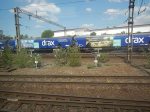




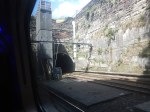


















These sections describe the approach.
Crossing The Mersey
You cross the Mersey at Runcorn on the Ethelfreda or Britannia Bridge, which is described in this Wikipedia entry.
It was completed in 1868 and hopefully in a few years, it will be carrying High Speed Two trains between London and Liverpool.
On your right as you cross the Mersey to Liverpool is the Silver Jubilee road bridge, which is a through arch bridge that opened in 1961 to replace a historic transporter bridge. I am just a little bit too young to have seen the transporter bridge.
Further to your right, you can see the Mersey Gateway Bridge, which is a cable-stayed bridge, that opened in 2017 and is described in this Wikipedia entry.
Drax’s Biomass
As you approach Lime Street station, you pass through Edge Hill, where there are the GB Railfreight sidings, where the biomass trains for Drax power station are marshalled for their journey across the Pennines. These Drax trains seem to be one of the few freight trains in the UK, that carry advertising. Tesco trains also do, but their’s is just big letters.
In Do Cummins And Stadler Have a Cunning Plan?, I talked about the possible conversion at some date in the future of GB Railfreight’s new electro-diesel Class 99 locomotives to electro-hydrogen locomotives. These locomotives will surely be ideal for hauling Drax’s biomass trains across the Pennines.
I do believe that these Class 99 locomotives are the future of heavy freight trains in the UK. In Iarnród Éireann Looks At Diesel Loco Replacement Options, I write about speculation, that Stadler may build a version for the Irish.
Through The Edge Hill Cutting
From Edge Hill a deep cutting through the sandstone takes you into Lime Street station.
It looked good in the sun, but the first time I arrived in the city to start my studies at Liverpool University, it was chucking it down and the cutting was very dark and wet.
It was a very different welcome to that, which I got yesterday.
My Train Arrived In Platform 10
Liverpool Lime Street has two cast iron train sheds.
- The Western shed has platform 1 to 5 and generally handles trains from the East.
- The Eastern shed has platform 6 to 10 and generally handles trains from the South.
Note.
- Changing between trains is just a step-free walk across the station concourse.
- Both sections have their own taxi rank and full-size clock.
- The Ticket Office is in the Western train shed.
I just walked from my train to the Ticket Office, bought a Lancashire Day Ranger ticket and then walked fifty metres to my next train.
How many stations have such an easy change of trains?
Is Liverpool Lime Street Station Ready For High Speed Two?
Consider.
- I travelled North in an 11-car Class 390 train, which is 265.3 metres long and can carry 607 passengers.
- As the last pictures show, the train fitted easily into platform 10.
- High Speed Two plans to send 200 metre classic-compatible trains to Liverpool Lime Street, with each having a capacity of up to 528.
It looks to me, that these High Speed Two classic-compatible trains will fit into Liverpool Lime Street station, at any platform that currently accepts an eleven-car Class 390 train.
Looking on Real Time trains over the last few days, I’ve found eleven-car Class 390 trains using platforms 9, 10 and 6.
It seems that Network Rail’s engineers have done a superb job to turn the Grade II Listed station, into one of the best operationally.
Rolls-Royce Announces Successful Run Of UltraFan Technology Demonstrator To Maximum Power
The title of this post, is the same as that of this press release from Rolls-Royce.
This is the sub-heading.
Rolls-Royce today announces it has successfully run its UltraFan® technology demonstrator to maximum power at its facility in Derby, UK. The initial stage of the test was conducted using 100% Sustainable Aviation Fuel (SAF).
These are the first four paragraphs.
This is an important milestone for the UltraFan demonstrator, which was successfully tested for the first time earlier this year. Since then, the UltraFan team has been gradually increasing the power as part of the rigorous testing regime and the demonstrator has performed in line with our expectations. The results of the test will provide us with valuable learning and data, which our teams will now take away and continue to analyse.
This achievement reinforces our confidence in the suite of technologies that has been developed as part of the UltraFan programme. Confirming this capability is a big step towards improving the efficiency of current and future aero-engines as UltraFan delivers a 10% efficiency improvement over our Trent XWB, which is already the world’s most efficient large aero-engine in service. In total that’s a 25% efficiency gain since the launch of the first Trent engine.
UltraFan’s scalable technology from ~25,000-110,000lb thrust also offers the potential to power the new narrowbody and widebody aircraft anticipated in the 2030s.
As part of the UltraFan development programme we have identified a number of technologies that are potentially transferable to our current Trent engines, which will provide our customers with even greater availability, reliability and efficiency.
These are my thoughts.
What Is UltraFan?
UltraFan has a section in the Wikipedia entry for the Rolls-Royce Trent engine, where these are the two opening paragraphs.
After the Advance comes the UltraFan, initially aimed to be ready for service from 2025. A geared turbofan with a variable pitch fan system that promises at least 25% improvement in fuel burn, the UltraFan aims for a 15:1 bypass ratio and 70:1 overall pressure ratio.
The Ultrafan keeps the Advance core, but also contains a geared turbofan architecture with variable-pitch fan blades. As the fan will vary pitch to be optimised for each flight phase, it won’t need a thrust reverser. Rolls-Royce will use carbon composite fan blades instead of its usual hollow titanium blades, and along with new material adoption will save 340 kg (750 lb) per engine.
This is a bit different from previous engines.
Variable-Pitch Fan Blades
Variable Pitch Fan has its own Wikipedia entry, where these are the two opening paragraphs.
A variable pitch fan is similar in concept to that of a variable-pitch propeller and involves progressively reducing the pitch (or blade angle) of the fan on a turbofan as the engine is throttled. Although variable pitch fans are used in some industrial applications, the focus of this article is on their use in turbofan engines. No production engine uses such a feature; however, it will likely be required on at least some of the next generation of high bypass ratio turbofans.
One of the methods used to reduce Thrust-specific fuel consumption is to improve Propulsive Efficiency. This involves reducing the effective jet velocity of the engine by reducing specific thrust. This, in turn, reduces the optimum fan pressure ratio required and consequently the cold nozzle pressure ratio. At cruise flight speeds the nozzle is choked and the fan working line is fairly steep and linear. However, at low flight speeds the ram pressure rise in the air intake is so low the nozzle is well un-choked. Consequently, the fan working line is highly curved and well to the left of the cruise flight speed working line, potentially reducing the fan surge margin to a dangerous level, particularly at lower throttle settings. Readers unfamiliar with surge lines, working lines, etc. should read the Wikipedia article on Compressor map.
The extract says that no production engine uses this feature. So will UltraFan be the first?
Variable pitch fan blades seem to offer two advantages; better efficiency and lower weight. If the reliability is acceptable, then that must be a winner.
No Thrust Reverser
This sentence is also in the Wikipedia entry for Variable Pitch Fan.
One advantage of the variable fan option is that varying the fan pitch offers the possibility of reversing engine thrust without the need for heavy blocker doors, cascades, etc.
It does look like the UltraFan will be a lighter engine, than its predecessor.
Composite Fan Blades
Composite Fan Blades were tried in the 1960s for the Rolls-Royce RB211 engine.
But they failed and were replaced by titanium blades.
At the time, I was at Liverpool University and John Wilkinson was a fellow student.
John’s father was the manager of a Tesco store in Derby.
That Tesco store had a nice line in selling out-of-date chickens and turkeys to Rolls-Royce to test the engines for bird strikes.
Improving The Engine’s Efficiency
This is the second paragraph of the press release.
This achievement reinforces our confidence in the suite of technologies that has been developed as part of the UltraFan programme. Confirming this capability is a big step towards improving the efficiency of current and future aero-engines as UltraFan delivers a 10% efficiency improvement over our Trent XWB, which is already the world’s most efficient large aero-engine in service. In total that’s a 25% efficiency gain since the launch of the first Trent engine.
Note.
- The Trent engine was first run in 1990 and has improved 25 % since.
- The Trent XWB engine was first run in 2010 and has improved 10 % since.
The increase in efficiency appears to be linear.
A Saleable Design
This is the third paragraph of the press release.
UltraFan’s scalable technology from ~25,000-110,000lb thrust also offers the potential to power the new narrowbody and widebody aircraft anticipated in the 2030s.
If that means that an UltraFan can power an aircraft as small as an A320, then that is sensational, as it will give Rolls-Royce access to the A320/Boeing 737 market, where they have virtually no sales.
UltraFan Is About A Suite Of Technologies
This is from the second paragraph of the extract.
This achievement reinforces our confidence in the suite of technologies that has been developed as part of the UltraFan programme.
And this is the fourth paragraph.
As part of the UltraFan development programme we have identified a number of technologies that are potentially transferable to our current Trent engines, which will provide our customers with even greater availability, reliability and efficiency.
As you learn more about your future project, why not apply that knowledge to current projects.
Running On SAF Is Part Of The Testing
I’m reassured that testing of the technology using Sustainable Aviation Fuel has started early in the program.
This is surely going to be the fuel, that aircraft will use until hydrogen becomes available.
Conclusion
It looks like Rolls-Royce are redefining, what a standard aero engine looks like.
- It will give a 10 % fuel saving over their latest engines launched thirteen years ago.
- The UltraFan engines will save weight and hopefully more fuel.
- It will allow Rolls-Royce to compete in the A320/737 market, where they have no engine at present.
I would watch the share price
Nestlé And Tesco Launch Double-Stacked Rail Freight Trial
The title of this post, is the same as that of this article on Logistics Manager.
This is the sub-heading.
Nestlé UK and Ireland has successfully completed its first delivery to supermarket chain Tesco using a ‘first-of-its-kind’ rail container, as part of a new rail freight trial.
These are the first three paragraphs.
The container features a roof-raising mechanism allowing products to be “double-stacked from floor to ceiling operating at full capacity before the roof is lowered for transit”. The appeal of this is its capability to store potentially twice as much freight in one journey, reducing costs and emissions.
This is part of Nestlé’s plans to increase freight capacity on trains as a means of reducing the negative impact that the company’s logistics operations have on the environment. It is hoped that the trial will allow the process to be refined over time, providing further opportunities for Nestlé to expand the volume of goods that can be transported via rail in a single shipment.
This focus is integral to Nestlé’s strategy to reduce its reliance on the consumption of diesel in its road transport network. According to a 2021 report from the Rail Delivery Group, rail freight produces, on average, 76% fewer emissions than road transport. This, it claims, equates to a reduction of around 1.4 million tonnes of CO₂ nationally each year.
Note.
- This article would appear to be a follow-on to Nestlé Unveils New Double-Stacking Rail Logistics Plan To Reduce Carbon Footprint, which I wrote in June 2022.
- In From 2025, Nestlé Waters France Will Use The First Hydrogen-Powered Freight Train Through An Innovative Solution Developed by Alstom and ENGIE, I talk about how Nestlé are experimenting with hydrogen-powered locomotives.
Nestlé certainly seem to be working on reducing the carbon dioxide produced by their logistic operations.
BayWa r.e. Unveils Subsidy-Free Floating Wind Project Offshore Portugal
The title of this post, is the same as that of this article on offshoreWIND.biz.
This is the first paragraph.
BayWa r.e. has officially applied to secure the rights for an exclusive use of the seabed for a commercial-scale floating offshore wind project in Portugal, which the company said will be the first subsidy-free floating wind farm in the world.
Note.
- BayWa are a German company headquartered in Munich.
- The windfarm will have a 600 MW capacity in total, in a dedicated zone off the coastline of Viana do Castelo.
- It will be a floating wind farm.
- Viana do Castelo is situated at the mouth of the Lima River and is about 74 km. to the North of Porto.
But surely the most significant fact about this project is that it is subsidy-free.
BayWa And Subsidy-Free Wind Farms
This page on the BayWa web site is entitled BayWa r.e. Sells UK’s First Subsidy-Free Wind Farm.
This is the first paragraph.
BayWa r.e. has reached a milestone for itself and the UK renewable energy sector with the completion and sale of the country’s first subsidy-free windfarm to James Jones & Sons Ltd and London-based specialist asset manager, Gresham House Asset Management.
Note.
- This is the first time, I’ve seen Gresham House associated with wind farms.
- BayWa appear to have a fifteen year agreement with Tesco for the generated electricity.
The whole page is a must read.
Conclusion
Does this mean, that we will be seeing subsidy-free floating wind farms around the UK?
Get the engineering, manufacturing and financial support right for floating wind farms in the UK and wind farms could be bumper-to-bumper around these islands.
Marks And Spencer’s Chicken Kiev Has Been Renamed Chicken Kyiv
I took this picture in Marks and Spencer at Liverpool Street tonight! Note the name!

I didn’t buy one as it isn’t gluten-free.
There have been lots of articles like this one on Birmingham Live, which is entitled Tesco, M&S, Aldi, Lidl, Morrisons, Sainsbury’s, Asda Under Pressure To Rename Chicken Kievs ‘Kyiv’.
So perhaps, pressure works.
A Cool Move To Keep Emissions On Track
The title of this post is the same as that of this press release from Tesco.
This is the body of the release.
- Tesco and DRS partner on a new refrigerated rail freight service that will take 40 lorries off the road for every journey it makes
- Helping Tesco to deliver Christmas, the service will run seven days a week and replace 7.3 million road miles with greener distribution
- New service supports Tesco’s commitment to reach net zero emissions in its operations by 2035
Tesco and Direct Rail Services (DRS) have partnered to introduce a cool new service to Britain’s railways.
The new service will be the first time Tesco has used refrigerated rail freight in the UK, distributing chilled goods from Tilbury to Coatbridge by low CO2 rail twice a day, seven days a week. This means that rail freight will play an even bigger role in helping Tesco to deliver Christmas this year and over the next couple of weeks this new service will transport hundreds of different products, including festive favourites such as sprouts, parsnips, carrots, onions, oranges and lemons just in time for that all important Christmas dinner.
Using rail has significant environmental benefits. The 415-mile route will use DRS’s Class 88 bi-mode electric locomotives which can run on electricity and produce zero exhaust and greenhouse gas emissions. This service alone will take at least 17,000 containers off the road each year, saving Tesco 7.3 million road miles and nearly 9,000 tonnes of CO2e.
Note.
- This is Tesco’s first use of refrigerated rail freight.
- It starts from the new Tilbury 2 freight terminal.
- All services seem to be run using bi-mode Class 88 locomotives, running for most of the route using electricity.
Tesco seem to be following the rule, that every little helps when it comes to decarbonisation and climate change.
This Google Map shows Tilbury.
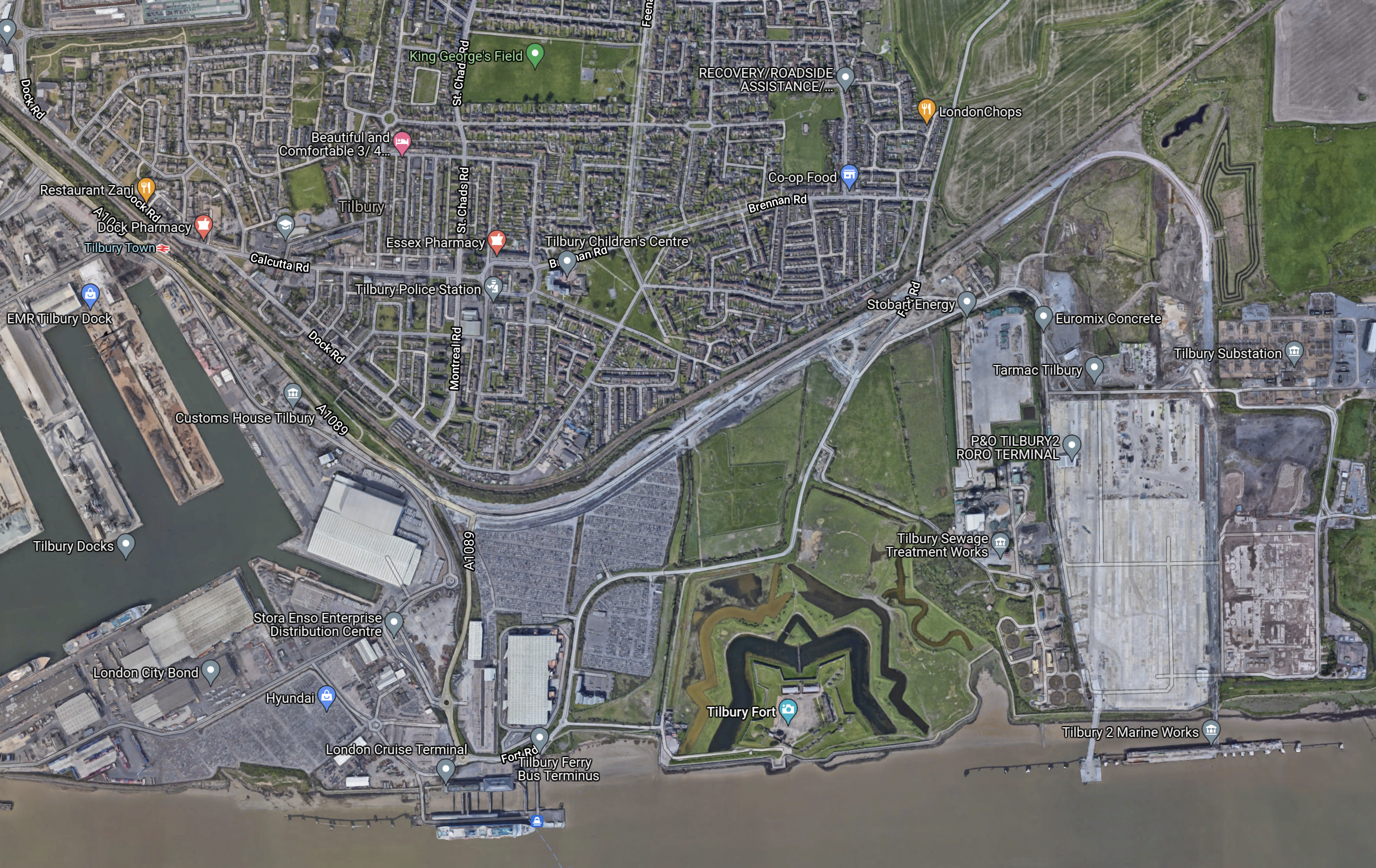
Note.
- The Port of Tilbury is in the West.
- Tilbury Town station on the Tilbury Loop Line is on the North side of the Port.
- There is a cruise ship at the London Cruise Terminal on the river.
- Next to the terminal is the Gravesend Tilbury Ferry. I can remember the car ferries on this route.
- Then there is Tilbury Fort.
- The Tilbury 2 Terminal is in the East.
I took these pictures in 2017.

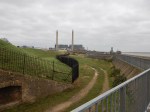









I suspect it’s a bit different now!
Rail Freight ‘Booming’ Because Of HGV Driver Shortage
The title of this post, is the same as that of this article on Rail News.
These are a few points from the article.
- Tesco currently send 65,000 containers per year by train and are increasing this figure to 90,000.
- Tesco are also planning to run special wine trains.
- Dunelm is reported to have agreed a lease for a new warehouse at the Daventry rail terminal, creating another 70 jobs.
- CB Railfreight is running 400 trains per day.
- GB Railfreight trained seventy drivers in the last year.
- The number of people employed at the Daventry International Rail Freight Terminal, will rise by another 4,000 in January when a new section opens.
One Freight Operations Manager is quoted as saying business is booming. He believes that the truck driver shortage and thought for the environment are driving the growth in rail freight.
No Trains Out Of Cornwall Until The Weekend After Lorry Hits Plymouth Bridge
The title of this post, is the same as that of this article on The Times.
A few points from the article.
- It was a Tesco truck.
- It took twenty-four hours to extract.
- The accident happened on Ashford Hill in Plymouth.
I found the bridge on Google Maps.
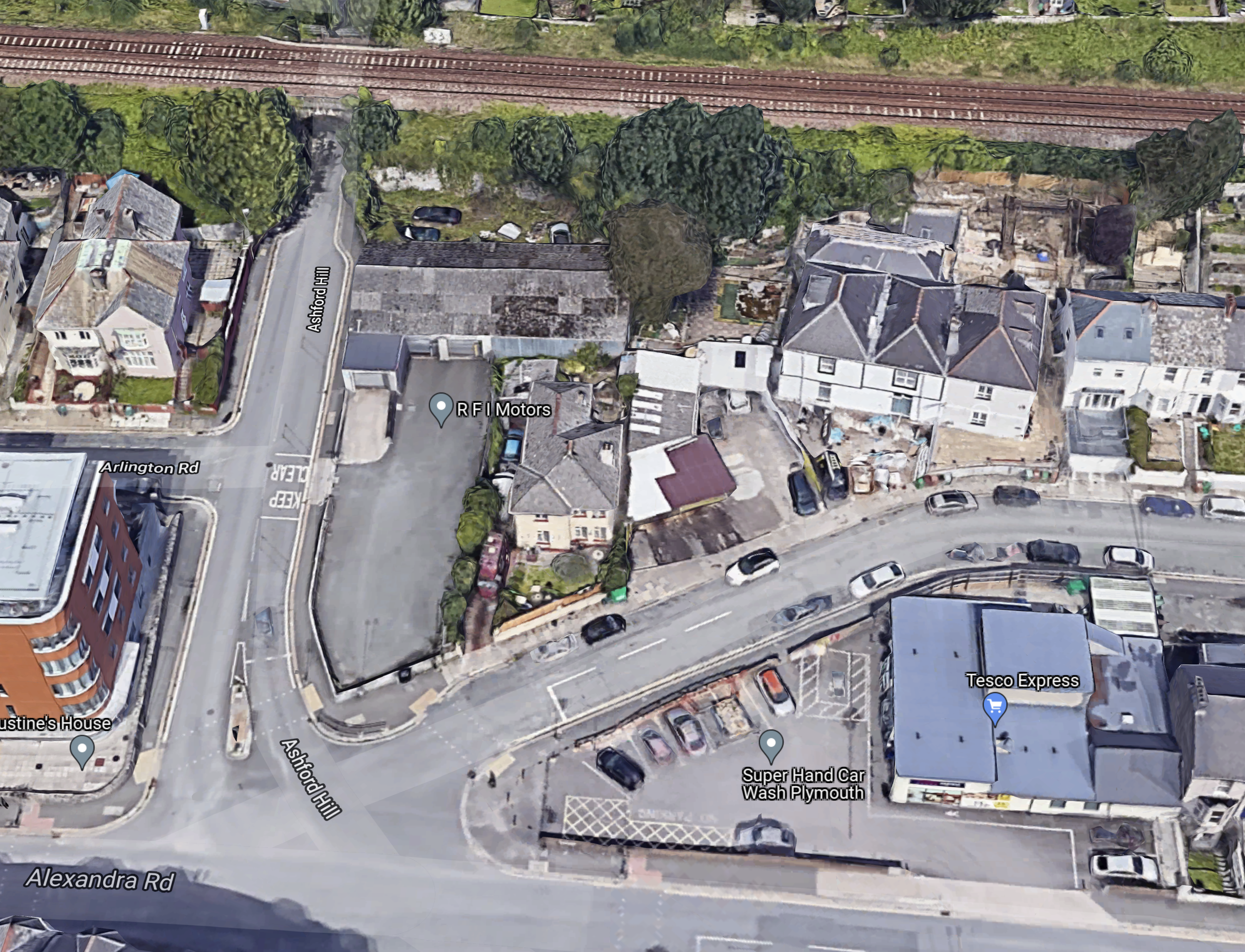
Note.
- The railway and the bridge are at the top of the map.
- My eyesight isn’t good, but I can see the warning signs on the bridge.
- There is a TescoExpress in the bottom right corner of the map.
It can’t be a lot more than a hundred metres between the bridge and the TescoExpress.
To make matters worse for the train operators, the accident site is to the East of Plymouth station, which means trains can’t run to Plymouth.
Will GWR Use Okehampton?
Network Rail have already re-laid the track to Okehampton, prior to opening an hourly service between Exeter and Okehampton later this year.
Okehampton station is close to the A30 and I suspect that GWR would have little difficulty running a five-car Hitachi train to Okehampton from London with a reverse at Exeter. At Okehampton, they could use coaches to serve Cornwall by running to Bodmin Parkway.
If I was the CEO of GWR, I’d see if it could be arranged, as what good publicity they’d get for the new Okehampton service.
Tesco Joins Climate Group’s EV100 Campaign To Electrify Its Fleet Of 5,500 Vehocles
The title of this post, is the same as that of this article on Post and Parcel.
This is the introductory paragraph.
Tesco today joined a group of now 27 big corporates publicly calling on the UK Government to target 100% zero emission car and van sales from 2030. The Government is currently revising its plans.
As Tesco say or used to say. “Every Little Helps!”
NHS Procurement
I first had knowledge of government procurement in the 1970s! Then it was defence procurement, which was shambolic!
Nothing appears to have changed.
Perhaps, we should ask Tesco or Screwfix to source PPE and PCWorld to source ventilators?
 The Anonymous Widower