EuroLink, Nautilus And Sea Link
EuroLink, Nautilus and Sea Link are three proposed interconnectors being developed by National Grid Ventures.
EuroLink
EuroLink has a web site, where this is said.
To support the UK’s growing energy needs, National Grid Ventures (NGV) is bringing forward proposals for a Multi-Purpose Interconnector (MPI) called EuroLink, which will deliver a new electricity link between Great Britain to the Netherlands.
EuroLink could supply up to 1.8 gigawatts (GW) of electricity, which will be enough to power approximately 1.8 million homes, as well as contribute to our national energy security and support the UK’s climate and energy goals. We’re holding a non-statutory public consultation to inform you about our EuroLink proposals, gather your feedback to help refine our plans and respond to your questions.
Note, that EuroLink is a Multi-Purpose Interconnector (MPI) and they are described on this page of the National Grid website.
In EuroLink’s case, this means it is basically an interconnector between the UK and The Netherlands, that also connects wind farms on the route to the shore.
- Coastal communities get less disruption, as the number of connecting cables coming ashore is reduced.
- Less space is needed onshore for substations.
- Electricity from the wind farms can be directed to where it is needed or can be stored.
As an Electrical and Control Engineer, I like the MPI approach.
The technology to implement the MPI approach is very much tried and tested.
There are many references to EuroLink terminating at Friston.
Nautilus
Nautilus has a web site, where this is said.
Nautilus could connect up to 1.4 gigawatts (GW) of offshore wind to each country through subsea electricity whilst connecting to offshore wind farm/s at sea. By combining offshore wind generation with interconnector capacity between the UK and Belgium, Nautilus would significantly reduce the amount of infrastructure and disruption required both onshore and offshore.
With this new technology, we hope to reduce the impact of infrastructure on local communities and the environment, as well as support the government’s net zero and energy security targets. We are already working closely with other developers in the area to coordinate activities and minimise impact on local communities. We believe that through improved coordination, the UK government can achieve and support the co-existence of renewable energy with coastal communities.
Nautilus is another MPI.
This is said on the web site.
Last year, National Grid Ventures ran a non-statutory consultation for Nautilus, which proposed a connection at Friston.
NGV holds a connection agreement on the Isle of Grain in Kent as part of its development portfolio and we are currently investigating if this could be a potential location for Nautilus. Until this is confirmed to be technically feasible, Nautilus will be included as part of our coordination work in East Suffolk.
So it looks like, Nautilus could connect to the UK grid at Friston or the Isle of Grain.
Sea Link
Sea Link has a web site, and is a proposed interconnector across the Thames Estuary between Suffolk and Kent.
This is said on the web site about the need for and design of Sea Link.
The UK electricity industry is evolving at pace to help lead the way in meeting the climate challenge, whilst also creating a secure energy supply based on renewable and low carbon technologies.
The demands on the electricity network are set to grow as other sectors of the economy diversify their energy consumption from using fossil fuels towards cleaner forms, the move towards electric vehicles being just one example.
Where we’re getting our power from is changing and we need to change too. The new sources of renewable and low-carbon energy are located along the coastline. We need to reinforce existing transmission network and build new electricity infrastructure in these areas in order to transport the power to where it’s needed. This is the case along the whole of the East Coast including Suffolk and Kent.
To allow this increase in energy generation, we need to reinforce the electricity transmission system. Sea Link helps to reinforce the electricity network across Suffolk and Kent.
Our proposals include building an offshore high voltage direct current (HVDC) link between Suffolk and Kent with onshore converter stations and connections back to the national electricity transmission system.
On the web site, in answer to a question of What Is Sea Link?, this is said.
Sea Link is an essential upgrade to Britain’s electricity network in East Anglia and Kent using subsea and underground cable. The proposal includes approximately 130km of subsea cables between Sizewell area in East Suffolk and Richborough in Kent. At landfall, the cables would go underground for up to 5 km to a converter station (one at each end). The converter station converts direct current used for the subsea section to alternating current, which our homes and businesses use. A connection is then made to the existing transmission network. In Suffolk, via the proposed Friston substation; in Kent via a direct connection to the overhead line between Richborough and Canterbury.
Note, that from Kent electricity can also be exported to the Continent.
All Cables Lead To Friston In Suffolk
It looks like EuroLink, Nautilus and Sea Link could all be connected to a new substation at Friston.
But these will not be the only cables to pass close to the village.
This Google Map shows the village.
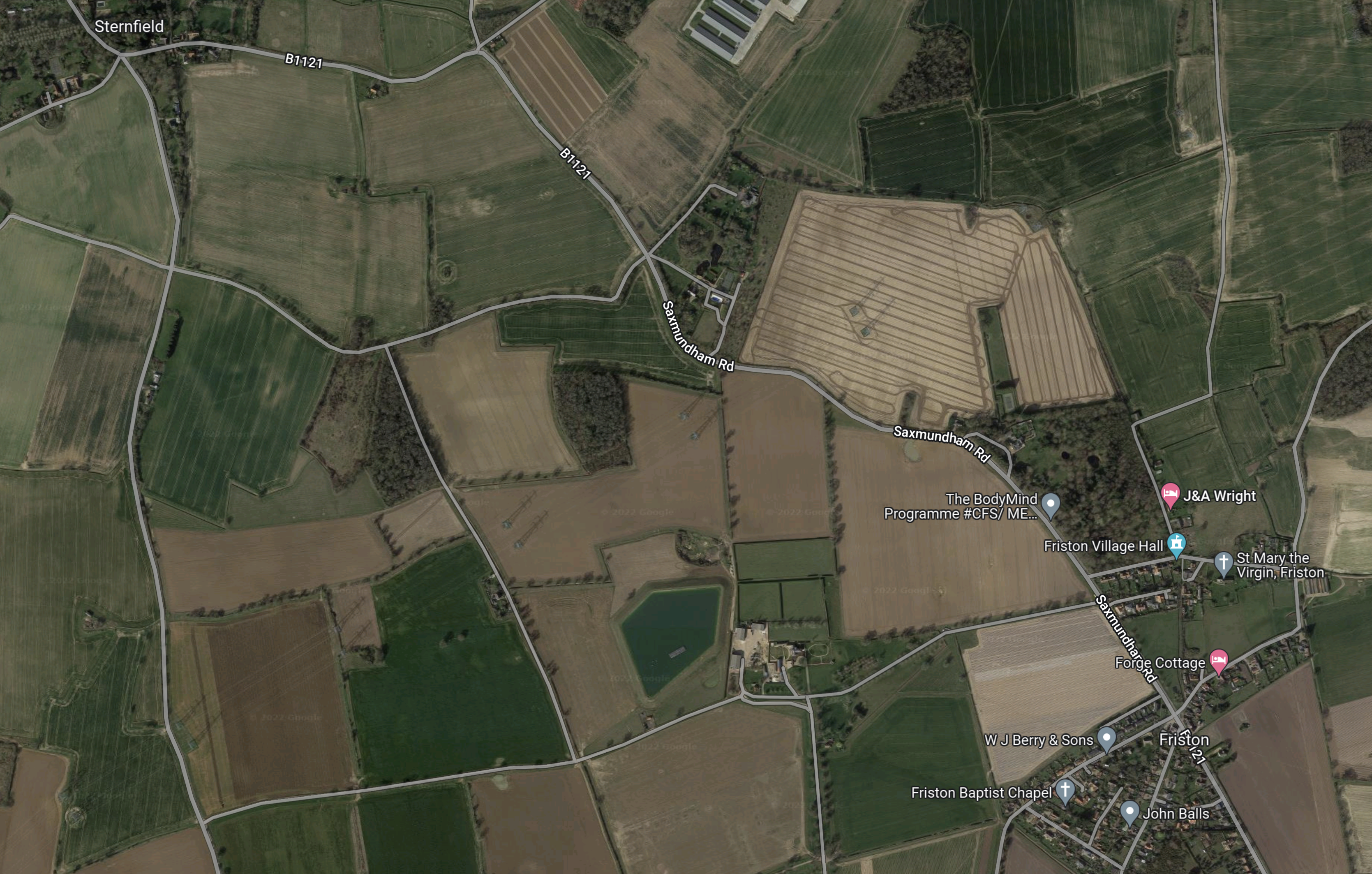
Running South-West to North-East across the map can be seen the dual line of electricity pylons, that connect the nuclear power stations at Sizewell to the UK electricity grid.
Has Friston been chosen for the substation, so that, the various interconnectors can be connected to the power lines, that connect the Sizewell site to the UK electricity grid.
This would enable EuroLink, Nautilus and/or Sea Link to stand in for the Sizewell nuclear stations, if they are shut down for any reason?
It does appear from reports on the Internet that the Friston substation is not welcome.
Exploring Opportunities For Coordination
The title of this section is a heading in the EuroLink web site, where this is said.
In response to stakeholder feedback, NGV’s Eurolink and Nautilus projects and NGET’s Sea Link project are exploring potential opportunities to coordinate. Coordination could range from co-location of infrastructure from different projects on the same site, to coordinating construction activities to reduce potential impacts on local communities and the environment.
That sounds very sensible.
Dogger Bank – The Joke That Is Growing Up To Be A Wind Powerhouse
The Wikipedia entry for the Dogger Bank, describes it like this.
Dogger Bank is a large sandbank in a shallow area of the North Sea about 100 kilometres (62 mi) off the east coast of England.
But many of my generation remember it from its use in the Shipping Forecast and as a joke place like the Balls Pond Road, Knotty Ash and East Cheam, in radio and TV comedy from the 1950s and 1960s.
But now it is being turned into one of the largest wind powerhouses!
According to Wikipedia’s list of the UK’s offshore wind farms, these wind farms are being developed on the Dogger Bank.
- Sofia Offshore Wind Farm – 1400 MW – Under Construction – Commissioning in 2023/26 – £39.65/MWh – RWE
- Dogger Bank A – 1235 MW – Under Construction – Commissioning in 2023/24 – £39.65/MWh – SSE/Equinor
- Dogger Bank B – 1235 MW – Pre-Construction – Commissioning in 2024/25 – £41.61/MWh – SSE/Equinor
- Dogger Bank C – 1218 MW – Pre-Construction – Commissioning in 2024/25 – £41.61/MWh – SSE/Equinor
- Dogger Bank D – 1320 MW – Early Planning – SSE/Equinor
- Dogger Bank South – 3000 MW – Early Planning – RWE
Note.
- These total up to 9408 MW.
- The Dogger Bank wind farms have their own web site.
- The Sofia offshore wind farm has its own web site.
- The Dogger Bank South wind farms have their own web site.
- Dogger Bank A and Dogger Bank B will connect to the National Grid at Creyke Beck to the North of Hull.
- Sofia and Dogger Bank C will connect to the National Grid at Lazenby on Teesside.
But this is only the start on the British section of the Dogger Bank.
This map, which comes courtesy of Energy Network Magazine and 4C Offshore is entitled 2001 UK Offshore Windfarm Map shows all UK offshore wind farms and their status. It looks to my naive mind, that there could be space for more wind farms to the North and West of the cluster of Digger Bank wind farms.
The North Sea Wind Power Hub
The UK doesn’t have full territorial rights to the Dogger Bank we share the bank with the Danes, Dutch and Germans.
In the Wikipedia entry for the Dogger Bank wind farm, this is said about the North Sea Wind Power Hub.
Dutch, German, and Danish electrical grid operators are cooperating in a project to build a North Sea Wind Power Hub complex on one or more artificial islands to be constructed on Dogger Bank as part of a European system for sustainable electricity. The power hub would interconnect the three national power grids with each other and with the Dogger Bank Wind Farm.
A study commissioned by Dutch electrical grid operator TenneT reported in February 2017 that as much as 110 gigawatts of wind energy generating capacity could ultimately be developed at the Dogger Bank location.
Note.
- 110 GW shared equally would be 27.5 GW.
- As we already have 9.4 GW of wind power, under construction or in planning around the Dogger Bank, could we find space for the other 18.1 GW?
- I suspect we could squeeze it in.
If we can and the Danes, Dutch and Germans can generate their share, the four countries would each have a 27.5 GW wind farm.
What would put the icing on the cake, would be if there could be a massive battery on the Dogger Bank. It wouldn’t be possible now and many would consider it a joke. But who knows what the capacity of an underwater battery based on concrete, steel, seawater and masses of ingenuity will be in a few years time.
Where Does Norway Fit In To The North Sea Wind Power Hub?
It could be argued that Norway could also connect to the North Sea Wind Power Hub.
- 110 GW shared equally would be 22 GW.
- Norway can build massive pumped storage hydroelectric power stations close to the landfall of an interconnector to the North Sea Wind Power Hub.
- the British, Danes, Dutch and Germans can’t do that, as they don’t have any handy mountains.
- Norway is a richer country the others involved in the project.
I can see Norway signing up to the North Sea Wind Power Hub.
The North Sea Link
The Wikipedia entry for the North Sea Link, introduces it like this.
The North Sea Link is a 1,400 MW high-voltage direct current submarine power cable between Norway and the United Kingdom.
At 720 km (450 mi) it is the longest subsea interconnector in the world. The cable became operational on 1 October 2021.
It runs between Kvilldal in Norway and Blyth in Northumberland.
I wouldn’t be surprised to see that the North Sea Link is modified, so that it has a connection to the North Sea Wind Power Hub.
First-Ever Subsidy-Free Offshore Wind Farm Halfway Done
The title of this post, is the same as that of this article on offshoreWIND.biz.
These three paragraphs, outline the project.
Cadeler’s wind turbine installation vessel Wind Osprey has installed the 70th Siemens Gamesa 11 MW wind turbine at the 1.5 GW Hollandse Kust Zuid offshore wind farm in the Dutch North Sea.
The installation of the 70th turbine marks the halfway milestone on the 140-turbine project, Cadeler said.
Once fully installed and commissioned in the summer of 2023, Hollandse Kust Zuid will become the largest operating offshore wind farm, as well as the first one built without government subsidies.
I very much believe that in the near future many, if not all wind farms will be built without subsidy.
BP To Open Offshore Wind Office In Germany, Starts Recruitment Drive
The title of this post, is the same as that of this article on offshoreWIND.biz.
This is the first paragraph, which adds a bit more information.
Global energy major bp plans to open an office in Hamburg, Germany dedicated to the development of offshore wind projects and is in the process of seeking employees for the new office.
These are other points from the article.
- The topic of wind power is being promoted particularly in Hamburg.
- BP said that the company has already achieved a number of milestones in the field of wind energy.
- In cooperation with EnBW, bp is currently developing several wind farms in the Irish and Scottish Seas.
- Similar plans already exist for the Netherlands.
- The energy major would also like to supply charging stations for electric vehicles with green electricity.
- In Germany, wind and solar energy should account for 80 per cent of electricity generation by 2030, compared to today’s 42 per cent.
- Offshore wind energy is planned to grow seven times by 2045.
I believe that BP’s project expertise and management, backed by billions of German euros could be a complimentary dream team.
National Grid Invites Local Community To Comment On Proposals For Green Electricity Projects Needed To Boost Home-Grown Energy Supplies And Progress Towards Net Zero
The title of this post, is the same as that of this press release from National Grid.
These are the four main bullet points.
- New interconnector with Netherlands and subsea cable between Suffolk and Kent will strengthen electricity supplies and transport low carbon power to homes and businesses.
- 8-week public consultations will introduce the plans and ask for views of local communities.
- The proposals include possible co-location of infrastructure (buildings and underground cables.) to reduce the impact on local communities.
- Projects form part of the electricity network upgrades identified across the UK to help deliver the government’s energy security strategy and net zero targets.
Note.
- Eurolink is a subsea electricity cable between Great Britain and the Netherlands.
- Sea Link is a subsea electricity cable between Suffolk and Kent.
- The consultations will start on October the 24th.
This paragraph from the press release describes Eurolink.
Developed by National Grid Ventures, the Eurolink multi-purpose interconnector (MPI) is designed to harness the increasing volumes of offshore wind power in the North Sea and has the potential to power approximately 1.8 million homes. It will enable the connection of offshore wind farms to both the British and Dutch electricity grids via an interconnector, enabling the transport of clean electricity from where it’s produced to where it’s needed most.
And this paragraph describes Sea Link.
Developed by National Grid Electricity Transmission, Sea Link will add additional capacity to the electricity network in Suffolk and Kent, enabling low carbon and green energy to power local homes and businesses and be transported around the country. The proposals outline a preferred route of 10km of onshore and 140km of undersea cables, together with potential landfall and converter station locations at the proposed Friston substation in Suffolk and in Richborough in Kent.
These two new interconnectors would appear to open up the delivery of green electricity to the South-East of England and the Continent.
As I’ve said before, there doesn’t be any shortage of money to build wind farms and interconnectors between Great Britain, Belgium and The Netherlands.
How Much Wind Capacity Is Lined Up Around The South-East Of England?
Wind farms listed in the area include.
- Operation – Dudgeon – 402 MW
- Operation – East Anglia One – 714 MW
- Operation – Greater Gabbard – 504 MW
- Operation – Gunfleet Sands – 184 MW
- Operation -Kentish Flats – 140 MW
- Operation – London Array – 630 MW
- Operation – Rampion – 400 MW
- Operation – Scoby Sands – 60 MW
- Operation – Sheringham Shoal – 317 MW
- Operation – Thanet – 300 MW
- Proposed – East Anglia Three – 1372 MW
- Proposed – Norfolk Boreas – 1386 MW
- Exploratory – East Anglia One North – 800 MW
- Exploratory – East Anglia Two – 900 MW
- Exploratory – Rampion 2 Extension – 1200 MW
- Exploratory – Norfolk Vanguard – 1800 MW
- Exploratory – North Falls – 504 MW
- Exploratory – Sheringham Shoal and Dudgeon Extensions – 719 MW
Note.
- These wind farms total to 12.3 GW.
- As the UK needs about 23 GW, these wind farms can power about half the UK.
- But no matter, as the East Anglian Array is planned to go to 7.2 GW and only 4.7 GW is so far operational or planned.
- So there could be up to another 2.5 GW to come.
This is not bad news for Rishi Sunak’s first days in office.
There’s More To Come
The National Grid press release finishes with these two paragraphs.
Last year, National Grid Ventures also ran a non-statutory consultation on Nautilus, a proposed MPI linking Britain and Belgium, which proposed a connection at Friston. National Grid Ventures is now investigating the potential to move the Nautilus MPI project to the Isle of Grain in Kent.
Much of the UK’s electricity network was built in the 1960s when the country was more reliant on fossil fuels. Today, we need to connect huge volumes of renewable power, such as offshore wind, to the network, to help deliver the government’s energy security strategy and net zero targets and to transition to a cleaner, more affordable, and more independent energy system. New infrastructure, and network upgrades are necessary to get the new clean energy from where it’s generated to where it’s needed.In addition to these proposals in Suffolk and Kent (and the East Anglia GREEN proposals which are currently being consulted on) the need for new network infrastructure has also been identified in North and South Wales, the Scottish Islands and West Coast, the East Coast of Scotland and Aberdeenshire, Lancashire, North-East England, and Yorkshire & Humber.
National Grid have numerous plans to connect up all the renewable energy being developed.
How To Store Excess Wind Power Underwater
The title of this post, is the same as that of this article on the BBC.
The article talks why batteries are needed and then describes the Ocean Battery.
But one firm, which won a 2022 Best of Innovation award at the CES technology show earlier this year, believes it has the solution.
Dutch startup, Ocean Grazer, has developed the Ocean Battery, which stores energy below the wind farm.
When there is excess electricity the system pumps water from an underground reservoir into tough, flexible bladders that sit on the sea bed. You could think of them like big bicycle inner tubes.
The water in those tubes is under pressure, so when it is released the water flows quickly and is directed through turbines, also on the sea bed, generating electricity when needed.
“The Ocean Battery, is effectively based on the same technology as hydro storage, where water is pumped back through a dam in a river, though we have transformed it into something you can deploy on the sea bed,” says chief executive Frits Bliek.
There is a visualisation of the system and a picture of their prototype.
North Seas Countries Commit To 260 GW Of Offshore Wind By 2050
The title of this post, is the same as that of this article on Renewables Now.
This is the first two paragraphs.
The nine member countries of the North Seas Energy Cooperation (NSEC) on Monday committed to at least 260 GW of offshore wind energy by 2050.
The NSEC aims to advance offshore renewables in the North Seas, including the Irish and Celtic Seas, and groups Belgium, Denmark, France, Germany, Ireland, Luxembourg, the Netherlands, Norway, Sweden and the European Commission.
Note.
Intermediate targets are 76 GW by 2030 and 193 GW by 2040.
The UK has a target of 50 GW by 2030, of which 5 GW will be floating offshore wind.
The UK is not mentioned, but has joint projects with the Danes, Germans, Irish, Norwegians, Spanish and Swedes.
There is nothing about energy storage or hydrogen!
On the figures given, I think we’re holding our own. But then we’ve got more sea than anybody else.
Germany Has Potential For 82 GW Of Offshore Wind
The title of this post, is the same as that of this article on Renewables Now.
These are the two introductory paragraphs.
Germany has the potential to raise its offshore wind energy capacity to 81.6 GW which is above the federal government’s target of 70 GW by 2045, a study by research institute Fraunhofer IWES shows.
To exploit all the potential for wind energy in the North Sea and the Baltic Sea, Germany needs to devise a strategy for more efficient use of the available space and use new offshore wind power technologies in additional areas in a way that will not raise concerns and affect nature conservation.
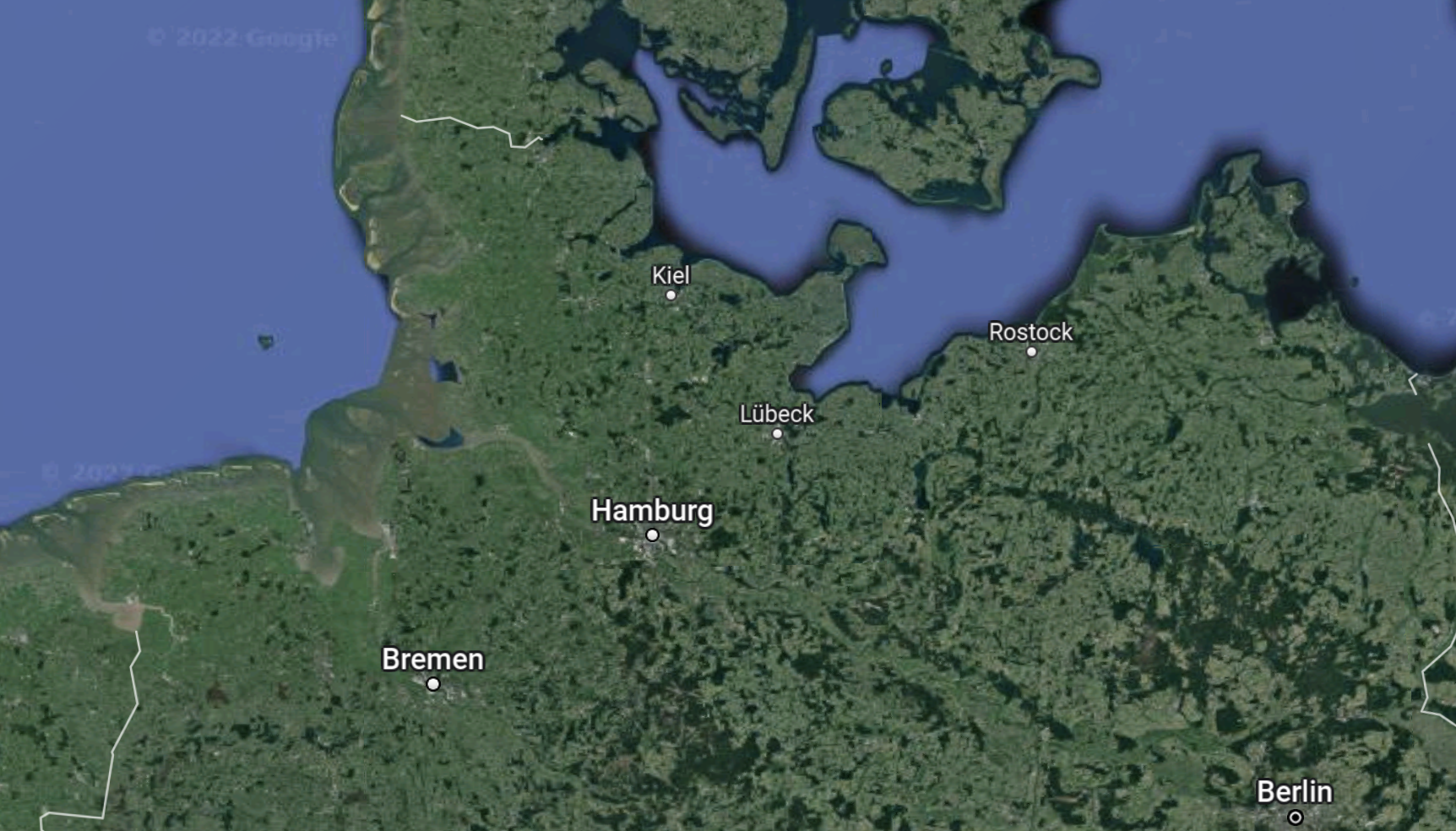
This map shows the German parts of the North Sea and the Baltic Sea.
Note.
- White lines show the borders with The Netherlands, Denmark and Poland.
- Heligoland in the South-East corner of the North Sea. Could this island be used as a giant offshore substation?
- There are plenty of ports to service offshore developments.
- It looks like compared to the UK, a fair proportion of German offshore wind farms will be closer to the land.
Currently, Germany has 7.8 GW of offshore wind in operation, with around seventy percent of the turbines in the North Sea.
According to the Wikipedia entry called Wind Power In The UK, in 2019, the UK had installed 8.4 GW of offshore wind turbines, and there could be a potential to have a total of 120 GW in British waters.
With the Belgians, Danes, Dutch, Irish, Norwegians, Poles and Swedes joining this party, I can see the world’s largest wind power station being developed in the North and Baltic Seas.
The Plans For Giant Seaweed Farms In European Waters
The title of this post, is the same as that of this article on the BBC.
The article describes how the Dutch are developing the growing and harvesting of seaweed.
This is all fascinating stuff and reminds me of reading of a company called Alginate Industries in the Meccano Magazine in the 1950s.
I can’t find much about the company, except that they were taken over by Merck & Co in 1979.
The Wikipedia entry for alginic acid, gives this information on alginates.
Alginates are refined from brown seaweeds. Throughout the world, many of the Phaeophyceae class brown seaweeds are harvested to be processed and converted into sodium alginate. Sodium alginate is used in many industries including food, animal food, fertilisers, textile printing, and pharmaceuticals. Dental impression material uses alginate as its means of gelling. Food grade alginate is an approved ingredient in processed and manufactured foods.
I remember the Meccano Magazine saying that alginates were an important food additive and UK production came from the North of Scotland.
This page on the Secret Scotland wiki gives details of current alginate production in Scotland.
Has Wikipedia replaced the Meccano Magazine, as a source of information for scientifically-inquisitive children?
 The Anonymous Widower