State-of-the-Art Bradford Hydrogen Production Facility Approved
The title of this post, is the same as that of this press release from Renewable Connections.
These two paragraphs outline the project.
Bradford Hydrogen Production Facility, a partnership project between Hygen and N-GEN, developed by Renewable Connections, has received consent from Bradford Council. It is anticipated once built, the groundbreaking hydrogen production facility will produce enough hydrogen to remove up to 800 diesel-fuelled buses a day from West Yorkshire roads.
The facility on the old Birkshall gas storage site on Bowling Back Lane in Bradford will produce low carbon hydrogen which can be used to decarbonise vehicles and industry. Businesses and other users in West Yorkshire will be able to use the refuelling facilities on site, with distribution experts Ryze delivering hydrogen to industrial users across the region.
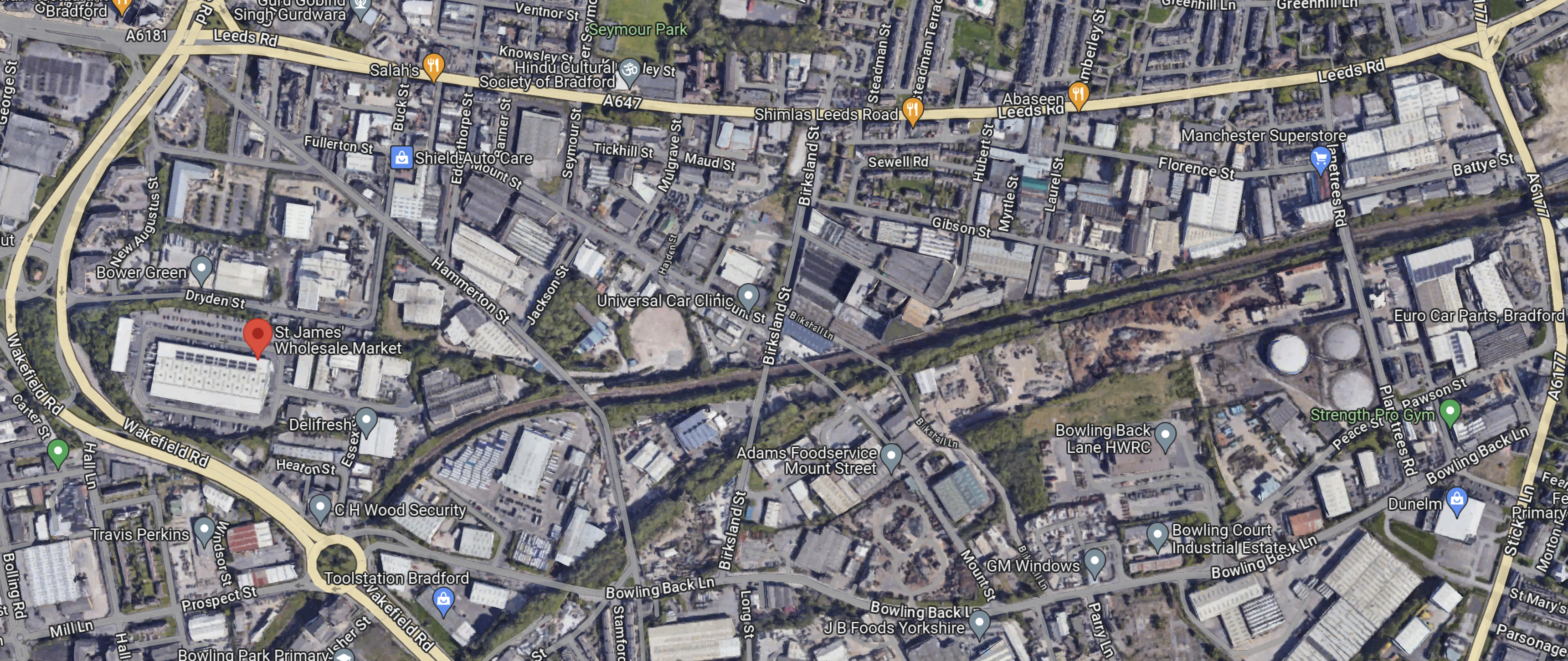
This Google Map shows the area of Bowling Back Lane.
Note.
- The railway running East-West across the middle of the map.
- The red arrow indicates St. James Wholesale Market, which will be the site of the new station.
- Bowling Bank Lane runs East across the nap from the roundabout to the South of the market.
- There appear to be three gas storage tanks to the North of Bowling Back Lane, towards the East of the map.
I suspect that the electrolyser will be built to the West of the current gas storage tanks.
I have a few thoughts.
It Could Be A Large Site
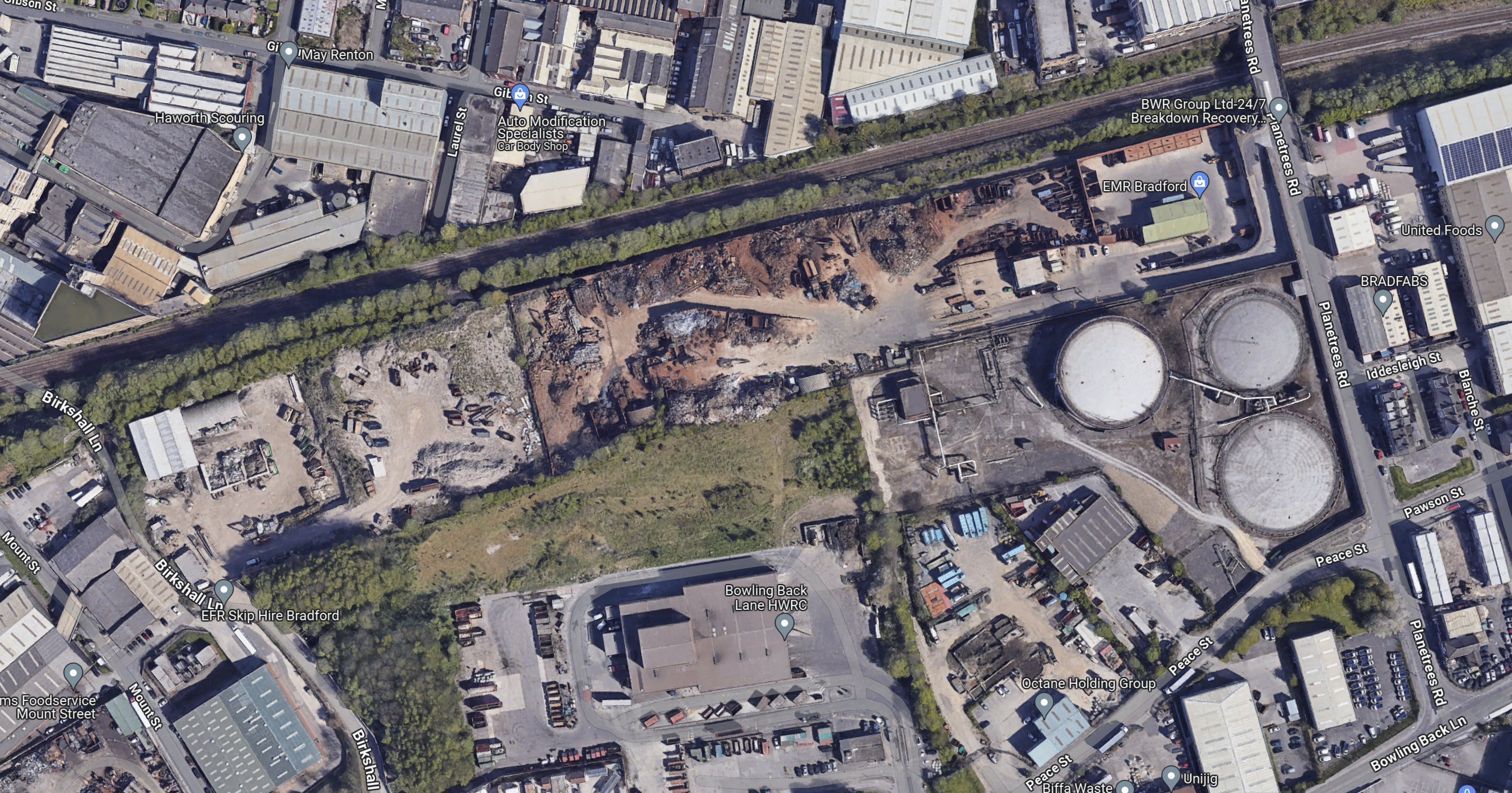
This Google Map shows an enlargement of the area, between Birkshall Lane and the gas storage tanks.
Note.
- Birkshall Lane runs across the South-West corner of the map.
- Several of the businesses in the area seem to concern recycling.
- The site would appear to stretch from the railway in the North to the gas storage tanks in the East and Birkshall Lane in the West.
I can envisage the space around the electrolyser being developed into a business park for businesses that need hydrogen.
Could There Be A Refuelling Facility For Hydrogen Trains?
I believe that in the next ten years, that many freight trains will be hauled by hydrogen-hybrid locomotives.
As the railway through Bradford used to incorporate a third track, I believe that there could be space for a simple facility to fill up hydrogen-powered locomotives.
Are The Gas Tanks Still Used?
The reason I ask this question, is that if they are and still supply Bradford with natural gas, excess hydrogen could be blended up to a low percentage with natural gas to supply Bradford gas users.
It would certainly be a useful capability.
Conclusion
The electrolyser appears to be well-positioned.
Twenty First And Eighteenth Centuries Meet As HS2 Traverses Grand Union Canal
The title of this post, is the same as that of this article on RailUK.
This High Speed Two picture is shown.
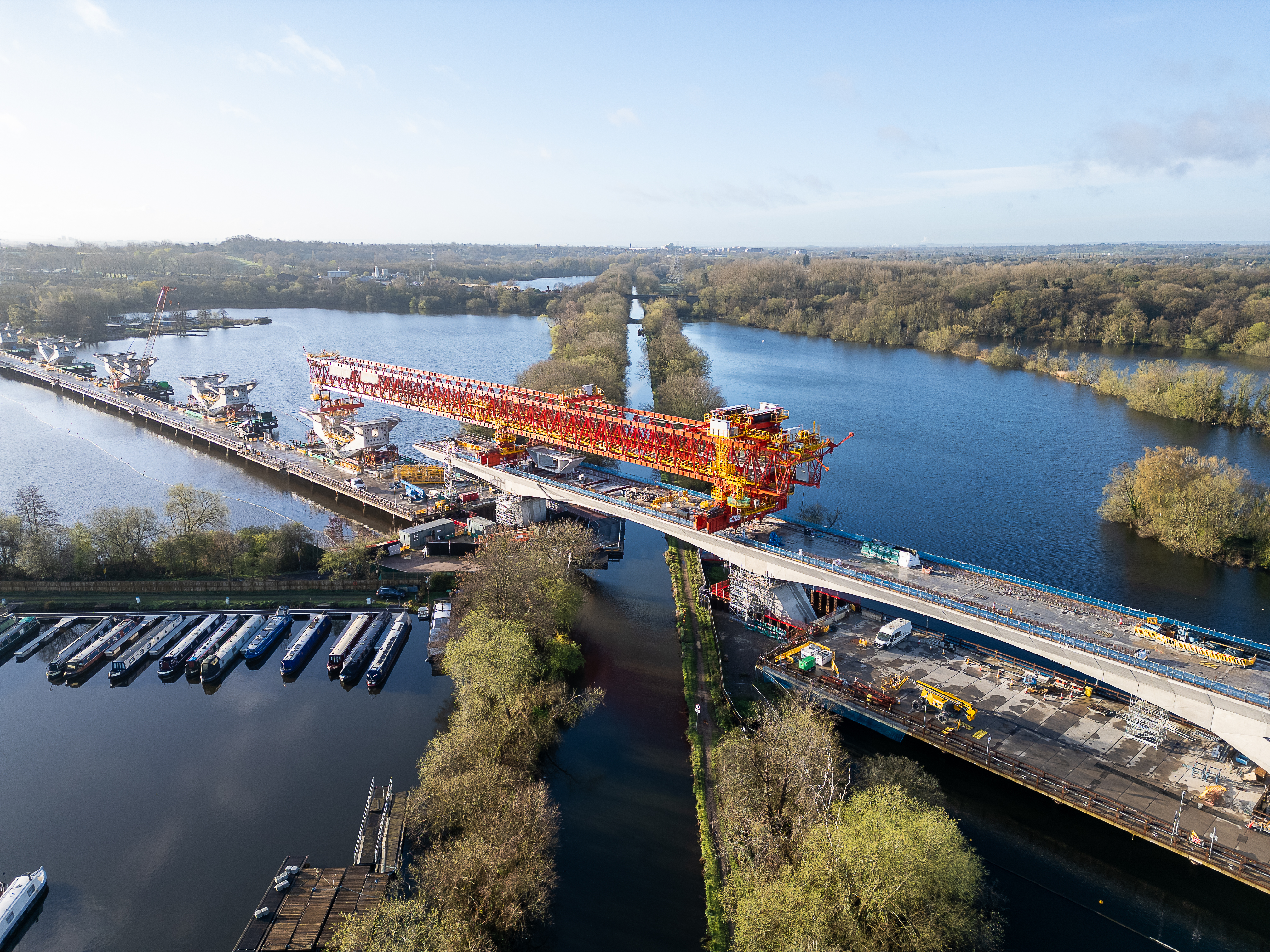
There is also this video.
Is A Small Hydrogen Fuel Cell Car Possible?
By small car, I’m meaning something like a Ford Fiesta or a Vauxhall Astra.
Consider.
- The car will have a power unit of about 100 KW.
- With four passengers the car would probably weigh about 1500 Kg.
Does A 100 KW Fuel Cell Suitable For A Car Exist?
Intelligent Energy is a British company based in Loughborough.
This is their mission statement on their web site.
Focused on the development of lightweight, high efficiency, hydrogen fuel cell systems.
They also have this product page for a 110 KW fuel cell tailored for automotive use, that weighs 240 Kg.
I suspect if Ford asked for a fuel cell for a hydrogen Fiesta, that Intelligent Energy could provide one.
And I suspect other fuel cell companies could!
How Much Is The Kinetic Energy Of A Car Like This At 100 mph?
Using Omni’s Kinetic Energy Calculator, I get a figure of 422 Wh.
This figure means a battery of perhaps 2 KWh would handle regenerative braking and provide stationary power to get the car started.
Conclusion
From what I have written here, I believe that a hydrogen-powered small car is possible.
Coire Glas Exploratory Tunnel 70% Complete
The title of this post, is the same as that of this article in Ground Engineering.
This is the sub-heading.
A tunnel to investigate ground conditions at SSE Renewables’ Coire Glas project to build a pumped hydro scheme in the Scottish Highlands is 70% complete, as wider ground investigations come to an end.
These are the first three paragraphs.
Coire Glas on the shores of Loch Lochy in Great Glen is the first large scale pumped hydro storage scheme to be developed in the UK for more than 40 years.
It would take excess energy from the grid and use it to pump water 500m up a hill from Loch Lochy to a vast reservoir where it would be stored. This will be done through a tailrace tunnel, underground cavern power station, high pressure tunnel and low-pressure headrace tunnel.
SSE Renewables has started exploratory works on the scheme. This has involved building an up to 1km long and 4m wide tunnel to investigate the ground conditions in which the powerhouse will be built.
All the information gathered will be used in the detailed design of the 1,5GW/30 GWh pumped storage system, which is expected to be a £1.5 billion capital investment.
The Wikipedia entry for Coire Glas power station, says this about the current status and completion.
In December 2023, the exploratory tunnel had reached 720m in length.
A final investment decision will depend on UK government assurances about how the regulated electricity market would reward storage schemes. SSE hope to make that £1.5Bn decision in 2024, in which case the scheme could be completed in 2031.
I suspect that as this is one of the largest green energy projects in the UK, that there’ll be a lot of media coverage of the construction of this power station.
Rolls-Royce Supplies mtu Large-Scale Battery Storage To Secure The Latvian National Grid
The title of this post, is the same as that of this press release from Rolls-Royce.
These four bullet points, act as sub-headings.
- Latvia synchronizes its electricity grid with the European grid in 2025
- Large-scale battery storage system from Rolls-Royce ensures stability of the power grid in Latvia
- Transmission system operator AST orders 160MWh mtu EnergyPack
- Facility will be one of the largest battery storage systems in the EU
This is the first paragraph.
Rolls-Royce has received an order from the Latvian transmission system operator Augstsprieguma tikls (AST) to supply an mtu large-scale battery storage system to secure the Latvian power grid. In 2025, Latvia, together with the other Baltic states, will synchronize its energy supply system with the continental European power grid.
Note.
- This is a Rolls-Royce press release, not a Rolls-Royce mtu press release.
- Recently, Rolls-Royce mtu supplied the generators for Redditch power station, which I wrote about in Centrica Completes Work On 20MW Hydrogen-Ready Peaker In Redditch.
- In The Modern Way To Grow Tomatoes, I describe how a Rolls-Royce mtu Combined Heat and Power unit (CHP), is used in the growing of tomatoes.
Could it be that using the Rolls-Royce name prominently, makes sales easier?
Travelling Between London Stations
When I came home from Moorgate this morning, I took my usual 141 bus.
I sat next to a lady about forty, who from her bags looked like she’d just arrived by plane at Gatwick Airport.
After a couple of attempts at conversation, it became obvious, that we didn’t have a common language.
She then produced her phone and indicated that she needed Liverpool Street station.
The 141 bus doesn’t serve Liverpool Street station, but it does serve the Western entrance to Liverpool Street station on the Elizabeth Line.
It looks to me, that she had been told by a human being, an app or the Internet, that the easiest way from London Bridge bus station to Liverpool Street station was to take the 141 bus from in front of the station and walk across to Liverpool Street station from Moorgate.
But.
- The Western entrance to Liverpool Street station has no information to indicate, that it gives access to Liverpool Street station.
- The bus information system indicates Moorgate station.
- The bus information system does not announce, that for Liverpool Street station, you should alight at Moorgate station.
Perhaps, the bus information system should indicates Moorgate/Liverpool Street station.
Conclusion
How many other transfers between London stations are similarly confusing?
London Bridge And West Croydon By London Overground
This morning, I took a London Overground train between London Bridge and West Croydon stations.
I took these pictures on the route.


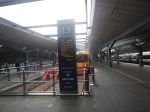
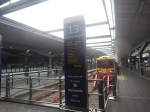
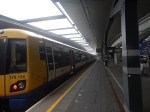
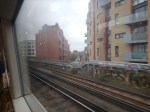

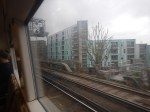

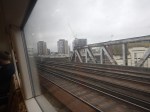

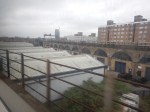
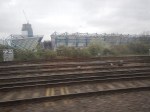
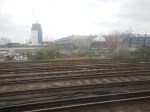
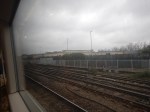
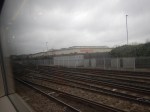

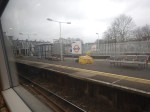
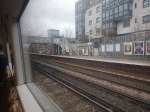
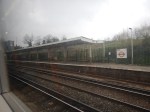
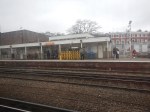
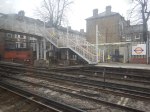
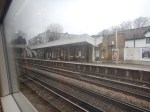
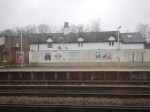
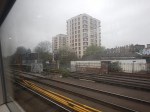
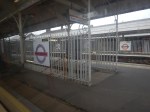


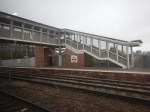
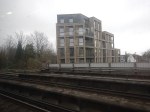
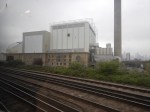
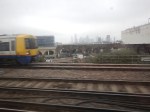
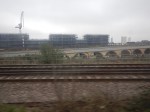
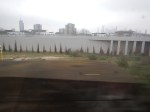
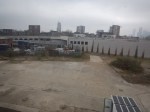

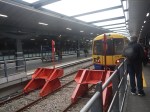
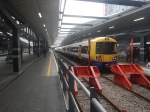
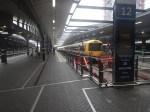
Note.
- It appears there are no London Overground services running through the Thames Tunnel.
- The only service in South London is two trains per hour (tph) between London Bridge and West Croydon stations.
- The service seemed to be working well, with no significant delays.
- The 10:24 from London Bridge wasn’t very busy, but the return at 11:03 was very crowded and there were no spare seats.
It was certainly better than a Rail Replacement Bus.
These are some further thoughts.
Could West Croydon Station Handle Six Trains Per Hour?
- West Croydon station has a bay platform 1, that handles all the London Overground services.
- Typically, a train leaves the platform about 8-9 minutes after it arrives.
- 6 x 8 is 48 minutes.
It would be tight, but possible.
Before the bay platform was extended, trains used to reverse using a turnback facility to the West of the station, which I described in How Trains Reverse At West Croydon. As this facility appears to be still there, it can probably act as a substitute bay platform for London Overground trains, if the service gets disrupted.
If in the future, it was decided to have a service, which ran say 4 tph to Highbury & Islington station and 2 tph to London Bridge station, I believe this would be possible.
Were Transport for London Training Drivers?
One or possibly both of the trains, that I rode had two drivers.
This is not unusual, but one of the drivers was wearing a Southern Day-glo vest.
So was he instructing the London Overground driver on the route, that the London Overground, doesn’t normally use?
Charging Battery-Electric Trains At London Bridge Station
This Google Map shows the roof of London Bridge station over platforms 10-15.

Note.
- The three gaps in the roof are above platforms 10-15.
- There are roof supports over the tracks.
- Platforms 10 and 11 are at the top, platforms12 and 13 are in the middle and platforms 14 and 15 are at the bottom.
My train used Platform 13 as these pictures show.
Note the roof supports over the tracks.
If the Uckfield or another service needed to be run by battery-electric trains, the trains might need to be charged at London Bridge station, as there may be issues charging using third-rail electrification.
These pictures show rigid overhead conductor rails over the Thameslink platforms at St. Pancras station.
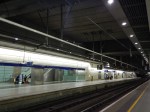
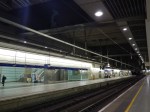
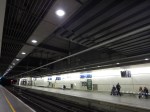
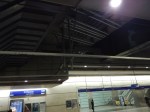
Could rails like these be installed over some or all of the bay platforms to London Bridge station, so that battery-electric trains could be charged?
- If the battery-electric trains were converted Class 377 or Class 387 trains, these are available as dual-voltage.
- Uckfield services use Platform 10 at London Bridge station.
- A round trip to Uckfield station is only 2 x 24.7 miles or 49.4 miles of unelectrified track.
- Short lengths of 25 KVAC overhead electrification could be installed at Uckfield station and the bay platform at Oxted station if needed.
A dual-voltage battery-electric train with a range of say just over 50 miles could handle Uckfield services.
SSE Partners With Bord na Móna On 800MW Onshore Wind JV In Ireland
The title of this post, is the same as that of this press release from SSE.
These four bullet points, act as sub-headings.
- Leading low-carbon energy companies SSE Renewables and Bord na Móna continue to progress their respective portfolios in Ireland, by partnering to develop new onshore wind energy projects across the Midlands.
- More than €1 billion could be invested by the joint venture partnership to develop up to 800MW of new renewable energy projects, enough to provide power to over 450,000 homes.
- Onshore wind farm projects to be developed as part of the portfolio will include Lemanaghan Wind Farm in north-west Offaly, Littleton Wind Farm in Tipperary, and Garryhinch Wind Farm on the Laois Offaly border.
- The partnership has the potential to support hundreds of jobs across the Midlands during construction and operation of the onshore wind projects.
Note.
- It is a 50:50 project between SSE Renewables and Bord na Móna.
- It will deliver 800 MW of onshore wind energy.
These link to the three web sites for the wind farms.
- Lemanaghan Wind Farm will be 80-100 MW
- Littleton Wind Farm will be 60-80 MW
- Garryhinch Wind Farm will be 60-80 MW
These must be the first phases, as they are nowhere near 800 MW.
There is an interesting comparison to be made here.
- As I said in Wind Farm: Yorkshire Moors Could Get England’s Biggest Wind Farm, it looks like a 304 MW wind farm on England will be controversial.
- The 539 MW Whitelee Wind Farm near Glasgow is the largest onshore wind farm in the UK.
- The republic of Ireland is building three schemes totalling 800 MW in the Irish Midlands.
So why does England object?
 The Anonymous Widower