National Grid Fast-Tracks Overhead Line Upgrade Project To Help Accelerate Connection Dates Of 175 Clean Energy Projects
The title of this post, is the same as that of this press release from National Grid.
These four bullet points, act as sub-headings.
- £90 million upgrade of 82km of overhead power line between Bramley in Hampshire and Melksham in Wiltshire brought forward by a year
- Replacing the conductors (wires) between transmission towers (pylons) will allow them to operate at a higher temperature and therefore carry more electricity
- Increased capacity could help to accelerate the grid connection of 175 clean energy projects in South West England and Wales
- Project forms part of a series of National Grid measures to help speed up connections to the electricity network, including working with the Electricity System Operator (ESO) and industry to reform the connections process
These are the two opening paragraphs.
National Grid has accelerated engineering works to address a bottleneck in connecting low carbon projects to the electricity network in South West England and Wales.
The 82km upgrade of one its high voltage overhead electricity lines, between Bramley in Hampshire and Melksham in Wiltshire, has been brought forward to help accelerate the connection of 175 clean energy projects to the grid.
I am rather surprised that upgrading of just 82 km. of overhead power line will enable the connection of 175 clean energy projects.
- So perhaps, National Grid are upgrading this line first, as it is the best value.
- I have followed the line of pylons on a map and it connects two large sub-stations at Bramley and Melksham.
- It will be interesting to see how the 175 projects connect to the grid.
There is also this paragraph.
This upgrade follows National Grid’s recent announcement of accelerating up to 20GW of grid connections across its transmission and distribution networks (the equivalent capacity of six Hinkley Point C nuclear power stations), including accelerating 10GW of battery storage projects by up to four years.
I wrote about this announcement in National Grid To Accelerate Up To 20GW Of Grid Connections Across Its Transmission And Distribution Networks.
Conclusion
National Grid seem to have made a start like like a hare and I suspect we’ll see the announcement of more projects in the near future.
InterGen’s Two Huge Batteries
InterGen are developing two huge lithium-ion batteries, which seem to be rather under the radar of the mainstream media.
InterGen are an energy company, of which few people have heard.
On the About InterGen page, this is the sub-heading of a section describing their business.
InterGen is a uniquely independent energy company. We support the journey to a stable, dependable, net zero energy system through delivering the flexible electricity solutions that underpin it.
These four paragraphs introduce the business.
Founded in 1995, we have decades of experience in the GB market.
Our power stations provide secure, flexible energy to consumers, and help the grid to take on more and more renewables.
Our expert trading team in Edinburgh sells electricity and services to help utilities, system operators and the wider energy market deliver secure power to homes and businesses across the country, whilst our pipeline of new developments includes some of the world’s largest battery storage assets, an essential component in the future energy system.
The world is changing, and we’re proud to be playing an active role in the unfolding energy story for generations to come.
Batteries are very much for generations to come.
These four paragraphs on this page says this about their batteries.
Developing a large-scale energy storage capability will help to resolve the challenge of the intermittency of renewable generation. At InterGen, we’re managing the delivery of one of Europe’s largest battery storage portfolios, with over 2GW of grid scale projects, having dedicated grid connections and proceeding through the permitting process.
The share of wind and solar power is increasing in the UK’s energy mix, but these sources only generate power when the wind blows or the sun shines. The use of batteries to store the excess power generated can help provide low carbon power to balance supply and demand with renewable power during periods of low output.
InterGen’s UK battery projects are world-leading in this kind of technology deployment. The facilities will use proven lithium-ion technology which has zero emissions, has superior flexibility, and will complement the increasing amounts of renewable energy generation in the UK.
In Essex, our project at London Gateway Port to create up to 900MWh of energy received planning permission in January 2023, and when complete will be large enough to provide power for up to 450,000 homes. At Spalding, we have consent to develop up to 1.1GWh of storage capability, adjacent to our existing operational CCGT and OCGT plants. Both of these developments are world-class in terms of size. It’s all part of our goal to support the transition to low carbon generation through the provision of flexible capacity.
Gateway Energy Centre
This page describes the Gateway Energy Centre, where this is said.
InterGen is in late stage development of a world leading battery storage project in the London Gateway Logistics Park, next to the DP World London Gateway Port on the north bank of the River Thames in Essex. InterGen built and continues to operate the existing 800 MW Coryton gas-fired combined cycle power station which is located approximately one kilometre from the proposed Gateway Energy Centre site.
The Gateway project will consist of a Battery Energy Storage System (BESS) with a rated electrical output of up to 900MWh (up to 450MW).
InterGen received Town and Country Planning Permission in January 2023, making the Gateway project the largest battery in the UK once operational. The £300m project will provide power for over 450,000 homes once fully complete.
Note.
- I assume they mean this battery is a 450 MW/900 MWh battery, that will provide 450 MW for two hours.
- It is close to the 732 MW Coryton gas-fired combined cycle power station.
I would assume that one of its tasks will be to make sure the London Gateway complex gets rnough reliable power.
Spalding Energy Park
This page describes the Spalding Energy Park, where this is said.
The Spalding Energy Park, adjacent to InterGen’s existing combined and open cycle gas plants at Spalding, has received Town and Country Planning Permission in June 2023 for one of Europe’s largest battery storage projects. The battery development could deliver up to 1,100MWh of electricity once operational, providing power for up to 500,000 homes.
Spalding Energy Park received planning consent in January 2018 from the Department of Business, Energy and Industrial Strategy. The project is carbon capture ready.
As at Gateway Energy Centre, the battery is located close to a large 860 MW gas-fired power station.
Co-location of a gas-fired power station and a battery must make the grid connection simpler.
Conclusion
A total of 2 GWh of storage is a good start and I’ll suspect we’ll hear more about these two batteries in the next couple of years.
Airport Of The Future
I am fairly sure, that in ten years, there will be a lot of zero-carbon aircraft flying short haul routes. I have been particularly impressed by some of the ideas from Airbus, although Boeing seem to be very quiet on the subject. Perhaps it’s the difference between visionaries and engineers, and accountants.
But you rarely read anything about how airports are preparing for even a low-carbon future.
- Some long-stay car-parks could be made electric vehicles only, so they would become massive grid batteries, whilst owners are travelling.
- Airside vehicles can all be made zero-carbon.
- Sustainable aviation fuel (SAF) shouldn’t be a problem, as it would be handled like jet fuel.
- Do airports have a large enough grid connection for all the electrification of vehicles and some planes?
- Do airports have a plan for hydrogen?
The last two points, probably mean we should have built Maplin.
- It could have a cable and a hydrogen pipeline from wind farms and co-located hydrogen electrolysers in the Thames Estuary.
- The Elizabeth Line or a new line could easily be extended or built to the airport, to give a 125 mph connection.
But that enemy of the planet; Harold Wilson cancelled it.
‘Breakthrough’ Blood Test For Sepsis To Save Lives
The title of this post, is the same as that of this article in the Sunday Times.
This is the sub-heading.
If the trial is a success it could allow speedy diagnosis for a condition that kills 48,000 people a year
These two paragraphs introduce the story.
A blood test is being trialled that can rapidly detect whether a patient has sepsis, in what could be a breakthrough for a condition that is notoriously difficult to diagnose.
Sepsis, which occurs when the immune system overreacts to an infection, kills about 48,000 people each year in the UK. More people die of it annually than of breast, prostate and bowel cancer put together. In severe cases, it can kill within hours.
A friend had sepsis and it nearly killed her. A test like this would probably have shortened her time in hospital.
I am coeliac and also a mathematical modeller and statistician.
- If you are coeliac and stick to your gluten-free diet, which now includes delicious real ale, you are 25 % less likely to suffer from cancer than the general population, according to research at Nottingham University.
- The reverse of this means that an undiagnosed coeliac living a rock ‘n’ roll lifestyle with lots of smoking, cannabis and a diet of gluten-rich junk food, you will have a higher chance of contracting cancer. Just as my undiagnosed coeliac son did, who died of pancreatic cancer at just 37.
- Coeliac testing was difficult until around 1960, when a method using endoscopy was developed. Then in the 1990s, a general test using blood was developed.
I have analysed NHS cancer statistics and there is a step-reduction in cancer rate for those born after 1960 and 1990.
A simple blood test for coeliac disease has found a lot more coeliacs and saved a lot of lives.
My analysis is shown in detail in Hospital Pioneers Cancer Service For Over 70s That Saves Lives And Money.
For that reason, I believe that this new sepsis test could also save a lot of lives.
Coeliac Disease And Risk Of Sepsis
The title of this section, is the same as that of this paper on the British Medical Journal.
This is the conclusion of the paper.
This study showed a modestly increased risk of sepsis in patients with coeliac disease with the highest risk for pneumococcal sepsis. This risk increase was limited to those with coeliac disease diagnosed in adulthood. Potential explanations include hyposplenism, increased mucosal permeability and an altered composition of the intestinal glycocalyx in individuals with coeliac disease.
Perhaps anyone, who goes into hospital, should also be tested for coeliac disease?
Derby Station – 15th December 2023
I took these pictures of Derby station, when I changed trains.












It’s the first time, that I’ve been in the station since it has been extended.
This Google Map shows the current station layout.
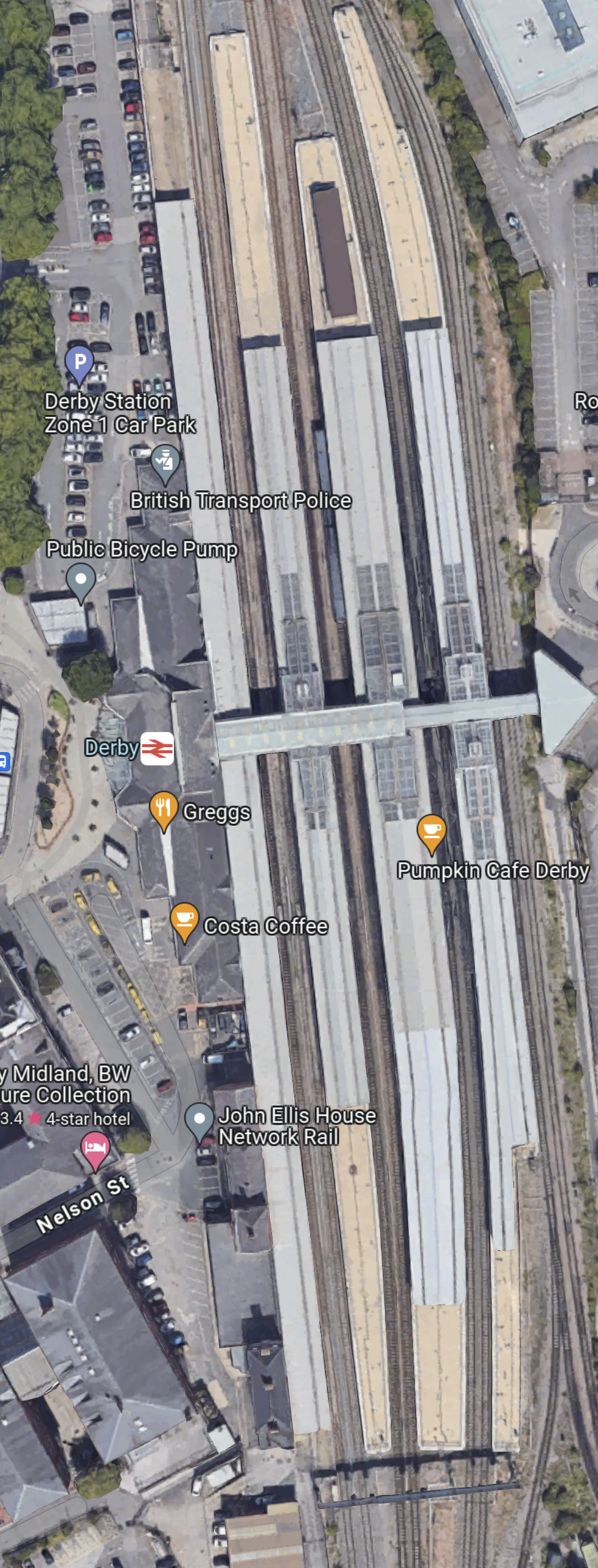
Note.
- There are now seven platforms.
- Platforms are numbered from the West.
- There is a bridge with lifts giving access to all platforms from both sides of the tracks.
Although, the station will be electrified, there is no sign of any pre-electrification works.
We Don’t Make Them Like This Anymore
There was an article in The Times today about the Panama Canal and how its water system needs to be made larger.
It got me thinking about draglines and one in particular; Big Geordie.
I found these two videos of Big Geordie on YouTube.
Big Geordie had been built in Ipswich by Ransomes & Rapier in the 1950s.
This video from the 1930s shows Ransomes and Rapier’s excavators of the period.
Penistone Line – 15th December 2023
I took these pictures on the Penistone Line today.































Note.
- I started at Sheffield station and travelled to Huddersfield station, before returning to Sheffield on the next train.
- The trains run hourly.
- There are 15 stops.
- The route had good views but it didn’t seem the train worked that hard.
- The route is 36.4 miles and trains are timed to take 75 minutes.
- That is an average speed of 29.1 mph.
- Most services were run by two car Class 150 trains, but some were run by three-car trains.
- The two trains I used were well patronised.
I have some thoughts and observations.
Could The Service Be Run Faster?
Consider.
- 29.1 mph doesn’t seem very fast.
- The maximum speed is 50 mph or less in places.
- The line North of Barnsley is single-track with passing loops at Penistone and Stocksmoor.
- Some of this single-track is on top of high viaducts, so could be difficult to double.
- Between Barnsley and Sheffield is double-track.
- To do the journey in an hour would need an average of 36.4 mph.
- Typically, Greater Anglia run their Class 755 trains at 34-36 mph.
As the Penistone Line has 15 stops, an electric train with faster acceleration and deceleration might be ideal for the route.
But I suspect it would be tight, but possible to do the journey in an hour.
Help And Money Is On Its Way!
This article on Kirkless Together is entitled £48million Funding Boost To Get Penistone Rail Line On The Right Track.
This is the first paragraph.
The government have just announced that we’ve been successful in a bid to their Levelling Up Fund for £48million, to support major improvements to the Penistone rail line.
That certainly sounds like a good start.
The article sums up what the funding means like this.
This funding means we’ll be able to improve the infrastructure along this rail line, and improve access as well. This will make the Penistone line a really important link between Huddersfield, Barnsley and Sheffield!
Improvements are outlined in this paragraph.
It will include station improvements creating better access and waiting facilities, increasing the speed of travel along the line and upgrading the rail infrastructure – including doubling sections of track, which will allow for two trains to travel on the northern section of the line every hour, in both directions.
Note.
- I feel that the current track layout could allow a theoretical two trains per hour (tph) service North of Barnsley, if both passing loops at Penistone and Stocksmoor were to be used.
- But it might not be very resilient to late trains and other problems, so extra double-track might be desirable, if it made the route more reliable.
I would expect that if possible, the improvements would allow trains to go between Sheffield and Huddersfield in an hour, as that would definitely attract more passengers to the service.
Could Battery-Electric Trains Run The Service On The Penistone Line?
Consider.
- Both Sheffield and Huddersfield stations will be electrified in the next few years, so the power supplies will be able to support charging of battery-electric trains.
- Sheffield and Huddersfield is only 36.4 miles.
- Hopefully, the track improvements would make the route less severe.
- The Penistone Line is self-contained with no other services on much of the route.
- There is time to charge the train at each end of the route.
In an article in the October 2017 Edition of Modern Railways, which is entitled Celling England By The Pound, Ian Walmsley says this in relation to trains running on the Uckfield Branch, which is not very challenging.
A modern EMU needs between 3 and 5 kWh per vehicle mile for this sort of service.
I don’t think the terrain of the Penistone line is much different from the Uckfield branch, so what are the figures for a three-car-battery electric train?
The answer would appear to be somewhere between 328 and 546 kWh.
According to the data sheet is now on the Stadler web site, the battery size of a Class 777 train is 320 KWh.
I feel that an off the shelf battery electric train could work the Penistone Line.
Could Tram-Train Operation Be Used?
Consider.
- A Sheffield tram driver told me that Sheffield’s Class 399 Tram-Trains are excellent on hills.
- The cousins of the Class 399 Tram-Trains run a similar service between Karlsruhe and Baden-Baden in Germany on bigger hills.
- Battery-electric Class 399 Tram-Trains are available and are being tested in Wales.
- Sheffield station handles Huddersfield services straight into one of two single bay platforms.
- Huddersfield station handles Sheffield services straight into a single bay platform.
- Major improvements to the Penistone Line will allow two trains per hour on the line.
I suspect if two trains per hour can be run using using diesel multiple units operating as a shuttle, then battery-electric Class 399 tram-trains could do the same.
A Tourist Tramway Across The Pennines
I feel there are possibilities to run tram-trains between Huddersfield and Manchester Piccadilly via Meadowhall and Sheffield stations.
This would create a unique tourist tramway across the Pennines.
Huddersfield’s magnificient Grade 1 Listed station is being upgraded and electrified.
The Hope Valley Line has been upgraded in the last couple of years.
Through Sheffield will be upgraded and electrified for the Midland Main Line.
Stadler have built vehicles for lines like these in many places.
This could be the spectacular attraction that the North-Centre of England needs.
Statkraft To Acquire Major Loch Ness Pumped Storage Hydro Project From Intelligent Land Investments Group
The title of this post, is the same as that of this press release from Statkraft.
This is the sub-heading.
The acquisition demonstrates Statkraft’s latest commitment to helping Scotland meet its renewable energy targets and strengthening UK energy security
These two paragraphed outline Red John and the deal.
Statkraft, Europe’s largest renewable power generator, has agreed to acquire the Red John Pumped Storage Hydro Scheme, from Intelligent Land Investments Group (ILI).
The 450MW scheme, first conceived in 2015, was granted consent by Scottish Government ministers in June 2021. The acquisition demonstrates Statkraft’s latest commitment to helping Scotland meet its renewable energy targets and strengthening UK energy security.
Note.
I wrote about Red John in Red John Pumped Storage Hydro Project.
I have also found a web site for the project, where this is said.
- The scheme has an output of 450 MW.
- The storage capacity is 2,800 MWh or 2.8 GWh.
- The scheme has planning consent.
- The project is budgeted to cost £550 million.
- The construction program indicates that the scheme will be completed by the end of 2025.
It looks to me, that the ILI Group have done all the hard work in getting the project shovel-ready and are passing the project to a bigger developer.
Huddersfield Station – 15th December 2023
I took these pictures at Huddersfield station today.



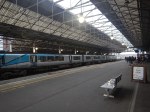
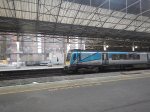

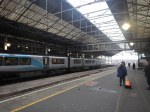
















Note.
- The station is a Grade I Listed building.
- The station will be fully-electrified under the TransPennine Upgrade.
- St. George’s Square in front of the station is pedestrianised.
- There is a pub in each wing of the station.
This OpenRailwayMap shows the tracks between Huddersfield and the next station to the East; Deighton.

Note.
Huddersfield station is in the South-West corner of the map, where the tracks lead to Manchester.
Deighton station is in the North-East corner of the map, where the tracks lead to Leeds.
The tracks between the two stations will be electrified as part of the TransPennine Upgrade.
This second OpenRailwayMap shows the layout of platforms and tracks in Huddersfield station.
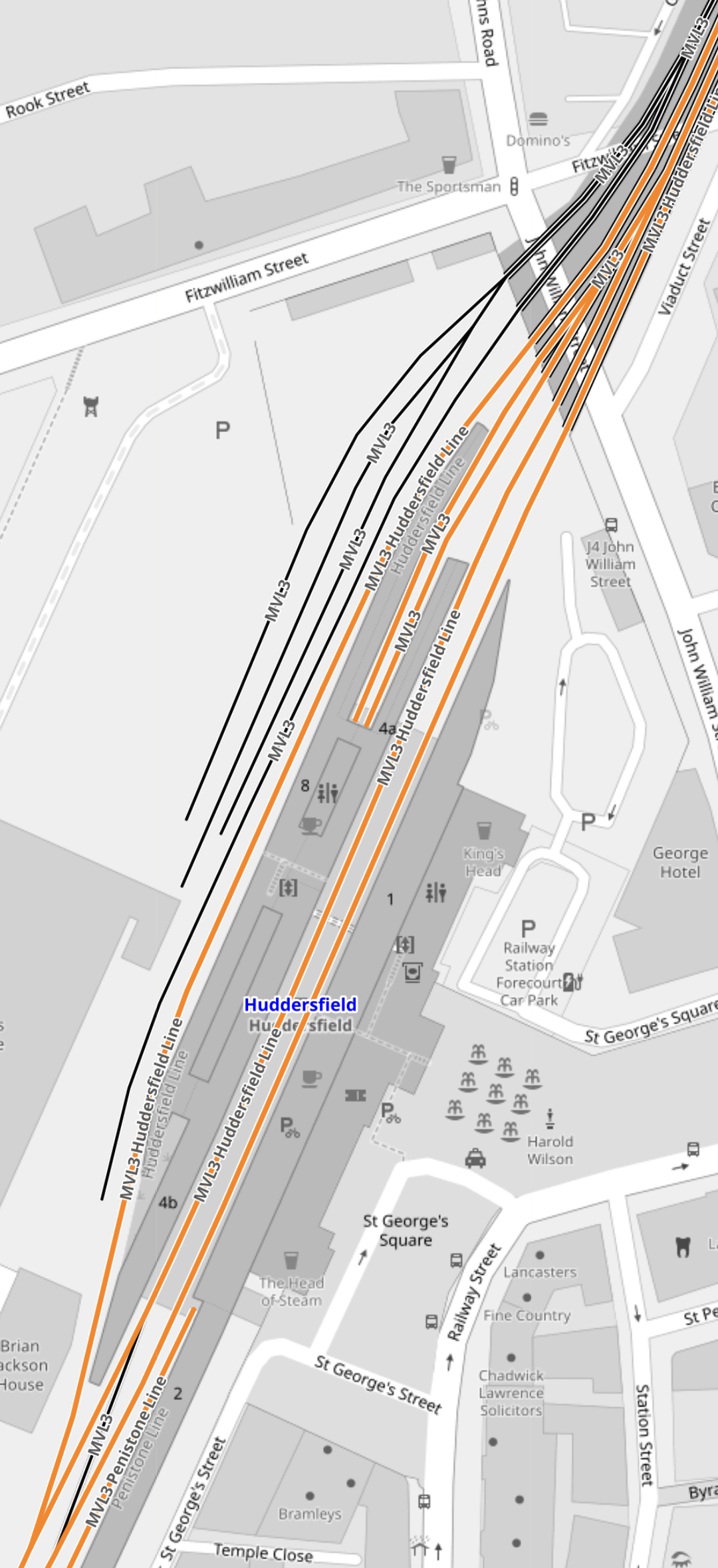
Currently, there are the following platforms.
- Platforms 1, 4 and 8 are through platforms.
- Platform 2 is a bay platform at the Manchester end of the station is used by trains on the Penistone Line to Sheffield.
- Platform 5 and 6 are two bay platforms at the Leeds end of the station, that are used by services to and from Bradford Interchange.
The Wikipedia entry for Huddersfield station says these changes will be made under the TransPennine Upgrade.
Work is underway on Network Rail’s Transpennine Route Upgrade project, which will see electrification of the Huddersfield Line, allowing many of the services through the station to switch to newer, faster electric rolling stock. As part of this project the signal box on platform 4 which was decommissioned previously will be removed, its control area already passed to the York Rail Operating Centre as a part of the Huddersfield Re-signalling project. To match the quadrupling of the line north of Huddersfield, the project will in effect split the existing island platform, extending the existing bay platforms 5 and 6 to form two new through platforms covered by a new roof, and add a new footbridge at the Leeds end. The process will also include relocating the 1880s island platform tea room, and rotating it through 180 degrees.
It looks like the functionality of the station for passengers, staff and operators will be upgraded to the level of style of the station.
Performing The Upgrade
I learned today, that during some parts of the upgrade work, Deighton station will be used as a temporary station for Huddersfield.
TCP Is Using Hydrogen To Create Cleaner Construction Sites
The title of this post, is the same as that of this article on the Eastern Daily Press.
This is the sub-heading.
Air and noise pollution are challenges for every construction project. For green energy infrastructure developers especially, cutting emissions is a pressing conundrum.
These are the first four paragraphs.
Large-scale construction demands diesel-guzzling heavy plant and noisy diesel generators powering off-grid site work for years before a project generates its first clean energy.
Back in 2012, Andrew Barker identified hydrogen as a fuel of the future and a solution to pollution issues during construction projects in his Essex-based family business, Taylor Construction Plant (TCP Group).
His concerns about health issues caused by carbon emissions, combined with a drive to make a difference, led to game changing inventions using hydrogen to transform power for site operations – making sites better neighbours, with fewer health dangers to site workers and helping the drive against climate change.
He developed his first hydrogen powered product more than a decade ago – mobile lighting towers that are the flagship product for the business and first choice for building and maintenance projects across the UK on the mission to net zero.
It appears now Andrew Barker has a strong business, which can be found at this web site.
 The Anonymous Widower