Three Shetland ScotWind Projects Announced
The title of this post, is the same as that of this press release on Crown Estate Scotland.
These three paragraphs outline how the leases were allocated.
Three projects will be offered seabed agreements for offshore wind projects following Crown Estate Scotland’s ScotWind clearing process.
The announcement comes as an offshore wind supply chain summit is held in Aberdeen today (22 August) with Sir Ian Wood, chaired by Michael Matheson MSP, Cabinet Secretary for Energy, and including a keynote address by First Minister Nicola Sturgeon MSP.
Clearing saw the ‘NE1’ area east of Shetland made available for ScotWind applicants who met the required standards but who did not secure their chosen location earlier in the leasing process.
I think it was good idea to offer these leases to those bidders that failed to get a lease, the first time around, despite meeting the standards.
- Would it encourage bidders, if they knew that after the expense of setting up a bid, that if they failed, they could have another chance?
- It must also save the Scottish Government time and money checking out bidders.
- How many times have you interviewed several applicants for a job and then found jobs for some of those, that you didn’t choose for the original job?
Let’s hope the philosophy has generated some good extra contracts.
This map from Cross Estate Scotland shows all the contracts.

Note the three new leases numbered 18, 19 and 20 to the East of Shetland, in the North-East corner of the map.
Their details are as follows.
- 18 – Ocean Winds – 500 MW
- 19 – Mainstream Renewable Power – 1800 MW
- 20 – ESB Asset Development – 500 MW
Note.
All are floating wind farms.
- Ocean Winds is a Spanish renewable energy company that is developing the Moray West and Moray East wind farms.
- Mainstream Renewable Power appear to be a well-financed and ambitious company, 75 % owned by Aker.
- ESB Energy appear to be an experienced energy company owned by the Irish state, who operate several wind farms and Carrington gas-fired power station in the UK.
2.8 GW would appear to be a generous second helping.
Ocean Winds and Mainstream Renewable Power
This web page on the Ocean Winds web site, is entitled Ocean Winds Designated Preferred Bidder For Seabed Leases For 2.3 GW Of Floating Projects East Of Shetland, Scotland, contains several snippets of useful information.
- Crown Estate Scotland announced the result of ScotWind Leasing round clearing process, awarding Ocean Winds with two seabed leases for floating offshore wind projects: a 1.8 GW capacity site with partner Mainstream Renewable Power, and another 500 MW capacity site, east of the Shetland Islands.
- Ocean Winds’ international portfolio of projects now reaches 14.5 GW of gross capacity, including 6.1 GW in Scotland.
- Floating wind turbines for the two adjacent sites are confirmed, because of the water depth.
- The partners are committed to developing floating offshore wind on an industrial scale in Scotland, generating local jobs and opportunities in Scotland and the Shetland Islands.
- From the picture on the web page, it looks like WindFloat technology will be used.
- Ocean Winds developed the WindFloat Atlantic project.
Ocean Winds appear to want to go places.
The Shetland HVDC Connection
The Shetland HVDC Connection will connect Shetland to Scotland.
- It will be 160 miles long.
- It will have a capacity of 600 MW.
- It is estimated that it will cost more than £600 million.
- It will allow the 66MW Lerwick power station to close.
- It will be completed in 2024.
I have a feeling that all these numbers don’t add up to a sensible answer.
Consider.
- The three offshore wind farms can generate up to 2800 MW of green electricity.
- With a capacity factor of 50 %, an average of 1400 MW of electricity will be generated.
- The Viking onshore wind farm on Shetland could generate up to 450 MW.
- More wind farms are likely in and around Shetland.
- Lerwick power station can probably power most of the Shetland’s needs.
- Lerwick power station is likely to be closed soon.
- Sullum Voe Terminal has its own 100 MW gas-turbine power station.
- Load is balanced on Shetland by 3MWh of advanced lead-acid batteries.
- Lerwick has a district heating scheme.
If we assume that Shetland’s energy needs are of the order of a few hundred MW, it looks like at times the wind farms will be generating more electricity, than Shetland and the Shetland HVDC Connection can handle.
Various plans have suggested building electrolysers on Shetland to create hydrogen.
Conversion of excess electricity to hydrogen, would have the following advantages.
- The hydrogen could be used for local heavy transport and to replace diesel.
- Hydrogen could be used to fuel a gas turbine back-up power station, when needed.
- Hydrogen could be used for rocket fuel, if use of Shetland as a Spaceport for launching satellites takes off.
Any excess hydrogen could be exported to the rest of the UK or Europe.
Stockport Hydro
I hadn’t heard of Stockport Hydro, until there was a report about it on BBC Radio 5.
This is the introductory paragraph.
Stockport Hydro, a renewable energy scheme at Otterspool Weir on the river Goyt near Marple, Stockport, is Greater Manchester’s first community-owned hydro-electric project. Our two Archimedes screws, Thunder and Lightning, have been operational since October 2012, generating renewable electricity which is fed into the National Grid. We are accredited to earn the Government’s Feed-in-Tariff and the Environment Agency has approved our operation to ensure no damage to the river’s eco-system and wildlife.
This Google Map shows the location of the Stockport Hydro.
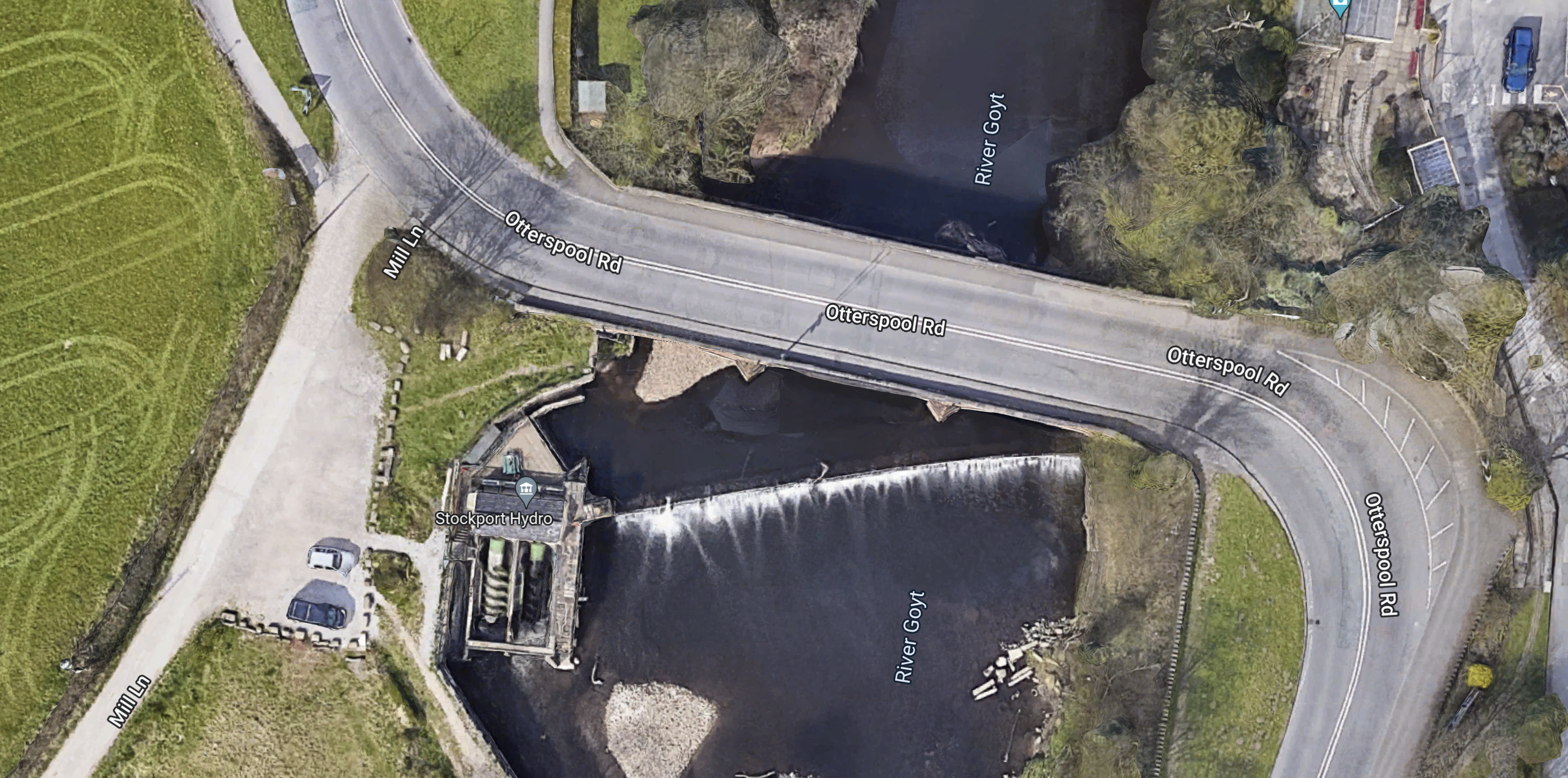
Note.
- The weir crosses the River Goyt
- The Stockport Hydro is at the West end of the weir.
- The green Archimedean screws can be seen on the South side of the building.
How many other weirs could host a small hydroelectric power station like this?
The Creation Of The Coire Glas Monster
Loch Ness is probably most famous for the mythical monster, but it is about to be joined by a man-made monster of a different kind.
To the South-West of Loch Ness lies Loch Lochy.
This Google Map shows the South-Western part of the Great Glen, which runs diagonally across the Highlands from Fort William in the South-West to Inverness in the North-East.
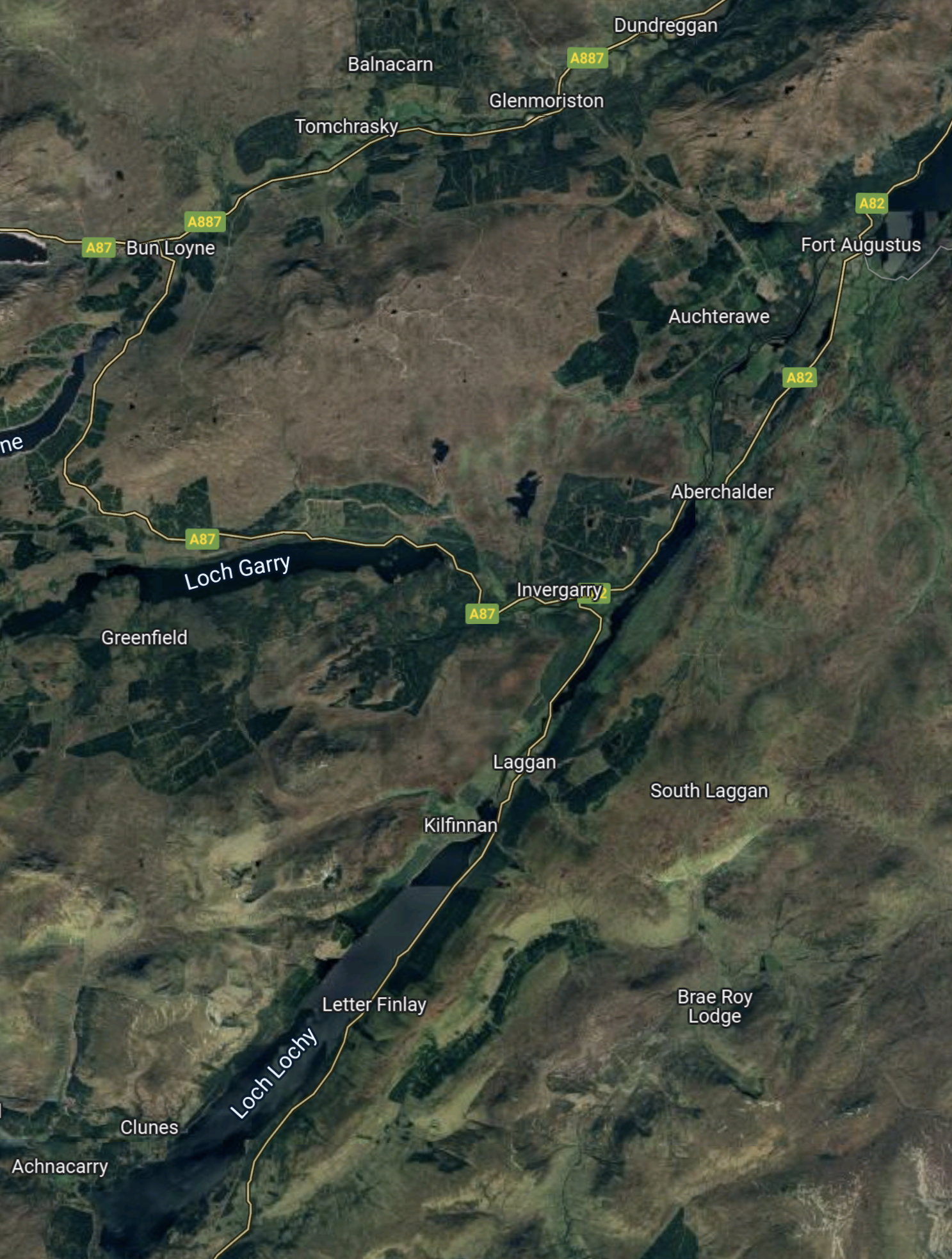
Note.
- Fort Augustus in the North-East corner of the map, is at the South-West end of Loch Ness.
- In the South-West corner of the map, Loch Lochy can be seen.
- To the North-West of Loch Lochy, there are mountains.
This second Google Map shows Loch Lochy and the mountains.
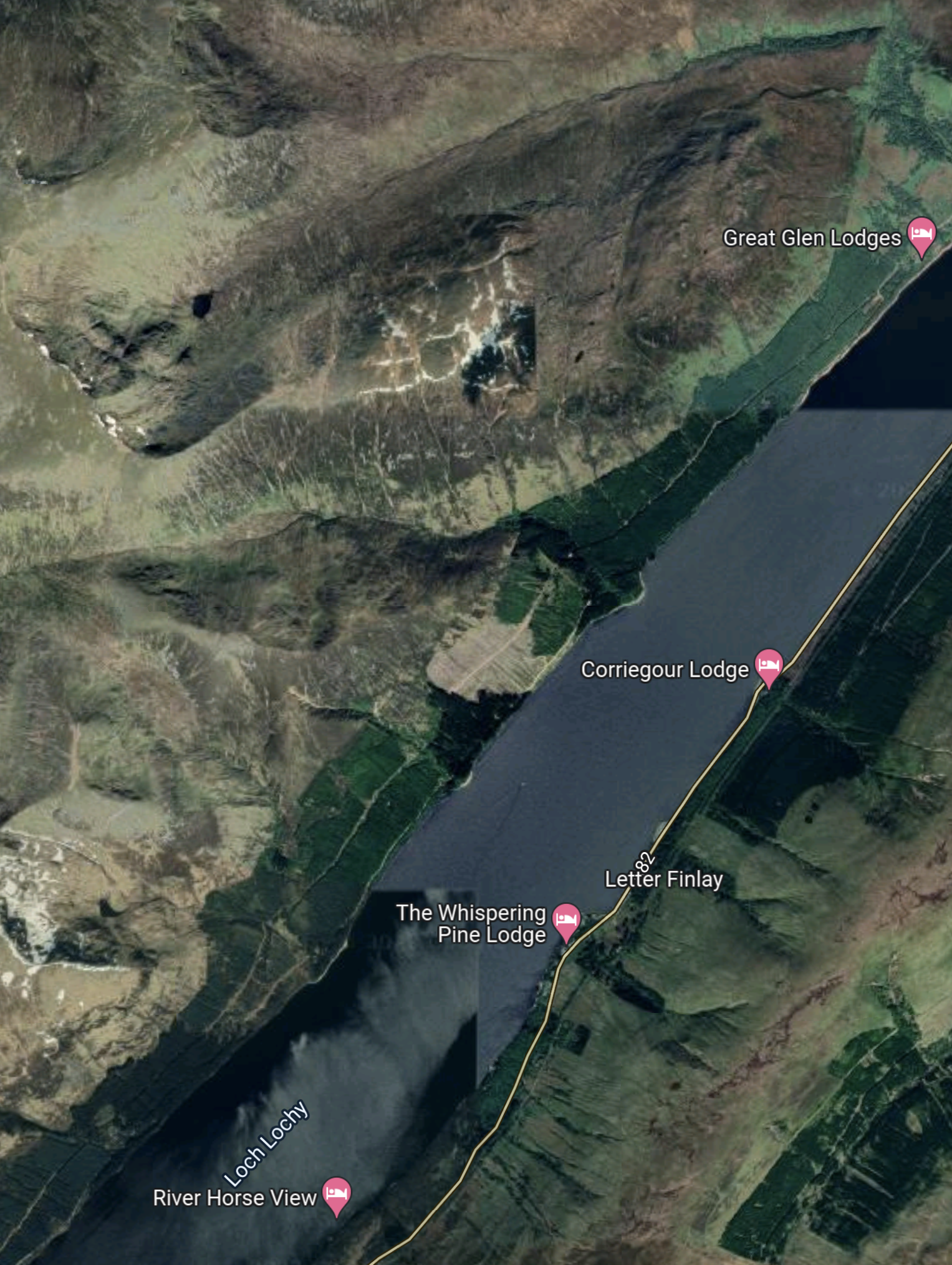
SSE plan to create a pumped storage hydroelectric power station called Coire Glas.
- Loch Lochy will be the lower reservoir.
- The upper reservoir will be in the mountains to the North-West of the loch.
- Energy will be stored by pumping water from the lower to the higher reservoir.
- The power station will be able to provide 1.5 GW of electricity.
- The upper reservoir will be able to store enough water to generate 30 GWh of electricity.
If that isn’t a monster of a power station, I don’t know what is! It has more than three times the storage capacity of both Dinorwig or Cruachan.
This article on Utility Week, which is entitled Inside £1bn Pumped Hydro Plans To ‘More Than Double’ Britain’s Electricity Storage, gives more details.
This is the sort of heroic engineering, that will defeat Vlad the Mad and his bloodstained gas.
First Power At Scotland’s Largest Offshore Wind Farm
The title of this post, is the same as that of this press release from Seagreen wind farm.
These two paragraphs summarize the project and its start-up.
TotalEnergies and its partner SSE Renewables, has announced first power generation from the Seagreen offshore wind farm, 27km off the coast of Angus in Scotland.
The first turbine of a total of 114, was commissioned in the early hours of Monday morning. The aim is for the 1075 MW farm to be fully operational in the first half of 2023. The £3bn Seagreen project will be Scotland’s largest offshore wind farm and the world’s deepest fixed bottom wind farm as it is being developed in up to water depths of 59 meters.
It looks like 1075 MW cost £3billion, so I suspect it’s reasonable to say that offshore fixed-foundation wind farms cost about £2.79billion per GW.
The press release also says this about yearly output.
When fully operational, the site will produce around 5 terawatt hours (TWh) of renewable electricity per year, enough to power the equivalent of 1.6 million households.
That looks like an expected capacity factor of 53.1 %.
The Third Route To Zero-Carbon Transport
The two most common routes to zero-carbon transport are.
- Battery-electric vehicles
- Hydrogen fuel-cell vehicles
Note that most hydrogen-fuel cell vehicles also have a battery.
But I believe there’s a third route and that is the use of hydrogen in an internal combustion engine.
Earlier today, I wrote Rolls-Royce And AVK Provide Over 3.5 Gigawatts Of Emergency Power Capacity In The UK, which is based on a Rolls-Royce press release, with the same title.
This is an extract.
And this is said about the use of hydrogen.
Rolls-Royce is also currently developing its mtu gas engine portfolio for power generation so that the engines can run on hydrogen fuel in future, enabling a Net Zero energy supply. The company is also launching complete mtu hydrogen fuel cell solutions, that emit nothing but water vapor from 2025. This will enable CO2-free generation of emergency power for data centers and many other critical applications.
I certainly think, that they are going in the right direction.
Rolls-Royce mtu have a lot to lose, if their diesel engines that power trains, heavy equipment, ships and emergency power generators are replaced by other companies zero-carbon solutions.
- Large investments will need to be made in hydrogen electrolyser and fuel cell production.
- Some traditional factories making diesel engines will be closed and could this mean redundancies?
- A lot of retraining of staff at both manufacturer and customer will need to be made.
But a traditional internal combustion engine, that runs on hydrogen or even both hydrogen and diesel makes the transition to hydrogen a lot less painful.
Other companies going this route include Cummins, Deutz and JCB.
Conversion Of Existing Diesel Engines To Hydrogen
Surely, if an equivalence hydrogen engine exists for all of their diesel engines, a company like Cummins or Rolls-Royce mtu can produce a sound engineering route to decarbonise some of their existing applications.
A classic application would be converting London’s Routemaster buses to hydrogen, which I wrote about in Could London’s New Routemaster Buses Be Converted To Hydrogen Power?
This was my conclusion in that post.
I believe from my knowledge of Cummins and the way they work, that they will come up with a hydrogen-based solution, that will replace the Cummins diesel in these buses with a zero-carbon engine.
If Cummins don’t then someone else will.
Whoever solves the problem of converting London’s new Routemasters to hydrogen will have one of the best adverts for their product, there has ever been.
After converting London’s thousand Routemasters, the engineers could move on to anything powered by a Cummins engine.
As this is a world-wide problem, I believe that the manufacturers of cars, buses, trucks and many other vehicles will offer zero-carbon solutions for their products, as it will be necessary for survival.
If you have just bought a new diesel BMW and your government says that in two years time, diesel will no longer be available, you’re up the creek without a paddle. But if BMW can convert it to hydrogen for a small fraction of the cost of a new electric equivalent, you have a more available way out.
Rolls-Royce And AVK Provide Over 3.5 Gigawatts Of Emergency Power Capacity In The UK
The title of this post, is the same as that of this press release from Rolls-Royce.
The press release starts with these two bullet points.
- UK’s largest technology companies rely on emergency power solutions from AVK and Rolls-Royce
- Focus on Net Zero solutions with sustainable fuels and fuel cells
And then this summary of the business in the UK.
Rolls-Royce has delivered 200 mtu emergency generators to AVK, UK’s leading provider of critical power solutions, in just three years. AVK has already installed and commissioned the majority across Europe, and in total has already provided more than 3.5 gigawatts of power to data centers, the financial, telecommunications and healthcare industries in the UK and Ireland.
AVK is now the largest supplier of emergency power solutions to data centers and the financial sector in the UK, and since signing the exclusive agreement with the Rolls-Royce business unit Power Systems, has been using only mtu brand emergency gensets.
The next two paragraphs describe the business in more detail.
These are some points from these paragraphs.
- Data is now the ‘fourth utility’ required by all.
- The European colocation data center market is expected to grow at a compound annual growth rate of 13.1 percent from 2021 to 2028.
- The most important European markets for data centers are Frankfurt, London, Amsterdam, and Paris, where demand is highest.
- AVK provides, installs and maintains systems over their entire service life.
- Emergency power systems based on mtu diesel systems ranging from 825 to 4,000 KVA are tailored to customer needs.
- AVK has been using mtu engines for emergency power systems for over 20 years.
Rolls-Royce And AVK seem to have developed a nice little earner.
Net Zero Emergency Power Solutions
The last section talks about net-zero solutions for generators and emergency power.
This is set about sustainable fuels.
Sustainability already plays a major role for data center operators. As a result, interest in alternative fuels has grown and AVK is increasingly providing support and guidance on switching from using diesel to HVO (Hydrotreated Vegetable Oil). mtu Powergen engines from Rolls-Royce can be used unchanged for sustainable EN15940 fuels, such as HVO; no engine hardware or software modifications are required with the same performance. Using HVO can significantly reduce CO2, nitrogen oxide and particulate emissions.
And this is said about the use of hydrogen.
Rolls-Royce is also currently developing its mtu gas engine portfolio for power generation so that the engines can run on hydrogen fuel in future, enabling a Net Zero energy supply. The company is also launching complete mtu hydrogen fuel cell solutions, that emit nothing but water vapor from 2025. This will enable CO2-free generation of emergency power for data centers and many other critical applications.
I certainly think, that they are going in the right direction.
- Data center operators are said to want sustainability.
- Other users of emergency power will probably want the same.
- A full range of solutions is offered.
Hopefully, it will bring more sales, as the market size increases.
First Ever Gravity Green Energy Storage System Set For North Yorkshire Town
The title of this post, is the same as that of this article on the Yorkshire Post.
These paragraphs give an outline of the project.
Plans to create the UK’s first below ground gravity energy storage system have been unveiled in North Yorkshire.
Scottish energy storage firm Gravitricity is to apply to Ryedale District Council with its plan for a facility at East Knapton in Ryedale on the site of the former Knapton gas generator.
If completed, it could store up to four megawatt hours (4MWhs) of electricity – sufficient to power more than 9,000 homes for an hour.
It looks like the system will have an output of 4 MW.
This Google Map shows the two villages of West and East Knapton.
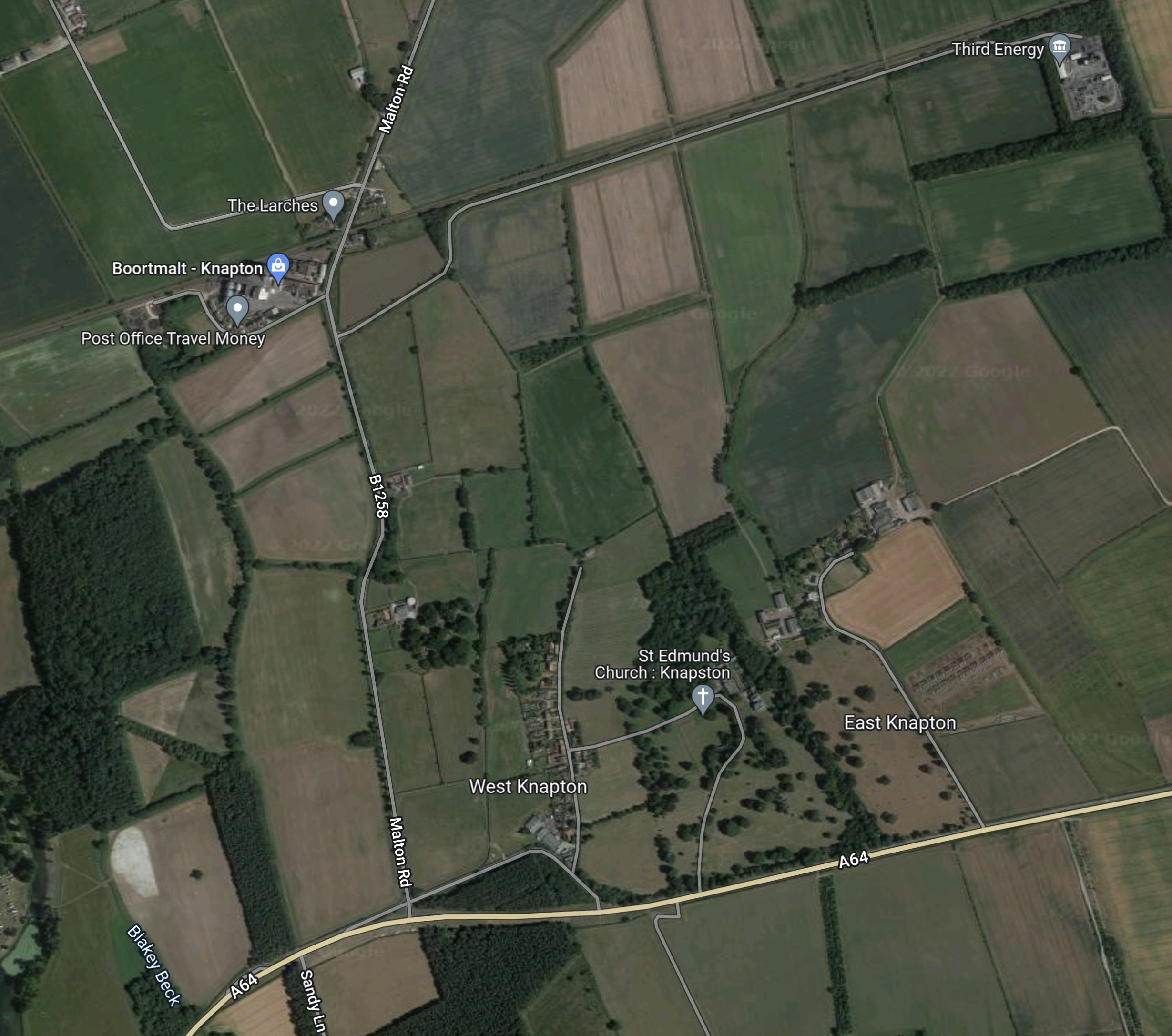
Note.
- The A64 road between Malton and Scarborough going across the map.
- Scarborough and the coast is about fifteen miles to the East.
- The Third Energy site in the North-East corner of the map.
This second Google Map shows the Third Energy site in more detail.
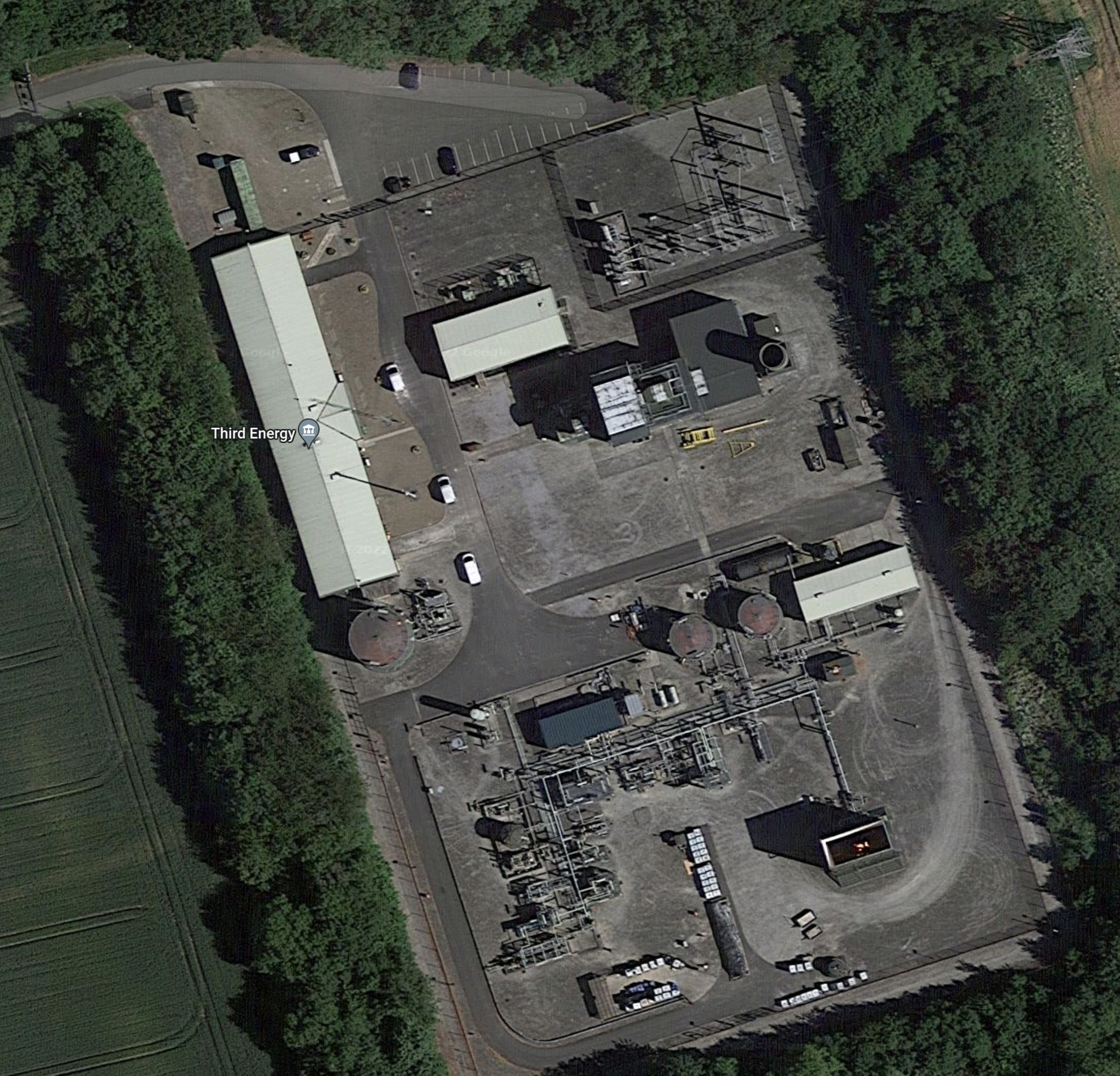
Note.
- The substation and a power line in the North-East corner of the map.
- The 42 MW Knapton Generating Station used to be on this site and it was powered by local gas wells.
Third Energy have now called the site Knapton Energy Park and it now has a web page, which has this mission statement.
Third Energy is developing the former Knapton Generating Station into the Knapton Energy Park. The energy park will house multiple sources of power generation and energy storage. The aim of the project is to pay a part in the development and generation of renewable energy systems in North Yorkshire, and contribute to making the UK Net Zero by 2050.
This paragraph talks about weights.
One of our technology partners has also received government funding to conduct feasibility studies for a pilot project at Knapton which would utilise suspended weights to store energy as an alternative to the traditional battery storage technologies. This project will be developed through 2022 onwards.
It looks like Gravitricity has planted an acorn in Yorkshire.
The Third Energy web site is worth an explore. This is the mission statement on the home page.
At Third Energy our aim is to be at the forefront of North Yorkshire’s transition from fossil fuels to sustainable energy. Our team are proactively playing a part in innovative energy solutions and energy development; transforming our facilities into a multi-purpose energy park and research centre.
I particularly like this page, which is entitled Plug & Abandon.
This is the outline of their P % A philosophy on the page.
As wells near the end of their life cycle they must be decommissioned and the land returned to its original state. Unfortunately, the current P&A practices of the oil and gas industry are cost prohibitive, resulting in delays to abandonment (as companies attempt to avoid the high cost), and poor abandonment practices that may be harmful to the environment.
Fortunately, there are solutions to this problem. Our ambition is to use new and innovative technologies to P&A the wells in a more effective and sustainable manner, and first to extend the period our wells may service the community by re-purposing them for geothermal energy.
Can they really convert abandoned gas wells into geothermal energy sources?
‘Spaceport In A Box’ To Launch UK’s First Rocket From Home Turf
The title of this post, is the same as that of this article on The Times.
This is the sub-heading.
A British company’s mobile spaceport can send satellites into orbit from anywhere in the world. Its initial blast-off point is Unst
These are some more points from the article and myself.
The UK Has Never Sent A Rocket Into Space From Home Turf
Our satellites have always been launched from French Guinea, Kazakhstan or the United States.
Spaceport In A Box
The mobile launch system which can be packed into a dozen shipping containers and taken anywhere in the world.
Launch From Unst
Unst is the most northerly of the Shetland Islands and is an ideal location for polar launches.
It Will Be Very Difficult To Compete With SpaceX On Price
This is because SpaceX launch up to a hundred satellites a time on a huge rocket.
Skyrora Can Provide Precise Launches
Skyrora claim to be able to launch a single satellite at great precision. As a Control Engineer, I think that is possible.
100,000 Satellites By 2030
This figure will include a large number of UK-built satellites.
So why shouldn’t we have our own launch technology.
Sixteen Launches Per Year
Skyrora are talking of this number of launches per year from Unst.
Conclusion
This is a well-thought out project.
Read the article in The Times.
AA Unveils Hydrogen Fuel Cell Patrol Vehicle
The title of this post, is the same as that of this article on FleetNews.
This is the introductory paragraph.
The AA has revealed a hydrogen fuel cell roadside breakdown vehicle – the Hyundai NEXO – to target breakdown jobs in ultra-low emission zones.
Could we see other service companies switching to the Hyundai NEXO.
ILI Group Secures Planning Consent For 50MW Energy Storage Project
The title of this post, is the same as that of this article on Solar Power Portal.
ILI Group or Intelligent Land Investments Group to give them their full name, are a Scottish-based company, that I follow as I like their energy storage developments.
The home page of their web site, lists three main areas of activity.
The home page also has a scrolling mission statement of
- UK Energy Security
- 4GW of Energy Storage Projects
- Aligned with government policy
- Saving over 200million tonnes of CO2e
- Over £4 billion of Investment
It is very much worth reading the section of the ILI Group web site, which talks about pumped-storage hydroelectricity.
It starts with a overview of the Pump Storage Sector.
Between 2007 and 2015, the total installed capacity of renewables electricity in Scotland has more than doubled. Due to its intermittent nature, the rise in renewable generation has resulted in increased demand for flexible capacity to help meet energy balancing requirements for the national grid system.
Pumped storage hydro is considered by the Directors to be the most developed and largest capacity form of grid energy storage that currently exists. This can help reduce renewable energy curtailment and therefore promote grid stability.
It then gives an overview of how pumped-storage hydroelectricity works and the benefits of the technology.
The section finishes by noting that the company has secured planning permission for the Red John pumped-storage hydroelectric power station.
The article on the Solar Power Portal, also has this paragraph on ILI Group’s ambitions for pumped-storage hydroelectricity.
ILI Group is also responsible for the development of a 1.5GW pumped storage hydro project at Loch Awe. The Balliemeanoch project based at Dalmally in Argyll and Bute will be able to supply 1.5GW of power for up to 30 hours. It is the third and largest of ILI’s pumped storage hydro projects, with the other two being Red John at Loch Ness and Corrievarkie at Loch Ericht.
Note these points about the Balliemeanoch project.
- It has a storage capacity of 45 GWh, which is around the total amount of electricity, the whole of the UK would use in two hours.
- It couldn’t power the UK, as it has an output of only 1.5 GW and the UK needs at least 23 GW.
- The largest pumped storage hydroelectric power station in the UK is Dinorwig power station, which has an output of 1.8 GW and a storage capacity of 9.1 GWh.
In terms of storage capacity, the Balliemeanoch project will probably be the largest in the UK.
The section of the ILI Group web site, that talks about battery storage, opens with an overview of battery storage opportunities, where this is said.
Battery storage projects provide an enticing new opportunity for landowners and investors alike. As a market that will see significant growth over the coming years (National Grid predict up to 40GW of storage could be required by 2050) we see exciting new opportunities in a sector that will be critical to meeting our climate change needs.
Whereas our pumped storage hydro projects will provide long-term storage capacity, our batteries will provide short-term services (less than 4 hours) to the electricity system. As the system decarbonises, becoming steadily more reliant on intermittent green renewable generation, storage will play a role of increasing importance in balancing the grid and ensuring security of supply.
Note.
- This is a sales pitch to landowners and investors.
- National Grid’s prediction of 40GW of storage by 2050, could be able to store as much as 1200 GWh of electricity.
- I agree with their statement that there will be a need for both pumped storage hydro and batteries.
The section finishes with a status summary of 21 battery projects that they are developing.
Conclusion
I feel that ILI Group is a company that means business and knows where it’s going.
The UK probably needs several more companies like the ILI Group.
 The Anonymous Widower