CoacH2 – The Next Generation Coach
This page on the Advanced Propulsion Centre UK web site is entitled CoacH2 – Next Generation Hydrogen Fuel-Cell Coach Powertrain Demonstrator.
This is the sub-heading.
Accelerating the development of zero-emission hydrogen fuel-cell electric coaches, with a full on-vehicle technology demonstrator.
These are the first two paragraphs.
Coaches are an integral part of the public transport network, with over 30,000 diesel coaches operating across the UK and Ireland. Due to the specific demands of coach operation (motorway driving, long-range, high passenger and luggage loading capacity) decarbonisation options for this sector are extremely limited with hydrogen fuel-cell technology considered the most viable choice. This project will tackle this difficult to decarbonise sector by developing, testing and validating an innovative hydrogen fuel-cell powertrain suitable for coach applications.
Delivered by a Northern Irish consortium spanning OEM, coach operator and academia, CoacH2 will accelerate the development of zero-emission, fuel-cell electric coaches, with a full on-vehicle technology demonstrator to be manufactured and showcased at Cenex Expo 2024.
As I indicated in British Buses For British Bottoms, Wrightbus build a good well-built, smooth-riding and comfortable bus, so now they can add hydrogen-powered coaches to the product range.
This press release on the Wrightbus web site is entitled Wrightbus Coach Demonstrator Unveiled At Cenex Expo, gives more information on CoacH2.
- The demonstrator has a power of 300 Kw.
- It has a range of 1,000 km. on one refueling.
- An internet search reveals a launch date of 2026 for the hydrogen-powered coach.
I wonder, if this will be the killer application for hydrogen-powered road transport.
Thoughts On The Airbus A 390
Ask Google what she knows about the Airbus A 390 and you get this AI Summary.
The Airbus A390 is a three-deck, six-engine aircraft that can carry around 1,000 passengers. It’s based on the A380, but with a third deck and extra engines. The A390 was custom-built for Qantas to fly between Melbourne and New York.
Google got their summary from this page on steemit.
Search for images of the Airbus A 390 and you get several images of this unusual three-deck aircraft, that looks like a widened Airbus A 380 with six engines.
These are some of my thoughts.
Wikipedia Entries
There is no Wikipedia entry for the Airbus A 390.
But.
- There is a Wikipedia entry for the Airbus A 380.
- There is also a Wikipedia entry for the six unusual Airbus Beluga XLs, which are used to transport two pairs of Airbus A 350 wings between factories.
The A 390 is supposedly based on the A 380 and the Beluga XL appears to have a fuselage that is a bit like the Airbus A 390.
Will The Airbus A 390 Fly?
After reading the two Wikipedia entries, I am fairly sure that an Airbus A 390 airliner, as shown in the pictures would be able to fly.
Although, I must say, that I was surprised, at seeing an Airbus Beluga XL on video. This is a Beluga XL landing at Heathrow.
So I think we can say, that Airbus know more than a bit about the aerodynamics of three-deck fuselages.
The Antonov An-225 Mriya
This aircraft designed and built in the Soviet Union , does have a Wikipedia entry.
These three paragraphs from the start of the entry, give some details of this unusual and very large aircraft.
The Antonov An-225 Mriya (Ukrainian: Антонов Ан-225 Мрія, lit. ’dream’ or ‘inspiration’) was a strategic airlift cargo aircraft designed and produced by the Antonov Design Bureau in the Soviet Union.
It was originally developed during the 1980s as an enlarged derivative of the Antonov An-124 airlifter for transporting Buran spacecraft. On 21 December 1988, the An-225 performed its maiden flight; only one aircraft was ever completed, although a second airframe with a slightly different configuration was partially built. After a brief period of use in the Soviet space programme, the aircraft was mothballed during the early 1990s. Towards the turn of the century, it was decided to refurbish the An-225 and reintroduce it for commercial operations, carrying oversized payloads for the operator Antonov Airlines. Multiple announcements were made regarding the potential completion of the second airframe, though its construction largely remained on hold due to a lack of funding. By 2009, it had reportedly been brought up to 60–70% completion.
With a maximum takeoff weight of 640 tonnes (705 short tons), the An-225 held several records, including heaviest aircraft ever built and largest wingspan of any operational aircraft. It was commonly used to transport objects once thought impossible to move by air, such as 130-ton generators, wind turbine blades, and diesel locomotives.
This further paragraph described the destruction of the aircraft.
The only completed An-225 was destroyed in the Battle of Antonov Airport in 2022 during the Russian invasion of Ukraine. Ukrainian president Volodymyr Zelenskyy announced plans to complete the second An-225 to replace the destroyed aircraft.
I feel that the Mriya is significant for the Airbus A 390 for three reasons.
- Mriya was a six-engine heavy-lift cargo aircraft developed from a certified four-engine transport.
- Mriya was starting to make a name for being able to move over-sized cargo around the world.
- Given the parlous state of parts of the world and the ambitions of some of its so-called leaders, I believe, as I suspect others do, that a heavy-lift cargo aircraft is needed for disaster relief.
So are Airbus looking at the possibilities of converting some unwanted A 380 airliners into the heavy-lift aircraft, that they believe the world needs?
- They may even want some for their own purposes.
- Jeff Bezos or Elon Musk may need a heavy-lift aircraft for their space programs.
Converting some unwanted Airbus A 380s into heavy-lift cargo aircraft could be a more affordable route, than designing and building new aircraft from scratch.
Solar Farms And Biodiversity
The title of this post, is the same as that of this article on Solar Power Portal.
This is the sub-heading.
A number of academics around the UK are researching the impact of solar farms on biodiversity, and major studies have all drawn the same conclusion: when well-managed, solar farms are not harmful to biodiversity and can actively support the growth of nature in an area.
Research at the Universities of Cambridge, Exeter, Keele and Lancaster is covered in the article.
This is the second post, I’ve written with the same title of Solar Farms And Biodiversity. in the other post, I talk about hares, which were not talked about in today’s post.
On this page on the lightsource bp web site, this is said about brown hares at Wilburton Solar Farm.
According to the Hare Preservation Trust, the population of the Brown Hare in the UK has declined by more than 80% over the last 100 years, and in some areas may even be locally extinct. But at Wilburton Solar Farm, the Brown Hare is thriving. Before the installation of the solar farm, the local gamekeeper had only observed three or four Brown Hares on site, but since the solar farm has been established, he has regularly seen more than 50.
From my observations of hares over the years, I suspect that solar farms could be an ideal habitat for hares.
Central London and Gatwick Airport For Free On A Freedom Pass
I have always found it odd, that I can get to Heathrow Airport for free on my Freedom Pass, but for Gatwick Airport, I must buy a ticket.
Not that I’m bothered about the price of the ticket, but for some it might mean that they can’t get to their preferred holiday destination, as planes only fly from Heathrow.
The different treatment of the two airports must also annoy some airport and airline owners and bosses.
But recently, a free route for London’s Freedom Pass holders has opened.
This article on Inside Croydon is entitled Metrobus Rolls Out Zero-Emission Hydrogen Fleet Into Sutton.
These are the first two paragraphs.
Metrobus has been rolling out a fleet of hydrogen-powered buses, and last week its first double deckers, operating the 420 route from Sutton town centre to Gatwick Airport and Crawley, were brought into service.
Metrobus is planning on having more than 40 hydrogen-powered buses, in a partnership with West Sussex, Surrey and Kent county councils and Gatwick, in a £24million investment by the partners including a £10 million grant from the Department for Transport.
Note.
- The range of a Wrightbus Hydroliner is 280 miles on a full tank of hydrogen.
- It looks like as Crawley to Sutton station is a 42.2 miles round trip, so that means six round trips are possible on a tank of hydrogen.
- The Hydroliners may have the speed to use the M23 between Sutton and Crawley.
According to the article, refueling would be at Crawley.
A Zero-Carbon Extension To The Freedom Pass Zone
The free route for Freedom Pass holders to Gatwick Airport will be.
- Southern or Thameslink Train to Sutton.
- 420 bus to Gatwick Airport.
The article says this about the routes that are being planned.
The 420 route runs from Sutton town centre, through Belmont and Banstead, to Tadworth and then on to Reigate and Redhill, serving East Surrey Hospital before going on to the airport and Crawley. Metrobus is planning to use other hydrogen-powered buses on routes that will serve Caterham, Dorking, Tunbridge Wells, Haywards Heath and Brighton.
It appears that the hydrogen buses will add a large zero-carbon area to the Freedom Pass zone.
The only new infrastructure, would be the refueling equipment at Crawley.
I can also see the buses becoming an unusual tourist attraction for the area.
An Extension To An Electric Railway Or Tramway
They may also set a precedent for how a transport network can be extended in a zero-carbon manner from a tram or rail terminal served by an electric railway or tramway.
Battery electric buses could be used, but their range means that on anything but the shortest routes, they would constantly need recharging.
Okehampton Interchange Station
The first paragraph of the Wikipedia entry for Okehampton Interchange station describes it like this.
Okehampton Interchange (formerly known as Okehampton Parkway) is a proposed railway station in Okehampton on the Dartmoor Line. The station would be part of the Devon Metro and has been described as a priority station. The station is to be sited off Exeter Road, by the Business Park and close to the junction with the A30, in the Stockley Hamlet area of Okehampton. It would also serve 900 new homes to be built nearby.
But I believe that Okehampton Interchange station also has another purpose.
If the sea should destroy the coastal railway, as it did a few years ago, then passengers for the South-West could be ferried to and from Okehampton Interchange station by high-speed hydrogen-powered coaches along the A30, to catch trains to Exeter and London.
So, I would build a hydrogen filling station at Okehampton Interchange station, so that if the sea destroys the coastal railway again, the alternative is ready.
Normally, the hydrogen filling station would refuel local hydrogen buses, trucks, cars and other vehicles and those passing on the A30 to and from Cornwall.
Okehampton Interchange station would be the ultimate extension to an electric railway. Even if the Dartmoor Railway was worked by electro-diesel trains.
DRS Launches Trans-Pennine Freight With Ultra-Low IDA Wagons
The title of this post, is the same as that of this article on Modern Railways.
These three paragraphs describe the service.
Direct Rail Services is operating a trial freight from Teesport to Trafford Park using ultra-low IDA wagons meaning that standard high-cube containers can be carried. This is a first for the route.
The first train ran on 3 February, hauled by DRS No 68033 The Poppy. The train runs from the PD Ports terminal at Teesport and will initially operate for 12 weeks. DRS said that if the trial is a success then the flow will become permanent.
The train leaves Teesport at 15.25, running via the East Coast main line to Colton Junction before heading to Castleford, Wakefield Kirkgate, Healey Mills, Mirfield, Huddersfield, Stalybridge and Manchester Piccadilly. It arrives at 00.12. The return departs Trafford Park at 04.30, arriving at 09.07. The trains run five days a week.
This is a classic case of a rail service becoming possible, because some innovative technology was procured.
In this case the innovative technology, which is the IDA ‘twin’ intermodal flats, which are best described in this article in Rail Express, which is entitled Going low with the IDA flats. They seem to have had a bit of a chequered entry into service, but they may be doing better now.
Eviation Lays Off Employees And Pauses Development Of Electric-Powered Airplane
The title of this post, is the same as that of this article on GeekWire.
These two paragraphs add some detail.
Eviation Aircraft has laid off most of its employees and paused work on its electric-powered Alice airplane, which had its first and only flight test more than two years ago.
In a statement emailed to GeekWire, Eviation CEO Andre Stein said a temporary pause was necessary in order to focus on “identifying the right long-term partnerships to help us make electric commercial regional flight a reality.”
I feel this is a pity, as I feel Alice has a good chance of success with passengers.
It certainly looks like a sleek aeroplane, rather than a collection of parts flying in formation.
But let’s hope that Eviation are able to forge commercial partnerships to make it a success!
New Cut-Price Sheffield to London King’s Cross Train Service A Step Closer After Breakthrough
The title of this post, is the same as that of a story on The Star.
This is the sub-heading.
A new cut-price Sheffield to London train service has moved a step closer after a significant breakthrough.
These two paragraphs add detail to the story.
Hull Trains, which is part of FirstGroup, wants to launch a twice-daily return service between Sheffield and London King’s Cross, via Woodhouse, Worksop and Retford.
It says fares would be up to 30 per cent cheaper and the new route would provide more choice for passengers, especially for students and other people on a tighter budget.
I would assume the breakthrough is that the new East Coast Main Line timetable has been agreed.
The article confirms this.
The new East Coast Mainline timetable coming into operation later this year has been confirmed by Network Rail, making it easier to see how the new Sheffield-London trains would fit in around existing services.
Ever since I saw this proposed service, I wondered if by judicious splitting and joining at Retford, the Hull Trains services would effectively be only one ten car train on the East Coast Main Line.
Extending The Sheffield Tram-Train To Adwick
I must admit, I very much like the Class 399 tram-trains in Sheffield and their German cousins in Karlsruhe.
I am not alone, as talking to an experienced Sheffield tram driver, he said that the extra power of the Class 399 tram-trains have over the Supertrams, mean they handle Sheffield’s hills with ease, when the tram-trains are full.
They have a top speed of 62 mph compared to a British Rail Class 150 train being able to manage 75 mph.
Passenger capacity of the two trains is probably about the same.
The Current Tram-Train Service
The service has the following characteristics.
- This runs between Sheffield Cathedral and Rotherham Parkgate via Meadowhall South and Rotherham Central stations.
- Services run every thirty minutes.
- I have heard rumours that an extra stop is going to be be added at Magna Science Adventure Centre.
London Overground and local rail services in Birmingham, Liverpool, Manchester and other cities in the UK, seem to run at a frequency of four trains per hour (tph).
The Current Northern Rail Service Between Sheffield And Adwick Via Doncaster
The service has the following characteristics.
- This runs between Sheffield and Aswick stations via Meadowhall, Rotherham Central, Swinton, Mexborough, Conisbrough, Doncaster and Bentley stations.
- Services run every hour.
- The service passes Rotherham Parkway Shopping Centre, but doesn’t stop.
Is there a need for this Northern Rail service to stop at Rotherham Parkway Shopping Centre?
The Current Electrification Between Sheffield And Rotherham
This OpenRailwayMap shows the electrified lines between Sheffield and Rotherham Parkway.
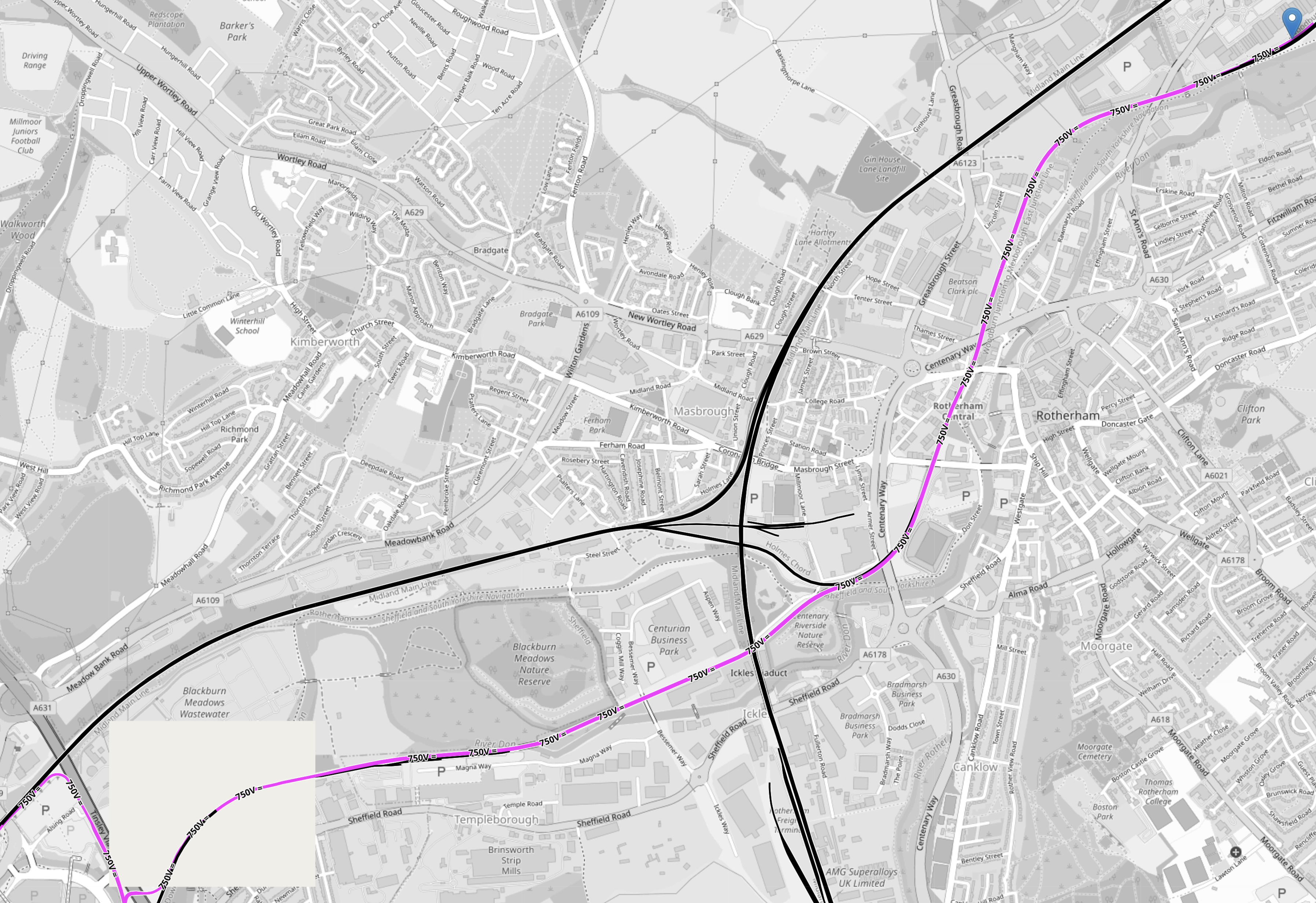
Note.
- Mauve tracks are electrified with 750 VDC overhead wires, so they can power Sheffield’s trams and tram-trains directly.
- Black tracks are not electrified.
- Meadowhall and its rail and tram interchange is in the South-West corner of the map.
- Note how mauve lines indicate the electrified tram tracks, that curve round the Meadowhall Shopping Centre.
- The blue arrow in the North-East corner indicates Rotherham Parkgate tram stop.
- The mauve line diagonally across the map, indicates the current electrification between Meadowhall South and Rotherham Parkgate tram stops.
- Magna Science Adventure Centre, is just to the South of the electrified Sheffield-Rotherham tram-line.
This second OpenRailwayMap shows the rail and tram lines between Sheffield and Rotherham in more detail.
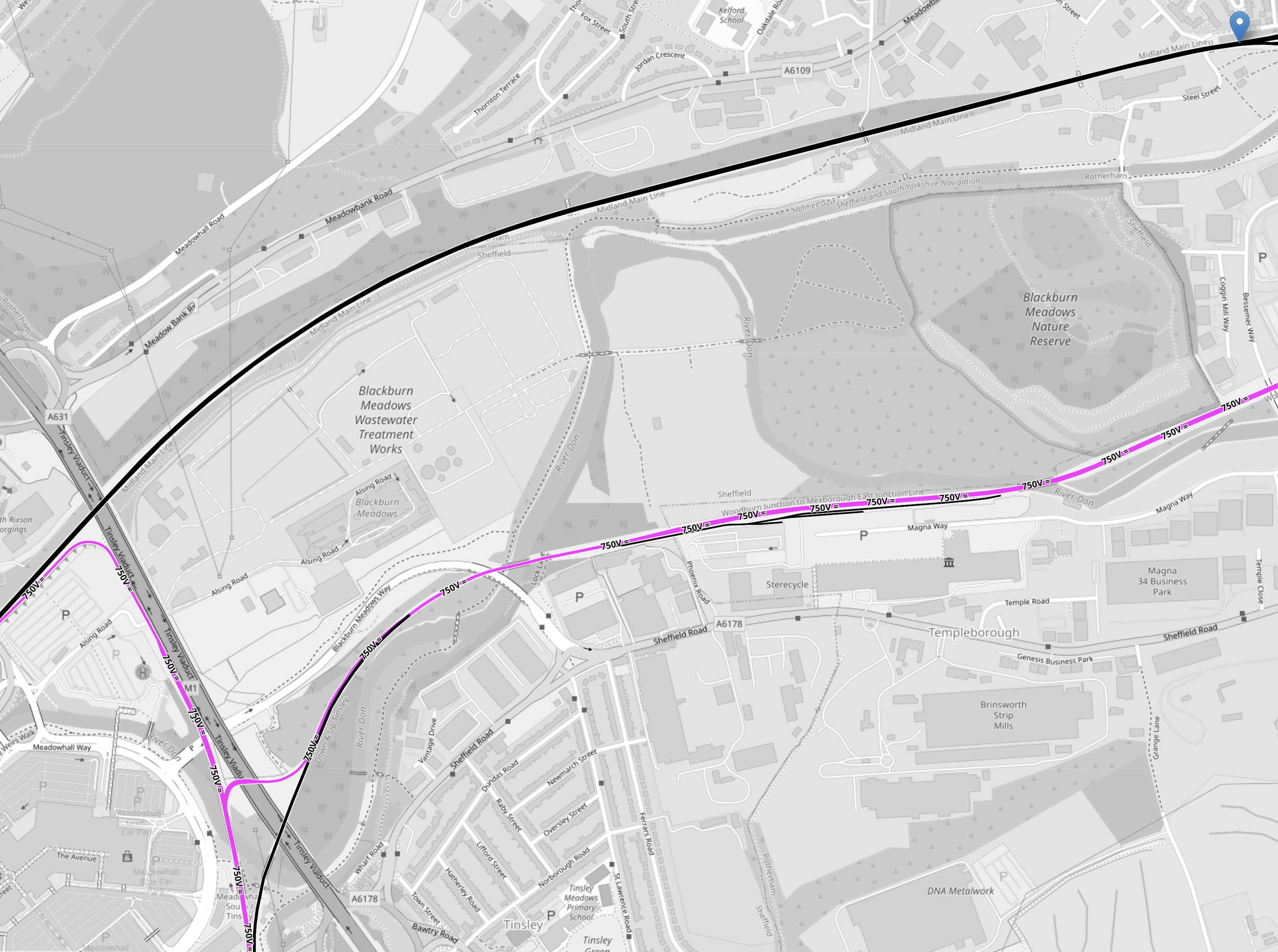
Note.
- Track colours are as in the first map.
- The blue arrow in the North-East corner of the map indicates Holmes junction and is the route that Northern Rail’s current Sheffield and Adwick service takes.
- Sheffield and Rotherham Central stations are 6.1 miles apart.
- Sheffield and Adwick stations are 22.7 miles apart, but the Northern four miles between Doncaster and Adwick are electrified with 25 KVAC overhead wires.
This would indicate that a tram-train with a range of about twenty miles on battery power would be able to handle the route, if it could charge its batteries on the electrified lines.
Terminating a Sheffield And Adwick Service In Sheffield
This OpenRailwayMap shows the rail and tram lines in and through Sheffield station.
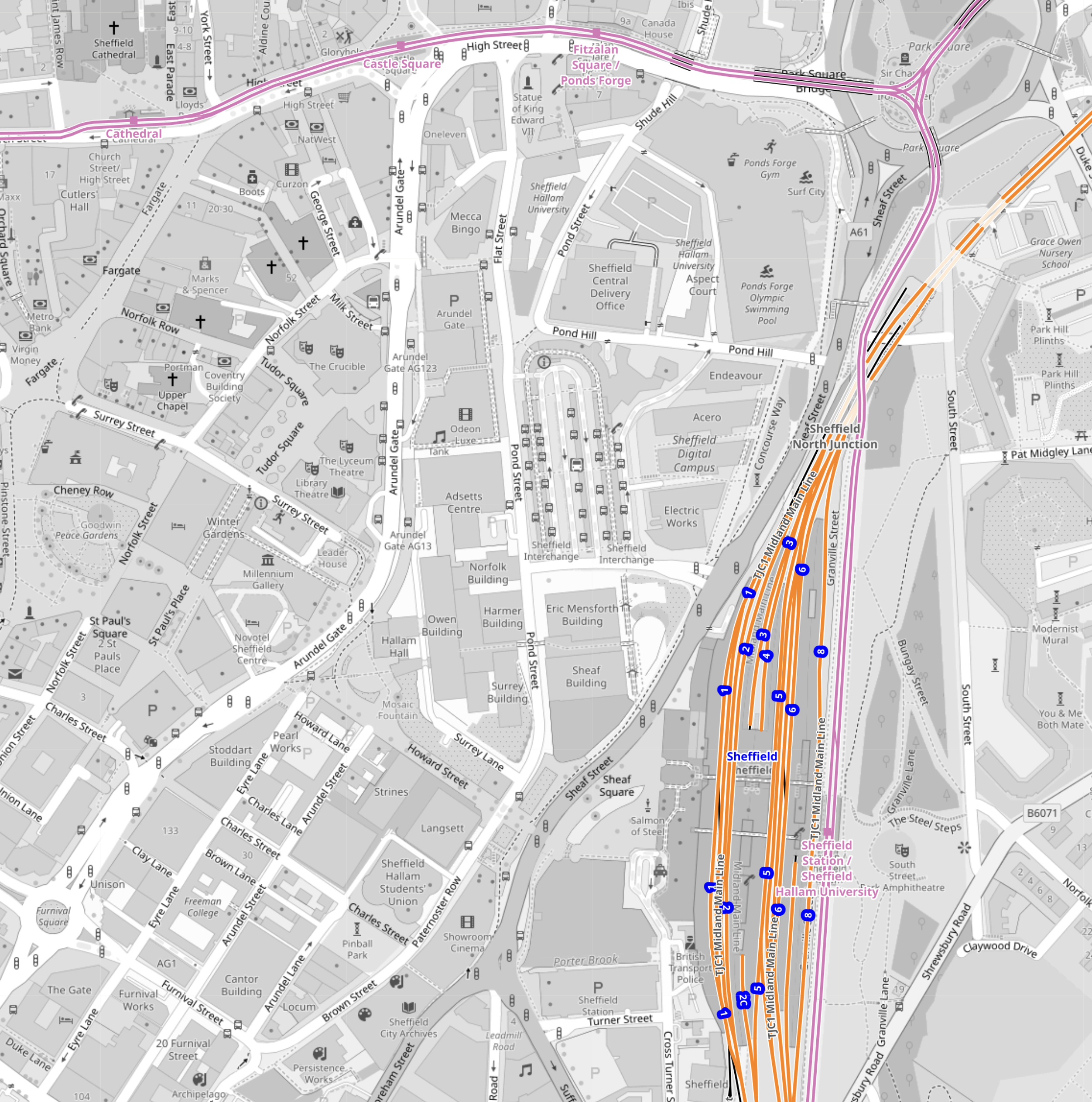
Note.
- Rail lines are in orange.
- Tram lines are in mauve.
- Platform numbers in Sheffield station are shown as blue dots. Click on the map to show it on a larger scale.
- Sheffield Cathedral tram stop is in the North-West corner of the map.
- The triangular junction in the North-East corner of the map, allows trams to use all the main tram lines that go in three directions. A touch of genius as it gives a lot of flexibility, when adding extra services.
Currently, termination of the services from Rotherham and Doncaster is as follows.
- The tram-train terminates at the Sheffield Cathedral tram stop with a frequency of two tph.
- The train terminates in Platform 3 in Sheffield station with an hourly frequency.
- As typically a terminal platform can handle 4 tph, I don’t see why a second Sheffield and Adwick service can’t be running every hour into Sheffield station.
A short length of overhead electrification would need to be added on Platform 3 to recharge any tram-trains terminating in the platform.
It could also become a tram and run to any of the other destinations served from the triangular junction; Halfway, Herdings Park or Malin Bridge. This would allow batteries to be charged as the tram-trains ran across the city.
Remember, Sheffield station is likely to be electrified with 25 KVAC overhead wires in connection with running electric trains between London St. Pancras and Sheffield.
If the four bay platforms at Sheffield station, were to be electrified, then these would be ideal for recharging any battery-electric trains or tram-trains, that terminated in the station.
Battery-Electric Trains Between Manchester And Sheffield
Consider.
- Manchester Piccadilly station is already fully electrified.
- Currently, all Manchester Piccadilly and Sheffield, terminate in Platform 8 at Sheffield station.
- The distance between the electrification at Manchester Piccadilly and Platform 8 at Sheffield station is 40.2 miles.
- CAF are promising battery-electric versions of their Class 331 trains.
With a battery range of fifty miles, which is not outrageous, Manchester and Sheffield could be an electric service for the first time since January 1970, when the Woodhead route was closed.
FirstGroup’s Proposed London King’s Cross And Sheffield Service
This open access service might happen, although with this Government of all the Lawyers we have, who can predict anything.
- If it does happen, it is likely that the trains will be battery-electric Class 802 trains.
- These will be the same as those that will be run by Hull Trains.
- Battery range will be sufficient to handle Retford and Sheffield, which is 23.3 miles and much shorter than Temple Hirst junction and Beverley.
These trains will also need charging at Sheffield.
The current Sheffield and Adwick service terminates in platform 3 at Sheffield station, so this platform would probably need to have tramway electrification, so that it could charge the trams.
Updating Rotherham Parkgate Tram Stop
My preference would be for four tph passing through Rotherham Parkgate tram stop in both directions, so this would be a tram-train every seven minutes and thirty seconds, if there was only one platform as now.
I’m fairly sure, that Rotherham Parkgate tram stop needs to have a platform in both directions.
This Google Map shows the tram stop.
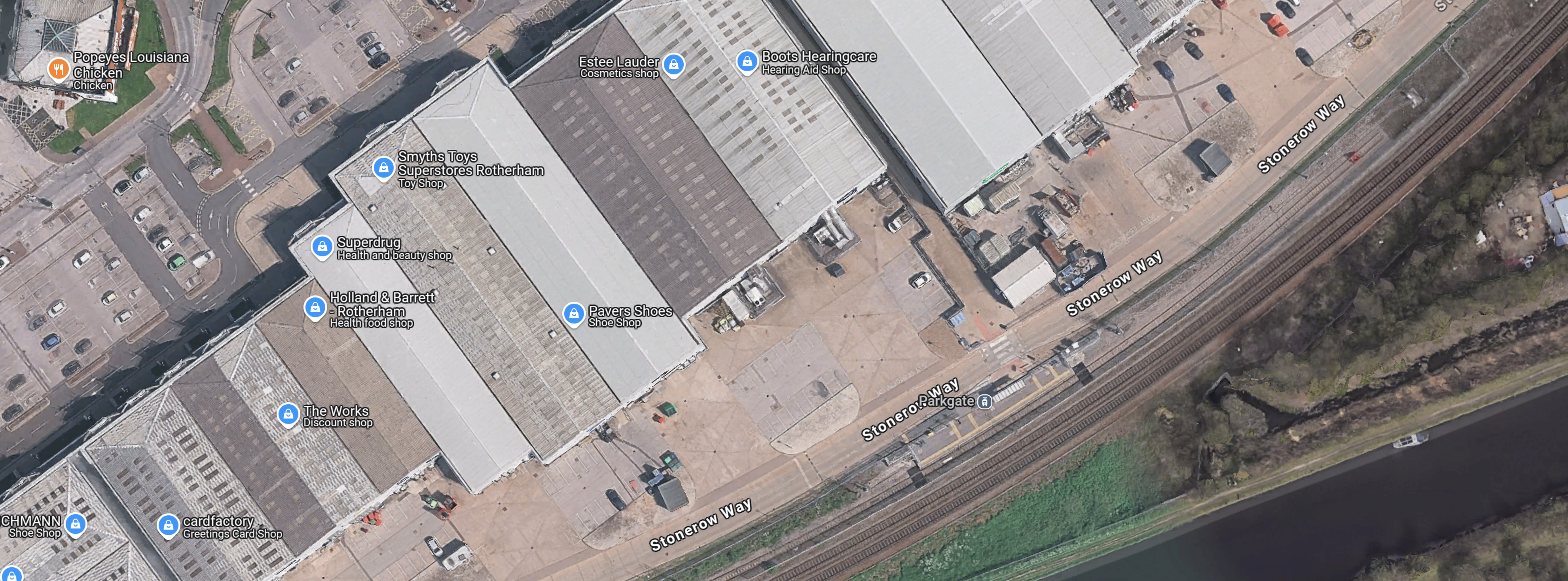
Note.
- The double-track rail line between Meadowhall and Doncaster curving to the South of the Rotherham Parkgate Shopping Centre.
- The Rotherham Parkgate tram stop on a spur from the rail line.
I am pretty certain, that a two-platform station could be squeezed in.
Cafe Plans For Derelict Building On New Rail Line
The title of this post, is the same as that of this article on the BBC.
This is the sub-heading.
A disused building on a newly reopened railway line could be saved if planners back proposals, external for its renovation.
These three paragraphs give more details.
One structure at Bedlington station in Northumberland has already been demolished but plans have been submitted which would save the building on the northbound side.
It was used until 1964 when the line closed, and while passenger services on the Northumberland Line between Ashington and Newcastle resumed last year, a new station in Bedlington has not yet been completed.
East Bedlington Parish Council chair Keith Grimes said: “It’s one of the oldest buildings in the parish, so it’s definitely worth keeping.”
I wrote about my visit to the new Northumberland Line in My First Trip On The Northumberland Line – 18th December 2024.
If the Northumberland Line is going to attract leisure travelers, a sprinkling of cafes along the line is a must.
These are pictures of Bedlington from my earlier trip.

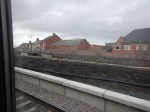
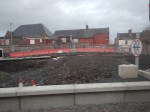
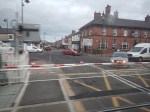
Note.
- I’d hoped I’d got a picture of the prospective cafe. But no luck.
- I didn’t see any Bedlington Terriers either.
- But then there are several of those excellent and distinctive dogs, near where I live in London.
The station should be operational this year, but it appears there’s still a lot of work to do.
Access To The Coast
This OpenRailwayMap shows the railway lines of Northumberland in relation to the coast.
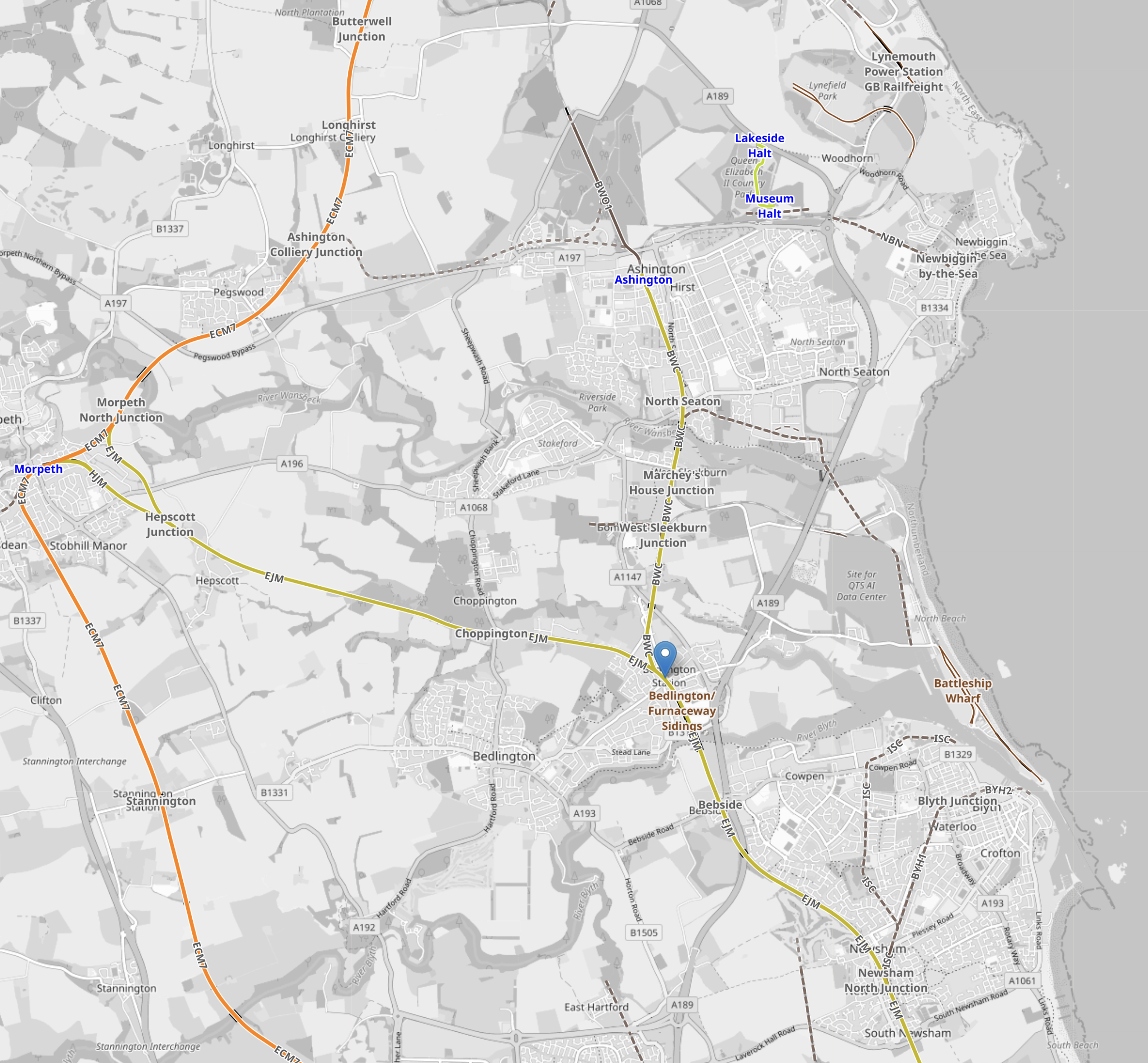
Note.
- The orange line is the East Coast Main Line between Newcastle and Edinburgh.
- Morpeth is the station on the Western edge of the map.
- The yellow line is the Northumberland Line between Newcastle and Ashington.
- The site of the new Bedlington station is indicated by the blue arrow.
It looks to me, that there are a lot of disused railway lines, that could be used to develop the Northumberland Line into a system with a much wider coverage.
The Wikipedia entry for the Northumberland line does say this about Ashington station.
Ashington station has been developed in such a way that an extension, such as that previously proposed to Newbiggin-by-the-Sea and Woodhorn could still be built, albeit part of a separate scheme.
Note.
- Newbiggin-by-the-Sea is East of Ashington.
- Woodburn is on a line that goes to the West of the East Coast Main Line.
- The extensions would open up the area for more housing and rail-oriented leisure activities.
This OpenRailwayMap shows the railway lines to the West and North of Newcastle.
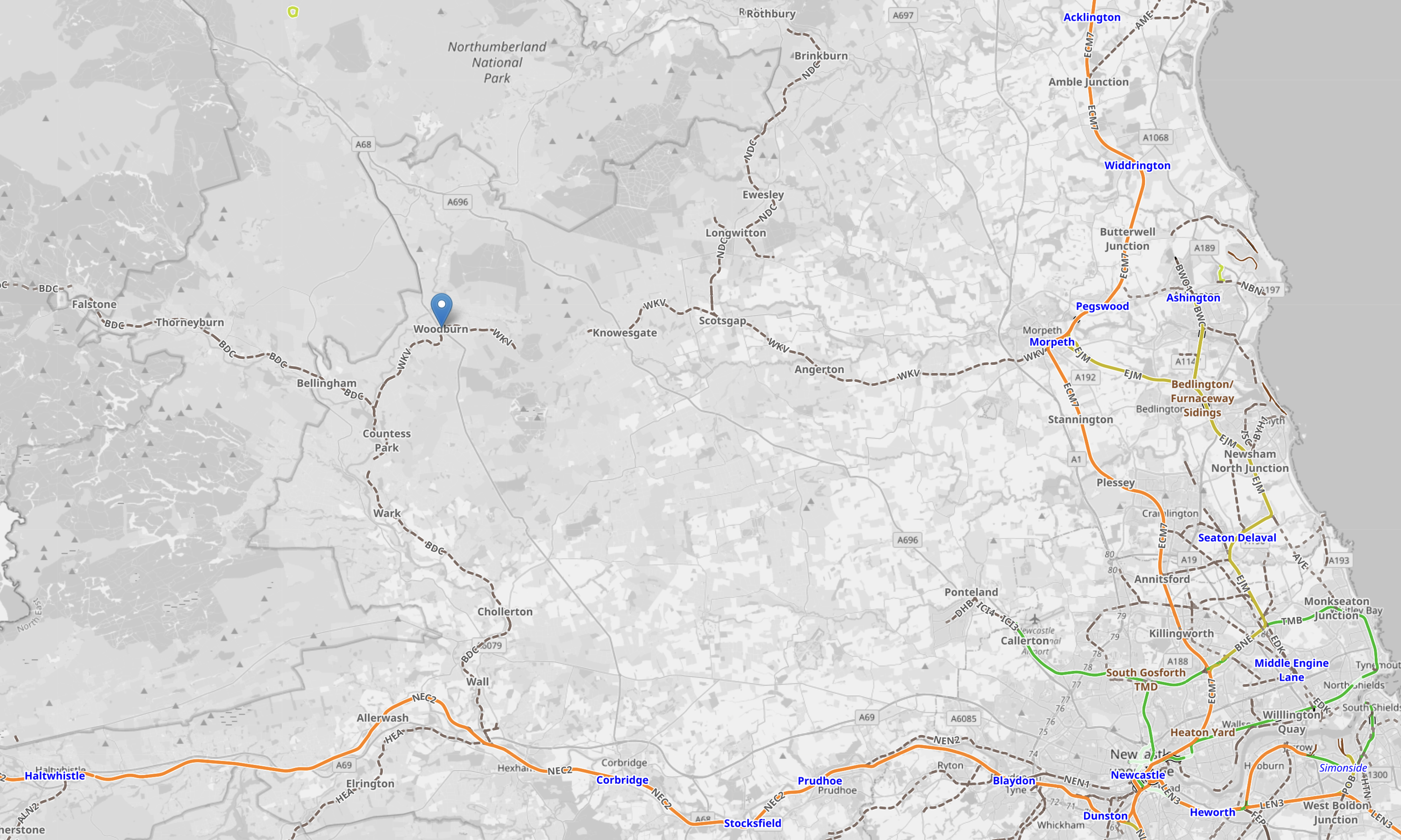
Note.
- The orange line on the East side of the map is the East Coast Main Line between Newcastle and Edinburgh via Morpeth.
- The yellow line to the East of the East Coast Main Line, is the Northumberland Line between Newcastle and Ashington.
- The green line is the Tyne and Wear Metro
- The orange line going along the bottom edge of the map is the Tyne Valley Line between Newcastle and Carlisle via Corbridge and Hexham.
- All the lines meet at Newcastle station.
- Woodburn station is indicated by the arrow on disused lines that connect Morpeth on the East Coast Main Line with the Tyne Valley Line.
Reopening the lines to Woodburn would create a new railway, that would encircle Newcastle and surely create lots of housing, business and leisure opportunities.
But let’s get Phase One finished first and see how passenger numbers develop.
A Bespoke Tram-Train For The UK
Trams, tram-trains, trains and anything that runs on rails is generally very expensive.
Does this partly explain, why the UK has relatively few urban tramways and railways?
In Stadler Presents Mock-Up Of Tram-Trains For German And Austrian Operators, I discussed how five German and Austrian operators had got together to create a common tram-train design, that would be suitable for all the operators.
The mayor of one of the cities involved in the joint order, said savings of the order of a million euros per vehicle may have resulted from the common design.
I would also feel that savings in operational costs, design of infrastructure, spares inventory and other costs would also result.
Identical tram-trains would make through running between networks easier.
Where Could Tram-Trains Be Used In The UK?
Consider.
- Currently, tram-trains are running in Sheffield and a battery-electric version of the same Stadler Citylink tram-train will soon be running in Cardiff.
- Cardiff, is developing a Cardiff Crossrail on tram-train principles across the city.
- Sheffield have said that they will be replacing their trams and I believe they could use developments of their excellent Stadler tram-trains.
- Sheffield is likely to extend their tram system and might include tram-trains to Doncaster.
- Cities that have talked about adding tram-trains to their tram networks include Birmingham, Blackpool, Manchester and Nottingham.
- Leeds is developing a metro system, which could be developed using tram-train principles.
- Glasgow has talked about a tram-train to Glasgow Airport for some time.
- The East-West Rail Link is proposing a tram-train link between Ipswich and Felixstowe to allow more freight trains into the Port of Felixstowe.
There could be quite a number of tram-trains being used in the UK, especially if they are used as at Felixstowe, to increase freight capacity into ports.
These are a few of my thoughts.
Battery-Electric Tram-Trains
I would envisage, that a lot of the new tram-trains would operate using batteries. Especially, as battery-electric trains are showing quite long ranges of upwards of thirty miles.
Already trams in Birmingham and trains on Merseyside, are operating using batteries and it avoids the expense of putting up catenary, if enough exists to charge the trams.
Replacement of Diesel Multiple Units By Battery-Electric Tram-Trains
There are some branch lines, where diesel multiple units run off a branch of an electrified main line.These services could be decarbonised by changing the rolling stock.
This OpenRailwayMap shows the St. I’ves Bay Line in Cornwall.
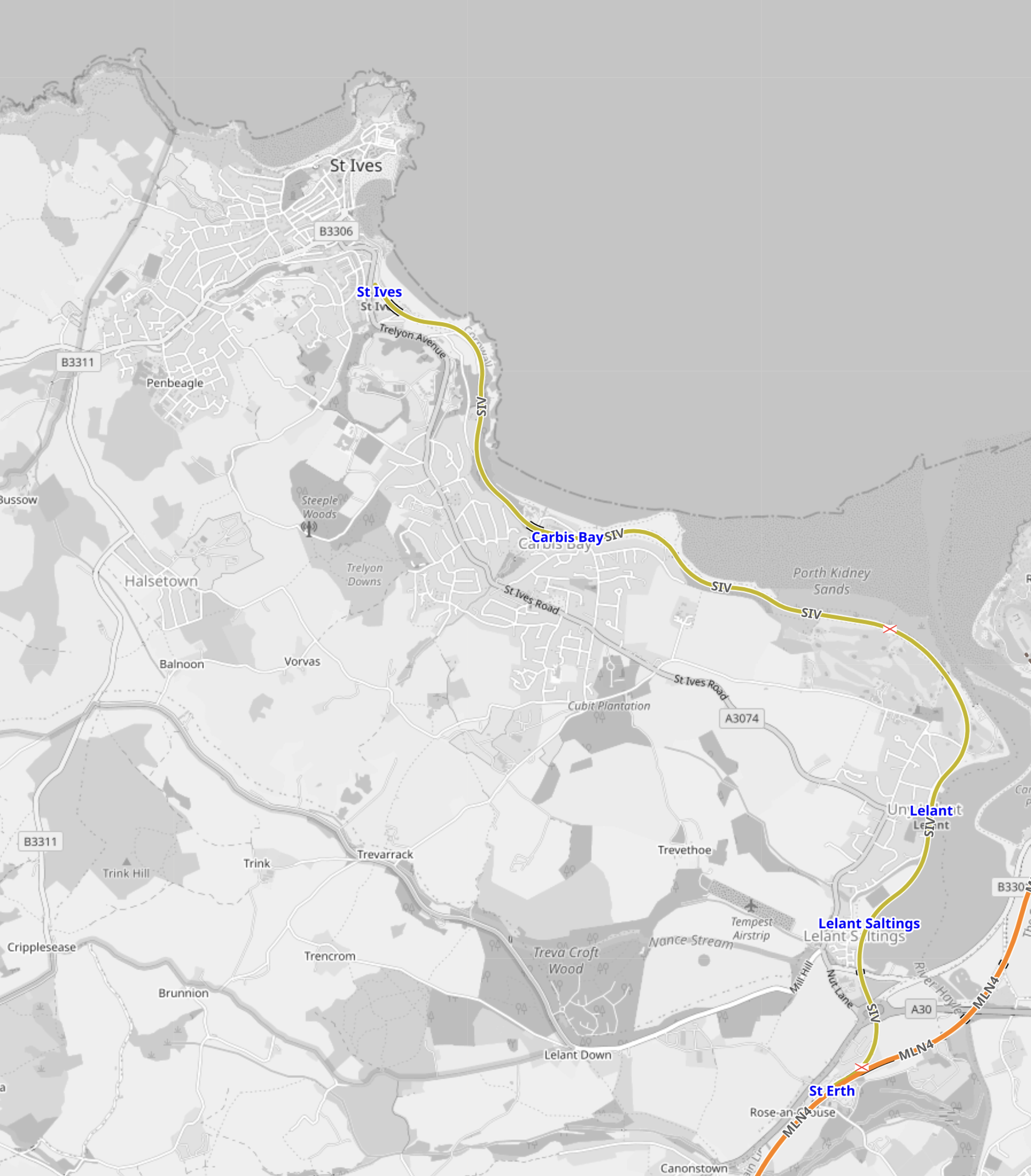
Note.
- The St. Ives Bay Line is shown in yellow.
- The Southern terminal is St. Erth station, where it connects to the Cornish Main Line, which is shown in orange.
- The Northern terminal is St. Ives station, which is towards the top of the map.
- The St. Ives Bay Line is 4.25 miles long.
- No tracks are electrified.
- There are three intermediate stations.
This second OpenRailwayMap shows St. Erth station in more detail.
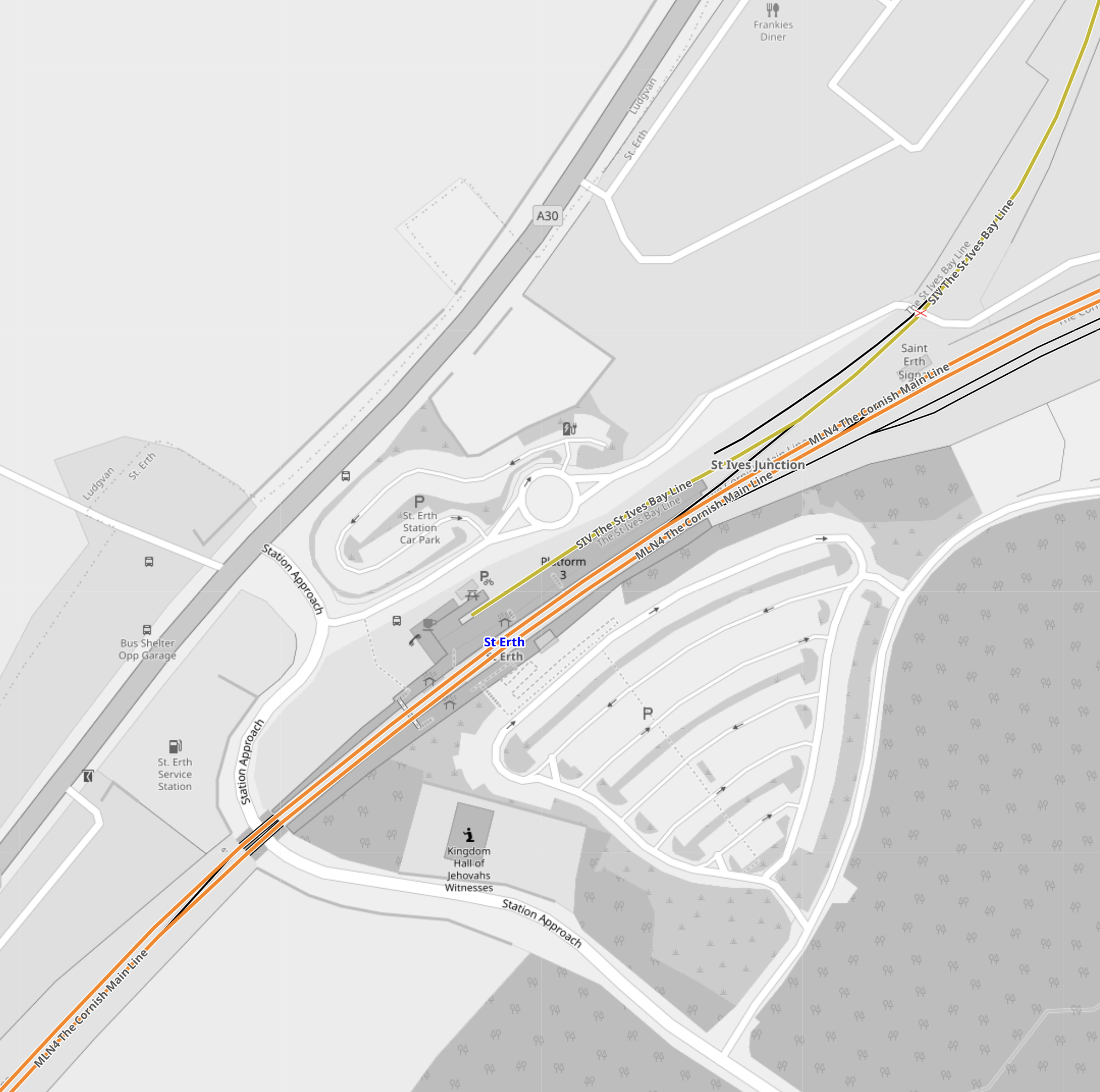
Note.
- The St. Ives Bay Line has its own platform at the side of the station.
- I am fairly certain, that some form of charging could be installed in this platform.
- At the other side of the Cornish Main Line are two sidings, which could be used for cleaning and maintenance.
A neat zero-carbon branch line could easily be created.
New Branch Lines To New Developments
In Sheffield Region Transport Plan 2019 – A New Tram-Train Route To A New Station At Waverley, I gave my view on a tram-train loop from the Sheffield-Lincoln Line to serve the Advanced Manufacturing Centre and new housing at Waverley.
The tram-train would run as a train to the branch line for the development and then run as a battery-electric tram, through the development.
As the Midland Main Line to Sheffield will be electrified, the tram-trains could be charged on the electrification in Sheffield station.
Build Them In Doncaster
Wabtec are closing Doncaster works.
Surely this would be the site to assemble the scores of tram-trains that could be needed in the UK.
Conclusion
Tram-trains could do a lot to improve the railways of the UK.
They would also help to decarbonise the existing system.
 The Anonymous Widower