Grab-Handles In London Underground Train Entrances
I have been taking pictures of the grab-handles in the doors of London Underground trains.
Bakerloo Line
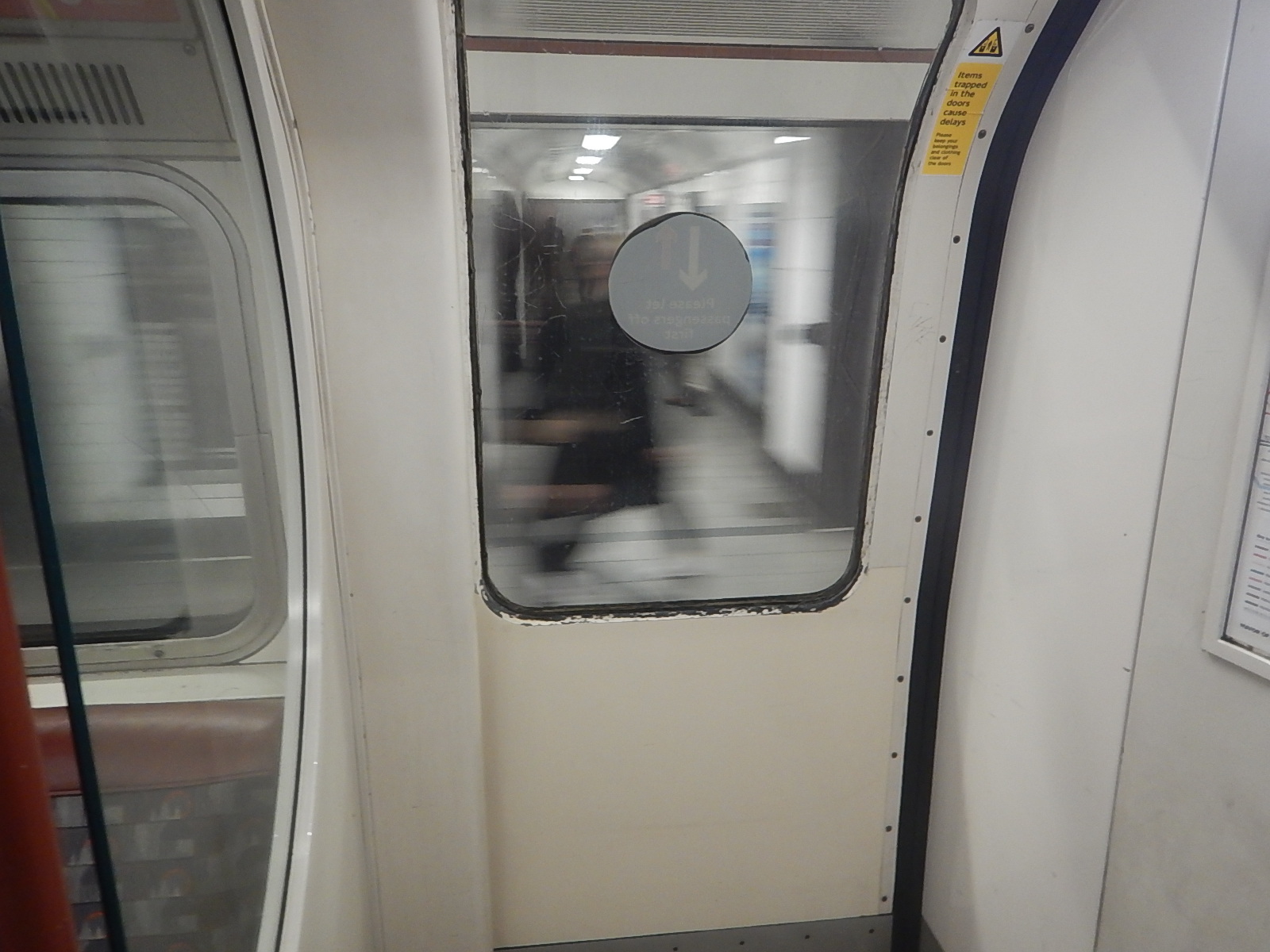
There are no grab-handles.
Central Line

The Central Line trains, which were built in 1991-4, probably set the original standard.
Hammersmith & City Line
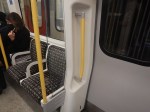
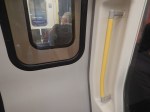

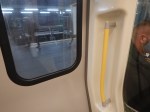
These are probably similar to Circle, District and Metropolitan Line trains.
Jubilee Line
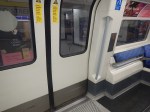
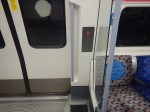
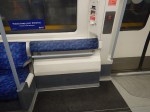
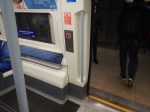
Note the long grab-handles tucked behind the doors.
Northern Line
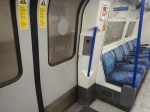
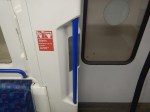

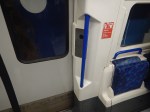
Note the long grab-handles tucked behind the doors.
There is also a cheeky one behind the wheelchair space. Although you would get into a Northern Line train in a wheelchair is another matter.
Piccadilly Line
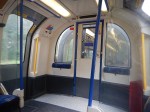


Despite their age, there is a full set of grab-handles.
Victoria Line

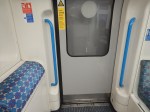
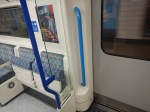
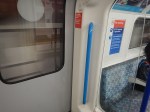
Note the long grab-handles tucked behind the doors.
Conclusion
I do find it strange that all the other Underground trains have vertical handles just inside the door, but the Bakerloo Line trains don’t have this valuable safety feature.
I think this could be dangerous.
I have a damaged left arm because the school bully broke my humerus. It can do most things, but some things are painful.
So when I get on a train, in case there is a step-up into the train, I position myself towards the right of the door. Then if there is a step-up, I reach forward and grab the handle and pull myself into the train.
Recently, I boarded a train on the Bakerloo Line platform at Waterloo. On finding there was no grab-handle I slipped slightly as I pulled back.
In the end I climbed into the train by holding on to the rubber edge of the door and got a very dirty hand.
Could this lack of grab-handles have contributed to a recent death at the station, that I wrote about in Death Of A Commuter At Waterloo?
I very much feel that grab-handles should be fitted to the doors on Bakerloo Line trains.
Would It Be Possible For The Bakerloo And Watford DC Lines To Use The Same Trains?
These two lines are very different.
- The Bakerloo Line is a classic London Underground Line with 25 stations and services run by 1972 Stock trains.
- The Watford DC Line is part of the London Overground with 19 stations and services run by Class 710 trains.
Ten stations are shared between the lines, of which only one; Queen’s Park offers level boarding.
The Shared Stations
The nine shared stations often have considerable steps up and down, as at Willesden Junction station, which is shown in Train-Platform Interface On Platform 1 At Willesden Junction.
I am rather pleased and pleasantly surprised, that there are not more accidents at the shared stations, but using the line must be a nightmare for wheelchair users, buggy pushes and large case draggers.
If Transport for London proposed building a line like this, they would have to launch it at the Hammersmith Apollo, where comedians perform.
The One Train Type Solution
To my mind, there is only one solution. The two services must use the same type of trains.
These are a few thoughts on the trains.
Trains Would Be Underground-Sized
As the trains will have to work through the existing tunnels to Elephant & Castle station, the trains would have to be compatible with the tunnels and therefore sized for the Underground.
I suspect they would be a version of the New Tube for London, that are currently being built by Siemens for the Piccadilly Line.
New Tube For London And Class 710 Train Compared
These figures are from Wikipedia.
- Cars – NTFL – 9 – 710 – 4
- Car Length – NTFL – 12.6 metres – 710 – 20 metres
- Train Length – NTFL – 113.4 metres – 710 – 80 metres
- Seated Passengers – NTFL – 268 – 710 – 189
- Total Passengers – NTFL – 1076 – 710 – 678
- Passenger Density – NTFL – 9.5 per metre – 710 – 8.2 per metre
- Speed – NTFL – 62 mph – 710 – 75 mph
Note.
- The passenger density and speed are closer than I thought they’d be.
- I’m sure Siemens can design a longer and faster train if required for the Euston service.
I feel that the New Tube for London could be designed, so that it could work the Watford DC service.
Platform Modifications
I suspect that the New Tube for London will be lower than the Class 710 train and all platforms would need to be lowered to fit the new trains.
I would also suspect that it would be easier to lower platforms, than modify them, so that they had dual-height sections to satisfy two classes of train.
It should be noted that the New Tube for London has shorter cars than the sixteen metre 1972 Stock trains currently used on the line, so there will be smaller gaps at stations with curved platforms like Waterloo.
I believe that with one class of train, all of the stations on the Bakerloo and Watford DC Lines could be made step-free between train and platform.
Queen’s Park And Euston
This map from cartometro.com, shows the route between Queen’s Park and Euston stations.
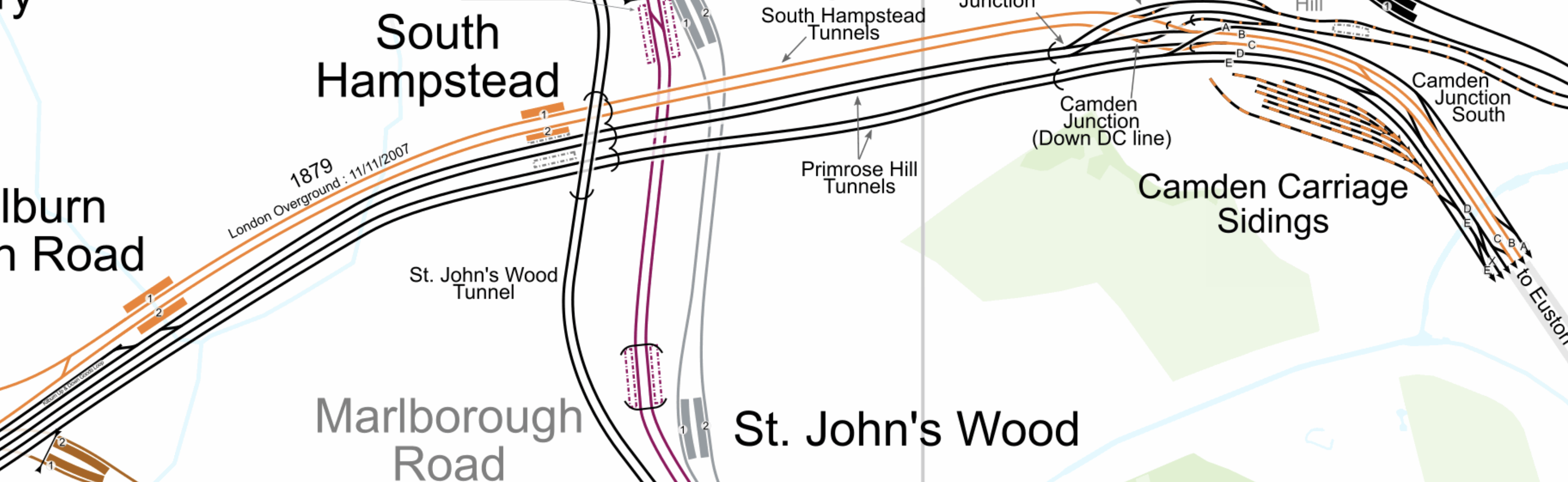
Note.
- The Watford DC Line is shown in orange.
- Queen’s Park station is to the West of Kilburn High Road station.
- It appears that Watford DC Line trains always use Platform 9 at Euston station.
The route seems to be a self-contained third-rail electrified line into Euston station.
On the subject of electrification between Queen’s Park and Euston stations, there would appear to be a choice between the third-rail system and London Underground’s four-rail system.
But it is rumoured that the New Tube for London will have a battery capability.
As Euston and Queen’s Park stations are only 3.7 miles apart, perhaps the choice would be to use battery power into Euston station, which would remove electrified rails from Euston?
How Many Trains Could Run Into Euston?
Currently, four trains per hour run into Euston.
It is generally accepted that six tph can use a single platform. But would this be enough?
I suppose there is the possibility of tunnelling under Euston station to a pair of terminal platforms.
In that case the current platform could be used by other services.
Southern’s Milton Keynes And Clapham Junction Service
This service wouldn’t be affected as it uses the fast lines between Willesden and Watford.
Conclusion
A common fleet used by the Bakerloo and Watford DC Line would appear to give advantages.
But what the Bakerloo Line, the Watford DC Line and the Bakerloo Line Extension need is a good dose of holistic design.
Should All Trains Have Grab Handles By The Doors?
These pictures show the vertical grab handles on London Overground Class 710 trains.
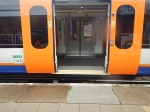
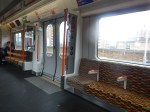
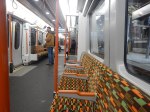


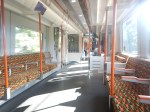
Note the vertical handles everywhere and especially tucked into the corner behind the door.
These pictures show the interior of a 1973 Stock train on the Piccadilly Line.
There are worse trains in the UK.
It should be noted that the trains were extensively refurbished in 1996-2001.
Should all trains have lots of grab handles like these two examples? And especially by the door?
I think they should.
This is an interesting picture of a Siemens design study, which I wrote about in Siemens’ View Of The Future Of The Underground.
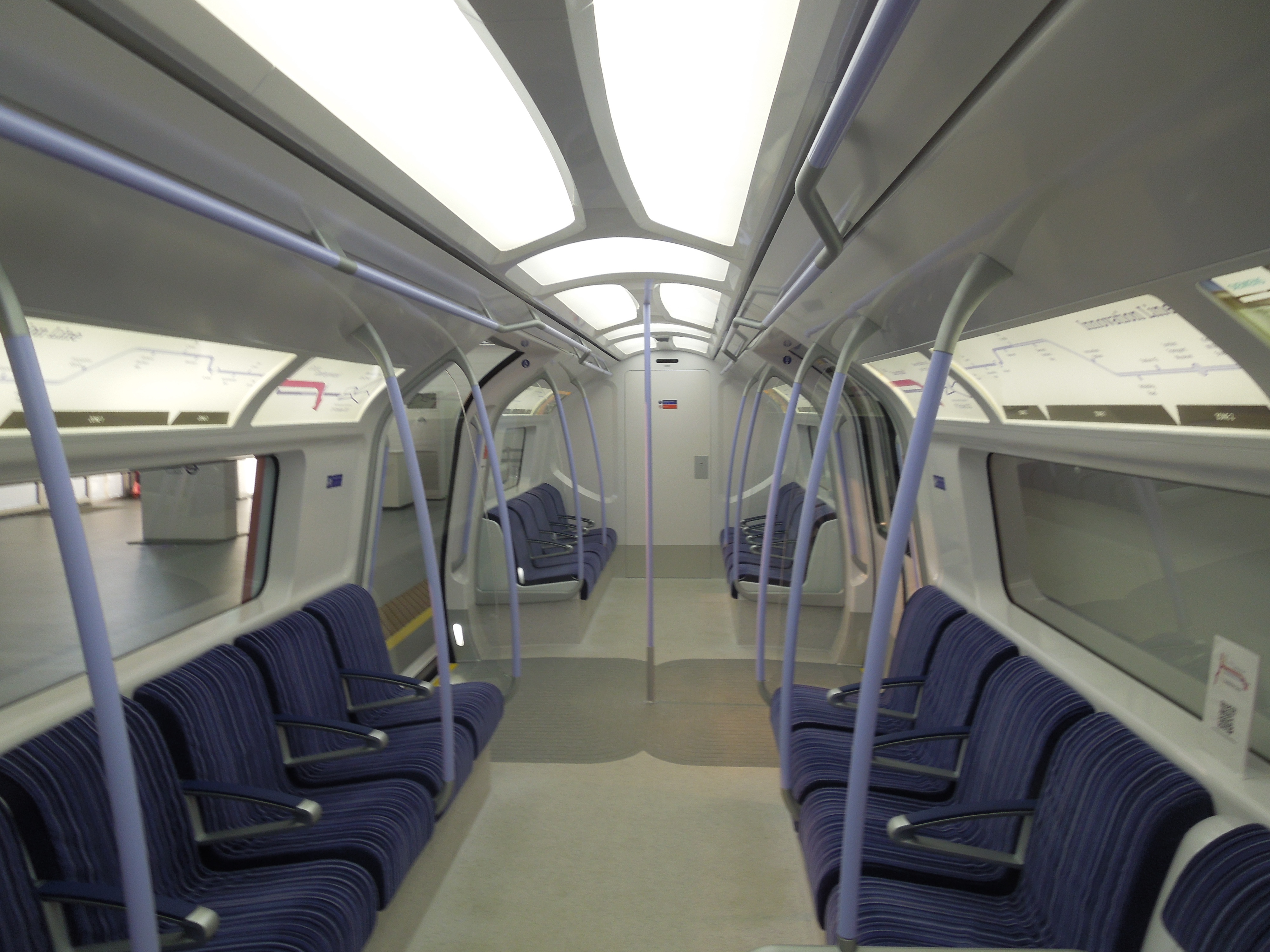
Note the grab handles by the sides of the doors.
So at least Siemens are following the rule of grab handles by the door.
Lumo’s Seats Are OK
I went down to King’s Cross to see the 1348 Lumo arrival from Edinburgh arrive (At 1343 incidentally!)
The seats seemed to be a big topic with passengers I talked to, who’d just spent four-and-a-half hours sitting on them!


I will replace these pictures with better ones, when I use the trains. But they do show the basic design.
But all felt positive about them and said they were better than LNER.
One guy showed me a video of pushing his hand into the seat cushion. It appeared they would make bad ironing boards.
Wagons Roll For Freightliner UK
The title of this post, is the same as that of this article on railfreight.com.
This is the first paragraph.
UK operator Freightliner has taken delivery of the first batch of new FFA-G wagons for UK operations. The forty wagons have arrived in the UK from Poland, adding to the intermodal fleet of the operator. The entire order, for 230 wagons will be delivered by the end of November 2021.
The wagons have been designed for efficiency and being able to take a forty foot container anywhere on the UK’s network with a loading gauge of W10.
20 Ropemaker Street – 13th October 2021
I pass this building every time, I go to Moorgate.
I took these pictures today.


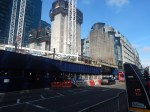

The architects have put up this video.
I shall be following this twenty-seven story building as it reaches for the sky.
Osterley Becomes 89th Step-Free London Underground Station
The title of this post, is the same as that of this article on Rail Technology Magazine.
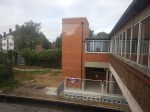
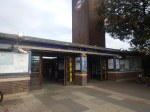
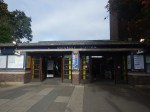
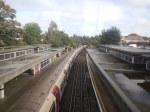
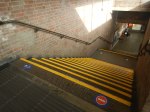
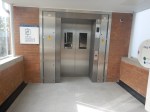
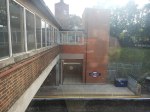
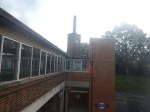
So I went to Osterley station and took these pictures.
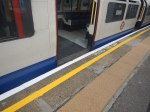


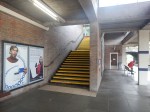
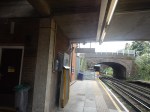


Note.
- Osterley station is Grade II Listed and was built in the style of Charles Holden.
- It does look that there is also step-free access between train and the platform for most wheelchair-users, buggy-pushers and case-draggers.
- The two new lift-towers are typical steel-and-brick constructions.
I don’t think that the most militant member of the Heritage Taliban will object to the quality of the design and the construction.
The Dalston Junction Crossing At Night
This picture shows the diagonal light-controlled crossing at Dalston Junction station at night.

This Google Map shows the junction.

Note.
- The North-South Road is Kingsland High Street.
- The Road going East is Dalston Lane, where my grandmother was born on the North side of the road, about a hundred metres along.
- On the South side of Dalston Lane is Dalston Junction station, with a West-facing bus-stop in front.
- The Road going West is the Balls Pond Road of Beyond Our Ken and Round The Horne fame.
- The building at the West of the junction is the solicitors shown in the first picture.
- On the North side of the Balls Pond Road is an East-facing bus stop, which is paired with the one by the station. A bus at the stop can be seen in the first picture.
The diagonal light-controlled crossing can seen crossing between the two sides of the junction between the yellow meshes of the box junction.
The junction has had this layout for a few years now and it works.
- I live about a kilometre to the West of Dalston Junction and regularly take a bus to stop on the West side of the junction before crossing diagonally to catch the Overground.
- Coming home, I catch a bus from just outside the station
- As buses are generally about once every ten minutes, I generally don’t wait long.
- The crossing has made a big improvement to the junction, as it connects the two stations and the Kingsland Road.
How many other busy junctions could be improved by a similar diagonal crossing?
It should also be noted that since the crossing has been installed, Dalston has gained an Aldi, a Co-op. a Marks and Spencer Simply Food Spencer Simply Food, a Pret, a Premier Inn and several better fast food places.
The improvement of the walking routes has certainly brought more people up the junction and to the two stations.
Pop Up Metro Aims To Provide Affordable Passenger Operation
The title of this post, is the same as that of this article on Trains News Wire.
It describes entrepreneur Henry Posner’s Railroad Development Corporation‘s concept of a Pop-Up Metro and how it is being demonstrated in Rockhill, Pennsylvania, where it is being demonstrated at the Rockhill Trolley Museum.
Routes suggested in the article include.
Not all these routes are fully electrified.
There is some interesting ideas in the concept.
The female project manager is also quoted as saying
I found that if you just say yes to Henry, something interesting happens!
Little did I think, that these days, I’d see that said in a serious article.
Let’s hope that represents the can-do approach behind the design, but staying within the rules of safety.
On-Train Hydrogen Storage Development Agreement
The title of this post, is the same as that of this article on Railway Gazette.
This is the first paragraph.
Alstom and automotive technology company Plastic Omnium have signed a memorandum of understanding to collaborate on ‘high-end’ hydrogen storage systems for on-train applications, with a dedicated team established to manage the technical and commercial development of ‘innovative and competitive’ equipment.
This sounds like hydrogen tanks will be efficiently designed and produced for trains and locomotives.
The designs for these important areas will probably lead to better hydrogen tanks for any application that needs one.
 The Anonymous Widower