Funding Gives Weight To Idea For Storing Electricity
The title of this post, is the same as that of an article on Page 45 of today’s copy of The Times.
It talks of a company called Gravitricity, which has used the same principle as every weight-operated clock to store energy and especially energy generaed from intermittent sources like wind and solar power.
The company has just secured a £650,000 grant from Innovate UK.
In Solar Power Could Make Up “Significant Share” Of Railway’s Energy Demand, I looked at how solar farms and batteries could be used to power third-rail railway electrification.
Because of energy losses, third-rail electrification needs to be fed with power every three miles or so. This gives a problem, as connection of all these feeder points to the National Grid can be an expensive business.
A series of solar farms, wind turbines and batteries, controlled by an intelligent control system, is an alternative way of providing the power.
In an article in the October 2017 Edition of Modern Railways, which is entitled Celling England By The Pound, Ian Walmsley says this in relation to trains running on the Uckfield Branch.
A modern EMU needs between 3 and 5 kWh per vehicle mile for this sort of service.
If I assume that trains are five cars and will be efficient enough to need only 3 kWh per vehicle mile, then to power a train along a ten mile section of track will take 150 kWh.
As the control system, only powers the track, when a train needs it, the whole system can be very efficient.
So why will Gravitricity battery ideas be ideal in this application?
Appropriate Size
By choosing the right weight and depth for the Gravitricity battery , appropriate energy storage can be provided at different points on a line.
Some parts of a journey, like accelerating away from stations will need more electricity than others, where trains are cruising along level ground.
Supposing my five-car example train is travelling at 60 mph, then to cover ten miles will take 10 minutes, with 15 kW being supplied in every minute.
If the train weighs 200 tonnes, then accelerating the train to 60 mph will need about 20 kWh.
I’m sure that a Gravitricity battery could handle this.
I would suspect that batteries of the order of 100 kWh would store enough power for the average third-rail electrified line.
A proper dynamic simulation would need to be done. I could have done this calculation in the 1960s, but I don’t have the software now!
Response Time
For safety and energy-efficiency reasons, you don’t want lines to be switched on, when there is no train present.
I suspect that if there is energy in the battery, response would be fast enough.
Energy Efficiency
The system should have a high efficiency.
How Big Would A 100 kWh Gravitricity Battery Be?
A quick calculation shows the weight would be 400 tonnes and the depth would be 100 metres.
Installing the batteries
Each battery will need a 100 metre deep hole of an appropriate diameter.
This sequence of operations would be performed.
- A rail-mounted drilling rig would drill the hole.
- The heavy weight of the battery would arrive by train and would be lifted into position using a rail-mounted crane.
As the equipment will generally be heavy, doing all operations from the railway will be a great help.
Calculating Kinetic And Potential Energies
I used to be able to do this and convert the units, manually and easily, but now I use web calculators.
Kinetic Energy Calculation
I use this kinetic energy calculator from omni.
Suppose you have a nine-car Crossrail Class 345 train.
- It will weigh 328.40 tonnes, according to my detective work in Weight And Dimensions Of A Class 345 Train.
- There will be 1,500 passengers at 90 Kg. each or 135 tonnes.
- So there is a total weight of 463.4 yonnes.
- The train has a maximum speed of 90 mph.
Put this in the calculator and a full train going at maximum speed has a kinetic energy of 104.184 kWh.
The lithium-ion battery in a typical hybrid bus, like a New Routemaster has a capacity of 75 kWh.
So if a full Class 345 train, were to brake from maximum speed using regenerative braking, the energy generated by the traction motors could be stored in just two bus-sized batteries.
This stored energy can then be used to restart the train or power it iin an emergency.
Out of curiosity, these figures apply to an Inter City 125.
- Locomotive weight – 2 x 70.25 tonnes
- Carriage weight – 8 x 34 tonnes.
- Train weight – 412.5 tonnes
- Passengers – appromiximately 700 = 63 tonnes
- Speed – 125 mph
This gives a kinetic energy of 206.22 kWh
And then there’s Eurostar’s original Class 373 trains.
- Weight- 752 tonnes
- Speed 300 kph
This gives a kinetic energy of 725 kWh.
If a 75 kWh battery were to be put in each of the twenty cars, this would be more than adequate to handle all the regenerative braking energy for the train.
There would probably be enough stored energy in the batteries for a train to extricate itself from the Channel Tunnel in the case of a complete power failure.
Potential Energy Calculation
I use this potential energy calcultor from omni.
Suppose you have the typical cartoon scene, where a ten tonne weight is dropped on a poor mouse from perhaps five metres.
The energy of the weight is just 0.136 kWh.
I’ve used kWhs for the answers as these are easily visualised. One kWh is the energy used by a one-bar electric fire in an hour.
How Do Hydrogen-Powered Trains Work?
This promotional video shows how Alstom’s Coradia iLint works.
Note that it’s really a battery train, where the batteries are charged from the electrification or the hydrogen power-pack.
Exploring The Tyne And Wear Metro
The Tyne and Wear Metro is unique in the UK, in that it is a regional electric railway system, that is powered by 1500 VDC overhead electrification.
But what is not unique about the system is the affection shown by regular users. You get similar feelings on other local systems like these.
- Cardiff Valley Lines
- Docklands Light Railway
- Glasgow’s electric railways.
- Merseyrail‘s Northern and Wirral Lines
As they mature, other systems including the Manchester Metrolink, Midland Metro and the London Overground will be felt of by their passengers in a similar way.
My four examples and the Tyne and Wear Metro, have a lot more in common than just affection from their users.
- All were created in their own unique ways in an era not noted for railway innovation.
- Merseyrail has an unrivalled tunnel layout for a railway under a city.
- The Docklands Light Railway is automated with a Train Captain on each train.
- Glasgow’s Blue Trains were very-un-British at the time.
- Local interests were very much involved in creating the systems.
- The Tyne and Wear Metro was created for Driver Only Operation.
All of these lines are seeking to add more branches and replace, update and augment the rolling stock, much of which is forty years old.
Does the age of te trains show Central Government contempt for important local railway systems, which are the lifeblood of communities?
Manchester’s Missing Tunnel
The tunnels under Liverpool and Newcastle, were part of a three pronged plan by to improve local transport in the North.
- I remember from the 1960s, when I was at the University, the electric railway under the Mersey to Birkenhead and the Wirral. Modern it was not, but the innovative Loop and Link Project made it a lot better. Although, that project was never completed.
- Newcastle had had Tyneside Electrics from the 1900s. In the 1970s the old system became the core of the Metro, with the addition of a central tunnel.
The third plan was to bore the Picc-Vic tunnel under Manchester to link Manchester Piccadilly and Victoria stations.
According to Wikipedia, it would have had the following characteristics.
- Full-size twin-bore tunnels.
- 25 KVAC overhead electrification.
- Low-level stations at Piccadilly and Victoria.
- Three intermediate stations at Market Street, Albert Square and Princess Street
- Trains would have been similar to the Class 315 trains, which are still common in London.
It would have joined the suburban rail services together across the city.
How would Manchester have developed if this important tunnel had been built?
We will probably be able to partially answer this question, when the Ordsall Chord is fully operational, which will handle cross-Manchester long-distance and local trains.
It is my view that cancelling this tunnel was one of the great infrastructure mistakes of the period along with the cancellation of the Channel Tunnel and London’s Third Airport at Maplin. But then Harold Wilson believed everybody would have their own car and that railways were of the past and preferred to spend what little money the Government had on political projects, many of which were total failures.
We must protect ourselves from politicians, who have a political view that owes too much to the extreme left or right and be left to get on with our personal lives.
To my mind, it is no surprise that the cities in the UK with the best urban rail systems; London, Cardiff, Liverpool and Newcastle, have more local control. Now that Birmingham, Glasgow, Leeds and Manchester have greater local control, will we see improvement?
Exploring The Metro
There are several main assets and factors that make up a railway system.
- Tracks
- Tunnels and Bridges
- Electrification
- Stations
- Accessibility
- Trains
- Signalling
- Operating Method
- Ticketing
I shall now give my thoughts on these in detail.
Tracks
The branches of the Metro were all built for heavy rail trains and the Sunderland Branch even shares the tracks with Class 142, Class 180 and heavy freight trains.
This principle of building tracks for full-size trains, has been used on Merseyrail’s Northern and WirralLines, London’s Trameslink, Crossrail and East London Line and innumerable railways across the world.
Build a system for small-size trains and you paint yourself into a dead end. I doubt for instance, London will ever build another new Tube-size line across London.
As I explored the Matro, the tracks also seemed to be in generally good condition.
This picture taken at South Hylton station shows typical track in apparently good condition.
Tunnels And Bridges
Wikipedia has a section on the tunnels of the Metro. This is said.
The tunnels were constructed in the late 1970s, using mining techniques, and were constructed as single-track tubes with a diameter of 4.75 metres. The tunnels under Newcastle were mechanically bored through boulder clay and lined with cast iron or concrete segments. The tunnel under Gateshead, was bored through sandstone and excavated coal seams. Old coal mine workings, some of which dated from the Middle Ages had to be filled in before the tunnelling began.
This description of the Crossrail tunnels is on this page of their web site.
A network of new rail tunnels have been built by eight giant tunnel boring machines, to carry Crossrail’s trains eastbound and westbound. Each tunnel is 21 kilometres/13 miles long, 6.2 metres in diameter and up to 40 metres below ground.
The Crossrail tunnels have a walkway on either side, but they are only 1.25 metres larger in diameter than those of the Metro. So it would appear that there is not much difference in size of the important section in the middle, where the trains run.
It is worthwhile looking at the widths of various trains.
- Class 345 train (Crossrail) – 2.78 metres – See Weight And Dimensions Of A Class 345 Train
- Class 319 train (Thameslink) – 2.82 metres
- Class 700 train (Thameslink) – 2.80 metres
- Tyne and Wear Metro – 2.65 metres
The last three figures are from Wikipedia.
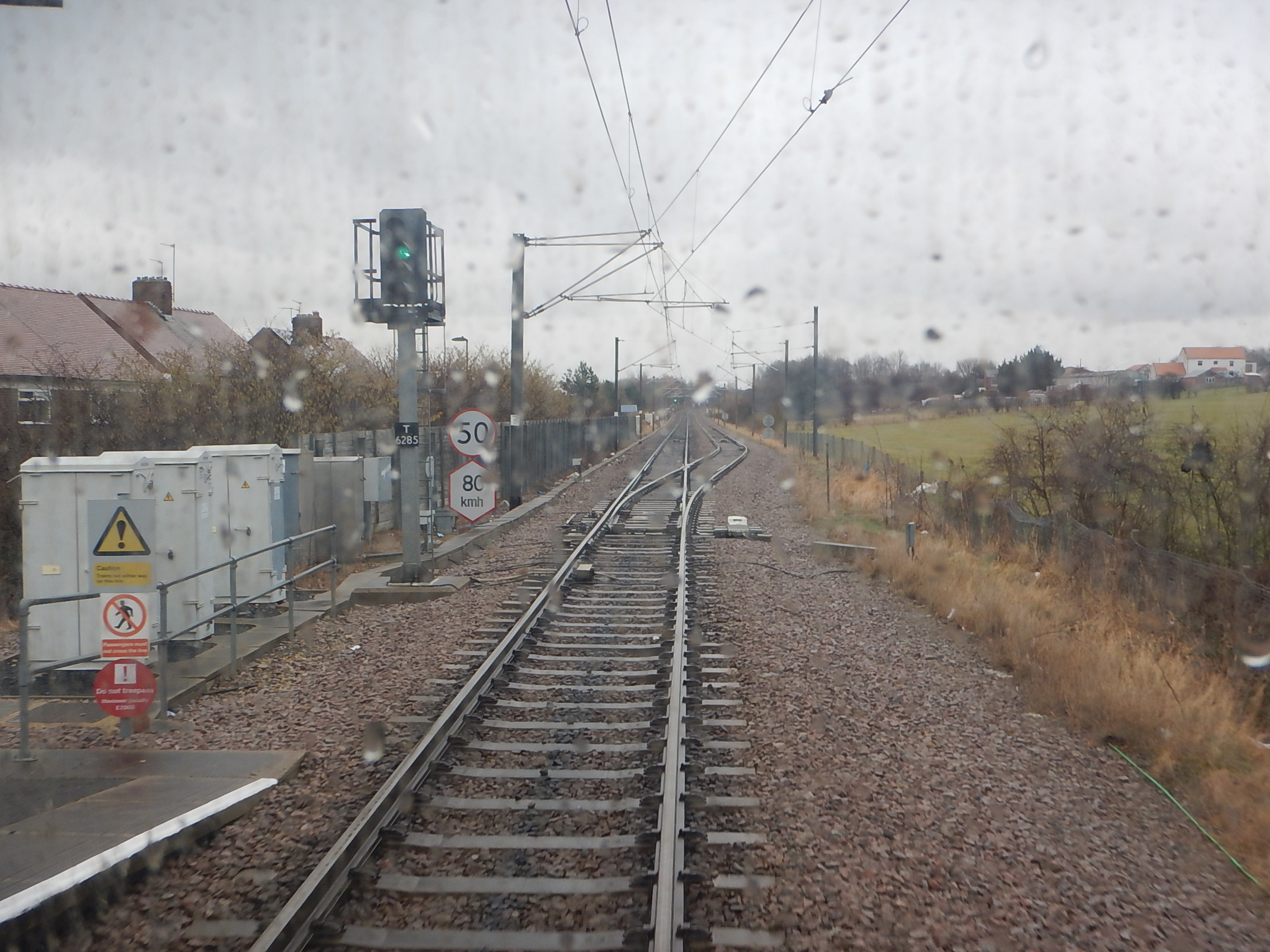
Look at these pictures of some of the tunnels and bridges on the Metro.


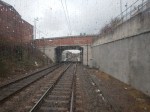
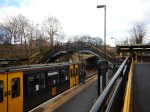
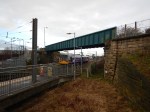
The weather could have been betterfor photography.
I rode on all the branches of the Metro and, I get the impression that all the bridges and tunnels seem to have been built with a generous clearance in both width and height.
I very much feel that when the Metro was built that unlike some other lines, it was well-built to a heavy rail standard.
I wouldn’t be surprised to be told, that a battery-powered train based on say an Electrostar like the Class 379 BEMU demonstrator, could pass through all of the Metro.
Electrification
The electrification is a unique 1500 VDC overhead system, which is the same as was used on the Woodhead Line, which closed to passenger trains in 1970 and to goods in 1981.
Could it be that the Metro got this voltage, rather than the 25 KVAC used on similar systems in London and Glasgow suburban routes, as British Rail and their contractors had 1500 VDC expertise available in the North and all their 25 KVAC expertise was employed elsewhere?
The bridges and tunnels seem to have been built with the ability to handle the higher and more common voltage.
1500 VDC may have also saved on the cost of the installation, as they had a lot of gantries and brackets from the Woodhead Line.
These pictures show the simplistic nature of some of the electrification.
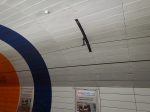
However, on the South Hylton Branch, which was built in the 2000s, it appears that better methods were used, as these pictures show.

The gantries and supports are certainly better than many you see on the Lea Valley Lines.
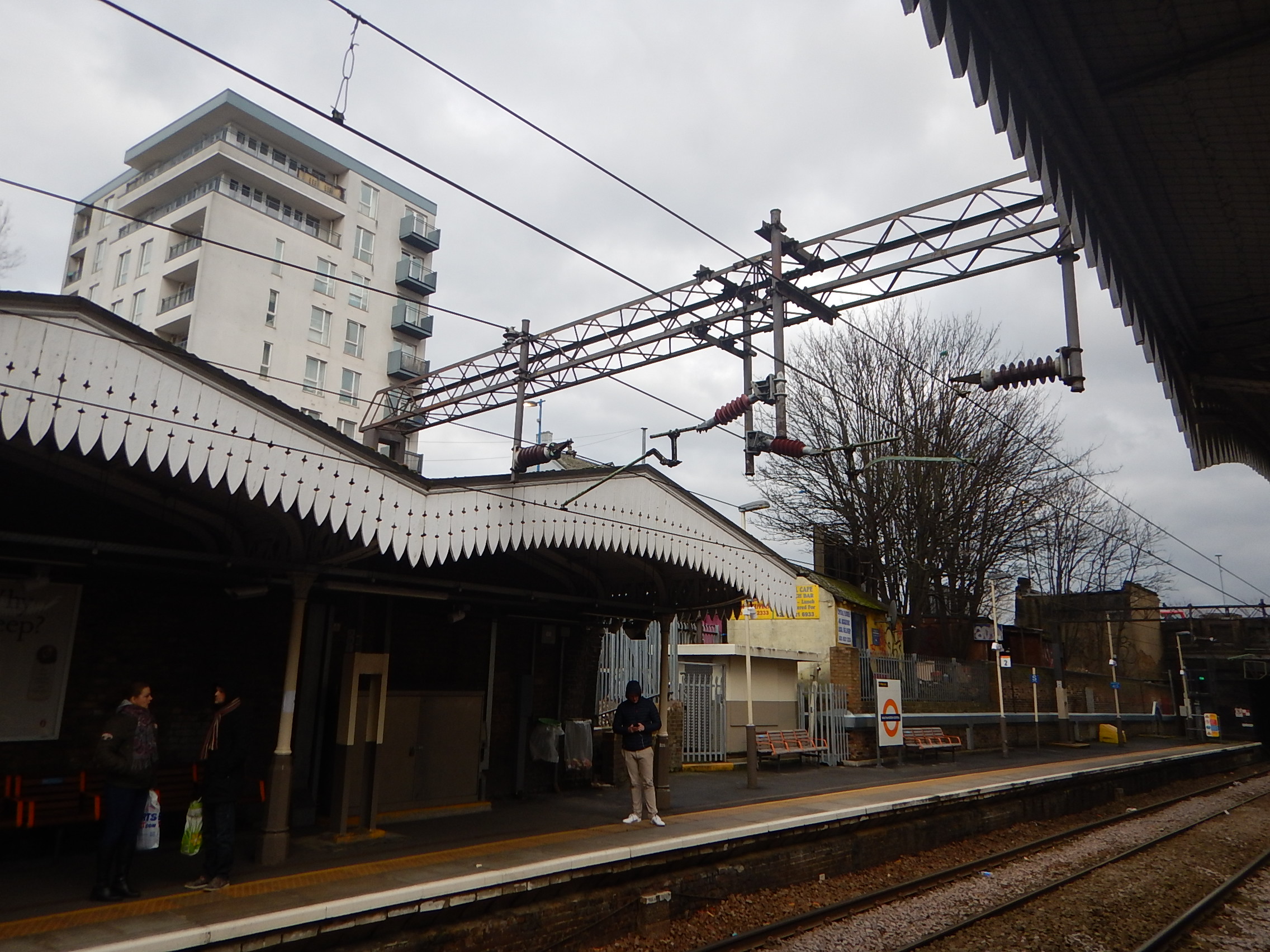
This picture shows 25 KVAC electrification at Walthamstow Central station.
Note the extra insulators to deal with the higher voltage.
Would it be possible and worthwhile to convert all of the Metro lines to 25 KVAC?
In theory this must be possible, but I think it is probably more important to first beef up the electrification gantries to the higher standard of the South Hylton Branch.
Consider.
- A driver told me, that electrification failures are not unknown.
- Trains running on 25 KVAC are more energy-efficient.
- Trains could be built that would be able to run on both 1500 VDC and 25 KVAC, that use the same pantograph for current collection and automatically adjust to the voltage received.
- Trains with batteries can be used on sections without electrification.
- Mixed voltage systems are possible, that would have 25 KVAC electrification on some sections of track and 1500 VDC on others.
- The passenger Health and Safety case would need to be established for the higher voltage.
The electrification could be designed holistically with any future trains to maximise reliability, electrical efficiency and operational flexibility, and minimise costs.
Obviously, during the changeover to new trains, all lines would need to be at 1500 VDC, so that the current rolling stock could be used as required.
Stations
These pictures show a selection of Metro stations.
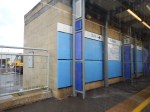
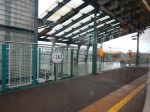
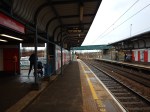
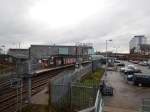
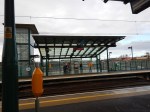
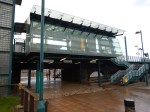
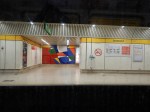
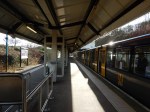
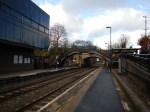
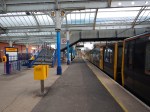
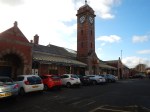

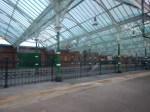

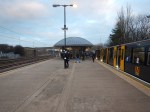
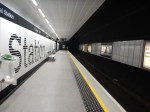
The stations appear to be in generally good condition and vary from the the basic to well-preserved Victorian stations like Tynemouth and Whitley Bay.
The platforms are generally of an adequate length, which except for some stations in tunnels seem to have been built to accept three of the current trains working together, which would be a formation 83.4 metres long.
This would be long enough to accept one of any number of four-car trains running on the UK rail network, which are usually eighty metres long. London Overground’s, new Class 710 trains will be this length.
Sunderland Station
Sunderland station, is an important station on the Metro.
I describe the station and its operation in The Rather Ordinary Sunderland Station.
Accessibility
Stations are step-free, but this is often by the use of ramps and a few more lifts woulds be welcome.
Access from platform to train is generally good, as these pictures show.
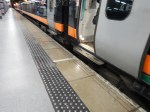

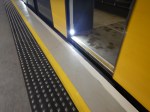

Note the picture of the access to a Grand Central Class 180 train.
I suspect that when Northern replace their Class 142 trains, with brand new Class 195 trains on the services between Middlesbrough and Newcastle, that the step-free access will be good.
I think a lot of credit is due to the original designers of the Metro, who thought about what they were doing and seem to have created a system that fitted heavy rail trains, Metro trains and users requiring step-free access.
Trains
There are several sets of electric trains in the country, that continue to defy their age and are a tribute to their builders, refurbishers and operating companies, by providing a quality service to passengers and other stakeholders
- Merseyrail’s Class 507 and Class 508 trains.
- The Class 315 trains of TfL Rail and the London Overground.
- The Piccadilly Line’s 1973 Stock trains.
- South Western Railway’s Class 455 trains.
- The trains of the Tyne and Wear Metro.
|These pictures show the trains for the Metro.
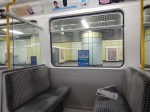
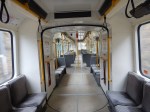
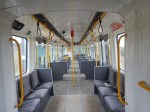
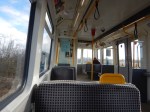
Note.
- The quality is not bad for nearly forty years of service.
- The lady in the last picture, sitting in the front of the train, watching the world go by.
- Standing is not difficult in the rush hour for this seventy-year-old stroke survivor.
- Information could be better.
- The Metro needs a new train wash.
Wikipedia says this about the Proposed New Fleet.
The proposed new fleet would consist of 84 trains to replace the existing 90 train fleet, as Nexus believe that the improved reliability of the newer trains would allow them to operate the same service levels with fewer trains. These are proposed to have longitudinal seating instead of the 2+2 bench seating arrangement of the present fleet, and a full width drivers cab instead of the small driving booth of the existing trains. The proposed new fleet is planned to have dual voltage capability, able to operate on the Metro’s existing 1.5 kV DC electrification system and also the 25 kV AC used on the national rail network, to allow greater flexibility. Battery technology is also being considered.
I’ll put my ideas at the end of this note.
Signalling
The Metro is unique in the UK, in that it uses the Karlsruhe model to mix Metro trains with heavy rail trains on the Southern branch to Sunderland and South Hylton.
If in the future modern signalling and trains are used on the Metro, an increasingly intricate set of routes could be designed.
Add in dual-voltage trains able to run on both the Metro’s 1500 VDC and the National network’s 25 KVAC and the possibilities will be even greater.
Operating Method
The trains are run in the same way as London Underground, with only a driver on the train, who does the driving and controls the doors.
Ticketing
As I always find outside London, ticketing is still in the Victorian era.
Will the Tyne and Wear Metro embrace a contactless card based on bank and credit cards?
Possible Future Expansion
Wikipedia gives a list of possible extensions under Proposed Extensions And Suggested Improvements.
These include.
Tyne Dock To East Boldon
Wikipedia says this.
Tyne Dock to East Boldon along a dismantled railway alignment through Whiteleas could easily be added, because two Metro lines are separated by only a short distance (1.61 miles). This would provide a service from South Shields to Sunderland via the Whiteleas area of South Shields.
If ever there was a route for a battery-powered train, this must be it.
Consider.
- The route is less than two miles.
- The route connects two electrified lines.
- You can see the disused track-bed on a Google Map.
- No electrification would be required.
- The battery would be charged between South Shields and Tyne Dock and East Boldon and Sunderland.
- Modern signalling would allow the route to be built as a single track if required, handling up to ten tph in both directions.
- Single platform stations could be built as required.
I can certainly understand, why Wikipedia mentioned battery trains.
Washington
Wikipedia says this.
Washington either via the disused Leamside line or a new route. Present planning may lead to the Leamside line being opened at least as far as Washington as a conventional rail line for passengers as well as freight, although this could be shared with Metro trains in the same way as the line from Pelaw Junction to Sunderland.
Washington station would only be a short run of less than ten miles along a reopened Leamside Line.
- If somebody else paid for 25 KVAC electrification of the Leamside Line, then dual-voltage trains could run the service.
- If not, they could use battery-power.
Either way, Washington would get a Metro service.
If as I believe, the new trains on the Metro will be main line trains, then what is the point of running heavy rail services to the town, as the Metro would be able to serve more places and with a change at Newcastle station, you could get a train virtually anywhere.
The possibility must also exist if the Leamside Line is developed as a diversion of the East Coast Main Line, then the Metro could go as far South as Durham.
Blyth And Ashington
Wikipedia says this about trains to Blyth and Ashington, on what is now regularly referred to as the Northumberland Line.
Blyth and Ashington, running on existing little-used freight lines. Northumberland Park station has been built to provide a link to a potential new rail service to these communities; if opened, it will not be a part of the Metro system.
Ashington is around fourteen miles from Northumberland Park station, which means that an return journey might be possible on battery-power.
In an article in the October 2017 Edition of Modern Railways, which is entitled Celling England By The Pound, Ian Walmsley says this in relation to trains running on the Uckfield Branch, which probably has a terrain not much different to the lines to Blyth and Ashington.
A modern EMU needs between 3 and 5 kWh per vehicle mile for this sort of service.
If the Metro trains could have a high energy efficiency, I think it would be reasonable to assume that 4 kWh per vehicle mile is attainable.
So a three car train, would need a battery of 14 x 2 x 3 x 4 = 336 kWh. That is not an unattainable figure for battery size.
Killingworth And Cramlington
Wikipedia says this.
A northward extension to Killingworth and Cramlington has been planned since the Metro was on the drawing board, but would require widening of the busy East Coast Main Line to four tracks, which would be expensive, and a new alignment involving street running.
Suppose the new Metro trains were modern trains, such as the latest offerings from Bombardier, CAF, Hitachi, Siemens, Stadler and others, that were able to do the following in addition to running on the Metro.
- Use 25 KVAC electrification.
- Operate at around or even over 100 mph.
- Execute fast stops at a station.
Would they be able to perhaps run a four tph Metro service along the East Coast Main Line to Cramlington station?
I suspect with modern signalling and a couple of passing loops on the East Coast Main Line, the answer is yes!
This may eliminate the need for street-running.
West End Of Newcastle
Wikipedia says this.
Extending the Metro to the West End of Newcastle would require new track, involving tunnelling and bridging in rough terrain; this would be very costly and is perhaps least likely to receive funding, though would probably have the highest potential ridership.
In this article in the Newcastle Chronicle, which is entitled What Could Happen To The Metro, this is said.
A rail extension out of Central Station along the original Newcastle to Carlisle line could head along Scotswood Road to serve Newcastle’s west, while a bridge could then connect the city to the Metrocentre. This would be integrated with the Metro system. Building developments in Gallowgate have greatly reduced any chance of extending the Metro west from St James’ Park.
The railway alignment still seems to be there in places.
It would be another extension that would use battery-powered trains on sections, that don’t have electrification.
Ryhope And Seaham
Wikipedia says this.
Ryhope and Seaham, a proposal drawn up by Tyne and Wear Passenger Authority to use the existing Durham coast line south of Sunderland.
Sunderland to Seaham is about six miles, so is definitely in range of battery trains.
But that is being timid!
Sunderland to Middlesbrough is probably about thirty miles and I believe it will be possible to do those sort of distances on battery power alone, in a few years. Provided that the train could be recharged at Middlesbrough.
What would a four or six tph service between Middlesbrough and Newcastle Airport via Hartlepool, Seaham, Sunderland, Gateshead and Newcastle, do for the area?
Conclusion About Possible Future Expansion
In this section on expanding the Metro network, it has surprised me how many of the extensions could be done with dual-voltage or battery-powered trains.
- Tyne Dock To East Boldon – Battery
- Washington – Battery
- Blyth And Ashington – Battery
- Killingworth And Cramlington – Dual-Voltage
- West End Of Newcastle – Battery
- Ryhope And Seaham – Battery
- Middlesbrough – Battery and Dual-Voltage
I think it shows how we must be careful not to underestimate tyhe power of battery trains. But then I’m one of the few people in the UK, outside of the residents of Harwich, who’s ridden a battery-powered four-car heavy rail train in normal service! Mickey Mouse, they are not!
New Trains
I’ll repeat what Wikipedia says this about the Proposed New Fleet.
The proposed new fleet would consist of 84 trains to replace the existing 90 train fleet, as Nexus believe that the improved reliability of the newer trains would allow them to operate the same service levels with fewer trains. These are proposed to have longitudinal seating instead of the 2+2 bench seating arrangement of the present fleet, and a full width drivers cab instead of the small driving booth of the existing trains. The proposed new fleet is planned to have dual voltage capability, able to operate on the Metro’s existing 1.5 kV DC electrification system and also the 25 kV AC used on the national rail network, to allow greater flexibility. Battery technology is also being considered.
I’ll now give my views on various topics.
Heavy Rail Train Or Lightweight Metro?
Will the trains be lightweight metro trains or variants of heavy rail trains like Aventras, Desiro Cities or A-trains to name just three of several?
The advantages of the heavy rail train are.
- It could run at 90 or even 100 mph on an electrified main line.
- It will meet crashworthiness standards for a main line.
- It would likely be a design with a lot in common with other UK train fleets.
- It could run into most railway stations.
- If it was shorter than about sixty metres it could use all current Metro stations without station rebuilding.
On the other hand the lightweight metro train would be lighter in weight and possibly more energy-efficient.
Walk-Through Design
Wikipedia says this about the seating layout.
These are proposed to have longitudinal seating instead of the 2+2 bench seating arrangement of the present fleet.
Longitudinal seating has been successfully used on London Overground’s Class 378 trains.
- This layout increases capacity at busy times.
- It allows passengers to distribute themselves along the train and get to the right position for a quick exit.
But the biggest advantage, is that when linked to selective door opening, it enables a longer train to be used successfully in stations with short platforms.
London Overground use this facility on their Class 378 trains to overcome platform length problems at a few stations on the East London Line.
But train design is evolving.
Bombardier have shown with the Class 345 train, that you can have both in the same train. So in a three-car train, you might have two identical driver cars with longitudinal seating and a middle car with 2+2 bench seating.
Bombardier are able to get away with this, as they are maximising the space inside the train. I wrote about it in Big On The Inside And The Same Size On The Outside.
These pictures show the inside of one of Crossrail’s Class 345 trains.
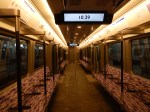
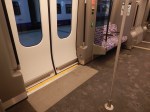
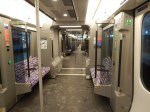

Whoever builds the new Metro trains, they’ll probably have similar interiors.
Train Length
A trend seems to be emerging, where new fleets of trains are the same length as the ones they replace, although they may have more carriages.
This has happened on Greater Anglia, Merseyrail and West Midlands Trains.
It probably makes sense, as it avoids expensive and disrupting platform lengthening.
Currently, the Metro trains work in pairs, which means a train length of 55.6 metres. As the standard UK train carriage size for suburban multiple units is often twenty metres, then if the platforms can accept them, three-car trains would be possible for the new trains.
Longer trains would be possible in most stations, except for some in the central tunnel, which appear to have platforms around sixty to seventy metres long.
So perhaps four-car trains would be possible for the new trains, that would use selective door opening at the short platforms of the stations in the central tunnels.
Because the trains are walk-through, passengers can position themselves accordingly, for the station, where they will leave the train.
London Overground have also shown that selective door opening and walk-through trains can be used to advantage, when trains are lengthened to increase capacity.
Dual-Voltage
Obviously, the trains will have the capability of running on both 1500 VDC and 25 KVAC overhead wires, as the extension to Killingworth And Cramlington would need the latter, for a start.
The interchange between the two different voltages can be very simple, due to some technology developed for the
German cousins of the Class 399 tram-train. A ceramic rod separates the two voltages and the pantograph just rides over. The train or tram-train, then determines the voltage and configures the electrical systems accordingly.
Batteries
These would appear to be key to several of the proposed extensions.
Batteries also enable other features.
- Movement in depots and sidings without electrification.
- Emergency power, when the main power fails.
- Handling regenerative braking.
- Remote train warm-up.
In a few years time, all trains with electric drive will have batteries, that are probably around 75-100 kWh.
Operating Speed
To work efficiently on the East Coast Main Line, 90 mph or even a 100 mph operating speed will be needed.
Note that Crossrail’s Class 345 trains, which will generally work routes very similar to the Metro, have a 90 mph operating speed.
These faster trains will result in an increased service.
Currently, trains between Newcastle Airport and South Hylton take 65 minutes with sixteen stops.
Modern trains have the following features.
- Minimised dwell times at stations.
- Smooth regenerative braking and fast acceleration.
- Driver Advisory Systems to improve train efficiency.
- Higher safe speeds in selected sections.
- Trains are designed for quick turnrounds at each end of the route.
In addition, train operators are organising station staff to minimise train delays.
Put it all together and I’m pretty certain, that this route could be done comfortably in under an hour.
So the same number of trains are able to do more trips in every hour.
Handling Tight Curves
Under Electrics, Wikipedia says this about the ability of the trains to handle tight curves.
Metro has a maximum speed of 80 km/h (50 mph), which it attains on rural stretches of line. The vehicles have a minimum curve radius of 50 m (55 yd), although there are no curves this tight except for the non-passenger chord between Manors and West Jesmond.
Could this chord be avoided by different operating procedures?
Serving Newcastle Station
Northern’s services from Newcastle station are.
- 1 tph – Northbound on the East Coast Main Line to Cramlington and Morpeth with services extended to Chathill at peak hours.
- 1 tph – Southbound along the Durham Coast Line to Middlesbrough calling at Heworth, Sunderland, Seaham, Hartlepool, Seaton Carew, Billingham, Stockton andThornaby, with an extension to James Cook University Hospital and Nunthorpe.
- 1 tph – Westbound on the Tyne Valley Line to Carlisle calling at MetroCentre, Prudhoe, Hexham, Haydon Bridge, Haltwhistle, Brampton and others at alternate hours.
- Westbound slow service on the Tyne Valley Line to Hexham calling at Dunston, MetroCentre, Blaydon, Wylam, Prudhoe, Stocksfield, Riding Mill, Corbridge and terminating at Hexham, with an extension to Carlisle at peak hours.
- 1 tph – Newcastle to Metro Centre calling at Dunston only during the day.
Pathetic is probably a suitable word.
When Greater Anglia have their new trains, services between Ipswich, Norwich, Colchester, Bury St. Edmunds, Lowestoft and Yarmouth, will be at least two tph and sometimes three and four on most routes.
Newcastle To Sunderland Via Sunderland
Newcastle, Sunderland and Middlesbrough surely need a four tph rail connection along the Durham Coast Line.
I believe that dual-voltage Metro trains with a battery capability could run between Middlesbrough and Newcastle at a frequency of four tph.
If they can’t, I’m certain that a suitable train could be procured.
If the new Metro trains are correctly-configured heavy-rail trains, then surely a go-anywhere express version can be built.
- Identical train bodies, cabs and traction systems to new Metro trains
- An interior geared to the needs of passengers.
- Four or five cars with selective door opening.
- Ability to run on Metro tracks using 1500 VDC overhead wires.
- Ability to run on 25 KVAC overhead wires.
- Batteries for regenerative braking, emergency power and distances up to two miles.
- Diesel or preferably hydrogen power pack.
- Sufficient range to keep going all day.
- 90-100 mph capability.
As the trains would have an identical cross-section to the new Metro trains, they could do any of the following at Newcastle.
- Terminate at Newcastle station.
- Go through Newcastle station to Metrocentre, Hexham, Carlisle, Morpeth or some other destination.
- Go through the tunnel of the Metro to Newcsastle Airport.
- Go through the tunnel of the Northumberland Park station to link to the North-East.
I believe that such a train could run as an express to link the whole conurbation from Middlesbrough to Morpeth together.
Newcastle To Carlisle Via Metrocentre and Hexham
The train that i just proposed would be ideal for this route.
I also believe that Metrocentre needs at least six tph connecting it to the centre of Newcastle and the Metro.
The proposed West End of Newcastle branch of the Metro looks to be a necessity, to provide some of this frequency.
What Is The Point Of Northern?
With the right trains, all of the local services in the Tyne-Wear-Tees area can be satisfied by a Metro running modern trains making the maximum use of modern technology.
This model already works in Merseyside, so why not in the North-East? And Manchester, Leeds and South Yorkshire!
A Tees Valley Metro
I have always been keen on the creation of a Tees Valley Metro. I wrote about it in The Creation Of The Tees Valley Metro.
Get the design of the trains on the Tyne and Wear Metro right and they could work any proposed Tees Valley Metro.
Conclusion
I think that Nexus will get some very interesting proposals for their new trains, which will open up a lot of possibilities to extend the network.
Rail Engineer On Hydrogen Trains
This article on Rail Engineer is entitled Hydrail Comes Of Age.
It is a serious look at hydrogen-powered trains.
This is typical information-packed paragraph.
Instead of diesel engines, the iLint has underframe-mounted traction motors driven by a traction inverter. Also mounted on the underframe is a lithium-ion battery pack supplied by Akasol and an auxiliary converter to power the train’s systems. On the roof is a Hydrogenics HD200-AT power pack which packages six HyPMTM HD30 fuel cells, with common manifolds and controls, and X-STORE hydrogen tanks supplied by Hexagon xperion which store 89kg of hydrogen on each car at 350 bar. These lightweight tanks have a polymer inner liner, covered with carbon fibres soaked in resin and wrapped in fibreglass.
They have interesting things to say about the trains and the production and delivery of the hydrogen, which can be what they call green hydrogen produced by electricity generated by wind power.
This is said about supplying the hydrogen.
It takes 15 minutes to refuel the iLint, which holds 178kg of hydrogen supplied at a pressure 350 bar. It consumes this at the rate of 0.3kg per kilometre. Thus, Lower Saxony’s fleet of 14 trains, covering, say, 600 kilometres a day, will require 2.5 tonnes of hydrogen per day. If this was produced by electrolysis, a wind farm of 10MW generating capacity would be required to power the required electrolysis plant with suitable back up. This, and sufficient hydrogen storage, will be required to ensure resilience of supply.
These are the concluding paragraphs.
With all these benefits, a long-term future in which all DMUs have been replaced by HMUs is a realistic goal. However, the replacement, or retrofitting, of 3,000 DMUs and the provision of the required hydrogen infrastructure would be a costly investment taking many years.
Germany has already taken its first steps towards this goal.
For myself, I am not sceptical about the technology that creates electricity from pure hydrogen, but I think there are design issues with hydrogen-powered trains in the UK.
The German trains, which are built by Alsthom and should start test runs in 2018, take advantage of the space above the train in the loading gauge to place the tanks for the hydrogen.
Our smaller loading gauge would probably preclude this and the tanks might need to take up some of the passenger space.
But in my view, we have another much more serious problem.
Over the last twenty years, a large number of high quality trains like electric Desiros, Electrostars and Junipers, and diesel Turbostars have been delivered and are still running on the UK network.
It could be that these trains couldn’t be converted to hydrogen, without perhaps devoting a carriage to the hydrogen tank, the electricity generator and the battery needed to support the hydrogen power.
It is for this reason, that I believe that if we use hydrogen power, it should be used with traditional electrification and virtually unmodified trains.
A Typical Modern Electric Train
Well! Perhaps not yet, but my view of what a typical electric multiple unit, will look like in ten years is as follows.
- Ability to work with 25 KVAC overhead or 750 VDC third-rail electrification or onboard battery power.
- Ability to switch power source automatically.
- Batteries would handle regenerative braking.
- Energy-efficient train design.
- Good aerodynamics.
- Most axles would be powered for fast acceleration and smooth braking.
- Efficient interior design to maximise passenger numbers that can be carried in comfort.
- A sophisticated computer with route and weather profiles, passenger numbers would optimise the train.
The battery would be sized, such that it gave a range, that was appropriate to the route.
In an article in the October 2017 Edition of Modern Railways, which is entitled Celling England By The Pound, Ian Walmsley says this in relation to trains running on the Uckfield Branch.
A modern EMU needs between 3 and 5 kWh per vehicle mile for this sort of service.
As I’m talking about a train that has taken energy efficiency to the ultimate, I think it would be reasonable to assume that 3 kWh per vehicle mile is attainable.
As I believe that most axles would be powered, I feel that it would be electrically efficient for a battery to be fitted into each car.
Suppose we had a five-car train with a 30 kWh battery in each car.
This would give a total installed battery capacity of 150 kWh. Divide by five and three and this gives a useful emergency range of ten miles.
These facts put the battery size into perspective.
- , 30 kWh is the size of the larger battery available for a Nissan Leaf.
- A New Routemaster bus has a battery of 75 kWh.
Where will improved battery technology take us in the next decade?
Use Of Hydrogen Power With 750 VDC Third-Rail Electrification
This extract from the Wikipedia entry for third-rail, explains the working of third-rail electrification.
The trains have metal contact blocks called shoes (or contact shoes or pickup shoes) which make contact with the conductor rail. The traction current is returned to the generating station through the running rails. The conductor rail is usually made of high conductivity steel, and the running rails are electrically connected using wire bonds or other devices, to minimize resistance in the electric circuit. Contact shoes can be positioned below, above, or beside the third rail, depending on the type of third rail used; these third rails are referred to as bottom-contact, top-contact, or side-contact, respectively.
If a line is powered by third-rail electrification, it needs to be fed with power every two miles or so, due to the losses incurred in electricity passing along the steel conductor rail.
I suspect that Network Rail and our world-leading rail manufacturers have done as much as they can to reduce electrical losses.
Or have they? Wikipedia says this.
One method for reducing current losses (and thus increase the spacing of feeder/sub stations, a major cost in third rail electrification) is to use a composite conductor rail of a hybrid aluminium/steel design. The aluminium is a better conductor of electricity, and a running face of stainless steel gives better wear.
Suppose instead of having continuous third-rail electrification, lengths of electrification with the following characteristic were to be installed.
- Hybrid aluminium/steel rails.
- Power is supplied at the middle.
- Power is only supplied when a train is in contact with the rail.
All trains would need to have batteries to run between electrified sections.
The length and frequency of the electrified sections would vary.
- If a section was centred on a station, then the length must be such, that a train accelerating away can use third-rail power to get to operating speed.
- Sections could be installed on uphill parts of the line.
- On long level sections of line without junctions, the electrified sections could be more widely spaced.
- Battery power could be used to take trains through complicated junctions and crossovers, to cut costs and the difficulties of electrification.
- Electrified section woulds generally be placed , where power was easy to provide.
So where does hydrogen-power come in?
Obtaining the power for the track will not always be easy, so some form of distributed power will be needed.
- A small solar farm could be used.
- A couple of wind turbines might be appropriate.
- In some places, small-scale hydro-electric power could even be used.
Hydrogen power and especially green hydrogen power could be a viable alternative.
- It would comprise a hydrogen tank, an electricity generator and a battery to store energy.
- The tank could be buried for safety reasons.
- The installation would be placed at trackside to allow easy replenishment by tanker-train.
- It could also be used in conjunction with intermittent solar and wind power.
The tanker-train would have these characteristics.
- It could be a converted electrical multiple unit like a four-car Class 319 train.
- Both 750 VDC and 25 KVAC operating capability would be retained.
- One car would have a large hydrogen tank.
- A hydrogen-powered electricity generator would be fitted to allow running on non-electrified lines and give a go-anywhere capability.
- A battery would probably be needed, to handle discontinuous electrification efficiently.
- It might even have facilities for a workshop, so checks could be performed on the trackside power system
Modern digital signalling, which is being installed across the UK, may will certainly have a part to play in the operation of the trackside power systems.
The position of all trains will be accurately known, so the trackside power system would switch itself on, as the train approached, if it was a train that could use the power.
Use Of Hydrogen Power With 25 KVAC Overhead |Electrification
The big difference between installation of 25 KVAC overhead electrification and 750 VDC third-rail electrification, is that the the overhead installation is more complicated.
- Installing the piling for the gantries seems to have a tremendous propensity to go wrong.
- Documentation of what lies around tracks installed in the Victorian Age can be scant.
- The Victorians used to like digging tunnels.
- Bridges and other structures need to be raised to give clearance for the overhead wires.
- There are also those, who don’t like the visual impact of overhead electrification.
On the plus side though, getting power to 25 KVAC overhead electrification often needs just a connection at one or both ends.
The electrification in the Crossrail tunnel for instance, is only fed with electricity from the ends.
So how could hydrogen help with overhead electrification?
Electrifying some routes like those through the Pennines are challenging to say the least.
- Long tunnels are common.
- There are stations like Hebden Bridge in remote locations, that are Listed Victorian gems.
- There are also those, who object to the wires and gantries.
- Some areas have severe weather in the winter that is capable of bringing down the wires.
In some ways, the Government’s decision not to electrify, but use bi-mode trains is not only a cost-saving one, but a prudent one too.
Bi-mode trains across the Pennines would have the advantage, that they could use short lengths of electrification to avoid the use of environmentally-unfriendly diesel.
I have read and lost an article, where Greater Anglia have said, that they would take advantage of short lengths of electrification with their new Class 755 trains.
Electrifying Tunnels
If there is one place, where Network Rail have not had any electrification problems, it is in tunnels, where Crossrail and the Severn Tunnel have been electrified without any major problems being reported.
Tunnels could be developed as islands of electrification, that allow the next generation of trains to run on electricity and charge their batteries.
But they would need to have a reliable power source.
As with third-rail electrification, wind and solar power, backed by hydrogen could be a reliable source of power.
Electrifying Stations With Third Rail
It should be noted, that the current generation of new trains like Aventra, Desiro Cities and Hitachi’s A-trains can all work on both 25 KVAC overhead or 750 VDC third-rail systems, when the appropriate methods of current collection are fitted.
Network Rail have shown recently over Christmas, where they installed several short lengths of new third-rail electrification South of London, that installing third-rail electrification, is not a challenging process, provided you can find the power.
If the power supply to the third-rail is intelligent and is only switched on, when a train is on top, the railway will be no more a safety risk, than a route run by diesel.
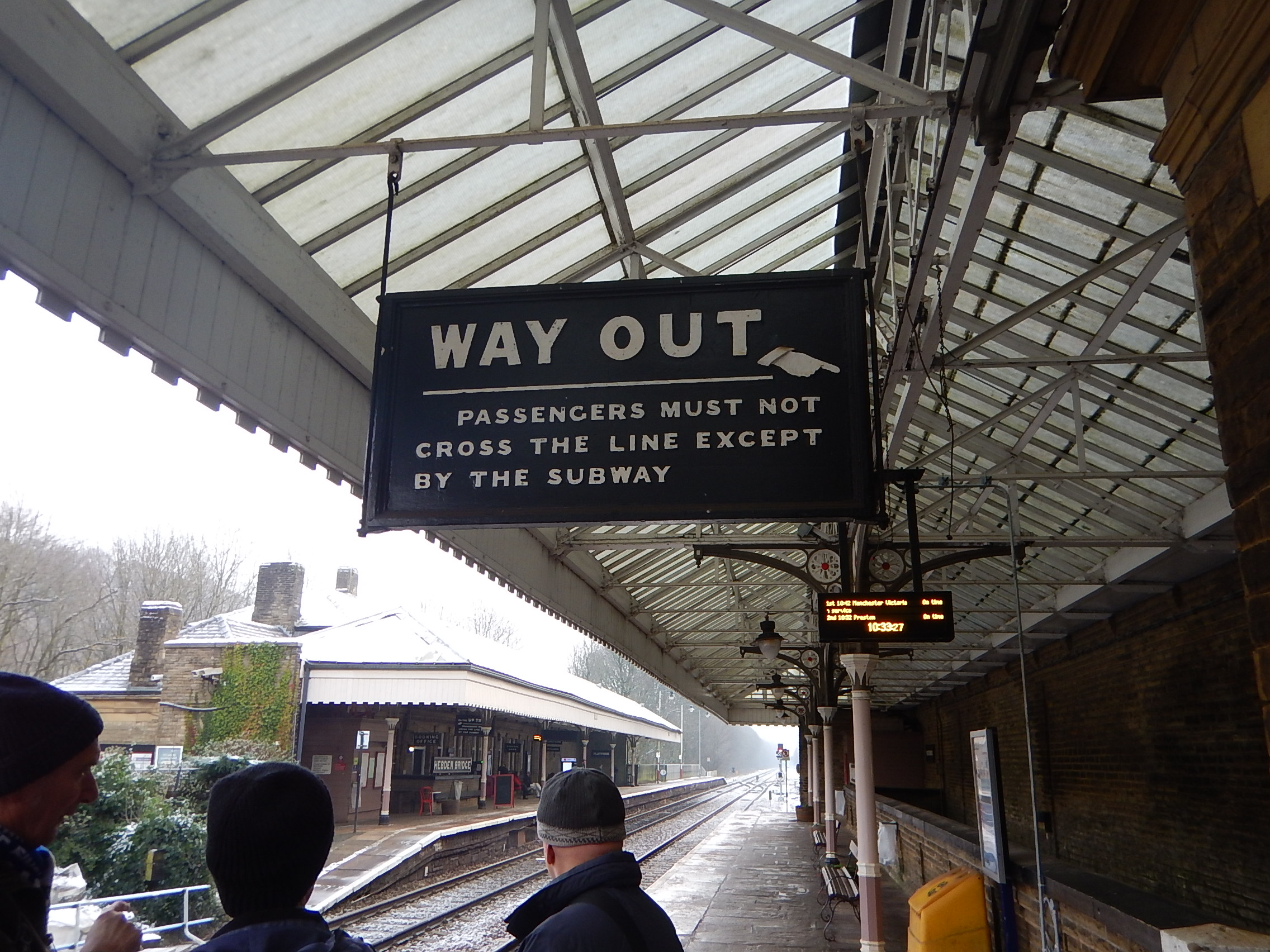
The picture shows the Grade II Listed Hebden Bridge station.
Third-rail electrification with an independent reliable power supply could be a way of speeding hybrid trains on their way.
Power Supply In Remote Places
Communications are essential to the modern railway.
Trains and train operators need to be able to have good radio connections to signalling and control systems.
Passengers want to access wi-fi and 4G mobile phone networks.
More base stations for communication networks will be needed in remote locations.
Wind, solar and hydrogen will all play their part.
I believe in the future, that remote routes in places like Wales, Scotland and parts of England, will see increasing numbers of trains and consequently passengers., many of whom will be walking in the countryside.
Could this lead to upgrading of remote stations and the need for reliable independent power supplies?
Conclusion
I am very much coming to the conclusion, that because of the small UK loading gauge, hydrogen-powered trains would only have limited applications in the UK. Unless the train manufacturers come up with a really special design.
But using hydrogen as an environmentally-friendly power source for UK railways to power electrification, perhaps in combination with wind and solar is a definite possibility!
.
The Future Of Diesel Trains
Many feel that diesel trains have no future in the modern world, because of all those carbon and particulate emissions.
However, this article in Rail Technology News, which is entitled ScotRail To Trial Hydraulic Tech To Cut Of Carbon Emissions.
This is the first paragraph.
A new hydraulic pump could reduce Scotland’s carbon emissions by 4,000 tonnes of carbon dioxide per year.
This sounds impressive, but how is it done?
Many modern diesel muiltiple units, like the Class 170 trains, used in the ScotRail trial have hydraulic transmissions, where a pump fitted to the engine creates hydraulic power, which then drives a hydraulic motor to power the train.
But modern trains also need to have electricity in each car for lighting, air-conditioning and other services.
So typically, a hydraulic unit in each car is used to generate the electricity required.
It is this hydraulic unit, that has been replaced by a much more efficient digitally-controlled hydraulic unit.
That sort of hydraulic unit has one Scottish company’s stamp all over it; Artemis Intelligent Power, which started as a spin-off from Edinburgh University.
Artemis Intelligent Power has a page about Rail applications on their web-site.
This is the introductory paragraphs to their work.
Whilst electrification has enabled the de-carbonisation of much of the UK’s rail sector, the high capital costs in electrifying new lines means that much of Britain (and the world’s) railways will continue to rely on diesel.
In 2010, Artemis completed a study with First ScotRail which showed that between 64 and 73 percent of a train’s energy is lost through braking and transmission.
In response to this, Artemis began a number of initiatives to demonstrate the significant benefits which digital hydraulics can bring to diesel powered rail vehicles.
Two projects are detailed.
The first is the fitting of a more efficient hydraulic unit, that is described in the Rail Technology Magazine article.
Under a heading of Faster Acceleration, Reduced Consumption, there is a technical drawing with a caption of The Artemis Railcar.
This is said.
We are also working with JCB and Chiltern Railways on a project funded by the RSSB to reduce fuel consumption and improve engine performance by combining highly efficient hydraulic transmission with on board energy storage in the form of hydraulic accumulators, which store energy during braking for reuse during acceleration.
Note.
- The use of hydraulic accumulators to provide regenerative braking.
- The involvement of JCB, whose construction equipment features a lot of hydraulics.
- The involvement of Chiltern Railways, who like their parent company, Deutsche Bahn, have a lot of diesel-hydraulic multiple units and locomotives.
The article goes on to detail, how a test railcar will be running before the end of 2017.
This technology could have tremendous potential in the UK.
The Benefit Of Regenerative Braking
In the Wikipedia entry for Regenerative Brake, this is said.
Savings of 17%, and less wear on friction braking components, are claimed for Virgin Trains Pendolinos. The Delhi Metro reduced the amount of carbon dioxide (CO2) released into the atmosphere by around 90,000 tons by regenerating 112,500 megawatt hours of electricity through the use of regenerative braking systems between 2004 and 2007.
The entry also says that some London Underground trains save twenty percent.
It would be a large benefit to the train operating companies, if they could just have a similar saving on the cost of diesel fuel.
Could Existing Trains Be Converted?
In England, Wales and Scotland,currently there are around two hundred modern Turbostar diesel multiple units. of which thirty are used by Chiltern Railways.
Whether these can be converted, depends on the engineers and the result of the current trial, but the economic benefits of a successful conversion route could be very beneficial.
Conclusion
This is technology to watch!
A Video About The Class 230 Battery Train
This article on InsideEVs has a rather good video of the Class 230 train demonstrator, which is entitled Fully Charged Checks Out A Battery Powered Train.
Very interesting!
The video was made by Robert Llewellyn of Fully Charged.
Hitachi Battery Trains On The Great Western Railway
The slow pace of the electrification on the Great Western Main Line has become a big stick with which to beat Network Rail.
But are rolling stock engineers going to pull Network Rail out of their hole?
On page 79 of the January 2018 Edition of Modern Railways, Nick Hughes, who is the Sales Director of Hitachi Rail Europe outlines how the manufacturer is embracing the development of battery technology.
He is remarkably open.
I discuss what he says in detail in Hitachi’s Thoughts On Battery Trains.
But here’s an extract.
Nick Hughes follows his description of the DENCHA; a Japanese battery train, with this prediction.
I can picture a future when these sorts of trains are carrying out similar types of journeys in the UK, perhaps by installing battery technology in our Class 395s to connect to Hastings via the non-electrified Marshlink Line from Ashford for example.
This would massively slice the journey time and heklp overcome the issue of electrification and infrastructure cases not stacking up. There are a large number of similar routes like this all across the country.
It is a prediction, with which I could agree.
I conclude the post with this conclusion.
It is the most positive article about battery trains, that I have read so far!
As it comes direct from one of the train manufacturers in a respected journal, I would rate it high on quality reporting.
Hitachi Battery Train Technology And Their UK-Built Trains
The section without electrification on the Marshlink Line between Ashford International and Ore stations has the following characteristics.
- It is under twenty-five miles long.
- It is a mixture of double and single-track railway.
- It has nine stations.
- It has a sixty mph operating speed.
As the line is across the flat terrain of Romney Marsh, I don’t think that the power requirements would be excessive.
In the Modern Railway article, Nick Hughes suggests that battery technology could be installed in Class 395 trains.
The Class 395 train is part of a family of trains, Hitachi calls A-trains. The family includes.
- Class 800 trains as ordered by GWR and Virgin Trains East Coast.
- Class 801 trains as ordered by GWR and Virgin Trains East Coast
- Class 802 trains as ordered by GWR, Hull Trains and TransPennine Express
- Class 385 trains as ordered by ScotRail.
In Japan, another member of the family is the BEC819, which is the DENCHA, that is mentioned in the Modern Railways article.
As a time-expired electrical engineer, I would think, that if Hitachi’s engineers have done their jobs to a reasonable standard, that it would not be impossible to fit batteries to all of the A-train family of trains, which would include all train types, built at Newton Aycliffe for the UK.
In Japan the DENCHAs run on the Chikuhō Main Line, which has three sections.
- Wakamatsu Line – Wakamatsu–Orio, 10.8 km
- Fukuhoku Yutaka Line – Orio–Keisen, 34.5 km
- Haruda Line – Keisen–Haruda, 20.8 km
Only the middle section is electrified.
It looks to me, that the Japanese have chosen a very simple route, where they can run on electrification for a lot of the way and just use batteries at each end.
Bombardier used a similar low-risk test in their BEMU Trial with a Class 379 train in 2015.
So How Will Battery Trains Be used On the Great Western?
On the Great Western Main Line, all long distance trains and some shorter-distance ones will be Class 80x trains.
The size of battery in the DENCHA can be estimated using a rule, given by Ian Walmsley.
In an article in the October 2017 Edition of Modern Railways, which is entitled Celling England By The Pound, Ian Walmsley says this in relation to trains running on the Uckfield Branch.
A modern EMU needs between 3 and 5 kWh per vehicle mile for this sort of service.
So the energy needed to power the DENCHA, which is a two-car battery train on the just under twenty miles without electrification of the Chikuhō Main Line in a one way trip would be between 112 and 187 kWh.
A Battery-Powered Class 801 Train
The Class 801 train is Hitachi’s all-electric train, of which Great Western Railway have ordered thirty-six of the closely-related five-car Class 800 train and twenty-one of the nine-car units.
The difference between the two classes of train, is only the number of generator units fitted.
- Trains can be converted from Class 800 to Class 801 by removing generator units.
- Bi-mode Class 800 trains have a generator unit for each powered car.
- The all-electric Class 801 train has a single generator unit, in case of electrical power failure.
- When trains couple and uncouple, the train’s computer system determines the formation of the new train and drives and manages the train accordingly.
If I was designing the train, I would design a battery module, that replaced a generator unit
This leads me to think, that a five-car Class 801 train, could have one generator unit and up to four battery modules.
- The computer would decide what it’s got and control the train accordingly.
- The generator unit and battery power could be used together to accelerate the train or at other times where high power is needed.
- If the batteries failed, the generator unit would limp the train to a safe place.
- The number of battery units would depend on the needs of the route.
It would be a true tri-mode train; electric, diesel and battery.
I will now look at some routes, that could see possible applications of a battery version of Class 80x trains.
Cardiff To Swansea
I’ll start with the most controversial and political of the cutbacks in electrification.
At present plans exist to take the electrification on the Great Western as far as Cardiff Central station, by the end of 2018.
The distance between Cardiff Central and Swansea stations is forty-six miles, so applying the Ian Walmsley formula and assuming the train is five-cars, we have an energy usage for a one-way trip between the two cities of between 690 and 1150 kWh.
As the Class 80x trains are a modern efficient design, I suspect that a figure towards the lower end of the range will apply.
But various techniques can be used to stretch the range of the train on battery power.
- From London to Cardiff, the line will be fully-electrified, so on arrival in the Welsh capital, the batteries could be fully charged.
- The electrification can be continued for a few miles past Cardiff Central station, so that acceleration to line speed can be achieved using overhead wires.
- Electrification could also be installed on the short stretch of track between Swansea station and the South Wales Main Line.
- There are three stops between Cardiff and Swansea and regenerative braking can be used to charge the batteries.
- The single generator unit could be used to help accelerate the train if necessary.
- There are only two tph on the route, so efficient driving and signalling could probably smooth the path and save energy.
- Less necessary equipment can be switched off, when running on batteries.
Note. that the power/weight and power/size ratios of batteries will also increase, as engineers find better ways to build batteries.
The trains would need to be charged at Swansea, but Hitachi are building a depot in the city, which is shown in these pictures.


It looks like they are electrifying the depot.
Surely, enough electrification can be put up at Swansea to charge the trains and help them back to the South Wales Main Line..
The mathematics show what is possible.
Suppose the following.
- Hitachi can reduce the train’s average energy consumption to 2 kWh per carriage-mile, when running on battery power.
- Electrification at Cardiff and Swansea reduces the length of battery use to forty miles.
This would reduce the battery size needed to 400 kWh, which could mean that on a five-car train with four battery modules, each battery module would be just 100 kWh. This compares well with the 75 kWh battery in a New Routemaster bus.
Will it happen?
We are probably not talking about any serious risk to passengers, as the worst that can happen to any train, is that it breaks down or runs out of power in the middle of nowhere. But then using the single generator unit, the train will limp to the nearest station.
But think of all the wonderful publicity for Hitachi and everybody involved, if the world’s first battery high speed train, runs twice an hour between Paddington and Swansea.
Surely, that is an example of the Can-Do attitude of Isambard Kingdom Brunel?
Paddington To Oxford
The route between Paddington and Oxford stations is electrified as far as Didcot Parkway station.
The distance between Didcot Parkway and Oxford stations is about ten miles, so applying the Ian Walmsley formula and assuming the train is five-cars, we have an energy usage for the return trip to Oxford from Didcot of between 300 and 500 kWh.
If the five-car train has one generator unit,four battery modules and has an energy usage to the low end, then each battery module would need to handle under 100 kWh.
There are plans to develop a South-facing bay platform at Oxford station and to save wasting energy reversing the train by running up and down to sidings North of the station, I suspect that this platform must be built before battery trains can be introduced to Oxford.
If it’s not, the train could use the diesel generator to change platforms.
The platform could also be fitted with a system to charge the battery during turnround.
Paddington To Bedwyn
The route between Paddington and Bedwyn is electrified as far as Reading station, but there are plans to electrify as far as Newbury station.
The distance between Newbury and Bedwyn stations is about thirteen miles, so applying the Ian Walmsley formula and assuming the train is five-cars, we have an energy usage for the return trip to Bedwyn from Newbury of between 390 and 520 kWh.
As with Paddington to Oxford, the required battery size wouldn’t be excessive.
Paddington To Henley-on-Thames
The route between Paddington and Henley-on-Thames station is probably one of those routes, where electric trains must be run for political reasons.
The Henley Branch Line is only four miles long.
It would probably only require one battery module and would be a superb test route for the new train.
Paddington To Weston-super-Mare
Some Paddington to Bristol trains extend to Weston-super-Mare station.
Weston-super-Mare to the soon-to-be-electrified Bristol Temple Meads station is less than twenty miles, so if Swansea can be reached on battery power, then I’m certain that Weston can be reached in a similar way.
Other Routes
Most of the other routes don’t have enough electrification to benefit from trains with a battery capability.
One possibility though is Paddington to Cheltenham and Gloucester along the Golden Valley Line. The length of the section without electrification is forty-two miles, but unless a means to charge the train quickly at Cheltenham station is found, it is probably not feasible.
It could be possible though to create a real tri-mode train with a mix of diesel generator units and battery modules.
This train might have the following characteristics.
- Five cars.
- A mix of generator units and battery modules.
- Enough generator units to power the train on the stiffest lines without electrification.
- Ability to collect power from 25 KVAC overhead electrification
- Ability to collect power from 750 VDC third-rail electrification.
Note.
- The battery modules would be used for regenerative braking in all power modes.
- The ability to use third rail electrification would be useful when running to Brighton, Exeter, Portsmouth and Weymouth.
The train could also have a sophisticated computer system, that would choose power source according to route,timetable, train loading, traffic conditions and battery energy level.
The objective would be to run routes like Paddington to Cheltenham, Gloucester to Weymouth and Cardiff to Portsmouth Harbour, as efficiently as possible.
Collateral Advantages
Several of the routes out of Paddington could easily be worked using bi-mode Class 800 trains.
- But using battery trains to places like Bedwyn, Henley, Oxford and Weston-super-Mare is obviously better for the environment and probably for ticket sales too!
- If places like Bedwyn, Henley and Oxford are served by Class 801 trains with a battery option, it could mean that they could just join the throng of 125 mph trains going in and out of London.
- Battery trains would save money on electrification.
I also suspect, that the running costs of a battery train are less than those of using a bi-mode or diesel trains.
Conclusion
Hitachi seem to have the technology, whereby their A-train family can be fitted with batteries, as they have done it in Japan and their Sales Director in the UK, has said it can be done on a Class 395 train to use the Marshlink Line.
We may not see Hitachi trains using batteries for a couple of years, but it certainly isn’t fantasy.
Great Western Railway certainly need them!
Hitachi’s Thoughts On Battery Trains
On page 79 of the January 2018 Edition of Modern Railways, Nick Hughes, who is the Sales Director of Hitachi Rail Europe outlines how the manufacturer is embracing the development of battery technology.
He is remarkably open.
Hitachi’s Battery Development
Nick Hughes says this.
Hitachi has for many years seen great potential in battery technology.
We began studying on train storage energy systems in 2003. Working jointly qith operational partners in Japan and in the UK, we developed a realistic solution based on a lithium-ion battery, that could store the braking energy and reuse it for the traction.
Then came our V-train 2 (nicknamed the Hayabusa), which was tested on the Great Central Railway in 2007, using hybrid battery/diesel power and regenerative charging. This was the world’s first high-speed hybrid train.
This picture show the Hayabusa running in the UK.
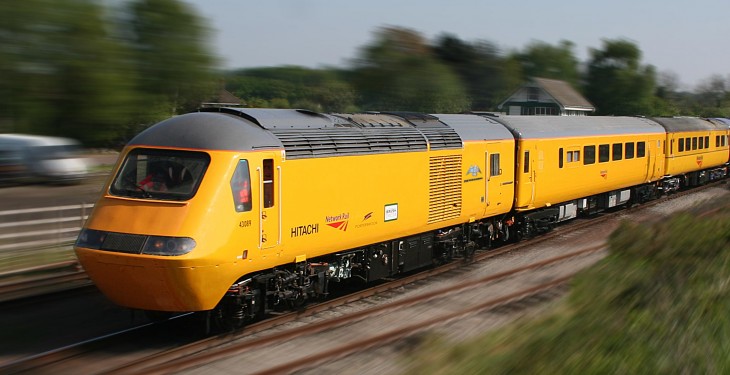
If you think it looks familiar, you are right! It’s a modified Class 43 locomotive from an InterCity 125. The locomotive; 43089, is still in service with East Midlands Trains. But without the batteries!
When the remaining members of the team, who had developed the InterCity 125 in the 1970s, saw these pictures, I suspect it was celebrated with a call for a few swift halves!
BEMU In Japan
Nick Hughes goes on to outline the status of Battery Electric Multiple Units (BEMUs) in Japan, where Hitachi launched a train called the DENCHA in 2016, on the Chikuhi line.
- The train has a range of up to 50 km on batteries.
- DENCHA is popular with passengers.
- The train won a prestigious award.
I don’t know what it is with battery trains, but the Bombardier/Network Rail BEMU Trial was also liked by those who rode the train. As was I!
Nick Hughes Prediction
Nick Hughes follows his description of the DENCHA, with this.
I can picture a future when these sorts of trains are carrying out similar types of journeys in the UK, perhaps by installing battery technology in our Class 395s to connect to Hastings via the non-electrified Marshlink Line from Ashford for example.
This would massively slice the journey time and heklp overcome the issue of electrification and infrastructure cases not stacking up. There are a large number of similar routes like this all across the country.
It is a prediction, with which I could agree.
Renewable Energy And Automotive Systems
Nick Hughes finishied by saying that he believes storing power from renewable energy and the development of automotive systems will drive battery technology and its use.
Conclusion
It is the most positive article about battery trains, that I have read so far!
Solar Power Could Make Up “Significant Share” Of Railway’s Energy Demand
The title of this post is the same ass this article in Global Rail News.
This is the first three paragraphs.
Solar panels could be used to power a sizeable chunk of Britain’s DC electric rail network, a new report has suggested.
Climate change charity 10:10 and Imperial College London’s Energy Futures Lab looked at the feasibility of using solar panels alongside the track to directly power the railway.
The report claims that 15 per cent of the commuter network in Kent, Sussex and Wessex could be powered directly by 200 small solar farms. It suggested that solar panels could also supply 6 per cent of the London Underground’s energy requirements and 20 per cent of the Merseyrail network.
In another article in today’s Times about the study, this is said.
Installing solar farms and batteries alongside lines also could provide the extra energy needed to power more carriages on busy routes that otherwise would require prohibitively expensive upgrades to electricity networks.
Note the use of batteries mentioned in the extract from The Times. This would be sensible design as power can be stored, when the sun is shining and used when it isn’t!
If you want to read the full report, click here!
I will lay out my thoughts in the next few sections.
Is This Technique More Applicable To Rail-Based Direct Current Electrification?
All of the routes mentioned for application of these solar farms,; Southern Electric (Kent, Sussex and Wessex), London Underground and Merseyrail are electrified using one of two rail-based direct current systems.
Consider the following.
Powering The Track
In the September 2017 Edition of Modern Railways, there is an article entitled Wires Through The Weald, which discusses electrification of the Uckfield Branch in Sussex, as proposed by Chris Gibb. This is an extract.
He (Chris Gibb) says the largest single item cost is connection to the National Grid, and a third-rail system would require feeder stations every two or three miles, whereas overhead wires may require only a single feeder station for the entire Uckfield Branch.
It would appear that as rail-based direct current electrification needs a lot of feeder stations along the line, this might be better suited for solar power and battery electrification systems.
Consider.
- Most of the feeder stations would not need a connection to the National Grid.
- Solar panels generate low direct current voltages, which are probably cheaper to convert to 750 VDC than 25 KVAC.
- In installing electrification on a line like the Uckfield Branch, you would install the extra rails needed and a solar farm and battery system every two or three miles.
- With the situation mentioned in the extract from The Times, you might add a solar farm and battery system, to a section of track, where more power is needed.
- For efficiency and safety, power would only be sent to the rail when a train was present.
I trained as an Electrical Engineer and I very much feel, that solar power and battery systems are better suited to powering rail-based electrification. Although, they could be used for the overhead DC systems we use in the UK for trams.
Modular Design
Each of the solar farm and battery systems could be assembled from a series of factory-built modules.
This would surely make for a cost-effective installation, where capacity and capabilities could be trailored to the location.
Regenerative Braking
Modern trains use regenerative braking, which means that braking energy is converted into electricity. The electricity is handled in one of the following ways.
- It is turned into heat using resistors on the train roof.
- It is returned through the electrification system and used to power nearby trains.
- It is stored in a battery on the train.
Note.
- Option 1 is not efficient.
- Option 2 is commonly used on the London Underground and other rail-based electrification systems.
- Option 2 needs special transformers to handle 25 KVAC systems.
- Option 3 is efficient and is starting to be developed for new trains and trams.
If batteries are available at trackside, then these can also be used to store braking energy.
I believe that using solar farm and battery systems would also enable efficient regenerative braking on the lines they powered.
But again, because of the transformer issue, this would be much easier on rail-bassed direct current electrification systems.
Could Wind Turbines Be Used?
Both solar farms and wind turbines are not guaranteed to provide continuous power, but putting a wind turbine or two by the solar farm would surely increase the efficiency of the system, by generating energy in two complimentary ways and then storing it until a train came past.
Wind energy could also be available for more hours in the day and could even top up the battery in the dark.
In fact, why stop with wind turbines?
Any power source could be used. On a coastal railway, it might be wave or tidal power.
Could Hydrogen Power Be Used?
I think that hydrogen power could be another way to create the energy needed to back up the intermittent power of solar farms and wind turbines.
I put a few notes in Hydrogen-Powered Railway Electrification.
Would The Technique Work With Battery Trains?
Most certainly!
I haven’t got the time or the software to do a full simulation, but I suspect that a route could have an appropriate number of solar farm and battery systems and each would give the battery train a boost, as it went on its way.
Would The Technique Work With 25 KVAC Electrification?
It would be more expensive due to the inverter involved to create the 25 KVAC needed.
But I feel it would be another useful tool in perhaps electrifying a tunnel or a short length of track through a station.
It could also be used to charge a train working a branch line on batteries.
Would The Technique Work With Dual Voltage Trains?
Many trains in the UK can work with both third-rail 750 VDC third-rail and 25 KVAC overhead electrification.
Classes of trains include.
- The Class 319 trains built for Thameslink in the 1980s.
- The Class 345 trains being built for Crossrail.
- The Class 387 trains built for various operators.
- The Class 700 trains recently built for Thamelink.
There are also other classes that could be modified to run on both systems.
Provided they are fitted with third-rail shoes, there is no reason to stop dual-voltage trains running on a line electrified using solar farms and batteries.
The technique could surely be used to electrify a branch line from a main line electrified using 25 KVAC.
Consider the Henley Branch Line.
- It is four-and-a half miles long.
- It is not electrified.
- It connects to the electrified Great Western Main Line at Twyford station.
- The line can handle trains up to six-cars.
- All services on the line are worked by diesel trains.
Services consist of a shuttle between Henley-on-Thames and Twyford, with extra services to and from Paddington in the Peak and during the Regatta.
Network Rail were planning to electrify the line using 25 KVAC overhead electrification, but this has been cancelled, leaving the following options for Paddington services.
- Using battery trains, possibly based on the Class 387 trains, which would be charged between Paddington and Twyford.
- Using Class 800 bi-mode trains.
- Using Class 769 bi-mode trains.
All options would mean that the diesel shuttle continued or it could be replaced with a Class 769 bi-mode train.
An alternative would be to electrify the branch using third-rail fitted with solar farm and battery systems.
- All services on the line could be run by Class 387 trains.
- Voltage changeover would take place in Twyford station.
There are several lines that could be served in this way.
Installation Costs
I’ll repeat my earlier quote from the Modern Railways article.
He (Chris Gibb) says the largest single item cost is connection to the National Grid, and a third-rail system would require feeder stations every two or three miles, whereas overhead wires may require only a single feeder station for the entire Uckfield Branch.
If you were going to electrify, the twenty-four non-electrified miles of the Marshlink Line, with traditional Southern Electric third-rail, you would need around 8-12 National Grid connections to power the line. As the Romney Marsh is probably not blessed with a dense electricity network, although it does have a nuclear power station, so although putting in the extra rails may be a relatively easy and affordable project, providing the National Grid connection may not be as easy.
But use solar farm and battery systems on the remoter areas of the line and the number of National Grid connections will be dramatically reduced.
Good National Grid connections are obviously available at the two ends of the line at Hastings and Ashford International stations. I also suspect that the electricity network at Rye station could support a connection for the electrification.
This could mean that six to eight solar farm and battery systems would be needed to electrify this important line.
I obviously, don’t have the actual costs, but this could be a very affordable way of electrifying a remote third-rail line.
Which Lines Could Be Electrified Using Solar Farm And Battery Systems?
For a line to be electrified and powered by solar farm and battery systems, I think the line must have some of the following characteristics.
- It is a line that is suitable for rail-based direct current electrification.
- It is not a particularly stiff line with lots of gradients.
- It is in a rural area, where National Grid connections will be difficult and expensive.
- It has a connection to other lines electrified by rail-based systems.
Lines to electrify are probably limited to Southern Electric (Kent, Sussex and Wessex), London Underground and Merseyrail.
- Borderlands Line between Bidston and Wrexham.
- Kirkby to Skelmersdale
- Marshlink Line
- North Downs Line between Reading and Gatwick Airport.
- West of England Line between Basingstoke and Exeter
- Uckfield Branch
I also suspect there are several branch lines that could be reopened or electrified using rail-based electrification.
Riding Sunbeams
Note that the project is now called Riding Sunbeams.
Conclusion
It’s a brilliantly simple concept that should be developed.
It is well suited to be used with rail-based direct current electrification.
It would be ideal for the electrification of the Uckfield Branch.
 The Anonymous Widower