Europe’s Biggest Battery Storage Project Goes Live In Scotland
The title of this post, is the same, as this article in The Times.
This is the sub-heading.
Zenobe’s site at Blackhillock can store surplus generation for when the wind doesn’t blow and the sun doesn’t shine
These are the first two paragraphs.
Europe’s biggest battery storage project has entered commercial operation in Scotland, promising to soak up surplus wind power and prevent turbines being paid to switch off.
Zenobe said the first phase of its project at Blackhillock, between Inverness and Aberdeen, was now live with capacity to store enough power to supply 200 megawatts of electricity for two hours. It is due to be expanded to 300 megawatts by next year.
I believe we can do better, than install large lithium-ion batteries.
We need to get the pumped storage like Coire Glas, the liquid air like Highview Power and the gravity batteries like Gravitricity going as fast as we can.
They are more environmentally friendly than Tesla’s lithium ion tiddlers and a second generation liquid air battery appears to be 200 MW and 2.5 MWh, so they can supply 200 MW for 12.5 hours.
The Blackhillock battery can do just two hours.
Two of them working as a pair, with a 1 GW wind farm, are as big as a small modular nuclear reactor, so could do the same job, with respect to power supply, using machinery and tank designs, that have been used for decades.
I suspect, that like 1960s coal-fired power stations, they would keep running for fifty years and be simply recycled as steel, copper and other scrap.
Highview Power could make Bishops Stortford famous!
UK Government Sets 8-Hour Minimum For LDES Cap-And-Floor Scheme
The title of this post, is the same as that of this article on Energy Storage News.
This is the sub-heading.
The UK government has published a Technical Decision Document confirming crucial aspects of its long duration electricity storage (LDES) cap-and-floor scheme, which includes increasing the minimum duration required from six hours to eight.
These three paragraphs give more details.
The document, released by regulator Ofgem on 11 March, details the final overarching rules and requirements for the scheme as well as how it will be implemented, though significant detail still remains to be worked out.
The scheme will provide a cap-and-floor revenue protection for 20-25 years that will allow all capital costs to be recoverable, and is effectively a subsidy for LDES projects that may not be commercially viable without it. Most energy storage projects being deployed in the UK today are lithium-ion battery energy storage systems (BESS) of somewhere between 1-hour and 3-hour in duration (very occasionally higher).
One of the most significant new details of the scheme is that, following industry feedback, the minimum duration for projects to qualify has been increased from six hours to eight hours of continuous rated power.
As a control engineer, I believe this is all good stuff and is a good improvement on the previous regime.
The whole article is a must read and I believe that more investors, will invest heavily in energy storage.
But then the UK, with its massive potential for offshore wind, has the resources to create and fill many GW of energy storage.
Boris once said, that we would become the Saudi Arabia of wind!
Disused Oil Wells Could Enhance Compressed Air Storage
The title of this post, is the same as that of this article on The Engineer.
This is the sub-heading.
A new study has shown how geothermal energy in abandoned oil and gas wells can boost the efficiency of compressed air energy storage by nearly 10 per cent.
These are the first two paragraphs.
Developed by researchers at Penn State University, the geothermal-assisted compressed air energy storage (GA-CAES) system harnesses the existing infrastructure of abandoned oil and gas wells (AOGWs). Compressed air is pumped into the wells, where geothermal heat raises its temperature and compresses it further. Published in the Journal of Energy Storage, the study showed how geothermal energy could increase round-trip efficiency by 9.5 per cent.
“This improvement in efficiency can be a game changer to justify the economics of compressed-air energy storage projects,” said corresponding author Arash Dahi Taleghani, Professor of Petroleum and Natural Gas Engineering at Penn State.
The Professor also says it could be a “win win situation!”
Trump must have nightmares about stories like this, especially, when the scientists have a name, that labels them as an immigrant.
UK Government Sets 8-Hour Minimum For LDES Cap-And-Floor Sheme
The title of this post, is the sa,e as that of this article on Energy Storage News.
This is the sub-heading.
The UK government has published a Technical Decision Document confirming crucial aspects of its long duration electricity storage (LDES) cap-and-floor scheme, which includes increasing the minimum duration required from six hours to eight
These paragraphs give full details.
The document, released by regulator Ofgem on 11 March, details the final overarching rules and requirements for the scheme as well as how it will be implemented, though significant detail still remains to be worked out.
The scheme will provide a cap-and-floor revenue protection for 20-25 years that will allow all capital costs to be recoverable, and is effectively a subsidy for LDES projects that may not be commercially viable without it. Most energy storage projects being deployed in the UK today are lithium-ion battery energy storage systems (BESS) of somewhere between 1-hour and 3-hour in duration (very occasionally higher).
One of the most significant new details of the scheme is that, following industry feedback, the minimum duration for projects to qualify has been increased from six hours to eight hours of continuous rated power.
The ‘continuous rated power’ aspect prevents shorter duration projects from bidding in a smaller section of their MW capacity in order to act like an 8-hour system.
Another interesting detail pointed out by several commentators is that the cap is a ‘soft’ one, meaning it will allow extra revenue to be shared between developers and consumers. Exact details on the ratio are yet to be determined.
As a Graduate Control Engineer from Liverpool University in the 1960s, I hope that the move from a six to eight hours minimum duration is feasible.
I wasn’t dealing with power systems, but with multi-vessel chemical plants.
These are my thoughts.
The biggest project, I was dealing with a few years later in the 1970s, was the modeling of all the the reservoirs and pipelines by the Water Resoures Board.
As the supply side of the water industry hasn’t had too many issues with the volume of water supplied, I feel that the main modelers must have done a reasonable job.
Six To Eight Hours Of Continuous Operation
The article says this about uprating from six to eight hours of continuous operations.
All the systems that have been proposed for cap-and-floor operation, seem to have some form of physical storage.
- Energy Dome appears to have tents of carbon dioxide.
- Energy Vault uses stacks of heavy weights.
- Form Energy has tanks of rust.
- Gravitricity has huge weights in disued mine shafts.
- Highview Power has large tanks of liquid air.
- Pumped storage hydro has two lakes, that hold water.
- Rheenergise has two large tanks, of a water-based slurry.
So to go from six to eight hours will hopefully just need some more storage.
Highview Power appears to use similar gas tanks to those used to store natural gas or hydrogen.
This image clipped from Highview’s web site, shows large tanks for liquified gas storage.
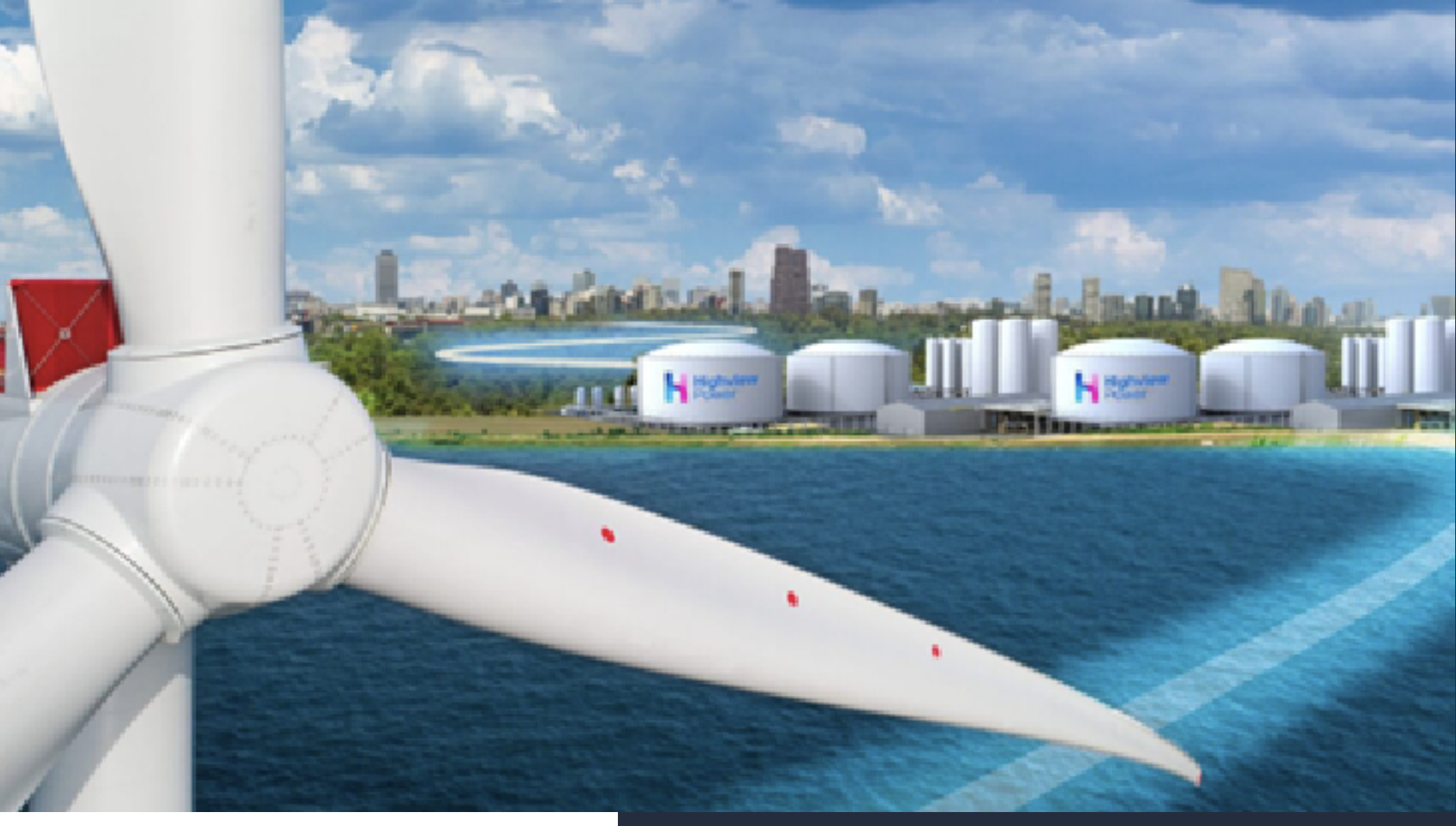
With tanks like these, which can hold GW-equivalents of liquid air, Highview could be building batteries with storage to rival the smaller pumped storage hydroelectric power stations. They are already talking of 200 MW/2.5 GWh systems, which would have a 12.5 hour continuous rating and would probably need two to three tanks.
Coire Glas Pumped Storage
I’ll use Coire Glas pumped storage hydro electric power station as an example.
As currently planned SSE’s Cioire Glas pumped storage hydroelectric power station is 1.5 GW/30 GWh, so it has a a 20 hour continuous rating.
In The UK’s Pumped Storage Hydroelectricity, I gave a rough estimate of the pumped storage hydroelectricity systems in operation or planed as nearly 11 GW/224GWh.
The Soft Cap
The article says this about a soft cap.
Another interesting detail pointed out by several commentators is that the cap is a ‘soft’ one, meaning it will allow extra revenue to be shared between developers and consumers. Exact details on the ratio are yet to be determined.
I seem to remember that when I was modeling a larger multi-vessel chemical plant at ICI, I was using sharing between vessels, to get the system to operate on a PACE-231R analog computer.
So I suspect a soft cap is possible.
Ørsted Breaks Ground On Innovative UK Battery Energy Storage System
The title of this post, is the same as that, as this news item from Ørsted.
This is the sub-heading.
Ørsted, a global leader in offshore wind energy, has marked breaking ground for its first large-scale UK battery energy storage system (BESS) with a golden shovel ceremony.
These four paragraphs give more details of the project.
Located alongside Ørsted’s Hornsea 3 Offshore Wind Farm, near Norwich, Norfolk, the system will have a capacity of 600 MWh (and a 300 MW power rating), equivalent to the daily power consumption of 80,000 UK homes.
The golden shovel ceremony officially kicks off the construction phase of the project, known as Iceni after the Norfolk-based warrior tribe of the Roman era. It is expected to be operational by the end of 2026.
Preparatory works are now complete and the Ørsted, Knights Brown and Tesla Iceni team will continue with the remainder of the installation.
When completed, the battery energy storage system will be one of the largest in Europe.
Note.
- The batteries themselves are from Tesla.
- The project was previously known as the Swardeston BESS.
- The project will be located near to the Swardeston substation to the South of Norwich.
- The project doesn’t seem very innovative to me, as it appears to be a BESS built from Tesla batteries.
Like many batteries, it is designed to supply power for two hours.
Drax To Get £24m In Green Subsidies For Pumped Hydro
The title of this post is the same as that of this article in The Times.
These three paragraphs give details of the subsidy.
Drax will bank £24 million in green subsidies from energy bill-payers for its pumped hydro assets, ahead of a revival in the energy storage technology in Britain.
The FTSE 250 constituent, which also operates Britain’s largest power station in North Yorkshire, has secured contracts to provide 434 megawatts of capacity from its pumped storage and hydro assets, the largest of which is the Cruachan power station near Oban in Scotland.
The contracts cover energy to be delivered between October 2028 to September 2029, at a price of £60 a kilowatt a year.
This will arouse the anti-Drax lobby, but it should be born in mind, that according to Wikipedia, Cruachan can provide a black start capability to the UK’s electrical grid.
This is Wikipedia’s definition of a black start.
A black start is the process of restoring an electric power station, a part of an electric grid or an industrial plant, to operation without relying on the external electric power transmission network to recover from a total or partial shutdown.
After the Great Storm of 1987, we were without power in my part of Suffolk for two weeks and I suspect there were several black starts in the South of England.
I suspect that power from interconnectors could now be used.
Drax is expanding Cruachan from 440 MW to 1 GW, which will be a large investment and surely increase its black start capability.
So in this case the future subsidy could be considered something like an insurance policy to make sure black start capability is available.
The Future Of Drax Power Station
Drax power station is not liked by a lot of environmentalists.
I have been thinking about the future of the power station and the public company that owns it.
Drax power station has a nameplate capacity of around 2.5 GW running on biomass.
It also will be the Southern end of EGL2, which will be an undersea electricity 2 GW superhighway distributing Scottish wind power from Peterhead in Scotland. So the dreaded biomass hated by certain groups will be relegated from the Premier League of electricity generation and replaced by Scottish wind.
As reported in various publications, Drax has signed a deal in the US, so that the biomass can be used for the production of sustainable aviation fuel (SAF)
To my mind, the Drax site could be an ideal one for one or more small modular nuclear reactors.
- The large Drax site has been producing electricity for 52 years.
- In 1986, the site produced nearly 4 GW of electricity.
- I would suspect that the substations on the site could be enlarged to distribute 4 GW of electricity.
- EGL2 will bring in 2 GW of Scottish wind-generated electricity.
- The site has excellent rail connections.
- The site has twelve cooling towers and is encircled by the River Ouse.
- Could all this water be used for cooling the small modular nuclear reactors.
I believe that perhaps three small modular nuclear reactors could be built on the Drax site to backup EGL2 and bring a reliable source of sustainable power to Yorkshire.
Drax is also only about forty miles from the vast hydrogen stores at Aldbrough and Rough, so if Drax needed, if could use excess electricity to create hydrogen for storage.
SSE is consulting on a 1+ GW hydrogen power station at Keadby, so perhaps Drax should have a similar hydrogen power station on its site?
UK Wind Risks ‘Exponentially Rising’ Curtailment Without Energy Storage
The title of this post, is the same as that of this article on Recharge.
This is the sub-heading.
UK liquid battery pioneer Highview Power is working with renewable energy giant Orsted on plan to store excess power from its Hornsea offshore wind projects
This is the introductory paragraph.
The UK wind sector faces “exponentially” increasing curtailment of assets without a rapid rollout of energy storage, says the chief of liquid battery pioneer Highview Power, which is working with Orsted on a project to store excess offshore wind power.
The article also states that according to Octopus Energy, this cost could have been as high as a billion pounds last year.
In Grid Powers Up With One Of Europe’s Biggest Battery Storage Sites, I described how Ørsted were planning to build a large BESS near the Swardeston substation in Norfolk, where the Hornsea 3 wind farm will connect to the grid.
Have Ørsted decided to put a Highview Power battery on the Swardeston site, as it can be a bigger battery, as Highview Power talk about 200MW/2.5GWh capacity batteries on the projects page of the web site?
Highview also say this about co-operation with Ørsted on that page.
Highview Power and Ørsted’s joint study shows that the co-location of LAES with Ørsted’s offshore wind offers a step forward in reducing wind curtailment, and helping to move to a more flexible, resilient zero carbon grid.
The words are accompanied by pictures of a smart gas storage site, which shows four of the largest tanks, that might be used to store LNG.
In Could A Highview Power CRYOBattery Use A LNG Tank For Liquid Air Storage?, I estimated that one of the largest LNG tanks could hold about a GWh of energy.
So Highview Power’s visualisation on their project page would be a 4 GWh battery.
.
How To Keep The Lights On When The Wind Doesn’t Blow
The title of this post, is the same as that of this article in The Times.
This is the sub-heading.
Britain came close to a blackout this month. Gas is being phased out and renewables are intermittent, so can energy storage stop us going dark?
These are the first two paragraphs.
It was 8.29pm on the first Tuesday in January when the alert was issued by the electricity control room. Freezing temperatures had coincided with unusually low wind speeds, and it was making the National Energy System Operator (Neso) jittery.
Engineers forecast a 1.6GW shortfall — the requirement for about 1.5 million homes — for a three-hour period from 4pm the following afternoon. “System operators are requested to notify Neso of any additional megawatt capacity,” the message said.
Luckily, the plea worked.
The article then goes on to describe the various technologies that are being deployed.
The article starts by talking about pumped storage hydroelectricity.
This paragraph gives a superb illustration about how things have changed in energy and energy storage in the UK in the last few decades.
In the past, when coal provided the bulk of British power, this system was used to meet fluctuating demand levels. But now it is also required to meet fluctuating supply levels from renewable sources. Martin Pibworth, chief commercial officer at SSE, started with the company as a trainee in 1998. “Back then, at our Foyers pumped storage plant [at Loch Ness] we would switch modes, from pumping to not pumping and back again, maybe 600 to 700 times a year. Last year we switched modes there 6,500 times. It’s an insight into how the market has changed and how much more flexibility is needed, and how responsive that has to be.”
We have to be more agile, with our handling of storage to back up the various methods of generation.
Could Highview Power’s Batteries Be Used Offshore?
When I first saw Highview Power’s Liquid Air batteries or Long Duration Energy Storage (LDES), I liked them.
This was partly because I’d investigated large tanks for chemical reactions and I like their mathematics.
But it was mainly because the concept had been developed by a lone inventor in Bishops Stortford.
In Could A Highview Power CRYOBattery Use A LNG Tank For Liquid Air Storage?, I bcalculated, that a 5,000 cubic metre tank could hold about a GWh of electricity as liquid air.
So just as steel and concrete tanks were placed on the sea floor to hold oil and gas, could they be placed on the sea floor to hold compressed air?
I don’t see why not!
I suspect, that it’s all fairly standard offshore engineering.
If you want more storage, you would just add more tanks.
Could They Be Combined With Electrical Substations?
I don’t see why not!
There may be advantages with respect to safety and noise.
 The Anonymous Widower