Am I Sleeping Better Because Of Ocado?
A couple of months ago, I switched to shopping for food on-line at Ocado, and I am certainly sleeping better.
The only big change in my eating habits, is that I am now having a Marks & Spencer’s Lamb’s Liver and Bacon ready meal once a week.


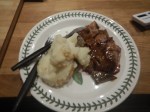
Is that Vitamin B12 making a difference?
I do wish, that someone would do a proper Italian fegato, like Carluccio’s used to do. It’s virtually unobtainable in London.
After they stopped selling it, I used to have lunch with a friend in a pub in Oxfordshire. But sadly they died a couple of years ago.
If anybody knows of a decent country pub, by a station, that services excellent liver please let me know.
Mushroom Management On TfL Buses
Transport for London or as all Londoners abuse them as TfL, are getting the masters at applying mushroom management to running the buses. Especially at the weekends.
For those of you not familiar with the last century term, it means keeping everybody in the dark and throwing in lots of manure. As in the 1970s, I used to live next door to a mushroom factory, I know it at least works with fungi, but I’m not sure of it’s effectiveness with fleets of buses about moving passengers.
Most Saturdays, I take a 141 bus to Moorgate and have a full English gluten-free breakfast in the Leon cafe there, as I like to set myself up for the weekend.
The 141 bus may be one of the least reliable buses in the capital, but last Saturday, I was dropped close to Liverpool Street station and yesterday, I was dropped under the Barbican.
No warning, advice or apology about the change of plan.
But then like the Mayor, TfL are never in the wrong.
Today was different!
After taking a 56 bus from near my house to the Angel I had another full English gluten-free breakfast in the Leon cafe there, before taking the Northern Line to Euston station.
I was hoping, I could take a trip somewhere, but there were extensive engineering works, so I just came home from Euston on the Overground via Willesden Junction station.
I ended up at Hackney Central station, where I did a bit of shopping in the excellent M & S Food shop.
Normally, I just get a 38 bus home from the side of the station, but there weren’t any around.
Again, there was no warning, advice or apology. Just loads of people looking for non-existent buses.
It was a full three hours before I completed my round trip.
Transport for London has no respect for its passengers.
Normal businesses would go bust, if they treated their customers like this.
Gluten-Free Chicken Nuggets With Spicy Honey Sauce
Colonel Sanders would have a fit at Leon’s latest recipe.
I regularly eat Leon’s gluten-free chicken nuggets, but today was a first for me, as I had a portion of their latest chicken nuggets in a spicy honey sauce.
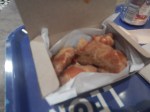

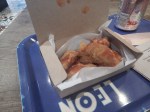

They were different, but I quite liked them!
I shall be having them again.
Are Best Before Dates Reliable?
This picture shows one of Marks and Spencer’s gluten-free All Butter Fruit Scones, that has been all dressed up and is ready to eat.

It no longer exists, as I have just eaten it.
It tasted fine, despite having a best before date of the 7th August, 2024.
Liver From Ocado
I like to eat liver, as it supplements my B12 injections.
So I was pleased to see that Ocado stock Marks and Spencer’s Liver and Bacon meal-for-one.
Note, that I cooked it in the oven, which is recommended.
I enjoyed it and I will cook it more often, provided Ocado keep delivering it.
Gluten And Heart Disease
Type “Gluten And Heart Disease” into Dr. Google and you find two major peer-reviewed studies.
This study is entitled Effects Of A Gluten-Reduced Or Gluten-Free Diet For The Primary Prevention Of Cardiovascular Disease.
These are the authors’ conclusions.
Very low-certainty evidence suggested that it is unclear whether gluten intake is associated with all-cause mortality. Our findings also indicate that low-certainty evidence may show little or no association between gluten intake and cardiovascular mortality and non-fatal myocardial infarction.
There would appear to be no strong link, between gluten and heart disease.
This British study is entitled Long Term Gluten Consumption In Adults Without Celiac Disease And Risk Of Coronary Heart Disease: Prospective Cohort Study.
These were the authors’ conclusions.
In these two large, prospective cohorts, the consumption of foods containing gluten was not significantly associated with risk of coronary heart disease. Although people with and without celiac disease may avoid gluten owing to a symptomatic response to this dietary protein, these findings do not support the promotion of a gluten restricted diet with a goal of reducing coronary heart disease risk. In addition, the avoidance of dietary gluten may result in a low intake of whole grains, which are associated with cardiovascular benefits. The promotion of gluten-free diets for the purpose of coronary heart disease prevention among asymptomatic people without celiac disease should not be recommended.
As before there would appear to be no strong link between gluten and heart disease.
To me, this is the most important sentence.
In addition, the avoidance of dietary gluten may result in a low intake of whole grains, which are associated with cardiovascular benefits.
So can we do something about it?
Enter The First Great Ethiopian Marathon Runner
I used to run a bit (badly) at school and my three heroes were Chris Brasher, Bruce Tulloh and Abebe Bikula.
The Ethiopian; Abebe Bikula was a double Olympic marathon champion.
- In 1960, he won in Rome, running barefoot.
- In 1964, he won in Tokyo, a few days after leaving hospital after having his appendix removed.
Both wins were in world record time.
Since 1964, three Olympic men’s marathons have been won by Ethiopians.
Ethiopian women have also won two gold and one bronze medals since the women’s marathon was inaugurated in 1984.
And then there’s the Kenyans, who’ve won a hatful of marathon medals.
Their competence is generally put down to living at altitude and I wouldn’t disagree with that.
My Experience Of Kenya
Soon after C died, I went on holiday to Kenya.
In one part of the holiday, I was riding horses in the Masai Mara and in the other I was glamping.
The second part was upmarket and one evening the chef approached me to find out more about my gluten-free diet. At breakfast next day, he presented me with a couple of rolls made from a local flour, which was probably something like millet or perhaps, teff from Ethiopia.
I had no adverse reaction. and he said, I could eat like a true African, as Western flour had no place in the local diet.
Conclusion
If we are worried about the lack of whole grains in gluten-free food, then perhaps we should add gluten-free whole grains from East Africa.
As a manager in a Marks and Spencer store, told me that they used Ethiopian flour in their gluten-free breads, I suspect this is already happening.
Gluten-Free Egg Sandwiches From Boots
This morning, I had to pick up a prescription from Boots on Moorgate in London.
I use them, as they are by the 141 bus stop, that I can use to get home, so I pass their outlet regularly throughout the week.
After picking up my prescription, I looked at their small food counter. I was actually looking for milk, as I am out and nowhere on the West side of Moorgate sells small one pint bottles.
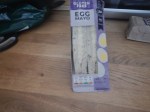
They didn’t have any, but they did have two flavours of gluten-free sandwiches; cheese and egg.
So I bought a pack of the egg sandwiches.
These pictures show the one, I have just eaten for lunch, with a beer and a banana.
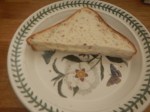
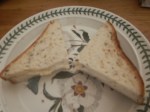

Note.
- In the last picture, the Adnams 0.5 % Ghost Ship can, is marked with the gluten-free symbol.
- The only allergens noted on the sandwich packet are egg and mustard.
- The bread looks like it could be Genius, which is a brand of gluten-free bread, that I trust.
- The packaging can be recycled.
The sandwich was excellent, but then on past experience at the Tate Gallery and Blackburn Cathedral cafe, gluten-free egg sandwiches are a good combination of flavours.
So next time, I’m hungry, I’ll march into Boots.
How I Was Imprisoned In A Pizza Restaurant And Driven Home By The Metropolitan Police
At lunchtime today, I received a phone call, saying that my GP’s surgery could see me at 16:30 this afternoon, to discuss my lack of sleep, arthritis and various strains and pains.
My middle son; Henry had expressed a desire to be at such an appointment, so I said, that if he could chauffeur me to the GP, he could come along.
His diary co-operated and he duly arrived outside my house at 16:00.By the time of the GP’s appointment, we had parked conveniently outside the surgery and we had been ushered into the GP’s consulting room.
We had a good meeting and by just after five, we had broken up and agreed a comprehensive plan for the diagnosis of my problems.
Henry had three problems of his own.
- He had legal work to do for the morning.
- He needed to do some bits of shopping.
- He also said, that he was feeling rather hungry.
- I too was hungry and needed to do some shopping.
So I suggested we drive to Southgate Road and see if we could get a pizza in Sweet Thursday.
- They do gluten-free pizzas, so I would have no dietary worries.
- In previous meals, I have found the quality excellent.
- There are shops nearby, where we could shop, if we needed.
As I approached the restaurant, I decided we had made the right decision, as there was a parking space about twenty metres from the restaurant.
We both had similar meals.
- Ham and mushroom pizzas, although mine was gluten-free.
- I drunk a zero-alcohol Lucky Saint, whilst Henry had a Diet-Coke.
- We both finished off, with two scoops of appropriate ice cream.
It was only, when we had paid and tried to leave that we got a very big surprise.
Parked in front of the restaurant with its disabled ramp extended, like some beached airliner was a 141 bus, that was empty of passengers.
- There was broken glass at the front of the bus.
- Was this evidence, that the bus had hit something or somebody?
- The police had strung white tape everywhere.
- There were half-a-dozen police cars and ambulances blocking Southgate Road.
Henry’s car wouldn’t be going anywhere for some time, as it was blocked in by two ambulances and a police car with flashing blue lights.
- So, Henry and I each had a coffee, to pass the time.
- We also made friends with others trapped in the restaurant.
- Henry also obtained information from the police, that no-one would be moving, until it was known that no-one would be moving until the full state of the injuries of the person hit by the bus was known.
So Henry and I just sat there with several others on the hard chairs in front of the restaurant.
In the end, for me, it was over very quickly.
- I live about a kilometre North of the incident.
- Some were walking from the incident to the Balls Pond Road to get a bus.
- I am fairly sure, Henry had told the police, that it was far too far for me to walk with my arthritic hip.
I was put in the back of a police car and ferried home, at about 21:45.
Thanks to the Metropolitan Police.
I have some further thoughts.
Do I Drink Enough?
Since lunchtime, I have drunk the following.
- 4 x 330 ml – Adnams Ghost Ship 0.5 % Beer
- 1 x 330 ml – Lucky Saint 0.5 % Beer
- 300 ml – Assorted water and juices.
- 1 cup – coffee.
Is that enough?
I certainly slept better last night!
How To Protect The UK Population From Future Pandemics
The Times today has an article, which is entitled Flu Jab: Single-Shot Vaccine ‘Within Five Years’ Could Stop Future Pandemic.
This is the introductory paragraph of The Times article.
A single-shot vaccine against flu that would provide a lifetime of protection even against future mutations could be available in “five years or less”, scientists have said after making a breakthrough.
The article is very much a must-read, but I believe if used alongside a simple proven medical test, it could be even more effective.
Since 1997, when I was diagnosed as coeliac and started eating gluten-free food exclusively, I have never had a dose of flu.
I may have had one very mild dose of Covid-19, but I have never had a serious dose.
Research At The University Of Padua
This partial immunity to Covid-19 has been shown in a peer-reviewed scientific paper, by the University of Padua in Italy.
I discuss the Padua research in Risk Of COVID-19 In Celiac Disease Patients.
Mathematical Modelling Of Pandemics
As a control engineer, mathematical modeller and statistician, I believe that our herd immunity to future pandemics could be increased, if all new entries to the UK population, like babies and migrants, were tested for coeliac disease.
These days the coeliac test is just a blood test, that costs just a few pounds and I believe that a high percentage of gluten-free coeliacs in the UK population, because of their low susceptibility to flu pandemics, would slow the spread of the pandemic.
In a nuclear reactor non-radioactive carbon rods are often used to control the speed of the reaction.
I believe that non-susceptible coeliacs on gluten-free diets would perform the same function in the UK population.
Should Diagnosed Coeliacs Be Forced To Be Gluten-Free?
I would not force coeliacs to go gluten-free.
They would have to face up to the consequences, if they didn’t.
My son was an undiagnosed coeliac, who refused to get tested.
He died at 37 of pancreatic cancer, as his immune system was useless.
Coeliac disease and a gluten-free diet is a good wingman, but undiagnosed it can kill you!
Why Should Migrants Be Tested?
I hope they are, as some might have something nasty.
But if everyone was tested for a wide range of health and genetic conditions, could it act as a deterrent to come to the UK?
Oxford And Cambridge Compared On COVID-19
In Oxford And Cambridge Compared On COVID-19, I compared the COVID-19 rates of the two University cities.
- Oxford and Cambridge are very similar-sized cities and both ae surrounded by similar counties and countryside.
- During the pandemic, Oxford had a much higher COVID-19 rate than Cambridge.
From my experiences and observations in Cambridge, I believe that the city has a high level of coeliacs.
Why Does Cambridge Have A High Level Of Coeliacs?
I doubt, it is due to the genetics of the local population, as if it was, my coeliac disease would have been picked up earlier.
The two most likely causes are.
- Someone in the Health Authority decided to have a Whack-a-Coeliac policy.
- Addenbrooke’s Hospital, in conjunction with Cambridge University and the Sanger Centre were testing the accuracy of the newly-develop genetic test for coeliac disease.
Note.
- Both routes would have needed a streamlined endoscopy unit to test all those thought to be coeliac.
- I was tested twice in such a unit to prove that I was coeliac, after the genetic test showed, I probably was.
- Fit, younger patients were pushed to have the endoscopy without a sedative, which cut the number and cost of recovery beds and staff.
- My endoscopies were performed without a sedative, by a doctor working alone.
- I was able to drive home, a few minutes after the procedure.
It was a classic case of applying good old-fashioned time-and-motion to a test that would have to be applied to a large number of patients.
If Cambridge’s army of coeliacs helped the city take the edge of the pandemic, what would a Whack-a-Coeliac policy, do for other cities?
The Aerosol Tales
When I left Liverpool University in 1968, I was very familiar with the use of products distributed in aerosol cans.
- I had used aerosol shaving cream, although about that time, I acquired my beard.
- I certainly used aerosol deodorant, as did most in the 1960s.
- Aerosol paints were common for covering scuffs and scratches in your car.
- Aerosols were often used to apply sun protection.
- Aerosols containing cream or a non-dairy alternative for culinary use were not unknown.
- Aweosol lubricants were starting to appear.
Although, I went to work for the chemical giant; ICI, at that time, I had no idea how an aerosol and its can worked.
As ICI at the time, ICI were major manufacturers of aerosol propellants, I quickly learned how they worked.
The Wikipedia entry for Aerosol Spray Dispenser gives a lot of history about aerosol cans and their propellants.
The Wikipedia entry for Propellant has this paragraph describing propellants of the last century.
Chlorofluorocarbons (CFCs) were once often used as propellants, but since the Montreal Protocol came into force in 1989, they have been replaced in nearly every country due to the negative effects CFCs have on Earth’s ozone layer. The most common replacements of CFCs are mixtures of volatile hydrocarbons, typically propane, n-butane and isobutane. Dimethyl ether (DME) and methyl ethyl ether are also used. All these have the disadvantage of being flammable. Nitrous oxide and carbon dioxide are also used as propellants to deliver foodstuffs (for example, whipped cream and cooking spray). Medicinal aerosols such as asthma inhalers use hydrofluoroalkanes (HFA): either HFA 134a (1,1,1,2,-tetrafluoroethane) or HFA 227 (1,1,1,2,3,3,3-heptafluoropropane) or combinations of the two. More recently, liquid hydrofluoroolefin (HFO) propellants have become more widely adopted in aerosol systems due to their relatively low vapor pressure, low global warming potential (GWP), and nonflammability.
Note that the whole range of these chemicals, effect the ozone layer.
Rocksavage Works
ICI’s Rocksavage Works, was an integrated chemical plant by the Mersey,.
- It made all types of CFCs for aerosols and other purposes.
- It also made the fire suppressant and extinguisher; Bromochlorodifluoromethane or BCF.
- Alongside BCF, it made the anaesthetic Halothane or as ICI called it Fluothane.
- The plant was a poisonous place with all those bromine, chlorine and fluorine compounds.
- Despite this, the plant had a remarkable safety record.
I had the pleasure of working at the plant and it was where, I had most of my excellent Health and Safety training, from the amazing site foreman; Charlie Akers.
Some of the wisdom he distributed has proved invaluable in aiding my stroke recovery.
I suspect that since the signing of the Montreal Protocol, the plant has changed greatly or has even been closed.
All that appears to be left is the 800 MW gas-fired Rocksavage power station and a Facebook page.
Aerosol Baked Beans
In those days, I worked most of the time in a lab at Runcorn Heath.
One of the labs near to where I generally worked, in the large research complex, was a lab, where new aerosol products were developed and tested.
One of the standard jokes about that lab, was that they were working on aerosol baked beans. They said, they would develop the product, even of they had to eject them from the can one at a time.
Gift Time
One afternoon, the boss of the aerosol development lab came through with a tray of goodies.
On the tray, which was much like a cinema usherette’s ice cream tray of the sixties was a whole host of partly-labeled aerosol cans. Only clues to what the product might be were written on the outside in felt-tip pen.
I grabbed two, one of which was marked something like lubricating oil and the other was just marked hand cream, which I of course gave to my new wife; C.
We were married for nearly forty years and often, when she bought hand cream, she would remark, that it wasn’t of the same standard as the little can I brought home from work.
It appears to me, that one of the world’s top cosmetic companies and ICI were trying to create the world’s best and probably most expensive hand creams.
DMW
Fast-forward nearly twenty years and I was approached by Lloyds Bank about two individuals, who had developed an aerosol valve, that instead of using CFCs or other ozone-depleting chemicals.
- By the exploitation of the nether end of fluid dynamics, the propellant of the aerosol was nothing more harmless than pure nitrogen.
- I formed a company called DMW with the two inventors.
- John Gummer, who at the time was my MP and Environment Minister, knew of the aerosol valve and he took the details to Montreal.
So did a device developed in Suffolk help push through the Montreal Protocol?
Osbourne Reynolds
I also wonder, if we had some supernatural help. At the time, I lived in the family home of Osbourne Reynolds.
- He did a lot of the early work on fluid dynamics.
- He was the first UK Professor of Engineering.
- He was professor of Engineering at Manchester University for nearly forty years.
- The Reynolds number is named after him.
- Remarkably, students are sill taught on the equipment Reynolds designed.
- Reynolds was certainly one of our great Victorian scientists.
This Wikipedia entry gives more details of his remarkable life and work.
After Montreal the aerosol valve was sold to Johnson & Johnson.
DMW continued to develop other products and we had one, who no-one had any idea about how it worked.
So I discussed it with the Reynolds’s expert at Manchester University and he said he had no idea either.
But he was absolutely certain, that Reynolds would have known.
 The Anonymous Widower