Minimum Age To Be A Train Driver Lowered To 18
The title of this post, is the same as that of this article on the BBC.
This is the sub-heading.
Eighteen-year-olds will be allowed to drive trains after the minimum age was lowered from 20 in a bid to tackle driver shortages.
These first three paragraphs add detail.
UK rail services are frequently disrupted due to a lack of drivers being available, and the problem is set to get worse with companies struggling to replace a growing number of people retiring with new recruits, the government said.
Transport Secretary Heidi Alexander announced the change as “bold action to improve train services and unlock thousands of jobs”.
Union Aslef said it would open up opportunities for school or college leavers, while the Rail Safety and Standards Board said its research found “18-year-olds are capable of safely becoming train drivers”.
This paragraph from Google AI, says you only have to be sixteen to join the British Army.
The minimum age to join the UK Army as a Regular Soldier is 16. However, you’ll be a Junior Soldier until you turn 18, at which point you can transition to a regular role. To join the Army Reserve, you need to be at least 18. The upper age limit for joining the Army Reserve as a soldier is the day before your 43rd birthday.
A similar age of sixteen, applies to the Royal Navy and the Royal Air Force, with eighteen applying for the Police.
How Does This Compare With Driving A Bus?
This paragraph from Google AI, gives the driving age for a bus.
The minimum age to become a bus driver in the UK is 18 years old. However, to drive a full-sized bus (Category D), you must be 24 years old, unless you are undergoing the Initial Driver CPC (Certificate of Professional Competence) qualification. For Category D1 (minibus), the minimum age is also 18.
Google AI gives this description of Category D1.
PSV (Public Service Vehicle) Class D1 licence, also known as a PCV (Passenger Carrying Vehicle) licence or a minibus licence, allows you to drive a minibus for hire or reward. This licence category applies to minibuses with up to 16 passenger seats and a maximum length of 8 meters, and can tow trailers up to 750kg. To obtain a D1 licence, you need to pass a medical check, a theory test, and a practical driving test.
I suspect that many eighteen-year-olds are capable enough to hold a PCV licence.
What sort of vehicle will someone with a PCV licence be able to drive?
Wrightbus subsidiary ; Rightech has just released a suitable vehicle.
- It is battery-electric powered.
- It can seat up to twelve passengers.
- It is six metres long.
- It has a range of 112 miles.
It has a high-specification, which includes air-conditioning.
This image is courtesy of Rightech.
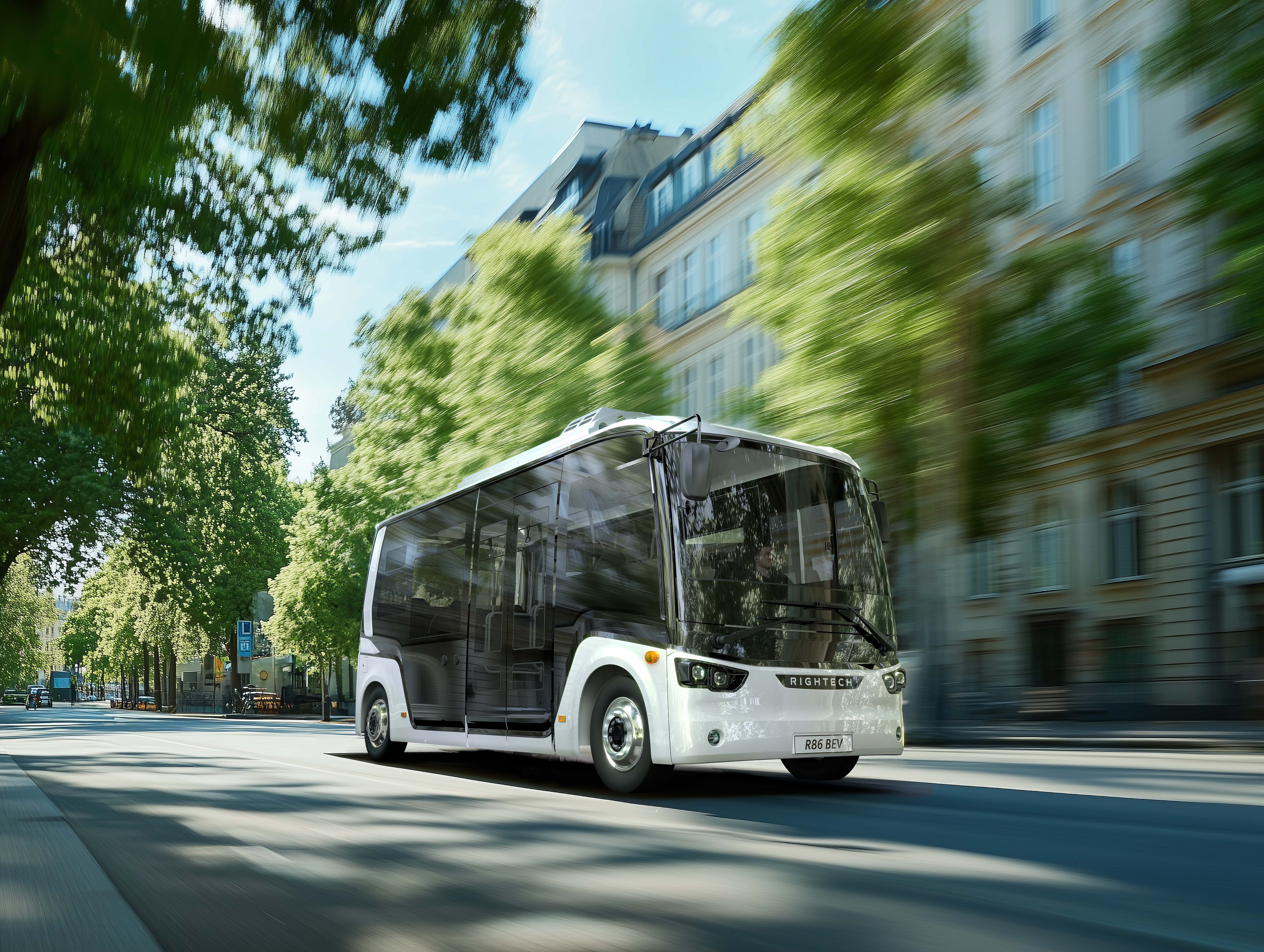
I can see bus operating companies, creating a career structure, that starts drivers on a PCV licence and progresses them upwards to the full PSV licence at 24.
Conclusion
I feel this could be a very sensible decision and like the age and competence structure for bus drivers, it creates worthwhile jobs for 18-24 year olds.
Key Rail Route To London Scrapped A Year Ago Could Return – Here’s Why
The title of this post, is the same as that of this article on the Shropshire Star.
This is the sub-heading.
A key railway line to London that was scrapped a year ago, could be set for a return.
This is said in the article.
South Shropshire MP Stuart Anderson is among those who has thrown his support behind plans to restore direct rail services to London, after Avanti ceased to operate the route almost a year ago in June 2024.
On March 12, Mr Anderson met with Wrexham, Shropshire and Midlands Railway (WSMR) who have developed the plans.
If their application is approved, it would see the return of direct services between Wrexham and London via Shropshire. WSMR, the aspirant open access operator, plans to deliver five daily train services between the county and capital city.
It’s only sketchy information and given the Government’s lukewarm support for open access services, I don’t hold out much hope, especially as Stuart Anderson is a Conservative MP.
‘Cut-Off For 58 Years’ Town To Get Railway Station
The title of this post, is the same as that of this article on the BBC.
This is the sub-heading.
Plans to build Greater Manchester’s first new railway station for a quarter of a century have been approved for a town cut off from the rail network since 1967.
These two introductory paragraphs give more details.
The £32m station in Golborne, near Wigan, was proposed by Transport for Greater Manchester (TfGM) after a residents’ campaign.
Since trains stopped calling at Golborne 58 years ago, the town has been left without any direct transport links to and from Manchester.
This Google Map shows the location of Golborne.
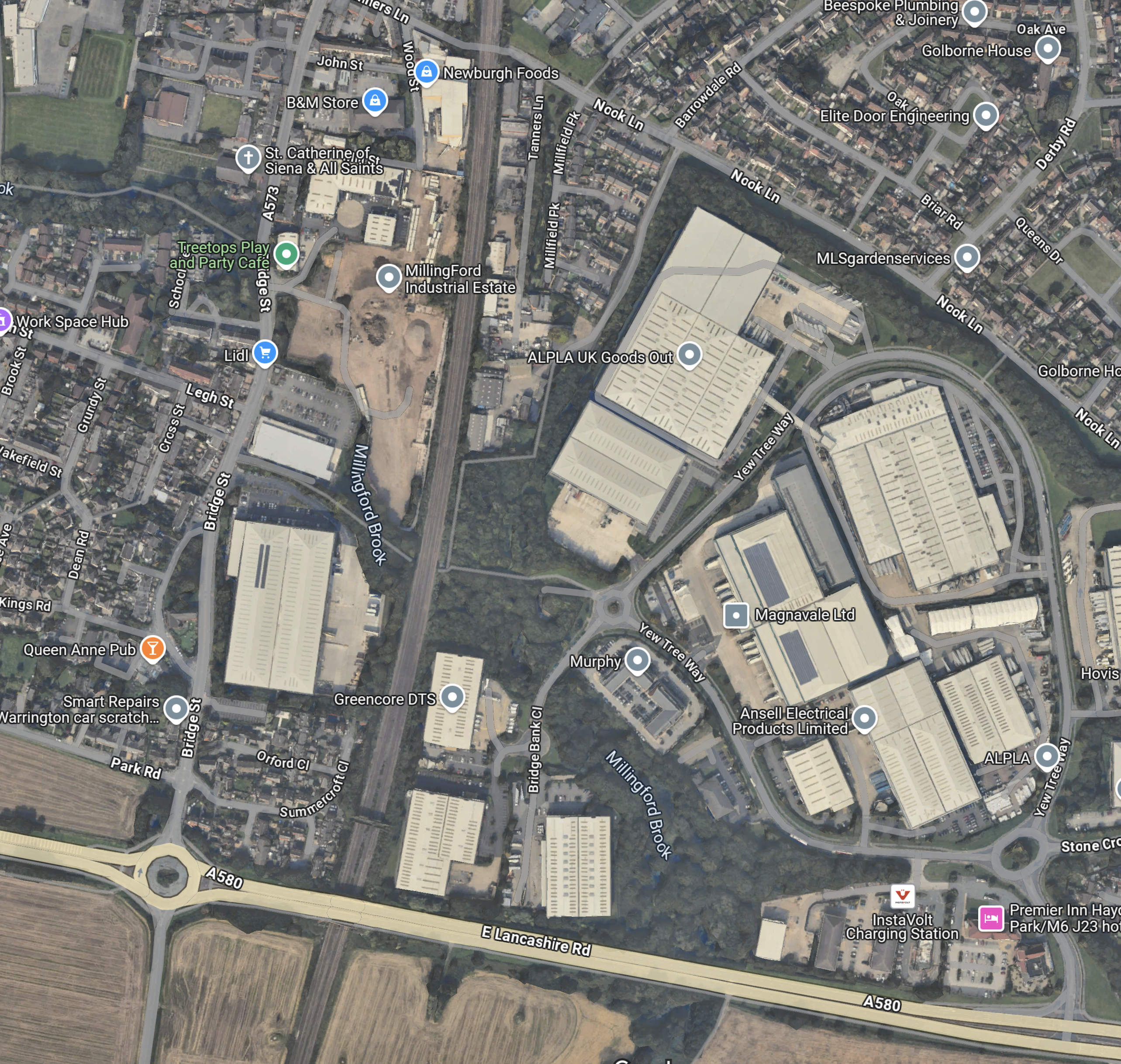
Note.
- The A 580, which is one of main Liverpool and Manchester roads going across the bottom of the map.
- If you drive West along the A 580 from here, you connect to the M6 at Junction 23 ; Haydock Island.
- Continuing West takes you to Liverpool.
- Going East along the A 580 takes you to the M60 and Manchester.
- Running North-South up the map is the West Coast Main Line and currently, it appears to be four electrified tracks all the way to Wigan North Western station.
- Nook Lane crosses the West Coast Main Line at the top of the map.
This second Google Map shows the West Coast Main Line through Golborne.
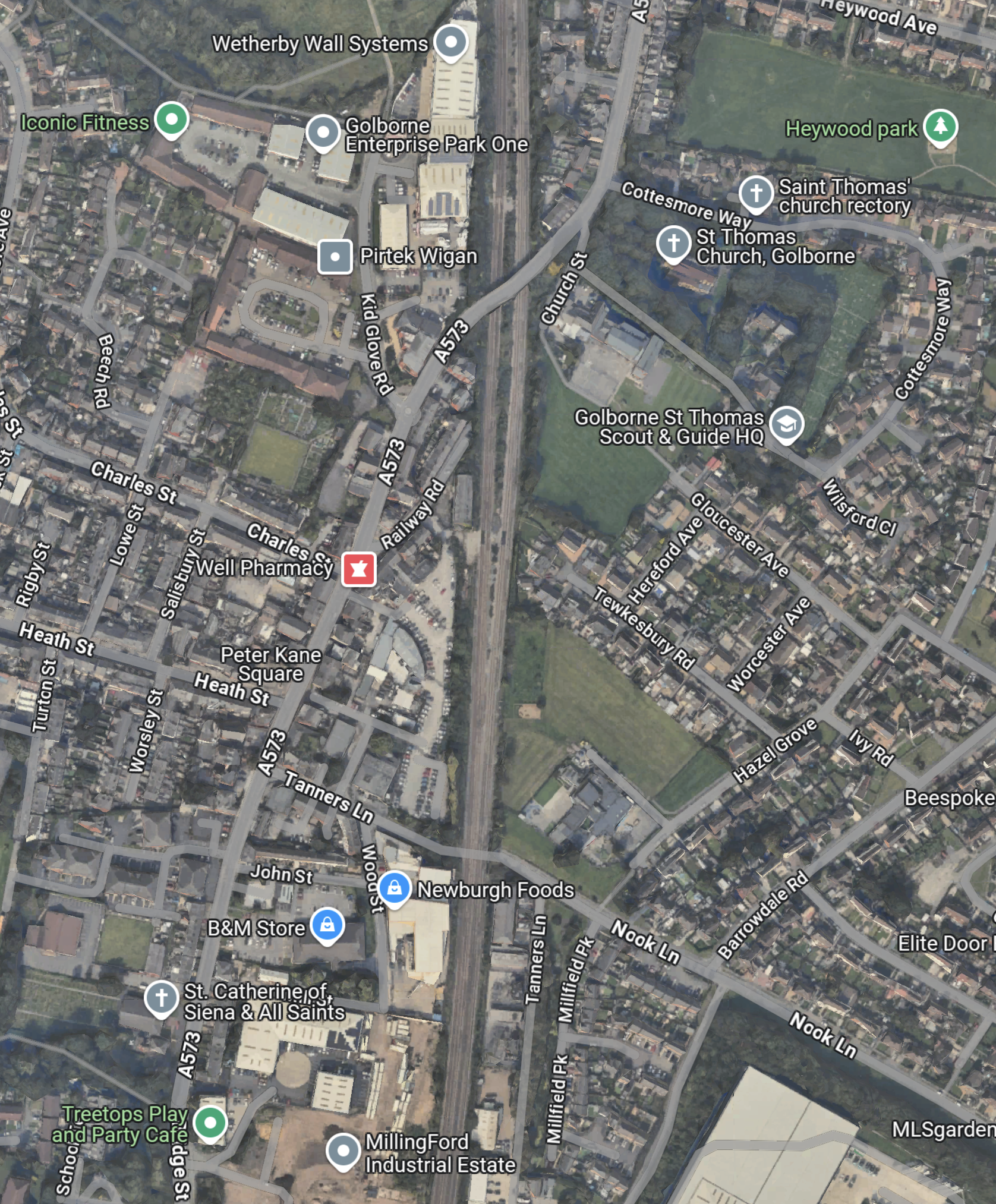
Note.
- The four tracks of the West Coast Main Line run North-South up the centre of the map.
- Nook Lane can be clearly seen.
My best guess is that the station will be built to the South of where the A 573 crosses the West Coast Main Line.
- A picture in the BBC article shows four platforms, with three lifts to give full step-free access.
- It looks like there is a brownfield site to the South of this location, where parking could be provided.
The new Golborne station could be a bit more than a simple station serving a small town.
I have a few thoughts.
How Many High Speed Two trains Will Go Through Golborne Station?
This graphic shows High Speed Two services, as proposed by HS2 after Phase 2b opens.
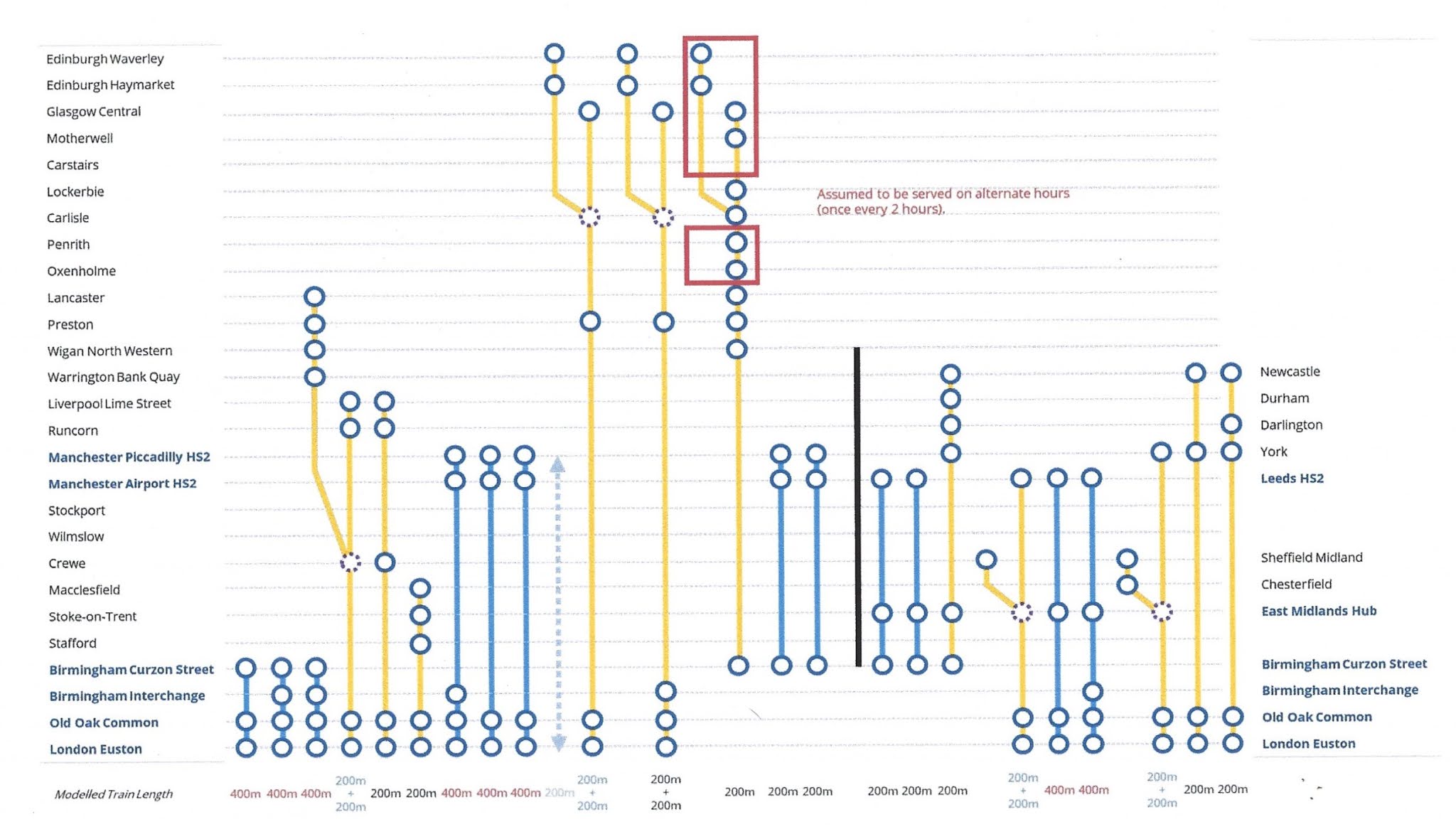
Note.
- Services shown in blue are run by High Speed Two Full Size trains.
- Services shown in yellow are run by High Speed Two Classic-Compatible trains.
- Each service will run once an hour.
- The nine services to the right of the vertical black line have been scrapped.
- There are elevenservices that terminate at Euston in every hour.
- Eight are High Speed Two Full Size trains, which are 400 metres long.
- Two are single High Speed Two Classic-Compatible trains, which are 200 metres long.
- Three are pairs of High Speed Two Classic-Compatible trains, which are 400 metres long.
How Many High Speed Two trains Will Go Through Golborne Station?
This will be the same as the number of trains going through Wigan North Western station.
These are.
- London Euston and Lancaster – 200 m.
- London Euston and Glasgow/Edinburgh – 400 m.
- London Euston and Glasgow/Edinburgh – 400 m.
- Birmingham and Glasgow/Edinburgh – 200 m.
Note.
- That is only four trains per hour (tph).
- As High Speed Two will be digitally signalled, I suspect that four fast tph and four slow tph could be accommodated between Wigan North Western and Golborne.
- The problem could be eased by running 125 mph or even 140 mph trains on local services on the West Coast Main Line.
- But the major problem will be North of Wigan North Western station, where there are only two tracks.
I also wonder, if increasing the number of high speed paths to five, would mean that no 400 m. trains would need to run North of Crewe, so there would be less need for platforms to be lengthened.
Is Wigan North Western Station Ready For High Speed Two?
I answered this question in 2019 in Is Wigan North Western Station Ready For High Speed Two? and felt, it was getting close.
I shall visit this summer and see if it is getting closer to being ready.
What Is The Collective Noun For Cement Mixer Trucks?
I took these pictures on Eldon Street and Moorgate this morning.
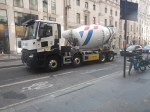









Note.
- There was obviously a big pour going on in the rebuilding of Broadgate.
- I suspect those outside the hotel in the street restaurant, we’re too amused by the cabaret.
- Cemex were providing the concrete.
Perhaps in view of the location, the collective noun is a pollution of cement mixer trucks.
In Cummins Agrees To Integrate Its Hydrogen ICE Technology Into Terex® Advance Trucks, I describe the latest design of cement mixer trucks from the United States.
This is the European-sized member of the range.
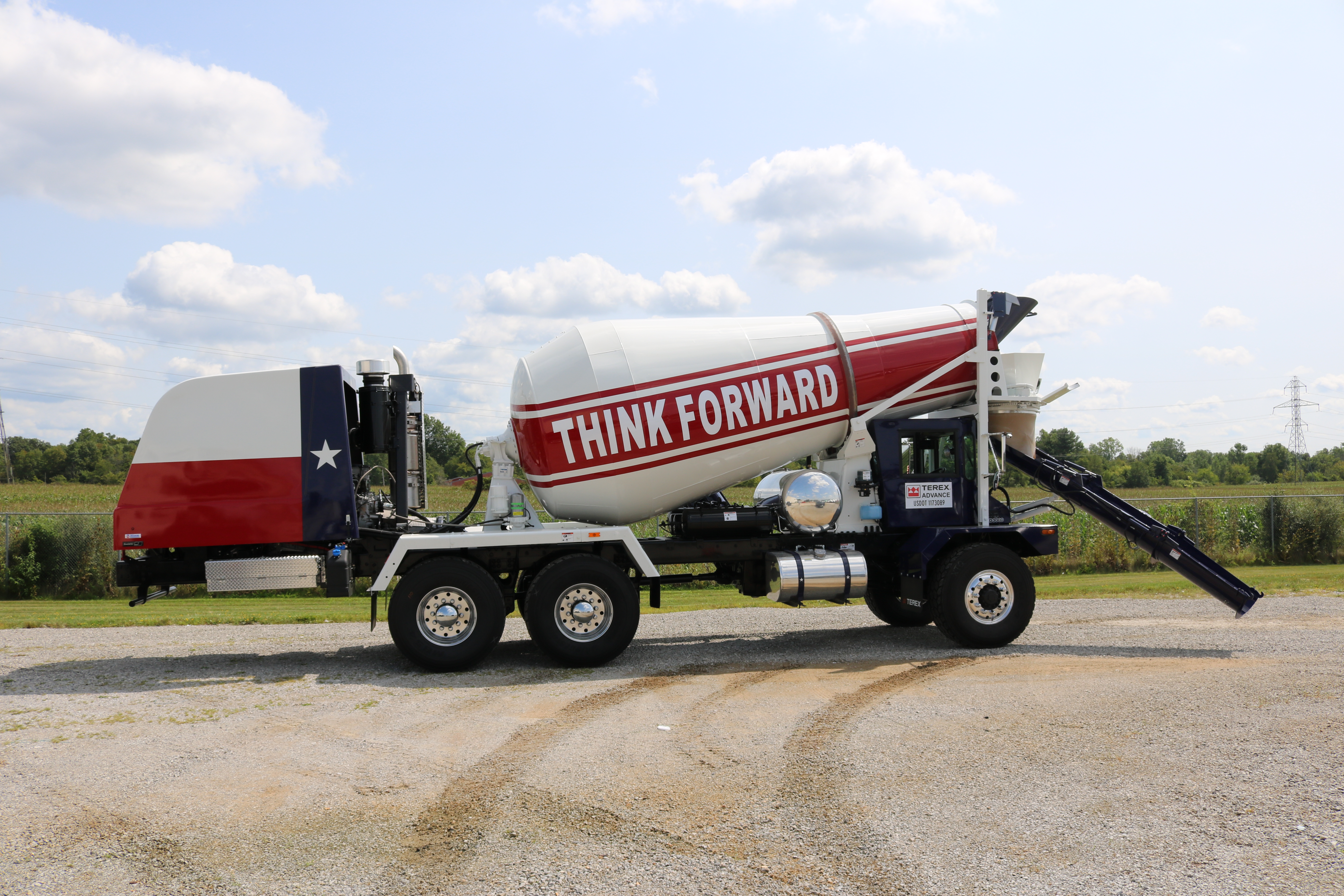
Note.
- Front is to the right.
- The engine is in the pod at the other end.
- The engine can be one of Cummins’s hydrogen internal combustion engines.
These trucks would be much more city-friendly.
Heart Aerospace Relocates Corporate Headquarters To Los Angeles, California
The title of this post, is the same as that of this news item from Heart Aerospace.
This is the sub-heading.
Hybrid-electric airplane manufacturer Heart Aerospace has announced the relocation of its corporate headquarters from Gothenburg, Sweden to Los Angeles, California. This strategic move aims to bolster the company’s product development in the United States, supporting the upcoming experimental flights of its Heart X1 prototype and the future Heart X2 prototype.
These two introductory paragraphs add ,ore detail.
Scheduled for its maiden flight in 2025, the X1 marks a major milestone in Heart’s innovation journey, setting the stage for X2.
“Our move to Los Angeles marks a new chapter in Heart Aerospace’s journey—one that prioritizes iterative development and deeper vertical integration,” said Anders Forslund, co-founder and CEO of Heart Aerospace. “For the X2, we’re developing key technologies like batteries, actuation systems, software, and hybrid-electric hardware in-house. This approach allows us to refine and enhance our systems continuously, just as we’ve done with the X1 prototype, which has seen extensive testing and major design updates since its initial rollout in 2024.”
In some ways, I find this move to California slightly sad, as I suspect most of those associated with the airliner, would have liked to see the development stay in Sweden.
This paragraph gives more details on the reasons for the move.
“We are deeply grateful to our team in Sweden for being part of this chapter of Heart’s journey, and for all the support we have received in Sweden,” said Anders Forslund. “However, as our customers, partners, and investors are increasingly based in the U.S, we see greater opportunity in focusing our resources here. By consolidating our operations in Los Angeles, we can accelerate development, strengthen collaboration, and better position Heart Aerospace for the future.”
They are not mentioned, but I do hope, Trump’s tariffs have nothing to do with it.
Hyundai Unveils Upgraded Xcient Hydrogen Fuel Cell Truck
The title of this post, is the same as that of this article on Automotive Powertrain International.
This is the sub-heading.
Hyundai Motor Company has unveiled the upgraded Xcient fuel cell class-8 heavy-duty truck, which features advanced hydrogen technologies and advanced driver assistance systems (ADAS) tailored for the North American market.
The article is worth a full read, as it shows how the largest American trucks, can be replaced with zero-carbon hydrogen fuel cell trucks.
This is the Hyundai Xcient truck web site.
Wrightbus Delivers More Hydrogen Buses To Germany Bringing Total To 43 – Around 130 Are Due To Be On The Roads By The End Of 2025
The title of this post, is the same as that of this article on the Belfast Newsletter.
This is the sub-heading.
The Ballymena bus manufacturer has also opened a European service centre and spare parts warehouse in Brühl, near Cologne
These three paragraphs add detail to the story.
Northern Ireland zero-emission bus manufacturer Wrightbus has delivered 12 new hydrogen vehicles to German operator WestVerkehr GmbH.
The latest order completion of Kite Hydroliner single decks means there are now 43 hydrogen-powered buses on the streets of Germany – with around 130 due to be on the roads by the end of 2025.
WestVerkehr GmbH is based in the westernmost district of Germany, on the border with the Netherlands, and will operate the Kite Hydroliners between Heinsberg, Hückelhoven, and Erkelenz.
I always think, that if you can sell anything vehicles to the Germans, there can’t be much wrong with them.
This picture shows one of the new Wrightbus electric buses, that I ride regularly around Finsbury in London.
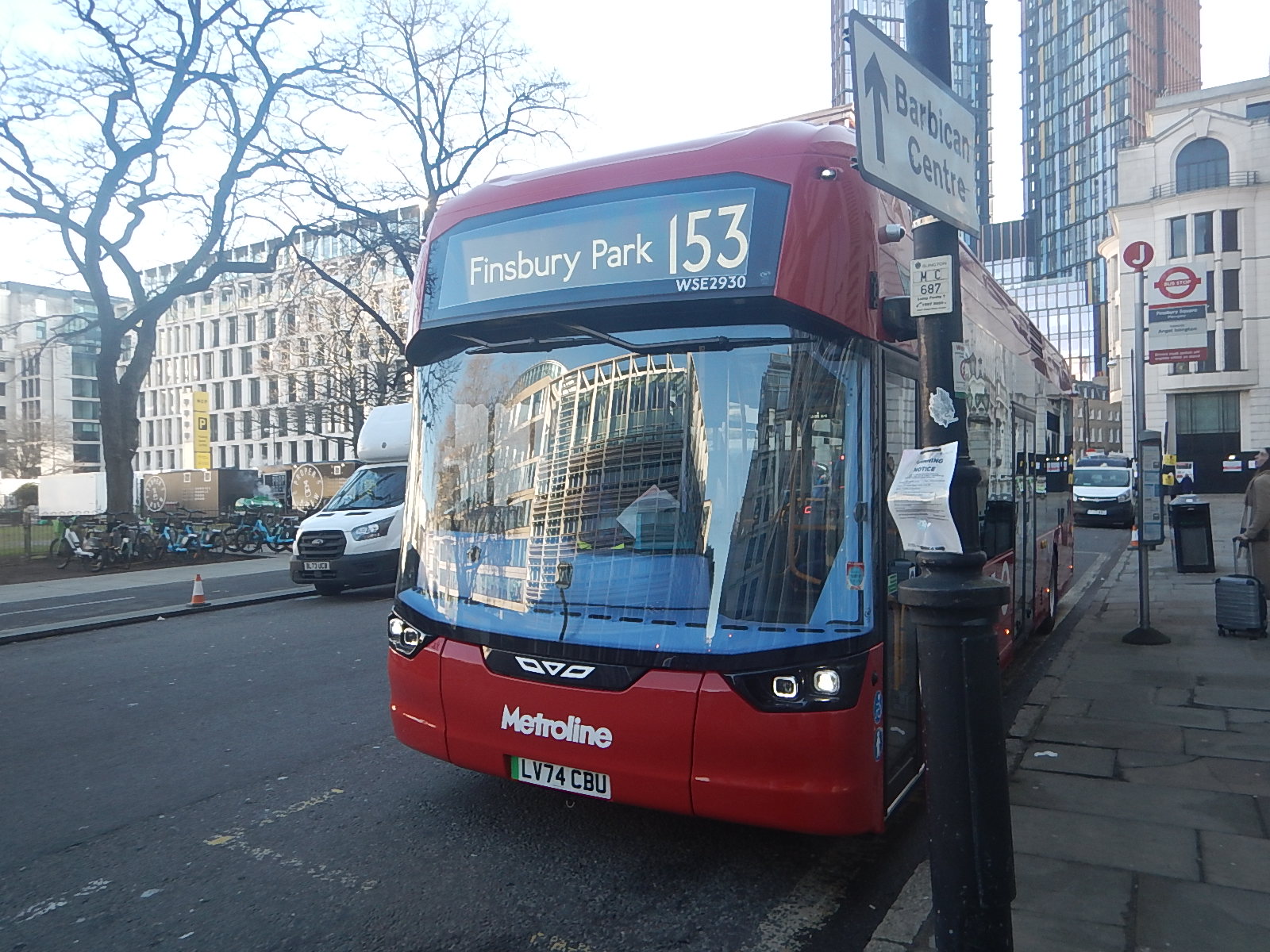
I was on a Chinese electric bus yesterday and there’s no doubt, that the ride in the Wrightbus product is smoother, than that of the Chinese one. Especially, when standing. The Chinese bus doesn’t even come close for ride with a New Routemaster.
London would do better, if it converted the thousand New Routemaster to zero-carbon power, rather than import a thousand Chinese buses.
In Equipmake Hybrid To Battery Powered LT11, I describe how one New Routemaster had a transmission transplant in Norfolk.
As it is possible, are Wrightbus NewPower working on it?
Mayors Head To Parliament With Plan For Northern Arc To Deliver Green Growth
The title of this post, is the same as that of this news item from Liverpool City Region.
These four bullet points act as sub-headings.
- Steve Rotheram and Andy Burnham take case for backing Northern Arc to Treasury – as new data shows North can drive green growth and unlock £90bn for UK economy
- Liverpool City Region and Greater Manchester Mayors will meet with ministers and MPs today, and Andy Burnham will give evidence at Business and Trade Select Committee on the UK’s industrial strategy
- Economic analysis shows that investing in transport infrastructure and a pipeline of projects across the North would benefit the whole UK economy, improving living standards and closing the North-South productivity gap
- Mayors will also address Innovation Zero World Congress in London, showing how city-regions can create high quality jobs by pioneering low-carbon innovation
These two paragraphs add a bit more detail.
The right investment would create a growth corridor, stretching from the Mersey to the Pennines and connecting into West and South Yorkshire, underpinned by transport networks that would include a new railway linking Liverpool and Manchester.
The Northern Arc area spans regions with close economic ties to Lancashire, North Wales, Hull and the North East. With international connections through the Port of Liverpool and Manchester Airport, it’s well positioned for global trade.
If I have a problem with the mayors’ thoughts, the plan outlined in the news item is rather Liverpool/Manchester-based with Hull being the only city outside that area getting a mention. Do Blackburn, Blackpool, Bradford, Burnley, Doncaster, Huddersfield, Leeds, Preston, Rotherham, Scunthorpe, Stockport, Wigan and York exist?
For instance you would expert a report from Liverpool and Manchester’s Mayors to call for a new railway between their two cities. And of course they do!
The current TransPennine Lines has two main routes across the Pennines between East and West.
If ever there was a rail route, designed by Topsy, it is the North TransPennine Route.
- There are six separate services, if you ignore Newcastle and Edinburgh Waverley, which is a shuttle to fill a gap in rail services.
- In the West trains terminate at Huddersfield, Liverpool Lime Street, Manchester Airport, Manchester Piccadilly and Manchester Victoria
- In the East trains terminate at Edinburgh Waverley, Hull, Leeds, Newcastle, Redcar Central, Scarborough and York.
- Terminals like Huddersfield, Hull, Liverpool Lime Street, Newcastle and York are some of the best terminal stations in the UK, but others are very second rate.
I suspect, this North TransPennine Route structure brought about the demise of TransPennine Express.
The South TransPennine Route on the other hand, although it was built by several different railway companies, they were all intent on the same thing. An East-West route across the Pennines through Doncaster, Manchester and Sheffield.
- The Western terminal is Liverpool Lime Street, which in my view is the finest grand terminus in the UK, in terms of architecture, onward connections and operation. It is also the oldest still-operating grand terminus mainline station in the world, in that it dates from 1836.
- The Eastern terminal is Cleethorpes, which is an efficient four-platform recently-refurbished station, that is within a hundred metres of some of the best gluten-free fish and chips, I’ve ever tasted on the pier.
- Intermediate stations include Liverpool South Parkway, Warrington Central, Birchwood, Irlam, Urmston, Manchester Oxford Road, Manchester Piccadilly, Stockport, Sheffield, Meadowhall, Doncaster, Scunthorpe, Barnetby, Habrough and Grimsby Town.
- Liverpool South Parkway has a bus connection to Liverpool Airport
- Liverpool Lime Street, Manchester Oxford Road, Manchester Piccadilly, Stockport, Sheffield and Doncaster are stations with comprehensive onward connections.
- The route is electrified between Liverpool Lime Street and Manchester Piccadilly and at Doncaster.Liverpool Lime Street and Cleethorpes is 148.2 miles
- Hazel Grove and Doncaster is without electrification and is 52.3 miles long.
- Cleethorpes and Doncaster is without electrification and is 52.1 miles long.
- I believe that Hitachi, Siemens and Stadler could supply battery-electric trains, that would be able to work the route, with the addition of a short length of overhead wires at Cleethorpes, so that trains could return to Doncaster.
- Trains go straight through all the intermediate stations, so there are no time-wasting reverses.
- Journey time is just over three and a half hours.
I believe that a mouse-quiet battery-electric train would pack in the punters, if only for the novelty.
But.
A battery-electric train would probably knock perhaps thirty minutes off the journey.
The timetable would be an hourly train at all stations.
The service would pass the mother’s birthday test, in that you could easily visit any station from any other and buy your mother lunch before returning on a convenient train.
There are connections to and from London at Liverpool Lime Street, Manchester Piccadilly, Stockport, Sheffield and Doncaster.
It could be a very useful East-West train service.
Critical Mass London: Hundreds Of Protesting Cyclists Ride Through Silvertown Tunnel In ‘Mass Trespass’
The title of this post, is the same as that of this article on Yahoo News in Canada.
These paragraphs describe the mass trespass.
Around 1,000 cyclists descended on the newly opened Silvertown Tunnel in a protest calling for greater road safety amid anger it has no bike lane.
Riders from Critical Mass London swarmed the northbound entrance near the O2 Arena in “a mass trespass” on Friday night.
Entering from the Old Kent Road, they took over both lanes near North Greenwich and blocked incoming motorists.
The ride through the tunnel took about 10 minutes before the cyclists moved off towards Poplar.
But on X, formerly Twitter, people reported that the road was closed for over an hour after they had left.
The £2.2bn Silvertown tunnel – opened by London mayor Sir Sadiq Khan earlier this month – has faced criticism from transport pressure groups for its lack of provisions for cyclists and pedestrians.
I suppose, at lease they weren’t riding on the pavement, as they do all the time near me.
I was even hit by one, on a zebra crossing, as he passed a bus on the wrong side, that had stopped to let me cross.
There is not one law for cyclists and one law for everybody else!
A Day Trip To Leven From London
On Thursday, the 15th of May, I shall be taking a day trip by train from London King’s Cross to Leven in Fife.
I shall be doing it for the following reasons.
- To see the new Levenmouth Rail Link and its two new stations : Cameron Bridge and Leven.
- To prove that it is possible to do trips like these.
- To prove that it is still possible for me to do trips like these.
- To see a couple of old friends, who live North of the Border.
- I shall probably also ride the new section of the Edinburgh Tram.
I shall be leaving London on the Lumo service at 05:48 and returning on the 16:13, which gives me around six hours in Scotland.
 The Anonymous Widower