Parallel Trains At Finsbury Park
I was travelling from Finsbury Park to Kings Cross, so I got on a Grand Northern service.
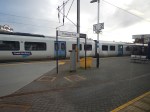
Like I’ve seen several times, there was a good cross-platform connection, between services going to Kings Cross and Moorgate, which leave from opposite sides of the same platform.


Note.
- The wide platform at Finsbury Park station between the two services.
- At the current time, the Kings Cross trains are every thirty minutes and the Moorgate trains every five minutes.
- Going say from Stevenage to the City would mean a wait of no more than five minutes.
- But going North, you might wait at Finsbury Park for up to half-an-hour.
Finsbury Park could be a very handy interchange as it has Thameslink, Victoria and Piccadilly Line services, in addition to the Kings Cross and Cambridge and Moorgate services.
Approaching Kings Cross – 6th January 2021
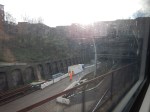
I took these pictures approaching Kings Cross.

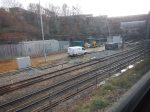
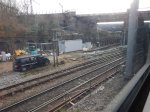
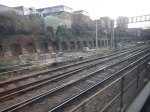
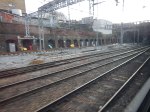

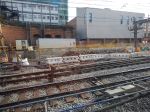
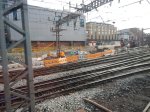

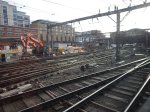
Note.
- There is still track to be laid.
- The electrification is still to be erected.
But everything seems to be getting there.
This Google Map shows the section between the two tunnels.
- Copenhagen Tunnel is North of this map.
- Gasworks Tunnel lies between this map and Kings Cross station.
Both tunnels have three double-track bores, where in this massive project, the Eastern bores are being brought back into use to add capacity to Kings Cross station.

Note.
- The East Coast Main Line runs North-South across the map.
- The quadruple track crossing East-West at the top of the map is the North London Line.
- Below it, is the Channel Tunnel Rail Link into |St. Pancras.
- The link to the Canal Tunnels take Thameslink trains to the deep level platforms in St. Pancras.
- The two new tracks will be on the Eastern side of the East Coast Main Line.
This second Google Map shows the track and platform layout at Kings Cross station.
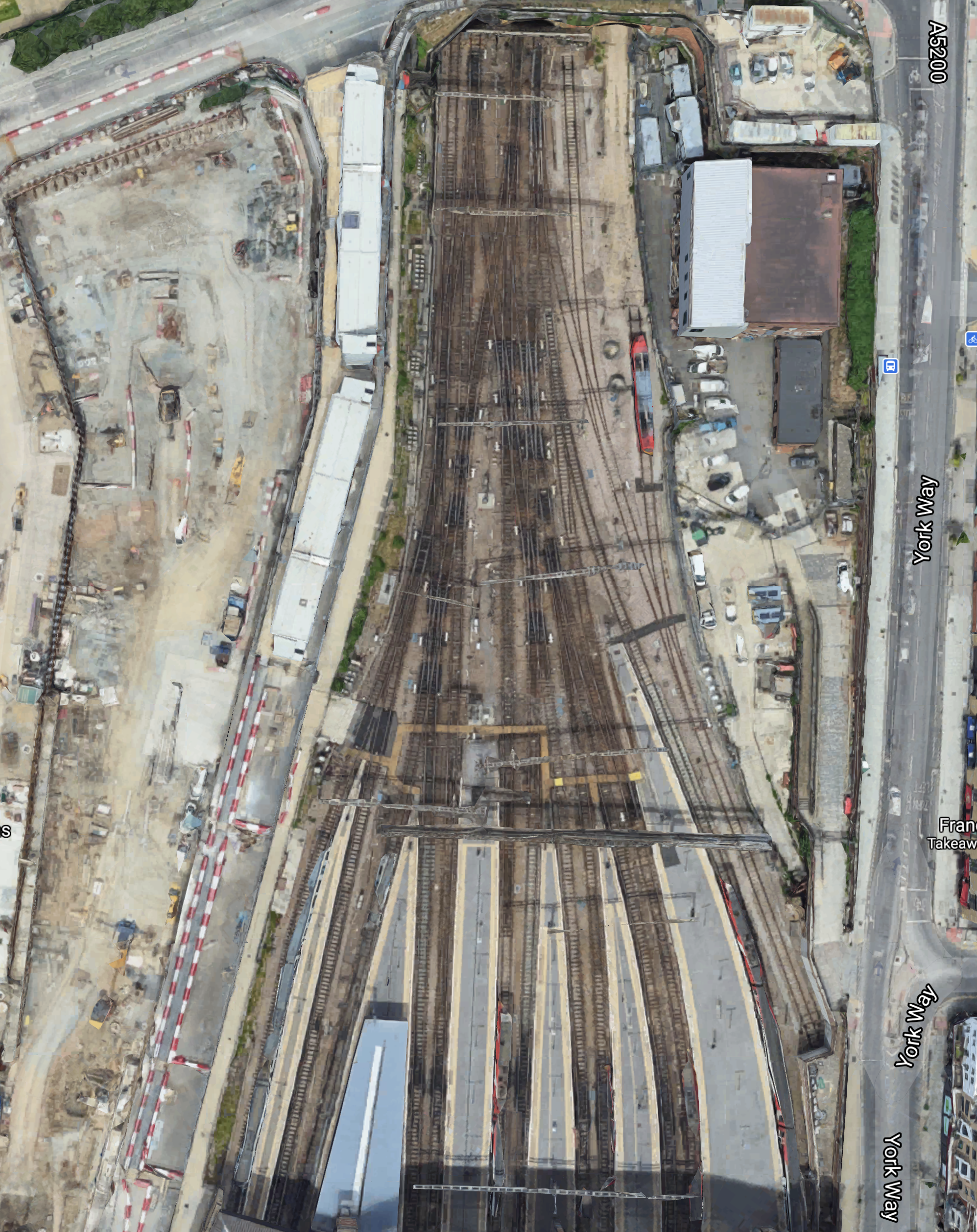
Note.
- There are twelve platforms, which are numbered from 0 to 11, with Platform 0 in the East.
- The various islands are numbered as follows from East to West; 0/1, 2/3, 4/5, 6/7, 8/9 and 10/11.
- The six tracks through the tunnels may be bi-directional, so will each track be linked to a pair of platforms?
- Platforms 0 to 4 are in the Eastern half of the station
- Platforms 5 to 0 are in the Western half of the station
- Platforms 9, 10 and 11 are short platforms in the old suburban station, which is mainly used by suburban services to Cambridge and Kings Lynn.
When I arrived there was a five-car Azuma in Platform 9, as these pictures show.

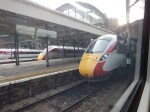
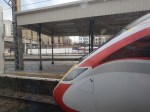
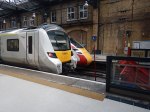
I’ve seen Grand Central’s Class 180 trains in these short platforms before, so is this going to be a regular occurrence.
Services Into Kings Cross
When the remodelling at Kings Cross is complete, current plans say the following trains will be running into Kings Cross station.
- LNER – Two tph – Edinburgh – Long train
- LNER – Two tph – Leeds – Long train
- LNER – One tph – Lincoln or York – Long or short train
- Great Northern – Two tph – Cambridge (stopping) – Short train
- Great Northern – Two tph – Cambridge (fast) – Short train
- Hull trains – Seven tpd – Hull and Beverley – Short train
- East Coast Trains – Five tpd – Edinburgh – Short train
- Grand Central – Four tpd – Bradford Interchange – Long or short train
- Grand Central – Five tpd – Sunderland – Long or short train
Note,
- tph is trains per hour and tpd is trains per day.
- There is a mixture of short and long trains.
- Short trains can fit all platforms, but long trains can only use platforms 0-8.
- There are nine tph and a total of 21 tpd in various less-frequent services.
My scheduling experience in other fields, says that ten platforms will be needed for a full service, with each of the ten platforms handling just one tph.
Conclusion
Wjen all the work is completed, Kings Cross station will have room for a few extra trains.
Trump And The Open
This BBC story today, which was entitled Trump National Stripped Of 2022 US PGA Championship.
The Times also has an article today, saying that Trump has been lobbying hard to get The Open allocated to his course at Turnberry.
I have a feeling that the access and the fact that in 2024, the Open will go to Troon will scupper Trump’s ambitions.
Good crowds will need good transport access and preferably by rail to a large population centre with lots of hotels.
- 2021 – Royal St. Georges – The nearby Sandwich station is being lengthened to take high speed trains from London, especially for the tournament.
- 2022 – St. Andrews – Perhaps too short a time to put in the long-promised rail link to Leuchars, but the train service to Aberdeen, Edinburgh and Glasgow from Leuchars is good.
- 2023 – Royal Liverpool – The course has a nearby station at Hoylake and Merseyrail are getting new fleets of classy Swiss trains. Enthusiasts could always take the ferries part of the way from Liverpool.
- 2024 – Troon – The rail line to Glasgow goes past the course and there’s time to build a temporary station if needed.
The other courses on the active rota for the Open are.
- Carnoustie – The nearby Golf Street station is used during major golf tournaments.
- Muirfield – This course has had other problems. But the rail links are not good.
- Royal Birkdale – Like Royal Liverpool, it has a nearby Merseyrail station.
- Royal Lytham and St. Annes – This course has a station and it looks like the rail link will be upgraded soon.
- Royal Portrush – The nearby railway station was rebuilt for the 2019 Open
There is no rail line anywhere near Turnberry.
I feel that the R & A have enough excuses to avoid giving the Open to Turnberry.
It looks to me that Trump bought the wrong golf course.
Network Rail’s Big Push
The title of this press release on the Network Rail web site is 11,000 Tonne Tunnel To Be Installed On The Railway In First For UK Engineering.
They have also released this aerial photograph of the tunnel, before it is pushed into place.
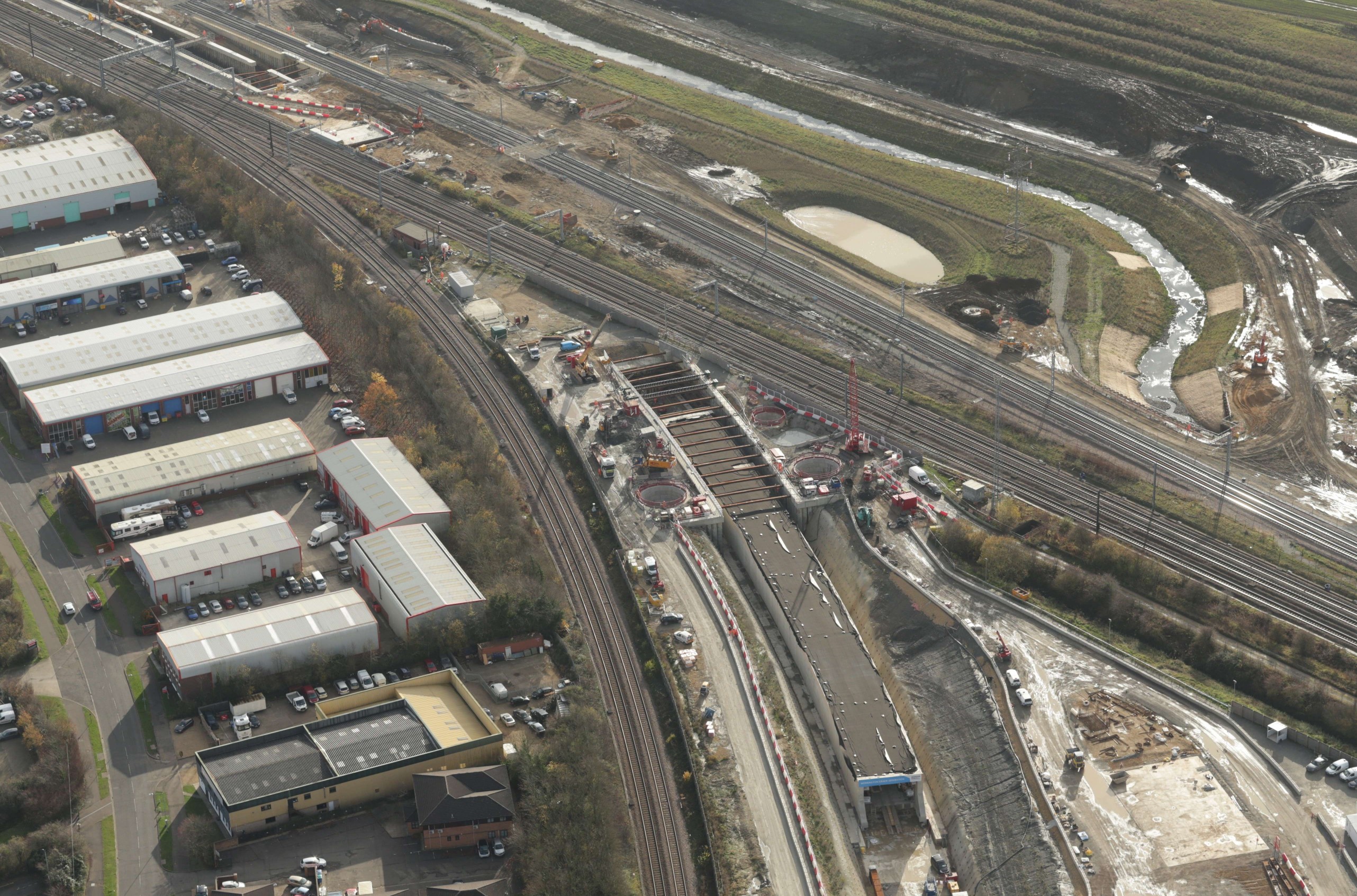
Note.
- The tunnel, which is just a curved concrete box is in the middle of the picture.
- To its left is the double-track Peterborough-Lincoln Line.
- Running across the far end of the tunnel are the multiple tracks of the East Coast Main Line.
- Peterborough is a few miles to the left, with the North to the right.
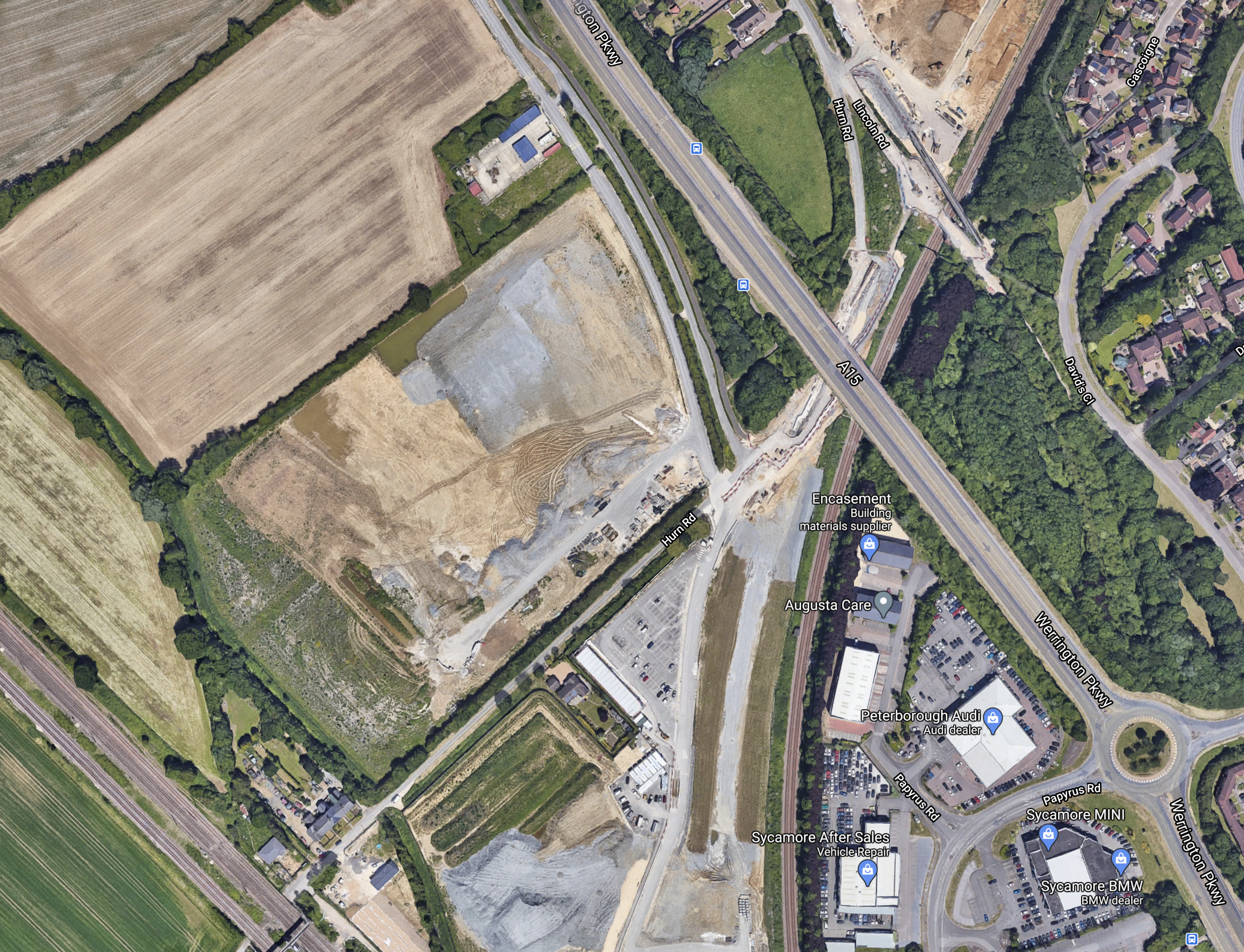
This Google Map shows the same area from directly above.

Note.
- The double-tracks of the Stamford Lines closest to the South-West corner of the map. These link the Peterborough-Birmingham Line to Peterborough.
- Next to them are the triple tracks of the East Coast Main Line.
- The third rail line is the double-track of the Peterborough and Lincoln Line.
- The new tunnel can be seen at the top of the map.
This map from Network Rail, shows the new track layout.
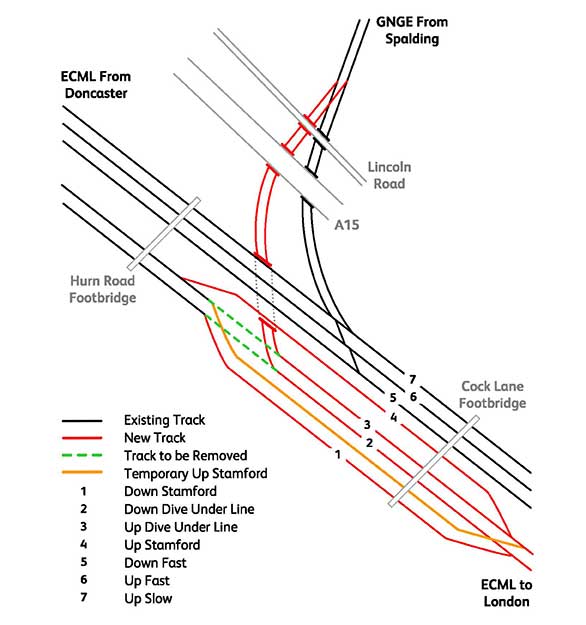
The map shows that the Stamford Line will divide with two tracks (1 and 4) going North to Stamford as now. Two new tracks (2 and 3) will dive-under the East Coast Main Line to join the existing Peterborough and Lincoln Line.
The tracks will run through the tunnel in the pictures, after it has been pushed under the East Coast Main Line.
- This will mean that the many freight trains between Peterborough and Lincoln will not have to cross the East Coast Main Line on the flat.
- This in turn could allow faster running of trains on the East Coast Main Line, that are not stopping at Peterborough.
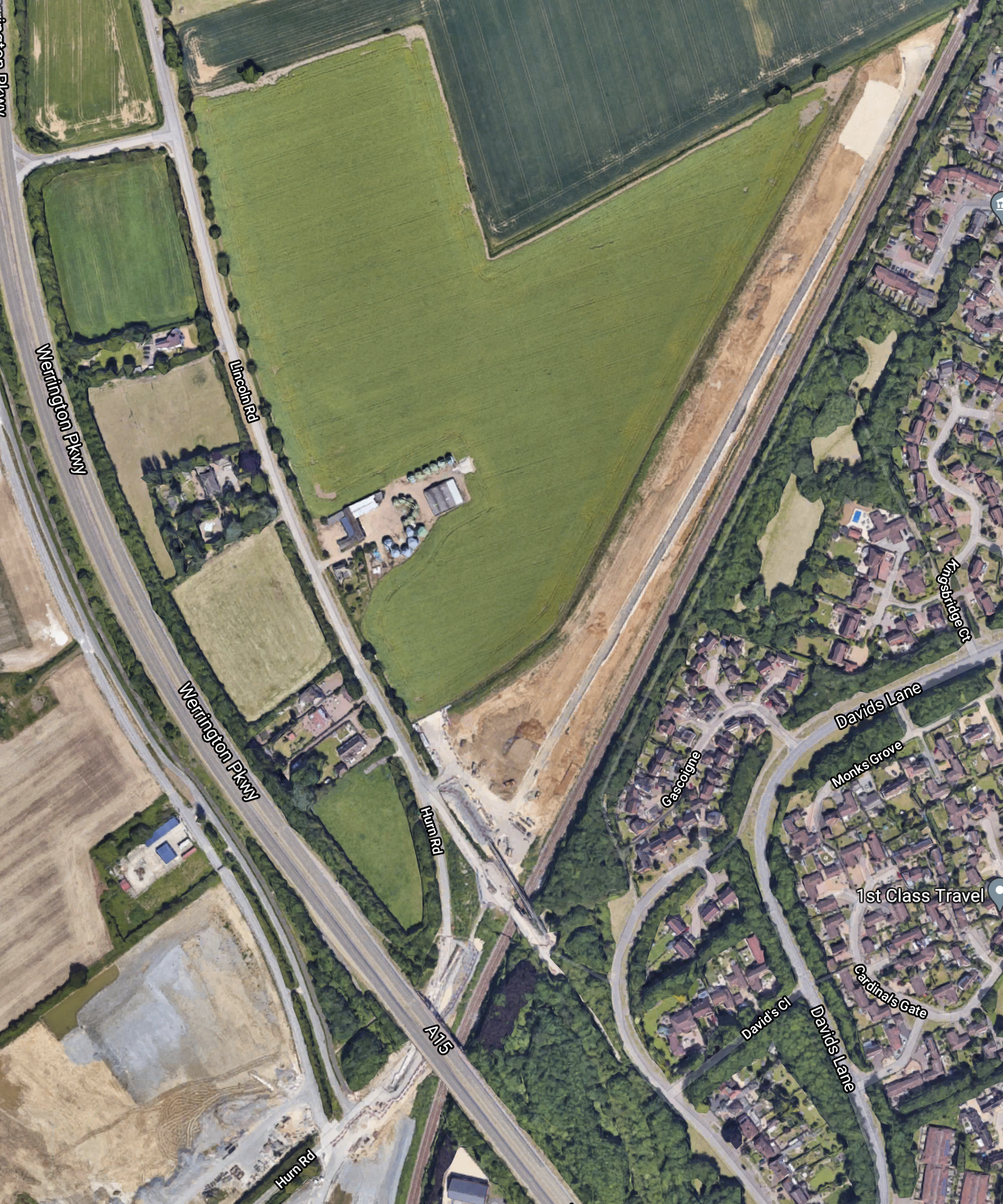
This second Google Map shows the area to the North of the first map.
Note.
- The East Coast Main Line in the South-West corner of the map.
- The Peterborough and Lincoln Line curving from North-South across the map.
- A bridge would appear to be being constructed to take the A15 road over the new tracks, that will go through the tunnel.
- Another bridge will be constructed to take Lincoln Road over the new tracks.
It is certainly not a small project.
That is emphasised by this third Google Map, which is to the North of the previous map.
This map would appear to show space for more than a pair of tracks.
It looks to me, that space is being left for future rail-related development.
- Could it be for a small freight yard, where trains could wait before proceeding?
- If it were electrified, it could be where freight trains to and from London, switched between electric and diesel power.
- Could it be passing loops, so that freight trains can keep out of the way of faster passenger trains?
- Would it be a place for a possible new station?
If it is to be a full rail freight interchange, I can’t find any mention of it on the Internet.
The Big Push
Summarising, what is said in the press release, I can say.
- Major works to occur over nine days between 16 and 24 January
- It will be pushed at 150cm per hour.
- A reduced level of service will operate.
- It will take several weekends.
I hope it’s being filmed for later broadcasting.
Thoughts On Services
I have a few thoughts on passenger services.
London And Lincoln Via Spalding And Sleaford
Consider.
- Peterborough and Lincoln is 57 miles.
- The route has lots of level crossings.
- Much of the route between Peterborough and Lincoln has an operating speed of 75 mph
- There is a 50 mph limit through Spalding. Is this to cut down noise?
- Trains between Peterborough and Lincoln take a shortest time of one hour and twenty-three minutes, with four stops.
- Peterborough and Lincoln is 57 miles.
- This is an average speed of 41 mph.
I wonder what time a five-car Class 800 train would take to do the journey.
- At an average speed of 50 mph, the train would take 68 minutes and save 15 minutes.
- At an average speed of 60 mph, the train would take 57 minutes and save 26 minutes.
- At an average speed of 70 mph, the train would take 49 minutes and save 18 minutes.
As the fastest London Kings Cross and Peterborough time is 46 minutes, this would mean that with an average speed of 60 mph, a time between London Kings Cross of one hour and forty-three minutes could be possible.
- There could be additional time savings by only stopping at Peterborough, Spalding and Sleaford.
- The Werrington Dive Under looks to be built for speed and could save time.
- If the 50 mph limit through Spalding is down to noise, battery electric trains like a Hitachi Intercity Tri-Mode Battery Train might be able to go through Spalding faster.
- Could some track improvements save time between Peterborough and Lincoln?
As the fastest journeys via Newark to Lincoln take one hour and fifty-six minutes, it looks to me, that LNER might be able to save time by going via Spalding and Sleaford after the Werrington Dive Under opens.
London And Skegness
If there were a fast London train from Sleaford, it will take under an hour and thirty minutes between London Kings Cross and Sleaford.
- Currently, the connecting train between Skegness and Sleaford takes an hour for the forty miles.
- The service is currently run by Class 158 trains.
- With some 100 mph trains on the Skegness and Sleaford service, it might be possible to travel between London and Skegness in two hours and fifteen minutes with a change at Sleaford.
There would appear to be possibilities to improve the service between London and Skegness.
Lincoln And Cambridge
I used to play real tennis at Cambridge with a guy, who was a Cambridge expansionist.
He believed that Cambridge needed more space and that it should strongly rcpand high-tech research, development and manufacturing all the way across the fens to Peterborough and beyond.
I listened to his vision with interest and one thing it needed is a four trains per hour express metro between Cambridge and Peterborough.
- Ely and Peterborough should be electrified for both passenger and freight trains.
- March and Spalding should be reopened.
- Cambridge has the space for new services from the North.
Extending the Lincoln and Peterborough service to Cambridge could be a good start.
Conclusion
The Werrington Dive Under will certainly improve services on the East Coast Main Line.
I also feel, that it could considerably improve rail services between London and South Lincolnshire.
It certainly looks, like Network Rail have designed the Werrington Dive Under to handle more traffic than currently uses the route.
Towns like Boston, Skegness, Sleaford and Spalding aren’t going to complain.
All Platforms Should Be Wide Like This
It is my view, that all platforms, like this one at Angel station should be wide.

Consider,
- It must be less likely, that passengers get knocked onto the tracks.
- Wide platforms must be easier for all passengers to navigate.
- Blind people with of without guide dogs must find it easier.
Let’s see a few more. And with step-free access between platform and train!
Hitachi Targets Next Year For Testing Of Tri-Mode IET
The title of this post, is the same as that of this article on Rail Magazine.
This is the first two paragraphs.
Testing of a five-car Hitachi Class 802/0 tri-mode unit will begin in 2022, and the train could be in traffic the following year.
It is expected that the train will save more than 20% of fuel on Great Western Railway’s London Paddington-Penzance route.
This is the Hitachi infographic, which gives the train’s specification.

I have a few thoughts and questions.
Will The Batteries Be Charged At Penzance?
Consider.
- It is probably not a good test of customer reaction to the Intercity Tri-Mode Battery Train, if it doesn’t work on batteries in stations through Cornwall.
- Every one of the eight stops in Cornwall will need an amount of battery power.
- London trains seem to take at least half-an-hour to turn round at Penzance.
- London trains seem to take around 7-13 minutes for the stop at Plymouth.
So I think, that batteries will probably need to be charged at Penzance and possibly Plymouth, to achieve the required battery running,
There is already sufficient time in the timetable.
A charging facility in Penzance station would be a good test of Hitachi’s method to charge the trains.
Will Hyperdrive Innovation’s Battery Pack Be A Simulated Diesel Engine?
At the age of sixteen, for a vacation job, I worked in the Electronics Laboratory at Enfield Rolling Mills.
It was the early sixties and one of their tasks was at the time replacing electronic valve-based automation systems with new transistor-based systems.
The new equipment had to be compatible to that which it replaced, but as some were installed in dozens of places around the works, they had to be able to be plug-compatible, so that they could be quickly changed. Occasionally, the new ones suffered infant-mortality and the old equipment could just be plugged back in, if there wasn’t a spare of the new equipment.
So will Hyperdrive Innovation’s battery-packs have the same characteristics as the diesel engines that they replace?
- Same instantaneous and continuous power output.
- Both would fit the same mountings under the train.
- Same control and electrical power connections.
- Compatibility with the trains control computer.
I think they will as it will give several advantages.
- The changeover between diesel engine and battery pack could be designed as a simple overnight operation.
- Operators can mix-and-match the number of diesel engines and battery-packs to a given route.
- As the lithium-ion cells making up the battery pack improve, battery capacity and performance can be increased.
- If the computer, is well-programmed, it could reduce diesel usage and carbon-emissions.
- Driver conversion from a standard train to one equipped with batteries, would surely be simplified.
As with the diesel engines, all battery packs could be substantially the same across all of Hitachi’s Class 80x trains.
How Many Trains Can Eventually Be Converted?
Great Western Railway have twenty-two Class 802/0 trains.
- They are five-cars.
- They have three diesel engines in cars 2, 3 and 4.
- They have a capacity of 326 passengers.
- They have an operating speed of 125 mph on electrification.
- They will have an operating speed of 140 mph on electrification with in-cab ERTMS digital signalling.
- They have an operating speed of 110 mph on diesel.
- They can swap between electric and diesel mode at line speed.
Great Western Railway also have these trains that are similar.
- 14 – nine-car Class 802/1 trains
- 36 – five-car Class 800/0 trains
- 21 – nine-car Class 800/3 trains
Note.
- The nine-car trains have five diesel engines in cars 2,3, 5, 7 and 8
- All diesel engines are similar, but those in Class 802 trains are more powerful, than those in Class 800 trains.
This is a total of 93 trains with 349 diesel engines.
In addition, there are these similar trains in service or on order with other operators.
- LNER – 13 – nine-car Class 800/1 trains
- LNER – 10 – five-car Class 800/2 trains
- LNER – 12 – five-car Class 801/1 trains
- LNER – 30 – nine-car Class 801/2 trains
- TransPennine Express – 19 – five-car Class 802/2 trains
- Hull Trains – 5 – five-car Class 802/3 trains
- East Coast Trains – 5 – five-car Class 803 trains
- Avanti West Coast – 13 – five-car Class 805 trains
- Avanti West Coast – 10 – seven-car Class 807 trains
- East Midland Railway – 33 – five-car Class 810 trains
Note.
- Class 801 trains have one diesel engine for emergency power.
- Class 803 trains have no diesel engines, but they do have a battery for emergency power.
- Class 805 trains have an unspecified number of diesel engines. I will assume three.
- Class 807 trains have no batteries or diesel engines.
- Class 810 trains have four diesel engines.
This is a total of 150 trains with 395 diesel engines.
The Rail Magazine finishes with this paragraph.
Hitachi believes that projected improvements in battery technology, particularly in power output and charge, could enable diesel engines to be incrementally replaced on long-distance trains.
Could this mean that most diesel engines on these Hitachi trains are replaced by batteries?
Five-Car Class 800 And Class 802 Trains
These trains are mainly regularly used to serve destinations like Bedwyn, Cheltenham, Chester, Harrogate, Huddersfield, Hull, Lincoln, Oxford and Shrewsbury, which are perhaps up to fifty miles beyond the main line electrification.
- They have three diesel engines, which are used when there is no electrification.
- I can see many other destinations, being added to those reached by the Hitachi trains, that will need similar trains.
I suspect a lot of these destinations can be served by five-car Class 800 and Class 802 trains, where a number of the diesel engines are replaced by batteries.
Each operator would add a number of batteries suitable for their routes.
There are around 150 five-car bi-mode Hitachi trains in various fleets in the UK.
LNER’s Nine-Car Class 800 Trains
These are mainly used on routes between London and the North of Scotland.
In LNER Seeks 10 More Bi-Modes, I suggested that to run a zero-carbon service to Inverness and Aberdeen, LNER might acquire rakes of carriages hauled by zero-carbon hydrogen electric locomotives.
- Hydrogen power would only be used North of the current electrification.
- Scotland is looking to have plenty of hydrogen in a couple of years.
- No electrification would be needed to be erected in the Highlands.
- InterCity 225 trains have shown for forty years, that locomotive-hauled trains can handle Scottish services.
- I also felt that the trains could be based on a classic-compatible design for High Speed Two.
This order could be ideal for Talgo to build in their new factory at Longannet in Fife.
LNER’s nine-car Class 800 trains could be converted to all-electric Class 801 trains and/or moved to another operator.
There is also the possibility to fit these trains with a number of battery packs to replace some of their five engines.
If the planned twenty percent fuel savings can be obtained, that would be a major improvement on these long routes.
LNER’s Class 801 Trains
These trains are are all-electric, but they do have a diesel engine for emergencies.
Will this be replaced by a battery pack to do the same job?
- Battery packs are probably cheaper to service.
- Battery packs don’t need diesel fuel.
- Battery packs can handle regenerative braking and may save electricity.
The installation surely wouldn’t need too much test running, as a lot of testing will have been done in Class 800 and Class 802 trains.
East Coast Trains’ Class 803 Trains
These trains have a slightly different powertrain to the Class 801 trains. Wikipedia says this about the powertrain.
Unlike the Class 801, another non-bi-mode AT300 variant which despite being designed only for electrified routes carries a diesel engine per unit for emergency use, the new units will not be fitted with any, and so would not be able to propel themselves in the event of a power failure. They will however be fitted with batteries to enable the train’s on-board services to be maintained, in case the primary electrical supplies would face a failure.
The trains are in the process of being built, so I suspect batteries can be easily fitted.
Could it be, that all five-car trains are identical body-shells, already wired to be able to fit any possible form of power? Hitachi have been talking about fitting batteries to their trains since at least April 2019, when I wrote, Hitachi Plans To Run ScotRail Class 385 EMUs Beyond The Wires.
- I suspect that Hitachi will use a similar Hyperdrive Innovation design of battery in these trains, as they are proposing for the Intercity Tri-Mode Battery Train.
- If all trains fitted with diesel engines, use similar MTU units, would it not be sensible to only use one design of battery pack?
- I suspect, that as the battery on a Class 803 train, will be mainly for emergency use, I wouldn’t be surprised to see that these trains could be the first to run in the UK, with a battery.
- The trains would also be simpler, as they are only battery-electric and not tri-mode. This would make the software easier to develop and test.
If all trains used the same battery pack design, then all features of the pack, would be available to all trains to which it was fitted.
Avanti West Coast’s Class 805 Trains
In Hitachi Trains For Avanti, which was based on an article with the same time in the January 2020 Edition of Modern Railways, I gave this quote from the magazine article.
Hitachi told Modern Railways it was unable to confirm the rating of the diesel engines on the bi-modes, but said these would be replaceable by batteries in future if specified.
Note.
- Hitachi use diesel engines with different ratings in Class 800 and Class 802 trains, so can probably choose something suitable.
- The Class 805 trains are scheduled to be in service by 2022.
- As they are five-cars like some Class 800 and Class 802 trains will they have the same basic structure and a powertrain with three diesel engines in cars 2, 3 and 4?
I think shares a basic structure and powertrain will be very likely, as there isn’t enough time to develop a new train.
I can see that as Hitachi and Great Western Railway learn more about the performance of the battery-equipped Class 802 trains on the London and Penzance route, that batteries could be added to Avanti West Coast’s Class 805 trains. After all London Euston and North Wales and London Paddington and Cornwall are routes with similar characteristics.
- Both routes have a high speed electrified section out of London.
- They have a long section without electrification.
- Operating speeds on diesel are both less than 100 mph, with sections where they could be as low as 75 mph.
- The Cornish route has fifteen stops and the Welsh route has seven, so using batteries in stations will be a welcome innovation for passengers and those living near the railway.
As the order for the Avanti West Coast trains was placed, whilst Hitachi were probably designing their battery electric upgrade to the Class 800 and Class 802 trains, I can see batteries in the Class 805 trains becoming an early reality.
In Hitachi Trains For Avanti, I also said this.
Does the improvement in powertrain efficiency with smaller engines running the train at slower speeds help to explain this statement from the Modern Railways article?
Significant emissions reduction are promised from the elimination of diesel operation on electrified sections as currently seen with the Voyagers, with an expected reduction in CO2 emissions across the franchise of around two-thirds.
That is a large reduction, which is why I feel, that efficiency and batteries must play a part.
Note.
- The extract says that they are expected savings not an objective for some years in the future.
- I have not done any calculations on how it might be achieved, as I have no data on things like engine size and expected battery capacity.
- Hitachi are aiming for 20 % fuel and carbon savings on London Paddington and Cornwall services.
- Avanti West Coast will probably only be running Class 805 trains to Chester, Shrewsbury and North Wales.
- The maximum speed on any of the routes without electrification is only 90 mph. Will less powerful engines be used to cut carbon emissions?
As Chester is 21 miles, Gobowen is 46 miles, Shrewsbury is 29.6 miles and Wrexham General is 33 miles from electrification, could these trains have been designed with two diesel engines and a battery pack, so that they can reach their destinations using a lot less diesel.
I may be wrong, but it looks to me, that to achieve the expected reduction in CO2 emissions, the trains will need some radical improvements over those currently in service.
Avanti West Coast’s Class 807 Trains
In the January 2020 Edition of Modern Railways, is an article, which is entitled Hitachi Trains For Avanti.
This is said about the ten all-electric Class 807 trains for Birmingham, Blackpool and Liverpool services.
The electric trains will be fully reliant on the overhead wire, with no diesel auxiliary engines or batteries.
It may go against Hitachi’s original design philosophy, but not carrying excess weight around, must improve train performance, because of better acceleration.
I believe that these trains have been designed to be able to go between London Euston and Liverpool Lime Street stations in under two hours.
I show how in Will Avanti West Coast’s New Trains Be Able To Achieve London Euston and Liverpool Lime Street In Two Hours?
Consider.
- Current London Euston and Liverpool Lime Street timings are two hours and thirteen or fourteen minutes.
- I believe that the Class 807 trains could perhaps be five minutes under two hours, with a frequency of two trains per hour (tph)
- I have calculated in the linked post, that only nine trains would be needed.
- The service could have dedicated platforms at London Euston and Liverpool Lime Street.
- For comparison, High Speed Two is promising one hour and thirty-four minutes.
This service would be a Marketing Manager’s dream.
I can certainly see why they won’t need any diesel engines or battery packs.
East Midland Railway’s Class 810 Trains
The Class 810 trains are described like this in their Wikipedia entry.
The Class 810 is an evolution of the Class 802s with a revised nose profile and facelifted end headlight clusters, giving the units a slightly different appearance. Additionally, there will be four diesel engines per five-carriage train (versus three on the 800s and 802s), and the carriages will be 2 metres (6.6 ft) shorter.
In addition, the following information has been published about the trains.
- The trains are expected to be capable of 125 mph on diesel.
- Is this speed, the reason for the fourth engine?
- It is planned that the trains will enter service in 2023.
I also suspect, that like the Class 800, Class 802 and Class 805 trains, that diesel engines will be able to be replaced with battery packs.
Significant Dates And A Possible Updating Route For Hitachi Class 80x Trains
I can put together a timeline of when trains are operational.
- 2021 – Class 803 trains enter service.
- 2022 – Testing of prototype Intercity Tri-Mode Battery Train
- 2022 – Class 805 trains enter service.
- 2022 – Class 807 trains enter service.
- 2023 – First production Intercity Tri-Mode Battery Train enters service.
- 2023 – Class 810 trains enter service.
Note.
- It would appear to me, that Hitachi are just turning out trains in a well-ordered stream from Newton Aycliffe.
- As testing of the prototype Intercity Tri-Mode Battery Train proceeds, Hitachi and the operators will learn how, if batteries can replace some or even all of the diesel engines, the trains will have an improved performance.
- From about 2023, Hitachi will be able to design tri-mode trains to fit a customer’s requirements.
- Could the powertrain specification of the Class 810 trains change, in view of what is shown by the testing of the prototype Intercity Tri-Mode Battery Train?
- In parallel, Hyperdrive Innovation will be building the battery packs needed for the conversion.
Batteries could be fitted to the trains in three ways,
- They could be incorporated into new trains on the production line.
- Batteries could be fitted in the depots, during a major service.
- Trains could be returned to Newton Aycliffe for battery fitment.
Over a period of years as many trains as needed could be fitted with batteries.
Conclusion
I believe there is a plan in there somewhere, which will convert many of Hitachi’s fleets of trains into tri-mode trains with increased performance, greater efficiency and less pollution and carbon emissions.
Housing Approved For Northern Line Extension Building Site
The title of this post, is the same as that of this article on IanVisits.
This is the introductory paragraph.
A worksite in Kennington currently being used for the Northern line extension is set to be redeveloped as a mixed residential and light industrial estate. TfL bought the plot of land in 2012 as a worksite for the Northern line extension, as the access shaft for the tunnelling and permanent ventilation are close by.
This surely, is the way to build developments in a crowded city to incorporate the necessary ventilation shaft.
This development will provide 139 new rental homes and more than 2,700 sqm of light industrial workspace, in a partnership between the developer and Transport for London.
High Speed Rail Group Calls For Cross-Irish Sea Rail Tunnel
The title of this post, is the same as that of this article on Infrastructure Intelligence.
This is the first paragraph.
The High Speed Rail Group (HSRG) has called for a cross-Irish Sea rail tunnel to be built as part of seven key transport improvements to “strengthen the union between the four nations of the UK”.
The Irish Sea tunnel is only one of the projects proposed.
The full list of improvements is as follows.
- Glasgow/ Edinburgh – London
- Birmingham/ Manchester – Glasgow/ Edinburgh
- Cardiff – Birmingham – Newcastle – Edinburgh
- Cardiff – Liverpool/Manchester
- Galashiels/Hawick – Carlisle
- Manchester Airport – Chester – Bangor – Holyhead
- Edinburgh/Glasgow and London – Belfast
I think these extensions are logical and in Could High Speed Two Be A One-Nation Project?, I proposed that High Speed Two be extended into a railway that link the whole of Great Britain and Ireland together.
Northern Line Extension ‘On Track’ For 2021 Opening
The title of this post, is the same as that of this article on Transport Network.
I’m looking forward to using the line in the Autumn.
This map from cartometro.com, shows the track layout of the extension.

Note.
- The extension starts from the existing Kennington Loop at Kenning station.
- There is an intermediate station at Nine Elms.
- As with many two-platform stations, there is a cross-over in the approach. It is shown in a picture in the article.
Hopefully, the extension will eventually be extended to Clapham Junction.
Step-Free Interchange At Kennington Station
I have been worried about this and from the comment of others like Melvyn, I am not alone.
This map from cartometro.com, shows the track layout at Kennington station.
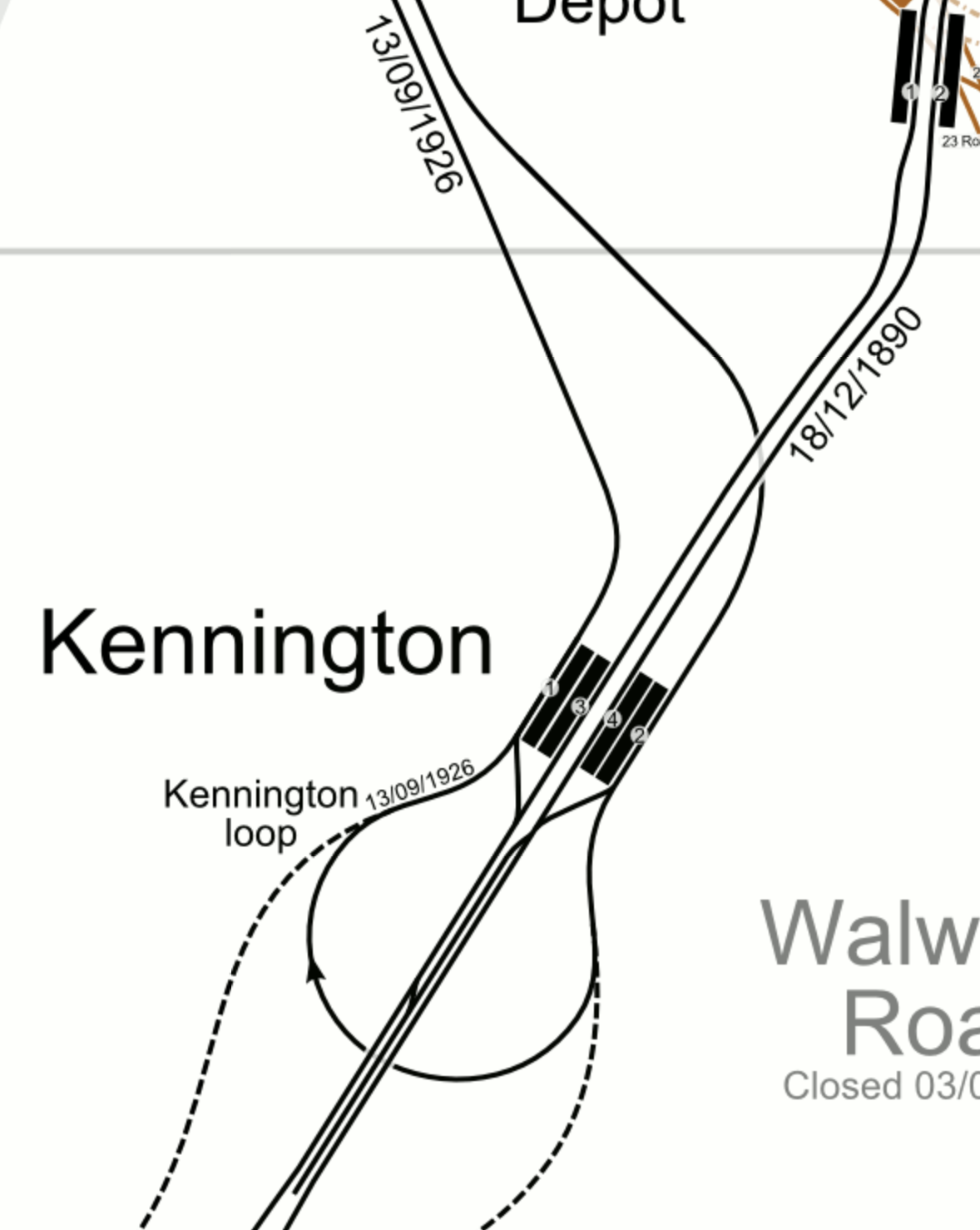
Note.
- Elephant and Castle station is at the North-East corner of the map and is on the Bank branch of the Northern Line.
- The pair of tracks going North-West are the Charing Cross branch of the Northern Line.
- The pair of tracks going South-West are the Morden branch of the Northern Line.
- Trains going South to Morden can use either Platform 2 or 4, depending, whether they have come Charing Cross or Bank.
- Trains going North from Morden can use either Platform 1 or 3, depending, whether they are going to Charing Cross or Bank.
- The Kennington Loop allows trains from Charing Cross that arrive in Platform 2 to go direct to Platform 1 to return to the North.
- There appears to be a revering siding, which can also reverse trains from either Platform 2 or 4 and send them North from Platform 1 or 3.
- Chords South of the platforms allow trains to and from Charing Cross to access the tracks to Morder and the reversing siding.
- The Battersea Power Station branch, is shown in dotted lines and connects to the Kennington Loop.
I took these pictures at Kennington station today.

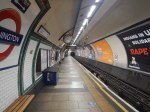
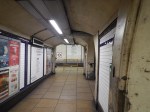
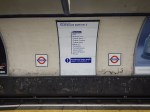
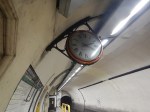
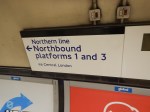

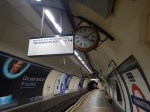
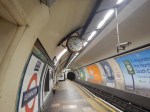
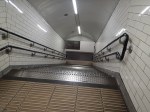
Note.
The platforms are in two pairs, which are connected by walk-through passages, with Platforms 2 and 4 for Southbound trains and Platforms 1 and 3 for Northbound trains.
- Each platform has a proper clock.
- The only access to the pair of platforms is by steep long stairs.
- The stairs need to be rebuilt with proper handrails on both sides.
- The last picture shows the handrails at Moorgate station.
Currently, the system allows journeys between the North and Morden, either directly or with a walk-across change at Kennington station.
- Going South to Morden, if you get a train, that reverses at Kennington, you would wait for a train to turn up on either Platform 2 or 4, that is going the whole way.
- Going North from Morden, if you get a train going to the wrong Northern destination, you would get off at Kennington and wait for a train to turn up on either Platform 1 or 3, that is going to the destination you desire.
What is needed on all platforms, is more comprehensive information displays.
- Displays on Platforms 2 and 4, would show details of all Southbound trains. whether they terminated at Kennington or went to Morden, or in future went to Battersea Power Station station.
- Displays on Platforms 1 and 3, would show details of all Northbound trains.
Displays would indicate destination and time as now, but with the addition of platform, where you catch the train.
If there is one problem it is taking a train between Battersea Power Station and Morden stations.
This public domain drawing from the Internet shows the station, after the Kennington Loop had been built in the 1920s and 1930s.
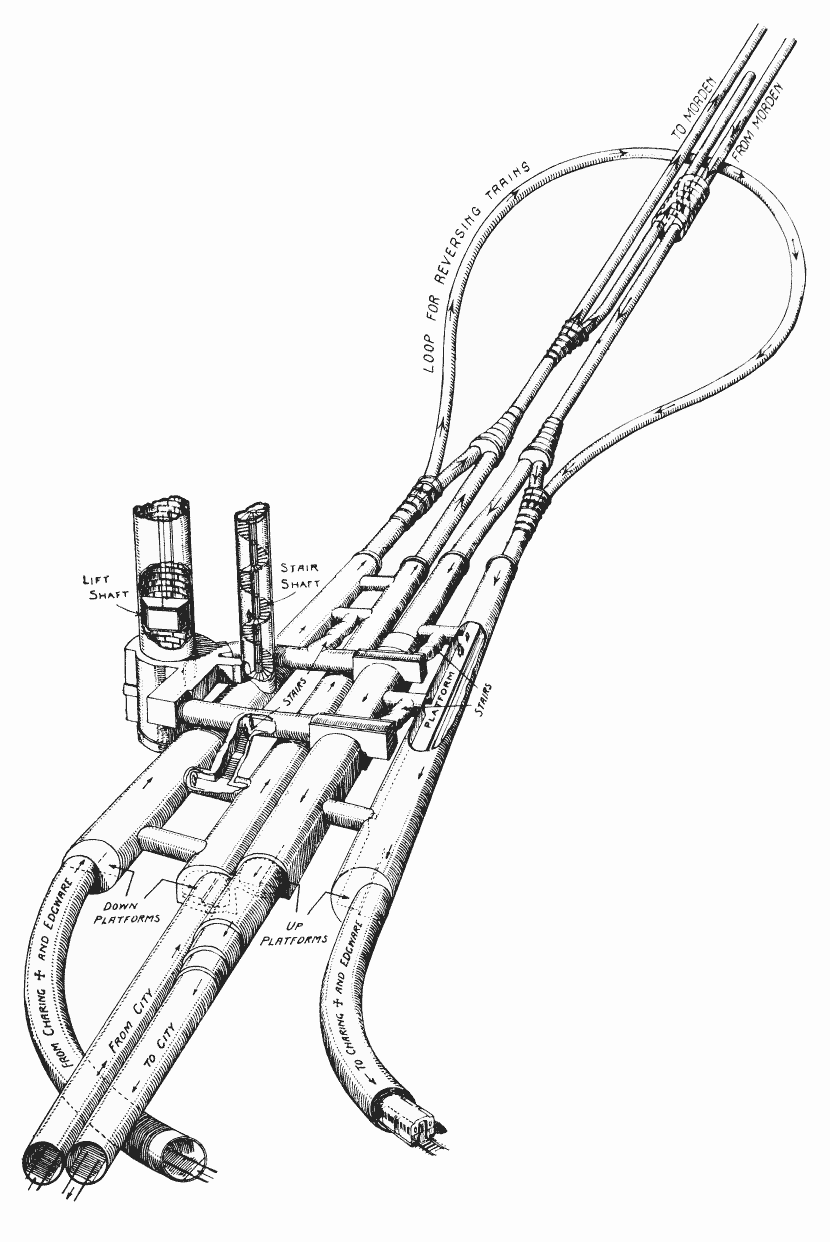
Note.
- We are looking from the North.
- The Kennington Loop at the far end of the station.
- The four platforms of the station numbered 2, 4, 3 and 1 from left to right.
- The stairs between the two pairs of platforms, leading to overbridges.
- The lift tower and a spiral staircase leading to and from the surface.
I can now sum up the step-free status of the station.
- Passengers entering or leaving the station, must walk up or down a staircase like that shown in the first picture.
- Passengers needing to change to another train going in the same direction, just walk across to the other platform in the pair.
- Passengers needing to change to another train going in the opposite direction, as they would going between Battersea Power Station and Morden stations, will need to climb one set of stairs and descend another.
It does appear that in an ideal world lifts will need to be added.
Thoughts On Future Step-Free Access At Kennington Station
In the future, it is planned that the Northern Line will be split into two lines.
- Battersea Power Station and Edgware
- Morden and High Barnet
Will this increase the number of passengers, who need to do the opposite direction change, as there will just be more trains running on all branches?
Alternative Step-Free Access
But, there may be another way to go between Battersea Power Station and Morden stations.
- Take a train from Battersea Power Station to Waterloo.
- Walk across the platform at Waterloo to the Southbound platform.
- Take a train from Waterloo back to Kennington.
- Walk across from Platform 2 at Kennington to Platform 4.
- Take the first train from Platform 4 to Morden.
The reverse journey between Morden and Battersea Power Station stations would be.
- Take a train from Morden to Kennington.
- Walk across from Platform 3 at Kennington to Platform 1
- Take a train from Platform 1 to Waterloo.
- Walk across the platform at Waterloo to the Southbound platform.
- Take the first train from Waterloo to Battersea Power Station.
Note,
- Both routes have two changes; one at Kennington and one at Waterloo,
- All changes are step-free.
- All changes are very simple
It should also be noted that Battersea Power Station, Nine Elms and Waterloo are all or will be fully step-free stations.
The two routes I have outlined have one big advantage. They already exist and the only costs would be training of staff and indicating the routes to passengers.
 The Anonymous Widower