MagniX and AeroTEC Put All-Electric Cessna Airplane Into The Air For First Time
The title of this post is the same as that of this article on GeekWire.
This is the introductory paragraph.
An all-electric version of one of the world’s best-known small utility airplanes hummed through its first flight today at Moses Lake in central Washington state.
This is a picture of another Cessna Caravan, that I took, as I boarded it in Kenya for a flight to the Maasai Mara.
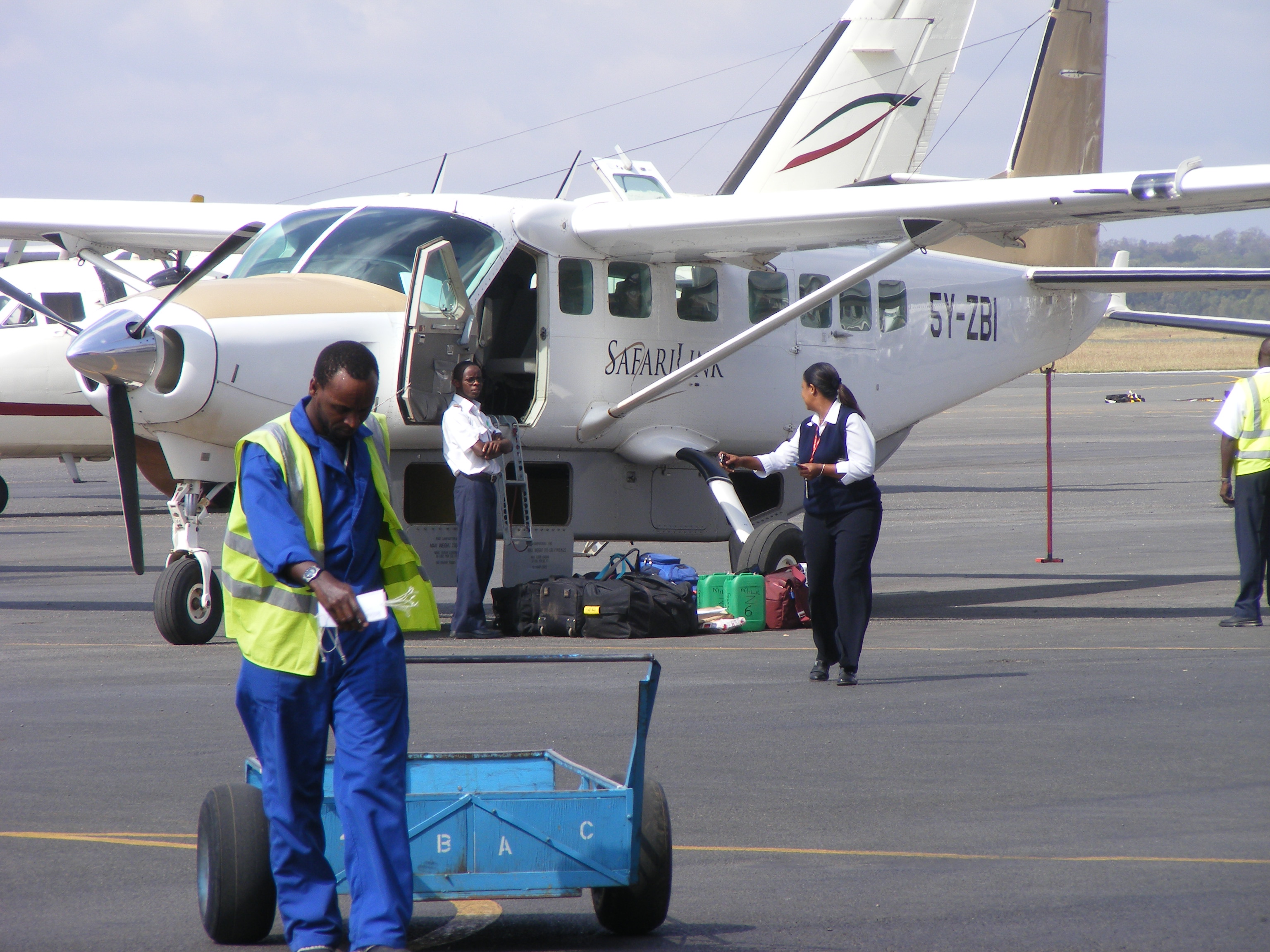
The aircraft are very much a Ford Transit or Mercedes Vito of the skies.
- 2,600 have been built.
- It is still in production.
- The passenger version can carry nine passengers.
- Total flight hours are over twenty million.
- FedEx operates 239 of the type.
It must surely, be an ideal aircraft to convert to electric power.
This is a video of the first flight on YouTube.
The guy behind the project;Roei Ganzarski has just given a very optimistic interview on BBC Breakfast.
He emphasised the various environmental and financial advantages of the aircraft and if you can catch it on the iPlayer, it outlines a possible future for aviation.
I can see electric Cessna Caravans flying around the UK within the next couple of years.
Designing And Building An Electric Aircraft
Three of the designs for commercial electric aircraft under development are conversions of existing designs.
- Roei Ganzarski’s conversion of a Cessna Caravan.
- Harbour Air’s conversion of a DHC-2 Beaver.
- Cranfield University’s conversion of a Britten-Norman Islander.
This must make certification of the aircraft simpler, as you’ve just replaced one type of engine with a battery and electric motor of similar size.
The difficult parts of the design; the aerodynamics and structure are probably almost unchanged.
As MagniX are involved in the first two of these projects, I would suspect that they have come up with an electric motor, that fits what is needed for aviation very well.
But then electric motor design is changing, probably driven by the needs of electric transport from bicycles through cars and vans to buses, planes, ships, trains and trucks.
It should also be noted, that the Beaver, Caravan and Islander are all simple aircraft, with a long history of successful operation and a vast knowledge base amongst pilots, engineers and operators of how to use these aircraft safely and in a financially viable way.
Will we see other aircraft conversions from to electric power in the next few years?
This page on Flying Magazine discusses conversion of Cessna 172 to electric power.
£2.7bn East Midlands Plan Unveiled For HS2 Links
The title of this post, is the same as that of this article on Rail News.
This is the first two paragraphs.
A bold plan costed at £2.7 billion for the area around the HS2 hub in the East Midlands has been published by a group of councils, transport bodies and East Midlands Airport.
The core of the scheme is the future East Midlands Hub at Toton, and the plan proposes direct access to the Hub from more than 20 cities, towns and villages in the East Midlands.
If you want to read the original report by Midlands Connect, there’s a download link on this page of their web site.
The project is in three phases.
Phase One
Phase One is to be operational within ten years.
- Scheme 1 – The extension of the Nottingham tram system (Nottingham Express Transit or NET light rail system) from the Toton Lane Park and Ride site to Long Eaton via two new stops at the planned Innovation Campus development and HS2 East Midlands Hub station.
- Scheme 2 – New bus services between the HS2 East Midlands Hub and Amber Valley, West Bridgford and Clifton.
- Scheme 3 – Bus Rapid Transit between the HS2 East Midlands Hub and Derby city centre via Pride Park and Derby railway station.
- Scheme 4 – Extension of the HS2 East Midlands Hub A52 highway access route to the A6005 Derby Road in Long Eaton.
- Scheme 5 – Capacity enhancements to M1 Junction 25, increasing road capacity and improving access to the HS2 East Midlands Hub station and Innovation Campus site.
- Scheme 6 – The implementation of a minimum of four direct rail services per hour linking the HS2 East Midlands Hub station to Derby, Nottingham and Leicester stations, as well as Loughborough, Matlock, Mansfield, Newark, Alfreton and Grantham, made possible by the building of a new piece of infrastructure, the Trowell Curve, which will link to the Midland Mainline.
- Scheme 7 – New rail service between Mansfield, Derby and Leicester with stops at Ilkeston, Langley Mill, Kirkby in Ashfield, Sutton Parkway and HS2 East Midlands Hub via the Kirkby Freight Line (Maid Marian line).
Note.
- These schemes will be built before the HS2 East Midlands Hub station opens.
- I discussed Scheme 7 – The Maid Marian Line in After The Robin Hood Line Will Nottingham See The Maid Marian Line?.
The most important part of Phase One is that all these seven schemes will be built before High Speed Two reaches the East Midlands. So hopefully, there will be a continuous stream of improvements in the East Midlands.
Phase Two
Phase Two will be operational within twenty years.
- Scheme 8 – Extension of the NET light rail system or enhanced Bus Rapid Transit from the HS2 East Midlands Hub station to Derby.
- Scheme 9 – The construction of a railway station at East Midlands Airport, connected to the Midland Mainline via a spur to the south of Kegworth village, allowing new direct rail services to the airport from Derby, Nottingham, Leicester and Mansfield as well as some intermediate stations including HS2 East Midlands Hub and East Midlands Parkway. This intervention will vastly improve public transport access to East Midlands Airport for passengers and staff.
Phase Three
Phase Three will be operational within twenty-five years.
- Scheme 10 – A new rail line between East Midlands Airport (opened during Phase 2) and Derby via the South Derby Growth Zone residential and employment developments and the Rolls Royce site, designed to support local housing and employment growth.
- Scheme 11 – A tram-train service connecting into the NET light rail network (Phase 1) to a proposed development site (11,000 houses and other associated development) to the west of East Midlands Airport. This scheme would also serve stops within the Ratcliffeon-Soar power station development site and could also serve Kegworth village and the East Midlands Gateway Logistics Park.
It is comprehensive project and I will discuss the various schemes in separate posts.
Syon Lane Station – 26th May 2020
These pictures show the current state of Syon Lane station.



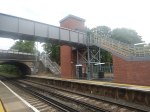
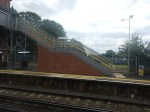

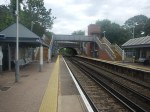

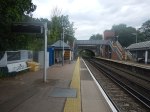

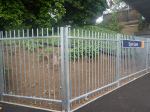
A few questions.
Is The Station Complete?
The stairs are blocked off, but most appears complete. Perhaps, serious testing of the lifts are needed.
Has the testing been held up by COVID-19?
Will There Be A Second Lift Tower?
As the walkway is still closed off, I couldn’t check at the top, but it does look there is space for a second lift tower on the London-bound platform.
What Is Happening Behind The London-Bound Platform?
Behind the London-bound platform is a patch of waste land and some scruffy garages.
Is the site being cleared? And to what purpose?
Bamboo Sleepers Aimed At Middle Eastern Railways
The title of this post, is the same as that on this article on the Railway Gazette.
Sounds surprising, but the company founder and CEO, gives these advantages.
Avraham says that bamboo sleepers bring advantages in railway construction and renewal because the material does not require additional after-treatment with substances such as creosote in order to provide long term protection. It is also naturally impervious to insect infestation. This means the risk of soil and groundwater contamination from chemicals is minimised compared to alternative materials.
They are going to launch production with 50,000 tonnes of raw bamboo.
Reintroduction Of Passenger Rail Services On The Waterside Line
This is one of the successful bids in the First Round of the Restoring Your Railway Fund.
At first I wasn’t sure, which line was referred to as the Waterside Line. But then I looked at the Fawley Line on Wikipedia.
This is the opening paragraph.
The Fawley branch line, also known as the Waterside line is a standard-gauge railway line to Fawley, in the English county of Hampshire. It is on the opposite side of Southampton Water from the city of Southampton itself, in an area known as Waterside. For 40 years a passenger service operated, but this was withdrawn with the exception of the occasional enthusiasts’ railtour. The line serves the freight needs of Marchwood Military Port, having also served the same function for Fawley Refinery until 2016.
I explored this line in Reopening The Fawley Branch Line.
The Wikipedia entry, also gives details under Future, of a plan by the Association of Train Operating Companies to reopen the line.
The proposals in Wikipedia included.
- Reopening of all former stations along the line; Marchwood, Hythe, Hardley Halt and Fawley
- A new station in Totton called Totton West, sited just west of the junction with the main line.
- A new train service from Fawley or Hythe to Totton and on via Southampton Central, Southampton Airport Parkway, Eastleigh, Chandlers Ford and Romsey before returning to Southampton Central, Totton and Fawley or Hythe, also serving other intermediate stations.
The service was planned to run half-hourly during peak times and hourly at other times.
The Route
This Google Map shows the area of the Waterside Line
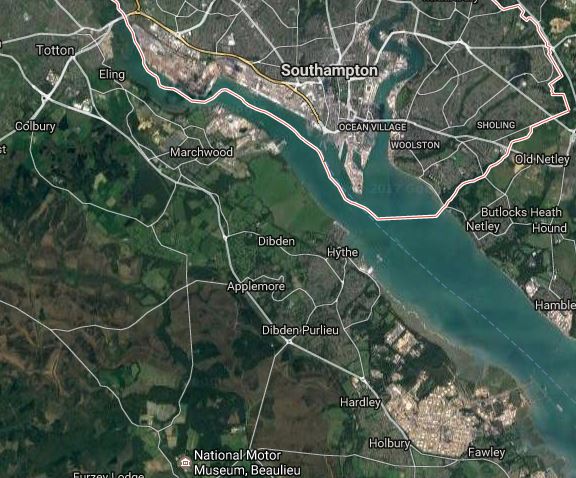
Note.
- The line starts at Totton and there used to be stations at Marchwood, Hythe, Hardley and Fawley.
- All the places with stations are named on the map.
- The line is about seven miles in length.
- From my helicopter, it looks to be single-track most, if not all the way.
- There is a ferry between Hythe and Southampton.
This picture shows where the Waterside Line joins the main line.
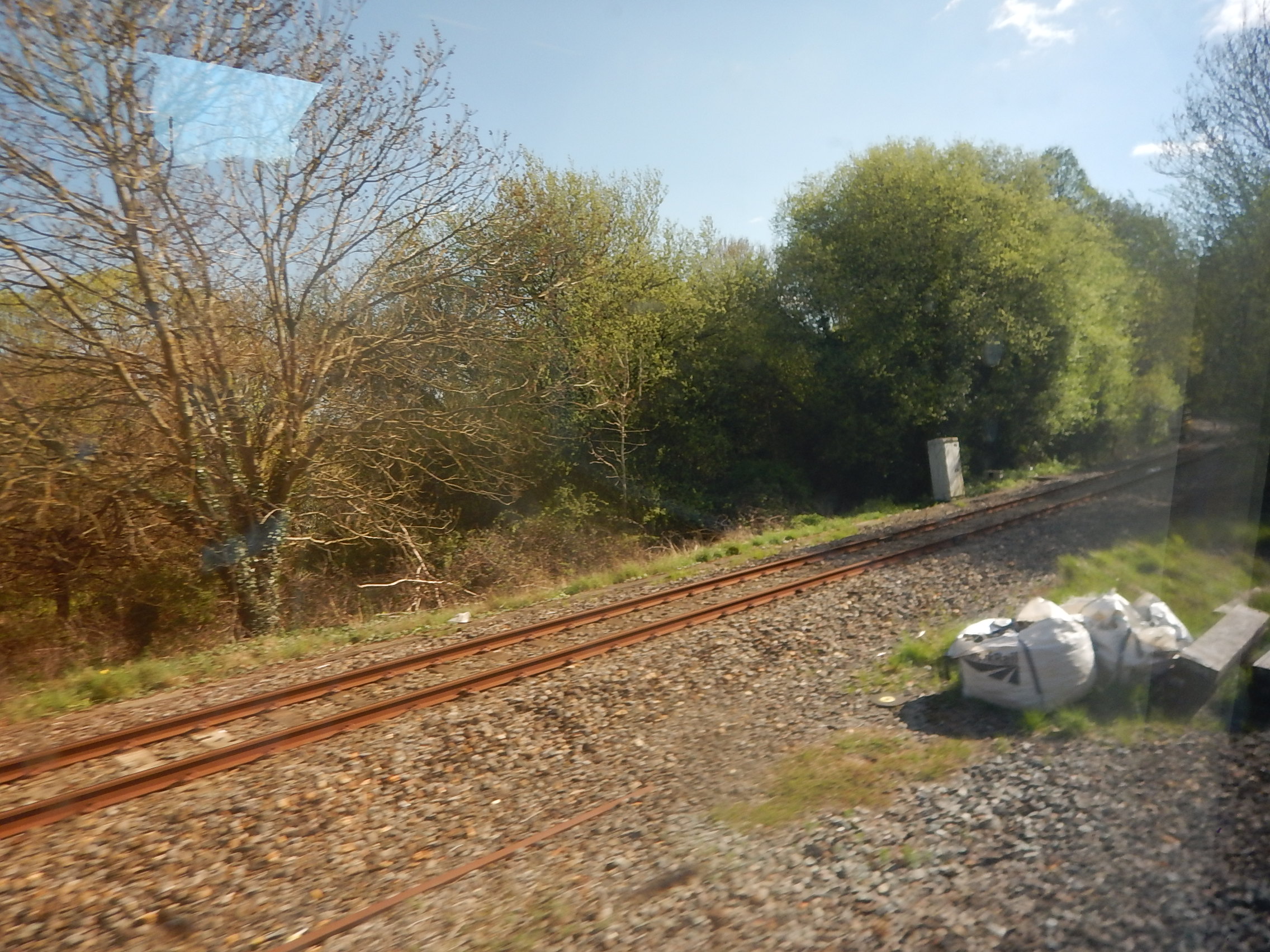
It all looks pretty tidy and in good condition, so making the connection to the main line wouldn’t be too difficult.
The line passes through Hythe about two hundred metres from the water.
This Google Map shows Hythe.
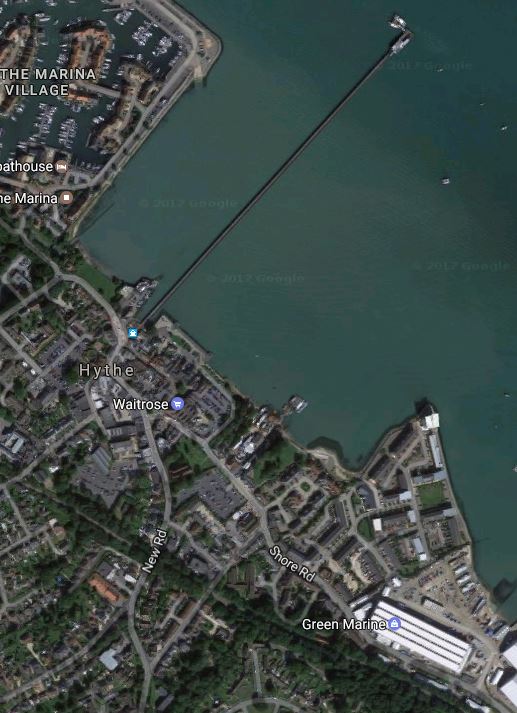
The railway can be picked out as the green scar going across the bottom of the map.
I took these pictures, when I visited Hythe in February 2017.
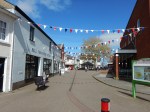
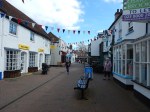
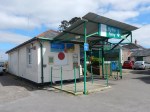
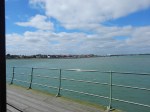
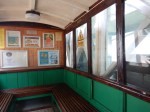
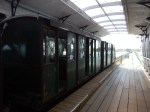

I’m not sure, where the new Hythe station would go.
As the Waterside Line was still fully in use to Esso Fawley until four years ago, I should suspect that updating the track and signalling for passenger trains wouldn’t be the most challenging of projects.
The Trains
Wikipedia says this about the trains to be used.
The service would be operated by the then franchisee; South West Trains using diesel multiple units (DMUs)
This means they will be Class 158 or Class 159 trains, as South West Trains doesn’t have any other DMUs.
This picture shows a newly-liveried Class 159 train at Corfe Castle station.
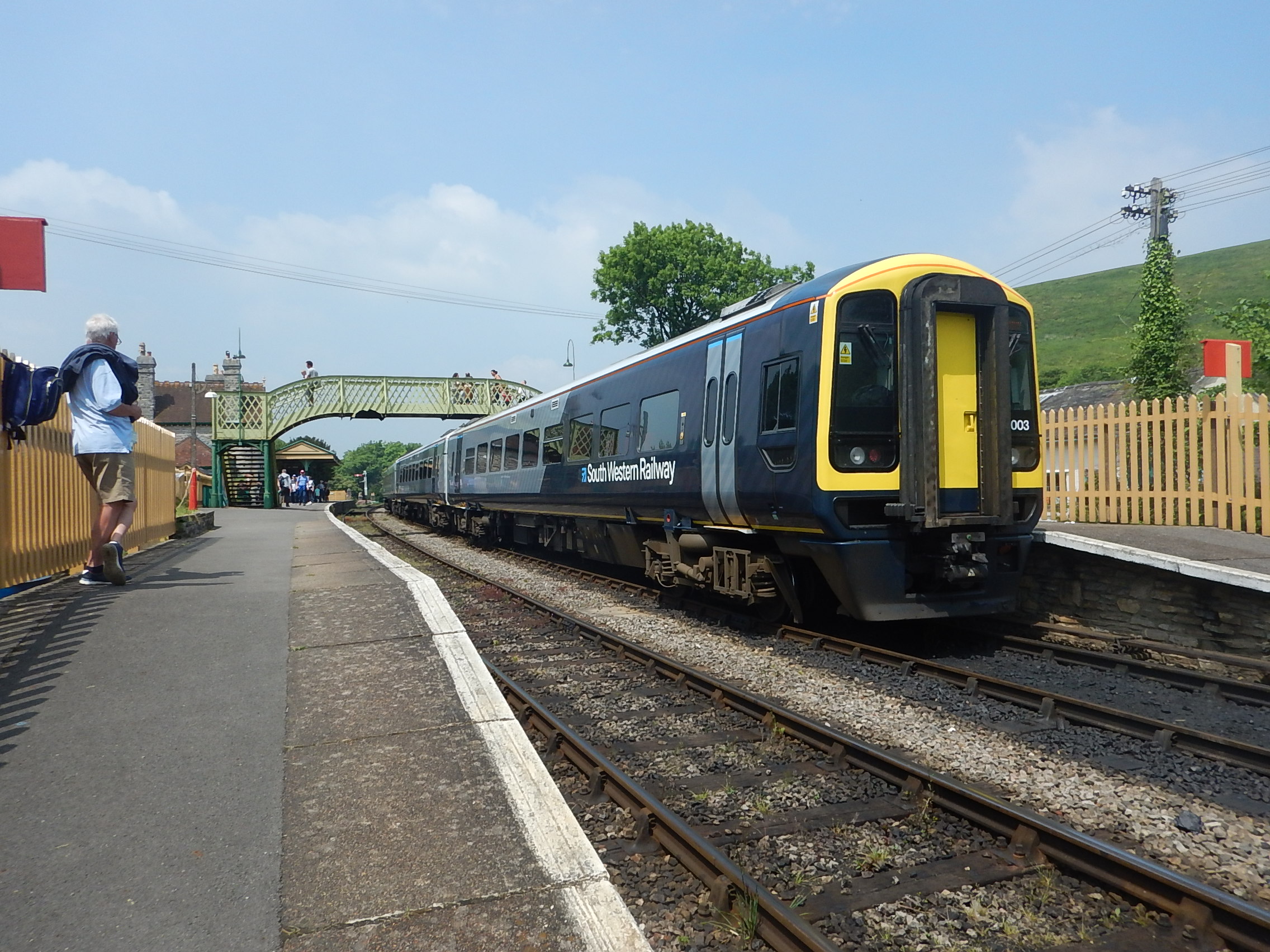
The Class 158/159 trains would certainly do a job, but I believe that any solution must be zero-carbon, to meet the UK’s target of being carbon neutral by 2050.
The Use Of Battery Trains
Consider.
- Fawley and Totton West Junction are seven files apart. As there are five stations, I will assume three minutes per station of a journey of fifteen minutes.
- Totton West and Eastleigh are ten miles apart and fast trains take seventeen minutes.
- Eastleigh and Romsey are seven miles apart and fast trains take fourteen minutes.
- Only the section between Totton West and Eastleigh is electrified.
- Adding up the times gives a journey time between Fawley and Romsey of forty-six minutes.
- Add in fourteen minutes to turn the trains and each Fawley and Romsey takes an hour with a two-hour round trip. This is all very convenient!
- For example, an hourly service, would need two trains and they could leave Fawley and Romsey at the same time.
- It could also be arranged, that only one train was on the single-track Waterside Line at any one time.
- The fourteen minutes being used to turn the train, could also be used to charge the batteries on a battery-electric train.
- In each two-hour round trip between Fawley and Romsey, trains would spent thirty-four minutes connected to electrification and twenty-eight minutes connected to chargers. This means that there is plenty of time to charge the batteries.
- It should be noted that the train runs on a busy main line between Totton West and Eastleigh, so good acceleration and 90-100 mph capability would probably be needed, by any trains shuttling between Fawley and Romsey.
With charging facilities at Romsey and Fawley, I would be certain, that a two battery-electric trains could provide an hourly service on the route.
Candidates would probably include battery-electric versions of a Bombardier Aventra or Electrostar, a CAF Civity or a Siemens Desiro City. I doubt, that the performance of a Class 230 train is enough to keep out of the way of fast expresses.
The Use Of Hydrogen Trains
The route could also be worked by a hydrogen-powered train with enough performance.
The Stations
There would need to be new stations at Totton West, Marchwood, Hythe, Hardley and Fawley.
As the first is new and the others were closed in the 1960s, they would be complete builds, rather than an easy refurbishment.
Fawley Waters
In the Wikipedia entry for Fawley station, there is a section called Proposed Reopening, where this is said.
In August 2018, it was revealed that plans to reopen the Fawley Branch Line had been resurrected as part of the redevelopment known as Fawley Waters. It proposed a half-hourly service on a Monday to Saturday from Southampton Central to Fawley. At Marchwood the journey time would take 12 minutes and the linespeed would be 60 mph (97 km/h). Fawley station, if reopened, would be known as Hythe & Fawley Parkway which would serve both Hythe and Fawley.
Now, there would appear to be two plans for the operation of the Waterside Line.
- The Association for Train Operating Companies plan, which has an hourly service to Totton, Southampton Central, Southampton Airport Parkway, Eastleigh, Chandlers Ford and Romsey, from five stations on the branch.
- The Fawley Waters plan, which has a half-hourly service to Totton and Southampton Central, from just two stations on the branch.
One plan would probably appeal to existing residents and the other to those, who bought new properties in Fawley Waters.
Conclusion
Future studies funded by the successful bid, could decide, which plan is best.
Overall though, this is a simple plan, that opens up an area to the West of Southampton for development.
Reinstatement Of Branch Lines On The Isle Of Wight
This is one of the successful bids in the First Round of the Restoring Your Railway Fund.
This article on isleofwhiteradio is entitled Funding From Government To Develop Isle Of Wight Railway Reopening Proposals.
The article lists two proposed schemes for expansion of the Island Line.
• Extension of the existing Island Line service (Ryde-Shanklin) south of Shanklin to reach Ventnor, calling at Wroxall.
• Integration with, and extension of, the existing Isle of Wight Steam Railway route to provide passenger services through Smallbrook from Ryde to Newport.
The article has an informative map.
Nearly, three years ago, I wrote Diesel And Battery Trains Could Be The Solution For Island Line, based on an article on the Island Echo, with the same title.
Since then, things have moved on and these developments have started.
- Vivarail are building a fleet of five new zero-carbon Class 484 electric trains.
- Network Rail have promised £5 million to upgrade Ryde Pier to secure the future of the line.
- The track and signalling system will be upgraded this winter.
- The passing loop at Brading will be reinstated.
This will allow a thirty minute service interval from May 2021.
Wikipedia states that a twenty-minute service could be possible in the future.
The Trains
These pictures show the Class 230 trains on the Marston Vale Line.
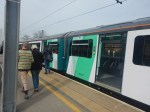
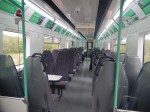
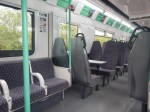
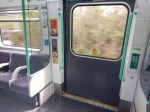
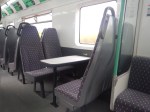
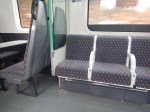
Note.
- These are a diesel-electric version of the Class 484, which will use the existing third-rail electrification and possibly batteries on the Island Line.
- The operator can choose an interior appropriate to their needs.
- Three-car versions of the train have been ordered by Transport for Wales.
Battery versions of the train are available with a forty-mile range, See Retired London Underground Train Travels Forty Miles Solely On Battery Power.
The Extension To Ventnor
Looking at the map and measuring distance using methods that would have been known to Drake and Grenville, I estimate that the distance between Shanklin and Ventnor via Wroxhall is less than fifteen miles.
- As the battery range of Vivarail’s trains can be in the region of forty miles, this must open up the possibility of using battery power between Shanklin and Ventnor.
- Building the extension without electrification would lower the cost.
- Trains running from Shanklin to Ventnor would be charged on the electrified section of the route.
- One of Vivarail’s charging systems could be installed at Ventnor if required. See Charging A Battery-Powered Class 230 Train.
Would Vivarail just add a third car with batteries to the Class 484 trains and update the software to enable trains to run on the extension to Ventnor?
The Extension To Newport
The Island Line connects to the Isle of Wight Steam Railway at Smallbrook Junction station.

Note.
- The Island line running North-South on the Eastern side of the map.
- The Isle of Wight Steam Railway curving away to the South-West.
- The two railways connecting at Smallbrook Junction station.
- Ryde is to the North.
- Shanklin is to the South.
- Newport is to the West.
I doubt, that allowing trains to run between Ryde and Newport, would be one of the most challenging projects in railway engineering.
The map on the isleofwightradio web site, shows a chord, that would allow trains to run between Shanklin and Newport.
I would estimate that the distance between Smallbrook Junction and Newport is around ten miles.
- The terminus would appear to be in the Barton area of Newport.
- Much of the route would appear to be across open countryside.
- The only place for a station could be the Isle of Wight Crematorium. Why not?
As with the extension to Ventnor, I believe that battery-electric Class 484 trains could run services to Newport.
Will The Isle Of Wight Steam Railway Object?
I very much feel, that if the scheme is well-designed, that they could be a beneficiary because of increased numbers of visitors.
The scheme might also be able to give the steam railway paths to run steam trains as far as Ryde St. John’s Road station.
Conclusion
This proposal is an elegant one, that uses proven technology and builds smoothly on work, that is already underway.
It is also a zero-carbon solution, if the electricity is from renewable sources.
I also suspect, if Network Rail put one of their brighter teams on the current upgrade to the track and signalling of the Island Line, that the extra work needed to connect to Ventnor and Newport, could be planned and costed in a very short time.
Reinstatement Of The Bury-Heywood-Rochdale Lines
This is one of the successful bids in the First Round of the Restoring Your Railway Fund.
This article on Rochdale OnLine is entitled Successful First Step To Restore Rochdale-Heywood-Bury Railway Line.
The work can now begin to fill out what is possible, with the award of funding from the Government to go towards a full study.
The funding was welcomed by Tony Lloyd, the MP for Rochdale, who is quoted as saying this.
Metrolink services and the rail service from Rochdale to Manchester provide transport to the city centre, but it does not provide the kind of connections we need to get around the city region, in particular, from Rochdale and Heywood to Bury.
“The current public transport offering between Heywood and Manchester city centre is provided by bus services but during the busiest times of the day this journey can take more than one hour, limiting the borough’s residents’ access to the many jobs located there.
What will the new rail link look like?
In Rossendale Reopening Prospect, I gave my views, based on an article in the February 2019 Edition of Modern Railways, which had the same title.
Summarising the other article, I can say the following.
The Track
I described the track like this.
The plan envisages reinstating the route between Rawtenstall and Castleton Junction on the Calder Valley Line.
The section between Rawtenstall and Heywood stations, via Bury Bolton Street station is the heritage line of the East Lancashire Railway (ELR). It is best described as predominately single-track with passing loops.
The route is about twelve miles long.
The Services
These are given as follows.
- Manchester Victoria and Bury Bolton Street
- Bury Bolton Street and Rochdale
- Bury Bolton Street and Rawtenstall – Peak Hour shuttle.
It is suggested that the third route would be run by the ELR.
The Stations
The following stations will be on the route.
Most will need updating, but Heywood would probably be a new station.
The Trains
The original article suggests Class 230 trains, but several others are possible. The proposed battery-electric Class 331 train is surely a possibility.
Conclusion
This could be a very sensible scheme.
A Train With A Geo-Fence
This article on Rail Advent is entitled New Train For Wrexham to Bidston Line Begins Testing.
The testing of Vivarail‘s Class 230 train for Transport for Wales, is taking place along the Cotswold Line, prior to entering service.
This is the most significant paragraph in the article.
The train is also geo-fenced so that the gensets are never used in stations or sensitive areas, although, the batteries are extremely quiet anyway.
From personal experience of battery trains, including Vivarail’s prototype in Scotland, battery trains are very quiet.
Reinstatement Of The Ivanhoe Line
This is one of the successful bids in the First Round of the Restoring Your Railway Fund.
The Ivanhoe Line, is a half-completed project left over from the days of British Rail.
- The main objective appears to be to extend the current line between Lincoln and Leicester via Nottingham, East Midlands Parkway and Loughborough stations to Burton-upon-Trent along the freight-only Leicester-Burton-upon-Trent Line.
- Some new stations will be added.
In January 2020, I wrote Silent Hydrogen Trains On The Cards For New Line Linking Burton And Leicester, after reading an article on Derbyshire Live.
I finished that article by listing the possibilities.
There are a lot of possibilities to extend the Ivanhoe Line to Burton and even beyond using the South Staffordshire Line.
- Battery or hydrogen trains can be used.
- Stations can be added as required.
- The route will connect to East Midlands Airport.
- A solution for Knighton Junction can surely be devised.
Amazon are reported to be interested in the project, as they have a big depot at Coalville.
It now looks like it’s all going to be turned into a plan for reality.
I do have some questions.
What Will Be The Solution To The Knighton Junction Problem?
Sadly, when the route was closed to passengers in 1964, British Rail simplified Knighton Junction at the Leicester end of the line. Wikipedia says this.
At the Leicester end of the line, Knighton North Junction has been dismantled and the former course of the line to the junction has been sold and turned into an industrial estate. The line’s remaining connection with the Midland Main Line is Knighton South Junction, which faces southwards, away from Leicester station. Trains between Leicester and the line therefore have to reverse direction at the junction.
This Google Map shows, what’s left of the junction.
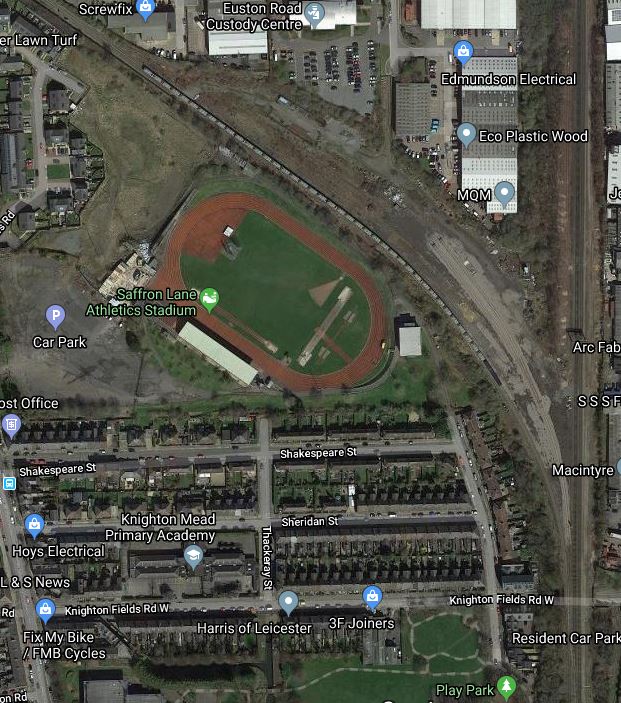
Note.
- Leicester is to the North
- Burton is to the North-West.
- Melton Mowbray and London are to the South.
It looks to me, that someone at British Rail made it absolutely certain, that the rail line could not be reopened to provide a passenger service between Leicester and Burton.
For a train to go between Leicester and Burton, it would either need to reverse as Wikipedia indicated, or the curve would have to be very tight.
It looks like the preferred solution, will be to build a new station to the South of Knighton Junction.
- The station would only need a single platform.
- It could be easily fitted in alongside the Midland Main Line.
Trains will reverse to get around the tight corner.
Will There Be A Station At Leicester City Stadium
This Google Map shows the stadium.
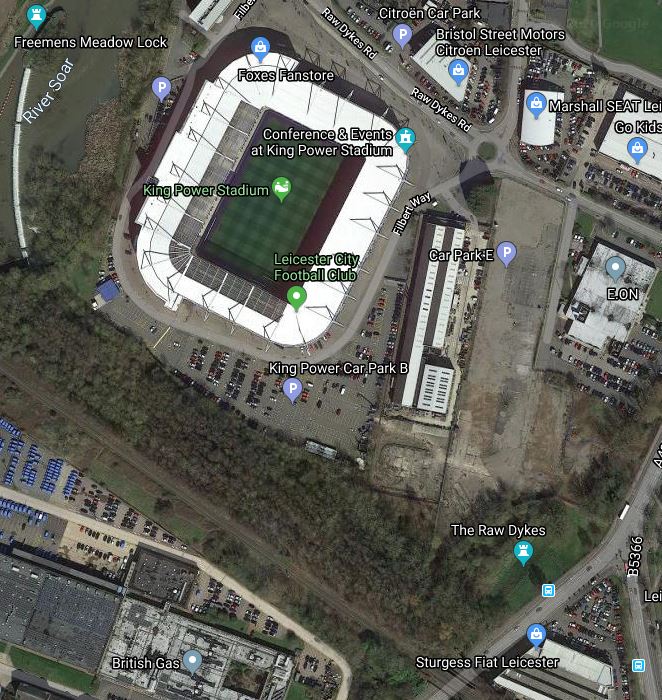
Note the rail line passing to the South of the station.
It would appear that building a new station would not be the most difficult of projects.
But after the experience of Coventry City, who were relegated twice after Coventry Arena station opened, would Leicester City want a station?
Could The Ivanhoe Line Be Connected To High Speed Two At Ashby-de-la-Zouch?
I heard an MP on the radio, who was very much against High Speed Two and that led me to write Could High Speed Two Have A Station At Ashby-de-la-Zouch?.
I think this is a serious possibility in the future.
Could East Midlands Railway Use The Route To Run A London And Burton-on-Trent Service?
Consider.
- East Midlands Railway‘s Class 810 trains could be fitted with a battery, that would give the trains a battery range of between 55 and 65 miles.
- The trains would have a charge time of perhaps 10 minutes.
- The distance between Knighton Junction and Burton-on-Trent is around 35 miles.
- The distance between Knighton Junction and the Northern limit of the electrification at Market Harborough station is fifteen miles.
- The distance between Market Harborough and Burton-on-Trent stations is 50 miles.
I think it would be possible for a battery-electric Class 810 train to run between London and Burton-on-Trent.
- The batteries would need to be charged at Burton-on-Trent.
- Perhaps, the easiest way to provide charging facilities would be to electrify the last ten miles between Ashby-de-la-Zouch and Burton-on-Trent stations
- The service could call at all or selected stations between Knighton Junction and Burton-on-Trent.
I think this could be a very useful service, even if it only ran a couple of times every day.
Could Battery-Electric Trains Run The Whole Ivanhoe Line Between Lincoln And Burton-on-Trent?
The problem is not the trains, but the lack of electrification between Market Harborough and Clay Cross North Junction.
Leicester station is an important station on the MML.
But it would be a difficult station to electrify because of a bridge with limited clearance.
In Discontinuous Electrification Through Leicester Station, I discussed how the following.
- Discontinuous electrification through Leicester station.
- Electrification between Leicester and Derby stations.
- Electrifying the High Speed Two route between Clay Cross Junction and Sheffield.
Would allow Hitachi Class 810 trains, equipped with batteries to run between London and Sheffield on electric power alone.
Consider.
- As I have said East Midland Railway’s new Class 810 trains could be fitted with batteries with a range of 55 to 65 miles.
- The gap between Leicester station and the end of the electrification at Market Harborough is sixteen miles.
- Knighton Junction is less than two miles South of Leicester station.
- Burton-on-Trent is around forty miles from Leicester station.
- All passenger trains passing through Leicester station, stop in the station to set down and pick up passengers.
It would thus appear that the following would be possible.
- A Northbound battery-electric train from St. Pancras to Leicester or further North could reach Leicester on battery power from Market Harborough.
- A Northbound battery-electric train from Burton-on-Trent to Leicester or further North could reach Leicester on battery power from Burton-on-Trent.
- A Southbound train from Leicester or further North to St. Pancras could reach Market Harborough on battery power from Leicester.
- A Southbound train from Leicester or further North to Burton-on-Trent could reach Burton-on-Trent on battery power from Leicester.
Trains leaving Leicester would need to be fully charged.
So how would this be arranged?
I think the simplest method would be to electrify the section of the Midland Main Line between Leicester and Derby stations.
- The route is probably not the most difficult to electrify.
- East Midlands Parkway has good electrical connections, as it is next to Ratcliffe-on-Soar power station.
- Nottingham is just nine miles from East Midlands Parkway.
- Derby is thirty miles from East Midlands Parkway.
- Clay Cross North Junction, where the joint electrified section with High Speed Two commences is twenty-one miles from Derby.
- Lincoln is forty-two miles from East Midlands Parkway.
- Battery-electric trains could use this electrification for both traction power and to charge their batteries.
- As the trains would use battery power between Derby and Clay Cross North Junction, the sensitive issue of electrifying through the World Heritage Site of the Derwent Valley Mills, will have been avoided.
All East Midlands Railway’s InterCity services would be totally carbon-free.
It should also be noted, that as Lincoln is only forty-two miles from East Midlands Parkway, provided there was the ability to recharge the trains at Lincoln, the whole Ivinghoe route between Lincoln and Burton-on-Trent could be run by a suitable battery-electric train.
Could Hydrogen Trains Run The Whole Ivanhoe Line Between Lincoln And Burton-on-Trent?
If the route can be run by a battery-electric train, I can see no reason, why a hydrogen-powered train couldn’t do a good job on the route.
I suspect that the Alstom Breeze and any future trains, that are designed for hydrogen power, will also be able to use electrification, where it exists.
So, if any more electrification was erected on the Midland Main Line, the hydrogen trains would take advantage.
The hydrogen trains would need to be refuelled, but because of their long range, this would probably only be a twice a day operation at most.
There is probably space for a refuelling point, at either end of the route.
Conclusion
This is a good scheme, that should have been completed decades ago.
 The Anonymous Widower