New Hydrogen Refuelling Company To Drive A Greater Adoption Of Fuel-Cell Cars
The title of this post is the same as that of this article in the Telegraph.
This is the introductory paragraph.
Hydrogen delivery and fuel-cell power took a step forward this week with the announcement of a new hydrogen-gas refuelling company. ITM Motive will run its parent company ITM Power’s existing eight filling stations with plans for more. Time will tell how much of a step it is, but the creation of this new renewable refuelling subsidiary should have enough credentials to vastly improve the prospects for fuel-cell cars, trucks, trains and buses in the UK.
Does this move, explain the rise in the share price?
Railfuture On The Castlefield Problem
This report on the railfuture web site is entitled The Castlefield Problem – A Great Opportunity For Freight.
This is the introduction to the report.
Railfuture believes that railways should be the transport mode of choice if we are to balance the needs of the economy with those of tackling the Climate Emergency and campaigns for a bigger and better railway capable of carrying more freight as well as providing for ever increasing passenger demand.
Manchester’s Castlefield corridor is a bottleneck and has become a byword for unreliability. It is expected to carry 12 passenger services and one freight train in each direction every hour. This report recommends some medium to long term interventions aimed in particular at expanding the freight offering, since movement of goods by road is the most difficult to decarbonise.
It then goes on to describe the problem in detail. This is an important paragraph.
Meanwhile, the increase in intermodal freight traffic between Trafford Park and the southern ports has seen all the available freight capacity (known as signalling paths) taken up, with each freight train using the equivalent of two passenger paths.
The report then makes these points about the freight services to and from Trafford Park Rail Freight Terminal.
- Freight has no choice but to use the Castlefield route.
- There is no access to Trafford Park is from the West Coast Main Line (WCML) other than via Castlefield.
- As freight doesn’t complain on social media when it is late or cancelled, it is a popular target for politicians looking for a solution.
The report says that the ideal solution would be to access Trafford Park from the western end.
The report then asks, the fundamental question, as to whether the Trafford Park terminal is fit for purpose and details these points.
Operation is not very efficient.
It only has a limited number of sidings with gantries.
Can Trafford Park handle the growth of rail freight to and from Manchester?
This map shows the Trafford Park terminal.
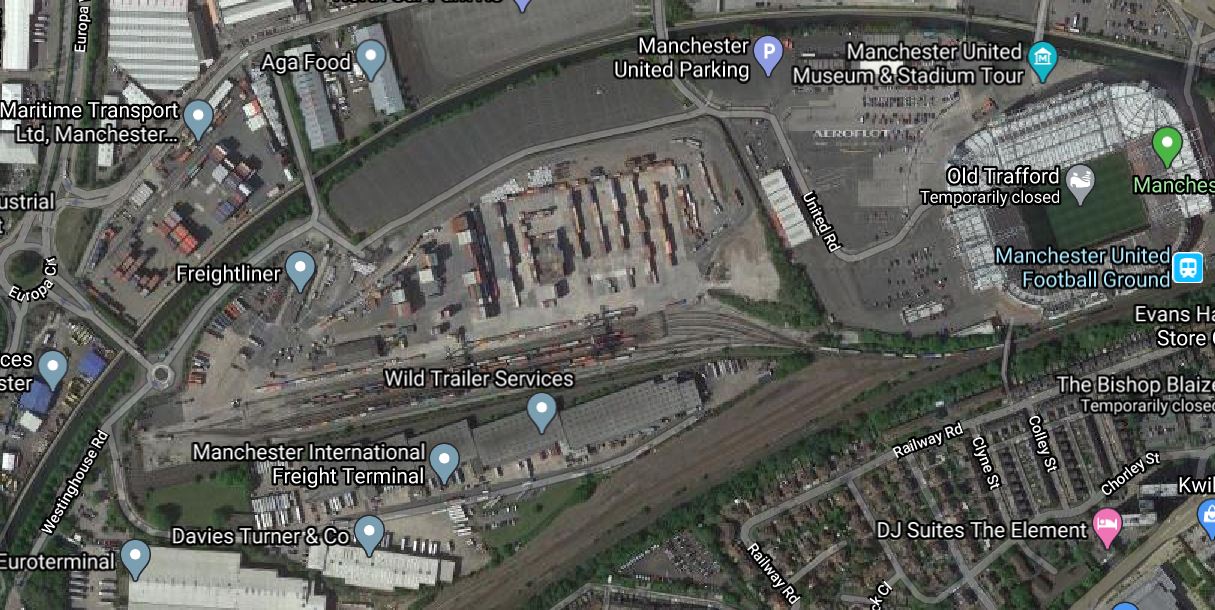
There doesn’t appear to be much space to expand.
railfuture’s Solution
railfuture are proposing that a second rail freight terminal be built in the Borough of Trafford at Carrington Park, which is described by this paragraph in the report.
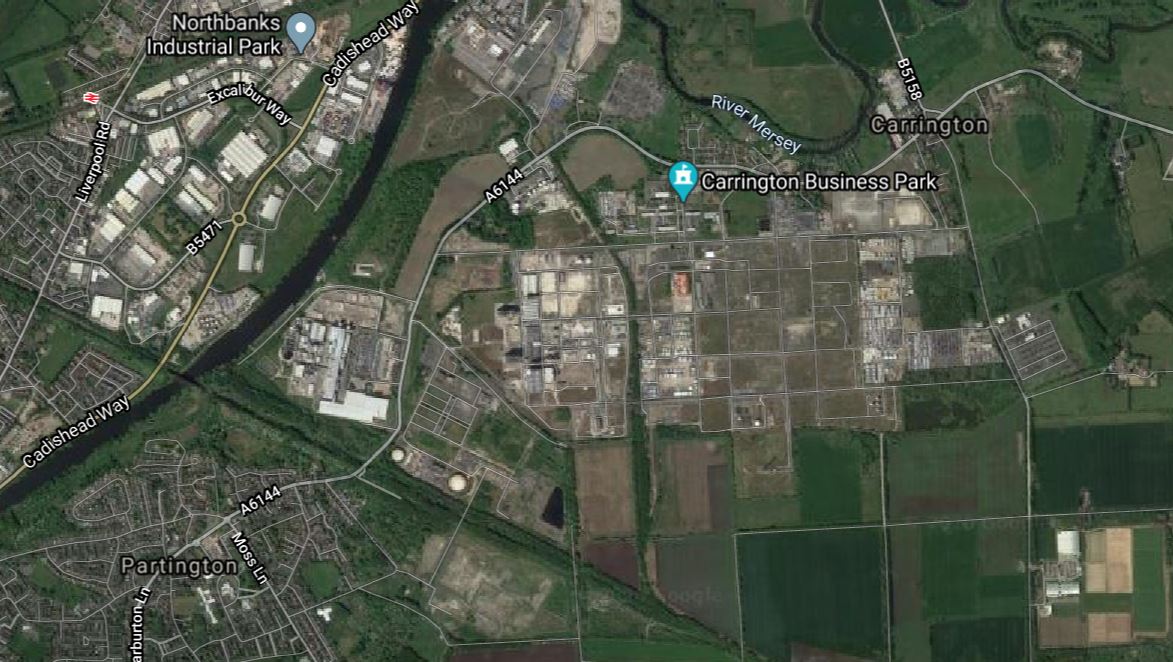
This brownfield site, once the Shell chemical works, lies to the south west of Manchester but still within Trafford Borough. Until its closure it enjoyed rail access via the former line between Stockport and the Warrington Central (CLC) line at Glazebrook. It is currently a Business Park, although the lorry parking facility in the area we are interested in could easily be relocated to another part of this vast and mostly empty site.
This Google Map shows the site.
Note.
- The blue arrow indicating the centre of Carrington Business Park.
- Irlam station on the route between Liverpool and Manchester line via Warrington is in the North West corner of the map.
- The Manchester Ship Canal running across the North-West corner of the map.
- The route of the former Glazebrook East Junction–Skelton Junction line, runs diagonally across the bottom of the map.
- Another railway used to run up the middle of the site.
railfuture’s plan for Carrington Park is as follows.
- Build a Rail Freight Terminal North-South along the route of the disused railway indicated in 5.
- Reinstate the Glazebrook East Junction–Skelton Junction line, so that freight trains can go between Carrington Park and the East.
- I doubt, it’s possible to connect to the Liverpool and Manchester line via Warrington, as there is Carrington power station in the way.
- But it would link Carrington Park and Trafford Park.
Once at Skelton Junction, trains can go East to connect with the Manchester branch of the West Coast Main Line between Stockport and Cheadle Hulme stations.
I have followed the line to the East in my helicopter.
It is double track until it splits from the route to Stockport and Manchester under Junction 4 of the M60.
It continues as single-track under the Styal Line, before turning South.
It then passes under the Manchester branch of the West Coast Main Line.
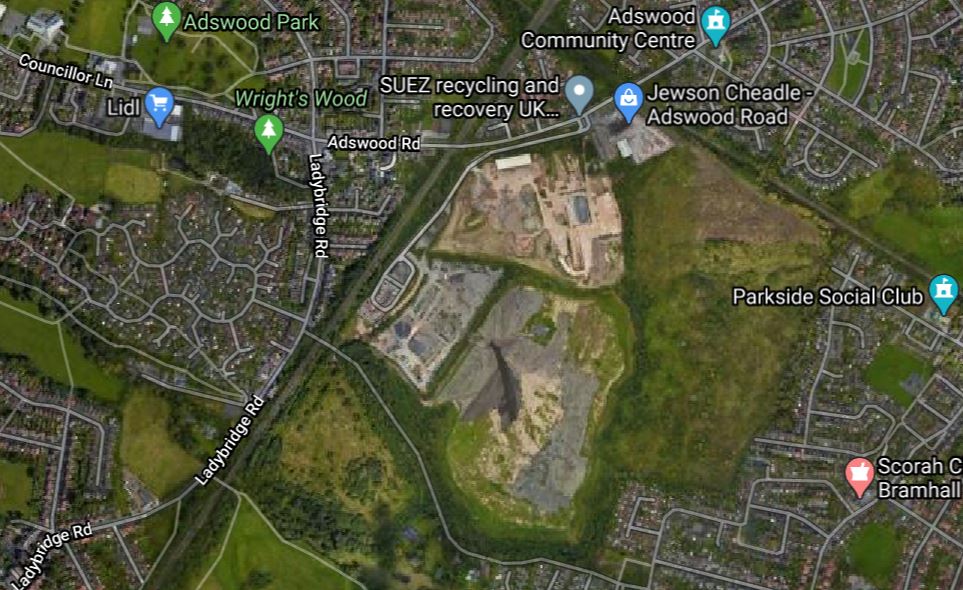
This Google Map shows where we have arrived.
Note.
- The Manchester branch of the West Coast Main Line going diagonally North-South across the map.
- Stockport and Manchester are to the North.
- Cheadle Hulme station is just off the map to the South.
- The line, I’ve been following crossing the Manchester branch in an East-West direction.
Conveniently, the large block of land lying to the South-East of where the two rail lines cross, is a landfill site that closed in 1985.
railfuture’s plan is to use this space to create a new Adswood junction between the two lines.
They recommend building a double-track junction.
- Trains could go between Manchester and the South via Wilmslow or Stoke.
- Trains via Stoke would avoid the busy lines through Crewe.
The report, then goes on to list a load of other benefits that could be built into the scheme.
- Adswood junction could be built, so that stone trains between the Peak District and the South could use a simpler route.
- The route through Carrington Park could be extended to Trafford Park.
- Passenger services could be run on the new route.
- There could be possibilities to combine parts of the scheme with High Speed Two.
- A new route to the North East is thought possible.
The report says this about the costs and benefit cost ratio of the proposed scheme.
Benchmarking against the outturn prices of similar projects undertaken elsewhere and allowing for inflation, we expect the costs to come in under £300m. This does not include potential third party investment or assume any release value of eventual redevelopment at Trafford Park. Adding the connection at Flixton would probably add a further £100m, still giving an overall BCR of over 2:1.
This scheme needs serious consideration.
Delivery Drone Flies Medical Supplies To Britain’s Isle of Wight
The title of this post, is the same as that of this article on Reuters.
This is the introductory paragraph.
A new drone service will reduce delivery times for urgent medical supplies to a hospital on the Isle of Wight, which lies about 8 kilometres off the south coast of England.
In some ways the most remarkable thing about this project, was that the drone was developed by Southampton University to deliver medical supplies in remote parts of Africa.
- It is twin-engined.
- It has a range of 100 km.
- It can carry a 100 kg payload.
- It can take off and land on short grass runways.
More details can be found on this page of the Southampton University web site.
This is a video of the first delivery.
Colne – Skipton Reopening Moves Closer
The title of this post, is the same as that of this article on the Railway Gazette.
This is the introductory paragraph.
Rail minister Chris Heaton-Harris has confirmed that investigations have been commissioned into the proposed reinstatement of the 19·3 km Colne – Skipton ‘missing link’ connecting east Lancashire and west Yorkshire.
Investigations will look into.
- Capital costs
- Passenger demand forecasts
- Service options.
- Gauge enhancement measures necessary to increase rail freight capacity on TransPennine routes including between Accrington and Todmorden stations.
- Proposals for a rail freight terminal on the site of the demolished Huncoat power station near Accrington.
This sounds more than a simple proposal to reopen the route between Skipton and Colne stations.
These are a few of my thoughts.
The Rail Route Between Preston And Skipton
The rail route between Preston on the West Coast Main Line and Skipton can be summarised as follows.
- Preston and Rose Grove via Huncoat – double-track – electrification at Preston
- Rose Grove and Colne – single-track
- Colne and Skipton – to be reinstated – electrification at Skipton
Colne and Skipton might not be the easiest route to reinstate, as a dual carriageway has been built across the route to the North of Colne station.
Could Colne And Skipton Be Double-Track All The Way?
Consider.
- The new section between Skipton and Colne could be built with single or double tracks.
- The section between Rose Grove and Colne stations was built as a double-track and singled in 1971. British Rail’s accountants strike again!
- The single-track section includes the Bank Top Viaduct, in the centre of Burnley.
- Trains currently take twenty-one minutes between Rose Grove and Colne stations.
This picture shows Bank Top Viaduct.
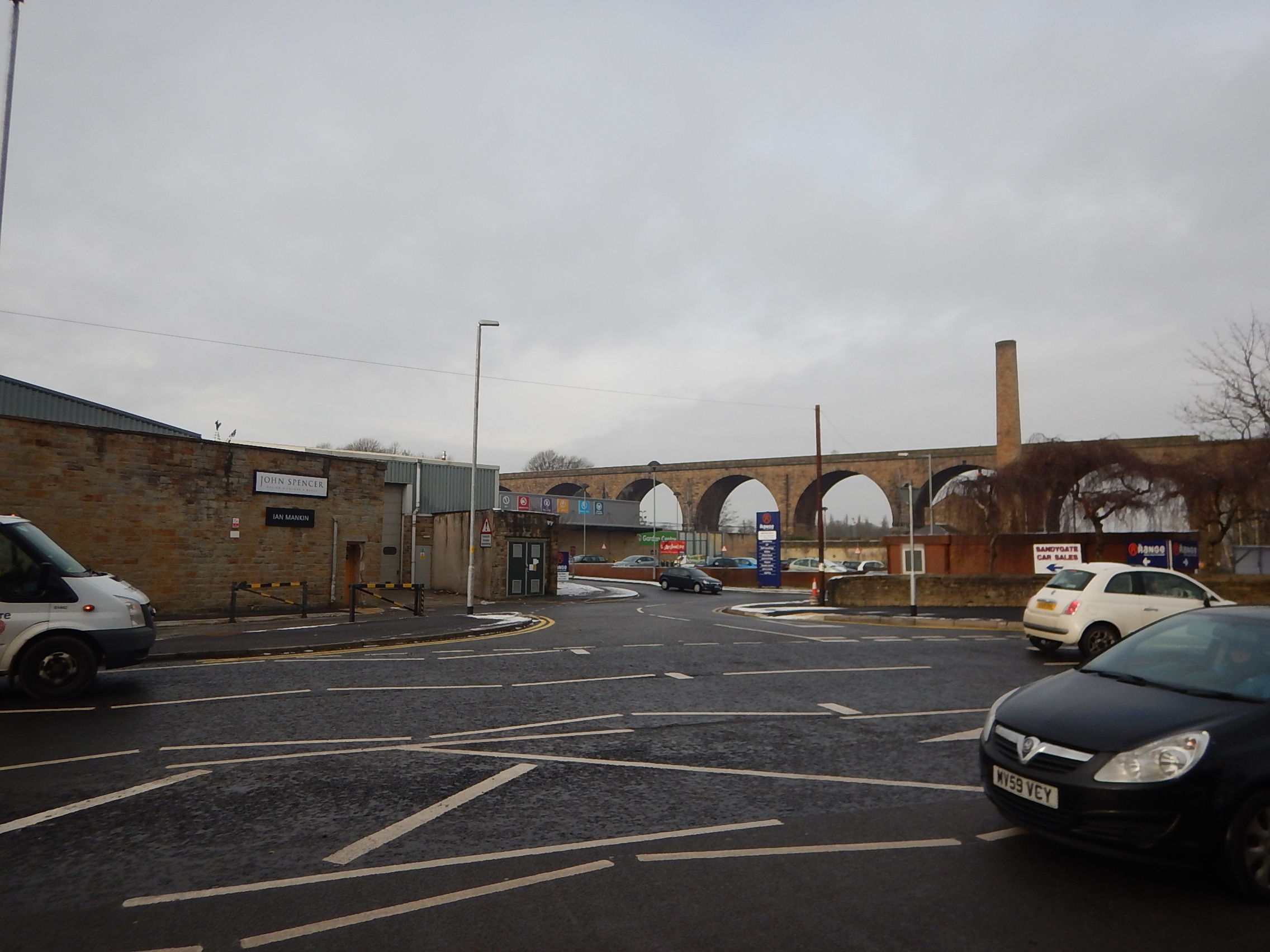
I think the viaduct could be key to whether the route is double-track all the way.
- If the redoubling can be performed at a reasonable cost, then that will be the way to go, as it might be possible to squeeze up to three trains per hour (tph) between Skipton and Rose Grove via Colne.
- If on the other hand, doubling is too difficult or expensive, I estimate that no more than two tph would be possible.
For both solutions, there will need to be double track or a long passing loop, between Skipton and Colne.
Could Colne And Skipton Be Electrified?
Consider.
- Preston is a fully-electrified station on the West Coast Main Line.
- Skipton is a fully-electrified station with electric trains to and from Leeds.
- Full electrification would create an electrified route between Leeds and Blackpool, Liverpool and Preston.
- It could be a useful diversion route for electric passenger trains across the Pennines, when their are engineering works on the Huddersfield Line or due to the building of Northern Powerhouse Rail.
- Electrification of the route, would allow electric haulage of freight trains to and from the proposed Huncoat Rail Freight Terminal.
- Electrification of the Calder Valley Line between Preston and Leeds is always being proposed.
- Electrication of Bank Top Viaduct could be tricky!
It should also be noted that this article on Rail Magazine was published on May 12th, 2020 and is entitled Electrification Key to Decarbonisation – Government. Views in Government about electrification have changed, so this might affect the decision to electrify the route.
The power is already there at both ends and electrification systems with low visual intrusion could be used.
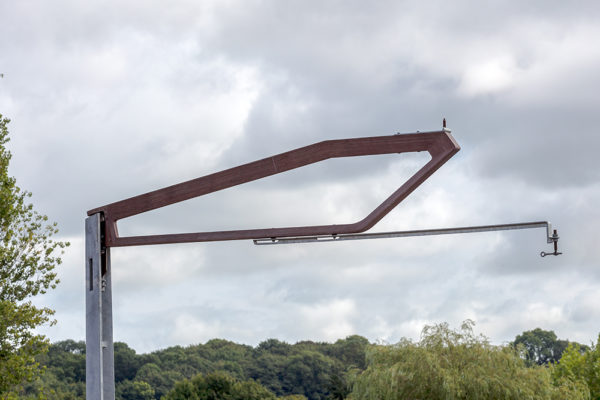
On the other hand, some might consider electrification of the route inappropriate.
Could Colne And Skipton Be Partially Electrified?
Consider.
- I estimate that the distance between Preston and Skipton will be 41 miles.
- If Blackpool North station were the final destination, there would be 34 miles (2 x 17) to charge the batteries.
- If Liverpool Lime Street station were the final destination, there would be 70 miles (2 x 35) to charge the batteries.
- If Leeds station were the final destination, there would be 52 miles (2 x 26) to charge the batteries.
- Manufacturers’ estimates of distances, indicate that battery electric trains could cover up to 65 miles on battery power.
As both ends of the route are electrified and trains would run extra miles under the wires, it would seem likely that a battery electric train could run between Preston and Skipton, without needing a charge en route.
Drax Group And Colne And Skipton Reinstatement
Drax power station uses Flue Gas Desulphurisation. Wikipedia says this about the process at Drax.
All six units are served by an independent wet limestone-gypsum flue gas desulphurisation (FGD) plant, which was installed between 1988 and 1996. This diverts gases from the boilers and passes them through a limestone slurry, which removes at least 90% of the sulphur dioxide (SO2). This is equivalent to removing over 250,000 tonnes of SO2 each year. The process requires 10,000 tonnes of limestone a week, sourced from Tunstead Quarry in Derbyshire. A byproduct of the process is gypsum, with 15,000 tonnes produced each week. This goes to be used in the manufacture of plasterboard. The gypsum is sold exclusively to British Gypsum, and it is transported by rail to their plant at Kirkby Thore (on the Settle-Carlisle Line).
The gypsum trains go through Skipton to access the Settle-Carlisle Line.
Drax power station is part-fuelled with biomass, which comes from all over the place including the United States via the Port of Liverpool.
It is no surprise that Drax Group are in favour of the Colne and Skipton reinstatement, as it would give them a new route between Drax and the Port of Liverpool.
This press release from Drax Group gives more details including this paragraph.
It will have a direct impact on improving our supply chain at Drax, allowing freight trains to travel much more quickly to the power station in North Yorkshire – reducing journey times from the Port of Liverpool to less than three hours, a journey which can take up to nine hours at the moment.
Trains will avoid the busy Huddersfield Line and Manchester Victoria station.
Drax’s statement would appear to be a powerful reason to reinstate Colne and Skipton.
These smart new or refurbished wagons, used by Drax to move woodchip should be much faster than the typical 20-30 mph freight speed of TransPennine routes.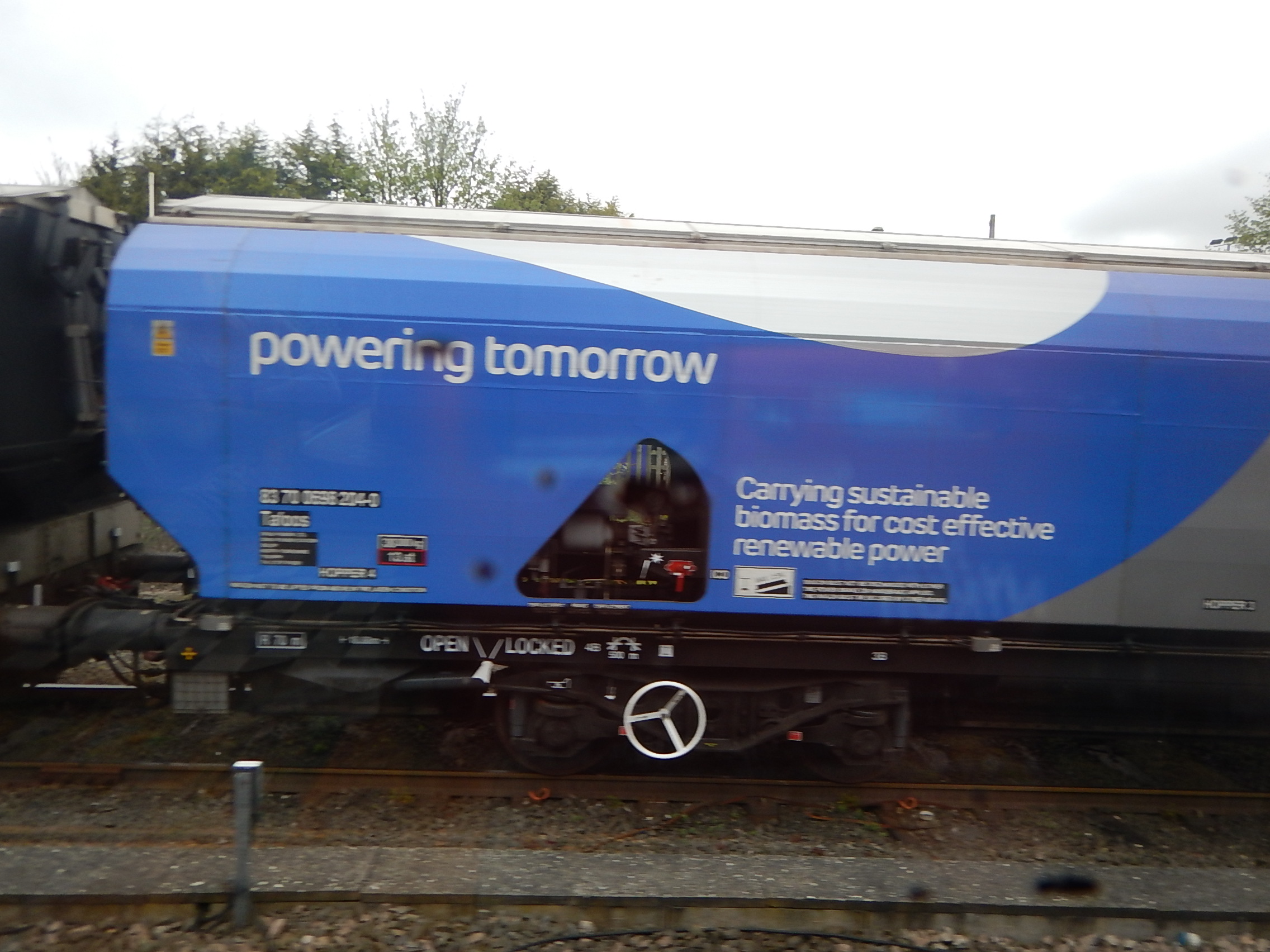
This page on the Drax web site, is entitled This train isn’t like any other in the UK, and it gives more details about the wagons.
- They were custom-designed and built in the last few years.
- The roofs open automatically for loading.
- A twenty-five wagon train can be loaded in 37 minutes.
- A full train can carry between 1,700 and 1,800 tonnes of biomass.
- Each train can unload in forty minutes.
- They are the largest wagons on UK railways by a margin of 30 %.
- Each wagon is nineteen metres long and can carry over seventy tonnes of biomass.
- Approximately 14 trains per day arrive at Drax, bringing 20,000 tonnes of biomass.
I suspect to minimise journey times, Drax would like to see a fully electrified route between Preston and Skipton and a new double-track route between Colne and Skipton.
The Huncoat Rail Freight Terminal
This Google Map shows the position of the former Huncoat power station.
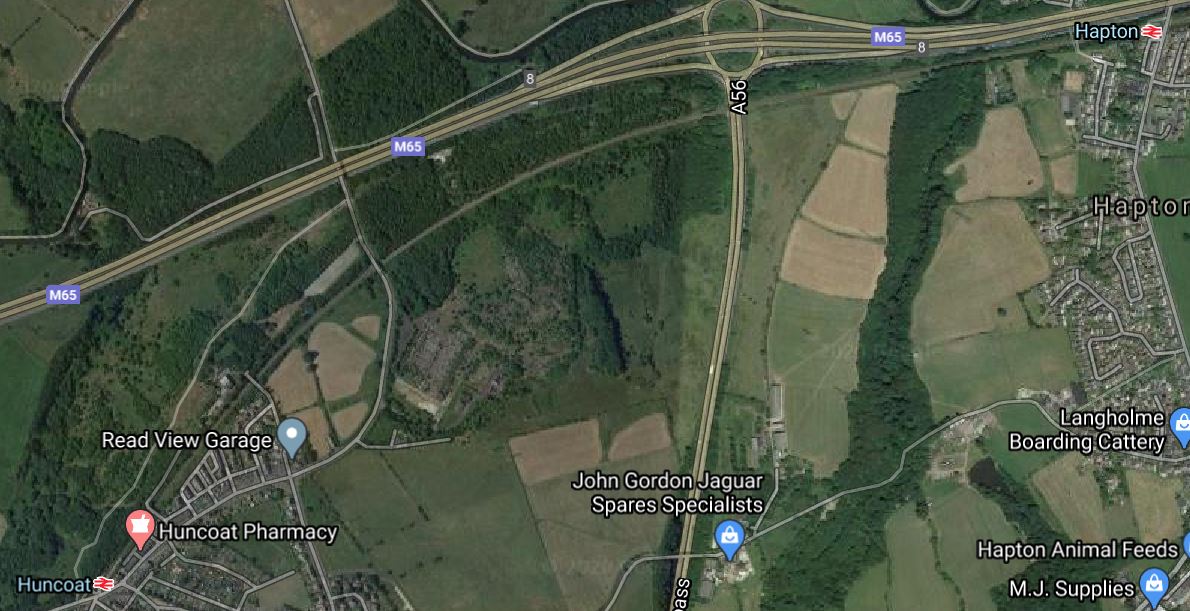
Note.
- Hapton station in the North-East corner of the map.
- Huncoat station in the South-West corner of the map.
- The East Lancashire Line running between the two stations.
- The M65 running across the top of the map.
- The A56 or Accrington bypass running North-South from the motorway junction at the top of the map.
Huncoat power station appears to have been in the South West corner of the rough-looking area, South of the M65 and the railway and West of the A56.
There is no Wikipedia entry for the demolished power station, but this page on The View From The North has some details and pictures.
It does appear to be a well connected site for a Rail Freight Terminal.
- There could be a direct connection to the motorway network.
- There is space for a connection with the East Lancashire Line, that would allow trains to access the interchange from both directions.
- Trains could go West to the Port of Liverpool and the West Coast Main Line via Preston.
- Trains could go East to Leeds and Yorkshire and on to the East Coast ports of Felixstowe, Hull, Immingham and Teesport.
- If the East Lancashire Line were to be electrified, electric haulage could be used.
The Rail Freight Terminal could be bigger than a hundred hectares.
Gauge Enhancement On TransPennine Routes Including Between Accrington And Todmorden
Consider
- Most freight trains passing through Hebden Bridge station use the route via Rochdale and Todmorden to get to and from Liverpool and the West.
- Few if any use the East Lancashire Line via Accrington.
- Some passenger trains do take the Accrington route.
- There are five tunnels between Accrington and the Todmorden Curve.
- The building of the Huncoat Rail Freight Terminal, must mean that trains between the Rail Freight Terminal and Leeds and the East would need to use the Calder Valley Line as far as the Todmorden Curve. or the East Lancashire Line to Colne for the new route.
As freight trains rarely seem to use the East Lancashire Line to the East of Accrington could it be that this section of track needs gauge enhancement?
But if this gauge enhancement were to be completed, that could give two routes between Huncoat Rail Freight Terminal and the East, for the largest freight trains.
Thoughts On The Project Management
It would appear that there are a series of sub-projects to be done.
- Perform gauge enhancement and route improvement on the East Lancashire Line between Rose Grove and Colne. This would include any doubling of the route, if that were to be done.
- Start building the link between Skipton and Colne.
- Start building the Huncoat Rail Freight Terminal.
- Finish building the link between Skipton and Colne.
- Start passenger and freight services between Skipton and Colne.
- Finish building the Huncoat Rail Freight Terminal.
- Perform gauge enhancement on the Calder Valley Line between Accrington and Todmorden.
My objectives would be.
- Open the Skipton and Colne route as a TransPennine diversion, as early as possible.
- Upgrade the East Lancashire Line between Rose Grove and Colne with minimum disruption.
- Open the Huncoat Rail Freight Terminal as early as possible.
- Create multiple freight routes to and from Huncoat Rail Freight Terminal.
Electrification would be a future aspiration.
Whither Drax?
Drax Gtroup and their flagship power station have a major environmental problem in that the power station is a large emitter of carbon dioxide.
They also run a lot of diesel locomotive hauled trains carrying biomass, fly ash, gypsum, limestone and other materials to and from Drax power station, which is on the Drax branch of the Pontefract Line.
- The Pontefract Line was built to serve the coalfields in the area.
- It runs between Leeds and Hull via Pontefract and Goole.
- It is not electrified, but it connects to the electrification at Leeds.
- In the East is has good connections to Cleethorpes, Goole, Grimsby, Hull and Immingham.
- The Port of Immingham is a major port, that is used by Drax to import biomass, which is hauled to the power station by diesel locomotives.
- The route between Drax and Immingham has been improved recently, by the addition of the North Doncaster chord.
- High Speed Two will run alongside the Pontefract Line on its approach to Leeds.
- Freight trains between Drax and Skipton use an electrified diversion South of Leeds via Armley, that avoids the need for freight trains to pass through Leeds station.
I can see that in a more favourable climate for electrification, that electrification of the Pontefract Line would be recommended.
Given, the environmental record of Drax, which is both good and bad, I would suspect they would like to see electrification of the Pontefract Line, as it would create a lower carbon route for biomass trains between Immingham and the power station.
A New Electrified TransPennine Route For Passengers And Freight
I sense that a grander plan might exist behind all my thoughts.
If the following routes were to be electrified.
- Preston and Skipton
- The Pontefract Line between Leeds and Hull.
- Knottingley and Immingham via Thorne
Hull and Liverpool would be connected for passenger electric trains and Liverpool and Immingham would be connected for freight.
Drax could also be on an electrified branch and they could say, they were hauling all their trains using renewable electricity. Marketing and environment are always important
Orders For Alstom Breeze Trains Still Expected
It is almost a year since I wrote Breeze Hydrogen Multiple-Unit Order Expected Soon, but no order has so far been placed.
But some things have happened or are happening.
- The two pre-production Alstom Coradia iLint trains seem to be running without trouble in Germany.
- The Northern Franchise is now run by the Government and called Northern Trains.
- Greater Anglia‘s Class 720 trains are finally being delivered.
- This should release Class 321 trains for conversion to hydrogen power.
At present, Greater Anglia appear to have 102 Class 321 trains in service, all of which could be converted to Alstom Breeze trains.
Although it should be noted that thirty trains have been upgraded to a Renatus specification, as cover, if there are any problems during Greater Anglia’s fleet changeover.
The Conversion Process
The 102 Class 321 trains will release the same number of each of the following coaches.
- DTCO – Driving Trailer Composite Open
- TSO – Trailer Standard Open
- PMSO – Pantograph Motor Standard Open
- DTSO – Driving Trailer Standard Open
Each three-car Breeze will need two Driver Trailer cars and a Pantograph Motor car to be converted.
Driver Trailer Cars
Consider.
- Most two- and three-car diesel multiple units in the UK, don’t have First Class seats.
- Many new trains like those of Greater Anglia and South West Trains don’t have First Class seats.
- Seating in these cars will be very much reduced by the fitting of a large hydrogen tank.
I wouldn’t be surprised to see both types of Driver Trailer cars converted into identical cars.
Pantograph Motor Car
The Pantograph Motor car will be seriously modified, with these systems and components installed.
- A new AC traction system.
- Batteries fed by the fuel cells,
- Regenerative braking
All will be controlled by a sophisticated energy management system.
- Will regenerative braking be able to charge the batteries?
- Will the pantograph be retained, so that on electrified lines, the trains can use the electrification?
- Will the fitting of third-rail shoes be considered?
- Will the train retain the 100 mph capability of the Class 321 train?
The train could be a real 100 mph efficient go-anywhere train.
New Interiors
New Class 321 Renatus-style interiors will be fitted.
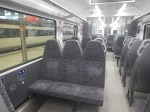

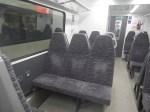
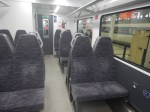

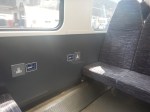
The Class 321 Renatus is a high-class interior for a suburban train.
- There are both fully-accessible and standard toilets.
- There are power sockets and wi-fi.
- Passenger information displays are fitted.
I suspect tables could be fitted, if the operator required them.
Northern Trains And The Alstom Breeze
The three-car Alstom Breeze is expected to have a similar capacity to a two-car diesel multiple unit.
Northern Trains Current And Future Trains
At present Northern have the following two-car diesel multiple units in service, according to Wikipedia.
- 7 x Class 155 trains
- 47 x Class 156 trains
- 45 x Class 158 trains
In addition, there are eight three-car Class 158 trains, which gives a total of 107 trains, that could be suitable for replacement by Alstom Breeze trains.
If these were the only trains available, Northern would have to keep some old diesel multiple units in service for longer.
But there are other trains expected to enter service, in the coming months.
- 7 x new two-car Class 195 trains
- 5 x new three-car Class 195 trains
- 3 x refurbished two-car Class 150 trains
- 8 x rebuilt four-car bi-mode Class 769 trains
Northern should just about scrape through, especially as COVID-19 has reduced services.
I would think, that Northern could absorb quite a lot of Alstom Breeze trains.
Deployment On Teesside
In Fuelling The Change On Teesside Rails, I talked about using the trains on Teesside.
- Services would be centred on Darlington and Middlesbrough.
- There is a supply of hydrogen nearby.
- Bishop Auckland, Newcastle, Nunthorpe, Redcar and Whitby could be served.
- The 1000 km range could be useful.
- The trains could even be a tourist attraction for the area.
In Northern’s Hydrogen Plans, I wrote about progress on these plans, which included applying for planning permission for the depot at Lackenby.
Deployment Around Widnes
In A Hydrogen Mobility Roadmap For North-West England, I wrote using the trains around Widnes.
- Services could be centred around Alstom’s Widnes factory.
- Hydrogen could be supplied by pipeline from Runcorn.
- Chester, Liverpool and Manchester could be served.
- Some routes might need more capacity.
Could Alstom introduce a couple of pre-production trains on a route past Widnes, in a similar way, that they have introduced the Coradia iLint train in Germany?
This approach seems to have helped a successful introduction into service of the trains.
Increasing Capacity
I do think that these trains will need extra capacity on some routes, like perhaps Liverpool and Manchester via Widnes and Warrington.
The solution would surely be to add one of the spare Trailer cars to bring the trains up to four cars and increase the passenger capacity by perhaps fifty percent.
Northern Routes Currently Run By Two-Car Diesels
Wikipedia lists these services as run by two-car-diesels in Classes 150, 155, 156 and 158.
- Barrow-in-Furness and Carlisle
- Barrow-in-Furness and Lancaster
- Blackburn and Rochdale
- Blackburn and Wigan Wallgate
- Blackpool North and York
- Clitheroe and Rochdale
- Hexham and Nunthorpe *
- Hull and Scarborough
- Hull and York
- Huddersfield and Castleford
- Huddersfield and Leeds
- Huddersfield and Sheffield
- Lancaster and Morecambe/Heysham Port
- Leeds and Carlisle
- Leeds and Chester
- Leeds and Goole
- Leeds and Knottingley
- Leeds and Lincoln
- Leeds and Manchester Victoria
- Leeds and Morecambe
- Leeds and Nottingham
- Leeds and Selby
- Leeds and Sheffield
- Leeds and Wigan Wallgate
- Leeds and York
- Liverpool Lime Street and Manchester Oxford Road *
- Manchester Piccadilly and Buxton
- Manchester Piccadilly and Chester
- Manchester Piccadilly and New Mills Central
- Manchester Piccadilly and Rose Hill Marple
- Manchester Piccadilly and Sheffield
- Manchester Victoria and Kirkby
- Manchester Victoria and Southport
- Manchester Victoria and Stalybridge
- Middlesbrough and Whitby *
- Newcastle and Carlisle
- Newcastle and Chathill
- Newcastle and Morpeth
- Oxenholme Lake District and Windermere
- Preston and Blackpool South
- Preston and Colne
- Preston and Ormskirk
- Saltburn and Bishop Auckland/Darlington *
- Sheffield and Adwick
- Sheffield and Bridlington
- Sheffield and Gainsborough Central
- Sheffield and Hull
- Southport and Alderley Edge
Those marked with an * could be served by hydrogen trains from Laverton and Widnes.
Positioning Hydrogen Trains
Trains often have to be positioned from and to the depot at the beginning and end of a day’s work.
On my list of services, there is an hourly shuttle service between Oxenholme Lake District and Windermere stations.
Suppose this service was to be run by an Alstom Breeze based at Widnes.
- The train could be fuelled with hydrogen at Widnes, early in the day.
- The train could position to Oxenholme Lake District along the West Coast Main Line, using the electrification, after joining it a few miles from the depot.
- Each round trip to Windermere is 20 miles or 32 kilometres.
- An Alstom Breeze train has a range of 1000 kilometres on hydrogen, so it could do thirty round trips without refuelling.
- At the end of the day, the train would return to the depot using the electrification.
I would expect, that the long range of hydrogen trains could make them easier to diagram or schedule, than battery ones.
They might also be able to work some distance away from the depot, if they could use an electrified route for positioning.
So if we look at Widnes, these are approximate distances to stations where hydrogen services might run.
- Liverpool Lime Street – 12 miles
- Manchester Airport – 33 miles
- Manchester Oxford Road – 22 miles
- Preston – 33 miles
- Warrington Central – 6 miles
- Wigan North Western – 18 miles
Some of the routes to these stations are partially electrified, so the trains could position using the electrification.
Consider these routes.
- Preston and Blackpool South – 20 miles
- Preston and Colne – 19 miles
- Preston and Ormskirk – 20 miles
A hydrogen train could position from Widnes and perhaps do fifteen trips before needing a refuel.
I will also look at distances from Lackenby, where the Teesside Depot will be built, as I wrote in Northern’s Hydrogen Plans.
- Darlington – 23 miles
- Newcastle via East Coast Main Line – 59 miles
- Newcastle via Durham Coast Line – 54 miles
- York via Northallerton and East Coast Main Line – 56 miles
I suspect quite a few services could be run from Lackenby depot, if the electrified East Coast Main Line was used to position the trains.
Possible Future Stages
If the trains are successful, I can see that Northern Trains will want to introduce more hydrogen trains.
As the Government controls this franchise, does this make more zero-carbon trains more or less likely?
More Trains
There are only so many Class 321 trains to convert, but after Alstom complete their takeover of Bombardier, I believe that a hydrogen-powered Aventra could become a reality.
I wrote about my ideas for this in I Design A Hydrogen Aventra.
So in the long term, if more hydrogen trains are needed, it shouldn’t be a problem.
More Depots
More depots will be needed and I would expect others like Lackenby will be added in strategic locations.
- Given the service pattern, Blackburn, Leeds and Sheffield must be possibilities.
- Hydrogen will probably be generated in the depots using electrolysers.
In the future could we see depots for hydrogen trains shared between bordering franchises?
- A depot at Carlisle could be shared between Northern and Scotrail
- A depot at Chester could be shared between Northern and Trains for Wales
- A depot at Exeter could be shared between Great Western and South West Railways
ITM Power in Rotherham have the technology to generate the hydrogen, which could also be used to fuel the local buses and other vehicles.
Conclusion
From pubished reports, it looks to me, that Northern have been thinking hard how they can deploy a substantial fleet of Alstom Breeze trains, by using depots at Widnes and Lackenby, where the trains can be refuelled overnight.
I am also fairly sure that Alstom will design the Breeze, so that trains can position themselves along the West and East Coast Main Lines, using the 25 KVAC electrification.
Environmental Humour On Euston Road
I took this picture on the Euston Road outside Euston station.

It’s an area, where I don’t walk very often, so I don’t know how long it’s been there.
Euston Station – 8th May, 2020
I had walked to Euston station from Kings Cross along the back roads, which is a much better route than along the polluted Euston Road.


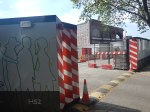



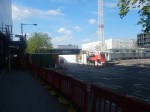


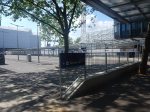
Note, that the train part of the station seemed to be functioning normally.
The Abandoned Tube Entrance At Euston
These pictures show the abandoned tube entrance at Euston station.

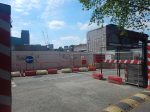
The station was built to serve the Charing Cross, Euston and Hampstead Railway, which is now part of the Northern Line.
- It opened in 1907.
- The building will now be demolished to make way for High Speed Two.
- I can’t ever remember using the entrance.
It looks to be a station, which are typical of many, that were created by Leslie Green.
- Wikipedia has a list of over forty stations, that were designed by Leslie Green.
- Many are Grade II Listed
- His designs inspired the look of the fictional Walford East Underground station in EastEnders.
I would reckon, the one I use most is Oxford Circus.
A Hydrogen Mobility Roadmap For North-West England
In the last few days, the North West Hydrogen Alliance has published a document entitled A Hydrogen Mobility Roadmap.
Some information from a well-written and very informative document.
Vehicle Types Covered In The Roadmap
A composite picture at the start of the document shows the following hydrogen-powered vehicles.
- A double-deck bus.
- A heavy goods vehicle.
- A passenger car.
- A passenger train.
Other vehicles, which exist or are under development, could have been added.
- A refuse truck.
- A high capacity fork lift or dump truck.
- A freight locomotive.
- The availability of hydrogen fuel in an area, must encourage the use of hydrogen-powered vehicles.
Comparison Of Electric And Hydrogen
The document gives a comparison between electric and hydrogen power.
Speed Of Refuelling
- Electric – The current long duration of battery recharges rules out many forms of transport
- Hydrogen – Hydrogen refuelling speed is largely similar to current petrol and diesel fuelling
Distance On Single Charge/Tank
- Electric – At the present time, cars will travel 150-250 miles per charge, but current battery weight means they are unsuitable for HGVs
- Hydrogen – Vehicles can travel 500+ miles on a single tank of hydrogen, which can be scaled up to suit vehicle size
Availability Of Fuel
- Electric – Growing network of charge points, but this is creating problems for power networks
- Hydrogen – Only 12 refuelling stations in the UK
Availability Of Vehicles
- Electric – Various cars to choose from, buses and trains readily available, with HGVs and ships in development
- Hydrogen – Cars, buses and trains largely available. HGVs and ships in development
Note.
- The speed of refuelling and the range for hydrogen.
- The need for more hydrogen refuelling stations.
- Both battery and hydrogen ships are in development.
I think their points are fair.
Road, Rail And Marine
The document discusses the various modes of transport and how hydrogen can help, with respect to both carbon-emissions and pollution.
The Alstom Breeze Trains
This picture is a visualisation of the Alston Breeze.
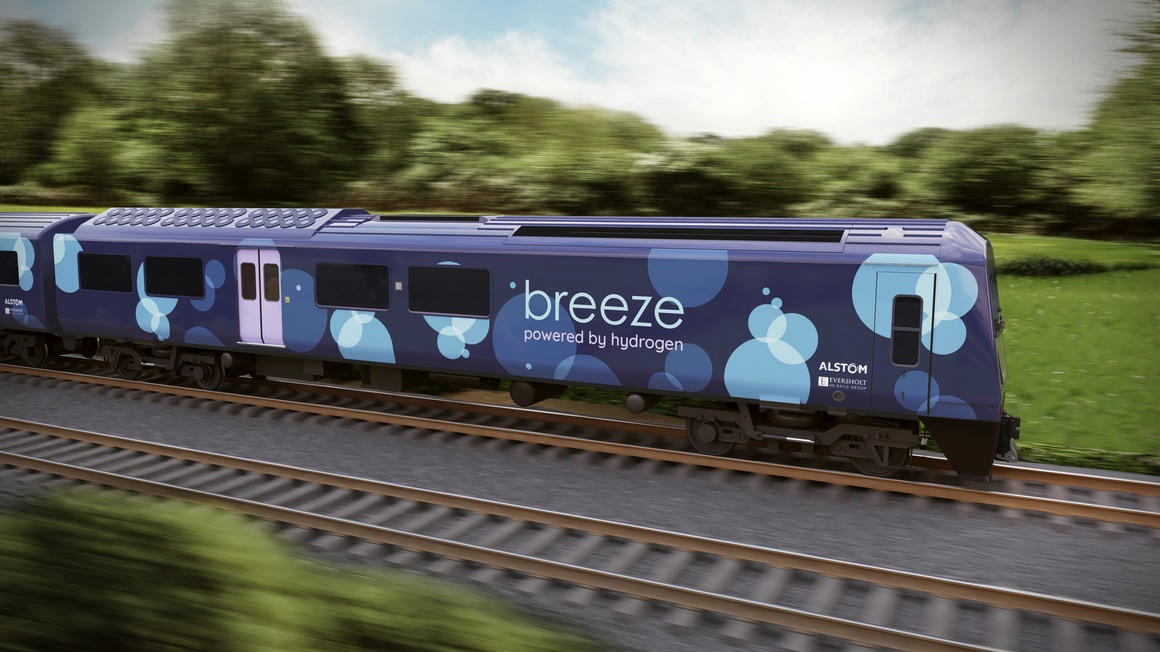
This is said about the Alstom Breeze trains.
Alstom in Widnes is ready to deploy its new Breeze trains and is working with Northern Rail to identify routes that are suitable for conversion to hydrogen.
A map also shows hydrogen train symbols on the Liverpool and Manchester Line, that goes via Widnes and Warrington and conveniently passes the Alstom factory at Widnes.
I wonder, if we’ll see an acceleration of this project?
Consider.
- Northern Rail is now directly controlled by the Government.
- Some Class 321 trains for conversion, will surely be available this summer.
- The updating of the trains, except for the hydrogen system has been developed in the Renatus project.
- Alstom have the experience of the successful hydrogen-powered Alstom Coradia iLint from Germany.
- Supplying the Alstom factory with hydrogen, shouldn’t be too difficult.
- I doubt any extra infrastructure is needed to run the trains.
- Alstom have sold two or three fleets of iLints on the back of a successful introduction into service of two prototype trains.
I don’t think, Alstom and all the various partners and stakeholders would object if the project were to be accelerated.
What’s Already Happening In The North West?
These hydrogen-powered projects are mentioned.
- Twenty double-deck buses for Liverpool City Centre.
- Alstom Breeze trains.
- storengy refuse trucks for Cheshire.
- ULEMCo are converting trucks and ferries.
- Port of Liverpool air quality.
It does seem to be that if you give an area a hydrogen network, possible users will find ways to use it to their advantage.
Rising To The Challenge
This section answers these questions.
Where Will The Hydrogen Come From?
Initially from INEOS at Runcorn, where I used to work around 1970 and BOC at St. Helens.
How Will It Be Transported?
Mainly by innovative use of new and existing pipelines.
How Do We Get To Critical Mass?
It looks like they’ll start slowly with hydrogen from Runcorn and St. Helens and build from there.
I would add a further question.
Will They Be Adding Hydrogen Filling Stations To The Network?
The North West needs them!
Hydrogen Storage
This is said about storing hydrogen.
Geologically, Cheshire is one of the few places in the UK where major underground gas storage in salt caverns has been delivered, paving the way for potential hydrogen storage, which is already done at scale elsewhere.
When I worked at ICI, I was given a tour of one of salt caverns. One is rumoured to be large enough to enable a full-size replica of Salisbury cathedral to be built inside.
Research
This is said about research.
Esteemed universities, and a wealth of innovative research companies, mean the region can deliver new hydrogen technologies. With academia working side-by-side with industry, the North West’s institutions can equip the next generation of skilled workers to support the hydrogen economy.
As a graduatev of one of those esteemed universities, how can I disagree?
Carbon Capture And Storage
This is said about carbon capture and storage.
Offshore reservoirs in the East Irish Sea can store carbon dioxide (CO2) produced from hydrogen production. Carbon Capture Utilisation and Storage (CCUS) is essential technology to help the UK in its fight against climate change. CCUS can capture up to 95% of the CO2 emissions associated with producing hydrogen from natural gas.
Whether you want to produce hydrogen this way is another matter. But the oil refineries and chemical plants along the Mersey are surely prime candidates for CCUS.
An Alliance
Not for nothing is the project called the North West Hydrogen Alliance!
Sixteen partners are mentioned at the end of the document.
Braving The London Underground
I took these pictures today, in a short Underground trip between Angel and Kings Cross St. Pancras tube stations.





It’s not very busy! Is it?
- There was no-one else in the tunnel as I walked between the escalators at Angel station.
- There was only two other people in my carriage on the train.
- There were few people in the tunnels at Kings Cross.
Isuspect that I travelled during lunchtime helped.
 The Anonymous Widower