Watch First Electric Caravan Fly
The title of this post, is the same as that of this article on AOPA.
As AOPA is the Aircraft Owners And Pilots Association, the caravan is a Cessna C208B Grand Caravan, which has been converted to electric power.
I have flown in a Cessna Caravan in Kenya, where it took me from Nairobi Airport to the Maasai Mara.
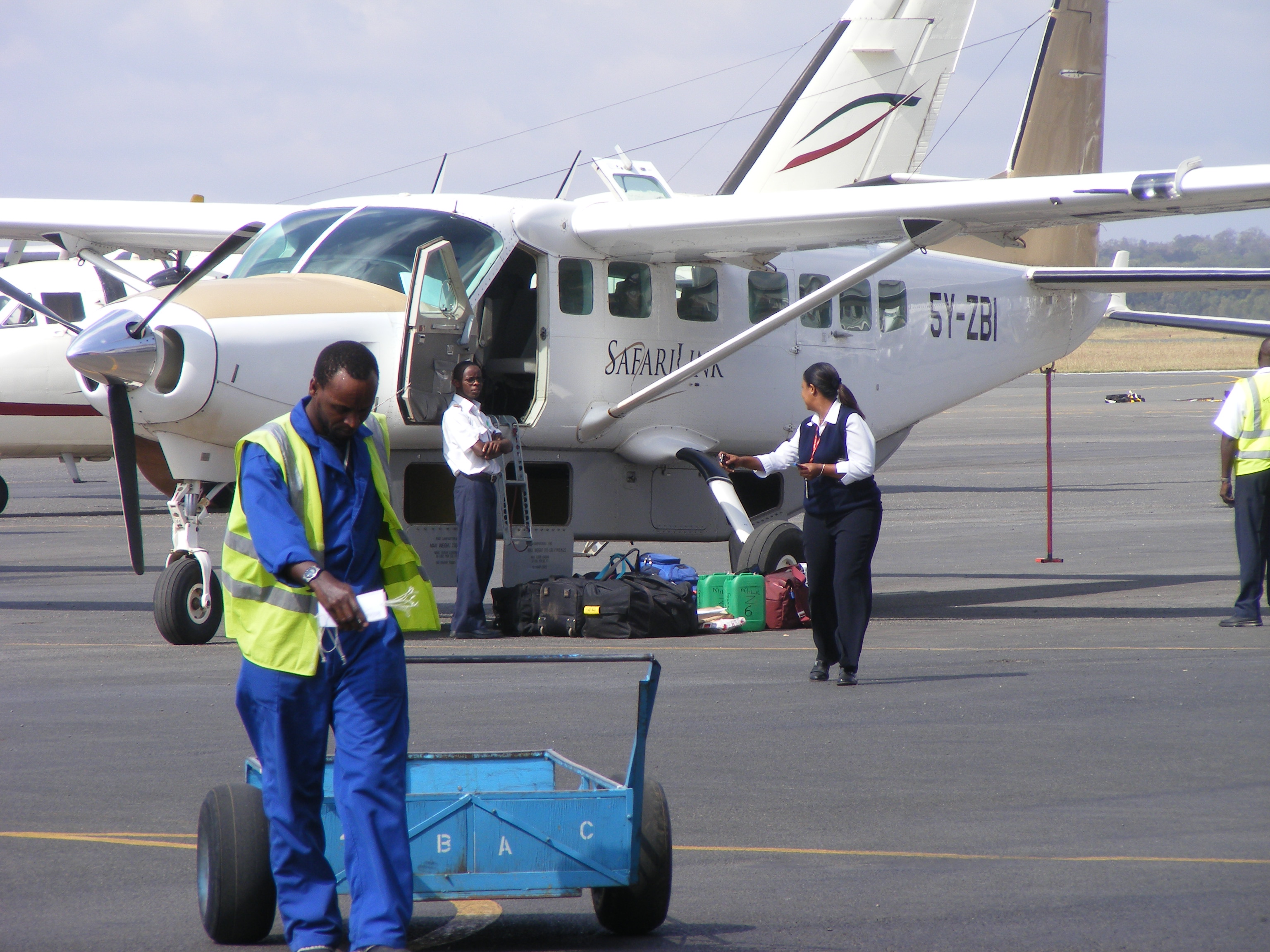
It is a typical workhorse all over the world carrying up to nine or thirteen passengers or freight.
- They have a single turboprop engine.
- The undercarriage is fixed and very sturdy.
- Around 2,600 had been built by 2017.
- It is used by a variety of operators.
I would certainly be happy to fly in one at any time, unlike some aircraft I could mention.
This paragraph from the article details how the maker of the electric motor;magniX is involved in electric flight.
The Grand Caravan is to be the largest, but not the first commercial aircraft magniX has converted to fly with 100 percent electric power. Roei Ganzarski, CEO of magniX, wrote in an email exchange that the de Havilland DHC–2 Beaver first flown in December continues its test flight program in Canada. Harbour Air, a short-haul air carrier with a fleet of seaplanes, is working with magniX to convert its fleet to all-electric power, and the same 750-hp electric motor that will power the upcoming Grand Caravan flight has been performing well in test flights over British Columbia.
Ganzarski is quoted as saying he is pleased with results to date.
The aircraft is lined up to make its first flight on May 28th, which hopefully will be shown on the Internet.
My flight in Kenya was only about half-an-hour and despite the Caravan having a range of nearly 2,000 kilometres, I suspect that many flights in the aircraft are of similar duration.
A Quick Battery Size Estimate
- 750 hp is 560 kW.
- So a half-hour flight on full power will use 280 kWh plus whatever is needed for aircraft systems like avionics, heating and air conditioning.
- The Eviation Alice electric aircraft seats nine passengers and has a 900 kWh battery according to Wikipedia.
I would suspect a 900 kWh battery should allow the Electric Caravan to do two half-hour trips.
The Future Of Electric Aviation
It is interesting to note, that four of the projects in designing and building a viable electric aircraft are in this nine-seater segment.
- Eviation Alice, which is a new radical aircraft with three magniX electric motors.
- Harbour Air Seaplanes‘s conversion of a DHC-2 Beaver seaplane using a magniX motor.
- magniX’s conversion of a Cessna Caravan, described in this post.
- Cranfield University‘s conversion of a Britten-Norman BN-2 Islander in Project Fresson.
Note.
- All except Eviation Alice, are conversions of proven high-wing aircraft with a fixed undercarriage.
- Moderately large fleets available for conversion. – Beaver (1,600 plus built), Caravan (2,600) and Islander (700)
- Conversion only needs a Supplemental Type Certificate, rather than full certification.
- The DHC-2 Beaver prototype first flew on the day I was born, so it can’t be all bad.
A detailed insight into the reasons and the economics of converting an existing fleet of aircraft are given in a sub-section called Development in the Wikipedia entry for Project Fresson.
- Scottish Airline Loganair appears to be the launch airline and will use the plane for their short flights around Orkney.
- Several companies are involved in the development.
- First flight is aimed for 2021.
- Conversion kits could be available in 2022-2023.
- It is hoped that operators would get a return on their money for the kit in 2-3 years.
Once they get the design right, there is talk of a nineteen-seat electric airliner.
I can see hundreds of converted electric Caravans and Islanders flying short routes by 2030.
Camp Hill Line Set To Gain Third Station
The title of this post, is the same as that of a sub-section on this page on Rail News.
This is said.
PLANS to build a station at Moseley on the Camp Hill line in Birmingham have been submitted. If approved, Moseley will be the third station on the restored route, where Birmingham City Council has already given the go-ahead to stations at Kings Heath and Hazelwell. The line was closed to passengers as a ‘wartime economy’ in January 1941, but the withdrawal was confirmed in November 1946.
Under Future Plans on the Wikipedia entry for the Camp Hill Line, this is said.
In July 2018, the Midlands Rail Hub was unveiled which would see reopening of Moseley, Kings Heath and Hazelwell with the chords built to connect Birmingham Moor Street with the line to Kings Norton and another to Water Orton.
In September 2018, the designs of the new stations were revealed as Kings Heath, Hazelwell and Moseley were planned for reopening by 2021 with a frequency of 2 trains per hour.
It looks to me, that Birmingham City Council are going to make the Camp Hill Line an important route across the city.
‘World First’: SGN Launches Bid For 300 Green Hydrogen Homes Project In Fife
This title of this post, is the same as that of this article on Business Green.
This is the introductory paragraph.
Around 300 homes in Scotland could soon have their heating and cooking powered by green hydrogen produced from renewable electricity under proposals for “the world’s first green hydrogen-to-homes network” unveiled today by SGN.
A few points from the article.
- Construction could start in the winter of 2020/21.
- The project will take two or three years.
- The modified houses appear to be in Levenmouth.
- The project has been dubbed H100 Fife.
- The hydrogen will be produced by electrolysis using electricity generated by offshore wind.
The article also gives a round-up of the state of hydrogen in the UK.
This is the home page of the H100 Fife project web site.
Could This Have Other Implications For Levenmouth?
In Scottish Government Approve £75m Levenmouth Rail Link, I discussed the rebuilding of the Levenmouth Rail Link.
I suggested that the route could be run by Hitachi Class 385 trains with batteries, which Hitachi have stated are being developed. I covered the trains in more detail in Hitachi Plans To Run ScotRail Class 385 EMUs Beyond The Wires.
If there were to be a source of hydrogen at Levenmouth, could hydrogen-powered trains be used on the route?
- The simplest rail service could be a hydrogen-powered shuttle train between Levenmouth and Glenrothes with Thornton stations.
- I estimate that the five-mile route could support two trains per hour, using a single train.
- Trains could be an Alstom Breeze, a Class 799 train or a hydrogen-powered Class 230 train.
The Levenmouth Rail link could be a prototype for other short rail links in Scotland.
In
Government’s Bias Against Hydrogen Buses Challenged
The title of this post, is the same as that of this article on Fleetpoint.
This is the introductory paragraph.
Industry leaders, campaign groups and academics today challenged the Government’s “deliberate” and “misjudged” bias against hydrogen buses in its pursuit of decarbonising public transport.
I do find this article a bit surprising.
- We have had a couple of trials of hydrogen buses in London and Aberdeen and I can’t remember any serious adverse stories.
- Jo Bamford has rescued Wrightbus and plans to make thousands of hydrogen-powered buses.
- Councils seem keen on hydrogen-powered buses.
- There has been articles praising hydrogen in quality newspapers.
- It’s almost, as if someone in the Department of Transport, is saying No, for an illogical reason.
The government also seems to have given Alstom the nod to develop hydrogen trains.
Or has it?
I wrote Breeze Hydrogen Multiple-Unit Order Expected Soon, almost exactly a year ago and nothing has happened.
The only valid excuse is that the Department for Transport is up to its neck in work for COVID-19!
Alstom Hydrogen Trains Complete Trials
The title of this post, is the same as that of this article on H2 View.
The introductory paragraph says this.
After 530 days and more than 18,000 driven kilometres, the trials of two Alstom Coradia iLint models, the world’s first two hydrogen trains, are complete.
It is now over a year since I took this picture of the Alstom Coradia iLint at Buxtehude in Germany.

It is time to move on to full series production. Another fourteen Coradia iLint trains will be manufactured and start service in 2022.
According to Wikipedia, a second order for 27 trains for the Rhine-Main region will be delivered by December 2022.
Pedestrians Get More Space In Dalston
I took these pictures in the Kingsland Road in Dalston this morning.



It will be interesting to see how this narrowing works out.
Not just for pedestrians! But for politicians as well!
There has been a certain amount of drivers against the narrowed roads. Who will they vote for in the next election for London Mayor?
GKN Aerospace Joins Eviation Alice Electric Plane Project As Work Continues After Fire
The title of this post, is the same as that of this article filed under Engineering News on the IMechE web site.
This is the interlocutory paragraph.
Electric plane pioneer Eviation has signed a collaboration agreement with GKN Aerospace for the design and manufacture of wing, tail assembly and electrical wiring interconnection systems for its Alice aircraft.
It is very matter of fact, but does the tie up signal good news and progress, after the prototype Eviation Alice was destroyed in a fire?
As a disruptive innovator and one-time pilot, I like the Alice.
- The performance, in terms or passenger capacity, speed and range match a market, where money could be made.
- The propulsion system makes the most of up-and-coming technology.
- I suspect that the unusual shape allows some efficient aerodynamics to work.
- Some people might put their money down on a ride in space. A ride in an electric aeroplane would satisfy me.
I think, the Alice could be the first electric plane I ride in.
And the tie up with GKN, makes my dream more likely.
Surplus Electricity From Wind Farms To Make Hydrogen For Cars And Buses
The title of this post, is the same as that as this article in The Times.
This is the introductory paragraph.
Surplus power from wind farms will be used to run a network of giant electrolysers to make hydrogen for vehicles, under plans drawn up by a green energy company.
The following are points from the article.
- The electrolysers will be installed by Ryze Hydrogen.
- Ryze have submitted plans to build the UK’s largest electrolyser at Herne Bay in Kent.
- It will produce ten tonnes of hydrogen a day.
- The hydrogen will be sent by road to London to power buses.
- More electrolysers could be built in Aberdeen, Northern Ireland, Runcorn, South Wales and other places.
- It looks like the electrolysers will be built by ITM Power in the world’s largest electrolyser factory in Rotherham.
- Keele University is replacing 20% of the natural gas in its gas network with hydrogen to heat buildings. I wrote about this in HyDeploy.
Note.
- The owner of Ryze is Jo Bamford, who also owns Wrightbus. I wrote about his plans in JCB Heir And Wrightbus Owner Jo Bamford: ‘We Can Sell Our Hydrogen Bus Around The World’.
- Jo Bamford also has a plan for Ireland, which I wrote about in Wrightbus Boss Eyes All-Island Green Transport Plan. He could build the Northern Ireland electrolyser conveniently for the border.
- Jo Bamford is the son of Lord Bamford; the chairman of JCB.
- According to Wikipedia, JCB made a £4.9m strategic investment in ITM Power in 2015. The early bird catches the worm?
- ITM Power recently had an order for an 8MW electrolyser, which I wrote about in Funding Award to Supply An 8MW Electrolyser.
It all seems to fit together like a large zero-carbon jigsaw.
I do have some questions.
How Much Electricity Is Needed To Produce Ten Tonnes Of Hydrogen?
I found an answer to this question on this page of the Clean Energy Partnership web site.
To produce hydrogen by electrolysis directly at the filling station, the CEP currently requires about 55 kWh/kg H2 of electricity at an assumed rate of efficiency of > 60 percent.
To produce 1 kg of hydrogen, nine times the amount of water is necessary, i.e. nine litres.
Scaling up means that to produce ten tonnes of hydrogen will require 550 MWh and ninety tonnes of water. For comparison an Olympic swimming pool holds 2,500 tonnes of water, based on the fact that a cubic metre of water weighs a tonne and contains a thousand litres.
Is It Safe To Move Hydrogen In Trucks Around The UK?
I used to work as an instrument engineer in ICI’s hydrogen factory at Runcorn around 1970.
That plant electrolysed brine using the Castner-Kellner process to produce sodium hydroxide, chlorine and hydrogen. The first two products were used as feedstock to make various chemical products and the hydrogen was taken away by Air Products and BOC, in specially-designed trucks.
It can be said, that we have been moving hydrogen safely on the roads of the UK for at least fifty years and probably longer.
As an aside, I think, ICI found the hydrogen a bit of a problem, as in those days it didn’t have that many uses.
Are Ryze Building A Network Of Electrolysers To Serve The Whole Of The UK?
The five electrolysers named in The Times article, are in Ireland, North-West England, Scotland, South-East England and South Wales.
- All electrolysers would be sited near to large offshore wind farms, except for Northern Ireland, where the wind power is onshore.
- All areas of the British Isles would be close to an electrolyser for hydrogen delivery, except the South West and the North East of England and the Midlands.
- The Midlands is to be served by a planned ITM Power electrolyser at Tyldesley.
- The North East of England has a hydrogen supply from INEOS on Teesside.
- The South West of England could probably support another electrolyser. But there is not the same amount of nearby wind power.
Ryze with a little help from their friends, could make sure that every bus depot in the UK has a reliable source of green hydrogen.
The Electrolyser At Herne Bay
This Google Map shows the Herne Bay and the surrounding area on the North Kent coast.
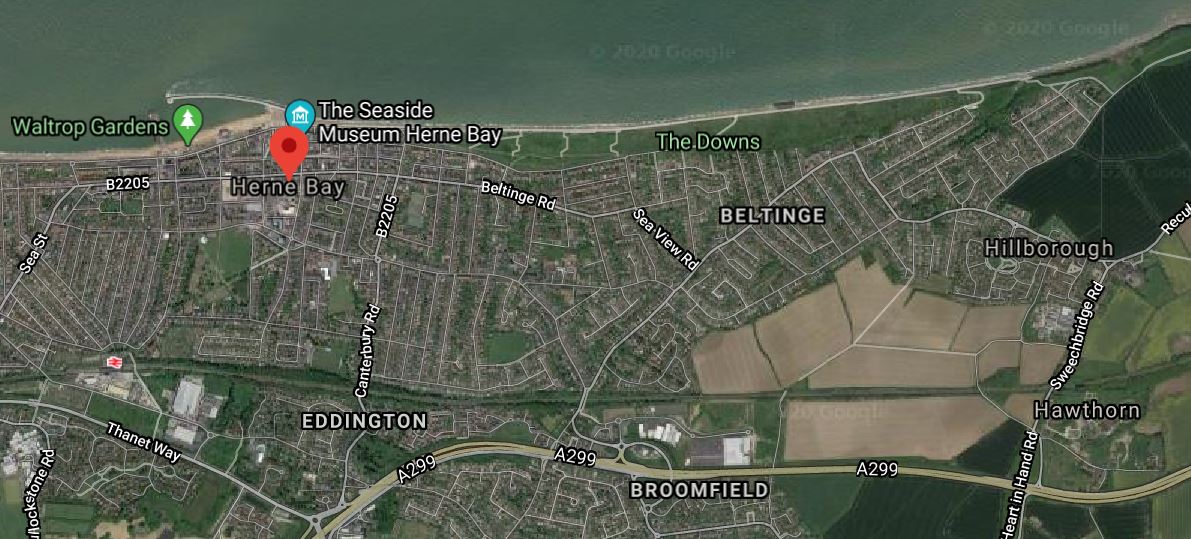
What is not shown is all the wind farms to the North of the town in the Thames Estuary. These include.
- Gunfleet Sands – 172 MW
- Kentish Flats – 139 MW
- London Array – 630 MW
- Thanet – 300 MW
That is a total of 1241 MW, so working for twenty-four hours with a capacity factor of 30% would create almost 9 GWh of electricity.
- A small fraction of this 9 GWh of renewable electricity would provide enough to run the electrolyser at full power.
- The smallest wind farm; Kentish Flats will produce 139 x 24 x 0.3 = 1000 MWh on an average day.
- Just 23 MWh of electricity per hour is needed to create the ten tonnes of hydrogen.
Where are these wind farms connected to the National Grid?
- If just one connection is close to Herne Bay, then co-location must be desirable.
- If there is no connection, only 23 MW would be needed from the National Grid.
Reading the Wikipedia entry for Herne Bay, it appears to be an improving town.
- It has both a fast rail and a High Speed One connection to and from London.
- There is a dual-carriageway road connection to the motorway network.
- The town would probably welcome the jobs, that the development would create.
Herne Bay seems to be a good place to build the first electrolyser.
The Electrolyser At Aberdeen
I don’t know the Aberdeen area well, although the oil industry in the area has been good for my financial well-being.
There must be a good reason for building an electrolyser in the area.
- Aberdeen have experience of hydrogen buses.
- There are some large wind farms; both onshore and offshore close by.
- Is there a convenient site, that once had a coal-fired power station, but still has good electrical connections?
According to the Wikipedia entry for Wind Power In Scotland, the country had 8423 MW of installed wind power in December 2018 and has the aim of using only renewable energy by 2020.
Searching the Internet, I found the Peterhead power station.
The power station is gas-fired.
The power station has changed technology over the years.
There was a plan to fuel the power station with hydrogen produced from methane, where the carbon dioxide would have been captured and stored in the Miller field.
This Google Map shows the power station, to the South of Peterhead.
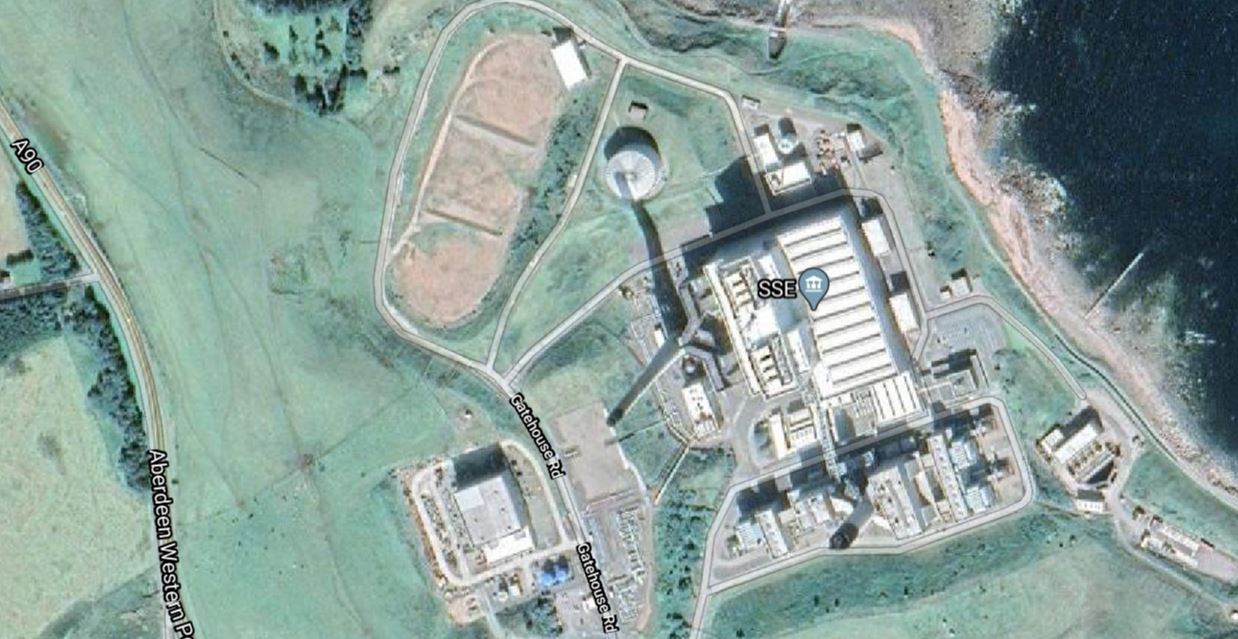
Note, that the power station is close to the A90 road, which forms the Aberdeen Western Peripheral Route, that goes past Aberdeen to the South of Scotland.
Could this power station be the site of the Aberdeen electrolyser?
- It looks to have good road connections.
- It obviously has good electrical connections.
- Peterhead would probably welcome the employment.
As you can see from the map, the power station is owned by SSE plc, who generate about a third of their energy from renewables.
And then there is Hywind Scotland, which is the world’s first commercial floating wind farm.
- This is a 30 MW wind farm.
- It comprises five 6MW floating wind turbines.
- It is situated eighteen miles off Peterhead.
- In the first two years of operation it had a capacity factor of 50 %, according to Wikipedia.
On an average day, Hywind Scotland will generate 360 MWh. This is 65 % of the 550 MWh of energy needed to produce ten tonnes of hydrogen.
Are there undisclosed plans to create a fleet of floating wind turbines, out to sea from Peterhead, which would be ideal for both Scotland’s electricity and hydrogen supplies?
It should also be noted, that in the UK and I suspect other developed countries, if someone needs a large amount of electricity for a commercial purpose, like an aluminium smelter or a steelworks, electricity companies, whether state or privately-owned, have always been keen to oblige.
I suspect that everything could be coming together in Peterhead.
The Electrolyser In Northern Ireland
The Wrightbus factory, owned by Jo Bamford builds its buses at Ballymena.
- Ballymena is 28 miles North of Belfast.
- Dublin is 130 miles to the South.
I can see the mother of all arguments happening, as to whether the electrolyser is North or South of the border.
If you look at the Wikipedia entry entitled Electricity Sector In Ireland, this is the opening paragraph.
The electricity sectors of the Republic of Ireland and Northern Ireland are integrated and supply 2.5 million customers from a combination of coal, peat, natural gas, wind and hydropower.
The grid runs as a synchronous electrical grid and in terms of interconnections has undersea DC-only connection to the UK National Grid, alongside plans in the advanced stage for a higher power, planned Celtic Interconnector to France.
It looks like Jo Bamford will only have to deal with one entity, no matter, which side of the border, the electrolyser is situated.
This would surely make it easier for his All-Ireland Green transport plan, which I wrote about in Wrightbus Boss Eyes All-Island Green Transport Plan.
My feeling is that he’ll get less grief, if the electrolyser was just on the North side of the border with a good road connection to the South. As there is a dual carriage-way road, all the way between Belfast and Dublin, this could probably be arranged.
This Google Map shows where the main dual-carriageway crosses the border.
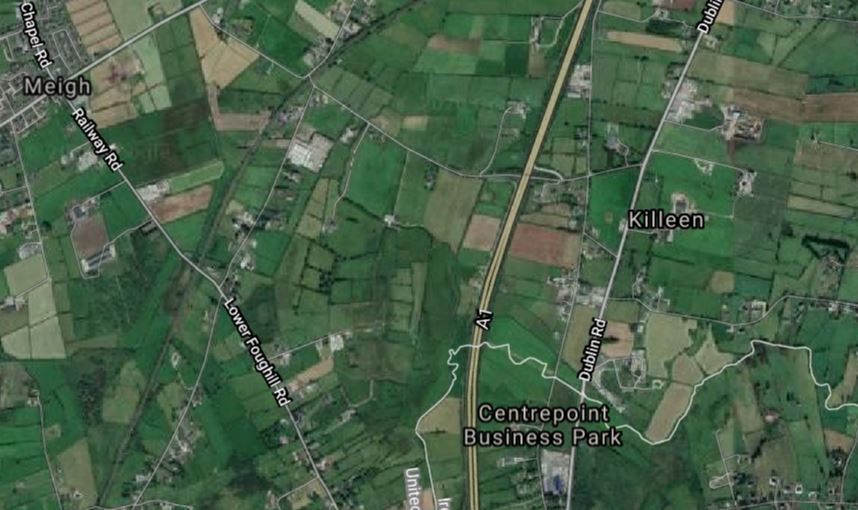
Note.
- The border is shown as a white line to the North of the Centrepoint Business Park.
- The railway line between Dublin and Belfast can be seen to the West of the main cross-border road.
I certainly think, that a solution can be found to fuel all those Irish hydrogen buses, that Jo Bamford has proposed.
The Electrolyser At Runcorn
If Runcorn already has a good source of hydrogen at the former ICI factory, that is now owned by INEOS, why build an electrolyser at Runcorn?
There are several reasons.
- Runcorn is involved in the hydrogen plans for North-West England, that I wrote about in A Hydrogen Mobility Roadmap For North-West England.
- Runcorn can connect into the North West’s proposed hydrogen network.
- Runcorn is close to the zero-carbon wind energy of Liverpool Bay.
- INEOS can pool their zero-carbon hydrogen into that produced by Ryze.
- Will INEOS with all their hydrogen experience in the area, host the electrolyser?
- Runcorn is convenient for the large cities of Liverpool and Manchester.
- Runcorn has good access to the motorway network for the Midland of England and North Wales.
- There must be the possibility of building a rail terminal to deliver hydrogen.
Runcorn would also connect the interests of Jim Ratcliffe and the Bamfords.
The Electrolyser In South Wales
South Wales has an extensive public transport network.
- The South Wales Main Line runs between the Severn Tunnel and Swansea and the West via Newport and Cardiff.
- The Cardiff Valley Lines are being transformed into a modern South Wales Metro, which will make use of electric and battery technology.
- There are a lot of buses, running around in South Wales.
The buses and possibly some of the trains must be candidates for hydrogen power.
Transport for Wales Rail Services have ordered 77 Class 197 diesel trains from CAF, who have a factory at Newport.
Given CAF’s record on innovation and the Welsh Government’s stance on the environment, I wouldn’t be surprised to find out that these trains could be converted to zero-carbon trains. I’m sure Ryze would be pleased to provide green hydrogen for Welsh trains.
I think there are two possible sites for a large electrolyser in South Wales.
The first is the site of the former Aberthaw power stations, which are shown in this Google Map.
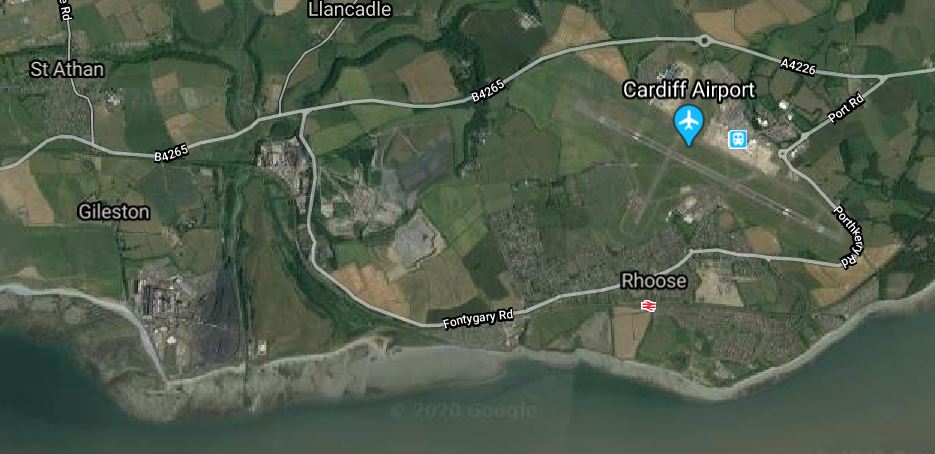
Note.
- Aberthaw power stations were South of Gileston.
- The complex stopped generating power at the end of March this year.
- The site has rail access.
- Road access would need to be improved.
- The power station must have had a good very connection to the National Grid.
- The site is near to Cardiff Airport, who might want to go zero-carbon for all their ground vehicles.
The second possible site, is on the site of the former Llanwern steel works, which is shown in this Google Map.
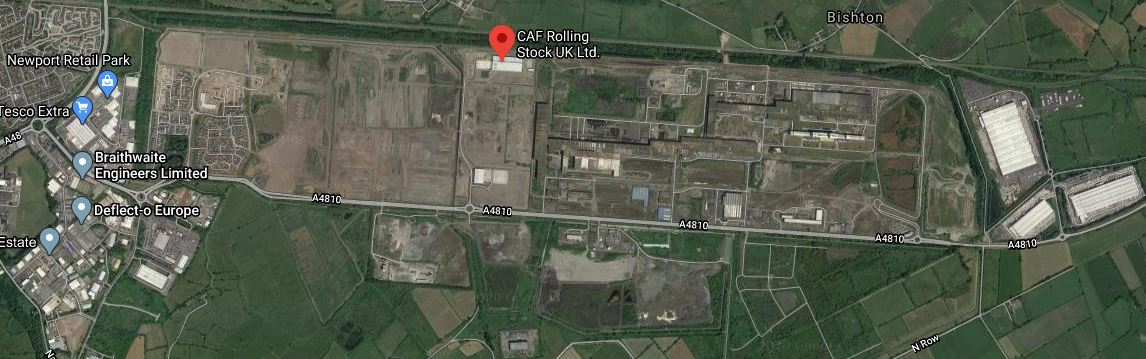
Note.
- It is a very large site, which probably has a very good connection to the National Grid.
- The CAF rolling stock factory is marked by a red arrow.
- CAF could start building and/or selling hydrogen-powered trains in the UK, at some date in the future.
- The site has rail and road access.
- The site is fifteen miles to the East of Cardiff.
- The site is thirty miles to the West of Bristol.
If it was my decision, I’d put the electrolyser on the Llanwern site.
Will The Electrolysers Need A Battery To Cover On Days Without Wind?
I can envisage a system, where several trailer-tankers are filled at once in a continuous process. Once filled, they would be disconnected and replaced by an empty one. It would act like a automatic bottling plant for beer, but with much bigger bottles.
The filled trailer-tankers would be energy stores, whilst they awaited being taken to the customers.
What Infrastructure Will Be Needed At Bus Depots?
The infrastructure is minimal and would be a tank and the means of filling the buses.
I also wonder, if trucks with a proven design of hydrogen trailer-tanker were to be used, these could be filled up at the electrolyser and the trailer-tankers would then be taken to the bus depots, where they would be plugged into the hydrogen delivery system for the buses.
- Each delivery would be a drop-off and connection of a full trailer-tanker of hydrogen and a return with the empty trailer-tanker to the electrolyser.
- The trailer-tankers could be fitted with a hydrogen vehicle-filling connection, so that bus operators could trial a small fleet of hydrogen buses or other vehicles, without putting in any infrastructure, other than safe parking for the trailer-tankers. But then most bus depots have lots of secure parking for large buses.
- This would surely be faster and more efficient, as the delivery driver wouldn’t have to wait, whilst the hydrogen is transferred.
- Deliveries could be arranged during the night.
I would also use a fleet of quiet, emission-free zero-carbon hydrogen-powered trucks. Do what I say and do what I do!
Why Not Generate The Hydrogen At The Depot?
At Pau, ITM Power have installed a hydrogen generator for the hydrogen-powered buses.
So why not do this all over the UK?
- A large bus depot could need a very large amount of electricity in a congested part of a city, where the electricity supply may be dodgy.
- It could also be safer, as venting the oxygen produced as a by-product of electrolysis, in an uncontrolled environment can be dangerous. But generated in a large electrolyser, it could be captured and used for another purpose or safely vented to the atmosphere. This section in Wikipedia, gives a brief outline of the applications of oxygen.
- I truck-based delivery system, is ideal for trials of hydrogen-powered buses, taxis, delivery vans, trucks and local authority vehicles, as no infrastructure is needed.
I suspect that, it might be more affordable and convenient to use centralised production of the hydrogen.
Conclusion
Jo Bamford has developed a well-thought out plan.
The Flexible Train For A Pandemic
Anybody, who believes that COVID-19 will be the last pandemic is an idiot!
The virus has shown, those with evil intentions to take over the world, that a pandemic, started by a weaponised virus, whether natural or man-made, can be a useful tool in your arsenal.
We must prepare for the next pandemic.
So how will we travel by train?
Current Train Interiors And The Need To Social Distance
The need to social distance will remain paramount and some of our current train interiors are better than others for passengers to remain two metres apart.
These are some typical UK train interiors.
Typical London Overground Interior
These pictures show a typical London Overground interior on their Class 378 trains and Class 710 trains.

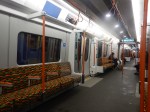
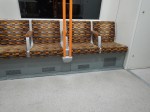
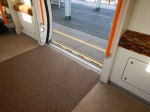
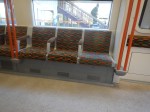
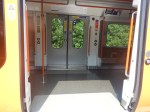
Distancing at two-metres will reduce the capacity dramatically, but with wide doors and common sense, this layout could allow social distancing to work.
Siemens Desiro City Suburban Interior
These pictures show the interior of the two Siemens Desiro City fleets; Thameslink‘s Class 700 trains, Great Northern‘s Class 717 trains and South Western Railway‘s Class 707 trains.
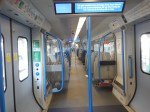
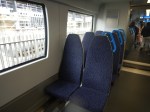
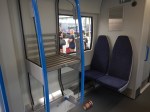
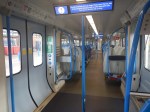
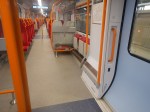
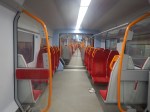
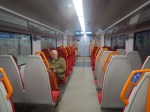
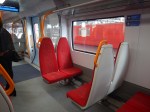
As with the London Overground layout, as the trains are fairly spacious with wide doors, social distancing could probably be made to work at reduced capacity.
Four Seats And A Table
These pictures show a selection of trains, where you have four seats around a table.
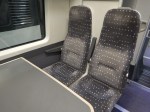
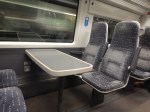
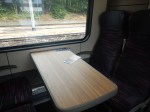
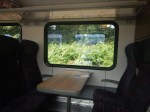
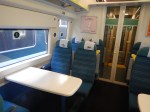
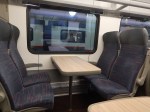
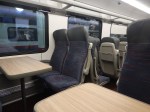
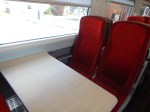
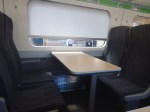
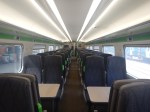
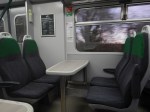
Trains include Greater Anglia’s Class 379 trains, Class 745 trains, Class 755 trains, and a selection of Class 800 trains, Class 377 trains from various operators and a superb reconditioned Class 150 train from Great Western Railway.
Could these be made to work, if there was only one person or self-isolating group living together at each set of four seats?
Designing For A Pandemic
These are my thoughts on various topics.
Seating Layouts
Consider.
- As the pictures show, maintaining social distancing will be difficult on some trains.
- Could the number of seats in use, be determined by the avert level of the pandemic?
- Could seats have lights on them to show their status?
- Will companies insist on reservations?
As to the last point, some train companies are already doing this!
Luggage
Will there be limits on the luggage you can take?
Entering And Leaving The Train
Would someone with a dangerous infectious disease be more likely to pass it on, when entering or leaving a train, through a narrow doorway?
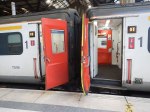
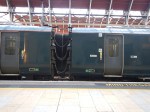

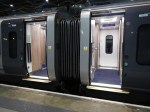
I believe coaches with narrow single end doors make social distancing impossible.
- Passengers get stuck in the bottleneck that these doors create.
- Passengers are entering and leaving through the same crowded door.
- Anybody in a wheelchair, pushing a child in a buggy or dragging a large suitcase, will make the bottleneck worse.
They are not fit for purpose in a post-COVID-19 world!
It might be possible to make the doors work using a traffic light system, which allowed passengers to leave, before any passengers were allowed to enter.
But any safe system, would be likely to increase dwell times in stations.
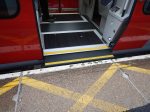
These pictures show the doors and entry and exit for Greater Anglia’s Class 745 and Class 755 trains.

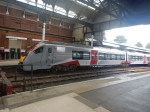
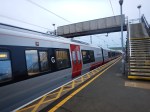
These trains have been designed to be able to run London and Norwich services over a distance of more than a hundred miles, so the trains could be considered InterCity services in all but name.
Note.
- All doors are double and lead into a wide and spacious lobby.
- Entry and exit is level, as there is a gap filler between train and platform.
- Entry and exit in a wheelchair, pushing a buggy or wheeling a large suitcase doesn’t
Greater Anglia’s new trains would appear to be better in a post-COVID-19 world.
I also think, that these trains are better designed for the disabled, those with young children, and the elderly and just plain worn-out.
Finding A Seat
If you watch people entering a train, they often take forever to find their seat and sit down. Especially, if they’ve got a massive suitcase that won’t fit in the space provided.
Rules on boarding a train and how much luggage you can bring will be developed.
Toilets
Will visiting the toilet still be allowed? Or will toilets even be removed?
Flexibility
I think a degree of flexibility must be built into the design.
I mentioned lights on seats to show which could be used, that could be lit up according to the threat level.
Conclusion
Travelling will get more complicated.
 The Anonymous Widower