BW Ideol And Holcim To Explore Use of Low-Carbon Concrete In Floating Offshore Wind
The title of this post, is the same as that of this article on offshoreWIND.biz.
This is the sub-heading.
BW Ideol and Holcim have signed a Memorandum of Understanding (MoU) for a feasibility study on supplying beneficial low-carbon concrete for the floating offshore wind industry, with particular reference to Scotland.
These are the first three paragraphs.
BW Ideol and Holcim aim to collaborate on optimising the supply of the innovative concrete needed for the intended mass production of BW Ideol’s floaters in the Port of Ardersier.
Low-carbon concrete’s advantages as a building material for offshore wind farms include its durability in marine environments, its local availability and its comparatively lower carbon emissions, the companies said.
The collaboration includes developing specific durable maritime low-carbon concrete mixes with enhanced mechanical performance perfectly suited to slipform application.
This is surely a good development.
Europe’s First Commercial-Scale Floating Offshore Wind Farm Secures All Planning Approvals
The title of this post, is the same as that of this article on offshoreWIND.biz.
This is the sub-heading.
Flotation Energy and Vårgrønn, a joint venture between Plenitude (Eni) and HitecVision, have obtained the offshore planning approval for the Green Volt floating wind farm offshore Scotland.
This is the first paragraph.
With onshore consent announced earlier this month, Green Volt has now received all its planning approvals and remains on track to be the first commercial-scale floating offshore wind farm in Europe.
Note.
- This is the Green Volt web site.
- Capacity will be between 300 and 560 MW.
- It should be fully operational by 2029.
- It is an INTOG wind farm designed to decarbonise offshore oil and gas fields.
It will also have the side effect of bringing more gas ashore in the UK, instead of burning it to power the platforms.
Vital Bridge Replacement Means No Trains On Liverpool Street – Chingford line For 16 Consecutive Days This Summer
The title of this post, is the same as that of this press release from Network Rail.
These four paragraphs outline the project to replace the bridge.
Trains will not be able to run for 16 straight days while Network Rail delivers a critical stage of a bridge replacement project between Saturday 20 July and Sunday 4 August.
The 150-year-old bridge over the railway is located to the south of Hackney Downs Park and carries the junction of Downs Park Road and Bodney Road. It backs directly onto a tunnel, which emerges further down the line towards Clapton.
The bridge is monitored closely to check it is safe, but its cast iron girders are in poor condition, and they are continuing to deteriorate. A replacement structure is needed to avoid an unplanned closure and keep passengers and road users moving in future.
Over the 16 consecutive days, engineers from Network Rail’s contractor, Murphy, will demolish the old bridge and start building the new one.
This Google Map shows Hackney Downs station and the location of the bridge to be replaced.

Note.
- Hackney Downs station at the bottom of the map.
- The tracks to Enfield Town and Cheshunt stations going to the North-West corner of the map.
- The tracks to Walthamstow and Chingford stations going to the North-East.
- Mossbourne Academy is between the two tracks.
- The bridge to be replaced is where the tacks to Chingford disappear into a tunnel.
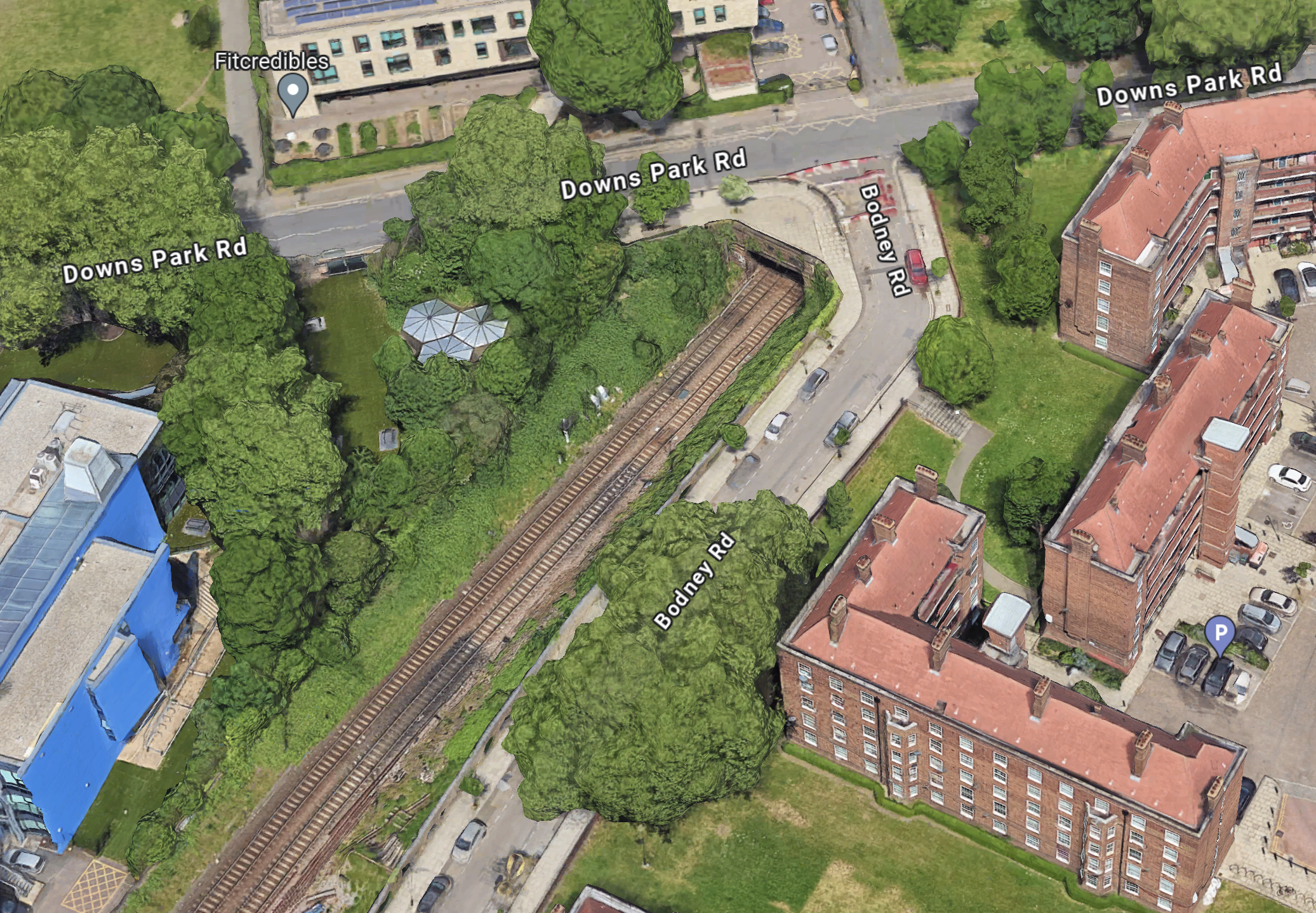
This 3D Google Map shows the bridge in more detail.
Note.
Downs Park Road running across the top of the map.
Bodney Road running down the side of the railway.
The blue building is Mossbourne Academy.
This Network Rail image shows the current bridge.

It certainly looks like it’s seen better days.
This Network Rail visualisation shows the how the new bridge will probably look from above.

It looks like the landscaping will be fairly simple.
I have some further thoughts.
The Disruption
Sixteen days is a long closure, but rebuilding the bridge before it possibly falls down, is probably prudent.
So make sure you read the full press release from Network Rail.
Hopefully, it will all go well!
Further Works
Hackney Downs and Clapton stations opened in 1872, so the bridge and the tunnel must be at least 150 years old.
So I wouldn’t be surprised, that when Network Rail do a full underground survey, they find other problems.
Rectification could delay the reopening.
Conclusion
It looks to be a well-prepared project.
But I do have my reservations about Network Rail finding something nasty.
Those naughty Victorians would cut corners and bodge things and then not write it down.
This Hydrogen Engine From Kia And Hyundai Heralds A New Dawn In Automotive – Everything Will Change – Lagrada
The title of this post, is the same as that of this article on Hydrogen Central.
These are the first two paragraphs.
Hyundai and Kia recently unveiled in Korea a zero-emission hydrogen engine that could disrupt the EV market. Both automakers are at the forefront of the development of hydrogen technology, focusing on both fuel cell systems and investigating the possibilities of sophisticated hydrogen engines.
The future of sustainable mobility is being shaped by Hyundai and Kia’s continuous research and dedication to hydrogen as a clean transportation solution. An increasing number of manufacturers are developing hydrogen engines as an alternative to electric cars and vehicles that use polluting combustion engines.
These three paragraphs outline more details of the engine.
What’s more remarkable about this new hydrogen engine presented in Korea is that it solves all the problems of durability and large-scale viability that hydrogen engines have presented until now.
The project team successfully ensured that the Hyundai-Kia hydrogen engine, designed to burn hydrogen, could sustain high thermal efficiency throughout its operation by infusing hydrogen into the combustion chamber at a pressure of 30 bar.
Although the device’s performance was enhanced by the use of a turbocharger, it was found that the enhanced performance and lower pollution emissions of this kind of “direct injection” eliminated the problems that most automakers have with hydrogen engines. As the emissions of carbon dioxide and fine particles were reduced by 99% and 90%, the Hyundai-Kia hydrogen engine would be considered to have zero emissions.
Thirty years ago, I was involved with a company called DMW.
- The company’s first product was an aerosol valve, that instead of using CFCs or HCFCs as a propellent used nitrogen. The patent was sold to Johnson and Johnson, after being shown during the discussions, that led to the Montreal Protocol and the phase out of CFCs.
- This led to a deal with Glaxo to investigate if DMW’s technology could be used in a metred-dose-inhaler for asthma drugs.
- The successful idea was eventual sold to Boehringer Ingelheim and is now marketed as Respimat.
I can compare the Hyundai-Kia hydrogen injector and the Respimat inhaler
- Hyundai-Kia appear to be using a high pressure of 30 bar to sustain high-thermal efficiency.
- I know that the Respimat inhaler uses high pressure to obtain a fine mist of the drug.
It sounds to me, that both companies are using the same properties of applying high pressure to a small hole, to disperse one fluid in another.
All T-Pylons Fully Wired Up In Major Milestone For Hinkley Connection Project
The title of this post is the same as that of this press release from National Grid.
These three bullet points are sub-headings.
- Hinkley Connection Project’s 116 T-pylons now ‘strung’ with overhead conductors
- Final conductors fixed into place on a row of T-pylons near Yatton, North Somerset
- 460km and 1,288 tonnes of power line have been installed between project’s T-pylons
Seven paragraphs of the press release go into great detail about how the cables were attached.
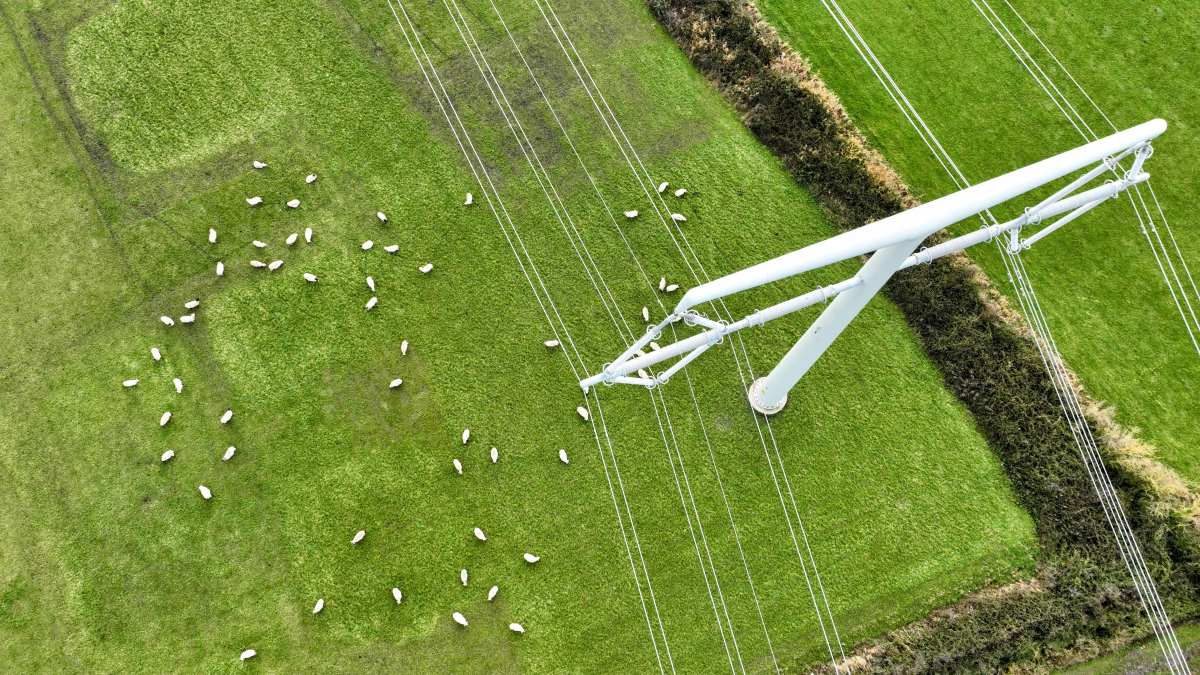
But I find this image from the press release, is the most interesting part.
Note.
- There are six cables on each diamond earring-shaped insulator.
- There appears to be a second cross-bar between the insulators.
- The pylon has a small footprint on the ground.
- The white dots on the ground look like sheep.
- The base of the pylon, will make a good scratching post for animals, like sheep, cattle and horses.
This second picture is a profile, that I took at Yatton from a passing train.
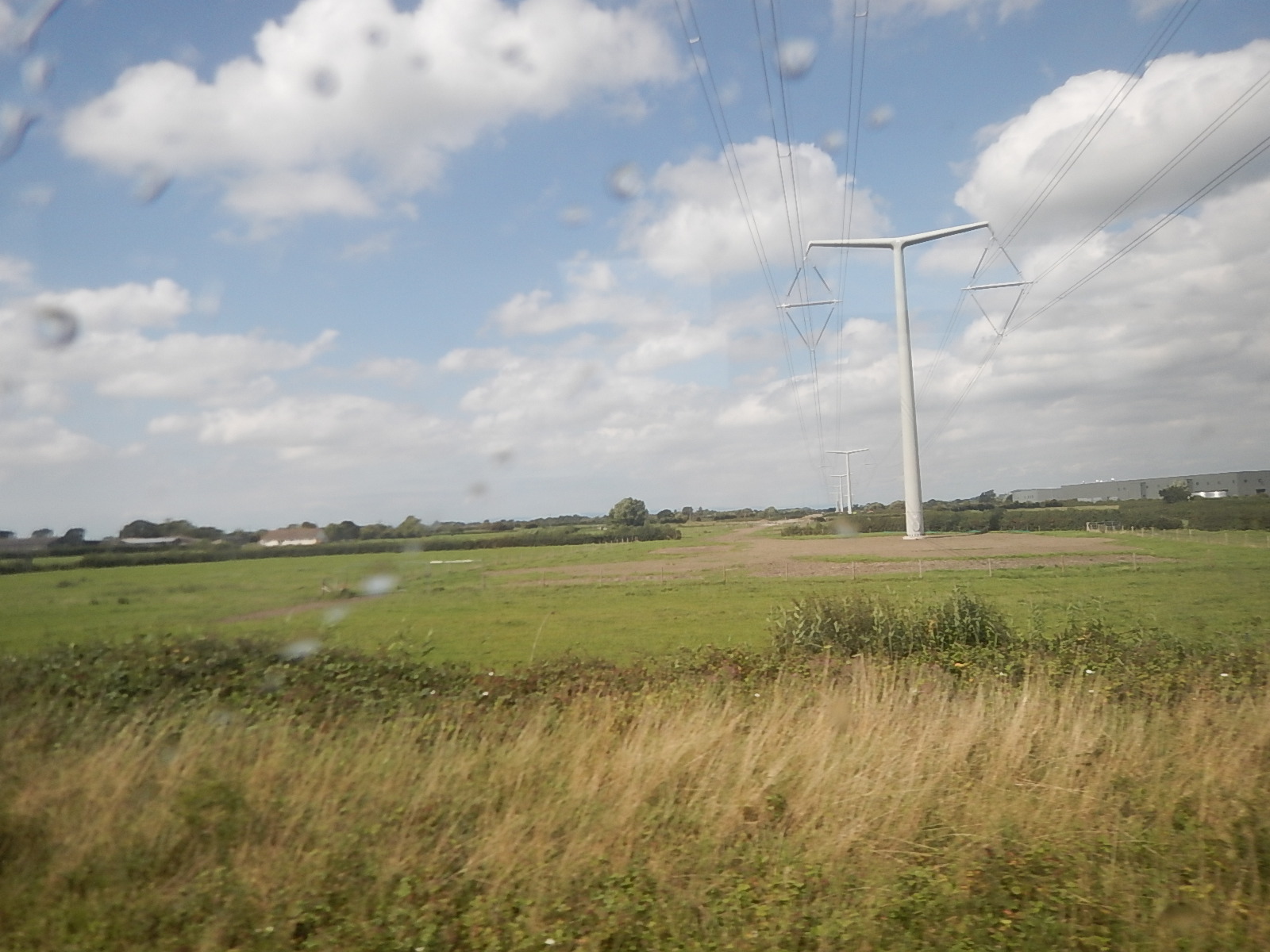
Note that the second cross-bar is not there. Is it to steady the insulators during the installation of the cables?
This picture shows some of the traditional pylons used to connect the Sizewell site to the National Grid.
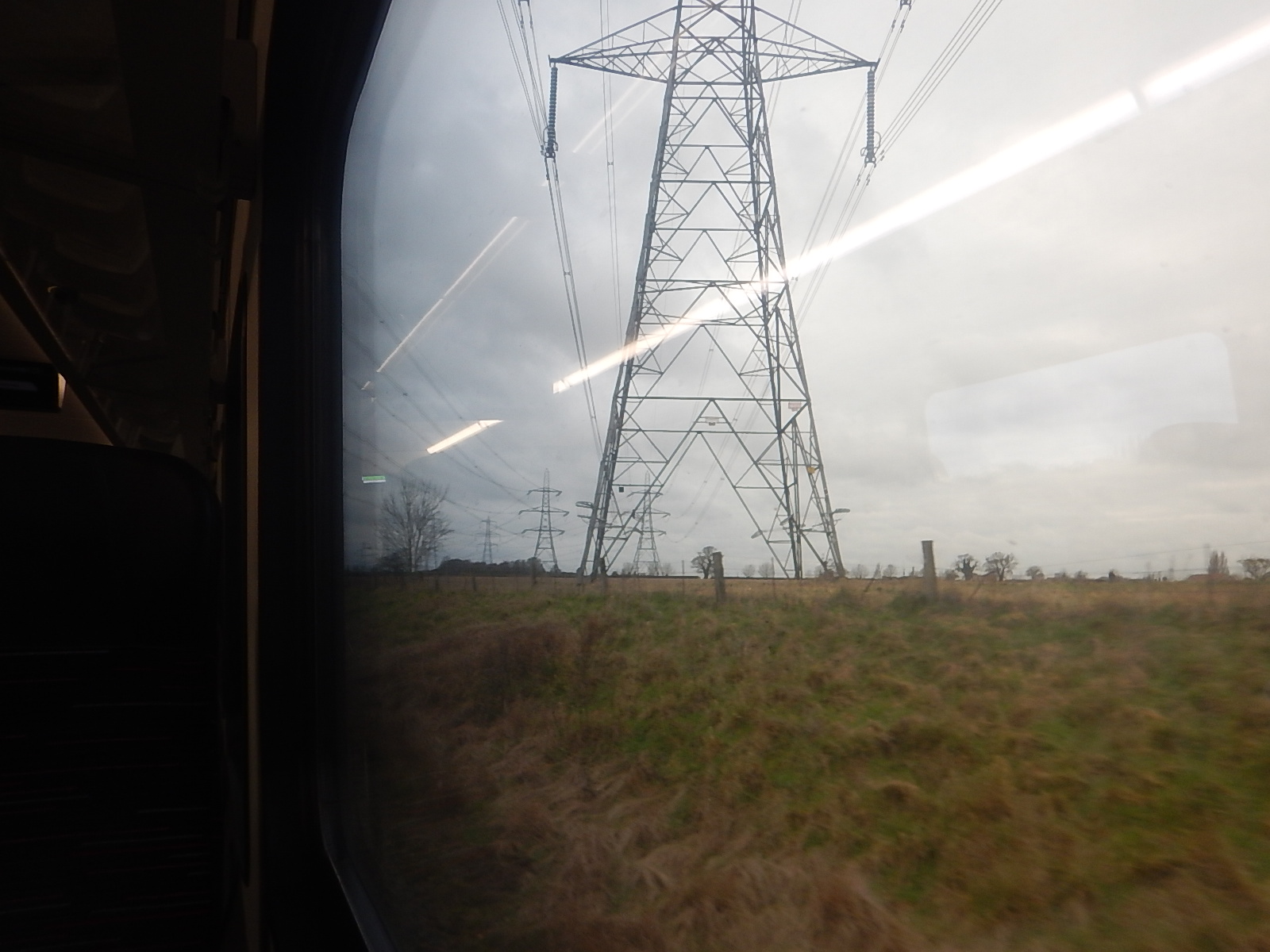
I know which ones I prefer.
National Grid Launches Viking Link, The Next Step Towards A North Sea Super-Grid
The title of this post, is the same as that of this press release from National Grid.
These four bullet points act as sub-headings.
- The £1.8bn project connecting the UK with Denmark was launched today.
- With a capacity of 1.4GW, Viking Link will be able to power up to 2.5 million UK homes and is the longest land and subsea cable in the world.
- Viking Link will deliver £5.2bn in benefits to UK consumers.
- As the UK’s first connection with renewable energy-rich Denmark, Viking Link will be instrumental in both countries achieving net zero carbon emissions.
The press release then gives all the details of the latest of National Grid’s sixth interconnector.
As a Control Engineer, I like this interconnector.
- Denmark and the UK are both importers of electricity.
- The UK has 30 GW of wind power and Denmark has 7 GW.
- The UK has almost 15 GW of solar power and Denmark has 3.5 GW.
- The UK has 6 GW of nuclear and Denmark banned nuclear in 1985.
- Both the UK and Denmark use large amounts of biomass to generate electricity.
- As the sun goes East to West, Denmark will produce its daily peak solar before the UK.
- If the prevailing winds go West to East, the UK will produce its daily peak wind before Denmark.
It looks to me that a UK-Denmark interconnector could perform a valuable job, by balancing the UK’s electricity peaks and troughs with those of Denmark.
The system could be improved in two ways.
- If Southern England has a sunny, windy day, there may be need for substantial energy storage.
- The route between the UK and Denmark could be via a large offshore wind farm in the North Sea.
Vind∅ is a proposed Danish energy island in the North Sea.
There’s more about the Viking Link on its web site.
This is the introduction on the home page.
Viking Link is a 1400 MW high voltage direct current (DC) electricity link between the British and Danish transmission systems connecting at Bicker Fen substation in Lincolnshire and Revsing substation in southern Jutland, Denmark.
The project involves the construction of converter sites and installation of onshore and offshore cable in each country. These are then connected to the substations.
Viking Link is approximately 765 km long and allows electricity to be exchanged between Great Britain and Denmark.
The interconnector enables the more effective use of renewable energy, access to sustainable electricity generation and improved security of electricity supplies. It also benefits the socio economy of both countries.
This is going to be a very valuable interconnector for the UK, Denmark and those that own it.
Did A Day In A Class 350 Train Lower My INR?
Yesterday, I went to Birmingham to take pictures of the rebuilt Birmingham University station.
- I travelled by West Midlands Trains catching the 11:23 to Birmingham New Street station, where it arrived at 13:45.
- Coming home, I caught the 15:36 from Birmingham New Street station, which arrived in Euston at 17:49.
So I spent nearly four and a half hours in the train.
This morning, when I measured my INR, it was only 1.8.
Did the weather and the train’s air-conditioning conspire to lower my INR by removing water from my body?
A Manifesto For Liverpool City Region
The title of this post is the same as that of this document from the Heseltine Institute of Public Policy, Practice and Place.
The Heseltine Institute for Public Policy, Practice and Place. describes itself like this on its home page on the University of Liverpool web site.
An interdisciplinary research institute focusing on the development of sustainable and inclusive cities and city regions.
The main sections of the document are as follows.
- How Can We Reduce Health Inequalities?
- How Do We Meet Our Net Zero Goals?
- How Can We Address The Cost Of Living Crisis?
- How Can We Deliver Sustainable Mobility?
- How Can We Address The Challenges And Meet The Opportunities Of Artificial Intelligence?
- How Do We Build Enough New Homes In The Right Places?
- How Should We Care For The Most Vulnerable In Society?
- How Can We Maintain A Vibrant And Inclusive Cultural Life?
- How Do We Restore Trust In Democracy?
These are nine very important questions and the document is worth a good read.
Hyundai Heavy Sets Sights On Scottish Floating Offshore Wind
The title of this post, is the same as that of this article on offshoreWIND.biz.
This is the sub-heading.
Major South Korean shipbuilder, HD Hyundai Heavy Industries, has signed a Memorandum of Understanding with two Scottish enterprise agencies which is expected to unlock expertise in the design and manufacture of floating offshore wind substructures.
These are the first three paragraphs.
Scottish Enterprise (SE) and Highlands & Islands Enterprise (HIE) signed the MoU with Hyundai Heavy in Edinburgh, described as a “vote of confidence” in Scotland, committing each other to pursue opportunities for floating offshore wind projects in Scotland.
This is the South Korean company’s first agreement in Europe on floating offshore wind manufacturing.
HD Hyundai Heavy Industries is the world’s largest shipbuilding company and a major manufacturer of equipment such as the floating substructures that form a critical part of the multi-billion offshore wind supply chain.
To say this is a big deal, could be a massive understatement, as my history with large Korean companies could say otherwise.
Around 1980, one of the first prestigious overseas projects, that was managed by Artemis was in Saudi Arabia.
- This may have been something like the King Khaled City, but I can’t be sure.
- Most of the hard work on the project was done by labour imported by Hyundai from South Korea.
After a few years, the Korean running Hyundai’s part of the project returned to Korea and he indicated that he would help us break into the Korean market.
Our salesman; Paul, with responsibility for Korea, who sadly passed away last year, told me this tale of doing business in the country.
Our Korean friend had bought a system for Hyundai in Korea and he organised a meeting for important Korean companies, so that Paul could present the system.
Everything went well, with our friend doing the necessary pieces of translation.
When he had finished, Paul asked if there were any questions.
The most common one was “Can we see the contract?”
Contracts were given out and after a cursory read, the leaders of Korean industry, all started signing the contracts.
So Paul asked our Korean friend, what was going on.
After a brief discussion, Paul was told. “If it’s good enough for Hyundai, it’s good enough for my company!”
And that was how we broke the Korean market.
Conclusion
In UK And South Korea Help Secure Millions For World’s Largest Monopile Factory, I talked about Korean company; SeAH Wind’s new monopile factory on Teesside.
In South Korea, UK Strengthen Offshore Wind Ties, I talk about a developing partnership.
In Mersey Tidal Project And Where It Is Up To Now, I talk about Korean involvement in the Mersey Tidal Project.
The Koreans are coming and Hyundai’s endorsement will help.
 The Anonymous Widower