Not Getting Wet At Paddington Station
On my trip to High Street Kensington station today, I changed trains at Paddington both ways between the Elizabeth and Central Lines.
Going, I took the route I did in The Lizzie Line And Circle/District Line Interchange At Paddington – 1st July 2022.
Coming back, I walked through the station in the dry, despite it chucking it down outside.
At least outside the Elizabeth Line was under a roof and dry.




Despite the rain, the clouds on the glass roof are visible.
The Power Behind Rolls-Royce
My post entitled ‘Spirit of Innovation’ Stakes Claim To Be The World’s Fastest All-Electric Vehicle, was based on this press release from Rolls-Royce, which has the same title.
In the post I talk about Rolls-Royce’s experimental electric aircraft; Sprit of Innovation.
- The aircraft set a world record for electric-aircraft of 345.4 mph.
- the aircraft clocked up a maximum speed of 387.4 mph.
- The aircraft was propelled on its record breaking runs by a 400kW electric powertrain.
- Rolls-Royce worked in partnership with aviation energy storage specialist; Electroflight and automotive powertrain supplier; YASA.
For comparison, my Cessna 340A had two 230 kW engines and a maximum speed of 281 mph.
Electroflight, Evolito And YASA
YASA has this description of the company on their home page.
YASA is at the forefront of eMotor innovation and development. Our axial flux technology motors are up to 4x more powerful than those used in nearly all Electric Vehicles on the road today, whilst being around 50% smaller & lighter.
We already feature in some of the best eMotor applications across multiple sectors, and now as part of Mercedes-Benz, with sites in Oxfordshire and Welshpool, we are accelerating development of axial flux eMotors and Control Systems for of the next generation of Electric Vehicles.
Evolito has this description of the company on their About page.
Evolito was spun out in 2021 by YASA, the world-leading pioneer of automotive axial-flux electric motors acquired by Mercedes-Benz in July 2021, to exclusively commercialise YASA’s next-generation electric motor technology and IP for the rapidly-growing aerospace market. Evolito is funded by a portfolio of private investors including B-FLEXION and Oxford Science Enterprises (OSE).
Electroflight has this company story on their About page.
Founded in 2011 to address battery-electric issues in the aerospace market, we are a UK-based innovation engineering company, taking expertise from across the automotive and aerospace sectors, working with leading airframers to develop and supply next-generation battery technology.
In 2019, Electroflight, Rolls-Royce and YASA partnered to design and build the worlds fastest all-electric vehicle – The Spirit of Innovation. 3 years of dedication from the team involved integrating the full powertrain into a NXT aircraft, optimising the system to peak performance and following rigorous testing processes in an emerging market with new regulations; in 2021 the record breaking flight reached a staggering 345.5 mph!
Following the successful spinout of Evolito (YASA’s Aerospace Division) in 2021, Evolito acquired Electroflight in July 2022 to offer a fully optimised powertrain solution for the electric aerospace industry.
It appears that Mercedes-Benz now own YASA’s technology for the the automotive industry and Evolito have the aerospace technology.
Evolito’s Technology
The Evolito web site has a Technology page, which is entitled The World’s Most Advanced Electric Propulsion Solution.
- Their Axial Flux Motors are certainly a revolutionary approach.
- It looks like one of their motors has a peak power of 280 kW, a continuous power of 100 kW and weighs just 35 Kg.
There is also this page, which gives more details about the creation of the Spirit of Innovation, which has this video.
Evolito And Project Fresson
This press release from Cranfield Aerospace Solutions is entitled Cranfield Aerospace Welcomes Ground-Breaking UK Technology Innovator Onboard Project Fresson.
These paragraphs explain the link-up.
Cranfield Aerospace Solutions (CAeS) welcomes Evolito, a ground-breaking UK technology innovator onboard as the motor & inverter supplier for its hydrogen-powered aircraft demonstrator – Project Fresson.
Evolito join Reaction Engines and Ricardo as technology collaborators on Project Fresson, showcasing the UK innovation that is redefining the aviation industry.
Based in Oxfordshire, Evolito is the aerospace spin out of YASA – the world-leading pioneer of automotive axial-flux electric motors.
Producing the world’s most advanced electric propulsion system, Evolito’s motors are smaller, lighter, and typically 4 times more power dense than radial flux solutions, making them ideally suited to the emerging zero-emissions aviation markets.
Evolito’s axial-flux technology requires up to 75% less iron, less copper and fewer permanent magnets than competing radial solutions, making it lighter and more environmentally friendly.
Note.
- Project Fresson is a project to develop an electric propulsion system for Britten-Norman Islanders.
- There are 700 Islander aircraft in service.
A hydrogen propulsion system, would be useful for new aircraft and conversions.
Saved By A Beer?
Last night, I was feeling distinctly unwell. My left foot was itching like mad and I couldn’t walk without hanging onto the furniture.
I decided to take serious action.
- I took off my left sock and plastered it with Body Shop Hemp foot protector, which usually stops the itch.
- I also drunk a bottle of 0.5 %-alcohol Ghost Ship from Adnams.
- The beer went down quickly and cured the unsteadiness.
Twenty minutes later my foot was back to normal.
I really should get hold of this unsteadiness, as I’m sure it’s caused a couple of falls and visits to hospital.
It should be noted that yesterday, I’d been drinking tea all day, as I often do.
Is it just that I get dehydrated very quickly?
Beware Beaver At Work!
Some years ago, I went on a wildlife tour of Sweden, called Sweden’s Mammals.
The company; Wild Sweden, have just sent me this YouTube video.
Enjoy!
Electrification Between Newbury And East Somerset Junction
In the August 2023 Edition of Modern Railways, there is an article, which is entitled GWR Seeks Opportunities To Grow.
This is the sub-heading.
Managing Director Mark Hopwood tells Philip Sherratt there is plenty of potential to increase rail’s economic contribution.
This is two paragraphs.
The desire to provide electrification to support aggregates traffic from the Mendip quarries could also benefit GWR , says Mr. Hopwood. ‘Having an electric loco would massively help with pathing heavy freight trains through the Thames Valley. If you could electrify from Newbury to East Somerset Junction, a big chunk of the Berks and Hants route would be wired.
Then you can ask how much further you could get on battery power on an IET without running out of juice.’
I have some thoughts.
Where Is East Somerset Junction?
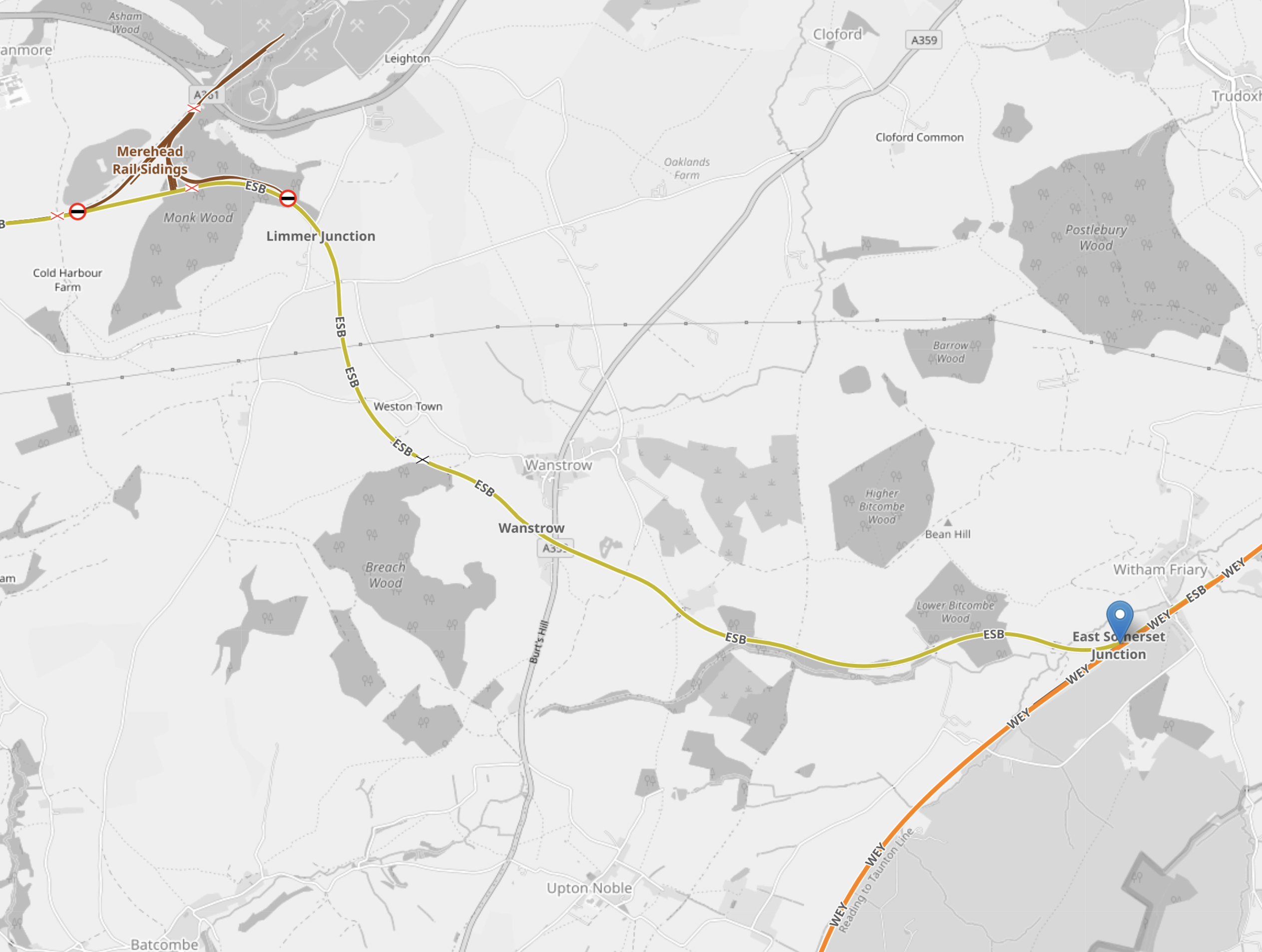
This OpenRailwayMap shows East Somerset junction.
Note.
- The East Somerset junction is marked with the blue arrow.
- East Somerset junction is 5.2 miles North of Bruton station and 5.4 miles South of Frome station on the Reading and Taunton Line.
As the map shows there is a branch to Merehead Rail Sidings, which is shown in yellow.
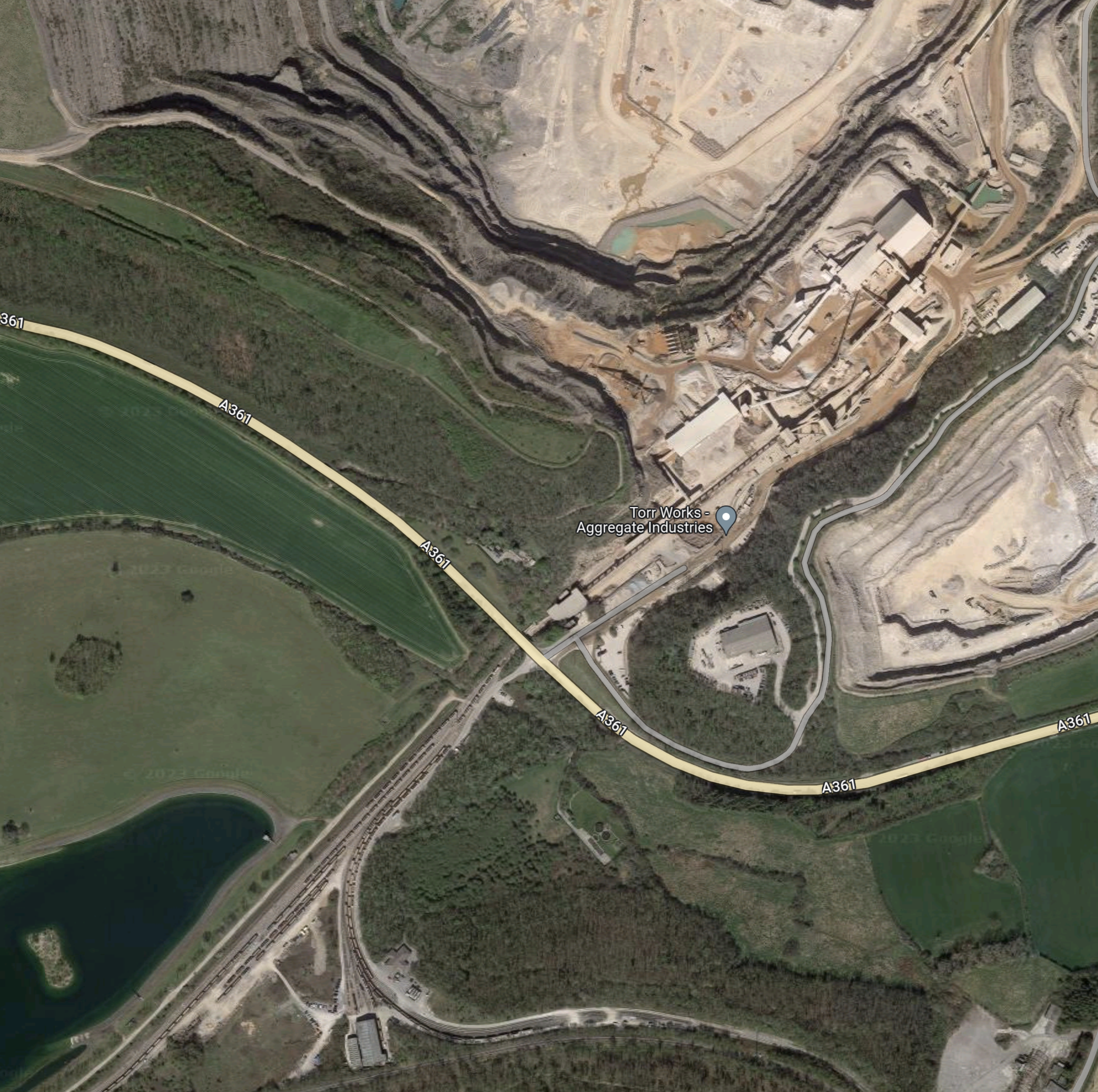
This Google Map shows Merehead Rail Sidings.
Note.
- It looks like there is a massive quarry to the North of the A361 road, which curves across the map.
- It is labelled Torr Works – Aggregate Industries.
- Torr Works has a Wikipedia entry.
- The rail sidings are South of the A361.
- Zooming in on the map, shows that the railway between East Somerset junction and Merehead is single-track and only a few miles long.
Distances from East Somerset junction are as follows.
- Dorchester junction – 41.2 miles
- Newbury – 53.4 miles
- Taunton – 37.2 miles
- Weymouth – 47.8 miles
Note that it is electrified with 750 VDC third-rail between Weymouth and Dorchester junction.
Range of Battery-Electric Trains
Consider.
- A Bombardier engineer told me eight years ago, that the battery-electric Class 379 train had a range of sixty miles.
- Stadler’s FLIRT Akku has a Guinness world record of 139 miles on one battery charge. See this page on the Stadler web site.
- Even Stadler’s Class 777 trains for Merseyrail have a range of 84 miles on battery power. See New Merseyrail Train Runs 135 km On Battery.
It does appear that five-car battery-electric trains will have ranges in excess of a hundred miles.
I believe that because Hitachi’s battery makers have a good record, they will probably be very ambitious and will want that Guinness record, that Hitachi’s Class 802 trains will have a battery range not far short of the 139 miles of the Stadler FLIRT Akku.
I will be very surprised if Hitachi’s battery-electric version of a Class 802 train, doesn’t have range of at least 125 miles.
But say if they could do say 140 miles, the battery-electric Class 802 train could cover every long-distance route in the UK, which would attract orders for trains to run on the following routes.
- Cardiff and Swansea
- Crewe and Holyhead
- Edinburgh and Aberdeen
- Edinburgh and Inverness
- Crewe and Holyhead
- London Waterloo and Exeter St. Davids
A substantial reward to the battery makers, would probably not be out of order.
Aggregate Trains From The Mendips
Consider.
- Mining and quarrying companies are under pressure from governments, shareholders and environmentalists to reduce their carbon footprints.
- Many are replacing diesel-powered mining excavators and trucks, with electric or hydrogen versions.
- In addition, those companies delivering building products to the construction industry are under pressure to provide low-carbon products.
- Using rail with electric traction to deliver products to market would cut carbon emissions and might even help sales.
These Mendip quarries appear to be connected to the Reading and Taunton Line.
- Torr Works – Connects 5.4 miles to the South of Frome.
- Whatley Quarry – Connects close to Frome.
There may be others.
But these rail-connected quarries, connect at or North of East Somerset junction, to where Mark Hopwood is proposing electrification.
Zero-carbon rail traction could even be possible, by electrifying the short single-track branch lines. or by using hydrogen-electric hybrid locomotives.
GWR’s London And South-West Services
These services use the Reading and Taunton Line to join the Bristol and Exeter Line at Taunton, before going on to Exeter, Plymouth and other destinations in the South-West of England.
These are distances from East Somerset Junction.
- Exeter – 67 miles
- Paignton 95.2 miles
- Penzance – 198.5 miles
- Plymouth – 119.0 miles
- Taunton – 37.2 miles
Note.
- Exeter, Paignton, Penzance and Plymouth stations would need short lengths of electrification to charge terminating trains or top-up passing trains.
- In Thoughts About Electrification Through Devon And Cornwall, I showed that the average stop time at Plymouth station was eight minutes, which could be enough for the rail equivalent of a Formula One splash and dash.
- A 125 mile battery range, not only enables London and Penzance, but also Cardiff and Swansea, and Edinburgh and Aberdeen, when the extra electrification is completed.
Could my estimate of a 125 mile battery range, be Hitachi’s objective for their battery-electric trains?
The Ultimate Battery-Electric Class 802 Train
Hitachi have been totally silent on how the fitting of batteries to Class 802 trains is going.
But Mark Hopwood is more forthcoming in the GWR Seeks Opportunities To Grow article. where this is said.
Meanwhile, GWR had announced plans with Eversholt Rail to trial the replacement of a diesel generator unit with batteries on a Class 802 IET. However, Mr. Hopwood says this would not be useful for GWR and so the trial is not proceeding; instead, a TransPennine Express Class 802 will be the subject of a battery trial.
It sounds to me that another solution is being developed to get trains to run on electric power between London and the South-West.
- I think we can rule out full electrification on the grounds of cost, disruption, time and the Nimbys and objectors will have a field day.
- Newbury and Penzance is a distance of 251.9 miles, which would surely need a lot of batteries.
Mark Hopwood’s idea to electrify the 53.4 miles between Newbury And East Somerset junction, is starting to look like a good compromise.
GWR’s Bristol/Gloucester And Weymouth Services
These stopping trains are run by diesel trains and take the following route between Bristol Temple Meads and Weymouth stations.
- Keynsham
- Oldfield Park
- Bath Spa
- Freshford
- Avoncliff
- Bradford-on-Avon
- Trowbridge
- Westbury
- Frome
- East Somerset junction
- Bruton
- Castle Cary
- Yeovil Pen Mill
- Thornford
- Yetminster
- Chetnole
- Maiden Newton
- Dorchester West
- Dorchester junction
- Upwey
Note.
- I would assume that there is enough electrification at Bristol Temple Meads and towards Gloucester to charge the trains.
- Trains would leave Bristol Temple Meads with a full battery.
- The eighteen stops mean that an electric train with regenerative braking will be more efficient.
- Bristol Temple Meads and Westbury is not electrified.
- Westbury and East Somerset junction will be electrified with 25 KVAC overhead electrification under Mark Hopwood’s proposal.
- Trains take sixteen minutes between Westbury and East Somerset junction.
- East Somerset junction and Dorchester junction is not electrified.
- Dorchester junction and Weymouth is electrified with 750 VDC third-rail electrification.
- Trains take ten minutes between Dorchester junction and Weymouth.
Distances of the various legs are as follows.
- Bristol Temple Meads and Westbury – 28.3 miles – Not Electrified
- Westbury and East Somerset junction – 11.4 miles – Electrified
- East Somerset junction and Dorchester junction – 41.4 miles – Not Electrified
- Dorchester junction and Weymouth – 6.6 miles – Electrified
The two sections without electrification, should be well within range of a dual-voltage battery-electric train, that has been designed for the route.
GWR’s Cardiff Central And Portsmouth Harbour Service
These stopping trains are run by diesel trains and take the following route between Bristol Temple Meads and Portsmouth Harbour stations.
- Keynsham
- Oldfield Park
- Bath Spa
- Freshford
- Avoncliff
- Bradford-on-Avon
- Trowbridge
- Westbury
- Warminster
- Salisbury
- Romsey
- Redbridge
- Southampton Central
- Fareham
- Cosham
- Fratton
- Portsmouth & Southsea
Note.
- I would assume that there is enough electrification at Bristol Temple Meads and towards Cardiff Central to charge the trains.
- Trains would leave Bristol Temple Meads with a full battery.
- The seventeen stops mean that an electric train with regenerative braking will be more efficient.
- Bristol Temple Meads and Westbury is not electrified.
- Westbury station will be electrified with 25 KVAC overhead electrification under Mark Hopwood’s proposal.
- Trains would leave Westbury with a full battery.
- Westbury and Redbridge is not electrified.
- Redbridge and Portsmouth Harbour is electrified with 750 VDC third-rail electrification.
Distances of the various legs are as follows.
- Bristol Temple Meads and Westbury – 28.3 miles – Not Electrified
- Westbury and Redbridge – 46.4 miles – Not Electrified
- Redbridge and Portsmouth Harbour – 28.5 miles – Electrified
The two sections without electrification, should be well within range of a dual-voltage battery-electric train, that has been designed for the route.
GWR’s Bristol Temple Meads And Salisbury Services
These stopping trains are run by diesel trains and take the following route between Bristol Temple Meads And Salisbury stations.
- Keynsham
- Oldfield Park
- Bath Spa
- Freshford
- Avoncliff
- Bradford-on-Avon
- Trowbridge
- Dilton Marsh
- Warminster
Note.
- I would assume that there is enough electrification at Bristol Temple Meads to charge the trains.
- Trains would leave Bristol Temple Meads with a full battery.
- An electric train with regenerative braking will be more efficient.
- Bristol Temple Meads and Westbury is not electrified.
- Westbury station will be electrified with 25 KVAC overhead electrification under Mark Hopwood’s proposal.
- Trains would leave Westbury with a full battery.
- Westbury and Salisbury is not electrified.
Distances of the various legs are as follows.
- Bristol Temple Meads and Westbury – 28.3 miles – Not Electrified
- Westbury and Salisbury – 24.4 miles – Not Electrified
The two sections without electrification, should be well within range of a battery-electric train, that has been designed for the route.
GWR’s Swindon And Westbury Services
These stopping trains are run by diesel trains and take the following route between Swindon and Westbury stations.
- Chippenham
- Melksham
- Trowbridge
Note.
- This is the Transwilts service.
- I would assume that there is enough electrification at Swindon to charge the trains.
- Trains would leave Swindon with a full battery.
- An electric train with regenerative braking will be more efficient.
- Chippenham and Westbury is not electrified.
- Westbury station will be electrified with 25 KVAC overhead electrification under Mark Hopwood’s proposal.
- Trains would leave Westbury with a full battery.
Distances of the various legs are as follows.
- Swindon and Chippenham – 16.9 miles – Electrified
- Chippenham and Westbury – 15.8 miles – Not Electrified
The section without electrification, should be well within range of a battery-electric train, that has been designed for the route.
What Can Be Done If The Electrification Is Not Long Enough?
Some of these routes battery-electric routes may need more electrification to work efficiently.
Despite some routes having both 25 KVAC overhead and 750 VDC third-rail electrification, any extension of the electrification would be overhead, as new third-rail electrification is effectively banned.
Conclusion
It looks like Mark Hopgood proposal is an excellent idea to enable the decarbonisation of GWR services in Wiltshire and Somerset.
- Express services would be run by battery-electric Class 802 trains.
- Local services would be run by battery-electric trains with perhaps three cars.
Some of the local trains would need to be dual-voltage to use both forms of electrification.
Northumberland Line: Construction Of New Stations To Begin
The title of this post, is the same as that of this article on the BBC.
This is the sub-heading.
The construction of three stations for a new Northumberland rail line is set to begin.beec
These are the first three paragraphs.
Northumberland County Council said contracts had been exchanged for work to start on Bedlington, Blyth Bebside and Seaton Delaval Stations.
The project is described as a “key milestone” to restore passenger services lost in the 1960s.
It is planned to run a half-hourly passenger service along the 18-mile (29km) lines.
It certainly seems that the reopening of this line is progressing.
Ozzy Puts The Bull Into New Street Station
I went to Birmingham New Street station today to see Ozzy, the Birmingham Bull in his new home.






















I don’t think we’ve seen such a camera frenzy in the UK, since the days of Princess Diana.
In The Birmingham Bull – 5th August 2022, there are pictures of the Bull a year ago. Ozzy has changed, but a year ago, he wasn’t intended to be permanent.
This picture is from last year.
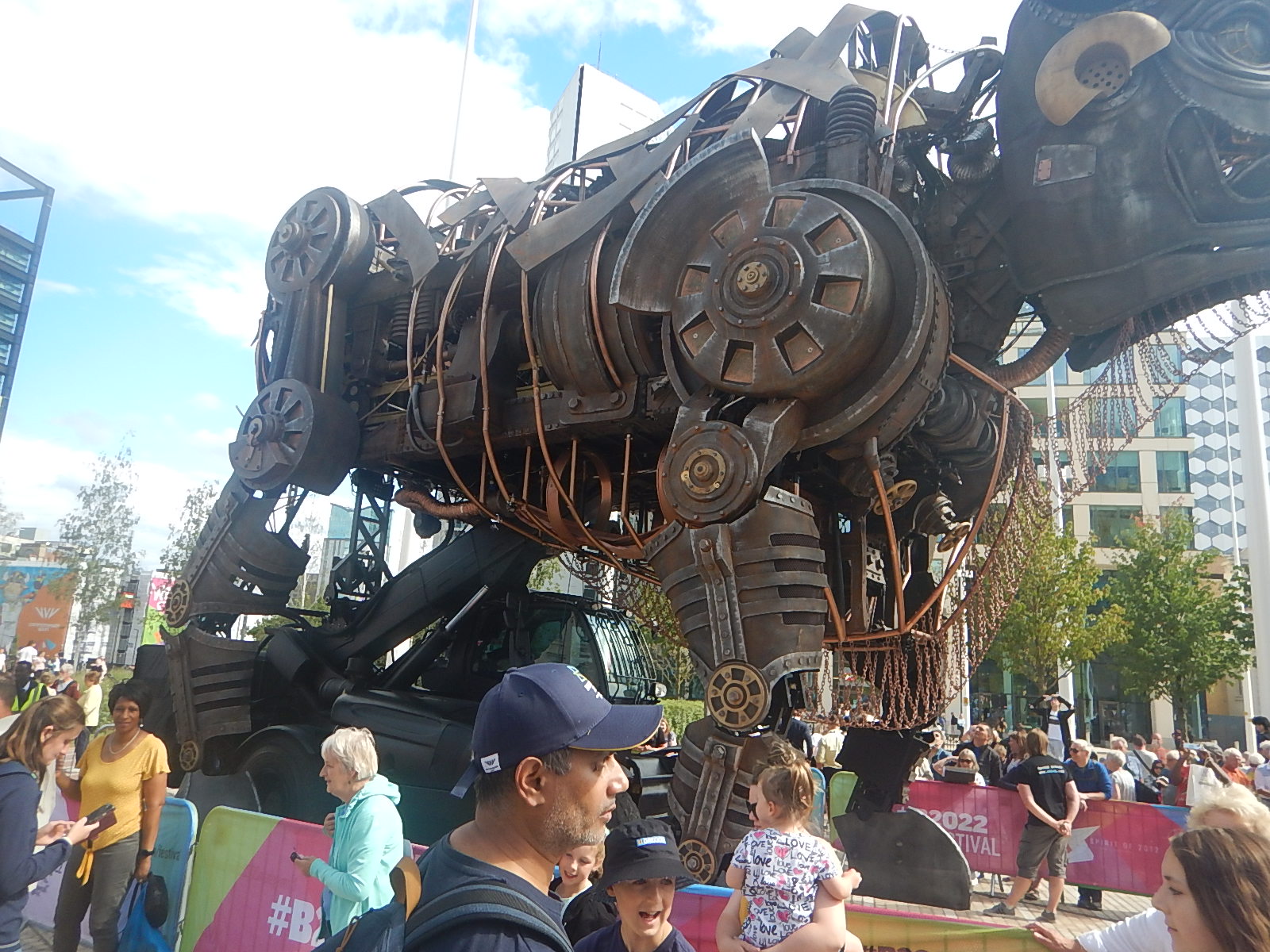
There are differences. Note the loader underneath to give the artwork movement.
A year ago, I said this in the post.
This wonderful work of engineering art, is far too good and is now too well-loved to be scrapped.
As it needs to go inside, why not bring it inside High Speed Two’s new Curzon Street station, to greet passengers visiting Birmingham?
Ozzy has found a new permanent home in Birmingham New Street station, but I wouldn’t rule out a move to Curzon Street station, for several decades.
West Midlands Metro – Eastside Extension – 26th July 2023
These pictures show the current state of the Eastside Extension of the West Midlands Metro.












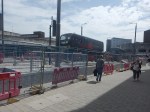
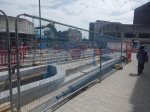


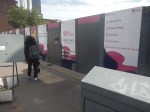


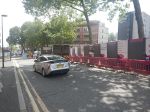
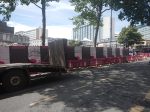







Note.
There is a triangular junction, where the lines split to the South of the Bull Street tram stop.
The Eastside Extension will run past Curzon Street station and then on to somewhere around Digbeth Coach station.
There is a triangular junction, where the lines split to the South of the Bull Street tram stop.
Through Birmingham City Centre On A Tram – 26th July 2023
When I get to a new city, I like to take a tram across the City Centre taking pictures.
I realised, that I’d never done this in Birmingham before, so I did it today on the West Midlands Metro.









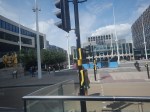







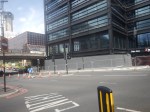


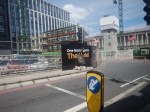






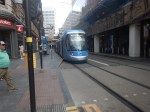
Note.
It will be better, when the gaps are filled in.
- I got on at Brindleyplace.
- I got off at Grand Central.
This was my all-day Zone 1 ticket, that I used to go up and down all day.

For just £2.80 all day, you can go between Edgbaston Village and Jewellery Quarter, as much as you need.
Centrica Signs UK Biomethane Agreement With Yorkshire Water And SGN Commercial Services
The title of this post, is the same as that of this news item from Centrica.
These three paragraphs outline the story.
Yorkshire Water, an essential water and wastewater services provider for the Yorkshire Region, and Centrica Energy Trading, have today announced signing a 15-year agreement to offtake biomethane production and manage shipping, trading, and balancing of production from two plants developed by SGN Commercial Services.
SGN, a leading manager of natural gas and green gas distribution networks in Scotland and the south of England will design, develop and operate the biomethane gas-to-grid sites, which once operational, will produce approximately 125GWh of biomethane annually — enough to heat more than 10,000 UK households.
Biogas will be produced as a by-product of Yorkshire Water’s sewage wastewater treatment processes, where Centrica will offtake production from the site and subsequently manage shipping, trading, and balancing of the green gas. Biomethane will be injected into the UK grid to displace natural gas, providing cleaner and more resilient gas supplies that reduces dependency on outside energy imports.
SGN Commercial Services are a wholly-owned subsidiary of SGN.
This mission statement is on the home page of their web site.
Our safety-first culture provides bespoke commercial solutions and green gas services to our clients, allowing them to better meet their business needs today and in the future.
In an energy market which is prioritising de-carbonisation and net-zero solutions, we can help navigate a clear pathway for your business to achieve its goals both responsibly and cost-effectively.
It looks to me, that SGN Commercial Services will design, develop and operate the biomethane gas-to-grid sites, so that the biomethane from the sewage works can be fed into Centrica’s main UK gas grid.
You could argue, that every sewage works and landfill producing large amounts of methane, should have one of these connections.
What would be the repercussions if SGN Commercial Services were asked to connect all these sites to the gas grid?
- How much gas would be collected?
- How many houses could be heated?
- How much of the greenhouse gas; methane would not be released into the atmosphere?
This is a cunning plan, that is worthy of Baldrick at his best.
Over a period of time, domestic gas consumption will fall as houses are fitted with heat pumps and other green methods for heating.
Could this mean, that as time goes on, more and more of our domestic consumption of gas is satisfied by net-zero gas from waste sources?
Does HiiROC Fit In Anywhere?
This article on UKTN is entitled Meet HiiROC, The Startup Making Low-Cost Hydrogen Free From Emissions.
There is a section, which is called How Does HiiROC Work?, where this is said.
The company’s hydrogen generation units use feedstock gases such as methane, flare gas or biomethane at high pressure and with a very high electrical field between an anode and cathode.
This dissembles the tightly bound molecules into hydrogen and carbon atoms, with both coming out as a plasma (like a gas). The carbon is instantly cooled and solidified as pure carbon, which means no carbon dioxide is formed, in a quenching process to stop it from reforming back into the input gas.
The end product is hydrogen and carbon black, a material used in rubber tires, inks and paint.
It’s a material that has wide industrial use, but current production methods create large amounts of CO2 and other environmentally harmful biproducts.
“Our process is emission-free,” says HiiROC co-founder and CEO Tim Davies. “Because all you’ve got is hydrogen and solid carbon – they are the two products.”
For every kilogram of hydrogen produced using HiiROC units, you’re left with three kilograms of carbon black. This, however, is a potentially valuable, clean solid by-product and does not contribute to global warming unlike processes that create carbon dioxide gas.
Read the full article on UKTN, as it is full of very interesting information.
It says this about distributing hydrogen to a number of industries.
Lots of industries need hydrogen, which means HiiROC has a broad range of potential customers.
Their smallest machine can produce up to 100 kilograms of hydrogen per day. But due to their modular design and small size, they can easily be stacked up to increase output, making them scalable for businesses requiring large-scale industrial hydrogen production.
So at one end of the scale, it could support a hydrogen filling station, or a farmer wanting to use hydrogen to go carbon-free and at the other, it could support an energy intensive process like hydrogen steelmaking. All that is needed is a suitable hydrocarbon gas feed.
Last night on the BBC, a program called What They Really Mean For You, was about electric cars.
The program flagged up a shortage of graphite for making the batteries for electric cars.
So seeing that HiiROC hydrogen systems, could be producing tonnes of carbon black could this be converted into battery-grade graphite?
Google says yes!
This article on Sciencing is entitled How To Turn Carbon Into Graphite.
Conclusion
As Centrica own a substantial portion of HiiROC and are lending the company a gas-fired power station for full scale trials, I believe that Centrica is up to something, that will have three strong benefits for the British public.
- They will be able to keep their gas boilers for longer.
- Hydrogen supplied by HiiROC’s devices will provide hydrogen in the required quantities to where it is needed.
- The carbon black produced by HiiROC’s devices, when turned into graphite will be a valuable feedstock for giga-factories making batteries.
Engineering is the science of the possible, whereas politics is dreams of the impossible.
 The Anonymous Widower