Levelling Up – The Marks & Spencer Way
When I first moved to Dalston, there were three convenient Marks and Spencer stores within a few bus stops.
- Angel, which is a basically a food store with a floor of clothes above, where my grandmother used to shop before the First World and C and I used to shop in the 1970s, when we lived in the Barbican.
- Moorgate, which is a small department store, with a medium-sized food department in the basement, which I use regularly.
- Hackney, which was a very small department store with a poor food department, was convenient as on some of my journeys, I would get a bus home from outside the store.
Over the last ten years, more Marks and Spencer stores have sprung up, Archway, Camden Town, Dalston, Eastfield, Hampstead, Liverpool Street, Old Street and West Hampstead, which I use occasionally, as they are on routes home.
This morning I went to the eye hospital in Colindale and coming home, I got a 32 bus to Brondesbury for the Overground.
As I needed some food, I had various choices of journey home.
- Get off at West Hampstead and do my shopping there, and then get back on the train.
- Get off at Hampstead Heath and do my shopping there, with a light lunch in le Pain Quotidien.
- Get off at Dalston Kingsland and do my shopping there, with a bus home.
- Get off at Hackney Central and do my shopping there, with a bus home.
Unusually, I chose the last option and got a big surprise.








I had been worried that Marks and Spencer in Hackney would close, but now it has been turned into the most upmarket Marks and Spencer food store, I’ve ever seen.
- It’s more Knightsbridge. than Hackney
- It’s large and spacious.
- There are large ranges of tea and coffee, that you normally don’t see in the store.
- The decor is localised to the store.
- It is only about a hundred metres from Hackney Central station and fifty metres on the flat from my bus home.
- It’s even just called Marks & Spencer Food
Now that’s what I call levelling up!
Could The Pantograph Make A Return To London’s Buses?
The title of this post, is the same as that of this article on Ian Visits.
Reading Ian’s article, the plan is for the 358 bus route to be converted into an electric bus route, where the buses are charged at both ends of the route during the turn round.
The Feasibility Of A Battery-Electric Route 358
This morning, I took a train to Crystal Palace station and then took a 358 bus to Orpington station before coming home.
These were my thoughts.
Crystal Palace Parade
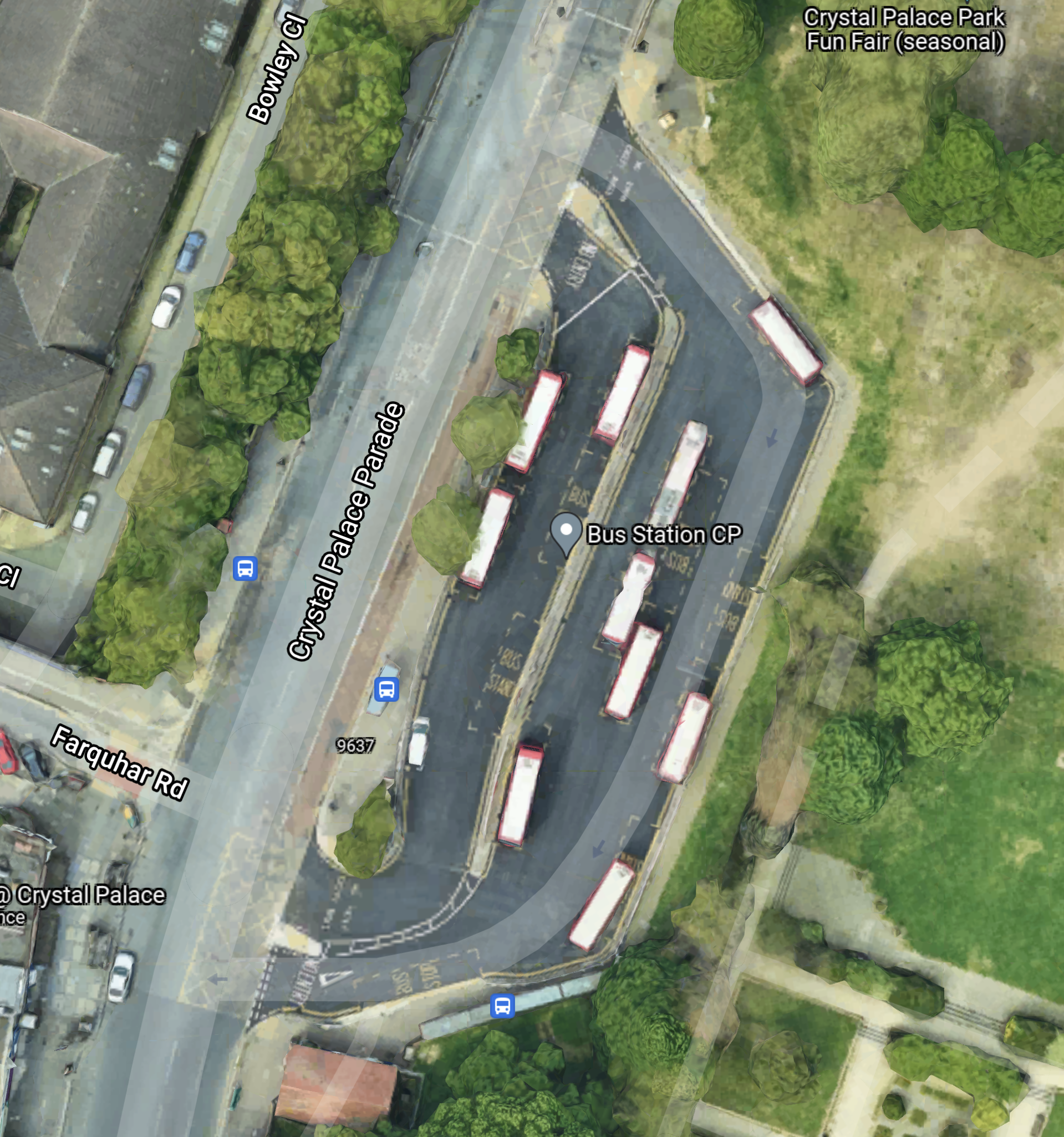
The buses actually leave from Crystal Palace Parade where there are several bus stops in a bus station.
This Google Map shows the bus station.
I also took these pictures.
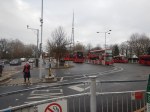
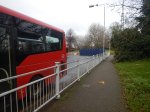
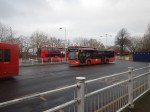
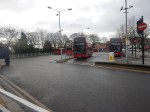
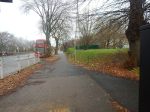

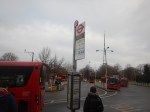
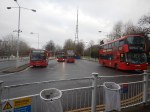
Note.
- There is certainly a lot of space to put a charger.
- As there is the main Crystal Palace television transmitter close by, I suspect that power is not a problem.
There didn’t appear to be any sign of work relating to a charger.
Orpington Station
This Google Map shows Orpington station.
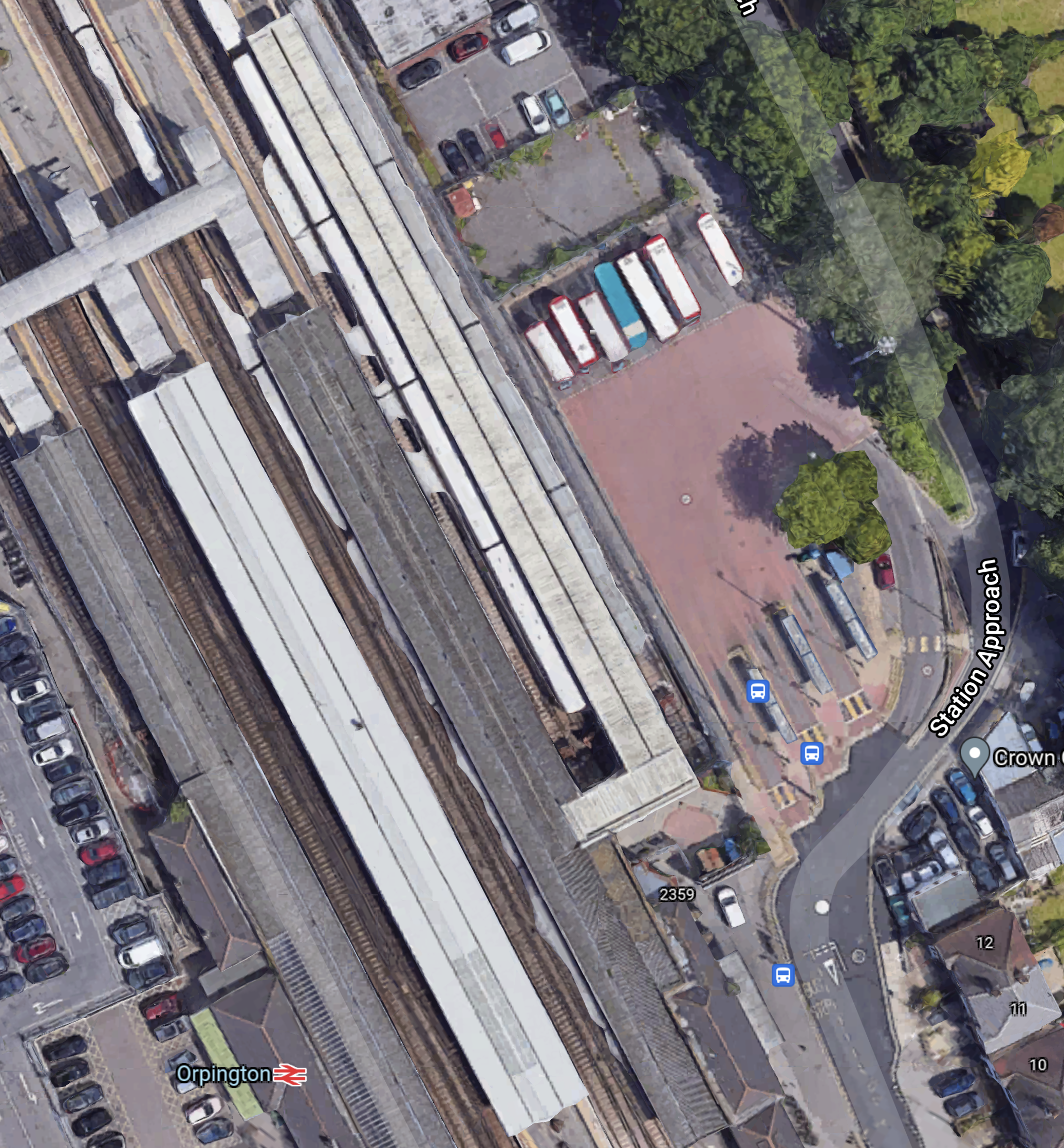
Note.
- The bus station is on the East side of the station.
- Buses are lined up at the Northern end of the bus station.
- Orpington station is step-free.
I took these pictures.
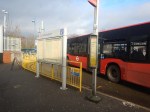
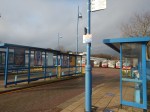
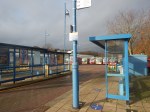
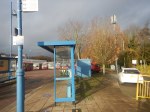
As at Crystal Palace there appeared to be no work in progress to install a charger.
The Route
The route is mainly flat with hills or inclines at the following places.
- There is a steep hill up to Crystal Palace Parade.
- There are hills at Bromley and Farnborough.
- There is a steep incline up to Orpington station.
At times, the bus was running at just under forty mph.
I suspect that Transport for London will have to be careful with specifying the battery size.
The Buses
This is the ie tram product page on the Irizar web site.
This is a video of the twelve metre ie tram.
It looks rather smart and purposeful.
The Charger
The image on Ian Visits could be one of Furrer + Frey’s chargers shown in this doocument on their web site.
Conclusion
It looks a viable zero-carbon bus route, but as no work is visible, has it been cancelled because of TfL’s financial problems?
Opel Begins Production And Deliveries Of Hydrogen Vivaro Van
The title of this post, is the same as that of this article on Green Car Congress.
This is the first paragraph.
Opel has begun production of the hydrogen fuel cell variant of the Vivaro van, and has delivered the first one to the German manufacturer of premium domestic appliances, Miele. The hydrogen fuel cell vehicle will perform daily field service in the Rhine-Main region.
We need more hydrogen filling stations in the UK, so we can use vans like these.
Was The Name Omicron For This Variant Of The Covids Chosen Deliberately?
We are trained to respond to single-word commands as are our pets and other animals. But then some animals and especially birds have alarm calls, when one sees danger.
Before omicron, we’ve had alpha, beta, gamma and delta variants of Covid-19, so surely, if they were following the Greek alphabet, epsilon, zeta, eta, theta, iota, kappa, lambda, mu, nu and xi all should have had precedence.
Consider.
- Perhaps zeta, eta and theta could get misheard when spoken.
- iota might be difficult for some to pronounce.
- mu and nu could be mistyped.
- xi risks confusion with the Chinese leader.
- omicron could stand out like a bird’s alarm call.
Omicron is also a word, you don’t hear often in normal conversation unlike some Greek letters.
Could it have been chosen as it is a word that will be picked out in conversation and those that hear it will be nudged towards covid-correct behaviour like wearing a mask or keeping, keeping apart or remembering to get a booster jab.
If people constantly say booster, covid and omicron in the same sentence would it nudge people to do the right thing?
It probably would work unless omicron meas something different in the local language.
Hydrogen Fuel Cell Locomotive From Canadian Pacific To Roll Out Before 2022
The title of this post, is the same as that of this article on Hydrogen Fuel News.
This is said.
The hydrogen fuel cell locomotive consists of an SD40-2F, which was converted to run on H2 power and is therefore nicknamed the H2 0EL. The company is calling it a “hydrogen zero-emissions locomotive”, and it will be operating under its own power before the end of this month, according to Canadian Pacific CEO Keith Creel.
Note that the SD40 locomotive is a diesel-electric locomotive of which 1286 were built around 1970.
Canadian Pacific have made this video, which was kindly pointed out by Alan.
The video seems to indicate that the converted locomotive will be able to continue to do the same duties as the original diesels, which have a power output of 2,240 kW.
Interestingly, power output seems to be of the same order as that of a Class 66 locomotive, so could a similar conversion by used with these locomotives?
Virtual Power Plants: Enphase, Sunverge And LG In The US, Project Symphony In Australia
The title of this post, is the same as that of this article on Energy Storage News.
The article is a good introduction to the concept of a virtual power plant. The Wikipedia entry starts with this definition.
A virtual power plant (VPP) is a cloud-based distributed power plant that aggregates the capacities of heterogeneous distributed energy resources (DER) for the purposes of enhancing power generation, as well as trading or selling power on the electricity market.
It can almost be thought of as an energy equivalent of the Internet.
As a Control Engineer, I believe that the creation of virtual power plants will be very important in the future.
Read the article and the Wikipedia entry and see if you agree.
A Full-English Gluten-Free Breakfast At Leon
I regularly have a breakfast like this in Leon.




Delicious and gluten-free!
Heavy Fire Doors At Moorgate Stations – 6th December 2021
They’re certainly not stinting on safety in Moorgate station.
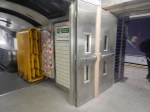

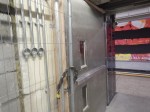
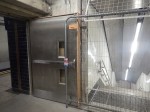
These doors will cut off the passages between Crossrail and the Northern Line.
Heavy Traffic In The Balls Pond Road – 6th December 2021
London has too much traffic.
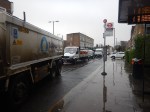

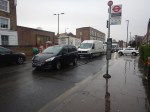
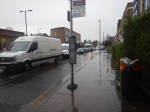
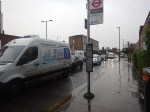
These pictures were taken at three in the afternoon.
There was not a zero-carbon vehicle in sight.
At least the pollution was down, as it was raining.





 The Anonymous Widower