Long-Duration Energy Storage Milestones Achieved By Lockheed, Eos And Form Energy
The title of this post, is the same as that of this article on Energy Storage News.
Lockheed
I find it significant that Lockheed Martin have developed a new redox flow battery, which is a 500kW / 2.5MWh system.
Last year, the company had revenue of nearly sixty billion dollars, with a net income of over six billion dollars. They certainly have the resources and the name to make a big impression on the long-duration storage market.
Their GridStar Flow technology is also detailed on this page on the Lockheed Martin web site.
The page lists these features.
- Optimized for 6+ hours of flexible discharge
- Flexibility to switch between products to maximize revenue
- 100 percent depth-of-discharge with minimal degradation
- A design life of 20 years
- Ability to size energy and power independently
- Mildly alkaline, aqueous electrolytes that are safe (nonflammable, noncorrosive, stable)
- Competitive total cost of ownership
It looks impressive.
EOS Energy
EOS Energy can’t be doing badly, as they’re preparing to list on NASDAQ.
Form Energy
Form Energy are also reported to have had a $70 million investment.
Conclusion
It appears long duration energy storage is doing well across the pond.
My money would be on Lockheed to produce the most successful product.
Ilford Station – 18th November 2020
I took these pictures at Ilford station this morning.

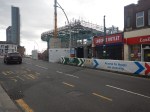

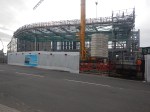
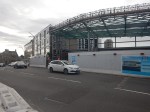


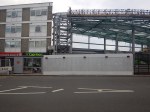
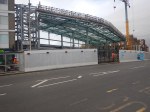


Note.
- The steelwork for the station building has now been erected.
- The new side entrance to the station is operational, but not fully complete.
- There were also guys working on stylish new shelters and possible retail units in the station.
Ilford station is being seriously transformed, as this visualisation of the new station building shows.
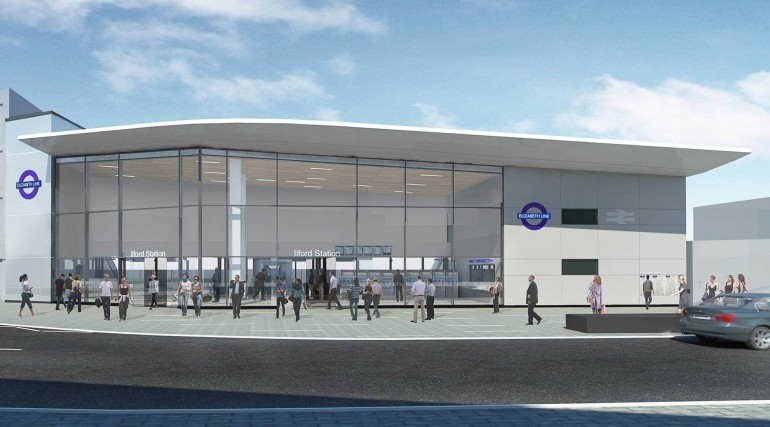
The people in the visualisation are rather badly-drawn
Diesel Engine Giant Cummins Plans Hydrogen Future–With Trains Coming Before Trucks
The title of this post, is the same as that of this article on Forbes.
It is very much a must-read article about how Cummins, who are a traditional diesel engine manufacturer is embracing hydrogen technology.
Trains Before Trucks
As the title says, they are starting with trains rather than trucks.
They have started by building a factory to make fuel cells for Alstom’s Coradia iLint, as I wrote about in Cummins To Build Railway Fuel Cell Factory.
Reading the Forbes article, it appears that the decision has been made to focus on trains and buses, is because they run fixed subsidised routes and you only need a couple of hydrogen filling stations at the ends of the route. But for trucks, you need full infrastructure.
Cummins To Build Railway Fuel Cell Factory
The title of this post, is the same as that of this article on Railway Gazette.
This is the introductory paragraph.
Cummins’ hydrogen business Hydrogenics is to open a factory at Herten in the Ruhr region for the volume production of fuel cells for applications including Alstom’s Coradia iLint multiple-units.
Other points made include.
- The factory will have a capacity of 19 MW of fuel cells per year.
- It will open in 2021.
- It will manufacture fuel cell systems for Alstom’s Coradia iLint.
There will be research and development and full support for the products.
Essex Road Station – 16th November 2020
These pictures show Essex Road station.




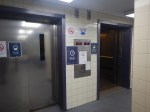







Note.
- It is a station of little architectural merit.
- It is not by any means step-free.
- The atmosphere could be better.
- In the last few weeks, I have witnessed two falls, that could have been serious with a little less luck on those dreadful stairs.
It is certainly not the best station in Islington, let alone North London.
Green Jet Fuel Plant Developers’ Ioy As World Economic Forum Backs Method As Best Aviation Solution
The title of this post, is the same as that of this article on Business Live.
This is the first paragraph.
The World Economic Forum has backed sustainable aviation fuel as the most promising decarbonation policy for aviation, delighting the developers of a £350 million refinery on the Humber.
I bet Velocys are delighted.
I also think, that, the biodiesel, that they can produce, is a short term solution to the decarbonisation of rail freight and the heaviest vehicles powered by diesel.
It’s so much better than throwing the rubbish into landfill.
Old Street Station – 16th November 2020
I took these pictures as I passed through Old Street station.


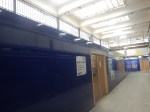




Note.
- The dreadful steps to and from the platforms.
- The last two pictures are for my information.
Will the station be made step-free in this rebuilding at the surface?
East Coast Main Line Electrification Research Agreement
The title of this post, is the same as that of this article on Railway Gazette.
These are the first two paragraphs.
An outline £10m co-investment agreement has been signed by the University of Leeds and the Rail Electrification Alliance which is undertaking the East Coast Main Line power supply upgrade programme.
The agreement provides for two years of research into the best and most efficient way of managing electrical power flow on the route, with the university’s scientists and engineers having access to data collected from lineside static frequency converters.
Sounds good to me. I have analysed countless projects and systems, in the early stages and in many cases, the budget and project time have been reduced or a better method of operation has been developed.
And Now Geothermal Rum From Cornwall!
This article on ThinkGeoenergy is entitled New Project To Bring You “Tropically” Matured Rum From Cornwall’s Geothermal Heartland.
This is the introductory paragraph.
What a product addition to the United Downs Deep Geothermal Project? Distillery startup Cornish Geothermal Distillery Company is pushing forward with plans to produce “tropically” mature rum using heat from the UK’s first geothermal power facility.
The Cornish Geothermal Distillery Company has a web site for more information.
This is a paragraph from the Think Geoenergy article.
In the release shared with us it is reported that Matthew Clifford, founder of the Cornish Geothermal Distillery Company (CGDC), has submitted outline plans for an ultra high-tech biome which would incorporate his patent-pending, carbon-neutral rum “cask maturation pods” designed by Grimshaw Architects alongside Buro Happold – globally recognised for innovative architecture that respects the planet’s resources whilst being functional and awe inspiring.
It seems to be an ambitious carbon-neutral project that could create up to a hundred jobs.
EMR Set To Retain Liverpool – Nottingham Service
The title of this post is the same as that of this article on Railway Gazette.
This is the introductory paragraph.
The Department for Transport has confirmed to East Midlands Railway that, for the time being at least, it is no longer planning to transfer the Liverpool Lime Street – Nottingham service to TransPennine Express from the December 2021 timetable change.
My experience of the service is limited these days, but occasionally, I do use the Liverpool and Sheffield section of the service to get across the Pennines on trips North.
In January 2020, I had a horrendous trip on an overcrowded train composed of several one-car Class 153 trains, which I wrote about in Mule Trains Between Liverpool And Norwich.
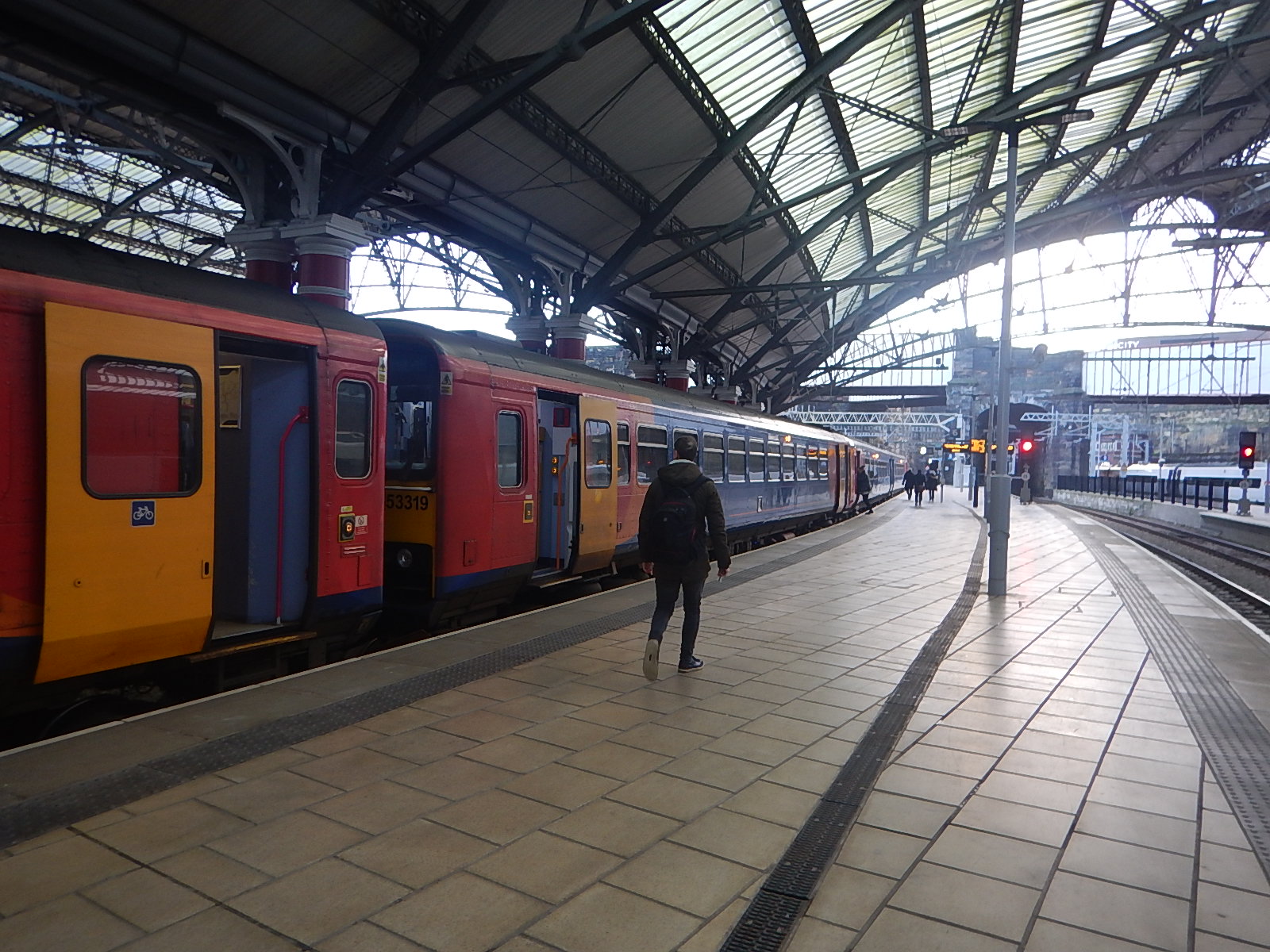
This is not the way to run a long distance service, which takes over five and a half hours.
The plan to improve the service involves splitting it into two from the December 2021 timetable change.
- Liverpool and Nottingham
- Derby and Norwich
It was thought that the Liverpool and Nottingham section would be going to TransPennine Express (TPE).
These points summarise the Railway Gazette article.
- TPE were training drivers and that has now stopped.
- EMR have told staff, they will be keeping both services.
- The service will still be split.
- EMR will not have enough trains to run the split service.
This paragraph sums up what could happen to run the service.
One option favoured by industry insiders would see EMR take on 15 Class 185 Desiro trainsets which are due to be released by TPE during 2021 as its fleet renewal programme concludes. These trains are maintained by Siemens at its conveniently located Ardwick depot in Manchester.
I see this splitting, as being a pragmatic solution to the problems of running a long service, with a very varied loading at various parts of the route.
- As one company runs both sections, the changeover can be arranged to be very passenger-friendly.
- EMR manage the possible change stations at Derby and Nottingham.
- Passengers can be given proper care in the changeover.
- Derby gets a direct connection to Peterborough, Cambridge and Norwich.
With my East Anglian hat on, I can see advantages in the split, as I regularly used to travel as far as Derby or Nottingham, when I lived in the East, but only once took the full service to Liverpool.
I have a few thoughts.
Capacity Between Liverpool And Nottingham
This section of the service is generally run by a pair of Class 158 trains, which have a capacity of around 140 each or 280 in total.
The Class 185 trains have three-cars and a capacity of 180 seats.
Currently, Liverpool and Nottingham takes just under two hours and forty minutes, which would make for a comfortable six-hour round trip. This would mean, that an hourly service between the two cities, will need a fleet of six trains.
Under Future in the Wikipedia entry for Class 185 trains, this is said.
Following the August 2020 decision not to transfer the Liverpool Lime Street to Nottingham route to TransPennine Express, East Midlands Railway could opt to take on the 15 trainsets due to be released from TPE to run this route.
Fifteen trains would be more than enough trains to run a pair on each hourly service and perhaps run some extra services.
Pairs of Class 185 trains between Liverpool and Nottingham would go a long way to solve capacity problems on this route.
Calling At Derby
The current service between Liverpool and Norwich doesn’t call at Derby, as it uses the Erewash Valley Line via Alfreton.
The proposed Eastern portion of the split service has been proposed to terminate at Derby, so passengers would change at Nottingham, if they wanted to travel to Sheffield, Manchester or Liverpool.
As East Midlands Railway, runs both services, they can optimise the service to serve and attract the most passengers.
Preparation For High Speed Two At East Midlands Hub Station
Eventually, the two halves of the Liverpool and Norwich service must surely call at the future East Midlands Hub station for High Speed Two, so future routes must fit in with the plans for High Speed Two.
But there’ll be plenty of time to get that right.
Interchange At Nottingham
I’m sure a quick and easy interchange can be performed at Nottingham.
In the simplest interchange, the two services could share a platform and passengers could just walk between the two trains on the level.
The following sequence could be used at Nottingham.
- The train from Derby to Norwich would arrive in the platform and stop at the Eastern end of the platform.
- The train from Liverpool to Nottingham would arrive in the platform and stop close behind it.
- Passengers on the train from Liverpool, who wanted to take the Norwich train, would simply walk a along the platform and board the train.
- The Norwich train would leave when ready.
- The train from Liverpool would stay where it had stopped and be prepared for the return trip to Liverpool.
- , The next train from Norwich to Derby would pull in behind the Liverpool train.
- Passengers on the train from Norwich, who wanted to take the Liverpool train, would simply walk a along the platform and board the train.
- The Liverpool train would leave when ready.
- Finally, the Norwich to Derby train would leave for Derby.
Only one platform would be needed at Nottingham station, that would need to be long enough to handle the two trains.
Between Norwich And Derby
This is the only section of the Liverpool and Norwich route with any electrification.
- Currently about thirty miles between Grantham and Peterborough are electrified.
- The lines around Ely and Norwich are also electrified.
I think that Ely and Peterborough will be electrified earlier than other lines.
- It would be part of an electrified freight route between Felixstowe and the East Coast Main Line.
- It would enable electric passenger trains between Cambridge and the North.
- It would mean the Ipswich and Peterborough services could be run by battery electric trains.
- It could be a useful electrified diversion route to London, during engineering works.
,This extra electrification, would also mean that Norwich and Derby would probably be within range of battery electric trains.
Stadler have stated that Greater Anglia’s Class 755 trains can be converted from bi-mode into battery electric trains.
So as Greater Anglia and East Midlands Railway are both Abellio companies, could we see battery electric operation on the around 150 miles between Norwich and Derby?
Conclusion
Splitting the Liverpool and Norwich service opens up a lot of possibilities to improve the service.
 The Anonymous Widower