Gresham House Energy Storage Fund Has Staying Power
The title of this post, is the same as that of this article in the Tempus column of The Times.
It is a good explanation of how energy storage funds like Gresham House work.
I believe they are very much the future.
Some of the new forms of energy storage, that I talk about on this blog tick all of the boxes and may even satisfy an extreme supporter of Extinction Rebellion.
- Extremely environmentally friendly.
- Higher energy-density than lithium-ion
- Lower cost per GWh, than lithium-ion
- Much longer life than lithium-ion.
- Safe to install in built up areas.
- GWh-scale storage in a football pitch space or smaller.
The UK’s largest battery is the 9.1 GWh Electric Mountain pumped storage system in Snowdonia and there is talk about over 100 GW of offshore wind turbines in UK waters. There will be masses of energy storage built in the UK in the next forty years to support these wind turbines.
Conclusion
Companies like Gresham House Energy Fund seem to have developed a model, that could provide the necessary energy storage and a safe reliable home for the billions of pounds in the UK, that is invested in pension funds.
Lithium-ion batteries will be reserved for mobile applications.
Social Distancing In An Empty Train
On Sunday morning, I went to Croydon to look at Windmill Bridge, in Croydon, which I wrote about in Croydon Area Remodelling Scheme – Lower Addiscombe Road / Windmill Bridge.
On the way, I found myself in a more or less empty carriage, as these pictures show.
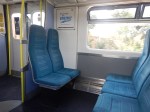
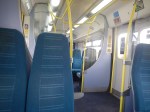

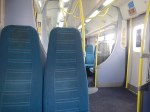
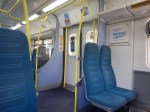
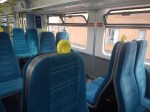
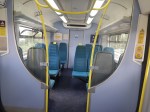
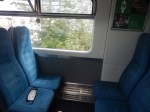
It all got me thinking.
- Generally, the rule in most of the world, is that you should keep a given number of metres apart.
- But supposing, that each public space were to be given a figure for the maximum number of people, who can occupy the space.
- I think, this has already happened in London, where thirty passengers seems to be the maximum number allowed on a double-deck bus.
- Buses and train carriages are public spaces.
But supposing each space was to be assigned a figure for the number of people present, below which the wearing of masks would be optional.
On a bus or train, the customer announcements would change appropriately.
Some might argue, it would be confusing, but it might nudge passenger behaviour in the right way.
- More might travel.
- More might travel at less busy times.
- I suspect that many on a long commute, take their masks off, as they get near home, as te train empties out anyway!
- It should be born in mind, that many modern trains, trams and buses, may know how many passengers are on board, as they can count passengers.
Bletchley Viaduct – 1st September 2020
Interestingly-shaped stumps are starting to appear.
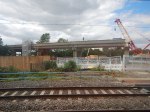
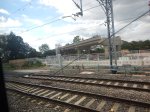
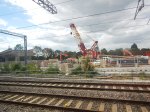
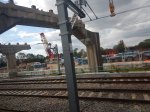
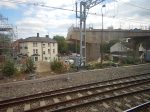
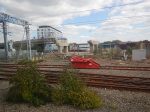
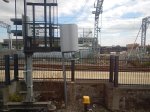
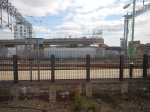
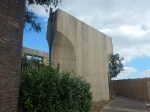
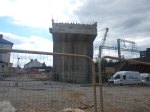
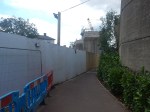
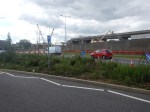
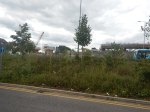
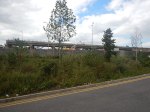
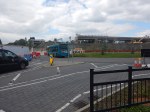
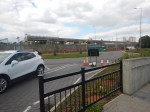
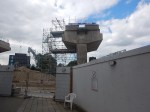
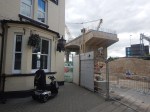
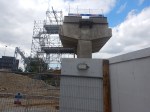
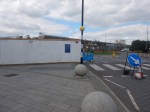
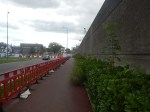

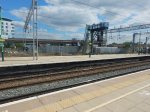
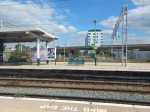
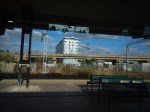
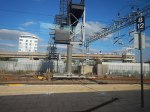

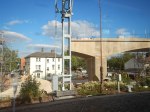
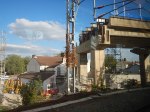
I think this will be my last visit, until they start to erect the new viaduct.
Croydon Area Remodelling Scheme – Lower Addiscombe Road / Windmill Bridge
The rebuilding of this bridge is key to the Croydon Enhancement Scheme.
IThe scope is described on this web page.
This is the introductory paragraph.
To provide more platforms at East Croydon station and allow the Selhurst triangle junctions to be remodelled we need to expand the railway from five to eight tracks north of East Croydon. This means we need to rebuild the road bridge over the railway, increasing its span, to provide space for three additional tracks.
This Google Map shows the bridge and East Croydon station.
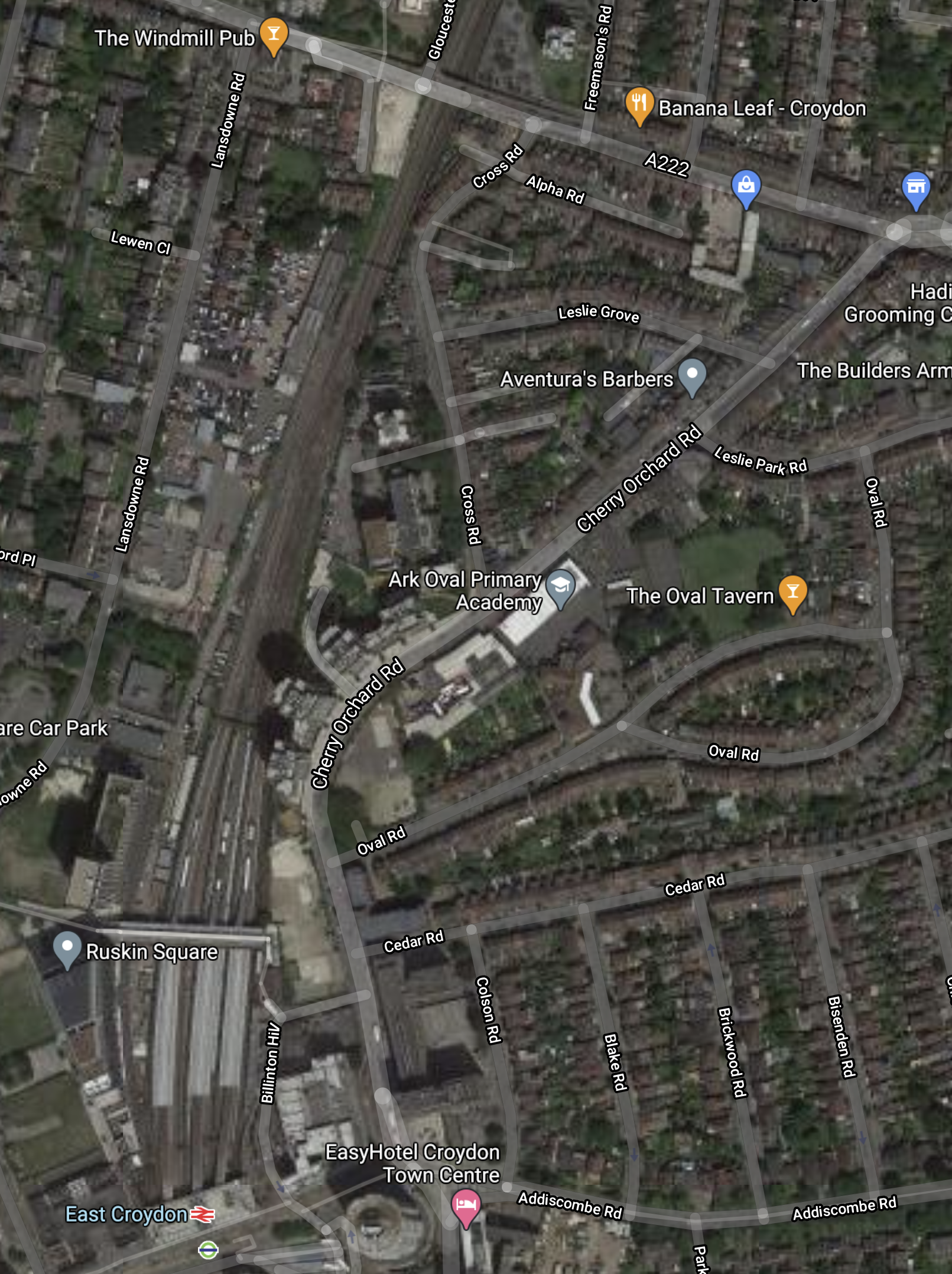
Note.
- Windmill Bridge is the road crossing the railway at the top of the map.
- East Croydon station is in the South West corner of the map.
- Adding three extra tracks between the new bridge and East Croydon station will be challenging.
I took these pictures as I walked between around the current Windmill Bridge.
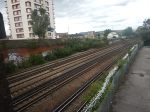
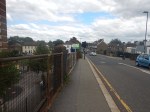
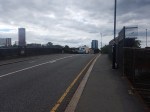
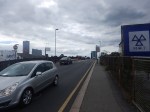
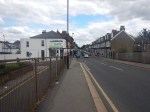



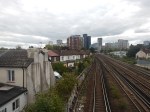
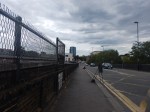
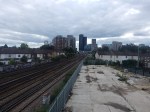
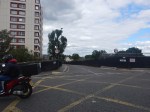
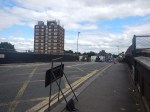
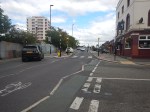
Note.
- The bridge is very busy with traffic.
- It is a nightmare for pedestrians, as pavements are narrow and there is no crossing on the bridge.
- I suspect that it is a bridge, that cyclists hate and avoid.
- I also believe it may have a low weight limit.
It certainly needs replacing, with something wider and more substantial for road traffic.
Benefits
Network Rail lists these benefits of a new bridge.
- Longer bridge to accommodate additional tracks
- Dedicated cycle lanes
- Vehicle weight restriction removed
- Opportunity for new pedestrian and cycle links under the bridge.
It certainly looks like it will be a lot better and my observations will be addressed.
Network Rail’s Proposals
The following is taken from the web page.
The construction of the new bridge would take place early in the programme as it is a key enabler for the rest of the Scheme.
To construct the new bridge, we would:
- Permanently close the southern end of Gloucester Road (the ramp to the bridge)
- Build the new bridge offline south of, and next to, the existing structure, reducing disruption to road users
- Slide the new bridge deck across the railway without closing the track below
- Close the existing bridge to traffic and pedestrians
- Use the new bridge in its temporary location as a pedestrian and cycle route while the existing bridge is closed
- Demolish the existing bridge and slide the new bridge into its permanent position.
I would score Network Rail a full ten out of ten for ingenuity.
I don’t think, I’ve ever heard of a scheme, where the new bridge is used temporarily to get pedestrians and cyclists across an obstacle, before it is moved into its final position.
This visualisation from the site shows the completed bridge and the eight tracks underneath.
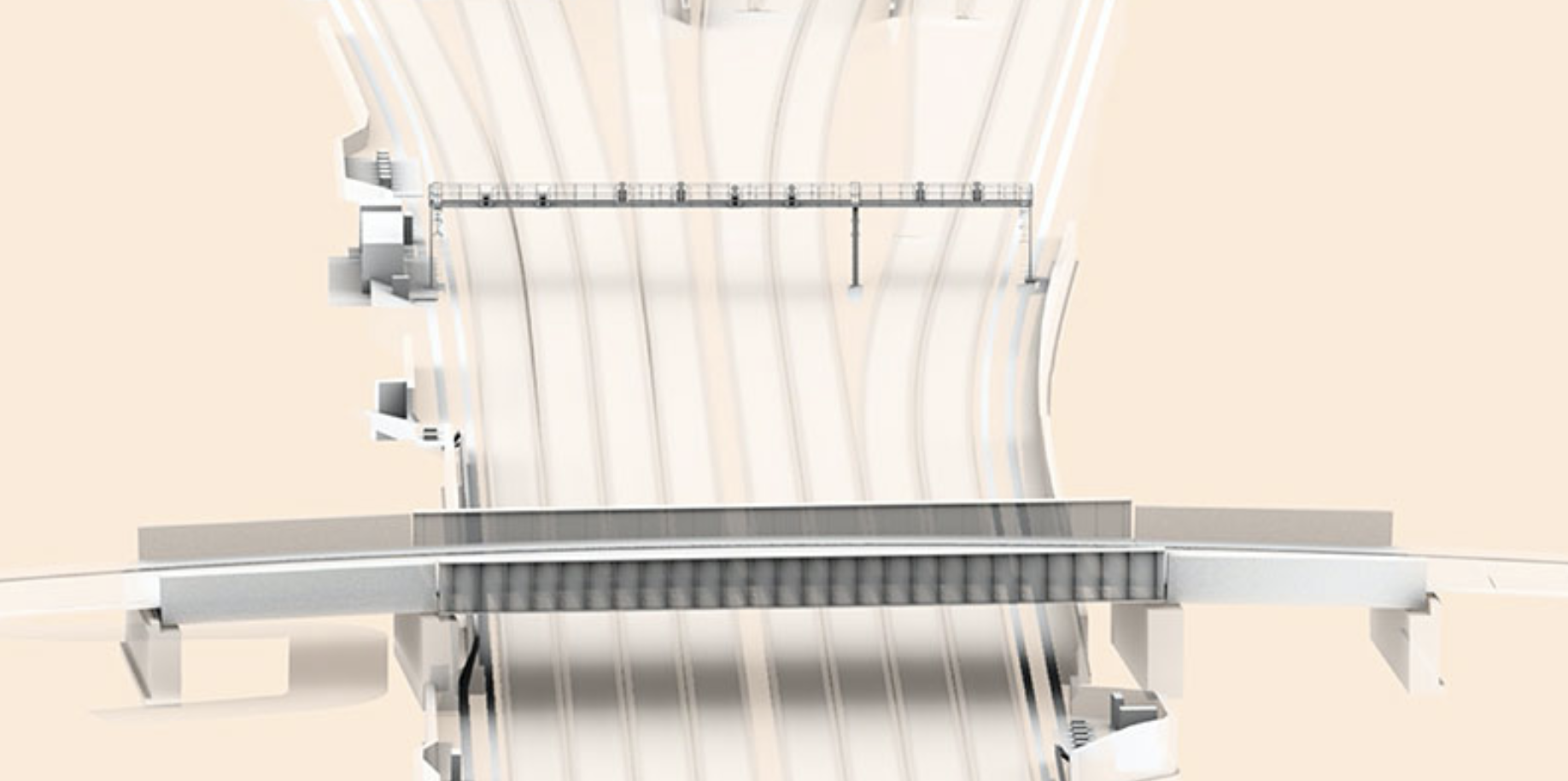
It looks like it will be a tight fit.
Other Thoughts
These are other thoughts on various issues.
Project Management
Network Rail are saying they will do this sub-project early,
This will mean that they get the space to do all the rest of the work and keep traffic, pedestrians and cyclists away from the following sub-projects.
On the Introduction page of the Croydon Area Remodelling Scheme, the video shows how the bridge will be installed. It is well worth a watch.
Gloucester Road
It took me about five minutes to cross Gloucester Road, where it joins the bridge and the pedestrian provision is terrible.
But will those who live and work on the Southern part of the road, accept the closure?
These pictures show that part of the road.
Sweden’s HYBRIT Starts Operations At Pilot Plant For Fossil-Free Steel
The title of this post, is the same as that of this article on Reuters UK.
These are the first paragraph.
Swedish green steel venture HYBRIT, owned by SSAB, state-owned utility Vattenfall [VATN.UL] and miner LKAB, on Monday started test operations at its pilot plant for fossil-free steel in Lulea, Sweden.
The HYBRIT web site outlines the process on its home page.
In 2016, SSAB, LKAB and Vattenfall joined forces to create HYBRIT – an initiative that endeavors to revolutionize steel-making. HYBRIT aims to replace coking coal, traditionally needed for ore-based steel making, with hydrogen. The result will be the world’s first fossil-free steel-making technology, with virtually no carbon footprint.
During 2018, work started on the construction of a pilot plant for fossil-free steel production in Luleå, Sweden. The goal is to have a solution for fossil-free steel by 2035. If successful, HYBRIT means that together we can reduce Sweden’s CO2 emissions by 10% and Finland’s by 7%.
This could be a very significant development.
Lunch At Cafe Piazza In The Hays Galleria
I had a gluten-free lunch in Caffe Piazza in the Hays Galleria near to London Bridge station.
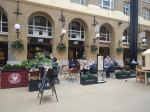

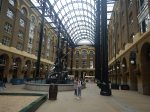

I only had a baked potato and chilli con carne with a glass of wine, but that was all I needed.
I’ll definitely go back again.
A Design Crime – Pedestrian Chaos At London Bridge
To get home from London Bridge station, I usually get the 141 bus in the station, or if I’m walking along the riverside, I get a 21 or 141 bus from the stop at the Southern side of the bridge.


There is now, no stop on the bridge, so it meant walking nearly to Bank station to get a bus. Not everybody of my age could manage that!
I hope the pea-brained idiot, who designed the current scheme at London Bridge, with no bus stops in either direction has been given his marching orders.
I know that for COVID-19 and wannabe terrorists something must be done, but surely one of the bus-stops in each direction should be working.
I suspect, it was designed by the same idiot, who decided to close the important Waterloo and City Line.
The Mayor won’t care, as he’s a South Londoner.
Work Underway On Gravitricity Storage Demo
The title of this post, is the same as that of this article on renews.biz.
This is the introductory paragraph.
Winch specialists Huisman have begun on the fabrication of Gravitricity’s €1.1m energy storage demonstrator, which is due for trial in Edinburgh early next year.
The article also gives a few details of the system.
- It uses a 16 metre lattice tower.
- Two twenty-five tonne weights are raised and lowered.
- An output of 250 kW is quoted.
Unless they are using a deep hole to increase the height, Omni’s Potential Energy Calculator says that the stored energy is only 2.18 kWh.
So it will only supply 250 kW for about half a minute.
But as it’s a demo, that is probably enough to validate the concept.
Coal mines with shafts around a thousand metres deep are not unknown in the UK and a system with two twenty-five tonne weights would be able to store a very useful 136 kWh.
But that is still very small compared to Highview Power‘s liquid air battery being build in Manchester, that I wrote about in Climate Emission Killer: Construction Begins On World’s Biggest Liquid Air Battery. That battery has these characteristics.
- The size of the battery is 250 MWh.
- It can delivery up to 50 MW of power. which translates to five hours at full power, if the battery is full.
- If it was already working, it would be the ninth biggest battery of all types, except for pumped storage, in the world.
- It will be double the size of the largest chemical battery, which was built by Tesla in South Australia.
Both Gravitricity and Highview Power technologies are being backed by the UK government.
Conclusion
I don’t believe that the two battery systems will compete directly.
In terms of size in Explaining Gravitricity, I state that in the UK, 2.2 MWh of storage might be possible for Gravitricity. This is very small compared with Highview Power’s 250 MWh in Manchester.
I suspect though, that capital and running costs may well be in Gravitricity’s favour and the system will be ideal for some applications, where space is limited.
Gravitricity’s systems may also be an innovative way of capping dangerous mine shafts.
Air In Scotland’s Prisons 90% Cleaner, Due To Smoke-Free Policy
The title of this post, is the same as that of this article on the University of Stirling web site.
This is the introductory paragraph.
Scotland’s smoke-free prisons policy is protecting the health of prison staff and those in custody – with the majority no longer exposed to second-hand tobacco smoke, according to a new study.
My late wife, who probably visited Holloway Prison around two hundred times, would probably agree with Scotland’s smoke-free prisons regime.
As I do!
It should be introduced into the rest of the UK, as soon as possible.
And why shouldn’t prisons have regular drug-testing?
Care Homes In England Had Greatest Increase In Excess Deaths At Height Of The COVID-19 Pandemic
The title of this post, is the same as that of this article on the University of Stirling web site.
This is the introductory paragraph.
Care homes in England experienced the highest increase in excess deaths at the height of the COVID-19 pandemic compared to those in the rest of the UK, according to new research.
The actual figures are as follows.
- England – 79 %
- Northern Ireland – 46 %
- Scotland – 62 %
- Wales – 66 %
So why are the three Celtic nations, doing better than England?
In A Thought On Deaths Of The Elderly From Covid-19, I said this.
How many undiagnosed coeliacs are there in those over seventy, who because they are coeliacs, have a compromised immune system?
I would be undiagnosed but for that elderly locum!
How many other coeliacs are there in the UK population?
-
- Age UK has a figure of twelve million who are over 65 in the UK.
- If 1-in-100, as stated by Coeliac UK, in the UK are coeliac, that is 120,000 undiagnosed coeliacs over 65.
Will these 120,000 people have a compromised immune system, that makes them more susceptible to Covid-19?
It has been said, that a good immune system helps you fight Covid-19!
If those 120,000 elderly undiagnosed coeliacs have a compromised immune system, how many are in poor health with cancer, arthritis and general poor health and have decided that a care home is best.
Coeliac Disease And The Celts
The Irish have a history of coeliac disease, which I have heard suggested goes back to the potato famine.
Certainly, the whole island of Ireland is a coeliac friendly place compared to some parts of England. Although, Liverpool with its strong Irish heritage is an exception.
Conclusion
I do wonder, if understanding of coeliac disease in the three Celtic nations is better than it is in England and a higher proportion of elderly coeliacs have been diagnosed.
Any younger coeliac born after about 1980, has probably been picked up, for the simple reason, that most GPs these days take regular blood tests and do seem to be more knowledgeable about the disease than GPs were before about 1980.
According to my GP, to test a child, is normally just a simple blood test and an analysis at a lab. Only a few cases, will need an endoscopy.
So do we have this population of undiagnosed coeliacs with compromised immune systems in English care homes?
Perhaps, everybody in a care home, should be tested for coeliac disease?
If nothing else, it may save money on cancer care, as diagnosed coeliacs on a gluten-free diet are 25 % less likely to suffer from cancer.
 The Anonymous Widower